All Shows

Jul/30 · Willow Avalon – Pink Pocket Pistol Tour
Aug/1 · Blisspop Presents: Hot In Herre: 2000s Dance Party
Aug/11 · Kingfishr
Aug/12 · Chasing Abbey
Aug/18 · Quicksand & Bane
Aug/22 · G Flip – Bed on Fire Tour
Aug/25 · Diggy Graves – The No Vacancy Tour
Aug/27 · Eagles of Death Metal – Death By Sexy Anniversary Tour
Aug/29 · Black Marble
Sep/3 · Silvana Estrada – Suaves Lluvias Summer / Fall 2026 Tour
Sep/4 · NONAME – 10yr Anniversary of Telefone
Sep/5 · MOVED TO THE CRYSTAL BALLROOM: Slayyyter – WOR$T GIRL IN THE WORLD TOUR
Sep/9 · Kelela – new avatar live
Sep/10 · The Charlatans UK – North American Tour 2026
Sep/11 · Eihwar – “Nordic Ritual Nights” USA Tour 2026
Sep/12 · Haute & Freddy’s Big Disgrace Tour
Sep/14 · Public Image Ltd – This Is Not The Last Tour
Sep/15 · Loe Shimmy – Pretty Girls Run the World Tour
Sep/16 · Lido Pimienta
Sep/17 · jigitz – 50 Ballerinas Tour
Sep/18 · Waylon Wyatt – Dustpiles World Tour
Sep/21 · CITIZEN
Sep/22 · Elder Island – Hello Baby Okay Tour
Sep/23 · ARLO PARKS – DESIRE TOUR
Sep/24 · Ceremony
Sep/25 · Earlybirds Club
Sep/26 · **CANCELLED** deca joins
Sep/28 · TRICKY
Sep/30 · Bella Kay: The Reckless Tour
Oct/1 · Ethan Regan: Young Regan Tour
Oct/2 · EMEI – Night at the Opera Tour
Oct/3 · Los Thuthanaka
Oct/6 · DOMi & JD BECK – WHO ASKED? Tour
Oct/9 · Kishi Bashi: Sonderlust 10th Anniversary Tour
Oct/10 · French Police
Oct/11 · MICO: Running From A Feeling Tour
Oct/13 · Kelsey Lu: So Help Me God Tour
Oct/14 · GLAIVE – GOD SAVE THE THREE TOUR
Oct/17 · Hazlett
Oct/18 · SiM – HOOMAN WORLD TOUR 
Oct/19 · The Blasting Company plays Over The Garden Wall
Oct/20 · MOVED TO ROSELAND THEATER: Julia Wolf – Deep End World Tour
Oct/21 · SLIFT
Oct/24 · Knox
Oct/29 · Rebecca Black: Exhibitionism on Tour
Nov/5 · Celebrating 50 Years of Buzzcocks
Nov/6 · INOHA
Nov/8 · DAX – The Anger Management Tour
Nov/13 · strongboi “the fall tour”
Nov/15 · SUECO
Nov/17 · The Residents – Eskimo Live! Tour
Nov/18 · Eivør 
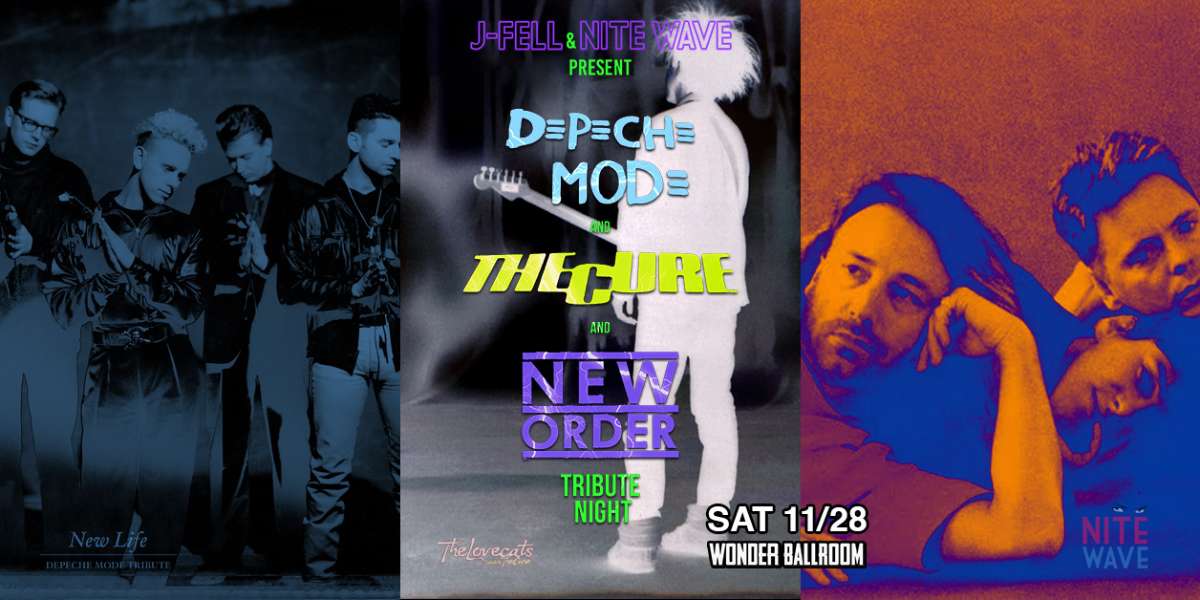
Nov/28 · J-Fell & Nite Wave present: The Cure, Depeche Mode & New Order Tribute Night
Nov/29 · Jalen Ngonda: Doctrine of Love Tour
Dec/4 · New Constellations: It Comes In Waves Tour
Dec/5 · feeble little horse – bitknot tour
Dec/7 · TINY HABITS – The Keepers Tour
Jan/11 · Anna von Hausswolff: Iconoclasts Tour

All Shows

Upcoming Events

Monqui Presents

With special guests Audrey McGraw and Slater Nalley

Thursday, July 30
Doors : 7 pm, Show : 8 pm
all ages
$39.25 to $50

About Willow Avalon:

Originally from Georgia and now based in Nashville, Willow Avalon’s musical journey began with her first word, “Elvis.” Raised by her mother and grandmother in a small Southern town, she grew up playing piano in church and taught herself guitar at age 12, using songwriting as both an escape and a means of self-expression through a life-journey that has been anything but straight-forward. Her much-praised 2025 debut album, Southern Belle Raisin’ Hell, cemented her as one of country music’s most compelling new voices, blending classic country, Americana, and pop influences. She has performed at The Late Show with Stephen Colbert, CBS Mornings, and the Grand Ole Opry, as well as festivals like Stagecoach, C2C, CMA, and Lollapalooza, bringing her electrifying presence to global audiences. With a sharp wit and rebellious spirit, she has shared stages with legends and rising stars alike, including Willie Nelson, Bob Dylan, Zach Bryan, Cage the Elephant, Paul Cauthen, Charles Wesley Godwin, and more. Solidified by sold-out headline tours in North America, Europe, and Australia, as well as hundreds of millions of views across social content, Willow Avalon is redefining what it means to be a modern Southern storyteller.

Monqui Presents

With special guests Audrey McGraw and Slater Nalley

Thursday, July 30
Doors : 7 pm, Show : 8 pm
all ages
$39.25 to $50

“Life changes fast,” Joan Didion once wrote. “Life changes in the instant. You sit down to dinner and life as you know it ends.”

In the spring of 2020, Blonde Redhead singer and multi-instrumentalist Kazu Makino encountered this passage from Didion’s 2005 memoir of grief, The Year of Magical Thinking, in which the author reflected on the devastating experience of witnessing her husband’s sudden death at the dinner table. Amid the profound uncertainty of those early pandemic months, Makino was thinking of her own parents far away in Japan; the then-lost ritual of congregating for dinner with family; and the heavy, omnipresent feeling that life could change in the instant for any of us.

With plainspoken language and incandescent melodies, Makino narrated these feelings on a pair of songs, “Sit Down for Dinner Pt I” and “Sit Down for Dinner Pt II,” which helped title the tenth full-length from Blonde Redhead. “Sit Down to Dinner Pt II” thematically transcends time: “It’s sort of about death, but the music is so alive and groovy,” Makino says. Yet, the title Sit Down for Dinner has a separate resonance for the Italian members of Blonde Redhead, the Milan-born twin brothers Amedeo Pace (singer / multi-instrumentalist) and Simone Pace (drummer). “Culturally, dinner is important to us,” Simone says of the nonnegotiable family ritual. “It’s a moment for us to sit down and have time with each other. We grew up that way. I know a lot of people eat and run, eat in front of their TV, or don’t care about it too much—and that’s OK—but we really do.” Dinner has long been a sacred ritual for Blonde Redhead as a band as well; when they’re on tour or rehearsing, they always share a meal, no matter what.

Owing to that sense of persistent togetherness, the immersive, meticulously-crafted Sit Down for Dinner is a testament to the unique internal logic Blonde Redhead have refined over their three-decade existence. Formed in the 1993 New York indie underground, Blonde Redhead quickly found a place on Sonic Youth drummer Steve Shelley’s label, Smells Like, before releasing beloved records on Touch & Go and 4AD that traced an arc from angular indie-rock to cosmopolitan art pop. The trio might have been a quintessential ’90s band, if not for the fact that they continuously kept going, growing, never confined to any era but the present.

On Sit Down for Dinner, the understated yet visceral melodies charging each song create a foil to lyrics about the inescapable struggles of adulthood: communication breakdown in enduring relationships, wondering which way to turn, holding onto your dreams. Going into the record, Makino had recently spent time living on a tiny Italian island and pursuing solo music—an experience that instilled in her new confidence to experiment and have fun. She returned to New York as the world was locking down, quarantining with Amedeo and his partner upstate, where they focused on the music in seclusion. Immaculately structured, imbued with sensitivity, clarity, and resolve, Sit Down for Dinner was ultimately written and recorded over a five-year period spanning New York City, upstate, Milan and Tuscany.

The luminous groove and chord progression of “Snowman,” sung by Amedeo, is one of many Blonde Redhead songs inspired by the attitude and breeziness of Brazilian experimental music; a brilliant turn of phrase melts its titular snowman into simply a man, struggling to express himself: “Do you feel alive or do you only fall? So like a no man, that you are.” Makino wrote “Rest of Her Life” as an elegy for her cherished late horse, Harry, who she considered “almost like my soulmate” (and whose loss in 2020 moved her to read The Year of Magical Thinking). The song’s vocal layers were inspired by the Swingle Singers’ a capella renditions of Bach.

The subtly brooding “If” embodies the existential unease of middle age, struggling to orient oneself and locate where, and who, are home. The widescreen introspection of “I Thought You Should Know” confronts the experience of being misunderstood, or unheard, by those closest to you. On “Kiss Her Kiss Her,” when Makino sings, “Even stars are closer,” the lyric references a short story in Khul-Khaal, by the Arabic writer Nayra Atiya, in which a woman hopes to divorce her husband, and is told “even the stars are closer” than such a possibility. “It’s about someone with a bold, entirely far-fetched dream, where you know it will end in tears, but you want to be supportive anyway.”

Elsewhere, the songs of Sit Down for Dinner find ways forward in pure experimentation. “Melody Experiment” received its title when Makino “unlocked the song with the melody” in a moment of serendipity. “I was singing a little bit off, in a bluesy way, and I was so fascinated,” she says. “It feels quite new, like something I haven’t done before.” With its stacked backing vocals, “Before” was written with children’s voices in mind, narrated from the perspective of a kid who thinks they know it all. “Children have incredible abilities,” Makino says. “They have a confidence that is so whole, they can see through you a little.” Amid the windswept melodies and arrestingly bittersweet tone of “Not for Me,” Amedeo gave himself the challenge of vulnerability, writing while Makino was in Italy, longing for that kind of freedom. “You ran with the flowers/And further than water/And further than our walls,” he sings. “Move to the side, move to the light, move to a place that no one can find.”

Releasing Sit Down for Dinner in its 30th year, Blonde Redhead’s perseverance partially came in realizing that the process of making the record should necessarily be fun. “Usually I agonize and it’s painful for me to write music, but on this one, I didn’t suffer as much,” says Makino. “I wanted to put my foot down and say: we can have a nice time together. The record sounds quite optimistic.” Amedeo adds, “We do really respond to each other. We depend on each other for inspiration. Kazu completes what I start; Simone completes both with rhythm.”

Perhaps this gives the title Sit Down for Dinner yet another layer, as the music, fittingly, is a pleasure, with the ease of new conversation among familiar friends. Crucial to that equation are Blonde Redhead’s innate harmonic sensibilities, which Makino calls the core of the band. “We have a language we have kept,” she adds. “We try to change rhythms, concepts, and sounds. But that harmonic sensibility has stayed the same. It hits the same part of your heart.”

Monqui Presents

Saturday, August 1
Doors : 7 pm, Show : 8 pm
ages 21 +
$24 to $30.50

“Life changes fast,” Joan Didion once wrote. “Life changes in the instant. You sit down to dinner and life as you know it ends.”

In the spring of 2020, Blonde Redhead singer and multi-instrumentalist Kazu Makino encountered this passage from Didion’s 2005 memoir of grief, The Year of Magical Thinking, in which the author reflected on the devastating experience of witnessing her husband’s sudden death at the dinner table. Amid the profound uncertainty of those early pandemic months, Makino was thinking of her own parents far away in Japan; the then-lost ritual of congregating for dinner with family; and the heavy, omnipresent feeling that life could change in the instant for any of us.

With plainspoken language and incandescent melodies, Makino narrated these feelings on a pair of songs, “Sit Down for Dinner Pt I” and “Sit Down for Dinner Pt II,” which helped title the tenth full-length from Blonde Redhead. “Sit Down to Dinner Pt II” thematically transcends time: “It’s sort of about death, but the music is so alive and groovy,” Makino says. Yet, the title Sit Down for Dinner has a separate resonance for the Italian members of Blonde Redhead, the Milan-born twin brothers Amedeo Pace (singer / multi-instrumentalist) and Simone Pace (drummer). “Culturally, dinner is important to us,” Simone says of the nonnegotiable family ritual. “It’s a moment for us to sit down and have time with each other. We grew up that way. I know a lot of people eat and run, eat in front of their TV, or don’t care about it too much—and that’s OK—but we really do.” Dinner has long been a sacred ritual for Blonde Redhead as a band as well; when they’re on tour or rehearsing, they always share a meal, no matter what.

Owing to that sense of persistent togetherness, the immersive, meticulously-crafted Sit Down for Dinner is a testament to the unique internal logic Blonde Redhead have refined over their three-decade existence. Formed in the 1993 New York indie underground, Blonde Redhead quickly found a place on Sonic Youth drummer Steve Shelley’s label, Smells Like, before releasing beloved records on Touch & Go and 4AD that traced an arc from angular indie-rock to cosmopolitan art pop. The trio might have been a quintessential ’90s band, if not for the fact that they continuously kept going, growing, never confined to any era but the present.

On Sit Down for Dinner, the understated yet visceral melodies charging each song create a foil to lyrics about the inescapable struggles of adulthood: communication breakdown in enduring relationships, wondering which way to turn, holding onto your dreams. Going into the record, Makino had recently spent time living on a tiny Italian island and pursuing solo music—an experience that instilled in her new confidence to experiment and have fun. She returned to New York as the world was locking down, quarantining with Amedeo and his partner upstate, where they focused on the music in seclusion. Immaculately structured, imbued with sensitivity, clarity, and resolve, Sit Down for Dinner was ultimately written and recorded over a five-year period spanning New York City, upstate, Milan and Tuscany.

The luminous groove and chord progression of “Snowman,” sung by Amedeo, is one of many Blonde Redhead songs inspired by the attitude and breeziness of Brazilian experimental music; a brilliant turn of phrase melts its titular snowman into simply a man, struggling to express himself: “Do you feel alive or do you only fall? So like a no man, that you are.” Makino wrote “Rest of Her Life” as an elegy for her cherished late horse, Harry, who she considered “almost like my soulmate” (and whose loss in 2020 moved her to read The Year of Magical Thinking). The song’s vocal layers were inspired by the Swingle Singers’ a capella renditions of Bach.

The subtly brooding “If” embodies the existential unease of middle age, struggling to orient oneself and locate where, and who, are home. The widescreen introspection of “I Thought You Should Know” confronts the experience of being misunderstood, or unheard, by those closest to you. On “Kiss Her Kiss Her,” when Makino sings, “Even stars are closer,” the lyric references a short story in Khul-Khaal, by the Arabic writer Nayra Atiya, in which a woman hopes to divorce her husband, and is told “even the stars are closer” than such a possibility. “It’s about someone with a bold, entirely far-fetched dream, where you know it will end in tears, but you want to be supportive anyway.”

Elsewhere, the songs of Sit Down for Dinner find ways forward in pure experimentation. “Melody Experiment” received its title when Makino “unlocked the song with the melody” in a moment of serendipity. “I was singing a little bit off, in a bluesy way, and I was so fascinated,” she says. “It feels quite new, like something I haven’t done before.” With its stacked backing vocals, “Before” was written with children’s voices in mind, narrated from the perspective of a kid who thinks they know it all. “Children have incredible abilities,” Makino says. “They have a confidence that is so whole, they can see through you a little.” Amid the windswept melodies and arrestingly bittersweet tone of “Not for Me,” Amedeo gave himself the challenge of vulnerability, writing while Makino was in Italy, longing for that kind of freedom. “You ran with the flowers/And further than water/And further than our walls,” he sings. “Move to the side, move to the light, move to a place that no one can find.”

Releasing Sit Down for Dinner in its 30th year, Blonde Redhead’s perseverance partially came in realizing that the process of making the record should necessarily be fun. “Usually I agonize and it’s painful for me to write music, but on this one, I didn’t suffer as much,” says Makino. “I wanted to put my foot down and say: we can have a nice time together. The record sounds quite optimistic.” Amedeo adds, “We do really respond to each other. We depend on each other for inspiration. Kazu completes what I start; Simone completes both with rhythm.”

Perhaps this gives the title Sit Down for Dinner yet another layer, as the music, fittingly, is a pleasure, with the ease of new conversation among familiar friends. Crucial to that equation are Blonde Redhead’s innate harmonic sensibilities, which Makino calls the core of the band. “We have a language we have kept,” she adds. “We try to change rhythms, concepts, and sounds. But that harmonic sensibility has stayed the same. It hits the same part of your heart.”

Monqui Presents

With special guest TADHG NOLAN

Tuesday, August 11
Doors : 7 pm, Show : 8 pm
all ages
$34 to $50

“Life changes fast,” Joan Didion once wrote. “Life changes in the instant. You sit down to dinner and life as you know it ends.”

In the spring of 2020, Blonde Redhead singer and multi-instrumentalist Kazu Makino encountered this passage from Didion’s 2005 memoir of grief, The Year of Magical Thinking, in which the author reflected on the devastating experience of witnessing her husband’s sudden death at the dinner table. Amid the profound uncertainty of those early pandemic months, Makino was thinking of her own parents far away in Japan; the then-lost ritual of congregating for dinner with family; and the heavy, omnipresent feeling that life could change in the instant for any of us.

With plainspoken language and incandescent melodies, Makino narrated these feelings on a pair of songs, “Sit Down for Dinner Pt I” and “Sit Down for Dinner Pt II,” which helped title the tenth full-length from Blonde Redhead. “Sit Down to Dinner Pt II” thematically transcends time: “It’s sort of about death, but the music is so alive and groovy,” Makino says. Yet, the title Sit Down for Dinner has a separate resonance for the Italian members of Blonde Redhead, the Milan-born twin brothers Amedeo Pace (singer / multi-instrumentalist) and Simone Pace (drummer). “Culturally, dinner is important to us,” Simone says of the nonnegotiable family ritual. “It’s a moment for us to sit down and have time with each other. We grew up that way. I know a lot of people eat and run, eat in front of their TV, or don’t care about it too much—and that’s OK—but we really do.” Dinner has long been a sacred ritual for Blonde Redhead as a band as well; when they’re on tour or rehearsing, they always share a meal, no matter what.

Owing to that sense of persistent togetherness, the immersive, meticulously-crafted Sit Down for Dinner is a testament to the unique internal logic Blonde Redhead have refined over their three-decade existence. Formed in the 1993 New York indie underground, Blonde Redhead quickly found a place on Sonic Youth drummer Steve Shelley’s label, Smells Like, before releasing beloved records on Touch & Go and 4AD that traced an arc from angular indie-rock to cosmopolitan art pop. The trio might have been a quintessential ’90s band, if not for the fact that they continuously kept going, growing, never confined to any era but the present.

On Sit Down for Dinner, the understated yet visceral melodies charging each song create a foil to lyrics about the inescapable struggles of adulthood: communication breakdown in enduring relationships, wondering which way to turn, holding onto your dreams. Going into the record, Makino had recently spent time living on a tiny Italian island and pursuing solo music—an experience that instilled in her new confidence to experiment and have fun. She returned to New York as the world was locking down, quarantining with Amedeo and his partner upstate, where they focused on the music in seclusion. Immaculately structured, imbued with sensitivity, clarity, and resolve, Sit Down for Dinner was ultimately written and recorded over a five-year period spanning New York City, upstate, Milan and Tuscany.

The luminous groove and chord progression of “Snowman,” sung by Amedeo, is one of many Blonde Redhead songs inspired by the attitude and breeziness of Brazilian experimental music; a brilliant turn of phrase melts its titular snowman into simply a man, struggling to express himself: “Do you feel alive or do you only fall? So like a no man, that you are.” Makino wrote “Rest of Her Life” as an elegy for her cherished late horse, Harry, who she considered “almost like my soulmate” (and whose loss in 2020 moved her to read The Year of Magical Thinking). The song’s vocal layers were inspired by the Swingle Singers’ a capella renditions of Bach.

The subtly brooding “If” embodies the existential unease of middle age, struggling to orient oneself and locate where, and who, are home. The widescreen introspection of “I Thought You Should Know” confronts the experience of being misunderstood, or unheard, by those closest to you. On “Kiss Her Kiss Her,” when Makino sings, “Even stars are closer,” the lyric references a short story in Khul-Khaal, by the Arabic writer Nayra Atiya, in which a woman hopes to divorce her husband, and is told “even the stars are closer” than such a possibility. “It’s about someone with a bold, entirely far-fetched dream, where you know it will end in tears, but you want to be supportive anyway.”

Elsewhere, the songs of Sit Down for Dinner find ways forward in pure experimentation. “Melody Experiment” received its title when Makino “unlocked the song with the melody” in a moment of serendipity. “I was singing a little bit off, in a bluesy way, and I was so fascinated,” she says. “It feels quite new, like something I haven’t done before.” With its stacked backing vocals, “Before” was written with children’s voices in mind, narrated from the perspective of a kid who thinks they know it all. “Children have incredible abilities,” Makino says. “They have a confidence that is so whole, they can see through you a little.” Amid the windswept melodies and arrestingly bittersweet tone of “Not for Me,” Amedeo gave himself the challenge of vulnerability, writing while Makino was in Italy, longing for that kind of freedom. “You ran with the flowers/And further than water/And further than our walls,” he sings. “Move to the side, move to the light, move to a place that no one can find.”

Releasing Sit Down for Dinner in its 30th year, Blonde Redhead’s perseverance partially came in realizing that the process of making the record should necessarily be fun. “Usually I agonize and it’s painful for me to write music, but on this one, I didn’t suffer as much,” says Makino. “I wanted to put my foot down and say: we can have a nice time together. The record sounds quite optimistic.” Amedeo adds, “We do really respond to each other. We depend on each other for inspiration. Kazu completes what I start; Simone completes both with rhythm.”

Perhaps this gives the title Sit Down for Dinner yet another layer, as the music, fittingly, is a pleasure, with the ease of new conversation among familiar friends. Crucial to that equation are Blonde Redhead’s innate harmonic sensibilities, which Makino calls the core of the band. “We have a language we have kept,” she adds. “We try to change rhythms, concepts, and sounds. But that harmonic sensibility has stayed the same. It hits the same part of your heart.”

Monqui Presents

Wednesday, August 12
Doors : 7 pm, Show : 8 pm
all ages
$34 to $118.25

“Life changes fast,” Joan Didion once wrote. “Life changes in the instant. You sit down to dinner and life as you know it ends.”

In the spring of 2020, Blonde Redhead singer and multi-instrumentalist Kazu Makino encountered this passage from Didion’s 2005 memoir of grief, The Year of Magical Thinking, in which the author reflected on the devastating experience of witnessing her husband’s sudden death at the dinner table. Amid the profound uncertainty of those early pandemic months, Makino was thinking of her own parents far away in Japan; the then-lost ritual of congregating for dinner with family; and the heavy, omnipresent feeling that life could change in the instant for any of us.

With plainspoken language and incandescent melodies, Makino narrated these feelings on a pair of songs, “Sit Down for Dinner Pt I” and “Sit Down for Dinner Pt II,” which helped title the tenth full-length from Blonde Redhead. “Sit Down to Dinner Pt II” thematically transcends time: “It’s sort of about death, but the music is so alive and groovy,” Makino says. Yet, the title Sit Down for Dinner has a separate resonance for the Italian members of Blonde Redhead, the Milan-born twin brothers Amedeo Pace (singer / multi-instrumentalist) and Simone Pace (drummer). “Culturally, dinner is important to us,” Simone says of the nonnegotiable family ritual. “It’s a moment for us to sit down and have time with each other. We grew up that way. I know a lot of people eat and run, eat in front of their TV, or don’t care about it too much—and that’s OK—but we really do.” Dinner has long been a sacred ritual for Blonde Redhead as a band as well; when they’re on tour or rehearsing, they always share a meal, no matter what.

Owing to that sense of persistent togetherness, the immersive, meticulously-crafted Sit Down for Dinner is a testament to the unique internal logic Blonde Redhead have refined over their three-decade existence. Formed in the 1993 New York indie underground, Blonde Redhead quickly found a place on Sonic Youth drummer Steve Shelley’s label, Smells Like, before releasing beloved records on Touch & Go and 4AD that traced an arc from angular indie-rock to cosmopolitan art pop. The trio might have been a quintessential ’90s band, if not for the fact that they continuously kept going, growing, never confined to any era but the present.

On Sit Down for Dinner, the understated yet visceral melodies charging each song create a foil to lyrics about the inescapable struggles of adulthood: communication breakdown in enduring relationships, wondering which way to turn, holding onto your dreams. Going into the record, Makino had recently spent time living on a tiny Italian island and pursuing solo music—an experience that instilled in her new confidence to experiment and have fun. She returned to New York as the world was locking down, quarantining with Amedeo and his partner upstate, where they focused on the music in seclusion. Immaculately structured, imbued with sensitivity, clarity, and resolve, Sit Down for Dinner was ultimately written and recorded over a five-year period spanning New York City, upstate, Milan and Tuscany.

The luminous groove and chord progression of “Snowman,” sung by Amedeo, is one of many Blonde Redhead songs inspired by the attitude and breeziness of Brazilian experimental music; a brilliant turn of phrase melts its titular snowman into simply a man, struggling to express himself: “Do you feel alive or do you only fall? So like a no man, that you are.” Makino wrote “Rest of Her Life” as an elegy for her cherished late horse, Harry, who she considered “almost like my soulmate” (and whose loss in 2020 moved her to read The Year of Magical Thinking). The song’s vocal layers were inspired by the Swingle Singers’ a capella renditions of Bach.

The subtly brooding “If” embodies the existential unease of middle age, struggling to orient oneself and locate where, and who, are home. The widescreen introspection of “I Thought You Should Know” confronts the experience of being misunderstood, or unheard, by those closest to you. On “Kiss Her Kiss Her,” when Makino sings, “Even stars are closer,” the lyric references a short story in Khul-Khaal, by the Arabic writer Nayra Atiya, in which a woman hopes to divorce her husband, and is told “even the stars are closer” than such a possibility. “It’s about someone with a bold, entirely far-fetched dream, where you know it will end in tears, but you want to be supportive anyway.”

Elsewhere, the songs of Sit Down for Dinner find ways forward in pure experimentation. “Melody Experiment” received its title when Makino “unlocked the song with the melody” in a moment of serendipity. “I was singing a little bit off, in a bluesy way, and I was so fascinated,” she says. “It feels quite new, like something I haven’t done before.” With its stacked backing vocals, “Before” was written with children’s voices in mind, narrated from the perspective of a kid who thinks they know it all. “Children have incredible abilities,” Makino says. “They have a confidence that is so whole, they can see through you a little.” Amid the windswept melodies and arrestingly bittersweet tone of “Not for Me,” Amedeo gave himself the challenge of vulnerability, writing while Makino was in Italy, longing for that kind of freedom. “You ran with the flowers/And further than water/And further than our walls,” he sings. “Move to the side, move to the light, move to a place that no one can find.”

Releasing Sit Down for Dinner in its 30th year, Blonde Redhead’s perseverance partially came in realizing that the process of making the record should necessarily be fun. “Usually I agonize and it’s painful for me to write music, but on this one, I didn’t suffer as much,” says Makino. “I wanted to put my foot down and say: we can have a nice time together. The record sounds quite optimistic.” Amedeo adds, “We do really respond to each other. We depend on each other for inspiration. Kazu completes what I start; Simone completes both with rhythm.”

Perhaps this gives the title Sit Down for Dinner yet another layer, as the music, fittingly, is a pleasure, with the ease of new conversation among familiar friends. Crucial to that equation are Blonde Redhead’s innate harmonic sensibilities, which Makino calls the core of the band. “We have a language we have kept,” she adds. “We try to change rhythms, concepts, and sounds. But that harmonic sensibility has stayed the same. It hits the same part of your heart.”

Monqui Presents

Tuesday, August 18
Doors : 6:30 pm, Show : 7:30 pm
ages 21 +
$45 to $118.25

“Life changes fast,” Joan Didion once wrote. “Life changes in the instant. You sit down to dinner and life as you know it ends.”

In the spring of 2020, Blonde Redhead singer and multi-instrumentalist Kazu Makino encountered this passage from Didion’s 2005 memoir of grief, The Year of Magical Thinking, in which the author reflected on the devastating experience of witnessing her husband’s sudden death at the dinner table. Amid the profound uncertainty of those early pandemic months, Makino was thinking of her own parents far away in Japan; the then-lost ritual of congregating for dinner with family; and the heavy, omnipresent feeling that life could change in the instant for any of us.

With plainspoken language and incandescent melodies, Makino narrated these feelings on a pair of songs, “Sit Down for Dinner Pt I” and “Sit Down for Dinner Pt II,” which helped title the tenth full-length from Blonde Redhead. “Sit Down to Dinner Pt II” thematically transcends time: “It’s sort of about death, but the music is so alive and groovy,” Makino says. Yet, the title Sit Down for Dinner has a separate resonance for the Italian members of Blonde Redhead, the Milan-born twin brothers Amedeo Pace (singer / multi-instrumentalist) and Simone Pace (drummer). “Culturally, dinner is important to us,” Simone says of the nonnegotiable family ritual. “It’s a moment for us to sit down and have time with each other. We grew up that way. I know a lot of people eat and run, eat in front of their TV, or don’t care about it too much—and that’s OK—but we really do.” Dinner has long been a sacred ritual for Blonde Redhead as a band as well; when they’re on tour or rehearsing, they always share a meal, no matter what.

Owing to that sense of persistent togetherness, the immersive, meticulously-crafted Sit Down for Dinner is a testament to the unique internal logic Blonde Redhead have refined over their three-decade existence. Formed in the 1993 New York indie underground, Blonde Redhead quickly found a place on Sonic Youth drummer Steve Shelley’s label, Smells Like, before releasing beloved records on Touch & Go and 4AD that traced an arc from angular indie-rock to cosmopolitan art pop. The trio might have been a quintessential ’90s band, if not for the fact that they continuously kept going, growing, never confined to any era but the present.

On Sit Down for Dinner, the understated yet visceral melodies charging each song create a foil to lyrics about the inescapable struggles of adulthood: communication breakdown in enduring relationships, wondering which way to turn, holding onto your dreams. Going into the record, Makino had recently spent time living on a tiny Italian island and pursuing solo music—an experience that instilled in her new confidence to experiment and have fun. She returned to New York as the world was locking down, quarantining with Amedeo and his partner upstate, where they focused on the music in seclusion. Immaculately structured, imbued with sensitivity, clarity, and resolve, Sit Down for Dinner was ultimately written and recorded over a five-year period spanning New York City, upstate, Milan and Tuscany.

The luminous groove and chord progression of “Snowman,” sung by Amedeo, is one of many Blonde Redhead songs inspired by the attitude and breeziness of Brazilian experimental music; a brilliant turn of phrase melts its titular snowman into simply a man, struggling to express himself: “Do you feel alive or do you only fall? So like a no man, that you are.” Makino wrote “Rest of Her Life” as an elegy for her cherished late horse, Harry, who she considered “almost like my soulmate” (and whose loss in 2020 moved her to read The Year of Magical Thinking). The song’s vocal layers were inspired by the Swingle Singers’ a capella renditions of Bach.

The subtly brooding “If” embodies the existential unease of middle age, struggling to orient oneself and locate where, and who, are home. The widescreen introspection of “I Thought You Should Know” confronts the experience of being misunderstood, or unheard, by those closest to you. On “Kiss Her Kiss Her,” when Makino sings, “Even stars are closer,” the lyric references a short story in Khul-Khaal, by the Arabic writer Nayra Atiya, in which a woman hopes to divorce her husband, and is told “even the stars are closer” than such a possibility. “It’s about someone with a bold, entirely far-fetched dream, where you know it will end in tears, but you want to be supportive anyway.”

Elsewhere, the songs of Sit Down for Dinner find ways forward in pure experimentation. “Melody Experiment” received its title when Makino “unlocked the song with the melody” in a moment of serendipity. “I was singing a little bit off, in a bluesy way, and I was so fascinated,” she says. “It feels quite new, like something I haven’t done before.” With its stacked backing vocals, “Before” was written with children’s voices in mind, narrated from the perspective of a kid who thinks they know it all. “Children have incredible abilities,” Makino says. “They have a confidence that is so whole, they can see through you a little.” Amid the windswept melodies and arrestingly bittersweet tone of “Not for Me,” Amedeo gave himself the challenge of vulnerability, writing while Makino was in Italy, longing for that kind of freedom. “You ran with the flowers/And further than water/And further than our walls,” he sings. “Move to the side, move to the light, move to a place that no one can find.”

Releasing Sit Down for Dinner in its 30th year, Blonde Redhead’s perseverance partially came in realizing that the process of making the record should necessarily be fun. “Usually I agonize and it’s painful for me to write music, but on this one, I didn’t suffer as much,” says Makino. “I wanted to put my foot down and say: we can have a nice time together. The record sounds quite optimistic.” Amedeo adds, “We do really respond to each other. We depend on each other for inspiration. Kazu completes what I start; Simone completes both with rhythm.”

Perhaps this gives the title Sit Down for Dinner yet another layer, as the music, fittingly, is a pleasure, with the ease of new conversation among familiar friends. Crucial to that equation are Blonde Redhead’s innate harmonic sensibilities, which Makino calls the core of the band. “We have a language we have kept,” she adds. “We try to change rhythms, concepts, and sounds. But that harmonic sensibility has stayed the same. It hits the same part of your heart.”

Monqui Presents

With special guest Vienna Vienna

Saturday, August 22
Doors : 7 pm, Show : 8 pm
all ages
$39.25 to $183.75

“Life changes fast,” Joan Didion once wrote. “Life changes in the instant. You sit down to dinner and life as you know it ends.”

In the spring of 2020, Blonde Redhead singer and multi-instrumentalist Kazu Makino encountered this passage from Didion’s 2005 memoir of grief, The Year of Magical Thinking, in which the author reflected on the devastating experience of witnessing her husband’s sudden death at the dinner table. Amid the profound uncertainty of those early pandemic months, Makino was thinking of her own parents far away in Japan; the then-lost ritual of congregating for dinner with family; and the heavy, omnipresent feeling that life could change in the instant for any of us.

With plainspoken language and incandescent melodies, Makino narrated these feelings on a pair of songs, “Sit Down for Dinner Pt I” and “Sit Down for Dinner Pt II,” which helped title the tenth full-length from Blonde Redhead. “Sit Down to Dinner Pt II” thematically transcends time: “It’s sort of about death, but the music is so alive and groovy,” Makino says. Yet, the title Sit Down for Dinner has a separate resonance for the Italian members of Blonde Redhead, the Milan-born twin brothers Amedeo Pace (singer / multi-instrumentalist) and Simone Pace (drummer). “Culturally, dinner is important to us,” Simone says of the nonnegotiable family ritual. “It’s a moment for us to sit down and have time with each other. We grew up that way. I know a lot of people eat and run, eat in front of their TV, or don’t care about it too much—and that’s OK—but we really do.” Dinner has long been a sacred ritual for Blonde Redhead as a band as well; when they’re on tour or rehearsing, they always share a meal, no matter what.

Owing to that sense of persistent togetherness, the immersive, meticulously-crafted Sit Down for Dinner is a testament to the unique internal logic Blonde Redhead have refined over their three-decade existence. Formed in the 1993 New York indie underground, Blonde Redhead quickly found a place on Sonic Youth drummer Steve Shelley’s label, Smells Like, before releasing beloved records on Touch & Go and 4AD that traced an arc from angular indie-rock to cosmopolitan art pop. The trio might have been a quintessential ’90s band, if not for the fact that they continuously kept going, growing, never confined to any era but the present.

On Sit Down for Dinner, the understated yet visceral melodies charging each song create a foil to lyrics about the inescapable struggles of adulthood: communication breakdown in enduring relationships, wondering which way to turn, holding onto your dreams. Going into the record, Makino had recently spent time living on a tiny Italian island and pursuing solo music—an experience that instilled in her new confidence to experiment and have fun. She returned to New York as the world was locking down, quarantining with Amedeo and his partner upstate, where they focused on the music in seclusion. Immaculately structured, imbued with sensitivity, clarity, and resolve, Sit Down for Dinner was ultimately written and recorded over a five-year period spanning New York City, upstate, Milan and Tuscany.

The luminous groove and chord progression of “Snowman,” sung by Amedeo, is one of many Blonde Redhead songs inspired by the attitude and breeziness of Brazilian experimental music; a brilliant turn of phrase melts its titular snowman into simply a man, struggling to express himself: “Do you feel alive or do you only fall? So like a no man, that you are.” Makino wrote “Rest of Her Life” as an elegy for her cherished late horse, Harry, who she considered “almost like my soulmate” (and whose loss in 2020 moved her to read The Year of Magical Thinking). The song’s vocal layers were inspired by the Swingle Singers’ a capella renditions of Bach.

The subtly brooding “If” embodies the existential unease of middle age, struggling to orient oneself and locate where, and who, are home. The widescreen introspection of “I Thought You Should Know” confronts the experience of being misunderstood, or unheard, by those closest to you. On “Kiss Her Kiss Her,” when Makino sings, “Even stars are closer,” the lyric references a short story in Khul-Khaal, by the Arabic writer Nayra Atiya, in which a woman hopes to divorce her husband, and is told “even the stars are closer” than such a possibility. “It’s about someone with a bold, entirely far-fetched dream, where you know it will end in tears, but you want to be supportive anyway.”

Elsewhere, the songs of Sit Down for Dinner find ways forward in pure experimentation. “Melody Experiment” received its title when Makino “unlocked the song with the melody” in a moment of serendipity. “I was singing a little bit off, in a bluesy way, and I was so fascinated,” she says. “It feels quite new, like something I haven’t done before.” With its stacked backing vocals, “Before” was written with children’s voices in mind, narrated from the perspective of a kid who thinks they know it all. “Children have incredible abilities,” Makino says. “They have a confidence that is so whole, they can see through you a little.” Amid the windswept melodies and arrestingly bittersweet tone of “Not for Me,” Amedeo gave himself the challenge of vulnerability, writing while Makino was in Italy, longing for that kind of freedom. “You ran with the flowers/And further than water/And further than our walls,” he sings. “Move to the side, move to the light, move to a place that no one can find.”

Releasing Sit Down for Dinner in its 30th year, Blonde Redhead’s perseverance partially came in realizing that the process of making the record should necessarily be fun. “Usually I agonize and it’s painful for me to write music, but on this one, I didn’t suffer as much,” says Makino. “I wanted to put my foot down and say: we can have a nice time together. The record sounds quite optimistic.” Amedeo adds, “We do really respond to each other. We depend on each other for inspiration. Kazu completes what I start; Simone completes both with rhythm.”

Perhaps this gives the title Sit Down for Dinner yet another layer, as the music, fittingly, is a pleasure, with the ease of new conversation among familiar friends. Crucial to that equation are Blonde Redhead’s innate harmonic sensibilities, which Makino calls the core of the band. “We have a language we have kept,” she adds. “We try to change rhythms, concepts, and sounds. But that harmonic sensibility has stayed the same. It hits the same part of your heart.”

Showbox Presents

Tuesday, August 25
Doors : 7 pm, Show : 8 pm
all ages
$41.25 to $127.24

“Life changes fast,” Joan Didion once wrote. “Life changes in the instant. You sit down to dinner and life as you know it ends.”

In the spring of 2020, Blonde Redhead singer and multi-instrumentalist Kazu Makino encountered this passage from Didion’s 2005 memoir of grief, The Year of Magical Thinking, in which the author reflected on the devastating experience of witnessing her husband’s sudden death at the dinner table. Amid the profound uncertainty of those early pandemic months, Makino was thinking of her own parents far away in Japan; the then-lost ritual of congregating for dinner with family; and the heavy, omnipresent feeling that life could change in the instant for any of us.

With plainspoken language and incandescent melodies, Makino narrated these feelings on a pair of songs, “Sit Down for Dinner Pt I” and “Sit Down for Dinner Pt II,” which helped title the tenth full-length from Blonde Redhead. “Sit Down to Dinner Pt II” thematically transcends time: “It’s sort of about death, but the music is so alive and groovy,” Makino says. Yet, the title Sit Down for Dinner has a separate resonance for the Italian members of Blonde Redhead, the Milan-born twin brothers Amedeo Pace (singer / multi-instrumentalist) and Simone Pace (drummer). “Culturally, dinner is important to us,” Simone says of the nonnegotiable family ritual. “It’s a moment for us to sit down and have time with each other. We grew up that way. I know a lot of people eat and run, eat in front of their TV, or don’t care about it too much—and that’s OK—but we really do.” Dinner has long been a sacred ritual for Blonde Redhead as a band as well; when they’re on tour or rehearsing, they always share a meal, no matter what.

Owing to that sense of persistent togetherness, the immersive, meticulously-crafted Sit Down for Dinner is a testament to the unique internal logic Blonde Redhead have refined over their three-decade existence. Formed in the 1993 New York indie underground, Blonde Redhead quickly found a place on Sonic Youth drummer Steve Shelley’s label, Smells Like, before releasing beloved records on Touch & Go and 4AD that traced an arc from angular indie-rock to cosmopolitan art pop. The trio might have been a quintessential ’90s band, if not for the fact that they continuously kept going, growing, never confined to any era but the present.

On Sit Down for Dinner, the understated yet visceral melodies charging each song create a foil to lyrics about the inescapable struggles of adulthood: communication breakdown in enduring relationships, wondering which way to turn, holding onto your dreams. Going into the record, Makino had recently spent time living on a tiny Italian island and pursuing solo music—an experience that instilled in her new confidence to experiment and have fun. She returned to New York as the world was locking down, quarantining with Amedeo and his partner upstate, where they focused on the music in seclusion. Immaculately structured, imbued with sensitivity, clarity, and resolve, Sit Down for Dinner was ultimately written and recorded over a five-year period spanning New York City, upstate, Milan and Tuscany.

The luminous groove and chord progression of “Snowman,” sung by Amedeo, is one of many Blonde Redhead songs inspired by the attitude and breeziness of Brazilian experimental music; a brilliant turn of phrase melts its titular snowman into simply a man, struggling to express himself: “Do you feel alive or do you only fall? So like a no man, that you are.” Makino wrote “Rest of Her Life” as an elegy for her cherished late horse, Harry, who she considered “almost like my soulmate” (and whose loss in 2020 moved her to read The Year of Magical Thinking). The song’s vocal layers were inspired by the Swingle Singers’ a capella renditions of Bach.

The subtly brooding “If” embodies the existential unease of middle age, struggling to orient oneself and locate where, and who, are home. The widescreen introspection of “I Thought You Should Know” confronts the experience of being misunderstood, or unheard, by those closest to you. On “Kiss Her Kiss Her,” when Makino sings, “Even stars are closer,” the lyric references a short story in Khul-Khaal, by the Arabic writer Nayra Atiya, in which a woman hopes to divorce her husband, and is told “even the stars are closer” than such a possibility. “It’s about someone with a bold, entirely far-fetched dream, where you know it will end in tears, but you want to be supportive anyway.”

Elsewhere, the songs of Sit Down for Dinner find ways forward in pure experimentation. “Melody Experiment” received its title when Makino “unlocked the song with the melody” in a moment of serendipity. “I was singing a little bit off, in a bluesy way, and I was so fascinated,” she says. “It feels quite new, like something I haven’t done before.” With its stacked backing vocals, “Before” was written with children’s voices in mind, narrated from the perspective of a kid who thinks they know it all. “Children have incredible abilities,” Makino says. “They have a confidence that is so whole, they can see through you a little.” Amid the windswept melodies and arrestingly bittersweet tone of “Not for Me,” Amedeo gave himself the challenge of vulnerability, writing while Makino was in Italy, longing for that kind of freedom. “You ran with the flowers/And further than water/And further than our walls,” he sings. “Move to the side, move to the light, move to a place that no one can find.”

Releasing Sit Down for Dinner in its 30th year, Blonde Redhead’s perseverance partially came in realizing that the process of making the record should necessarily be fun. “Usually I agonize and it’s painful for me to write music, but on this one, I didn’t suffer as much,” says Makino. “I wanted to put my foot down and say: we can have a nice time together. The record sounds quite optimistic.” Amedeo adds, “We do really respond to each other. We depend on each other for inspiration. Kazu completes what I start; Simone completes both with rhythm.”

Perhaps this gives the title Sit Down for Dinner yet another layer, as the music, fittingly, is a pleasure, with the ease of new conversation among familiar friends. Crucial to that equation are Blonde Redhead’s innate harmonic sensibilities, which Makino calls the core of the band. “We have a language we have kept,” she adds. “We try to change rhythms, concepts, and sounds. But that harmonic sensibility has stayed the same. It hits the same part of your heart.”

Monqui Presents

With special guest Paradise Vultures

Thursday, August 27
Doors : 7 pm, Show : 8 pm
all ages
$39.25 to $118.25

“Life changes fast,” Joan Didion once wrote. “Life changes in the instant. You sit down to dinner and life as you know it ends.”

In the spring of 2020, Blonde Redhead singer and multi-instrumentalist Kazu Makino encountered this passage from Didion’s 2005 memoir of grief, The Year of Magical Thinking, in which the author reflected on the devastating experience of witnessing her husband’s sudden death at the dinner table. Amid the profound uncertainty of those early pandemic months, Makino was thinking of her own parents far away in Japan; the then-lost ritual of congregating for dinner with family; and the heavy, omnipresent feeling that life could change in the instant for any of us.

With plainspoken language and incandescent melodies, Makino narrated these feelings on a pair of songs, “Sit Down for Dinner Pt I” and “Sit Down for Dinner Pt II,” which helped title the tenth full-length from Blonde Redhead. “Sit Down to Dinner Pt II” thematically transcends time: “It’s sort of about death, but the music is so alive and groovy,” Makino says. Yet, the title Sit Down for Dinner has a separate resonance for the Italian members of Blonde Redhead, the Milan-born twin brothers Amedeo Pace (singer / multi-instrumentalist) and Simone Pace (drummer). “Culturally, dinner is important to us,” Simone says of the nonnegotiable family ritual. “It’s a moment for us to sit down and have time with each other. We grew up that way. I know a lot of people eat and run, eat in front of their TV, or don’t care about it too much—and that’s OK—but we really do.” Dinner has long been a sacred ritual for Blonde Redhead as a band as well; when they’re on tour or rehearsing, they always share a meal, no matter what.

Owing to that sense of persistent togetherness, the immersive, meticulously-crafted Sit Down for Dinner is a testament to the unique internal logic Blonde Redhead have refined over their three-decade existence. Formed in the 1993 New York indie underground, Blonde Redhead quickly found a place on Sonic Youth drummer Steve Shelley’s label, Smells Like, before releasing beloved records on Touch & Go and 4AD that traced an arc from angular indie-rock to cosmopolitan art pop. The trio might have been a quintessential ’90s band, if not for the fact that they continuously kept going, growing, never confined to any era but the present.

On Sit Down for Dinner, the understated yet visceral melodies charging each song create a foil to lyrics about the inescapable struggles of adulthood: communication breakdown in enduring relationships, wondering which way to turn, holding onto your dreams. Going into the record, Makino had recently spent time living on a tiny Italian island and pursuing solo music—an experience that instilled in her new confidence to experiment and have fun. She returned to New York as the world was locking down, quarantining with Amedeo and his partner upstate, where they focused on the music in seclusion. Immaculately structured, imbued with sensitivity, clarity, and resolve, Sit Down for Dinner was ultimately written and recorded over a five-year period spanning New York City, upstate, Milan and Tuscany.

The luminous groove and chord progression of “Snowman,” sung by Amedeo, is one of many Blonde Redhead songs inspired by the attitude and breeziness of Brazilian experimental music; a brilliant turn of phrase melts its titular snowman into simply a man, struggling to express himself: “Do you feel alive or do you only fall? So like a no man, that you are.” Makino wrote “Rest of Her Life” as an elegy for her cherished late horse, Harry, who she considered “almost like my soulmate” (and whose loss in 2020 moved her to read The Year of Magical Thinking). The song’s vocal layers were inspired by the Swingle Singers’ a capella renditions of Bach.

The subtly brooding “If” embodies the existential unease of middle age, struggling to orient oneself and locate where, and who, are home. The widescreen introspection of “I Thought You Should Know” confronts the experience of being misunderstood, or unheard, by those closest to you. On “Kiss Her Kiss Her,” when Makino sings, “Even stars are closer,” the lyric references a short story in Khul-Khaal, by the Arabic writer Nayra Atiya, in which a woman hopes to divorce her husband, and is told “even the stars are closer” than such a possibility. “It’s about someone with a bold, entirely far-fetched dream, where you know it will end in tears, but you want to be supportive anyway.”

Elsewhere, the songs of Sit Down for Dinner find ways forward in pure experimentation. “Melody Experiment” received its title when Makino “unlocked the song with the melody” in a moment of serendipity. “I was singing a little bit off, in a bluesy way, and I was so fascinated,” she says. “It feels quite new, like something I haven’t done before.” With its stacked backing vocals, “Before” was written with children’s voices in mind, narrated from the perspective of a kid who thinks they know it all. “Children have incredible abilities,” Makino says. “They have a confidence that is so whole, they can see through you a little.” Amid the windswept melodies and arrestingly bittersweet tone of “Not for Me,” Amedeo gave himself the challenge of vulnerability, writing while Makino was in Italy, longing for that kind of freedom. “You ran with the flowers/And further than water/And further than our walls,” he sings. “Move to the side, move to the light, move to a place that no one can find.”

Releasing Sit Down for Dinner in its 30th year, Blonde Redhead’s perseverance partially came in realizing that the process of making the record should necessarily be fun. “Usually I agonize and it’s painful for me to write music, but on this one, I didn’t suffer as much,” says Makino. “I wanted to put my foot down and say: we can have a nice time together. The record sounds quite optimistic.” Amedeo adds, “We do really respond to each other. We depend on each other for inspiration. Kazu completes what I start; Simone completes both with rhythm.”

Perhaps this gives the title Sit Down for Dinner yet another layer, as the music, fittingly, is a pleasure, with the ease of new conversation among familiar friends. Crucial to that equation are Blonde Redhead’s innate harmonic sensibilities, which Makino calls the core of the band. “We have a language we have kept,” she adds. “We try to change rhythms, concepts, and sounds. But that harmonic sensibility has stayed the same. It hits the same part of your heart.”

Monqui Presents

With special guests The Serfs and Jimmy

Saturday, August 29
Doors : 7 pm, Show : 8 pm
all ages
$28 to $45

“Life changes fast,” Joan Didion once wrote. “Life changes in the instant. You sit down to dinner and life as you know it ends.”

In the spring of 2020, Blonde Redhead singer and multi-instrumentalist Kazu Makino encountered this passage from Didion’s 2005 memoir of grief, The Year of Magical Thinking, in which the author reflected on the devastating experience of witnessing her husband’s sudden death at the dinner table. Amid the profound uncertainty of those early pandemic months, Makino was thinking of her own parents far away in Japan; the then-lost ritual of congregating for dinner with family; and the heavy, omnipresent feeling that life could change in the instant for any of us.

With plainspoken language and incandescent melodies, Makino narrated these feelings on a pair of songs, “Sit Down for Dinner Pt I” and “Sit Down for Dinner Pt II,” which helped title the tenth full-length from Blonde Redhead. “Sit Down to Dinner Pt II” thematically transcends time: “It’s sort of about death, but the music is so alive and groovy,” Makino says. Yet, the title Sit Down for Dinner has a separate resonance for the Italian members of Blonde Redhead, the Milan-born twin brothers Amedeo Pace (singer / multi-instrumentalist) and Simone Pace (drummer). “Culturally, dinner is important to us,” Simone says of the nonnegotiable family ritual. “It’s a moment for us to sit down and have time with each other. We grew up that way. I know a lot of people eat and run, eat in front of their TV, or don’t care about it too much—and that’s OK—but we really do.” Dinner has long been a sacred ritual for Blonde Redhead as a band as well; when they’re on tour or rehearsing, they always share a meal, no matter what.

Owing to that sense of persistent togetherness, the immersive, meticulously-crafted Sit Down for Dinner is a testament to the unique internal logic Blonde Redhead have refined over their three-decade existence. Formed in the 1993 New York indie underground, Blonde Redhead quickly found a place on Sonic Youth drummer Steve Shelley’s label, Smells Like, before releasing beloved records on Touch & Go and 4AD that traced an arc from angular indie-rock to cosmopolitan art pop. The trio might have been a quintessential ’90s band, if not for the fact that they continuously kept going, growing, never confined to any era but the present.

On Sit Down for Dinner, the understated yet visceral melodies charging each song create a foil to lyrics about the inescapable struggles of adulthood: communication breakdown in enduring relationships, wondering which way to turn, holding onto your dreams. Going into the record, Makino had recently spent time living on a tiny Italian island and pursuing solo music—an experience that instilled in her new confidence to experiment and have fun. She returned to New York as the world was locking down, quarantining with Amedeo and his partner upstate, where they focused on the music in seclusion. Immaculately structured, imbued with sensitivity, clarity, and resolve, Sit Down for Dinner was ultimately written and recorded over a five-year period spanning New York City, upstate, Milan and Tuscany.

The luminous groove and chord progression of “Snowman,” sung by Amedeo, is one of many Blonde Redhead songs inspired by the attitude and breeziness of Brazilian experimental music; a brilliant turn of phrase melts its titular snowman into simply a man, struggling to express himself: “Do you feel alive or do you only fall? So like a no man, that you are.” Makino wrote “Rest of Her Life” as an elegy for her cherished late horse, Harry, who she considered “almost like my soulmate” (and whose loss in 2020 moved her to read The Year of Magical Thinking). The song’s vocal layers were inspired by the Swingle Singers’ a capella renditions of Bach.

The subtly brooding “If” embodies the existential unease of middle age, struggling to orient oneself and locate where, and who, are home. The widescreen introspection of “I Thought You Should Know” confronts the experience of being misunderstood, or unheard, by those closest to you. On “Kiss Her Kiss Her,” when Makino sings, “Even stars are closer,” the lyric references a short story in Khul-Khaal, by the Arabic writer Nayra Atiya, in which a woman hopes to divorce her husband, and is told “even the stars are closer” than such a possibility. “It’s about someone with a bold, entirely far-fetched dream, where you know it will end in tears, but you want to be supportive anyway.”

Elsewhere, the songs of Sit Down for Dinner find ways forward in pure experimentation. “Melody Experiment” received its title when Makino “unlocked the song with the melody” in a moment of serendipity. “I was singing a little bit off, in a bluesy way, and I was so fascinated,” she says. “It feels quite new, like something I haven’t done before.” With its stacked backing vocals, “Before” was written with children’s voices in mind, narrated from the perspective of a kid who thinks they know it all. “Children have incredible abilities,” Makino says. “They have a confidence that is so whole, they can see through you a little.” Amid the windswept melodies and arrestingly bittersweet tone of “Not for Me,” Amedeo gave himself the challenge of vulnerability, writing while Makino was in Italy, longing for that kind of freedom. “You ran with the flowers/And further than water/And further than our walls,” he sings. “Move to the side, move to the light, move to a place that no one can find.”

Releasing Sit Down for Dinner in its 30th year, Blonde Redhead’s perseverance partially came in realizing that the process of making the record should necessarily be fun. “Usually I agonize and it’s painful for me to write music, but on this one, I didn’t suffer as much,” says Makino. “I wanted to put my foot down and say: we can have a nice time together. The record sounds quite optimistic.” Amedeo adds, “We do really respond to each other. We depend on each other for inspiration. Kazu completes what I start; Simone completes both with rhythm.”

Perhaps this gives the title Sit Down for Dinner yet another layer, as the music, fittingly, is a pleasure, with the ease of new conversation among familiar friends. Crucial to that equation are Blonde Redhead’s innate harmonic sensibilities, which Makino calls the core of the band. “We have a language we have kept,” she adds. “We try to change rhythms, concepts, and sounds. But that harmonic sensibility has stayed the same. It hits the same part of your heart.”

Monqui Presents

Thursday, September 3
Doors : 7 pm, Show : 8 pm
all ages
$45 to $61.25

“Life changes fast,” Joan Didion once wrote. “Life changes in the instant. You sit down to dinner and life as you know it ends.”

In the spring of 2020, Blonde Redhead singer and multi-instrumentalist Kazu Makino encountered this passage from Didion’s 2005 memoir of grief, The Year of Magical Thinking, in which the author reflected on the devastating experience of witnessing her husband’s sudden death at the dinner table. Amid the profound uncertainty of those early pandemic months, Makino was thinking of her own parents far away in Japan; the then-lost ritual of congregating for dinner with family; and the heavy, omnipresent feeling that life could change in the instant for any of us.

With plainspoken language and incandescent melodies, Makino narrated these feelings on a pair of songs, “Sit Down for Dinner Pt I” and “Sit Down for Dinner Pt II,” which helped title the tenth full-length from Blonde Redhead. “Sit Down to Dinner Pt II” thematically transcends time: “It’s sort of about death, but the music is so alive and groovy,” Makino says. Yet, the title Sit Down for Dinner has a separate resonance for the Italian members of Blonde Redhead, the Milan-born twin brothers Amedeo Pace (singer / multi-instrumentalist) and Simone Pace (drummer). “Culturally, dinner is important to us,” Simone says of the nonnegotiable family ritual. “It’s a moment for us to sit down and have time with each other. We grew up that way. I know a lot of people eat and run, eat in front of their TV, or don’t care about it too much—and that’s OK—but we really do.” Dinner has long been a sacred ritual for Blonde Redhead as a band as well; when they’re on tour or rehearsing, they always share a meal, no matter what.

Owing to that sense of persistent togetherness, the immersive, meticulously-crafted Sit Down for Dinner is a testament to the unique internal logic Blonde Redhead have refined over their three-decade existence. Formed in the 1993 New York indie underground, Blonde Redhead quickly found a place on Sonic Youth drummer Steve Shelley’s label, Smells Like, before releasing beloved records on Touch & Go and 4AD that traced an arc from angular indie-rock to cosmopolitan art pop. The trio might have been a quintessential ’90s band, if not for the fact that they continuously kept going, growing, never confined to any era but the present.

On Sit Down for Dinner, the understated yet visceral melodies charging each song create a foil to lyrics about the inescapable struggles of adulthood: communication breakdown in enduring relationships, wondering which way to turn, holding onto your dreams. Going into the record, Makino had recently spent time living on a tiny Italian island and pursuing solo music—an experience that instilled in her new confidence to experiment and have fun. She returned to New York as the world was locking down, quarantining with Amedeo and his partner upstate, where they focused on the music in seclusion. Immaculately structured, imbued with sensitivity, clarity, and resolve, Sit Down for Dinner was ultimately written and recorded over a five-year period spanning New York City, upstate, Milan and Tuscany.

The luminous groove and chord progression of “Snowman,” sung by Amedeo, is one of many Blonde Redhead songs inspired by the attitude and breeziness of Brazilian experimental music; a brilliant turn of phrase melts its titular snowman into simply a man, struggling to express himself: “Do you feel alive or do you only fall? So like a no man, that you are.” Makino wrote “Rest of Her Life” as an elegy for her cherished late horse, Harry, who she considered “almost like my soulmate” (and whose loss in 2020 moved her to read The Year of Magical Thinking). The song’s vocal layers were inspired by the Swingle Singers’ a capella renditions of Bach.

The subtly brooding “If” embodies the existential unease of middle age, struggling to orient oneself and locate where, and who, are home. The widescreen introspection of “I Thought You Should Know” confronts the experience of being misunderstood, or unheard, by those closest to you. On “Kiss Her Kiss Her,” when Makino sings, “Even stars are closer,” the lyric references a short story in Khul-Khaal, by the Arabic writer Nayra Atiya, in which a woman hopes to divorce her husband, and is told “even the stars are closer” than such a possibility. “It’s about someone with a bold, entirely far-fetched dream, where you know it will end in tears, but you want to be supportive anyway.”

Elsewhere, the songs of Sit Down for Dinner find ways forward in pure experimentation. “Melody Experiment” received its title when Makino “unlocked the song with the melody” in a moment of serendipity. “I was singing a little bit off, in a bluesy way, and I was so fascinated,” she says. “It feels quite new, like something I haven’t done before.” With its stacked backing vocals, “Before” was written with children’s voices in mind, narrated from the perspective of a kid who thinks they know it all. “Children have incredible abilities,” Makino says. “They have a confidence that is so whole, they can see through you a little.” Amid the windswept melodies and arrestingly bittersweet tone of “Not for Me,” Amedeo gave himself the challenge of vulnerability, writing while Makino was in Italy, longing for that kind of freedom. “You ran with the flowers/And further than water/And further than our walls,” he sings. “Move to the side, move to the light, move to a place that no one can find.”

Releasing Sit Down for Dinner in its 30th year, Blonde Redhead’s perseverance partially came in realizing that the process of making the record should necessarily be fun. “Usually I agonize and it’s painful for me to write music, but on this one, I didn’t suffer as much,” says Makino. “I wanted to put my foot down and say: we can have a nice time together. The record sounds quite optimistic.” Amedeo adds, “We do really respond to each other. We depend on each other for inspiration. Kazu completes what I start; Simone completes both with rhythm.”

Perhaps this gives the title Sit Down for Dinner yet another layer, as the music, fittingly, is a pleasure, with the ease of new conversation among familiar friends. Crucial to that equation are Blonde Redhead’s innate harmonic sensibilities, which Makino calls the core of the band. “We have a language we have kept,” she adds. “We try to change rhythms, concepts, and sounds. But that harmonic sensibility has stayed the same. It hits the same part of your heart.”

Monqui Presents

Friday, September 4
Doors : 7 pm, Show : 8 pm
all ages
$50.50 to $72.25

“Life changes fast,” Joan Didion once wrote. “Life changes in the instant. You sit down to dinner and life as you know it ends.”

In the spring of 2020, Blonde Redhead singer and multi-instrumentalist Kazu Makino encountered this passage from Didion’s 2005 memoir of grief, The Year of Magical Thinking, in which the author reflected on the devastating experience of witnessing her husband’s sudden death at the dinner table. Amid the profound uncertainty of those early pandemic months, Makino was thinking of her own parents far away in Japan; the then-lost ritual of congregating for dinner with family; and the heavy, omnipresent feeling that life could change in the instant for any of us.

With plainspoken language and incandescent melodies, Makino narrated these feelings on a pair of songs, “Sit Down for Dinner Pt I” and “Sit Down for Dinner Pt II,” which helped title the tenth full-length from Blonde Redhead. “Sit Down to Dinner Pt II” thematically transcends time: “It’s sort of about death, but the music is so alive and groovy,” Makino says. Yet, the title Sit Down for Dinner has a separate resonance for the Italian members of Blonde Redhead, the Milan-born twin brothers Amedeo Pace (singer / multi-instrumentalist) and Simone Pace (drummer). “Culturally, dinner is important to us,” Simone says of the nonnegotiable family ritual. “It’s a moment for us to sit down and have time with each other. We grew up that way. I know a lot of people eat and run, eat in front of their TV, or don’t care about it too much—and that’s OK—but we really do.” Dinner has long been a sacred ritual for Blonde Redhead as a band as well; when they’re on tour or rehearsing, they always share a meal, no matter what.

Owing to that sense of persistent togetherness, the immersive, meticulously-crafted Sit Down for Dinner is a testament to the unique internal logic Blonde Redhead have refined over their three-decade existence. Formed in the 1993 New York indie underground, Blonde Redhead quickly found a place on Sonic Youth drummer Steve Shelley’s label, Smells Like, before releasing beloved records on Touch & Go and 4AD that traced an arc from angular indie-rock to cosmopolitan art pop. The trio might have been a quintessential ’90s band, if not for the fact that they continuously kept going, growing, never confined to any era but the present.

On Sit Down for Dinner, the understated yet visceral melodies charging each song create a foil to lyrics about the inescapable struggles of adulthood: communication breakdown in enduring relationships, wondering which way to turn, holding onto your dreams. Going into the record, Makino had recently spent time living on a tiny Italian island and pursuing solo music—an experience that instilled in her new confidence to experiment and have fun. She returned to New York as the world was locking down, quarantining with Amedeo and his partner upstate, where they focused on the music in seclusion. Immaculately structured, imbued with sensitivity, clarity, and resolve, Sit Down for Dinner was ultimately written and recorded over a five-year period spanning New York City, upstate, Milan and Tuscany.

The luminous groove and chord progression of “Snowman,” sung by Amedeo, is one of many Blonde Redhead songs inspired by the attitude and breeziness of Brazilian experimental music; a brilliant turn of phrase melts its titular snowman into simply a man, struggling to express himself: “Do you feel alive or do you only fall? So like a no man, that you are.” Makino wrote “Rest of Her Life” as an elegy for her cherished late horse, Harry, who she considered “almost like my soulmate” (and whose loss in 2020 moved her to read The Year of Magical Thinking). The song’s vocal layers were inspired by the Swingle Singers’ a capella renditions of Bach.

The subtly brooding “If” embodies the existential unease of middle age, struggling to orient oneself and locate where, and who, are home. The widescreen introspection of “I Thought You Should Know” confronts the experience of being misunderstood, or unheard, by those closest to you. On “Kiss Her Kiss Her,” when Makino sings, “Even stars are closer,” the lyric references a short story in Khul-Khaal, by the Arabic writer Nayra Atiya, in which a woman hopes to divorce her husband, and is told “even the stars are closer” than such a possibility. “It’s about someone with a bold, entirely far-fetched dream, where you know it will end in tears, but you want to be supportive anyway.”

Elsewhere, the songs of Sit Down for Dinner find ways forward in pure experimentation. “Melody Experiment” received its title when Makino “unlocked the song with the melody” in a moment of serendipity. “I was singing a little bit off, in a bluesy way, and I was so fascinated,” she says. “It feels quite new, like something I haven’t done before.” With its stacked backing vocals, “Before” was written with children’s voices in mind, narrated from the perspective of a kid who thinks they know it all. “Children have incredible abilities,” Makino says. “They have a confidence that is so whole, they can see through you a little.” Amid the windswept melodies and arrestingly bittersweet tone of “Not for Me,” Amedeo gave himself the challenge of vulnerability, writing while Makino was in Italy, longing for that kind of freedom. “You ran with the flowers/And further than water/And further than our walls,” he sings. “Move to the side, move to the light, move to a place that no one can find.”

Releasing Sit Down for Dinner in its 30th year, Blonde Redhead’s perseverance partially came in realizing that the process of making the record should necessarily be fun. “Usually I agonize and it’s painful for me to write music, but on this one, I didn’t suffer as much,” says Makino. “I wanted to put my foot down and say: we can have a nice time together. The record sounds quite optimistic.” Amedeo adds, “We do really respond to each other. We depend on each other for inspiration. Kazu completes what I start; Simone completes both with rhythm.”

Perhaps this gives the title Sit Down for Dinner yet another layer, as the music, fittingly, is a pleasure, with the ease of new conversation among familiar friends. Crucial to that equation are Blonde Redhead’s innate harmonic sensibilities, which Makino calls the core of the band. “We have a language we have kept,” she adds. “We try to change rhythms, concepts, and sounds. But that harmonic sensibility has stayed the same. It hits the same part of your heart.”

Showbox Presents

Saturday, September 5
Doors : 7 pm, Show : 8 pm
all ages

“Life changes fast,” Joan Didion once wrote. “Life changes in the instant. You sit down to dinner and life as you know it ends.”

In the spring of 2020, Blonde Redhead singer and multi-instrumentalist Kazu Makino encountered this passage from Didion’s 2005 memoir of grief, The Year of Magical Thinking, in which the author reflected on the devastating experience of witnessing her husband’s sudden death at the dinner table. Amid the profound uncertainty of those early pandemic months, Makino was thinking of her own parents far away in Japan; the then-lost ritual of congregating for dinner with family; and the heavy, omnipresent feeling that life could change in the instant for any of us.

With plainspoken language and incandescent melodies, Makino narrated these feelings on a pair of songs, “Sit Down for Dinner Pt I” and “Sit Down for Dinner Pt II,” which helped title the tenth full-length from Blonde Redhead. “Sit Down to Dinner Pt II” thematically transcends time: “It’s sort of about death, but the music is so alive and groovy,” Makino says. Yet, the title Sit Down for Dinner has a separate resonance for the Italian members of Blonde Redhead, the Milan-born twin brothers Amedeo Pace (singer / multi-instrumentalist) and Simone Pace (drummer). “Culturally, dinner is important to us,” Simone says of the nonnegotiable family ritual. “It’s a moment for us to sit down and have time with each other. We grew up that way. I know a lot of people eat and run, eat in front of their TV, or don’t care about it too much—and that’s OK—but we really do.” Dinner has long been a sacred ritual for Blonde Redhead as a band as well; when they’re on tour or rehearsing, they always share a meal, no matter what.

Owing to that sense of persistent togetherness, the immersive, meticulously-crafted Sit Down for Dinner is a testament to the unique internal logic Blonde Redhead have refined over their three-decade existence. Formed in the 1993 New York indie underground, Blonde Redhead quickly found a place on Sonic Youth drummer Steve Shelley’s label, Smells Like, before releasing beloved records on Touch & Go and 4AD that traced an arc from angular indie-rock to cosmopolitan art pop. The trio might have been a quintessential ’90s band, if not for the fact that they continuously kept going, growing, never confined to any era but the present.

On Sit Down for Dinner, the understated yet visceral melodies charging each song create a foil to lyrics about the inescapable struggles of adulthood: communication breakdown in enduring relationships, wondering which way to turn, holding onto your dreams. Going into the record, Makino had recently spent time living on a tiny Italian island and pursuing solo music—an experience that instilled in her new confidence to experiment and have fun. She returned to New York as the world was locking down, quarantining with Amedeo and his partner upstate, where they focused on the music in seclusion. Immaculately structured, imbued with sensitivity, clarity, and resolve, Sit Down for Dinner was ultimately written and recorded over a five-year period spanning New York City, upstate, Milan and Tuscany.

The luminous groove and chord progression of “Snowman,” sung by Amedeo, is one of many Blonde Redhead songs inspired by the attitude and breeziness of Brazilian experimental music; a brilliant turn of phrase melts its titular snowman into simply a man, struggling to express himself: “Do you feel alive or do you only fall? So like a no man, that you are.” Makino wrote “Rest of Her Life” as an elegy for her cherished late horse, Harry, who she considered “almost like my soulmate” (and whose loss in 2020 moved her to read The Year of Magical Thinking). The song’s vocal layers were inspired by the Swingle Singers’ a capella renditions of Bach.

The subtly brooding “If” embodies the existential unease of middle age, struggling to orient oneself and locate where, and who, are home. The widescreen introspection of “I Thought You Should Know” confronts the experience of being misunderstood, or unheard, by those closest to you. On “Kiss Her Kiss Her,” when Makino sings, “Even stars are closer,” the lyric references a short story in Khul-Khaal, by the Arabic writer Nayra Atiya, in which a woman hopes to divorce her husband, and is told “even the stars are closer” than such a possibility. “It’s about someone with a bold, entirely far-fetched dream, where you know it will end in tears, but you want to be supportive anyway.”

Elsewhere, the songs of Sit Down for Dinner find ways forward in pure experimentation. “Melody Experiment” received its title when Makino “unlocked the song with the melody” in a moment of serendipity. “I was singing a little bit off, in a bluesy way, and I was so fascinated,” she says. “It feels quite new, like something I haven’t done before.” With its stacked backing vocals, “Before” was written with children’s voices in mind, narrated from the perspective of a kid who thinks they know it all. “Children have incredible abilities,” Makino says. “They have a confidence that is so whole, they can see through you a little.” Amid the windswept melodies and arrestingly bittersweet tone of “Not for Me,” Amedeo gave himself the challenge of vulnerability, writing while Makino was in Italy, longing for that kind of freedom. “You ran with the flowers/And further than water/And further than our walls,” he sings. “Move to the side, move to the light, move to a place that no one can find.”

Releasing Sit Down for Dinner in its 30th year, Blonde Redhead’s perseverance partially came in realizing that the process of making the record should necessarily be fun. “Usually I agonize and it’s painful for me to write music, but on this one, I didn’t suffer as much,” says Makino. “I wanted to put my foot down and say: we can have a nice time together. The record sounds quite optimistic.” Amedeo adds, “We do really respond to each other. We depend on each other for inspiration. Kazu completes what I start; Simone completes both with rhythm.”

Perhaps this gives the title Sit Down for Dinner yet another layer, as the music, fittingly, is a pleasure, with the ease of new conversation among familiar friends. Crucial to that equation are Blonde Redhead’s innate harmonic sensibilities, which Makino calls the core of the band. “We have a language we have kept,” she adds. “We try to change rhythms, concepts, and sounds. But that harmonic sensibility has stayed the same. It hits the same part of your heart.”

Showbox Presents

Wednesday, September 9
Doors : 7 pm, Show : 8 pm
all ages
$41.25 to $162.50

“Life changes fast,” Joan Didion once wrote. “Life changes in the instant. You sit down to dinner and life as you know it ends.”

In the spring of 2020, Blonde Redhead singer and multi-instrumentalist Kazu Makino encountered this passage from Didion’s 2005 memoir of grief, The Year of Magical Thinking, in which the author reflected on the devastating experience of witnessing her husband’s sudden death at the dinner table. Amid the profound uncertainty of those early pandemic months, Makino was thinking of her own parents far away in Japan; the then-lost ritual of congregating for dinner with family; and the heavy, omnipresent feeling that life could change in the instant for any of us.

With plainspoken language and incandescent melodies, Makino narrated these feelings on a pair of songs, “Sit Down for Dinner Pt I” and “Sit Down for Dinner Pt II,” which helped title the tenth full-length from Blonde Redhead. “Sit Down to Dinner Pt II” thematically transcends time: “It’s sort of about death, but the music is so alive and groovy,” Makino says. Yet, the title Sit Down for Dinner has a separate resonance for the Italian members of Blonde Redhead, the Milan-born twin brothers Amedeo Pace (singer / multi-instrumentalist) and Simone Pace (drummer). “Culturally, dinner is important to us,” Simone says of the nonnegotiable family ritual. “It’s a moment for us to sit down and have time with each other. We grew up that way. I know a lot of people eat and run, eat in front of their TV, or don’t care about it too much—and that’s OK—but we really do.” Dinner has long been a sacred ritual for Blonde Redhead as a band as well; when they’re on tour or rehearsing, they always share a meal, no matter what.

Owing to that sense of persistent togetherness, the immersive, meticulously-crafted Sit Down for Dinner is a testament to the unique internal logic Blonde Redhead have refined over their three-decade existence. Formed in the 1993 New York indie underground, Blonde Redhead quickly found a place on Sonic Youth drummer Steve Shelley’s label, Smells Like, before releasing beloved records on Touch & Go and 4AD that traced an arc from angular indie-rock to cosmopolitan art pop. The trio might have been a quintessential ’90s band, if not for the fact that they continuously kept going, growing, never confined to any era but the present.

On Sit Down for Dinner, the understated yet visceral melodies charging each song create a foil to lyrics about the inescapable struggles of adulthood: communication breakdown in enduring relationships, wondering which way to turn, holding onto your dreams. Going into the record, Makino had recently spent time living on a tiny Italian island and pursuing solo music—an experience that instilled in her new confidence to experiment and have fun. She returned to New York as the world was locking down, quarantining with Amedeo and his partner upstate, where they focused on the music in seclusion. Immaculately structured, imbued with sensitivity, clarity, and resolve, Sit Down for Dinner was ultimately written and recorded over a five-year period spanning New York City, upstate, Milan and Tuscany.

The luminous groove and chord progression of “Snowman,” sung by Amedeo, is one of many Blonde Redhead songs inspired by the attitude and breeziness of Brazilian experimental music; a brilliant turn of phrase melts its titular snowman into simply a man, struggling to express himself: “Do you feel alive or do you only fall? So like a no man, that you are.” Makino wrote “Rest of Her Life” as an elegy for her cherished late horse, Harry, who she considered “almost like my soulmate” (and whose loss in 2020 moved her to read The Year of Magical Thinking). The song’s vocal layers were inspired by the Swingle Singers’ a capella renditions of Bach.

The subtly brooding “If” embodies the existential unease of middle age, struggling to orient oneself and locate where, and who, are home. The widescreen introspection of “I Thought You Should Know” confronts the experience of being misunderstood, or unheard, by those closest to you. On “Kiss Her Kiss Her,” when Makino sings, “Even stars are closer,” the lyric references a short story in Khul-Khaal, by the Arabic writer Nayra Atiya, in which a woman hopes to divorce her husband, and is told “even the stars are closer” than such a possibility. “It’s about someone with a bold, entirely far-fetched dream, where you know it will end in tears, but you want to be supportive anyway.”

Elsewhere, the songs of Sit Down for Dinner find ways forward in pure experimentation. “Melody Experiment” received its title when Makino “unlocked the song with the melody” in a moment of serendipity. “I was singing a little bit off, in a bluesy way, and I was so fascinated,” she says. “It feels quite new, like something I haven’t done before.” With its stacked backing vocals, “Before” was written with children’s voices in mind, narrated from the perspective of a kid who thinks they know it all. “Children have incredible abilities,” Makino says. “They have a confidence that is so whole, they can see through you a little.” Amid the windswept melodies and arrestingly bittersweet tone of “Not for Me,” Amedeo gave himself the challenge of vulnerability, writing while Makino was in Italy, longing for that kind of freedom. “You ran with the flowers/And further than water/And further than our walls,” he sings. “Move to the side, move to the light, move to a place that no one can find.”

Releasing Sit Down for Dinner in its 30th year, Blonde Redhead’s perseverance partially came in realizing that the process of making the record should necessarily be fun. “Usually I agonize and it’s painful for me to write music, but on this one, I didn’t suffer as much,” says Makino. “I wanted to put my foot down and say: we can have a nice time together. The record sounds quite optimistic.” Amedeo adds, “We do really respond to each other. We depend on each other for inspiration. Kazu completes what I start; Simone completes both with rhythm.”

Perhaps this gives the title Sit Down for Dinner yet another layer, as the music, fittingly, is a pleasure, with the ease of new conversation among familiar friends. Crucial to that equation are Blonde Redhead’s innate harmonic sensibilities, which Makino calls the core of the band. “We have a language we have kept,” she adds. “We try to change rhythms, concepts, and sounds. But that harmonic sensibility has stayed the same. It hits the same part of your heart.”

Monqui Presents

Thursday, September 10
Doors : 7 pm, Show : 8 pm
ages 21 +
$42.25 to $118.25

“Life changes fast,” Joan Didion once wrote. “Life changes in the instant. You sit down to dinner and life as you know it ends.”

In the spring of 2020, Blonde Redhead singer and multi-instrumentalist Kazu Makino encountered this passage from Didion’s 2005 memoir of grief, The Year of Magical Thinking, in which the author reflected on the devastating experience of witnessing her husband’s sudden death at the dinner table. Amid the profound uncertainty of those early pandemic months, Makino was thinking of her own parents far away in Japan; the then-lost ritual of congregating for dinner with family; and the heavy, omnipresent feeling that life could change in the instant for any of us.

With plainspoken language and incandescent melodies, Makino narrated these feelings on a pair of songs, “Sit Down for Dinner Pt I” and “Sit Down for Dinner Pt II,” which helped title the tenth full-length from Blonde Redhead. “Sit Down to Dinner Pt II” thematically transcends time: “It’s sort of about death, but the music is so alive and groovy,” Makino says. Yet, the title Sit Down for Dinner has a separate resonance for the Italian members of Blonde Redhead, the Milan-born twin brothers Amedeo Pace (singer / multi-instrumentalist) and Simone Pace (drummer). “Culturally, dinner is important to us,” Simone says of the nonnegotiable family ritual. “It’s a moment for us to sit down and have time with each other. We grew up that way. I know a lot of people eat and run, eat in front of their TV, or don’t care about it too much—and that’s OK—but we really do.” Dinner has long been a sacred ritual for Blonde Redhead as a band as well; when they’re on tour or rehearsing, they always share a meal, no matter what.

Owing to that sense of persistent togetherness, the immersive, meticulously-crafted Sit Down for Dinner is a testament to the unique internal logic Blonde Redhead have refined over their three-decade existence. Formed in the 1993 New York indie underground, Blonde Redhead quickly found a place on Sonic Youth drummer Steve Shelley’s label, Smells Like, before releasing beloved records on Touch & Go and 4AD that traced an arc from angular indie-rock to cosmopolitan art pop. The trio might have been a quintessential ’90s band, if not for the fact that they continuously kept going, growing, never confined to any era but the present.

On Sit Down for Dinner, the understated yet visceral melodies charging each song create a foil to lyrics about the inescapable struggles of adulthood: communication breakdown in enduring relationships, wondering which way to turn, holding onto your dreams. Going into the record, Makino had recently spent time living on a tiny Italian island and pursuing solo music—an experience that instilled in her new confidence to experiment and have fun. She returned to New York as the world was locking down, quarantining with Amedeo and his partner upstate, where they focused on the music in seclusion. Immaculately structured, imbued with sensitivity, clarity, and resolve, Sit Down for Dinner was ultimately written and recorded over a five-year period spanning New York City, upstate, Milan and Tuscany.

The luminous groove and chord progression of “Snowman,” sung by Amedeo, is one of many Blonde Redhead songs inspired by the attitude and breeziness of Brazilian experimental music; a brilliant turn of phrase melts its titular snowman into simply a man, struggling to express himself: “Do you feel alive or do you only fall? So like a no man, that you are.” Makino wrote “Rest of Her Life” as an elegy for her cherished late horse, Harry, who she considered “almost like my soulmate” (and whose loss in 2020 moved her to read The Year of Magical Thinking). The song’s vocal layers were inspired by the Swingle Singers’ a capella renditions of Bach.

The subtly brooding “If” embodies the existential unease of middle age, struggling to orient oneself and locate where, and who, are home. The widescreen introspection of “I Thought You Should Know” confronts the experience of being misunderstood, or unheard, by those closest to you. On “Kiss Her Kiss Her,” when Makino sings, “Even stars are closer,” the lyric references a short story in Khul-Khaal, by the Arabic writer Nayra Atiya, in which a woman hopes to divorce her husband, and is told “even the stars are closer” than such a possibility. “It’s about someone with a bold, entirely far-fetched dream, where you know it will end in tears, but you want to be supportive anyway.”

Elsewhere, the songs of Sit Down for Dinner find ways forward in pure experimentation. “Melody Experiment” received its title when Makino “unlocked the song with the melody” in a moment of serendipity. “I was singing a little bit off, in a bluesy way, and I was so fascinated,” she says. “It feels quite new, like something I haven’t done before.” With its stacked backing vocals, “Before” was written with children’s voices in mind, narrated from the perspective of a kid who thinks they know it all. “Children have incredible abilities,” Makino says. “They have a confidence that is so whole, they can see through you a little.” Amid the windswept melodies and arrestingly bittersweet tone of “Not for Me,” Amedeo gave himself the challenge of vulnerability, writing while Makino was in Italy, longing for that kind of freedom. “You ran with the flowers/And further than water/And further than our walls,” he sings. “Move to the side, move to the light, move to a place that no one can find.”

Releasing Sit Down for Dinner in its 30th year, Blonde Redhead’s perseverance partially came in realizing that the process of making the record should necessarily be fun. “Usually I agonize and it’s painful for me to write music, but on this one, I didn’t suffer as much,” says Makino. “I wanted to put my foot down and say: we can have a nice time together. The record sounds quite optimistic.” Amedeo adds, “We do really respond to each other. We depend on each other for inspiration. Kazu completes what I start; Simone completes both with rhythm.”

Perhaps this gives the title Sit Down for Dinner yet another layer, as the music, fittingly, is a pleasure, with the ease of new conversation among familiar friends. Crucial to that equation are Blonde Redhead’s innate harmonic sensibilities, which Makino calls the core of the band. “We have a language we have kept,” she adds. “We try to change rhythms, concepts, and sounds. But that harmonic sensibility has stayed the same. It hits the same part of your heart.”

Showbox Presents

Friday, September 11
Doors : 7 pm, Show : 8 pm
all ages
$41.25

“Life changes fast,” Joan Didion once wrote. “Life changes in the instant. You sit down to dinner and life as you know it ends.”

In the spring of 2020, Blonde Redhead singer and multi-instrumentalist Kazu Makino encountered this passage from Didion’s 2005 memoir of grief, The Year of Magical Thinking, in which the author reflected on the devastating experience of witnessing her husband’s sudden death at the dinner table. Amid the profound uncertainty of those early pandemic months, Makino was thinking of her own parents far away in Japan; the then-lost ritual of congregating for dinner with family; and the heavy, omnipresent feeling that life could change in the instant for any of us.

With plainspoken language and incandescent melodies, Makino narrated these feelings on a pair of songs, “Sit Down for Dinner Pt I” and “Sit Down for Dinner Pt II,” which helped title the tenth full-length from Blonde Redhead. “Sit Down to Dinner Pt II” thematically transcends time: “It’s sort of about death, but the music is so alive and groovy,” Makino says. Yet, the title Sit Down for Dinner has a separate resonance for the Italian members of Blonde Redhead, the Milan-born twin brothers Amedeo Pace (singer / multi-instrumentalist) and Simone Pace (drummer). “Culturally, dinner is important to us,” Simone says of the nonnegotiable family ritual. “It’s a moment for us to sit down and have time with each other. We grew up that way. I know a lot of people eat and run, eat in front of their TV, or don’t care about it too much—and that’s OK—but we really do.” Dinner has long been a sacred ritual for Blonde Redhead as a band as well; when they’re on tour or rehearsing, they always share a meal, no matter what.

Owing to that sense of persistent togetherness, the immersive, meticulously-crafted Sit Down for Dinner is a testament to the unique internal logic Blonde Redhead have refined over their three-decade existence. Formed in the 1993 New York indie underground, Blonde Redhead quickly found a place on Sonic Youth drummer Steve Shelley’s label, Smells Like, before releasing beloved records on Touch & Go and 4AD that traced an arc from angular indie-rock to cosmopolitan art pop. The trio might have been a quintessential ’90s band, if not for the fact that they continuously kept going, growing, never confined to any era but the present.

On Sit Down for Dinner, the understated yet visceral melodies charging each song create a foil to lyrics about the inescapable struggles of adulthood: communication breakdown in enduring relationships, wondering which way to turn, holding onto your dreams. Going into the record, Makino had recently spent time living on a tiny Italian island and pursuing solo music—an experience that instilled in her new confidence to experiment and have fun. She returned to New York as the world was locking down, quarantining with Amedeo and his partner upstate, where they focused on the music in seclusion. Immaculately structured, imbued with sensitivity, clarity, and resolve, Sit Down for Dinner was ultimately written and recorded over a five-year period spanning New York City, upstate, Milan and Tuscany.

The luminous groove and chord progression of “Snowman,” sung by Amedeo, is one of many Blonde Redhead songs inspired by the attitude and breeziness of Brazilian experimental music; a brilliant turn of phrase melts its titular snowman into simply a man, struggling to express himself: “Do you feel alive or do you only fall? So like a no man, that you are.” Makino wrote “Rest of Her Life” as an elegy for her cherished late horse, Harry, who she considered “almost like my soulmate” (and whose loss in 2020 moved her to read The Year of Magical Thinking). The song’s vocal layers were inspired by the Swingle Singers’ a capella renditions of Bach.

The subtly brooding “If” embodies the existential unease of middle age, struggling to orient oneself and locate where, and who, are home. The widescreen introspection of “I Thought You Should Know” confronts the experience of being misunderstood, or unheard, by those closest to you. On “Kiss Her Kiss Her,” when Makino sings, “Even stars are closer,” the lyric references a short story in Khul-Khaal, by the Arabic writer Nayra Atiya, in which a woman hopes to divorce her husband, and is told “even the stars are closer” than such a possibility. “It’s about someone with a bold, entirely far-fetched dream, where you know it will end in tears, but you want to be supportive anyway.”

Elsewhere, the songs of Sit Down for Dinner find ways forward in pure experimentation. “Melody Experiment” received its title when Makino “unlocked the song with the melody” in a moment of serendipity. “I was singing a little bit off, in a bluesy way, and I was so fascinated,” she says. “It feels quite new, like something I haven’t done before.” With its stacked backing vocals, “Before” was written with children’s voices in mind, narrated from the perspective of a kid who thinks they know it all. “Children have incredible abilities,” Makino says. “They have a confidence that is so whole, they can see through you a little.” Amid the windswept melodies and arrestingly bittersweet tone of “Not for Me,” Amedeo gave himself the challenge of vulnerability, writing while Makino was in Italy, longing for that kind of freedom. “You ran with the flowers/And further than water/And further than our walls,” he sings. “Move to the side, move to the light, move to a place that no one can find.”

Releasing Sit Down for Dinner in its 30th year, Blonde Redhead’s perseverance partially came in realizing that the process of making the record should necessarily be fun. “Usually I agonize and it’s painful for me to write music, but on this one, I didn’t suffer as much,” says Makino. “I wanted to put my foot down and say: we can have a nice time together. The record sounds quite optimistic.” Amedeo adds, “We do really respond to each other. We depend on each other for inspiration. Kazu completes what I start; Simone completes both with rhythm.”

Perhaps this gives the title Sit Down for Dinner yet another layer, as the music, fittingly, is a pleasure, with the ease of new conversation among familiar friends. Crucial to that equation are Blonde Redhead’s innate harmonic sensibilities, which Makino calls the core of the band. “We have a language we have kept,” she adds. “We try to change rhythms, concepts, and sounds. But that harmonic sensibility has stayed the same. It hits the same part of your heart.”

Monqui Presents

With special guest Rubin Brothers

Saturday, September 12
Doors : 7 pm, Show : 8 pm
all ages
$34 to $113.05

“Life changes fast,” Joan Didion once wrote. “Life changes in the instant. You sit down to dinner and life as you know it ends.”

In the spring of 2020, Blonde Redhead singer and multi-instrumentalist Kazu Makino encountered this passage from Didion’s 2005 memoir of grief, The Year of Magical Thinking, in which the author reflected on the devastating experience of witnessing her husband’s sudden death at the dinner table. Amid the profound uncertainty of those early pandemic months, Makino was thinking of her own parents far away in Japan; the then-lost ritual of congregating for dinner with family; and the heavy, omnipresent feeling that life could change in the instant for any of us.

With plainspoken language and incandescent melodies, Makino narrated these feelings on a pair of songs, “Sit Down for Dinner Pt I” and “Sit Down for Dinner Pt II,” which helped title the tenth full-length from Blonde Redhead. “Sit Down to Dinner Pt II” thematically transcends time: “It’s sort of about death, but the music is so alive and groovy,” Makino says. Yet, the title Sit Down for Dinner has a separate resonance for the Italian members of Blonde Redhead, the Milan-born twin brothers Amedeo Pace (singer / multi-instrumentalist) and Simone Pace (drummer). “Culturally, dinner is important to us,” Simone says of the nonnegotiable family ritual. “It’s a moment for us to sit down and have time with each other. We grew up that way. I know a lot of people eat and run, eat in front of their TV, or don’t care about it too much—and that’s OK—but we really do.” Dinner has long been a sacred ritual for Blonde Redhead as a band as well; when they’re on tour or rehearsing, they always share a meal, no matter what.

Owing to that sense of persistent togetherness, the immersive, meticulously-crafted Sit Down for Dinner is a testament to the unique internal logic Blonde Redhead have refined over their three-decade existence. Formed in the 1993 New York indie underground, Blonde Redhead quickly found a place on Sonic Youth drummer Steve Shelley’s label, Smells Like, before releasing beloved records on Touch & Go and 4AD that traced an arc from angular indie-rock to cosmopolitan art pop. The trio might have been a quintessential ’90s band, if not for the fact that they continuously kept going, growing, never confined to any era but the present.

On Sit Down for Dinner, the understated yet visceral melodies charging each song create a foil to lyrics about the inescapable struggles of adulthood: communication breakdown in enduring relationships, wondering which way to turn, holding onto your dreams. Going into the record, Makino had recently spent time living on a tiny Italian island and pursuing solo music—an experience that instilled in her new confidence to experiment and have fun. She returned to New York as the world was locking down, quarantining with Amedeo and his partner upstate, where they focused on the music in seclusion. Immaculately structured, imbued with sensitivity, clarity, and resolve, Sit Down for Dinner was ultimately written and recorded over a five-year period spanning New York City, upstate, Milan and Tuscany.

The luminous groove and chord progression of “Snowman,” sung by Amedeo, is one of many Blonde Redhead songs inspired by the attitude and breeziness of Brazilian experimental music; a brilliant turn of phrase melts its titular snowman into simply a man, struggling to express himself: “Do you feel alive or do you only fall? So like a no man, that you are.” Makino wrote “Rest of Her Life” as an elegy for her cherished late horse, Harry, who she considered “almost like my soulmate” (and whose loss in 2020 moved her to read The Year of Magical Thinking). The song’s vocal layers were inspired by the Swingle Singers’ a capella renditions of Bach.

The subtly brooding “If” embodies the existential unease of middle age, struggling to orient oneself and locate where, and who, are home. The widescreen introspection of “I Thought You Should Know” confronts the experience of being misunderstood, or unheard, by those closest to you. On “Kiss Her Kiss Her,” when Makino sings, “Even stars are closer,” the lyric references a short story in Khul-Khaal, by the Arabic writer Nayra Atiya, in which a woman hopes to divorce her husband, and is told “even the stars are closer” than such a possibility. “It’s about someone with a bold, entirely far-fetched dream, where you know it will end in tears, but you want to be supportive anyway.”

Elsewhere, the songs of Sit Down for Dinner find ways forward in pure experimentation. “Melody Experiment” received its title when Makino “unlocked the song with the melody” in a moment of serendipity. “I was singing a little bit off, in a bluesy way, and I was so fascinated,” she says. “It feels quite new, like something I haven’t done before.” With its stacked backing vocals, “Before” was written with children’s voices in mind, narrated from the perspective of a kid who thinks they know it all. “Children have incredible abilities,” Makino says. “They have a confidence that is so whole, they can see through you a little.” Amid the windswept melodies and arrestingly bittersweet tone of “Not for Me,” Amedeo gave himself the challenge of vulnerability, writing while Makino was in Italy, longing for that kind of freedom. “You ran with the flowers/And further than water/And further than our walls,” he sings. “Move to the side, move to the light, move to a place that no one can find.”

Releasing Sit Down for Dinner in its 30th year, Blonde Redhead’s perseverance partially came in realizing that the process of making the record should necessarily be fun. “Usually I agonize and it’s painful for me to write music, but on this one, I didn’t suffer as much,” says Makino. “I wanted to put my foot down and say: we can have a nice time together. The record sounds quite optimistic.” Amedeo adds, “We do really respond to each other. We depend on each other for inspiration. Kazu completes what I start; Simone completes both with rhythm.”

Perhaps this gives the title Sit Down for Dinner yet another layer, as the music, fittingly, is a pleasure, with the ease of new conversation among familiar friends. Crucial to that equation are Blonde Redhead’s innate harmonic sensibilities, which Makino calls the core of the band. “We have a language we have kept,” she adds. “We try to change rhythms, concepts, and sounds. But that harmonic sensibility has stayed the same. It hits the same part of your heart.”

Monqui Presents

With special guest Plague Vendor

Monday, September 14
Doors : 7 pm, Show : 8 pm
ages 21 +
$56.25 to $88.75

“Life changes fast,” Joan Didion once wrote. “Life changes in the instant. You sit down to dinner and life as you know it ends.”

In the spring of 2020, Blonde Redhead singer and multi-instrumentalist Kazu Makino encountered this passage from Didion’s 2005 memoir of grief, The Year of Magical Thinking, in which the author reflected on the devastating experience of witnessing her husband’s sudden death at the dinner table. Amid the profound uncertainty of those early pandemic months, Makino was thinking of her own parents far away in Japan; the then-lost ritual of congregating for dinner with family; and the heavy, omnipresent feeling that life could change in the instant for any of us.

With plainspoken language and incandescent melodies, Makino narrated these feelings on a pair of songs, “Sit Down for Dinner Pt I” and “Sit Down for Dinner Pt II,” which helped title the tenth full-length from Blonde Redhead. “Sit Down to Dinner Pt II” thematically transcends time: “It’s sort of about death, but the music is so alive and groovy,” Makino says. Yet, the title Sit Down for Dinner has a separate resonance for the Italian members of Blonde Redhead, the Milan-born twin brothers Amedeo Pace (singer / multi-instrumentalist) and Simone Pace (drummer). “Culturally, dinner is important to us,” Simone says of the nonnegotiable family ritual. “It’s a moment for us to sit down and have time with each other. We grew up that way. I know a lot of people eat and run, eat in front of their TV, or don’t care about it too much—and that’s OK—but we really do.” Dinner has long been a sacred ritual for Blonde Redhead as a band as well; when they’re on tour or rehearsing, they always share a meal, no matter what.

Owing to that sense of persistent togetherness, the immersive, meticulously-crafted Sit Down for Dinner is a testament to the unique internal logic Blonde Redhead have refined over their three-decade existence. Formed in the 1993 New York indie underground, Blonde Redhead quickly found a place on Sonic Youth drummer Steve Shelley’s label, Smells Like, before releasing beloved records on Touch & Go and 4AD that traced an arc from angular indie-rock to cosmopolitan art pop. The trio might have been a quintessential ’90s band, if not for the fact that they continuously kept going, growing, never confined to any era but the present.

On Sit Down for Dinner, the understated yet visceral melodies charging each song create a foil to lyrics about the inescapable struggles of adulthood: communication breakdown in enduring relationships, wondering which way to turn, holding onto your dreams. Going into the record, Makino had recently spent time living on a tiny Italian island and pursuing solo music—an experience that instilled in her new confidence to experiment and have fun. She returned to New York as the world was locking down, quarantining with Amedeo and his partner upstate, where they focused on the music in seclusion. Immaculately structured, imbued with sensitivity, clarity, and resolve, Sit Down for Dinner was ultimately written and recorded over a five-year period spanning New York City, upstate, Milan and Tuscany.

The luminous groove and chord progression of “Snowman,” sung by Amedeo, is one of many Blonde Redhead songs inspired by the attitude and breeziness of Brazilian experimental music; a brilliant turn of phrase melts its titular snowman into simply a man, struggling to express himself: “Do you feel alive or do you only fall? So like a no man, that you are.” Makino wrote “Rest of Her Life” as an elegy for her cherished late horse, Harry, who she considered “almost like my soulmate” (and whose loss in 2020 moved her to read The Year of Magical Thinking). The song’s vocal layers were inspired by the Swingle Singers’ a capella renditions of Bach.

The subtly brooding “If” embodies the existential unease of middle age, struggling to orient oneself and locate where, and who, are home. The widescreen introspection of “I Thought You Should Know” confronts the experience of being misunderstood, or unheard, by those closest to you. On “Kiss Her Kiss Her,” when Makino sings, “Even stars are closer,” the lyric references a short story in Khul-Khaal, by the Arabic writer Nayra Atiya, in which a woman hopes to divorce her husband, and is told “even the stars are closer” than such a possibility. “It’s about someone with a bold, entirely far-fetched dream, where you know it will end in tears, but you want to be supportive anyway.”

Elsewhere, the songs of Sit Down for Dinner find ways forward in pure experimentation. “Melody Experiment” received its title when Makino “unlocked the song with the melody” in a moment of serendipity. “I was singing a little bit off, in a bluesy way, and I was so fascinated,” she says. “It feels quite new, like something I haven’t done before.” With its stacked backing vocals, “Before” was written with children’s voices in mind, narrated from the perspective of a kid who thinks they know it all. “Children have incredible abilities,” Makino says. “They have a confidence that is so whole, they can see through you a little.” Amid the windswept melodies and arrestingly bittersweet tone of “Not for Me,” Amedeo gave himself the challenge of vulnerability, writing while Makino was in Italy, longing for that kind of freedom. “You ran with the flowers/And further than water/And further than our walls,” he sings. “Move to the side, move to the light, move to a place that no one can find.”

Releasing Sit Down for Dinner in its 30th year, Blonde Redhead’s perseverance partially came in realizing that the process of making the record should necessarily be fun. “Usually I agonize and it’s painful for me to write music, but on this one, I didn’t suffer as much,” says Makino. “I wanted to put my foot down and say: we can have a nice time together. The record sounds quite optimistic.” Amedeo adds, “We do really respond to each other. We depend on each other for inspiration. Kazu completes what I start; Simone completes both with rhythm.”

Perhaps this gives the title Sit Down for Dinner yet another layer, as the music, fittingly, is a pleasure, with the ease of new conversation among familiar friends. Crucial to that equation are Blonde Redhead’s innate harmonic sensibilities, which Makino calls the core of the band. “We have a language we have kept,” she adds. “We try to change rhythms, concepts, and sounds. But that harmonic sensibility has stayed the same. It hits the same part of your heart.”

SINCE PRESENTS

Tuesday, September 15
Doors : 7 pm, Show : 8 pm
all ages
$35 to $156.75

“Life changes fast,” Joan Didion once wrote. “Life changes in the instant. You sit down to dinner and life as you know it ends.”

In the spring of 2020, Blonde Redhead singer and multi-instrumentalist Kazu Makino encountered this passage from Didion’s 2005 memoir of grief, The Year of Magical Thinking, in which the author reflected on the devastating experience of witnessing her husband’s sudden death at the dinner table. Amid the profound uncertainty of those early pandemic months, Makino was thinking of her own parents far away in Japan; the then-lost ritual of congregating for dinner with family; and the heavy, omnipresent feeling that life could change in the instant for any of us.

With plainspoken language and incandescent melodies, Makino narrated these feelings on a pair of songs, “Sit Down for Dinner Pt I” and “Sit Down for Dinner Pt II,” which helped title the tenth full-length from Blonde Redhead. “Sit Down to Dinner Pt II” thematically transcends time: “It’s sort of about death, but the music is so alive and groovy,” Makino says. Yet, the title Sit Down for Dinner has a separate resonance for the Italian members of Blonde Redhead, the Milan-born twin brothers Amedeo Pace (singer / multi-instrumentalist) and Simone Pace (drummer). “Culturally, dinner is important to us,” Simone says of the nonnegotiable family ritual. “It’s a moment for us to sit down and have time with each other. We grew up that way. I know a lot of people eat and run, eat in front of their TV, or don’t care about it too much—and that’s OK—but we really do.” Dinner has long been a sacred ritual for Blonde Redhead as a band as well; when they’re on tour or rehearsing, they always share a meal, no matter what.

Owing to that sense of persistent togetherness, the immersive, meticulously-crafted Sit Down for Dinner is a testament to the unique internal logic Blonde Redhead have refined over their three-decade existence. Formed in the 1993 New York indie underground, Blonde Redhead quickly found a place on Sonic Youth drummer Steve Shelley’s label, Smells Like, before releasing beloved records on Touch & Go and 4AD that traced an arc from angular indie-rock to cosmopolitan art pop. The trio might have been a quintessential ’90s band, if not for the fact that they continuously kept going, growing, never confined to any era but the present.

On Sit Down for Dinner, the understated yet visceral melodies charging each song create a foil to lyrics about the inescapable struggles of adulthood: communication breakdown in enduring relationships, wondering which way to turn, holding onto your dreams. Going into the record, Makino had recently spent time living on a tiny Italian island and pursuing solo music—an experience that instilled in her new confidence to experiment and have fun. She returned to New York as the world was locking down, quarantining with Amedeo and his partner upstate, where they focused on the music in seclusion. Immaculately structured, imbued with sensitivity, clarity, and resolve, Sit Down for Dinner was ultimately written and recorded over a five-year period spanning New York City, upstate, Milan and Tuscany.

The luminous groove and chord progression of “Snowman,” sung by Amedeo, is one of many Blonde Redhead songs inspired by the attitude and breeziness of Brazilian experimental music; a brilliant turn of phrase melts its titular snowman into simply a man, struggling to express himself: “Do you feel alive or do you only fall? So like a no man, that you are.” Makino wrote “Rest of Her Life” as an elegy for her cherished late horse, Harry, who she considered “almost like my soulmate” (and whose loss in 2020 moved her to read The Year of Magical Thinking). The song’s vocal layers were inspired by the Swingle Singers’ a capella renditions of Bach.

The subtly brooding “If” embodies the existential unease of middle age, struggling to orient oneself and locate where, and who, are home. The widescreen introspection of “I Thought You Should Know” confronts the experience of being misunderstood, or unheard, by those closest to you. On “Kiss Her Kiss Her,” when Makino sings, “Even stars are closer,” the lyric references a short story in Khul-Khaal, by the Arabic writer Nayra Atiya, in which a woman hopes to divorce her husband, and is told “even the stars are closer” than such a possibility. “It’s about someone with a bold, entirely far-fetched dream, where you know it will end in tears, but you want to be supportive anyway.”

Elsewhere, the songs of Sit Down for Dinner find ways forward in pure experimentation. “Melody Experiment” received its title when Makino “unlocked the song with the melody” in a moment of serendipity. “I was singing a little bit off, in a bluesy way, and I was so fascinated,” she says. “It feels quite new, like something I haven’t done before.” With its stacked backing vocals, “Before” was written with children’s voices in mind, narrated from the perspective of a kid who thinks they know it all. “Children have incredible abilities,” Makino says. “They have a confidence that is so whole, they can see through you a little.” Amid the windswept melodies and arrestingly bittersweet tone of “Not for Me,” Amedeo gave himself the challenge of vulnerability, writing while Makino was in Italy, longing for that kind of freedom. “You ran with the flowers/And further than water/And further than our walls,” he sings. “Move to the side, move to the light, move to a place that no one can find.”

Releasing Sit Down for Dinner in its 30th year, Blonde Redhead’s perseverance partially came in realizing that the process of making the record should necessarily be fun. “Usually I agonize and it’s painful for me to write music, but on this one, I didn’t suffer as much,” says Makino. “I wanted to put my foot down and say: we can have a nice time together. The record sounds quite optimistic.” Amedeo adds, “We do really respond to each other. We depend on each other for inspiration. Kazu completes what I start; Simone completes both with rhythm.”

Perhaps this gives the title Sit Down for Dinner yet another layer, as the music, fittingly, is a pleasure, with the ease of new conversation among familiar friends. Crucial to that equation are Blonde Redhead’s innate harmonic sensibilities, which Makino calls the core of the band. “We have a language we have kept,” she adds. “We try to change rhythms, concepts, and sounds. But that harmonic sensibility has stayed the same. It hits the same part of your heart.”

Monqui Presents

Wednesday, September 16
Doors : 7 pm, Show : 8 pm
all ages
$34 to $56.25

“Life changes fast,” Joan Didion once wrote. “Life changes in the instant. You sit down to dinner and life as you know it ends.”

In the spring of 2020, Blonde Redhead singer and multi-instrumentalist Kazu Makino encountered this passage from Didion’s 2005 memoir of grief, The Year of Magical Thinking, in which the author reflected on the devastating experience of witnessing her husband’s sudden death at the dinner table. Amid the profound uncertainty of those early pandemic months, Makino was thinking of her own parents far away in Japan; the then-lost ritual of congregating for dinner with family; and the heavy, omnipresent feeling that life could change in the instant for any of us.

With plainspoken language and incandescent melodies, Makino narrated these feelings on a pair of songs, “Sit Down for Dinner Pt I” and “Sit Down for Dinner Pt II,” which helped title the tenth full-length from Blonde Redhead. “Sit Down to Dinner Pt II” thematically transcends time: “It’s sort of about death, but the music is so alive and groovy,” Makino says. Yet, the title Sit Down for Dinner has a separate resonance for the Italian members of Blonde Redhead, the Milan-born twin brothers Amedeo Pace (singer / multi-instrumentalist) and Simone Pace (drummer). “Culturally, dinner is important to us,” Simone says of the nonnegotiable family ritual. “It’s a moment for us to sit down and have time with each other. We grew up that way. I know a lot of people eat and run, eat in front of their TV, or don’t care about it too much—and that’s OK—but we really do.” Dinner has long been a sacred ritual for Blonde Redhead as a band as well; when they’re on tour or rehearsing, they always share a meal, no matter what.

Owing to that sense of persistent togetherness, the immersive, meticulously-crafted Sit Down for Dinner is a testament to the unique internal logic Blonde Redhead have refined over their three-decade existence. Formed in the 1993 New York indie underground, Blonde Redhead quickly found a place on Sonic Youth drummer Steve Shelley’s label, Smells Like, before releasing beloved records on Touch & Go and 4AD that traced an arc from angular indie-rock to cosmopolitan art pop. The trio might have been a quintessential ’90s band, if not for the fact that they continuously kept going, growing, never confined to any era but the present.

On Sit Down for Dinner, the understated yet visceral melodies charging each song create a foil to lyrics about the inescapable struggles of adulthood: communication breakdown in enduring relationships, wondering which way to turn, holding onto your dreams. Going into the record, Makino had recently spent time living on a tiny Italian island and pursuing solo music—an experience that instilled in her new confidence to experiment and have fun. She returned to New York as the world was locking down, quarantining with Amedeo and his partner upstate, where they focused on the music in seclusion. Immaculately structured, imbued with sensitivity, clarity, and resolve, Sit Down for Dinner was ultimately written and recorded over a five-year period spanning New York City, upstate, Milan and Tuscany.

The luminous groove and chord progression of “Snowman,” sung by Amedeo, is one of many Blonde Redhead songs inspired by the attitude and breeziness of Brazilian experimental music; a brilliant turn of phrase melts its titular snowman into simply a man, struggling to express himself: “Do you feel alive or do you only fall? So like a no man, that you are.” Makino wrote “Rest of Her Life” as an elegy for her cherished late horse, Harry, who she considered “almost like my soulmate” (and whose loss in 2020 moved her to read The Year of Magical Thinking). The song’s vocal layers were inspired by the Swingle Singers’ a capella renditions of Bach.

The subtly brooding “If” embodies the existential unease of middle age, struggling to orient oneself and locate where, and who, are home. The widescreen introspection of “I Thought You Should Know” confronts the experience of being misunderstood, or unheard, by those closest to you. On “Kiss Her Kiss Her,” when Makino sings, “Even stars are closer,” the lyric references a short story in Khul-Khaal, by the Arabic writer Nayra Atiya, in which a woman hopes to divorce her husband, and is told “even the stars are closer” than such a possibility. “It’s about someone with a bold, entirely far-fetched dream, where you know it will end in tears, but you want to be supportive anyway.”

Elsewhere, the songs of Sit Down for Dinner find ways forward in pure experimentation. “Melody Experiment” received its title when Makino “unlocked the song with the melody” in a moment of serendipity. “I was singing a little bit off, in a bluesy way, and I was so fascinated,” she says. “It feels quite new, like something I haven’t done before.” With its stacked backing vocals, “Before” was written with children’s voices in mind, narrated from the perspective of a kid who thinks they know it all. “Children have incredible abilities,” Makino says. “They have a confidence that is so whole, they can see through you a little.” Amid the windswept melodies and arrestingly bittersweet tone of “Not for Me,” Amedeo gave himself the challenge of vulnerability, writing while Makino was in Italy, longing for that kind of freedom. “You ran with the flowers/And further than water/And further than our walls,” he sings. “Move to the side, move to the light, move to a place that no one can find.”

Releasing Sit Down for Dinner in its 30th year, Blonde Redhead’s perseverance partially came in realizing that the process of making the record should necessarily be fun. “Usually I agonize and it’s painful for me to write music, but on this one, I didn’t suffer as much,” says Makino. “I wanted to put my foot down and say: we can have a nice time together. The record sounds quite optimistic.” Amedeo adds, “We do really respond to each other. We depend on each other for inspiration. Kazu completes what I start; Simone completes both with rhythm.”

Perhaps this gives the title Sit Down for Dinner yet another layer, as the music, fittingly, is a pleasure, with the ease of new conversation among familiar friends. Crucial to that equation are Blonde Redhead’s innate harmonic sensibilities, which Makino calls the core of the band. “We have a language we have kept,” she adds. “We try to change rhythms, concepts, and sounds. But that harmonic sensibility has stayed the same. It hits the same part of your heart.”

Showbox Presents

Thursday, September 17
Doors : 7 pm, Show : 8 pm
ages 21 +
$41.25 to $58.25

“Life changes fast,” Joan Didion once wrote. “Life changes in the instant. You sit down to dinner and life as you know it ends.”

In the spring of 2020, Blonde Redhead singer and multi-instrumentalist Kazu Makino encountered this passage from Didion’s 2005 memoir of grief, The Year of Magical Thinking, in which the author reflected on the devastating experience of witnessing her husband’s sudden death at the dinner table. Amid the profound uncertainty of those early pandemic months, Makino was thinking of her own parents far away in Japan; the then-lost ritual of congregating for dinner with family; and the heavy, omnipresent feeling that life could change in the instant for any of us.

With plainspoken language and incandescent melodies, Makino narrated these feelings on a pair of songs, “Sit Down for Dinner Pt I” and “Sit Down for Dinner Pt II,” which helped title the tenth full-length from Blonde Redhead. “Sit Down to Dinner Pt II” thematically transcends time: “It’s sort of about death, but the music is so alive and groovy,” Makino says. Yet, the title Sit Down for Dinner has a separate resonance for the Italian members of Blonde Redhead, the Milan-born twin brothers Amedeo Pace (singer / multi-instrumentalist) and Simone Pace (drummer). “Culturally, dinner is important to us,” Simone says of the nonnegotiable family ritual. “It’s a moment for us to sit down and have time with each other. We grew up that way. I know a lot of people eat and run, eat in front of their TV, or don’t care about it too much—and that’s OK—but we really do.” Dinner has long been a sacred ritual for Blonde Redhead as a band as well; when they’re on tour or rehearsing, they always share a meal, no matter what.

Owing to that sense of persistent togetherness, the immersive, meticulously-crafted Sit Down for Dinner is a testament to the unique internal logic Blonde Redhead have refined over their three-decade existence. Formed in the 1993 New York indie underground, Blonde Redhead quickly found a place on Sonic Youth drummer Steve Shelley’s label, Smells Like, before releasing beloved records on Touch & Go and 4AD that traced an arc from angular indie-rock to cosmopolitan art pop. The trio might have been a quintessential ’90s band, if not for the fact that they continuously kept going, growing, never confined to any era but the present.

On Sit Down for Dinner, the understated yet visceral melodies charging each song create a foil to lyrics about the inescapable struggles of adulthood: communication breakdown in enduring relationships, wondering which way to turn, holding onto your dreams. Going into the record, Makino had recently spent time living on a tiny Italian island and pursuing solo music—an experience that instilled in her new confidence to experiment and have fun. She returned to New York as the world was locking down, quarantining with Amedeo and his partner upstate, where they focused on the music in seclusion. Immaculately structured, imbued with sensitivity, clarity, and resolve, Sit Down for Dinner was ultimately written and recorded over a five-year period spanning New York City, upstate, Milan and Tuscany.

The luminous groove and chord progression of “Snowman,” sung by Amedeo, is one of many Blonde Redhead songs inspired by the attitude and breeziness of Brazilian experimental music; a brilliant turn of phrase melts its titular snowman into simply a man, struggling to express himself: “Do you feel alive or do you only fall? So like a no man, that you are.” Makino wrote “Rest of Her Life” as an elegy for her cherished late horse, Harry, who she considered “almost like my soulmate” (and whose loss in 2020 moved her to read The Year of Magical Thinking). The song’s vocal layers were inspired by the Swingle Singers’ a capella renditions of Bach.

The subtly brooding “If” embodies the existential unease of middle age, struggling to orient oneself and locate where, and who, are home. The widescreen introspection of “I Thought You Should Know” confronts the experience of being misunderstood, or unheard, by those closest to you. On “Kiss Her Kiss Her,” when Makino sings, “Even stars are closer,” the lyric references a short story in Khul-Khaal, by the Arabic writer Nayra Atiya, in which a woman hopes to divorce her husband, and is told “even the stars are closer” than such a possibility. “It’s about someone with a bold, entirely far-fetched dream, where you know it will end in tears, but you want to be supportive anyway.”

Elsewhere, the songs of Sit Down for Dinner find ways forward in pure experimentation. “Melody Experiment” received its title when Makino “unlocked the song with the melody” in a moment of serendipity. “I was singing a little bit off, in a bluesy way, and I was so fascinated,” she says. “It feels quite new, like something I haven’t done before.” With its stacked backing vocals, “Before” was written with children’s voices in mind, narrated from the perspective of a kid who thinks they know it all. “Children have incredible abilities,” Makino says. “They have a confidence that is so whole, they can see through you a little.” Amid the windswept melodies and arrestingly bittersweet tone of “Not for Me,” Amedeo gave himself the challenge of vulnerability, writing while Makino was in Italy, longing for that kind of freedom. “You ran with the flowers/And further than water/And further than our walls,” he sings. “Move to the side, move to the light, move to a place that no one can find.”

Releasing Sit Down for Dinner in its 30th year, Blonde Redhead’s perseverance partially came in realizing that the process of making the record should necessarily be fun. “Usually I agonize and it’s painful for me to write music, but on this one, I didn’t suffer as much,” says Makino. “I wanted to put my foot down and say: we can have a nice time together. The record sounds quite optimistic.” Amedeo adds, “We do really respond to each other. We depend on each other for inspiration. Kazu completes what I start; Simone completes both with rhythm.”

Perhaps this gives the title Sit Down for Dinner yet another layer, as the music, fittingly, is a pleasure, with the ease of new conversation among familiar friends. Crucial to that equation are Blonde Redhead’s innate harmonic sensibilities, which Makino calls the core of the band. “We have a language we have kept,” she adds. “We try to change rhythms, concepts, and sounds. But that harmonic sensibility has stayed the same. It hits the same part of your heart.”

Monqui Presents

With special guest Zandi Holup

Friday, September 18
Doors : 7 pm, Show : 8 pm
all ages
$34 to $131.50

“Life changes fast,” Joan Didion once wrote. “Life changes in the instant. You sit down to dinner and life as you know it ends.”

In the spring of 2020, Blonde Redhead singer and multi-instrumentalist Kazu Makino encountered this passage from Didion’s 2005 memoir of grief, The Year of Magical Thinking, in which the author reflected on the devastating experience of witnessing her husband’s sudden death at the dinner table. Amid the profound uncertainty of those early pandemic months, Makino was thinking of her own parents far away in Japan; the then-lost ritual of congregating for dinner with family; and the heavy, omnipresent feeling that life could change in the instant for any of us.

With plainspoken language and incandescent melodies, Makino narrated these feelings on a pair of songs, “Sit Down for Dinner Pt I” and “Sit Down for Dinner Pt II,” which helped title the tenth full-length from Blonde Redhead. “Sit Down to Dinner Pt II” thematically transcends time: “It’s sort of about death, but the music is so alive and groovy,” Makino says. Yet, the title Sit Down for Dinner has a separate resonance for the Italian members of Blonde Redhead, the Milan-born twin brothers Amedeo Pace (singer / multi-instrumentalist) and Simone Pace (drummer). “Culturally, dinner is important to us,” Simone says of the nonnegotiable family ritual. “It’s a moment for us to sit down and have time with each other. We grew up that way. I know a lot of people eat and run, eat in front of their TV, or don’t care about it too much—and that’s OK—but we really do.” Dinner has long been a sacred ritual for Blonde Redhead as a band as well; when they’re on tour or rehearsing, they always share a meal, no matter what.

Owing to that sense of persistent togetherness, the immersive, meticulously-crafted Sit Down for Dinner is a testament to the unique internal logic Blonde Redhead have refined over their three-decade existence. Formed in the 1993 New York indie underground, Blonde Redhead quickly found a place on Sonic Youth drummer Steve Shelley’s label, Smells Like, before releasing beloved records on Touch & Go and 4AD that traced an arc from angular indie-rock to cosmopolitan art pop. The trio might have been a quintessential ’90s band, if not for the fact that they continuously kept going, growing, never confined to any era but the present.

On Sit Down for Dinner, the understated yet visceral melodies charging each song create a foil to lyrics about the inescapable struggles of adulthood: communication breakdown in enduring relationships, wondering which way to turn, holding onto your dreams. Going into the record, Makino had recently spent time living on a tiny Italian island and pursuing solo music—an experience that instilled in her new confidence to experiment and have fun. She returned to New York as the world was locking down, quarantining with Amedeo and his partner upstate, where they focused on the music in seclusion. Immaculately structured, imbued with sensitivity, clarity, and resolve, Sit Down for Dinner was ultimately written and recorded over a five-year period spanning New York City, upstate, Milan and Tuscany.

The luminous groove and chord progression of “Snowman,” sung by Amedeo, is one of many Blonde Redhead songs inspired by the attitude and breeziness of Brazilian experimental music; a brilliant turn of phrase melts its titular snowman into simply a man, struggling to express himself: “Do you feel alive or do you only fall? So like a no man, that you are.” Makino wrote “Rest of Her Life” as an elegy for her cherished late horse, Harry, who she considered “almost like my soulmate” (and whose loss in 2020 moved her to read The Year of Magical Thinking). The song’s vocal layers were inspired by the Swingle Singers’ a capella renditions of Bach.

The subtly brooding “If” embodies the existential unease of middle age, struggling to orient oneself and locate where, and who, are home. The widescreen introspection of “I Thought You Should Know” confronts the experience of being misunderstood, or unheard, by those closest to you. On “Kiss Her Kiss Her,” when Makino sings, “Even stars are closer,” the lyric references a short story in Khul-Khaal, by the Arabic writer Nayra Atiya, in which a woman hopes to divorce her husband, and is told “even the stars are closer” than such a possibility. “It’s about someone with a bold, entirely far-fetched dream, where you know it will end in tears, but you want to be supportive anyway.”

Elsewhere, the songs of Sit Down for Dinner find ways forward in pure experimentation. “Melody Experiment” received its title when Makino “unlocked the song with the melody” in a moment of serendipity. “I was singing a little bit off, in a bluesy way, and I was so fascinated,” she says. “It feels quite new, like something I haven’t done before.” With its stacked backing vocals, “Before” was written with children’s voices in mind, narrated from the perspective of a kid who thinks they know it all. “Children have incredible abilities,” Makino says. “They have a confidence that is so whole, they can see through you a little.” Amid the windswept melodies and arrestingly bittersweet tone of “Not for Me,” Amedeo gave himself the challenge of vulnerability, writing while Makino was in Italy, longing for that kind of freedom. “You ran with the flowers/And further than water/And further than our walls,” he sings. “Move to the side, move to the light, move to a place that no one can find.”

Releasing Sit Down for Dinner in its 30th year, Blonde Redhead’s perseverance partially came in realizing that the process of making the record should necessarily be fun. “Usually I agonize and it’s painful for me to write music, but on this one, I didn’t suffer as much,” says Makino. “I wanted to put my foot down and say: we can have a nice time together. The record sounds quite optimistic.” Amedeo adds, “We do really respond to each other. We depend on each other for inspiration. Kazu completes what I start; Simone completes both with rhythm.”

Perhaps this gives the title Sit Down for Dinner yet another layer, as the music, fittingly, is a pleasure, with the ease of new conversation among familiar friends. Crucial to that equation are Blonde Redhead’s innate harmonic sensibilities, which Makino calls the core of the band. “We have a language we have kept,” she adds. “We try to change rhythms, concepts, and sounds. But that harmonic sensibility has stayed the same. It hits the same part of your heart.”

Showbox Presents

Monday, September 21
Doors : 6 pm, Show : 7 pm
all ages
$47

“Life changes fast,” Joan Didion once wrote. “Life changes in the instant. You sit down to dinner and life as you know it ends.”

In the spring of 2020, Blonde Redhead singer and multi-instrumentalist Kazu Makino encountered this passage from Didion’s 2005 memoir of grief, The Year of Magical Thinking, in which the author reflected on the devastating experience of witnessing her husband’s sudden death at the dinner table. Amid the profound uncertainty of those early pandemic months, Makino was thinking of her own parents far away in Japan; the then-lost ritual of congregating for dinner with family; and the heavy, omnipresent feeling that life could change in the instant for any of us.

With plainspoken language and incandescent melodies, Makino narrated these feelings on a pair of songs, “Sit Down for Dinner Pt I” and “Sit Down for Dinner Pt II,” which helped title the tenth full-length from Blonde Redhead. “Sit Down to Dinner Pt II” thematically transcends time: “It’s sort of about death, but the music is so alive and groovy,” Makino says. Yet, the title Sit Down for Dinner has a separate resonance for the Italian members of Blonde Redhead, the Milan-born twin brothers Amedeo Pace (singer / multi-instrumentalist) and Simone Pace (drummer). “Culturally, dinner is important to us,” Simone says of the nonnegotiable family ritual. “It’s a moment for us to sit down and have time with each other. We grew up that way. I know a lot of people eat and run, eat in front of their TV, or don’t care about it too much—and that’s OK—but we really do.” Dinner has long been a sacred ritual for Blonde Redhead as a band as well; when they’re on tour or rehearsing, they always share a meal, no matter what.

Owing to that sense of persistent togetherness, the immersive, meticulously-crafted Sit Down for Dinner is a testament to the unique internal logic Blonde Redhead have refined over their three-decade existence. Formed in the 1993 New York indie underground, Blonde Redhead quickly found a place on Sonic Youth drummer Steve Shelley’s label, Smells Like, before releasing beloved records on Touch & Go and 4AD that traced an arc from angular indie-rock to cosmopolitan art pop. The trio might have been a quintessential ’90s band, if not for the fact that they continuously kept going, growing, never confined to any era but the present.

On Sit Down for Dinner, the understated yet visceral melodies charging each song create a foil to lyrics about the inescapable struggles of adulthood: communication breakdown in enduring relationships, wondering which way to turn, holding onto your dreams. Going into the record, Makino had recently spent time living on a tiny Italian island and pursuing solo music—an experience that instilled in her new confidence to experiment and have fun. She returned to New York as the world was locking down, quarantining with Amedeo and his partner upstate, where they focused on the music in seclusion. Immaculately structured, imbued with sensitivity, clarity, and resolve, Sit Down for Dinner was ultimately written and recorded over a five-year period spanning New York City, upstate, Milan and Tuscany.

The luminous groove and chord progression of “Snowman,” sung by Amedeo, is one of many Blonde Redhead songs inspired by the attitude and breeziness of Brazilian experimental music; a brilliant turn of phrase melts its titular snowman into simply a man, struggling to express himself: “Do you feel alive or do you only fall? So like a no man, that you are.” Makino wrote “Rest of Her Life” as an elegy for her cherished late horse, Harry, who she considered “almost like my soulmate” (and whose loss in 2020 moved her to read The Year of Magical Thinking). The song’s vocal layers were inspired by the Swingle Singers’ a capella renditions of Bach.

The subtly brooding “If” embodies the existential unease of middle age, struggling to orient oneself and locate where, and who, are home. The widescreen introspection of “I Thought You Should Know” confronts the experience of being misunderstood, or unheard, by those closest to you. On “Kiss Her Kiss Her,” when Makino sings, “Even stars are closer,” the lyric references a short story in Khul-Khaal, by the Arabic writer Nayra Atiya, in which a woman hopes to divorce her husband, and is told “even the stars are closer” than such a possibility. “It’s about someone with a bold, entirely far-fetched dream, where you know it will end in tears, but you want to be supportive anyway.”

Elsewhere, the songs of Sit Down for Dinner find ways forward in pure experimentation. “Melody Experiment” received its title when Makino “unlocked the song with the melody” in a moment of serendipity. “I was singing a little bit off, in a bluesy way, and I was so fascinated,” she says. “It feels quite new, like something I haven’t done before.” With its stacked backing vocals, “Before” was written with children’s voices in mind, narrated from the perspective of a kid who thinks they know it all. “Children have incredible abilities,” Makino says. “They have a confidence that is so whole, they can see through you a little.” Amid the windswept melodies and arrestingly bittersweet tone of “Not for Me,” Amedeo gave himself the challenge of vulnerability, writing while Makino was in Italy, longing for that kind of freedom. “You ran with the flowers/And further than water/And further than our walls,” he sings. “Move to the side, move to the light, move to a place that no one can find.”

Releasing Sit Down for Dinner in its 30th year, Blonde Redhead’s perseverance partially came in realizing that the process of making the record should necessarily be fun. “Usually I agonize and it’s painful for me to write music, but on this one, I didn’t suffer as much,” says Makino. “I wanted to put my foot down and say: we can have a nice time together. The record sounds quite optimistic.” Amedeo adds, “We do really respond to each other. We depend on each other for inspiration. Kazu completes what I start; Simone completes both with rhythm.”

Perhaps this gives the title Sit Down for Dinner yet another layer, as the music, fittingly, is a pleasure, with the ease of new conversation among familiar friends. Crucial to that equation are Blonde Redhead’s innate harmonic sensibilities, which Makino calls the core of the band. “We have a language we have kept,” she adds. “We try to change rhythms, concepts, and sounds. But that harmonic sensibility has stayed the same. It hits the same part of your heart.”

Monqui Presents

Tuesday, September 22
Doors : 7 pm, Show : 8 pm
all ages
$34

“Life changes fast,” Joan Didion once wrote. “Life changes in the instant. You sit down to dinner and life as you know it ends.”

In the spring of 2020, Blonde Redhead singer and multi-instrumentalist Kazu Makino encountered this passage from Didion’s 2005 memoir of grief, The Year of Magical Thinking, in which the author reflected on the devastating experience of witnessing her husband’s sudden death at the dinner table. Amid the profound uncertainty of those early pandemic months, Makino was thinking of her own parents far away in Japan; the then-lost ritual of congregating for dinner with family; and the heavy, omnipresent feeling that life could change in the instant for any of us.

With plainspoken language and incandescent melodies, Makino narrated these feelings on a pair of songs, “Sit Down for Dinner Pt I” and “Sit Down for Dinner Pt II,” which helped title the tenth full-length from Blonde Redhead. “Sit Down to Dinner Pt II” thematically transcends time: “It’s sort of about death, but the music is so alive and groovy,” Makino says. Yet, the title Sit Down for Dinner has a separate resonance for the Italian members of Blonde Redhead, the Milan-born twin brothers Amedeo Pace (singer / multi-instrumentalist) and Simone Pace (drummer). “Culturally, dinner is important to us,” Simone says of the nonnegotiable family ritual. “It’s a moment for us to sit down and have time with each other. We grew up that way. I know a lot of people eat and run, eat in front of their TV, or don’t care about it too much—and that’s OK—but we really do.” Dinner has long been a sacred ritual for Blonde Redhead as a band as well; when they’re on tour or rehearsing, they always share a meal, no matter what.

Owing to that sense of persistent togetherness, the immersive, meticulously-crafted Sit Down for Dinner is a testament to the unique internal logic Blonde Redhead have refined over their three-decade existence. Formed in the 1993 New York indie underground, Blonde Redhead quickly found a place on Sonic Youth drummer Steve Shelley’s label, Smells Like, before releasing beloved records on Touch & Go and 4AD that traced an arc from angular indie-rock to cosmopolitan art pop. The trio might have been a quintessential ’90s band, if not for the fact that they continuously kept going, growing, never confined to any era but the present.

On Sit Down for Dinner, the understated yet visceral melodies charging each song create a foil to lyrics about the inescapable struggles of adulthood: communication breakdown in enduring relationships, wondering which way to turn, holding onto your dreams. Going into the record, Makino had recently spent time living on a tiny Italian island and pursuing solo music—an experience that instilled in her new confidence to experiment and have fun. She returned to New York as the world was locking down, quarantining with Amedeo and his partner upstate, where they focused on the music in seclusion. Immaculately structured, imbued with sensitivity, clarity, and resolve, Sit Down for Dinner was ultimately written and recorded over a five-year period spanning New York City, upstate, Milan and Tuscany.

The luminous groove and chord progression of “Snowman,” sung by Amedeo, is one of many Blonde Redhead songs inspired by the attitude and breeziness of Brazilian experimental music; a brilliant turn of phrase melts its titular snowman into simply a man, struggling to express himself: “Do you feel alive or do you only fall? So like a no man, that you are.” Makino wrote “Rest of Her Life” as an elegy for her cherished late horse, Harry, who she considered “almost like my soulmate” (and whose loss in 2020 moved her to read The Year of Magical Thinking). The song’s vocal layers were inspired by the Swingle Singers’ a capella renditions of Bach.

The subtly brooding “If” embodies the existential unease of middle age, struggling to orient oneself and locate where, and who, are home. The widescreen introspection of “I Thought You Should Know” confronts the experience of being misunderstood, or unheard, by those closest to you. On “Kiss Her Kiss Her,” when Makino sings, “Even stars are closer,” the lyric references a short story in Khul-Khaal, by the Arabic writer Nayra Atiya, in which a woman hopes to divorce her husband, and is told “even the stars are closer” than such a possibility. “It’s about someone with a bold, entirely far-fetched dream, where you know it will end in tears, but you want to be supportive anyway.”

Elsewhere, the songs of Sit Down for Dinner find ways forward in pure experimentation. “Melody Experiment” received its title when Makino “unlocked the song with the melody” in a moment of serendipity. “I was singing a little bit off, in a bluesy way, and I was so fascinated,” she says. “It feels quite new, like something I haven’t done before.” With its stacked backing vocals, “Before” was written with children’s voices in mind, narrated from the perspective of a kid who thinks they know it all. “Children have incredible abilities,” Makino says. “They have a confidence that is so whole, they can see through you a little.” Amid the windswept melodies and arrestingly bittersweet tone of “Not for Me,” Amedeo gave himself the challenge of vulnerability, writing while Makino was in Italy, longing for that kind of freedom. “You ran with the flowers/And further than water/And further than our walls,” he sings. “Move to the side, move to the light, move to a place that no one can find.”

Releasing Sit Down for Dinner in its 30th year, Blonde Redhead’s perseverance partially came in realizing that the process of making the record should necessarily be fun. “Usually I agonize and it’s painful for me to write music, but on this one, I didn’t suffer as much,” says Makino. “I wanted to put my foot down and say: we can have a nice time together. The record sounds quite optimistic.” Amedeo adds, “We do really respond to each other. We depend on each other for inspiration. Kazu completes what I start; Simone completes both with rhythm.”

Perhaps this gives the title Sit Down for Dinner yet another layer, as the music, fittingly, is a pleasure, with the ease of new conversation among familiar friends. Crucial to that equation are Blonde Redhead’s innate harmonic sensibilities, which Makino calls the core of the band. “We have a language we have kept,” she adds. “We try to change rhythms, concepts, and sounds. But that harmonic sensibility has stayed the same. It hits the same part of your heart.”

Monqui Presents

Wednesday, September 23
Doors : 7 pm, Show : 8 pm
all ages
$45 to $67.25

“Life changes fast,” Joan Didion once wrote. “Life changes in the instant. You sit down to dinner and life as you know it ends.”

In the spring of 2020, Blonde Redhead singer and multi-instrumentalist Kazu Makino encountered this passage from Didion’s 2005 memoir of grief, The Year of Magical Thinking, in which the author reflected on the devastating experience of witnessing her husband’s sudden death at the dinner table. Amid the profound uncertainty of those early pandemic months, Makino was thinking of her own parents far away in Japan; the then-lost ritual of congregating for dinner with family; and the heavy, omnipresent feeling that life could change in the instant for any of us.

With plainspoken language and incandescent melodies, Makino narrated these feelings on a pair of songs, “Sit Down for Dinner Pt I” and “Sit Down for Dinner Pt II,” which helped title the tenth full-length from Blonde Redhead. “Sit Down to Dinner Pt II” thematically transcends time: “It’s sort of about death, but the music is so alive and groovy,” Makino says. Yet, the title Sit Down for Dinner has a separate resonance for the Italian members of Blonde Redhead, the Milan-born twin brothers Amedeo Pace (singer / multi-instrumentalist) and Simone Pace (drummer). “Culturally, dinner is important to us,” Simone says of the nonnegotiable family ritual. “It’s a moment for us to sit down and have time with each other. We grew up that way. I know a lot of people eat and run, eat in front of their TV, or don’t care about it too much—and that’s OK—but we really do.” Dinner has long been a sacred ritual for Blonde Redhead as a band as well; when they’re on tour or rehearsing, they always share a meal, no matter what.

Owing to that sense of persistent togetherness, the immersive, meticulously-crafted Sit Down for Dinner is a testament to the unique internal logic Blonde Redhead have refined over their three-decade existence. Formed in the 1993 New York indie underground, Blonde Redhead quickly found a place on Sonic Youth drummer Steve Shelley’s label, Smells Like, before releasing beloved records on Touch & Go and 4AD that traced an arc from angular indie-rock to cosmopolitan art pop. The trio might have been a quintessential ’90s band, if not for the fact that they continuously kept going, growing, never confined to any era but the present.

On Sit Down for Dinner, the understated yet visceral melodies charging each song create a foil to lyrics about the inescapable struggles of adulthood: communication breakdown in enduring relationships, wondering which way to turn, holding onto your dreams. Going into the record, Makino had recently spent time living on a tiny Italian island and pursuing solo music—an experience that instilled in her new confidence to experiment and have fun. She returned to New York as the world was locking down, quarantining with Amedeo and his partner upstate, where they focused on the music in seclusion. Immaculately structured, imbued with sensitivity, clarity, and resolve, Sit Down for Dinner was ultimately written and recorded over a five-year period spanning New York City, upstate, Milan and Tuscany.

The luminous groove and chord progression of “Snowman,” sung by Amedeo, is one of many Blonde Redhead songs inspired by the attitude and breeziness of Brazilian experimental music; a brilliant turn of phrase melts its titular snowman into simply a man, struggling to express himself: “Do you feel alive or do you only fall? So like a no man, that you are.” Makino wrote “Rest of Her Life” as an elegy for her cherished late horse, Harry, who she considered “almost like my soulmate” (and whose loss in 2020 moved her to read The Year of Magical Thinking). The song’s vocal layers were inspired by the Swingle Singers’ a capella renditions of Bach.

The subtly brooding “If” embodies the existential unease of middle age, struggling to orient oneself and locate where, and who, are home. The widescreen introspection of “I Thought You Should Know” confronts the experience of being misunderstood, or unheard, by those closest to you. On “Kiss Her Kiss Her,” when Makino sings, “Even stars are closer,” the lyric references a short story in Khul-Khaal, by the Arabic writer Nayra Atiya, in which a woman hopes to divorce her husband, and is told “even the stars are closer” than such a possibility. “It’s about someone with a bold, entirely far-fetched dream, where you know it will end in tears, but you want to be supportive anyway.”

Elsewhere, the songs of Sit Down for Dinner find ways forward in pure experimentation. “Melody Experiment” received its title when Makino “unlocked the song with the melody” in a moment of serendipity. “I was singing a little bit off, in a bluesy way, and I was so fascinated,” she says. “It feels quite new, like something I haven’t done before.” With its stacked backing vocals, “Before” was written with children’s voices in mind, narrated from the perspective of a kid who thinks they know it all. “Children have incredible abilities,” Makino says. “They have a confidence that is so whole, they can see through you a little.” Amid the windswept melodies and arrestingly bittersweet tone of “Not for Me,” Amedeo gave himself the challenge of vulnerability, writing while Makino was in Italy, longing for that kind of freedom. “You ran with the flowers/And further than water/And further than our walls,” he sings. “Move to the side, move to the light, move to a place that no one can find.”

Releasing Sit Down for Dinner in its 30th year, Blonde Redhead’s perseverance partially came in realizing that the process of making the record should necessarily be fun. “Usually I agonize and it’s painful for me to write music, but on this one, I didn’t suffer as much,” says Makino. “I wanted to put my foot down and say: we can have a nice time together. The record sounds quite optimistic.” Amedeo adds, “We do really respond to each other. We depend on each other for inspiration. Kazu completes what I start; Simone completes both with rhythm.”

Perhaps this gives the title Sit Down for Dinner yet another layer, as the music, fittingly, is a pleasure, with the ease of new conversation among familiar friends. Crucial to that equation are Blonde Redhead’s innate harmonic sensibilities, which Makino calls the core of the band. “We have a language we have kept,” she adds. “We try to change rhythms, concepts, and sounds. But that harmonic sensibility has stayed the same. It hits the same part of your heart.”

Monqui Presents

Thursday, September 24
Doors : 7 pm, Show : 8 pm
all ages
$34 to $45

“Life changes fast,” Joan Didion once wrote. “Life changes in the instant. You sit down to dinner and life as you know it ends.”

In the spring of 2020, Blonde Redhead singer and multi-instrumentalist Kazu Makino encountered this passage from Didion’s 2005 memoir of grief, The Year of Magical Thinking, in which the author reflected on the devastating experience of witnessing her husband’s sudden death at the dinner table. Amid the profound uncertainty of those early pandemic months, Makino was thinking of her own parents far away in Japan; the then-lost ritual of congregating for dinner with family; and the heavy, omnipresent feeling that life could change in the instant for any of us.

With plainspoken language and incandescent melodies, Makino narrated these feelings on a pair of songs, “Sit Down for Dinner Pt I” and “Sit Down for Dinner Pt II,” which helped title the tenth full-length from Blonde Redhead. “Sit Down to Dinner Pt II” thematically transcends time: “It’s sort of about death, but the music is so alive and groovy,” Makino says. Yet, the title Sit Down for Dinner has a separate resonance for the Italian members of Blonde Redhead, the Milan-born twin brothers Amedeo Pace (singer / multi-instrumentalist) and Simone Pace (drummer). “Culturally, dinner is important to us,” Simone says of the nonnegotiable family ritual. “It’s a moment for us to sit down and have time with each other. We grew up that way. I know a lot of people eat and run, eat in front of their TV, or don’t care about it too much—and that’s OK—but we really do.” Dinner has long been a sacred ritual for Blonde Redhead as a band as well; when they’re on tour or rehearsing, they always share a meal, no matter what.

Owing to that sense of persistent togetherness, the immersive, meticulously-crafted Sit Down for Dinner is a testament to the unique internal logic Blonde Redhead have refined over their three-decade existence. Formed in the 1993 New York indie underground, Blonde Redhead quickly found a place on Sonic Youth drummer Steve Shelley’s label, Smells Like, before releasing beloved records on Touch & Go and 4AD that traced an arc from angular indie-rock to cosmopolitan art pop. The trio might have been a quintessential ’90s band, if not for the fact that they continuously kept going, growing, never confined to any era but the present.

On Sit Down for Dinner, the understated yet visceral melodies charging each song create a foil to lyrics about the inescapable struggles of adulthood: communication breakdown in enduring relationships, wondering which way to turn, holding onto your dreams. Going into the record, Makino had recently spent time living on a tiny Italian island and pursuing solo music—an experience that instilled in her new confidence to experiment and have fun. She returned to New York as the world was locking down, quarantining with Amedeo and his partner upstate, where they focused on the music in seclusion. Immaculately structured, imbued with sensitivity, clarity, and resolve, Sit Down for Dinner was ultimately written and recorded over a five-year period spanning New York City, upstate, Milan and Tuscany.

The luminous groove and chord progression of “Snowman,” sung by Amedeo, is one of many Blonde Redhead songs inspired by the attitude and breeziness of Brazilian experimental music; a brilliant turn of phrase melts its titular snowman into simply a man, struggling to express himself: “Do you feel alive or do you only fall? So like a no man, that you are.” Makino wrote “Rest of Her Life” as an elegy for her cherished late horse, Harry, who she considered “almost like my soulmate” (and whose loss in 2020 moved her to read The Year of Magical Thinking). The song’s vocal layers were inspired by the Swingle Singers’ a capella renditions of Bach.

The subtly brooding “If” embodies the existential unease of middle age, struggling to orient oneself and locate where, and who, are home. The widescreen introspection of “I Thought You Should Know” confronts the experience of being misunderstood, or unheard, by those closest to you. On “Kiss Her Kiss Her,” when Makino sings, “Even stars are closer,” the lyric references a short story in Khul-Khaal, by the Arabic writer Nayra Atiya, in which a woman hopes to divorce her husband, and is told “even the stars are closer” than such a possibility. “It’s about someone with a bold, entirely far-fetched dream, where you know it will end in tears, but you want to be supportive anyway.”

Elsewhere, the songs of Sit Down for Dinner find ways forward in pure experimentation. “Melody Experiment” received its title when Makino “unlocked the song with the melody” in a moment of serendipity. “I was singing a little bit off, in a bluesy way, and I was so fascinated,” she says. “It feels quite new, like something I haven’t done before.” With its stacked backing vocals, “Before” was written with children’s voices in mind, narrated from the perspective of a kid who thinks they know it all. “Children have incredible abilities,” Makino says. “They have a confidence that is so whole, they can see through you a little.” Amid the windswept melodies and arrestingly bittersweet tone of “Not for Me,” Amedeo gave himself the challenge of vulnerability, writing while Makino was in Italy, longing for that kind of freedom. “You ran with the flowers/And further than water/And further than our walls,” he sings. “Move to the side, move to the light, move to a place that no one can find.”

Releasing Sit Down for Dinner in its 30th year, Blonde Redhead’s perseverance partially came in realizing that the process of making the record should necessarily be fun. “Usually I agonize and it’s painful for me to write music, but on this one, I didn’t suffer as much,” says Makino. “I wanted to put my foot down and say: we can have a nice time together. The record sounds quite optimistic.” Amedeo adds, “We do really respond to each other. We depend on each other for inspiration. Kazu completes what I start; Simone completes both with rhythm.”

Perhaps this gives the title Sit Down for Dinner yet another layer, as the music, fittingly, is a pleasure, with the ease of new conversation among familiar friends. Crucial to that equation are Blonde Redhead’s innate harmonic sensibilities, which Makino calls the core of the band. “We have a language we have kept,” she adds. “We try to change rhythms, concepts, and sounds. But that harmonic sensibility has stayed the same. It hits the same part of your heart.”

Monqui Presents

Friday, September 25
Show : 6 pm
ages 21 +

“Life changes fast,” Joan Didion once wrote. “Life changes in the instant. You sit down to dinner and life as you know it ends.”

In the spring of 2020, Blonde Redhead singer and multi-instrumentalist Kazu Makino encountered this passage from Didion’s 2005 memoir of grief, The Year of Magical Thinking, in which the author reflected on the devastating experience of witnessing her husband’s sudden death at the dinner table. Amid the profound uncertainty of those early pandemic months, Makino was thinking of her own parents far away in Japan; the then-lost ritual of congregating for dinner with family; and the heavy, omnipresent feeling that life could change in the instant for any of us.

With plainspoken language and incandescent melodies, Makino narrated these feelings on a pair of songs, “Sit Down for Dinner Pt I” and “Sit Down for Dinner Pt II,” which helped title the tenth full-length from Blonde Redhead. “Sit Down to Dinner Pt II” thematically transcends time: “It’s sort of about death, but the music is so alive and groovy,” Makino says. Yet, the title Sit Down for Dinner has a separate resonance for the Italian members of Blonde Redhead, the Milan-born twin brothers Amedeo Pace (singer / multi-instrumentalist) and Simone Pace (drummer). “Culturally, dinner is important to us,” Simone says of the nonnegotiable family ritual. “It’s a moment for us to sit down and have time with each other. We grew up that way. I know a lot of people eat and run, eat in front of their TV, or don’t care about it too much—and that’s OK—but we really do.” Dinner has long been a sacred ritual for Blonde Redhead as a band as well; when they’re on tour or rehearsing, they always share a meal, no matter what.

Owing to that sense of persistent togetherness, the immersive, meticulously-crafted Sit Down for Dinner is a testament to the unique internal logic Blonde Redhead have refined over their three-decade existence. Formed in the 1993 New York indie underground, Blonde Redhead quickly found a place on Sonic Youth drummer Steve Shelley’s label, Smells Like, before releasing beloved records on Touch & Go and 4AD that traced an arc from angular indie-rock to cosmopolitan art pop. The trio might have been a quintessential ’90s band, if not for the fact that they continuously kept going, growing, never confined to any era but the present.

On Sit Down for Dinner, the understated yet visceral melodies charging each song create a foil to lyrics about the inescapable struggles of adulthood: communication breakdown in enduring relationships, wondering which way to turn, holding onto your dreams. Going into the record, Makino had recently spent time living on a tiny Italian island and pursuing solo music—an experience that instilled in her new confidence to experiment and have fun. She returned to New York as the world was locking down, quarantining with Amedeo and his partner upstate, where they focused on the music in seclusion. Immaculately structured, imbued with sensitivity, clarity, and resolve, Sit Down for Dinner was ultimately written and recorded over a five-year period spanning New York City, upstate, Milan and Tuscany.

The luminous groove and chord progression of “Snowman,” sung by Amedeo, is one of many Blonde Redhead songs inspired by the attitude and breeziness of Brazilian experimental music; a brilliant turn of phrase melts its titular snowman into simply a man, struggling to express himself: “Do you feel alive or do you only fall? So like a no man, that you are.” Makino wrote “Rest of Her Life” as an elegy for her cherished late horse, Harry, who she considered “almost like my soulmate” (and whose loss in 2020 moved her to read The Year of Magical Thinking). The song’s vocal layers were inspired by the Swingle Singers’ a capella renditions of Bach.

The subtly brooding “If” embodies the existential unease of middle age, struggling to orient oneself and locate where, and who, are home. The widescreen introspection of “I Thought You Should Know” confronts the experience of being misunderstood, or unheard, by those closest to you. On “Kiss Her Kiss Her,” when Makino sings, “Even stars are closer,” the lyric references a short story in Khul-Khaal, by the Arabic writer Nayra Atiya, in which a woman hopes to divorce her husband, and is told “even the stars are closer” than such a possibility. “It’s about someone with a bold, entirely far-fetched dream, where you know it will end in tears, but you want to be supportive anyway.”

Elsewhere, the songs of Sit Down for Dinner find ways forward in pure experimentation. “Melody Experiment” received its title when Makino “unlocked the song with the melody” in a moment of serendipity. “I was singing a little bit off, in a bluesy way, and I was so fascinated,” she says. “It feels quite new, like something I haven’t done before.” With its stacked backing vocals, “Before” was written with children’s voices in mind, narrated from the perspective of a kid who thinks they know it all. “Children have incredible abilities,” Makino says. “They have a confidence that is so whole, they can see through you a little.” Amid the windswept melodies and arrestingly bittersweet tone of “Not for Me,” Amedeo gave himself the challenge of vulnerability, writing while Makino was in Italy, longing for that kind of freedom. “You ran with the flowers/And further than water/And further than our walls,” he sings. “Move to the side, move to the light, move to a place that no one can find.”

Releasing Sit Down for Dinner in its 30th year, Blonde Redhead’s perseverance partially came in realizing that the process of making the record should necessarily be fun. “Usually I agonize and it’s painful for me to write music, but on this one, I didn’t suffer as much,” says Makino. “I wanted to put my foot down and say: we can have a nice time together. The record sounds quite optimistic.” Amedeo adds, “We do really respond to each other. We depend on each other for inspiration. Kazu completes what I start; Simone completes both with rhythm.”

Perhaps this gives the title Sit Down for Dinner yet another layer, as the music, fittingly, is a pleasure, with the ease of new conversation among familiar friends. Crucial to that equation are Blonde Redhead’s innate harmonic sensibilities, which Makino calls the core of the band. “We have a language we have kept,” she adds. “We try to change rhythms, concepts, and sounds. But that harmonic sensibility has stayed the same. It hits the same part of your heart.”

Monqui Presents

Saturday, September 26
Doors : 7 pm, Show : 8 pm
all ages

“Life changes fast,” Joan Didion once wrote. “Life changes in the instant. You sit down to dinner and life as you know it ends.”

In the spring of 2020, Blonde Redhead singer and multi-instrumentalist Kazu Makino encountered this passage from Didion’s 2005 memoir of grief, The Year of Magical Thinking, in which the author reflected on the devastating experience of witnessing her husband’s sudden death at the dinner table. Amid the profound uncertainty of those early pandemic months, Makino was thinking of her own parents far away in Japan; the then-lost ritual of congregating for dinner with family; and the heavy, omnipresent feeling that life could change in the instant for any of us.

With plainspoken language and incandescent melodies, Makino narrated these feelings on a pair of songs, “Sit Down for Dinner Pt I” and “Sit Down for Dinner Pt II,” which helped title the tenth full-length from Blonde Redhead. “Sit Down to Dinner Pt II” thematically transcends time: “It’s sort of about death, but the music is so alive and groovy,” Makino says. Yet, the title Sit Down for Dinner has a separate resonance for the Italian members of Blonde Redhead, the Milan-born twin brothers Amedeo Pace (singer / multi-instrumentalist) and Simone Pace (drummer). “Culturally, dinner is important to us,” Simone says of the nonnegotiable family ritual. “It’s a moment for us to sit down and have time with each other. We grew up that way. I know a lot of people eat and run, eat in front of their TV, or don’t care about it too much—and that’s OK—but we really do.” Dinner has long been a sacred ritual for Blonde Redhead as a band as well; when they’re on tour or rehearsing, they always share a meal, no matter what.

Owing to that sense of persistent togetherness, the immersive, meticulously-crafted Sit Down for Dinner is a testament to the unique internal logic Blonde Redhead have refined over their three-decade existence. Formed in the 1993 New York indie underground, Blonde Redhead quickly found a place on Sonic Youth drummer Steve Shelley’s label, Smells Like, before releasing beloved records on Touch & Go and 4AD that traced an arc from angular indie-rock to cosmopolitan art pop. The trio might have been a quintessential ’90s band, if not for the fact that they continuously kept going, growing, never confined to any era but the present.

On Sit Down for Dinner, the understated yet visceral melodies charging each song create a foil to lyrics about the inescapable struggles of adulthood: communication breakdown in enduring relationships, wondering which way to turn, holding onto your dreams. Going into the record, Makino had recently spent time living on a tiny Italian island and pursuing solo music—an experience that instilled in her new confidence to experiment and have fun. She returned to New York as the world was locking down, quarantining with Amedeo and his partner upstate, where they focused on the music in seclusion. Immaculately structured, imbued with sensitivity, clarity, and resolve, Sit Down for Dinner was ultimately written and recorded over a five-year period spanning New York City, upstate, Milan and Tuscany.

The luminous groove and chord progression of “Snowman,” sung by Amedeo, is one of many Blonde Redhead songs inspired by the attitude and breeziness of Brazilian experimental music; a brilliant turn of phrase melts its titular snowman into simply a man, struggling to express himself: “Do you feel alive or do you only fall? So like a no man, that you are.” Makino wrote “Rest of Her Life” as an elegy for her cherished late horse, Harry, who she considered “almost like my soulmate” (and whose loss in 2020 moved her to read The Year of Magical Thinking). The song’s vocal layers were inspired by the Swingle Singers’ a capella renditions of Bach.

The subtly brooding “If” embodies the existential unease of middle age, struggling to orient oneself and locate where, and who, are home. The widescreen introspection of “I Thought You Should Know” confronts the experience of being misunderstood, or unheard, by those closest to you. On “Kiss Her Kiss Her,” when Makino sings, “Even stars are closer,” the lyric references a short story in Khul-Khaal, by the Arabic writer Nayra Atiya, in which a woman hopes to divorce her husband, and is told “even the stars are closer” than such a possibility. “It’s about someone with a bold, entirely far-fetched dream, where you know it will end in tears, but you want to be supportive anyway.”

Elsewhere, the songs of Sit Down for Dinner find ways forward in pure experimentation. “Melody Experiment” received its title when Makino “unlocked the song with the melody” in a moment of serendipity. “I was singing a little bit off, in a bluesy way, and I was so fascinated,” she says. “It feels quite new, like something I haven’t done before.” With its stacked backing vocals, “Before” was written with children’s voices in mind, narrated from the perspective of a kid who thinks they know it all. “Children have incredible abilities,” Makino says. “They have a confidence that is so whole, they can see through you a little.” Amid the windswept melodies and arrestingly bittersweet tone of “Not for Me,” Amedeo gave himself the challenge of vulnerability, writing while Makino was in Italy, longing for that kind of freedom. “You ran with the flowers/And further than water/And further than our walls,” he sings. “Move to the side, move to the light, move to a place that no one can find.”

Releasing Sit Down for Dinner in its 30th year, Blonde Redhead’s perseverance partially came in realizing that the process of making the record should necessarily be fun. “Usually I agonize and it’s painful for me to write music, but on this one, I didn’t suffer as much,” says Makino. “I wanted to put my foot down and say: we can have a nice time together. The record sounds quite optimistic.” Amedeo adds, “We do really respond to each other. We depend on each other for inspiration. Kazu completes what I start; Simone completes both with rhythm.”

Perhaps this gives the title Sit Down for Dinner yet another layer, as the music, fittingly, is a pleasure, with the ease of new conversation among familiar friends. Crucial to that equation are Blonde Redhead’s innate harmonic sensibilities, which Makino calls the core of the band. “We have a language we have kept,” she adds. “We try to change rhythms, concepts, and sounds. But that harmonic sensibility has stayed the same. It hits the same part of your heart.”

Monqui Presents

Monday, September 28
Doors : 7 pm, Show : 8 pm
all ages
$45 to $67.25

“Life changes fast,” Joan Didion once wrote. “Life changes in the instant. You sit down to dinner and life as you know it ends.”

In the spring of 2020, Blonde Redhead singer and multi-instrumentalist Kazu Makino encountered this passage from Didion’s 2005 memoir of grief, The Year of Magical Thinking, in which the author reflected on the devastating experience of witnessing her husband’s sudden death at the dinner table. Amid the profound uncertainty of those early pandemic months, Makino was thinking of her own parents far away in Japan; the then-lost ritual of congregating for dinner with family; and the heavy, omnipresent feeling that life could change in the instant for any of us.

With plainspoken language and incandescent melodies, Makino narrated these feelings on a pair of songs, “Sit Down for Dinner Pt I” and “Sit Down for Dinner Pt II,” which helped title the tenth full-length from Blonde Redhead. “Sit Down to Dinner Pt II” thematically transcends time: “It’s sort of about death, but the music is so alive and groovy,” Makino says. Yet, the title Sit Down for Dinner has a separate resonance for the Italian members of Blonde Redhead, the Milan-born twin brothers Amedeo Pace (singer / multi-instrumentalist) and Simone Pace (drummer). “Culturally, dinner is important to us,” Simone says of the nonnegotiable family ritual. “It’s a moment for us to sit down and have time with each other. We grew up that way. I know a lot of people eat and run, eat in front of their TV, or don’t care about it too much—and that’s OK—but we really do.” Dinner has long been a sacred ritual for Blonde Redhead as a band as well; when they’re on tour or rehearsing, they always share a meal, no matter what.

Owing to that sense of persistent togetherness, the immersive, meticulously-crafted Sit Down for Dinner is a testament to the unique internal logic Blonde Redhead have refined over their three-decade existence. Formed in the 1993 New York indie underground, Blonde Redhead quickly found a place on Sonic Youth drummer Steve Shelley’s label, Smells Like, before releasing beloved records on Touch & Go and 4AD that traced an arc from angular indie-rock to cosmopolitan art pop. The trio might have been a quintessential ’90s band, if not for the fact that they continuously kept going, growing, never confined to any era but the present.

On Sit Down for Dinner, the understated yet visceral melodies charging each song create a foil to lyrics about the inescapable struggles of adulthood: communication breakdown in enduring relationships, wondering which way to turn, holding onto your dreams. Going into the record, Makino had recently spent time living on a tiny Italian island and pursuing solo music—an experience that instilled in her new confidence to experiment and have fun. She returned to New York as the world was locking down, quarantining with Amedeo and his partner upstate, where they focused on the music in seclusion. Immaculately structured, imbued with sensitivity, clarity, and resolve, Sit Down for Dinner was ultimately written and recorded over a five-year period spanning New York City, upstate, Milan and Tuscany.

The luminous groove and chord progression of “Snowman,” sung by Amedeo, is one of many Blonde Redhead songs inspired by the attitude and breeziness of Brazilian experimental music; a brilliant turn of phrase melts its titular snowman into simply a man, struggling to express himself: “Do you feel alive or do you only fall? So like a no man, that you are.” Makino wrote “Rest of Her Life” as an elegy for her cherished late horse, Harry, who she considered “almost like my soulmate” (and whose loss in 2020 moved her to read The Year of Magical Thinking). The song’s vocal layers were inspired by the Swingle Singers’ a capella renditions of Bach.

The subtly brooding “If” embodies the existential unease of middle age, struggling to orient oneself and locate where, and who, are home. The widescreen introspection of “I Thought You Should Know” confronts the experience of being misunderstood, or unheard, by those closest to you. On “Kiss Her Kiss Her,” when Makino sings, “Even stars are closer,” the lyric references a short story in Khul-Khaal, by the Arabic writer Nayra Atiya, in which a woman hopes to divorce her husband, and is told “even the stars are closer” than such a possibility. “It’s about someone with a bold, entirely far-fetched dream, where you know it will end in tears, but you want to be supportive anyway.”

Elsewhere, the songs of Sit Down for Dinner find ways forward in pure experimentation. “Melody Experiment” received its title when Makino “unlocked the song with the melody” in a moment of serendipity. “I was singing a little bit off, in a bluesy way, and I was so fascinated,” she says. “It feels quite new, like something I haven’t done before.” With its stacked backing vocals, “Before” was written with children’s voices in mind, narrated from the perspective of a kid who thinks they know it all. “Children have incredible abilities,” Makino says. “They have a confidence that is so whole, they can see through you a little.” Amid the windswept melodies and arrestingly bittersweet tone of “Not for Me,” Amedeo gave himself the challenge of vulnerability, writing while Makino was in Italy, longing for that kind of freedom. “You ran with the flowers/And further than water/And further than our walls,” he sings. “Move to the side, move to the light, move to a place that no one can find.”

Releasing Sit Down for Dinner in its 30th year, Blonde Redhead’s perseverance partially came in realizing that the process of making the record should necessarily be fun. “Usually I agonize and it’s painful for me to write music, but on this one, I didn’t suffer as much,” says Makino. “I wanted to put my foot down and say: we can have a nice time together. The record sounds quite optimistic.” Amedeo adds, “We do really respond to each other. We depend on each other for inspiration. Kazu completes what I start; Simone completes both with rhythm.”

Perhaps this gives the title Sit Down for Dinner yet another layer, as the music, fittingly, is a pleasure, with the ease of new conversation among familiar friends. Crucial to that equation are Blonde Redhead’s innate harmonic sensibilities, which Makino calls the core of the band. “We have a language we have kept,” she adds. “We try to change rhythms, concepts, and sounds. But that harmonic sensibility has stayed the same. It hits the same part of your heart.”

Monqui Presents

Wednesday, September 30
Doors : 7 pm, Show : 8 pm
all ages
$34 to $160.50

“Life changes fast,” Joan Didion once wrote. “Life changes in the instant. You sit down to dinner and life as you know it ends.”

In the spring of 2020, Blonde Redhead singer and multi-instrumentalist Kazu Makino encountered this passage from Didion’s 2005 memoir of grief, The Year of Magical Thinking, in which the author reflected on the devastating experience of witnessing her husband’s sudden death at the dinner table. Amid the profound uncertainty of those early pandemic months, Makino was thinking of her own parents far away in Japan; the then-lost ritual of congregating for dinner with family; and the heavy, omnipresent feeling that life could change in the instant for any of us.

With plainspoken language and incandescent melodies, Makino narrated these feelings on a pair of songs, “Sit Down for Dinner Pt I” and “Sit Down for Dinner Pt II,” which helped title the tenth full-length from Blonde Redhead. “Sit Down to Dinner Pt II” thematically transcends time: “It’s sort of about death, but the music is so alive and groovy,” Makino says. Yet, the title Sit Down for Dinner has a separate resonance for the Italian members of Blonde Redhead, the Milan-born twin brothers Amedeo Pace (singer / multi-instrumentalist) and Simone Pace (drummer). “Culturally, dinner is important to us,” Simone says of the nonnegotiable family ritual. “It’s a moment for us to sit down and have time with each other. We grew up that way. I know a lot of people eat and run, eat in front of their TV, or don’t care about it too much—and that’s OK—but we really do.” Dinner has long been a sacred ritual for Blonde Redhead as a band as well; when they’re on tour or rehearsing, they always share a meal, no matter what.

Owing to that sense of persistent togetherness, the immersive, meticulously-crafted Sit Down for Dinner is a testament to the unique internal logic Blonde Redhead have refined over their three-decade existence. Formed in the 1993 New York indie underground, Blonde Redhead quickly found a place on Sonic Youth drummer Steve Shelley’s label, Smells Like, before releasing beloved records on Touch & Go and 4AD that traced an arc from angular indie-rock to cosmopolitan art pop. The trio might have been a quintessential ’90s band, if not for the fact that they continuously kept going, growing, never confined to any era but the present.

On Sit Down for Dinner, the understated yet visceral melodies charging each song create a foil to lyrics about the inescapable struggles of adulthood: communication breakdown in enduring relationships, wondering which way to turn, holding onto your dreams. Going into the record, Makino had recently spent time living on a tiny Italian island and pursuing solo music—an experience that instilled in her new confidence to experiment and have fun. She returned to New York as the world was locking down, quarantining with Amedeo and his partner upstate, where they focused on the music in seclusion. Immaculately structured, imbued with sensitivity, clarity, and resolve, Sit Down for Dinner was ultimately written and recorded over a five-year period spanning New York City, upstate, Milan and Tuscany.

The luminous groove and chord progression of “Snowman,” sung by Amedeo, is one of many Blonde Redhead songs inspired by the attitude and breeziness of Brazilian experimental music; a brilliant turn of phrase melts its titular snowman into simply a man, struggling to express himself: “Do you feel alive or do you only fall? So like a no man, that you are.” Makino wrote “Rest of Her Life” as an elegy for her cherished late horse, Harry, who she considered “almost like my soulmate” (and whose loss in 2020 moved her to read The Year of Magical Thinking). The song’s vocal layers were inspired by the Swingle Singers’ a capella renditions of Bach.

The subtly brooding “If” embodies the existential unease of middle age, struggling to orient oneself and locate where, and who, are home. The widescreen introspection of “I Thought You Should Know” confronts the experience of being misunderstood, or unheard, by those closest to you. On “Kiss Her Kiss Her,” when Makino sings, “Even stars are closer,” the lyric references a short story in Khul-Khaal, by the Arabic writer Nayra Atiya, in which a woman hopes to divorce her husband, and is told “even the stars are closer” than such a possibility. “It’s about someone with a bold, entirely far-fetched dream, where you know it will end in tears, but you want to be supportive anyway.”

Elsewhere, the songs of Sit Down for Dinner find ways forward in pure experimentation. “Melody Experiment” received its title when Makino “unlocked the song with the melody” in a moment of serendipity. “I was singing a little bit off, in a bluesy way, and I was so fascinated,” she says. “It feels quite new, like something I haven’t done before.” With its stacked backing vocals, “Before” was written with children’s voices in mind, narrated from the perspective of a kid who thinks they know it all. “Children have incredible abilities,” Makino says. “They have a confidence that is so whole, they can see through you a little.” Amid the windswept melodies and arrestingly bittersweet tone of “Not for Me,” Amedeo gave himself the challenge of vulnerability, writing while Makino was in Italy, longing for that kind of freedom. “You ran with the flowers/And further than water/And further than our walls,” he sings. “Move to the side, move to the light, move to a place that no one can find.”

Releasing Sit Down for Dinner in its 30th year, Blonde Redhead’s perseverance partially came in realizing that the process of making the record should necessarily be fun. “Usually I agonize and it’s painful for me to write music, but on this one, I didn’t suffer as much,” says Makino. “I wanted to put my foot down and say: we can have a nice time together. The record sounds quite optimistic.” Amedeo adds, “We do really respond to each other. We depend on each other for inspiration. Kazu completes what I start; Simone completes both with rhythm.”

Perhaps this gives the title Sit Down for Dinner yet another layer, as the music, fittingly, is a pleasure, with the ease of new conversation among familiar friends. Crucial to that equation are Blonde Redhead’s innate harmonic sensibilities, which Makino calls the core of the band. “We have a language we have kept,” she adds. “We try to change rhythms, concepts, and sounds. But that harmonic sensibility has stayed the same. It hits the same part of your heart.”

Monqui Presents

Thursday, October 1
Doors : 7 pm, Show : 8 pm
all ages
$35 to $52

“Life changes fast,” Joan Didion once wrote. “Life changes in the instant. You sit down to dinner and life as you know it ends.”

In the spring of 2020, Blonde Redhead singer and multi-instrumentalist Kazu Makino encountered this passage from Didion’s 2005 memoir of grief, The Year of Magical Thinking, in which the author reflected on the devastating experience of witnessing her husband’s sudden death at the dinner table. Amid the profound uncertainty of those early pandemic months, Makino was thinking of her own parents far away in Japan; the then-lost ritual of congregating for dinner with family; and the heavy, omnipresent feeling that life could change in the instant for any of us.

With plainspoken language and incandescent melodies, Makino narrated these feelings on a pair of songs, “Sit Down for Dinner Pt I” and “Sit Down for Dinner Pt II,” which helped title the tenth full-length from Blonde Redhead. “Sit Down to Dinner Pt II” thematically transcends time: “It’s sort of about death, but the music is so alive and groovy,” Makino says. Yet, the title Sit Down for Dinner has a separate resonance for the Italian members of Blonde Redhead, the Milan-born twin brothers Amedeo Pace (singer / multi-instrumentalist) and Simone Pace (drummer). “Culturally, dinner is important to us,” Simone says of the nonnegotiable family ritual. “It’s a moment for us to sit down and have time with each other. We grew up that way. I know a lot of people eat and run, eat in front of their TV, or don’t care about it too much—and that’s OK—but we really do.” Dinner has long been a sacred ritual for Blonde Redhead as a band as well; when they’re on tour or rehearsing, they always share a meal, no matter what.

Owing to that sense of persistent togetherness, the immersive, meticulously-crafted Sit Down for Dinner is a testament to the unique internal logic Blonde Redhead have refined over their three-decade existence. Formed in the 1993 New York indie underground, Blonde Redhead quickly found a place on Sonic Youth drummer Steve Shelley’s label, Smells Like, before releasing beloved records on Touch & Go and 4AD that traced an arc from angular indie-rock to cosmopolitan art pop. The trio might have been a quintessential ’90s band, if not for the fact that they continuously kept going, growing, never confined to any era but the present.

On Sit Down for Dinner, the understated yet visceral melodies charging each song create a foil to lyrics about the inescapable struggles of adulthood: communication breakdown in enduring relationships, wondering which way to turn, holding onto your dreams. Going into the record, Makino had recently spent time living on a tiny Italian island and pursuing solo music—an experience that instilled in her new confidence to experiment and have fun. She returned to New York as the world was locking down, quarantining with Amedeo and his partner upstate, where they focused on the music in seclusion. Immaculately structured, imbued with sensitivity, clarity, and resolve, Sit Down for Dinner was ultimately written and recorded over a five-year period spanning New York City, upstate, Milan and Tuscany.

The luminous groove and chord progression of “Snowman,” sung by Amedeo, is one of many Blonde Redhead songs inspired by the attitude and breeziness of Brazilian experimental music; a brilliant turn of phrase melts its titular snowman into simply a man, struggling to express himself: “Do you feel alive or do you only fall? So like a no man, that you are.” Makino wrote “Rest of Her Life” as an elegy for her cherished late horse, Harry, who she considered “almost like my soulmate” (and whose loss in 2020 moved her to read The Year of Magical Thinking). The song’s vocal layers were inspired by the Swingle Singers’ a capella renditions of Bach.

The subtly brooding “If” embodies the existential unease of middle age, struggling to orient oneself and locate where, and who, are home. The widescreen introspection of “I Thought You Should Know” confronts the experience of being misunderstood, or unheard, by those closest to you. On “Kiss Her Kiss Her,” when Makino sings, “Even stars are closer,” the lyric references a short story in Khul-Khaal, by the Arabic writer Nayra Atiya, in which a woman hopes to divorce her husband, and is told “even the stars are closer” than such a possibility. “It’s about someone with a bold, entirely far-fetched dream, where you know it will end in tears, but you want to be supportive anyway.”

Elsewhere, the songs of Sit Down for Dinner find ways forward in pure experimentation. “Melody Experiment” received its title when Makino “unlocked the song with the melody” in a moment of serendipity. “I was singing a little bit off, in a bluesy way, and I was so fascinated,” she says. “It feels quite new, like something I haven’t done before.” With its stacked backing vocals, “Before” was written with children’s voices in mind, narrated from the perspective of a kid who thinks they know it all. “Children have incredible abilities,” Makino says. “They have a confidence that is so whole, they can see through you a little.” Amid the windswept melodies and arrestingly bittersweet tone of “Not for Me,” Amedeo gave himself the challenge of vulnerability, writing while Makino was in Italy, longing for that kind of freedom. “You ran with the flowers/And further than water/And further than our walls,” he sings. “Move to the side, move to the light, move to a place that no one can find.”

Releasing Sit Down for Dinner in its 30th year, Blonde Redhead’s perseverance partially came in realizing that the process of making the record should necessarily be fun. “Usually I agonize and it’s painful for me to write music, but on this one, I didn’t suffer as much,” says Makino. “I wanted to put my foot down and say: we can have a nice time together. The record sounds quite optimistic.” Amedeo adds, “We do really respond to each other. We depend on each other for inspiration. Kazu completes what I start; Simone completes both with rhythm.”

Perhaps this gives the title Sit Down for Dinner yet another layer, as the music, fittingly, is a pleasure, with the ease of new conversation among familiar friends. Crucial to that equation are Blonde Redhead’s innate harmonic sensibilities, which Makino calls the core of the band. “We have a language we have kept,” she adds. “We try to change rhythms, concepts, and sounds. But that harmonic sensibility has stayed the same. It hits the same part of your heart.”

Monqui Presents

Friday, October 2
Doors : 7 pm, Show : 8 pm
all ages
$38.75 to $143.25

“Life changes fast,” Joan Didion once wrote. “Life changes in the instant. You sit down to dinner and life as you know it ends.”

In the spring of 2020, Blonde Redhead singer and multi-instrumentalist Kazu Makino encountered this passage from Didion’s 2005 memoir of grief, The Year of Magical Thinking, in which the author reflected on the devastating experience of witnessing her husband’s sudden death at the dinner table. Amid the profound uncertainty of those early pandemic months, Makino was thinking of her own parents far away in Japan; the then-lost ritual of congregating for dinner with family; and the heavy, omnipresent feeling that life could change in the instant for any of us.

With plainspoken language and incandescent melodies, Makino narrated these feelings on a pair of songs, “Sit Down for Dinner Pt I” and “Sit Down for Dinner Pt II,” which helped title the tenth full-length from Blonde Redhead. “Sit Down to Dinner Pt II” thematically transcends time: “It’s sort of about death, but the music is so alive and groovy,” Makino says. Yet, the title Sit Down for Dinner has a separate resonance for the Italian members of Blonde Redhead, the Milan-born twin brothers Amedeo Pace (singer / multi-instrumentalist) and Simone Pace (drummer). “Culturally, dinner is important to us,” Simone says of the nonnegotiable family ritual. “It’s a moment for us to sit down and have time with each other. We grew up that way. I know a lot of people eat and run, eat in front of their TV, or don’t care about it too much—and that’s OK—but we really do.” Dinner has long been a sacred ritual for Blonde Redhead as a band as well; when they’re on tour or rehearsing, they always share a meal, no matter what.

Owing to that sense of persistent togetherness, the immersive, meticulously-crafted Sit Down for Dinner is a testament to the unique internal logic Blonde Redhead have refined over their three-decade existence. Formed in the 1993 New York indie underground, Blonde Redhead quickly found a place on Sonic Youth drummer Steve Shelley’s label, Smells Like, before releasing beloved records on Touch & Go and 4AD that traced an arc from angular indie-rock to cosmopolitan art pop. The trio might have been a quintessential ’90s band, if not for the fact that they continuously kept going, growing, never confined to any era but the present.

On Sit Down for Dinner, the understated yet visceral melodies charging each song create a foil to lyrics about the inescapable struggles of adulthood: communication breakdown in enduring relationships, wondering which way to turn, holding onto your dreams. Going into the record, Makino had recently spent time living on a tiny Italian island and pursuing solo music—an experience that instilled in her new confidence to experiment and have fun. She returned to New York as the world was locking down, quarantining with Amedeo and his partner upstate, where they focused on the music in seclusion. Immaculately structured, imbued with sensitivity, clarity, and resolve, Sit Down for Dinner was ultimately written and recorded over a five-year period spanning New York City, upstate, Milan and Tuscany.

The luminous groove and chord progression of “Snowman,” sung by Amedeo, is one of many Blonde Redhead songs inspired by the attitude and breeziness of Brazilian experimental music; a brilliant turn of phrase melts its titular snowman into simply a man, struggling to express himself: “Do you feel alive or do you only fall? So like a no man, that you are.” Makino wrote “Rest of Her Life” as an elegy for her cherished late horse, Harry, who she considered “almost like my soulmate” (and whose loss in 2020 moved her to read The Year of Magical Thinking). The song’s vocal layers were inspired by the Swingle Singers’ a capella renditions of Bach.

The subtly brooding “If” embodies the existential unease of middle age, struggling to orient oneself and locate where, and who, are home. The widescreen introspection of “I Thought You Should Know” confronts the experience of being misunderstood, or unheard, by those closest to you. On “Kiss Her Kiss Her,” when Makino sings, “Even stars are closer,” the lyric references a short story in Khul-Khaal, by the Arabic writer Nayra Atiya, in which a woman hopes to divorce her husband, and is told “even the stars are closer” than such a possibility. “It’s about someone with a bold, entirely far-fetched dream, where you know it will end in tears, but you want to be supportive anyway.”

Elsewhere, the songs of Sit Down for Dinner find ways forward in pure experimentation. “Melody Experiment” received its title when Makino “unlocked the song with the melody” in a moment of serendipity. “I was singing a little bit off, in a bluesy way, and I was so fascinated,” she says. “It feels quite new, like something I haven’t done before.” With its stacked backing vocals, “Before” was written with children’s voices in mind, narrated from the perspective of a kid who thinks they know it all. “Children have incredible abilities,” Makino says. “They have a confidence that is so whole, they can see through you a little.” Amid the windswept melodies and arrestingly bittersweet tone of “Not for Me,” Amedeo gave himself the challenge of vulnerability, writing while Makino was in Italy, longing for that kind of freedom. “You ran with the flowers/And further than water/And further than our walls,” he sings. “Move to the side, move to the light, move to a place that no one can find.”

Releasing Sit Down for Dinner in its 30th year, Blonde Redhead’s perseverance partially came in realizing that the process of making the record should necessarily be fun. “Usually I agonize and it’s painful for me to write music, but on this one, I didn’t suffer as much,” says Makino. “I wanted to put my foot down and say: we can have a nice time together. The record sounds quite optimistic.” Amedeo adds, “We do really respond to each other. We depend on each other for inspiration. Kazu completes what I start; Simone completes both with rhythm.”

Perhaps this gives the title Sit Down for Dinner yet another layer, as the music, fittingly, is a pleasure, with the ease of new conversation among familiar friends. Crucial to that equation are Blonde Redhead’s innate harmonic sensibilities, which Makino calls the core of the band. “We have a language we have kept,” she adds. “We try to change rhythms, concepts, and sounds. But that harmonic sensibility has stayed the same. It hits the same part of your heart.”

Minty Boi Presents

Saturday, October 3
Doors : 7 pm, Show : 8 pm
all ages
$34

“Life changes fast,” Joan Didion once wrote. “Life changes in the instant. You sit down to dinner and life as you know it ends.”

In the spring of 2020, Blonde Redhead singer and multi-instrumentalist Kazu Makino encountered this passage from Didion’s 2005 memoir of grief, The Year of Magical Thinking, in which the author reflected on the devastating experience of witnessing her husband’s sudden death at the dinner table. Amid the profound uncertainty of those early pandemic months, Makino was thinking of her own parents far away in Japan; the then-lost ritual of congregating for dinner with family; and the heavy, omnipresent feeling that life could change in the instant for any of us.

With plainspoken language and incandescent melodies, Makino narrated these feelings on a pair of songs, “Sit Down for Dinner Pt I” and “Sit Down for Dinner Pt II,” which helped title the tenth full-length from Blonde Redhead. “Sit Down to Dinner Pt II” thematically transcends time: “It’s sort of about death, but the music is so alive and groovy,” Makino says. Yet, the title Sit Down for Dinner has a separate resonance for the Italian members of Blonde Redhead, the Milan-born twin brothers Amedeo Pace (singer / multi-instrumentalist) and Simone Pace (drummer). “Culturally, dinner is important to us,” Simone says of the nonnegotiable family ritual. “It’s a moment for us to sit down and have time with each other. We grew up that way. I know a lot of people eat and run, eat in front of their TV, or don’t care about it too much—and that’s OK—but we really do.” Dinner has long been a sacred ritual for Blonde Redhead as a band as well; when they’re on tour or rehearsing, they always share a meal, no matter what.

Owing to that sense of persistent togetherness, the immersive, meticulously-crafted Sit Down for Dinner is a testament to the unique internal logic Blonde Redhead have refined over their three-decade existence. Formed in the 1993 New York indie underground, Blonde Redhead quickly found a place on Sonic Youth drummer Steve Shelley’s label, Smells Like, before releasing beloved records on Touch & Go and 4AD that traced an arc from angular indie-rock to cosmopolitan art pop. The trio might have been a quintessential ’90s band, if not for the fact that they continuously kept going, growing, never confined to any era but the present.

On Sit Down for Dinner, the understated yet visceral melodies charging each song create a foil to lyrics about the inescapable struggles of adulthood: communication breakdown in enduring relationships, wondering which way to turn, holding onto your dreams. Going into the record, Makino had recently spent time living on a tiny Italian island and pursuing solo music—an experience that instilled in her new confidence to experiment and have fun. She returned to New York as the world was locking down, quarantining with Amedeo and his partner upstate, where they focused on the music in seclusion. Immaculately structured, imbued with sensitivity, clarity, and resolve, Sit Down for Dinner was ultimately written and recorded over a five-year period spanning New York City, upstate, Milan and Tuscany.

The luminous groove and chord progression of “Snowman,” sung by Amedeo, is one of many Blonde Redhead songs inspired by the attitude and breeziness of Brazilian experimental music; a brilliant turn of phrase melts its titular snowman into simply a man, struggling to express himself: “Do you feel alive or do you only fall? So like a no man, that you are.” Makino wrote “Rest of Her Life” as an elegy for her cherished late horse, Harry, who she considered “almost like my soulmate” (and whose loss in 2020 moved her to read The Year of Magical Thinking). The song’s vocal layers were inspired by the Swingle Singers’ a capella renditions of Bach.

The subtly brooding “If” embodies the existential unease of middle age, struggling to orient oneself and locate where, and who, are home. The widescreen introspection of “I Thought You Should Know” confronts the experience of being misunderstood, or unheard, by those closest to you. On “Kiss Her Kiss Her,” when Makino sings, “Even stars are closer,” the lyric references a short story in Khul-Khaal, by the Arabic writer Nayra Atiya, in which a woman hopes to divorce her husband, and is told “even the stars are closer” than such a possibility. “It’s about someone with a bold, entirely far-fetched dream, where you know it will end in tears, but you want to be supportive anyway.”

Elsewhere, the songs of Sit Down for Dinner find ways forward in pure experimentation. “Melody Experiment” received its title when Makino “unlocked the song with the melody” in a moment of serendipity. “I was singing a little bit off, in a bluesy way, and I was so fascinated,” she says. “It feels quite new, like something I haven’t done before.” With its stacked backing vocals, “Before” was written with children’s voices in mind, narrated from the perspective of a kid who thinks they know it all. “Children have incredible abilities,” Makino says. “They have a confidence that is so whole, they can see through you a little.” Amid the windswept melodies and arrestingly bittersweet tone of “Not for Me,” Amedeo gave himself the challenge of vulnerability, writing while Makino was in Italy, longing for that kind of freedom. “You ran with the flowers/And further than water/And further than our walls,” he sings. “Move to the side, move to the light, move to a place that no one can find.”

Releasing Sit Down for Dinner in its 30th year, Blonde Redhead’s perseverance partially came in realizing that the process of making the record should necessarily be fun. “Usually I agonize and it’s painful for me to write music, but on this one, I didn’t suffer as much,” says Makino. “I wanted to put my foot down and say: we can have a nice time together. The record sounds quite optimistic.” Amedeo adds, “We do really respond to each other. We depend on each other for inspiration. Kazu completes what I start; Simone completes both with rhythm.”

Perhaps this gives the title Sit Down for Dinner yet another layer, as the music, fittingly, is a pleasure, with the ease of new conversation among familiar friends. Crucial to that equation are Blonde Redhead’s innate harmonic sensibilities, which Makino calls the core of the band. “We have a language we have kept,” she adds. “We try to change rhythms, concepts, and sounds. But that harmonic sensibility has stayed the same. It hits the same part of your heart.”

Monqui Presents

Tuesday, October 6
Doors : 7 pm, Show : 8 pm
$34 to $56.25

“Life changes fast,” Joan Didion once wrote. “Life changes in the instant. You sit down to dinner and life as you know it ends.”

In the spring of 2020, Blonde Redhead singer and multi-instrumentalist Kazu Makino encountered this passage from Didion’s 2005 memoir of grief, The Year of Magical Thinking, in which the author reflected on the devastating experience of witnessing her husband’s sudden death at the dinner table. Amid the profound uncertainty of those early pandemic months, Makino was thinking of her own parents far away in Japan; the then-lost ritual of congregating for dinner with family; and the heavy, omnipresent feeling that life could change in the instant for any of us.

With plainspoken language and incandescent melodies, Makino narrated these feelings on a pair of songs, “Sit Down for Dinner Pt I” and “Sit Down for Dinner Pt II,” which helped title the tenth full-length from Blonde Redhead. “Sit Down to Dinner Pt II” thematically transcends time: “It’s sort of about death, but the music is so alive and groovy,” Makino says. Yet, the title Sit Down for Dinner has a separate resonance for the Italian members of Blonde Redhead, the Milan-born twin brothers Amedeo Pace (singer / multi-instrumentalist) and Simone Pace (drummer). “Culturally, dinner is important to us,” Simone says of the nonnegotiable family ritual. “It’s a moment for us to sit down and have time with each other. We grew up that way. I know a lot of people eat and run, eat in front of their TV, or don’t care about it too much—and that’s OK—but we really do.” Dinner has long been a sacred ritual for Blonde Redhead as a band as well; when they’re on tour or rehearsing, they always share a meal, no matter what.

Owing to that sense of persistent togetherness, the immersive, meticulously-crafted Sit Down for Dinner is a testament to the unique internal logic Blonde Redhead have refined over their three-decade existence. Formed in the 1993 New York indie underground, Blonde Redhead quickly found a place on Sonic Youth drummer Steve Shelley’s label, Smells Like, before releasing beloved records on Touch & Go and 4AD that traced an arc from angular indie-rock to cosmopolitan art pop. The trio might have been a quintessential ’90s band, if not for the fact that they continuously kept going, growing, never confined to any era but the present.

On Sit Down for Dinner, the understated yet visceral melodies charging each song create a foil to lyrics about the inescapable struggles of adulthood: communication breakdown in enduring relationships, wondering which way to turn, holding onto your dreams. Going into the record, Makino had recently spent time living on a tiny Italian island and pursuing solo music—an experience that instilled in her new confidence to experiment and have fun. She returned to New York as the world was locking down, quarantining with Amedeo and his partner upstate, where they focused on the music in seclusion. Immaculately structured, imbued with sensitivity, clarity, and resolve, Sit Down for Dinner was ultimately written and recorded over a five-year period spanning New York City, upstate, Milan and Tuscany.

The luminous groove and chord progression of “Snowman,” sung by Amedeo, is one of many Blonde Redhead songs inspired by the attitude and breeziness of Brazilian experimental music; a brilliant turn of phrase melts its titular snowman into simply a man, struggling to express himself: “Do you feel alive or do you only fall? So like a no man, that you are.” Makino wrote “Rest of Her Life” as an elegy for her cherished late horse, Harry, who she considered “almost like my soulmate” (and whose loss in 2020 moved her to read The Year of Magical Thinking). The song’s vocal layers were inspired by the Swingle Singers’ a capella renditions of Bach.

The subtly brooding “If” embodies the existential unease of middle age, struggling to orient oneself and locate where, and who, are home. The widescreen introspection of “I Thought You Should Know” confronts the experience of being misunderstood, or unheard, by those closest to you. On “Kiss Her Kiss Her,” when Makino sings, “Even stars are closer,” the lyric references a short story in Khul-Khaal, by the Arabic writer Nayra Atiya, in which a woman hopes to divorce her husband, and is told “even the stars are closer” than such a possibility. “It’s about someone with a bold, entirely far-fetched dream, where you know it will end in tears, but you want to be supportive anyway.”

Elsewhere, the songs of Sit Down for Dinner find ways forward in pure experimentation. “Melody Experiment” received its title when Makino “unlocked the song with the melody” in a moment of serendipity. “I was singing a little bit off, in a bluesy way, and I was so fascinated,” she says. “It feels quite new, like something I haven’t done before.” With its stacked backing vocals, “Before” was written with children’s voices in mind, narrated from the perspective of a kid who thinks they know it all. “Children have incredible abilities,” Makino says. “They have a confidence that is so whole, they can see through you a little.” Amid the windswept melodies and arrestingly bittersweet tone of “Not for Me,” Amedeo gave himself the challenge of vulnerability, writing while Makino was in Italy, longing for that kind of freedom. “You ran with the flowers/And further than water/And further than our walls,” he sings. “Move to the side, move to the light, move to a place that no one can find.”

Releasing Sit Down for Dinner in its 30th year, Blonde Redhead’s perseverance partially came in realizing that the process of making the record should necessarily be fun. “Usually I agonize and it’s painful for me to write music, but on this one, I didn’t suffer as much,” says Makino. “I wanted to put my foot down and say: we can have a nice time together. The record sounds quite optimistic.” Amedeo adds, “We do really respond to each other. We depend on each other for inspiration. Kazu completes what I start; Simone completes both with rhythm.”

Perhaps this gives the title Sit Down for Dinner yet another layer, as the music, fittingly, is a pleasure, with the ease of new conversation among familiar friends. Crucial to that equation are Blonde Redhead’s innate harmonic sensibilities, which Makino calls the core of the band. “We have a language we have kept,” she adds. “We try to change rhythms, concepts, and sounds. But that harmonic sensibility has stayed the same. It hits the same part of your heart.”

Monqui Presents

With special guest Geographer

Friday, October 9
Doors : 7 pm, Show : 8 pm
all ages
$45 to $72.25

“Life changes fast,” Joan Didion once wrote. “Life changes in the instant. You sit down to dinner and life as you know it ends.”

In the spring of 2020, Blonde Redhead singer and multi-instrumentalist Kazu Makino encountered this passage from Didion’s 2005 memoir of grief, The Year of Magical Thinking, in which the author reflected on the devastating experience of witnessing her husband’s sudden death at the dinner table. Amid the profound uncertainty of those early pandemic months, Makino was thinking of her own parents far away in Japan; the then-lost ritual of congregating for dinner with family; and the heavy, omnipresent feeling that life could change in the instant for any of us.

With plainspoken language and incandescent melodies, Makino narrated these feelings on a pair of songs, “Sit Down for Dinner Pt I” and “Sit Down for Dinner Pt II,” which helped title the tenth full-length from Blonde Redhead. “Sit Down to Dinner Pt II” thematically transcends time: “It’s sort of about death, but the music is so alive and groovy,” Makino says. Yet, the title Sit Down for Dinner has a separate resonance for the Italian members of Blonde Redhead, the Milan-born twin brothers Amedeo Pace (singer / multi-instrumentalist) and Simone Pace (drummer). “Culturally, dinner is important to us,” Simone says of the nonnegotiable family ritual. “It’s a moment for us to sit down and have time with each other. We grew up that way. I know a lot of people eat and run, eat in front of their TV, or don’t care about it too much—and that’s OK—but we really do.” Dinner has long been a sacred ritual for Blonde Redhead as a band as well; when they’re on tour or rehearsing, they always share a meal, no matter what.

Owing to that sense of persistent togetherness, the immersive, meticulously-crafted Sit Down for Dinner is a testament to the unique internal logic Blonde Redhead have refined over their three-decade existence. Formed in the 1993 New York indie underground, Blonde Redhead quickly found a place on Sonic Youth drummer Steve Shelley’s label, Smells Like, before releasing beloved records on Touch & Go and 4AD that traced an arc from angular indie-rock to cosmopolitan art pop. The trio might have been a quintessential ’90s band, if not for the fact that they continuously kept going, growing, never confined to any era but the present.

On Sit Down for Dinner, the understated yet visceral melodies charging each song create a foil to lyrics about the inescapable struggles of adulthood: communication breakdown in enduring relationships, wondering which way to turn, holding onto your dreams. Going into the record, Makino had recently spent time living on a tiny Italian island and pursuing solo music—an experience that instilled in her new confidence to experiment and have fun. She returned to New York as the world was locking down, quarantining with Amedeo and his partner upstate, where they focused on the music in seclusion. Immaculately structured, imbued with sensitivity, clarity, and resolve, Sit Down for Dinner was ultimately written and recorded over a five-year period spanning New York City, upstate, Milan and Tuscany.

The luminous groove and chord progression of “Snowman,” sung by Amedeo, is one of many Blonde Redhead songs inspired by the attitude and breeziness of Brazilian experimental music; a brilliant turn of phrase melts its titular snowman into simply a man, struggling to express himself: “Do you feel alive or do you only fall? So like a no man, that you are.” Makino wrote “Rest of Her Life” as an elegy for her cherished late horse, Harry, who she considered “almost like my soulmate” (and whose loss in 2020 moved her to read The Year of Magical Thinking). The song’s vocal layers were inspired by the Swingle Singers’ a capella renditions of Bach.

The subtly brooding “If” embodies the existential unease of middle age, struggling to orient oneself and locate where, and who, are home. The widescreen introspection of “I Thought You Should Know” confronts the experience of being misunderstood, or unheard, by those closest to you. On “Kiss Her Kiss Her,” when Makino sings, “Even stars are closer,” the lyric references a short story in Khul-Khaal, by the Arabic writer Nayra Atiya, in which a woman hopes to divorce her husband, and is told “even the stars are closer” than such a possibility. “It’s about someone with a bold, entirely far-fetched dream, where you know it will end in tears, but you want to be supportive anyway.”

Elsewhere, the songs of Sit Down for Dinner find ways forward in pure experimentation. “Melody Experiment” received its title when Makino “unlocked the song with the melody” in a moment of serendipity. “I was singing a little bit off, in a bluesy way, and I was so fascinated,” she says. “It feels quite new, like something I haven’t done before.” With its stacked backing vocals, “Before” was written with children’s voices in mind, narrated from the perspective of a kid who thinks they know it all. “Children have incredible abilities,” Makino says. “They have a confidence that is so whole, they can see through you a little.” Amid the windswept melodies and arrestingly bittersweet tone of “Not for Me,” Amedeo gave himself the challenge of vulnerability, writing while Makino was in Italy, longing for that kind of freedom. “You ran with the flowers/And further than water/And further than our walls,” he sings. “Move to the side, move to the light, move to a place that no one can find.”

Releasing Sit Down for Dinner in its 30th year, Blonde Redhead’s perseverance partially came in realizing that the process of making the record should necessarily be fun. “Usually I agonize and it’s painful for me to write music, but on this one, I didn’t suffer as much,” says Makino. “I wanted to put my foot down and say: we can have a nice time together. The record sounds quite optimistic.” Amedeo adds, “We do really respond to each other. We depend on each other for inspiration. Kazu completes what I start; Simone completes both with rhythm.”

Perhaps this gives the title Sit Down for Dinner yet another layer, as the music, fittingly, is a pleasure, with the ease of new conversation among familiar friends. Crucial to that equation are Blonde Redhead’s innate harmonic sensibilities, which Makino calls the core of the band. “We have a language we have kept,” she adds. “We try to change rhythms, concepts, and sounds. But that harmonic sensibility has stayed the same. It hits the same part of your heart.”

Monqui Presents

Saturday, October 10
Doors : 7 pm, Show : 8 pm
all ages
$34 to $50.50

“Life changes fast,” Joan Didion once wrote. “Life changes in the instant. You sit down to dinner and life as you know it ends.”

In the spring of 2020, Blonde Redhead singer and multi-instrumentalist Kazu Makino encountered this passage from Didion’s 2005 memoir of grief, The Year of Magical Thinking, in which the author reflected on the devastating experience of witnessing her husband’s sudden death at the dinner table. Amid the profound uncertainty of those early pandemic months, Makino was thinking of her own parents far away in Japan; the then-lost ritual of congregating for dinner with family; and the heavy, omnipresent feeling that life could change in the instant for any of us.

With plainspoken language and incandescent melodies, Makino narrated these feelings on a pair of songs, “Sit Down for Dinner Pt I” and “Sit Down for Dinner Pt II,” which helped title the tenth full-length from Blonde Redhead. “Sit Down to Dinner Pt II” thematically transcends time: “It’s sort of about death, but the music is so alive and groovy,” Makino says. Yet, the title Sit Down for Dinner has a separate resonance for the Italian members of Blonde Redhead, the Milan-born twin brothers Amedeo Pace (singer / multi-instrumentalist) and Simone Pace (drummer). “Culturally, dinner is important to us,” Simone says of the nonnegotiable family ritual. “It’s a moment for us to sit down and have time with each other. We grew up that way. I know a lot of people eat and run, eat in front of their TV, or don’t care about it too much—and that’s OK—but we really do.” Dinner has long been a sacred ritual for Blonde Redhead as a band as well; when they’re on tour or rehearsing, they always share a meal, no matter what.

Owing to that sense of persistent togetherness, the immersive, meticulously-crafted Sit Down for Dinner is a testament to the unique internal logic Blonde Redhead have refined over their three-decade existence. Formed in the 1993 New York indie underground, Blonde Redhead quickly found a place on Sonic Youth drummer Steve Shelley’s label, Smells Like, before releasing beloved records on Touch & Go and 4AD that traced an arc from angular indie-rock to cosmopolitan art pop. The trio might have been a quintessential ’90s band, if not for the fact that they continuously kept going, growing, never confined to any era but the present.

On Sit Down for Dinner, the understated yet visceral melodies charging each song create a foil to lyrics about the inescapable struggles of adulthood: communication breakdown in enduring relationships, wondering which way to turn, holding onto your dreams. Going into the record, Makino had recently spent time living on a tiny Italian island and pursuing solo music—an experience that instilled in her new confidence to experiment and have fun. She returned to New York as the world was locking down, quarantining with Amedeo and his partner upstate, where they focused on the music in seclusion. Immaculately structured, imbued with sensitivity, clarity, and resolve, Sit Down for Dinner was ultimately written and recorded over a five-year period spanning New York City, upstate, Milan and Tuscany.

The luminous groove and chord progression of “Snowman,” sung by Amedeo, is one of many Blonde Redhead songs inspired by the attitude and breeziness of Brazilian experimental music; a brilliant turn of phrase melts its titular snowman into simply a man, struggling to express himself: “Do you feel alive or do you only fall? So like a no man, that you are.” Makino wrote “Rest of Her Life” as an elegy for her cherished late horse, Harry, who she considered “almost like my soulmate” (and whose loss in 2020 moved her to read The Year of Magical Thinking). The song’s vocal layers were inspired by the Swingle Singers’ a capella renditions of Bach.

The subtly brooding “If” embodies the existential unease of middle age, struggling to orient oneself and locate where, and who, are home. The widescreen introspection of “I Thought You Should Know” confronts the experience of being misunderstood, or unheard, by those closest to you. On “Kiss Her Kiss Her,” when Makino sings, “Even stars are closer,” the lyric references a short story in Khul-Khaal, by the Arabic writer Nayra Atiya, in which a woman hopes to divorce her husband, and is told “even the stars are closer” than such a possibility. “It’s about someone with a bold, entirely far-fetched dream, where you know it will end in tears, but you want to be supportive anyway.”

Elsewhere, the songs of Sit Down for Dinner find ways forward in pure experimentation. “Melody Experiment” received its title when Makino “unlocked the song with the melody” in a moment of serendipity. “I was singing a little bit off, in a bluesy way, and I was so fascinated,” she says. “It feels quite new, like something I haven’t done before.” With its stacked backing vocals, “Before” was written with children’s voices in mind, narrated from the perspective of a kid who thinks they know it all. “Children have incredible abilities,” Makino says. “They have a confidence that is so whole, they can see through you a little.” Amid the windswept melodies and arrestingly bittersweet tone of “Not for Me,” Amedeo gave himself the challenge of vulnerability, writing while Makino was in Italy, longing for that kind of freedom. “You ran with the flowers/And further than water/And further than our walls,” he sings. “Move to the side, move to the light, move to a place that no one can find.”

Releasing Sit Down for Dinner in its 30th year, Blonde Redhead’s perseverance partially came in realizing that the process of making the record should necessarily be fun. “Usually I agonize and it’s painful for me to write music, but on this one, I didn’t suffer as much,” says Makino. “I wanted to put my foot down and say: we can have a nice time together. The record sounds quite optimistic.” Amedeo adds, “We do really respond to each other. We depend on each other for inspiration. Kazu completes what I start; Simone completes both with rhythm.”

Perhaps this gives the title Sit Down for Dinner yet another layer, as the music, fittingly, is a pleasure, with the ease of new conversation among familiar friends. Crucial to that equation are Blonde Redhead’s innate harmonic sensibilities, which Makino calls the core of the band. “We have a language we have kept,” she adds. “We try to change rhythms, concepts, and sounds. But that harmonic sensibility has stayed the same. It hits the same part of your heart.”

Monqui Presents

With special guest Will Linley

Sunday, October 11
Doors : 7 pm, Show : 8 pm
all ages
$34 to $45

“Life changes fast,” Joan Didion once wrote. “Life changes in the instant. You sit down to dinner and life as you know it ends.”

In the spring of 2020, Blonde Redhead singer and multi-instrumentalist Kazu Makino encountered this passage from Didion’s 2005 memoir of grief, The Year of Magical Thinking, in which the author reflected on the devastating experience of witnessing her husband’s sudden death at the dinner table. Amid the profound uncertainty of those early pandemic months, Makino was thinking of her own parents far away in Japan; the then-lost ritual of congregating for dinner with family; and the heavy, omnipresent feeling that life could change in the instant for any of us.

With plainspoken language and incandescent melodies, Makino narrated these feelings on a pair of songs, “Sit Down for Dinner Pt I” and “Sit Down for Dinner Pt II,” which helped title the tenth full-length from Blonde Redhead. “Sit Down to Dinner Pt II” thematically transcends time: “It’s sort of about death, but the music is so alive and groovy,” Makino says. Yet, the title Sit Down for Dinner has a separate resonance for the Italian members of Blonde Redhead, the Milan-born twin brothers Amedeo Pace (singer / multi-instrumentalist) and Simone Pace (drummer). “Culturally, dinner is important to us,” Simone says of the nonnegotiable family ritual. “It’s a moment for us to sit down and have time with each other. We grew up that way. I know a lot of people eat and run, eat in front of their TV, or don’t care about it too much—and that’s OK—but we really do.” Dinner has long been a sacred ritual for Blonde Redhead as a band as well; when they’re on tour or rehearsing, they always share a meal, no matter what.

Owing to that sense of persistent togetherness, the immersive, meticulously-crafted Sit Down for Dinner is a testament to the unique internal logic Blonde Redhead have refined over their three-decade existence. Formed in the 1993 New York indie underground, Blonde Redhead quickly found a place on Sonic Youth drummer Steve Shelley’s label, Smells Like, before releasing beloved records on Touch & Go and 4AD that traced an arc from angular indie-rock to cosmopolitan art pop. The trio might have been a quintessential ’90s band, if not for the fact that they continuously kept going, growing, never confined to any era but the present.

On Sit Down for Dinner, the understated yet visceral melodies charging each song create a foil to lyrics about the inescapable struggles of adulthood: communication breakdown in enduring relationships, wondering which way to turn, holding onto your dreams. Going into the record, Makino had recently spent time living on a tiny Italian island and pursuing solo music—an experience that instilled in her new confidence to experiment and have fun. She returned to New York as the world was locking down, quarantining with Amedeo and his partner upstate, where they focused on the music in seclusion. Immaculately structured, imbued with sensitivity, clarity, and resolve, Sit Down for Dinner was ultimately written and recorded over a five-year period spanning New York City, upstate, Milan and Tuscany.

The luminous groove and chord progression of “Snowman,” sung by Amedeo, is one of many Blonde Redhead songs inspired by the attitude and breeziness of Brazilian experimental music; a brilliant turn of phrase melts its titular snowman into simply a man, struggling to express himself: “Do you feel alive or do you only fall? So like a no man, that you are.” Makino wrote “Rest of Her Life” as an elegy for her cherished late horse, Harry, who she considered “almost like my soulmate” (and whose loss in 2020 moved her to read The Year of Magical Thinking). The song’s vocal layers were inspired by the Swingle Singers’ a capella renditions of Bach.

The subtly brooding “If” embodies the existential unease of middle age, struggling to orient oneself and locate where, and who, are home. The widescreen introspection of “I Thought You Should Know” confronts the experience of being misunderstood, or unheard, by those closest to you. On “Kiss Her Kiss Her,” when Makino sings, “Even stars are closer,” the lyric references a short story in Khul-Khaal, by the Arabic writer Nayra Atiya, in which a woman hopes to divorce her husband, and is told “even the stars are closer” than such a possibility. “It’s about someone with a bold, entirely far-fetched dream, where you know it will end in tears, but you want to be supportive anyway.”

Elsewhere, the songs of Sit Down for Dinner find ways forward in pure experimentation. “Melody Experiment” received its title when Makino “unlocked the song with the melody” in a moment of serendipity. “I was singing a little bit off, in a bluesy way, and I was so fascinated,” she says. “It feels quite new, like something I haven’t done before.” With its stacked backing vocals, “Before” was written with children’s voices in mind, narrated from the perspective of a kid who thinks they know it all. “Children have incredible abilities,” Makino says. “They have a confidence that is so whole, they can see through you a little.” Amid the windswept melodies and arrestingly bittersweet tone of “Not for Me,” Amedeo gave himself the challenge of vulnerability, writing while Makino was in Italy, longing for that kind of freedom. “You ran with the flowers/And further than water/And further than our walls,” he sings. “Move to the side, move to the light, move to a place that no one can find.”

Releasing Sit Down for Dinner in its 30th year, Blonde Redhead’s perseverance partially came in realizing that the process of making the record should necessarily be fun. “Usually I agonize and it’s painful for me to write music, but on this one, I didn’t suffer as much,” says Makino. “I wanted to put my foot down and say: we can have a nice time together. The record sounds quite optimistic.” Amedeo adds, “We do really respond to each other. We depend on each other for inspiration. Kazu completes what I start; Simone completes both with rhythm.”

Perhaps this gives the title Sit Down for Dinner yet another layer, as the music, fittingly, is a pleasure, with the ease of new conversation among familiar friends. Crucial to that equation are Blonde Redhead’s innate harmonic sensibilities, which Makino calls the core of the band. “We have a language we have kept,” she adds. “We try to change rhythms, concepts, and sounds. But that harmonic sensibility has stayed the same. It hits the same part of your heart.”

Monqui Presents

Tuesday, October 13
Doors : 7 pm, Show : 8 pm
all ages
$39.25 to $183.75

“Life changes fast,” Joan Didion once wrote. “Life changes in the instant. You sit down to dinner and life as you know it ends.”

In the spring of 2020, Blonde Redhead singer and multi-instrumentalist Kazu Makino encountered this passage from Didion’s 2005 memoir of grief, The Year of Magical Thinking, in which the author reflected on the devastating experience of witnessing her husband’s sudden death at the dinner table. Amid the profound uncertainty of those early pandemic months, Makino was thinking of her own parents far away in Japan; the then-lost ritual of congregating for dinner with family; and the heavy, omnipresent feeling that life could change in the instant for any of us.

With plainspoken language and incandescent melodies, Makino narrated these feelings on a pair of songs, “Sit Down for Dinner Pt I” and “Sit Down for Dinner Pt II,” which helped title the tenth full-length from Blonde Redhead. “Sit Down to Dinner Pt II” thematically transcends time: “It’s sort of about death, but the music is so alive and groovy,” Makino says. Yet, the title Sit Down for Dinner has a separate resonance for the Italian members of Blonde Redhead, the Milan-born twin brothers Amedeo Pace (singer / multi-instrumentalist) and Simone Pace (drummer). “Culturally, dinner is important to us,” Simone says of the nonnegotiable family ritual. “It’s a moment for us to sit down and have time with each other. We grew up that way. I know a lot of people eat and run, eat in front of their TV, or don’t care about it too much—and that’s OK—but we really do.” Dinner has long been a sacred ritual for Blonde Redhead as a band as well; when they’re on tour or rehearsing, they always share a meal, no matter what.

Owing to that sense of persistent togetherness, the immersive, meticulously-crafted Sit Down for Dinner is a testament to the unique internal logic Blonde Redhead have refined over their three-decade existence. Formed in the 1993 New York indie underground, Blonde Redhead quickly found a place on Sonic Youth drummer Steve Shelley’s label, Smells Like, before releasing beloved records on Touch & Go and 4AD that traced an arc from angular indie-rock to cosmopolitan art pop. The trio might have been a quintessential ’90s band, if not for the fact that they continuously kept going, growing, never confined to any era but the present.

On Sit Down for Dinner, the understated yet visceral melodies charging each song create a foil to lyrics about the inescapable struggles of adulthood: communication breakdown in enduring relationships, wondering which way to turn, holding onto your dreams. Going into the record, Makino had recently spent time living on a tiny Italian island and pursuing solo music—an experience that instilled in her new confidence to experiment and have fun. She returned to New York as the world was locking down, quarantining with Amedeo and his partner upstate, where they focused on the music in seclusion. Immaculately structured, imbued with sensitivity, clarity, and resolve, Sit Down for Dinner was ultimately written and recorded over a five-year period spanning New York City, upstate, Milan and Tuscany.

The luminous groove and chord progression of “Snowman,” sung by Amedeo, is one of many Blonde Redhead songs inspired by the attitude and breeziness of Brazilian experimental music; a brilliant turn of phrase melts its titular snowman into simply a man, struggling to express himself: “Do you feel alive or do you only fall? So like a no man, that you are.” Makino wrote “Rest of Her Life” as an elegy for her cherished late horse, Harry, who she considered “almost like my soulmate” (and whose loss in 2020 moved her to read The Year of Magical Thinking). The song’s vocal layers were inspired by the Swingle Singers’ a capella renditions of Bach.

The subtly brooding “If” embodies the existential unease of middle age, struggling to orient oneself and locate where, and who, are home. The widescreen introspection of “I Thought You Should Know” confronts the experience of being misunderstood, or unheard, by those closest to you. On “Kiss Her Kiss Her,” when Makino sings, “Even stars are closer,” the lyric references a short story in Khul-Khaal, by the Arabic writer Nayra Atiya, in which a woman hopes to divorce her husband, and is told “even the stars are closer” than such a possibility. “It’s about someone with a bold, entirely far-fetched dream, where you know it will end in tears, but you want to be supportive anyway.”

Elsewhere, the songs of Sit Down for Dinner find ways forward in pure experimentation. “Melody Experiment” received its title when Makino “unlocked the song with the melody” in a moment of serendipity. “I was singing a little bit off, in a bluesy way, and I was so fascinated,” she says. “It feels quite new, like something I haven’t done before.” With its stacked backing vocals, “Before” was written with children’s voices in mind, narrated from the perspective of a kid who thinks they know it all. “Children have incredible abilities,” Makino says. “They have a confidence that is so whole, they can see through you a little.” Amid the windswept melodies and arrestingly bittersweet tone of “Not for Me,” Amedeo gave himself the challenge of vulnerability, writing while Makino was in Italy, longing for that kind of freedom. “You ran with the flowers/And further than water/And further than our walls,” he sings. “Move to the side, move to the light, move to a place that no one can find.”

Releasing Sit Down for Dinner in its 30th year, Blonde Redhead’s perseverance partially came in realizing that the process of making the record should necessarily be fun. “Usually I agonize and it’s painful for me to write music, but on this one, I didn’t suffer as much,” says Makino. “I wanted to put my foot down and say: we can have a nice time together. The record sounds quite optimistic.” Amedeo adds, “We do really respond to each other. We depend on each other for inspiration. Kazu completes what I start; Simone completes both with rhythm.”

Perhaps this gives the title Sit Down for Dinner yet another layer, as the music, fittingly, is a pleasure, with the ease of new conversation among familiar friends. Crucial to that equation are Blonde Redhead’s innate harmonic sensibilities, which Makino calls the core of the band. “We have a language we have kept,” she adds. “We try to change rhythms, concepts, and sounds. But that harmonic sensibility has stayed the same. It hits the same part of your heart.”

Monqui Presents

With special guests Tiffany Day and Kurtains

Wednesday, October 14
Doors : 7 pm, Show : 8 pm
all ages
$35 to $50

“Life changes fast,” Joan Didion once wrote. “Life changes in the instant. You sit down to dinner and life as you know it ends.”

In the spring of 2020, Blonde Redhead singer and multi-instrumentalist Kazu Makino encountered this passage from Didion’s 2005 memoir of grief, The Year of Magical Thinking, in which the author reflected on the devastating experience of witnessing her husband’s sudden death at the dinner table. Amid the profound uncertainty of those early pandemic months, Makino was thinking of her own parents far away in Japan; the then-lost ritual of congregating for dinner with family; and the heavy, omnipresent feeling that life could change in the instant for any of us.

With plainspoken language and incandescent melodies, Makino narrated these feelings on a pair of songs, “Sit Down for Dinner Pt I” and “Sit Down for Dinner Pt II,” which helped title the tenth full-length from Blonde Redhead. “Sit Down to Dinner Pt II” thematically transcends time: “It’s sort of about death, but the music is so alive and groovy,” Makino says. Yet, the title Sit Down for Dinner has a separate resonance for the Italian members of Blonde Redhead, the Milan-born twin brothers Amedeo Pace (singer / multi-instrumentalist) and Simone Pace (drummer). “Culturally, dinner is important to us,” Simone says of the nonnegotiable family ritual. “It’s a moment for us to sit down and have time with each other. We grew up that way. I know a lot of people eat and run, eat in front of their TV, or don’t care about it too much—and that’s OK—but we really do.” Dinner has long been a sacred ritual for Blonde Redhead as a band as well; when they’re on tour or rehearsing, they always share a meal, no matter what.

Owing to that sense of persistent togetherness, the immersive, meticulously-crafted Sit Down for Dinner is a testament to the unique internal logic Blonde Redhead have refined over their three-decade existence. Formed in the 1993 New York indie underground, Blonde Redhead quickly found a place on Sonic Youth drummer Steve Shelley’s label, Smells Like, before releasing beloved records on Touch & Go and 4AD that traced an arc from angular indie-rock to cosmopolitan art pop. The trio might have been a quintessential ’90s band, if not for the fact that they continuously kept going, growing, never confined to any era but the present.

On Sit Down for Dinner, the understated yet visceral melodies charging each song create a foil to lyrics about the inescapable struggles of adulthood: communication breakdown in enduring relationships, wondering which way to turn, holding onto your dreams. Going into the record, Makino had recently spent time living on a tiny Italian island and pursuing solo music—an experience that instilled in her new confidence to experiment and have fun. She returned to New York as the world was locking down, quarantining with Amedeo and his partner upstate, where they focused on the music in seclusion. Immaculately structured, imbued with sensitivity, clarity, and resolve, Sit Down for Dinner was ultimately written and recorded over a five-year period spanning New York City, upstate, Milan and Tuscany.

The luminous groove and chord progression of “Snowman,” sung by Amedeo, is one of many Blonde Redhead songs inspired by the attitude and breeziness of Brazilian experimental music; a brilliant turn of phrase melts its titular snowman into simply a man, struggling to express himself: “Do you feel alive or do you only fall? So like a no man, that you are.” Makino wrote “Rest of Her Life” as an elegy for her cherished late horse, Harry, who she considered “almost like my soulmate” (and whose loss in 2020 moved her to read The Year of Magical Thinking). The song’s vocal layers were inspired by the Swingle Singers’ a capella renditions of Bach.

The subtly brooding “If” embodies the existential unease of middle age, struggling to orient oneself and locate where, and who, are home. The widescreen introspection of “I Thought You Should Know” confronts the experience of being misunderstood, or unheard, by those closest to you. On “Kiss Her Kiss Her,” when Makino sings, “Even stars are closer,” the lyric references a short story in Khul-Khaal, by the Arabic writer Nayra Atiya, in which a woman hopes to divorce her husband, and is told “even the stars are closer” than such a possibility. “It’s about someone with a bold, entirely far-fetched dream, where you know it will end in tears, but you want to be supportive anyway.”

Elsewhere, the songs of Sit Down for Dinner find ways forward in pure experimentation. “Melody Experiment” received its title when Makino “unlocked the song with the melody” in a moment of serendipity. “I was singing a little bit off, in a bluesy way, and I was so fascinated,” she says. “It feels quite new, like something I haven’t done before.” With its stacked backing vocals, “Before” was written with children’s voices in mind, narrated from the perspective of a kid who thinks they know it all. “Children have incredible abilities,” Makino says. “They have a confidence that is so whole, they can see through you a little.” Amid the windswept melodies and arrestingly bittersweet tone of “Not for Me,” Amedeo gave himself the challenge of vulnerability, writing while Makino was in Italy, longing for that kind of freedom. “You ran with the flowers/And further than water/And further than our walls,” he sings. “Move to the side, move to the light, move to a place that no one can find.”

Releasing Sit Down for Dinner in its 30th year, Blonde Redhead’s perseverance partially came in realizing that the process of making the record should necessarily be fun. “Usually I agonize and it’s painful for me to write music, but on this one, I didn’t suffer as much,” says Makino. “I wanted to put my foot down and say: we can have a nice time together. The record sounds quite optimistic.” Amedeo adds, “We do really respond to each other. We depend on each other for inspiration. Kazu completes what I start; Simone completes both with rhythm.”

Perhaps this gives the title Sit Down for Dinner yet another layer, as the music, fittingly, is a pleasure, with the ease of new conversation among familiar friends. Crucial to that equation are Blonde Redhead’s innate harmonic sensibilities, which Makino calls the core of the band. “We have a language we have kept,” she adds. “We try to change rhythms, concepts, and sounds. But that harmonic sensibility has stayed the same. It hits the same part of your heart.”

Monqui Presents

Saturday, October 17
Doors : 7:30 pm, Show : 8:30 pm
all ages
$36.50 to $56.25

“Life changes fast,” Joan Didion once wrote. “Life changes in the instant. You sit down to dinner and life as you know it ends.”

In the spring of 2020, Blonde Redhead singer and multi-instrumentalist Kazu Makino encountered this passage from Didion’s 2005 memoir of grief, The Year of Magical Thinking, in which the author reflected on the devastating experience of witnessing her husband’s sudden death at the dinner table. Amid the profound uncertainty of those early pandemic months, Makino was thinking of her own parents far away in Japan; the then-lost ritual of congregating for dinner with family; and the heavy, omnipresent feeling that life could change in the instant for any of us.

With plainspoken language and incandescent melodies, Makino narrated these feelings on a pair of songs, “Sit Down for Dinner Pt I” and “Sit Down for Dinner Pt II,” which helped title the tenth full-length from Blonde Redhead. “Sit Down to Dinner Pt II” thematically transcends time: “It’s sort of about death, but the music is so alive and groovy,” Makino says. Yet, the title Sit Down for Dinner has a separate resonance for the Italian members of Blonde Redhead, the Milan-born twin brothers Amedeo Pace (singer / multi-instrumentalist) and Simone Pace (drummer). “Culturally, dinner is important to us,” Simone says of the nonnegotiable family ritual. “It’s a moment for us to sit down and have time with each other. We grew up that way. I know a lot of people eat and run, eat in front of their TV, or don’t care about it too much—and that’s OK—but we really do.” Dinner has long been a sacred ritual for Blonde Redhead as a band as well; when they’re on tour or rehearsing, they always share a meal, no matter what.

Owing to that sense of persistent togetherness, the immersive, meticulously-crafted Sit Down for Dinner is a testament to the unique internal logic Blonde Redhead have refined over their three-decade existence. Formed in the 1993 New York indie underground, Blonde Redhead quickly found a place on Sonic Youth drummer Steve Shelley’s label, Smells Like, before releasing beloved records on Touch & Go and 4AD that traced an arc from angular indie-rock to cosmopolitan art pop. The trio might have been a quintessential ’90s band, if not for the fact that they continuously kept going, growing, never confined to any era but the present.

On Sit Down for Dinner, the understated yet visceral melodies charging each song create a foil to lyrics about the inescapable struggles of adulthood: communication breakdown in enduring relationships, wondering which way to turn, holding onto your dreams. Going into the record, Makino had recently spent time living on a tiny Italian island and pursuing solo music—an experience that instilled in her new confidence to experiment and have fun. She returned to New York as the world was locking down, quarantining with Amedeo and his partner upstate, where they focused on the music in seclusion. Immaculately structured, imbued with sensitivity, clarity, and resolve, Sit Down for Dinner was ultimately written and recorded over a five-year period spanning New York City, upstate, Milan and Tuscany.

The luminous groove and chord progression of “Snowman,” sung by Amedeo, is one of many Blonde Redhead songs inspired by the attitude and breeziness of Brazilian experimental music; a brilliant turn of phrase melts its titular snowman into simply a man, struggling to express himself: “Do you feel alive or do you only fall? So like a no man, that you are.” Makino wrote “Rest of Her Life” as an elegy for her cherished late horse, Harry, who she considered “almost like my soulmate” (and whose loss in 2020 moved her to read The Year of Magical Thinking). The song’s vocal layers were inspired by the Swingle Singers’ a capella renditions of Bach.

The subtly brooding “If” embodies the existential unease of middle age, struggling to orient oneself and locate where, and who, are home. The widescreen introspection of “I Thought You Should Know” confronts the experience of being misunderstood, or unheard, by those closest to you. On “Kiss Her Kiss Her,” when Makino sings, “Even stars are closer,” the lyric references a short story in Khul-Khaal, by the Arabic writer Nayra Atiya, in which a woman hopes to divorce her husband, and is told “even the stars are closer” than such a possibility. “It’s about someone with a bold, entirely far-fetched dream, where you know it will end in tears, but you want to be supportive anyway.”

Elsewhere, the songs of Sit Down for Dinner find ways forward in pure experimentation. “Melody Experiment” received its title when Makino “unlocked the song with the melody” in a moment of serendipity. “I was singing a little bit off, in a bluesy way, and I was so fascinated,” she says. “It feels quite new, like something I haven’t done before.” With its stacked backing vocals, “Before” was written with children’s voices in mind, narrated from the perspective of a kid who thinks they know it all. “Children have incredible abilities,” Makino says. “They have a confidence that is so whole, they can see through you a little.” Amid the windswept melodies and arrestingly bittersweet tone of “Not for Me,” Amedeo gave himself the challenge of vulnerability, writing while Makino was in Italy, longing for that kind of freedom. “You ran with the flowers/And further than water/And further than our walls,” he sings. “Move to the side, move to the light, move to a place that no one can find.”

Releasing Sit Down for Dinner in its 30th year, Blonde Redhead’s perseverance partially came in realizing that the process of making the record should necessarily be fun. “Usually I agonize and it’s painful for me to write music, but on this one, I didn’t suffer as much,” says Makino. “I wanted to put my foot down and say: we can have a nice time together. The record sounds quite optimistic.” Amedeo adds, “We do really respond to each other. We depend on each other for inspiration. Kazu completes what I start; Simone completes both with rhythm.”

Perhaps this gives the title Sit Down for Dinner yet another layer, as the music, fittingly, is a pleasure, with the ease of new conversation among familiar friends. Crucial to that equation are Blonde Redhead’s innate harmonic sensibilities, which Makino calls the core of the band. “We have a language we have kept,” she adds. “We try to change rhythms, concepts, and sounds. But that harmonic sensibility has stayed the same. It hits the same part of your heart.”

Mammoth NW Presents

With special guest Zero 9:36

Sunday, October 18
Doors : 6:30 pm, Show : 7:30 pm
all ages
$39.75

“Life changes fast,” Joan Didion once wrote. “Life changes in the instant. You sit down to dinner and life as you know it ends.”

In the spring of 2020, Blonde Redhead singer and multi-instrumentalist Kazu Makino encountered this passage from Didion’s 2005 memoir of grief, The Year of Magical Thinking, in which the author reflected on the devastating experience of witnessing her husband’s sudden death at the dinner table. Amid the profound uncertainty of those early pandemic months, Makino was thinking of her own parents far away in Japan; the then-lost ritual of congregating for dinner with family; and the heavy, omnipresent feeling that life could change in the instant for any of us.

With plainspoken language and incandescent melodies, Makino narrated these feelings on a pair of songs, “Sit Down for Dinner Pt I” and “Sit Down for Dinner Pt II,” which helped title the tenth full-length from Blonde Redhead. “Sit Down to Dinner Pt II” thematically transcends time: “It’s sort of about death, but the music is so alive and groovy,” Makino says. Yet, the title Sit Down for Dinner has a separate resonance for the Italian members of Blonde Redhead, the Milan-born twin brothers Amedeo Pace (singer / multi-instrumentalist) and Simone Pace (drummer). “Culturally, dinner is important to us,” Simone says of the nonnegotiable family ritual. “It’s a moment for us to sit down and have time with each other. We grew up that way. I know a lot of people eat and run, eat in front of their TV, or don’t care about it too much—and that’s OK—but we really do.” Dinner has long been a sacred ritual for Blonde Redhead as a band as well; when they’re on tour or rehearsing, they always share a meal, no matter what.

Owing to that sense of persistent togetherness, the immersive, meticulously-crafted Sit Down for Dinner is a testament to the unique internal logic Blonde Redhead have refined over their three-decade existence. Formed in the 1993 New York indie underground, Blonde Redhead quickly found a place on Sonic Youth drummer Steve Shelley’s label, Smells Like, before releasing beloved records on Touch & Go and 4AD that traced an arc from angular indie-rock to cosmopolitan art pop. The trio might have been a quintessential ’90s band, if not for the fact that they continuously kept going, growing, never confined to any era but the present.

On Sit Down for Dinner, the understated yet visceral melodies charging each song create a foil to lyrics about the inescapable struggles of adulthood: communication breakdown in enduring relationships, wondering which way to turn, holding onto your dreams. Going into the record, Makino had recently spent time living on a tiny Italian island and pursuing solo music—an experience that instilled in her new confidence to experiment and have fun. She returned to New York as the world was locking down, quarantining with Amedeo and his partner upstate, where they focused on the music in seclusion. Immaculately structured, imbued with sensitivity, clarity, and resolve, Sit Down for Dinner was ultimately written and recorded over a five-year period spanning New York City, upstate, Milan and Tuscany.

The luminous groove and chord progression of “Snowman,” sung by Amedeo, is one of many Blonde Redhead songs inspired by the attitude and breeziness of Brazilian experimental music; a brilliant turn of phrase melts its titular snowman into simply a man, struggling to express himself: “Do you feel alive or do you only fall? So like a no man, that you are.” Makino wrote “Rest of Her Life” as an elegy for her cherished late horse, Harry, who she considered “almost like my soulmate” (and whose loss in 2020 moved her to read The Year of Magical Thinking). The song’s vocal layers were inspired by the Swingle Singers’ a capella renditions of Bach.

The subtly brooding “If” embodies the existential unease of middle age, struggling to orient oneself and locate where, and who, are home. The widescreen introspection of “I Thought You Should Know” confronts the experience of being misunderstood, or unheard, by those closest to you. On “Kiss Her Kiss Her,” when Makino sings, “Even stars are closer,” the lyric references a short story in Khul-Khaal, by the Arabic writer Nayra Atiya, in which a woman hopes to divorce her husband, and is told “even the stars are closer” than such a possibility. “It’s about someone with a bold, entirely far-fetched dream, where you know it will end in tears, but you want to be supportive anyway.”

Elsewhere, the songs of Sit Down for Dinner find ways forward in pure experimentation. “Melody Experiment” received its title when Makino “unlocked the song with the melody” in a moment of serendipity. “I was singing a little bit off, in a bluesy way, and I was so fascinated,” she says. “It feels quite new, like something I haven’t done before.” With its stacked backing vocals, “Before” was written with children’s voices in mind, narrated from the perspective of a kid who thinks they know it all. “Children have incredible abilities,” Makino says. “They have a confidence that is so whole, they can see through you a little.” Amid the windswept melodies and arrestingly bittersweet tone of “Not for Me,” Amedeo gave himself the challenge of vulnerability, writing while Makino was in Italy, longing for that kind of freedom. “You ran with the flowers/And further than water/And further than our walls,” he sings. “Move to the side, move to the light, move to a place that no one can find.”

Releasing Sit Down for Dinner in its 30th year, Blonde Redhead’s perseverance partially came in realizing that the process of making the record should necessarily be fun. “Usually I agonize and it’s painful for me to write music, but on this one, I didn’t suffer as much,” says Makino. “I wanted to put my foot down and say: we can have a nice time together. The record sounds quite optimistic.” Amedeo adds, “We do really respond to each other. We depend on each other for inspiration. Kazu completes what I start; Simone completes both with rhythm.”

Perhaps this gives the title Sit Down for Dinner yet another layer, as the music, fittingly, is a pleasure, with the ease of new conversation among familiar friends. Crucial to that equation are Blonde Redhead’s innate harmonic sensibilities, which Makino calls the core of the band. “We have a language we have kept,” she adds. “We try to change rhythms, concepts, and sounds. But that harmonic sensibility has stayed the same. It hits the same part of your heart.”

Showbox Presents

Monday, October 19
Doors : 7 pm, Show : 8 pm
all ages
$52.50

“Life changes fast,” Joan Didion once wrote. “Life changes in the instant. You sit down to dinner and life as you know it ends.”

In the spring of 2020, Blonde Redhead singer and multi-instrumentalist Kazu Makino encountered this passage from Didion’s 2005 memoir of grief, The Year of Magical Thinking, in which the author reflected on the devastating experience of witnessing her husband’s sudden death at the dinner table. Amid the profound uncertainty of those early pandemic months, Makino was thinking of her own parents far away in Japan; the then-lost ritual of congregating for dinner with family; and the heavy, omnipresent feeling that life could change in the instant for any of us.

With plainspoken language and incandescent melodies, Makino narrated these feelings on a pair of songs, “Sit Down for Dinner Pt I” and “Sit Down for Dinner Pt II,” which helped title the tenth full-length from Blonde Redhead. “Sit Down to Dinner Pt II” thematically transcends time: “It’s sort of about death, but the music is so alive and groovy,” Makino says. Yet, the title Sit Down for Dinner has a separate resonance for the Italian members of Blonde Redhead, the Milan-born twin brothers Amedeo Pace (singer / multi-instrumentalist) and Simone Pace (drummer). “Culturally, dinner is important to us,” Simone says of the nonnegotiable family ritual. “It’s a moment for us to sit down and have time with each other. We grew up that way. I know a lot of people eat and run, eat in front of their TV, or don’t care about it too much—and that’s OK—but we really do.” Dinner has long been a sacred ritual for Blonde Redhead as a band as well; when they’re on tour or rehearsing, they always share a meal, no matter what.

Owing to that sense of persistent togetherness, the immersive, meticulously-crafted Sit Down for Dinner is a testament to the unique internal logic Blonde Redhead have refined over their three-decade existence. Formed in the 1993 New York indie underground, Blonde Redhead quickly found a place on Sonic Youth drummer Steve Shelley’s label, Smells Like, before releasing beloved records on Touch & Go and 4AD that traced an arc from angular indie-rock to cosmopolitan art pop. The trio might have been a quintessential ’90s band, if not for the fact that they continuously kept going, growing, never confined to any era but the present.

On Sit Down for Dinner, the understated yet visceral melodies charging each song create a foil to lyrics about the inescapable struggles of adulthood: communication breakdown in enduring relationships, wondering which way to turn, holding onto your dreams. Going into the record, Makino had recently spent time living on a tiny Italian island and pursuing solo music—an experience that instilled in her new confidence to experiment and have fun. She returned to New York as the world was locking down, quarantining with Amedeo and his partner upstate, where they focused on the music in seclusion. Immaculately structured, imbued with sensitivity, clarity, and resolve, Sit Down for Dinner was ultimately written and recorded over a five-year period spanning New York City, upstate, Milan and Tuscany.

The luminous groove and chord progression of “Snowman,” sung by Amedeo, is one of many Blonde Redhead songs inspired by the attitude and breeziness of Brazilian experimental music; a brilliant turn of phrase melts its titular snowman into simply a man, struggling to express himself: “Do you feel alive or do you only fall? So like a no man, that you are.” Makino wrote “Rest of Her Life” as an elegy for her cherished late horse, Harry, who she considered “almost like my soulmate” (and whose loss in 2020 moved her to read The Year of Magical Thinking). The song’s vocal layers were inspired by the Swingle Singers’ a capella renditions of Bach.

The subtly brooding “If” embodies the existential unease of middle age, struggling to orient oneself and locate where, and who, are home. The widescreen introspection of “I Thought You Should Know” confronts the experience of being misunderstood, or unheard, by those closest to you. On “Kiss Her Kiss Her,” when Makino sings, “Even stars are closer,” the lyric references a short story in Khul-Khaal, by the Arabic writer Nayra Atiya, in which a woman hopes to divorce her husband, and is told “even the stars are closer” than such a possibility. “It’s about someone with a bold, entirely far-fetched dream, where you know it will end in tears, but you want to be supportive anyway.”

Elsewhere, the songs of Sit Down for Dinner find ways forward in pure experimentation. “Melody Experiment” received its title when Makino “unlocked the song with the melody” in a moment of serendipity. “I was singing a little bit off, in a bluesy way, and I was so fascinated,” she says. “It feels quite new, like something I haven’t done before.” With its stacked backing vocals, “Before” was written with children’s voices in mind, narrated from the perspective of a kid who thinks they know it all. “Children have incredible abilities,” Makino says. “They have a confidence that is so whole, they can see through you a little.” Amid the windswept melodies and arrestingly bittersweet tone of “Not for Me,” Amedeo gave himself the challenge of vulnerability, writing while Makino was in Italy, longing for that kind of freedom. “You ran with the flowers/And further than water/And further than our walls,” he sings. “Move to the side, move to the light, move to a place that no one can find.”

Releasing Sit Down for Dinner in its 30th year, Blonde Redhead’s perseverance partially came in realizing that the process of making the record should necessarily be fun. “Usually I agonize and it’s painful for me to write music, but on this one, I didn’t suffer as much,” says Makino. “I wanted to put my foot down and say: we can have a nice time together. The record sounds quite optimistic.” Amedeo adds, “We do really respond to each other. We depend on each other for inspiration. Kazu completes what I start; Simone completes both with rhythm.”

Perhaps this gives the title Sit Down for Dinner yet another layer, as the music, fittingly, is a pleasure, with the ease of new conversation among familiar friends. Crucial to that equation are Blonde Redhead’s innate harmonic sensibilities, which Makino calls the core of the band. “We have a language we have kept,” she adds. “We try to change rhythms, concepts, and sounds. But that harmonic sensibility has stayed the same. It hits the same part of your heart.”

Monqui Presents

Tuesday, October 20
Doors : 7 pm, Show : 8 pm
all ages

“Life changes fast,” Joan Didion once wrote. “Life changes in the instant. You sit down to dinner and life as you know it ends.”

In the spring of 2020, Blonde Redhead singer and multi-instrumentalist Kazu Makino encountered this passage from Didion’s 2005 memoir of grief, The Year of Magical Thinking, in which the author reflected on the devastating experience of witnessing her husband’s sudden death at the dinner table. Amid the profound uncertainty of those early pandemic months, Makino was thinking of her own parents far away in Japan; the then-lost ritual of congregating for dinner with family; and the heavy, omnipresent feeling that life could change in the instant for any of us.

With plainspoken language and incandescent melodies, Makino narrated these feelings on a pair of songs, “Sit Down for Dinner Pt I” and “Sit Down for Dinner Pt II,” which helped title the tenth full-length from Blonde Redhead. “Sit Down to Dinner Pt II” thematically transcends time: “It’s sort of about death, but the music is so alive and groovy,” Makino says. Yet, the title Sit Down for Dinner has a separate resonance for the Italian members of Blonde Redhead, the Milan-born twin brothers Amedeo Pace (singer / multi-instrumentalist) and Simone Pace (drummer). “Culturally, dinner is important to us,” Simone says of the nonnegotiable family ritual. “It’s a moment for us to sit down and have time with each other. We grew up that way. I know a lot of people eat and run, eat in front of their TV, or don’t care about it too much—and that’s OK—but we really do.” Dinner has long been a sacred ritual for Blonde Redhead as a band as well; when they’re on tour or rehearsing, they always share a meal, no matter what.

Owing to that sense of persistent togetherness, the immersive, meticulously-crafted Sit Down for Dinner is a testament to the unique internal logic Blonde Redhead have refined over their three-decade existence. Formed in the 1993 New York indie underground, Blonde Redhead quickly found a place on Sonic Youth drummer Steve Shelley’s label, Smells Like, before releasing beloved records on Touch & Go and 4AD that traced an arc from angular indie-rock to cosmopolitan art pop. The trio might have been a quintessential ’90s band, if not for the fact that they continuously kept going, growing, never confined to any era but the present.

On Sit Down for Dinner, the understated yet visceral melodies charging each song create a foil to lyrics about the inescapable struggles of adulthood: communication breakdown in enduring relationships, wondering which way to turn, holding onto your dreams. Going into the record, Makino had recently spent time living on a tiny Italian island and pursuing solo music—an experience that instilled in her new confidence to experiment and have fun. She returned to New York as the world was locking down, quarantining with Amedeo and his partner upstate, where they focused on the music in seclusion. Immaculately structured, imbued with sensitivity, clarity, and resolve, Sit Down for Dinner was ultimately written and recorded over a five-year period spanning New York City, upstate, Milan and Tuscany.

The luminous groove and chord progression of “Snowman,” sung by Amedeo, is one of many Blonde Redhead songs inspired by the attitude and breeziness of Brazilian experimental music; a brilliant turn of phrase melts its titular snowman into simply a man, struggling to express himself: “Do you feel alive or do you only fall? So like a no man, that you are.” Makino wrote “Rest of Her Life” as an elegy for her cherished late horse, Harry, who she considered “almost like my soulmate” (and whose loss in 2020 moved her to read The Year of Magical Thinking). The song’s vocal layers were inspired by the Swingle Singers’ a capella renditions of Bach.

The subtly brooding “If” embodies the existential unease of middle age, struggling to orient oneself and locate where, and who, are home. The widescreen introspection of “I Thought You Should Know” confronts the experience of being misunderstood, or unheard, by those closest to you. On “Kiss Her Kiss Her,” when Makino sings, “Even stars are closer,” the lyric references a short story in Khul-Khaal, by the Arabic writer Nayra Atiya, in which a woman hopes to divorce her husband, and is told “even the stars are closer” than such a possibility. “It’s about someone with a bold, entirely far-fetched dream, where you know it will end in tears, but you want to be supportive anyway.”

Elsewhere, the songs of Sit Down for Dinner find ways forward in pure experimentation. “Melody Experiment” received its title when Makino “unlocked the song with the melody” in a moment of serendipity. “I was singing a little bit off, in a bluesy way, and I was so fascinated,” she says. “It feels quite new, like something I haven’t done before.” With its stacked backing vocals, “Before” was written with children’s voices in mind, narrated from the perspective of a kid who thinks they know it all. “Children have incredible abilities,” Makino says. “They have a confidence that is so whole, they can see through you a little.” Amid the windswept melodies and arrestingly bittersweet tone of “Not for Me,” Amedeo gave himself the challenge of vulnerability, writing while Makino was in Italy, longing for that kind of freedom. “You ran with the flowers/And further than water/And further than our walls,” he sings. “Move to the side, move to the light, move to a place that no one can find.”

Releasing Sit Down for Dinner in its 30th year, Blonde Redhead’s perseverance partially came in realizing that the process of making the record should necessarily be fun. “Usually I agonize and it’s painful for me to write music, but on this one, I didn’t suffer as much,” says Makino. “I wanted to put my foot down and say: we can have a nice time together. The record sounds quite optimistic.” Amedeo adds, “We do really respond to each other. We depend on each other for inspiration. Kazu completes what I start; Simone completes both with rhythm.”

Perhaps this gives the title Sit Down for Dinner yet another layer, as the music, fittingly, is a pleasure, with the ease of new conversation among familiar friends. Crucial to that equation are Blonde Redhead’s innate harmonic sensibilities, which Makino calls the core of the band. “We have a language we have kept,” she adds. “We try to change rhythms, concepts, and sounds. But that harmonic sensibility has stayed the same. It hits the same part of your heart.”

Monqui Presents

With special guest Rhododendron

Wednesday, October 21
Doors : 7 pm, Show : 8 pm
all ages
$34 to $56.25

“Life changes fast,” Joan Didion once wrote. “Life changes in the instant. You sit down to dinner and life as you know it ends.”

In the spring of 2020, Blonde Redhead singer and multi-instrumentalist Kazu Makino encountered this passage from Didion’s 2005 memoir of grief, The Year of Magical Thinking, in which the author reflected on the devastating experience of witnessing her husband’s sudden death at the dinner table. Amid the profound uncertainty of those early pandemic months, Makino was thinking of her own parents far away in Japan; the then-lost ritual of congregating for dinner with family; and the heavy, omnipresent feeling that life could change in the instant for any of us.

With plainspoken language and incandescent melodies, Makino narrated these feelings on a pair of songs, “Sit Down for Dinner Pt I” and “Sit Down for Dinner Pt II,” which helped title the tenth full-length from Blonde Redhead. “Sit Down to Dinner Pt II” thematically transcends time: “It’s sort of about death, but the music is so alive and groovy,” Makino says. Yet, the title Sit Down for Dinner has a separate resonance for the Italian members of Blonde Redhead, the Milan-born twin brothers Amedeo Pace (singer / multi-instrumentalist) and Simone Pace (drummer). “Culturally, dinner is important to us,” Simone says of the nonnegotiable family ritual. “It’s a moment for us to sit down and have time with each other. We grew up that way. I know a lot of people eat and run, eat in front of their TV, or don’t care about it too much—and that’s OK—but we really do.” Dinner has long been a sacred ritual for Blonde Redhead as a band as well; when they’re on tour or rehearsing, they always share a meal, no matter what.

Owing to that sense of persistent togetherness, the immersive, meticulously-crafted Sit Down for Dinner is a testament to the unique internal logic Blonde Redhead have refined over their three-decade existence. Formed in the 1993 New York indie underground, Blonde Redhead quickly found a place on Sonic Youth drummer Steve Shelley’s label, Smells Like, before releasing beloved records on Touch & Go and 4AD that traced an arc from angular indie-rock to cosmopolitan art pop. The trio might have been a quintessential ’90s band, if not for the fact that they continuously kept going, growing, never confined to any era but the present.

On Sit Down for Dinner, the understated yet visceral melodies charging each song create a foil to lyrics about the inescapable struggles of adulthood: communication breakdown in enduring relationships, wondering which way to turn, holding onto your dreams. Going into the record, Makino had recently spent time living on a tiny Italian island and pursuing solo music—an experience that instilled in her new confidence to experiment and have fun. She returned to New York as the world was locking down, quarantining with Amedeo and his partner upstate, where they focused on the music in seclusion. Immaculately structured, imbued with sensitivity, clarity, and resolve, Sit Down for Dinner was ultimately written and recorded over a five-year period spanning New York City, upstate, Milan and Tuscany.

The luminous groove and chord progression of “Snowman,” sung by Amedeo, is one of many Blonde Redhead songs inspired by the attitude and breeziness of Brazilian experimental music; a brilliant turn of phrase melts its titular snowman into simply a man, struggling to express himself: “Do you feel alive or do you only fall? So like a no man, that you are.” Makino wrote “Rest of Her Life” as an elegy for her cherished late horse, Harry, who she considered “almost like my soulmate” (and whose loss in 2020 moved her to read The Year of Magical Thinking). The song’s vocal layers were inspired by the Swingle Singers’ a capella renditions of Bach.

The subtly brooding “If” embodies the existential unease of middle age, struggling to orient oneself and locate where, and who, are home. The widescreen introspection of “I Thought You Should Know” confronts the experience of being misunderstood, or unheard, by those closest to you. On “Kiss Her Kiss Her,” when Makino sings, “Even stars are closer,” the lyric references a short story in Khul-Khaal, by the Arabic writer Nayra Atiya, in which a woman hopes to divorce her husband, and is told “even the stars are closer” than such a possibility. “It’s about someone with a bold, entirely far-fetched dream, where you know it will end in tears, but you want to be supportive anyway.”

Elsewhere, the songs of Sit Down for Dinner find ways forward in pure experimentation. “Melody Experiment” received its title when Makino “unlocked the song with the melody” in a moment of serendipity. “I was singing a little bit off, in a bluesy way, and I was so fascinated,” she says. “It feels quite new, like something I haven’t done before.” With its stacked backing vocals, “Before” was written with children’s voices in mind, narrated from the perspective of a kid who thinks they know it all. “Children have incredible abilities,” Makino says. “They have a confidence that is so whole, they can see through you a little.” Amid the windswept melodies and arrestingly bittersweet tone of “Not for Me,” Amedeo gave himself the challenge of vulnerability, writing while Makino was in Italy, longing for that kind of freedom. “You ran with the flowers/And further than water/And further than our walls,” he sings. “Move to the side, move to the light, move to a place that no one can find.”

Releasing Sit Down for Dinner in its 30th year, Blonde Redhead’s perseverance partially came in realizing that the process of making the record should necessarily be fun. “Usually I agonize and it’s painful for me to write music, but on this one, I didn’t suffer as much,” says Makino. “I wanted to put my foot down and say: we can have a nice time together. The record sounds quite optimistic.” Amedeo adds, “We do really respond to each other. We depend on each other for inspiration. Kazu completes what I start; Simone completes both with rhythm.”

Perhaps this gives the title Sit Down for Dinner yet another layer, as the music, fittingly, is a pleasure, with the ease of new conversation among familiar friends. Crucial to that equation are Blonde Redhead’s innate harmonic sensibilities, which Makino calls the core of the band. “We have a language we have kept,” she adds. “We try to change rhythms, concepts, and sounds. But that harmonic sensibility has stayed the same. It hits the same part of your heart.”

Monqui Presents

With special guest Emi Grace

Saturday, October 24
Doors : 7 pm, Show : 8 pm
$28 to $232

“Life changes fast,” Joan Didion once wrote. “Life changes in the instant. You sit down to dinner and life as you know it ends.”

In the spring of 2020, Blonde Redhead singer and multi-instrumentalist Kazu Makino encountered this passage from Didion’s 2005 memoir of grief, The Year of Magical Thinking, in which the author reflected on the devastating experience of witnessing her husband’s sudden death at the dinner table. Amid the profound uncertainty of those early pandemic months, Makino was thinking of her own parents far away in Japan; the then-lost ritual of congregating for dinner with family; and the heavy, omnipresent feeling that life could change in the instant for any of us.

With plainspoken language and incandescent melodies, Makino narrated these feelings on a pair of songs, “Sit Down for Dinner Pt I” and “Sit Down for Dinner Pt II,” which helped title the tenth full-length from Blonde Redhead. “Sit Down to Dinner Pt II” thematically transcends time: “It’s sort of about death, but the music is so alive and groovy,” Makino says. Yet, the title Sit Down for Dinner has a separate resonance for the Italian members of Blonde Redhead, the Milan-born twin brothers Amedeo Pace (singer / multi-instrumentalist) and Simone Pace (drummer). “Culturally, dinner is important to us,” Simone says of the nonnegotiable family ritual. “It’s a moment for us to sit down and have time with each other. We grew up that way. I know a lot of people eat and run, eat in front of their TV, or don’t care about it too much—and that’s OK—but we really do.” Dinner has long been a sacred ritual for Blonde Redhead as a band as well; when they’re on tour or rehearsing, they always share a meal, no matter what.

Owing to that sense of persistent togetherness, the immersive, meticulously-crafted Sit Down for Dinner is a testament to the unique internal logic Blonde Redhead have refined over their three-decade existence. Formed in the 1993 New York indie underground, Blonde Redhead quickly found a place on Sonic Youth drummer Steve Shelley’s label, Smells Like, before releasing beloved records on Touch & Go and 4AD that traced an arc from angular indie-rock to cosmopolitan art pop. The trio might have been a quintessential ’90s band, if not for the fact that they continuously kept going, growing, never confined to any era but the present.

On Sit Down for Dinner, the understated yet visceral melodies charging each song create a foil to lyrics about the inescapable struggles of adulthood: communication breakdown in enduring relationships, wondering which way to turn, holding onto your dreams. Going into the record, Makino had recently spent time living on a tiny Italian island and pursuing solo music—an experience that instilled in her new confidence to experiment and have fun. She returned to New York as the world was locking down, quarantining with Amedeo and his partner upstate, where they focused on the music in seclusion. Immaculately structured, imbued with sensitivity, clarity, and resolve, Sit Down for Dinner was ultimately written and recorded over a five-year period spanning New York City, upstate, Milan and Tuscany.

The luminous groove and chord progression of “Snowman,” sung by Amedeo, is one of many Blonde Redhead songs inspired by the attitude and breeziness of Brazilian experimental music; a brilliant turn of phrase melts its titular snowman into simply a man, struggling to express himself: “Do you feel alive or do you only fall? So like a no man, that you are.” Makino wrote “Rest of Her Life” as an elegy for her cherished late horse, Harry, who she considered “almost like my soulmate” (and whose loss in 2020 moved her to read The Year of Magical Thinking). The song’s vocal layers were inspired by the Swingle Singers’ a capella renditions of Bach.

The subtly brooding “If” embodies the existential unease of middle age, struggling to orient oneself and locate where, and who, are home. The widescreen introspection of “I Thought You Should Know” confronts the experience of being misunderstood, or unheard, by those closest to you. On “Kiss Her Kiss Her,” when Makino sings, “Even stars are closer,” the lyric references a short story in Khul-Khaal, by the Arabic writer Nayra Atiya, in which a woman hopes to divorce her husband, and is told “even the stars are closer” than such a possibility. “It’s about someone with a bold, entirely far-fetched dream, where you know it will end in tears, but you want to be supportive anyway.”

Elsewhere, the songs of Sit Down for Dinner find ways forward in pure experimentation. “Melody Experiment” received its title when Makino “unlocked the song with the melody” in a moment of serendipity. “I was singing a little bit off, in a bluesy way, and I was so fascinated,” she says. “It feels quite new, like something I haven’t done before.” With its stacked backing vocals, “Before” was written with children’s voices in mind, narrated from the perspective of a kid who thinks they know it all. “Children have incredible abilities,” Makino says. “They have a confidence that is so whole, they can see through you a little.” Amid the windswept melodies and arrestingly bittersweet tone of “Not for Me,” Amedeo gave himself the challenge of vulnerability, writing while Makino was in Italy, longing for that kind of freedom. “You ran with the flowers/And further than water/And further than our walls,” he sings. “Move to the side, move to the light, move to a place that no one can find.”

Releasing Sit Down for Dinner in its 30th year, Blonde Redhead’s perseverance partially came in realizing that the process of making the record should necessarily be fun. “Usually I agonize and it’s painful for me to write music, but on this one, I didn’t suffer as much,” says Makino. “I wanted to put my foot down and say: we can have a nice time together. The record sounds quite optimistic.” Amedeo adds, “We do really respond to each other. We depend on each other for inspiration. Kazu completes what I start; Simone completes both with rhythm.”

Perhaps this gives the title Sit Down for Dinner yet another layer, as the music, fittingly, is a pleasure, with the ease of new conversation among familiar friends. Crucial to that equation are Blonde Redhead’s innate harmonic sensibilities, which Makino calls the core of the band. “We have a language we have kept,” she adds. “We try to change rhythms, concepts, and sounds. But that harmonic sensibility has stayed the same. It hits the same part of your heart.”

Monqui Presents

Thursday, October 29
Doors : 7 pm, Show : 8 pm
$36.50 to $170.50

“Life changes fast,” Joan Didion once wrote. “Life changes in the instant. You sit down to dinner and life as you know it ends.”

In the spring of 2020, Blonde Redhead singer and multi-instrumentalist Kazu Makino encountered this passage from Didion’s 2005 memoir of grief, The Year of Magical Thinking, in which the author reflected on the devastating experience of witnessing her husband’s sudden death at the dinner table. Amid the profound uncertainty of those early pandemic months, Makino was thinking of her own parents far away in Japan; the then-lost ritual of congregating for dinner with family; and the heavy, omnipresent feeling that life could change in the instant for any of us.

With plainspoken language and incandescent melodies, Makino narrated these feelings on a pair of songs, “Sit Down for Dinner Pt I” and “Sit Down for Dinner Pt II,” which helped title the tenth full-length from Blonde Redhead. “Sit Down to Dinner Pt II” thematically transcends time: “It’s sort of about death, but the music is so alive and groovy,” Makino says. Yet, the title Sit Down for Dinner has a separate resonance for the Italian members of Blonde Redhead, the Milan-born twin brothers Amedeo Pace (singer / multi-instrumentalist) and Simone Pace (drummer). “Culturally, dinner is important to us,” Simone says of the nonnegotiable family ritual. “It’s a moment for us to sit down and have time with each other. We grew up that way. I know a lot of people eat and run, eat in front of their TV, or don’t care about it too much—and that’s OK—but we really do.” Dinner has long been a sacred ritual for Blonde Redhead as a band as well; when they’re on tour or rehearsing, they always share a meal, no matter what.

Owing to that sense of persistent togetherness, the immersive, meticulously-crafted Sit Down for Dinner is a testament to the unique internal logic Blonde Redhead have refined over their three-decade existence. Formed in the 1993 New York indie underground, Blonde Redhead quickly found a place on Sonic Youth drummer Steve Shelley’s label, Smells Like, before releasing beloved records on Touch & Go and 4AD that traced an arc from angular indie-rock to cosmopolitan art pop. The trio might have been a quintessential ’90s band, if not for the fact that they continuously kept going, growing, never confined to any era but the present.

On Sit Down for Dinner, the understated yet visceral melodies charging each song create a foil to lyrics about the inescapable struggles of adulthood: communication breakdown in enduring relationships, wondering which way to turn, holding onto your dreams. Going into the record, Makino had recently spent time living on a tiny Italian island and pursuing solo music—an experience that instilled in her new confidence to experiment and have fun. She returned to New York as the world was locking down, quarantining with Amedeo and his partner upstate, where they focused on the music in seclusion. Immaculately structured, imbued with sensitivity, clarity, and resolve, Sit Down for Dinner was ultimately written and recorded over a five-year period spanning New York City, upstate, Milan and Tuscany.

The luminous groove and chord progression of “Snowman,” sung by Amedeo, is one of many Blonde Redhead songs inspired by the attitude and breeziness of Brazilian experimental music; a brilliant turn of phrase melts its titular snowman into simply a man, struggling to express himself: “Do you feel alive or do you only fall? So like a no man, that you are.” Makino wrote “Rest of Her Life” as an elegy for her cherished late horse, Harry, who she considered “almost like my soulmate” (and whose loss in 2020 moved her to read The Year of Magical Thinking). The song’s vocal layers were inspired by the Swingle Singers’ a capella renditions of Bach.

The subtly brooding “If” embodies the existential unease of middle age, struggling to orient oneself and locate where, and who, are home. The widescreen introspection of “I Thought You Should Know” confronts the experience of being misunderstood, or unheard, by those closest to you. On “Kiss Her Kiss Her,” when Makino sings, “Even stars are closer,” the lyric references a short story in Khul-Khaal, by the Arabic writer Nayra Atiya, in which a woman hopes to divorce her husband, and is told “even the stars are closer” than such a possibility. “It’s about someone with a bold, entirely far-fetched dream, where you know it will end in tears, but you want to be supportive anyway.”

Elsewhere, the songs of Sit Down for Dinner find ways forward in pure experimentation. “Melody Experiment” received its title when Makino “unlocked the song with the melody” in a moment of serendipity. “I was singing a little bit off, in a bluesy way, and I was so fascinated,” she says. “It feels quite new, like something I haven’t done before.” With its stacked backing vocals, “Before” was written with children’s voices in mind, narrated from the perspective of a kid who thinks they know it all. “Children have incredible abilities,” Makino says. “They have a confidence that is so whole, they can see through you a little.” Amid the windswept melodies and arrestingly bittersweet tone of “Not for Me,” Amedeo gave himself the challenge of vulnerability, writing while Makino was in Italy, longing for that kind of freedom. “You ran with the flowers/And further than water/And further than our walls,” he sings. “Move to the side, move to the light, move to a place that no one can find.”

Releasing Sit Down for Dinner in its 30th year, Blonde Redhead’s perseverance partially came in realizing that the process of making the record should necessarily be fun. “Usually I agonize and it’s painful for me to write music, but on this one, I didn’t suffer as much,” says Makino. “I wanted to put my foot down and say: we can have a nice time together. The record sounds quite optimistic.” Amedeo adds, “We do really respond to each other. We depend on each other for inspiration. Kazu completes what I start; Simone completes both with rhythm.”

Perhaps this gives the title Sit Down for Dinner yet another layer, as the music, fittingly, is a pleasure, with the ease of new conversation among familiar friends. Crucial to that equation are Blonde Redhead’s innate harmonic sensibilities, which Makino calls the core of the band. “We have a language we have kept,” she adds. “We try to change rhythms, concepts, and sounds. But that harmonic sensibility has stayed the same. It hits the same part of your heart.”

Monqui Presents

With special guest Grade 2 and Whisper Hiss

Thursday, November 5
Doors : 7 pm, Show : 8 pm
ages 21 +
$38.75 to $56.25

“Life changes fast,” Joan Didion once wrote. “Life changes in the instant. You sit down to dinner and life as you know it ends.”

In the spring of 2020, Blonde Redhead singer and multi-instrumentalist Kazu Makino encountered this passage from Didion’s 2005 memoir of grief, The Year of Magical Thinking, in which the author reflected on the devastating experience of witnessing her husband’s sudden death at the dinner table. Amid the profound uncertainty of those early pandemic months, Makino was thinking of her own parents far away in Japan; the then-lost ritual of congregating for dinner with family; and the heavy, omnipresent feeling that life could change in the instant for any of us.

With plainspoken language and incandescent melodies, Makino narrated these feelings on a pair of songs, “Sit Down for Dinner Pt I” and “Sit Down for Dinner Pt II,” which helped title the tenth full-length from Blonde Redhead. “Sit Down to Dinner Pt II” thematically transcends time: “It’s sort of about death, but the music is so alive and groovy,” Makino says. Yet, the title Sit Down for Dinner has a separate resonance for the Italian members of Blonde Redhead, the Milan-born twin brothers Amedeo Pace (singer / multi-instrumentalist) and Simone Pace (drummer). “Culturally, dinner is important to us,” Simone says of the nonnegotiable family ritual. “It’s a moment for us to sit down and have time with each other. We grew up that way. I know a lot of people eat and run, eat in front of their TV, or don’t care about it too much—and that’s OK—but we really do.” Dinner has long been a sacred ritual for Blonde Redhead as a band as well; when they’re on tour or rehearsing, they always share a meal, no matter what.

Owing to that sense of persistent togetherness, the immersive, meticulously-crafted Sit Down for Dinner is a testament to the unique internal logic Blonde Redhead have refined over their three-decade existence. Formed in the 1993 New York indie underground, Blonde Redhead quickly found a place on Sonic Youth drummer Steve Shelley’s label, Smells Like, before releasing beloved records on Touch & Go and 4AD that traced an arc from angular indie-rock to cosmopolitan art pop. The trio might have been a quintessential ’90s band, if not for the fact that they continuously kept going, growing, never confined to any era but the present.

On Sit Down for Dinner, the understated yet visceral melodies charging each song create a foil to lyrics about the inescapable struggles of adulthood: communication breakdown in enduring relationships, wondering which way to turn, holding onto your dreams. Going into the record, Makino had recently spent time living on a tiny Italian island and pursuing solo music—an experience that instilled in her new confidence to experiment and have fun. She returned to New York as the world was locking down, quarantining with Amedeo and his partner upstate, where they focused on the music in seclusion. Immaculately structured, imbued with sensitivity, clarity, and resolve, Sit Down for Dinner was ultimately written and recorded over a five-year period spanning New York City, upstate, Milan and Tuscany.

The luminous groove and chord progression of “Snowman,” sung by Amedeo, is one of many Blonde Redhead songs inspired by the attitude and breeziness of Brazilian experimental music; a brilliant turn of phrase melts its titular snowman into simply a man, struggling to express himself: “Do you feel alive or do you only fall? So like a no man, that you are.” Makino wrote “Rest of Her Life” as an elegy for her cherished late horse, Harry, who she considered “almost like my soulmate” (and whose loss in 2020 moved her to read The Year of Magical Thinking). The song’s vocal layers were inspired by the Swingle Singers’ a capella renditions of Bach.

The subtly brooding “If” embodies the existential unease of middle age, struggling to orient oneself and locate where, and who, are home. The widescreen introspection of “I Thought You Should Know” confronts the experience of being misunderstood, or unheard, by those closest to you. On “Kiss Her Kiss Her,” when Makino sings, “Even stars are closer,” the lyric references a short story in Khul-Khaal, by the Arabic writer Nayra Atiya, in which a woman hopes to divorce her husband, and is told “even the stars are closer” than such a possibility. “It’s about someone with a bold, entirely far-fetched dream, where you know it will end in tears, but you want to be supportive anyway.”

Elsewhere, the songs of Sit Down for Dinner find ways forward in pure experimentation. “Melody Experiment” received its title when Makino “unlocked the song with the melody” in a moment of serendipity. “I was singing a little bit off, in a bluesy way, and I was so fascinated,” she says. “It feels quite new, like something I haven’t done before.” With its stacked backing vocals, “Before” was written with children’s voices in mind, narrated from the perspective of a kid who thinks they know it all. “Children have incredible abilities,” Makino says. “They have a confidence that is so whole, they can see through you a little.” Amid the windswept melodies and arrestingly bittersweet tone of “Not for Me,” Amedeo gave himself the challenge of vulnerability, writing while Makino was in Italy, longing for that kind of freedom. “You ran with the flowers/And further than water/And further than our walls,” he sings. “Move to the side, move to the light, move to a place that no one can find.”

Releasing Sit Down for Dinner in its 30th year, Blonde Redhead’s perseverance partially came in realizing that the process of making the record should necessarily be fun. “Usually I agonize and it’s painful for me to write music, but on this one, I didn’t suffer as much,” says Makino. “I wanted to put my foot down and say: we can have a nice time together. The record sounds quite optimistic.” Amedeo adds, “We do really respond to each other. We depend on each other for inspiration. Kazu completes what I start; Simone completes both with rhythm.”

Perhaps this gives the title Sit Down for Dinner yet another layer, as the music, fittingly, is a pleasure, with the ease of new conversation among familiar friends. Crucial to that equation are Blonde Redhead’s innate harmonic sensibilities, which Makino calls the core of the band. “We have a language we have kept,” she adds. “We try to change rhythms, concepts, and sounds. But that harmonic sensibility has stayed the same. It hits the same part of your heart.”

Monqui Presents

Friday, November 6
Doors : 6:30 pm, Show : 7:30 pm
all ages
$36 to $45

“Life changes fast,” Joan Didion once wrote. “Life changes in the instant. You sit down to dinner and life as you know it ends.”

In the spring of 2020, Blonde Redhead singer and multi-instrumentalist Kazu Makino encountered this passage from Didion’s 2005 memoir of grief, The Year of Magical Thinking, in which the author reflected on the devastating experience of witnessing her husband’s sudden death at the dinner table. Amid the profound uncertainty of those early pandemic months, Makino was thinking of her own parents far away in Japan; the then-lost ritual of congregating for dinner with family; and the heavy, omnipresent feeling that life could change in the instant for any of us.

With plainspoken language and incandescent melodies, Makino narrated these feelings on a pair of songs, “Sit Down for Dinner Pt I” and “Sit Down for Dinner Pt II,” which helped title the tenth full-length from Blonde Redhead. “Sit Down to Dinner Pt II” thematically transcends time: “It’s sort of about death, but the music is so alive and groovy,” Makino says. Yet, the title Sit Down for Dinner has a separate resonance for the Italian members of Blonde Redhead, the Milan-born twin brothers Amedeo Pace (singer / multi-instrumentalist) and Simone Pace (drummer). “Culturally, dinner is important to us,” Simone says of the nonnegotiable family ritual. “It’s a moment for us to sit down and have time with each other. We grew up that way. I know a lot of people eat and run, eat in front of their TV, or don’t care about it too much—and that’s OK—but we really do.” Dinner has long been a sacred ritual for Blonde Redhead as a band as well; when they’re on tour or rehearsing, they always share a meal, no matter what.

Owing to that sense of persistent togetherness, the immersive, meticulously-crafted Sit Down for Dinner is a testament to the unique internal logic Blonde Redhead have refined over their three-decade existence. Formed in the 1993 New York indie underground, Blonde Redhead quickly found a place on Sonic Youth drummer Steve Shelley’s label, Smells Like, before releasing beloved records on Touch & Go and 4AD that traced an arc from angular indie-rock to cosmopolitan art pop. The trio might have been a quintessential ’90s band, if not for the fact that they continuously kept going, growing, never confined to any era but the present.

On Sit Down for Dinner, the understated yet visceral melodies charging each song create a foil to lyrics about the inescapable struggles of adulthood: communication breakdown in enduring relationships, wondering which way to turn, holding onto your dreams. Going into the record, Makino had recently spent time living on a tiny Italian island and pursuing solo music—an experience that instilled in her new confidence to experiment and have fun. She returned to New York as the world was locking down, quarantining with Amedeo and his partner upstate, where they focused on the music in seclusion. Immaculately structured, imbued with sensitivity, clarity, and resolve, Sit Down for Dinner was ultimately written and recorded over a five-year period spanning New York City, upstate, Milan and Tuscany.

The luminous groove and chord progression of “Snowman,” sung by Amedeo, is one of many Blonde Redhead songs inspired by the attitude and breeziness of Brazilian experimental music; a brilliant turn of phrase melts its titular snowman into simply a man, struggling to express himself: “Do you feel alive or do you only fall? So like a no man, that you are.” Makino wrote “Rest of Her Life” as an elegy for her cherished late horse, Harry, who she considered “almost like my soulmate” (and whose loss in 2020 moved her to read The Year of Magical Thinking). The song’s vocal layers were inspired by the Swingle Singers’ a capella renditions of Bach.

The subtly brooding “If” embodies the existential unease of middle age, struggling to orient oneself and locate where, and who, are home. The widescreen introspection of “I Thought You Should Know” confronts the experience of being misunderstood, or unheard, by those closest to you. On “Kiss Her Kiss Her,” when Makino sings, “Even stars are closer,” the lyric references a short story in Khul-Khaal, by the Arabic writer Nayra Atiya, in which a woman hopes to divorce her husband, and is told “even the stars are closer” than such a possibility. “It’s about someone with a bold, entirely far-fetched dream, where you know it will end in tears, but you want to be supportive anyway.”

Elsewhere, the songs of Sit Down for Dinner find ways forward in pure experimentation. “Melody Experiment” received its title when Makino “unlocked the song with the melody” in a moment of serendipity. “I was singing a little bit off, in a bluesy way, and I was so fascinated,” she says. “It feels quite new, like something I haven’t done before.” With its stacked backing vocals, “Before” was written with children’s voices in mind, narrated from the perspective of a kid who thinks they know it all. “Children have incredible abilities,” Makino says. “They have a confidence that is so whole, they can see through you a little.” Amid the windswept melodies and arrestingly bittersweet tone of “Not for Me,” Amedeo gave himself the challenge of vulnerability, writing while Makino was in Italy, longing for that kind of freedom. “You ran with the flowers/And further than water/And further than our walls,” he sings. “Move to the side, move to the light, move to a place that no one can find.”

Releasing Sit Down for Dinner in its 30th year, Blonde Redhead’s perseverance partially came in realizing that the process of making the record should necessarily be fun. “Usually I agonize and it’s painful for me to write music, but on this one, I didn’t suffer as much,” says Makino. “I wanted to put my foot down and say: we can have a nice time together. The record sounds quite optimistic.” Amedeo adds, “We do really respond to each other. We depend on each other for inspiration. Kazu completes what I start; Simone completes both with rhythm.”

Perhaps this gives the title Sit Down for Dinner yet another layer, as the music, fittingly, is a pleasure, with the ease of new conversation among familiar friends. Crucial to that equation are Blonde Redhead’s innate harmonic sensibilities, which Makino calls the core of the band. “We have a language we have kept,” she adds. “We try to change rhythms, concepts, and sounds. But that harmonic sensibility has stayed the same. It hits the same part of your heart.”

Showbox Presents

Sunday, November 8
Doors : 7 pm, Show : 8 pm
all ages
$36 to $145.75

“Life changes fast,” Joan Didion once wrote. “Life changes in the instant. You sit down to dinner and life as you know it ends.”

In the spring of 2020, Blonde Redhead singer and multi-instrumentalist Kazu Makino encountered this passage from Didion’s 2005 memoir of grief, The Year of Magical Thinking, in which the author reflected on the devastating experience of witnessing her husband’s sudden death at the dinner table. Amid the profound uncertainty of those early pandemic months, Makino was thinking of her own parents far away in Japan; the then-lost ritual of congregating for dinner with family; and the heavy, omnipresent feeling that life could change in the instant for any of us.

With plainspoken language and incandescent melodies, Makino narrated these feelings on a pair of songs, “Sit Down for Dinner Pt I” and “Sit Down for Dinner Pt II,” which helped title the tenth full-length from Blonde Redhead. “Sit Down to Dinner Pt II” thematically transcends time: “It’s sort of about death, but the music is so alive and groovy,” Makino says. Yet, the title Sit Down for Dinner has a separate resonance for the Italian members of Blonde Redhead, the Milan-born twin brothers Amedeo Pace (singer / multi-instrumentalist) and Simone Pace (drummer). “Culturally, dinner is important to us,” Simone says of the nonnegotiable family ritual. “It’s a moment for us to sit down and have time with each other. We grew up that way. I know a lot of people eat and run, eat in front of their TV, or don’t care about it too much—and that’s OK—but we really do.” Dinner has long been a sacred ritual for Blonde Redhead as a band as well; when they’re on tour or rehearsing, they always share a meal, no matter what.

Owing to that sense of persistent togetherness, the immersive, meticulously-crafted Sit Down for Dinner is a testament to the unique internal logic Blonde Redhead have refined over their three-decade existence. Formed in the 1993 New York indie underground, Blonde Redhead quickly found a place on Sonic Youth drummer Steve Shelley’s label, Smells Like, before releasing beloved records on Touch & Go and 4AD that traced an arc from angular indie-rock to cosmopolitan art pop. The trio might have been a quintessential ’90s band, if not for the fact that they continuously kept going, growing, never confined to any era but the present.

On Sit Down for Dinner, the understated yet visceral melodies charging each song create a foil to lyrics about the inescapable struggles of adulthood: communication breakdown in enduring relationships, wondering which way to turn, holding onto your dreams. Going into the record, Makino had recently spent time living on a tiny Italian island and pursuing solo music—an experience that instilled in her new confidence to experiment and have fun. She returned to New York as the world was locking down, quarantining with Amedeo and his partner upstate, where they focused on the music in seclusion. Immaculately structured, imbued with sensitivity, clarity, and resolve, Sit Down for Dinner was ultimately written and recorded over a five-year period spanning New York City, upstate, Milan and Tuscany.

The luminous groove and chord progression of “Snowman,” sung by Amedeo, is one of many Blonde Redhead songs inspired by the attitude and breeziness of Brazilian experimental music; a brilliant turn of phrase melts its titular snowman into simply a man, struggling to express himself: “Do you feel alive or do you only fall? So like a no man, that you are.” Makino wrote “Rest of Her Life” as an elegy for her cherished late horse, Harry, who she considered “almost like my soulmate” (and whose loss in 2020 moved her to read The Year of Magical Thinking). The song’s vocal layers were inspired by the Swingle Singers’ a capella renditions of Bach.

The subtly brooding “If” embodies the existential unease of middle age, struggling to orient oneself and locate where, and who, are home. The widescreen introspection of “I Thought You Should Know” confronts the experience of being misunderstood, or unheard, by those closest to you. On “Kiss Her Kiss Her,” when Makino sings, “Even stars are closer,” the lyric references a short story in Khul-Khaal, by the Arabic writer Nayra Atiya, in which a woman hopes to divorce her husband, and is told “even the stars are closer” than such a possibility. “It’s about someone with a bold, entirely far-fetched dream, where you know it will end in tears, but you want to be supportive anyway.”

Elsewhere, the songs of Sit Down for Dinner find ways forward in pure experimentation. “Melody Experiment” received its title when Makino “unlocked the song with the melody” in a moment of serendipity. “I was singing a little bit off, in a bluesy way, and I was so fascinated,” she says. “It feels quite new, like something I haven’t done before.” With its stacked backing vocals, “Before” was written with children’s voices in mind, narrated from the perspective of a kid who thinks they know it all. “Children have incredible abilities,” Makino says. “They have a confidence that is so whole, they can see through you a little.” Amid the windswept melodies and arrestingly bittersweet tone of “Not for Me,” Amedeo gave himself the challenge of vulnerability, writing while Makino was in Italy, longing for that kind of freedom. “You ran with the flowers/And further than water/And further than our walls,” he sings. “Move to the side, move to the light, move to a place that no one can find.”

Releasing Sit Down for Dinner in its 30th year, Blonde Redhead’s perseverance partially came in realizing that the process of making the record should necessarily be fun. “Usually I agonize and it’s painful for me to write music, but on this one, I didn’t suffer as much,” says Makino. “I wanted to put my foot down and say: we can have a nice time together. The record sounds quite optimistic.” Amedeo adds, “We do really respond to each other. We depend on each other for inspiration. Kazu completes what I start; Simone completes both with rhythm.”

Perhaps this gives the title Sit Down for Dinner yet another layer, as the music, fittingly, is a pleasure, with the ease of new conversation among familiar friends. Crucial to that equation are Blonde Redhead’s innate harmonic sensibilities, which Makino calls the core of the band. “We have a language we have kept,” she adds. “We try to change rhythms, concepts, and sounds. But that harmonic sensibility has stayed the same. It hits the same part of your heart.”

Monqui Presents

Friday, November 13
Doors : 7 pm, Show : 8 pm
all ages
$36.50 to $50.50

“Life changes fast,” Joan Didion once wrote. “Life changes in the instant. You sit down to dinner and life as you know it ends.”

In the spring of 2020, Blonde Redhead singer and multi-instrumentalist Kazu Makino encountered this passage from Didion’s 2005 memoir of grief, The Year of Magical Thinking, in which the author reflected on the devastating experience of witnessing her husband’s sudden death at the dinner table. Amid the profound uncertainty of those early pandemic months, Makino was thinking of her own parents far away in Japan; the then-lost ritual of congregating for dinner with family; and the heavy, omnipresent feeling that life could change in the instant for any of us.

With plainspoken language and incandescent melodies, Makino narrated these feelings on a pair of songs, “Sit Down for Dinner Pt I” and “Sit Down for Dinner Pt II,” which helped title the tenth full-length from Blonde Redhead. “Sit Down to Dinner Pt II” thematically transcends time: “It’s sort of about death, but the music is so alive and groovy,” Makino says. Yet, the title Sit Down for Dinner has a separate resonance for the Italian members of Blonde Redhead, the Milan-born twin brothers Amedeo Pace (singer / multi-instrumentalist) and Simone Pace (drummer). “Culturally, dinner is important to us,” Simone says of the nonnegotiable family ritual. “It’s a moment for us to sit down and have time with each other. We grew up that way. I know a lot of people eat and run, eat in front of their TV, or don’t care about it too much—and that’s OK—but we really do.” Dinner has long been a sacred ritual for Blonde Redhead as a band as well; when they’re on tour or rehearsing, they always share a meal, no matter what.

Owing to that sense of persistent togetherness, the immersive, meticulously-crafted Sit Down for Dinner is a testament to the unique internal logic Blonde Redhead have refined over their three-decade existence. Formed in the 1993 New York indie underground, Blonde Redhead quickly found a place on Sonic Youth drummer Steve Shelley’s label, Smells Like, before releasing beloved records on Touch & Go and 4AD that traced an arc from angular indie-rock to cosmopolitan art pop. The trio might have been a quintessential ’90s band, if not for the fact that they continuously kept going, growing, never confined to any era but the present.

On Sit Down for Dinner, the understated yet visceral melodies charging each song create a foil to lyrics about the inescapable struggles of adulthood: communication breakdown in enduring relationships, wondering which way to turn, holding onto your dreams. Going into the record, Makino had recently spent time living on a tiny Italian island and pursuing solo music—an experience that instilled in her new confidence to experiment and have fun. She returned to New York as the world was locking down, quarantining with Amedeo and his partner upstate, where they focused on the music in seclusion. Immaculately structured, imbued with sensitivity, clarity, and resolve, Sit Down for Dinner was ultimately written and recorded over a five-year period spanning New York City, upstate, Milan and Tuscany.

The luminous groove and chord progression of “Snowman,” sung by Amedeo, is one of many Blonde Redhead songs inspired by the attitude and breeziness of Brazilian experimental music; a brilliant turn of phrase melts its titular snowman into simply a man, struggling to express himself: “Do you feel alive or do you only fall? So like a no man, that you are.” Makino wrote “Rest of Her Life” as an elegy for her cherished late horse, Harry, who she considered “almost like my soulmate” (and whose loss in 2020 moved her to read The Year of Magical Thinking). The song’s vocal layers were inspired by the Swingle Singers’ a capella renditions of Bach.

The subtly brooding “If” embodies the existential unease of middle age, struggling to orient oneself and locate where, and who, are home. The widescreen introspection of “I Thought You Should Know” confronts the experience of being misunderstood, or unheard, by those closest to you. On “Kiss Her Kiss Her,” when Makino sings, “Even stars are closer,” the lyric references a short story in Khul-Khaal, by the Arabic writer Nayra Atiya, in which a woman hopes to divorce her husband, and is told “even the stars are closer” than such a possibility. “It’s about someone with a bold, entirely far-fetched dream, where you know it will end in tears, but you want to be supportive anyway.”

Elsewhere, the songs of Sit Down for Dinner find ways forward in pure experimentation. “Melody Experiment” received its title when Makino “unlocked the song with the melody” in a moment of serendipity. “I was singing a little bit off, in a bluesy way, and I was so fascinated,” she says. “It feels quite new, like something I haven’t done before.” With its stacked backing vocals, “Before” was written with children’s voices in mind, narrated from the perspective of a kid who thinks they know it all. “Children have incredible abilities,” Makino says. “They have a confidence that is so whole, they can see through you a little.” Amid the windswept melodies and arrestingly bittersweet tone of “Not for Me,” Amedeo gave himself the challenge of vulnerability, writing while Makino was in Italy, longing for that kind of freedom. “You ran with the flowers/And further than water/And further than our walls,” he sings. “Move to the side, move to the light, move to a place that no one can find.”

Releasing Sit Down for Dinner in its 30th year, Blonde Redhead’s perseverance partially came in realizing that the process of making the record should necessarily be fun. “Usually I agonize and it’s painful for me to write music, but on this one, I didn’t suffer as much,” says Makino. “I wanted to put my foot down and say: we can have a nice time together. The record sounds quite optimistic.” Amedeo adds, “We do really respond to each other. We depend on each other for inspiration. Kazu completes what I start; Simone completes both with rhythm.”

Perhaps this gives the title Sit Down for Dinner yet another layer, as the music, fittingly, is a pleasure, with the ease of new conversation among familiar friends. Crucial to that equation are Blonde Redhead’s innate harmonic sensibilities, which Makino calls the core of the band. “We have a language we have kept,” she adds. “We try to change rhythms, concepts, and sounds. But that harmonic sensibility has stayed the same. It hits the same part of your heart.”

Monqui Presents

Sunday, November 15
Doors : 7 pm, Show : 8 pm
$34 to $615

“Life changes fast,” Joan Didion once wrote. “Life changes in the instant. You sit down to dinner and life as you know it ends.”

In the spring of 2020, Blonde Redhead singer and multi-instrumentalist Kazu Makino encountered this passage from Didion’s 2005 memoir of grief, The Year of Magical Thinking, in which the author reflected on the devastating experience of witnessing her husband’s sudden death at the dinner table. Amid the profound uncertainty of those early pandemic months, Makino was thinking of her own parents far away in Japan; the then-lost ritual of congregating for dinner with family; and the heavy, omnipresent feeling that life could change in the instant for any of us.

With plainspoken language and incandescent melodies, Makino narrated these feelings on a pair of songs, “Sit Down for Dinner Pt I” and “Sit Down for Dinner Pt II,” which helped title the tenth full-length from Blonde Redhead. “Sit Down to Dinner Pt II” thematically transcends time: “It’s sort of about death, but the music is so alive and groovy,” Makino says. Yet, the title Sit Down for Dinner has a separate resonance for the Italian members of Blonde Redhead, the Milan-born twin brothers Amedeo Pace (singer / multi-instrumentalist) and Simone Pace (drummer). “Culturally, dinner is important to us,” Simone says of the nonnegotiable family ritual. “It’s a moment for us to sit down and have time with each other. We grew up that way. I know a lot of people eat and run, eat in front of their TV, or don’t care about it too much—and that’s OK—but we really do.” Dinner has long been a sacred ritual for Blonde Redhead as a band as well; when they’re on tour or rehearsing, they always share a meal, no matter what.

Owing to that sense of persistent togetherness, the immersive, meticulously-crafted Sit Down for Dinner is a testament to the unique internal logic Blonde Redhead have refined over their three-decade existence. Formed in the 1993 New York indie underground, Blonde Redhead quickly found a place on Sonic Youth drummer Steve Shelley’s label, Smells Like, before releasing beloved records on Touch & Go and 4AD that traced an arc from angular indie-rock to cosmopolitan art pop. The trio might have been a quintessential ’90s band, if not for the fact that they continuously kept going, growing, never confined to any era but the present.

On Sit Down for Dinner, the understated yet visceral melodies charging each song create a foil to lyrics about the inescapable struggles of adulthood: communication breakdown in enduring relationships, wondering which way to turn, holding onto your dreams. Going into the record, Makino had recently spent time living on a tiny Italian island and pursuing solo music—an experience that instilled in her new confidence to experiment and have fun. She returned to New York as the world was locking down, quarantining with Amedeo and his partner upstate, where they focused on the music in seclusion. Immaculately structured, imbued with sensitivity, clarity, and resolve, Sit Down for Dinner was ultimately written and recorded over a five-year period spanning New York City, upstate, Milan and Tuscany.

The luminous groove and chord progression of “Snowman,” sung by Amedeo, is one of many Blonde Redhead songs inspired by the attitude and breeziness of Brazilian experimental music; a brilliant turn of phrase melts its titular snowman into simply a man, struggling to express himself: “Do you feel alive or do you only fall? So like a no man, that you are.” Makino wrote “Rest of Her Life” as an elegy for her cherished late horse, Harry, who she considered “almost like my soulmate” (and whose loss in 2020 moved her to read The Year of Magical Thinking). The song’s vocal layers were inspired by the Swingle Singers’ a capella renditions of Bach.

The subtly brooding “If” embodies the existential unease of middle age, struggling to orient oneself and locate where, and who, are home. The widescreen introspection of “I Thought You Should Know” confronts the experience of being misunderstood, or unheard, by those closest to you. On “Kiss Her Kiss Her,” when Makino sings, “Even stars are closer,” the lyric references a short story in Khul-Khaal, by the Arabic writer Nayra Atiya, in which a woman hopes to divorce her husband, and is told “even the stars are closer” than such a possibility. “It’s about someone with a bold, entirely far-fetched dream, where you know it will end in tears, but you want to be supportive anyway.”

Elsewhere, the songs of Sit Down for Dinner find ways forward in pure experimentation. “Melody Experiment” received its title when Makino “unlocked the song with the melody” in a moment of serendipity. “I was singing a little bit off, in a bluesy way, and I was so fascinated,” she says. “It feels quite new, like something I haven’t done before.” With its stacked backing vocals, “Before” was written with children’s voices in mind, narrated from the perspective of a kid who thinks they know it all. “Children have incredible abilities,” Makino says. “They have a confidence that is so whole, they can see through you a little.” Amid the windswept melodies and arrestingly bittersweet tone of “Not for Me,” Amedeo gave himself the challenge of vulnerability, writing while Makino was in Italy, longing for that kind of freedom. “You ran with the flowers/And further than water/And further than our walls,” he sings. “Move to the side, move to the light, move to a place that no one can find.”

Releasing Sit Down for Dinner in its 30th year, Blonde Redhead’s perseverance partially came in realizing that the process of making the record should necessarily be fun. “Usually I agonize and it’s painful for me to write music, but on this one, I didn’t suffer as much,” says Makino. “I wanted to put my foot down and say: we can have a nice time together. The record sounds quite optimistic.” Amedeo adds, “We do really respond to each other. We depend on each other for inspiration. Kazu completes what I start; Simone completes both with rhythm.”

Perhaps this gives the title Sit Down for Dinner yet another layer, as the music, fittingly, is a pleasure, with the ease of new conversation among familiar friends. Crucial to that equation are Blonde Redhead’s innate harmonic sensibilities, which Makino calls the core of the band. “We have a language we have kept,” she adds. “We try to change rhythms, concepts, and sounds. But that harmonic sensibility has stayed the same. It hits the same part of your heart.”

Monqui Presents

Tuesday, November 17
Doors : 7 pm, Show : 8 pm
all ages
$50

“Life changes fast,” Joan Didion once wrote. “Life changes in the instant. You sit down to dinner and life as you know it ends.”

In the spring of 2020, Blonde Redhead singer and multi-instrumentalist Kazu Makino encountered this passage from Didion’s 2005 memoir of grief, The Year of Magical Thinking, in which the author reflected on the devastating experience of witnessing her husband’s sudden death at the dinner table. Amid the profound uncertainty of those early pandemic months, Makino was thinking of her own parents far away in Japan; the then-lost ritual of congregating for dinner with family; and the heavy, omnipresent feeling that life could change in the instant for any of us.

With plainspoken language and incandescent melodies, Makino narrated these feelings on a pair of songs, “Sit Down for Dinner Pt I” and “Sit Down for Dinner Pt II,” which helped title the tenth full-length from Blonde Redhead. “Sit Down to Dinner Pt II” thematically transcends time: “It’s sort of about death, but the music is so alive and groovy,” Makino says. Yet, the title Sit Down for Dinner has a separate resonance for the Italian members of Blonde Redhead, the Milan-born twin brothers Amedeo Pace (singer / multi-instrumentalist) and Simone Pace (drummer). “Culturally, dinner is important to us,” Simone says of the nonnegotiable family ritual. “It’s a moment for us to sit down and have time with each other. We grew up that way. I know a lot of people eat and run, eat in front of their TV, or don’t care about it too much—and that’s OK—but we really do.” Dinner has long been a sacred ritual for Blonde Redhead as a band as well; when they’re on tour or rehearsing, they always share a meal, no matter what.

Owing to that sense of persistent togetherness, the immersive, meticulously-crafted Sit Down for Dinner is a testament to the unique internal logic Blonde Redhead have refined over their three-decade existence. Formed in the 1993 New York indie underground, Blonde Redhead quickly found a place on Sonic Youth drummer Steve Shelley’s label, Smells Like, before releasing beloved records on Touch & Go and 4AD that traced an arc from angular indie-rock to cosmopolitan art pop. The trio might have been a quintessential ’90s band, if not for the fact that they continuously kept going, growing, never confined to any era but the present.

On Sit Down for Dinner, the understated yet visceral melodies charging each song create a foil to lyrics about the inescapable struggles of adulthood: communication breakdown in enduring relationships, wondering which way to turn, holding onto your dreams. Going into the record, Makino had recently spent time living on a tiny Italian island and pursuing solo music—an experience that instilled in her new confidence to experiment and have fun. She returned to New York as the world was locking down, quarantining with Amedeo and his partner upstate, where they focused on the music in seclusion. Immaculately structured, imbued with sensitivity, clarity, and resolve, Sit Down for Dinner was ultimately written and recorded over a five-year period spanning New York City, upstate, Milan and Tuscany.

The luminous groove and chord progression of “Snowman,” sung by Amedeo, is one of many Blonde Redhead songs inspired by the attitude and breeziness of Brazilian experimental music; a brilliant turn of phrase melts its titular snowman into simply a man, struggling to express himself: “Do you feel alive or do you only fall? So like a no man, that you are.” Makino wrote “Rest of Her Life” as an elegy for her cherished late horse, Harry, who she considered “almost like my soulmate” (and whose loss in 2020 moved her to read The Year of Magical Thinking). The song’s vocal layers were inspired by the Swingle Singers’ a capella renditions of Bach.

The subtly brooding “If” embodies the existential unease of middle age, struggling to orient oneself and locate where, and who, are home. The widescreen introspection of “I Thought You Should Know” confronts the experience of being misunderstood, or unheard, by those closest to you. On “Kiss Her Kiss Her,” when Makino sings, “Even stars are closer,” the lyric references a short story in Khul-Khaal, by the Arabic writer Nayra Atiya, in which a woman hopes to divorce her husband, and is told “even the stars are closer” than such a possibility. “It’s about someone with a bold, entirely far-fetched dream, where you know it will end in tears, but you want to be supportive anyway.”

Elsewhere, the songs of Sit Down for Dinner find ways forward in pure experimentation. “Melody Experiment” received its title when Makino “unlocked the song with the melody” in a moment of serendipity. “I was singing a little bit off, in a bluesy way, and I was so fascinated,” she says. “It feels quite new, like something I haven’t done before.” With its stacked backing vocals, “Before” was written with children’s voices in mind, narrated from the perspective of a kid who thinks they know it all. “Children have incredible abilities,” Makino says. “They have a confidence that is so whole, they can see through you a little.” Amid the windswept melodies and arrestingly bittersweet tone of “Not for Me,” Amedeo gave himself the challenge of vulnerability, writing while Makino was in Italy, longing for that kind of freedom. “You ran with the flowers/And further than water/And further than our walls,” he sings. “Move to the side, move to the light, move to a place that no one can find.”

Releasing Sit Down for Dinner in its 30th year, Blonde Redhead’s perseverance partially came in realizing that the process of making the record should necessarily be fun. “Usually I agonize and it’s painful for me to write music, but on this one, I didn’t suffer as much,” says Makino. “I wanted to put my foot down and say: we can have a nice time together. The record sounds quite optimistic.” Amedeo adds, “We do really respond to each other. We depend on each other for inspiration. Kazu completes what I start; Simone completes both with rhythm.”

Perhaps this gives the title Sit Down for Dinner yet another layer, as the music, fittingly, is a pleasure, with the ease of new conversation among familiar friends. Crucial to that equation are Blonde Redhead’s innate harmonic sensibilities, which Makino calls the core of the band. “We have a language we have kept,” she adds. “We try to change rhythms, concepts, and sounds. But that harmonic sensibility has stayed the same. It hits the same part of your heart.”

Monqui Presents

Wednesday, November 18
Doors : 7 pm, Show : 8 pm
all ages
$39.25 to $61.25

“Life changes fast,” Joan Didion once wrote. “Life changes in the instant. You sit down to dinner and life as you know it ends.”

In the spring of 2020, Blonde Redhead singer and multi-instrumentalist Kazu Makino encountered this passage from Didion’s 2005 memoir of grief, The Year of Magical Thinking, in which the author reflected on the devastating experience of witnessing her husband’s sudden death at the dinner table. Amid the profound uncertainty of those early pandemic months, Makino was thinking of her own parents far away in Japan; the then-lost ritual of congregating for dinner with family; and the heavy, omnipresent feeling that life could change in the instant for any of us.

With plainspoken language and incandescent melodies, Makino narrated these feelings on a pair of songs, “Sit Down for Dinner Pt I” and “Sit Down for Dinner Pt II,” which helped title the tenth full-length from Blonde Redhead. “Sit Down to Dinner Pt II” thematically transcends time: “It’s sort of about death, but the music is so alive and groovy,” Makino says. Yet, the title Sit Down for Dinner has a separate resonance for the Italian members of Blonde Redhead, the Milan-born twin brothers Amedeo Pace (singer / multi-instrumentalist) and Simone Pace (drummer). “Culturally, dinner is important to us,” Simone says of the nonnegotiable family ritual. “It’s a moment for us to sit down and have time with each other. We grew up that way. I know a lot of people eat and run, eat in front of their TV, or don’t care about it too much—and that’s OK—but we really do.” Dinner has long been a sacred ritual for Blonde Redhead as a band as well; when they’re on tour or rehearsing, they always share a meal, no matter what.

Owing to that sense of persistent togetherness, the immersive, meticulously-crafted Sit Down for Dinner is a testament to the unique internal logic Blonde Redhead have refined over their three-decade existence. Formed in the 1993 New York indie underground, Blonde Redhead quickly found a place on Sonic Youth drummer Steve Shelley’s label, Smells Like, before releasing beloved records on Touch & Go and 4AD that traced an arc from angular indie-rock to cosmopolitan art pop. The trio might have been a quintessential ’90s band, if not for the fact that they continuously kept going, growing, never confined to any era but the present.

On Sit Down for Dinner, the understated yet visceral melodies charging each song create a foil to lyrics about the inescapable struggles of adulthood: communication breakdown in enduring relationships, wondering which way to turn, holding onto your dreams. Going into the record, Makino had recently spent time living on a tiny Italian island and pursuing solo music—an experience that instilled in her new confidence to experiment and have fun. She returned to New York as the world was locking down, quarantining with Amedeo and his partner upstate, where they focused on the music in seclusion. Immaculately structured, imbued with sensitivity, clarity, and resolve, Sit Down for Dinner was ultimately written and recorded over a five-year period spanning New York City, upstate, Milan and Tuscany.

The luminous groove and chord progression of “Snowman,” sung by Amedeo, is one of many Blonde Redhead songs inspired by the attitude and breeziness of Brazilian experimental music; a brilliant turn of phrase melts its titular snowman into simply a man, struggling to express himself: “Do you feel alive or do you only fall? So like a no man, that you are.” Makino wrote “Rest of Her Life” as an elegy for her cherished late horse, Harry, who she considered “almost like my soulmate” (and whose loss in 2020 moved her to read The Year of Magical Thinking). The song’s vocal layers were inspired by the Swingle Singers’ a capella renditions of Bach.

The subtly brooding “If” embodies the existential unease of middle age, struggling to orient oneself and locate where, and who, are home. The widescreen introspection of “I Thought You Should Know” confronts the experience of being misunderstood, or unheard, by those closest to you. On “Kiss Her Kiss Her,” when Makino sings, “Even stars are closer,” the lyric references a short story in Khul-Khaal, by the Arabic writer Nayra Atiya, in which a woman hopes to divorce her husband, and is told “even the stars are closer” than such a possibility. “It’s about someone with a bold, entirely far-fetched dream, where you know it will end in tears, but you want to be supportive anyway.”

Elsewhere, the songs of Sit Down for Dinner find ways forward in pure experimentation. “Melody Experiment” received its title when Makino “unlocked the song with the melody” in a moment of serendipity. “I was singing a little bit off, in a bluesy way, and I was so fascinated,” she says. “It feels quite new, like something I haven’t done before.” With its stacked backing vocals, “Before” was written with children’s voices in mind, narrated from the perspective of a kid who thinks they know it all. “Children have incredible abilities,” Makino says. “They have a confidence that is so whole, they can see through you a little.” Amid the windswept melodies and arrestingly bittersweet tone of “Not for Me,” Amedeo gave himself the challenge of vulnerability, writing while Makino was in Italy, longing for that kind of freedom. “You ran with the flowers/And further than water/And further than our walls,” he sings. “Move to the side, move to the light, move to a place that no one can find.”

Releasing Sit Down for Dinner in its 30th year, Blonde Redhead’s perseverance partially came in realizing that the process of making the record should necessarily be fun. “Usually I agonize and it’s painful for me to write music, but on this one, I didn’t suffer as much,” says Makino. “I wanted to put my foot down and say: we can have a nice time together. The record sounds quite optimistic.” Amedeo adds, “We do really respond to each other. We depend on each other for inspiration. Kazu completes what I start; Simone completes both with rhythm.”

Perhaps this gives the title Sit Down for Dinner yet another layer, as the music, fittingly, is a pleasure, with the ease of new conversation among familiar friends. Crucial to that equation are Blonde Redhead’s innate harmonic sensibilities, which Makino calls the core of the band. “We have a language we have kept,” she adds. “We try to change rhythms, concepts, and sounds. But that harmonic sensibility has stayed the same. It hits the same part of your heart.”

Saturday, November 28
Doors : 7 pm, Show : 8 pm
all ages
$34

“Life changes fast,” Joan Didion once wrote. “Life changes in the instant. You sit down to dinner and life as you know it ends.”

In the spring of 2020, Blonde Redhead singer and multi-instrumentalist Kazu Makino encountered this passage from Didion’s 2005 memoir of grief, The Year of Magical Thinking, in which the author reflected on the devastating experience of witnessing her husband’s sudden death at the dinner table. Amid the profound uncertainty of those early pandemic months, Makino was thinking of her own parents far away in Japan; the then-lost ritual of congregating for dinner with family; and the heavy, omnipresent feeling that life could change in the instant for any of us.

With plainspoken language and incandescent melodies, Makino narrated these feelings on a pair of songs, “Sit Down for Dinner Pt I” and “Sit Down for Dinner Pt II,” which helped title the tenth full-length from Blonde Redhead. “Sit Down to Dinner Pt II” thematically transcends time: “It’s sort of about death, but the music is so alive and groovy,” Makino says. Yet, the title Sit Down for Dinner has a separate resonance for the Italian members of Blonde Redhead, the Milan-born twin brothers Amedeo Pace (singer / multi-instrumentalist) and Simone Pace (drummer). “Culturally, dinner is important to us,” Simone says of the nonnegotiable family ritual. “It’s a moment for us to sit down and have time with each other. We grew up that way. I know a lot of people eat and run, eat in front of their TV, or don’t care about it too much—and that’s OK—but we really do.” Dinner has long been a sacred ritual for Blonde Redhead as a band as well; when they’re on tour or rehearsing, they always share a meal, no matter what.

Owing to that sense of persistent togetherness, the immersive, meticulously-crafted Sit Down for Dinner is a testament to the unique internal logic Blonde Redhead have refined over their three-decade existence. Formed in the 1993 New York indie underground, Blonde Redhead quickly found a place on Sonic Youth drummer Steve Shelley’s label, Smells Like, before releasing beloved records on Touch & Go and 4AD that traced an arc from angular indie-rock to cosmopolitan art pop. The trio might have been a quintessential ’90s band, if not for the fact that they continuously kept going, growing, never confined to any era but the present.

On Sit Down for Dinner, the understated yet visceral melodies charging each song create a foil to lyrics about the inescapable struggles of adulthood: communication breakdown in enduring relationships, wondering which way to turn, holding onto your dreams. Going into the record, Makino had recently spent time living on a tiny Italian island and pursuing solo music—an experience that instilled in her new confidence to experiment and have fun. She returned to New York as the world was locking down, quarantining with Amedeo and his partner upstate, where they focused on the music in seclusion. Immaculately structured, imbued with sensitivity, clarity, and resolve, Sit Down for Dinner was ultimately written and recorded over a five-year period spanning New York City, upstate, Milan and Tuscany.

The luminous groove and chord progression of “Snowman,” sung by Amedeo, is one of many Blonde Redhead songs inspired by the attitude and breeziness of Brazilian experimental music; a brilliant turn of phrase melts its titular snowman into simply a man, struggling to express himself: “Do you feel alive or do you only fall? So like a no man, that you are.” Makino wrote “Rest of Her Life” as an elegy for her cherished late horse, Harry, who she considered “almost like my soulmate” (and whose loss in 2020 moved her to read The Year of Magical Thinking). The song’s vocal layers were inspired by the Swingle Singers’ a capella renditions of Bach.

The subtly brooding “If” embodies the existential unease of middle age, struggling to orient oneself and locate where, and who, are home. The widescreen introspection of “I Thought You Should Know” confronts the experience of being misunderstood, or unheard, by those closest to you. On “Kiss Her Kiss Her,” when Makino sings, “Even stars are closer,” the lyric references a short story in Khul-Khaal, by the Arabic writer Nayra Atiya, in which a woman hopes to divorce her husband, and is told “even the stars are closer” than such a possibility. “It’s about someone with a bold, entirely far-fetched dream, where you know it will end in tears, but you want to be supportive anyway.”

Elsewhere, the songs of Sit Down for Dinner find ways forward in pure experimentation. “Melody Experiment” received its title when Makino “unlocked the song with the melody” in a moment of serendipity. “I was singing a little bit off, in a bluesy way, and I was so fascinated,” she says. “It feels quite new, like something I haven’t done before.” With its stacked backing vocals, “Before” was written with children’s voices in mind, narrated from the perspective of a kid who thinks they know it all. “Children have incredible abilities,” Makino says. “They have a confidence that is so whole, they can see through you a little.” Amid the windswept melodies and arrestingly bittersweet tone of “Not for Me,” Amedeo gave himself the challenge of vulnerability, writing while Makino was in Italy, longing for that kind of freedom. “You ran with the flowers/And further than water/And further than our walls,” he sings. “Move to the side, move to the light, move to a place that no one can find.”

Releasing Sit Down for Dinner in its 30th year, Blonde Redhead’s perseverance partially came in realizing that the process of making the record should necessarily be fun. “Usually I agonize and it’s painful for me to write music, but on this one, I didn’t suffer as much,” says Makino. “I wanted to put my foot down and say: we can have a nice time together. The record sounds quite optimistic.” Amedeo adds, “We do really respond to each other. We depend on each other for inspiration. Kazu completes what I start; Simone completes both with rhythm.”

Perhaps this gives the title Sit Down for Dinner yet another layer, as the music, fittingly, is a pleasure, with the ease of new conversation among familiar friends. Crucial to that equation are Blonde Redhead’s innate harmonic sensibilities, which Makino calls the core of the band. “We have a language we have kept,” she adds. “We try to change rhythms, concepts, and sounds. But that harmonic sensibility has stayed the same. It hits the same part of your heart.”

Monqui Presents

Sunday, November 29
Doors : 7 pm, Show : 8 pm
all ages
$34 to $45

“Life changes fast,” Joan Didion once wrote. “Life changes in the instant. You sit down to dinner and life as you know it ends.”

In the spring of 2020, Blonde Redhead singer and multi-instrumentalist Kazu Makino encountered this passage from Didion’s 2005 memoir of grief, The Year of Magical Thinking, in which the author reflected on the devastating experience of witnessing her husband’s sudden death at the dinner table. Amid the profound uncertainty of those early pandemic months, Makino was thinking of her own parents far away in Japan; the then-lost ritual of congregating for dinner with family; and the heavy, omnipresent feeling that life could change in the instant for any of us.

With plainspoken language and incandescent melodies, Makino narrated these feelings on a pair of songs, “Sit Down for Dinner Pt I” and “Sit Down for Dinner Pt II,” which helped title the tenth full-length from Blonde Redhead. “Sit Down to Dinner Pt II” thematically transcends time: “It’s sort of about death, but the music is so alive and groovy,” Makino says. Yet, the title Sit Down for Dinner has a separate resonance for the Italian members of Blonde Redhead, the Milan-born twin brothers Amedeo Pace (singer / multi-instrumentalist) and Simone Pace (drummer). “Culturally, dinner is important to us,” Simone says of the nonnegotiable family ritual. “It’s a moment for us to sit down and have time with each other. We grew up that way. I know a lot of people eat and run, eat in front of their TV, or don’t care about it too much—and that’s OK—but we really do.” Dinner has long been a sacred ritual for Blonde Redhead as a band as well; when they’re on tour or rehearsing, they always share a meal, no matter what.

Owing to that sense of persistent togetherness, the immersive, meticulously-crafted Sit Down for Dinner is a testament to the unique internal logic Blonde Redhead have refined over their three-decade existence. Formed in the 1993 New York indie underground, Blonde Redhead quickly found a place on Sonic Youth drummer Steve Shelley’s label, Smells Like, before releasing beloved records on Touch & Go and 4AD that traced an arc from angular indie-rock to cosmopolitan art pop. The trio might have been a quintessential ’90s band, if not for the fact that they continuously kept going, growing, never confined to any era but the present.

On Sit Down for Dinner, the understated yet visceral melodies charging each song create a foil to lyrics about the inescapable struggles of adulthood: communication breakdown in enduring relationships, wondering which way to turn, holding onto your dreams. Going into the record, Makino had recently spent time living on a tiny Italian island and pursuing solo music—an experience that instilled in her new confidence to experiment and have fun. She returned to New York as the world was locking down, quarantining with Amedeo and his partner upstate, where they focused on the music in seclusion. Immaculately structured, imbued with sensitivity, clarity, and resolve, Sit Down for Dinner was ultimately written and recorded over a five-year period spanning New York City, upstate, Milan and Tuscany.

The luminous groove and chord progression of “Snowman,” sung by Amedeo, is one of many Blonde Redhead songs inspired by the attitude and breeziness of Brazilian experimental music; a brilliant turn of phrase melts its titular snowman into simply a man, struggling to express himself: “Do you feel alive or do you only fall? So like a no man, that you are.” Makino wrote “Rest of Her Life” as an elegy for her cherished late horse, Harry, who she considered “almost like my soulmate” (and whose loss in 2020 moved her to read The Year of Magical Thinking). The song’s vocal layers were inspired by the Swingle Singers’ a capella renditions of Bach.

The subtly brooding “If” embodies the existential unease of middle age, struggling to orient oneself and locate where, and who, are home. The widescreen introspection of “I Thought You Should Know” confronts the experience of being misunderstood, or unheard, by those closest to you. On “Kiss Her Kiss Her,” when Makino sings, “Even stars are closer,” the lyric references a short story in Khul-Khaal, by the Arabic writer Nayra Atiya, in which a woman hopes to divorce her husband, and is told “even the stars are closer” than such a possibility. “It’s about someone with a bold, entirely far-fetched dream, where you know it will end in tears, but you want to be supportive anyway.”

Elsewhere, the songs of Sit Down for Dinner find ways forward in pure experimentation. “Melody Experiment” received its title when Makino “unlocked the song with the melody” in a moment of serendipity. “I was singing a little bit off, in a bluesy way, and I was so fascinated,” she says. “It feels quite new, like something I haven’t done before.” With its stacked backing vocals, “Before” was written with children’s voices in mind, narrated from the perspective of a kid who thinks they know it all. “Children have incredible abilities,” Makino says. “They have a confidence that is so whole, they can see through you a little.” Amid the windswept melodies and arrestingly bittersweet tone of “Not for Me,” Amedeo gave himself the challenge of vulnerability, writing while Makino was in Italy, longing for that kind of freedom. “You ran with the flowers/And further than water/And further than our walls,” he sings. “Move to the side, move to the light, move to a place that no one can find.”

Releasing Sit Down for Dinner in its 30th year, Blonde Redhead’s perseverance partially came in realizing that the process of making the record should necessarily be fun. “Usually I agonize and it’s painful for me to write music, but on this one, I didn’t suffer as much,” says Makino. “I wanted to put my foot down and say: we can have a nice time together. The record sounds quite optimistic.” Amedeo adds, “We do really respond to each other. We depend on each other for inspiration. Kazu completes what I start; Simone completes both with rhythm.”

Perhaps this gives the title Sit Down for Dinner yet another layer, as the music, fittingly, is a pleasure, with the ease of new conversation among familiar friends. Crucial to that equation are Blonde Redhead’s innate harmonic sensibilities, which Makino calls the core of the band. “We have a language we have kept,” she adds. “We try to change rhythms, concepts, and sounds. But that harmonic sensibility has stayed the same. It hits the same part of your heart.”

Monqui Presents

Friday, December 4
Doors : 7 pm, Show : 8 pm
all ages
$34 to $125.25

“Life changes fast,” Joan Didion once wrote. “Life changes in the instant. You sit down to dinner and life as you know it ends.”

In the spring of 2020, Blonde Redhead singer and multi-instrumentalist Kazu Makino encountered this passage from Didion’s 2005 memoir of grief, The Year of Magical Thinking, in which the author reflected on the devastating experience of witnessing her husband’s sudden death at the dinner table. Amid the profound uncertainty of those early pandemic months, Makino was thinking of her own parents far away in Japan; the then-lost ritual of congregating for dinner with family; and the heavy, omnipresent feeling that life could change in the instant for any of us.

With plainspoken language and incandescent melodies, Makino narrated these feelings on a pair of songs, “Sit Down for Dinner Pt I” and “Sit Down for Dinner Pt II,” which helped title the tenth full-length from Blonde Redhead. “Sit Down to Dinner Pt II” thematically transcends time: “It’s sort of about death, but the music is so alive and groovy,” Makino says. Yet, the title Sit Down for Dinner has a separate resonance for the Italian members of Blonde Redhead, the Milan-born twin brothers Amedeo Pace (singer / multi-instrumentalist) and Simone Pace (drummer). “Culturally, dinner is important to us,” Simone says of the nonnegotiable family ritual. “It’s a moment for us to sit down and have time with each other. We grew up that way. I know a lot of people eat and run, eat in front of their TV, or don’t care about it too much—and that’s OK—but we really do.” Dinner has long been a sacred ritual for Blonde Redhead as a band as well; when they’re on tour or rehearsing, they always share a meal, no matter what.

Owing to that sense of persistent togetherness, the immersive, meticulously-crafted Sit Down for Dinner is a testament to the unique internal logic Blonde Redhead have refined over their three-decade existence. Formed in the 1993 New York indie underground, Blonde Redhead quickly found a place on Sonic Youth drummer Steve Shelley’s label, Smells Like, before releasing beloved records on Touch & Go and 4AD that traced an arc from angular indie-rock to cosmopolitan art pop. The trio might have been a quintessential ’90s band, if not for the fact that they continuously kept going, growing, never confined to any era but the present.

On Sit Down for Dinner, the understated yet visceral melodies charging each song create a foil to lyrics about the inescapable struggles of adulthood: communication breakdown in enduring relationships, wondering which way to turn, holding onto your dreams. Going into the record, Makino had recently spent time living on a tiny Italian island and pursuing solo music—an experience that instilled in her new confidence to experiment and have fun. She returned to New York as the world was locking down, quarantining with Amedeo and his partner upstate, where they focused on the music in seclusion. Immaculately structured, imbued with sensitivity, clarity, and resolve, Sit Down for Dinner was ultimately written and recorded over a five-year period spanning New York City, upstate, Milan and Tuscany.

The luminous groove and chord progression of “Snowman,” sung by Amedeo, is one of many Blonde Redhead songs inspired by the attitude and breeziness of Brazilian experimental music; a brilliant turn of phrase melts its titular snowman into simply a man, struggling to express himself: “Do you feel alive or do you only fall? So like a no man, that you are.” Makino wrote “Rest of Her Life” as an elegy for her cherished late horse, Harry, who she considered “almost like my soulmate” (and whose loss in 2020 moved her to read The Year of Magical Thinking). The song’s vocal layers were inspired by the Swingle Singers’ a capella renditions of Bach.

The subtly brooding “If” embodies the existential unease of middle age, struggling to orient oneself and locate where, and who, are home. The widescreen introspection of “I Thought You Should Know” confronts the experience of being misunderstood, or unheard, by those closest to you. On “Kiss Her Kiss Her,” when Makino sings, “Even stars are closer,” the lyric references a short story in Khul-Khaal, by the Arabic writer Nayra Atiya, in which a woman hopes to divorce her husband, and is told “even the stars are closer” than such a possibility. “It’s about someone with a bold, entirely far-fetched dream, where you know it will end in tears, but you want to be supportive anyway.”

Elsewhere, the songs of Sit Down for Dinner find ways forward in pure experimentation. “Melody Experiment” received its title when Makino “unlocked the song with the melody” in a moment of serendipity. “I was singing a little bit off, in a bluesy way, and I was so fascinated,” she says. “It feels quite new, like something I haven’t done before.” With its stacked backing vocals, “Before” was written with children’s voices in mind, narrated from the perspective of a kid who thinks they know it all. “Children have incredible abilities,” Makino says. “They have a confidence that is so whole, they can see through you a little.” Amid the windswept melodies and arrestingly bittersweet tone of “Not for Me,” Amedeo gave himself the challenge of vulnerability, writing while Makino was in Italy, longing for that kind of freedom. “You ran with the flowers/And further than water/And further than our walls,” he sings. “Move to the side, move to the light, move to a place that no one can find.”

Releasing Sit Down for Dinner in its 30th year, Blonde Redhead’s perseverance partially came in realizing that the process of making the record should necessarily be fun. “Usually I agonize and it’s painful for me to write music, but on this one, I didn’t suffer as much,” says Makino. “I wanted to put my foot down and say: we can have a nice time together. The record sounds quite optimistic.” Amedeo adds, “We do really respond to each other. We depend on each other for inspiration. Kazu completes what I start; Simone completes both with rhythm.”

Perhaps this gives the title Sit Down for Dinner yet another layer, as the music, fittingly, is a pleasure, with the ease of new conversation among familiar friends. Crucial to that equation are Blonde Redhead’s innate harmonic sensibilities, which Makino calls the core of the band. “We have a language we have kept,” she adds. “We try to change rhythms, concepts, and sounds. But that harmonic sensibility has stayed the same. It hits the same part of your heart.”

Monqui Presents

Saturday, December 5
Doors : 7 pm, Show : 8 pm
all ages
$34 to $50.50

“Life changes fast,” Joan Didion once wrote. “Life changes in the instant. You sit down to dinner and life as you know it ends.”

In the spring of 2020, Blonde Redhead singer and multi-instrumentalist Kazu Makino encountered this passage from Didion’s 2005 memoir of grief, The Year of Magical Thinking, in which the author reflected on the devastating experience of witnessing her husband’s sudden death at the dinner table. Amid the profound uncertainty of those early pandemic months, Makino was thinking of her own parents far away in Japan; the then-lost ritual of congregating for dinner with family; and the heavy, omnipresent feeling that life could change in the instant for any of us.

With plainspoken language and incandescent melodies, Makino narrated these feelings on a pair of songs, “Sit Down for Dinner Pt I” and “Sit Down for Dinner Pt II,” which helped title the tenth full-length from Blonde Redhead. “Sit Down to Dinner Pt II” thematically transcends time: “It’s sort of about death, but the music is so alive and groovy,” Makino says. Yet, the title Sit Down for Dinner has a separate resonance for the Italian members of Blonde Redhead, the Milan-born twin brothers Amedeo Pace (singer / multi-instrumentalist) and Simone Pace (drummer). “Culturally, dinner is important to us,” Simone says of the nonnegotiable family ritual. “It’s a moment for us to sit down and have time with each other. We grew up that way. I know a lot of people eat and run, eat in front of their TV, or don’t care about it too much—and that’s OK—but we really do.” Dinner has long been a sacred ritual for Blonde Redhead as a band as well; when they’re on tour or rehearsing, they always share a meal, no matter what.

Owing to that sense of persistent togetherness, the immersive, meticulously-crafted Sit Down for Dinner is a testament to the unique internal logic Blonde Redhead have refined over their three-decade existence. Formed in the 1993 New York indie underground, Blonde Redhead quickly found a place on Sonic Youth drummer Steve Shelley’s label, Smells Like, before releasing beloved records on Touch & Go and 4AD that traced an arc from angular indie-rock to cosmopolitan art pop. The trio might have been a quintessential ’90s band, if not for the fact that they continuously kept going, growing, never confined to any era but the present.

On Sit Down for Dinner, the understated yet visceral melodies charging each song create a foil to lyrics about the inescapable struggles of adulthood: communication breakdown in enduring relationships, wondering which way to turn, holding onto your dreams. Going into the record, Makino had recently spent time living on a tiny Italian island and pursuing solo music—an experience that instilled in her new confidence to experiment and have fun. She returned to New York as the world was locking down, quarantining with Amedeo and his partner upstate, where they focused on the music in seclusion. Immaculately structured, imbued with sensitivity, clarity, and resolve, Sit Down for Dinner was ultimately written and recorded over a five-year period spanning New York City, upstate, Milan and Tuscany.

The luminous groove and chord progression of “Snowman,” sung by Amedeo, is one of many Blonde Redhead songs inspired by the attitude and breeziness of Brazilian experimental music; a brilliant turn of phrase melts its titular snowman into simply a man, struggling to express himself: “Do you feel alive or do you only fall? So like a no man, that you are.” Makino wrote “Rest of Her Life” as an elegy for her cherished late horse, Harry, who she considered “almost like my soulmate” (and whose loss in 2020 moved her to read The Year of Magical Thinking). The song’s vocal layers were inspired by the Swingle Singers’ a capella renditions of Bach.

The subtly brooding “If” embodies the existential unease of middle age, struggling to orient oneself and locate where, and who, are home. The widescreen introspection of “I Thought You Should Know” confronts the experience of being misunderstood, or unheard, by those closest to you. On “Kiss Her Kiss Her,” when Makino sings, “Even stars are closer,” the lyric references a short story in Khul-Khaal, by the Arabic writer Nayra Atiya, in which a woman hopes to divorce her husband, and is told “even the stars are closer” than such a possibility. “It’s about someone with a bold, entirely far-fetched dream, where you know it will end in tears, but you want to be supportive anyway.”

Elsewhere, the songs of Sit Down for Dinner find ways forward in pure experimentation. “Melody Experiment” received its title when Makino “unlocked the song with the melody” in a moment of serendipity. “I was singing a little bit off, in a bluesy way, and I was so fascinated,” she says. “It feels quite new, like something I haven’t done before.” With its stacked backing vocals, “Before” was written with children’s voices in mind, narrated from the perspective of a kid who thinks they know it all. “Children have incredible abilities,” Makino says. “They have a confidence that is so whole, they can see through you a little.” Amid the windswept melodies and arrestingly bittersweet tone of “Not for Me,” Amedeo gave himself the challenge of vulnerability, writing while Makino was in Italy, longing for that kind of freedom. “You ran with the flowers/And further than water/And further than our walls,” he sings. “Move to the side, move to the light, move to a place that no one can find.”

Releasing Sit Down for Dinner in its 30th year, Blonde Redhead’s perseverance partially came in realizing that the process of making the record should necessarily be fun. “Usually I agonize and it’s painful for me to write music, but on this one, I didn’t suffer as much,” says Makino. “I wanted to put my foot down and say: we can have a nice time together. The record sounds quite optimistic.” Amedeo adds, “We do really respond to each other. We depend on each other for inspiration. Kazu completes what I start; Simone completes both with rhythm.”

Perhaps this gives the title Sit Down for Dinner yet another layer, as the music, fittingly, is a pleasure, with the ease of new conversation among familiar friends. Crucial to that equation are Blonde Redhead’s innate harmonic sensibilities, which Makino calls the core of the band. “We have a language we have kept,” she adds. “We try to change rhythms, concepts, and sounds. But that harmonic sensibility has stayed the same. It hits the same part of your heart.”

Monqui Presents

Monday, December 7
Doors : 6:30 pm, Show : 7:30 pm
all ages
$34 to $125.25

“Life changes fast,” Joan Didion once wrote. “Life changes in the instant. You sit down to dinner and life as you know it ends.”

In the spring of 2020, Blonde Redhead singer and multi-instrumentalist Kazu Makino encountered this passage from Didion’s 2005 memoir of grief, The Year of Magical Thinking, in which the author reflected on the devastating experience of witnessing her husband’s sudden death at the dinner table. Amid the profound uncertainty of those early pandemic months, Makino was thinking of her own parents far away in Japan; the then-lost ritual of congregating for dinner with family; and the heavy, omnipresent feeling that life could change in the instant for any of us.

With plainspoken language and incandescent melodies, Makino narrated these feelings on a pair of songs, “Sit Down for Dinner Pt I” and “Sit Down for Dinner Pt II,” which helped title the tenth full-length from Blonde Redhead. “Sit Down to Dinner Pt II” thematically transcends time: “It’s sort of about death, but the music is so alive and groovy,” Makino says. Yet, the title Sit Down for Dinner has a separate resonance for the Italian members of Blonde Redhead, the Milan-born twin brothers Amedeo Pace (singer / multi-instrumentalist) and Simone Pace (drummer). “Culturally, dinner is important to us,” Simone says of the nonnegotiable family ritual. “It’s a moment for us to sit down and have time with each other. We grew up that way. I know a lot of people eat and run, eat in front of their TV, or don’t care about it too much—and that’s OK—but we really do.” Dinner has long been a sacred ritual for Blonde Redhead as a band as well; when they’re on tour or rehearsing, they always share a meal, no matter what.

Owing to that sense of persistent togetherness, the immersive, meticulously-crafted Sit Down for Dinner is a testament to the unique internal logic Blonde Redhead have refined over their three-decade existence. Formed in the 1993 New York indie underground, Blonde Redhead quickly found a place on Sonic Youth drummer Steve Shelley’s label, Smells Like, before releasing beloved records on Touch & Go and 4AD that traced an arc from angular indie-rock to cosmopolitan art pop. The trio might have been a quintessential ’90s band, if not for the fact that they continuously kept going, growing, never confined to any era but the present.

On Sit Down for Dinner, the understated yet visceral melodies charging each song create a foil to lyrics about the inescapable struggles of adulthood: communication breakdown in enduring relationships, wondering which way to turn, holding onto your dreams. Going into the record, Makino had recently spent time living on a tiny Italian island and pursuing solo music—an experience that instilled in her new confidence to experiment and have fun. She returned to New York as the world was locking down, quarantining with Amedeo and his partner upstate, where they focused on the music in seclusion. Immaculately structured, imbued with sensitivity, clarity, and resolve, Sit Down for Dinner was ultimately written and recorded over a five-year period spanning New York City, upstate, Milan and Tuscany.

The luminous groove and chord progression of “Snowman,” sung by Amedeo, is one of many Blonde Redhead songs inspired by the attitude and breeziness of Brazilian experimental music; a brilliant turn of phrase melts its titular snowman into simply a man, struggling to express himself: “Do you feel alive or do you only fall? So like a no man, that you are.” Makino wrote “Rest of Her Life” as an elegy for her cherished late horse, Harry, who she considered “almost like my soulmate” (and whose loss in 2020 moved her to read The Year of Magical Thinking). The song’s vocal layers were inspired by the Swingle Singers’ a capella renditions of Bach.

The subtly brooding “If” embodies the existential unease of middle age, struggling to orient oneself and locate where, and who, are home. The widescreen introspection of “I Thought You Should Know” confronts the experience of being misunderstood, or unheard, by those closest to you. On “Kiss Her Kiss Her,” when Makino sings, “Even stars are closer,” the lyric references a short story in Khul-Khaal, by the Arabic writer Nayra Atiya, in which a woman hopes to divorce her husband, and is told “even the stars are closer” than such a possibility. “It’s about someone with a bold, entirely far-fetched dream, where you know it will end in tears, but you want to be supportive anyway.”

Elsewhere, the songs of Sit Down for Dinner find ways forward in pure experimentation. “Melody Experiment” received its title when Makino “unlocked the song with the melody” in a moment of serendipity. “I was singing a little bit off, in a bluesy way, and I was so fascinated,” she says. “It feels quite new, like something I haven’t done before.” With its stacked backing vocals, “Before” was written with children’s voices in mind, narrated from the perspective of a kid who thinks they know it all. “Children have incredible abilities,” Makino says. “They have a confidence that is so whole, they can see through you a little.” Amid the windswept melodies and arrestingly bittersweet tone of “Not for Me,” Amedeo gave himself the challenge of vulnerability, writing while Makino was in Italy, longing for that kind of freedom. “You ran with the flowers/And further than water/And further than our walls,” he sings. “Move to the side, move to the light, move to a place that no one can find.”

Releasing Sit Down for Dinner in its 30th year, Blonde Redhead’s perseverance partially came in realizing that the process of making the record should necessarily be fun. “Usually I agonize and it’s painful for me to write music, but on this one, I didn’t suffer as much,” says Makino. “I wanted to put my foot down and say: we can have a nice time together. The record sounds quite optimistic.” Amedeo adds, “We do really respond to each other. We depend on each other for inspiration. Kazu completes what I start; Simone completes both with rhythm.”

Perhaps this gives the title Sit Down for Dinner yet another layer, as the music, fittingly, is a pleasure, with the ease of new conversation among familiar friends. Crucial to that equation are Blonde Redhead’s innate harmonic sensibilities, which Makino calls the core of the band. “We have a language we have kept,” she adds. “We try to change rhythms, concepts, and sounds. But that harmonic sensibility has stayed the same. It hits the same part of your heart.”

Monqui Presents

Monday, January 11
Doors : 7 pm, Show : 8 pm
all ages
$34 to $56.25

“Life changes fast,” Joan Didion once wrote. “Life changes in the instant. You sit down to dinner and life as you know it ends.”

In the spring of 2020, Blonde Redhead singer and multi-instrumentalist Kazu Makino encountered this passage from Didion’s 2005 memoir of grief, The Year of Magical Thinking, in which the author reflected on the devastating experience of witnessing her husband’s sudden death at the dinner table. Amid the profound uncertainty of those early pandemic months, Makino was thinking of her own parents far away in Japan; the then-lost ritual of congregating for dinner with family; and the heavy, omnipresent feeling that life could change in the instant for any of us.

With plainspoken language and incandescent melodies, Makino narrated these feelings on a pair of songs, “Sit Down for Dinner Pt I” and “Sit Down for Dinner Pt II,” which helped title the tenth full-length from Blonde Redhead. “Sit Down to Dinner Pt II” thematically transcends time: “It’s sort of about death, but the music is so alive and groovy,” Makino says. Yet, the title Sit Down for Dinner has a separate resonance for the Italian members of Blonde Redhead, the Milan-born twin brothers Amedeo Pace (singer / multi-instrumentalist) and Simone Pace (drummer). “Culturally, dinner is important to us,” Simone says of the nonnegotiable family ritual. “It’s a moment for us to sit down and have time with each other. We grew up that way. I know a lot of people eat and run, eat in front of their TV, or don’t care about it too much—and that’s OK—but we really do.” Dinner has long been a sacred ritual for Blonde Redhead as a band as well; when they’re on tour or rehearsing, they always share a meal, no matter what.

Owing to that sense of persistent togetherness, the immersive, meticulously-crafted Sit Down for Dinner is a testament to the unique internal logic Blonde Redhead have refined over their three-decade existence. Formed in the 1993 New York indie underground, Blonde Redhead quickly found a place on Sonic Youth drummer Steve Shelley’s label, Smells Like, before releasing beloved records on Touch & Go and 4AD that traced an arc from angular indie-rock to cosmopolitan art pop. The trio might have been a quintessential ’90s band, if not for the fact that they continuously kept going, growing, never confined to any era but the present.

On Sit Down for Dinner, the understated yet visceral melodies charging each song create a foil to lyrics about the inescapable struggles of adulthood: communication breakdown in enduring relationships, wondering which way to turn, holding onto your dreams. Going into the record, Makino had recently spent time living on a tiny Italian island and pursuing solo music—an experience that instilled in her new confidence to experiment and have fun. She returned to New York as the world was locking down, quarantining with Amedeo and his partner upstate, where they focused on the music in seclusion. Immaculately structured, imbued with sensitivity, clarity, and resolve, Sit Down for Dinner was ultimately written and recorded over a five-year period spanning New York City, upstate, Milan and Tuscany.

The luminous groove and chord progression of “Snowman,” sung by Amedeo, is one of many Blonde Redhead songs inspired by the attitude and breeziness of Brazilian experimental music; a brilliant turn of phrase melts its titular snowman into simply a man, struggling to express himself: “Do you feel alive or do you only fall? So like a no man, that you are.” Makino wrote “Rest of Her Life” as an elegy for her cherished late horse, Harry, who she considered “almost like my soulmate” (and whose loss in 2020 moved her to read The Year of Magical Thinking). The song’s vocal layers were inspired by the Swingle Singers’ a capella renditions of Bach.

The subtly brooding “If” embodies the existential unease of middle age, struggling to orient oneself and locate where, and who, are home. The widescreen introspection of “I Thought You Should Know” confronts the experience of being misunderstood, or unheard, by those closest to you. On “Kiss Her Kiss Her,” when Makino sings, “Even stars are closer,” the lyric references a short story in Khul-Khaal, by the Arabic writer Nayra Atiya, in which a woman hopes to divorce her husband, and is told “even the stars are closer” than such a possibility. “It’s about someone with a bold, entirely far-fetched dream, where you know it will end in tears, but you want to be supportive anyway.”

Elsewhere, the songs of Sit Down for Dinner find ways forward in pure experimentation. “Melody Experiment” received its title when Makino “unlocked the song with the melody” in a moment of serendipity. “I was singing a little bit off, in a bluesy way, and I was so fascinated,” she says. “It feels quite new, like something I haven’t done before.” With its stacked backing vocals, “Before” was written with children’s voices in mind, narrated from the perspective of a kid who thinks they know it all. “Children have incredible abilities,” Makino says. “They have a confidence that is so whole, they can see through you a little.” Amid the windswept melodies and arrestingly bittersweet tone of “Not for Me,” Amedeo gave himself the challenge of vulnerability, writing while Makino was in Italy, longing for that kind of freedom. “You ran with the flowers/And further than water/And further than our walls,” he sings. “Move to the side, move to the light, move to a place that no one can find.”

Releasing Sit Down for Dinner in its 30th year, Blonde Redhead’s perseverance partially came in realizing that the process of making the record should necessarily be fun. “Usually I agonize and it’s painful for me to write music, but on this one, I didn’t suffer as much,” says Makino. “I wanted to put my foot down and say: we can have a nice time together. The record sounds quite optimistic.” Amedeo adds, “We do really respond to each other. We depend on each other for inspiration. Kazu completes what I start; Simone completes both with rhythm.”

Perhaps this gives the title Sit Down for Dinner yet another layer, as the music, fittingly, is a pleasure, with the ease of new conversation among familiar friends. Crucial to that equation are Blonde Redhead’s innate harmonic sensibilities, which Makino calls the core of the band. “We have a language we have kept,” she adds. “We try to change rhythms, concepts, and sounds. But that harmonic sensibility has stayed the same. It hits the same part of your heart.”