All Shows

Apr/24 · Langhorne Slim: The Dreamin’ Kind Tour
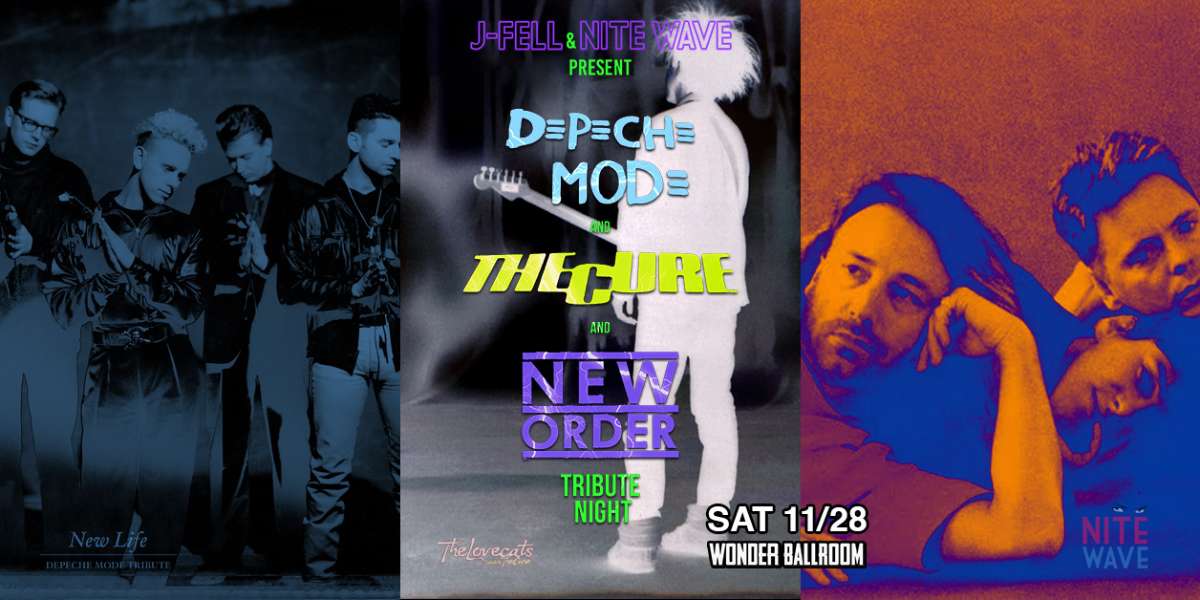
Apr/25 · Talking Heads, Blondie & Devo Tribute Night
Apr/27 · The Brook & The Bluff: The Werewolf Tour
Apr/28 · Patrick Watson – Uh Oh Tour
Apr/30 · JENSEN MCRAE – God Has A Hitman Tour
May/1 · The Red Pears and Together Pangea
May/2 · José González – Against The Dying Of The Light Tour
May/3 · GOLDEN: A K-Pop Kids Party!
May/5 · Joy Crookes
May/7 · Snail Mail
May/8 · Powfu Presents: The Lofi Library Tour
May/9 · Earlybirds Club
May/17 · Dry Cleaning
May/22 · hemlocke springs: the apple tree under the sea tour
May/24 · Inner Wave & Los Mesoneros – North America Tour ’26
May/27 · Josiah and the Bonnevilles – The Redline North American Tour
May/29 · Kes – Roots, Rock, Soca Tour
May/30 · Clara La San – Chosen Silences Tour 2026
May/31 · Yot Club – Simpleton Tour
Jun/2 · RESCHEDULED Claire Rosinkranz – My Lover Tour
Jun/6 · Jeff Rosenstock
Jun/7 · Jeff Rosenstock
Jun/10 · 3BALLMTY – CLUB CONEXIÓN TOUR – Phase 2
Jun/18 · The Crane Wives – ACT II
Jun/19 · The Crane Wives – ACT II
Jun/20 · Bôa
Jun/23 · Pomplamoose
Jun/24 · MOVED TO THE CRYSTAL BALLROOM: underscores Galleria – North American Chapter
Jun/27 · Searows – Death in the Business of Whaling
Jun/28 · Searows – Death in the Business of Whaling
Jul/7 · 3QUENCY – GIRLS TALK TOUR
Jul/9 · Aaron Hibell
Jul/10 · Have A Nice Life
Jul/27 · of Montreal
Jul/28 · Black Moth Super Rainbow
Aug/11 · Kingfishr
Aug/25 · Diggy Graves – The No Vacancy Tour
Aug/27 · Eagles of Death Metal – Death By Sexy Anniversary Tour
Sep/5 · MOVED TO THE CRYSTAL BALLROOM: Slayyyter – WOR$T GIRL IN THE WORLD TOUR
Sep/10 · The Charlatans UK – North American Tour 2026
Sep/11 · Eihwar – “Nordic Ritual Nights” USA Tour 2026
Sep/12 · Haute & Freddy’s Big Disgrace Tour
Sep/14 · Public Image Ltd – This Is Not The Last Tour
Sep/23 · ARLO PARKS – DESIRE TOUR
Sep/26 · deca joins
Oct/2 · EMEI – Night at the Opera Tour
Oct/9 · Kishi Bashi: Sonderlust 10th Anniversary Tour
Oct/20 · MOVED TO ROSELAND THEATER: Julia Wolf – Deep End World Tour
Oct/21 · SLIFT
Jan/11 · Anna von Hausswolff: Iconoclasts Tour
Jan/31 · *POSTPONED until TBD* The Residents – Eskimo Live! Tour

All Shows

Upcoming Events

Monqui Presents

With guest Laney Jones and the Spirits

Friday, April 24
Doors : 7 pm, Show : 8 pm
all ages
$39.25 to $56.25

About Langhorne Slim:

For more than two decades, Langhorne Slim has been a fearless voice in modern Americana, known for his raw emotion and rule-breaking spirit. On his ninth album, The Dreamin’ Kind, the Nashville-based songwriter plugs in his electric guitar and dives headfirst into big-hearted, 1970s-style rock & roll. Produced by Greta Van Fleet’s Sam F. Kiszka, the record pairs power chords and soaring hooks with the vulnerable storytelling that’s long defined Slim’s work. “It felt like I was blowing some old shit up so I could plant some new flowers,” he says. “I love folk music, but rock & roll tickles the same part of my soul. I wanted to explore that.” The collaboration began after Slim opened for Greta Van Fleet, leading to loose, inspired sessions with Kiszka and drummer Danny Wagner. Together they built songs that move from the propulsive rush of “Rock N Roll” and the swagger of “Haunted Man” to the tender sweep of “Dream Come True” and “Stealin’ Time.” Recorded over a year in Nashville, The Dreamin’ Kind bridges Slim’s rootsy past with a louder, more expansive present. It’s a record of freedom and discovery, equally at home in rock clubs and around campfires—proof that Langhorne Slim, ever the dreamer, still finds new ground to break with every song.

Monqui Presents

With guest Laney Jones and the Spirits

Friday, April 24
Doors : 7 pm, Show : 8 pm
all ages
$39.25 to $56.25

Leslie Feist — best known simply as Feist — is recognizable by her warm, haunting voice and unique style that draws on indie rock, jazz-pop, bossa nova, and tuneful campfire folk. She was a respected member of the Canadian alternative music community before becoming an international pop sensation following the critical success of her sophomore solo album, 2004’s Let It Die — which offered the film-, TV-, and advertising-licensing favorite “Mushaboom” — and her commercial breakthrough, 2007’s The Reminder. It included catchy singalong “1234,” a Top Ten hit in the U.S., U.K., and Canada. Rather than pursuing further pop anthems, however, she returned with the moody, atmospheric Metals in 2011, which nonetheless reached the Top Ten across Europe and North America. She integrated bolder sounds including bluesy rock into the rawer, unpredictable Pleasure in 2017, which charted well in Europe. Continuing to experiment with her sound, she took an even more theatrical approach to 2023’s Multitudes, which found her stretching the limits of her voice with a mix of art rock and poignant avant-folk.

Feist was born in Amherst, Nova Scotia, Canada on February 13, 1976. Her father, Harold, was a respected abstract painter and academic, while her mother, Lyn, had studied ceramics. Feist was a baby when her parents divorced, and her mother relocated to Regina, Saskatchewan with young Leslie and her older brother, Ben. Growing up in Regina and later Calgary, Leslie was a good student who hoped to become a writer, and developed an interest in music after joining a youth choir.

When Leslie was 15, her creative ambitions took a sharp turn when she joined a Calgary-based punk band, Placebo (no relation to the later U.K.-based neo-glam outfit) in 1991. In 1993, Placebo won a Battle of the Bands that earned them a spot at a rock festival opening for the Ramones, and in 1995, the group would release an EP, Don’t Drink the Bathwater. However, Feist was an inexperienced vocalist who had trouble keeping up with the group’s powerful stage volume, and in 1996, she left Placebo when she began to experience damage to her vocal cords. Feist left Calgary for Toronto, and was advised by a doctor not to sing for six months. As she settled in her new hometown, Feist used her downtime from singing to work on her instrumental abilities; she taught herself guitar and began writing songs using a four-track recording setup, and also picked up the bass and played for a spell in the band Noah’s Arkweld. In 1998, she became rhythm guitarist with the indie rock outfit By Divine Right, and appeared on their 1999 album Bless This Mess. During her time with By Divine Right, Feist began piecing together the songs she’d been writing and released her first album, Monarch (Lay Down Your Jeweled Head). Most copies of the disc were sold at the merch table at shows, and it received little notice at the time.

After leaving By Divine Right, Feist shared an apartment with a fellow independent musician, Merrill Nisker. As Nisker began shaping her lascivious stage persona Peaches, Feist became part of the act, performing with sock puppets onstage, providing backing vocals, and singing on Peaches‘ debut album, The Teaches of Peaches. (She would also contribute vocals to Peaches‘ 2006 album Impeach My Bush.) After touring the U.K. with Peaches, in 2001 Feist returned home to Toronto and was invited to join the indie rock band and musicians’ collective Broken Social Scene by founder Kevin Drew. After touring with Broken Social Scene, she contributed vocals to their 2002 album You Forgot It in People, which earned rave reviews as well as a Juno Award for Alternative Album of the Year. Later in 2002, Feist left Toronto for Paris, France, and with the help of producers and instrumentalists Chilly Gonzales (whom she had met while working with Peaches) and Renaud Letang (best known for his work with Manu Chao), she began work on her second solo effort. Released in 2004, Let It Die was a strikingly accomplished fusion of pop, folk, indie, electronic, and South American influences, which provided an impressive showcase for Feist’s cool but powerful vocal stylings. The album won enthusiastic reviews and impressive sales by indie standards, while the track “Mushaboom” became a successful single; Let It Die won the Juno Award for Best Alternative Rock Album, while Feist took home the trophy for Best New Artist.

As Feist worked on her third album, she released a 2006 collection called Open Season, which featured remixes, collaborative recordings, and other odds and ends. While Let It Die made Feist into a major indie success story, 2007’s The Reminder turned her into a bona fide pop star; it entered the Canadian album charts at number two and debuted at number 16 in the United States. The album was already selling well when a leading tech company used the song “1234” in a high-profile TV spot; the commercial seemingly did as much to sell the song as it did the audio device, and pushed “1234” into the Top Ten of the U.S. Hot 100 on the strength of paid downloads alone. “My Moon, My Man” and “I Feel It All” also fared well as singles, while The Reminder earned Feist a gold record in the United States and went multi-platinum in Canada, where it peaked on number two on the album chart as well as winning her another five Juno Awards.

The success of The Reminder led to a number of interesting collaborations for Feist: she appeared on Stephen Colbert‘s 2008 holiday special A Colbert Christmas: The Greatest Gift of All, sang a duet with Jeff Tweedy on Wilco‘s 2009 release Wilco: The Album, contributed to a Skip Spence tribute album curated by Beck (it also featured WilcoJamie Lidell, and James Gadson), appeared in a short film directed by Kevin Drew titled The Water, and performed a rewritten version of “1234” on Sesame Street with the Muppets. She also reunited with Broken Social Scene for a handful of live appearances, one of which was shot by director Bruce McDonald for the film This Movie Is Broken. However, while Feist was enjoying working with others, she put a self-imposed moratorium on creating new music of her own for several years, instead working with filmmaker Anthony Seck on a documentary about the recording of The Reminder and her subsequent concert tour, entitled Look at What the Light Did Now. In 2011, Feist returned with a new album, Metals, a low-key set that was well received but noticeably less poppy than The Reminder. It was nonetheless well received, returning her to the number two spot in Canada, reaching a career-high number seven on the Billboard 200, and charting in the Top 30 across Europe, the U.K., and Oceania.

During subsequent years, she kept busy while not releasing much Feist material: she wrote a song for one of the Twilight movies (“Fire in the Water”), made an appearance in the 2011 film The Muppets, collaborated on a split single with the witty heavy metal band Mastodon for Record Store Day 2012, performed at the tenth-anniversary festival of the Arts & Crafts label in 2013, and made appearances on recordings by friends including Mocky and Kevin Drew. When Feist re-emerged with her fifth studio album and first in five-and-a-half years, she explored themes of various emotional states. Pleasure arrived on Interscope/Polydor in April 2017 along with a schedule of international music festival appearances. While the mercurial album barely cracked the top half of the Billboard 200 Stateside, it went as high as number seven in Canada and landed in the Top 20 in several European countries.

Feist celebrated the birth of her first child shortly before the COVID-19 pandemic hit in early 2020, prompting her to relocate from Los Angeles to Toronto to be closer to family. Another major life event, the sudden death of her father, followed in May 2021. In the meantime, as venues eventually began to reopen, sometimes limiting capacity, she enlisted the help of designer Rob Sinclair (QueenPeter GabrielDavid Byrne‘s American Utopia) in planning a series of intimate concerts under the heading Multitudes. Premiering in Hamburg, Germany in August of that year before heading to Canada and the U.S., the show introduced personal, more experimental songs, many with themes surrounding life and death, performed in the round. These songs served as the basis for her first studio album in six years, April 2023’s Multitudes (Interscope/Polydor). It was recorded just weeks prior to release in a home studio in Northern California with longtime collaborators Mocky and Robbie Lackritz, along with Blake Mills.

J-Fell Presents

Saturday, April 25
Doors : 7 pm, Show : 8 pm
all ages
$34

Leslie Feist — best known simply as Feist — is recognizable by her warm, haunting voice and unique style that draws on indie rock, jazz-pop, bossa nova, and tuneful campfire folk. She was a respected member of the Canadian alternative music community before becoming an international pop sensation following the critical success of her sophomore solo album, 2004’s Let It Die — which offered the film-, TV-, and advertising-licensing favorite “Mushaboom” — and her commercial breakthrough, 2007’s The Reminder. It included catchy singalong “1234,” a Top Ten hit in the U.S., U.K., and Canada. Rather than pursuing further pop anthems, however, she returned with the moody, atmospheric Metals in 2011, which nonetheless reached the Top Ten across Europe and North America. She integrated bolder sounds including bluesy rock into the rawer, unpredictable Pleasure in 2017, which charted well in Europe. Continuing to experiment with her sound, she took an even more theatrical approach to 2023’s Multitudes, which found her stretching the limits of her voice with a mix of art rock and poignant avant-folk.

Feist was born in Amherst, Nova Scotia, Canada on February 13, 1976. Her father, Harold, was a respected abstract painter and academic, while her mother, Lyn, had studied ceramics. Feist was a baby when her parents divorced, and her mother relocated to Regina, Saskatchewan with young Leslie and her older brother, Ben. Growing up in Regina and later Calgary, Leslie was a good student who hoped to become a writer, and developed an interest in music after joining a youth choir.

When Leslie was 15, her creative ambitions took a sharp turn when she joined a Calgary-based punk band, Placebo (no relation to the later U.K.-based neo-glam outfit) in 1991. In 1993, Placebo won a Battle of the Bands that earned them a spot at a rock festival opening for the Ramones, and in 1995, the group would release an EP, Don’t Drink the Bathwater. However, Feist was an inexperienced vocalist who had trouble keeping up with the group’s powerful stage volume, and in 1996, she left Placebo when she began to experience damage to her vocal cords. Feist left Calgary for Toronto, and was advised by a doctor not to sing for six months. As she settled in her new hometown, Feist used her downtime from singing to work on her instrumental abilities; she taught herself guitar and began writing songs using a four-track recording setup, and also picked up the bass and played for a spell in the band Noah’s Arkweld. In 1998, she became rhythm guitarist with the indie rock outfit By Divine Right, and appeared on their 1999 album Bless This Mess. During her time with By Divine Right, Feist began piecing together the songs she’d been writing and released her first album, Monarch (Lay Down Your Jeweled Head). Most copies of the disc were sold at the merch table at shows, and it received little notice at the time.

After leaving By Divine Right, Feist shared an apartment with a fellow independent musician, Merrill Nisker. As Nisker began shaping her lascivious stage persona Peaches, Feist became part of the act, performing with sock puppets onstage, providing backing vocals, and singing on Peaches‘ debut album, The Teaches of Peaches. (She would also contribute vocals to Peaches‘ 2006 album Impeach My Bush.) After touring the U.K. with Peaches, in 2001 Feist returned home to Toronto and was invited to join the indie rock band and musicians’ collective Broken Social Scene by founder Kevin Drew. After touring with Broken Social Scene, she contributed vocals to their 2002 album You Forgot It in People, which earned rave reviews as well as a Juno Award for Alternative Album of the Year. Later in 2002, Feist left Toronto for Paris, France, and with the help of producers and instrumentalists Chilly Gonzales (whom she had met while working with Peaches) and Renaud Letang (best known for his work with Manu Chao), she began work on her second solo effort. Released in 2004, Let It Die was a strikingly accomplished fusion of pop, folk, indie, electronic, and South American influences, which provided an impressive showcase for Feist’s cool but powerful vocal stylings. The album won enthusiastic reviews and impressive sales by indie standards, while the track “Mushaboom” became a successful single; Let It Die won the Juno Award for Best Alternative Rock Album, while Feist took home the trophy for Best New Artist.

As Feist worked on her third album, she released a 2006 collection called Open Season, which featured remixes, collaborative recordings, and other odds and ends. While Let It Die made Feist into a major indie success story, 2007’s The Reminder turned her into a bona fide pop star; it entered the Canadian album charts at number two and debuted at number 16 in the United States. The album was already selling well when a leading tech company used the song “1234” in a high-profile TV spot; the commercial seemingly did as much to sell the song as it did the audio device, and pushed “1234” into the Top Ten of the U.S. Hot 100 on the strength of paid downloads alone. “My Moon, My Man” and “I Feel It All” also fared well as singles, while The Reminder earned Feist a gold record in the United States and went multi-platinum in Canada, where it peaked on number two on the album chart as well as winning her another five Juno Awards.

The success of The Reminder led to a number of interesting collaborations for Feist: she appeared on Stephen Colbert‘s 2008 holiday special A Colbert Christmas: The Greatest Gift of All, sang a duet with Jeff Tweedy on Wilco‘s 2009 release Wilco: The Album, contributed to a Skip Spence tribute album curated by Beck (it also featured WilcoJamie Lidell, and James Gadson), appeared in a short film directed by Kevin Drew titled The Water, and performed a rewritten version of “1234” on Sesame Street with the Muppets. She also reunited with Broken Social Scene for a handful of live appearances, one of which was shot by director Bruce McDonald for the film This Movie Is Broken. However, while Feist was enjoying working with others, she put a self-imposed moratorium on creating new music of her own for several years, instead working with filmmaker Anthony Seck on a documentary about the recording of The Reminder and her subsequent concert tour, entitled Look at What the Light Did Now. In 2011, Feist returned with a new album, Metals, a low-key set that was well received but noticeably less poppy than The Reminder. It was nonetheless well received, returning her to the number two spot in Canada, reaching a career-high number seven on the Billboard 200, and charting in the Top 30 across Europe, the U.K., and Oceania.

During subsequent years, she kept busy while not releasing much Feist material: she wrote a song for one of the Twilight movies (“Fire in the Water”), made an appearance in the 2011 film The Muppets, collaborated on a split single with the witty heavy metal band Mastodon for Record Store Day 2012, performed at the tenth-anniversary festival of the Arts & Crafts label in 2013, and made appearances on recordings by friends including Mocky and Kevin Drew. When Feist re-emerged with her fifth studio album and first in five-and-a-half years, she explored themes of various emotional states. Pleasure arrived on Interscope/Polydor in April 2017 along with a schedule of international music festival appearances. While the mercurial album barely cracked the top half of the Billboard 200 Stateside, it went as high as number seven in Canada and landed in the Top 20 in several European countries.

Feist celebrated the birth of her first child shortly before the COVID-19 pandemic hit in early 2020, prompting her to relocate from Los Angeles to Toronto to be closer to family. Another major life event, the sudden death of her father, followed in May 2021. In the meantime, as venues eventually began to reopen, sometimes limiting capacity, she enlisted the help of designer Rob Sinclair (QueenPeter GabrielDavid Byrne‘s American Utopia) in planning a series of intimate concerts under the heading Multitudes. Premiering in Hamburg, Germany in August of that year before heading to Canada and the U.S., the show introduced personal, more experimental songs, many with themes surrounding life and death, performed in the round. These songs served as the basis for her first studio album in six years, April 2023’s Multitudes (Interscope/Polydor). It was recorded just weeks prior to release in a home studio in Northern California with longtime collaborators Mocky and Robbie Lackritz, along with Blake Mills.

Monqui Presents

With guest Ethan Tasch

Monday, April 27
Doors : 7 pm, Show : 8 pm
all ages
$29 to $50

Leslie Feist — best known simply as Feist — is recognizable by her warm, haunting voice and unique style that draws on indie rock, jazz-pop, bossa nova, and tuneful campfire folk. She was a respected member of the Canadian alternative music community before becoming an international pop sensation following the critical success of her sophomore solo album, 2004’s Let It Die — which offered the film-, TV-, and advertising-licensing favorite “Mushaboom” — and her commercial breakthrough, 2007’s The Reminder. It included catchy singalong “1234,” a Top Ten hit in the U.S., U.K., and Canada. Rather than pursuing further pop anthems, however, she returned with the moody, atmospheric Metals in 2011, which nonetheless reached the Top Ten across Europe and North America. She integrated bolder sounds including bluesy rock into the rawer, unpredictable Pleasure in 2017, which charted well in Europe. Continuing to experiment with her sound, she took an even more theatrical approach to 2023’s Multitudes, which found her stretching the limits of her voice with a mix of art rock and poignant avant-folk.

Feist was born in Amherst, Nova Scotia, Canada on February 13, 1976. Her father, Harold, was a respected abstract painter and academic, while her mother, Lyn, had studied ceramics. Feist was a baby when her parents divorced, and her mother relocated to Regina, Saskatchewan with young Leslie and her older brother, Ben. Growing up in Regina and later Calgary, Leslie was a good student who hoped to become a writer, and developed an interest in music after joining a youth choir.

When Leslie was 15, her creative ambitions took a sharp turn when she joined a Calgary-based punk band, Placebo (no relation to the later U.K.-based neo-glam outfit) in 1991. In 1993, Placebo won a Battle of the Bands that earned them a spot at a rock festival opening for the Ramones, and in 1995, the group would release an EP, Don’t Drink the Bathwater. However, Feist was an inexperienced vocalist who had trouble keeping up with the group’s powerful stage volume, and in 1996, she left Placebo when she began to experience damage to her vocal cords. Feist left Calgary for Toronto, and was advised by a doctor not to sing for six months. As she settled in her new hometown, Feist used her downtime from singing to work on her instrumental abilities; she taught herself guitar and began writing songs using a four-track recording setup, and also picked up the bass and played for a spell in the band Noah’s Arkweld. In 1998, she became rhythm guitarist with the indie rock outfit By Divine Right, and appeared on their 1999 album Bless This Mess. During her time with By Divine Right, Feist began piecing together the songs she’d been writing and released her first album, Monarch (Lay Down Your Jeweled Head). Most copies of the disc were sold at the merch table at shows, and it received little notice at the time.

After leaving By Divine Right, Feist shared an apartment with a fellow independent musician, Merrill Nisker. As Nisker began shaping her lascivious stage persona Peaches, Feist became part of the act, performing with sock puppets onstage, providing backing vocals, and singing on Peaches‘ debut album, The Teaches of Peaches. (She would also contribute vocals to Peaches‘ 2006 album Impeach My Bush.) After touring the U.K. with Peaches, in 2001 Feist returned home to Toronto and was invited to join the indie rock band and musicians’ collective Broken Social Scene by founder Kevin Drew. After touring with Broken Social Scene, she contributed vocals to their 2002 album You Forgot It in People, which earned rave reviews as well as a Juno Award for Alternative Album of the Year. Later in 2002, Feist left Toronto for Paris, France, and with the help of producers and instrumentalists Chilly Gonzales (whom she had met while working with Peaches) and Renaud Letang (best known for his work with Manu Chao), she began work on her second solo effort. Released in 2004, Let It Die was a strikingly accomplished fusion of pop, folk, indie, electronic, and South American influences, which provided an impressive showcase for Feist’s cool but powerful vocal stylings. The album won enthusiastic reviews and impressive sales by indie standards, while the track “Mushaboom” became a successful single; Let It Die won the Juno Award for Best Alternative Rock Album, while Feist took home the trophy for Best New Artist.

As Feist worked on her third album, she released a 2006 collection called Open Season, which featured remixes, collaborative recordings, and other odds and ends. While Let It Die made Feist into a major indie success story, 2007’s The Reminder turned her into a bona fide pop star; it entered the Canadian album charts at number two and debuted at number 16 in the United States. The album was already selling well when a leading tech company used the song “1234” in a high-profile TV spot; the commercial seemingly did as much to sell the song as it did the audio device, and pushed “1234” into the Top Ten of the U.S. Hot 100 on the strength of paid downloads alone. “My Moon, My Man” and “I Feel It All” also fared well as singles, while The Reminder earned Feist a gold record in the United States and went multi-platinum in Canada, where it peaked on number two on the album chart as well as winning her another five Juno Awards.

The success of The Reminder led to a number of interesting collaborations for Feist: she appeared on Stephen Colbert‘s 2008 holiday special A Colbert Christmas: The Greatest Gift of All, sang a duet with Jeff Tweedy on Wilco‘s 2009 release Wilco: The Album, contributed to a Skip Spence tribute album curated by Beck (it also featured WilcoJamie Lidell, and James Gadson), appeared in a short film directed by Kevin Drew titled The Water, and performed a rewritten version of “1234” on Sesame Street with the Muppets. She also reunited with Broken Social Scene for a handful of live appearances, one of which was shot by director Bruce McDonald for the film This Movie Is Broken. However, while Feist was enjoying working with others, she put a self-imposed moratorium on creating new music of her own for several years, instead working with filmmaker Anthony Seck on a documentary about the recording of The Reminder and her subsequent concert tour, entitled Look at What the Light Did Now. In 2011, Feist returned with a new album, Metals, a low-key set that was well received but noticeably less poppy than The Reminder. It was nonetheless well received, returning her to the number two spot in Canada, reaching a career-high number seven on the Billboard 200, and charting in the Top 30 across Europe, the U.K., and Oceania.

During subsequent years, she kept busy while not releasing much Feist material: she wrote a song for one of the Twilight movies (“Fire in the Water”), made an appearance in the 2011 film The Muppets, collaborated on a split single with the witty heavy metal band Mastodon for Record Store Day 2012, performed at the tenth-anniversary festival of the Arts & Crafts label in 2013, and made appearances on recordings by friends including Mocky and Kevin Drew. When Feist re-emerged with her fifth studio album and first in five-and-a-half years, she explored themes of various emotional states. Pleasure arrived on Interscope/Polydor in April 2017 along with a schedule of international music festival appearances. While the mercurial album barely cracked the top half of the Billboard 200 Stateside, it went as high as number seven in Canada and landed in the Top 20 in several European countries.

Feist celebrated the birth of her first child shortly before the COVID-19 pandemic hit in early 2020, prompting her to relocate from Los Angeles to Toronto to be closer to family. Another major life event, the sudden death of her father, followed in May 2021. In the meantime, as venues eventually began to reopen, sometimes limiting capacity, she enlisted the help of designer Rob Sinclair (QueenPeter GabrielDavid Byrne‘s American Utopia) in planning a series of intimate concerts under the heading Multitudes. Premiering in Hamburg, Germany in August of that year before heading to Canada and the U.S., the show introduced personal, more experimental songs, many with themes surrounding life and death, performed in the round. These songs served as the basis for her first studio album in six years, April 2023’s Multitudes (Interscope/Polydor). It was recorded just weeks prior to release in a home studio in Northern California with longtime collaborators Mocky and Robbie Lackritz, along with Blake Mills.

Monqui Presents

With guest La Force

Tuesday, April 28
Doors : 7 pm, Show : 8 pm
all ages
$41.50 to $68.25

Leslie Feist — best known simply as Feist — is recognizable by her warm, haunting voice and unique style that draws on indie rock, jazz-pop, bossa nova, and tuneful campfire folk. She was a respected member of the Canadian alternative music community before becoming an international pop sensation following the critical success of her sophomore solo album, 2004’s Let It Die — which offered the film-, TV-, and advertising-licensing favorite “Mushaboom” — and her commercial breakthrough, 2007’s The Reminder. It included catchy singalong “1234,” a Top Ten hit in the U.S., U.K., and Canada. Rather than pursuing further pop anthems, however, she returned with the moody, atmospheric Metals in 2011, which nonetheless reached the Top Ten across Europe and North America. She integrated bolder sounds including bluesy rock into the rawer, unpredictable Pleasure in 2017, which charted well in Europe. Continuing to experiment with her sound, she took an even more theatrical approach to 2023’s Multitudes, which found her stretching the limits of her voice with a mix of art rock and poignant avant-folk.

Feist was born in Amherst, Nova Scotia, Canada on February 13, 1976. Her father, Harold, was a respected abstract painter and academic, while her mother, Lyn, had studied ceramics. Feist was a baby when her parents divorced, and her mother relocated to Regina, Saskatchewan with young Leslie and her older brother, Ben. Growing up in Regina and later Calgary, Leslie was a good student who hoped to become a writer, and developed an interest in music after joining a youth choir.

When Leslie was 15, her creative ambitions took a sharp turn when she joined a Calgary-based punk band, Placebo (no relation to the later U.K.-based neo-glam outfit) in 1991. In 1993, Placebo won a Battle of the Bands that earned them a spot at a rock festival opening for the Ramones, and in 1995, the group would release an EP, Don’t Drink the Bathwater. However, Feist was an inexperienced vocalist who had trouble keeping up with the group’s powerful stage volume, and in 1996, she left Placebo when she began to experience damage to her vocal cords. Feist left Calgary for Toronto, and was advised by a doctor not to sing for six months. As she settled in her new hometown, Feist used her downtime from singing to work on her instrumental abilities; she taught herself guitar and began writing songs using a four-track recording setup, and also picked up the bass and played for a spell in the band Noah’s Arkweld. In 1998, she became rhythm guitarist with the indie rock outfit By Divine Right, and appeared on their 1999 album Bless This Mess. During her time with By Divine Right, Feist began piecing together the songs she’d been writing and released her first album, Monarch (Lay Down Your Jeweled Head). Most copies of the disc were sold at the merch table at shows, and it received little notice at the time.

After leaving By Divine Right, Feist shared an apartment with a fellow independent musician, Merrill Nisker. As Nisker began shaping her lascivious stage persona Peaches, Feist became part of the act, performing with sock puppets onstage, providing backing vocals, and singing on Peaches‘ debut album, The Teaches of Peaches. (She would also contribute vocals to Peaches‘ 2006 album Impeach My Bush.) After touring the U.K. with Peaches, in 2001 Feist returned home to Toronto and was invited to join the indie rock band and musicians’ collective Broken Social Scene by founder Kevin Drew. After touring with Broken Social Scene, she contributed vocals to their 2002 album You Forgot It in People, which earned rave reviews as well as a Juno Award for Alternative Album of the Year. Later in 2002, Feist left Toronto for Paris, France, and with the help of producers and instrumentalists Chilly Gonzales (whom she had met while working with Peaches) and Renaud Letang (best known for his work with Manu Chao), she began work on her second solo effort. Released in 2004, Let It Die was a strikingly accomplished fusion of pop, folk, indie, electronic, and South American influences, which provided an impressive showcase for Feist’s cool but powerful vocal stylings. The album won enthusiastic reviews and impressive sales by indie standards, while the track “Mushaboom” became a successful single; Let It Die won the Juno Award for Best Alternative Rock Album, while Feist took home the trophy for Best New Artist.

As Feist worked on her third album, she released a 2006 collection called Open Season, which featured remixes, collaborative recordings, and other odds and ends. While Let It Die made Feist into a major indie success story, 2007’s The Reminder turned her into a bona fide pop star; it entered the Canadian album charts at number two and debuted at number 16 in the United States. The album was already selling well when a leading tech company used the song “1234” in a high-profile TV spot; the commercial seemingly did as much to sell the song as it did the audio device, and pushed “1234” into the Top Ten of the U.S. Hot 100 on the strength of paid downloads alone. “My Moon, My Man” and “I Feel It All” also fared well as singles, while The Reminder earned Feist a gold record in the United States and went multi-platinum in Canada, where it peaked on number two on the album chart as well as winning her another five Juno Awards.

The success of The Reminder led to a number of interesting collaborations for Feist: she appeared on Stephen Colbert‘s 2008 holiday special A Colbert Christmas: The Greatest Gift of All, sang a duet with Jeff Tweedy on Wilco‘s 2009 release Wilco: The Album, contributed to a Skip Spence tribute album curated by Beck (it also featured WilcoJamie Lidell, and James Gadson), appeared in a short film directed by Kevin Drew titled The Water, and performed a rewritten version of “1234” on Sesame Street with the Muppets. She also reunited with Broken Social Scene for a handful of live appearances, one of which was shot by director Bruce McDonald for the film This Movie Is Broken. However, while Feist was enjoying working with others, she put a self-imposed moratorium on creating new music of her own for several years, instead working with filmmaker Anthony Seck on a documentary about the recording of The Reminder and her subsequent concert tour, entitled Look at What the Light Did Now. In 2011, Feist returned with a new album, Metals, a low-key set that was well received but noticeably less poppy than The Reminder. It was nonetheless well received, returning her to the number two spot in Canada, reaching a career-high number seven on the Billboard 200, and charting in the Top 30 across Europe, the U.K., and Oceania.

During subsequent years, she kept busy while not releasing much Feist material: she wrote a song for one of the Twilight movies (“Fire in the Water”), made an appearance in the 2011 film The Muppets, collaborated on a split single with the witty heavy metal band Mastodon for Record Store Day 2012, performed at the tenth-anniversary festival of the Arts & Crafts label in 2013, and made appearances on recordings by friends including Mocky and Kevin Drew. When Feist re-emerged with her fifth studio album and first in five-and-a-half years, she explored themes of various emotional states. Pleasure arrived on Interscope/Polydor in April 2017 along with a schedule of international music festival appearances. While the mercurial album barely cracked the top half of the Billboard 200 Stateside, it went as high as number seven in Canada and landed in the Top 20 in several European countries.

Feist celebrated the birth of her first child shortly before the COVID-19 pandemic hit in early 2020, prompting her to relocate from Los Angeles to Toronto to be closer to family. Another major life event, the sudden death of her father, followed in May 2021. In the meantime, as venues eventually began to reopen, sometimes limiting capacity, she enlisted the help of designer Rob Sinclair (QueenPeter GabrielDavid Byrne‘s American Utopia) in planning a series of intimate concerts under the heading Multitudes. Premiering in Hamburg, Germany in August of that year before heading to Canada and the U.S., the show introduced personal, more experimental songs, many with themes surrounding life and death, performed in the round. These songs served as the basis for her first studio album in six years, April 2023’s Multitudes (Interscope/Polydor). It was recorded just weeks prior to release in a home studio in Northern California with longtime collaborators Mocky and Robbie Lackritz, along with Blake Mills.

Monqui Presents

With guest Marie Dresselhuis

Thursday, April 30
Doors : 7 pm, Show : 8 pm
all ages
$34 to $56.25

Leslie Feist — best known simply as Feist — is recognizable by her warm, haunting voice and unique style that draws on indie rock, jazz-pop, bossa nova, and tuneful campfire folk. She was a respected member of the Canadian alternative music community before becoming an international pop sensation following the critical success of her sophomore solo album, 2004’s Let It Die — which offered the film-, TV-, and advertising-licensing favorite “Mushaboom” — and her commercial breakthrough, 2007’s The Reminder. It included catchy singalong “1234,” a Top Ten hit in the U.S., U.K., and Canada. Rather than pursuing further pop anthems, however, she returned with the moody, atmospheric Metals in 2011, which nonetheless reached the Top Ten across Europe and North America. She integrated bolder sounds including bluesy rock into the rawer, unpredictable Pleasure in 2017, which charted well in Europe. Continuing to experiment with her sound, she took an even more theatrical approach to 2023’s Multitudes, which found her stretching the limits of her voice with a mix of art rock and poignant avant-folk.

Feist was born in Amherst, Nova Scotia, Canada on February 13, 1976. Her father, Harold, was a respected abstract painter and academic, while her mother, Lyn, had studied ceramics. Feist was a baby when her parents divorced, and her mother relocated to Regina, Saskatchewan with young Leslie and her older brother, Ben. Growing up in Regina and later Calgary, Leslie was a good student who hoped to become a writer, and developed an interest in music after joining a youth choir.

When Leslie was 15, her creative ambitions took a sharp turn when she joined a Calgary-based punk band, Placebo (no relation to the later U.K.-based neo-glam outfit) in 1991. In 1993, Placebo won a Battle of the Bands that earned them a spot at a rock festival opening for the Ramones, and in 1995, the group would release an EP, Don’t Drink the Bathwater. However, Feist was an inexperienced vocalist who had trouble keeping up with the group’s powerful stage volume, and in 1996, she left Placebo when she began to experience damage to her vocal cords. Feist left Calgary for Toronto, and was advised by a doctor not to sing for six months. As she settled in her new hometown, Feist used her downtime from singing to work on her instrumental abilities; she taught herself guitar and began writing songs using a four-track recording setup, and also picked up the bass and played for a spell in the band Noah’s Arkweld. In 1998, she became rhythm guitarist with the indie rock outfit By Divine Right, and appeared on their 1999 album Bless This Mess. During her time with By Divine Right, Feist began piecing together the songs she’d been writing and released her first album, Monarch (Lay Down Your Jeweled Head). Most copies of the disc were sold at the merch table at shows, and it received little notice at the time.

After leaving By Divine Right, Feist shared an apartment with a fellow independent musician, Merrill Nisker. As Nisker began shaping her lascivious stage persona Peaches, Feist became part of the act, performing with sock puppets onstage, providing backing vocals, and singing on Peaches‘ debut album, The Teaches of Peaches. (She would also contribute vocals to Peaches‘ 2006 album Impeach My Bush.) After touring the U.K. with Peaches, in 2001 Feist returned home to Toronto and was invited to join the indie rock band and musicians’ collective Broken Social Scene by founder Kevin Drew. After touring with Broken Social Scene, she contributed vocals to their 2002 album You Forgot It in People, which earned rave reviews as well as a Juno Award for Alternative Album of the Year. Later in 2002, Feist left Toronto for Paris, France, and with the help of producers and instrumentalists Chilly Gonzales (whom she had met while working with Peaches) and Renaud Letang (best known for his work with Manu Chao), she began work on her second solo effort. Released in 2004, Let It Die was a strikingly accomplished fusion of pop, folk, indie, electronic, and South American influences, which provided an impressive showcase for Feist’s cool but powerful vocal stylings. The album won enthusiastic reviews and impressive sales by indie standards, while the track “Mushaboom” became a successful single; Let It Die won the Juno Award for Best Alternative Rock Album, while Feist took home the trophy for Best New Artist.

As Feist worked on her third album, she released a 2006 collection called Open Season, which featured remixes, collaborative recordings, and other odds and ends. While Let It Die made Feist into a major indie success story, 2007’s The Reminder turned her into a bona fide pop star; it entered the Canadian album charts at number two and debuted at number 16 in the United States. The album was already selling well when a leading tech company used the song “1234” in a high-profile TV spot; the commercial seemingly did as much to sell the song as it did the audio device, and pushed “1234” into the Top Ten of the U.S. Hot 100 on the strength of paid downloads alone. “My Moon, My Man” and “I Feel It All” also fared well as singles, while The Reminder earned Feist a gold record in the United States and went multi-platinum in Canada, where it peaked on number two on the album chart as well as winning her another five Juno Awards.

The success of The Reminder led to a number of interesting collaborations for Feist: she appeared on Stephen Colbert‘s 2008 holiday special A Colbert Christmas: The Greatest Gift of All, sang a duet with Jeff Tweedy on Wilco‘s 2009 release Wilco: The Album, contributed to a Skip Spence tribute album curated by Beck (it also featured WilcoJamie Lidell, and James Gadson), appeared in a short film directed by Kevin Drew titled The Water, and performed a rewritten version of “1234” on Sesame Street with the Muppets. She also reunited with Broken Social Scene for a handful of live appearances, one of which was shot by director Bruce McDonald for the film This Movie Is Broken. However, while Feist was enjoying working with others, she put a self-imposed moratorium on creating new music of her own for several years, instead working with filmmaker Anthony Seck on a documentary about the recording of The Reminder and her subsequent concert tour, entitled Look at What the Light Did Now. In 2011, Feist returned with a new album, Metals, a low-key set that was well received but noticeably less poppy than The Reminder. It was nonetheless well received, returning her to the number two spot in Canada, reaching a career-high number seven on the Billboard 200, and charting in the Top 30 across Europe, the U.K., and Oceania.

During subsequent years, she kept busy while not releasing much Feist material: she wrote a song for one of the Twilight movies (“Fire in the Water”), made an appearance in the 2011 film The Muppets, collaborated on a split single with the witty heavy metal band Mastodon for Record Store Day 2012, performed at the tenth-anniversary festival of the Arts & Crafts label in 2013, and made appearances on recordings by friends including Mocky and Kevin Drew. When Feist re-emerged with her fifth studio album and first in five-and-a-half years, she explored themes of various emotional states. Pleasure arrived on Interscope/Polydor in April 2017 along with a schedule of international music festival appearances. While the mercurial album barely cracked the top half of the Billboard 200 Stateside, it went as high as number seven in Canada and landed in the Top 20 in several European countries.

Feist celebrated the birth of her first child shortly before the COVID-19 pandemic hit in early 2020, prompting her to relocate from Los Angeles to Toronto to be closer to family. Another major life event, the sudden death of her father, followed in May 2021. In the meantime, as venues eventually began to reopen, sometimes limiting capacity, she enlisted the help of designer Rob Sinclair (QueenPeter GabrielDavid Byrne‘s American Utopia) in planning a series of intimate concerts under the heading Multitudes. Premiering in Hamburg, Germany in August of that year before heading to Canada and the U.S., the show introduced personal, more experimental songs, many with themes surrounding life and death, performed in the round. These songs served as the basis for her first studio album in six years, April 2023’s Multitudes (Interscope/Polydor). It was recorded just weeks prior to release in a home studio in Northern California with longtime collaborators Mocky and Robbie Lackritz, along with Blake Mills.

Monqui Presents

With The High Curbs

Friday, May 1
Doors : 7:30 pm, Show : 8:30 pm
all ages
$34 to $45

Leslie Feist — best known simply as Feist — is recognizable by her warm, haunting voice and unique style that draws on indie rock, jazz-pop, bossa nova, and tuneful campfire folk. She was a respected member of the Canadian alternative music community before becoming an international pop sensation following the critical success of her sophomore solo album, 2004’s Let It Die — which offered the film-, TV-, and advertising-licensing favorite “Mushaboom” — and her commercial breakthrough, 2007’s The Reminder. It included catchy singalong “1234,” a Top Ten hit in the U.S., U.K., and Canada. Rather than pursuing further pop anthems, however, she returned with the moody, atmospheric Metals in 2011, which nonetheless reached the Top Ten across Europe and North America. She integrated bolder sounds including bluesy rock into the rawer, unpredictable Pleasure in 2017, which charted well in Europe. Continuing to experiment with her sound, she took an even more theatrical approach to 2023’s Multitudes, which found her stretching the limits of her voice with a mix of art rock and poignant avant-folk.

Feist was born in Amherst, Nova Scotia, Canada on February 13, 1976. Her father, Harold, was a respected abstract painter and academic, while her mother, Lyn, had studied ceramics. Feist was a baby when her parents divorced, and her mother relocated to Regina, Saskatchewan with young Leslie and her older brother, Ben. Growing up in Regina and later Calgary, Leslie was a good student who hoped to become a writer, and developed an interest in music after joining a youth choir.

When Leslie was 15, her creative ambitions took a sharp turn when she joined a Calgary-based punk band, Placebo (no relation to the later U.K.-based neo-glam outfit) in 1991. In 1993, Placebo won a Battle of the Bands that earned them a spot at a rock festival opening for the Ramones, and in 1995, the group would release an EP, Don’t Drink the Bathwater. However, Feist was an inexperienced vocalist who had trouble keeping up with the group’s powerful stage volume, and in 1996, she left Placebo when she began to experience damage to her vocal cords. Feist left Calgary for Toronto, and was advised by a doctor not to sing for six months. As she settled in her new hometown, Feist used her downtime from singing to work on her instrumental abilities; she taught herself guitar and began writing songs using a four-track recording setup, and also picked up the bass and played for a spell in the band Noah’s Arkweld. In 1998, she became rhythm guitarist with the indie rock outfit By Divine Right, and appeared on their 1999 album Bless This Mess. During her time with By Divine Right, Feist began piecing together the songs she’d been writing and released her first album, Monarch (Lay Down Your Jeweled Head). Most copies of the disc were sold at the merch table at shows, and it received little notice at the time.

After leaving By Divine Right, Feist shared an apartment with a fellow independent musician, Merrill Nisker. As Nisker began shaping her lascivious stage persona Peaches, Feist became part of the act, performing with sock puppets onstage, providing backing vocals, and singing on Peaches‘ debut album, The Teaches of Peaches. (She would also contribute vocals to Peaches‘ 2006 album Impeach My Bush.) After touring the U.K. with Peaches, in 2001 Feist returned home to Toronto and was invited to join the indie rock band and musicians’ collective Broken Social Scene by founder Kevin Drew. After touring with Broken Social Scene, she contributed vocals to their 2002 album You Forgot It in People, which earned rave reviews as well as a Juno Award for Alternative Album of the Year. Later in 2002, Feist left Toronto for Paris, France, and with the help of producers and instrumentalists Chilly Gonzales (whom she had met while working with Peaches) and Renaud Letang (best known for his work with Manu Chao), she began work on her second solo effort. Released in 2004, Let It Die was a strikingly accomplished fusion of pop, folk, indie, electronic, and South American influences, which provided an impressive showcase for Feist’s cool but powerful vocal stylings. The album won enthusiastic reviews and impressive sales by indie standards, while the track “Mushaboom” became a successful single; Let It Die won the Juno Award for Best Alternative Rock Album, while Feist took home the trophy for Best New Artist.

As Feist worked on her third album, she released a 2006 collection called Open Season, which featured remixes, collaborative recordings, and other odds and ends. While Let It Die made Feist into a major indie success story, 2007’s The Reminder turned her into a bona fide pop star; it entered the Canadian album charts at number two and debuted at number 16 in the United States. The album was already selling well when a leading tech company used the song “1234” in a high-profile TV spot; the commercial seemingly did as much to sell the song as it did the audio device, and pushed “1234” into the Top Ten of the U.S. Hot 100 on the strength of paid downloads alone. “My Moon, My Man” and “I Feel It All” also fared well as singles, while The Reminder earned Feist a gold record in the United States and went multi-platinum in Canada, where it peaked on number two on the album chart as well as winning her another five Juno Awards.

The success of The Reminder led to a number of interesting collaborations for Feist: she appeared on Stephen Colbert‘s 2008 holiday special A Colbert Christmas: The Greatest Gift of All, sang a duet with Jeff Tweedy on Wilco‘s 2009 release Wilco: The Album, contributed to a Skip Spence tribute album curated by Beck (it also featured WilcoJamie Lidell, and James Gadson), appeared in a short film directed by Kevin Drew titled The Water, and performed a rewritten version of “1234” on Sesame Street with the Muppets. She also reunited with Broken Social Scene for a handful of live appearances, one of which was shot by director Bruce McDonald for the film This Movie Is Broken. However, while Feist was enjoying working with others, she put a self-imposed moratorium on creating new music of her own for several years, instead working with filmmaker Anthony Seck on a documentary about the recording of The Reminder and her subsequent concert tour, entitled Look at What the Light Did Now. In 2011, Feist returned with a new album, Metals, a low-key set that was well received but noticeably less poppy than The Reminder. It was nonetheless well received, returning her to the number two spot in Canada, reaching a career-high number seven on the Billboard 200, and charting in the Top 30 across Europe, the U.K., and Oceania.

During subsequent years, she kept busy while not releasing much Feist material: she wrote a song for one of the Twilight movies (“Fire in the Water”), made an appearance in the 2011 film The Muppets, collaborated on a split single with the witty heavy metal band Mastodon for Record Store Day 2012, performed at the tenth-anniversary festival of the Arts & Crafts label in 2013, and made appearances on recordings by friends including Mocky and Kevin Drew. When Feist re-emerged with her fifth studio album and first in five-and-a-half years, she explored themes of various emotional states. Pleasure arrived on Interscope/Polydor in April 2017 along with a schedule of international music festival appearances. While the mercurial album barely cracked the top half of the Billboard 200 Stateside, it went as high as number seven in Canada and landed in the Top 20 in several European countries.

Feist celebrated the birth of her first child shortly before the COVID-19 pandemic hit in early 2020, prompting her to relocate from Los Angeles to Toronto to be closer to family. Another major life event, the sudden death of her father, followed in May 2021. In the meantime, as venues eventually began to reopen, sometimes limiting capacity, she enlisted the help of designer Rob Sinclair (QueenPeter GabrielDavid Byrne‘s American Utopia) in planning a series of intimate concerts under the heading Multitudes. Premiering in Hamburg, Germany in August of that year before heading to Canada and the U.S., the show introduced personal, more experimental songs, many with themes surrounding life and death, performed in the round. These songs served as the basis for her first studio album in six years, April 2023’s Multitudes (Interscope/Polydor). It was recorded just weeks prior to release in a home studio in Northern California with longtime collaborators Mocky and Robbie Lackritz, along with Blake Mills.

Monqui Presents

Saturday, May 2
Doors : 7 pm, Show : 8 pm
all ages
$56.25 to $158.68

Leslie Feist — best known simply as Feist — is recognizable by her warm, haunting voice and unique style that draws on indie rock, jazz-pop, bossa nova, and tuneful campfire folk. She was a respected member of the Canadian alternative music community before becoming an international pop sensation following the critical success of her sophomore solo album, 2004’s Let It Die — which offered the film-, TV-, and advertising-licensing favorite “Mushaboom” — and her commercial breakthrough, 2007’s The Reminder. It included catchy singalong “1234,” a Top Ten hit in the U.S., U.K., and Canada. Rather than pursuing further pop anthems, however, she returned with the moody, atmospheric Metals in 2011, which nonetheless reached the Top Ten across Europe and North America. She integrated bolder sounds including bluesy rock into the rawer, unpredictable Pleasure in 2017, which charted well in Europe. Continuing to experiment with her sound, she took an even more theatrical approach to 2023’s Multitudes, which found her stretching the limits of her voice with a mix of art rock and poignant avant-folk.

Feist was born in Amherst, Nova Scotia, Canada on February 13, 1976. Her father, Harold, was a respected abstract painter and academic, while her mother, Lyn, had studied ceramics. Feist was a baby when her parents divorced, and her mother relocated to Regina, Saskatchewan with young Leslie and her older brother, Ben. Growing up in Regina and later Calgary, Leslie was a good student who hoped to become a writer, and developed an interest in music after joining a youth choir.

When Leslie was 15, her creative ambitions took a sharp turn when she joined a Calgary-based punk band, Placebo (no relation to the later U.K.-based neo-glam outfit) in 1991. In 1993, Placebo won a Battle of the Bands that earned them a spot at a rock festival opening for the Ramones, and in 1995, the group would release an EP, Don’t Drink the Bathwater. However, Feist was an inexperienced vocalist who had trouble keeping up with the group’s powerful stage volume, and in 1996, she left Placebo when she began to experience damage to her vocal cords. Feist left Calgary for Toronto, and was advised by a doctor not to sing for six months. As she settled in her new hometown, Feist used her downtime from singing to work on her instrumental abilities; she taught herself guitar and began writing songs using a four-track recording setup, and also picked up the bass and played for a spell in the band Noah’s Arkweld. In 1998, she became rhythm guitarist with the indie rock outfit By Divine Right, and appeared on their 1999 album Bless This Mess. During her time with By Divine Right, Feist began piecing together the songs she’d been writing and released her first album, Monarch (Lay Down Your Jeweled Head). Most copies of the disc were sold at the merch table at shows, and it received little notice at the time.

After leaving By Divine Right, Feist shared an apartment with a fellow independent musician, Merrill Nisker. As Nisker began shaping her lascivious stage persona Peaches, Feist became part of the act, performing with sock puppets onstage, providing backing vocals, and singing on Peaches‘ debut album, The Teaches of Peaches. (She would also contribute vocals to Peaches‘ 2006 album Impeach My Bush.) After touring the U.K. with Peaches, in 2001 Feist returned home to Toronto and was invited to join the indie rock band and musicians’ collective Broken Social Scene by founder Kevin Drew. After touring with Broken Social Scene, she contributed vocals to their 2002 album You Forgot It in People, which earned rave reviews as well as a Juno Award for Alternative Album of the Year. Later in 2002, Feist left Toronto for Paris, France, and with the help of producers and instrumentalists Chilly Gonzales (whom she had met while working with Peaches) and Renaud Letang (best known for his work with Manu Chao), she began work on her second solo effort. Released in 2004, Let It Die was a strikingly accomplished fusion of pop, folk, indie, electronic, and South American influences, which provided an impressive showcase for Feist’s cool but powerful vocal stylings. The album won enthusiastic reviews and impressive sales by indie standards, while the track “Mushaboom” became a successful single; Let It Die won the Juno Award for Best Alternative Rock Album, while Feist took home the trophy for Best New Artist.

As Feist worked on her third album, she released a 2006 collection called Open Season, which featured remixes, collaborative recordings, and other odds and ends. While Let It Die made Feist into a major indie success story, 2007’s The Reminder turned her into a bona fide pop star; it entered the Canadian album charts at number two and debuted at number 16 in the United States. The album was already selling well when a leading tech company used the song “1234” in a high-profile TV spot; the commercial seemingly did as much to sell the song as it did the audio device, and pushed “1234” into the Top Ten of the U.S. Hot 100 on the strength of paid downloads alone. “My Moon, My Man” and “I Feel It All” also fared well as singles, while The Reminder earned Feist a gold record in the United States and went multi-platinum in Canada, where it peaked on number two on the album chart as well as winning her another five Juno Awards.

The success of The Reminder led to a number of interesting collaborations for Feist: she appeared on Stephen Colbert‘s 2008 holiday special A Colbert Christmas: The Greatest Gift of All, sang a duet with Jeff Tweedy on Wilco‘s 2009 release Wilco: The Album, contributed to a Skip Spence tribute album curated by Beck (it also featured WilcoJamie Lidell, and James Gadson), appeared in a short film directed by Kevin Drew titled The Water, and performed a rewritten version of “1234” on Sesame Street with the Muppets. She also reunited with Broken Social Scene for a handful of live appearances, one of which was shot by director Bruce McDonald for the film This Movie Is Broken. However, while Feist was enjoying working with others, she put a self-imposed moratorium on creating new music of her own for several years, instead working with filmmaker Anthony Seck on a documentary about the recording of The Reminder and her subsequent concert tour, entitled Look at What the Light Did Now. In 2011, Feist returned with a new album, Metals, a low-key set that was well received but noticeably less poppy than The Reminder. It was nonetheless well received, returning her to the number two spot in Canada, reaching a career-high number seven on the Billboard 200, and charting in the Top 30 across Europe, the U.K., and Oceania.

During subsequent years, she kept busy while not releasing much Feist material: she wrote a song for one of the Twilight movies (“Fire in the Water”), made an appearance in the 2011 film The Muppets, collaborated on a split single with the witty heavy metal band Mastodon for Record Store Day 2012, performed at the tenth-anniversary festival of the Arts & Crafts label in 2013, and made appearances on recordings by friends including Mocky and Kevin Drew. When Feist re-emerged with her fifth studio album and first in five-and-a-half years, she explored themes of various emotional states. Pleasure arrived on Interscope/Polydor in April 2017 along with a schedule of international music festival appearances. While the mercurial album barely cracked the top half of the Billboard 200 Stateside, it went as high as number seven in Canada and landed in the Top 20 in several European countries.

Feist celebrated the birth of her first child shortly before the COVID-19 pandemic hit in early 2020, prompting her to relocate from Los Angeles to Toronto to be closer to family. Another major life event, the sudden death of her father, followed in May 2021. In the meantime, as venues eventually began to reopen, sometimes limiting capacity, she enlisted the help of designer Rob Sinclair (QueenPeter GabrielDavid Byrne‘s American Utopia) in planning a series of intimate concerts under the heading Multitudes. Premiering in Hamburg, Germany in August of that year before heading to Canada and the U.S., the show introduced personal, more experimental songs, many with themes surrounding life and death, performed in the round. These songs served as the basis for her first studio album in six years, April 2023’s Multitudes (Interscope/Polydor). It was recorded just weeks prior to release in a home studio in Northern California with longtime collaborators Mocky and Robbie Lackritz, along with Blake Mills.

Monqui Presents

Sunday, May 3
Doors : 10:30 am, Show : 11 am
all ages
$28.75 to $47

Leslie Feist — best known simply as Feist — is recognizable by her warm, haunting voice and unique style that draws on indie rock, jazz-pop, bossa nova, and tuneful campfire folk. She was a respected member of the Canadian alternative music community before becoming an international pop sensation following the critical success of her sophomore solo album, 2004’s Let It Die — which offered the film-, TV-, and advertising-licensing favorite “Mushaboom” — and her commercial breakthrough, 2007’s The Reminder. It included catchy singalong “1234,” a Top Ten hit in the U.S., U.K., and Canada. Rather than pursuing further pop anthems, however, she returned with the moody, atmospheric Metals in 2011, which nonetheless reached the Top Ten across Europe and North America. She integrated bolder sounds including bluesy rock into the rawer, unpredictable Pleasure in 2017, which charted well in Europe. Continuing to experiment with her sound, she took an even more theatrical approach to 2023’s Multitudes, which found her stretching the limits of her voice with a mix of art rock and poignant avant-folk.

Feist was born in Amherst, Nova Scotia, Canada on February 13, 1976. Her father, Harold, was a respected abstract painter and academic, while her mother, Lyn, had studied ceramics. Feist was a baby when her parents divorced, and her mother relocated to Regina, Saskatchewan with young Leslie and her older brother, Ben. Growing up in Regina and later Calgary, Leslie was a good student who hoped to become a writer, and developed an interest in music after joining a youth choir.

When Leslie was 15, her creative ambitions took a sharp turn when she joined a Calgary-based punk band, Placebo (no relation to the later U.K.-based neo-glam outfit) in 1991. In 1993, Placebo won a Battle of the Bands that earned them a spot at a rock festival opening for the Ramones, and in 1995, the group would release an EP, Don’t Drink the Bathwater. However, Feist was an inexperienced vocalist who had trouble keeping up with the group’s powerful stage volume, and in 1996, she left Placebo when she began to experience damage to her vocal cords. Feist left Calgary for Toronto, and was advised by a doctor not to sing for six months. As she settled in her new hometown, Feist used her downtime from singing to work on her instrumental abilities; she taught herself guitar and began writing songs using a four-track recording setup, and also picked up the bass and played for a spell in the band Noah’s Arkweld. In 1998, she became rhythm guitarist with the indie rock outfit By Divine Right, and appeared on their 1999 album Bless This Mess. During her time with By Divine Right, Feist began piecing together the songs she’d been writing and released her first album, Monarch (Lay Down Your Jeweled Head). Most copies of the disc were sold at the merch table at shows, and it received little notice at the time.

After leaving By Divine Right, Feist shared an apartment with a fellow independent musician, Merrill Nisker. As Nisker began shaping her lascivious stage persona Peaches, Feist became part of the act, performing with sock puppets onstage, providing backing vocals, and singing on Peaches‘ debut album, The Teaches of Peaches. (She would also contribute vocals to Peaches‘ 2006 album Impeach My Bush.) After touring the U.K. with Peaches, in 2001 Feist returned home to Toronto and was invited to join the indie rock band and musicians’ collective Broken Social Scene by founder Kevin Drew. After touring with Broken Social Scene, she contributed vocals to their 2002 album You Forgot It in People, which earned rave reviews as well as a Juno Award for Alternative Album of the Year. Later in 2002, Feist left Toronto for Paris, France, and with the help of producers and instrumentalists Chilly Gonzales (whom she had met while working with Peaches) and Renaud Letang (best known for his work with Manu Chao), she began work on her second solo effort. Released in 2004, Let It Die was a strikingly accomplished fusion of pop, folk, indie, electronic, and South American influences, which provided an impressive showcase for Feist’s cool but powerful vocal stylings. The album won enthusiastic reviews and impressive sales by indie standards, while the track “Mushaboom” became a successful single; Let It Die won the Juno Award for Best Alternative Rock Album, while Feist took home the trophy for Best New Artist.

As Feist worked on her third album, she released a 2006 collection called Open Season, which featured remixes, collaborative recordings, and other odds and ends. While Let It Die made Feist into a major indie success story, 2007’s The Reminder turned her into a bona fide pop star; it entered the Canadian album charts at number two and debuted at number 16 in the United States. The album was already selling well when a leading tech company used the song “1234” in a high-profile TV spot; the commercial seemingly did as much to sell the song as it did the audio device, and pushed “1234” into the Top Ten of the U.S. Hot 100 on the strength of paid downloads alone. “My Moon, My Man” and “I Feel It All” also fared well as singles, while The Reminder earned Feist a gold record in the United States and went multi-platinum in Canada, where it peaked on number two on the album chart as well as winning her another five Juno Awards.

The success of The Reminder led to a number of interesting collaborations for Feist: she appeared on Stephen Colbert‘s 2008 holiday special A Colbert Christmas: The Greatest Gift of All, sang a duet with Jeff Tweedy on Wilco‘s 2009 release Wilco: The Album, contributed to a Skip Spence tribute album curated by Beck (it also featured WilcoJamie Lidell, and James Gadson), appeared in a short film directed by Kevin Drew titled The Water, and performed a rewritten version of “1234” on Sesame Street with the Muppets. She also reunited with Broken Social Scene for a handful of live appearances, one of which was shot by director Bruce McDonald for the film This Movie Is Broken. However, while Feist was enjoying working with others, she put a self-imposed moratorium on creating new music of her own for several years, instead working with filmmaker Anthony Seck on a documentary about the recording of The Reminder and her subsequent concert tour, entitled Look at What the Light Did Now. In 2011, Feist returned with a new album, Metals, a low-key set that was well received but noticeably less poppy than The Reminder. It was nonetheless well received, returning her to the number two spot in Canada, reaching a career-high number seven on the Billboard 200, and charting in the Top 30 across Europe, the U.K., and Oceania.

During subsequent years, she kept busy while not releasing much Feist material: she wrote a song for one of the Twilight movies (“Fire in the Water”), made an appearance in the 2011 film The Muppets, collaborated on a split single with the witty heavy metal band Mastodon for Record Store Day 2012, performed at the tenth-anniversary festival of the Arts & Crafts label in 2013, and made appearances on recordings by friends including Mocky and Kevin Drew. When Feist re-emerged with her fifth studio album and first in five-and-a-half years, she explored themes of various emotional states. Pleasure arrived on Interscope/Polydor in April 2017 along with a schedule of international music festival appearances. While the mercurial album barely cracked the top half of the Billboard 200 Stateside, it went as high as number seven in Canada and landed in the Top 20 in several European countries.

Feist celebrated the birth of her first child shortly before the COVID-19 pandemic hit in early 2020, prompting her to relocate from Los Angeles to Toronto to be closer to family. Another major life event, the sudden death of her father, followed in May 2021. In the meantime, as venues eventually began to reopen, sometimes limiting capacity, she enlisted the help of designer Rob Sinclair (QueenPeter GabrielDavid Byrne‘s American Utopia) in planning a series of intimate concerts under the heading Multitudes. Premiering in Hamburg, Germany in August of that year before heading to Canada and the U.S., the show introduced personal, more experimental songs, many with themes surrounding life and death, performed in the round. These songs served as the basis for her first studio album in six years, April 2023’s Multitudes (Interscope/Polydor). It was recorded just weeks prior to release in a home studio in Northern California with longtime collaborators Mocky and Robbie Lackritz, along with Blake Mills.

Monqui Presents

Tuesday, May 5
Doors : 7 pm, Show : 8 pm
all ages
$34 to $56.25

Leslie Feist — best known simply as Feist — is recognizable by her warm, haunting voice and unique style that draws on indie rock, jazz-pop, bossa nova, and tuneful campfire folk. She was a respected member of the Canadian alternative music community before becoming an international pop sensation following the critical success of her sophomore solo album, 2004’s Let It Die — which offered the film-, TV-, and advertising-licensing favorite “Mushaboom” — and her commercial breakthrough, 2007’s The Reminder. It included catchy singalong “1234,” a Top Ten hit in the U.S., U.K., and Canada. Rather than pursuing further pop anthems, however, she returned with the moody, atmospheric Metals in 2011, which nonetheless reached the Top Ten across Europe and North America. She integrated bolder sounds including bluesy rock into the rawer, unpredictable Pleasure in 2017, which charted well in Europe. Continuing to experiment with her sound, she took an even more theatrical approach to 2023’s Multitudes, which found her stretching the limits of her voice with a mix of art rock and poignant avant-folk.

Feist was born in Amherst, Nova Scotia, Canada on February 13, 1976. Her father, Harold, was a respected abstract painter and academic, while her mother, Lyn, had studied ceramics. Feist was a baby when her parents divorced, and her mother relocated to Regina, Saskatchewan with young Leslie and her older brother, Ben. Growing up in Regina and later Calgary, Leslie was a good student who hoped to become a writer, and developed an interest in music after joining a youth choir.

When Leslie was 15, her creative ambitions took a sharp turn when she joined a Calgary-based punk band, Placebo (no relation to the later U.K.-based neo-glam outfit) in 1991. In 1993, Placebo won a Battle of the Bands that earned them a spot at a rock festival opening for the Ramones, and in 1995, the group would release an EP, Don’t Drink the Bathwater. However, Feist was an inexperienced vocalist who had trouble keeping up with the group’s powerful stage volume, and in 1996, she left Placebo when she began to experience damage to her vocal cords. Feist left Calgary for Toronto, and was advised by a doctor not to sing for six months. As she settled in her new hometown, Feist used her downtime from singing to work on her instrumental abilities; she taught herself guitar and began writing songs using a four-track recording setup, and also picked up the bass and played for a spell in the band Noah’s Arkweld. In 1998, she became rhythm guitarist with the indie rock outfit By Divine Right, and appeared on their 1999 album Bless This Mess. During her time with By Divine Right, Feist began piecing together the songs she’d been writing and released her first album, Monarch (Lay Down Your Jeweled Head). Most copies of the disc were sold at the merch table at shows, and it received little notice at the time.

After leaving By Divine Right, Feist shared an apartment with a fellow independent musician, Merrill Nisker. As Nisker began shaping her lascivious stage persona Peaches, Feist became part of the act, performing with sock puppets onstage, providing backing vocals, and singing on Peaches‘ debut album, The Teaches of Peaches. (She would also contribute vocals to Peaches‘ 2006 album Impeach My Bush.) After touring the U.K. with Peaches, in 2001 Feist returned home to Toronto and was invited to join the indie rock band and musicians’ collective Broken Social Scene by founder Kevin Drew. After touring with Broken Social Scene, she contributed vocals to their 2002 album You Forgot It in People, which earned rave reviews as well as a Juno Award for Alternative Album of the Year. Later in 2002, Feist left Toronto for Paris, France, and with the help of producers and instrumentalists Chilly Gonzales (whom she had met while working with Peaches) and Renaud Letang (best known for his work with Manu Chao), she began work on her second solo effort. Released in 2004, Let It Die was a strikingly accomplished fusion of pop, folk, indie, electronic, and South American influences, which provided an impressive showcase for Feist’s cool but powerful vocal stylings. The album won enthusiastic reviews and impressive sales by indie standards, while the track “Mushaboom” became a successful single; Let It Die won the Juno Award for Best Alternative Rock Album, while Feist took home the trophy for Best New Artist.

As Feist worked on her third album, she released a 2006 collection called Open Season, which featured remixes, collaborative recordings, and other odds and ends. While Let It Die made Feist into a major indie success story, 2007’s The Reminder turned her into a bona fide pop star; it entered the Canadian album charts at number two and debuted at number 16 in the United States. The album was already selling well when a leading tech company used the song “1234” in a high-profile TV spot; the commercial seemingly did as much to sell the song as it did the audio device, and pushed “1234” into the Top Ten of the U.S. Hot 100 on the strength of paid downloads alone. “My Moon, My Man” and “I Feel It All” also fared well as singles, while The Reminder earned Feist a gold record in the United States and went multi-platinum in Canada, where it peaked on number two on the album chart as well as winning her another five Juno Awards.

The success of The Reminder led to a number of interesting collaborations for Feist: she appeared on Stephen Colbert‘s 2008 holiday special A Colbert Christmas: The Greatest Gift of All, sang a duet with Jeff Tweedy on Wilco‘s 2009 release Wilco: The Album, contributed to a Skip Spence tribute album curated by Beck (it also featured WilcoJamie Lidell, and James Gadson), appeared in a short film directed by Kevin Drew titled The Water, and performed a rewritten version of “1234” on Sesame Street with the Muppets. She also reunited with Broken Social Scene for a handful of live appearances, one of which was shot by director Bruce McDonald for the film This Movie Is Broken. However, while Feist was enjoying working with others, she put a self-imposed moratorium on creating new music of her own for several years, instead working with filmmaker Anthony Seck on a documentary about the recording of The Reminder and her subsequent concert tour, entitled Look at What the Light Did Now. In 2011, Feist returned with a new album, Metals, a low-key set that was well received but noticeably less poppy than The Reminder. It was nonetheless well received, returning her to the number two spot in Canada, reaching a career-high number seven on the Billboard 200, and charting in the Top 30 across Europe, the U.K., and Oceania.

During subsequent years, she kept busy while not releasing much Feist material: she wrote a song for one of the Twilight movies (“Fire in the Water”), made an appearance in the 2011 film The Muppets, collaborated on a split single with the witty heavy metal band Mastodon for Record Store Day 2012, performed at the tenth-anniversary festival of the Arts & Crafts label in 2013, and made appearances on recordings by friends including Mocky and Kevin Drew. When Feist re-emerged with her fifth studio album and first in five-and-a-half years, she explored themes of various emotional states. Pleasure arrived on Interscope/Polydor in April 2017 along with a schedule of international music festival appearances. While the mercurial album barely cracked the top half of the Billboard 200 Stateside, it went as high as number seven in Canada and landed in the Top 20 in several European countries.

Feist celebrated the birth of her first child shortly before the COVID-19 pandemic hit in early 2020, prompting her to relocate from Los Angeles to Toronto to be closer to family. Another major life event, the sudden death of her father, followed in May 2021. In the meantime, as venues eventually began to reopen, sometimes limiting capacity, she enlisted the help of designer Rob Sinclair (QueenPeter GabrielDavid Byrne‘s American Utopia) in planning a series of intimate concerts under the heading Multitudes. Premiering in Hamburg, Germany in August of that year before heading to Canada and the U.S., the show introduced personal, more experimental songs, many with themes surrounding life and death, performed in the round. These songs served as the basis for her first studio album in six years, April 2023’s Multitudes (Interscope/Polydor). It was recorded just weeks prior to release in a home studio in Northern California with longtime collaborators Mocky and Robbie Lackritz, along with Blake Mills.

Monqui Presents

Thursday, May 7
Doors : 6:30 pm, Show : 7:30 pm
all ages
$45 to $61.75

Leslie Feist — best known simply as Feist — is recognizable by her warm, haunting voice and unique style that draws on indie rock, jazz-pop, bossa nova, and tuneful campfire folk. She was a respected member of the Canadian alternative music community before becoming an international pop sensation following the critical success of her sophomore solo album, 2004’s Let It Die — which offered the film-, TV-, and advertising-licensing favorite “Mushaboom” — and her commercial breakthrough, 2007’s The Reminder. It included catchy singalong “1234,” a Top Ten hit in the U.S., U.K., and Canada. Rather than pursuing further pop anthems, however, she returned with the moody, atmospheric Metals in 2011, which nonetheless reached the Top Ten across Europe and North America. She integrated bolder sounds including bluesy rock into the rawer, unpredictable Pleasure in 2017, which charted well in Europe. Continuing to experiment with her sound, she took an even more theatrical approach to 2023’s Multitudes, which found her stretching the limits of her voice with a mix of art rock and poignant avant-folk.

Feist was born in Amherst, Nova Scotia, Canada on February 13, 1976. Her father, Harold, was a respected abstract painter and academic, while her mother, Lyn, had studied ceramics. Feist was a baby when her parents divorced, and her mother relocated to Regina, Saskatchewan with young Leslie and her older brother, Ben. Growing up in Regina and later Calgary, Leslie was a good student who hoped to become a writer, and developed an interest in music after joining a youth choir.

When Leslie was 15, her creative ambitions took a sharp turn when she joined a Calgary-based punk band, Placebo (no relation to the later U.K.-based neo-glam outfit) in 1991. In 1993, Placebo won a Battle of the Bands that earned them a spot at a rock festival opening for the Ramones, and in 1995, the group would release an EP, Don’t Drink the Bathwater. However, Feist was an inexperienced vocalist who had trouble keeping up with the group’s powerful stage volume, and in 1996, she left Placebo when she began to experience damage to her vocal cords. Feist left Calgary for Toronto, and was advised by a doctor not to sing for six months. As she settled in her new hometown, Feist used her downtime from singing to work on her instrumental abilities; she taught herself guitar and began writing songs using a four-track recording setup, and also picked up the bass and played for a spell in the band Noah’s Arkweld. In 1998, she became rhythm guitarist with the indie rock outfit By Divine Right, and appeared on their 1999 album Bless This Mess. During her time with By Divine Right, Feist began piecing together the songs she’d been writing and released her first album, Monarch (Lay Down Your Jeweled Head). Most copies of the disc were sold at the merch table at shows, and it received little notice at the time.

After leaving By Divine Right, Feist shared an apartment with a fellow independent musician, Merrill Nisker. As Nisker began shaping her lascivious stage persona Peaches, Feist became part of the act, performing with sock puppets onstage, providing backing vocals, and singing on Peaches‘ debut album, The Teaches of Peaches. (She would also contribute vocals to Peaches‘ 2006 album Impeach My Bush.) After touring the U.K. with Peaches, in 2001 Feist returned home to Toronto and was invited to join the indie rock band and musicians’ collective Broken Social Scene by founder Kevin Drew. After touring with Broken Social Scene, she contributed vocals to their 2002 album You Forgot It in People, which earned rave reviews as well as a Juno Award for Alternative Album of the Year. Later in 2002, Feist left Toronto for Paris, France, and with the help of producers and instrumentalists Chilly Gonzales (whom she had met while working with Peaches) and Renaud Letang (best known for his work with Manu Chao), she began work on her second solo effort. Released in 2004, Let It Die was a strikingly accomplished fusion of pop, folk, indie, electronic, and South American influences, which provided an impressive showcase for Feist’s cool but powerful vocal stylings. The album won enthusiastic reviews and impressive sales by indie standards, while the track “Mushaboom” became a successful single; Let It Die won the Juno Award for Best Alternative Rock Album, while Feist took home the trophy for Best New Artist.

As Feist worked on her third album, she released a 2006 collection called Open Season, which featured remixes, collaborative recordings, and other odds and ends. While Let It Die made Feist into a major indie success story, 2007’s The Reminder turned her into a bona fide pop star; it entered the Canadian album charts at number two and debuted at number 16 in the United States. The album was already selling well when a leading tech company used the song “1234” in a high-profile TV spot; the commercial seemingly did as much to sell the song as it did the audio device, and pushed “1234” into the Top Ten of the U.S. Hot 100 on the strength of paid downloads alone. “My Moon, My Man” and “I Feel It All” also fared well as singles, while The Reminder earned Feist a gold record in the United States and went multi-platinum in Canada, where it peaked on number two on the album chart as well as winning her another five Juno Awards.

The success of The Reminder led to a number of interesting collaborations for Feist: she appeared on Stephen Colbert‘s 2008 holiday special A Colbert Christmas: The Greatest Gift of All, sang a duet with Jeff Tweedy on Wilco‘s 2009 release Wilco: The Album, contributed to a Skip Spence tribute album curated by Beck (it also featured WilcoJamie Lidell, and James Gadson), appeared in a short film directed by Kevin Drew titled The Water, and performed a rewritten version of “1234” on Sesame Street with the Muppets. She also reunited with Broken Social Scene for a handful of live appearances, one of which was shot by director Bruce McDonald for the film This Movie Is Broken. However, while Feist was enjoying working with others, she put a self-imposed moratorium on creating new music of her own for several years, instead working with filmmaker Anthony Seck on a documentary about the recording of The Reminder and her subsequent concert tour, entitled Look at What the Light Did Now. In 2011, Feist returned with a new album, Metals, a low-key set that was well received but noticeably less poppy than The Reminder. It was nonetheless well received, returning her to the number two spot in Canada, reaching a career-high number seven on the Billboard 200, and charting in the Top 30 across Europe, the U.K., and Oceania.

During subsequent years, she kept busy while not releasing much Feist material: she wrote a song for one of the Twilight movies (“Fire in the Water”), made an appearance in the 2011 film The Muppets, collaborated on a split single with the witty heavy metal band Mastodon for Record Store Day 2012, performed at the tenth-anniversary festival of the Arts & Crafts label in 2013, and made appearances on recordings by friends including Mocky and Kevin Drew. When Feist re-emerged with her fifth studio album and first in five-and-a-half years, she explored themes of various emotional states. Pleasure arrived on Interscope/Polydor in April 2017 along with a schedule of international music festival appearances. While the mercurial album barely cracked the top half of the Billboard 200 Stateside, it went as high as number seven in Canada and landed in the Top 20 in several European countries.

Feist celebrated the birth of her first child shortly before the COVID-19 pandemic hit in early 2020, prompting her to relocate from Los Angeles to Toronto to be closer to family. Another major life event, the sudden death of her father, followed in May 2021. In the meantime, as venues eventually began to reopen, sometimes limiting capacity, she enlisted the help of designer Rob Sinclair (QueenPeter GabrielDavid Byrne‘s American Utopia) in planning a series of intimate concerts under the heading Multitudes. Premiering in Hamburg, Germany in August of that year before heading to Canada and the U.S., the show introduced personal, more experimental songs, many with themes surrounding life and death, performed in the round. These songs served as the basis for her first studio album in six years, April 2023’s Multitudes (Interscope/Polydor). It was recorded just weeks prior to release in a home studio in Northern California with longtime collaborators Mocky and Robbie Lackritz, along with Blake Mills.

Monqui Presents

With special guests Foster and Jomie

Friday, May 8
Doors : 7 pm, Show : 8 pm
all ages
$34 to $147.51

Leslie Feist — best known simply as Feist — is recognizable by her warm, haunting voice and unique style that draws on indie rock, jazz-pop, bossa nova, and tuneful campfire folk. She was a respected member of the Canadian alternative music community before becoming an international pop sensation following the critical success of her sophomore solo album, 2004’s Let It Die — which offered the film-, TV-, and advertising-licensing favorite “Mushaboom” — and her commercial breakthrough, 2007’s The Reminder. It included catchy singalong “1234,” a Top Ten hit in the U.S., U.K., and Canada. Rather than pursuing further pop anthems, however, she returned with the moody, atmospheric Metals in 2011, which nonetheless reached the Top Ten across Europe and North America. She integrated bolder sounds including bluesy rock into the rawer, unpredictable Pleasure in 2017, which charted well in Europe. Continuing to experiment with her sound, she took an even more theatrical approach to 2023’s Multitudes, which found her stretching the limits of her voice with a mix of art rock and poignant avant-folk.

Feist was born in Amherst, Nova Scotia, Canada on February 13, 1976. Her father, Harold, was a respected abstract painter and academic, while her mother, Lyn, had studied ceramics. Feist was a baby when her parents divorced, and her mother relocated to Regina, Saskatchewan with young Leslie and her older brother, Ben. Growing up in Regina and later Calgary, Leslie was a good student who hoped to become a writer, and developed an interest in music after joining a youth choir.

When Leslie was 15, her creative ambitions took a sharp turn when she joined a Calgary-based punk band, Placebo (no relation to the later U.K.-based neo-glam outfit) in 1991. In 1993, Placebo won a Battle of the Bands that earned them a spot at a rock festival opening for the Ramones, and in 1995, the group would release an EP, Don’t Drink the Bathwater. However, Feist was an inexperienced vocalist who had trouble keeping up with the group’s powerful stage volume, and in 1996, she left Placebo when she began to experience damage to her vocal cords. Feist left Calgary for Toronto, and was advised by a doctor not to sing for six months. As she settled in her new hometown, Feist used her downtime from singing to work on her instrumental abilities; she taught herself guitar and began writing songs using a four-track recording setup, and also picked up the bass and played for a spell in the band Noah’s Arkweld. In 1998, she became rhythm guitarist with the indie rock outfit By Divine Right, and appeared on their 1999 album Bless This Mess. During her time with By Divine Right, Feist began piecing together the songs she’d been writing and released her first album, Monarch (Lay Down Your Jeweled Head). Most copies of the disc were sold at the merch table at shows, and it received little notice at the time.

After leaving By Divine Right, Feist shared an apartment with a fellow independent musician, Merrill Nisker. As Nisker began shaping her lascivious stage persona Peaches, Feist became part of the act, performing with sock puppets onstage, providing backing vocals, and singing on Peaches‘ debut album, The Teaches of Peaches. (She would also contribute vocals to Peaches‘ 2006 album Impeach My Bush.) After touring the U.K. with Peaches, in 2001 Feist returned home to Toronto and was invited to join the indie rock band and musicians’ collective Broken Social Scene by founder Kevin Drew. After touring with Broken Social Scene, she contributed vocals to their 2002 album You Forgot It in People, which earned rave reviews as well as a Juno Award for Alternative Album of the Year. Later in 2002, Feist left Toronto for Paris, France, and with the help of producers and instrumentalists Chilly Gonzales (whom she had met while working with Peaches) and Renaud Letang (best known for his work with Manu Chao), she began work on her second solo effort. Released in 2004, Let It Die was a strikingly accomplished fusion of pop, folk, indie, electronic, and South American influences, which provided an impressive showcase for Feist’s cool but powerful vocal stylings. The album won enthusiastic reviews and impressive sales by indie standards, while the track “Mushaboom” became a successful single; Let It Die won the Juno Award for Best Alternative Rock Album, while Feist took home the trophy for Best New Artist.

As Feist worked on her third album, she released a 2006 collection called Open Season, which featured remixes, collaborative recordings, and other odds and ends. While Let It Die made Feist into a major indie success story, 2007’s The Reminder turned her into a bona fide pop star; it entered the Canadian album charts at number two and debuted at number 16 in the United States. The album was already selling well when a leading tech company used the song “1234” in a high-profile TV spot; the commercial seemingly did as much to sell the song as it did the audio device, and pushed “1234” into the Top Ten of the U.S. Hot 100 on the strength of paid downloads alone. “My Moon, My Man” and “I Feel It All” also fared well as singles, while The Reminder earned Feist a gold record in the United States and went multi-platinum in Canada, where it peaked on number two on the album chart as well as winning her another five Juno Awards.

The success of The Reminder led to a number of interesting collaborations for Feist: she appeared on Stephen Colbert‘s 2008 holiday special A Colbert Christmas: The Greatest Gift of All, sang a duet with Jeff Tweedy on Wilco‘s 2009 release Wilco: The Album, contributed to a Skip Spence tribute album curated by Beck (it also featured WilcoJamie Lidell, and James Gadson), appeared in a short film directed by Kevin Drew titled The Water, and performed a rewritten version of “1234” on Sesame Street with the Muppets. She also reunited with Broken Social Scene for a handful of live appearances, one of which was shot by director Bruce McDonald for the film This Movie Is Broken. However, while Feist was enjoying working with others, she put a self-imposed moratorium on creating new music of her own for several years, instead working with filmmaker Anthony Seck on a documentary about the recording of The Reminder and her subsequent concert tour, entitled Look at What the Light Did Now. In 2011, Feist returned with a new album, Metals, a low-key set that was well received but noticeably less poppy than The Reminder. It was nonetheless well received, returning her to the number two spot in Canada, reaching a career-high number seven on the Billboard 200, and charting in the Top 30 across Europe, the U.K., and Oceania.

During subsequent years, she kept busy while not releasing much Feist material: she wrote a song for one of the Twilight movies (“Fire in the Water”), made an appearance in the 2011 film The Muppets, collaborated on a split single with the witty heavy metal band Mastodon for Record Store Day 2012, performed at the tenth-anniversary festival of the Arts & Crafts label in 2013, and made appearances on recordings by friends including Mocky and Kevin Drew. When Feist re-emerged with her fifth studio album and first in five-and-a-half years, she explored themes of various emotional states. Pleasure arrived on Interscope/Polydor in April 2017 along with a schedule of international music festival appearances. While the mercurial album barely cracked the top half of the Billboard 200 Stateside, it went as high as number seven in Canada and landed in the Top 20 in several European countries.

Feist celebrated the birth of her first child shortly before the COVID-19 pandemic hit in early 2020, prompting her to relocate from Los Angeles to Toronto to be closer to family. Another major life event, the sudden death of her father, followed in May 2021. In the meantime, as venues eventually began to reopen, sometimes limiting capacity, she enlisted the help of designer Rob Sinclair (QueenPeter GabrielDavid Byrne‘s American Utopia) in planning a series of intimate concerts under the heading Multitudes. Premiering in Hamburg, Germany in August of that year before heading to Canada and the U.S., the show introduced personal, more experimental songs, many with themes surrounding life and death, performed in the round. These songs served as the basis for her first studio album in six years, April 2023’s Multitudes (Interscope/Polydor). It was recorded just weeks prior to release in a home studio in Northern California with longtime collaborators Mocky and Robbie Lackritz, along with Blake Mills.

Monqui Presents

Saturday, May 9
Show : 6 pm
ages 21 +
$39.25

Leslie Feist — best known simply as Feist — is recognizable by her warm, haunting voice and unique style that draws on indie rock, jazz-pop, bossa nova, and tuneful campfire folk. She was a respected member of the Canadian alternative music community before becoming an international pop sensation following the critical success of her sophomore solo album, 2004’s Let It Die — which offered the film-, TV-, and advertising-licensing favorite “Mushaboom” — and her commercial breakthrough, 2007’s The Reminder. It included catchy singalong “1234,” a Top Ten hit in the U.S., U.K., and Canada. Rather than pursuing further pop anthems, however, she returned with the moody, atmospheric Metals in 2011, which nonetheless reached the Top Ten across Europe and North America. She integrated bolder sounds including bluesy rock into the rawer, unpredictable Pleasure in 2017, which charted well in Europe. Continuing to experiment with her sound, she took an even more theatrical approach to 2023’s Multitudes, which found her stretching the limits of her voice with a mix of art rock and poignant avant-folk.

Feist was born in Amherst, Nova Scotia, Canada on February 13, 1976. Her father, Harold, was a respected abstract painter and academic, while her mother, Lyn, had studied ceramics. Feist was a baby when her parents divorced, and her mother relocated to Regina, Saskatchewan with young Leslie and her older brother, Ben. Growing up in Regina and later Calgary, Leslie was a good student who hoped to become a writer, and developed an interest in music after joining a youth choir.

When Leslie was 15, her creative ambitions took a sharp turn when she joined a Calgary-based punk band, Placebo (no relation to the later U.K.-based neo-glam outfit) in 1991. In 1993, Placebo won a Battle of the Bands that earned them a spot at a rock festival opening for the Ramones, and in 1995, the group would release an EP, Don’t Drink the Bathwater. However, Feist was an inexperienced vocalist who had trouble keeping up with the group’s powerful stage volume, and in 1996, she left Placebo when she began to experience damage to her vocal cords. Feist left Calgary for Toronto, and was advised by a doctor not to sing for six months. As she settled in her new hometown, Feist used her downtime from singing to work on her instrumental abilities; she taught herself guitar and began writing songs using a four-track recording setup, and also picked up the bass and played for a spell in the band Noah’s Arkweld. In 1998, she became rhythm guitarist with the indie rock outfit By Divine Right, and appeared on their 1999 album Bless This Mess. During her time with By Divine Right, Feist began piecing together the songs she’d been writing and released her first album, Monarch (Lay Down Your Jeweled Head). Most copies of the disc were sold at the merch table at shows, and it received little notice at the time.

After leaving By Divine Right, Feist shared an apartment with a fellow independent musician, Merrill Nisker. As Nisker began shaping her lascivious stage persona Peaches, Feist became part of the act, performing with sock puppets onstage, providing backing vocals, and singing on Peaches‘ debut album, The Teaches of Peaches. (She would also contribute vocals to Peaches‘ 2006 album Impeach My Bush.) After touring the U.K. with Peaches, in 2001 Feist returned home to Toronto and was invited to join the indie rock band and musicians’ collective Broken Social Scene by founder Kevin Drew. After touring with Broken Social Scene, she contributed vocals to their 2002 album You Forgot It in People, which earned rave reviews as well as a Juno Award for Alternative Album of the Year. Later in 2002, Feist left Toronto for Paris, France, and with the help of producers and instrumentalists Chilly Gonzales (whom she had met while working with Peaches) and Renaud Letang (best known for his work with Manu Chao), she began work on her second solo effort. Released in 2004, Let It Die was a strikingly accomplished fusion of pop, folk, indie, electronic, and South American influences, which provided an impressive showcase for Feist’s cool but powerful vocal stylings. The album won enthusiastic reviews and impressive sales by indie standards, while the track “Mushaboom” became a successful single; Let It Die won the Juno Award for Best Alternative Rock Album, while Feist took home the trophy for Best New Artist.

As Feist worked on her third album, she released a 2006 collection called Open Season, which featured remixes, collaborative recordings, and other odds and ends. While Let It Die made Feist into a major indie success story, 2007’s The Reminder turned her into a bona fide pop star; it entered the Canadian album charts at number two and debuted at number 16 in the United States. The album was already selling well when a leading tech company used the song “1234” in a high-profile TV spot; the commercial seemingly did as much to sell the song as it did the audio device, and pushed “1234” into the Top Ten of the U.S. Hot 100 on the strength of paid downloads alone. “My Moon, My Man” and “I Feel It All” also fared well as singles, while The Reminder earned Feist a gold record in the United States and went multi-platinum in Canada, where it peaked on number two on the album chart as well as winning her another five Juno Awards.

The success of The Reminder led to a number of interesting collaborations for Feist: she appeared on Stephen Colbert‘s 2008 holiday special A Colbert Christmas: The Greatest Gift of All, sang a duet with Jeff Tweedy on Wilco‘s 2009 release Wilco: The Album, contributed to a Skip Spence tribute album curated by Beck (it also featured WilcoJamie Lidell, and James Gadson), appeared in a short film directed by Kevin Drew titled The Water, and performed a rewritten version of “1234” on Sesame Street with the Muppets. She also reunited with Broken Social Scene for a handful of live appearances, one of which was shot by director Bruce McDonald for the film This Movie Is Broken. However, while Feist was enjoying working with others, she put a self-imposed moratorium on creating new music of her own for several years, instead working with filmmaker Anthony Seck on a documentary about the recording of The Reminder and her subsequent concert tour, entitled Look at What the Light Did Now. In 2011, Feist returned with a new album, Metals, a low-key set that was well received but noticeably less poppy than The Reminder. It was nonetheless well received, returning her to the number two spot in Canada, reaching a career-high number seven on the Billboard 200, and charting in the Top 30 across Europe, the U.K., and Oceania.

During subsequent years, she kept busy while not releasing much Feist material: she wrote a song for one of the Twilight movies (“Fire in the Water”), made an appearance in the 2011 film The Muppets, collaborated on a split single with the witty heavy metal band Mastodon for Record Store Day 2012, performed at the tenth-anniversary festival of the Arts & Crafts label in 2013, and made appearances on recordings by friends including Mocky and Kevin Drew. When Feist re-emerged with her fifth studio album and first in five-and-a-half years, she explored themes of various emotional states. Pleasure arrived on Interscope/Polydor in April 2017 along with a schedule of international music festival appearances. While the mercurial album barely cracked the top half of the Billboard 200 Stateside, it went as high as number seven in Canada and landed in the Top 20 in several European countries.

Feist celebrated the birth of her first child shortly before the COVID-19 pandemic hit in early 2020, prompting her to relocate from Los Angeles to Toronto to be closer to family. Another major life event, the sudden death of her father, followed in May 2021. In the meantime, as venues eventually began to reopen, sometimes limiting capacity, she enlisted the help of designer Rob Sinclair (QueenPeter GabrielDavid Byrne‘s American Utopia) in planning a series of intimate concerts under the heading Multitudes. Premiering in Hamburg, Germany in August of that year before heading to Canada and the U.S., the show introduced personal, more experimental songs, many with themes surrounding life and death, performed in the round. These songs served as the basis for her first studio album in six years, April 2023’s Multitudes (Interscope/Polydor). It was recorded just weeks prior to release in a home studio in Northern California with longtime collaborators Mocky and Robbie Lackritz, along with Blake Mills.

Monqui Presents

With guest Hotline TNT

Sunday, May 17
Doors : 7 pm, Show : 8 pm
all ages
$34.25 to $61.75

Leslie Feist — best known simply as Feist — is recognizable by her warm, haunting voice and unique style that draws on indie rock, jazz-pop, bossa nova, and tuneful campfire folk. She was a respected member of the Canadian alternative music community before becoming an international pop sensation following the critical success of her sophomore solo album, 2004’s Let It Die — which offered the film-, TV-, and advertising-licensing favorite “Mushaboom” — and her commercial breakthrough, 2007’s The Reminder. It included catchy singalong “1234,” a Top Ten hit in the U.S., U.K., and Canada. Rather than pursuing further pop anthems, however, she returned with the moody, atmospheric Metals in 2011, which nonetheless reached the Top Ten across Europe and North America. She integrated bolder sounds including bluesy rock into the rawer, unpredictable Pleasure in 2017, which charted well in Europe. Continuing to experiment with her sound, she took an even more theatrical approach to 2023’s Multitudes, which found her stretching the limits of her voice with a mix of art rock and poignant avant-folk.

Feist was born in Amherst, Nova Scotia, Canada on February 13, 1976. Her father, Harold, was a respected abstract painter and academic, while her mother, Lyn, had studied ceramics. Feist was a baby when her parents divorced, and her mother relocated to Regina, Saskatchewan with young Leslie and her older brother, Ben. Growing up in Regina and later Calgary, Leslie was a good student who hoped to become a writer, and developed an interest in music after joining a youth choir.

When Leslie was 15, her creative ambitions took a sharp turn when she joined a Calgary-based punk band, Placebo (no relation to the later U.K.-based neo-glam outfit) in 1991. In 1993, Placebo won a Battle of the Bands that earned them a spot at a rock festival opening for the Ramones, and in 1995, the group would release an EP, Don’t Drink the Bathwater. However, Feist was an inexperienced vocalist who had trouble keeping up with the group’s powerful stage volume, and in 1996, she left Placebo when she began to experience damage to her vocal cords. Feist left Calgary for Toronto, and was advised by a doctor not to sing for six months. As she settled in her new hometown, Feist used her downtime from singing to work on her instrumental abilities; she taught herself guitar and began writing songs using a four-track recording setup, and also picked up the bass and played for a spell in the band Noah’s Arkweld. In 1998, she became rhythm guitarist with the indie rock outfit By Divine Right, and appeared on their 1999 album Bless This Mess. During her time with By Divine Right, Feist began piecing together the songs she’d been writing and released her first album, Monarch (Lay Down Your Jeweled Head). Most copies of the disc were sold at the merch table at shows, and it received little notice at the time.

After leaving By Divine Right, Feist shared an apartment with a fellow independent musician, Merrill Nisker. As Nisker began shaping her lascivious stage persona Peaches, Feist became part of the act, performing with sock puppets onstage, providing backing vocals, and singing on Peaches‘ debut album, The Teaches of Peaches. (She would also contribute vocals to Peaches‘ 2006 album Impeach My Bush.) After touring the U.K. with Peaches, in 2001 Feist returned home to Toronto and was invited to join the indie rock band and musicians’ collective Broken Social Scene by founder Kevin Drew. After touring with Broken Social Scene, she contributed vocals to their 2002 album You Forgot It in People, which earned rave reviews as well as a Juno Award for Alternative Album of the Year. Later in 2002, Feist left Toronto for Paris, France, and with the help of producers and instrumentalists Chilly Gonzales (whom she had met while working with Peaches) and Renaud Letang (best known for his work with Manu Chao), she began work on her second solo effort. Released in 2004, Let It Die was a strikingly accomplished fusion of pop, folk, indie, electronic, and South American influences, which provided an impressive showcase for Feist’s cool but powerful vocal stylings. The album won enthusiastic reviews and impressive sales by indie standards, while the track “Mushaboom” became a successful single; Let It Die won the Juno Award for Best Alternative Rock Album, while Feist took home the trophy for Best New Artist.

As Feist worked on her third album, she released a 2006 collection called Open Season, which featured remixes, collaborative recordings, and other odds and ends. While Let It Die made Feist into a major indie success story, 2007’s The Reminder turned her into a bona fide pop star; it entered the Canadian album charts at number two and debuted at number 16 in the United States. The album was already selling well when a leading tech company used the song “1234” in a high-profile TV spot; the commercial seemingly did as much to sell the song as it did the audio device, and pushed “1234” into the Top Ten of the U.S. Hot 100 on the strength of paid downloads alone. “My Moon, My Man” and “I Feel It All” also fared well as singles, while The Reminder earned Feist a gold record in the United States and went multi-platinum in Canada, where it peaked on number two on the album chart as well as winning her another five Juno Awards.

The success of The Reminder led to a number of interesting collaborations for Feist: she appeared on Stephen Colbert‘s 2008 holiday special A Colbert Christmas: The Greatest Gift of All, sang a duet with Jeff Tweedy on Wilco‘s 2009 release Wilco: The Album, contributed to a Skip Spence tribute album curated by Beck (it also featured WilcoJamie Lidell, and James Gadson), appeared in a short film directed by Kevin Drew titled The Water, and performed a rewritten version of “1234” on Sesame Street with the Muppets. She also reunited with Broken Social Scene for a handful of live appearances, one of which was shot by director Bruce McDonald for the film This Movie Is Broken. However, while Feist was enjoying working with others, she put a self-imposed moratorium on creating new music of her own for several years, instead working with filmmaker Anthony Seck on a documentary about the recording of The Reminder and her subsequent concert tour, entitled Look at What the Light Did Now. In 2011, Feist returned with a new album, Metals, a low-key set that was well received but noticeably less poppy than The Reminder. It was nonetheless well received, returning her to the number two spot in Canada, reaching a career-high number seven on the Billboard 200, and charting in the Top 30 across Europe, the U.K., and Oceania.

During subsequent years, she kept busy while not releasing much Feist material: she wrote a song for one of the Twilight movies (“Fire in the Water”), made an appearance in the 2011 film The Muppets, collaborated on a split single with the witty heavy metal band Mastodon for Record Store Day 2012, performed at the tenth-anniversary festival of the Arts & Crafts label in 2013, and made appearances on recordings by friends including Mocky and Kevin Drew. When Feist re-emerged with her fifth studio album and first in five-and-a-half years, she explored themes of various emotional states. Pleasure arrived on Interscope/Polydor in April 2017 along with a schedule of international music festival appearances. While the mercurial album barely cracked the top half of the Billboard 200 Stateside, it went as high as number seven in Canada and landed in the Top 20 in several European countries.

Feist celebrated the birth of her first child shortly before the COVID-19 pandemic hit in early 2020, prompting her to relocate from Los Angeles to Toronto to be closer to family. Another major life event, the sudden death of her father, followed in May 2021. In the meantime, as venues eventually began to reopen, sometimes limiting capacity, she enlisted the help of designer Rob Sinclair (QueenPeter GabrielDavid Byrne‘s American Utopia) in planning a series of intimate concerts under the heading Multitudes. Premiering in Hamburg, Germany in August of that year before heading to Canada and the U.S., the show introduced personal, more experimental songs, many with themes surrounding life and death, performed in the round. These songs served as the basis for her first studio album in six years, April 2023’s Multitudes (Interscope/Polydor). It was recorded just weeks prior to release in a home studio in Northern California with longtime collaborators Mocky and Robbie Lackritz, along with Blake Mills.

Monqui Presents

with The Girl!

Friday, May 22
Doors : 7 pm, Show : 8 pm
all ages
$38.75 to $56.25

Leslie Feist — best known simply as Feist — is recognizable by her warm, haunting voice and unique style that draws on indie rock, jazz-pop, bossa nova, and tuneful campfire folk. She was a respected member of the Canadian alternative music community before becoming an international pop sensation following the critical success of her sophomore solo album, 2004’s Let It Die — which offered the film-, TV-, and advertising-licensing favorite “Mushaboom” — and her commercial breakthrough, 2007’s The Reminder. It included catchy singalong “1234,” a Top Ten hit in the U.S., U.K., and Canada. Rather than pursuing further pop anthems, however, she returned with the moody, atmospheric Metals in 2011, which nonetheless reached the Top Ten across Europe and North America. She integrated bolder sounds including bluesy rock into the rawer, unpredictable Pleasure in 2017, which charted well in Europe. Continuing to experiment with her sound, she took an even more theatrical approach to 2023’s Multitudes, which found her stretching the limits of her voice with a mix of art rock and poignant avant-folk.

Feist was born in Amherst, Nova Scotia, Canada on February 13, 1976. Her father, Harold, was a respected abstract painter and academic, while her mother, Lyn, had studied ceramics. Feist was a baby when her parents divorced, and her mother relocated to Regina, Saskatchewan with young Leslie and her older brother, Ben. Growing up in Regina and later Calgary, Leslie was a good student who hoped to become a writer, and developed an interest in music after joining a youth choir.

When Leslie was 15, her creative ambitions took a sharp turn when she joined a Calgary-based punk band, Placebo (no relation to the later U.K.-based neo-glam outfit) in 1991. In 1993, Placebo won a Battle of the Bands that earned them a spot at a rock festival opening for the Ramones, and in 1995, the group would release an EP, Don’t Drink the Bathwater. However, Feist was an inexperienced vocalist who had trouble keeping up with the group’s powerful stage volume, and in 1996, she left Placebo when she began to experience damage to her vocal cords. Feist left Calgary for Toronto, and was advised by a doctor not to sing for six months. As she settled in her new hometown, Feist used her downtime from singing to work on her instrumental abilities; she taught herself guitar and began writing songs using a four-track recording setup, and also picked up the bass and played for a spell in the band Noah’s Arkweld. In 1998, she became rhythm guitarist with the indie rock outfit By Divine Right, and appeared on their 1999 album Bless This Mess. During her time with By Divine Right, Feist began piecing together the songs she’d been writing and released her first album, Monarch (Lay Down Your Jeweled Head). Most copies of the disc were sold at the merch table at shows, and it received little notice at the time.

After leaving By Divine Right, Feist shared an apartment with a fellow independent musician, Merrill Nisker. As Nisker began shaping her lascivious stage persona Peaches, Feist became part of the act, performing with sock puppets onstage, providing backing vocals, and singing on Peaches‘ debut album, The Teaches of Peaches. (She would also contribute vocals to Peaches‘ 2006 album Impeach My Bush.) After touring the U.K. with Peaches, in 2001 Feist returned home to Toronto and was invited to join the indie rock band and musicians’ collective Broken Social Scene by founder Kevin Drew. After touring with Broken Social Scene, she contributed vocals to their 2002 album You Forgot It in People, which earned rave reviews as well as a Juno Award for Alternative Album of the Year. Later in 2002, Feist left Toronto for Paris, France, and with the help of producers and instrumentalists Chilly Gonzales (whom she had met while working with Peaches) and Renaud Letang (best known for his work with Manu Chao), she began work on her second solo effort. Released in 2004, Let It Die was a strikingly accomplished fusion of pop, folk, indie, electronic, and South American influences, which provided an impressive showcase for Feist’s cool but powerful vocal stylings. The album won enthusiastic reviews and impressive sales by indie standards, while the track “Mushaboom” became a successful single; Let It Die won the Juno Award for Best Alternative Rock Album, while Feist took home the trophy for Best New Artist.

As Feist worked on her third album, she released a 2006 collection called Open Season, which featured remixes, collaborative recordings, and other odds and ends. While Let It Die made Feist into a major indie success story, 2007’s The Reminder turned her into a bona fide pop star; it entered the Canadian album charts at number two and debuted at number 16 in the United States. The album was already selling well when a leading tech company used the song “1234” in a high-profile TV spot; the commercial seemingly did as much to sell the song as it did the audio device, and pushed “1234” into the Top Ten of the U.S. Hot 100 on the strength of paid downloads alone. “My Moon, My Man” and “I Feel It All” also fared well as singles, while The Reminder earned Feist a gold record in the United States and went multi-platinum in Canada, where it peaked on number two on the album chart as well as winning her another five Juno Awards.

The success of The Reminder led to a number of interesting collaborations for Feist: she appeared on Stephen Colbert‘s 2008 holiday special A Colbert Christmas: The Greatest Gift of All, sang a duet with Jeff Tweedy on Wilco‘s 2009 release Wilco: The Album, contributed to a Skip Spence tribute album curated by Beck (it also featured WilcoJamie Lidell, and James Gadson), appeared in a short film directed by Kevin Drew titled The Water, and performed a rewritten version of “1234” on Sesame Street with the Muppets. She also reunited with Broken Social Scene for a handful of live appearances, one of which was shot by director Bruce McDonald for the film This Movie Is Broken. However, while Feist was enjoying working with others, she put a self-imposed moratorium on creating new music of her own for several years, instead working with filmmaker Anthony Seck on a documentary about the recording of The Reminder and her subsequent concert tour, entitled Look at What the Light Did Now. In 2011, Feist returned with a new album, Metals, a low-key set that was well received but noticeably less poppy than The Reminder. It was nonetheless well received, returning her to the number two spot in Canada, reaching a career-high number seven on the Billboard 200, and charting in the Top 30 across Europe, the U.K., and Oceania.

During subsequent years, she kept busy while not releasing much Feist material: she wrote a song for one of the Twilight movies (“Fire in the Water”), made an appearance in the 2011 film The Muppets, collaborated on a split single with the witty heavy metal band Mastodon for Record Store Day 2012, performed at the tenth-anniversary festival of the Arts & Crafts label in 2013, and made appearances on recordings by friends including Mocky and Kevin Drew. When Feist re-emerged with her fifth studio album and first in five-and-a-half years, she explored themes of various emotional states. Pleasure arrived on Interscope/Polydor in April 2017 along with a schedule of international music festival appearances. While the mercurial album barely cracked the top half of the Billboard 200 Stateside, it went as high as number seven in Canada and landed in the Top 20 in several European countries.

Feist celebrated the birth of her first child shortly before the COVID-19 pandemic hit in early 2020, prompting her to relocate from Los Angeles to Toronto to be closer to family. Another major life event, the sudden death of her father, followed in May 2021. In the meantime, as venues eventually began to reopen, sometimes limiting capacity, she enlisted the help of designer Rob Sinclair (QueenPeter GabrielDavid Byrne‘s American Utopia) in planning a series of intimate concerts under the heading Multitudes. Premiering in Hamburg, Germany in August of that year before heading to Canada and the U.S., the show introduced personal, more experimental songs, many with themes surrounding life and death, performed in the round. These songs served as the basis for her first studio album in six years, April 2023’s Multitudes (Interscope/Polydor). It was recorded just weeks prior to release in a home studio in Northern California with longtime collaborators Mocky and Robbie Lackritz, along with Blake Mills.

Monqui Presents

With special guest Twin Seas

Sunday, May 24
Doors : 7 pm, Show : 8 pm
all ages
$34 to $50.50

Leslie Feist — best known simply as Feist — is recognizable by her warm, haunting voice and unique style that draws on indie rock, jazz-pop, bossa nova, and tuneful campfire folk. She was a respected member of the Canadian alternative music community before becoming an international pop sensation following the critical success of her sophomore solo album, 2004’s Let It Die — which offered the film-, TV-, and advertising-licensing favorite “Mushaboom” — and her commercial breakthrough, 2007’s The Reminder. It included catchy singalong “1234,” a Top Ten hit in the U.S., U.K., and Canada. Rather than pursuing further pop anthems, however, she returned with the moody, atmospheric Metals in 2011, which nonetheless reached the Top Ten across Europe and North America. She integrated bolder sounds including bluesy rock into the rawer, unpredictable Pleasure in 2017, which charted well in Europe. Continuing to experiment with her sound, she took an even more theatrical approach to 2023’s Multitudes, which found her stretching the limits of her voice with a mix of art rock and poignant avant-folk.

Feist was born in Amherst, Nova Scotia, Canada on February 13, 1976. Her father, Harold, was a respected abstract painter and academic, while her mother, Lyn, had studied ceramics. Feist was a baby when her parents divorced, and her mother relocated to Regina, Saskatchewan with young Leslie and her older brother, Ben. Growing up in Regina and later Calgary, Leslie was a good student who hoped to become a writer, and developed an interest in music after joining a youth choir.

When Leslie was 15, her creative ambitions took a sharp turn when she joined a Calgary-based punk band, Placebo (no relation to the later U.K.-based neo-glam outfit) in 1991. In 1993, Placebo won a Battle of the Bands that earned them a spot at a rock festival opening for the Ramones, and in 1995, the group would release an EP, Don’t Drink the Bathwater. However, Feist was an inexperienced vocalist who had trouble keeping up with the group’s powerful stage volume, and in 1996, she left Placebo when she began to experience damage to her vocal cords. Feist left Calgary for Toronto, and was advised by a doctor not to sing for six months. As she settled in her new hometown, Feist used her downtime from singing to work on her instrumental abilities; she taught herself guitar and began writing songs using a four-track recording setup, and also picked up the bass and played for a spell in the band Noah’s Arkweld. In 1998, she became rhythm guitarist with the indie rock outfit By Divine Right, and appeared on their 1999 album Bless This Mess. During her time with By Divine Right, Feist began piecing together the songs she’d been writing and released her first album, Monarch (Lay Down Your Jeweled Head). Most copies of the disc were sold at the merch table at shows, and it received little notice at the time.

After leaving By Divine Right, Feist shared an apartment with a fellow independent musician, Merrill Nisker. As Nisker began shaping her lascivious stage persona Peaches, Feist became part of the act, performing with sock puppets onstage, providing backing vocals, and singing on Peaches‘ debut album, The Teaches of Peaches. (She would also contribute vocals to Peaches‘ 2006 album Impeach My Bush.) After touring the U.K. with Peaches, in 2001 Feist returned home to Toronto and was invited to join the indie rock band and musicians’ collective Broken Social Scene by founder Kevin Drew. After touring with Broken Social Scene, she contributed vocals to their 2002 album You Forgot It in People, which earned rave reviews as well as a Juno Award for Alternative Album of the Year. Later in 2002, Feist left Toronto for Paris, France, and with the help of producers and instrumentalists Chilly Gonzales (whom she had met while working with Peaches) and Renaud Letang (best known for his work with Manu Chao), she began work on her second solo effort. Released in 2004, Let It Die was a strikingly accomplished fusion of pop, folk, indie, electronic, and South American influences, which provided an impressive showcase for Feist’s cool but powerful vocal stylings. The album won enthusiastic reviews and impressive sales by indie standards, while the track “Mushaboom” became a successful single; Let It Die won the Juno Award for Best Alternative Rock Album, while Feist took home the trophy for Best New Artist.

As Feist worked on her third album, she released a 2006 collection called Open Season, which featured remixes, collaborative recordings, and other odds and ends. While Let It Die made Feist into a major indie success story, 2007’s The Reminder turned her into a bona fide pop star; it entered the Canadian album charts at number two and debuted at number 16 in the United States. The album was already selling well when a leading tech company used the song “1234” in a high-profile TV spot; the commercial seemingly did as much to sell the song as it did the audio device, and pushed “1234” into the Top Ten of the U.S. Hot 100 on the strength of paid downloads alone. “My Moon, My Man” and “I Feel It All” also fared well as singles, while The Reminder earned Feist a gold record in the United States and went multi-platinum in Canada, where it peaked on number two on the album chart as well as winning her another five Juno Awards.

The success of The Reminder led to a number of interesting collaborations for Feist: she appeared on Stephen Colbert‘s 2008 holiday special A Colbert Christmas: The Greatest Gift of All, sang a duet with Jeff Tweedy on Wilco‘s 2009 release Wilco: The Album, contributed to a Skip Spence tribute album curated by Beck (it also featured WilcoJamie Lidell, and James Gadson), appeared in a short film directed by Kevin Drew titled The Water, and performed a rewritten version of “1234” on Sesame Street with the Muppets. She also reunited with Broken Social Scene for a handful of live appearances, one of which was shot by director Bruce McDonald for the film This Movie Is Broken. However, while Feist was enjoying working with others, she put a self-imposed moratorium on creating new music of her own for several years, instead working with filmmaker Anthony Seck on a documentary about the recording of The Reminder and her subsequent concert tour, entitled Look at What the Light Did Now. In 2011, Feist returned with a new album, Metals, a low-key set that was well received but noticeably less poppy than The Reminder. It was nonetheless well received, returning her to the number two spot in Canada, reaching a career-high number seven on the Billboard 200, and charting in the Top 30 across Europe, the U.K., and Oceania.

During subsequent years, she kept busy while not releasing much Feist material: she wrote a song for one of the Twilight movies (“Fire in the Water”), made an appearance in the 2011 film The Muppets, collaborated on a split single with the witty heavy metal band Mastodon for Record Store Day 2012, performed at the tenth-anniversary festival of the Arts & Crafts label in 2013, and made appearances on recordings by friends including Mocky and Kevin Drew. When Feist re-emerged with her fifth studio album and first in five-and-a-half years, she explored themes of various emotional states. Pleasure arrived on Interscope/Polydor in April 2017 along with a schedule of international music festival appearances. While the mercurial album barely cracked the top half of the Billboard 200 Stateside, it went as high as number seven in Canada and landed in the Top 20 in several European countries.

Feist celebrated the birth of her first child shortly before the COVID-19 pandemic hit in early 2020, prompting her to relocate from Los Angeles to Toronto to be closer to family. Another major life event, the sudden death of her father, followed in May 2021. In the meantime, as venues eventually began to reopen, sometimes limiting capacity, she enlisted the help of designer Rob Sinclair (QueenPeter GabrielDavid Byrne‘s American Utopia) in planning a series of intimate concerts under the heading Multitudes. Premiering in Hamburg, Germany in August of that year before heading to Canada and the U.S., the show introduced personal, more experimental songs, many with themes surrounding life and death, performed in the round. These songs served as the basis for her first studio album in six years, April 2023’s Multitudes (Interscope/Polydor). It was recorded just weeks prior to release in a home studio in Northern California with longtime collaborators Mocky and Robbie Lackritz, along with Blake Mills.

Monqui Presents

With special guest Max Alan and Brenna MacMillan

Wednesday, May 27
Doors : 7 pm, Show : 8 pm
all ages
$34 to $56.25

Leslie Feist — best known simply as Feist — is recognizable by her warm, haunting voice and unique style that draws on indie rock, jazz-pop, bossa nova, and tuneful campfire folk. She was a respected member of the Canadian alternative music community before becoming an international pop sensation following the critical success of her sophomore solo album, 2004’s Let It Die — which offered the film-, TV-, and advertising-licensing favorite “Mushaboom” — and her commercial breakthrough, 2007’s The Reminder. It included catchy singalong “1234,” a Top Ten hit in the U.S., U.K., and Canada. Rather than pursuing further pop anthems, however, she returned with the moody, atmospheric Metals in 2011, which nonetheless reached the Top Ten across Europe and North America. She integrated bolder sounds including bluesy rock into the rawer, unpredictable Pleasure in 2017, which charted well in Europe. Continuing to experiment with her sound, she took an even more theatrical approach to 2023’s Multitudes, which found her stretching the limits of her voice with a mix of art rock and poignant avant-folk.

Feist was born in Amherst, Nova Scotia, Canada on February 13, 1976. Her father, Harold, was a respected abstract painter and academic, while her mother, Lyn, had studied ceramics. Feist was a baby when her parents divorced, and her mother relocated to Regina, Saskatchewan with young Leslie and her older brother, Ben. Growing up in Regina and later Calgary, Leslie was a good student who hoped to become a writer, and developed an interest in music after joining a youth choir.

When Leslie was 15, her creative ambitions took a sharp turn when she joined a Calgary-based punk band, Placebo (no relation to the later U.K.-based neo-glam outfit) in 1991. In 1993, Placebo won a Battle of the Bands that earned them a spot at a rock festival opening for the Ramones, and in 1995, the group would release an EP, Don’t Drink the Bathwater. However, Feist was an inexperienced vocalist who had trouble keeping up with the group’s powerful stage volume, and in 1996, she left Placebo when she began to experience damage to her vocal cords. Feist left Calgary for Toronto, and was advised by a doctor not to sing for six months. As she settled in her new hometown, Feist used her downtime from singing to work on her instrumental abilities; she taught herself guitar and began writing songs using a four-track recording setup, and also picked up the bass and played for a spell in the band Noah’s Arkweld. In 1998, she became rhythm guitarist with the indie rock outfit By Divine Right, and appeared on their 1999 album Bless This Mess. During her time with By Divine Right, Feist began piecing together the songs she’d been writing and released her first album, Monarch (Lay Down Your Jeweled Head). Most copies of the disc were sold at the merch table at shows, and it received little notice at the time.

After leaving By Divine Right, Feist shared an apartment with a fellow independent musician, Merrill Nisker. As Nisker began shaping her lascivious stage persona Peaches, Feist became part of the act, performing with sock puppets onstage, providing backing vocals, and singing on Peaches‘ debut album, The Teaches of Peaches. (She would also contribute vocals to Peaches‘ 2006 album Impeach My Bush.) After touring the U.K. with Peaches, in 2001 Feist returned home to Toronto and was invited to join the indie rock band and musicians’ collective Broken Social Scene by founder Kevin Drew. After touring with Broken Social Scene, she contributed vocals to their 2002 album You Forgot It in People, which earned rave reviews as well as a Juno Award for Alternative Album of the Year. Later in 2002, Feist left Toronto for Paris, France, and with the help of producers and instrumentalists Chilly Gonzales (whom she had met while working with Peaches) and Renaud Letang (best known for his work with Manu Chao), she began work on her second solo effort. Released in 2004, Let It Die was a strikingly accomplished fusion of pop, folk, indie, electronic, and South American influences, which provided an impressive showcase for Feist’s cool but powerful vocal stylings. The album won enthusiastic reviews and impressive sales by indie standards, while the track “Mushaboom” became a successful single; Let It Die won the Juno Award for Best Alternative Rock Album, while Feist took home the trophy for Best New Artist.

As Feist worked on her third album, she released a 2006 collection called Open Season, which featured remixes, collaborative recordings, and other odds and ends. While Let It Die made Feist into a major indie success story, 2007’s The Reminder turned her into a bona fide pop star; it entered the Canadian album charts at number two and debuted at number 16 in the United States. The album was already selling well when a leading tech company used the song “1234” in a high-profile TV spot; the commercial seemingly did as much to sell the song as it did the audio device, and pushed “1234” into the Top Ten of the U.S. Hot 100 on the strength of paid downloads alone. “My Moon, My Man” and “I Feel It All” also fared well as singles, while The Reminder earned Feist a gold record in the United States and went multi-platinum in Canada, where it peaked on number two on the album chart as well as winning her another five Juno Awards.

The success of The Reminder led to a number of interesting collaborations for Feist: she appeared on Stephen Colbert‘s 2008 holiday special A Colbert Christmas: The Greatest Gift of All, sang a duet with Jeff Tweedy on Wilco‘s 2009 release Wilco: The Album, contributed to a Skip Spence tribute album curated by Beck (it also featured WilcoJamie Lidell, and James Gadson), appeared in a short film directed by Kevin Drew titled The Water, and performed a rewritten version of “1234” on Sesame Street with the Muppets. She also reunited with Broken Social Scene for a handful of live appearances, one of which was shot by director Bruce McDonald for the film This Movie Is Broken. However, while Feist was enjoying working with others, she put a self-imposed moratorium on creating new music of her own for several years, instead working with filmmaker Anthony Seck on a documentary about the recording of The Reminder and her subsequent concert tour, entitled Look at What the Light Did Now. In 2011, Feist returned with a new album, Metals, a low-key set that was well received but noticeably less poppy than The Reminder. It was nonetheless well received, returning her to the number two spot in Canada, reaching a career-high number seven on the Billboard 200, and charting in the Top 30 across Europe, the U.K., and Oceania.

During subsequent years, she kept busy while not releasing much Feist material: she wrote a song for one of the Twilight movies (“Fire in the Water”), made an appearance in the 2011 film The Muppets, collaborated on a split single with the witty heavy metal band Mastodon for Record Store Day 2012, performed at the tenth-anniversary festival of the Arts & Crafts label in 2013, and made appearances on recordings by friends including Mocky and Kevin Drew. When Feist re-emerged with her fifth studio album and first in five-and-a-half years, she explored themes of various emotional states. Pleasure arrived on Interscope/Polydor in April 2017 along with a schedule of international music festival appearances. While the mercurial album barely cracked the top half of the Billboard 200 Stateside, it went as high as number seven in Canada and landed in the Top 20 in several European countries.

Feist celebrated the birth of her first child shortly before the COVID-19 pandemic hit in early 2020, prompting her to relocate from Los Angeles to Toronto to be closer to family. Another major life event, the sudden death of her father, followed in May 2021. In the meantime, as venues eventually began to reopen, sometimes limiting capacity, she enlisted the help of designer Rob Sinclair (QueenPeter GabrielDavid Byrne‘s American Utopia) in planning a series of intimate concerts under the heading Multitudes. Premiering in Hamburg, Germany in August of that year before heading to Canada and the U.S., the show introduced personal, more experimental songs, many with themes surrounding life and death, performed in the round. These songs served as the basis for her first studio album in six years, April 2023’s Multitudes (Interscope/Polydor). It was recorded just weeks prior to release in a home studio in Northern California with longtime collaborators Mocky and Robbie Lackritz, along with Blake Mills.

Monqui Presents

With special guest Papi Fimbres

Friday, May 29
Doors : 7 pm, Show : 8 pm
all ages
$42.25 to $61.25

Leslie Feist — best known simply as Feist — is recognizable by her warm, haunting voice and unique style that draws on indie rock, jazz-pop, bossa nova, and tuneful campfire folk. She was a respected member of the Canadian alternative music community before becoming an international pop sensation following the critical success of her sophomore solo album, 2004’s Let It Die — which offered the film-, TV-, and advertising-licensing favorite “Mushaboom” — and her commercial breakthrough, 2007’s The Reminder. It included catchy singalong “1234,” a Top Ten hit in the U.S., U.K., and Canada. Rather than pursuing further pop anthems, however, she returned with the moody, atmospheric Metals in 2011, which nonetheless reached the Top Ten across Europe and North America. She integrated bolder sounds including bluesy rock into the rawer, unpredictable Pleasure in 2017, which charted well in Europe. Continuing to experiment with her sound, she took an even more theatrical approach to 2023’s Multitudes, which found her stretching the limits of her voice with a mix of art rock and poignant avant-folk.

Feist was born in Amherst, Nova Scotia, Canada on February 13, 1976. Her father, Harold, was a respected abstract painter and academic, while her mother, Lyn, had studied ceramics. Feist was a baby when her parents divorced, and her mother relocated to Regina, Saskatchewan with young Leslie and her older brother, Ben. Growing up in Regina and later Calgary, Leslie was a good student who hoped to become a writer, and developed an interest in music after joining a youth choir.

When Leslie was 15, her creative ambitions took a sharp turn when she joined a Calgary-based punk band, Placebo (no relation to the later U.K.-based neo-glam outfit) in 1991. In 1993, Placebo won a Battle of the Bands that earned them a spot at a rock festival opening for the Ramones, and in 1995, the group would release an EP, Don’t Drink the Bathwater. However, Feist was an inexperienced vocalist who had trouble keeping up with the group’s powerful stage volume, and in 1996, she left Placebo when she began to experience damage to her vocal cords. Feist left Calgary for Toronto, and was advised by a doctor not to sing for six months. As she settled in her new hometown, Feist used her downtime from singing to work on her instrumental abilities; she taught herself guitar and began writing songs using a four-track recording setup, and also picked up the bass and played for a spell in the band Noah’s Arkweld. In 1998, she became rhythm guitarist with the indie rock outfit By Divine Right, and appeared on their 1999 album Bless This Mess. During her time with By Divine Right, Feist began piecing together the songs she’d been writing and released her first album, Monarch (Lay Down Your Jeweled Head). Most copies of the disc were sold at the merch table at shows, and it received little notice at the time.

After leaving By Divine Right, Feist shared an apartment with a fellow independent musician, Merrill Nisker. As Nisker began shaping her lascivious stage persona Peaches, Feist became part of the act, performing with sock puppets onstage, providing backing vocals, and singing on Peaches‘ debut album, The Teaches of Peaches. (She would also contribute vocals to Peaches‘ 2006 album Impeach My Bush.) After touring the U.K. with Peaches, in 2001 Feist returned home to Toronto and was invited to join the indie rock band and musicians’ collective Broken Social Scene by founder Kevin Drew. After touring with Broken Social Scene, she contributed vocals to their 2002 album You Forgot It in People, which earned rave reviews as well as a Juno Award for Alternative Album of the Year. Later in 2002, Feist left Toronto for Paris, France, and with the help of producers and instrumentalists Chilly Gonzales (whom she had met while working with Peaches) and Renaud Letang (best known for his work with Manu Chao), she began work on her second solo effort. Released in 2004, Let It Die was a strikingly accomplished fusion of pop, folk, indie, electronic, and South American influences, which provided an impressive showcase for Feist’s cool but powerful vocal stylings. The album won enthusiastic reviews and impressive sales by indie standards, while the track “Mushaboom” became a successful single; Let It Die won the Juno Award for Best Alternative Rock Album, while Feist took home the trophy for Best New Artist.

As Feist worked on her third album, she released a 2006 collection called Open Season, which featured remixes, collaborative recordings, and other odds and ends. While Let It Die made Feist into a major indie success story, 2007’s The Reminder turned her into a bona fide pop star; it entered the Canadian album charts at number two and debuted at number 16 in the United States. The album was already selling well when a leading tech company used the song “1234” in a high-profile TV spot; the commercial seemingly did as much to sell the song as it did the audio device, and pushed “1234” into the Top Ten of the U.S. Hot 100 on the strength of paid downloads alone. “My Moon, My Man” and “I Feel It All” also fared well as singles, while The Reminder earned Feist a gold record in the United States and went multi-platinum in Canada, where it peaked on number two on the album chart as well as winning her another five Juno Awards.

The success of The Reminder led to a number of interesting collaborations for Feist: she appeared on Stephen Colbert‘s 2008 holiday special A Colbert Christmas: The Greatest Gift of All, sang a duet with Jeff Tweedy on Wilco‘s 2009 release Wilco: The Album, contributed to a Skip Spence tribute album curated by Beck (it also featured WilcoJamie Lidell, and James Gadson), appeared in a short film directed by Kevin Drew titled The Water, and performed a rewritten version of “1234” on Sesame Street with the Muppets. She also reunited with Broken Social Scene for a handful of live appearances, one of which was shot by director Bruce McDonald for the film This Movie Is Broken. However, while Feist was enjoying working with others, she put a self-imposed moratorium on creating new music of her own for several years, instead working with filmmaker Anthony Seck on a documentary about the recording of The Reminder and her subsequent concert tour, entitled Look at What the Light Did Now. In 2011, Feist returned with a new album, Metals, a low-key set that was well received but noticeably less poppy than The Reminder. It was nonetheless well received, returning her to the number two spot in Canada, reaching a career-high number seven on the Billboard 200, and charting in the Top 30 across Europe, the U.K., and Oceania.

During subsequent years, she kept busy while not releasing much Feist material: she wrote a song for one of the Twilight movies (“Fire in the Water”), made an appearance in the 2011 film The Muppets, collaborated on a split single with the witty heavy metal band Mastodon for Record Store Day 2012, performed at the tenth-anniversary festival of the Arts & Crafts label in 2013, and made appearances on recordings by friends including Mocky and Kevin Drew. When Feist re-emerged with her fifth studio album and first in five-and-a-half years, she explored themes of various emotional states. Pleasure arrived on Interscope/Polydor in April 2017 along with a schedule of international music festival appearances. While the mercurial album barely cracked the top half of the Billboard 200 Stateside, it went as high as number seven in Canada and landed in the Top 20 in several European countries.

Feist celebrated the birth of her first child shortly before the COVID-19 pandemic hit in early 2020, prompting her to relocate from Los Angeles to Toronto to be closer to family. Another major life event, the sudden death of her father, followed in May 2021. In the meantime, as venues eventually began to reopen, sometimes limiting capacity, she enlisted the help of designer Rob Sinclair (QueenPeter GabrielDavid Byrne‘s American Utopia) in planning a series of intimate concerts under the heading Multitudes. Premiering in Hamburg, Germany in August of that year before heading to Canada and the U.S., the show introduced personal, more experimental songs, many with themes surrounding life and death, performed in the round. These songs served as the basis for her first studio album in six years, April 2023’s Multitudes (Interscope/Polydor). It was recorded just weeks prior to release in a home studio in Northern California with longtime collaborators Mocky and Robbie Lackritz, along with Blake Mills.

Monqui Presents

Saturday, May 30
Doors : 7 pm, Show : 8 pm
all ages
$38.75 to $56.25

Leslie Feist — best known simply as Feist — is recognizable by her warm, haunting voice and unique style that draws on indie rock, jazz-pop, bossa nova, and tuneful campfire folk. She was a respected member of the Canadian alternative music community before becoming an international pop sensation following the critical success of her sophomore solo album, 2004’s Let It Die — which offered the film-, TV-, and advertising-licensing favorite “Mushaboom” — and her commercial breakthrough, 2007’s The Reminder. It included catchy singalong “1234,” a Top Ten hit in the U.S., U.K., and Canada. Rather than pursuing further pop anthems, however, she returned with the moody, atmospheric Metals in 2011, which nonetheless reached the Top Ten across Europe and North America. She integrated bolder sounds including bluesy rock into the rawer, unpredictable Pleasure in 2017, which charted well in Europe. Continuing to experiment with her sound, she took an even more theatrical approach to 2023’s Multitudes, which found her stretching the limits of her voice with a mix of art rock and poignant avant-folk.

Feist was born in Amherst, Nova Scotia, Canada on February 13, 1976. Her father, Harold, was a respected abstract painter and academic, while her mother, Lyn, had studied ceramics. Feist was a baby when her parents divorced, and her mother relocated to Regina, Saskatchewan with young Leslie and her older brother, Ben. Growing up in Regina and later Calgary, Leslie was a good student who hoped to become a writer, and developed an interest in music after joining a youth choir.

When Leslie was 15, her creative ambitions took a sharp turn when she joined a Calgary-based punk band, Placebo (no relation to the later U.K.-based neo-glam outfit) in 1991. In 1993, Placebo won a Battle of the Bands that earned them a spot at a rock festival opening for the Ramones, and in 1995, the group would release an EP, Don’t Drink the Bathwater. However, Feist was an inexperienced vocalist who had trouble keeping up with the group’s powerful stage volume, and in 1996, she left Placebo when she began to experience damage to her vocal cords. Feist left Calgary for Toronto, and was advised by a doctor not to sing for six months. As she settled in her new hometown, Feist used her downtime from singing to work on her instrumental abilities; she taught herself guitar and began writing songs using a four-track recording setup, and also picked up the bass and played for a spell in the band Noah’s Arkweld. In 1998, she became rhythm guitarist with the indie rock outfit By Divine Right, and appeared on their 1999 album Bless This Mess. During her time with By Divine Right, Feist began piecing together the songs she’d been writing and released her first album, Monarch (Lay Down Your Jeweled Head). Most copies of the disc were sold at the merch table at shows, and it received little notice at the time.

After leaving By Divine Right, Feist shared an apartment with a fellow independent musician, Merrill Nisker. As Nisker began shaping her lascivious stage persona Peaches, Feist became part of the act, performing with sock puppets onstage, providing backing vocals, and singing on Peaches‘ debut album, The Teaches of Peaches. (She would also contribute vocals to Peaches‘ 2006 album Impeach My Bush.) After touring the U.K. with Peaches, in 2001 Feist returned home to Toronto and was invited to join the indie rock band and musicians’ collective Broken Social Scene by founder Kevin Drew. After touring with Broken Social Scene, she contributed vocals to their 2002 album You Forgot It in People, which earned rave reviews as well as a Juno Award for Alternative Album of the Year. Later in 2002, Feist left Toronto for Paris, France, and with the help of producers and instrumentalists Chilly Gonzales (whom she had met while working with Peaches) and Renaud Letang (best known for his work with Manu Chao), she began work on her second solo effort. Released in 2004, Let It Die was a strikingly accomplished fusion of pop, folk, indie, electronic, and South American influences, which provided an impressive showcase for Feist’s cool but powerful vocal stylings. The album won enthusiastic reviews and impressive sales by indie standards, while the track “Mushaboom” became a successful single; Let It Die won the Juno Award for Best Alternative Rock Album, while Feist took home the trophy for Best New Artist.

As Feist worked on her third album, she released a 2006 collection called Open Season, which featured remixes, collaborative recordings, and other odds and ends. While Let It Die made Feist into a major indie success story, 2007’s The Reminder turned her into a bona fide pop star; it entered the Canadian album charts at number two and debuted at number 16 in the United States. The album was already selling well when a leading tech company used the song “1234” in a high-profile TV spot; the commercial seemingly did as much to sell the song as it did the audio device, and pushed “1234” into the Top Ten of the U.S. Hot 100 on the strength of paid downloads alone. “My Moon, My Man” and “I Feel It All” also fared well as singles, while The Reminder earned Feist a gold record in the United States and went multi-platinum in Canada, where it peaked on number two on the album chart as well as winning her another five Juno Awards.

The success of The Reminder led to a number of interesting collaborations for Feist: she appeared on Stephen Colbert‘s 2008 holiday special A Colbert Christmas: The Greatest Gift of All, sang a duet with Jeff Tweedy on Wilco‘s 2009 release Wilco: The Album, contributed to a Skip Spence tribute album curated by Beck (it also featured WilcoJamie Lidell, and James Gadson), appeared in a short film directed by Kevin Drew titled The Water, and performed a rewritten version of “1234” on Sesame Street with the Muppets. She also reunited with Broken Social Scene for a handful of live appearances, one of which was shot by director Bruce McDonald for the film This Movie Is Broken. However, while Feist was enjoying working with others, she put a self-imposed moratorium on creating new music of her own for several years, instead working with filmmaker Anthony Seck on a documentary about the recording of The Reminder and her subsequent concert tour, entitled Look at What the Light Did Now. In 2011, Feist returned with a new album, Metals, a low-key set that was well received but noticeably less poppy than The Reminder. It was nonetheless well received, returning her to the number two spot in Canada, reaching a career-high number seven on the Billboard 200, and charting in the Top 30 across Europe, the U.K., and Oceania.

During subsequent years, she kept busy while not releasing much Feist material: she wrote a song for one of the Twilight movies (“Fire in the Water”), made an appearance in the 2011 film The Muppets, collaborated on a split single with the witty heavy metal band Mastodon for Record Store Day 2012, performed at the tenth-anniversary festival of the Arts & Crafts label in 2013, and made appearances on recordings by friends including Mocky and Kevin Drew. When Feist re-emerged with her fifth studio album and first in five-and-a-half years, she explored themes of various emotional states. Pleasure arrived on Interscope/Polydor in April 2017 along with a schedule of international music festival appearances. While the mercurial album barely cracked the top half of the Billboard 200 Stateside, it went as high as number seven in Canada and landed in the Top 20 in several European countries.

Feist celebrated the birth of her first child shortly before the COVID-19 pandemic hit in early 2020, prompting her to relocate from Los Angeles to Toronto to be closer to family. Another major life event, the sudden death of her father, followed in May 2021. In the meantime, as venues eventually began to reopen, sometimes limiting capacity, she enlisted the help of designer Rob Sinclair (QueenPeter GabrielDavid Byrne‘s American Utopia) in planning a series of intimate concerts under the heading Multitudes. Premiering in Hamburg, Germany in August of that year before heading to Canada and the U.S., the show introduced personal, more experimental songs, many with themes surrounding life and death, performed in the round. These songs served as the basis for her first studio album in six years, April 2023’s Multitudes (Interscope/Polydor). It was recorded just weeks prior to release in a home studio in Northern California with longtime collaborators Mocky and Robbie Lackritz, along with Blake Mills.

Monqui Presents

with Renny Conti

Sunday, May 31
Doors : 7 pm, Show : 8 pm
all ages
$34 to $82.30

Leslie Feist — best known simply as Feist — is recognizable by her warm, haunting voice and unique style that draws on indie rock, jazz-pop, bossa nova, and tuneful campfire folk. She was a respected member of the Canadian alternative music community before becoming an international pop sensation following the critical success of her sophomore solo album, 2004’s Let It Die — which offered the film-, TV-, and advertising-licensing favorite “Mushaboom” — and her commercial breakthrough, 2007’s The Reminder. It included catchy singalong “1234,” a Top Ten hit in the U.S., U.K., and Canada. Rather than pursuing further pop anthems, however, she returned with the moody, atmospheric Metals in 2011, which nonetheless reached the Top Ten across Europe and North America. She integrated bolder sounds including bluesy rock into the rawer, unpredictable Pleasure in 2017, which charted well in Europe. Continuing to experiment with her sound, she took an even more theatrical approach to 2023’s Multitudes, which found her stretching the limits of her voice with a mix of art rock and poignant avant-folk.

Feist was born in Amherst, Nova Scotia, Canada on February 13, 1976. Her father, Harold, was a respected abstract painter and academic, while her mother, Lyn, had studied ceramics. Feist was a baby when her parents divorced, and her mother relocated to Regina, Saskatchewan with young Leslie and her older brother, Ben. Growing up in Regina and later Calgary, Leslie was a good student who hoped to become a writer, and developed an interest in music after joining a youth choir.

When Leslie was 15, her creative ambitions took a sharp turn when she joined a Calgary-based punk band, Placebo (no relation to the later U.K.-based neo-glam outfit) in 1991. In 1993, Placebo won a Battle of the Bands that earned them a spot at a rock festival opening for the Ramones, and in 1995, the group would release an EP, Don’t Drink the Bathwater. However, Feist was an inexperienced vocalist who had trouble keeping up with the group’s powerful stage volume, and in 1996, she left Placebo when she began to experience damage to her vocal cords. Feist left Calgary for Toronto, and was advised by a doctor not to sing for six months. As she settled in her new hometown, Feist used her downtime from singing to work on her instrumental abilities; she taught herself guitar and began writing songs using a four-track recording setup, and also picked up the bass and played for a spell in the band Noah’s Arkweld. In 1998, she became rhythm guitarist with the indie rock outfit By Divine Right, and appeared on their 1999 album Bless This Mess. During her time with By Divine Right, Feist began piecing together the songs she’d been writing and released her first album, Monarch (Lay Down Your Jeweled Head). Most copies of the disc were sold at the merch table at shows, and it received little notice at the time.

After leaving By Divine Right, Feist shared an apartment with a fellow independent musician, Merrill Nisker. As Nisker began shaping her lascivious stage persona Peaches, Feist became part of the act, performing with sock puppets onstage, providing backing vocals, and singing on Peaches‘ debut album, The Teaches of Peaches. (She would also contribute vocals to Peaches‘ 2006 album Impeach My Bush.) After touring the U.K. with Peaches, in 2001 Feist returned home to Toronto and was invited to join the indie rock band and musicians’ collective Broken Social Scene by founder Kevin Drew. After touring with Broken Social Scene, she contributed vocals to their 2002 album You Forgot It in People, which earned rave reviews as well as a Juno Award for Alternative Album of the Year. Later in 2002, Feist left Toronto for Paris, France, and with the help of producers and instrumentalists Chilly Gonzales (whom she had met while working with Peaches) and Renaud Letang (best known for his work with Manu Chao), she began work on her second solo effort. Released in 2004, Let It Die was a strikingly accomplished fusion of pop, folk, indie, electronic, and South American influences, which provided an impressive showcase for Feist’s cool but powerful vocal stylings. The album won enthusiastic reviews and impressive sales by indie standards, while the track “Mushaboom” became a successful single; Let It Die won the Juno Award for Best Alternative Rock Album, while Feist took home the trophy for Best New Artist.

As Feist worked on her third album, she released a 2006 collection called Open Season, which featured remixes, collaborative recordings, and other odds and ends. While Let It Die made Feist into a major indie success story, 2007’s The Reminder turned her into a bona fide pop star; it entered the Canadian album charts at number two and debuted at number 16 in the United States. The album was already selling well when a leading tech company used the song “1234” in a high-profile TV spot; the commercial seemingly did as much to sell the song as it did the audio device, and pushed “1234” into the Top Ten of the U.S. Hot 100 on the strength of paid downloads alone. “My Moon, My Man” and “I Feel It All” also fared well as singles, while The Reminder earned Feist a gold record in the United States and went multi-platinum in Canada, where it peaked on number two on the album chart as well as winning her another five Juno Awards.

The success of The Reminder led to a number of interesting collaborations for Feist: she appeared on Stephen Colbert‘s 2008 holiday special A Colbert Christmas: The Greatest Gift of All, sang a duet with Jeff Tweedy on Wilco‘s 2009 release Wilco: The Album, contributed to a Skip Spence tribute album curated by Beck (it also featured WilcoJamie Lidell, and James Gadson), appeared in a short film directed by Kevin Drew titled The Water, and performed a rewritten version of “1234” on Sesame Street with the Muppets. She also reunited with Broken Social Scene for a handful of live appearances, one of which was shot by director Bruce McDonald for the film This Movie Is Broken. However, while Feist was enjoying working with others, she put a self-imposed moratorium on creating new music of her own for several years, instead working with filmmaker Anthony Seck on a documentary about the recording of The Reminder and her subsequent concert tour, entitled Look at What the Light Did Now. In 2011, Feist returned with a new album, Metals, a low-key set that was well received but noticeably less poppy than The Reminder. It was nonetheless well received, returning her to the number two spot in Canada, reaching a career-high number seven on the Billboard 200, and charting in the Top 30 across Europe, the U.K., and Oceania.

During subsequent years, she kept busy while not releasing much Feist material: she wrote a song for one of the Twilight movies (“Fire in the Water”), made an appearance in the 2011 film The Muppets, collaborated on a split single with the witty heavy metal band Mastodon for Record Store Day 2012, performed at the tenth-anniversary festival of the Arts & Crafts label in 2013, and made appearances on recordings by friends including Mocky and Kevin Drew. When Feist re-emerged with her fifth studio album and first in five-and-a-half years, she explored themes of various emotional states. Pleasure arrived on Interscope/Polydor in April 2017 along with a schedule of international music festival appearances. While the mercurial album barely cracked the top half of the Billboard 200 Stateside, it went as high as number seven in Canada and landed in the Top 20 in several European countries.

Feist celebrated the birth of her first child shortly before the COVID-19 pandemic hit in early 2020, prompting her to relocate from Los Angeles to Toronto to be closer to family. Another major life event, the sudden death of her father, followed in May 2021. In the meantime, as venues eventually began to reopen, sometimes limiting capacity, she enlisted the help of designer Rob Sinclair (QueenPeter GabrielDavid Byrne‘s American Utopia) in planning a series of intimate concerts under the heading Multitudes. Premiering in Hamburg, Germany in August of that year before heading to Canada and the U.S., the show introduced personal, more experimental songs, many with themes surrounding life and death, performed in the round. These songs served as the basis for her first studio album in six years, April 2023’s Multitudes (Interscope/Polydor). It was recorded just weeks prior to release in a home studio in Northern California with longtime collaborators Mocky and Robbie Lackritz, along with Blake Mills.

Monqui Presents

With special guest Stevie Bill

Tuesday, June 2
Doors : 7 pm, Show : 8 pm
all ages
$36.50 to $117.90

Leslie Feist — best known simply as Feist — is recognizable by her warm, haunting voice and unique style that draws on indie rock, jazz-pop, bossa nova, and tuneful campfire folk. She was a respected member of the Canadian alternative music community before becoming an international pop sensation following the critical success of her sophomore solo album, 2004’s Let It Die — which offered the film-, TV-, and advertising-licensing favorite “Mushaboom” — and her commercial breakthrough, 2007’s The Reminder. It included catchy singalong “1234,” a Top Ten hit in the U.S., U.K., and Canada. Rather than pursuing further pop anthems, however, she returned with the moody, atmospheric Metals in 2011, which nonetheless reached the Top Ten across Europe and North America. She integrated bolder sounds including bluesy rock into the rawer, unpredictable Pleasure in 2017, which charted well in Europe. Continuing to experiment with her sound, she took an even more theatrical approach to 2023’s Multitudes, which found her stretching the limits of her voice with a mix of art rock and poignant avant-folk.

Feist was born in Amherst, Nova Scotia, Canada on February 13, 1976. Her father, Harold, was a respected abstract painter and academic, while her mother, Lyn, had studied ceramics. Feist was a baby when her parents divorced, and her mother relocated to Regina, Saskatchewan with young Leslie and her older brother, Ben. Growing up in Regina and later Calgary, Leslie was a good student who hoped to become a writer, and developed an interest in music after joining a youth choir.

When Leslie was 15, her creative ambitions took a sharp turn when she joined a Calgary-based punk band, Placebo (no relation to the later U.K.-based neo-glam outfit) in 1991. In 1993, Placebo won a Battle of the Bands that earned them a spot at a rock festival opening for the Ramones, and in 1995, the group would release an EP, Don’t Drink the Bathwater. However, Feist was an inexperienced vocalist who had trouble keeping up with the group’s powerful stage volume, and in 1996, she left Placebo when she began to experience damage to her vocal cords. Feist left Calgary for Toronto, and was advised by a doctor not to sing for six months. As she settled in her new hometown, Feist used her downtime from singing to work on her instrumental abilities; she taught herself guitar and began writing songs using a four-track recording setup, and also picked up the bass and played for a spell in the band Noah’s Arkweld. In 1998, she became rhythm guitarist with the indie rock outfit By Divine Right, and appeared on their 1999 album Bless This Mess. During her time with By Divine Right, Feist began piecing together the songs she’d been writing and released her first album, Monarch (Lay Down Your Jeweled Head). Most copies of the disc were sold at the merch table at shows, and it received little notice at the time.

After leaving By Divine Right, Feist shared an apartment with a fellow independent musician, Merrill Nisker. As Nisker began shaping her lascivious stage persona Peaches, Feist became part of the act, performing with sock puppets onstage, providing backing vocals, and singing on Peaches‘ debut album, The Teaches of Peaches. (She would also contribute vocals to Peaches‘ 2006 album Impeach My Bush.) After touring the U.K. with Peaches, in 2001 Feist returned home to Toronto and was invited to join the indie rock band and musicians’ collective Broken Social Scene by founder Kevin Drew. After touring with Broken Social Scene, she contributed vocals to their 2002 album You Forgot It in People, which earned rave reviews as well as a Juno Award for Alternative Album of the Year. Later in 2002, Feist left Toronto for Paris, France, and with the help of producers and instrumentalists Chilly Gonzales (whom she had met while working with Peaches) and Renaud Letang (best known for his work with Manu Chao), she began work on her second solo effort. Released in 2004, Let It Die was a strikingly accomplished fusion of pop, folk, indie, electronic, and South American influences, which provided an impressive showcase for Feist’s cool but powerful vocal stylings. The album won enthusiastic reviews and impressive sales by indie standards, while the track “Mushaboom” became a successful single; Let It Die won the Juno Award for Best Alternative Rock Album, while Feist took home the trophy for Best New Artist.

As Feist worked on her third album, she released a 2006 collection called Open Season, which featured remixes, collaborative recordings, and other odds and ends. While Let It Die made Feist into a major indie success story, 2007’s The Reminder turned her into a bona fide pop star; it entered the Canadian album charts at number two and debuted at number 16 in the United States. The album was already selling well when a leading tech company used the song “1234” in a high-profile TV spot; the commercial seemingly did as much to sell the song as it did the audio device, and pushed “1234” into the Top Ten of the U.S. Hot 100 on the strength of paid downloads alone. “My Moon, My Man” and “I Feel It All” also fared well as singles, while The Reminder earned Feist a gold record in the United States and went multi-platinum in Canada, where it peaked on number two on the album chart as well as winning her another five Juno Awards.

The success of The Reminder led to a number of interesting collaborations for Feist: she appeared on Stephen Colbert‘s 2008 holiday special A Colbert Christmas: The Greatest Gift of All, sang a duet with Jeff Tweedy on Wilco‘s 2009 release Wilco: The Album, contributed to a Skip Spence tribute album curated by Beck (it also featured WilcoJamie Lidell, and James Gadson), appeared in a short film directed by Kevin Drew titled The Water, and performed a rewritten version of “1234” on Sesame Street with the Muppets. She also reunited with Broken Social Scene for a handful of live appearances, one of which was shot by director Bruce McDonald for the film This Movie Is Broken. However, while Feist was enjoying working with others, she put a self-imposed moratorium on creating new music of her own for several years, instead working with filmmaker Anthony Seck on a documentary about the recording of The Reminder and her subsequent concert tour, entitled Look at What the Light Did Now. In 2011, Feist returned with a new album, Metals, a low-key set that was well received but noticeably less poppy than The Reminder. It was nonetheless well received, returning her to the number two spot in Canada, reaching a career-high number seven on the Billboard 200, and charting in the Top 30 across Europe, the U.K., and Oceania.

During subsequent years, she kept busy while not releasing much Feist material: she wrote a song for one of the Twilight movies (“Fire in the Water”), made an appearance in the 2011 film The Muppets, collaborated on a split single with the witty heavy metal band Mastodon for Record Store Day 2012, performed at the tenth-anniversary festival of the Arts & Crafts label in 2013, and made appearances on recordings by friends including Mocky and Kevin Drew. When Feist re-emerged with her fifth studio album and first in five-and-a-half years, she explored themes of various emotional states. Pleasure arrived on Interscope/Polydor in April 2017 along with a schedule of international music festival appearances. While the mercurial album barely cracked the top half of the Billboard 200 Stateside, it went as high as number seven in Canada and landed in the Top 20 in several European countries.

Feist celebrated the birth of her first child shortly before the COVID-19 pandemic hit in early 2020, prompting her to relocate from Los Angeles to Toronto to be closer to family. Another major life event, the sudden death of her father, followed in May 2021. In the meantime, as venues eventually began to reopen, sometimes limiting capacity, she enlisted the help of designer Rob Sinclair (QueenPeter GabrielDavid Byrne‘s American Utopia) in planning a series of intimate concerts under the heading Multitudes. Premiering in Hamburg, Germany in August of that year before heading to Canada and the U.S., the show introduced personal, more experimental songs, many with themes surrounding life and death, performed in the round. These songs served as the basis for her first studio album in six years, April 2023’s Multitudes (Interscope/Polydor). It was recorded just weeks prior to release in a home studio in Northern California with longtime collaborators Mocky and Robbie Lackritz, along with Blake Mills.

Monqui Presents

Saturday, June 6
Doors : 7 pm, Show : 8 pm
all ages
$17 to $34

Leslie Feist — best known simply as Feist — is recognizable by her warm, haunting voice and unique style that draws on indie rock, jazz-pop, bossa nova, and tuneful campfire folk. She was a respected member of the Canadian alternative music community before becoming an international pop sensation following the critical success of her sophomore solo album, 2004’s Let It Die — which offered the film-, TV-, and advertising-licensing favorite “Mushaboom” — and her commercial breakthrough, 2007’s The Reminder. It included catchy singalong “1234,” a Top Ten hit in the U.S., U.K., and Canada. Rather than pursuing further pop anthems, however, she returned with the moody, atmospheric Metals in 2011, which nonetheless reached the Top Ten across Europe and North America. She integrated bolder sounds including bluesy rock into the rawer, unpredictable Pleasure in 2017, which charted well in Europe. Continuing to experiment with her sound, she took an even more theatrical approach to 2023’s Multitudes, which found her stretching the limits of her voice with a mix of art rock and poignant avant-folk.

Feist was born in Amherst, Nova Scotia, Canada on February 13, 1976. Her father, Harold, was a respected abstract painter and academic, while her mother, Lyn, had studied ceramics. Feist was a baby when her parents divorced, and her mother relocated to Regina, Saskatchewan with young Leslie and her older brother, Ben. Growing up in Regina and later Calgary, Leslie was a good student who hoped to become a writer, and developed an interest in music after joining a youth choir.

When Leslie was 15, her creative ambitions took a sharp turn when she joined a Calgary-based punk band, Placebo (no relation to the later U.K.-based neo-glam outfit) in 1991. In 1993, Placebo won a Battle of the Bands that earned them a spot at a rock festival opening for the Ramones, and in 1995, the group would release an EP, Don’t Drink the Bathwater. However, Feist was an inexperienced vocalist who had trouble keeping up with the group’s powerful stage volume, and in 1996, she left Placebo when she began to experience damage to her vocal cords. Feist left Calgary for Toronto, and was advised by a doctor not to sing for six months. As she settled in her new hometown, Feist used her downtime from singing to work on her instrumental abilities; she taught herself guitar and began writing songs using a four-track recording setup, and also picked up the bass and played for a spell in the band Noah’s Arkweld. In 1998, she became rhythm guitarist with the indie rock outfit By Divine Right, and appeared on their 1999 album Bless This Mess. During her time with By Divine Right, Feist began piecing together the songs she’d been writing and released her first album, Monarch (Lay Down Your Jeweled Head). Most copies of the disc were sold at the merch table at shows, and it received little notice at the time.

After leaving By Divine Right, Feist shared an apartment with a fellow independent musician, Merrill Nisker. As Nisker began shaping her lascivious stage persona Peaches, Feist became part of the act, performing with sock puppets onstage, providing backing vocals, and singing on Peaches‘ debut album, The Teaches of Peaches. (She would also contribute vocals to Peaches‘ 2006 album Impeach My Bush.) After touring the U.K. with Peaches, in 2001 Feist returned home to Toronto and was invited to join the indie rock band and musicians’ collective Broken Social Scene by founder Kevin Drew. After touring with Broken Social Scene, she contributed vocals to their 2002 album You Forgot It in People, which earned rave reviews as well as a Juno Award for Alternative Album of the Year. Later in 2002, Feist left Toronto for Paris, France, and with the help of producers and instrumentalists Chilly Gonzales (whom she had met while working with Peaches) and Renaud Letang (best known for his work with Manu Chao), she began work on her second solo effort. Released in 2004, Let It Die was a strikingly accomplished fusion of pop, folk, indie, electronic, and South American influences, which provided an impressive showcase for Feist’s cool but powerful vocal stylings. The album won enthusiastic reviews and impressive sales by indie standards, while the track “Mushaboom” became a successful single; Let It Die won the Juno Award for Best Alternative Rock Album, while Feist took home the trophy for Best New Artist.

As Feist worked on her third album, she released a 2006 collection called Open Season, which featured remixes, collaborative recordings, and other odds and ends. While Let It Die made Feist into a major indie success story, 2007’s The Reminder turned her into a bona fide pop star; it entered the Canadian album charts at number two and debuted at number 16 in the United States. The album was already selling well when a leading tech company used the song “1234” in a high-profile TV spot; the commercial seemingly did as much to sell the song as it did the audio device, and pushed “1234” into the Top Ten of the U.S. Hot 100 on the strength of paid downloads alone. “My Moon, My Man” and “I Feel It All” also fared well as singles, while The Reminder earned Feist a gold record in the United States and went multi-platinum in Canada, where it peaked on number two on the album chart as well as winning her another five Juno Awards.

The success of The Reminder led to a number of interesting collaborations for Feist: she appeared on Stephen Colbert‘s 2008 holiday special A Colbert Christmas: The Greatest Gift of All, sang a duet with Jeff Tweedy on Wilco‘s 2009 release Wilco: The Album, contributed to a Skip Spence tribute album curated by Beck (it also featured WilcoJamie Lidell, and James Gadson), appeared in a short film directed by Kevin Drew titled The Water, and performed a rewritten version of “1234” on Sesame Street with the Muppets. She also reunited with Broken Social Scene for a handful of live appearances, one of which was shot by director Bruce McDonald for the film This Movie Is Broken. However, while Feist was enjoying working with others, she put a self-imposed moratorium on creating new music of her own for several years, instead working with filmmaker Anthony Seck on a documentary about the recording of The Reminder and her subsequent concert tour, entitled Look at What the Light Did Now. In 2011, Feist returned with a new album, Metals, a low-key set that was well received but noticeably less poppy than The Reminder. It was nonetheless well received, returning her to the number two spot in Canada, reaching a career-high number seven on the Billboard 200, and charting in the Top 30 across Europe, the U.K., and Oceania.

During subsequent years, she kept busy while not releasing much Feist material: she wrote a song for one of the Twilight movies (“Fire in the Water”), made an appearance in the 2011 film The Muppets, collaborated on a split single with the witty heavy metal band Mastodon for Record Store Day 2012, performed at the tenth-anniversary festival of the Arts & Crafts label in 2013, and made appearances on recordings by friends including Mocky and Kevin Drew. When Feist re-emerged with her fifth studio album and first in five-and-a-half years, she explored themes of various emotional states. Pleasure arrived on Interscope/Polydor in April 2017 along with a schedule of international music festival appearances. While the mercurial album barely cracked the top half of the Billboard 200 Stateside, it went as high as number seven in Canada and landed in the Top 20 in several European countries.

Feist celebrated the birth of her first child shortly before the COVID-19 pandemic hit in early 2020, prompting her to relocate from Los Angeles to Toronto to be closer to family. Another major life event, the sudden death of her father, followed in May 2021. In the meantime, as venues eventually began to reopen, sometimes limiting capacity, she enlisted the help of designer Rob Sinclair (QueenPeter GabrielDavid Byrne‘s American Utopia) in planning a series of intimate concerts under the heading Multitudes. Premiering in Hamburg, Germany in August of that year before heading to Canada and the U.S., the show introduced personal, more experimental songs, many with themes surrounding life and death, performed in the round. These songs served as the basis for her first studio album in six years, April 2023’s Multitudes (Interscope/Polydor). It was recorded just weeks prior to release in a home studio in Northern California with longtime collaborators Mocky and Robbie Lackritz, along with Blake Mills.

Monqui Presents

Sunday, June 7
Doors : 7 pm, Show : 8 pm
all ages
$17 to $34

Leslie Feist — best known simply as Feist — is recognizable by her warm, haunting voice and unique style that draws on indie rock, jazz-pop, bossa nova, and tuneful campfire folk. She was a respected member of the Canadian alternative music community before becoming an international pop sensation following the critical success of her sophomore solo album, 2004’s Let It Die — which offered the film-, TV-, and advertising-licensing favorite “Mushaboom” — and her commercial breakthrough, 2007’s The Reminder. It included catchy singalong “1234,” a Top Ten hit in the U.S., U.K., and Canada. Rather than pursuing further pop anthems, however, she returned with the moody, atmospheric Metals in 2011, which nonetheless reached the Top Ten across Europe and North America. She integrated bolder sounds including bluesy rock into the rawer, unpredictable Pleasure in 2017, which charted well in Europe. Continuing to experiment with her sound, she took an even more theatrical approach to 2023’s Multitudes, which found her stretching the limits of her voice with a mix of art rock and poignant avant-folk.

Feist was born in Amherst, Nova Scotia, Canada on February 13, 1976. Her father, Harold, was a respected abstract painter and academic, while her mother, Lyn, had studied ceramics. Feist was a baby when her parents divorced, and her mother relocated to Regina, Saskatchewan with young Leslie and her older brother, Ben. Growing up in Regina and later Calgary, Leslie was a good student who hoped to become a writer, and developed an interest in music after joining a youth choir.

When Leslie was 15, her creative ambitions took a sharp turn when she joined a Calgary-based punk band, Placebo (no relation to the later U.K.-based neo-glam outfit) in 1991. In 1993, Placebo won a Battle of the Bands that earned them a spot at a rock festival opening for the Ramones, and in 1995, the group would release an EP, Don’t Drink the Bathwater. However, Feist was an inexperienced vocalist who had trouble keeping up with the group’s powerful stage volume, and in 1996, she left Placebo when she began to experience damage to her vocal cords. Feist left Calgary for Toronto, and was advised by a doctor not to sing for six months. As she settled in her new hometown, Feist used her downtime from singing to work on her instrumental abilities; she taught herself guitar and began writing songs using a four-track recording setup, and also picked up the bass and played for a spell in the band Noah’s Arkweld. In 1998, she became rhythm guitarist with the indie rock outfit By Divine Right, and appeared on their 1999 album Bless This Mess. During her time with By Divine Right, Feist began piecing together the songs she’d been writing and released her first album, Monarch (Lay Down Your Jeweled Head). Most copies of the disc were sold at the merch table at shows, and it received little notice at the time.

After leaving By Divine Right, Feist shared an apartment with a fellow independent musician, Merrill Nisker. As Nisker began shaping her lascivious stage persona Peaches, Feist became part of the act, performing with sock puppets onstage, providing backing vocals, and singing on Peaches‘ debut album, The Teaches of Peaches. (She would also contribute vocals to Peaches‘ 2006 album Impeach My Bush.) After touring the U.K. with Peaches, in 2001 Feist returned home to Toronto and was invited to join the indie rock band and musicians’ collective Broken Social Scene by founder Kevin Drew. After touring with Broken Social Scene, she contributed vocals to their 2002 album You Forgot It in People, which earned rave reviews as well as a Juno Award for Alternative Album of the Year. Later in 2002, Feist left Toronto for Paris, France, and with the help of producers and instrumentalists Chilly Gonzales (whom she had met while working with Peaches) and Renaud Letang (best known for his work with Manu Chao), she began work on her second solo effort. Released in 2004, Let It Die was a strikingly accomplished fusion of pop, folk, indie, electronic, and South American influences, which provided an impressive showcase for Feist’s cool but powerful vocal stylings. The album won enthusiastic reviews and impressive sales by indie standards, while the track “Mushaboom” became a successful single; Let It Die won the Juno Award for Best Alternative Rock Album, while Feist took home the trophy for Best New Artist.

As Feist worked on her third album, she released a 2006 collection called Open Season, which featured remixes, collaborative recordings, and other odds and ends. While Let It Die made Feist into a major indie success story, 2007’s The Reminder turned her into a bona fide pop star; it entered the Canadian album charts at number two and debuted at number 16 in the United States. The album was already selling well when a leading tech company used the song “1234” in a high-profile TV spot; the commercial seemingly did as much to sell the song as it did the audio device, and pushed “1234” into the Top Ten of the U.S. Hot 100 on the strength of paid downloads alone. “My Moon, My Man” and “I Feel It All” also fared well as singles, while The Reminder earned Feist a gold record in the United States and went multi-platinum in Canada, where it peaked on number two on the album chart as well as winning her another five Juno Awards.

The success of The Reminder led to a number of interesting collaborations for Feist: she appeared on Stephen Colbert‘s 2008 holiday special A Colbert Christmas: The Greatest Gift of All, sang a duet with Jeff Tweedy on Wilco‘s 2009 release Wilco: The Album, contributed to a Skip Spence tribute album curated by Beck (it also featured WilcoJamie Lidell, and James Gadson), appeared in a short film directed by Kevin Drew titled The Water, and performed a rewritten version of “1234” on Sesame Street with the Muppets. She also reunited with Broken Social Scene for a handful of live appearances, one of which was shot by director Bruce McDonald for the film This Movie Is Broken. However, while Feist was enjoying working with others, she put a self-imposed moratorium on creating new music of her own for several years, instead working with filmmaker Anthony Seck on a documentary about the recording of The Reminder and her subsequent concert tour, entitled Look at What the Light Did Now. In 2011, Feist returned with a new album, Metals, a low-key set that was well received but noticeably less poppy than The Reminder. It was nonetheless well received, returning her to the number two spot in Canada, reaching a career-high number seven on the Billboard 200, and charting in the Top 30 across Europe, the U.K., and Oceania.

During subsequent years, she kept busy while not releasing much Feist material: she wrote a song for one of the Twilight movies (“Fire in the Water”), made an appearance in the 2011 film The Muppets, collaborated on a split single with the witty heavy metal band Mastodon for Record Store Day 2012, performed at the tenth-anniversary festival of the Arts & Crafts label in 2013, and made appearances on recordings by friends including Mocky and Kevin Drew. When Feist re-emerged with her fifth studio album and first in five-and-a-half years, she explored themes of various emotional states. Pleasure arrived on Interscope/Polydor in April 2017 along with a schedule of international music festival appearances. While the mercurial album barely cracked the top half of the Billboard 200 Stateside, it went as high as number seven in Canada and landed in the Top 20 in several European countries.

Feist celebrated the birth of her first child shortly before the COVID-19 pandemic hit in early 2020, prompting her to relocate from Los Angeles to Toronto to be closer to family. Another major life event, the sudden death of her father, followed in May 2021. In the meantime, as venues eventually began to reopen, sometimes limiting capacity, she enlisted the help of designer Rob Sinclair (QueenPeter GabrielDavid Byrne‘s American Utopia) in planning a series of intimate concerts under the heading Multitudes. Premiering in Hamburg, Germany in August of that year before heading to Canada and the U.S., the show introduced personal, more experimental songs, many with themes surrounding life and death, performed in the round. These songs served as the basis for her first studio album in six years, April 2023’s Multitudes (Interscope/Polydor). It was recorded just weeks prior to release in a home studio in Northern California with longtime collaborators Mocky and Robbie Lackritz, along with Blake Mills.

Monqui Presents

Wednesday, June 10
Doors : 7 pm, Show : 8 pm
all ages
$34 to $156

Leslie Feist — best known simply as Feist — is recognizable by her warm, haunting voice and unique style that draws on indie rock, jazz-pop, bossa nova, and tuneful campfire folk. She was a respected member of the Canadian alternative music community before becoming an international pop sensation following the critical success of her sophomore solo album, 2004’s Let It Die — which offered the film-, TV-, and advertising-licensing favorite “Mushaboom” — and her commercial breakthrough, 2007’s The Reminder. It included catchy singalong “1234,” a Top Ten hit in the U.S., U.K., and Canada. Rather than pursuing further pop anthems, however, she returned with the moody, atmospheric Metals in 2011, which nonetheless reached the Top Ten across Europe and North America. She integrated bolder sounds including bluesy rock into the rawer, unpredictable Pleasure in 2017, which charted well in Europe. Continuing to experiment with her sound, she took an even more theatrical approach to 2023’s Multitudes, which found her stretching the limits of her voice with a mix of art rock and poignant avant-folk.

Feist was born in Amherst, Nova Scotia, Canada on February 13, 1976. Her father, Harold, was a respected abstract painter and academic, while her mother, Lyn, had studied ceramics. Feist was a baby when her parents divorced, and her mother relocated to Regina, Saskatchewan with young Leslie and her older brother, Ben. Growing up in Regina and later Calgary, Leslie was a good student who hoped to become a writer, and developed an interest in music after joining a youth choir.

When Leslie was 15, her creative ambitions took a sharp turn when she joined a Calgary-based punk band, Placebo (no relation to the later U.K.-based neo-glam outfit) in 1991. In 1993, Placebo won a Battle of the Bands that earned them a spot at a rock festival opening for the Ramones, and in 1995, the group would release an EP, Don’t Drink the Bathwater. However, Feist was an inexperienced vocalist who had trouble keeping up with the group’s powerful stage volume, and in 1996, she left Placebo when she began to experience damage to her vocal cords. Feist left Calgary for Toronto, and was advised by a doctor not to sing for six months. As she settled in her new hometown, Feist used her downtime from singing to work on her instrumental abilities; she taught herself guitar and began writing songs using a four-track recording setup, and also picked up the bass and played for a spell in the band Noah’s Arkweld. In 1998, she became rhythm guitarist with the indie rock outfit By Divine Right, and appeared on their 1999 album Bless This Mess. During her time with By Divine Right, Feist began piecing together the songs she’d been writing and released her first album, Monarch (Lay Down Your Jeweled Head). Most copies of the disc were sold at the merch table at shows, and it received little notice at the time.

After leaving By Divine Right, Feist shared an apartment with a fellow independent musician, Merrill Nisker. As Nisker began shaping her lascivious stage persona Peaches, Feist became part of the act, performing with sock puppets onstage, providing backing vocals, and singing on Peaches‘ debut album, The Teaches of Peaches. (She would also contribute vocals to Peaches‘ 2006 album Impeach My Bush.) After touring the U.K. with Peaches, in 2001 Feist returned home to Toronto and was invited to join the indie rock band and musicians’ collective Broken Social Scene by founder Kevin Drew. After touring with Broken Social Scene, she contributed vocals to their 2002 album You Forgot It in People, which earned rave reviews as well as a Juno Award for Alternative Album of the Year. Later in 2002, Feist left Toronto for Paris, France, and with the help of producers and instrumentalists Chilly Gonzales (whom she had met while working with Peaches) and Renaud Letang (best known for his work with Manu Chao), she began work on her second solo effort. Released in 2004, Let It Die was a strikingly accomplished fusion of pop, folk, indie, electronic, and South American influences, which provided an impressive showcase for Feist’s cool but powerful vocal stylings. The album won enthusiastic reviews and impressive sales by indie standards, while the track “Mushaboom” became a successful single; Let It Die won the Juno Award for Best Alternative Rock Album, while Feist took home the trophy for Best New Artist.

As Feist worked on her third album, she released a 2006 collection called Open Season, which featured remixes, collaborative recordings, and other odds and ends. While Let It Die made Feist into a major indie success story, 2007’s The Reminder turned her into a bona fide pop star; it entered the Canadian album charts at number two and debuted at number 16 in the United States. The album was already selling well when a leading tech company used the song “1234” in a high-profile TV spot; the commercial seemingly did as much to sell the song as it did the audio device, and pushed “1234” into the Top Ten of the U.S. Hot 100 on the strength of paid downloads alone. “My Moon, My Man” and “I Feel It All” also fared well as singles, while The Reminder earned Feist a gold record in the United States and went multi-platinum in Canada, where it peaked on number two on the album chart as well as winning her another five Juno Awards.

The success of The Reminder led to a number of interesting collaborations for Feist: she appeared on Stephen Colbert‘s 2008 holiday special A Colbert Christmas: The Greatest Gift of All, sang a duet with Jeff Tweedy on Wilco‘s 2009 release Wilco: The Album, contributed to a Skip Spence tribute album curated by Beck (it also featured WilcoJamie Lidell, and James Gadson), appeared in a short film directed by Kevin Drew titled The Water, and performed a rewritten version of “1234” on Sesame Street with the Muppets. She also reunited with Broken Social Scene for a handful of live appearances, one of which was shot by director Bruce McDonald for the film This Movie Is Broken. However, while Feist was enjoying working with others, she put a self-imposed moratorium on creating new music of her own for several years, instead working with filmmaker Anthony Seck on a documentary about the recording of The Reminder and her subsequent concert tour, entitled Look at What the Light Did Now. In 2011, Feist returned with a new album, Metals, a low-key set that was well received but noticeably less poppy than The Reminder. It was nonetheless well received, returning her to the number two spot in Canada, reaching a career-high number seven on the Billboard 200, and charting in the Top 30 across Europe, the U.K., and Oceania.

During subsequent years, she kept busy while not releasing much Feist material: she wrote a song for one of the Twilight movies (“Fire in the Water”), made an appearance in the 2011 film The Muppets, collaborated on a split single with the witty heavy metal band Mastodon for Record Store Day 2012, performed at the tenth-anniversary festival of the Arts & Crafts label in 2013, and made appearances on recordings by friends including Mocky and Kevin Drew. When Feist re-emerged with her fifth studio album and first in five-and-a-half years, she explored themes of various emotional states. Pleasure arrived on Interscope/Polydor in April 2017 along with a schedule of international music festival appearances. While the mercurial album barely cracked the top half of the Billboard 200 Stateside, it went as high as number seven in Canada and landed in the Top 20 in several European countries.

Feist celebrated the birth of her first child shortly before the COVID-19 pandemic hit in early 2020, prompting her to relocate from Los Angeles to Toronto to be closer to family. Another major life event, the sudden death of her father, followed in May 2021. In the meantime, as venues eventually began to reopen, sometimes limiting capacity, she enlisted the help of designer Rob Sinclair (QueenPeter GabrielDavid Byrne‘s American Utopia) in planning a series of intimate concerts under the heading Multitudes. Premiering in Hamburg, Germany in August of that year before heading to Canada and the U.S., the show introduced personal, more experimental songs, many with themes surrounding life and death, performed in the round. These songs served as the basis for her first studio album in six years, April 2023’s Multitudes (Interscope/Polydor). It was recorded just weeks prior to release in a home studio in Northern California with longtime collaborators Mocky and Robbie Lackritz, along with Blake Mills.

Monqui Presents

with Yasmin Williams

Thursday, June 18
Doors : 7 pm, Show : 8 pm
all ages
$37 to $56.25

Leslie Feist — best known simply as Feist — is recognizable by her warm, haunting voice and unique style that draws on indie rock, jazz-pop, bossa nova, and tuneful campfire folk. She was a respected member of the Canadian alternative music community before becoming an international pop sensation following the critical success of her sophomore solo album, 2004’s Let It Die — which offered the film-, TV-, and advertising-licensing favorite “Mushaboom” — and her commercial breakthrough, 2007’s The Reminder. It included catchy singalong “1234,” a Top Ten hit in the U.S., U.K., and Canada. Rather than pursuing further pop anthems, however, she returned with the moody, atmospheric Metals in 2011, which nonetheless reached the Top Ten across Europe and North America. She integrated bolder sounds including bluesy rock into the rawer, unpredictable Pleasure in 2017, which charted well in Europe. Continuing to experiment with her sound, she took an even more theatrical approach to 2023’s Multitudes, which found her stretching the limits of her voice with a mix of art rock and poignant avant-folk.

Feist was born in Amherst, Nova Scotia, Canada on February 13, 1976. Her father, Harold, was a respected abstract painter and academic, while her mother, Lyn, had studied ceramics. Feist was a baby when her parents divorced, and her mother relocated to Regina, Saskatchewan with young Leslie and her older brother, Ben. Growing up in Regina and later Calgary, Leslie was a good student who hoped to become a writer, and developed an interest in music after joining a youth choir.

When Leslie was 15, her creative ambitions took a sharp turn when she joined a Calgary-based punk band, Placebo (no relation to the later U.K.-based neo-glam outfit) in 1991. In 1993, Placebo won a Battle of the Bands that earned them a spot at a rock festival opening for the Ramones, and in 1995, the group would release an EP, Don’t Drink the Bathwater. However, Feist was an inexperienced vocalist who had trouble keeping up with the group’s powerful stage volume, and in 1996, she left Placebo when she began to experience damage to her vocal cords. Feist left Calgary for Toronto, and was advised by a doctor not to sing for six months. As she settled in her new hometown, Feist used her downtime from singing to work on her instrumental abilities; she taught herself guitar and began writing songs using a four-track recording setup, and also picked up the bass and played for a spell in the band Noah’s Arkweld. In 1998, she became rhythm guitarist with the indie rock outfit By Divine Right, and appeared on their 1999 album Bless This Mess. During her time with By Divine Right, Feist began piecing together the songs she’d been writing and released her first album, Monarch (Lay Down Your Jeweled Head). Most copies of the disc were sold at the merch table at shows, and it received little notice at the time.

After leaving By Divine Right, Feist shared an apartment with a fellow independent musician, Merrill Nisker. As Nisker began shaping her lascivious stage persona Peaches, Feist became part of the act, performing with sock puppets onstage, providing backing vocals, and singing on Peaches‘ debut album, The Teaches of Peaches. (She would also contribute vocals to Peaches‘ 2006 album Impeach My Bush.) After touring the U.K. with Peaches, in 2001 Feist returned home to Toronto and was invited to join the indie rock band and musicians’ collective Broken Social Scene by founder Kevin Drew. After touring with Broken Social Scene, she contributed vocals to their 2002 album You Forgot It in People, which earned rave reviews as well as a Juno Award for Alternative Album of the Year. Later in 2002, Feist left Toronto for Paris, France, and with the help of producers and instrumentalists Chilly Gonzales (whom she had met while working with Peaches) and Renaud Letang (best known for his work with Manu Chao), she began work on her second solo effort. Released in 2004, Let It Die was a strikingly accomplished fusion of pop, folk, indie, electronic, and South American influences, which provided an impressive showcase for Feist’s cool but powerful vocal stylings. The album won enthusiastic reviews and impressive sales by indie standards, while the track “Mushaboom” became a successful single; Let It Die won the Juno Award for Best Alternative Rock Album, while Feist took home the trophy for Best New Artist.

As Feist worked on her third album, she released a 2006 collection called Open Season, which featured remixes, collaborative recordings, and other odds and ends. While Let It Die made Feist into a major indie success story, 2007’s The Reminder turned her into a bona fide pop star; it entered the Canadian album charts at number two and debuted at number 16 in the United States. The album was already selling well when a leading tech company used the song “1234” in a high-profile TV spot; the commercial seemingly did as much to sell the song as it did the audio device, and pushed “1234” into the Top Ten of the U.S. Hot 100 on the strength of paid downloads alone. “My Moon, My Man” and “I Feel It All” also fared well as singles, while The Reminder earned Feist a gold record in the United States and went multi-platinum in Canada, where it peaked on number two on the album chart as well as winning her another five Juno Awards.

The success of The Reminder led to a number of interesting collaborations for Feist: she appeared on Stephen Colbert‘s 2008 holiday special A Colbert Christmas: The Greatest Gift of All, sang a duet with Jeff Tweedy on Wilco‘s 2009 release Wilco: The Album, contributed to a Skip Spence tribute album curated by Beck (it also featured WilcoJamie Lidell, and James Gadson), appeared in a short film directed by Kevin Drew titled The Water, and performed a rewritten version of “1234” on Sesame Street with the Muppets. She also reunited with Broken Social Scene for a handful of live appearances, one of which was shot by director Bruce McDonald for the film This Movie Is Broken. However, while Feist was enjoying working with others, she put a self-imposed moratorium on creating new music of her own for several years, instead working with filmmaker Anthony Seck on a documentary about the recording of The Reminder and her subsequent concert tour, entitled Look at What the Light Did Now. In 2011, Feist returned with a new album, Metals, a low-key set that was well received but noticeably less poppy than The Reminder. It was nonetheless well received, returning her to the number two spot in Canada, reaching a career-high number seven on the Billboard 200, and charting in the Top 30 across Europe, the U.K., and Oceania.

During subsequent years, she kept busy while not releasing much Feist material: she wrote a song for one of the Twilight movies (“Fire in the Water”), made an appearance in the 2011 film The Muppets, collaborated on a split single with the witty heavy metal band Mastodon for Record Store Day 2012, performed at the tenth-anniversary festival of the Arts & Crafts label in 2013, and made appearances on recordings by friends including Mocky and Kevin Drew. When Feist re-emerged with her fifth studio album and first in five-and-a-half years, she explored themes of various emotional states. Pleasure arrived on Interscope/Polydor in April 2017 along with a schedule of international music festival appearances. While the mercurial album barely cracked the top half of the Billboard 200 Stateside, it went as high as number seven in Canada and landed in the Top 20 in several European countries.

Feist celebrated the birth of her first child shortly before the COVID-19 pandemic hit in early 2020, prompting her to relocate from Los Angeles to Toronto to be closer to family. Another major life event, the sudden death of her father, followed in May 2021. In the meantime, as venues eventually began to reopen, sometimes limiting capacity, she enlisted the help of designer Rob Sinclair (QueenPeter GabrielDavid Byrne‘s American Utopia) in planning a series of intimate concerts under the heading Multitudes. Premiering in Hamburg, Germany in August of that year before heading to Canada and the U.S., the show introduced personal, more experimental songs, many with themes surrounding life and death, performed in the round. These songs served as the basis for her first studio album in six years, April 2023’s Multitudes (Interscope/Polydor). It was recorded just weeks prior to release in a home studio in Northern California with longtime collaborators Mocky and Robbie Lackritz, along with Blake Mills.

Monqui Presents

with Yasmin Williams

Friday, June 19
Doors : 7 pm, Show : 8 pm
all ages
$37 to $56.25

Leslie Feist — best known simply as Feist — is recognizable by her warm, haunting voice and unique style that draws on indie rock, jazz-pop, bossa nova, and tuneful campfire folk. She was a respected member of the Canadian alternative music community before becoming an international pop sensation following the critical success of her sophomore solo album, 2004’s Let It Die — which offered the film-, TV-, and advertising-licensing favorite “Mushaboom” — and her commercial breakthrough, 2007’s The Reminder. It included catchy singalong “1234,” a Top Ten hit in the U.S., U.K., and Canada. Rather than pursuing further pop anthems, however, she returned with the moody, atmospheric Metals in 2011, which nonetheless reached the Top Ten across Europe and North America. She integrated bolder sounds including bluesy rock into the rawer, unpredictable Pleasure in 2017, which charted well in Europe. Continuing to experiment with her sound, she took an even more theatrical approach to 2023’s Multitudes, which found her stretching the limits of her voice with a mix of art rock and poignant avant-folk.

Feist was born in Amherst, Nova Scotia, Canada on February 13, 1976. Her father, Harold, was a respected abstract painter and academic, while her mother, Lyn, had studied ceramics. Feist was a baby when her parents divorced, and her mother relocated to Regina, Saskatchewan with young Leslie and her older brother, Ben. Growing up in Regina and later Calgary, Leslie was a good student who hoped to become a writer, and developed an interest in music after joining a youth choir.

When Leslie was 15, her creative ambitions took a sharp turn when she joined a Calgary-based punk band, Placebo (no relation to the later U.K.-based neo-glam outfit) in 1991. In 1993, Placebo won a Battle of the Bands that earned them a spot at a rock festival opening for the Ramones, and in 1995, the group would release an EP, Don’t Drink the Bathwater. However, Feist was an inexperienced vocalist who had trouble keeping up with the group’s powerful stage volume, and in 1996, she left Placebo when she began to experience damage to her vocal cords. Feist left Calgary for Toronto, and was advised by a doctor not to sing for six months. As she settled in her new hometown, Feist used her downtime from singing to work on her instrumental abilities; she taught herself guitar and began writing songs using a four-track recording setup, and also picked up the bass and played for a spell in the band Noah’s Arkweld. In 1998, she became rhythm guitarist with the indie rock outfit By Divine Right, and appeared on their 1999 album Bless This Mess. During her time with By Divine Right, Feist began piecing together the songs she’d been writing and released her first album, Monarch (Lay Down Your Jeweled Head). Most copies of the disc were sold at the merch table at shows, and it received little notice at the time.

After leaving By Divine Right, Feist shared an apartment with a fellow independent musician, Merrill Nisker. As Nisker began shaping her lascivious stage persona Peaches, Feist became part of the act, performing with sock puppets onstage, providing backing vocals, and singing on Peaches‘ debut album, The Teaches of Peaches. (She would also contribute vocals to Peaches‘ 2006 album Impeach My Bush.) After touring the U.K. with Peaches, in 2001 Feist returned home to Toronto and was invited to join the indie rock band and musicians’ collective Broken Social Scene by founder Kevin Drew. After touring with Broken Social Scene, she contributed vocals to their 2002 album You Forgot It in People, which earned rave reviews as well as a Juno Award for Alternative Album of the Year. Later in 2002, Feist left Toronto for Paris, France, and with the help of producers and instrumentalists Chilly Gonzales (whom she had met while working with Peaches) and Renaud Letang (best known for his work with Manu Chao), she began work on her second solo effort. Released in 2004, Let It Die was a strikingly accomplished fusion of pop, folk, indie, electronic, and South American influences, which provided an impressive showcase for Feist’s cool but powerful vocal stylings. The album won enthusiastic reviews and impressive sales by indie standards, while the track “Mushaboom” became a successful single; Let It Die won the Juno Award for Best Alternative Rock Album, while Feist took home the trophy for Best New Artist.

As Feist worked on her third album, she released a 2006 collection called Open Season, which featured remixes, collaborative recordings, and other odds and ends. While Let It Die made Feist into a major indie success story, 2007’s The Reminder turned her into a bona fide pop star; it entered the Canadian album charts at number two and debuted at number 16 in the United States. The album was already selling well when a leading tech company used the song “1234” in a high-profile TV spot; the commercial seemingly did as much to sell the song as it did the audio device, and pushed “1234” into the Top Ten of the U.S. Hot 100 on the strength of paid downloads alone. “My Moon, My Man” and “I Feel It All” also fared well as singles, while The Reminder earned Feist a gold record in the United States and went multi-platinum in Canada, where it peaked on number two on the album chart as well as winning her another five Juno Awards.

The success of The Reminder led to a number of interesting collaborations for Feist: she appeared on Stephen Colbert‘s 2008 holiday special A Colbert Christmas: The Greatest Gift of All, sang a duet with Jeff Tweedy on Wilco‘s 2009 release Wilco: The Album, contributed to a Skip Spence tribute album curated by Beck (it also featured WilcoJamie Lidell, and James Gadson), appeared in a short film directed by Kevin Drew titled The Water, and performed a rewritten version of “1234” on Sesame Street with the Muppets. She also reunited with Broken Social Scene for a handful of live appearances, one of which was shot by director Bruce McDonald for the film This Movie Is Broken. However, while Feist was enjoying working with others, she put a self-imposed moratorium on creating new music of her own for several years, instead working with filmmaker Anthony Seck on a documentary about the recording of The Reminder and her subsequent concert tour, entitled Look at What the Light Did Now. In 2011, Feist returned with a new album, Metals, a low-key set that was well received but noticeably less poppy than The Reminder. It was nonetheless well received, returning her to the number two spot in Canada, reaching a career-high number seven on the Billboard 200, and charting in the Top 30 across Europe, the U.K., and Oceania.

During subsequent years, she kept busy while not releasing much Feist material: she wrote a song for one of the Twilight movies (“Fire in the Water”), made an appearance in the 2011 film The Muppets, collaborated on a split single with the witty heavy metal band Mastodon for Record Store Day 2012, performed at the tenth-anniversary festival of the Arts & Crafts label in 2013, and made appearances on recordings by friends including Mocky and Kevin Drew. When Feist re-emerged with her fifth studio album and first in five-and-a-half years, she explored themes of various emotional states. Pleasure arrived on Interscope/Polydor in April 2017 along with a schedule of international music festival appearances. While the mercurial album barely cracked the top half of the Billboard 200 Stateside, it went as high as number seven in Canada and landed in the Top 20 in several European countries.

Feist celebrated the birth of her first child shortly before the COVID-19 pandemic hit in early 2020, prompting her to relocate from Los Angeles to Toronto to be closer to family. Another major life event, the sudden death of her father, followed in May 2021. In the meantime, as venues eventually began to reopen, sometimes limiting capacity, she enlisted the help of designer Rob Sinclair (QueenPeter GabrielDavid Byrne‘s American Utopia) in planning a series of intimate concerts under the heading Multitudes. Premiering in Hamburg, Germany in August of that year before heading to Canada and the U.S., the show introduced personal, more experimental songs, many with themes surrounding life and death, performed in the round. These songs served as the basis for her first studio album in six years, April 2023’s Multitudes (Interscope/Polydor). It was recorded just weeks prior to release in a home studio in Northern California with longtime collaborators Mocky and Robbie Lackritz, along with Blake Mills.

Monqui Presents

Saturday, June 20
Doors : 7 pm, Show : 8 pm
all ages
$34 to $56.25

Leslie Feist — best known simply as Feist — is recognizable by her warm, haunting voice and unique style that draws on indie rock, jazz-pop, bossa nova, and tuneful campfire folk. She was a respected member of the Canadian alternative music community before becoming an international pop sensation following the critical success of her sophomore solo album, 2004’s Let It Die — which offered the film-, TV-, and advertising-licensing favorite “Mushaboom” — and her commercial breakthrough, 2007’s The Reminder. It included catchy singalong “1234,” a Top Ten hit in the U.S., U.K., and Canada. Rather than pursuing further pop anthems, however, she returned with the moody, atmospheric Metals in 2011, which nonetheless reached the Top Ten across Europe and North America. She integrated bolder sounds including bluesy rock into the rawer, unpredictable Pleasure in 2017, which charted well in Europe. Continuing to experiment with her sound, she took an even more theatrical approach to 2023’s Multitudes, which found her stretching the limits of her voice with a mix of art rock and poignant avant-folk.

Feist was born in Amherst, Nova Scotia, Canada on February 13, 1976. Her father, Harold, was a respected abstract painter and academic, while her mother, Lyn, had studied ceramics. Feist was a baby when her parents divorced, and her mother relocated to Regina, Saskatchewan with young Leslie and her older brother, Ben. Growing up in Regina and later Calgary, Leslie was a good student who hoped to become a writer, and developed an interest in music after joining a youth choir.

When Leslie was 15, her creative ambitions took a sharp turn when she joined a Calgary-based punk band, Placebo (no relation to the later U.K.-based neo-glam outfit) in 1991. In 1993, Placebo won a Battle of the Bands that earned them a spot at a rock festival opening for the Ramones, and in 1995, the group would release an EP, Don’t Drink the Bathwater. However, Feist was an inexperienced vocalist who had trouble keeping up with the group’s powerful stage volume, and in 1996, she left Placebo when she began to experience damage to her vocal cords. Feist left Calgary for Toronto, and was advised by a doctor not to sing for six months. As she settled in her new hometown, Feist used her downtime from singing to work on her instrumental abilities; she taught herself guitar and began writing songs using a four-track recording setup, and also picked up the bass and played for a spell in the band Noah’s Arkweld. In 1998, she became rhythm guitarist with the indie rock outfit By Divine Right, and appeared on their 1999 album Bless This Mess. During her time with By Divine Right, Feist began piecing together the songs she’d been writing and released her first album, Monarch (Lay Down Your Jeweled Head). Most copies of the disc were sold at the merch table at shows, and it received little notice at the time.

After leaving By Divine Right, Feist shared an apartment with a fellow independent musician, Merrill Nisker. As Nisker began shaping her lascivious stage persona Peaches, Feist became part of the act, performing with sock puppets onstage, providing backing vocals, and singing on Peaches‘ debut album, The Teaches of Peaches. (She would also contribute vocals to Peaches‘ 2006 album Impeach My Bush.) After touring the U.K. with Peaches, in 2001 Feist returned home to Toronto and was invited to join the indie rock band and musicians’ collective Broken Social Scene by founder Kevin Drew. After touring with Broken Social Scene, she contributed vocals to their 2002 album You Forgot It in People, which earned rave reviews as well as a Juno Award for Alternative Album of the Year. Later in 2002, Feist left Toronto for Paris, France, and with the help of producers and instrumentalists Chilly Gonzales (whom she had met while working with Peaches) and Renaud Letang (best known for his work with Manu Chao), she began work on her second solo effort. Released in 2004, Let It Die was a strikingly accomplished fusion of pop, folk, indie, electronic, and South American influences, which provided an impressive showcase for Feist’s cool but powerful vocal stylings. The album won enthusiastic reviews and impressive sales by indie standards, while the track “Mushaboom” became a successful single; Let It Die won the Juno Award for Best Alternative Rock Album, while Feist took home the trophy for Best New Artist.

As Feist worked on her third album, she released a 2006 collection called Open Season, which featured remixes, collaborative recordings, and other odds and ends. While Let It Die made Feist into a major indie success story, 2007’s The Reminder turned her into a bona fide pop star; it entered the Canadian album charts at number two and debuted at number 16 in the United States. The album was already selling well when a leading tech company used the song “1234” in a high-profile TV spot; the commercial seemingly did as much to sell the song as it did the audio device, and pushed “1234” into the Top Ten of the U.S. Hot 100 on the strength of paid downloads alone. “My Moon, My Man” and “I Feel It All” also fared well as singles, while The Reminder earned Feist a gold record in the United States and went multi-platinum in Canada, where it peaked on number two on the album chart as well as winning her another five Juno Awards.

The success of The Reminder led to a number of interesting collaborations for Feist: she appeared on Stephen Colbert‘s 2008 holiday special A Colbert Christmas: The Greatest Gift of All, sang a duet with Jeff Tweedy on Wilco‘s 2009 release Wilco: The Album, contributed to a Skip Spence tribute album curated by Beck (it also featured WilcoJamie Lidell, and James Gadson), appeared in a short film directed by Kevin Drew titled The Water, and performed a rewritten version of “1234” on Sesame Street with the Muppets. She also reunited with Broken Social Scene for a handful of live appearances, one of which was shot by director Bruce McDonald for the film This Movie Is Broken. However, while Feist was enjoying working with others, she put a self-imposed moratorium on creating new music of her own for several years, instead working with filmmaker Anthony Seck on a documentary about the recording of The Reminder and her subsequent concert tour, entitled Look at What the Light Did Now. In 2011, Feist returned with a new album, Metals, a low-key set that was well received but noticeably less poppy than The Reminder. It was nonetheless well received, returning her to the number two spot in Canada, reaching a career-high number seven on the Billboard 200, and charting in the Top 30 across Europe, the U.K., and Oceania.

During subsequent years, she kept busy while not releasing much Feist material: she wrote a song for one of the Twilight movies (“Fire in the Water”), made an appearance in the 2011 film The Muppets, collaborated on a split single with the witty heavy metal band Mastodon for Record Store Day 2012, performed at the tenth-anniversary festival of the Arts & Crafts label in 2013, and made appearances on recordings by friends including Mocky and Kevin Drew. When Feist re-emerged with her fifth studio album and first in five-and-a-half years, she explored themes of various emotional states. Pleasure arrived on Interscope/Polydor in April 2017 along with a schedule of international music festival appearances. While the mercurial album barely cracked the top half of the Billboard 200 Stateside, it went as high as number seven in Canada and landed in the Top 20 in several European countries.

Feist celebrated the birth of her first child shortly before the COVID-19 pandemic hit in early 2020, prompting her to relocate from Los Angeles to Toronto to be closer to family. Another major life event, the sudden death of her father, followed in May 2021. In the meantime, as venues eventually began to reopen, sometimes limiting capacity, she enlisted the help of designer Rob Sinclair (QueenPeter GabrielDavid Byrne‘s American Utopia) in planning a series of intimate concerts under the heading Multitudes. Premiering in Hamburg, Germany in August of that year before heading to Canada and the U.S., the show introduced personal, more experimental songs, many with themes surrounding life and death, performed in the round. These songs served as the basis for her first studio album in six years, April 2023’s Multitudes (Interscope/Polydor). It was recorded just weeks prior to release in a home studio in Northern California with longtime collaborators Mocky and Robbie Lackritz, along with Blake Mills.

Monqui Presents

with special guest Wendlo

Tuesday, June 23
Doors : 7 pm, Show : 8 pm
all ages
$39.25 to $61.25

Leslie Feist — best known simply as Feist — is recognizable by her warm, haunting voice and unique style that draws on indie rock, jazz-pop, bossa nova, and tuneful campfire folk. She was a respected member of the Canadian alternative music community before becoming an international pop sensation following the critical success of her sophomore solo album, 2004’s Let It Die — which offered the film-, TV-, and advertising-licensing favorite “Mushaboom” — and her commercial breakthrough, 2007’s The Reminder. It included catchy singalong “1234,” a Top Ten hit in the U.S., U.K., and Canada. Rather than pursuing further pop anthems, however, she returned with the moody, atmospheric Metals in 2011, which nonetheless reached the Top Ten across Europe and North America. She integrated bolder sounds including bluesy rock into the rawer, unpredictable Pleasure in 2017, which charted well in Europe. Continuing to experiment with her sound, she took an even more theatrical approach to 2023’s Multitudes, which found her stretching the limits of her voice with a mix of art rock and poignant avant-folk.

Feist was born in Amherst, Nova Scotia, Canada on February 13, 1976. Her father, Harold, was a respected abstract painter and academic, while her mother, Lyn, had studied ceramics. Feist was a baby when her parents divorced, and her mother relocated to Regina, Saskatchewan with young Leslie and her older brother, Ben. Growing up in Regina and later Calgary, Leslie was a good student who hoped to become a writer, and developed an interest in music after joining a youth choir.

When Leslie was 15, her creative ambitions took a sharp turn when she joined a Calgary-based punk band, Placebo (no relation to the later U.K.-based neo-glam outfit) in 1991. In 1993, Placebo won a Battle of the Bands that earned them a spot at a rock festival opening for the Ramones, and in 1995, the group would release an EP, Don’t Drink the Bathwater. However, Feist was an inexperienced vocalist who had trouble keeping up with the group’s powerful stage volume, and in 1996, she left Placebo when she began to experience damage to her vocal cords. Feist left Calgary for Toronto, and was advised by a doctor not to sing for six months. As she settled in her new hometown, Feist used her downtime from singing to work on her instrumental abilities; she taught herself guitar and began writing songs using a four-track recording setup, and also picked up the bass and played for a spell in the band Noah’s Arkweld. In 1998, she became rhythm guitarist with the indie rock outfit By Divine Right, and appeared on their 1999 album Bless This Mess. During her time with By Divine Right, Feist began piecing together the songs she’d been writing and released her first album, Monarch (Lay Down Your Jeweled Head). Most copies of the disc were sold at the merch table at shows, and it received little notice at the time.

After leaving By Divine Right, Feist shared an apartment with a fellow independent musician, Merrill Nisker. As Nisker began shaping her lascivious stage persona Peaches, Feist became part of the act, performing with sock puppets onstage, providing backing vocals, and singing on Peaches‘ debut album, The Teaches of Peaches. (She would also contribute vocals to Peaches‘ 2006 album Impeach My Bush.) After touring the U.K. with Peaches, in 2001 Feist returned home to Toronto and was invited to join the indie rock band and musicians’ collective Broken Social Scene by founder Kevin Drew. After touring with Broken Social Scene, she contributed vocals to their 2002 album You Forgot It in People, which earned rave reviews as well as a Juno Award for Alternative Album of the Year. Later in 2002, Feist left Toronto for Paris, France, and with the help of producers and instrumentalists Chilly Gonzales (whom she had met while working with Peaches) and Renaud Letang (best known for his work with Manu Chao), she began work on her second solo effort. Released in 2004, Let It Die was a strikingly accomplished fusion of pop, folk, indie, electronic, and South American influences, which provided an impressive showcase for Feist’s cool but powerful vocal stylings. The album won enthusiastic reviews and impressive sales by indie standards, while the track “Mushaboom” became a successful single; Let It Die won the Juno Award for Best Alternative Rock Album, while Feist took home the trophy for Best New Artist.

As Feist worked on her third album, she released a 2006 collection called Open Season, which featured remixes, collaborative recordings, and other odds and ends. While Let It Die made Feist into a major indie success story, 2007’s The Reminder turned her into a bona fide pop star; it entered the Canadian album charts at number two and debuted at number 16 in the United States. The album was already selling well when a leading tech company used the song “1234” in a high-profile TV spot; the commercial seemingly did as much to sell the song as it did the audio device, and pushed “1234” into the Top Ten of the U.S. Hot 100 on the strength of paid downloads alone. “My Moon, My Man” and “I Feel It All” also fared well as singles, while The Reminder earned Feist a gold record in the United States and went multi-platinum in Canada, where it peaked on number two on the album chart as well as winning her another five Juno Awards.

The success of The Reminder led to a number of interesting collaborations for Feist: she appeared on Stephen Colbert‘s 2008 holiday special A Colbert Christmas: The Greatest Gift of All, sang a duet with Jeff Tweedy on Wilco‘s 2009 release Wilco: The Album, contributed to a Skip Spence tribute album curated by Beck (it also featured WilcoJamie Lidell, and James Gadson), appeared in a short film directed by Kevin Drew titled The Water, and performed a rewritten version of “1234” on Sesame Street with the Muppets. She also reunited with Broken Social Scene for a handful of live appearances, one of which was shot by director Bruce McDonald for the film This Movie Is Broken. However, while Feist was enjoying working with others, she put a self-imposed moratorium on creating new music of her own for several years, instead working with filmmaker Anthony Seck on a documentary about the recording of The Reminder and her subsequent concert tour, entitled Look at What the Light Did Now. In 2011, Feist returned with a new album, Metals, a low-key set that was well received but noticeably less poppy than The Reminder. It was nonetheless well received, returning her to the number two spot in Canada, reaching a career-high number seven on the Billboard 200, and charting in the Top 30 across Europe, the U.K., and Oceania.

During subsequent years, she kept busy while not releasing much Feist material: she wrote a song for one of the Twilight movies (“Fire in the Water”), made an appearance in the 2011 film The Muppets, collaborated on a split single with the witty heavy metal band Mastodon for Record Store Day 2012, performed at the tenth-anniversary festival of the Arts & Crafts label in 2013, and made appearances on recordings by friends including Mocky and Kevin Drew. When Feist re-emerged with her fifth studio album and first in five-and-a-half years, she explored themes of various emotional states. Pleasure arrived on Interscope/Polydor in April 2017 along with a schedule of international music festival appearances. While the mercurial album barely cracked the top half of the Billboard 200 Stateside, it went as high as number seven in Canada and landed in the Top 20 in several European countries.

Feist celebrated the birth of her first child shortly before the COVID-19 pandemic hit in early 2020, prompting her to relocate from Los Angeles to Toronto to be closer to family. Another major life event, the sudden death of her father, followed in May 2021. In the meantime, as venues eventually began to reopen, sometimes limiting capacity, she enlisted the help of designer Rob Sinclair (QueenPeter GabrielDavid Byrne‘s American Utopia) in planning a series of intimate concerts under the heading Multitudes. Premiering in Hamburg, Germany in August of that year before heading to Canada and the U.S., the show introduced personal, more experimental songs, many with themes surrounding life and death, performed in the round. These songs served as the basis for her first studio album in six years, April 2023’s Multitudes (Interscope/Polydor). It was recorded just weeks prior to release in a home studio in Northern California with longtime collaborators Mocky and Robbie Lackritz, along with Blake Mills.

Monqui Presents

Wednesday, June 24
Doors : 7 pm, Show : 8 pm
all ages

Leslie Feist — best known simply as Feist — is recognizable by her warm, haunting voice and unique style that draws on indie rock, jazz-pop, bossa nova, and tuneful campfire folk. She was a respected member of the Canadian alternative music community before becoming an international pop sensation following the critical success of her sophomore solo album, 2004’s Let It Die — which offered the film-, TV-, and advertising-licensing favorite “Mushaboom” — and her commercial breakthrough, 2007’s The Reminder. It included catchy singalong “1234,” a Top Ten hit in the U.S., U.K., and Canada. Rather than pursuing further pop anthems, however, she returned with the moody, atmospheric Metals in 2011, which nonetheless reached the Top Ten across Europe and North America. She integrated bolder sounds including bluesy rock into the rawer, unpredictable Pleasure in 2017, which charted well in Europe. Continuing to experiment with her sound, she took an even more theatrical approach to 2023’s Multitudes, which found her stretching the limits of her voice with a mix of art rock and poignant avant-folk.

Feist was born in Amherst, Nova Scotia, Canada on February 13, 1976. Her father, Harold, was a respected abstract painter and academic, while her mother, Lyn, had studied ceramics. Feist was a baby when her parents divorced, and her mother relocated to Regina, Saskatchewan with young Leslie and her older brother, Ben. Growing up in Regina and later Calgary, Leslie was a good student who hoped to become a writer, and developed an interest in music after joining a youth choir.

When Leslie was 15, her creative ambitions took a sharp turn when she joined a Calgary-based punk band, Placebo (no relation to the later U.K.-based neo-glam outfit) in 1991. In 1993, Placebo won a Battle of the Bands that earned them a spot at a rock festival opening for the Ramones, and in 1995, the group would release an EP, Don’t Drink the Bathwater. However, Feist was an inexperienced vocalist who had trouble keeping up with the group’s powerful stage volume, and in 1996, she left Placebo when she began to experience damage to her vocal cords. Feist left Calgary for Toronto, and was advised by a doctor not to sing for six months. As she settled in her new hometown, Feist used her downtime from singing to work on her instrumental abilities; she taught herself guitar and began writing songs using a four-track recording setup, and also picked up the bass and played for a spell in the band Noah’s Arkweld. In 1998, she became rhythm guitarist with the indie rock outfit By Divine Right, and appeared on their 1999 album Bless This Mess. During her time with By Divine Right, Feist began piecing together the songs she’d been writing and released her first album, Monarch (Lay Down Your Jeweled Head). Most copies of the disc were sold at the merch table at shows, and it received little notice at the time.

After leaving By Divine Right, Feist shared an apartment with a fellow independent musician, Merrill Nisker. As Nisker began shaping her lascivious stage persona Peaches, Feist became part of the act, performing with sock puppets onstage, providing backing vocals, and singing on Peaches‘ debut album, The Teaches of Peaches. (She would also contribute vocals to Peaches‘ 2006 album Impeach My Bush.) After touring the U.K. with Peaches, in 2001 Feist returned home to Toronto and was invited to join the indie rock band and musicians’ collective Broken Social Scene by founder Kevin Drew. After touring with Broken Social Scene, she contributed vocals to their 2002 album You Forgot It in People, which earned rave reviews as well as a Juno Award for Alternative Album of the Year. Later in 2002, Feist left Toronto for Paris, France, and with the help of producers and instrumentalists Chilly Gonzales (whom she had met while working with Peaches) and Renaud Letang (best known for his work with Manu Chao), she began work on her second solo effort. Released in 2004, Let It Die was a strikingly accomplished fusion of pop, folk, indie, electronic, and South American influences, which provided an impressive showcase for Feist’s cool but powerful vocal stylings. The album won enthusiastic reviews and impressive sales by indie standards, while the track “Mushaboom” became a successful single; Let It Die won the Juno Award for Best Alternative Rock Album, while Feist took home the trophy for Best New Artist.

As Feist worked on her third album, she released a 2006 collection called Open Season, which featured remixes, collaborative recordings, and other odds and ends. While Let It Die made Feist into a major indie success story, 2007’s The Reminder turned her into a bona fide pop star; it entered the Canadian album charts at number two and debuted at number 16 in the United States. The album was already selling well when a leading tech company used the song “1234” in a high-profile TV spot; the commercial seemingly did as much to sell the song as it did the audio device, and pushed “1234” into the Top Ten of the U.S. Hot 100 on the strength of paid downloads alone. “My Moon, My Man” and “I Feel It All” also fared well as singles, while The Reminder earned Feist a gold record in the United States and went multi-platinum in Canada, where it peaked on number two on the album chart as well as winning her another five Juno Awards.

The success of The Reminder led to a number of interesting collaborations for Feist: she appeared on Stephen Colbert‘s 2008 holiday special A Colbert Christmas: The Greatest Gift of All, sang a duet with Jeff Tweedy on Wilco‘s 2009 release Wilco: The Album, contributed to a Skip Spence tribute album curated by Beck (it also featured WilcoJamie Lidell, and James Gadson), appeared in a short film directed by Kevin Drew titled The Water, and performed a rewritten version of “1234” on Sesame Street with the Muppets. She also reunited with Broken Social Scene for a handful of live appearances, one of which was shot by director Bruce McDonald for the film This Movie Is Broken. However, while Feist was enjoying working with others, she put a self-imposed moratorium on creating new music of her own for several years, instead working with filmmaker Anthony Seck on a documentary about the recording of The Reminder and her subsequent concert tour, entitled Look at What the Light Did Now. In 2011, Feist returned with a new album, Metals, a low-key set that was well received but noticeably less poppy than The Reminder. It was nonetheless well received, returning her to the number two spot in Canada, reaching a career-high number seven on the Billboard 200, and charting in the Top 30 across Europe, the U.K., and Oceania.

During subsequent years, she kept busy while not releasing much Feist material: she wrote a song for one of the Twilight movies (“Fire in the Water”), made an appearance in the 2011 film The Muppets, collaborated on a split single with the witty heavy metal band Mastodon for Record Store Day 2012, performed at the tenth-anniversary festival of the Arts & Crafts label in 2013, and made appearances on recordings by friends including Mocky and Kevin Drew. When Feist re-emerged with her fifth studio album and first in five-and-a-half years, she explored themes of various emotional states. Pleasure arrived on Interscope/Polydor in April 2017 along with a schedule of international music festival appearances. While the mercurial album barely cracked the top half of the Billboard 200 Stateside, it went as high as number seven in Canada and landed in the Top 20 in several European countries.

Feist celebrated the birth of her first child shortly before the COVID-19 pandemic hit in early 2020, prompting her to relocate from Los Angeles to Toronto to be closer to family. Another major life event, the sudden death of her father, followed in May 2021. In the meantime, as venues eventually began to reopen, sometimes limiting capacity, she enlisted the help of designer Rob Sinclair (QueenPeter GabrielDavid Byrne‘s American Utopia) in planning a series of intimate concerts under the heading Multitudes. Premiering in Hamburg, Germany in August of that year before heading to Canada and the U.S., the show introduced personal, more experimental songs, many with themes surrounding life and death, performed in the round. These songs served as the basis for her first studio album in six years, April 2023’s Multitudes (Interscope/Polydor). It was recorded just weeks prior to release in a home studio in Northern California with longtime collaborators Mocky and Robbie Lackritz, along with Blake Mills.

Monqui Presents

with Mori

Saturday, June 27
Doors : 7 pm, Show : 8 pm
all ages
$35 to $120.47

Leslie Feist — best known simply as Feist — is recognizable by her warm, haunting voice and unique style that draws on indie rock, jazz-pop, bossa nova, and tuneful campfire folk. She was a respected member of the Canadian alternative music community before becoming an international pop sensation following the critical success of her sophomore solo album, 2004’s Let It Die — which offered the film-, TV-, and advertising-licensing favorite “Mushaboom” — and her commercial breakthrough, 2007’s The Reminder. It included catchy singalong “1234,” a Top Ten hit in the U.S., U.K., and Canada. Rather than pursuing further pop anthems, however, she returned with the moody, atmospheric Metals in 2011, which nonetheless reached the Top Ten across Europe and North America. She integrated bolder sounds including bluesy rock into the rawer, unpredictable Pleasure in 2017, which charted well in Europe. Continuing to experiment with her sound, she took an even more theatrical approach to 2023’s Multitudes, which found her stretching the limits of her voice with a mix of art rock and poignant avant-folk.

Feist was born in Amherst, Nova Scotia, Canada on February 13, 1976. Her father, Harold, was a respected abstract painter and academic, while her mother, Lyn, had studied ceramics. Feist was a baby when her parents divorced, and her mother relocated to Regina, Saskatchewan with young Leslie and her older brother, Ben. Growing up in Regina and later Calgary, Leslie was a good student who hoped to become a writer, and developed an interest in music after joining a youth choir.

When Leslie was 15, her creative ambitions took a sharp turn when she joined a Calgary-based punk band, Placebo (no relation to the later U.K.-based neo-glam outfit) in 1991. In 1993, Placebo won a Battle of the Bands that earned them a spot at a rock festival opening for the Ramones, and in 1995, the group would release an EP, Don’t Drink the Bathwater. However, Feist was an inexperienced vocalist who had trouble keeping up with the group’s powerful stage volume, and in 1996, she left Placebo when she began to experience damage to her vocal cords. Feist left Calgary for Toronto, and was advised by a doctor not to sing for six months. As she settled in her new hometown, Feist used her downtime from singing to work on her instrumental abilities; she taught herself guitar and began writing songs using a four-track recording setup, and also picked up the bass and played for a spell in the band Noah’s Arkweld. In 1998, she became rhythm guitarist with the indie rock outfit By Divine Right, and appeared on their 1999 album Bless This Mess. During her time with By Divine Right, Feist began piecing together the songs she’d been writing and released her first album, Monarch (Lay Down Your Jeweled Head). Most copies of the disc were sold at the merch table at shows, and it received little notice at the time.

After leaving By Divine Right, Feist shared an apartment with a fellow independent musician, Merrill Nisker. As Nisker began shaping her lascivious stage persona Peaches, Feist became part of the act, performing with sock puppets onstage, providing backing vocals, and singing on Peaches‘ debut album, The Teaches of Peaches. (She would also contribute vocals to Peaches‘ 2006 album Impeach My Bush.) After touring the U.K. with Peaches, in 2001 Feist returned home to Toronto and was invited to join the indie rock band and musicians’ collective Broken Social Scene by founder Kevin Drew. After touring with Broken Social Scene, she contributed vocals to their 2002 album You Forgot It in People, which earned rave reviews as well as a Juno Award for Alternative Album of the Year. Later in 2002, Feist left Toronto for Paris, France, and with the help of producers and instrumentalists Chilly Gonzales (whom she had met while working with Peaches) and Renaud Letang (best known for his work with Manu Chao), she began work on her second solo effort. Released in 2004, Let It Die was a strikingly accomplished fusion of pop, folk, indie, electronic, and South American influences, which provided an impressive showcase for Feist’s cool but powerful vocal stylings. The album won enthusiastic reviews and impressive sales by indie standards, while the track “Mushaboom” became a successful single; Let It Die won the Juno Award for Best Alternative Rock Album, while Feist took home the trophy for Best New Artist.

As Feist worked on her third album, she released a 2006 collection called Open Season, which featured remixes, collaborative recordings, and other odds and ends. While Let It Die made Feist into a major indie success story, 2007’s The Reminder turned her into a bona fide pop star; it entered the Canadian album charts at number two and debuted at number 16 in the United States. The album was already selling well when a leading tech company used the song “1234” in a high-profile TV spot; the commercial seemingly did as much to sell the song as it did the audio device, and pushed “1234” into the Top Ten of the U.S. Hot 100 on the strength of paid downloads alone. “My Moon, My Man” and “I Feel It All” also fared well as singles, while The Reminder earned Feist a gold record in the United States and went multi-platinum in Canada, where it peaked on number two on the album chart as well as winning her another five Juno Awards.

The success of The Reminder led to a number of interesting collaborations for Feist: she appeared on Stephen Colbert‘s 2008 holiday special A Colbert Christmas: The Greatest Gift of All, sang a duet with Jeff Tweedy on Wilco‘s 2009 release Wilco: The Album, contributed to a Skip Spence tribute album curated by Beck (it also featured WilcoJamie Lidell, and James Gadson), appeared in a short film directed by Kevin Drew titled The Water, and performed a rewritten version of “1234” on Sesame Street with the Muppets. She also reunited with Broken Social Scene for a handful of live appearances, one of which was shot by director Bruce McDonald for the film This Movie Is Broken. However, while Feist was enjoying working with others, she put a self-imposed moratorium on creating new music of her own for several years, instead working with filmmaker Anthony Seck on a documentary about the recording of The Reminder and her subsequent concert tour, entitled Look at What the Light Did Now. In 2011, Feist returned with a new album, Metals, a low-key set that was well received but noticeably less poppy than The Reminder. It was nonetheless well received, returning her to the number two spot in Canada, reaching a career-high number seven on the Billboard 200, and charting in the Top 30 across Europe, the U.K., and Oceania.

During subsequent years, she kept busy while not releasing much Feist material: she wrote a song for one of the Twilight movies (“Fire in the Water”), made an appearance in the 2011 film The Muppets, collaborated on a split single with the witty heavy metal band Mastodon for Record Store Day 2012, performed at the tenth-anniversary festival of the Arts & Crafts label in 2013, and made appearances on recordings by friends including Mocky and Kevin Drew. When Feist re-emerged with her fifth studio album and first in five-and-a-half years, she explored themes of various emotional states. Pleasure arrived on Interscope/Polydor in April 2017 along with a schedule of international music festival appearances. While the mercurial album barely cracked the top half of the Billboard 200 Stateside, it went as high as number seven in Canada and landed in the Top 20 in several European countries.

Feist celebrated the birth of her first child shortly before the COVID-19 pandemic hit in early 2020, prompting her to relocate from Los Angeles to Toronto to be closer to family. Another major life event, the sudden death of her father, followed in May 2021. In the meantime, as venues eventually began to reopen, sometimes limiting capacity, she enlisted the help of designer Rob Sinclair (QueenPeter GabrielDavid Byrne‘s American Utopia) in planning a series of intimate concerts under the heading Multitudes. Premiering in Hamburg, Germany in August of that year before heading to Canada and the U.S., the show introduced personal, more experimental songs, many with themes surrounding life and death, performed in the round. These songs served as the basis for her first studio album in six years, April 2023’s Multitudes (Interscope/Polydor). It was recorded just weeks prior to release in a home studio in Northern California with longtime collaborators Mocky and Robbie Lackritz, along with Blake Mills.

Monqui Presents

with Mori

Sunday, June 28
Doors : 7 pm, Show : 8 pm
all ages
$35 to $120.47

Leslie Feist — best known simply as Feist — is recognizable by her warm, haunting voice and unique style that draws on indie rock, jazz-pop, bossa nova, and tuneful campfire folk. She was a respected member of the Canadian alternative music community before becoming an international pop sensation following the critical success of her sophomore solo album, 2004’s Let It Die — which offered the film-, TV-, and advertising-licensing favorite “Mushaboom” — and her commercial breakthrough, 2007’s The Reminder. It included catchy singalong “1234,” a Top Ten hit in the U.S., U.K., and Canada. Rather than pursuing further pop anthems, however, she returned with the moody, atmospheric Metals in 2011, which nonetheless reached the Top Ten across Europe and North America. She integrated bolder sounds including bluesy rock into the rawer, unpredictable Pleasure in 2017, which charted well in Europe. Continuing to experiment with her sound, she took an even more theatrical approach to 2023’s Multitudes, which found her stretching the limits of her voice with a mix of art rock and poignant avant-folk.

Feist was born in Amherst, Nova Scotia, Canada on February 13, 1976. Her father, Harold, was a respected abstract painter and academic, while her mother, Lyn, had studied ceramics. Feist was a baby when her parents divorced, and her mother relocated to Regina, Saskatchewan with young Leslie and her older brother, Ben. Growing up in Regina and later Calgary, Leslie was a good student who hoped to become a writer, and developed an interest in music after joining a youth choir.

When Leslie was 15, her creative ambitions took a sharp turn when she joined a Calgary-based punk band, Placebo (no relation to the later U.K.-based neo-glam outfit) in 1991. In 1993, Placebo won a Battle of the Bands that earned them a spot at a rock festival opening for the Ramones, and in 1995, the group would release an EP, Don’t Drink the Bathwater. However, Feist was an inexperienced vocalist who had trouble keeping up with the group’s powerful stage volume, and in 1996, she left Placebo when she began to experience damage to her vocal cords. Feist left Calgary for Toronto, and was advised by a doctor not to sing for six months. As she settled in her new hometown, Feist used her downtime from singing to work on her instrumental abilities; she taught herself guitar and began writing songs using a four-track recording setup, and also picked up the bass and played for a spell in the band Noah’s Arkweld. In 1998, she became rhythm guitarist with the indie rock outfit By Divine Right, and appeared on their 1999 album Bless This Mess. During her time with By Divine Right, Feist began piecing together the songs she’d been writing and released her first album, Monarch (Lay Down Your Jeweled Head). Most copies of the disc were sold at the merch table at shows, and it received little notice at the time.

After leaving By Divine Right, Feist shared an apartment with a fellow independent musician, Merrill Nisker. As Nisker began shaping her lascivious stage persona Peaches, Feist became part of the act, performing with sock puppets onstage, providing backing vocals, and singing on Peaches‘ debut album, The Teaches of Peaches. (She would also contribute vocals to Peaches‘ 2006 album Impeach My Bush.) After touring the U.K. with Peaches, in 2001 Feist returned home to Toronto and was invited to join the indie rock band and musicians’ collective Broken Social Scene by founder Kevin Drew. After touring with Broken Social Scene, she contributed vocals to their 2002 album You Forgot It in People, which earned rave reviews as well as a Juno Award for Alternative Album of the Year. Later in 2002, Feist left Toronto for Paris, France, and with the help of producers and instrumentalists Chilly Gonzales (whom she had met while working with Peaches) and Renaud Letang (best known for his work with Manu Chao), she began work on her second solo effort. Released in 2004, Let It Die was a strikingly accomplished fusion of pop, folk, indie, electronic, and South American influences, which provided an impressive showcase for Feist’s cool but powerful vocal stylings. The album won enthusiastic reviews and impressive sales by indie standards, while the track “Mushaboom” became a successful single; Let It Die won the Juno Award for Best Alternative Rock Album, while Feist took home the trophy for Best New Artist.

As Feist worked on her third album, she released a 2006 collection called Open Season, which featured remixes, collaborative recordings, and other odds and ends. While Let It Die made Feist into a major indie success story, 2007’s The Reminder turned her into a bona fide pop star; it entered the Canadian album charts at number two and debuted at number 16 in the United States. The album was already selling well when a leading tech company used the song “1234” in a high-profile TV spot; the commercial seemingly did as much to sell the song as it did the audio device, and pushed “1234” into the Top Ten of the U.S. Hot 100 on the strength of paid downloads alone. “My Moon, My Man” and “I Feel It All” also fared well as singles, while The Reminder earned Feist a gold record in the United States and went multi-platinum in Canada, where it peaked on number two on the album chart as well as winning her another five Juno Awards.

The success of The Reminder led to a number of interesting collaborations for Feist: she appeared on Stephen Colbert‘s 2008 holiday special A Colbert Christmas: The Greatest Gift of All, sang a duet with Jeff Tweedy on Wilco‘s 2009 release Wilco: The Album, contributed to a Skip Spence tribute album curated by Beck (it also featured WilcoJamie Lidell, and James Gadson), appeared in a short film directed by Kevin Drew titled The Water, and performed a rewritten version of “1234” on Sesame Street with the Muppets. She also reunited with Broken Social Scene for a handful of live appearances, one of which was shot by director Bruce McDonald for the film This Movie Is Broken. However, while Feist was enjoying working with others, she put a self-imposed moratorium on creating new music of her own for several years, instead working with filmmaker Anthony Seck on a documentary about the recording of The Reminder and her subsequent concert tour, entitled Look at What the Light Did Now. In 2011, Feist returned with a new album, Metals, a low-key set that was well received but noticeably less poppy than The Reminder. It was nonetheless well received, returning her to the number two spot in Canada, reaching a career-high number seven on the Billboard 200, and charting in the Top 30 across Europe, the U.K., and Oceania.

During subsequent years, she kept busy while not releasing much Feist material: she wrote a song for one of the Twilight movies (“Fire in the Water”), made an appearance in the 2011 film The Muppets, collaborated on a split single with the witty heavy metal band Mastodon for Record Store Day 2012, performed at the tenth-anniversary festival of the Arts & Crafts label in 2013, and made appearances on recordings by friends including Mocky and Kevin Drew. When Feist re-emerged with her fifth studio album and first in five-and-a-half years, she explored themes of various emotional states. Pleasure arrived on Interscope/Polydor in April 2017 along with a schedule of international music festival appearances. While the mercurial album barely cracked the top half of the Billboard 200 Stateside, it went as high as number seven in Canada and landed in the Top 20 in several European countries.

Feist celebrated the birth of her first child shortly before the COVID-19 pandemic hit in early 2020, prompting her to relocate from Los Angeles to Toronto to be closer to family. Another major life event, the sudden death of her father, followed in May 2021. In the meantime, as venues eventually began to reopen, sometimes limiting capacity, she enlisted the help of designer Rob Sinclair (QueenPeter GabrielDavid Byrne‘s American Utopia) in planning a series of intimate concerts under the heading Multitudes. Premiering in Hamburg, Germany in August of that year before heading to Canada and the U.S., the show introduced personal, more experimental songs, many with themes surrounding life and death, performed in the round. These songs served as the basis for her first studio album in six years, April 2023’s Multitudes (Interscope/Polydor). It was recorded just weeks prior to release in a home studio in Northern California with longtime collaborators Mocky and Robbie Lackritz, along with Blake Mills.

Showbox Presents

With special guests Lucy & DJ Gab Wright

Tuesday, July 7
Doors : 7:10 pm, Show : 8 pm
all ages

Leslie Feist — best known simply as Feist — is recognizable by her warm, haunting voice and unique style that draws on indie rock, jazz-pop, bossa nova, and tuneful campfire folk. She was a respected member of the Canadian alternative music community before becoming an international pop sensation following the critical success of her sophomore solo album, 2004’s Let It Die — which offered the film-, TV-, and advertising-licensing favorite “Mushaboom” — and her commercial breakthrough, 2007’s The Reminder. It included catchy singalong “1234,” a Top Ten hit in the U.S., U.K., and Canada. Rather than pursuing further pop anthems, however, she returned with the moody, atmospheric Metals in 2011, which nonetheless reached the Top Ten across Europe and North America. She integrated bolder sounds including bluesy rock into the rawer, unpredictable Pleasure in 2017, which charted well in Europe. Continuing to experiment with her sound, she took an even more theatrical approach to 2023’s Multitudes, which found her stretching the limits of her voice with a mix of art rock and poignant avant-folk.

Feist was born in Amherst, Nova Scotia, Canada on February 13, 1976. Her father, Harold, was a respected abstract painter and academic, while her mother, Lyn, had studied ceramics. Feist was a baby when her parents divorced, and her mother relocated to Regina, Saskatchewan with young Leslie and her older brother, Ben. Growing up in Regina and later Calgary, Leslie was a good student who hoped to become a writer, and developed an interest in music after joining a youth choir.

When Leslie was 15, her creative ambitions took a sharp turn when she joined a Calgary-based punk band, Placebo (no relation to the later U.K.-based neo-glam outfit) in 1991. In 1993, Placebo won a Battle of the Bands that earned them a spot at a rock festival opening for the Ramones, and in 1995, the group would release an EP, Don’t Drink the Bathwater. However, Feist was an inexperienced vocalist who had trouble keeping up with the group’s powerful stage volume, and in 1996, she left Placebo when she began to experience damage to her vocal cords. Feist left Calgary for Toronto, and was advised by a doctor not to sing for six months. As she settled in her new hometown, Feist used her downtime from singing to work on her instrumental abilities; she taught herself guitar and began writing songs using a four-track recording setup, and also picked up the bass and played for a spell in the band Noah’s Arkweld. In 1998, she became rhythm guitarist with the indie rock outfit By Divine Right, and appeared on their 1999 album Bless This Mess. During her time with By Divine Right, Feist began piecing together the songs she’d been writing and released her first album, Monarch (Lay Down Your Jeweled Head). Most copies of the disc were sold at the merch table at shows, and it received little notice at the time.

After leaving By Divine Right, Feist shared an apartment with a fellow independent musician, Merrill Nisker. As Nisker began shaping her lascivious stage persona Peaches, Feist became part of the act, performing with sock puppets onstage, providing backing vocals, and singing on Peaches‘ debut album, The Teaches of Peaches. (She would also contribute vocals to Peaches‘ 2006 album Impeach My Bush.) After touring the U.K. with Peaches, in 2001 Feist returned home to Toronto and was invited to join the indie rock band and musicians’ collective Broken Social Scene by founder Kevin Drew. After touring with Broken Social Scene, she contributed vocals to their 2002 album You Forgot It in People, which earned rave reviews as well as a Juno Award for Alternative Album of the Year. Later in 2002, Feist left Toronto for Paris, France, and with the help of producers and instrumentalists Chilly Gonzales (whom she had met while working with Peaches) and Renaud Letang (best known for his work with Manu Chao), she began work on her second solo effort. Released in 2004, Let It Die was a strikingly accomplished fusion of pop, folk, indie, electronic, and South American influences, which provided an impressive showcase for Feist’s cool but powerful vocal stylings. The album won enthusiastic reviews and impressive sales by indie standards, while the track “Mushaboom” became a successful single; Let It Die won the Juno Award for Best Alternative Rock Album, while Feist took home the trophy for Best New Artist.

As Feist worked on her third album, she released a 2006 collection called Open Season, which featured remixes, collaborative recordings, and other odds and ends. While Let It Die made Feist into a major indie success story, 2007’s The Reminder turned her into a bona fide pop star; it entered the Canadian album charts at number two and debuted at number 16 in the United States. The album was already selling well when a leading tech company used the song “1234” in a high-profile TV spot; the commercial seemingly did as much to sell the song as it did the audio device, and pushed “1234” into the Top Ten of the U.S. Hot 100 on the strength of paid downloads alone. “My Moon, My Man” and “I Feel It All” also fared well as singles, while The Reminder earned Feist a gold record in the United States and went multi-platinum in Canada, where it peaked on number two on the album chart as well as winning her another five Juno Awards.

The success of The Reminder led to a number of interesting collaborations for Feist: she appeared on Stephen Colbert‘s 2008 holiday special A Colbert Christmas: The Greatest Gift of All, sang a duet with Jeff Tweedy on Wilco‘s 2009 release Wilco: The Album, contributed to a Skip Spence tribute album curated by Beck (it also featured WilcoJamie Lidell, and James Gadson), appeared in a short film directed by Kevin Drew titled The Water, and performed a rewritten version of “1234” on Sesame Street with the Muppets. She also reunited with Broken Social Scene for a handful of live appearances, one of which was shot by director Bruce McDonald for the film This Movie Is Broken. However, while Feist was enjoying working with others, she put a self-imposed moratorium on creating new music of her own for several years, instead working with filmmaker Anthony Seck on a documentary about the recording of The Reminder and her subsequent concert tour, entitled Look at What the Light Did Now. In 2011, Feist returned with a new album, Metals, a low-key set that was well received but noticeably less poppy than The Reminder. It was nonetheless well received, returning her to the number two spot in Canada, reaching a career-high number seven on the Billboard 200, and charting in the Top 30 across Europe, the U.K., and Oceania.

During subsequent years, she kept busy while not releasing much Feist material: she wrote a song for one of the Twilight movies (“Fire in the Water”), made an appearance in the 2011 film The Muppets, collaborated on a split single with the witty heavy metal band Mastodon for Record Store Day 2012, performed at the tenth-anniversary festival of the Arts & Crafts label in 2013, and made appearances on recordings by friends including Mocky and Kevin Drew. When Feist re-emerged with her fifth studio album and first in five-and-a-half years, she explored themes of various emotional states. Pleasure arrived on Interscope/Polydor in April 2017 along with a schedule of international music festival appearances. While the mercurial album barely cracked the top half of the Billboard 200 Stateside, it went as high as number seven in Canada and landed in the Top 20 in several European countries.

Feist celebrated the birth of her first child shortly before the COVID-19 pandemic hit in early 2020, prompting her to relocate from Los Angeles to Toronto to be closer to family. Another major life event, the sudden death of her father, followed in May 2021. In the meantime, as venues eventually began to reopen, sometimes limiting capacity, she enlisted the help of designer Rob Sinclair (QueenPeter GabrielDavid Byrne‘s American Utopia) in planning a series of intimate concerts under the heading Multitudes. Premiering in Hamburg, Germany in August of that year before heading to Canada and the U.S., the show introduced personal, more experimental songs, many with themes surrounding life and death, performed in the round. These songs served as the basis for her first studio album in six years, April 2023’s Multitudes (Interscope/Polydor). It was recorded just weeks prior to release in a home studio in Northern California with longtime collaborators Mocky and Robbie Lackritz, along with Blake Mills.

Monqui Presents

Thursday, July 9
Doors : 7 pm, Show : 8 pm
all ages
$34 to $56.25

Leslie Feist — best known simply as Feist — is recognizable by her warm, haunting voice and unique style that draws on indie rock, jazz-pop, bossa nova, and tuneful campfire folk. She was a respected member of the Canadian alternative music community before becoming an international pop sensation following the critical success of her sophomore solo album, 2004’s Let It Die — which offered the film-, TV-, and advertising-licensing favorite “Mushaboom” — and her commercial breakthrough, 2007’s The Reminder. It included catchy singalong “1234,” a Top Ten hit in the U.S., U.K., and Canada. Rather than pursuing further pop anthems, however, she returned with the moody, atmospheric Metals in 2011, which nonetheless reached the Top Ten across Europe and North America. She integrated bolder sounds including bluesy rock into the rawer, unpredictable Pleasure in 2017, which charted well in Europe. Continuing to experiment with her sound, she took an even more theatrical approach to 2023’s Multitudes, which found her stretching the limits of her voice with a mix of art rock and poignant avant-folk.

Feist was born in Amherst, Nova Scotia, Canada on February 13, 1976. Her father, Harold, was a respected abstract painter and academic, while her mother, Lyn, had studied ceramics. Feist was a baby when her parents divorced, and her mother relocated to Regina, Saskatchewan with young Leslie and her older brother, Ben. Growing up in Regina and later Calgary, Leslie was a good student who hoped to become a writer, and developed an interest in music after joining a youth choir.

When Leslie was 15, her creative ambitions took a sharp turn when she joined a Calgary-based punk band, Placebo (no relation to the later U.K.-based neo-glam outfit) in 1991. In 1993, Placebo won a Battle of the Bands that earned them a spot at a rock festival opening for the Ramones, and in 1995, the group would release an EP, Don’t Drink the Bathwater. However, Feist was an inexperienced vocalist who had trouble keeping up with the group’s powerful stage volume, and in 1996, she left Placebo when she began to experience damage to her vocal cords. Feist left Calgary for Toronto, and was advised by a doctor not to sing for six months. As she settled in her new hometown, Feist used her downtime from singing to work on her instrumental abilities; she taught herself guitar and began writing songs using a four-track recording setup, and also picked up the bass and played for a spell in the band Noah’s Arkweld. In 1998, she became rhythm guitarist with the indie rock outfit By Divine Right, and appeared on their 1999 album Bless This Mess. During her time with By Divine Right, Feist began piecing together the songs she’d been writing and released her first album, Monarch (Lay Down Your Jeweled Head). Most copies of the disc were sold at the merch table at shows, and it received little notice at the time.

After leaving By Divine Right, Feist shared an apartment with a fellow independent musician, Merrill Nisker. As Nisker began shaping her lascivious stage persona Peaches, Feist became part of the act, performing with sock puppets onstage, providing backing vocals, and singing on Peaches‘ debut album, The Teaches of Peaches. (She would also contribute vocals to Peaches‘ 2006 album Impeach My Bush.) After touring the U.K. with Peaches, in 2001 Feist returned home to Toronto and was invited to join the indie rock band and musicians’ collective Broken Social Scene by founder Kevin Drew. After touring with Broken Social Scene, she contributed vocals to their 2002 album You Forgot It in People, which earned rave reviews as well as a Juno Award for Alternative Album of the Year. Later in 2002, Feist left Toronto for Paris, France, and with the help of producers and instrumentalists Chilly Gonzales (whom she had met while working with Peaches) and Renaud Letang (best known for his work with Manu Chao), she began work on her second solo effort. Released in 2004, Let It Die was a strikingly accomplished fusion of pop, folk, indie, electronic, and South American influences, which provided an impressive showcase for Feist’s cool but powerful vocal stylings. The album won enthusiastic reviews and impressive sales by indie standards, while the track “Mushaboom” became a successful single; Let It Die won the Juno Award for Best Alternative Rock Album, while Feist took home the trophy for Best New Artist.

As Feist worked on her third album, she released a 2006 collection called Open Season, which featured remixes, collaborative recordings, and other odds and ends. While Let It Die made Feist into a major indie success story, 2007’s The Reminder turned her into a bona fide pop star; it entered the Canadian album charts at number two and debuted at number 16 in the United States. The album was already selling well when a leading tech company used the song “1234” in a high-profile TV spot; the commercial seemingly did as much to sell the song as it did the audio device, and pushed “1234” into the Top Ten of the U.S. Hot 100 on the strength of paid downloads alone. “My Moon, My Man” and “I Feel It All” also fared well as singles, while The Reminder earned Feist a gold record in the United States and went multi-platinum in Canada, where it peaked on number two on the album chart as well as winning her another five Juno Awards.

The success of The Reminder led to a number of interesting collaborations for Feist: she appeared on Stephen Colbert‘s 2008 holiday special A Colbert Christmas: The Greatest Gift of All, sang a duet with Jeff Tweedy on Wilco‘s 2009 release Wilco: The Album, contributed to a Skip Spence tribute album curated by Beck (it also featured WilcoJamie Lidell, and James Gadson), appeared in a short film directed by Kevin Drew titled The Water, and performed a rewritten version of “1234” on Sesame Street with the Muppets. She also reunited with Broken Social Scene for a handful of live appearances, one of which was shot by director Bruce McDonald for the film This Movie Is Broken. However, while Feist was enjoying working with others, she put a self-imposed moratorium on creating new music of her own for several years, instead working with filmmaker Anthony Seck on a documentary about the recording of The Reminder and her subsequent concert tour, entitled Look at What the Light Did Now. In 2011, Feist returned with a new album, Metals, a low-key set that was well received but noticeably less poppy than The Reminder. It was nonetheless well received, returning her to the number two spot in Canada, reaching a career-high number seven on the Billboard 200, and charting in the Top 30 across Europe, the U.K., and Oceania.

During subsequent years, she kept busy while not releasing much Feist material: she wrote a song for one of the Twilight movies (“Fire in the Water”), made an appearance in the 2011 film The Muppets, collaborated on a split single with the witty heavy metal band Mastodon for Record Store Day 2012, performed at the tenth-anniversary festival of the Arts & Crafts label in 2013, and made appearances on recordings by friends including Mocky and Kevin Drew. When Feist re-emerged with her fifth studio album and first in five-and-a-half years, she explored themes of various emotional states. Pleasure arrived on Interscope/Polydor in April 2017 along with a schedule of international music festival appearances. While the mercurial album barely cracked the top half of the Billboard 200 Stateside, it went as high as number seven in Canada and landed in the Top 20 in several European countries.

Feist celebrated the birth of her first child shortly before the COVID-19 pandemic hit in early 2020, prompting her to relocate from Los Angeles to Toronto to be closer to family. Another major life event, the sudden death of her father, followed in May 2021. In the meantime, as venues eventually began to reopen, sometimes limiting capacity, she enlisted the help of designer Rob Sinclair (QueenPeter GabrielDavid Byrne‘s American Utopia) in planning a series of intimate concerts under the heading Multitudes. Premiering in Hamburg, Germany in August of that year before heading to Canada and the U.S., the show introduced personal, more experimental songs, many with themes surrounding life and death, performed in the round. These songs served as the basis for her first studio album in six years, April 2023’s Multitudes (Interscope/Polydor). It was recorded just weeks prior to release in a home studio in Northern California with longtime collaborators Mocky and Robbie Lackritz, along with Blake Mills.

Minty Boi Presents

Friday, July 10
Doors : 7 pm, Show : 8 pm
all ages
$41

Leslie Feist — best known simply as Feist — is recognizable by her warm, haunting voice and unique style that draws on indie rock, jazz-pop, bossa nova, and tuneful campfire folk. She was a respected member of the Canadian alternative music community before becoming an international pop sensation following the critical success of her sophomore solo album, 2004’s Let It Die — which offered the film-, TV-, and advertising-licensing favorite “Mushaboom” — and her commercial breakthrough, 2007’s The Reminder. It included catchy singalong “1234,” a Top Ten hit in the U.S., U.K., and Canada. Rather than pursuing further pop anthems, however, she returned with the moody, atmospheric Metals in 2011, which nonetheless reached the Top Ten across Europe and North America. She integrated bolder sounds including bluesy rock into the rawer, unpredictable Pleasure in 2017, which charted well in Europe. Continuing to experiment with her sound, she took an even more theatrical approach to 2023’s Multitudes, which found her stretching the limits of her voice with a mix of art rock and poignant avant-folk.

Feist was born in Amherst, Nova Scotia, Canada on February 13, 1976. Her father, Harold, was a respected abstract painter and academic, while her mother, Lyn, had studied ceramics. Feist was a baby when her parents divorced, and her mother relocated to Regina, Saskatchewan with young Leslie and her older brother, Ben. Growing up in Regina and later Calgary, Leslie was a good student who hoped to become a writer, and developed an interest in music after joining a youth choir.

When Leslie was 15, her creative ambitions took a sharp turn when she joined a Calgary-based punk band, Placebo (no relation to the later U.K.-based neo-glam outfit) in 1991. In 1993, Placebo won a Battle of the Bands that earned them a spot at a rock festival opening for the Ramones, and in 1995, the group would release an EP, Don’t Drink the Bathwater. However, Feist was an inexperienced vocalist who had trouble keeping up with the group’s powerful stage volume, and in 1996, she left Placebo when she began to experience damage to her vocal cords. Feist left Calgary for Toronto, and was advised by a doctor not to sing for six months. As she settled in her new hometown, Feist used her downtime from singing to work on her instrumental abilities; she taught herself guitar and began writing songs using a four-track recording setup, and also picked up the bass and played for a spell in the band Noah’s Arkweld. In 1998, she became rhythm guitarist with the indie rock outfit By Divine Right, and appeared on their 1999 album Bless This Mess. During her time with By Divine Right, Feist began piecing together the songs she’d been writing and released her first album, Monarch (Lay Down Your Jeweled Head). Most copies of the disc were sold at the merch table at shows, and it received little notice at the time.

After leaving By Divine Right, Feist shared an apartment with a fellow independent musician, Merrill Nisker. As Nisker began shaping her lascivious stage persona Peaches, Feist became part of the act, performing with sock puppets onstage, providing backing vocals, and singing on Peaches‘ debut album, The Teaches of Peaches. (She would also contribute vocals to Peaches‘ 2006 album Impeach My Bush.) After touring the U.K. with Peaches, in 2001 Feist returned home to Toronto and was invited to join the indie rock band and musicians’ collective Broken Social Scene by founder Kevin Drew. After touring with Broken Social Scene, she contributed vocals to their 2002 album You Forgot It in People, which earned rave reviews as well as a Juno Award for Alternative Album of the Year. Later in 2002, Feist left Toronto for Paris, France, and with the help of producers and instrumentalists Chilly Gonzales (whom she had met while working with Peaches) and Renaud Letang (best known for his work with Manu Chao), she began work on her second solo effort. Released in 2004, Let It Die was a strikingly accomplished fusion of pop, folk, indie, electronic, and South American influences, which provided an impressive showcase for Feist’s cool but powerful vocal stylings. The album won enthusiastic reviews and impressive sales by indie standards, while the track “Mushaboom” became a successful single; Let It Die won the Juno Award for Best Alternative Rock Album, while Feist took home the trophy for Best New Artist.

As Feist worked on her third album, she released a 2006 collection called Open Season, which featured remixes, collaborative recordings, and other odds and ends. While Let It Die made Feist into a major indie success story, 2007’s The Reminder turned her into a bona fide pop star; it entered the Canadian album charts at number two and debuted at number 16 in the United States. The album was already selling well when a leading tech company used the song “1234” in a high-profile TV spot; the commercial seemingly did as much to sell the song as it did the audio device, and pushed “1234” into the Top Ten of the U.S. Hot 100 on the strength of paid downloads alone. “My Moon, My Man” and “I Feel It All” also fared well as singles, while The Reminder earned Feist a gold record in the United States and went multi-platinum in Canada, where it peaked on number two on the album chart as well as winning her another five Juno Awards.

The success of The Reminder led to a number of interesting collaborations for Feist: she appeared on Stephen Colbert‘s 2008 holiday special A Colbert Christmas: The Greatest Gift of All, sang a duet with Jeff Tweedy on Wilco‘s 2009 release Wilco: The Album, contributed to a Skip Spence tribute album curated by Beck (it also featured WilcoJamie Lidell, and James Gadson), appeared in a short film directed by Kevin Drew titled The Water, and performed a rewritten version of “1234” on Sesame Street with the Muppets. She also reunited with Broken Social Scene for a handful of live appearances, one of which was shot by director Bruce McDonald for the film This Movie Is Broken. However, while Feist was enjoying working with others, she put a self-imposed moratorium on creating new music of her own for several years, instead working with filmmaker Anthony Seck on a documentary about the recording of The Reminder and her subsequent concert tour, entitled Look at What the Light Did Now. In 2011, Feist returned with a new album, Metals, a low-key set that was well received but noticeably less poppy than The Reminder. It was nonetheless well received, returning her to the number two spot in Canada, reaching a career-high number seven on the Billboard 200, and charting in the Top 30 across Europe, the U.K., and Oceania.

During subsequent years, she kept busy while not releasing much Feist material: she wrote a song for one of the Twilight movies (“Fire in the Water”), made an appearance in the 2011 film The Muppets, collaborated on a split single with the witty heavy metal band Mastodon for Record Store Day 2012, performed at the tenth-anniversary festival of the Arts & Crafts label in 2013, and made appearances on recordings by friends including Mocky and Kevin Drew. When Feist re-emerged with her fifth studio album and first in five-and-a-half years, she explored themes of various emotional states. Pleasure arrived on Interscope/Polydor in April 2017 along with a schedule of international music festival appearances. While the mercurial album barely cracked the top half of the Billboard 200 Stateside, it went as high as number seven in Canada and landed in the Top 20 in several European countries.

Feist celebrated the birth of her first child shortly before the COVID-19 pandemic hit in early 2020, prompting her to relocate from Los Angeles to Toronto to be closer to family. Another major life event, the sudden death of her father, followed in May 2021. In the meantime, as venues eventually began to reopen, sometimes limiting capacity, she enlisted the help of designer Rob Sinclair (QueenPeter GabrielDavid Byrne‘s American Utopia) in planning a series of intimate concerts under the heading Multitudes. Premiering in Hamburg, Germany in August of that year before heading to Canada and the U.S., the show introduced personal, more experimental songs, many with themes surrounding life and death, performed in the round. These songs served as the basis for her first studio album in six years, April 2023’s Multitudes (Interscope/Polydor). It was recorded just weeks prior to release in a home studio in Northern California with longtime collaborators Mocky and Robbie Lackritz, along with Blake Mills.

Monqui Presents

Monday, July 27
Doors : 7 pm, Show : 8 pm
all ages
$34 to $56.25

Leslie Feist — best known simply as Feist — is recognizable by her warm, haunting voice and unique style that draws on indie rock, jazz-pop, bossa nova, and tuneful campfire folk. She was a respected member of the Canadian alternative music community before becoming an international pop sensation following the critical success of her sophomore solo album, 2004’s Let It Die — which offered the film-, TV-, and advertising-licensing favorite “Mushaboom” — and her commercial breakthrough, 2007’s The Reminder. It included catchy singalong “1234,” a Top Ten hit in the U.S., U.K., and Canada. Rather than pursuing further pop anthems, however, she returned with the moody, atmospheric Metals in 2011, which nonetheless reached the Top Ten across Europe and North America. She integrated bolder sounds including bluesy rock into the rawer, unpredictable Pleasure in 2017, which charted well in Europe. Continuing to experiment with her sound, she took an even more theatrical approach to 2023’s Multitudes, which found her stretching the limits of her voice with a mix of art rock and poignant avant-folk.

Feist was born in Amherst, Nova Scotia, Canada on February 13, 1976. Her father, Harold, was a respected abstract painter and academic, while her mother, Lyn, had studied ceramics. Feist was a baby when her parents divorced, and her mother relocated to Regina, Saskatchewan with young Leslie and her older brother, Ben. Growing up in Regina and later Calgary, Leslie was a good student who hoped to become a writer, and developed an interest in music after joining a youth choir.

When Leslie was 15, her creative ambitions took a sharp turn when she joined a Calgary-based punk band, Placebo (no relation to the later U.K.-based neo-glam outfit) in 1991. In 1993, Placebo won a Battle of the Bands that earned them a spot at a rock festival opening for the Ramones, and in 1995, the group would release an EP, Don’t Drink the Bathwater. However, Feist was an inexperienced vocalist who had trouble keeping up with the group’s powerful stage volume, and in 1996, she left Placebo when she began to experience damage to her vocal cords. Feist left Calgary for Toronto, and was advised by a doctor not to sing for six months. As she settled in her new hometown, Feist used her downtime from singing to work on her instrumental abilities; she taught herself guitar and began writing songs using a four-track recording setup, and also picked up the bass and played for a spell in the band Noah’s Arkweld. In 1998, she became rhythm guitarist with the indie rock outfit By Divine Right, and appeared on their 1999 album Bless This Mess. During her time with By Divine Right, Feist began piecing together the songs she’d been writing and released her first album, Monarch (Lay Down Your Jeweled Head). Most copies of the disc were sold at the merch table at shows, and it received little notice at the time.

After leaving By Divine Right, Feist shared an apartment with a fellow independent musician, Merrill Nisker. As Nisker began shaping her lascivious stage persona Peaches, Feist became part of the act, performing with sock puppets onstage, providing backing vocals, and singing on Peaches‘ debut album, The Teaches of Peaches. (She would also contribute vocals to Peaches‘ 2006 album Impeach My Bush.) After touring the U.K. with Peaches, in 2001 Feist returned home to Toronto and was invited to join the indie rock band and musicians’ collective Broken Social Scene by founder Kevin Drew. After touring with Broken Social Scene, she contributed vocals to their 2002 album You Forgot It in People, which earned rave reviews as well as a Juno Award for Alternative Album of the Year. Later in 2002, Feist left Toronto for Paris, France, and with the help of producers and instrumentalists Chilly Gonzales (whom she had met while working with Peaches) and Renaud Letang (best known for his work with Manu Chao), she began work on her second solo effort. Released in 2004, Let It Die was a strikingly accomplished fusion of pop, folk, indie, electronic, and South American influences, which provided an impressive showcase for Feist’s cool but powerful vocal stylings. The album won enthusiastic reviews and impressive sales by indie standards, while the track “Mushaboom” became a successful single; Let It Die won the Juno Award for Best Alternative Rock Album, while Feist took home the trophy for Best New Artist.

As Feist worked on her third album, she released a 2006 collection called Open Season, which featured remixes, collaborative recordings, and other odds and ends. While Let It Die made Feist into a major indie success story, 2007’s The Reminder turned her into a bona fide pop star; it entered the Canadian album charts at number two and debuted at number 16 in the United States. The album was already selling well when a leading tech company used the song “1234” in a high-profile TV spot; the commercial seemingly did as much to sell the song as it did the audio device, and pushed “1234” into the Top Ten of the U.S. Hot 100 on the strength of paid downloads alone. “My Moon, My Man” and “I Feel It All” also fared well as singles, while The Reminder earned Feist a gold record in the United States and went multi-platinum in Canada, where it peaked on number two on the album chart as well as winning her another five Juno Awards.

The success of The Reminder led to a number of interesting collaborations for Feist: she appeared on Stephen Colbert‘s 2008 holiday special A Colbert Christmas: The Greatest Gift of All, sang a duet with Jeff Tweedy on Wilco‘s 2009 release Wilco: The Album, contributed to a Skip Spence tribute album curated by Beck (it also featured WilcoJamie Lidell, and James Gadson), appeared in a short film directed by Kevin Drew titled The Water, and performed a rewritten version of “1234” on Sesame Street with the Muppets. She also reunited with Broken Social Scene for a handful of live appearances, one of which was shot by director Bruce McDonald for the film This Movie Is Broken. However, while Feist was enjoying working with others, she put a self-imposed moratorium on creating new music of her own for several years, instead working with filmmaker Anthony Seck on a documentary about the recording of The Reminder and her subsequent concert tour, entitled Look at What the Light Did Now. In 2011, Feist returned with a new album, Metals, a low-key set that was well received but noticeably less poppy than The Reminder. It was nonetheless well received, returning her to the number two spot in Canada, reaching a career-high number seven on the Billboard 200, and charting in the Top 30 across Europe, the U.K., and Oceania.

During subsequent years, she kept busy while not releasing much Feist material: she wrote a song for one of the Twilight movies (“Fire in the Water”), made an appearance in the 2011 film The Muppets, collaborated on a split single with the witty heavy metal band Mastodon for Record Store Day 2012, performed at the tenth-anniversary festival of the Arts & Crafts label in 2013, and made appearances on recordings by friends including Mocky and Kevin Drew. When Feist re-emerged with her fifth studio album and first in five-and-a-half years, she explored themes of various emotional states. Pleasure arrived on Interscope/Polydor in April 2017 along with a schedule of international music festival appearances. While the mercurial album barely cracked the top half of the Billboard 200 Stateside, it went as high as number seven in Canada and landed in the Top 20 in several European countries.

Feist celebrated the birth of her first child shortly before the COVID-19 pandemic hit in early 2020, prompting her to relocate from Los Angeles to Toronto to be closer to family. Another major life event, the sudden death of her father, followed in May 2021. In the meantime, as venues eventually began to reopen, sometimes limiting capacity, she enlisted the help of designer Rob Sinclair (QueenPeter GabrielDavid Byrne‘s American Utopia) in planning a series of intimate concerts under the heading Multitudes. Premiering in Hamburg, Germany in August of that year before heading to Canada and the U.S., the show introduced personal, more experimental songs, many with themes surrounding life and death, performed in the round. These songs served as the basis for her first studio album in six years, April 2023’s Multitudes (Interscope/Polydor). It was recorded just weeks prior to release in a home studio in Northern California with longtime collaborators Mocky and Robbie Lackritz, along with Blake Mills.

Monqui Presents

Tuesday, July 28
Doors : 7 pm, Show : 8 pm
all ages
$37 to $56.25

Leslie Feist — best known simply as Feist — is recognizable by her warm, haunting voice and unique style that draws on indie rock, jazz-pop, bossa nova, and tuneful campfire folk. She was a respected member of the Canadian alternative music community before becoming an international pop sensation following the critical success of her sophomore solo album, 2004’s Let It Die — which offered the film-, TV-, and advertising-licensing favorite “Mushaboom” — and her commercial breakthrough, 2007’s The Reminder. It included catchy singalong “1234,” a Top Ten hit in the U.S., U.K., and Canada. Rather than pursuing further pop anthems, however, she returned with the moody, atmospheric Metals in 2011, which nonetheless reached the Top Ten across Europe and North America. She integrated bolder sounds including bluesy rock into the rawer, unpredictable Pleasure in 2017, which charted well in Europe. Continuing to experiment with her sound, she took an even more theatrical approach to 2023’s Multitudes, which found her stretching the limits of her voice with a mix of art rock and poignant avant-folk.

Feist was born in Amherst, Nova Scotia, Canada on February 13, 1976. Her father, Harold, was a respected abstract painter and academic, while her mother, Lyn, had studied ceramics. Feist was a baby when her parents divorced, and her mother relocated to Regina, Saskatchewan with young Leslie and her older brother, Ben. Growing up in Regina and later Calgary, Leslie was a good student who hoped to become a writer, and developed an interest in music after joining a youth choir.

When Leslie was 15, her creative ambitions took a sharp turn when she joined a Calgary-based punk band, Placebo (no relation to the later U.K.-based neo-glam outfit) in 1991. In 1993, Placebo won a Battle of the Bands that earned them a spot at a rock festival opening for the Ramones, and in 1995, the group would release an EP, Don’t Drink the Bathwater. However, Feist was an inexperienced vocalist who had trouble keeping up with the group’s powerful stage volume, and in 1996, she left Placebo when she began to experience damage to her vocal cords. Feist left Calgary for Toronto, and was advised by a doctor not to sing for six months. As she settled in her new hometown, Feist used her downtime from singing to work on her instrumental abilities; she taught herself guitar and began writing songs using a four-track recording setup, and also picked up the bass and played for a spell in the band Noah’s Arkweld. In 1998, she became rhythm guitarist with the indie rock outfit By Divine Right, and appeared on their 1999 album Bless This Mess. During her time with By Divine Right, Feist began piecing together the songs she’d been writing and released her first album, Monarch (Lay Down Your Jeweled Head). Most copies of the disc were sold at the merch table at shows, and it received little notice at the time.

After leaving By Divine Right, Feist shared an apartment with a fellow independent musician, Merrill Nisker. As Nisker began shaping her lascivious stage persona Peaches, Feist became part of the act, performing with sock puppets onstage, providing backing vocals, and singing on Peaches‘ debut album, The Teaches of Peaches. (She would also contribute vocals to Peaches‘ 2006 album Impeach My Bush.) After touring the U.K. with Peaches, in 2001 Feist returned home to Toronto and was invited to join the indie rock band and musicians’ collective Broken Social Scene by founder Kevin Drew. After touring with Broken Social Scene, she contributed vocals to their 2002 album You Forgot It in People, which earned rave reviews as well as a Juno Award for Alternative Album of the Year. Later in 2002, Feist left Toronto for Paris, France, and with the help of producers and instrumentalists Chilly Gonzales (whom she had met while working with Peaches) and Renaud Letang (best known for his work with Manu Chao), she began work on her second solo effort. Released in 2004, Let It Die was a strikingly accomplished fusion of pop, folk, indie, electronic, and South American influences, which provided an impressive showcase for Feist’s cool but powerful vocal stylings. The album won enthusiastic reviews and impressive sales by indie standards, while the track “Mushaboom” became a successful single; Let It Die won the Juno Award for Best Alternative Rock Album, while Feist took home the trophy for Best New Artist.

As Feist worked on her third album, she released a 2006 collection called Open Season, which featured remixes, collaborative recordings, and other odds and ends. While Let It Die made Feist into a major indie success story, 2007’s The Reminder turned her into a bona fide pop star; it entered the Canadian album charts at number two and debuted at number 16 in the United States. The album was already selling well when a leading tech company used the song “1234” in a high-profile TV spot; the commercial seemingly did as much to sell the song as it did the audio device, and pushed “1234” into the Top Ten of the U.S. Hot 100 on the strength of paid downloads alone. “My Moon, My Man” and “I Feel It All” also fared well as singles, while The Reminder earned Feist a gold record in the United States and went multi-platinum in Canada, where it peaked on number two on the album chart as well as winning her another five Juno Awards.

The success of The Reminder led to a number of interesting collaborations for Feist: she appeared on Stephen Colbert‘s 2008 holiday special A Colbert Christmas: The Greatest Gift of All, sang a duet with Jeff Tweedy on Wilco‘s 2009 release Wilco: The Album, contributed to a Skip Spence tribute album curated by Beck (it also featured WilcoJamie Lidell, and James Gadson), appeared in a short film directed by Kevin Drew titled The Water, and performed a rewritten version of “1234” on Sesame Street with the Muppets. She also reunited with Broken Social Scene for a handful of live appearances, one of which was shot by director Bruce McDonald for the film This Movie Is Broken. However, while Feist was enjoying working with others, she put a self-imposed moratorium on creating new music of her own for several years, instead working with filmmaker Anthony Seck on a documentary about the recording of The Reminder and her subsequent concert tour, entitled Look at What the Light Did Now. In 2011, Feist returned with a new album, Metals, a low-key set that was well received but noticeably less poppy than The Reminder. It was nonetheless well received, returning her to the number two spot in Canada, reaching a career-high number seven on the Billboard 200, and charting in the Top 30 across Europe, the U.K., and Oceania.

During subsequent years, she kept busy while not releasing much Feist material: she wrote a song for one of the Twilight movies (“Fire in the Water”), made an appearance in the 2011 film The Muppets, collaborated on a split single with the witty heavy metal band Mastodon for Record Store Day 2012, performed at the tenth-anniversary festival of the Arts & Crafts label in 2013, and made appearances on recordings by friends including Mocky and Kevin Drew. When Feist re-emerged with her fifth studio album and first in five-and-a-half years, she explored themes of various emotional states. Pleasure arrived on Interscope/Polydor in April 2017 along with a schedule of international music festival appearances. While the mercurial album barely cracked the top half of the Billboard 200 Stateside, it went as high as number seven in Canada and landed in the Top 20 in several European countries.

Feist celebrated the birth of her first child shortly before the COVID-19 pandemic hit in early 2020, prompting her to relocate from Los Angeles to Toronto to be closer to family. Another major life event, the sudden death of her father, followed in May 2021. In the meantime, as venues eventually began to reopen, sometimes limiting capacity, she enlisted the help of designer Rob Sinclair (QueenPeter GabrielDavid Byrne‘s American Utopia) in planning a series of intimate concerts under the heading Multitudes. Premiering in Hamburg, Germany in August of that year before heading to Canada and the U.S., the show introduced personal, more experimental songs, many with themes surrounding life and death, performed in the round. These songs served as the basis for her first studio album in six years, April 2023’s Multitudes (Interscope/Polydor). It was recorded just weeks prior to release in a home studio in Northern California with longtime collaborators Mocky and Robbie Lackritz, along with Blake Mills.

Monqui Presents

Tuesday, August 11
Doors : 7 pm, Show : 8 pm
all ages
$34 to $50

Leslie Feist — best known simply as Feist — is recognizable by her warm, haunting voice and unique style that draws on indie rock, jazz-pop, bossa nova, and tuneful campfire folk. She was a respected member of the Canadian alternative music community before becoming an international pop sensation following the critical success of her sophomore solo album, 2004’s Let It Die — which offered the film-, TV-, and advertising-licensing favorite “Mushaboom” — and her commercial breakthrough, 2007’s The Reminder. It included catchy singalong “1234,” a Top Ten hit in the U.S., U.K., and Canada. Rather than pursuing further pop anthems, however, she returned with the moody, atmospheric Metals in 2011, which nonetheless reached the Top Ten across Europe and North America. She integrated bolder sounds including bluesy rock into the rawer, unpredictable Pleasure in 2017, which charted well in Europe. Continuing to experiment with her sound, she took an even more theatrical approach to 2023’s Multitudes, which found her stretching the limits of her voice with a mix of art rock and poignant avant-folk.

Feist was born in Amherst, Nova Scotia, Canada on February 13, 1976. Her father, Harold, was a respected abstract painter and academic, while her mother, Lyn, had studied ceramics. Feist was a baby when her parents divorced, and her mother relocated to Regina, Saskatchewan with young Leslie and her older brother, Ben. Growing up in Regina and later Calgary, Leslie was a good student who hoped to become a writer, and developed an interest in music after joining a youth choir.

When Leslie was 15, her creative ambitions took a sharp turn when she joined a Calgary-based punk band, Placebo (no relation to the later U.K.-based neo-glam outfit) in 1991. In 1993, Placebo won a Battle of the Bands that earned them a spot at a rock festival opening for the Ramones, and in 1995, the group would release an EP, Don’t Drink the Bathwater. However, Feist was an inexperienced vocalist who had trouble keeping up with the group’s powerful stage volume, and in 1996, she left Placebo when she began to experience damage to her vocal cords. Feist left Calgary for Toronto, and was advised by a doctor not to sing for six months. As she settled in her new hometown, Feist used her downtime from singing to work on her instrumental abilities; she taught herself guitar and began writing songs using a four-track recording setup, and also picked up the bass and played for a spell in the band Noah’s Arkweld. In 1998, she became rhythm guitarist with the indie rock outfit By Divine Right, and appeared on their 1999 album Bless This Mess. During her time with By Divine Right, Feist began piecing together the songs she’d been writing and released her first album, Monarch (Lay Down Your Jeweled Head). Most copies of the disc were sold at the merch table at shows, and it received little notice at the time.

After leaving By Divine Right, Feist shared an apartment with a fellow independent musician, Merrill Nisker. As Nisker began shaping her lascivious stage persona Peaches, Feist became part of the act, performing with sock puppets onstage, providing backing vocals, and singing on Peaches‘ debut album, The Teaches of Peaches. (She would also contribute vocals to Peaches‘ 2006 album Impeach My Bush.) After touring the U.K. with Peaches, in 2001 Feist returned home to Toronto and was invited to join the indie rock band and musicians’ collective Broken Social Scene by founder Kevin Drew. After touring with Broken Social Scene, she contributed vocals to their 2002 album You Forgot It in People, which earned rave reviews as well as a Juno Award for Alternative Album of the Year. Later in 2002, Feist left Toronto for Paris, France, and with the help of producers and instrumentalists Chilly Gonzales (whom she had met while working with Peaches) and Renaud Letang (best known for his work with Manu Chao), she began work on her second solo effort. Released in 2004, Let It Die was a strikingly accomplished fusion of pop, folk, indie, electronic, and South American influences, which provided an impressive showcase for Feist’s cool but powerful vocal stylings. The album won enthusiastic reviews and impressive sales by indie standards, while the track “Mushaboom” became a successful single; Let It Die won the Juno Award for Best Alternative Rock Album, while Feist took home the trophy for Best New Artist.

As Feist worked on her third album, she released a 2006 collection called Open Season, which featured remixes, collaborative recordings, and other odds and ends. While Let It Die made Feist into a major indie success story, 2007’s The Reminder turned her into a bona fide pop star; it entered the Canadian album charts at number two and debuted at number 16 in the United States. The album was already selling well when a leading tech company used the song “1234” in a high-profile TV spot; the commercial seemingly did as much to sell the song as it did the audio device, and pushed “1234” into the Top Ten of the U.S. Hot 100 on the strength of paid downloads alone. “My Moon, My Man” and “I Feel It All” also fared well as singles, while The Reminder earned Feist a gold record in the United States and went multi-platinum in Canada, where it peaked on number two on the album chart as well as winning her another five Juno Awards.

The success of The Reminder led to a number of interesting collaborations for Feist: she appeared on Stephen Colbert‘s 2008 holiday special A Colbert Christmas: The Greatest Gift of All, sang a duet with Jeff Tweedy on Wilco‘s 2009 release Wilco: The Album, contributed to a Skip Spence tribute album curated by Beck (it also featured WilcoJamie Lidell, and James Gadson), appeared in a short film directed by Kevin Drew titled The Water, and performed a rewritten version of “1234” on Sesame Street with the Muppets. She also reunited with Broken Social Scene for a handful of live appearances, one of which was shot by director Bruce McDonald for the film This Movie Is Broken. However, while Feist was enjoying working with others, she put a self-imposed moratorium on creating new music of her own for several years, instead working with filmmaker Anthony Seck on a documentary about the recording of The Reminder and her subsequent concert tour, entitled Look at What the Light Did Now. In 2011, Feist returned with a new album, Metals, a low-key set that was well received but noticeably less poppy than The Reminder. It was nonetheless well received, returning her to the number two spot in Canada, reaching a career-high number seven on the Billboard 200, and charting in the Top 30 across Europe, the U.K., and Oceania.

During subsequent years, she kept busy while not releasing much Feist material: she wrote a song for one of the Twilight movies (“Fire in the Water”), made an appearance in the 2011 film The Muppets, collaborated on a split single with the witty heavy metal band Mastodon for Record Store Day 2012, performed at the tenth-anniversary festival of the Arts & Crafts label in 2013, and made appearances on recordings by friends including Mocky and Kevin Drew. When Feist re-emerged with her fifth studio album and first in five-and-a-half years, she explored themes of various emotional states. Pleasure arrived on Interscope/Polydor in April 2017 along with a schedule of international music festival appearances. While the mercurial album barely cracked the top half of the Billboard 200 Stateside, it went as high as number seven in Canada and landed in the Top 20 in several European countries.

Feist celebrated the birth of her first child shortly before the COVID-19 pandemic hit in early 2020, prompting her to relocate from Los Angeles to Toronto to be closer to family. Another major life event, the sudden death of her father, followed in May 2021. In the meantime, as venues eventually began to reopen, sometimes limiting capacity, she enlisted the help of designer Rob Sinclair (QueenPeter GabrielDavid Byrne‘s American Utopia) in planning a series of intimate concerts under the heading Multitudes. Premiering in Hamburg, Germany in August of that year before heading to Canada and the U.S., the show introduced personal, more experimental songs, many with themes surrounding life and death, performed in the round. These songs served as the basis for her first studio album in six years, April 2023’s Multitudes (Interscope/Polydor). It was recorded just weeks prior to release in a home studio in Northern California with longtime collaborators Mocky and Robbie Lackritz, along with Blake Mills.

Showbox Presents

Tuesday, August 25
Doors : 7 pm, Show : 8 pm
all ages
$41.25 to $127.24

Leslie Feist — best known simply as Feist — is recognizable by her warm, haunting voice and unique style that draws on indie rock, jazz-pop, bossa nova, and tuneful campfire folk. She was a respected member of the Canadian alternative music community before becoming an international pop sensation following the critical success of her sophomore solo album, 2004’s Let It Die — which offered the film-, TV-, and advertising-licensing favorite “Mushaboom” — and her commercial breakthrough, 2007’s The Reminder. It included catchy singalong “1234,” a Top Ten hit in the U.S., U.K., and Canada. Rather than pursuing further pop anthems, however, she returned with the moody, atmospheric Metals in 2011, which nonetheless reached the Top Ten across Europe and North America. She integrated bolder sounds including bluesy rock into the rawer, unpredictable Pleasure in 2017, which charted well in Europe. Continuing to experiment with her sound, she took an even more theatrical approach to 2023’s Multitudes, which found her stretching the limits of her voice with a mix of art rock and poignant avant-folk.

Feist was born in Amherst, Nova Scotia, Canada on February 13, 1976. Her father, Harold, was a respected abstract painter and academic, while her mother, Lyn, had studied ceramics. Feist was a baby when her parents divorced, and her mother relocated to Regina, Saskatchewan with young Leslie and her older brother, Ben. Growing up in Regina and later Calgary, Leslie was a good student who hoped to become a writer, and developed an interest in music after joining a youth choir.

When Leslie was 15, her creative ambitions took a sharp turn when she joined a Calgary-based punk band, Placebo (no relation to the later U.K.-based neo-glam outfit) in 1991. In 1993, Placebo won a Battle of the Bands that earned them a spot at a rock festival opening for the Ramones, and in 1995, the group would release an EP, Don’t Drink the Bathwater. However, Feist was an inexperienced vocalist who had trouble keeping up with the group’s powerful stage volume, and in 1996, she left Placebo when she began to experience damage to her vocal cords. Feist left Calgary for Toronto, and was advised by a doctor not to sing for six months. As she settled in her new hometown, Feist used her downtime from singing to work on her instrumental abilities; she taught herself guitar and began writing songs using a four-track recording setup, and also picked up the bass and played for a spell in the band Noah’s Arkweld. In 1998, she became rhythm guitarist with the indie rock outfit By Divine Right, and appeared on their 1999 album Bless This Mess. During her time with By Divine Right, Feist began piecing together the songs she’d been writing and released her first album, Monarch (Lay Down Your Jeweled Head). Most copies of the disc were sold at the merch table at shows, and it received little notice at the time.

After leaving By Divine Right, Feist shared an apartment with a fellow independent musician, Merrill Nisker. As Nisker began shaping her lascivious stage persona Peaches, Feist became part of the act, performing with sock puppets onstage, providing backing vocals, and singing on Peaches‘ debut album, The Teaches of Peaches. (She would also contribute vocals to Peaches‘ 2006 album Impeach My Bush.) After touring the U.K. with Peaches, in 2001 Feist returned home to Toronto and was invited to join the indie rock band and musicians’ collective Broken Social Scene by founder Kevin Drew. After touring with Broken Social Scene, she contributed vocals to their 2002 album You Forgot It in People, which earned rave reviews as well as a Juno Award for Alternative Album of the Year. Later in 2002, Feist left Toronto for Paris, France, and with the help of producers and instrumentalists Chilly Gonzales (whom she had met while working with Peaches) and Renaud Letang (best known for his work with Manu Chao), she began work on her second solo effort. Released in 2004, Let It Die was a strikingly accomplished fusion of pop, folk, indie, electronic, and South American influences, which provided an impressive showcase for Feist’s cool but powerful vocal stylings. The album won enthusiastic reviews and impressive sales by indie standards, while the track “Mushaboom” became a successful single; Let It Die won the Juno Award for Best Alternative Rock Album, while Feist took home the trophy for Best New Artist.

As Feist worked on her third album, she released a 2006 collection called Open Season, which featured remixes, collaborative recordings, and other odds and ends. While Let It Die made Feist into a major indie success story, 2007’s The Reminder turned her into a bona fide pop star; it entered the Canadian album charts at number two and debuted at number 16 in the United States. The album was already selling well when a leading tech company used the song “1234” in a high-profile TV spot; the commercial seemingly did as much to sell the song as it did the audio device, and pushed “1234” into the Top Ten of the U.S. Hot 100 on the strength of paid downloads alone. “My Moon, My Man” and “I Feel It All” also fared well as singles, while The Reminder earned Feist a gold record in the United States and went multi-platinum in Canada, where it peaked on number two on the album chart as well as winning her another five Juno Awards.

The success of The Reminder led to a number of interesting collaborations for Feist: she appeared on Stephen Colbert‘s 2008 holiday special A Colbert Christmas: The Greatest Gift of All, sang a duet with Jeff Tweedy on Wilco‘s 2009 release Wilco: The Album, contributed to a Skip Spence tribute album curated by Beck (it also featured WilcoJamie Lidell, and James Gadson), appeared in a short film directed by Kevin Drew titled The Water, and performed a rewritten version of “1234” on Sesame Street with the Muppets. She also reunited with Broken Social Scene for a handful of live appearances, one of which was shot by director Bruce McDonald for the film This Movie Is Broken. However, while Feist was enjoying working with others, she put a self-imposed moratorium on creating new music of her own for several years, instead working with filmmaker Anthony Seck on a documentary about the recording of The Reminder and her subsequent concert tour, entitled Look at What the Light Did Now. In 2011, Feist returned with a new album, Metals, a low-key set that was well received but noticeably less poppy than The Reminder. It was nonetheless well received, returning her to the number two spot in Canada, reaching a career-high number seven on the Billboard 200, and charting in the Top 30 across Europe, the U.K., and Oceania.

During subsequent years, she kept busy while not releasing much Feist material: she wrote a song for one of the Twilight movies (“Fire in the Water”), made an appearance in the 2011 film The Muppets, collaborated on a split single with the witty heavy metal band Mastodon for Record Store Day 2012, performed at the tenth-anniversary festival of the Arts & Crafts label in 2013, and made appearances on recordings by friends including Mocky and Kevin Drew. When Feist re-emerged with her fifth studio album and first in five-and-a-half years, she explored themes of various emotional states. Pleasure arrived on Interscope/Polydor in April 2017 along with a schedule of international music festival appearances. While the mercurial album barely cracked the top half of the Billboard 200 Stateside, it went as high as number seven in Canada and landed in the Top 20 in several European countries.

Feist celebrated the birth of her first child shortly before the COVID-19 pandemic hit in early 2020, prompting her to relocate from Los Angeles to Toronto to be closer to family. Another major life event, the sudden death of her father, followed in May 2021. In the meantime, as venues eventually began to reopen, sometimes limiting capacity, she enlisted the help of designer Rob Sinclair (QueenPeter GabrielDavid Byrne‘s American Utopia) in planning a series of intimate concerts under the heading Multitudes. Premiering in Hamburg, Germany in August of that year before heading to Canada and the U.S., the show introduced personal, more experimental songs, many with themes surrounding life and death, performed in the round. These songs served as the basis for her first studio album in six years, April 2023’s Multitudes (Interscope/Polydor). It was recorded just weeks prior to release in a home studio in Northern California with longtime collaborators Mocky and Robbie Lackritz, along with Blake Mills.

Monqui Presents

With special guest Paradise Vultures

Thursday, August 27
Doors : 7 pm, Show : 8 pm
all ages
$39.25 to $67.25

Leslie Feist — best known simply as Feist — is recognizable by her warm, haunting voice and unique style that draws on indie rock, jazz-pop, bossa nova, and tuneful campfire folk. She was a respected member of the Canadian alternative music community before becoming an international pop sensation following the critical success of her sophomore solo album, 2004’s Let It Die — which offered the film-, TV-, and advertising-licensing favorite “Mushaboom” — and her commercial breakthrough, 2007’s The Reminder. It included catchy singalong “1234,” a Top Ten hit in the U.S., U.K., and Canada. Rather than pursuing further pop anthems, however, she returned with the moody, atmospheric Metals in 2011, which nonetheless reached the Top Ten across Europe and North America. She integrated bolder sounds including bluesy rock into the rawer, unpredictable Pleasure in 2017, which charted well in Europe. Continuing to experiment with her sound, she took an even more theatrical approach to 2023’s Multitudes, which found her stretching the limits of her voice with a mix of art rock and poignant avant-folk.

Feist was born in Amherst, Nova Scotia, Canada on February 13, 1976. Her father, Harold, was a respected abstract painter and academic, while her mother, Lyn, had studied ceramics. Feist was a baby when her parents divorced, and her mother relocated to Regina, Saskatchewan with young Leslie and her older brother, Ben. Growing up in Regina and later Calgary, Leslie was a good student who hoped to become a writer, and developed an interest in music after joining a youth choir.

When Leslie was 15, her creative ambitions took a sharp turn when she joined a Calgary-based punk band, Placebo (no relation to the later U.K.-based neo-glam outfit) in 1991. In 1993, Placebo won a Battle of the Bands that earned them a spot at a rock festival opening for the Ramones, and in 1995, the group would release an EP, Don’t Drink the Bathwater. However, Feist was an inexperienced vocalist who had trouble keeping up with the group’s powerful stage volume, and in 1996, she left Placebo when she began to experience damage to her vocal cords. Feist left Calgary for Toronto, and was advised by a doctor not to sing for six months. As she settled in her new hometown, Feist used her downtime from singing to work on her instrumental abilities; she taught herself guitar and began writing songs using a four-track recording setup, and also picked up the bass and played for a spell in the band Noah’s Arkweld. In 1998, she became rhythm guitarist with the indie rock outfit By Divine Right, and appeared on their 1999 album Bless This Mess. During her time with By Divine Right, Feist began piecing together the songs she’d been writing and released her first album, Monarch (Lay Down Your Jeweled Head). Most copies of the disc were sold at the merch table at shows, and it received little notice at the time.

After leaving By Divine Right, Feist shared an apartment with a fellow independent musician, Merrill Nisker. As Nisker began shaping her lascivious stage persona Peaches, Feist became part of the act, performing with sock puppets onstage, providing backing vocals, and singing on Peaches‘ debut album, The Teaches of Peaches. (She would also contribute vocals to Peaches‘ 2006 album Impeach My Bush.) After touring the U.K. with Peaches, in 2001 Feist returned home to Toronto and was invited to join the indie rock band and musicians’ collective Broken Social Scene by founder Kevin Drew. After touring with Broken Social Scene, she contributed vocals to their 2002 album You Forgot It in People, which earned rave reviews as well as a Juno Award for Alternative Album of the Year. Later in 2002, Feist left Toronto for Paris, France, and with the help of producers and instrumentalists Chilly Gonzales (whom she had met while working with Peaches) and Renaud Letang (best known for his work with Manu Chao), she began work on her second solo effort. Released in 2004, Let It Die was a strikingly accomplished fusion of pop, folk, indie, electronic, and South American influences, which provided an impressive showcase for Feist’s cool but powerful vocal stylings. The album won enthusiastic reviews and impressive sales by indie standards, while the track “Mushaboom” became a successful single; Let It Die won the Juno Award for Best Alternative Rock Album, while Feist took home the trophy for Best New Artist.

As Feist worked on her third album, she released a 2006 collection called Open Season, which featured remixes, collaborative recordings, and other odds and ends. While Let It Die made Feist into a major indie success story, 2007’s The Reminder turned her into a bona fide pop star; it entered the Canadian album charts at number two and debuted at number 16 in the United States. The album was already selling well when a leading tech company used the song “1234” in a high-profile TV spot; the commercial seemingly did as much to sell the song as it did the audio device, and pushed “1234” into the Top Ten of the U.S. Hot 100 on the strength of paid downloads alone. “My Moon, My Man” and “I Feel It All” also fared well as singles, while The Reminder earned Feist a gold record in the United States and went multi-platinum in Canada, where it peaked on number two on the album chart as well as winning her another five Juno Awards.

The success of The Reminder led to a number of interesting collaborations for Feist: she appeared on Stephen Colbert‘s 2008 holiday special A Colbert Christmas: The Greatest Gift of All, sang a duet with Jeff Tweedy on Wilco‘s 2009 release Wilco: The Album, contributed to a Skip Spence tribute album curated by Beck (it also featured WilcoJamie Lidell, and James Gadson), appeared in a short film directed by Kevin Drew titled The Water, and performed a rewritten version of “1234” on Sesame Street with the Muppets. She also reunited with Broken Social Scene for a handful of live appearances, one of which was shot by director Bruce McDonald for the film This Movie Is Broken. However, while Feist was enjoying working with others, she put a self-imposed moratorium on creating new music of her own for several years, instead working with filmmaker Anthony Seck on a documentary about the recording of The Reminder and her subsequent concert tour, entitled Look at What the Light Did Now. In 2011, Feist returned with a new album, Metals, a low-key set that was well received but noticeably less poppy than The Reminder. It was nonetheless well received, returning her to the number two spot in Canada, reaching a career-high number seven on the Billboard 200, and charting in the Top 30 across Europe, the U.K., and Oceania.

During subsequent years, she kept busy while not releasing much Feist material: she wrote a song for one of the Twilight movies (“Fire in the Water”), made an appearance in the 2011 film The Muppets, collaborated on a split single with the witty heavy metal band Mastodon for Record Store Day 2012, performed at the tenth-anniversary festival of the Arts & Crafts label in 2013, and made appearances on recordings by friends including Mocky and Kevin Drew. When Feist re-emerged with her fifth studio album and first in five-and-a-half years, she explored themes of various emotional states. Pleasure arrived on Interscope/Polydor in April 2017 along with a schedule of international music festival appearances. While the mercurial album barely cracked the top half of the Billboard 200 Stateside, it went as high as number seven in Canada and landed in the Top 20 in several European countries.

Feist celebrated the birth of her first child shortly before the COVID-19 pandemic hit in early 2020, prompting her to relocate from Los Angeles to Toronto to be closer to family. Another major life event, the sudden death of her father, followed in May 2021. In the meantime, as venues eventually began to reopen, sometimes limiting capacity, she enlisted the help of designer Rob Sinclair (QueenPeter GabrielDavid Byrne‘s American Utopia) in planning a series of intimate concerts under the heading Multitudes. Premiering in Hamburg, Germany in August of that year before heading to Canada and the U.S., the show introduced personal, more experimental songs, many with themes surrounding life and death, performed in the round. These songs served as the basis for her first studio album in six years, April 2023’s Multitudes (Interscope/Polydor). It was recorded just weeks prior to release in a home studio in Northern California with longtime collaborators Mocky and Robbie Lackritz, along with Blake Mills.

Showbox Presents

Saturday, September 5
Doors : 7 pm, Show : 8 pm
all ages

Leslie Feist — best known simply as Feist — is recognizable by her warm, haunting voice and unique style that draws on indie rock, jazz-pop, bossa nova, and tuneful campfire folk. She was a respected member of the Canadian alternative music community before becoming an international pop sensation following the critical success of her sophomore solo album, 2004’s Let It Die — which offered the film-, TV-, and advertising-licensing favorite “Mushaboom” — and her commercial breakthrough, 2007’s The Reminder. It included catchy singalong “1234,” a Top Ten hit in the U.S., U.K., and Canada. Rather than pursuing further pop anthems, however, she returned with the moody, atmospheric Metals in 2011, which nonetheless reached the Top Ten across Europe and North America. She integrated bolder sounds including bluesy rock into the rawer, unpredictable Pleasure in 2017, which charted well in Europe. Continuing to experiment with her sound, she took an even more theatrical approach to 2023’s Multitudes, which found her stretching the limits of her voice with a mix of art rock and poignant avant-folk.

Feist was born in Amherst, Nova Scotia, Canada on February 13, 1976. Her father, Harold, was a respected abstract painter and academic, while her mother, Lyn, had studied ceramics. Feist was a baby when her parents divorced, and her mother relocated to Regina, Saskatchewan with young Leslie and her older brother, Ben. Growing up in Regina and later Calgary, Leslie was a good student who hoped to become a writer, and developed an interest in music after joining a youth choir.

When Leslie was 15, her creative ambitions took a sharp turn when she joined a Calgary-based punk band, Placebo (no relation to the later U.K.-based neo-glam outfit) in 1991. In 1993, Placebo won a Battle of the Bands that earned them a spot at a rock festival opening for the Ramones, and in 1995, the group would release an EP, Don’t Drink the Bathwater. However, Feist was an inexperienced vocalist who had trouble keeping up with the group’s powerful stage volume, and in 1996, she left Placebo when she began to experience damage to her vocal cords. Feist left Calgary for Toronto, and was advised by a doctor not to sing for six months. As she settled in her new hometown, Feist used her downtime from singing to work on her instrumental abilities; she taught herself guitar and began writing songs using a four-track recording setup, and also picked up the bass and played for a spell in the band Noah’s Arkweld. In 1998, she became rhythm guitarist with the indie rock outfit By Divine Right, and appeared on their 1999 album Bless This Mess. During her time with By Divine Right, Feist began piecing together the songs she’d been writing and released her first album, Monarch (Lay Down Your Jeweled Head). Most copies of the disc were sold at the merch table at shows, and it received little notice at the time.

After leaving By Divine Right, Feist shared an apartment with a fellow independent musician, Merrill Nisker. As Nisker began shaping her lascivious stage persona Peaches, Feist became part of the act, performing with sock puppets onstage, providing backing vocals, and singing on Peaches‘ debut album, The Teaches of Peaches. (She would also contribute vocals to Peaches‘ 2006 album Impeach My Bush.) After touring the U.K. with Peaches, in 2001 Feist returned home to Toronto and was invited to join the indie rock band and musicians’ collective Broken Social Scene by founder Kevin Drew. After touring with Broken Social Scene, she contributed vocals to their 2002 album You Forgot It in People, which earned rave reviews as well as a Juno Award for Alternative Album of the Year. Later in 2002, Feist left Toronto for Paris, France, and with the help of producers and instrumentalists Chilly Gonzales (whom she had met while working with Peaches) and Renaud Letang (best known for his work with Manu Chao), she began work on her second solo effort. Released in 2004, Let It Die was a strikingly accomplished fusion of pop, folk, indie, electronic, and South American influences, which provided an impressive showcase for Feist’s cool but powerful vocal stylings. The album won enthusiastic reviews and impressive sales by indie standards, while the track “Mushaboom” became a successful single; Let It Die won the Juno Award for Best Alternative Rock Album, while Feist took home the trophy for Best New Artist.

As Feist worked on her third album, she released a 2006 collection called Open Season, which featured remixes, collaborative recordings, and other odds and ends. While Let It Die made Feist into a major indie success story, 2007’s The Reminder turned her into a bona fide pop star; it entered the Canadian album charts at number two and debuted at number 16 in the United States. The album was already selling well when a leading tech company used the song “1234” in a high-profile TV spot; the commercial seemingly did as much to sell the song as it did the audio device, and pushed “1234” into the Top Ten of the U.S. Hot 100 on the strength of paid downloads alone. “My Moon, My Man” and “I Feel It All” also fared well as singles, while The Reminder earned Feist a gold record in the United States and went multi-platinum in Canada, where it peaked on number two on the album chart as well as winning her another five Juno Awards.

The success of The Reminder led to a number of interesting collaborations for Feist: she appeared on Stephen Colbert‘s 2008 holiday special A Colbert Christmas: The Greatest Gift of All, sang a duet with Jeff Tweedy on Wilco‘s 2009 release Wilco: The Album, contributed to a Skip Spence tribute album curated by Beck (it also featured WilcoJamie Lidell, and James Gadson), appeared in a short film directed by Kevin Drew titled The Water, and performed a rewritten version of “1234” on Sesame Street with the Muppets. She also reunited with Broken Social Scene for a handful of live appearances, one of which was shot by director Bruce McDonald for the film This Movie Is Broken. However, while Feist was enjoying working with others, she put a self-imposed moratorium on creating new music of her own for several years, instead working with filmmaker Anthony Seck on a documentary about the recording of The Reminder and her subsequent concert tour, entitled Look at What the Light Did Now. In 2011, Feist returned with a new album, Metals, a low-key set that was well received but noticeably less poppy than The Reminder. It was nonetheless well received, returning her to the number two spot in Canada, reaching a career-high number seven on the Billboard 200, and charting in the Top 30 across Europe, the U.K., and Oceania.

During subsequent years, she kept busy while not releasing much Feist material: she wrote a song for one of the Twilight movies (“Fire in the Water”), made an appearance in the 2011 film The Muppets, collaborated on a split single with the witty heavy metal band Mastodon for Record Store Day 2012, performed at the tenth-anniversary festival of the Arts & Crafts label in 2013, and made appearances on recordings by friends including Mocky and Kevin Drew. When Feist re-emerged with her fifth studio album and first in five-and-a-half years, she explored themes of various emotional states. Pleasure arrived on Interscope/Polydor in April 2017 along with a schedule of international music festival appearances. While the mercurial album barely cracked the top half of the Billboard 200 Stateside, it went as high as number seven in Canada and landed in the Top 20 in several European countries.

Feist celebrated the birth of her first child shortly before the COVID-19 pandemic hit in early 2020, prompting her to relocate from Los Angeles to Toronto to be closer to family. Another major life event, the sudden death of her father, followed in May 2021. In the meantime, as venues eventually began to reopen, sometimes limiting capacity, she enlisted the help of designer Rob Sinclair (QueenPeter GabrielDavid Byrne‘s American Utopia) in planning a series of intimate concerts under the heading Multitudes. Premiering in Hamburg, Germany in August of that year before heading to Canada and the U.S., the show introduced personal, more experimental songs, many with themes surrounding life and death, performed in the round. These songs served as the basis for her first studio album in six years, April 2023’s Multitudes (Interscope/Polydor). It was recorded just weeks prior to release in a home studio in Northern California with longtime collaborators Mocky and Robbie Lackritz, along with Blake Mills.

Monqui Presents

Thursday, September 10
Doors : 7 pm, Show : 8 pm
ages 21 +
$104.03

Leslie Feist — best known simply as Feist — is recognizable by her warm, haunting voice and unique style that draws on indie rock, jazz-pop, bossa nova, and tuneful campfire folk. She was a respected member of the Canadian alternative music community before becoming an international pop sensation following the critical success of her sophomore solo album, 2004’s Let It Die — which offered the film-, TV-, and advertising-licensing favorite “Mushaboom” — and her commercial breakthrough, 2007’s The Reminder. It included catchy singalong “1234,” a Top Ten hit in the U.S., U.K., and Canada. Rather than pursuing further pop anthems, however, she returned with the moody, atmospheric Metals in 2011, which nonetheless reached the Top Ten across Europe and North America. She integrated bolder sounds including bluesy rock into the rawer, unpredictable Pleasure in 2017, which charted well in Europe. Continuing to experiment with her sound, she took an even more theatrical approach to 2023’s Multitudes, which found her stretching the limits of her voice with a mix of art rock and poignant avant-folk.

Feist was born in Amherst, Nova Scotia, Canada on February 13, 1976. Her father, Harold, was a respected abstract painter and academic, while her mother, Lyn, had studied ceramics. Feist was a baby when her parents divorced, and her mother relocated to Regina, Saskatchewan with young Leslie and her older brother, Ben. Growing up in Regina and later Calgary, Leslie was a good student who hoped to become a writer, and developed an interest in music after joining a youth choir.

When Leslie was 15, her creative ambitions took a sharp turn when she joined a Calgary-based punk band, Placebo (no relation to the later U.K.-based neo-glam outfit) in 1991. In 1993, Placebo won a Battle of the Bands that earned them a spot at a rock festival opening for the Ramones, and in 1995, the group would release an EP, Don’t Drink the Bathwater. However, Feist was an inexperienced vocalist who had trouble keeping up with the group’s powerful stage volume, and in 1996, she left Placebo when she began to experience damage to her vocal cords. Feist left Calgary for Toronto, and was advised by a doctor not to sing for six months. As she settled in her new hometown, Feist used her downtime from singing to work on her instrumental abilities; she taught herself guitar and began writing songs using a four-track recording setup, and also picked up the bass and played for a spell in the band Noah’s Arkweld. In 1998, she became rhythm guitarist with the indie rock outfit By Divine Right, and appeared on their 1999 album Bless This Mess. During her time with By Divine Right, Feist began piecing together the songs she’d been writing and released her first album, Monarch (Lay Down Your Jeweled Head). Most copies of the disc were sold at the merch table at shows, and it received little notice at the time.

After leaving By Divine Right, Feist shared an apartment with a fellow independent musician, Merrill Nisker. As Nisker began shaping her lascivious stage persona Peaches, Feist became part of the act, performing with sock puppets onstage, providing backing vocals, and singing on Peaches‘ debut album, The Teaches of Peaches. (She would also contribute vocals to Peaches‘ 2006 album Impeach My Bush.) After touring the U.K. with Peaches, in 2001 Feist returned home to Toronto and was invited to join the indie rock band and musicians’ collective Broken Social Scene by founder Kevin Drew. After touring with Broken Social Scene, she contributed vocals to their 2002 album You Forgot It in People, which earned rave reviews as well as a Juno Award for Alternative Album of the Year. Later in 2002, Feist left Toronto for Paris, France, and with the help of producers and instrumentalists Chilly Gonzales (whom she had met while working with Peaches) and Renaud Letang (best known for his work with Manu Chao), she began work on her second solo effort. Released in 2004, Let It Die was a strikingly accomplished fusion of pop, folk, indie, electronic, and South American influences, which provided an impressive showcase for Feist’s cool but powerful vocal stylings. The album won enthusiastic reviews and impressive sales by indie standards, while the track “Mushaboom” became a successful single; Let It Die won the Juno Award for Best Alternative Rock Album, while Feist took home the trophy for Best New Artist.

As Feist worked on her third album, she released a 2006 collection called Open Season, which featured remixes, collaborative recordings, and other odds and ends. While Let It Die made Feist into a major indie success story, 2007’s The Reminder turned her into a bona fide pop star; it entered the Canadian album charts at number two and debuted at number 16 in the United States. The album was already selling well when a leading tech company used the song “1234” in a high-profile TV spot; the commercial seemingly did as much to sell the song as it did the audio device, and pushed “1234” into the Top Ten of the U.S. Hot 100 on the strength of paid downloads alone. “My Moon, My Man” and “I Feel It All” also fared well as singles, while The Reminder earned Feist a gold record in the United States and went multi-platinum in Canada, where it peaked on number two on the album chart as well as winning her another five Juno Awards.

The success of The Reminder led to a number of interesting collaborations for Feist: she appeared on Stephen Colbert‘s 2008 holiday special A Colbert Christmas: The Greatest Gift of All, sang a duet with Jeff Tweedy on Wilco‘s 2009 release Wilco: The Album, contributed to a Skip Spence tribute album curated by Beck (it also featured WilcoJamie Lidell, and James Gadson), appeared in a short film directed by Kevin Drew titled The Water, and performed a rewritten version of “1234” on Sesame Street with the Muppets. She also reunited with Broken Social Scene for a handful of live appearances, one of which was shot by director Bruce McDonald for the film This Movie Is Broken. However, while Feist was enjoying working with others, she put a self-imposed moratorium on creating new music of her own for several years, instead working with filmmaker Anthony Seck on a documentary about the recording of The Reminder and her subsequent concert tour, entitled Look at What the Light Did Now. In 2011, Feist returned with a new album, Metals, a low-key set that was well received but noticeably less poppy than The Reminder. It was nonetheless well received, returning her to the number two spot in Canada, reaching a career-high number seven on the Billboard 200, and charting in the Top 30 across Europe, the U.K., and Oceania.

During subsequent years, she kept busy while not releasing much Feist material: she wrote a song for one of the Twilight movies (“Fire in the Water”), made an appearance in the 2011 film The Muppets, collaborated on a split single with the witty heavy metal band Mastodon for Record Store Day 2012, performed at the tenth-anniversary festival of the Arts & Crafts label in 2013, and made appearances on recordings by friends including Mocky and Kevin Drew. When Feist re-emerged with her fifth studio album and first in five-and-a-half years, she explored themes of various emotional states. Pleasure arrived on Interscope/Polydor in April 2017 along with a schedule of international music festival appearances. While the mercurial album barely cracked the top half of the Billboard 200 Stateside, it went as high as number seven in Canada and landed in the Top 20 in several European countries.

Feist celebrated the birth of her first child shortly before the COVID-19 pandemic hit in early 2020, prompting her to relocate from Los Angeles to Toronto to be closer to family. Another major life event, the sudden death of her father, followed in May 2021. In the meantime, as venues eventually began to reopen, sometimes limiting capacity, she enlisted the help of designer Rob Sinclair (QueenPeter GabrielDavid Byrne‘s American Utopia) in planning a series of intimate concerts under the heading Multitudes. Premiering in Hamburg, Germany in August of that year before heading to Canada and the U.S., the show introduced personal, more experimental songs, many with themes surrounding life and death, performed in the round. These songs served as the basis for her first studio album in six years, April 2023’s Multitudes (Interscope/Polydor). It was recorded just weeks prior to release in a home studio in Northern California with longtime collaborators Mocky and Robbie Lackritz, along with Blake Mills.

Showbox Presents

Friday, September 11
Doors : 7 pm, Show : 8 pm
all ages
$41.25

Leslie Feist — best known simply as Feist — is recognizable by her warm, haunting voice and unique style that draws on indie rock, jazz-pop, bossa nova, and tuneful campfire folk. She was a respected member of the Canadian alternative music community before becoming an international pop sensation following the critical success of her sophomore solo album, 2004’s Let It Die — which offered the film-, TV-, and advertising-licensing favorite “Mushaboom” — and her commercial breakthrough, 2007’s The Reminder. It included catchy singalong “1234,” a Top Ten hit in the U.S., U.K., and Canada. Rather than pursuing further pop anthems, however, she returned with the moody, atmospheric Metals in 2011, which nonetheless reached the Top Ten across Europe and North America. She integrated bolder sounds including bluesy rock into the rawer, unpredictable Pleasure in 2017, which charted well in Europe. Continuing to experiment with her sound, she took an even more theatrical approach to 2023’s Multitudes, which found her stretching the limits of her voice with a mix of art rock and poignant avant-folk.

Feist was born in Amherst, Nova Scotia, Canada on February 13, 1976. Her father, Harold, was a respected abstract painter and academic, while her mother, Lyn, had studied ceramics. Feist was a baby when her parents divorced, and her mother relocated to Regina, Saskatchewan with young Leslie and her older brother, Ben. Growing up in Regina and later Calgary, Leslie was a good student who hoped to become a writer, and developed an interest in music after joining a youth choir.

When Leslie was 15, her creative ambitions took a sharp turn when she joined a Calgary-based punk band, Placebo (no relation to the later U.K.-based neo-glam outfit) in 1991. In 1993, Placebo won a Battle of the Bands that earned them a spot at a rock festival opening for the Ramones, and in 1995, the group would release an EP, Don’t Drink the Bathwater. However, Feist was an inexperienced vocalist who had trouble keeping up with the group’s powerful stage volume, and in 1996, she left Placebo when she began to experience damage to her vocal cords. Feist left Calgary for Toronto, and was advised by a doctor not to sing for six months. As she settled in her new hometown, Feist used her downtime from singing to work on her instrumental abilities; she taught herself guitar and began writing songs using a four-track recording setup, and also picked up the bass and played for a spell in the band Noah’s Arkweld. In 1998, she became rhythm guitarist with the indie rock outfit By Divine Right, and appeared on their 1999 album Bless This Mess. During her time with By Divine Right, Feist began piecing together the songs she’d been writing and released her first album, Monarch (Lay Down Your Jeweled Head). Most copies of the disc were sold at the merch table at shows, and it received little notice at the time.

After leaving By Divine Right, Feist shared an apartment with a fellow independent musician, Merrill Nisker. As Nisker began shaping her lascivious stage persona Peaches, Feist became part of the act, performing with sock puppets onstage, providing backing vocals, and singing on Peaches‘ debut album, The Teaches of Peaches. (She would also contribute vocals to Peaches‘ 2006 album Impeach My Bush.) After touring the U.K. with Peaches, in 2001 Feist returned home to Toronto and was invited to join the indie rock band and musicians’ collective Broken Social Scene by founder Kevin Drew. After touring with Broken Social Scene, she contributed vocals to their 2002 album You Forgot It in People, which earned rave reviews as well as a Juno Award for Alternative Album of the Year. Later in 2002, Feist left Toronto for Paris, France, and with the help of producers and instrumentalists Chilly Gonzales (whom she had met while working with Peaches) and Renaud Letang (best known for his work with Manu Chao), she began work on her second solo effort. Released in 2004, Let It Die was a strikingly accomplished fusion of pop, folk, indie, electronic, and South American influences, which provided an impressive showcase for Feist’s cool but powerful vocal stylings. The album won enthusiastic reviews and impressive sales by indie standards, while the track “Mushaboom” became a successful single; Let It Die won the Juno Award for Best Alternative Rock Album, while Feist took home the trophy for Best New Artist.

As Feist worked on her third album, she released a 2006 collection called Open Season, which featured remixes, collaborative recordings, and other odds and ends. While Let It Die made Feist into a major indie success story, 2007’s The Reminder turned her into a bona fide pop star; it entered the Canadian album charts at number two and debuted at number 16 in the United States. The album was already selling well when a leading tech company used the song “1234” in a high-profile TV spot; the commercial seemingly did as much to sell the song as it did the audio device, and pushed “1234” into the Top Ten of the U.S. Hot 100 on the strength of paid downloads alone. “My Moon, My Man” and “I Feel It All” also fared well as singles, while The Reminder earned Feist a gold record in the United States and went multi-platinum in Canada, where it peaked on number two on the album chart as well as winning her another five Juno Awards.

The success of The Reminder led to a number of interesting collaborations for Feist: she appeared on Stephen Colbert‘s 2008 holiday special A Colbert Christmas: The Greatest Gift of All, sang a duet with Jeff Tweedy on Wilco‘s 2009 release Wilco: The Album, contributed to a Skip Spence tribute album curated by Beck (it also featured WilcoJamie Lidell, and James Gadson), appeared in a short film directed by Kevin Drew titled The Water, and performed a rewritten version of “1234” on Sesame Street with the Muppets. She also reunited with Broken Social Scene for a handful of live appearances, one of which was shot by director Bruce McDonald for the film This Movie Is Broken. However, while Feist was enjoying working with others, she put a self-imposed moratorium on creating new music of her own for several years, instead working with filmmaker Anthony Seck on a documentary about the recording of The Reminder and her subsequent concert tour, entitled Look at What the Light Did Now. In 2011, Feist returned with a new album, Metals, a low-key set that was well received but noticeably less poppy than The Reminder. It was nonetheless well received, returning her to the number two spot in Canada, reaching a career-high number seven on the Billboard 200, and charting in the Top 30 across Europe, the U.K., and Oceania.

During subsequent years, she kept busy while not releasing much Feist material: she wrote a song for one of the Twilight movies (“Fire in the Water”), made an appearance in the 2011 film The Muppets, collaborated on a split single with the witty heavy metal band Mastodon for Record Store Day 2012, performed at the tenth-anniversary festival of the Arts & Crafts label in 2013, and made appearances on recordings by friends including Mocky and Kevin Drew. When Feist re-emerged with her fifth studio album and first in five-and-a-half years, she explored themes of various emotional states. Pleasure arrived on Interscope/Polydor in April 2017 along with a schedule of international music festival appearances. While the mercurial album barely cracked the top half of the Billboard 200 Stateside, it went as high as number seven in Canada and landed in the Top 20 in several European countries.

Feist celebrated the birth of her first child shortly before the COVID-19 pandemic hit in early 2020, prompting her to relocate from Los Angeles to Toronto to be closer to family. Another major life event, the sudden death of her father, followed in May 2021. In the meantime, as venues eventually began to reopen, sometimes limiting capacity, she enlisted the help of designer Rob Sinclair (QueenPeter GabrielDavid Byrne‘s American Utopia) in planning a series of intimate concerts under the heading Multitudes. Premiering in Hamburg, Germany in August of that year before heading to Canada and the U.S., the show introduced personal, more experimental songs, many with themes surrounding life and death, performed in the round. These songs served as the basis for her first studio album in six years, April 2023’s Multitudes (Interscope/Polydor). It was recorded just weeks prior to release in a home studio in Northern California with longtime collaborators Mocky and Robbie Lackritz, along with Blake Mills.

Monqui Presents

Saturday, September 12
Doors : 7 pm, Show : 8 pm
all ages
$34 to $113.05

Leslie Feist — best known simply as Feist — is recognizable by her warm, haunting voice and unique style that draws on indie rock, jazz-pop, bossa nova, and tuneful campfire folk. She was a respected member of the Canadian alternative music community before becoming an international pop sensation following the critical success of her sophomore solo album, 2004’s Let It Die — which offered the film-, TV-, and advertising-licensing favorite “Mushaboom” — and her commercial breakthrough, 2007’s The Reminder. It included catchy singalong “1234,” a Top Ten hit in the U.S., U.K., and Canada. Rather than pursuing further pop anthems, however, she returned with the moody, atmospheric Metals in 2011, which nonetheless reached the Top Ten across Europe and North America. She integrated bolder sounds including bluesy rock into the rawer, unpredictable Pleasure in 2017, which charted well in Europe. Continuing to experiment with her sound, she took an even more theatrical approach to 2023’s Multitudes, which found her stretching the limits of her voice with a mix of art rock and poignant avant-folk.

Feist was born in Amherst, Nova Scotia, Canada on February 13, 1976. Her father, Harold, was a respected abstract painter and academic, while her mother, Lyn, had studied ceramics. Feist was a baby when her parents divorced, and her mother relocated to Regina, Saskatchewan with young Leslie and her older brother, Ben. Growing up in Regina and later Calgary, Leslie was a good student who hoped to become a writer, and developed an interest in music after joining a youth choir.

When Leslie was 15, her creative ambitions took a sharp turn when she joined a Calgary-based punk band, Placebo (no relation to the later U.K.-based neo-glam outfit) in 1991. In 1993, Placebo won a Battle of the Bands that earned them a spot at a rock festival opening for the Ramones, and in 1995, the group would release an EP, Don’t Drink the Bathwater. However, Feist was an inexperienced vocalist who had trouble keeping up with the group’s powerful stage volume, and in 1996, she left Placebo when she began to experience damage to her vocal cords. Feist left Calgary for Toronto, and was advised by a doctor not to sing for six months. As she settled in her new hometown, Feist used her downtime from singing to work on her instrumental abilities; she taught herself guitar and began writing songs using a four-track recording setup, and also picked up the bass and played for a spell in the band Noah’s Arkweld. In 1998, she became rhythm guitarist with the indie rock outfit By Divine Right, and appeared on their 1999 album Bless This Mess. During her time with By Divine Right, Feist began piecing together the songs she’d been writing and released her first album, Monarch (Lay Down Your Jeweled Head). Most copies of the disc were sold at the merch table at shows, and it received little notice at the time.

After leaving By Divine Right, Feist shared an apartment with a fellow independent musician, Merrill Nisker. As Nisker began shaping her lascivious stage persona Peaches, Feist became part of the act, performing with sock puppets onstage, providing backing vocals, and singing on Peaches‘ debut album, The Teaches of Peaches. (She would also contribute vocals to Peaches‘ 2006 album Impeach My Bush.) After touring the U.K. with Peaches, in 2001 Feist returned home to Toronto and was invited to join the indie rock band and musicians’ collective Broken Social Scene by founder Kevin Drew. After touring with Broken Social Scene, she contributed vocals to their 2002 album You Forgot It in People, which earned rave reviews as well as a Juno Award for Alternative Album of the Year. Later in 2002, Feist left Toronto for Paris, France, and with the help of producers and instrumentalists Chilly Gonzales (whom she had met while working with Peaches) and Renaud Letang (best known for his work with Manu Chao), she began work on her second solo effort. Released in 2004, Let It Die was a strikingly accomplished fusion of pop, folk, indie, electronic, and South American influences, which provided an impressive showcase for Feist’s cool but powerful vocal stylings. The album won enthusiastic reviews and impressive sales by indie standards, while the track “Mushaboom” became a successful single; Let It Die won the Juno Award for Best Alternative Rock Album, while Feist took home the trophy for Best New Artist.

As Feist worked on her third album, she released a 2006 collection called Open Season, which featured remixes, collaborative recordings, and other odds and ends. While Let It Die made Feist into a major indie success story, 2007’s The Reminder turned her into a bona fide pop star; it entered the Canadian album charts at number two and debuted at number 16 in the United States. The album was already selling well when a leading tech company used the song “1234” in a high-profile TV spot; the commercial seemingly did as much to sell the song as it did the audio device, and pushed “1234” into the Top Ten of the U.S. Hot 100 on the strength of paid downloads alone. “My Moon, My Man” and “I Feel It All” also fared well as singles, while The Reminder earned Feist a gold record in the United States and went multi-platinum in Canada, where it peaked on number two on the album chart as well as winning her another five Juno Awards.

The success of The Reminder led to a number of interesting collaborations for Feist: she appeared on Stephen Colbert‘s 2008 holiday special A Colbert Christmas: The Greatest Gift of All, sang a duet with Jeff Tweedy on Wilco‘s 2009 release Wilco: The Album, contributed to a Skip Spence tribute album curated by Beck (it also featured WilcoJamie Lidell, and James Gadson), appeared in a short film directed by Kevin Drew titled The Water, and performed a rewritten version of “1234” on Sesame Street with the Muppets. She also reunited with Broken Social Scene for a handful of live appearances, one of which was shot by director Bruce McDonald for the film This Movie Is Broken. However, while Feist was enjoying working with others, she put a self-imposed moratorium on creating new music of her own for several years, instead working with filmmaker Anthony Seck on a documentary about the recording of The Reminder and her subsequent concert tour, entitled Look at What the Light Did Now. In 2011, Feist returned with a new album, Metals, a low-key set that was well received but noticeably less poppy than The Reminder. It was nonetheless well received, returning her to the number two spot in Canada, reaching a career-high number seven on the Billboard 200, and charting in the Top 30 across Europe, the U.K., and Oceania.

During subsequent years, she kept busy while not releasing much Feist material: she wrote a song for one of the Twilight movies (“Fire in the Water”), made an appearance in the 2011 film The Muppets, collaborated on a split single with the witty heavy metal band Mastodon for Record Store Day 2012, performed at the tenth-anniversary festival of the Arts & Crafts label in 2013, and made appearances on recordings by friends including Mocky and Kevin Drew. When Feist re-emerged with her fifth studio album and first in five-and-a-half years, she explored themes of various emotional states. Pleasure arrived on Interscope/Polydor in April 2017 along with a schedule of international music festival appearances. While the mercurial album barely cracked the top half of the Billboard 200 Stateside, it went as high as number seven in Canada and landed in the Top 20 in several European countries.

Feist celebrated the birth of her first child shortly before the COVID-19 pandemic hit in early 2020, prompting her to relocate from Los Angeles to Toronto to be closer to family. Another major life event, the sudden death of her father, followed in May 2021. In the meantime, as venues eventually began to reopen, sometimes limiting capacity, she enlisted the help of designer Rob Sinclair (QueenPeter GabrielDavid Byrne‘s American Utopia) in planning a series of intimate concerts under the heading Multitudes. Premiering in Hamburg, Germany in August of that year before heading to Canada and the U.S., the show introduced personal, more experimental songs, many with themes surrounding life and death, performed in the round. These songs served as the basis for her first studio album in six years, April 2023’s Multitudes (Interscope/Polydor). It was recorded just weeks prior to release in a home studio in Northern California with longtime collaborators Mocky and Robbie Lackritz, along with Blake Mills.

Monqui Presents

Monday, September 14
Doors : 7 pm, Show : 8 pm
ages 21 +
$56.25 to $88.75

Leslie Feist — best known simply as Feist — is recognizable by her warm, haunting voice and unique style that draws on indie rock, jazz-pop, bossa nova, and tuneful campfire folk. She was a respected member of the Canadian alternative music community before becoming an international pop sensation following the critical success of her sophomore solo album, 2004’s Let It Die — which offered the film-, TV-, and advertising-licensing favorite “Mushaboom” — and her commercial breakthrough, 2007’s The Reminder. It included catchy singalong “1234,” a Top Ten hit in the U.S., U.K., and Canada. Rather than pursuing further pop anthems, however, she returned with the moody, atmospheric Metals in 2011, which nonetheless reached the Top Ten across Europe and North America. She integrated bolder sounds including bluesy rock into the rawer, unpredictable Pleasure in 2017, which charted well in Europe. Continuing to experiment with her sound, she took an even more theatrical approach to 2023’s Multitudes, which found her stretching the limits of her voice with a mix of art rock and poignant avant-folk.

Feist was born in Amherst, Nova Scotia, Canada on February 13, 1976. Her father, Harold, was a respected abstract painter and academic, while her mother, Lyn, had studied ceramics. Feist was a baby when her parents divorced, and her mother relocated to Regina, Saskatchewan with young Leslie and her older brother, Ben. Growing up in Regina and later Calgary, Leslie was a good student who hoped to become a writer, and developed an interest in music after joining a youth choir.

When Leslie was 15, her creative ambitions took a sharp turn when she joined a Calgary-based punk band, Placebo (no relation to the later U.K.-based neo-glam outfit) in 1991. In 1993, Placebo won a Battle of the Bands that earned them a spot at a rock festival opening for the Ramones, and in 1995, the group would release an EP, Don’t Drink the Bathwater. However, Feist was an inexperienced vocalist who had trouble keeping up with the group’s powerful stage volume, and in 1996, she left Placebo when she began to experience damage to her vocal cords. Feist left Calgary for Toronto, and was advised by a doctor not to sing for six months. As she settled in her new hometown, Feist used her downtime from singing to work on her instrumental abilities; she taught herself guitar and began writing songs using a four-track recording setup, and also picked up the bass and played for a spell in the band Noah’s Arkweld. In 1998, she became rhythm guitarist with the indie rock outfit By Divine Right, and appeared on their 1999 album Bless This Mess. During her time with By Divine Right, Feist began piecing together the songs she’d been writing and released her first album, Monarch (Lay Down Your Jeweled Head). Most copies of the disc were sold at the merch table at shows, and it received little notice at the time.

After leaving By Divine Right, Feist shared an apartment with a fellow independent musician, Merrill Nisker. As Nisker began shaping her lascivious stage persona Peaches, Feist became part of the act, performing with sock puppets onstage, providing backing vocals, and singing on Peaches‘ debut album, The Teaches of Peaches. (She would also contribute vocals to Peaches‘ 2006 album Impeach My Bush.) After touring the U.K. with Peaches, in 2001 Feist returned home to Toronto and was invited to join the indie rock band and musicians’ collective Broken Social Scene by founder Kevin Drew. After touring with Broken Social Scene, she contributed vocals to their 2002 album You Forgot It in People, which earned rave reviews as well as a Juno Award for Alternative Album of the Year. Later in 2002, Feist left Toronto for Paris, France, and with the help of producers and instrumentalists Chilly Gonzales (whom she had met while working with Peaches) and Renaud Letang (best known for his work with Manu Chao), she began work on her second solo effort. Released in 2004, Let It Die was a strikingly accomplished fusion of pop, folk, indie, electronic, and South American influences, which provided an impressive showcase for Feist’s cool but powerful vocal stylings. The album won enthusiastic reviews and impressive sales by indie standards, while the track “Mushaboom” became a successful single; Let It Die won the Juno Award for Best Alternative Rock Album, while Feist took home the trophy for Best New Artist.

As Feist worked on her third album, she released a 2006 collection called Open Season, which featured remixes, collaborative recordings, and other odds and ends. While Let It Die made Feist into a major indie success story, 2007’s The Reminder turned her into a bona fide pop star; it entered the Canadian album charts at number two and debuted at number 16 in the United States. The album was already selling well when a leading tech company used the song “1234” in a high-profile TV spot; the commercial seemingly did as much to sell the song as it did the audio device, and pushed “1234” into the Top Ten of the U.S. Hot 100 on the strength of paid downloads alone. “My Moon, My Man” and “I Feel It All” also fared well as singles, while The Reminder earned Feist a gold record in the United States and went multi-platinum in Canada, where it peaked on number two on the album chart as well as winning her another five Juno Awards.

The success of The Reminder led to a number of interesting collaborations for Feist: she appeared on Stephen Colbert‘s 2008 holiday special A Colbert Christmas: The Greatest Gift of All, sang a duet with Jeff Tweedy on Wilco‘s 2009 release Wilco: The Album, contributed to a Skip Spence tribute album curated by Beck (it also featured WilcoJamie Lidell, and James Gadson), appeared in a short film directed by Kevin Drew titled The Water, and performed a rewritten version of “1234” on Sesame Street with the Muppets. She also reunited with Broken Social Scene for a handful of live appearances, one of which was shot by director Bruce McDonald for the film This Movie Is Broken. However, while Feist was enjoying working with others, she put a self-imposed moratorium on creating new music of her own for several years, instead working with filmmaker Anthony Seck on a documentary about the recording of The Reminder and her subsequent concert tour, entitled Look at What the Light Did Now. In 2011, Feist returned with a new album, Metals, a low-key set that was well received but noticeably less poppy than The Reminder. It was nonetheless well received, returning her to the number two spot in Canada, reaching a career-high number seven on the Billboard 200, and charting in the Top 30 across Europe, the U.K., and Oceania.

During subsequent years, she kept busy while not releasing much Feist material: she wrote a song for one of the Twilight movies (“Fire in the Water”), made an appearance in the 2011 film The Muppets, collaborated on a split single with the witty heavy metal band Mastodon for Record Store Day 2012, performed at the tenth-anniversary festival of the Arts & Crafts label in 2013, and made appearances on recordings by friends including Mocky and Kevin Drew. When Feist re-emerged with her fifth studio album and first in five-and-a-half years, she explored themes of various emotional states. Pleasure arrived on Interscope/Polydor in April 2017 along with a schedule of international music festival appearances. While the mercurial album barely cracked the top half of the Billboard 200 Stateside, it went as high as number seven in Canada and landed in the Top 20 in several European countries.

Feist celebrated the birth of her first child shortly before the COVID-19 pandemic hit in early 2020, prompting her to relocate from Los Angeles to Toronto to be closer to family. Another major life event, the sudden death of her father, followed in May 2021. In the meantime, as venues eventually began to reopen, sometimes limiting capacity, she enlisted the help of designer Rob Sinclair (QueenPeter GabrielDavid Byrne‘s American Utopia) in planning a series of intimate concerts under the heading Multitudes. Premiering in Hamburg, Germany in August of that year before heading to Canada and the U.S., the show introduced personal, more experimental songs, many with themes surrounding life and death, performed in the round. These songs served as the basis for her first studio album in six years, April 2023’s Multitudes (Interscope/Polydor). It was recorded just weeks prior to release in a home studio in Northern California with longtime collaborators Mocky and Robbie Lackritz, along with Blake Mills.

Monqui Presents

Wednesday, September 23
Doors : 7 pm, Show : 8 pm
all ages
$45 to $67.25

Leslie Feist — best known simply as Feist — is recognizable by her warm, haunting voice and unique style that draws on indie rock, jazz-pop, bossa nova, and tuneful campfire folk. She was a respected member of the Canadian alternative music community before becoming an international pop sensation following the critical success of her sophomore solo album, 2004’s Let It Die — which offered the film-, TV-, and advertising-licensing favorite “Mushaboom” — and her commercial breakthrough, 2007’s The Reminder. It included catchy singalong “1234,” a Top Ten hit in the U.S., U.K., and Canada. Rather than pursuing further pop anthems, however, she returned with the moody, atmospheric Metals in 2011, which nonetheless reached the Top Ten across Europe and North America. She integrated bolder sounds including bluesy rock into the rawer, unpredictable Pleasure in 2017, which charted well in Europe. Continuing to experiment with her sound, she took an even more theatrical approach to 2023’s Multitudes, which found her stretching the limits of her voice with a mix of art rock and poignant avant-folk.

Feist was born in Amherst, Nova Scotia, Canada on February 13, 1976. Her father, Harold, was a respected abstract painter and academic, while her mother, Lyn, had studied ceramics. Feist was a baby when her parents divorced, and her mother relocated to Regina, Saskatchewan with young Leslie and her older brother, Ben. Growing up in Regina and later Calgary, Leslie was a good student who hoped to become a writer, and developed an interest in music after joining a youth choir.

When Leslie was 15, her creative ambitions took a sharp turn when she joined a Calgary-based punk band, Placebo (no relation to the later U.K.-based neo-glam outfit) in 1991. In 1993, Placebo won a Battle of the Bands that earned them a spot at a rock festival opening for the Ramones, and in 1995, the group would release an EP, Don’t Drink the Bathwater. However, Feist was an inexperienced vocalist who had trouble keeping up with the group’s powerful stage volume, and in 1996, she left Placebo when she began to experience damage to her vocal cords. Feist left Calgary for Toronto, and was advised by a doctor not to sing for six months. As she settled in her new hometown, Feist used her downtime from singing to work on her instrumental abilities; she taught herself guitar and began writing songs using a four-track recording setup, and also picked up the bass and played for a spell in the band Noah’s Arkweld. In 1998, she became rhythm guitarist with the indie rock outfit By Divine Right, and appeared on their 1999 album Bless This Mess. During her time with By Divine Right, Feist began piecing together the songs she’d been writing and released her first album, Monarch (Lay Down Your Jeweled Head). Most copies of the disc were sold at the merch table at shows, and it received little notice at the time.

After leaving By Divine Right, Feist shared an apartment with a fellow independent musician, Merrill Nisker. As Nisker began shaping her lascivious stage persona Peaches, Feist became part of the act, performing with sock puppets onstage, providing backing vocals, and singing on Peaches‘ debut album, The Teaches of Peaches. (She would also contribute vocals to Peaches‘ 2006 album Impeach My Bush.) After touring the U.K. with Peaches, in 2001 Feist returned home to Toronto and was invited to join the indie rock band and musicians’ collective Broken Social Scene by founder Kevin Drew. After touring with Broken Social Scene, she contributed vocals to their 2002 album You Forgot It in People, which earned rave reviews as well as a Juno Award for Alternative Album of the Year. Later in 2002, Feist left Toronto for Paris, France, and with the help of producers and instrumentalists Chilly Gonzales (whom she had met while working with Peaches) and Renaud Letang (best known for his work with Manu Chao), she began work on her second solo effort. Released in 2004, Let It Die was a strikingly accomplished fusion of pop, folk, indie, electronic, and South American influences, which provided an impressive showcase for Feist’s cool but powerful vocal stylings. The album won enthusiastic reviews and impressive sales by indie standards, while the track “Mushaboom” became a successful single; Let It Die won the Juno Award for Best Alternative Rock Album, while Feist took home the trophy for Best New Artist.

As Feist worked on her third album, she released a 2006 collection called Open Season, which featured remixes, collaborative recordings, and other odds and ends. While Let It Die made Feist into a major indie success story, 2007’s The Reminder turned her into a bona fide pop star; it entered the Canadian album charts at number two and debuted at number 16 in the United States. The album was already selling well when a leading tech company used the song “1234” in a high-profile TV spot; the commercial seemingly did as much to sell the song as it did the audio device, and pushed “1234” into the Top Ten of the U.S. Hot 100 on the strength of paid downloads alone. “My Moon, My Man” and “I Feel It All” also fared well as singles, while The Reminder earned Feist a gold record in the United States and went multi-platinum in Canada, where it peaked on number two on the album chart as well as winning her another five Juno Awards.

The success of The Reminder led to a number of interesting collaborations for Feist: she appeared on Stephen Colbert‘s 2008 holiday special A Colbert Christmas: The Greatest Gift of All, sang a duet with Jeff Tweedy on Wilco‘s 2009 release Wilco: The Album, contributed to a Skip Spence tribute album curated by Beck (it also featured WilcoJamie Lidell, and James Gadson), appeared in a short film directed by Kevin Drew titled The Water, and performed a rewritten version of “1234” on Sesame Street with the Muppets. She also reunited with Broken Social Scene for a handful of live appearances, one of which was shot by director Bruce McDonald for the film This Movie Is Broken. However, while Feist was enjoying working with others, she put a self-imposed moratorium on creating new music of her own for several years, instead working with filmmaker Anthony Seck on a documentary about the recording of The Reminder and her subsequent concert tour, entitled Look at What the Light Did Now. In 2011, Feist returned with a new album, Metals, a low-key set that was well received but noticeably less poppy than The Reminder. It was nonetheless well received, returning her to the number two spot in Canada, reaching a career-high number seven on the Billboard 200, and charting in the Top 30 across Europe, the U.K., and Oceania.

During subsequent years, she kept busy while not releasing much Feist material: she wrote a song for one of the Twilight movies (“Fire in the Water”), made an appearance in the 2011 film The Muppets, collaborated on a split single with the witty heavy metal band Mastodon for Record Store Day 2012, performed at the tenth-anniversary festival of the Arts & Crafts label in 2013, and made appearances on recordings by friends including Mocky and Kevin Drew. When Feist re-emerged with her fifth studio album and first in five-and-a-half years, she explored themes of various emotional states. Pleasure arrived on Interscope/Polydor in April 2017 along with a schedule of international music festival appearances. While the mercurial album barely cracked the top half of the Billboard 200 Stateside, it went as high as number seven in Canada and landed in the Top 20 in several European countries.

Feist celebrated the birth of her first child shortly before the COVID-19 pandemic hit in early 2020, prompting her to relocate from Los Angeles to Toronto to be closer to family. Another major life event, the sudden death of her father, followed in May 2021. In the meantime, as venues eventually began to reopen, sometimes limiting capacity, she enlisted the help of designer Rob Sinclair (QueenPeter GabrielDavid Byrne‘s American Utopia) in planning a series of intimate concerts under the heading Multitudes. Premiering in Hamburg, Germany in August of that year before heading to Canada and the U.S., the show introduced personal, more experimental songs, many with themes surrounding life and death, performed in the round. These songs served as the basis for her first studio album in six years, April 2023’s Multitudes (Interscope/Polydor). It was recorded just weeks prior to release in a home studio in Northern California with longtime collaborators Mocky and Robbie Lackritz, along with Blake Mills.

Monqui Presents

Saturday, September 26
Doors : 7 pm, Show : 8 pm
all ages
$44.50 to $61.75

Leslie Feist — best known simply as Feist — is recognizable by her warm, haunting voice and unique style that draws on indie rock, jazz-pop, bossa nova, and tuneful campfire folk. She was a respected member of the Canadian alternative music community before becoming an international pop sensation following the critical success of her sophomore solo album, 2004’s Let It Die — which offered the film-, TV-, and advertising-licensing favorite “Mushaboom” — and her commercial breakthrough, 2007’s The Reminder. It included catchy singalong “1234,” a Top Ten hit in the U.S., U.K., and Canada. Rather than pursuing further pop anthems, however, she returned with the moody, atmospheric Metals in 2011, which nonetheless reached the Top Ten across Europe and North America. She integrated bolder sounds including bluesy rock into the rawer, unpredictable Pleasure in 2017, which charted well in Europe. Continuing to experiment with her sound, she took an even more theatrical approach to 2023’s Multitudes, which found her stretching the limits of her voice with a mix of art rock and poignant avant-folk.

Feist was born in Amherst, Nova Scotia, Canada on February 13, 1976. Her father, Harold, was a respected abstract painter and academic, while her mother, Lyn, had studied ceramics. Feist was a baby when her parents divorced, and her mother relocated to Regina, Saskatchewan with young Leslie and her older brother, Ben. Growing up in Regina and later Calgary, Leslie was a good student who hoped to become a writer, and developed an interest in music after joining a youth choir.

When Leslie was 15, her creative ambitions took a sharp turn when she joined a Calgary-based punk band, Placebo (no relation to the later U.K.-based neo-glam outfit) in 1991. In 1993, Placebo won a Battle of the Bands that earned them a spot at a rock festival opening for the Ramones, and in 1995, the group would release an EP, Don’t Drink the Bathwater. However, Feist was an inexperienced vocalist who had trouble keeping up with the group’s powerful stage volume, and in 1996, she left Placebo when she began to experience damage to her vocal cords. Feist left Calgary for Toronto, and was advised by a doctor not to sing for six months. As she settled in her new hometown, Feist used her downtime from singing to work on her instrumental abilities; she taught herself guitar and began writing songs using a four-track recording setup, and also picked up the bass and played for a spell in the band Noah’s Arkweld. In 1998, she became rhythm guitarist with the indie rock outfit By Divine Right, and appeared on their 1999 album Bless This Mess. During her time with By Divine Right, Feist began piecing together the songs she’d been writing and released her first album, Monarch (Lay Down Your Jeweled Head). Most copies of the disc were sold at the merch table at shows, and it received little notice at the time.

After leaving By Divine Right, Feist shared an apartment with a fellow independent musician, Merrill Nisker. As Nisker began shaping her lascivious stage persona Peaches, Feist became part of the act, performing with sock puppets onstage, providing backing vocals, and singing on Peaches‘ debut album, The Teaches of Peaches. (She would also contribute vocals to Peaches‘ 2006 album Impeach My Bush.) After touring the U.K. with Peaches, in 2001 Feist returned home to Toronto and was invited to join the indie rock band and musicians’ collective Broken Social Scene by founder Kevin Drew. After touring with Broken Social Scene, she contributed vocals to their 2002 album You Forgot It in People, which earned rave reviews as well as a Juno Award for Alternative Album of the Year. Later in 2002, Feist left Toronto for Paris, France, and with the help of producers and instrumentalists Chilly Gonzales (whom she had met while working with Peaches) and Renaud Letang (best known for his work with Manu Chao), she began work on her second solo effort. Released in 2004, Let It Die was a strikingly accomplished fusion of pop, folk, indie, electronic, and South American influences, which provided an impressive showcase for Feist’s cool but powerful vocal stylings. The album won enthusiastic reviews and impressive sales by indie standards, while the track “Mushaboom” became a successful single; Let It Die won the Juno Award for Best Alternative Rock Album, while Feist took home the trophy for Best New Artist.

As Feist worked on her third album, she released a 2006 collection called Open Season, which featured remixes, collaborative recordings, and other odds and ends. While Let It Die made Feist into a major indie success story, 2007’s The Reminder turned her into a bona fide pop star; it entered the Canadian album charts at number two and debuted at number 16 in the United States. The album was already selling well when a leading tech company used the song “1234” in a high-profile TV spot; the commercial seemingly did as much to sell the song as it did the audio device, and pushed “1234” into the Top Ten of the U.S. Hot 100 on the strength of paid downloads alone. “My Moon, My Man” and “I Feel It All” also fared well as singles, while The Reminder earned Feist a gold record in the United States and went multi-platinum in Canada, where it peaked on number two on the album chart as well as winning her another five Juno Awards.

The success of The Reminder led to a number of interesting collaborations for Feist: she appeared on Stephen Colbert‘s 2008 holiday special A Colbert Christmas: The Greatest Gift of All, sang a duet with Jeff Tweedy on Wilco‘s 2009 release Wilco: The Album, contributed to a Skip Spence tribute album curated by Beck (it also featured WilcoJamie Lidell, and James Gadson), appeared in a short film directed by Kevin Drew titled The Water, and performed a rewritten version of “1234” on Sesame Street with the Muppets. She also reunited with Broken Social Scene for a handful of live appearances, one of which was shot by director Bruce McDonald for the film This Movie Is Broken. However, while Feist was enjoying working with others, she put a self-imposed moratorium on creating new music of her own for several years, instead working with filmmaker Anthony Seck on a documentary about the recording of The Reminder and her subsequent concert tour, entitled Look at What the Light Did Now. In 2011, Feist returned with a new album, Metals, a low-key set that was well received but noticeably less poppy than The Reminder. It was nonetheless well received, returning her to the number two spot in Canada, reaching a career-high number seven on the Billboard 200, and charting in the Top 30 across Europe, the U.K., and Oceania.

During subsequent years, she kept busy while not releasing much Feist material: she wrote a song for one of the Twilight movies (“Fire in the Water”), made an appearance in the 2011 film The Muppets, collaborated on a split single with the witty heavy metal band Mastodon for Record Store Day 2012, performed at the tenth-anniversary festival of the Arts & Crafts label in 2013, and made appearances on recordings by friends including Mocky and Kevin Drew. When Feist re-emerged with her fifth studio album and first in five-and-a-half years, she explored themes of various emotional states. Pleasure arrived on Interscope/Polydor in April 2017 along with a schedule of international music festival appearances. While the mercurial album barely cracked the top half of the Billboard 200 Stateside, it went as high as number seven in Canada and landed in the Top 20 in several European countries.

Feist celebrated the birth of her first child shortly before the COVID-19 pandemic hit in early 2020, prompting her to relocate from Los Angeles to Toronto to be closer to family. Another major life event, the sudden death of her father, followed in May 2021. In the meantime, as venues eventually began to reopen, sometimes limiting capacity, she enlisted the help of designer Rob Sinclair (QueenPeter GabrielDavid Byrne‘s American Utopia) in planning a series of intimate concerts under the heading Multitudes. Premiering in Hamburg, Germany in August of that year before heading to Canada and the U.S., the show introduced personal, more experimental songs, many with themes surrounding life and death, performed in the round. These songs served as the basis for her first studio album in six years, April 2023’s Multitudes (Interscope/Polydor). It was recorded just weeks prior to release in a home studio in Northern California with longtime collaborators Mocky and Robbie Lackritz, along with Blake Mills.

Monqui Presents

Friday, October 2
Doors : 7 pm, Show : 8 pm
all ages

Leslie Feist — best known simply as Feist — is recognizable by her warm, haunting voice and unique style that draws on indie rock, jazz-pop, bossa nova, and tuneful campfire folk. She was a respected member of the Canadian alternative music community before becoming an international pop sensation following the critical success of her sophomore solo album, 2004’s Let It Die — which offered the film-, TV-, and advertising-licensing favorite “Mushaboom” — and her commercial breakthrough, 2007’s The Reminder. It included catchy singalong “1234,” a Top Ten hit in the U.S., U.K., and Canada. Rather than pursuing further pop anthems, however, she returned with the moody, atmospheric Metals in 2011, which nonetheless reached the Top Ten across Europe and North America. She integrated bolder sounds including bluesy rock into the rawer, unpredictable Pleasure in 2017, which charted well in Europe. Continuing to experiment with her sound, she took an even more theatrical approach to 2023’s Multitudes, which found her stretching the limits of her voice with a mix of art rock and poignant avant-folk.

Feist was born in Amherst, Nova Scotia, Canada on February 13, 1976. Her father, Harold, was a respected abstract painter and academic, while her mother, Lyn, had studied ceramics. Feist was a baby when her parents divorced, and her mother relocated to Regina, Saskatchewan with young Leslie and her older brother, Ben. Growing up in Regina and later Calgary, Leslie was a good student who hoped to become a writer, and developed an interest in music after joining a youth choir.

When Leslie was 15, her creative ambitions took a sharp turn when she joined a Calgary-based punk band, Placebo (no relation to the later U.K.-based neo-glam outfit) in 1991. In 1993, Placebo won a Battle of the Bands that earned them a spot at a rock festival opening for the Ramones, and in 1995, the group would release an EP, Don’t Drink the Bathwater. However, Feist was an inexperienced vocalist who had trouble keeping up with the group’s powerful stage volume, and in 1996, she left Placebo when she began to experience damage to her vocal cords. Feist left Calgary for Toronto, and was advised by a doctor not to sing for six months. As she settled in her new hometown, Feist used her downtime from singing to work on her instrumental abilities; she taught herself guitar and began writing songs using a four-track recording setup, and also picked up the bass and played for a spell in the band Noah’s Arkweld. In 1998, she became rhythm guitarist with the indie rock outfit By Divine Right, and appeared on their 1999 album Bless This Mess. During her time with By Divine Right, Feist began piecing together the songs she’d been writing and released her first album, Monarch (Lay Down Your Jeweled Head). Most copies of the disc were sold at the merch table at shows, and it received little notice at the time.

After leaving By Divine Right, Feist shared an apartment with a fellow independent musician, Merrill Nisker. As Nisker began shaping her lascivious stage persona Peaches, Feist became part of the act, performing with sock puppets onstage, providing backing vocals, and singing on Peaches‘ debut album, The Teaches of Peaches. (She would also contribute vocals to Peaches‘ 2006 album Impeach My Bush.) After touring the U.K. with Peaches, in 2001 Feist returned home to Toronto and was invited to join the indie rock band and musicians’ collective Broken Social Scene by founder Kevin Drew. After touring with Broken Social Scene, she contributed vocals to their 2002 album You Forgot It in People, which earned rave reviews as well as a Juno Award for Alternative Album of the Year. Later in 2002, Feist left Toronto for Paris, France, and with the help of producers and instrumentalists Chilly Gonzales (whom she had met while working with Peaches) and Renaud Letang (best known for his work with Manu Chao), she began work on her second solo effort. Released in 2004, Let It Die was a strikingly accomplished fusion of pop, folk, indie, electronic, and South American influences, which provided an impressive showcase for Feist’s cool but powerful vocal stylings. The album won enthusiastic reviews and impressive sales by indie standards, while the track “Mushaboom” became a successful single; Let It Die won the Juno Award for Best Alternative Rock Album, while Feist took home the trophy for Best New Artist.

As Feist worked on her third album, she released a 2006 collection called Open Season, which featured remixes, collaborative recordings, and other odds and ends. While Let It Die made Feist into a major indie success story, 2007’s The Reminder turned her into a bona fide pop star; it entered the Canadian album charts at number two and debuted at number 16 in the United States. The album was already selling well when a leading tech company used the song “1234” in a high-profile TV spot; the commercial seemingly did as much to sell the song as it did the audio device, and pushed “1234” into the Top Ten of the U.S. Hot 100 on the strength of paid downloads alone. “My Moon, My Man” and “I Feel It All” also fared well as singles, while The Reminder earned Feist a gold record in the United States and went multi-platinum in Canada, where it peaked on number two on the album chart as well as winning her another five Juno Awards.

The success of The Reminder led to a number of interesting collaborations for Feist: she appeared on Stephen Colbert‘s 2008 holiday special A Colbert Christmas: The Greatest Gift of All, sang a duet with Jeff Tweedy on Wilco‘s 2009 release Wilco: The Album, contributed to a Skip Spence tribute album curated by Beck (it also featured WilcoJamie Lidell, and James Gadson), appeared in a short film directed by Kevin Drew titled The Water, and performed a rewritten version of “1234” on Sesame Street with the Muppets. She also reunited with Broken Social Scene for a handful of live appearances, one of which was shot by director Bruce McDonald for the film This Movie Is Broken. However, while Feist was enjoying working with others, she put a self-imposed moratorium on creating new music of her own for several years, instead working with filmmaker Anthony Seck on a documentary about the recording of The Reminder and her subsequent concert tour, entitled Look at What the Light Did Now. In 2011, Feist returned with a new album, Metals, a low-key set that was well received but noticeably less poppy than The Reminder. It was nonetheless well received, returning her to the number two spot in Canada, reaching a career-high number seven on the Billboard 200, and charting in the Top 30 across Europe, the U.K., and Oceania.

During subsequent years, she kept busy while not releasing much Feist material: she wrote a song for one of the Twilight movies (“Fire in the Water”), made an appearance in the 2011 film The Muppets, collaborated on a split single with the witty heavy metal band Mastodon for Record Store Day 2012, performed at the tenth-anniversary festival of the Arts & Crafts label in 2013, and made appearances on recordings by friends including Mocky and Kevin Drew. When Feist re-emerged with her fifth studio album and first in five-and-a-half years, she explored themes of various emotional states. Pleasure arrived on Interscope/Polydor in April 2017 along with a schedule of international music festival appearances. While the mercurial album barely cracked the top half of the Billboard 200 Stateside, it went as high as number seven in Canada and landed in the Top 20 in several European countries.

Feist celebrated the birth of her first child shortly before the COVID-19 pandemic hit in early 2020, prompting her to relocate from Los Angeles to Toronto to be closer to family. Another major life event, the sudden death of her father, followed in May 2021. In the meantime, as venues eventually began to reopen, sometimes limiting capacity, she enlisted the help of designer Rob Sinclair (QueenPeter GabrielDavid Byrne‘s American Utopia) in planning a series of intimate concerts under the heading Multitudes. Premiering in Hamburg, Germany in August of that year before heading to Canada and the U.S., the show introduced personal, more experimental songs, many with themes surrounding life and death, performed in the round. These songs served as the basis for her first studio album in six years, April 2023’s Multitudes (Interscope/Polydor). It was recorded just weeks prior to release in a home studio in Northern California with longtime collaborators Mocky and Robbie Lackritz, along with Blake Mills.

Monqui Presents

Friday, October 9
Doors : 7 pm, Show : 8 pm
all ages
$45 to $72.25

Leslie Feist — best known simply as Feist — is recognizable by her warm, haunting voice and unique style that draws on indie rock, jazz-pop, bossa nova, and tuneful campfire folk. She was a respected member of the Canadian alternative music community before becoming an international pop sensation following the critical success of her sophomore solo album, 2004’s Let It Die — which offered the film-, TV-, and advertising-licensing favorite “Mushaboom” — and her commercial breakthrough, 2007’s The Reminder. It included catchy singalong “1234,” a Top Ten hit in the U.S., U.K., and Canada. Rather than pursuing further pop anthems, however, she returned with the moody, atmospheric Metals in 2011, which nonetheless reached the Top Ten across Europe and North America. She integrated bolder sounds including bluesy rock into the rawer, unpredictable Pleasure in 2017, which charted well in Europe. Continuing to experiment with her sound, she took an even more theatrical approach to 2023’s Multitudes, which found her stretching the limits of her voice with a mix of art rock and poignant avant-folk.

Feist was born in Amherst, Nova Scotia, Canada on February 13, 1976. Her father, Harold, was a respected abstract painter and academic, while her mother, Lyn, had studied ceramics. Feist was a baby when her parents divorced, and her mother relocated to Regina, Saskatchewan with young Leslie and her older brother, Ben. Growing up in Regina and later Calgary, Leslie was a good student who hoped to become a writer, and developed an interest in music after joining a youth choir.

When Leslie was 15, her creative ambitions took a sharp turn when she joined a Calgary-based punk band, Placebo (no relation to the later U.K.-based neo-glam outfit) in 1991. In 1993, Placebo won a Battle of the Bands that earned them a spot at a rock festival opening for the Ramones, and in 1995, the group would release an EP, Don’t Drink the Bathwater. However, Feist was an inexperienced vocalist who had trouble keeping up with the group’s powerful stage volume, and in 1996, she left Placebo when she began to experience damage to her vocal cords. Feist left Calgary for Toronto, and was advised by a doctor not to sing for six months. As she settled in her new hometown, Feist used her downtime from singing to work on her instrumental abilities; she taught herself guitar and began writing songs using a four-track recording setup, and also picked up the bass and played for a spell in the band Noah’s Arkweld. In 1998, she became rhythm guitarist with the indie rock outfit By Divine Right, and appeared on their 1999 album Bless This Mess. During her time with By Divine Right, Feist began piecing together the songs she’d been writing and released her first album, Monarch (Lay Down Your Jeweled Head). Most copies of the disc were sold at the merch table at shows, and it received little notice at the time.

After leaving By Divine Right, Feist shared an apartment with a fellow independent musician, Merrill Nisker. As Nisker began shaping her lascivious stage persona Peaches, Feist became part of the act, performing with sock puppets onstage, providing backing vocals, and singing on Peaches‘ debut album, The Teaches of Peaches. (She would also contribute vocals to Peaches‘ 2006 album Impeach My Bush.) After touring the U.K. with Peaches, in 2001 Feist returned home to Toronto and was invited to join the indie rock band and musicians’ collective Broken Social Scene by founder Kevin Drew. After touring with Broken Social Scene, she contributed vocals to their 2002 album You Forgot It in People, which earned rave reviews as well as a Juno Award for Alternative Album of the Year. Later in 2002, Feist left Toronto for Paris, France, and with the help of producers and instrumentalists Chilly Gonzales (whom she had met while working with Peaches) and Renaud Letang (best known for his work with Manu Chao), she began work on her second solo effort. Released in 2004, Let It Die was a strikingly accomplished fusion of pop, folk, indie, electronic, and South American influences, which provided an impressive showcase for Feist’s cool but powerful vocal stylings. The album won enthusiastic reviews and impressive sales by indie standards, while the track “Mushaboom” became a successful single; Let It Die won the Juno Award for Best Alternative Rock Album, while Feist took home the trophy for Best New Artist.

As Feist worked on her third album, she released a 2006 collection called Open Season, which featured remixes, collaborative recordings, and other odds and ends. While Let It Die made Feist into a major indie success story, 2007’s The Reminder turned her into a bona fide pop star; it entered the Canadian album charts at number two and debuted at number 16 in the United States. The album was already selling well when a leading tech company used the song “1234” in a high-profile TV spot; the commercial seemingly did as much to sell the song as it did the audio device, and pushed “1234” into the Top Ten of the U.S. Hot 100 on the strength of paid downloads alone. “My Moon, My Man” and “I Feel It All” also fared well as singles, while The Reminder earned Feist a gold record in the United States and went multi-platinum in Canada, where it peaked on number two on the album chart as well as winning her another five Juno Awards.

The success of The Reminder led to a number of interesting collaborations for Feist: she appeared on Stephen Colbert‘s 2008 holiday special A Colbert Christmas: The Greatest Gift of All, sang a duet with Jeff Tweedy on Wilco‘s 2009 release Wilco: The Album, contributed to a Skip Spence tribute album curated by Beck (it also featured WilcoJamie Lidell, and James Gadson), appeared in a short film directed by Kevin Drew titled The Water, and performed a rewritten version of “1234” on Sesame Street with the Muppets. She also reunited with Broken Social Scene for a handful of live appearances, one of which was shot by director Bruce McDonald for the film This Movie Is Broken. However, while Feist was enjoying working with others, she put a self-imposed moratorium on creating new music of her own for several years, instead working with filmmaker Anthony Seck on a documentary about the recording of The Reminder and her subsequent concert tour, entitled Look at What the Light Did Now. In 2011, Feist returned with a new album, Metals, a low-key set that was well received but noticeably less poppy than The Reminder. It was nonetheless well received, returning her to the number two spot in Canada, reaching a career-high number seven on the Billboard 200, and charting in the Top 30 across Europe, the U.K., and Oceania.

During subsequent years, she kept busy while not releasing much Feist material: she wrote a song for one of the Twilight movies (“Fire in the Water”), made an appearance in the 2011 film The Muppets, collaborated on a split single with the witty heavy metal band Mastodon for Record Store Day 2012, performed at the tenth-anniversary festival of the Arts & Crafts label in 2013, and made appearances on recordings by friends including Mocky and Kevin Drew. When Feist re-emerged with her fifth studio album and first in five-and-a-half years, she explored themes of various emotional states. Pleasure arrived on Interscope/Polydor in April 2017 along with a schedule of international music festival appearances. While the mercurial album barely cracked the top half of the Billboard 200 Stateside, it went as high as number seven in Canada and landed in the Top 20 in several European countries.

Feist celebrated the birth of her first child shortly before the COVID-19 pandemic hit in early 2020, prompting her to relocate from Los Angeles to Toronto to be closer to family. Another major life event, the sudden death of her father, followed in May 2021. In the meantime, as venues eventually began to reopen, sometimes limiting capacity, she enlisted the help of designer Rob Sinclair (QueenPeter GabrielDavid Byrne‘s American Utopia) in planning a series of intimate concerts under the heading Multitudes. Premiering in Hamburg, Germany in August of that year before heading to Canada and the U.S., the show introduced personal, more experimental songs, many with themes surrounding life and death, performed in the round. These songs served as the basis for her first studio album in six years, April 2023’s Multitudes (Interscope/Polydor). It was recorded just weeks prior to release in a home studio in Northern California with longtime collaborators Mocky and Robbie Lackritz, along with Blake Mills.

Monqui Presents

Tuesday, October 20
Doors : 7 pm, Show : 8 pm
all ages

Leslie Feist — best known simply as Feist — is recognizable by her warm, haunting voice and unique style that draws on indie rock, jazz-pop, bossa nova, and tuneful campfire folk. She was a respected member of the Canadian alternative music community before becoming an international pop sensation following the critical success of her sophomore solo album, 2004’s Let It Die — which offered the film-, TV-, and advertising-licensing favorite “Mushaboom” — and her commercial breakthrough, 2007’s The Reminder. It included catchy singalong “1234,” a Top Ten hit in the U.S., U.K., and Canada. Rather than pursuing further pop anthems, however, she returned with the moody, atmospheric Metals in 2011, which nonetheless reached the Top Ten across Europe and North America. She integrated bolder sounds including bluesy rock into the rawer, unpredictable Pleasure in 2017, which charted well in Europe. Continuing to experiment with her sound, she took an even more theatrical approach to 2023’s Multitudes, which found her stretching the limits of her voice with a mix of art rock and poignant avant-folk.

Feist was born in Amherst, Nova Scotia, Canada on February 13, 1976. Her father, Harold, was a respected abstract painter and academic, while her mother, Lyn, had studied ceramics. Feist was a baby when her parents divorced, and her mother relocated to Regina, Saskatchewan with young Leslie and her older brother, Ben. Growing up in Regina and later Calgary, Leslie was a good student who hoped to become a writer, and developed an interest in music after joining a youth choir.

When Leslie was 15, her creative ambitions took a sharp turn when she joined a Calgary-based punk band, Placebo (no relation to the later U.K.-based neo-glam outfit) in 1991. In 1993, Placebo won a Battle of the Bands that earned them a spot at a rock festival opening for the Ramones, and in 1995, the group would release an EP, Don’t Drink the Bathwater. However, Feist was an inexperienced vocalist who had trouble keeping up with the group’s powerful stage volume, and in 1996, she left Placebo when she began to experience damage to her vocal cords. Feist left Calgary for Toronto, and was advised by a doctor not to sing for six months. As she settled in her new hometown, Feist used her downtime from singing to work on her instrumental abilities; she taught herself guitar and began writing songs using a four-track recording setup, and also picked up the bass and played for a spell in the band Noah’s Arkweld. In 1998, she became rhythm guitarist with the indie rock outfit By Divine Right, and appeared on their 1999 album Bless This Mess. During her time with By Divine Right, Feist began piecing together the songs she’d been writing and released her first album, Monarch (Lay Down Your Jeweled Head). Most copies of the disc were sold at the merch table at shows, and it received little notice at the time.

After leaving By Divine Right, Feist shared an apartment with a fellow independent musician, Merrill Nisker. As Nisker began shaping her lascivious stage persona Peaches, Feist became part of the act, performing with sock puppets onstage, providing backing vocals, and singing on Peaches‘ debut album, The Teaches of Peaches. (She would also contribute vocals to Peaches‘ 2006 album Impeach My Bush.) After touring the U.K. with Peaches, in 2001 Feist returned home to Toronto and was invited to join the indie rock band and musicians’ collective Broken Social Scene by founder Kevin Drew. After touring with Broken Social Scene, she contributed vocals to their 2002 album You Forgot It in People, which earned rave reviews as well as a Juno Award for Alternative Album of the Year. Later in 2002, Feist left Toronto for Paris, France, and with the help of producers and instrumentalists Chilly Gonzales (whom she had met while working with Peaches) and Renaud Letang (best known for his work with Manu Chao), she began work on her second solo effort. Released in 2004, Let It Die was a strikingly accomplished fusion of pop, folk, indie, electronic, and South American influences, which provided an impressive showcase for Feist’s cool but powerful vocal stylings. The album won enthusiastic reviews and impressive sales by indie standards, while the track “Mushaboom” became a successful single; Let It Die won the Juno Award for Best Alternative Rock Album, while Feist took home the trophy for Best New Artist.

As Feist worked on her third album, she released a 2006 collection called Open Season, which featured remixes, collaborative recordings, and other odds and ends. While Let It Die made Feist into a major indie success story, 2007’s The Reminder turned her into a bona fide pop star; it entered the Canadian album charts at number two and debuted at number 16 in the United States. The album was already selling well when a leading tech company used the song “1234” in a high-profile TV spot; the commercial seemingly did as much to sell the song as it did the audio device, and pushed “1234” into the Top Ten of the U.S. Hot 100 on the strength of paid downloads alone. “My Moon, My Man” and “I Feel It All” also fared well as singles, while The Reminder earned Feist a gold record in the United States and went multi-platinum in Canada, where it peaked on number two on the album chart as well as winning her another five Juno Awards.

The success of The Reminder led to a number of interesting collaborations for Feist: she appeared on Stephen Colbert‘s 2008 holiday special A Colbert Christmas: The Greatest Gift of All, sang a duet with Jeff Tweedy on Wilco‘s 2009 release Wilco: The Album, contributed to a Skip Spence tribute album curated by Beck (it also featured WilcoJamie Lidell, and James Gadson), appeared in a short film directed by Kevin Drew titled The Water, and performed a rewritten version of “1234” on Sesame Street with the Muppets. She also reunited with Broken Social Scene for a handful of live appearances, one of which was shot by director Bruce McDonald for the film This Movie Is Broken. However, while Feist was enjoying working with others, she put a self-imposed moratorium on creating new music of her own for several years, instead working with filmmaker Anthony Seck on a documentary about the recording of The Reminder and her subsequent concert tour, entitled Look at What the Light Did Now. In 2011, Feist returned with a new album, Metals, a low-key set that was well received but noticeably less poppy than The Reminder. It was nonetheless well received, returning her to the number two spot in Canada, reaching a career-high number seven on the Billboard 200, and charting in the Top 30 across Europe, the U.K., and Oceania.

During subsequent years, she kept busy while not releasing much Feist material: she wrote a song for one of the Twilight movies (“Fire in the Water”), made an appearance in the 2011 film The Muppets, collaborated on a split single with the witty heavy metal band Mastodon for Record Store Day 2012, performed at the tenth-anniversary festival of the Arts & Crafts label in 2013, and made appearances on recordings by friends including Mocky and Kevin Drew. When Feist re-emerged with her fifth studio album and first in five-and-a-half years, she explored themes of various emotional states. Pleasure arrived on Interscope/Polydor in April 2017 along with a schedule of international music festival appearances. While the mercurial album barely cracked the top half of the Billboard 200 Stateside, it went as high as number seven in Canada and landed in the Top 20 in several European countries.

Feist celebrated the birth of her first child shortly before the COVID-19 pandemic hit in early 2020, prompting her to relocate from Los Angeles to Toronto to be closer to family. Another major life event, the sudden death of her father, followed in May 2021. In the meantime, as venues eventually began to reopen, sometimes limiting capacity, she enlisted the help of designer Rob Sinclair (QueenPeter GabrielDavid Byrne‘s American Utopia) in planning a series of intimate concerts under the heading Multitudes. Premiering in Hamburg, Germany in August of that year before heading to Canada and the U.S., the show introduced personal, more experimental songs, many with themes surrounding life and death, performed in the round. These songs served as the basis for her first studio album in six years, April 2023’s Multitudes (Interscope/Polydor). It was recorded just weeks prior to release in a home studio in Northern California with longtime collaborators Mocky and Robbie Lackritz, along with Blake Mills.

Monqui Presents

Wednesday, October 21
Doors : 7 pm, Show : 8 pm
all ages

Leslie Feist — best known simply as Feist — is recognizable by her warm, haunting voice and unique style that draws on indie rock, jazz-pop, bossa nova, and tuneful campfire folk. She was a respected member of the Canadian alternative music community before becoming an international pop sensation following the critical success of her sophomore solo album, 2004’s Let It Die — which offered the film-, TV-, and advertising-licensing favorite “Mushaboom” — and her commercial breakthrough, 2007’s The Reminder. It included catchy singalong “1234,” a Top Ten hit in the U.S., U.K., and Canada. Rather than pursuing further pop anthems, however, she returned with the moody, atmospheric Metals in 2011, which nonetheless reached the Top Ten across Europe and North America. She integrated bolder sounds including bluesy rock into the rawer, unpredictable Pleasure in 2017, which charted well in Europe. Continuing to experiment with her sound, she took an even more theatrical approach to 2023’s Multitudes, which found her stretching the limits of her voice with a mix of art rock and poignant avant-folk.

Feist was born in Amherst, Nova Scotia, Canada on February 13, 1976. Her father, Harold, was a respected abstract painter and academic, while her mother, Lyn, had studied ceramics. Feist was a baby when her parents divorced, and her mother relocated to Regina, Saskatchewan with young Leslie and her older brother, Ben. Growing up in Regina and later Calgary, Leslie was a good student who hoped to become a writer, and developed an interest in music after joining a youth choir.

When Leslie was 15, her creative ambitions took a sharp turn when she joined a Calgary-based punk band, Placebo (no relation to the later U.K.-based neo-glam outfit) in 1991. In 1993, Placebo won a Battle of the Bands that earned them a spot at a rock festival opening for the Ramones, and in 1995, the group would release an EP, Don’t Drink the Bathwater. However, Feist was an inexperienced vocalist who had trouble keeping up with the group’s powerful stage volume, and in 1996, she left Placebo when she began to experience damage to her vocal cords. Feist left Calgary for Toronto, and was advised by a doctor not to sing for six months. As she settled in her new hometown, Feist used her downtime from singing to work on her instrumental abilities; she taught herself guitar and began writing songs using a four-track recording setup, and also picked up the bass and played for a spell in the band Noah’s Arkweld. In 1998, she became rhythm guitarist with the indie rock outfit By Divine Right, and appeared on their 1999 album Bless This Mess. During her time with By Divine Right, Feist began piecing together the songs she’d been writing and released her first album, Monarch (Lay Down Your Jeweled Head). Most copies of the disc were sold at the merch table at shows, and it received little notice at the time.

After leaving By Divine Right, Feist shared an apartment with a fellow independent musician, Merrill Nisker. As Nisker began shaping her lascivious stage persona Peaches, Feist became part of the act, performing with sock puppets onstage, providing backing vocals, and singing on Peaches‘ debut album, The Teaches of Peaches. (She would also contribute vocals to Peaches‘ 2006 album Impeach My Bush.) After touring the U.K. with Peaches, in 2001 Feist returned home to Toronto and was invited to join the indie rock band and musicians’ collective Broken Social Scene by founder Kevin Drew. After touring with Broken Social Scene, she contributed vocals to their 2002 album You Forgot It in People, which earned rave reviews as well as a Juno Award for Alternative Album of the Year. Later in 2002, Feist left Toronto for Paris, France, and with the help of producers and instrumentalists Chilly Gonzales (whom she had met while working with Peaches) and Renaud Letang (best known for his work with Manu Chao), she began work on her second solo effort. Released in 2004, Let It Die was a strikingly accomplished fusion of pop, folk, indie, electronic, and South American influences, which provided an impressive showcase for Feist’s cool but powerful vocal stylings. The album won enthusiastic reviews and impressive sales by indie standards, while the track “Mushaboom” became a successful single; Let It Die won the Juno Award for Best Alternative Rock Album, while Feist took home the trophy for Best New Artist.

As Feist worked on her third album, she released a 2006 collection called Open Season, which featured remixes, collaborative recordings, and other odds and ends. While Let It Die made Feist into a major indie success story, 2007’s The Reminder turned her into a bona fide pop star; it entered the Canadian album charts at number two and debuted at number 16 in the United States. The album was already selling well when a leading tech company used the song “1234” in a high-profile TV spot; the commercial seemingly did as much to sell the song as it did the audio device, and pushed “1234” into the Top Ten of the U.S. Hot 100 on the strength of paid downloads alone. “My Moon, My Man” and “I Feel It All” also fared well as singles, while The Reminder earned Feist a gold record in the United States and went multi-platinum in Canada, where it peaked on number two on the album chart as well as winning her another five Juno Awards.

The success of The Reminder led to a number of interesting collaborations for Feist: she appeared on Stephen Colbert‘s 2008 holiday special A Colbert Christmas: The Greatest Gift of All, sang a duet with Jeff Tweedy on Wilco‘s 2009 release Wilco: The Album, contributed to a Skip Spence tribute album curated by Beck (it also featured WilcoJamie Lidell, and James Gadson), appeared in a short film directed by Kevin Drew titled The Water, and performed a rewritten version of “1234” on Sesame Street with the Muppets. She also reunited with Broken Social Scene for a handful of live appearances, one of which was shot by director Bruce McDonald for the film This Movie Is Broken. However, while Feist was enjoying working with others, she put a self-imposed moratorium on creating new music of her own for several years, instead working with filmmaker Anthony Seck on a documentary about the recording of The Reminder and her subsequent concert tour, entitled Look at What the Light Did Now. In 2011, Feist returned with a new album, Metals, a low-key set that was well received but noticeably less poppy than The Reminder. It was nonetheless well received, returning her to the number two spot in Canada, reaching a career-high number seven on the Billboard 200, and charting in the Top 30 across Europe, the U.K., and Oceania.

During subsequent years, she kept busy while not releasing much Feist material: she wrote a song for one of the Twilight movies (“Fire in the Water”), made an appearance in the 2011 film The Muppets, collaborated on a split single with the witty heavy metal band Mastodon for Record Store Day 2012, performed at the tenth-anniversary festival of the Arts & Crafts label in 2013, and made appearances on recordings by friends including Mocky and Kevin Drew. When Feist re-emerged with her fifth studio album and first in five-and-a-half years, she explored themes of various emotional states. Pleasure arrived on Interscope/Polydor in April 2017 along with a schedule of international music festival appearances. While the mercurial album barely cracked the top half of the Billboard 200 Stateside, it went as high as number seven in Canada and landed in the Top 20 in several European countries.

Feist celebrated the birth of her first child shortly before the COVID-19 pandemic hit in early 2020, prompting her to relocate from Los Angeles to Toronto to be closer to family. Another major life event, the sudden death of her father, followed in May 2021. In the meantime, as venues eventually began to reopen, sometimes limiting capacity, she enlisted the help of designer Rob Sinclair (QueenPeter GabrielDavid Byrne‘s American Utopia) in planning a series of intimate concerts under the heading Multitudes. Premiering in Hamburg, Germany in August of that year before heading to Canada and the U.S., the show introduced personal, more experimental songs, many with themes surrounding life and death, performed in the round. These songs served as the basis for her first studio album in six years, April 2023’s Multitudes (Interscope/Polydor). It was recorded just weeks prior to release in a home studio in Northern California with longtime collaborators Mocky and Robbie Lackritz, along with Blake Mills.

Monqui Presents

Monday, January 11
Doors : 7 pm, Show : 8 pm
all ages
$34 to $56.25

Leslie Feist — best known simply as Feist — is recognizable by her warm, haunting voice and unique style that draws on indie rock, jazz-pop, bossa nova, and tuneful campfire folk. She was a respected member of the Canadian alternative music community before becoming an international pop sensation following the critical success of her sophomore solo album, 2004’s Let It Die — which offered the film-, TV-, and advertising-licensing favorite “Mushaboom” — and her commercial breakthrough, 2007’s The Reminder. It included catchy singalong “1234,” a Top Ten hit in the U.S., U.K., and Canada. Rather than pursuing further pop anthems, however, she returned with the moody, atmospheric Metals in 2011, which nonetheless reached the Top Ten across Europe and North America. She integrated bolder sounds including bluesy rock into the rawer, unpredictable Pleasure in 2017, which charted well in Europe. Continuing to experiment with her sound, she took an even more theatrical approach to 2023’s Multitudes, which found her stretching the limits of her voice with a mix of art rock and poignant avant-folk.

Feist was born in Amherst, Nova Scotia, Canada on February 13, 1976. Her father, Harold, was a respected abstract painter and academic, while her mother, Lyn, had studied ceramics. Feist was a baby when her parents divorced, and her mother relocated to Regina, Saskatchewan with young Leslie and her older brother, Ben. Growing up in Regina and later Calgary, Leslie was a good student who hoped to become a writer, and developed an interest in music after joining a youth choir.

When Leslie was 15, her creative ambitions took a sharp turn when she joined a Calgary-based punk band, Placebo (no relation to the later U.K.-based neo-glam outfit) in 1991. In 1993, Placebo won a Battle of the Bands that earned them a spot at a rock festival opening for the Ramones, and in 1995, the group would release an EP, Don’t Drink the Bathwater. However, Feist was an inexperienced vocalist who had trouble keeping up with the group’s powerful stage volume, and in 1996, she left Placebo when she began to experience damage to her vocal cords. Feist left Calgary for Toronto, and was advised by a doctor not to sing for six months. As she settled in her new hometown, Feist used her downtime from singing to work on her instrumental abilities; she taught herself guitar and began writing songs using a four-track recording setup, and also picked up the bass and played for a spell in the band Noah’s Arkweld. In 1998, she became rhythm guitarist with the indie rock outfit By Divine Right, and appeared on their 1999 album Bless This Mess. During her time with By Divine Right, Feist began piecing together the songs she’d been writing and released her first album, Monarch (Lay Down Your Jeweled Head). Most copies of the disc were sold at the merch table at shows, and it received little notice at the time.

After leaving By Divine Right, Feist shared an apartment with a fellow independent musician, Merrill Nisker. As Nisker began shaping her lascivious stage persona Peaches, Feist became part of the act, performing with sock puppets onstage, providing backing vocals, and singing on Peaches‘ debut album, The Teaches of Peaches. (She would also contribute vocals to Peaches‘ 2006 album Impeach My Bush.) After touring the U.K. with Peaches, in 2001 Feist returned home to Toronto and was invited to join the indie rock band and musicians’ collective Broken Social Scene by founder Kevin Drew. After touring with Broken Social Scene, she contributed vocals to their 2002 album You Forgot It in People, which earned rave reviews as well as a Juno Award for Alternative Album of the Year. Later in 2002, Feist left Toronto for Paris, France, and with the help of producers and instrumentalists Chilly Gonzales (whom she had met while working with Peaches) and Renaud Letang (best known for his work with Manu Chao), she began work on her second solo effort. Released in 2004, Let It Die was a strikingly accomplished fusion of pop, folk, indie, electronic, and South American influences, which provided an impressive showcase for Feist’s cool but powerful vocal stylings. The album won enthusiastic reviews and impressive sales by indie standards, while the track “Mushaboom” became a successful single; Let It Die won the Juno Award for Best Alternative Rock Album, while Feist took home the trophy for Best New Artist.

As Feist worked on her third album, she released a 2006 collection called Open Season, which featured remixes, collaborative recordings, and other odds and ends. While Let It Die made Feist into a major indie success story, 2007’s The Reminder turned her into a bona fide pop star; it entered the Canadian album charts at number two and debuted at number 16 in the United States. The album was already selling well when a leading tech company used the song “1234” in a high-profile TV spot; the commercial seemingly did as much to sell the song as it did the audio device, and pushed “1234” into the Top Ten of the U.S. Hot 100 on the strength of paid downloads alone. “My Moon, My Man” and “I Feel It All” also fared well as singles, while The Reminder earned Feist a gold record in the United States and went multi-platinum in Canada, where it peaked on number two on the album chart as well as winning her another five Juno Awards.

The success of The Reminder led to a number of interesting collaborations for Feist: she appeared on Stephen Colbert‘s 2008 holiday special A Colbert Christmas: The Greatest Gift of All, sang a duet with Jeff Tweedy on Wilco‘s 2009 release Wilco: The Album, contributed to a Skip Spence tribute album curated by Beck (it also featured WilcoJamie Lidell, and James Gadson), appeared in a short film directed by Kevin Drew titled The Water, and performed a rewritten version of “1234” on Sesame Street with the Muppets. She also reunited with Broken Social Scene for a handful of live appearances, one of which was shot by director Bruce McDonald for the film This Movie Is Broken. However, while Feist was enjoying working with others, she put a self-imposed moratorium on creating new music of her own for several years, instead working with filmmaker Anthony Seck on a documentary about the recording of The Reminder and her subsequent concert tour, entitled Look at What the Light Did Now. In 2011, Feist returned with a new album, Metals, a low-key set that was well received but noticeably less poppy than The Reminder. It was nonetheless well received, returning her to the number two spot in Canada, reaching a career-high number seven on the Billboard 200, and charting in the Top 30 across Europe, the U.K., and Oceania.

During subsequent years, she kept busy while not releasing much Feist material: she wrote a song for one of the Twilight movies (“Fire in the Water”), made an appearance in the 2011 film The Muppets, collaborated on a split single with the witty heavy metal band Mastodon for Record Store Day 2012, performed at the tenth-anniversary festival of the Arts & Crafts label in 2013, and made appearances on recordings by friends including Mocky and Kevin Drew. When Feist re-emerged with her fifth studio album and first in five-and-a-half years, she explored themes of various emotional states. Pleasure arrived on Interscope/Polydor in April 2017 along with a schedule of international music festival appearances. While the mercurial album barely cracked the top half of the Billboard 200 Stateside, it went as high as number seven in Canada and landed in the Top 20 in several European countries.

Feist celebrated the birth of her first child shortly before the COVID-19 pandemic hit in early 2020, prompting her to relocate from Los Angeles to Toronto to be closer to family. Another major life event, the sudden death of her father, followed in May 2021. In the meantime, as venues eventually began to reopen, sometimes limiting capacity, she enlisted the help of designer Rob Sinclair (QueenPeter GabrielDavid Byrne‘s American Utopia) in planning a series of intimate concerts under the heading Multitudes. Premiering in Hamburg, Germany in August of that year before heading to Canada and the U.S., the show introduced personal, more experimental songs, many with themes surrounding life and death, performed in the round. These songs served as the basis for her first studio album in six years, April 2023’s Multitudes (Interscope/Polydor). It was recorded just weeks prior to release in a home studio in Northern California with longtime collaborators Mocky and Robbie Lackritz, along with Blake Mills.

Monqui Presents

Sunday, January 31
Doors : 7 pm, Show : 8 pm
all ages

Leslie Feist — best known simply as Feist — is recognizable by her warm, haunting voice and unique style that draws on indie rock, jazz-pop, bossa nova, and tuneful campfire folk. She was a respected member of the Canadian alternative music community before becoming an international pop sensation following the critical success of her sophomore solo album, 2004’s Let It Die — which offered the film-, TV-, and advertising-licensing favorite “Mushaboom” — and her commercial breakthrough, 2007’s The Reminder. It included catchy singalong “1234,” a Top Ten hit in the U.S., U.K., and Canada. Rather than pursuing further pop anthems, however, she returned with the moody, atmospheric Metals in 2011, which nonetheless reached the Top Ten across Europe and North America. She integrated bolder sounds including bluesy rock into the rawer, unpredictable Pleasure in 2017, which charted well in Europe. Continuing to experiment with her sound, she took an even more theatrical approach to 2023’s Multitudes, which found her stretching the limits of her voice with a mix of art rock and poignant avant-folk.

Feist was born in Amherst, Nova Scotia, Canada on February 13, 1976. Her father, Harold, was a respected abstract painter and academic, while her mother, Lyn, had studied ceramics. Feist was a baby when her parents divorced, and her mother relocated to Regina, Saskatchewan with young Leslie and her older brother, Ben. Growing up in Regina and later Calgary, Leslie was a good student who hoped to become a writer, and developed an interest in music after joining a youth choir.

When Leslie was 15, her creative ambitions took a sharp turn when she joined a Calgary-based punk band, Placebo (no relation to the later U.K.-based neo-glam outfit) in 1991. In 1993, Placebo won a Battle of the Bands that earned them a spot at a rock festival opening for the Ramones, and in 1995, the group would release an EP, Don’t Drink the Bathwater. However, Feist was an inexperienced vocalist who had trouble keeping up with the group’s powerful stage volume, and in 1996, she left Placebo when she began to experience damage to her vocal cords. Feist left Calgary for Toronto, and was advised by a doctor not to sing for six months. As she settled in her new hometown, Feist used her downtime from singing to work on her instrumental abilities; she taught herself guitar and began writing songs using a four-track recording setup, and also picked up the bass and played for a spell in the band Noah’s Arkweld. In 1998, she became rhythm guitarist with the indie rock outfit By Divine Right, and appeared on their 1999 album Bless This Mess. During her time with By Divine Right, Feist began piecing together the songs she’d been writing and released her first album, Monarch (Lay Down Your Jeweled Head). Most copies of the disc were sold at the merch table at shows, and it received little notice at the time.

After leaving By Divine Right, Feist shared an apartment with a fellow independent musician, Merrill Nisker. As Nisker began shaping her lascivious stage persona Peaches, Feist became part of the act, performing with sock puppets onstage, providing backing vocals, and singing on Peaches‘ debut album, The Teaches of Peaches. (She would also contribute vocals to Peaches‘ 2006 album Impeach My Bush.) After touring the U.K. with Peaches, in 2001 Feist returned home to Toronto and was invited to join the indie rock band and musicians’ collective Broken Social Scene by founder Kevin Drew. After touring with Broken Social Scene, she contributed vocals to their 2002 album You Forgot It in People, which earned rave reviews as well as a Juno Award for Alternative Album of the Year. Later in 2002, Feist left Toronto for Paris, France, and with the help of producers and instrumentalists Chilly Gonzales (whom she had met while working with Peaches) and Renaud Letang (best known for his work with Manu Chao), she began work on her second solo effort. Released in 2004, Let It Die was a strikingly accomplished fusion of pop, folk, indie, electronic, and South American influences, which provided an impressive showcase for Feist’s cool but powerful vocal stylings. The album won enthusiastic reviews and impressive sales by indie standards, while the track “Mushaboom” became a successful single; Let It Die won the Juno Award for Best Alternative Rock Album, while Feist took home the trophy for Best New Artist.

As Feist worked on her third album, she released a 2006 collection called Open Season, which featured remixes, collaborative recordings, and other odds and ends. While Let It Die made Feist into a major indie success story, 2007’s The Reminder turned her into a bona fide pop star; it entered the Canadian album charts at number two and debuted at number 16 in the United States. The album was already selling well when a leading tech company used the song “1234” in a high-profile TV spot; the commercial seemingly did as much to sell the song as it did the audio device, and pushed “1234” into the Top Ten of the U.S. Hot 100 on the strength of paid downloads alone. “My Moon, My Man” and “I Feel It All” also fared well as singles, while The Reminder earned Feist a gold record in the United States and went multi-platinum in Canada, where it peaked on number two on the album chart as well as winning her another five Juno Awards.

The success of The Reminder led to a number of interesting collaborations for Feist: she appeared on Stephen Colbert‘s 2008 holiday special A Colbert Christmas: The Greatest Gift of All, sang a duet with Jeff Tweedy on Wilco‘s 2009 release Wilco: The Album, contributed to a Skip Spence tribute album curated by Beck (it also featured WilcoJamie Lidell, and James Gadson), appeared in a short film directed by Kevin Drew titled The Water, and performed a rewritten version of “1234” on Sesame Street with the Muppets. She also reunited with Broken Social Scene for a handful of live appearances, one of which was shot by director Bruce McDonald for the film This Movie Is Broken. However, while Feist was enjoying working with others, she put a self-imposed moratorium on creating new music of her own for several years, instead working with filmmaker Anthony Seck on a documentary about the recording of The Reminder and her subsequent concert tour, entitled Look at What the Light Did Now. In 2011, Feist returned with a new album, Metals, a low-key set that was well received but noticeably less poppy than The Reminder. It was nonetheless well received, returning her to the number two spot in Canada, reaching a career-high number seven on the Billboard 200, and charting in the Top 30 across Europe, the U.K., and Oceania.

During subsequent years, she kept busy while not releasing much Feist material: she wrote a song for one of the Twilight movies (“Fire in the Water”), made an appearance in the 2011 film The Muppets, collaborated on a split single with the witty heavy metal band Mastodon for Record Store Day 2012, performed at the tenth-anniversary festival of the Arts & Crafts label in 2013, and made appearances on recordings by friends including Mocky and Kevin Drew. When Feist re-emerged with her fifth studio album and first in five-and-a-half years, she explored themes of various emotional states. Pleasure arrived on Interscope/Polydor in April 2017 along with a schedule of international music festival appearances. While the mercurial album barely cracked the top half of the Billboard 200 Stateside, it went as high as number seven in Canada and landed in the Top 20 in several European countries.

Feist celebrated the birth of her first child shortly before the COVID-19 pandemic hit in early 2020, prompting her to relocate from Los Angeles to Toronto to be closer to family. Another major life event, the sudden death of her father, followed in May 2021. In the meantime, as venues eventually began to reopen, sometimes limiting capacity, she enlisted the help of designer Rob Sinclair (QueenPeter GabrielDavid Byrne‘s American Utopia) in planning a series of intimate concerts under the heading Multitudes. Premiering in Hamburg, Germany in August of that year before heading to Canada and the U.S., the show introduced personal, more experimental songs, many with themes surrounding life and death, performed in the round. These songs served as the basis for her first studio album in six years, April 2023’s Multitudes (Interscope/Polydor). It was recorded just weeks prior to release in a home studio in Northern California with longtime collaborators Mocky and Robbie Lackritz, along with Blake Mills.