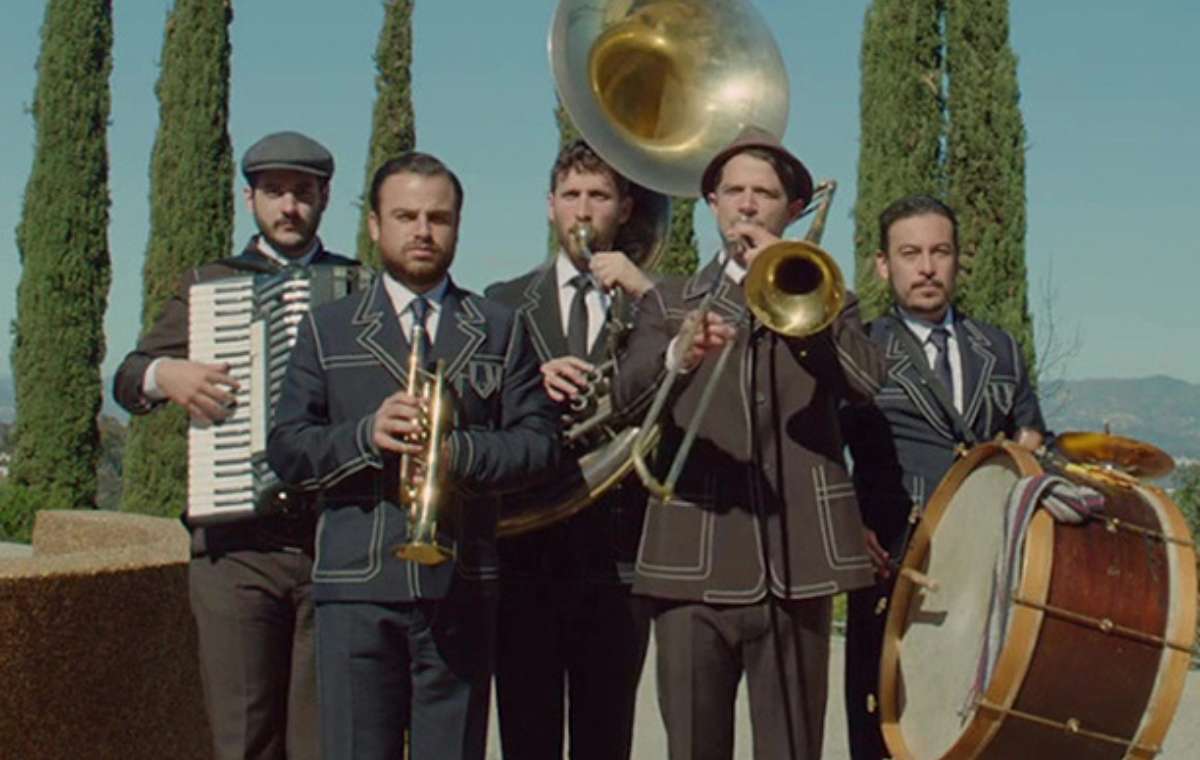
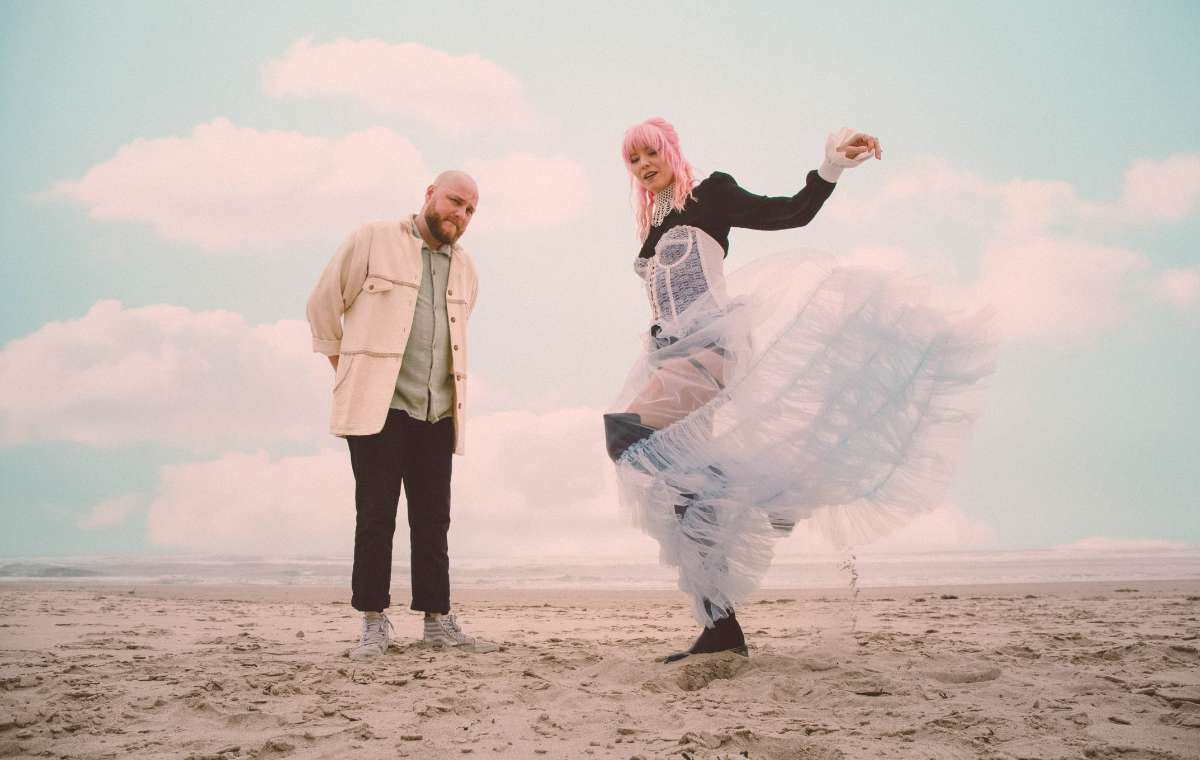
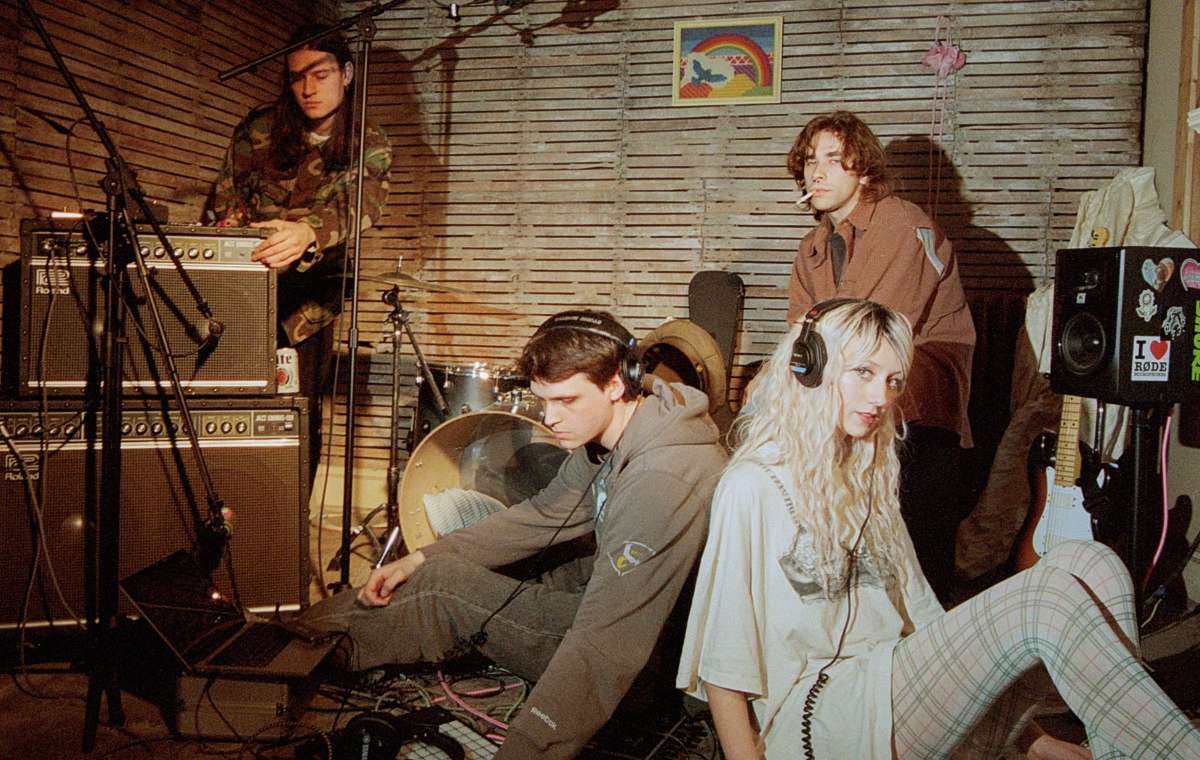
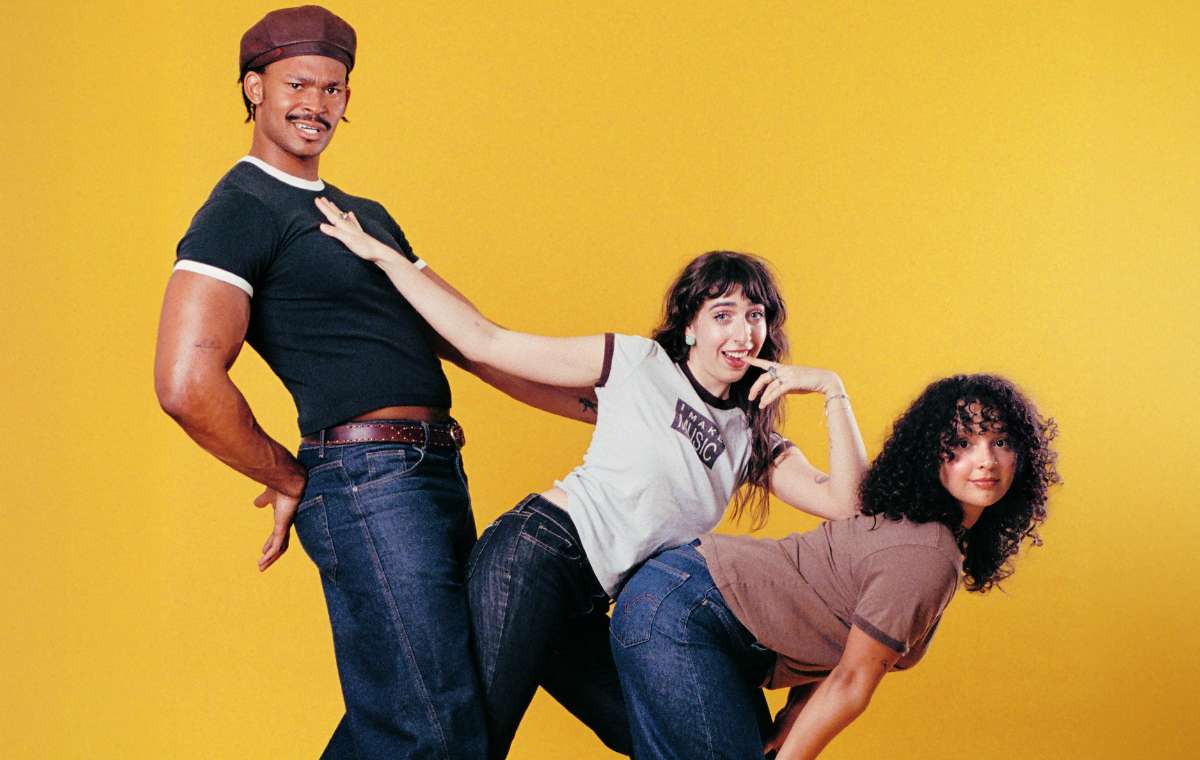
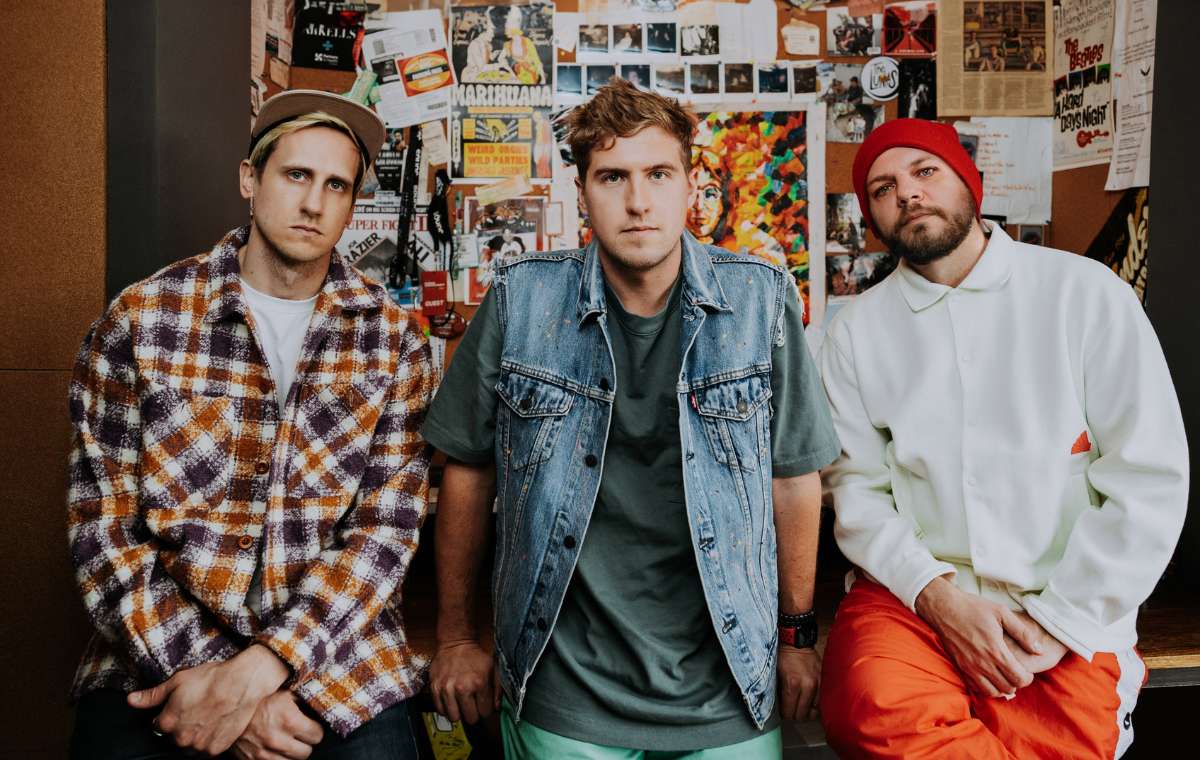
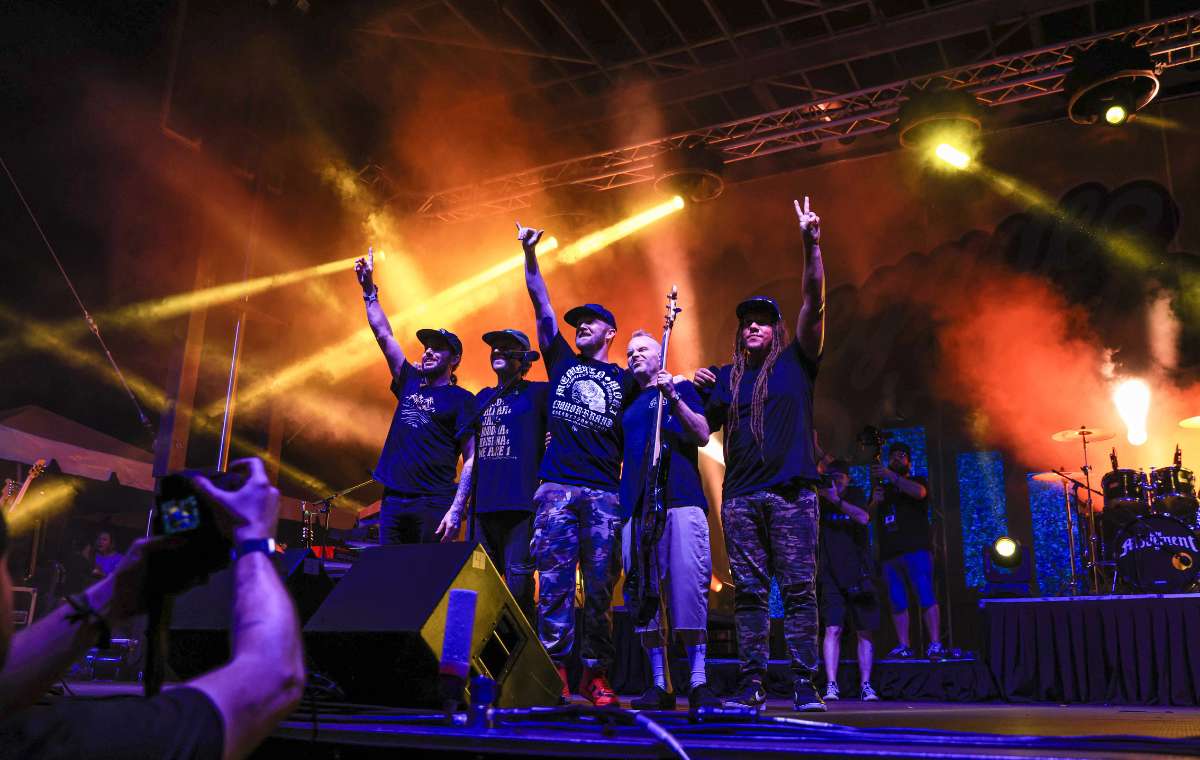
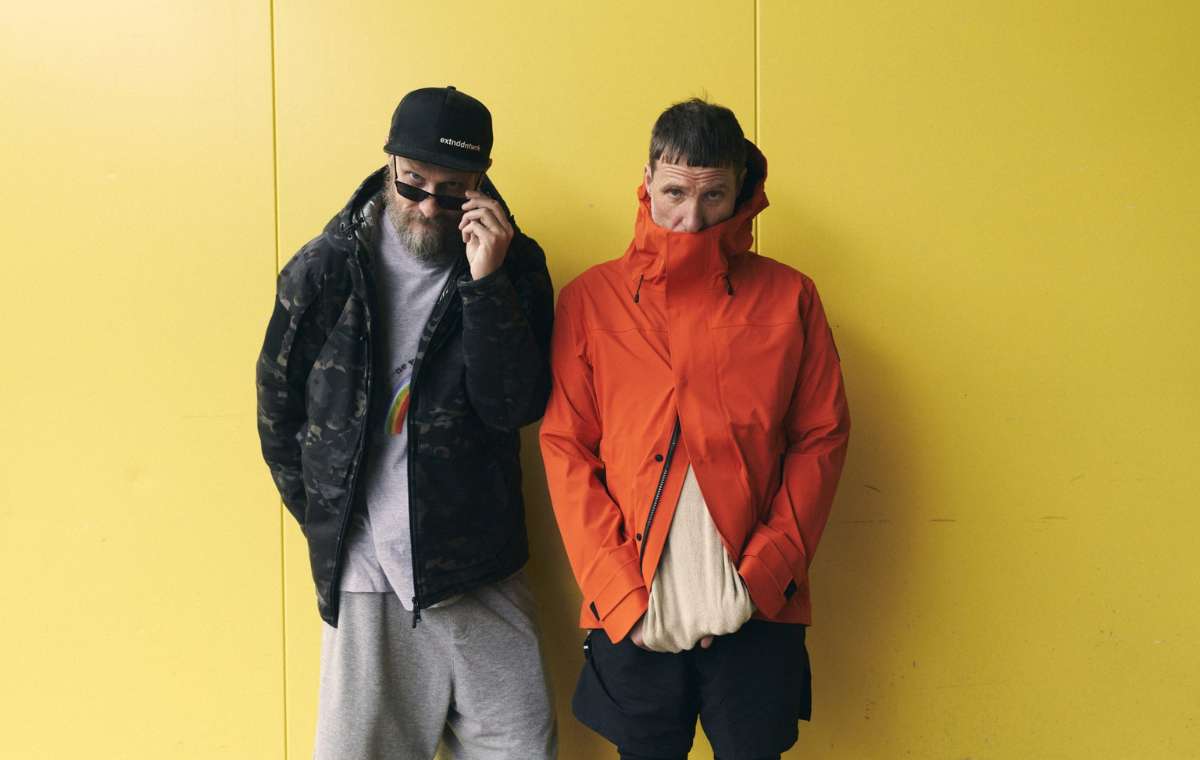
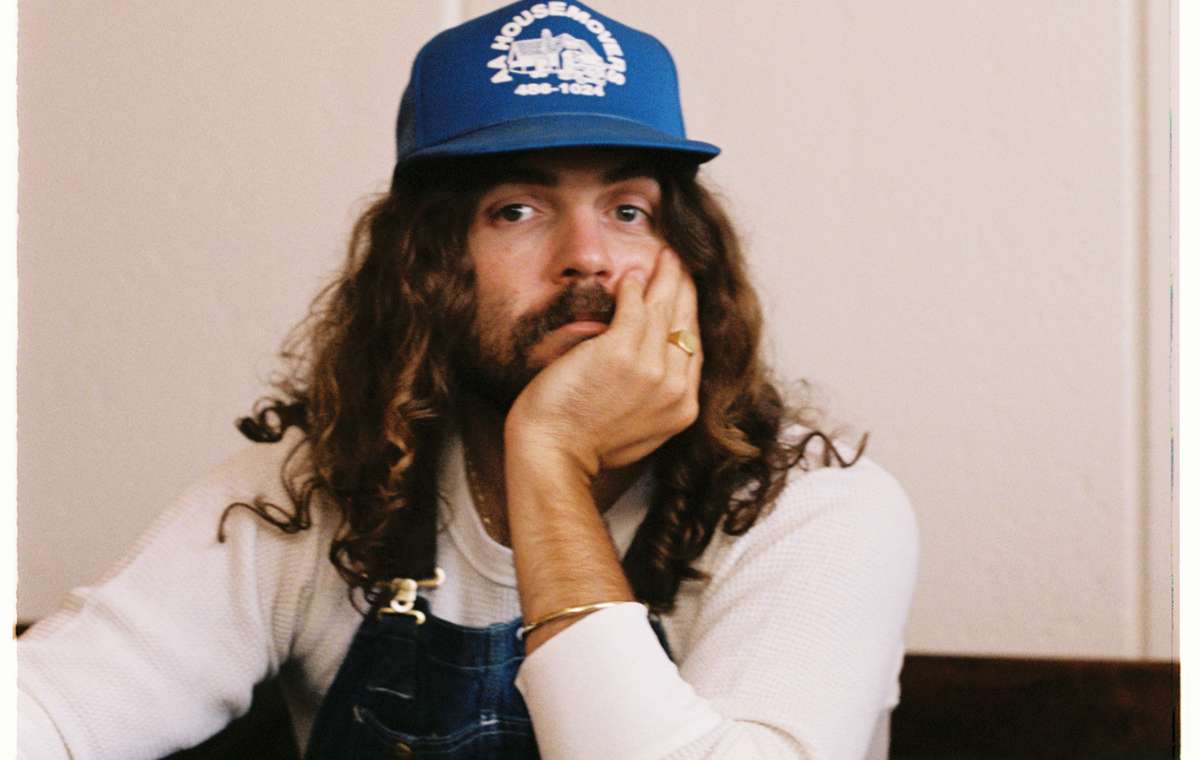
It’s not very well-worn, but the Nashville street band to composer pipeline has certainly been a distinctive, if tempered, fairy-tale arc for Joshua Kaufman and Justin Rubenstein, the brothers at the helm of The Blasting Company. For years, curiosity and circumstance guided them through the streets of the US and Europe as they accumulated a blend of American folk and Eastern European influences, grand orchestral tendencies, and inescapably modern sensibilities, eventually landing them in Los Angeles, where they found a home for most of it in the world of film and television.
Their first and perhaps most notable venture into scoring was for the critically-acclaimed animated miniseries, Over the Garden Wall, which has become a seasonal staple for a growing fanbase worldwide whenever fall – or its equatorial approximate – is in the air. Other composing ventures include music written for Burlesque, the New York Times/Serial podcast The Kids of Rutherford County, Adult Swim’s The Elephant, and a three-album soundtrack for table top role playing campaign, The Crooked Moon. Their recent releases feature collaborations with Tom Kenny (Spongebob Squarepants), Haley Reinhart (Post-Modern Jukebox), Jemaine Clement (Flight of the Concords), and one of their all-time musical heroes, arranger and composer Van Dyke Parks.
The Blasting Company’s journey has been one dedicated to their artistic community and their craft. This, and the eagerness with which they explore music’s expansive storytelling potential has made them sought-after collaborators anywhere music can be of use, from Emmy-winning animation to Peabody Award-caliber investigative journalism. Wherever they’re found and wherever they’ll end up, their music continues to introduce new generations to a panoply of musical traditions, old and new, tailored to their own particular – and peculiar – point of view.
Starting with the 10th anniversary shows in LA back in 2024, The Blasting Company has hoped for their live Over the Garden Wall concert to capture, above all, the well-worn warmth of a night spent in the company of good friends who happen to enjoy playing music together. Fortunately, the super-band of multi-instrumentalists, comprised of The Blasting Company and California Feetwarmers, most of whom played on the original soundtrack, has enjoyed traveling and playing music together for most of their adult lives.
Together with friends and local special guests, the band plans to faithfully expand on the original soundtrack and invite folks to experience it the way the composers did: as a patchwork of the beautiful artistic personalities that came together to make it, as an homage to and continuation of the generations of art and music that inspired it, and most of all, as a chance for good friends and strangers to open their hearts up to each other just a little bigger and belt out a few new-old tunes the very best they can.
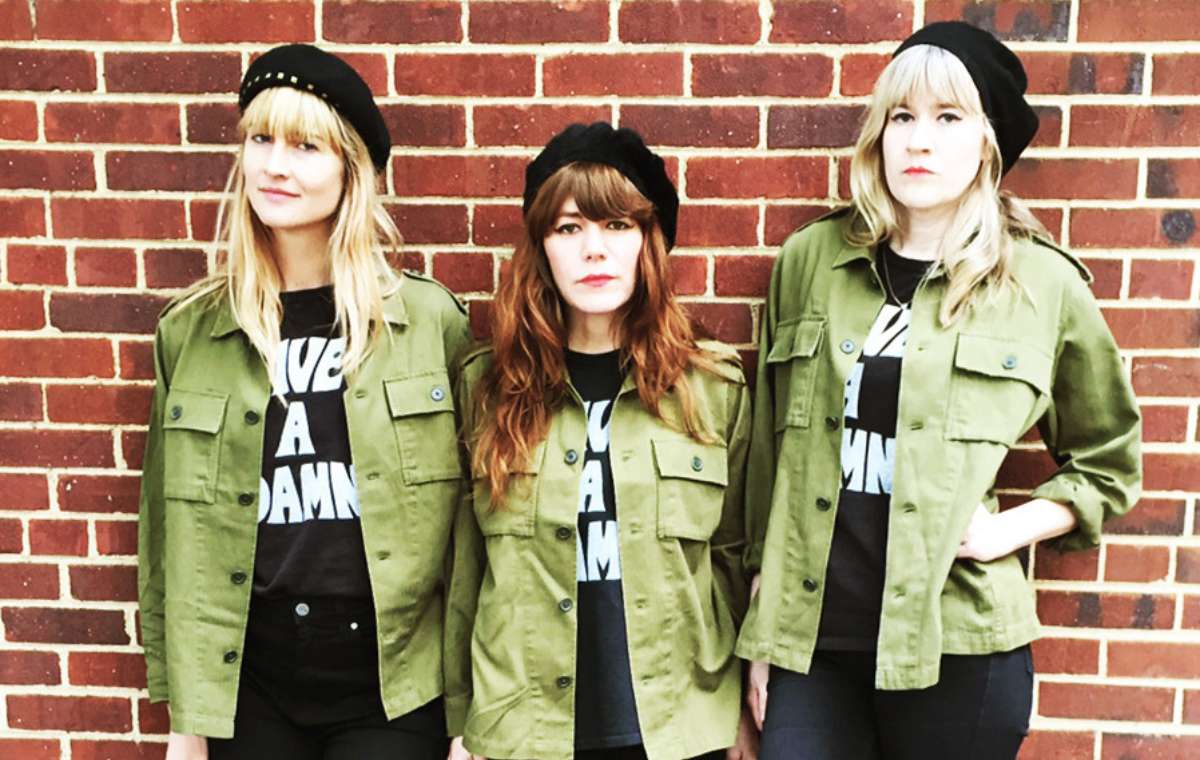
About Shovels and Rope:
One night in the middle of the night there were a series of noises coming from above which lead to a series of thoughts. It sounded like something was working. Building something… A nest for its family? A trap for its prey? This led to more thoughts about unseen things at work. A God? A voice in your head? It all feels kind of made up until someone responds to it.
Less means more. That’s kind of always how it’s been with us. This time the rules were simple: we can only use what we work with live and whatever we put down on tape must be accomplishable on a stage in a live setting. That’s always seemed to be when we’re at our best. Or most twitchy. Many times we’ve made records that we loved and then, after figuring out how we’d perform it live, we end up falling in love with the live arrangement because being a 2 piece band, it took some real risk and struggle which led to innovation, which gave it a whole new life. (Consider the tortured grape.) So with this one we just started there and worked backwards. The result encapsulates, more than anything we’ve done before, the sound of our live performance. Resulting in what one might consider by definition, a definitive album.
The summer and fall leading up to recording we spent writing songs, hanging out with family in Colorado, and playing shows opening for The Wood Brothers and Gregory Alan Isakov, both of whom have large audiences. So each night we were playing in front of a lot of people, many of whom had never heard of us. We decided to take those opportunities to rattle our comfort zone cage and try out a bunch of brand new, just written songs and basically learn how to play them in front a few thousand people. The songs would grow and change show to show, sometimes for the better and sometimes for the worse. Maybe we go down in flames? Maybe something beautiful happens while it’s burning? We happily embraced the chaos. That’s kind of always how it’s been with us.
We had a new song that initially neither of us thought that much of called ‘Love Song From A Dog.” During one of the first nights of the Isakov run, we decided on stage, mid set, to try it out because the show was going well and the audience was warm. And it kind of killed. People honestly wouldn’t shut up about it. Not a brag more like a phenomenon or a weird dream. It became a fan favorite moment of our set each night and honestly in all the years of doing this we’ve never had so many people send us messages or reach out about any one specific song as they did this one. It just goes to show us that we don’t know anything. When it came time to record it we thought it’d be fitting and a nice touch to have Greg sing on it since it was his audience who basically fostered it into being by giving us the confidence and encouragement we needed to see it the way they did. He generously obliged and the song was instantly elevated by the sincerity and richness of mood that colors his voice.
The two of us can’t help but be obsessed with duality. The song ‘Two Wolves’ is a meditation about two conflicting energies competing for power. The first time we ever played it was on New Years Eve in an arena opening for Tyler Childers in front of 15k or so country music fans who surely were like “what the hell is this,” but to us it seemed 100 percent appropriate because it just feels like an arena type song. A fuzzy, thick riffed stomper with a meditative head bob refrain. So we opened with it because, well.. it felt like we had to.
For those who are new here we’ve spent the last decade or so bouncing around in the ‘Americana’ realm quite a bit. Getting branded into that world was admittedly a bit of a head scratcher for us as we’ve always identified as more of a rock band (though we do think of ourselves as folk songwriters and yarn spinners, and we do harmonize well together) but the people were paying attention and we were building a fan base so we kind of felt like “who were we to tell them who we weren’t?” But when you go all the way to Europe and are standing on a stage in front of a few hundred Scandinavians who are dressed in head to toe denim and cowboy hats, we can’t help but feel like we’re about to confuse some people. We will often find ourselves playing an outdoor, ‘free in the park’ type of concert series where a Male and Female with 2 guitars and beautiful harmonies will be booked as the opener, and then we’ll take the stage and proceed to be a little louder and maybe a little more brash than was anticipated. It’s always kind of been this way with us. The joke in our camp when this happens goes something like: And for tonight’s entertainment, we have for you “The What We Thought They Were’s” followed by the “Louder Than We Thoughts”! Recently we did a gig where the spokesperson said to us just before we went on, ‘so maybe don’t come out with your heaviest guitar stuff and your 808 bass bullshit right off the rip…there are kids and old people here and they’ll leave” (he was trying to be helpful). We politely told him “Don’t worry, we have a plan”.. .and then again opened with ‘Two Wolves,’ with it’s loud guitar stuff and it’s 808 bullshit, followed by a dynamic set where we touched on all the different things we do and everyone proceeded to have a great time. That’s kind of always how it’s been with us.
“Something Is Working Up Above My Head” is a catalog of vulnerable characters with sweet and sordid narratives.
‘Colorado River’ is a song about a boy and his Dad disposing of bodies in various ways as the water level recedes and dark surprises surface. The hot dog bun line was initially supposed to be a place holder because it sounded funny and it rhymed, but then we sang it so many times over the summer that it built a little hot dog shack and moved in forever. I still think it’s kind of dumb but it’s also kind of great. For those who pay attention, it’s a pretty obvious John Prine nod. I’d like to think he handed us the hot dog bun like a relay baton on his way to the great mystery. Macabre pairs well with a side of humor.
‘Piranhanana’ is about a boy growing up in a house of sex workers and being fine with it with a little meditation, while his sister struggles to find her zen. ‘I’d Be Lying’ is about navigating a crisis with a long time friend. ‘Double Lines’ follows the journey of a young woman thru pregnancy tests, covid tests, and various other forms of duality and two-ness.
‘Something is Working’ and ‘Dass Hymn’ (referring to Ram Dass) were the last 2 songs written and added to the collection of songs. They book end the record with questions about what, if anything, is pulling the strings? In the closing moments of the last song, 3 generations of our family all sing together about how nobody knows what happens at the end. And in all the not knowing, it’s comforting to sing with your family.
About Shovels and Rope:
One night in the middle of the night there were a series of noises coming from above which lead to a series of thoughts. It sounded like something was working. Building something… A nest for its family? A trap for its prey? This led to more thoughts about unseen things at work. A God? A voice in your head? It all feels kind of made up until someone responds to it.
Less means more. That’s kind of always how it’s been with us. This time the rules were simple: we can only use what we work with live and whatever we put down on tape must be accomplishable on a stage in a live setting. That’s always seemed to be when we’re at our best. Or most twitchy. Many times we’ve made records that we loved and then, after figuring out how we’d perform it live, we end up falling in love with the live arrangement because being a 2 piece band, it took some real risk and struggle which led to innovation, which gave it a whole new life. (Consider the tortured grape.) So with this one we just started there and worked backwards. The result encapsulates, more than anything we’ve done before, the sound of our live performance. Resulting in what one might consider by definition, a definitive album.
The summer and fall leading up to recording we spent writing songs, hanging out with family in Colorado, and playing shows opening for The Wood Brothers and Gregory Alan Isakov, both of whom have large audiences. So each night we were playing in front of a lot of people, many of whom had never heard of us. We decided to take those opportunities to rattle our comfort zone cage and try out a bunch of brand new, just written songs and basically learn how to play them in front a few thousand people. The songs would grow and change show to show, sometimes for the better and sometimes for the worse. Maybe we go down in flames? Maybe something beautiful happens while it’s burning? We happily embraced the chaos. That’s kind of always how it’s been with us.
We had a new song that initially neither of us thought that much of called ‘Love Song From A Dog.” During one of the first nights of the Isakov run, we decided on stage, mid set, to try it out because the show was going well and the audience was warm. And it kind of killed. People honestly wouldn’t shut up about it. Not a brag more like a phenomenon or a weird dream. It became a fan favorite moment of our set each night and honestly in all the years of doing this we’ve never had so many people send us messages or reach out about any one specific song as they did this one. It just goes to show us that we don’t know anything. When it came time to record it we thought it’d be fitting and a nice touch to have Greg sing on it since it was his audience who basically fostered it into being by giving us the confidence and encouragement we needed to see it the way they did. He generously obliged and the song was instantly elevated by the sincerity and richness of mood that colors his voice.
The two of us can’t help but be obsessed with duality. The song ‘Two Wolves’ is a meditation about two conflicting energies competing for power. The first time we ever played it was on New Years Eve in an arena opening for Tyler Childers in front of 15k or so country music fans who surely were like “what the hell is this,” but to us it seemed 100 percent appropriate because it just feels like an arena type song. A fuzzy, thick riffed stomper with a meditative head bob refrain. So we opened with it because, well.. it felt like we had to.
For those who are new here we’ve spent the last decade or so bouncing around in the ‘Americana’ realm quite a bit. Getting branded into that world was admittedly a bit of a head scratcher for us as we’ve always identified as more of a rock band (though we do think of ourselves as folk songwriters and yarn spinners, and we do harmonize well together) but the people were paying attention and we were building a fan base so we kind of felt like “who were we to tell them who we weren’t?” But when you go all the way to Europe and are standing on a stage in front of a few hundred Scandinavians who are dressed in head to toe denim and cowboy hats, we can’t help but feel like we’re about to confuse some people. We will often find ourselves playing an outdoor, ‘free in the park’ type of concert series where a Male and Female with 2 guitars and beautiful harmonies will be booked as the opener, and then we’ll take the stage and proceed to be a little louder and maybe a little more brash than was anticipated. It’s always kind of been this way with us. The joke in our camp when this happens goes something like: And for tonight’s entertainment, we have for you “The What We Thought They Were’s” followed by the “Louder Than We Thoughts”! Recently we did a gig where the spokesperson said to us just before we went on, ‘so maybe don’t come out with your heaviest guitar stuff and your 808 bass bullshit right off the rip…there are kids and old people here and they’ll leave” (he was trying to be helpful). We politely told him “Don’t worry, we have a plan”.. .and then again opened with ‘Two Wolves,’ with it’s loud guitar stuff and it’s 808 bullshit, followed by a dynamic set where we touched on all the different things we do and everyone proceeded to have a great time. That’s kind of always how it’s been with us.
“Something Is Working Up Above My Head” is a catalog of vulnerable characters with sweet and sordid narratives.
‘Colorado River’ is a song about a boy and his Dad disposing of bodies in various ways as the water level recedes and dark surprises surface. The hot dog bun line was initially supposed to be a place holder because it sounded funny and it rhymed, but then we sang it so many times over the summer that it built a little hot dog shack and moved in forever. I still think it’s kind of dumb but it’s also kind of great. For those who pay attention, it’s a pretty obvious John Prine nod. I’d like to think he handed us the hot dog bun like a relay baton on his way to the great mystery. Macabre pairs well with a side of humor.
‘Piranhanana’ is about a boy growing up in a house of sex workers and being fine with it with a little meditation, while his sister struggles to find her zen. ‘I’d Be Lying’ is about navigating a crisis with a long time friend. ‘Double Lines’ follows the journey of a young woman thru pregnancy tests, covid tests, and various other forms of duality and two-ness.
‘Something is Working’ and ‘Dass Hymn’ (referring to Ram Dass) were the last 2 songs written and added to the collection of songs. They book end the record with questions about what, if anything, is pulling the strings? In the closing moments of the last song, 3 generations of our family all sing together about how nobody knows what happens at the end. And in all the not knowing, it’s comforting to sing with your family.
About Shovels and Rope:
One night in the middle of the night there were a series of noises coming from above which lead to a series of thoughts. It sounded like something was working. Building something… A nest for its family? A trap for its prey? This led to more thoughts about unseen things at work. A God? A voice in your head? It all feels kind of made up until someone responds to it.
Less means more. That’s kind of always how it’s been with us. This time the rules were simple: we can only use what we work with live and whatever we put down on tape must be accomplishable on a stage in a live setting. That’s always seemed to be when we’re at our best. Or most twitchy. Many times we’ve made records that we loved and then, after figuring out how we’d perform it live, we end up falling in love with the live arrangement because being a 2 piece band, it took some real risk and struggle which led to innovation, which gave it a whole new life. (Consider the tortured grape.) So with this one we just started there and worked backwards. The result encapsulates, more than anything we’ve done before, the sound of our live performance. Resulting in what one might consider by definition, a definitive album.
The summer and fall leading up to recording we spent writing songs, hanging out with family in Colorado, and playing shows opening for The Wood Brothers and Gregory Alan Isakov, both of whom have large audiences. So each night we were playing in front of a lot of people, many of whom had never heard of us. We decided to take those opportunities to rattle our comfort zone cage and try out a bunch of brand new, just written songs and basically learn how to play them in front a few thousand people. The songs would grow and change show to show, sometimes for the better and sometimes for the worse. Maybe we go down in flames? Maybe something beautiful happens while it’s burning? We happily embraced the chaos. That’s kind of always how it’s been with us.
We had a new song that initially neither of us thought that much of called ‘Love Song From A Dog.” During one of the first nights of the Isakov run, we decided on stage, mid set, to try it out because the show was going well and the audience was warm. And it kind of killed. People honestly wouldn’t shut up about it. Not a brag more like a phenomenon or a weird dream. It became a fan favorite moment of our set each night and honestly in all the years of doing this we’ve never had so many people send us messages or reach out about any one specific song as they did this one. It just goes to show us that we don’t know anything. When it came time to record it we thought it’d be fitting and a nice touch to have Greg sing on it since it was his audience who basically fostered it into being by giving us the confidence and encouragement we needed to see it the way they did. He generously obliged and the song was instantly elevated by the sincerity and richness of mood that colors his voice.
The two of us can’t help but be obsessed with duality. The song ‘Two Wolves’ is a meditation about two conflicting energies competing for power. The first time we ever played it was on New Years Eve in an arena opening for Tyler Childers in front of 15k or so country music fans who surely were like “what the hell is this,” but to us it seemed 100 percent appropriate because it just feels like an arena type song. A fuzzy, thick riffed stomper with a meditative head bob refrain. So we opened with it because, well.. it felt like we had to.
For those who are new here we’ve spent the last decade or so bouncing around in the ‘Americana’ realm quite a bit. Getting branded into that world was admittedly a bit of a head scratcher for us as we’ve always identified as more of a rock band (though we do think of ourselves as folk songwriters and yarn spinners, and we do harmonize well together) but the people were paying attention and we were building a fan base so we kind of felt like “who were we to tell them who we weren’t?” But when you go all the way to Europe and are standing on a stage in front of a few hundred Scandinavians who are dressed in head to toe denim and cowboy hats, we can’t help but feel like we’re about to confuse some people. We will often find ourselves playing an outdoor, ‘free in the park’ type of concert series where a Male and Female with 2 guitars and beautiful harmonies will be booked as the opener, and then we’ll take the stage and proceed to be a little louder and maybe a little more brash than was anticipated. It’s always kind of been this way with us. The joke in our camp when this happens goes something like: And for tonight’s entertainment, we have for you “The What We Thought They Were’s” followed by the “Louder Than We Thoughts”! Recently we did a gig where the spokesperson said to us just before we went on, ‘so maybe don’t come out with your heaviest guitar stuff and your 808 bass bullshit right off the rip…there are kids and old people here and they’ll leave” (he was trying to be helpful). We politely told him “Don’t worry, we have a plan”.. .and then again opened with ‘Two Wolves,’ with it’s loud guitar stuff and it’s 808 bullshit, followed by a dynamic set where we touched on all the different things we do and everyone proceeded to have a great time. That’s kind of always how it’s been with us.
“Something Is Working Up Above My Head” is a catalog of vulnerable characters with sweet and sordid narratives.
‘Colorado River’ is a song about a boy and his Dad disposing of bodies in various ways as the water level recedes and dark surprises surface. The hot dog bun line was initially supposed to be a place holder because it sounded funny and it rhymed, but then we sang it so many times over the summer that it built a little hot dog shack and moved in forever. I still think it’s kind of dumb but it’s also kind of great. For those who pay attention, it’s a pretty obvious John Prine nod. I’d like to think he handed us the hot dog bun like a relay baton on his way to the great mystery. Macabre pairs well with a side of humor.
‘Piranhanana’ is about a boy growing up in a house of sex workers and being fine with it with a little meditation, while his sister struggles to find her zen. ‘I’d Be Lying’ is about navigating a crisis with a long time friend. ‘Double Lines’ follows the journey of a young woman thru pregnancy tests, covid tests, and various other forms of duality and two-ness.
‘Something is Working’ and ‘Dass Hymn’ (referring to Ram Dass) were the last 2 songs written and added to the collection of songs. They book end the record with questions about what, if anything, is pulling the strings? In the closing moments of the last song, 3 generations of our family all sing together about how nobody knows what happens at the end. And in all the not knowing, it’s comforting to sing with your family.
About Shovels and Rope:
One night in the middle of the night there were a series of noises coming from above which lead to a series of thoughts. It sounded like something was working. Building something… A nest for its family? A trap for its prey? This led to more thoughts about unseen things at work. A God? A voice in your head? It all feels kind of made up until someone responds to it.
Less means more. That’s kind of always how it’s been with us. This time the rules were simple: we can only use what we work with live and whatever we put down on tape must be accomplishable on a stage in a live setting. That’s always seemed to be when we’re at our best. Or most twitchy. Many times we’ve made records that we loved and then, after figuring out how we’d perform it live, we end up falling in love with the live arrangement because being a 2 piece band, it took some real risk and struggle which led to innovation, which gave it a whole new life. (Consider the tortured grape.) So with this one we just started there and worked backwards. The result encapsulates, more than anything we’ve done before, the sound of our live performance. Resulting in what one might consider by definition, a definitive album.
The summer and fall leading up to recording we spent writing songs, hanging out with family in Colorado, and playing shows opening for The Wood Brothers and Gregory Alan Isakov, both of whom have large audiences. So each night we were playing in front of a lot of people, many of whom had never heard of us. We decided to take those opportunities to rattle our comfort zone cage and try out a bunch of brand new, just written songs and basically learn how to play them in front a few thousand people. The songs would grow and change show to show, sometimes for the better and sometimes for the worse. Maybe we go down in flames? Maybe something beautiful happens while it’s burning? We happily embraced the chaos. That’s kind of always how it’s been with us.
We had a new song that initially neither of us thought that much of called ‘Love Song From A Dog.” During one of the first nights of the Isakov run, we decided on stage, mid set, to try it out because the show was going well and the audience was warm. And it kind of killed. People honestly wouldn’t shut up about it. Not a brag more like a phenomenon or a weird dream. It became a fan favorite moment of our set each night and honestly in all the years of doing this we’ve never had so many people send us messages or reach out about any one specific song as they did this one. It just goes to show us that we don’t know anything. When it came time to record it we thought it’d be fitting and a nice touch to have Greg sing on it since it was his audience who basically fostered it into being by giving us the confidence and encouragement we needed to see it the way they did. He generously obliged and the song was instantly elevated by the sincerity and richness of mood that colors his voice.
The two of us can’t help but be obsessed with duality. The song ‘Two Wolves’ is a meditation about two conflicting energies competing for power. The first time we ever played it was on New Years Eve in an arena opening for Tyler Childers in front of 15k or so country music fans who surely were like “what the hell is this,” but to us it seemed 100 percent appropriate because it just feels like an arena type song. A fuzzy, thick riffed stomper with a meditative head bob refrain. So we opened with it because, well.. it felt like we had to.
For those who are new here we’ve spent the last decade or so bouncing around in the ‘Americana’ realm quite a bit. Getting branded into that world was admittedly a bit of a head scratcher for us as we’ve always identified as more of a rock band (though we do think of ourselves as folk songwriters and yarn spinners, and we do harmonize well together) but the people were paying attention and we were building a fan base so we kind of felt like “who were we to tell them who we weren’t?” But when you go all the way to Europe and are standing on a stage in front of a few hundred Scandinavians who are dressed in head to toe denim and cowboy hats, we can’t help but feel like we’re about to confuse some people. We will often find ourselves playing an outdoor, ‘free in the park’ type of concert series where a Male and Female with 2 guitars and beautiful harmonies will be booked as the opener, and then we’ll take the stage and proceed to be a little louder and maybe a little more brash than was anticipated. It’s always kind of been this way with us. The joke in our camp when this happens goes something like: And for tonight’s entertainment, we have for you “The What We Thought They Were’s” followed by the “Louder Than We Thoughts”! Recently we did a gig where the spokesperson said to us just before we went on, ‘so maybe don’t come out with your heaviest guitar stuff and your 808 bass bullshit right off the rip…there are kids and old people here and they’ll leave” (he was trying to be helpful). We politely told him “Don’t worry, we have a plan”.. .and then again opened with ‘Two Wolves,’ with it’s loud guitar stuff and it’s 808 bullshit, followed by a dynamic set where we touched on all the different things we do and everyone proceeded to have a great time. That’s kind of always how it’s been with us.
“Something Is Working Up Above My Head” is a catalog of vulnerable characters with sweet and sordid narratives.
‘Colorado River’ is a song about a boy and his Dad disposing of bodies in various ways as the water level recedes and dark surprises surface. The hot dog bun line was initially supposed to be a place holder because it sounded funny and it rhymed, but then we sang it so many times over the summer that it built a little hot dog shack and moved in forever. I still think it’s kind of dumb but it’s also kind of great. For those who pay attention, it’s a pretty obvious John Prine nod. I’d like to think he handed us the hot dog bun like a relay baton on his way to the great mystery. Macabre pairs well with a side of humor.
‘Piranhanana’ is about a boy growing up in a house of sex workers and being fine with it with a little meditation, while his sister struggles to find her zen. ‘I’d Be Lying’ is about navigating a crisis with a long time friend. ‘Double Lines’ follows the journey of a young woman thru pregnancy tests, covid tests, and various other forms of duality and two-ness.
‘Something is Working’ and ‘Dass Hymn’ (referring to Ram Dass) were the last 2 songs written and added to the collection of songs. They book end the record with questions about what, if anything, is pulling the strings? In the closing moments of the last song, 3 generations of our family all sing together about how nobody knows what happens at the end. And in all the not knowing, it’s comforting to sing with your family.
About Shovels and Rope:
One night in the middle of the night there were a series of noises coming from above which lead to a series of thoughts. It sounded like something was working. Building something… A nest for its family? A trap for its prey? This led to more thoughts about unseen things at work. A God? A voice in your head? It all feels kind of made up until someone responds to it.
Less means more. That’s kind of always how it’s been with us. This time the rules were simple: we can only use what we work with live and whatever we put down on tape must be accomplishable on a stage in a live setting. That’s always seemed to be when we’re at our best. Or most twitchy. Many times we’ve made records that we loved and then, after figuring out how we’d perform it live, we end up falling in love with the live arrangement because being a 2 piece band, it took some real risk and struggle which led to innovation, which gave it a whole new life. (Consider the tortured grape.) So with this one we just started there and worked backwards. The result encapsulates, more than anything we’ve done before, the sound of our live performance. Resulting in what one might consider by definition, a definitive album.
The summer and fall leading up to recording we spent writing songs, hanging out with family in Colorado, and playing shows opening for The Wood Brothers and Gregory Alan Isakov, both of whom have large audiences. So each night we were playing in front of a lot of people, many of whom had never heard of us. We decided to take those opportunities to rattle our comfort zone cage and try out a bunch of brand new, just written songs and basically learn how to play them in front a few thousand people. The songs would grow and change show to show, sometimes for the better and sometimes for the worse. Maybe we go down in flames? Maybe something beautiful happens while it’s burning? We happily embraced the chaos. That’s kind of always how it’s been with us.
We had a new song that initially neither of us thought that much of called ‘Love Song From A Dog.” During one of the first nights of the Isakov run, we decided on stage, mid set, to try it out because the show was going well and the audience was warm. And it kind of killed. People honestly wouldn’t shut up about it. Not a brag more like a phenomenon or a weird dream. It became a fan favorite moment of our set each night and honestly in all the years of doing this we’ve never had so many people send us messages or reach out about any one specific song as they did this one. It just goes to show us that we don’t know anything. When it came time to record it we thought it’d be fitting and a nice touch to have Greg sing on it since it was his audience who basically fostered it into being by giving us the confidence and encouragement we needed to see it the way they did. He generously obliged and the song was instantly elevated by the sincerity and richness of mood that colors his voice.
The two of us can’t help but be obsessed with duality. The song ‘Two Wolves’ is a meditation about two conflicting energies competing for power. The first time we ever played it was on New Years Eve in an arena opening for Tyler Childers in front of 15k or so country music fans who surely were like “what the hell is this,” but to us it seemed 100 percent appropriate because it just feels like an arena type song. A fuzzy, thick riffed stomper with a meditative head bob refrain. So we opened with it because, well.. it felt like we had to.
For those who are new here we’ve spent the last decade or so bouncing around in the ‘Americana’ realm quite a bit. Getting branded into that world was admittedly a bit of a head scratcher for us as we’ve always identified as more of a rock band (though we do think of ourselves as folk songwriters and yarn spinners, and we do harmonize well together) but the people were paying attention and we were building a fan base so we kind of felt like “who were we to tell them who we weren’t?” But when you go all the way to Europe and are standing on a stage in front of a few hundred Scandinavians who are dressed in head to toe denim and cowboy hats, we can’t help but feel like we’re about to confuse some people. We will often find ourselves playing an outdoor, ‘free in the park’ type of concert series where a Male and Female with 2 guitars and beautiful harmonies will be booked as the opener, and then we’ll take the stage and proceed to be a little louder and maybe a little more brash than was anticipated. It’s always kind of been this way with us. The joke in our camp when this happens goes something like: And for tonight’s entertainment, we have for you “The What We Thought They Were’s” followed by the “Louder Than We Thoughts”! Recently we did a gig where the spokesperson said to us just before we went on, ‘so maybe don’t come out with your heaviest guitar stuff and your 808 bass bullshit right off the rip…there are kids and old people here and they’ll leave” (he was trying to be helpful). We politely told him “Don’t worry, we have a plan”.. .and then again opened with ‘Two Wolves,’ with it’s loud guitar stuff and it’s 808 bullshit, followed by a dynamic set where we touched on all the different things we do and everyone proceeded to have a great time. That’s kind of always how it’s been with us.
“Something Is Working Up Above My Head” is a catalog of vulnerable characters with sweet and sordid narratives.
‘Colorado River’ is a song about a boy and his Dad disposing of bodies in various ways as the water level recedes and dark surprises surface. The hot dog bun line was initially supposed to be a place holder because it sounded funny and it rhymed, but then we sang it so many times over the summer that it built a little hot dog shack and moved in forever. I still think it’s kind of dumb but it’s also kind of great. For those who pay attention, it’s a pretty obvious John Prine nod. I’d like to think he handed us the hot dog bun like a relay baton on his way to the great mystery. Macabre pairs well with a side of humor.
‘Piranhanana’ is about a boy growing up in a house of sex workers and being fine with it with a little meditation, while his sister struggles to find her zen. ‘I’d Be Lying’ is about navigating a crisis with a long time friend. ‘Double Lines’ follows the journey of a young woman thru pregnancy tests, covid tests, and various other forms of duality and two-ness.
‘Something is Working’ and ‘Dass Hymn’ (referring to Ram Dass) were the last 2 songs written and added to the collection of songs. They book end the record with questions about what, if anything, is pulling the strings? In the closing moments of the last song, 3 generations of our family all sing together about how nobody knows what happens at the end. And in all the not knowing, it’s comforting to sing with your family.
About Shovels and Rope:
One night in the middle of the night there were a series of noises coming from above which lead to a series of thoughts. It sounded like something was working. Building something… A nest for its family? A trap for its prey? This led to more thoughts about unseen things at work. A God? A voice in your head? It all feels kind of made up until someone responds to it.
Less means more. That’s kind of always how it’s been with us. This time the rules were simple: we can only use what we work with live and whatever we put down on tape must be accomplishable on a stage in a live setting. That’s always seemed to be when we’re at our best. Or most twitchy. Many times we’ve made records that we loved and then, after figuring out how we’d perform it live, we end up falling in love with the live arrangement because being a 2 piece band, it took some real risk and struggle which led to innovation, which gave it a whole new life. (Consider the tortured grape.) So with this one we just started there and worked backwards. The result encapsulates, more than anything we’ve done before, the sound of our live performance. Resulting in what one might consider by definition, a definitive album.
The summer and fall leading up to recording we spent writing songs, hanging out with family in Colorado, and playing shows opening for The Wood Brothers and Gregory Alan Isakov, both of whom have large audiences. So each night we were playing in front of a lot of people, many of whom had never heard of us. We decided to take those opportunities to rattle our comfort zone cage and try out a bunch of brand new, just written songs and basically learn how to play them in front a few thousand people. The songs would grow and change show to show, sometimes for the better and sometimes for the worse. Maybe we go down in flames? Maybe something beautiful happens while it’s burning? We happily embraced the chaos. That’s kind of always how it’s been with us.
We had a new song that initially neither of us thought that much of called ‘Love Song From A Dog.” During one of the first nights of the Isakov run, we decided on stage, mid set, to try it out because the show was going well and the audience was warm. And it kind of killed. People honestly wouldn’t shut up about it. Not a brag more like a phenomenon or a weird dream. It became a fan favorite moment of our set each night and honestly in all the years of doing this we’ve never had so many people send us messages or reach out about any one specific song as they did this one. It just goes to show us that we don’t know anything. When it came time to record it we thought it’d be fitting and a nice touch to have Greg sing on it since it was his audience who basically fostered it into being by giving us the confidence and encouragement we needed to see it the way they did. He generously obliged and the song was instantly elevated by the sincerity and richness of mood that colors his voice.
The two of us can’t help but be obsessed with duality. The song ‘Two Wolves’ is a meditation about two conflicting energies competing for power. The first time we ever played it was on New Years Eve in an arena opening for Tyler Childers in front of 15k or so country music fans who surely were like “what the hell is this,” but to us it seemed 100 percent appropriate because it just feels like an arena type song. A fuzzy, thick riffed stomper with a meditative head bob refrain. So we opened with it because, well.. it felt like we had to.
For those who are new here we’ve spent the last decade or so bouncing around in the ‘Americana’ realm quite a bit. Getting branded into that world was admittedly a bit of a head scratcher for us as we’ve always identified as more of a rock band (though we do think of ourselves as folk songwriters and yarn spinners, and we do harmonize well together) but the people were paying attention and we were building a fan base so we kind of felt like “who were we to tell them who we weren’t?” But when you go all the way to Europe and are standing on a stage in front of a few hundred Scandinavians who are dressed in head to toe denim and cowboy hats, we can’t help but feel like we’re about to confuse some people. We will often find ourselves playing an outdoor, ‘free in the park’ type of concert series where a Male and Female with 2 guitars and beautiful harmonies will be booked as the opener, and then we’ll take the stage and proceed to be a little louder and maybe a little more brash than was anticipated. It’s always kind of been this way with us. The joke in our camp when this happens goes something like: And for tonight’s entertainment, we have for you “The What We Thought They Were’s” followed by the “Louder Than We Thoughts”! Recently we did a gig where the spokesperson said to us just before we went on, ‘so maybe don’t come out with your heaviest guitar stuff and your 808 bass bullshit right off the rip…there are kids and old people here and they’ll leave” (he was trying to be helpful). We politely told him “Don’t worry, we have a plan”.. .and then again opened with ‘Two Wolves,’ with it’s loud guitar stuff and it’s 808 bullshit, followed by a dynamic set where we touched on all the different things we do and everyone proceeded to have a great time. That’s kind of always how it’s been with us.
“Something Is Working Up Above My Head” is a catalog of vulnerable characters with sweet and sordid narratives.
‘Colorado River’ is a song about a boy and his Dad disposing of bodies in various ways as the water level recedes and dark surprises surface. The hot dog bun line was initially supposed to be a place holder because it sounded funny and it rhymed, but then we sang it so many times over the summer that it built a little hot dog shack and moved in forever. I still think it’s kind of dumb but it’s also kind of great. For those who pay attention, it’s a pretty obvious John Prine nod. I’d like to think he handed us the hot dog bun like a relay baton on his way to the great mystery. Macabre pairs well with a side of humor.
‘Piranhanana’ is about a boy growing up in a house of sex workers and being fine with it with a little meditation, while his sister struggles to find her zen. ‘I’d Be Lying’ is about navigating a crisis with a long time friend. ‘Double Lines’ follows the journey of a young woman thru pregnancy tests, covid tests, and various other forms of duality and two-ness.
‘Something is Working’ and ‘Dass Hymn’ (referring to Ram Dass) were the last 2 songs written and added to the collection of songs. They book end the record with questions about what, if anything, is pulling the strings? In the closing moments of the last song, 3 generations of our family all sing together about how nobody knows what happens at the end. And in all the not knowing, it’s comforting to sing with your family.
About Shovels and Rope:
One night in the middle of the night there were a series of noises coming from above which lead to a series of thoughts. It sounded like something was working. Building something… A nest for its family? A trap for its prey? This led to more thoughts about unseen things at work. A God? A voice in your head? It all feels kind of made up until someone responds to it.
Less means more. That’s kind of always how it’s been with us. This time the rules were simple: we can only use what we work with live and whatever we put down on tape must be accomplishable on a stage in a live setting. That’s always seemed to be when we’re at our best. Or most twitchy. Many times we’ve made records that we loved and then, after figuring out how we’d perform it live, we end up falling in love with the live arrangement because being a 2 piece band, it took some real risk and struggle which led to innovation, which gave it a whole new life. (Consider the tortured grape.) So with this one we just started there and worked backwards. The result encapsulates, more than anything we’ve done before, the sound of our live performance. Resulting in what one might consider by definition, a definitive album.
The summer and fall leading up to recording we spent writing songs, hanging out with family in Colorado, and playing shows opening for The Wood Brothers and Gregory Alan Isakov, both of whom have large audiences. So each night we were playing in front of a lot of people, many of whom had never heard of us. We decided to take those opportunities to rattle our comfort zone cage and try out a bunch of brand new, just written songs and basically learn how to play them in front a few thousand people. The songs would grow and change show to show, sometimes for the better and sometimes for the worse. Maybe we go down in flames? Maybe something beautiful happens while it’s burning? We happily embraced the chaos. That’s kind of always how it’s been with us.
We had a new song that initially neither of us thought that much of called ‘Love Song From A Dog.” During one of the first nights of the Isakov run, we decided on stage, mid set, to try it out because the show was going well and the audience was warm. And it kind of killed. People honestly wouldn’t shut up about it. Not a brag more like a phenomenon or a weird dream. It became a fan favorite moment of our set each night and honestly in all the years of doing this we’ve never had so many people send us messages or reach out about any one specific song as they did this one. It just goes to show us that we don’t know anything. When it came time to record it we thought it’d be fitting and a nice touch to have Greg sing on it since it was his audience who basically fostered it into being by giving us the confidence and encouragement we needed to see it the way they did. He generously obliged and the song was instantly elevated by the sincerity and richness of mood that colors his voice.
The two of us can’t help but be obsessed with duality. The song ‘Two Wolves’ is a meditation about two conflicting energies competing for power. The first time we ever played it was on New Years Eve in an arena opening for Tyler Childers in front of 15k or so country music fans who surely were like “what the hell is this,” but to us it seemed 100 percent appropriate because it just feels like an arena type song. A fuzzy, thick riffed stomper with a meditative head bob refrain. So we opened with it because, well.. it felt like we had to.
For those who are new here we’ve spent the last decade or so bouncing around in the ‘Americana’ realm quite a bit. Getting branded into that world was admittedly a bit of a head scratcher for us as we’ve always identified as more of a rock band (though we do think of ourselves as folk songwriters and yarn spinners, and we do harmonize well together) but the people were paying attention and we were building a fan base so we kind of felt like “who were we to tell them who we weren’t?” But when you go all the way to Europe and are standing on a stage in front of a few hundred Scandinavians who are dressed in head to toe denim and cowboy hats, we can’t help but feel like we’re about to confuse some people. We will often find ourselves playing an outdoor, ‘free in the park’ type of concert series where a Male and Female with 2 guitars and beautiful harmonies will be booked as the opener, and then we’ll take the stage and proceed to be a little louder and maybe a little more brash than was anticipated. It’s always kind of been this way with us. The joke in our camp when this happens goes something like: And for tonight’s entertainment, we have for you “The What We Thought They Were’s” followed by the “Louder Than We Thoughts”! Recently we did a gig where the spokesperson said to us just before we went on, ‘so maybe don’t come out with your heaviest guitar stuff and your 808 bass bullshit right off the rip…there are kids and old people here and they’ll leave” (he was trying to be helpful). We politely told him “Don’t worry, we have a plan”.. .and then again opened with ‘Two Wolves,’ with it’s loud guitar stuff and it’s 808 bullshit, followed by a dynamic set where we touched on all the different things we do and everyone proceeded to have a great time. That’s kind of always how it’s been with us.
“Something Is Working Up Above My Head” is a catalog of vulnerable characters with sweet and sordid narratives.
‘Colorado River’ is a song about a boy and his Dad disposing of bodies in various ways as the water level recedes and dark surprises surface. The hot dog bun line was initially supposed to be a place holder because it sounded funny and it rhymed, but then we sang it so many times over the summer that it built a little hot dog shack and moved in forever. I still think it’s kind of dumb but it’s also kind of great. For those who pay attention, it’s a pretty obvious John Prine nod. I’d like to think he handed us the hot dog bun like a relay baton on his way to the great mystery. Macabre pairs well with a side of humor.
‘Piranhanana’ is about a boy growing up in a house of sex workers and being fine with it with a little meditation, while his sister struggles to find her zen. ‘I’d Be Lying’ is about navigating a crisis with a long time friend. ‘Double Lines’ follows the journey of a young woman thru pregnancy tests, covid tests, and various other forms of duality and two-ness.
‘Something is Working’ and ‘Dass Hymn’ (referring to Ram Dass) were the last 2 songs written and added to the collection of songs. They book end the record with questions about what, if anything, is pulling the strings? In the closing moments of the last song, 3 generations of our family all sing together about how nobody knows what happens at the end. And in all the not knowing, it’s comforting to sing with your family.
About Shovels and Rope:
One night in the middle of the night there were a series of noises coming from above which lead to a series of thoughts. It sounded like something was working. Building something… A nest for its family? A trap for its prey? This led to more thoughts about unseen things at work. A God? A voice in your head? It all feels kind of made up until someone responds to it.
Less means more. That’s kind of always how it’s been with us. This time the rules were simple: we can only use what we work with live and whatever we put down on tape must be accomplishable on a stage in a live setting. That’s always seemed to be when we’re at our best. Or most twitchy. Many times we’ve made records that we loved and then, after figuring out how we’d perform it live, we end up falling in love with the live arrangement because being a 2 piece band, it took some real risk and struggle which led to innovation, which gave it a whole new life. (Consider the tortured grape.) So with this one we just started there and worked backwards. The result encapsulates, more than anything we’ve done before, the sound of our live performance. Resulting in what one might consider by definition, a definitive album.
The summer and fall leading up to recording we spent writing songs, hanging out with family in Colorado, and playing shows opening for The Wood Brothers and Gregory Alan Isakov, both of whom have large audiences. So each night we were playing in front of a lot of people, many of whom had never heard of us. We decided to take those opportunities to rattle our comfort zone cage and try out a bunch of brand new, just written songs and basically learn how to play them in front a few thousand people. The songs would grow and change show to show, sometimes for the better and sometimes for the worse. Maybe we go down in flames? Maybe something beautiful happens while it’s burning? We happily embraced the chaos. That’s kind of always how it’s been with us.
We had a new song that initially neither of us thought that much of called ‘Love Song From A Dog.” During one of the first nights of the Isakov run, we decided on stage, mid set, to try it out because the show was going well and the audience was warm. And it kind of killed. People honestly wouldn’t shut up about it. Not a brag more like a phenomenon or a weird dream. It became a fan favorite moment of our set each night and honestly in all the years of doing this we’ve never had so many people send us messages or reach out about any one specific song as they did this one. It just goes to show us that we don’t know anything. When it came time to record it we thought it’d be fitting and a nice touch to have Greg sing on it since it was his audience who basically fostered it into being by giving us the confidence and encouragement we needed to see it the way they did. He generously obliged and the song was instantly elevated by the sincerity and richness of mood that colors his voice.
The two of us can’t help but be obsessed with duality. The song ‘Two Wolves’ is a meditation about two conflicting energies competing for power. The first time we ever played it was on New Years Eve in an arena opening for Tyler Childers in front of 15k or so country music fans who surely were like “what the hell is this,” but to us it seemed 100 percent appropriate because it just feels like an arena type song. A fuzzy, thick riffed stomper with a meditative head bob refrain. So we opened with it because, well.. it felt like we had to.
For those who are new here we’ve spent the last decade or so bouncing around in the ‘Americana’ realm quite a bit. Getting branded into that world was admittedly a bit of a head scratcher for us as we’ve always identified as more of a rock band (though we do think of ourselves as folk songwriters and yarn spinners, and we do harmonize well together) but the people were paying attention and we were building a fan base so we kind of felt like “who were we to tell them who we weren’t?” But when you go all the way to Europe and are standing on a stage in front of a few hundred Scandinavians who are dressed in head to toe denim and cowboy hats, we can’t help but feel like we’re about to confuse some people. We will often find ourselves playing an outdoor, ‘free in the park’ type of concert series where a Male and Female with 2 guitars and beautiful harmonies will be booked as the opener, and then we’ll take the stage and proceed to be a little louder and maybe a little more brash than was anticipated. It’s always kind of been this way with us. The joke in our camp when this happens goes something like: And for tonight’s entertainment, we have for you “The What We Thought They Were’s” followed by the “Louder Than We Thoughts”! Recently we did a gig where the spokesperson said to us just before we went on, ‘so maybe don’t come out with your heaviest guitar stuff and your 808 bass bullshit right off the rip…there are kids and old people here and they’ll leave” (he was trying to be helpful). We politely told him “Don’t worry, we have a plan”.. .and then again opened with ‘Two Wolves,’ with it’s loud guitar stuff and it’s 808 bullshit, followed by a dynamic set where we touched on all the different things we do and everyone proceeded to have a great time. That’s kind of always how it’s been with us.
“Something Is Working Up Above My Head” is a catalog of vulnerable characters with sweet and sordid narratives.
‘Colorado River’ is a song about a boy and his Dad disposing of bodies in various ways as the water level recedes and dark surprises surface. The hot dog bun line was initially supposed to be a place holder because it sounded funny and it rhymed, but then we sang it so many times over the summer that it built a little hot dog shack and moved in forever. I still think it’s kind of dumb but it’s also kind of great. For those who pay attention, it’s a pretty obvious John Prine nod. I’d like to think he handed us the hot dog bun like a relay baton on his way to the great mystery. Macabre pairs well with a side of humor.
‘Piranhanana’ is about a boy growing up in a house of sex workers and being fine with it with a little meditation, while his sister struggles to find her zen. ‘I’d Be Lying’ is about navigating a crisis with a long time friend. ‘Double Lines’ follows the journey of a young woman thru pregnancy tests, covid tests, and various other forms of duality and two-ness.
‘Something is Working’ and ‘Dass Hymn’ (referring to Ram Dass) were the last 2 songs written and added to the collection of songs. They book end the record with questions about what, if anything, is pulling the strings? In the closing moments of the last song, 3 generations of our family all sing together about how nobody knows what happens at the end. And in all the not knowing, it’s comforting to sing with your family.
About Shovels and Rope:
One night in the middle of the night there were a series of noises coming from above which lead to a series of thoughts. It sounded like something was working. Building something… A nest for its family? A trap for its prey? This led to more thoughts about unseen things at work. A God? A voice in your head? It all feels kind of made up until someone responds to it.
Less means more. That’s kind of always how it’s been with us. This time the rules were simple: we can only use what we work with live and whatever we put down on tape must be accomplishable on a stage in a live setting. That’s always seemed to be when we’re at our best. Or most twitchy. Many times we’ve made records that we loved and then, after figuring out how we’d perform it live, we end up falling in love with the live arrangement because being a 2 piece band, it took some real risk and struggle which led to innovation, which gave it a whole new life. (Consider the tortured grape.) So with this one we just started there and worked backwards. The result encapsulates, more than anything we’ve done before, the sound of our live performance. Resulting in what one might consider by definition, a definitive album.
The summer and fall leading up to recording we spent writing songs, hanging out with family in Colorado, and playing shows opening for The Wood Brothers and Gregory Alan Isakov, both of whom have large audiences. So each night we were playing in front of a lot of people, many of whom had never heard of us. We decided to take those opportunities to rattle our comfort zone cage and try out a bunch of brand new, just written songs and basically learn how to play them in front a few thousand people. The songs would grow and change show to show, sometimes for the better and sometimes for the worse. Maybe we go down in flames? Maybe something beautiful happens while it’s burning? We happily embraced the chaos. That’s kind of always how it’s been with us.
We had a new song that initially neither of us thought that much of called ‘Love Song From A Dog.” During one of the first nights of the Isakov run, we decided on stage, mid set, to try it out because the show was going well and the audience was warm. And it kind of killed. People honestly wouldn’t shut up about it. Not a brag more like a phenomenon or a weird dream. It became a fan favorite moment of our set each night and honestly in all the years of doing this we’ve never had so many people send us messages or reach out about any one specific song as they did this one. It just goes to show us that we don’t know anything. When it came time to record it we thought it’d be fitting and a nice touch to have Greg sing on it since it was his audience who basically fostered it into being by giving us the confidence and encouragement we needed to see it the way they did. He generously obliged and the song was instantly elevated by the sincerity and richness of mood that colors his voice.
The two of us can’t help but be obsessed with duality. The song ‘Two Wolves’ is a meditation about two conflicting energies competing for power. The first time we ever played it was on New Years Eve in an arena opening for Tyler Childers in front of 15k or so country music fans who surely were like “what the hell is this,” but to us it seemed 100 percent appropriate because it just feels like an arena type song. A fuzzy, thick riffed stomper with a meditative head bob refrain. So we opened with it because, well.. it felt like we had to.
For those who are new here we’ve spent the last decade or so bouncing around in the ‘Americana’ realm quite a bit. Getting branded into that world was admittedly a bit of a head scratcher for us as we’ve always identified as more of a rock band (though we do think of ourselves as folk songwriters and yarn spinners, and we do harmonize well together) but the people were paying attention and we were building a fan base so we kind of felt like “who were we to tell them who we weren’t?” But when you go all the way to Europe and are standing on a stage in front of a few hundred Scandinavians who are dressed in head to toe denim and cowboy hats, we can’t help but feel like we’re about to confuse some people. We will often find ourselves playing an outdoor, ‘free in the park’ type of concert series where a Male and Female with 2 guitars and beautiful harmonies will be booked as the opener, and then we’ll take the stage and proceed to be a little louder and maybe a little more brash than was anticipated. It’s always kind of been this way with us. The joke in our camp when this happens goes something like: And for tonight’s entertainment, we have for you “The What We Thought They Were’s” followed by the “Louder Than We Thoughts”! Recently we did a gig where the spokesperson said to us just before we went on, ‘so maybe don’t come out with your heaviest guitar stuff and your 808 bass bullshit right off the rip…there are kids and old people here and they’ll leave” (he was trying to be helpful). We politely told him “Don’t worry, we have a plan”.. .and then again opened with ‘Two Wolves,’ with it’s loud guitar stuff and it’s 808 bullshit, followed by a dynamic set where we touched on all the different things we do and everyone proceeded to have a great time. That’s kind of always how it’s been with us.
“Something Is Working Up Above My Head” is a catalog of vulnerable characters with sweet and sordid narratives.
‘Colorado River’ is a song about a boy and his Dad disposing of bodies in various ways as the water level recedes and dark surprises surface. The hot dog bun line was initially supposed to be a place holder because it sounded funny and it rhymed, but then we sang it so many times over the summer that it built a little hot dog shack and moved in forever. I still think it’s kind of dumb but it’s also kind of great. For those who pay attention, it’s a pretty obvious John Prine nod. I’d like to think he handed us the hot dog bun like a relay baton on his way to the great mystery. Macabre pairs well with a side of humor.
‘Piranhanana’ is about a boy growing up in a house of sex workers and being fine with it with a little meditation, while his sister struggles to find her zen. ‘I’d Be Lying’ is about navigating a crisis with a long time friend. ‘Double Lines’ follows the journey of a young woman thru pregnancy tests, covid tests, and various other forms of duality and two-ness.
‘Something is Working’ and ‘Dass Hymn’ (referring to Ram Dass) were the last 2 songs written and added to the collection of songs. They book end the record with questions about what, if anything, is pulling the strings? In the closing moments of the last song, 3 generations of our family all sing together about how nobody knows what happens at the end. And in all the not knowing, it’s comforting to sing with your family.
About Shovels and Rope:
One night in the middle of the night there were a series of noises coming from above which lead to a series of thoughts. It sounded like something was working. Building something… A nest for its family? A trap for its prey? This led to more thoughts about unseen things at work. A God? A voice in your head? It all feels kind of made up until someone responds to it.
Less means more. That’s kind of always how it’s been with us. This time the rules were simple: we can only use what we work with live and whatever we put down on tape must be accomplishable on a stage in a live setting. That’s always seemed to be when we’re at our best. Or most twitchy. Many times we’ve made records that we loved and then, after figuring out how we’d perform it live, we end up falling in love with the live arrangement because being a 2 piece band, it took some real risk and struggle which led to innovation, which gave it a whole new life. (Consider the tortured grape.) So with this one we just started there and worked backwards. The result encapsulates, more than anything we’ve done before, the sound of our live performance. Resulting in what one might consider by definition, a definitive album.
The summer and fall leading up to recording we spent writing songs, hanging out with family in Colorado, and playing shows opening for The Wood Brothers and Gregory Alan Isakov, both of whom have large audiences. So each night we were playing in front of a lot of people, many of whom had never heard of us. We decided to take those opportunities to rattle our comfort zone cage and try out a bunch of brand new, just written songs and basically learn how to play them in front a few thousand people. The songs would grow and change show to show, sometimes for the better and sometimes for the worse. Maybe we go down in flames? Maybe something beautiful happens while it’s burning? We happily embraced the chaos. That’s kind of always how it’s been with us.
We had a new song that initially neither of us thought that much of called ‘Love Song From A Dog.” During one of the first nights of the Isakov run, we decided on stage, mid set, to try it out because the show was going well and the audience was warm. And it kind of killed. People honestly wouldn’t shut up about it. Not a brag more like a phenomenon or a weird dream. It became a fan favorite moment of our set each night and honestly in all the years of doing this we’ve never had so many people send us messages or reach out about any one specific song as they did this one. It just goes to show us that we don’t know anything. When it came time to record it we thought it’d be fitting and a nice touch to have Greg sing on it since it was his audience who basically fostered it into being by giving us the confidence and encouragement we needed to see it the way they did. He generously obliged and the song was instantly elevated by the sincerity and richness of mood that colors his voice.
The two of us can’t help but be obsessed with duality. The song ‘Two Wolves’ is a meditation about two conflicting energies competing for power. The first time we ever played it was on New Years Eve in an arena opening for Tyler Childers in front of 15k or so country music fans who surely were like “what the hell is this,” but to us it seemed 100 percent appropriate because it just feels like an arena type song. A fuzzy, thick riffed stomper with a meditative head bob refrain. So we opened with it because, well.. it felt like we had to.
For those who are new here we’ve spent the last decade or so bouncing around in the ‘Americana’ realm quite a bit. Getting branded into that world was admittedly a bit of a head scratcher for us as we’ve always identified as more of a rock band (though we do think of ourselves as folk songwriters and yarn spinners, and we do harmonize well together) but the people were paying attention and we were building a fan base so we kind of felt like “who were we to tell them who we weren’t?” But when you go all the way to Europe and are standing on a stage in front of a few hundred Scandinavians who are dressed in head to toe denim and cowboy hats, we can’t help but feel like we’re about to confuse some people. We will often find ourselves playing an outdoor, ‘free in the park’ type of concert series where a Male and Female with 2 guitars and beautiful harmonies will be booked as the opener, and then we’ll take the stage and proceed to be a little louder and maybe a little more brash than was anticipated. It’s always kind of been this way with us. The joke in our camp when this happens goes something like: And for tonight’s entertainment, we have for you “The What We Thought They Were’s” followed by the “Louder Than We Thoughts”! Recently we did a gig where the spokesperson said to us just before we went on, ‘so maybe don’t come out with your heaviest guitar stuff and your 808 bass bullshit right off the rip…there are kids and old people here and they’ll leave” (he was trying to be helpful). We politely told him “Don’t worry, we have a plan”.. .and then again opened with ‘Two Wolves,’ with it’s loud guitar stuff and it’s 808 bullshit, followed by a dynamic set where we touched on all the different things we do and everyone proceeded to have a great time. That’s kind of always how it’s been with us.
“Something Is Working Up Above My Head” is a catalog of vulnerable characters with sweet and sordid narratives.
‘Colorado River’ is a song about a boy and his Dad disposing of bodies in various ways as the water level recedes and dark surprises surface. The hot dog bun line was initially supposed to be a place holder because it sounded funny and it rhymed, but then we sang it so many times over the summer that it built a little hot dog shack and moved in forever. I still think it’s kind of dumb but it’s also kind of great. For those who pay attention, it’s a pretty obvious John Prine nod. I’d like to think he handed us the hot dog bun like a relay baton on his way to the great mystery. Macabre pairs well with a side of humor.
‘Piranhanana’ is about a boy growing up in a house of sex workers and being fine with it with a little meditation, while his sister struggles to find her zen. ‘I’d Be Lying’ is about navigating a crisis with a long time friend. ‘Double Lines’ follows the journey of a young woman thru pregnancy tests, covid tests, and various other forms of duality and two-ness.
‘Something is Working’ and ‘Dass Hymn’ (referring to Ram Dass) were the last 2 songs written and added to the collection of songs. They book end the record with questions about what, if anything, is pulling the strings? In the closing moments of the last song, 3 generations of our family all sing together about how nobody knows what happens at the end. And in all the not knowing, it’s comforting to sing with your family.
About Shovels and Rope:
One night in the middle of the night there were a series of noises coming from above which lead to a series of thoughts. It sounded like something was working. Building something… A nest for its family? A trap for its prey? This led to more thoughts about unseen things at work. A God? A voice in your head? It all feels kind of made up until someone responds to it.
Less means more. That’s kind of always how it’s been with us. This time the rules were simple: we can only use what we work with live and whatever we put down on tape must be accomplishable on a stage in a live setting. That’s always seemed to be when we’re at our best. Or most twitchy. Many times we’ve made records that we loved and then, after figuring out how we’d perform it live, we end up falling in love with the live arrangement because being a 2 piece band, it took some real risk and struggle which led to innovation, which gave it a whole new life. (Consider the tortured grape.) So with this one we just started there and worked backwards. The result encapsulates, more than anything we’ve done before, the sound of our live performance. Resulting in what one might consider by definition, a definitive album.
The summer and fall leading up to recording we spent writing songs, hanging out with family in Colorado, and playing shows opening for The Wood Brothers and Gregory Alan Isakov, both of whom have large audiences. So each night we were playing in front of a lot of people, many of whom had never heard of us. We decided to take those opportunities to rattle our comfort zone cage and try out a bunch of brand new, just written songs and basically learn how to play them in front a few thousand people. The songs would grow and change show to show, sometimes for the better and sometimes for the worse. Maybe we go down in flames? Maybe something beautiful happens while it’s burning? We happily embraced the chaos. That’s kind of always how it’s been with us.
We had a new song that initially neither of us thought that much of called ‘Love Song From A Dog.” During one of the first nights of the Isakov run, we decided on stage, mid set, to try it out because the show was going well and the audience was warm. And it kind of killed. People honestly wouldn’t shut up about it. Not a brag more like a phenomenon or a weird dream. It became a fan favorite moment of our set each night and honestly in all the years of doing this we’ve never had so many people send us messages or reach out about any one specific song as they did this one. It just goes to show us that we don’t know anything. When it came time to record it we thought it’d be fitting and a nice touch to have Greg sing on it since it was his audience who basically fostered it into being by giving us the confidence and encouragement we needed to see it the way they did. He generously obliged and the song was instantly elevated by the sincerity and richness of mood that colors his voice.
The two of us can’t help but be obsessed with duality. The song ‘Two Wolves’ is a meditation about two conflicting energies competing for power. The first time we ever played it was on New Years Eve in an arena opening for Tyler Childers in front of 15k or so country music fans who surely were like “what the hell is this,” but to us it seemed 100 percent appropriate because it just feels like an arena type song. A fuzzy, thick riffed stomper with a meditative head bob refrain. So we opened with it because, well.. it felt like we had to.
For those who are new here we’ve spent the last decade or so bouncing around in the ‘Americana’ realm quite a bit. Getting branded into that world was admittedly a bit of a head scratcher for us as we’ve always identified as more of a rock band (though we do think of ourselves as folk songwriters and yarn spinners, and we do harmonize well together) but the people were paying attention and we were building a fan base so we kind of felt like “who were we to tell them who we weren’t?” But when you go all the way to Europe and are standing on a stage in front of a few hundred Scandinavians who are dressed in head to toe denim and cowboy hats, we can’t help but feel like we’re about to confuse some people. We will often find ourselves playing an outdoor, ‘free in the park’ type of concert series where a Male and Female with 2 guitars and beautiful harmonies will be booked as the opener, and then we’ll take the stage and proceed to be a little louder and maybe a little more brash than was anticipated. It’s always kind of been this way with us. The joke in our camp when this happens goes something like: And for tonight’s entertainment, we have for you “The What We Thought They Were’s” followed by the “Louder Than We Thoughts”! Recently we did a gig where the spokesperson said to us just before we went on, ‘so maybe don’t come out with your heaviest guitar stuff and your 808 bass bullshit right off the rip…there are kids and old people here and they’ll leave” (he was trying to be helpful). We politely told him “Don’t worry, we have a plan”.. .and then again opened with ‘Two Wolves,’ with it’s loud guitar stuff and it’s 808 bullshit, followed by a dynamic set where we touched on all the different things we do and everyone proceeded to have a great time. That’s kind of always how it’s been with us.
“Something Is Working Up Above My Head” is a catalog of vulnerable characters with sweet and sordid narratives.
‘Colorado River’ is a song about a boy and his Dad disposing of bodies in various ways as the water level recedes and dark surprises surface. The hot dog bun line was initially supposed to be a place holder because it sounded funny and it rhymed, but then we sang it so many times over the summer that it built a little hot dog shack and moved in forever. I still think it’s kind of dumb but it’s also kind of great. For those who pay attention, it’s a pretty obvious John Prine nod. I’d like to think he handed us the hot dog bun like a relay baton on his way to the great mystery. Macabre pairs well with a side of humor.
‘Piranhanana’ is about a boy growing up in a house of sex workers and being fine with it with a little meditation, while his sister struggles to find her zen. ‘I’d Be Lying’ is about navigating a crisis with a long time friend. ‘Double Lines’ follows the journey of a young woman thru pregnancy tests, covid tests, and various other forms of duality and two-ness.
‘Something is Working’ and ‘Dass Hymn’ (referring to Ram Dass) were the last 2 songs written and added to the collection of songs. They book end the record with questions about what, if anything, is pulling the strings? In the closing moments of the last song, 3 generations of our family all sing together about how nobody knows what happens at the end. And in all the not knowing, it’s comforting to sing with your family.
About Shovels and Rope:
One night in the middle of the night there were a series of noises coming from above which lead to a series of thoughts. It sounded like something was working. Building something… A nest for its family? A trap for its prey? This led to more thoughts about unseen things at work. A God? A voice in your head? It all feels kind of made up until someone responds to it.
Less means more. That’s kind of always how it’s been with us. This time the rules were simple: we can only use what we work with live and whatever we put down on tape must be accomplishable on a stage in a live setting. That’s always seemed to be when we’re at our best. Or most twitchy. Many times we’ve made records that we loved and then, after figuring out how we’d perform it live, we end up falling in love with the live arrangement because being a 2 piece band, it took some real risk and struggle which led to innovation, which gave it a whole new life. (Consider the tortured grape.) So with this one we just started there and worked backwards. The result encapsulates, more than anything we’ve done before, the sound of our live performance. Resulting in what one might consider by definition, a definitive album.
The summer and fall leading up to recording we spent writing songs, hanging out with family in Colorado, and playing shows opening for The Wood Brothers and Gregory Alan Isakov, both of whom have large audiences. So each night we were playing in front of a lot of people, many of whom had never heard of us. We decided to take those opportunities to rattle our comfort zone cage and try out a bunch of brand new, just written songs and basically learn how to play them in front a few thousand people. The songs would grow and change show to show, sometimes for the better and sometimes for the worse. Maybe we go down in flames? Maybe something beautiful happens while it’s burning? We happily embraced the chaos. That’s kind of always how it’s been with us.
We had a new song that initially neither of us thought that much of called ‘Love Song From A Dog.” During one of the first nights of the Isakov run, we decided on stage, mid set, to try it out because the show was going well and the audience was warm. And it kind of killed. People honestly wouldn’t shut up about it. Not a brag more like a phenomenon or a weird dream. It became a fan favorite moment of our set each night and honestly in all the years of doing this we’ve never had so many people send us messages or reach out about any one specific song as they did this one. It just goes to show us that we don’t know anything. When it came time to record it we thought it’d be fitting and a nice touch to have Greg sing on it since it was his audience who basically fostered it into being by giving us the confidence and encouragement we needed to see it the way they did. He generously obliged and the song was instantly elevated by the sincerity and richness of mood that colors his voice.
The two of us can’t help but be obsessed with duality. The song ‘Two Wolves’ is a meditation about two conflicting energies competing for power. The first time we ever played it was on New Years Eve in an arena opening for Tyler Childers in front of 15k or so country music fans who surely were like “what the hell is this,” but to us it seemed 100 percent appropriate because it just feels like an arena type song. A fuzzy, thick riffed stomper with a meditative head bob refrain. So we opened with it because, well.. it felt like we had to.
For those who are new here we’ve spent the last decade or so bouncing around in the ‘Americana’ realm quite a bit. Getting branded into that world was admittedly a bit of a head scratcher for us as we’ve always identified as more of a rock band (though we do think of ourselves as folk songwriters and yarn spinners, and we do harmonize well together) but the people were paying attention and we were building a fan base so we kind of felt like “who were we to tell them who we weren’t?” But when you go all the way to Europe and are standing on a stage in front of a few hundred Scandinavians who are dressed in head to toe denim and cowboy hats, we can’t help but feel like we’re about to confuse some people. We will often find ourselves playing an outdoor, ‘free in the park’ type of concert series where a Male and Female with 2 guitars and beautiful harmonies will be booked as the opener, and then we’ll take the stage and proceed to be a little louder and maybe a little more brash than was anticipated. It’s always kind of been this way with us. The joke in our camp when this happens goes something like: And for tonight’s entertainment, we have for you “The What We Thought They Were’s” followed by the “Louder Than We Thoughts”! Recently we did a gig where the spokesperson said to us just before we went on, ‘so maybe don’t come out with your heaviest guitar stuff and your 808 bass bullshit right off the rip…there are kids and old people here and they’ll leave” (he was trying to be helpful). We politely told him “Don’t worry, we have a plan”.. .and then again opened with ‘Two Wolves,’ with it’s loud guitar stuff and it’s 808 bullshit, followed by a dynamic set where we touched on all the different things we do and everyone proceeded to have a great time. That’s kind of always how it’s been with us.
“Something Is Working Up Above My Head” is a catalog of vulnerable characters with sweet and sordid narratives.
‘Colorado River’ is a song about a boy and his Dad disposing of bodies in various ways as the water level recedes and dark surprises surface. The hot dog bun line was initially supposed to be a place holder because it sounded funny and it rhymed, but then we sang it so many times over the summer that it built a little hot dog shack and moved in forever. I still think it’s kind of dumb but it’s also kind of great. For those who pay attention, it’s a pretty obvious John Prine nod. I’d like to think he handed us the hot dog bun like a relay baton on his way to the great mystery. Macabre pairs well with a side of humor.
‘Piranhanana’ is about a boy growing up in a house of sex workers and being fine with it with a little meditation, while his sister struggles to find her zen. ‘I’d Be Lying’ is about navigating a crisis with a long time friend. ‘Double Lines’ follows the journey of a young woman thru pregnancy tests, covid tests, and various other forms of duality and two-ness.
‘Something is Working’ and ‘Dass Hymn’ (referring to Ram Dass) were the last 2 songs written and added to the collection of songs. They book end the record with questions about what, if anything, is pulling the strings? In the closing moments of the last song, 3 generations of our family all sing together about how nobody knows what happens at the end. And in all the not knowing, it’s comforting to sing with your family.
About Shovels and Rope:
One night in the middle of the night there were a series of noises coming from above which lead to a series of thoughts. It sounded like something was working. Building something… A nest for its family? A trap for its prey? This led to more thoughts about unseen things at work. A God? A voice in your head? It all feels kind of made up until someone responds to it.
Less means more. That’s kind of always how it’s been with us. This time the rules were simple: we can only use what we work with live and whatever we put down on tape must be accomplishable on a stage in a live setting. That’s always seemed to be when we’re at our best. Or most twitchy. Many times we’ve made records that we loved and then, after figuring out how we’d perform it live, we end up falling in love with the live arrangement because being a 2 piece band, it took some real risk and struggle which led to innovation, which gave it a whole new life. (Consider the tortured grape.) So with this one we just started there and worked backwards. The result encapsulates, more than anything we’ve done before, the sound of our live performance. Resulting in what one might consider by definition, a definitive album.
The summer and fall leading up to recording we spent writing songs, hanging out with family in Colorado, and playing shows opening for The Wood Brothers and Gregory Alan Isakov, both of whom have large audiences. So each night we were playing in front of a lot of people, many of whom had never heard of us. We decided to take those opportunities to rattle our comfort zone cage and try out a bunch of brand new, just written songs and basically learn how to play them in front a few thousand people. The songs would grow and change show to show, sometimes for the better and sometimes for the worse. Maybe we go down in flames? Maybe something beautiful happens while it’s burning? We happily embraced the chaos. That’s kind of always how it’s been with us.
We had a new song that initially neither of us thought that much of called ‘Love Song From A Dog.” During one of the first nights of the Isakov run, we decided on stage, mid set, to try it out because the show was going well and the audience was warm. And it kind of killed. People honestly wouldn’t shut up about it. Not a brag more like a phenomenon or a weird dream. It became a fan favorite moment of our set each night and honestly in all the years of doing this we’ve never had so many people send us messages or reach out about any one specific song as they did this one. It just goes to show us that we don’t know anything. When it came time to record it we thought it’d be fitting and a nice touch to have Greg sing on it since it was his audience who basically fostered it into being by giving us the confidence and encouragement we needed to see it the way they did. He generously obliged and the song was instantly elevated by the sincerity and richness of mood that colors his voice.
The two of us can’t help but be obsessed with duality. The song ‘Two Wolves’ is a meditation about two conflicting energies competing for power. The first time we ever played it was on New Years Eve in an arena opening for Tyler Childers in front of 15k or so country music fans who surely were like “what the hell is this,” but to us it seemed 100 percent appropriate because it just feels like an arena type song. A fuzzy, thick riffed stomper with a meditative head bob refrain. So we opened with it because, well.. it felt like we had to.
For those who are new here we’ve spent the last decade or so bouncing around in the ‘Americana’ realm quite a bit. Getting branded into that world was admittedly a bit of a head scratcher for us as we’ve always identified as more of a rock band (though we do think of ourselves as folk songwriters and yarn spinners, and we do harmonize well together) but the people were paying attention and we were building a fan base so we kind of felt like “who were we to tell them who we weren’t?” But when you go all the way to Europe and are standing on a stage in front of a few hundred Scandinavians who are dressed in head to toe denim and cowboy hats, we can’t help but feel like we’re about to confuse some people. We will often find ourselves playing an outdoor, ‘free in the park’ type of concert series where a Male and Female with 2 guitars and beautiful harmonies will be booked as the opener, and then we’ll take the stage and proceed to be a little louder and maybe a little more brash than was anticipated. It’s always kind of been this way with us. The joke in our camp when this happens goes something like: And for tonight’s entertainment, we have for you “The What We Thought They Were’s” followed by the “Louder Than We Thoughts”! Recently we did a gig where the spokesperson said to us just before we went on, ‘so maybe don’t come out with your heaviest guitar stuff and your 808 bass bullshit right off the rip…there are kids and old people here and they’ll leave” (he was trying to be helpful). We politely told him “Don’t worry, we have a plan”.. .and then again opened with ‘Two Wolves,’ with it’s loud guitar stuff and it’s 808 bullshit, followed by a dynamic set where we touched on all the different things we do and everyone proceeded to have a great time. That’s kind of always how it’s been with us.
“Something Is Working Up Above My Head” is a catalog of vulnerable characters with sweet and sordid narratives.
‘Colorado River’ is a song about a boy and his Dad disposing of bodies in various ways as the water level recedes and dark surprises surface. The hot dog bun line was initially supposed to be a place holder because it sounded funny and it rhymed, but then we sang it so many times over the summer that it built a little hot dog shack and moved in forever. I still think it’s kind of dumb but it’s also kind of great. For those who pay attention, it’s a pretty obvious John Prine nod. I’d like to think he handed us the hot dog bun like a relay baton on his way to the great mystery. Macabre pairs well with a side of humor.
‘Piranhanana’ is about a boy growing up in a house of sex workers and being fine with it with a little meditation, while his sister struggles to find her zen. ‘I’d Be Lying’ is about navigating a crisis with a long time friend. ‘Double Lines’ follows the journey of a young woman thru pregnancy tests, covid tests, and various other forms of duality and two-ness.
‘Something is Working’ and ‘Dass Hymn’ (referring to Ram Dass) were the last 2 songs written and added to the collection of songs. They book end the record with questions about what, if anything, is pulling the strings? In the closing moments of the last song, 3 generations of our family all sing together about how nobody knows what happens at the end. And in all the not knowing, it’s comforting to sing with your family.
About Shovels and Rope:
One night in the middle of the night there were a series of noises coming from above which lead to a series of thoughts. It sounded like something was working. Building something… A nest for its family? A trap for its prey? This led to more thoughts about unseen things at work. A God? A voice in your head? It all feels kind of made up until someone responds to it.
Less means more. That’s kind of always how it’s been with us. This time the rules were simple: we can only use what we work with live and whatever we put down on tape must be accomplishable on a stage in a live setting. That’s always seemed to be when we’re at our best. Or most twitchy. Many times we’ve made records that we loved and then, after figuring out how we’d perform it live, we end up falling in love with the live arrangement because being a 2 piece band, it took some real risk and struggle which led to innovation, which gave it a whole new life. (Consider the tortured grape.) So with this one we just started there and worked backwards. The result encapsulates, more than anything we’ve done before, the sound of our live performance. Resulting in what one might consider by definition, a definitive album.
The summer and fall leading up to recording we spent writing songs, hanging out with family in Colorado, and playing shows opening for The Wood Brothers and Gregory Alan Isakov, both of whom have large audiences. So each night we were playing in front of a lot of people, many of whom had never heard of us. We decided to take those opportunities to rattle our comfort zone cage and try out a bunch of brand new, just written songs and basically learn how to play them in front a few thousand people. The songs would grow and change show to show, sometimes for the better and sometimes for the worse. Maybe we go down in flames? Maybe something beautiful happens while it’s burning? We happily embraced the chaos. That’s kind of always how it’s been with us.
We had a new song that initially neither of us thought that much of called ‘Love Song From A Dog.” During one of the first nights of the Isakov run, we decided on stage, mid set, to try it out because the show was going well and the audience was warm. And it kind of killed. People honestly wouldn’t shut up about it. Not a brag more like a phenomenon or a weird dream. It became a fan favorite moment of our set each night and honestly in all the years of doing this we’ve never had so many people send us messages or reach out about any one specific song as they did this one. It just goes to show us that we don’t know anything. When it came time to record it we thought it’d be fitting and a nice touch to have Greg sing on it since it was his audience who basically fostered it into being by giving us the confidence and encouragement we needed to see it the way they did. He generously obliged and the song was instantly elevated by the sincerity and richness of mood that colors his voice.
The two of us can’t help but be obsessed with duality. The song ‘Two Wolves’ is a meditation about two conflicting energies competing for power. The first time we ever played it was on New Years Eve in an arena opening for Tyler Childers in front of 15k or so country music fans who surely were like “what the hell is this,” but to us it seemed 100 percent appropriate because it just feels like an arena type song. A fuzzy, thick riffed stomper with a meditative head bob refrain. So we opened with it because, well.. it felt like we had to.
For those who are new here we’ve spent the last decade or so bouncing around in the ‘Americana’ realm quite a bit. Getting branded into that world was admittedly a bit of a head scratcher for us as we’ve always identified as more of a rock band (though we do think of ourselves as folk songwriters and yarn spinners, and we do harmonize well together) but the people were paying attention and we were building a fan base so we kind of felt like “who were we to tell them who we weren’t?” But when you go all the way to Europe and are standing on a stage in front of a few hundred Scandinavians who are dressed in head to toe denim and cowboy hats, we can’t help but feel like we’re about to confuse some people. We will often find ourselves playing an outdoor, ‘free in the park’ type of concert series where a Male and Female with 2 guitars and beautiful harmonies will be booked as the opener, and then we’ll take the stage and proceed to be a little louder and maybe a little more brash than was anticipated. It’s always kind of been this way with us. The joke in our camp when this happens goes something like: And for tonight’s entertainment, we have for you “The What We Thought They Were’s” followed by the “Louder Than We Thoughts”! Recently we did a gig where the spokesperson said to us just before we went on, ‘so maybe don’t come out with your heaviest guitar stuff and your 808 bass bullshit right off the rip…there are kids and old people here and they’ll leave” (he was trying to be helpful). We politely told him “Don’t worry, we have a plan”.. .and then again opened with ‘Two Wolves,’ with it’s loud guitar stuff and it’s 808 bullshit, followed by a dynamic set where we touched on all the different things we do and everyone proceeded to have a great time. That’s kind of always how it’s been with us.
“Something Is Working Up Above My Head” is a catalog of vulnerable characters with sweet and sordid narratives.
‘Colorado River’ is a song about a boy and his Dad disposing of bodies in various ways as the water level recedes and dark surprises surface. The hot dog bun line was initially supposed to be a place holder because it sounded funny and it rhymed, but then we sang it so many times over the summer that it built a little hot dog shack and moved in forever. I still think it’s kind of dumb but it’s also kind of great. For those who pay attention, it’s a pretty obvious John Prine nod. I’d like to think he handed us the hot dog bun like a relay baton on his way to the great mystery. Macabre pairs well with a side of humor.
‘Piranhanana’ is about a boy growing up in a house of sex workers and being fine with it with a little meditation, while his sister struggles to find her zen. ‘I’d Be Lying’ is about navigating a crisis with a long time friend. ‘Double Lines’ follows the journey of a young woman thru pregnancy tests, covid tests, and various other forms of duality and two-ness.
‘Something is Working’ and ‘Dass Hymn’ (referring to Ram Dass) were the last 2 songs written and added to the collection of songs. They book end the record with questions about what, if anything, is pulling the strings? In the closing moments of the last song, 3 generations of our family all sing together about how nobody knows what happens at the end. And in all the not knowing, it’s comforting to sing with your family.
About Shovels and Rope:
One night in the middle of the night there were a series of noises coming from above which lead to a series of thoughts. It sounded like something was working. Building something… A nest for its family? A trap for its prey? This led to more thoughts about unseen things at work. A God? A voice in your head? It all feels kind of made up until someone responds to it.
Less means more. That’s kind of always how it’s been with us. This time the rules were simple: we can only use what we work with live and whatever we put down on tape must be accomplishable on a stage in a live setting. That’s always seemed to be when we’re at our best. Or most twitchy. Many times we’ve made records that we loved and then, after figuring out how we’d perform it live, we end up falling in love with the live arrangement because being a 2 piece band, it took some real risk and struggle which led to innovation, which gave it a whole new life. (Consider the tortured grape.) So with this one we just started there and worked backwards. The result encapsulates, more than anything we’ve done before, the sound of our live performance. Resulting in what one might consider by definition, a definitive album.
The summer and fall leading up to recording we spent writing songs, hanging out with family in Colorado, and playing shows opening for The Wood Brothers and Gregory Alan Isakov, both of whom have large audiences. So each night we were playing in front of a lot of people, many of whom had never heard of us. We decided to take those opportunities to rattle our comfort zone cage and try out a bunch of brand new, just written songs and basically learn how to play them in front a few thousand people. The songs would grow and change show to show, sometimes for the better and sometimes for the worse. Maybe we go down in flames? Maybe something beautiful happens while it’s burning? We happily embraced the chaos. That’s kind of always how it’s been with us.
We had a new song that initially neither of us thought that much of called ‘Love Song From A Dog.” During one of the first nights of the Isakov run, we decided on stage, mid set, to try it out because the show was going well and the audience was warm. And it kind of killed. People honestly wouldn’t shut up about it. Not a brag more like a phenomenon or a weird dream. It became a fan favorite moment of our set each night and honestly in all the years of doing this we’ve never had so many people send us messages or reach out about any one specific song as they did this one. It just goes to show us that we don’t know anything. When it came time to record it we thought it’d be fitting and a nice touch to have Greg sing on it since it was his audience who basically fostered it into being by giving us the confidence and encouragement we needed to see it the way they did. He generously obliged and the song was instantly elevated by the sincerity and richness of mood that colors his voice.
The two of us can’t help but be obsessed with duality. The song ‘Two Wolves’ is a meditation about two conflicting energies competing for power. The first time we ever played it was on New Years Eve in an arena opening for Tyler Childers in front of 15k or so country music fans who surely were like “what the hell is this,” but to us it seemed 100 percent appropriate because it just feels like an arena type song. A fuzzy, thick riffed stomper with a meditative head bob refrain. So we opened with it because, well.. it felt like we had to.
For those who are new here we’ve spent the last decade or so bouncing around in the ‘Americana’ realm quite a bit. Getting branded into that world was admittedly a bit of a head scratcher for us as we’ve always identified as more of a rock band (though we do think of ourselves as folk songwriters and yarn spinners, and we do harmonize well together) but the people were paying attention and we were building a fan base so we kind of felt like “who were we to tell them who we weren’t?” But when you go all the way to Europe and are standing on a stage in front of a few hundred Scandinavians who are dressed in head to toe denim and cowboy hats, we can’t help but feel like we’re about to confuse some people. We will often find ourselves playing an outdoor, ‘free in the park’ type of concert series where a Male and Female with 2 guitars and beautiful harmonies will be booked as the opener, and then we’ll take the stage and proceed to be a little louder and maybe a little more brash than was anticipated. It’s always kind of been this way with us. The joke in our camp when this happens goes something like: And for tonight’s entertainment, we have for you “The What We Thought They Were’s” followed by the “Louder Than We Thoughts”! Recently we did a gig where the spokesperson said to us just before we went on, ‘so maybe don’t come out with your heaviest guitar stuff and your 808 bass bullshit right off the rip…there are kids and old people here and they’ll leave” (he was trying to be helpful). We politely told him “Don’t worry, we have a plan”.. .and then again opened with ‘Two Wolves,’ with it’s loud guitar stuff and it’s 808 bullshit, followed by a dynamic set where we touched on all the different things we do and everyone proceeded to have a great time. That’s kind of always how it’s been with us.
“Something Is Working Up Above My Head” is a catalog of vulnerable characters with sweet and sordid narratives.
‘Colorado River’ is a song about a boy and his Dad disposing of bodies in various ways as the water level recedes and dark surprises surface. The hot dog bun line was initially supposed to be a place holder because it sounded funny and it rhymed, but then we sang it so many times over the summer that it built a little hot dog shack and moved in forever. I still think it’s kind of dumb but it’s also kind of great. For those who pay attention, it’s a pretty obvious John Prine nod. I’d like to think he handed us the hot dog bun like a relay baton on his way to the great mystery. Macabre pairs well with a side of humor.
‘Piranhanana’ is about a boy growing up in a house of sex workers and being fine with it with a little meditation, while his sister struggles to find her zen. ‘I’d Be Lying’ is about navigating a crisis with a long time friend. ‘Double Lines’ follows the journey of a young woman thru pregnancy tests, covid tests, and various other forms of duality and two-ness.
‘Something is Working’ and ‘Dass Hymn’ (referring to Ram Dass) were the last 2 songs written and added to the collection of songs. They book end the record with questions about what, if anything, is pulling the strings? In the closing moments of the last song, 3 generations of our family all sing together about how nobody knows what happens at the end. And in all the not knowing, it’s comforting to sing with your family.
About Shovels and Rope:
One night in the middle of the night there were a series of noises coming from above which lead to a series of thoughts. It sounded like something was working. Building something… A nest for its family? A trap for its prey? This led to more thoughts about unseen things at work. A God? A voice in your head? It all feels kind of made up until someone responds to it.
Less means more. That’s kind of always how it’s been with us. This time the rules were simple: we can only use what we work with live and whatever we put down on tape must be accomplishable on a stage in a live setting. That’s always seemed to be when we’re at our best. Or most twitchy. Many times we’ve made records that we loved and then, after figuring out how we’d perform it live, we end up falling in love with the live arrangement because being a 2 piece band, it took some real risk and struggle which led to innovation, which gave it a whole new life. (Consider the tortured grape.) So with this one we just started there and worked backwards. The result encapsulates, more than anything we’ve done before, the sound of our live performance. Resulting in what one might consider by definition, a definitive album.
The summer and fall leading up to recording we spent writing songs, hanging out with family in Colorado, and playing shows opening for The Wood Brothers and Gregory Alan Isakov, both of whom have large audiences. So each night we were playing in front of a lot of people, many of whom had never heard of us. We decided to take those opportunities to rattle our comfort zone cage and try out a bunch of brand new, just written songs and basically learn how to play them in front a few thousand people. The songs would grow and change show to show, sometimes for the better and sometimes for the worse. Maybe we go down in flames? Maybe something beautiful happens while it’s burning? We happily embraced the chaos. That’s kind of always how it’s been with us.
We had a new song that initially neither of us thought that much of called ‘Love Song From A Dog.” During one of the first nights of the Isakov run, we decided on stage, mid set, to try it out because the show was going well and the audience was warm. And it kind of killed. People honestly wouldn’t shut up about it. Not a brag more like a phenomenon or a weird dream. It became a fan favorite moment of our set each night and honestly in all the years of doing this we’ve never had so many people send us messages or reach out about any one specific song as they did this one. It just goes to show us that we don’t know anything. When it came time to record it we thought it’d be fitting and a nice touch to have Greg sing on it since it was his audience who basically fostered it into being by giving us the confidence and encouragement we needed to see it the way they did. He generously obliged and the song was instantly elevated by the sincerity and richness of mood that colors his voice.
The two of us can’t help but be obsessed with duality. The song ‘Two Wolves’ is a meditation about two conflicting energies competing for power. The first time we ever played it was on New Years Eve in an arena opening for Tyler Childers in front of 15k or so country music fans who surely were like “what the hell is this,” but to us it seemed 100 percent appropriate because it just feels like an arena type song. A fuzzy, thick riffed stomper with a meditative head bob refrain. So we opened with it because, well.. it felt like we had to.
For those who are new here we’ve spent the last decade or so bouncing around in the ‘Americana’ realm quite a bit. Getting branded into that world was admittedly a bit of a head scratcher for us as we’ve always identified as more of a rock band (though we do think of ourselves as folk songwriters and yarn spinners, and we do harmonize well together) but the people were paying attention and we were building a fan base so we kind of felt like “who were we to tell them who we weren’t?” But when you go all the way to Europe and are standing on a stage in front of a few hundred Scandinavians who are dressed in head to toe denim and cowboy hats, we can’t help but feel like we’re about to confuse some people. We will often find ourselves playing an outdoor, ‘free in the park’ type of concert series where a Male and Female with 2 guitars and beautiful harmonies will be booked as the opener, and then we’ll take the stage and proceed to be a little louder and maybe a little more brash than was anticipated. It’s always kind of been this way with us. The joke in our camp when this happens goes something like: And for tonight’s entertainment, we have for you “The What We Thought They Were’s” followed by the “Louder Than We Thoughts”! Recently we did a gig where the spokesperson said to us just before we went on, ‘so maybe don’t come out with your heaviest guitar stuff and your 808 bass bullshit right off the rip…there are kids and old people here and they’ll leave” (he was trying to be helpful). We politely told him “Don’t worry, we have a plan”.. .and then again opened with ‘Two Wolves,’ with it’s loud guitar stuff and it’s 808 bullshit, followed by a dynamic set where we touched on all the different things we do and everyone proceeded to have a great time. That’s kind of always how it’s been with us.
“Something Is Working Up Above My Head” is a catalog of vulnerable characters with sweet and sordid narratives.
‘Colorado River’ is a song about a boy and his Dad disposing of bodies in various ways as the water level recedes and dark surprises surface. The hot dog bun line was initially supposed to be a place holder because it sounded funny and it rhymed, but then we sang it so many times over the summer that it built a little hot dog shack and moved in forever. I still think it’s kind of dumb but it’s also kind of great. For those who pay attention, it’s a pretty obvious John Prine nod. I’d like to think he handed us the hot dog bun like a relay baton on his way to the great mystery. Macabre pairs well with a side of humor.
‘Piranhanana’ is about a boy growing up in a house of sex workers and being fine with it with a little meditation, while his sister struggles to find her zen. ‘I’d Be Lying’ is about navigating a crisis with a long time friend. ‘Double Lines’ follows the journey of a young woman thru pregnancy tests, covid tests, and various other forms of duality and two-ness.
‘Something is Working’ and ‘Dass Hymn’ (referring to Ram Dass) were the last 2 songs written and added to the collection of songs. They book end the record with questions about what, if anything, is pulling the strings? In the closing moments of the last song, 3 generations of our family all sing together about how nobody knows what happens at the end. And in all the not knowing, it’s comforting to sing with your family.
About Shovels and Rope:
One night in the middle of the night there were a series of noises coming from above which lead to a series of thoughts. It sounded like something was working. Building something… A nest for its family? A trap for its prey? This led to more thoughts about unseen things at work. A God? A voice in your head? It all feels kind of made up until someone responds to it.
Less means more. That’s kind of always how it’s been with us. This time the rules were simple: we can only use what we work with live and whatever we put down on tape must be accomplishable on a stage in a live setting. That’s always seemed to be when we’re at our best. Or most twitchy. Many times we’ve made records that we loved and then, after figuring out how we’d perform it live, we end up falling in love with the live arrangement because being a 2 piece band, it took some real risk and struggle which led to innovation, which gave it a whole new life. (Consider the tortured grape.) So with this one we just started there and worked backwards. The result encapsulates, more than anything we’ve done before, the sound of our live performance. Resulting in what one might consider by definition, a definitive album.
The summer and fall leading up to recording we spent writing songs, hanging out with family in Colorado, and playing shows opening for The Wood Brothers and Gregory Alan Isakov, both of whom have large audiences. So each night we were playing in front of a lot of people, many of whom had never heard of us. We decided to take those opportunities to rattle our comfort zone cage and try out a bunch of brand new, just written songs and basically learn how to play them in front a few thousand people. The songs would grow and change show to show, sometimes for the better and sometimes for the worse. Maybe we go down in flames? Maybe something beautiful happens while it’s burning? We happily embraced the chaos. That’s kind of always how it’s been with us.
We had a new song that initially neither of us thought that much of called ‘Love Song From A Dog.” During one of the first nights of the Isakov run, we decided on stage, mid set, to try it out because the show was going well and the audience was warm. And it kind of killed. People honestly wouldn’t shut up about it. Not a brag more like a phenomenon or a weird dream. It became a fan favorite moment of our set each night and honestly in all the years of doing this we’ve never had so many people send us messages or reach out about any one specific song as they did this one. It just goes to show us that we don’t know anything. When it came time to record it we thought it’d be fitting and a nice touch to have Greg sing on it since it was his audience who basically fostered it into being by giving us the confidence and encouragement we needed to see it the way they did. He generously obliged and the song was instantly elevated by the sincerity and richness of mood that colors his voice.
The two of us can’t help but be obsessed with duality. The song ‘Two Wolves’ is a meditation about two conflicting energies competing for power. The first time we ever played it was on New Years Eve in an arena opening for Tyler Childers in front of 15k or so country music fans who surely were like “what the hell is this,” but to us it seemed 100 percent appropriate because it just feels like an arena type song. A fuzzy, thick riffed stomper with a meditative head bob refrain. So we opened with it because, well.. it felt like we had to.
For those who are new here we’ve spent the last decade or so bouncing around in the ‘Americana’ realm quite a bit. Getting branded into that world was admittedly a bit of a head scratcher for us as we’ve always identified as more of a rock band (though we do think of ourselves as folk songwriters and yarn spinners, and we do harmonize well together) but the people were paying attention and we were building a fan base so we kind of felt like “who were we to tell them who we weren’t?” But when you go all the way to Europe and are standing on a stage in front of a few hundred Scandinavians who are dressed in head to toe denim and cowboy hats, we can’t help but feel like we’re about to confuse some people. We will often find ourselves playing an outdoor, ‘free in the park’ type of concert series where a Male and Female with 2 guitars and beautiful harmonies will be booked as the opener, and then we’ll take the stage and proceed to be a little louder and maybe a little more brash than was anticipated. It’s always kind of been this way with us. The joke in our camp when this happens goes something like: And for tonight’s entertainment, we have for you “The What We Thought They Were’s” followed by the “Louder Than We Thoughts”! Recently we did a gig where the spokesperson said to us just before we went on, ‘so maybe don’t come out with your heaviest guitar stuff and your 808 bass bullshit right off the rip…there are kids and old people here and they’ll leave” (he was trying to be helpful). We politely told him “Don’t worry, we have a plan”.. .and then again opened with ‘Two Wolves,’ with it’s loud guitar stuff and it’s 808 bullshit, followed by a dynamic set where we touched on all the different things we do and everyone proceeded to have a great time. That’s kind of always how it’s been with us.
“Something Is Working Up Above My Head” is a catalog of vulnerable characters with sweet and sordid narratives.
‘Colorado River’ is a song about a boy and his Dad disposing of bodies in various ways as the water level recedes and dark surprises surface. The hot dog bun line was initially supposed to be a place holder because it sounded funny and it rhymed, but then we sang it so many times over the summer that it built a little hot dog shack and moved in forever. I still think it’s kind of dumb but it’s also kind of great. For those who pay attention, it’s a pretty obvious John Prine nod. I’d like to think he handed us the hot dog bun like a relay baton on his way to the great mystery. Macabre pairs well with a side of humor.
‘Piranhanana’ is about a boy growing up in a house of sex workers and being fine with it with a little meditation, while his sister struggles to find her zen. ‘I’d Be Lying’ is about navigating a crisis with a long time friend. ‘Double Lines’ follows the journey of a young woman thru pregnancy tests, covid tests, and various other forms of duality and two-ness.
‘Something is Working’ and ‘Dass Hymn’ (referring to Ram Dass) were the last 2 songs written and added to the collection of songs. They book end the record with questions about what, if anything, is pulling the strings? In the closing moments of the last song, 3 generations of our family all sing together about how nobody knows what happens at the end. And in all the not knowing, it’s comforting to sing with your family.
About Shovels and Rope:
One night in the middle of the night there were a series of noises coming from above which lead to a series of thoughts. It sounded like something was working. Building something… A nest for its family? A trap for its prey? This led to more thoughts about unseen things at work. A God? A voice in your head? It all feels kind of made up until someone responds to it.
Less means more. That’s kind of always how it’s been with us. This time the rules were simple: we can only use what we work with live and whatever we put down on tape must be accomplishable on a stage in a live setting. That’s always seemed to be when we’re at our best. Or most twitchy. Many times we’ve made records that we loved and then, after figuring out how we’d perform it live, we end up falling in love with the live arrangement because being a 2 piece band, it took some real risk and struggle which led to innovation, which gave it a whole new life. (Consider the tortured grape.) So with this one we just started there and worked backwards. The result encapsulates, more than anything we’ve done before, the sound of our live performance. Resulting in what one might consider by definition, a definitive album.
The summer and fall leading up to recording we spent writing songs, hanging out with family in Colorado, and playing shows opening for The Wood Brothers and Gregory Alan Isakov, both of whom have large audiences. So each night we were playing in front of a lot of people, many of whom had never heard of us. We decided to take those opportunities to rattle our comfort zone cage and try out a bunch of brand new, just written songs and basically learn how to play them in front a few thousand people. The songs would grow and change show to show, sometimes for the better and sometimes for the worse. Maybe we go down in flames? Maybe something beautiful happens while it’s burning? We happily embraced the chaos. That’s kind of always how it’s been with us.
We had a new song that initially neither of us thought that much of called ‘Love Song From A Dog.” During one of the first nights of the Isakov run, we decided on stage, mid set, to try it out because the show was going well and the audience was warm. And it kind of killed. People honestly wouldn’t shut up about it. Not a brag more like a phenomenon or a weird dream. It became a fan favorite moment of our set each night and honestly in all the years of doing this we’ve never had so many people send us messages or reach out about any one specific song as they did this one. It just goes to show us that we don’t know anything. When it came time to record it we thought it’d be fitting and a nice touch to have Greg sing on it since it was his audience who basically fostered it into being by giving us the confidence and encouragement we needed to see it the way they did. He generously obliged and the song was instantly elevated by the sincerity and richness of mood that colors his voice.
The two of us can’t help but be obsessed with duality. The song ‘Two Wolves’ is a meditation about two conflicting energies competing for power. The first time we ever played it was on New Years Eve in an arena opening for Tyler Childers in front of 15k or so country music fans who surely were like “what the hell is this,” but to us it seemed 100 percent appropriate because it just feels like an arena type song. A fuzzy, thick riffed stomper with a meditative head bob refrain. So we opened with it because, well.. it felt like we had to.
For those who are new here we’ve spent the last decade or so bouncing around in the ‘Americana’ realm quite a bit. Getting branded into that world was admittedly a bit of a head scratcher for us as we’ve always identified as more of a rock band (though we do think of ourselves as folk songwriters and yarn spinners, and we do harmonize well together) but the people were paying attention and we were building a fan base so we kind of felt like “who were we to tell them who we weren’t?” But when you go all the way to Europe and are standing on a stage in front of a few hundred Scandinavians who are dressed in head to toe denim and cowboy hats, we can’t help but feel like we’re about to confuse some people. We will often find ourselves playing an outdoor, ‘free in the park’ type of concert series where a Male and Female with 2 guitars and beautiful harmonies will be booked as the opener, and then we’ll take the stage and proceed to be a little louder and maybe a little more brash than was anticipated. It’s always kind of been this way with us. The joke in our camp when this happens goes something like: And for tonight’s entertainment, we have for you “The What We Thought They Were’s” followed by the “Louder Than We Thoughts”! Recently we did a gig where the spokesperson said to us just before we went on, ‘so maybe don’t come out with your heaviest guitar stuff and your 808 bass bullshit right off the rip…there are kids and old people here and they’ll leave” (he was trying to be helpful). We politely told him “Don’t worry, we have a plan”.. .and then again opened with ‘Two Wolves,’ with it’s loud guitar stuff and it’s 808 bullshit, followed by a dynamic set where we touched on all the different things we do and everyone proceeded to have a great time. That’s kind of always how it’s been with us.
“Something Is Working Up Above My Head” is a catalog of vulnerable characters with sweet and sordid narratives.
‘Colorado River’ is a song about a boy and his Dad disposing of bodies in various ways as the water level recedes and dark surprises surface. The hot dog bun line was initially supposed to be a place holder because it sounded funny and it rhymed, but then we sang it so many times over the summer that it built a little hot dog shack and moved in forever. I still think it’s kind of dumb but it’s also kind of great. For those who pay attention, it’s a pretty obvious John Prine nod. I’d like to think he handed us the hot dog bun like a relay baton on his way to the great mystery. Macabre pairs well with a side of humor.
‘Piranhanana’ is about a boy growing up in a house of sex workers and being fine with it with a little meditation, while his sister struggles to find her zen. ‘I’d Be Lying’ is about navigating a crisis with a long time friend. ‘Double Lines’ follows the journey of a young woman thru pregnancy tests, covid tests, and various other forms of duality and two-ness.
‘Something is Working’ and ‘Dass Hymn’ (referring to Ram Dass) were the last 2 songs written and added to the collection of songs. They book end the record with questions about what, if anything, is pulling the strings? In the closing moments of the last song, 3 generations of our family all sing together about how nobody knows what happens at the end. And in all the not knowing, it’s comforting to sing with your family.
About Shovels and Rope:
One night in the middle of the night there were a series of noises coming from above which lead to a series of thoughts. It sounded like something was working. Building something… A nest for its family? A trap for its prey? This led to more thoughts about unseen things at work. A God? A voice in your head? It all feels kind of made up until someone responds to it.
Less means more. That’s kind of always how it’s been with us. This time the rules were simple: we can only use what we work with live and whatever we put down on tape must be accomplishable on a stage in a live setting. That’s always seemed to be when we’re at our best. Or most twitchy. Many times we’ve made records that we loved and then, after figuring out how we’d perform it live, we end up falling in love with the live arrangement because being a 2 piece band, it took some real risk and struggle which led to innovation, which gave it a whole new life. (Consider the tortured grape.) So with this one we just started there and worked backwards. The result encapsulates, more than anything we’ve done before, the sound of our live performance. Resulting in what one might consider by definition, a definitive album.
The summer and fall leading up to recording we spent writing songs, hanging out with family in Colorado, and playing shows opening for The Wood Brothers and Gregory Alan Isakov, both of whom have large audiences. So each night we were playing in front of a lot of people, many of whom had never heard of us. We decided to take those opportunities to rattle our comfort zone cage and try out a bunch of brand new, just written songs and basically learn how to play them in front a few thousand people. The songs would grow and change show to show, sometimes for the better and sometimes for the worse. Maybe we go down in flames? Maybe something beautiful happens while it’s burning? We happily embraced the chaos. That’s kind of always how it’s been with us.
We had a new song that initially neither of us thought that much of called ‘Love Song From A Dog.” During one of the first nights of the Isakov run, we decided on stage, mid set, to try it out because the show was going well and the audience was warm. And it kind of killed. People honestly wouldn’t shut up about it. Not a brag more like a phenomenon or a weird dream. It became a fan favorite moment of our set each night and honestly in all the years of doing this we’ve never had so many people send us messages or reach out about any one specific song as they did this one. It just goes to show us that we don’t know anything. When it came time to record it we thought it’d be fitting and a nice touch to have Greg sing on it since it was his audience who basically fostered it into being by giving us the confidence and encouragement we needed to see it the way they did. He generously obliged and the song was instantly elevated by the sincerity and richness of mood that colors his voice.
The two of us can’t help but be obsessed with duality. The song ‘Two Wolves’ is a meditation about two conflicting energies competing for power. The first time we ever played it was on New Years Eve in an arena opening for Tyler Childers in front of 15k or so country music fans who surely were like “what the hell is this,” but to us it seemed 100 percent appropriate because it just feels like an arena type song. A fuzzy, thick riffed stomper with a meditative head bob refrain. So we opened with it because, well.. it felt like we had to.
For those who are new here we’ve spent the last decade or so bouncing around in the ‘Americana’ realm quite a bit. Getting branded into that world was admittedly a bit of a head scratcher for us as we’ve always identified as more of a rock band (though we do think of ourselves as folk songwriters and yarn spinners, and we do harmonize well together) but the people were paying attention and we were building a fan base so we kind of felt like “who were we to tell them who we weren’t?” But when you go all the way to Europe and are standing on a stage in front of a few hundred Scandinavians who are dressed in head to toe denim and cowboy hats, we can’t help but feel like we’re about to confuse some people. We will often find ourselves playing an outdoor, ‘free in the park’ type of concert series where a Male and Female with 2 guitars and beautiful harmonies will be booked as the opener, and then we’ll take the stage and proceed to be a little louder and maybe a little more brash than was anticipated. It’s always kind of been this way with us. The joke in our camp when this happens goes something like: And for tonight’s entertainment, we have for you “The What We Thought They Were’s” followed by the “Louder Than We Thoughts”! Recently we did a gig where the spokesperson said to us just before we went on, ‘so maybe don’t come out with your heaviest guitar stuff and your 808 bass bullshit right off the rip…there are kids and old people here and they’ll leave” (he was trying to be helpful). We politely told him “Don’t worry, we have a plan”.. .and then again opened with ‘Two Wolves,’ with it’s loud guitar stuff and it’s 808 bullshit, followed by a dynamic set where we touched on all the different things we do and everyone proceeded to have a great time. That’s kind of always how it’s been with us.
“Something Is Working Up Above My Head” is a catalog of vulnerable characters with sweet and sordid narratives.
‘Colorado River’ is a song about a boy and his Dad disposing of bodies in various ways as the water level recedes and dark surprises surface. The hot dog bun line was initially supposed to be a place holder because it sounded funny and it rhymed, but then we sang it so many times over the summer that it built a little hot dog shack and moved in forever. I still think it’s kind of dumb but it’s also kind of great. For those who pay attention, it’s a pretty obvious John Prine nod. I’d like to think he handed us the hot dog bun like a relay baton on his way to the great mystery. Macabre pairs well with a side of humor.
‘Piranhanana’ is about a boy growing up in a house of sex workers and being fine with it with a little meditation, while his sister struggles to find her zen. ‘I’d Be Lying’ is about navigating a crisis with a long time friend. ‘Double Lines’ follows the journey of a young woman thru pregnancy tests, covid tests, and various other forms of duality and two-ness.
‘Something is Working’ and ‘Dass Hymn’ (referring to Ram Dass) were the last 2 songs written and added to the collection of songs. They book end the record with questions about what, if anything, is pulling the strings? In the closing moments of the last song, 3 generations of our family all sing together about how nobody knows what happens at the end. And in all the not knowing, it’s comforting to sing with your family.
About Shovels and Rope:
One night in the middle of the night there were a series of noises coming from above which lead to a series of thoughts. It sounded like something was working. Building something… A nest for its family? A trap for its prey? This led to more thoughts about unseen things at work. A God? A voice in your head? It all feels kind of made up until someone responds to it.
Less means more. That’s kind of always how it’s been with us. This time the rules were simple: we can only use what we work with live and whatever we put down on tape must be accomplishable on a stage in a live setting. That’s always seemed to be when we’re at our best. Or most twitchy. Many times we’ve made records that we loved and then, after figuring out how we’d perform it live, we end up falling in love with the live arrangement because being a 2 piece band, it took some real risk and struggle which led to innovation, which gave it a whole new life. (Consider the tortured grape.) So with this one we just started there and worked backwards. The result encapsulates, more than anything we’ve done before, the sound of our live performance. Resulting in what one might consider by definition, a definitive album.
The summer and fall leading up to recording we spent writing songs, hanging out with family in Colorado, and playing shows opening for The Wood Brothers and Gregory Alan Isakov, both of whom have large audiences. So each night we were playing in front of a lot of people, many of whom had never heard of us. We decided to take those opportunities to rattle our comfort zone cage and try out a bunch of brand new, just written songs and basically learn how to play them in front a few thousand people. The songs would grow and change show to show, sometimes for the better and sometimes for the worse. Maybe we go down in flames? Maybe something beautiful happens while it’s burning? We happily embraced the chaos. That’s kind of always how it’s been with us.
We had a new song that initially neither of us thought that much of called ‘Love Song From A Dog.” During one of the first nights of the Isakov run, we decided on stage, mid set, to try it out because the show was going well and the audience was warm. And it kind of killed. People honestly wouldn’t shut up about it. Not a brag more like a phenomenon or a weird dream. It became a fan favorite moment of our set each night and honestly in all the years of doing this we’ve never had so many people send us messages or reach out about any one specific song as they did this one. It just goes to show us that we don’t know anything. When it came time to record it we thought it’d be fitting and a nice touch to have Greg sing on it since it was his audience who basically fostered it into being by giving us the confidence and encouragement we needed to see it the way they did. He generously obliged and the song was instantly elevated by the sincerity and richness of mood that colors his voice.
The two of us can’t help but be obsessed with duality. The song ‘Two Wolves’ is a meditation about two conflicting energies competing for power. The first time we ever played it was on New Years Eve in an arena opening for Tyler Childers in front of 15k or so country music fans who surely were like “what the hell is this,” but to us it seemed 100 percent appropriate because it just feels like an arena type song. A fuzzy, thick riffed stomper with a meditative head bob refrain. So we opened with it because, well.. it felt like we had to.
For those who are new here we’ve spent the last decade or so bouncing around in the ‘Americana’ realm quite a bit. Getting branded into that world was admittedly a bit of a head scratcher for us as we’ve always identified as more of a rock band (though we do think of ourselves as folk songwriters and yarn spinners, and we do harmonize well together) but the people were paying attention and we were building a fan base so we kind of felt like “who were we to tell them who we weren’t?” But when you go all the way to Europe and are standing on a stage in front of a few hundred Scandinavians who are dressed in head to toe denim and cowboy hats, we can’t help but feel like we’re about to confuse some people. We will often find ourselves playing an outdoor, ‘free in the park’ type of concert series where a Male and Female with 2 guitars and beautiful harmonies will be booked as the opener, and then we’ll take the stage and proceed to be a little louder and maybe a little more brash than was anticipated. It’s always kind of been this way with us. The joke in our camp when this happens goes something like: And for tonight’s entertainment, we have for you “The What We Thought They Were’s” followed by the “Louder Than We Thoughts”! Recently we did a gig where the spokesperson said to us just before we went on, ‘so maybe don’t come out with your heaviest guitar stuff and your 808 bass bullshit right off the rip…there are kids and old people here and they’ll leave” (he was trying to be helpful). We politely told him “Don’t worry, we have a plan”.. .and then again opened with ‘Two Wolves,’ with it’s loud guitar stuff and it’s 808 bullshit, followed by a dynamic set where we touched on all the different things we do and everyone proceeded to have a great time. That’s kind of always how it’s been with us.
“Something Is Working Up Above My Head” is a catalog of vulnerable characters with sweet and sordid narratives.
‘Colorado River’ is a song about a boy and his Dad disposing of bodies in various ways as the water level recedes and dark surprises surface. The hot dog bun line was initially supposed to be a place holder because it sounded funny and it rhymed, but then we sang it so many times over the summer that it built a little hot dog shack and moved in forever. I still think it’s kind of dumb but it’s also kind of great. For those who pay attention, it’s a pretty obvious John Prine nod. I’d like to think he handed us the hot dog bun like a relay baton on his way to the great mystery. Macabre pairs well with a side of humor.
‘Piranhanana’ is about a boy growing up in a house of sex workers and being fine with it with a little meditation, while his sister struggles to find her zen. ‘I’d Be Lying’ is about navigating a crisis with a long time friend. ‘Double Lines’ follows the journey of a young woman thru pregnancy tests, covid tests, and various other forms of duality and two-ness.
‘Something is Working’ and ‘Dass Hymn’ (referring to Ram Dass) were the last 2 songs written and added to the collection of songs. They book end the record with questions about what, if anything, is pulling the strings? In the closing moments of the last song, 3 generations of our family all sing together about how nobody knows what happens at the end. And in all the not knowing, it’s comforting to sing with your family.
About Shovels and Rope:
One night in the middle of the night there were a series of noises coming from above which lead to a series of thoughts. It sounded like something was working. Building something… A nest for its family? A trap for its prey? This led to more thoughts about unseen things at work. A God? A voice in your head? It all feels kind of made up until someone responds to it.
Less means more. That’s kind of always how it’s been with us. This time the rules were simple: we can only use what we work with live and whatever we put down on tape must be accomplishable on a stage in a live setting. That’s always seemed to be when we’re at our best. Or most twitchy. Many times we’ve made records that we loved and then, after figuring out how we’d perform it live, we end up falling in love with the live arrangement because being a 2 piece band, it took some real risk and struggle which led to innovation, which gave it a whole new life. (Consider the tortured grape.) So with this one we just started there and worked backwards. The result encapsulates, more than anything we’ve done before, the sound of our live performance. Resulting in what one might consider by definition, a definitive album.
The summer and fall leading up to recording we spent writing songs, hanging out with family in Colorado, and playing shows opening for The Wood Brothers and Gregory Alan Isakov, both of whom have large audiences. So each night we were playing in front of a lot of people, many of whom had never heard of us. We decided to take those opportunities to rattle our comfort zone cage and try out a bunch of brand new, just written songs and basically learn how to play them in front a few thousand people. The songs would grow and change show to show, sometimes for the better and sometimes for the worse. Maybe we go down in flames? Maybe something beautiful happens while it’s burning? We happily embraced the chaos. That’s kind of always how it’s been with us.
We had a new song that initially neither of us thought that much of called ‘Love Song From A Dog.” During one of the first nights of the Isakov run, we decided on stage, mid set, to try it out because the show was going well and the audience was warm. And it kind of killed. People honestly wouldn’t shut up about it. Not a brag more like a phenomenon or a weird dream. It became a fan favorite moment of our set each night and honestly in all the years of doing this we’ve never had so many people send us messages or reach out about any one specific song as they did this one. It just goes to show us that we don’t know anything. When it came time to record it we thought it’d be fitting and a nice touch to have Greg sing on it since it was his audience who basically fostered it into being by giving us the confidence and encouragement we needed to see it the way they did. He generously obliged and the song was instantly elevated by the sincerity and richness of mood that colors his voice.
The two of us can’t help but be obsessed with duality. The song ‘Two Wolves’ is a meditation about two conflicting energies competing for power. The first time we ever played it was on New Years Eve in an arena opening for Tyler Childers in front of 15k or so country music fans who surely were like “what the hell is this,” but to us it seemed 100 percent appropriate because it just feels like an arena type song. A fuzzy, thick riffed stomper with a meditative head bob refrain. So we opened with it because, well.. it felt like we had to.
For those who are new here we’ve spent the last decade or so bouncing around in the ‘Americana’ realm quite a bit. Getting branded into that world was admittedly a bit of a head scratcher for us as we’ve always identified as more of a rock band (though we do think of ourselves as folk songwriters and yarn spinners, and we do harmonize well together) but the people were paying attention and we were building a fan base so we kind of felt like “who were we to tell them who we weren’t?” But when you go all the way to Europe and are standing on a stage in front of a few hundred Scandinavians who are dressed in head to toe denim and cowboy hats, we can’t help but feel like we’re about to confuse some people. We will often find ourselves playing an outdoor, ‘free in the park’ type of concert series where a Male and Female with 2 guitars and beautiful harmonies will be booked as the opener, and then we’ll take the stage and proceed to be a little louder and maybe a little more brash than was anticipated. It’s always kind of been this way with us. The joke in our camp when this happens goes something like: And for tonight’s entertainment, we have for you “The What We Thought They Were’s” followed by the “Louder Than We Thoughts”! Recently we did a gig where the spokesperson said to us just before we went on, ‘so maybe don’t come out with your heaviest guitar stuff and your 808 bass bullshit right off the rip…there are kids and old people here and they’ll leave” (he was trying to be helpful). We politely told him “Don’t worry, we have a plan”.. .and then again opened with ‘Two Wolves,’ with it’s loud guitar stuff and it’s 808 bullshit, followed by a dynamic set where we touched on all the different things we do and everyone proceeded to have a great time. That’s kind of always how it’s been with us.
“Something Is Working Up Above My Head” is a catalog of vulnerable characters with sweet and sordid narratives.
‘Colorado River’ is a song about a boy and his Dad disposing of bodies in various ways as the water level recedes and dark surprises surface. The hot dog bun line was initially supposed to be a place holder because it sounded funny and it rhymed, but then we sang it so many times over the summer that it built a little hot dog shack and moved in forever. I still think it’s kind of dumb but it’s also kind of great. For those who pay attention, it’s a pretty obvious John Prine nod. I’d like to think he handed us the hot dog bun like a relay baton on his way to the great mystery. Macabre pairs well with a side of humor.
‘Piranhanana’ is about a boy growing up in a house of sex workers and being fine with it with a little meditation, while his sister struggles to find her zen. ‘I’d Be Lying’ is about navigating a crisis with a long time friend. ‘Double Lines’ follows the journey of a young woman thru pregnancy tests, covid tests, and various other forms of duality and two-ness.
‘Something is Working’ and ‘Dass Hymn’ (referring to Ram Dass) were the last 2 songs written and added to the collection of songs. They book end the record with questions about what, if anything, is pulling the strings? In the closing moments of the last song, 3 generations of our family all sing together about how nobody knows what happens at the end. And in all the not knowing, it’s comforting to sing with your family.
About Shovels and Rope:
One night in the middle of the night there were a series of noises coming from above which lead to a series of thoughts. It sounded like something was working. Building something… A nest for its family? A trap for its prey? This led to more thoughts about unseen things at work. A God? A voice in your head? It all feels kind of made up until someone responds to it.
Less means more. That’s kind of always how it’s been with us. This time the rules were simple: we can only use what we work with live and whatever we put down on tape must be accomplishable on a stage in a live setting. That’s always seemed to be when we’re at our best. Or most twitchy. Many times we’ve made records that we loved and then, after figuring out how we’d perform it live, we end up falling in love with the live arrangement because being a 2 piece band, it took some real risk and struggle which led to innovation, which gave it a whole new life. (Consider the tortured grape.) So with this one we just started there and worked backwards. The result encapsulates, more than anything we’ve done before, the sound of our live performance. Resulting in what one might consider by definition, a definitive album.
The summer and fall leading up to recording we spent writing songs, hanging out with family in Colorado, and playing shows opening for The Wood Brothers and Gregory Alan Isakov, both of whom have large audiences. So each night we were playing in front of a lot of people, many of whom had never heard of us. We decided to take those opportunities to rattle our comfort zone cage and try out a bunch of brand new, just written songs and basically learn how to play them in front a few thousand people. The songs would grow and change show to show, sometimes for the better and sometimes for the worse. Maybe we go down in flames? Maybe something beautiful happens while it’s burning? We happily embraced the chaos. That’s kind of always how it’s been with us.
We had a new song that initially neither of us thought that much of called ‘Love Song From A Dog.” During one of the first nights of the Isakov run, we decided on stage, mid set, to try it out because the show was going well and the audience was warm. And it kind of killed. People honestly wouldn’t shut up about it. Not a brag more like a phenomenon or a weird dream. It became a fan favorite moment of our set each night and honestly in all the years of doing this we’ve never had so many people send us messages or reach out about any one specific song as they did this one. It just goes to show us that we don’t know anything. When it came time to record it we thought it’d be fitting and a nice touch to have Greg sing on it since it was his audience who basically fostered it into being by giving us the confidence and encouragement we needed to see it the way they did. He generously obliged and the song was instantly elevated by the sincerity and richness of mood that colors his voice.
The two of us can’t help but be obsessed with duality. The song ‘Two Wolves’ is a meditation about two conflicting energies competing for power. The first time we ever played it was on New Years Eve in an arena opening for Tyler Childers in front of 15k or so country music fans who surely were like “what the hell is this,” but to us it seemed 100 percent appropriate because it just feels like an arena type song. A fuzzy, thick riffed stomper with a meditative head bob refrain. So we opened with it because, well.. it felt like we had to.
For those who are new here we’ve spent the last decade or so bouncing around in the ‘Americana’ realm quite a bit. Getting branded into that world was admittedly a bit of a head scratcher for us as we’ve always identified as more of a rock band (though we do think of ourselves as folk songwriters and yarn spinners, and we do harmonize well together) but the people were paying attention and we were building a fan base so we kind of felt like “who were we to tell them who we weren’t?” But when you go all the way to Europe and are standing on a stage in front of a few hundred Scandinavians who are dressed in head to toe denim and cowboy hats, we can’t help but feel like we’re about to confuse some people. We will often find ourselves playing an outdoor, ‘free in the park’ type of concert series where a Male and Female with 2 guitars and beautiful harmonies will be booked as the opener, and then we’ll take the stage and proceed to be a little louder and maybe a little more brash than was anticipated. It’s always kind of been this way with us. The joke in our camp when this happens goes something like: And for tonight’s entertainment, we have for you “The What We Thought They Were’s” followed by the “Louder Than We Thoughts”! Recently we did a gig where the spokesperson said to us just before we went on, ‘so maybe don’t come out with your heaviest guitar stuff and your 808 bass bullshit right off the rip…there are kids and old people here and they’ll leave” (he was trying to be helpful). We politely told him “Don’t worry, we have a plan”.. .and then again opened with ‘Two Wolves,’ with it’s loud guitar stuff and it’s 808 bullshit, followed by a dynamic set where we touched on all the different things we do and everyone proceeded to have a great time. That’s kind of always how it’s been with us.
“Something Is Working Up Above My Head” is a catalog of vulnerable characters with sweet and sordid narratives.
‘Colorado River’ is a song about a boy and his Dad disposing of bodies in various ways as the water level recedes and dark surprises surface. The hot dog bun line was initially supposed to be a place holder because it sounded funny and it rhymed, but then we sang it so many times over the summer that it built a little hot dog shack and moved in forever. I still think it’s kind of dumb but it’s also kind of great. For those who pay attention, it’s a pretty obvious John Prine nod. I’d like to think he handed us the hot dog bun like a relay baton on his way to the great mystery. Macabre pairs well with a side of humor.
‘Piranhanana’ is about a boy growing up in a house of sex workers and being fine with it with a little meditation, while his sister struggles to find her zen. ‘I’d Be Lying’ is about navigating a crisis with a long time friend. ‘Double Lines’ follows the journey of a young woman thru pregnancy tests, covid tests, and various other forms of duality and two-ness.
‘Something is Working’ and ‘Dass Hymn’ (referring to Ram Dass) were the last 2 songs written and added to the collection of songs. They book end the record with questions about what, if anything, is pulling the strings? In the closing moments of the last song, 3 generations of our family all sing together about how nobody knows what happens at the end. And in all the not knowing, it’s comforting to sing with your family.
About Shovels and Rope:
One night in the middle of the night there were a series of noises coming from above which lead to a series of thoughts. It sounded like something was working. Building something… A nest for its family? A trap for its prey? This led to more thoughts about unseen things at work. A God? A voice in your head? It all feels kind of made up until someone responds to it.
Less means more. That’s kind of always how it’s been with us. This time the rules were simple: we can only use what we work with live and whatever we put down on tape must be accomplishable on a stage in a live setting. That’s always seemed to be when we’re at our best. Or most twitchy. Many times we’ve made records that we loved and then, after figuring out how we’d perform it live, we end up falling in love with the live arrangement because being a 2 piece band, it took some real risk and struggle which led to innovation, which gave it a whole new life. (Consider the tortured grape.) So with this one we just started there and worked backwards. The result encapsulates, more than anything we’ve done before, the sound of our live performance. Resulting in what one might consider by definition, a definitive album.
The summer and fall leading up to recording we spent writing songs, hanging out with family in Colorado, and playing shows opening for The Wood Brothers and Gregory Alan Isakov, both of whom have large audiences. So each night we were playing in front of a lot of people, many of whom had never heard of us. We decided to take those opportunities to rattle our comfort zone cage and try out a bunch of brand new, just written songs and basically learn how to play them in front a few thousand people. The songs would grow and change show to show, sometimes for the better and sometimes for the worse. Maybe we go down in flames? Maybe something beautiful happens while it’s burning? We happily embraced the chaos. That’s kind of always how it’s been with us.
We had a new song that initially neither of us thought that much of called ‘Love Song From A Dog.” During one of the first nights of the Isakov run, we decided on stage, mid set, to try it out because the show was going well and the audience was warm. And it kind of killed. People honestly wouldn’t shut up about it. Not a brag more like a phenomenon or a weird dream. It became a fan favorite moment of our set each night and honestly in all the years of doing this we’ve never had so many people send us messages or reach out about any one specific song as they did this one. It just goes to show us that we don’t know anything. When it came time to record it we thought it’d be fitting and a nice touch to have Greg sing on it since it was his audience who basically fostered it into being by giving us the confidence and encouragement we needed to see it the way they did. He generously obliged and the song was instantly elevated by the sincerity and richness of mood that colors his voice.
The two of us can’t help but be obsessed with duality. The song ‘Two Wolves’ is a meditation about two conflicting energies competing for power. The first time we ever played it was on New Years Eve in an arena opening for Tyler Childers in front of 15k or so country music fans who surely were like “what the hell is this,” but to us it seemed 100 percent appropriate because it just feels like an arena type song. A fuzzy, thick riffed stomper with a meditative head bob refrain. So we opened with it because, well.. it felt like we had to.
For those who are new here we’ve spent the last decade or so bouncing around in the ‘Americana’ realm quite a bit. Getting branded into that world was admittedly a bit of a head scratcher for us as we’ve always identified as more of a rock band (though we do think of ourselves as folk songwriters and yarn spinners, and we do harmonize well together) but the people were paying attention and we were building a fan base so we kind of felt like “who were we to tell them who we weren’t?” But when you go all the way to Europe and are standing on a stage in front of a few hundred Scandinavians who are dressed in head to toe denim and cowboy hats, we can’t help but feel like we’re about to confuse some people. We will often find ourselves playing an outdoor, ‘free in the park’ type of concert series where a Male and Female with 2 guitars and beautiful harmonies will be booked as the opener, and then we’ll take the stage and proceed to be a little louder and maybe a little more brash than was anticipated. It’s always kind of been this way with us. The joke in our camp when this happens goes something like: And for tonight’s entertainment, we have for you “The What We Thought They Were’s” followed by the “Louder Than We Thoughts”! Recently we did a gig where the spokesperson said to us just before we went on, ‘so maybe don’t come out with your heaviest guitar stuff and your 808 bass bullshit right off the rip…there are kids and old people here and they’ll leave” (he was trying to be helpful). We politely told him “Don’t worry, we have a plan”.. .and then again opened with ‘Two Wolves,’ with it’s loud guitar stuff and it’s 808 bullshit, followed by a dynamic set where we touched on all the different things we do and everyone proceeded to have a great time. That’s kind of always how it’s been with us.
“Something Is Working Up Above My Head” is a catalog of vulnerable characters with sweet and sordid narratives.
‘Colorado River’ is a song about a boy and his Dad disposing of bodies in various ways as the water level recedes and dark surprises surface. The hot dog bun line was initially supposed to be a place holder because it sounded funny and it rhymed, but then we sang it so many times over the summer that it built a little hot dog shack and moved in forever. I still think it’s kind of dumb but it’s also kind of great. For those who pay attention, it’s a pretty obvious John Prine nod. I’d like to think he handed us the hot dog bun like a relay baton on his way to the great mystery. Macabre pairs well with a side of humor.
‘Piranhanana’ is about a boy growing up in a house of sex workers and being fine with it with a little meditation, while his sister struggles to find her zen. ‘I’d Be Lying’ is about navigating a crisis with a long time friend. ‘Double Lines’ follows the journey of a young woman thru pregnancy tests, covid tests, and various other forms of duality and two-ness.
‘Something is Working’ and ‘Dass Hymn’ (referring to Ram Dass) were the last 2 songs written and added to the collection of songs. They book end the record with questions about what, if anything, is pulling the strings? In the closing moments of the last song, 3 generations of our family all sing together about how nobody knows what happens at the end. And in all the not knowing, it’s comforting to sing with your family.
About Shovels and Rope:
One night in the middle of the night there were a series of noises coming from above which lead to a series of thoughts. It sounded like something was working. Building something… A nest for its family? A trap for its prey? This led to more thoughts about unseen things at work. A God? A voice in your head? It all feels kind of made up until someone responds to it.
Less means more. That’s kind of always how it’s been with us. This time the rules were simple: we can only use what we work with live and whatever we put down on tape must be accomplishable on a stage in a live setting. That’s always seemed to be when we’re at our best. Or most twitchy. Many times we’ve made records that we loved and then, after figuring out how we’d perform it live, we end up falling in love with the live arrangement because being a 2 piece band, it took some real risk and struggle which led to innovation, which gave it a whole new life. (Consider the tortured grape.) So with this one we just started there and worked backwards. The result encapsulates, more than anything we’ve done before, the sound of our live performance. Resulting in what one might consider by definition, a definitive album.
The summer and fall leading up to recording we spent writing songs, hanging out with family in Colorado, and playing shows opening for The Wood Brothers and Gregory Alan Isakov, both of whom have large audiences. So each night we were playing in front of a lot of people, many of whom had never heard of us. We decided to take those opportunities to rattle our comfort zone cage and try out a bunch of brand new, just written songs and basically learn how to play them in front a few thousand people. The songs would grow and change show to show, sometimes for the better and sometimes for the worse. Maybe we go down in flames? Maybe something beautiful happens while it’s burning? We happily embraced the chaos. That’s kind of always how it’s been with us.
We had a new song that initially neither of us thought that much of called ‘Love Song From A Dog.” During one of the first nights of the Isakov run, we decided on stage, mid set, to try it out because the show was going well and the audience was warm. And it kind of killed. People honestly wouldn’t shut up about it. Not a brag more like a phenomenon or a weird dream. It became a fan favorite moment of our set each night and honestly in all the years of doing this we’ve never had so many people send us messages or reach out about any one specific song as they did this one. It just goes to show us that we don’t know anything. When it came time to record it we thought it’d be fitting and a nice touch to have Greg sing on it since it was his audience who basically fostered it into being by giving us the confidence and encouragement we needed to see it the way they did. He generously obliged and the song was instantly elevated by the sincerity and richness of mood that colors his voice.
The two of us can’t help but be obsessed with duality. The song ‘Two Wolves’ is a meditation about two conflicting energies competing for power. The first time we ever played it was on New Years Eve in an arena opening for Tyler Childers in front of 15k or so country music fans who surely were like “what the hell is this,” but to us it seemed 100 percent appropriate because it just feels like an arena type song. A fuzzy, thick riffed stomper with a meditative head bob refrain. So we opened with it because, well.. it felt like we had to.
For those who are new here we’ve spent the last decade or so bouncing around in the ‘Americana’ realm quite a bit. Getting branded into that world was admittedly a bit of a head scratcher for us as we’ve always identified as more of a rock band (though we do think of ourselves as folk songwriters and yarn spinners, and we do harmonize well together) but the people were paying attention and we were building a fan base so we kind of felt like “who were we to tell them who we weren’t?” But when you go all the way to Europe and are standing on a stage in front of a few hundred Scandinavians who are dressed in head to toe denim and cowboy hats, we can’t help but feel like we’re about to confuse some people. We will often find ourselves playing an outdoor, ‘free in the park’ type of concert series where a Male and Female with 2 guitars and beautiful harmonies will be booked as the opener, and then we’ll take the stage and proceed to be a little louder and maybe a little more brash than was anticipated. It’s always kind of been this way with us. The joke in our camp when this happens goes something like: And for tonight’s entertainment, we have for you “The What We Thought They Were’s” followed by the “Louder Than We Thoughts”! Recently we did a gig where the spokesperson said to us just before we went on, ‘so maybe don’t come out with your heaviest guitar stuff and your 808 bass bullshit right off the rip…there are kids and old people here and they’ll leave” (he was trying to be helpful). We politely told him “Don’t worry, we have a plan”.. .and then again opened with ‘Two Wolves,’ with it’s loud guitar stuff and it’s 808 bullshit, followed by a dynamic set where we touched on all the different things we do and everyone proceeded to have a great time. That’s kind of always how it’s been with us.
“Something Is Working Up Above My Head” is a catalog of vulnerable characters with sweet and sordid narratives.
‘Colorado River’ is a song about a boy and his Dad disposing of bodies in various ways as the water level recedes and dark surprises surface. The hot dog bun line was initially supposed to be a place holder because it sounded funny and it rhymed, but then we sang it so many times over the summer that it built a little hot dog shack and moved in forever. I still think it’s kind of dumb but it’s also kind of great. For those who pay attention, it’s a pretty obvious John Prine nod. I’d like to think he handed us the hot dog bun like a relay baton on his way to the great mystery. Macabre pairs well with a side of humor.
‘Piranhanana’ is about a boy growing up in a house of sex workers and being fine with it with a little meditation, while his sister struggles to find her zen. ‘I’d Be Lying’ is about navigating a crisis with a long time friend. ‘Double Lines’ follows the journey of a young woman thru pregnancy tests, covid tests, and various other forms of duality and two-ness.
‘Something is Working’ and ‘Dass Hymn’ (referring to Ram Dass) were the last 2 songs written and added to the collection of songs. They book end the record with questions about what, if anything, is pulling the strings? In the closing moments of the last song, 3 generations of our family all sing together about how nobody knows what happens at the end. And in all the not knowing, it’s comforting to sing with your family.
About Shovels and Rope:
One night in the middle of the night there were a series of noises coming from above which lead to a series of thoughts. It sounded like something was working. Building something… A nest for its family? A trap for its prey? This led to more thoughts about unseen things at work. A God? A voice in your head? It all feels kind of made up until someone responds to it.
Less means more. That’s kind of always how it’s been with us. This time the rules were simple: we can only use what we work with live and whatever we put down on tape must be accomplishable on a stage in a live setting. That’s always seemed to be when we’re at our best. Or most twitchy. Many times we’ve made records that we loved and then, after figuring out how we’d perform it live, we end up falling in love with the live arrangement because being a 2 piece band, it took some real risk and struggle which led to innovation, which gave it a whole new life. (Consider the tortured grape.) So with this one we just started there and worked backwards. The result encapsulates, more than anything we’ve done before, the sound of our live performance. Resulting in what one might consider by definition, a definitive album.
The summer and fall leading up to recording we spent writing songs, hanging out with family in Colorado, and playing shows opening for The Wood Brothers and Gregory Alan Isakov, both of whom have large audiences. So each night we were playing in front of a lot of people, many of whom had never heard of us. We decided to take those opportunities to rattle our comfort zone cage and try out a bunch of brand new, just written songs and basically learn how to play them in front a few thousand people. The songs would grow and change show to show, sometimes for the better and sometimes for the worse. Maybe we go down in flames? Maybe something beautiful happens while it’s burning? We happily embraced the chaos. That’s kind of always how it’s been with us.
We had a new song that initially neither of us thought that much of called ‘Love Song From A Dog.” During one of the first nights of the Isakov run, we decided on stage, mid set, to try it out because the show was going well and the audience was warm. And it kind of killed. People honestly wouldn’t shut up about it. Not a brag more like a phenomenon or a weird dream. It became a fan favorite moment of our set each night and honestly in all the years of doing this we’ve never had so many people send us messages or reach out about any one specific song as they did this one. It just goes to show us that we don’t know anything. When it came time to record it we thought it’d be fitting and a nice touch to have Greg sing on it since it was his audience who basically fostered it into being by giving us the confidence and encouragement we needed to see it the way they did. He generously obliged and the song was instantly elevated by the sincerity and richness of mood that colors his voice.
The two of us can’t help but be obsessed with duality. The song ‘Two Wolves’ is a meditation about two conflicting energies competing for power. The first time we ever played it was on New Years Eve in an arena opening for Tyler Childers in front of 15k or so country music fans who surely were like “what the hell is this,” but to us it seemed 100 percent appropriate because it just feels like an arena type song. A fuzzy, thick riffed stomper with a meditative head bob refrain. So we opened with it because, well.. it felt like we had to.
For those who are new here we’ve spent the last decade or so bouncing around in the ‘Americana’ realm quite a bit. Getting branded into that world was admittedly a bit of a head scratcher for us as we’ve always identified as more of a rock band (though we do think of ourselves as folk songwriters and yarn spinners, and we do harmonize well together) but the people were paying attention and we were building a fan base so we kind of felt like “who were we to tell them who we weren’t?” But when you go all the way to Europe and are standing on a stage in front of a few hundred Scandinavians who are dressed in head to toe denim and cowboy hats, we can’t help but feel like we’re about to confuse some people. We will often find ourselves playing an outdoor, ‘free in the park’ type of concert series where a Male and Female with 2 guitars and beautiful harmonies will be booked as the opener, and then we’ll take the stage and proceed to be a little louder and maybe a little more brash than was anticipated. It’s always kind of been this way with us. The joke in our camp when this happens goes something like: And for tonight’s entertainment, we have for you “The What We Thought They Were’s” followed by the “Louder Than We Thoughts”! Recently we did a gig where the spokesperson said to us just before we went on, ‘so maybe don’t come out with your heaviest guitar stuff and your 808 bass bullshit right off the rip…there are kids and old people here and they’ll leave” (he was trying to be helpful). We politely told him “Don’t worry, we have a plan”.. .and then again opened with ‘Two Wolves,’ with it’s loud guitar stuff and it’s 808 bullshit, followed by a dynamic set where we touched on all the different things we do and everyone proceeded to have a great time. That’s kind of always how it’s been with us.
“Something Is Working Up Above My Head” is a catalog of vulnerable characters with sweet and sordid narratives.
‘Colorado River’ is a song about a boy and his Dad disposing of bodies in various ways as the water level recedes and dark surprises surface. The hot dog bun line was initially supposed to be a place holder because it sounded funny and it rhymed, but then we sang it so many times over the summer that it built a little hot dog shack and moved in forever. I still think it’s kind of dumb but it’s also kind of great. For those who pay attention, it’s a pretty obvious John Prine nod. I’d like to think he handed us the hot dog bun like a relay baton on his way to the great mystery. Macabre pairs well with a side of humor.
‘Piranhanana’ is about a boy growing up in a house of sex workers and being fine with it with a little meditation, while his sister struggles to find her zen. ‘I’d Be Lying’ is about navigating a crisis with a long time friend. ‘Double Lines’ follows the journey of a young woman thru pregnancy tests, covid tests, and various other forms of duality and two-ness.
‘Something is Working’ and ‘Dass Hymn’ (referring to Ram Dass) were the last 2 songs written and added to the collection of songs. They book end the record with questions about what, if anything, is pulling the strings? In the closing moments of the last song, 3 generations of our family all sing together about how nobody knows what happens at the end. And in all the not knowing, it’s comforting to sing with your family.
About Shovels and Rope:
One night in the middle of the night there were a series of noises coming from above which lead to a series of thoughts. It sounded like something was working. Building something… A nest for its family? A trap for its prey? This led to more thoughts about unseen things at work. A God? A voice in your head? It all feels kind of made up until someone responds to it.
Less means more. That’s kind of always how it’s been with us. This time the rules were simple: we can only use what we work with live and whatever we put down on tape must be accomplishable on a stage in a live setting. That’s always seemed to be when we’re at our best. Or most twitchy. Many times we’ve made records that we loved and then, after figuring out how we’d perform it live, we end up falling in love with the live arrangement because being a 2 piece band, it took some real risk and struggle which led to innovation, which gave it a whole new life. (Consider the tortured grape.) So with this one we just started there and worked backwards. The result encapsulates, more than anything we’ve done before, the sound of our live performance. Resulting in what one might consider by definition, a definitive album.
The summer and fall leading up to recording we spent writing songs, hanging out with family in Colorado, and playing shows opening for The Wood Brothers and Gregory Alan Isakov, both of whom have large audiences. So each night we were playing in front of a lot of people, many of whom had never heard of us. We decided to take those opportunities to rattle our comfort zone cage and try out a bunch of brand new, just written songs and basically learn how to play them in front a few thousand people. The songs would grow and change show to show, sometimes for the better and sometimes for the worse. Maybe we go down in flames? Maybe something beautiful happens while it’s burning? We happily embraced the chaos. That’s kind of always how it’s been with us.
We had a new song that initially neither of us thought that much of called ‘Love Song From A Dog.” During one of the first nights of the Isakov run, we decided on stage, mid set, to try it out because the show was going well and the audience was warm. And it kind of killed. People honestly wouldn’t shut up about it. Not a brag more like a phenomenon or a weird dream. It became a fan favorite moment of our set each night and honestly in all the years of doing this we’ve never had so many people send us messages or reach out about any one specific song as they did this one. It just goes to show us that we don’t know anything. When it came time to record it we thought it’d be fitting and a nice touch to have Greg sing on it since it was his audience who basically fostered it into being by giving us the confidence and encouragement we needed to see it the way they did. He generously obliged and the song was instantly elevated by the sincerity and richness of mood that colors his voice.
The two of us can’t help but be obsessed with duality. The song ‘Two Wolves’ is a meditation about two conflicting energies competing for power. The first time we ever played it was on New Years Eve in an arena opening for Tyler Childers in front of 15k or so country music fans who surely were like “what the hell is this,” but to us it seemed 100 percent appropriate because it just feels like an arena type song. A fuzzy, thick riffed stomper with a meditative head bob refrain. So we opened with it because, well.. it felt like we had to.
For those who are new here we’ve spent the last decade or so bouncing around in the ‘Americana’ realm quite a bit. Getting branded into that world was admittedly a bit of a head scratcher for us as we’ve always identified as more of a rock band (though we do think of ourselves as folk songwriters and yarn spinners, and we do harmonize well together) but the people were paying attention and we were building a fan base so we kind of felt like “who were we to tell them who we weren’t?” But when you go all the way to Europe and are standing on a stage in front of a few hundred Scandinavians who are dressed in head to toe denim and cowboy hats, we can’t help but feel like we’re about to confuse some people. We will often find ourselves playing an outdoor, ‘free in the park’ type of concert series where a Male and Female with 2 guitars and beautiful harmonies will be booked as the opener, and then we’ll take the stage and proceed to be a little louder and maybe a little more brash than was anticipated. It’s always kind of been this way with us. The joke in our camp when this happens goes something like: And for tonight’s entertainment, we have for you “The What We Thought They Were’s” followed by the “Louder Than We Thoughts”! Recently we did a gig where the spokesperson said to us just before we went on, ‘so maybe don’t come out with your heaviest guitar stuff and your 808 bass bullshit right off the rip…there are kids and old people here and they’ll leave” (he was trying to be helpful). We politely told him “Don’t worry, we have a plan”.. .and then again opened with ‘Two Wolves,’ with it’s loud guitar stuff and it’s 808 bullshit, followed by a dynamic set where we touched on all the different things we do and everyone proceeded to have a great time. That’s kind of always how it’s been with us.
“Something Is Working Up Above My Head” is a catalog of vulnerable characters with sweet and sordid narratives.
‘Colorado River’ is a song about a boy and his Dad disposing of bodies in various ways as the water level recedes and dark surprises surface. The hot dog bun line was initially supposed to be a place holder because it sounded funny and it rhymed, but then we sang it so many times over the summer that it built a little hot dog shack and moved in forever. I still think it’s kind of dumb but it’s also kind of great. For those who pay attention, it’s a pretty obvious John Prine nod. I’d like to think he handed us the hot dog bun like a relay baton on his way to the great mystery. Macabre pairs well with a side of humor.
‘Piranhanana’ is about a boy growing up in a house of sex workers and being fine with it with a little meditation, while his sister struggles to find her zen. ‘I’d Be Lying’ is about navigating a crisis with a long time friend. ‘Double Lines’ follows the journey of a young woman thru pregnancy tests, covid tests, and various other forms of duality and two-ness.
‘Something is Working’ and ‘Dass Hymn’ (referring to Ram Dass) were the last 2 songs written and added to the collection of songs. They book end the record with questions about what, if anything, is pulling the strings? In the closing moments of the last song, 3 generations of our family all sing together about how nobody knows what happens at the end. And in all the not knowing, it’s comforting to sing with your family.
About Shovels and Rope:
One night in the middle of the night there were a series of noises coming from above which lead to a series of thoughts. It sounded like something was working. Building something… A nest for its family? A trap for its prey? This led to more thoughts about unseen things at work. A God? A voice in your head? It all feels kind of made up until someone responds to it.
Less means more. That’s kind of always how it’s been with us. This time the rules were simple: we can only use what we work with live and whatever we put down on tape must be accomplishable on a stage in a live setting. That’s always seemed to be when we’re at our best. Or most twitchy. Many times we’ve made records that we loved and then, after figuring out how we’d perform it live, we end up falling in love with the live arrangement because being a 2 piece band, it took some real risk and struggle which led to innovation, which gave it a whole new life. (Consider the tortured grape.) So with this one we just started there and worked backwards. The result encapsulates, more than anything we’ve done before, the sound of our live performance. Resulting in what one might consider by definition, a definitive album.
The summer and fall leading up to recording we spent writing songs, hanging out with family in Colorado, and playing shows opening for The Wood Brothers and Gregory Alan Isakov, both of whom have large audiences. So each night we were playing in front of a lot of people, many of whom had never heard of us. We decided to take those opportunities to rattle our comfort zone cage and try out a bunch of brand new, just written songs and basically learn how to play them in front a few thousand people. The songs would grow and change show to show, sometimes for the better and sometimes for the worse. Maybe we go down in flames? Maybe something beautiful happens while it’s burning? We happily embraced the chaos. That’s kind of always how it’s been with us.
We had a new song that initially neither of us thought that much of called ‘Love Song From A Dog.” During one of the first nights of the Isakov run, we decided on stage, mid set, to try it out because the show was going well and the audience was warm. And it kind of killed. People honestly wouldn’t shut up about it. Not a brag more like a phenomenon or a weird dream. It became a fan favorite moment of our set each night and honestly in all the years of doing this we’ve never had so many people send us messages or reach out about any one specific song as they did this one. It just goes to show us that we don’t know anything. When it came time to record it we thought it’d be fitting and a nice touch to have Greg sing on it since it was his audience who basically fostered it into being by giving us the confidence and encouragement we needed to see it the way they did. He generously obliged and the song was instantly elevated by the sincerity and richness of mood that colors his voice.
The two of us can’t help but be obsessed with duality. The song ‘Two Wolves’ is a meditation about two conflicting energies competing for power. The first time we ever played it was on New Years Eve in an arena opening for Tyler Childers in front of 15k or so country music fans who surely were like “what the hell is this,” but to us it seemed 100 percent appropriate because it just feels like an arena type song. A fuzzy, thick riffed stomper with a meditative head bob refrain. So we opened with it because, well.. it felt like we had to.
For those who are new here we’ve spent the last decade or so bouncing around in the ‘Americana’ realm quite a bit. Getting branded into that world was admittedly a bit of a head scratcher for us as we’ve always identified as more of a rock band (though we do think of ourselves as folk songwriters and yarn spinners, and we do harmonize well together) but the people were paying attention and we were building a fan base so we kind of felt like “who were we to tell them who we weren’t?” But when you go all the way to Europe and are standing on a stage in front of a few hundred Scandinavians who are dressed in head to toe denim and cowboy hats, we can’t help but feel like we’re about to confuse some people. We will often find ourselves playing an outdoor, ‘free in the park’ type of concert series where a Male and Female with 2 guitars and beautiful harmonies will be booked as the opener, and then we’ll take the stage and proceed to be a little louder and maybe a little more brash than was anticipated. It’s always kind of been this way with us. The joke in our camp when this happens goes something like: And for tonight’s entertainment, we have for you “The What We Thought They Were’s” followed by the “Louder Than We Thoughts”! Recently we did a gig where the spokesperson said to us just before we went on, ‘so maybe don’t come out with your heaviest guitar stuff and your 808 bass bullshit right off the rip…there are kids and old people here and they’ll leave” (he was trying to be helpful). We politely told him “Don’t worry, we have a plan”.. .and then again opened with ‘Two Wolves,’ with it’s loud guitar stuff and it’s 808 bullshit, followed by a dynamic set where we touched on all the different things we do and everyone proceeded to have a great time. That’s kind of always how it’s been with us.
“Something Is Working Up Above My Head” is a catalog of vulnerable characters with sweet and sordid narratives.
‘Colorado River’ is a song about a boy and his Dad disposing of bodies in various ways as the water level recedes and dark surprises surface. The hot dog bun line was initially supposed to be a place holder because it sounded funny and it rhymed, but then we sang it so many times over the summer that it built a little hot dog shack and moved in forever. I still think it’s kind of dumb but it’s also kind of great. For those who pay attention, it’s a pretty obvious John Prine nod. I’d like to think he handed us the hot dog bun like a relay baton on his way to the great mystery. Macabre pairs well with a side of humor.
‘Piranhanana’ is about a boy growing up in a house of sex workers and being fine with it with a little meditation, while his sister struggles to find her zen. ‘I’d Be Lying’ is about navigating a crisis with a long time friend. ‘Double Lines’ follows the journey of a young woman thru pregnancy tests, covid tests, and various other forms of duality and two-ness.
‘Something is Working’ and ‘Dass Hymn’ (referring to Ram Dass) were the last 2 songs written and added to the collection of songs. They book end the record with questions about what, if anything, is pulling the strings? In the closing moments of the last song, 3 generations of our family all sing together about how nobody knows what happens at the end. And in all the not knowing, it’s comforting to sing with your family.
About Shovels and Rope:
One night in the middle of the night there were a series of noises coming from above which lead to a series of thoughts. It sounded like something was working. Building something… A nest for its family? A trap for its prey? This led to more thoughts about unseen things at work. A God? A voice in your head? It all feels kind of made up until someone responds to it.
Less means more. That’s kind of always how it’s been with us. This time the rules were simple: we can only use what we work with live and whatever we put down on tape must be accomplishable on a stage in a live setting. That’s always seemed to be when we’re at our best. Or most twitchy. Many times we’ve made records that we loved and then, after figuring out how we’d perform it live, we end up falling in love with the live arrangement because being a 2 piece band, it took some real risk and struggle which led to innovation, which gave it a whole new life. (Consider the tortured grape.) So with this one we just started there and worked backwards. The result encapsulates, more than anything we’ve done before, the sound of our live performance. Resulting in what one might consider by definition, a definitive album.
The summer and fall leading up to recording we spent writing songs, hanging out with family in Colorado, and playing shows opening for The Wood Brothers and Gregory Alan Isakov, both of whom have large audiences. So each night we were playing in front of a lot of people, many of whom had never heard of us. We decided to take those opportunities to rattle our comfort zone cage and try out a bunch of brand new, just written songs and basically learn how to play them in front a few thousand people. The songs would grow and change show to show, sometimes for the better and sometimes for the worse. Maybe we go down in flames? Maybe something beautiful happens while it’s burning? We happily embraced the chaos. That’s kind of always how it’s been with us.
We had a new song that initially neither of us thought that much of called ‘Love Song From A Dog.” During one of the first nights of the Isakov run, we decided on stage, mid set, to try it out because the show was going well and the audience was warm. And it kind of killed. People honestly wouldn’t shut up about it. Not a brag more like a phenomenon or a weird dream. It became a fan favorite moment of our set each night and honestly in all the years of doing this we’ve never had so many people send us messages or reach out about any one specific song as they did this one. It just goes to show us that we don’t know anything. When it came time to record it we thought it’d be fitting and a nice touch to have Greg sing on it since it was his audience who basically fostered it into being by giving us the confidence and encouragement we needed to see it the way they did. He generously obliged and the song was instantly elevated by the sincerity and richness of mood that colors his voice.
The two of us can’t help but be obsessed with duality. The song ‘Two Wolves’ is a meditation about two conflicting energies competing for power. The first time we ever played it was on New Years Eve in an arena opening for Tyler Childers in front of 15k or so country music fans who surely were like “what the hell is this,” but to us it seemed 100 percent appropriate because it just feels like an arena type song. A fuzzy, thick riffed stomper with a meditative head bob refrain. So we opened with it because, well.. it felt like we had to.
For those who are new here we’ve spent the last decade or so bouncing around in the ‘Americana’ realm quite a bit. Getting branded into that world was admittedly a bit of a head scratcher for us as we’ve always identified as more of a rock band (though we do think of ourselves as folk songwriters and yarn spinners, and we do harmonize well together) but the people were paying attention and we were building a fan base so we kind of felt like “who were we to tell them who we weren’t?” But when you go all the way to Europe and are standing on a stage in front of a few hundred Scandinavians who are dressed in head to toe denim and cowboy hats, we can’t help but feel like we’re about to confuse some people. We will often find ourselves playing an outdoor, ‘free in the park’ type of concert series where a Male and Female with 2 guitars and beautiful harmonies will be booked as the opener, and then we’ll take the stage and proceed to be a little louder and maybe a little more brash than was anticipated. It’s always kind of been this way with us. The joke in our camp when this happens goes something like: And for tonight’s entertainment, we have for you “The What We Thought They Were’s” followed by the “Louder Than We Thoughts”! Recently we did a gig where the spokesperson said to us just before we went on, ‘so maybe don’t come out with your heaviest guitar stuff and your 808 bass bullshit right off the rip…there are kids and old people here and they’ll leave” (he was trying to be helpful). We politely told him “Don’t worry, we have a plan”.. .and then again opened with ‘Two Wolves,’ with it’s loud guitar stuff and it’s 808 bullshit, followed by a dynamic set where we touched on all the different things we do and everyone proceeded to have a great time. That’s kind of always how it’s been with us.
“Something Is Working Up Above My Head” is a catalog of vulnerable characters with sweet and sordid narratives.
‘Colorado River’ is a song about a boy and his Dad disposing of bodies in various ways as the water level recedes and dark surprises surface. The hot dog bun line was initially supposed to be a place holder because it sounded funny and it rhymed, but then we sang it so many times over the summer that it built a little hot dog shack and moved in forever. I still think it’s kind of dumb but it’s also kind of great. For those who pay attention, it’s a pretty obvious John Prine nod. I’d like to think he handed us the hot dog bun like a relay baton on his way to the great mystery. Macabre pairs well with a side of humor.
‘Piranhanana’ is about a boy growing up in a house of sex workers and being fine with it with a little meditation, while his sister struggles to find her zen. ‘I’d Be Lying’ is about navigating a crisis with a long time friend. ‘Double Lines’ follows the journey of a young woman thru pregnancy tests, covid tests, and various other forms of duality and two-ness.
‘Something is Working’ and ‘Dass Hymn’ (referring to Ram Dass) were the last 2 songs written and added to the collection of songs. They book end the record with questions about what, if anything, is pulling the strings? In the closing moments of the last song, 3 generations of our family all sing together about how nobody knows what happens at the end. And in all the not knowing, it’s comforting to sing with your family.
About Shovels and Rope:
One night in the middle of the night there were a series of noises coming from above which lead to a series of thoughts. It sounded like something was working. Building something… A nest for its family? A trap for its prey? This led to more thoughts about unseen things at work. A God? A voice in your head? It all feels kind of made up until someone responds to it.
Less means more. That’s kind of always how it’s been with us. This time the rules were simple: we can only use what we work with live and whatever we put down on tape must be accomplishable on a stage in a live setting. That’s always seemed to be when we’re at our best. Or most twitchy. Many times we’ve made records that we loved and then, after figuring out how we’d perform it live, we end up falling in love with the live arrangement because being a 2 piece band, it took some real risk and struggle which led to innovation, which gave it a whole new life. (Consider the tortured grape.) So with this one we just started there and worked backwards. The result encapsulates, more than anything we’ve done before, the sound of our live performance. Resulting in what one might consider by definition, a definitive album.
The summer and fall leading up to recording we spent writing songs, hanging out with family in Colorado, and playing shows opening for The Wood Brothers and Gregory Alan Isakov, both of whom have large audiences. So each night we were playing in front of a lot of people, many of whom had never heard of us. We decided to take those opportunities to rattle our comfort zone cage and try out a bunch of brand new, just written songs and basically learn how to play them in front a few thousand people. The songs would grow and change show to show, sometimes for the better and sometimes for the worse. Maybe we go down in flames? Maybe something beautiful happens while it’s burning? We happily embraced the chaos. That’s kind of always how it’s been with us.
We had a new song that initially neither of us thought that much of called ‘Love Song From A Dog.” During one of the first nights of the Isakov run, we decided on stage, mid set, to try it out because the show was going well and the audience was warm. And it kind of killed. People honestly wouldn’t shut up about it. Not a brag more like a phenomenon or a weird dream. It became a fan favorite moment of our set each night and honestly in all the years of doing this we’ve never had so many people send us messages or reach out about any one specific song as they did this one. It just goes to show us that we don’t know anything. When it came time to record it we thought it’d be fitting and a nice touch to have Greg sing on it since it was his audience who basically fostered it into being by giving us the confidence and encouragement we needed to see it the way they did. He generously obliged and the song was instantly elevated by the sincerity and richness of mood that colors his voice.
The two of us can’t help but be obsessed with duality. The song ‘Two Wolves’ is a meditation about two conflicting energies competing for power. The first time we ever played it was on New Years Eve in an arena opening for Tyler Childers in front of 15k or so country music fans who surely were like “what the hell is this,” but to us it seemed 100 percent appropriate because it just feels like an arena type song. A fuzzy, thick riffed stomper with a meditative head bob refrain. So we opened with it because, well.. it felt like we had to.
For those who are new here we’ve spent the last decade or so bouncing around in the ‘Americana’ realm quite a bit. Getting branded into that world was admittedly a bit of a head scratcher for us as we’ve always identified as more of a rock band (though we do think of ourselves as folk songwriters and yarn spinners, and we do harmonize well together) but the people were paying attention and we were building a fan base so we kind of felt like “who were we to tell them who we weren’t?” But when you go all the way to Europe and are standing on a stage in front of a few hundred Scandinavians who are dressed in head to toe denim and cowboy hats, we can’t help but feel like we’re about to confuse some people. We will often find ourselves playing an outdoor, ‘free in the park’ type of concert series where a Male and Female with 2 guitars and beautiful harmonies will be booked as the opener, and then we’ll take the stage and proceed to be a little louder and maybe a little more brash than was anticipated. It’s always kind of been this way with us. The joke in our camp when this happens goes something like: And for tonight’s entertainment, we have for you “The What We Thought They Were’s” followed by the “Louder Than We Thoughts”! Recently we did a gig where the spokesperson said to us just before we went on, ‘so maybe don’t come out with your heaviest guitar stuff and your 808 bass bullshit right off the rip…there are kids and old people here and they’ll leave” (he was trying to be helpful). We politely told him “Don’t worry, we have a plan”.. .and then again opened with ‘Two Wolves,’ with it’s loud guitar stuff and it’s 808 bullshit, followed by a dynamic set where we touched on all the different things we do and everyone proceeded to have a great time. That’s kind of always how it’s been with us.
“Something Is Working Up Above My Head” is a catalog of vulnerable characters with sweet and sordid narratives.
‘Colorado River’ is a song about a boy and his Dad disposing of bodies in various ways as the water level recedes and dark surprises surface. The hot dog bun line was initially supposed to be a place holder because it sounded funny and it rhymed, but then we sang it so many times over the summer that it built a little hot dog shack and moved in forever. I still think it’s kind of dumb but it’s also kind of great. For those who pay attention, it’s a pretty obvious John Prine nod. I’d like to think he handed us the hot dog bun like a relay baton on his way to the great mystery. Macabre pairs well with a side of humor.
‘Piranhanana’ is about a boy growing up in a house of sex workers and being fine with it with a little meditation, while his sister struggles to find her zen. ‘I’d Be Lying’ is about navigating a crisis with a long time friend. ‘Double Lines’ follows the journey of a young woman thru pregnancy tests, covid tests, and various other forms of duality and two-ness.
‘Something is Working’ and ‘Dass Hymn’ (referring to Ram Dass) were the last 2 songs written and added to the collection of songs. They book end the record with questions about what, if anything, is pulling the strings? In the closing moments of the last song, 3 generations of our family all sing together about how nobody knows what happens at the end. And in all the not knowing, it’s comforting to sing with your family.
About Shovels and Rope:
One night in the middle of the night there were a series of noises coming from above which lead to a series of thoughts. It sounded like something was working. Building something… A nest for its family? A trap for its prey? This led to more thoughts about unseen things at work. A God? A voice in your head? It all feels kind of made up until someone responds to it.
Less means more. That’s kind of always how it’s been with us. This time the rules were simple: we can only use what we work with live and whatever we put down on tape must be accomplishable on a stage in a live setting. That’s always seemed to be when we’re at our best. Or most twitchy. Many times we’ve made records that we loved and then, after figuring out how we’d perform it live, we end up falling in love with the live arrangement because being a 2 piece band, it took some real risk and struggle which led to innovation, which gave it a whole new life. (Consider the tortured grape.) So with this one we just started there and worked backwards. The result encapsulates, more than anything we’ve done before, the sound of our live performance. Resulting in what one might consider by definition, a definitive album.
The summer and fall leading up to recording we spent writing songs, hanging out with family in Colorado, and playing shows opening for The Wood Brothers and Gregory Alan Isakov, both of whom have large audiences. So each night we were playing in front of a lot of people, many of whom had never heard of us. We decided to take those opportunities to rattle our comfort zone cage and try out a bunch of brand new, just written songs and basically learn how to play them in front a few thousand people. The songs would grow and change show to show, sometimes for the better and sometimes for the worse. Maybe we go down in flames? Maybe something beautiful happens while it’s burning? We happily embraced the chaos. That’s kind of always how it’s been with us.
We had a new song that initially neither of us thought that much of called ‘Love Song From A Dog.” During one of the first nights of the Isakov run, we decided on stage, mid set, to try it out because the show was going well and the audience was warm. And it kind of killed. People honestly wouldn’t shut up about it. Not a brag more like a phenomenon or a weird dream. It became a fan favorite moment of our set each night and honestly in all the years of doing this we’ve never had so many people send us messages or reach out about any one specific song as they did this one. It just goes to show us that we don’t know anything. When it came time to record it we thought it’d be fitting and a nice touch to have Greg sing on it since it was his audience who basically fostered it into being by giving us the confidence and encouragement we needed to see it the way they did. He generously obliged and the song was instantly elevated by the sincerity and richness of mood that colors his voice.
The two of us can’t help but be obsessed with duality. The song ‘Two Wolves’ is a meditation about two conflicting energies competing for power. The first time we ever played it was on New Years Eve in an arena opening for Tyler Childers in front of 15k or so country music fans who surely were like “what the hell is this,” but to us it seemed 100 percent appropriate because it just feels like an arena type song. A fuzzy, thick riffed stomper with a meditative head bob refrain. So we opened with it because, well.. it felt like we had to.
For those who are new here we’ve spent the last decade or so bouncing around in the ‘Americana’ realm quite a bit. Getting branded into that world was admittedly a bit of a head scratcher for us as we’ve always identified as more of a rock band (though we do think of ourselves as folk songwriters and yarn spinners, and we do harmonize well together) but the people were paying attention and we were building a fan base so we kind of felt like “who were we to tell them who we weren’t?” But when you go all the way to Europe and are standing on a stage in front of a few hundred Scandinavians who are dressed in head to toe denim and cowboy hats, we can’t help but feel like we’re about to confuse some people. We will often find ourselves playing an outdoor, ‘free in the park’ type of concert series where a Male and Female with 2 guitars and beautiful harmonies will be booked as the opener, and then we’ll take the stage and proceed to be a little louder and maybe a little more brash than was anticipated. It’s always kind of been this way with us. The joke in our camp when this happens goes something like: And for tonight’s entertainment, we have for you “The What We Thought They Were’s” followed by the “Louder Than We Thoughts”! Recently we did a gig where the spokesperson said to us just before we went on, ‘so maybe don’t come out with your heaviest guitar stuff and your 808 bass bullshit right off the rip…there are kids and old people here and they’ll leave” (he was trying to be helpful). We politely told him “Don’t worry, we have a plan”.. .and then again opened with ‘Two Wolves,’ with it’s loud guitar stuff and it’s 808 bullshit, followed by a dynamic set where we touched on all the different things we do and everyone proceeded to have a great time. That’s kind of always how it’s been with us.
“Something Is Working Up Above My Head” is a catalog of vulnerable characters with sweet and sordid narratives.
‘Colorado River’ is a song about a boy and his Dad disposing of bodies in various ways as the water level recedes and dark surprises surface. The hot dog bun line was initially supposed to be a place holder because it sounded funny and it rhymed, but then we sang it so many times over the summer that it built a little hot dog shack and moved in forever. I still think it’s kind of dumb but it’s also kind of great. For those who pay attention, it’s a pretty obvious John Prine nod. I’d like to think he handed us the hot dog bun like a relay baton on his way to the great mystery. Macabre pairs well with a side of humor.
‘Piranhanana’ is about a boy growing up in a house of sex workers and being fine with it with a little meditation, while his sister struggles to find her zen. ‘I’d Be Lying’ is about navigating a crisis with a long time friend. ‘Double Lines’ follows the journey of a young woman thru pregnancy tests, covid tests, and various other forms of duality and two-ness.
‘Something is Working’ and ‘Dass Hymn’ (referring to Ram Dass) were the last 2 songs written and added to the collection of songs. They book end the record with questions about what, if anything, is pulling the strings? In the closing moments of the last song, 3 generations of our family all sing together about how nobody knows what happens at the end. And in all the not knowing, it’s comforting to sing with your family.
About Shovels and Rope:
One night in the middle of the night there were a series of noises coming from above which lead to a series of thoughts. It sounded like something was working. Building something… A nest for its family? A trap for its prey? This led to more thoughts about unseen things at work. A God? A voice in your head? It all feels kind of made up until someone responds to it.
Less means more. That’s kind of always how it’s been with us. This time the rules were simple: we can only use what we work with live and whatever we put down on tape must be accomplishable on a stage in a live setting. That’s always seemed to be when we’re at our best. Or most twitchy. Many times we’ve made records that we loved and then, after figuring out how we’d perform it live, we end up falling in love with the live arrangement because being a 2 piece band, it took some real risk and struggle which led to innovation, which gave it a whole new life. (Consider the tortured grape.) So with this one we just started there and worked backwards. The result encapsulates, more than anything we’ve done before, the sound of our live performance. Resulting in what one might consider by definition, a definitive album.
The summer and fall leading up to recording we spent writing songs, hanging out with family in Colorado, and playing shows opening for The Wood Brothers and Gregory Alan Isakov, both of whom have large audiences. So each night we were playing in front of a lot of people, many of whom had never heard of us. We decided to take those opportunities to rattle our comfort zone cage and try out a bunch of brand new, just written songs and basically learn how to play them in front a few thousand people. The songs would grow and change show to show, sometimes for the better and sometimes for the worse. Maybe we go down in flames? Maybe something beautiful happens while it’s burning? We happily embraced the chaos. That’s kind of always how it’s been with us.
We had a new song that initially neither of us thought that much of called ‘Love Song From A Dog.” During one of the first nights of the Isakov run, we decided on stage, mid set, to try it out because the show was going well and the audience was warm. And it kind of killed. People honestly wouldn’t shut up about it. Not a brag more like a phenomenon or a weird dream. It became a fan favorite moment of our set each night and honestly in all the years of doing this we’ve never had so many people send us messages or reach out about any one specific song as they did this one. It just goes to show us that we don’t know anything. When it came time to record it we thought it’d be fitting and a nice touch to have Greg sing on it since it was his audience who basically fostered it into being by giving us the confidence and encouragement we needed to see it the way they did. He generously obliged and the song was instantly elevated by the sincerity and richness of mood that colors his voice.
The two of us can’t help but be obsessed with duality. The song ‘Two Wolves’ is a meditation about two conflicting energies competing for power. The first time we ever played it was on New Years Eve in an arena opening for Tyler Childers in front of 15k or so country music fans who surely were like “what the hell is this,” but to us it seemed 100 percent appropriate because it just feels like an arena type song. A fuzzy, thick riffed stomper with a meditative head bob refrain. So we opened with it because, well.. it felt like we had to.
For those who are new here we’ve spent the last decade or so bouncing around in the ‘Americana’ realm quite a bit. Getting branded into that world was admittedly a bit of a head scratcher for us as we’ve always identified as more of a rock band (though we do think of ourselves as folk songwriters and yarn spinners, and we do harmonize well together) but the people were paying attention and we were building a fan base so we kind of felt like “who were we to tell them who we weren’t?” But when you go all the way to Europe and are standing on a stage in front of a few hundred Scandinavians who are dressed in head to toe denim and cowboy hats, we can’t help but feel like we’re about to confuse some people. We will often find ourselves playing an outdoor, ‘free in the park’ type of concert series where a Male and Female with 2 guitars and beautiful harmonies will be booked as the opener, and then we’ll take the stage and proceed to be a little louder and maybe a little more brash than was anticipated. It’s always kind of been this way with us. The joke in our camp when this happens goes something like: And for tonight’s entertainment, we have for you “The What We Thought They Were’s” followed by the “Louder Than We Thoughts”! Recently we did a gig where the spokesperson said to us just before we went on, ‘so maybe don’t come out with your heaviest guitar stuff and your 808 bass bullshit right off the rip…there are kids and old people here and they’ll leave” (he was trying to be helpful). We politely told him “Don’t worry, we have a plan”.. .and then again opened with ‘Two Wolves,’ with it’s loud guitar stuff and it’s 808 bullshit, followed by a dynamic set where we touched on all the different things we do and everyone proceeded to have a great time. That’s kind of always how it’s been with us.
“Something Is Working Up Above My Head” is a catalog of vulnerable characters with sweet and sordid narratives.
‘Colorado River’ is a song about a boy and his Dad disposing of bodies in various ways as the water level recedes and dark surprises surface. The hot dog bun line was initially supposed to be a place holder because it sounded funny and it rhymed, but then we sang it so many times over the summer that it built a little hot dog shack and moved in forever. I still think it’s kind of dumb but it’s also kind of great. For those who pay attention, it’s a pretty obvious John Prine nod. I’d like to think he handed us the hot dog bun like a relay baton on his way to the great mystery. Macabre pairs well with a side of humor.
‘Piranhanana’ is about a boy growing up in a house of sex workers and being fine with it with a little meditation, while his sister struggles to find her zen. ‘I’d Be Lying’ is about navigating a crisis with a long time friend. ‘Double Lines’ follows the journey of a young woman thru pregnancy tests, covid tests, and various other forms of duality and two-ness.
‘Something is Working’ and ‘Dass Hymn’ (referring to Ram Dass) were the last 2 songs written and added to the collection of songs. They book end the record with questions about what, if anything, is pulling the strings? In the closing moments of the last song, 3 generations of our family all sing together about how nobody knows what happens at the end. And in all the not knowing, it’s comforting to sing with your family.
About Shovels and Rope:
One night in the middle of the night there were a series of noises coming from above which lead to a series of thoughts. It sounded like something was working. Building something… A nest for its family? A trap for its prey? This led to more thoughts about unseen things at work. A God? A voice in your head? It all feels kind of made up until someone responds to it.
Less means more. That’s kind of always how it’s been with us. This time the rules were simple: we can only use what we work with live and whatever we put down on tape must be accomplishable on a stage in a live setting. That’s always seemed to be when we’re at our best. Or most twitchy. Many times we’ve made records that we loved and then, after figuring out how we’d perform it live, we end up falling in love with the live arrangement because being a 2 piece band, it took some real risk and struggle which led to innovation, which gave it a whole new life. (Consider the tortured grape.) So with this one we just started there and worked backwards. The result encapsulates, more than anything we’ve done before, the sound of our live performance. Resulting in what one might consider by definition, a definitive album.
The summer and fall leading up to recording we spent writing songs, hanging out with family in Colorado, and playing shows opening for The Wood Brothers and Gregory Alan Isakov, both of whom have large audiences. So each night we were playing in front of a lot of people, many of whom had never heard of us. We decided to take those opportunities to rattle our comfort zone cage and try out a bunch of brand new, just written songs and basically learn how to play them in front a few thousand people. The songs would grow and change show to show, sometimes for the better and sometimes for the worse. Maybe we go down in flames? Maybe something beautiful happens while it’s burning? We happily embraced the chaos. That’s kind of always how it’s been with us.
We had a new song that initially neither of us thought that much of called ‘Love Song From A Dog.” During one of the first nights of the Isakov run, we decided on stage, mid set, to try it out because the show was going well and the audience was warm. And it kind of killed. People honestly wouldn’t shut up about it. Not a brag more like a phenomenon or a weird dream. It became a fan favorite moment of our set each night and honestly in all the years of doing this we’ve never had so many people send us messages or reach out about any one specific song as they did this one. It just goes to show us that we don’t know anything. When it came time to record it we thought it’d be fitting and a nice touch to have Greg sing on it since it was his audience who basically fostered it into being by giving us the confidence and encouragement we needed to see it the way they did. He generously obliged and the song was instantly elevated by the sincerity and richness of mood that colors his voice.
The two of us can’t help but be obsessed with duality. The song ‘Two Wolves’ is a meditation about two conflicting energies competing for power. The first time we ever played it was on New Years Eve in an arena opening for Tyler Childers in front of 15k or so country music fans who surely were like “what the hell is this,” but to us it seemed 100 percent appropriate because it just feels like an arena type song. A fuzzy, thick riffed stomper with a meditative head bob refrain. So we opened with it because, well.. it felt like we had to.
For those who are new here we’ve spent the last decade or so bouncing around in the ‘Americana’ realm quite a bit. Getting branded into that world was admittedly a bit of a head scratcher for us as we’ve always identified as more of a rock band (though we do think of ourselves as folk songwriters and yarn spinners, and we do harmonize well together) but the people were paying attention and we were building a fan base so we kind of felt like “who were we to tell them who we weren’t?” But when you go all the way to Europe and are standing on a stage in front of a few hundred Scandinavians who are dressed in head to toe denim and cowboy hats, we can’t help but feel like we’re about to confuse some people. We will often find ourselves playing an outdoor, ‘free in the park’ type of concert series where a Male and Female with 2 guitars and beautiful harmonies will be booked as the opener, and then we’ll take the stage and proceed to be a little louder and maybe a little more brash than was anticipated. It’s always kind of been this way with us. The joke in our camp when this happens goes something like: And for tonight’s entertainment, we have for you “The What We Thought They Were’s” followed by the “Louder Than We Thoughts”! Recently we did a gig where the spokesperson said to us just before we went on, ‘so maybe don’t come out with your heaviest guitar stuff and your 808 bass bullshit right off the rip…there are kids and old people here and they’ll leave” (he was trying to be helpful). We politely told him “Don’t worry, we have a plan”.. .and then again opened with ‘Two Wolves,’ with it’s loud guitar stuff and it’s 808 bullshit, followed by a dynamic set where we touched on all the different things we do and everyone proceeded to have a great time. That’s kind of always how it’s been with us.
“Something Is Working Up Above My Head” is a catalog of vulnerable characters with sweet and sordid narratives.
‘Colorado River’ is a song about a boy and his Dad disposing of bodies in various ways as the water level recedes and dark surprises surface. The hot dog bun line was initially supposed to be a place holder because it sounded funny and it rhymed, but then we sang it so many times over the summer that it built a little hot dog shack and moved in forever. I still think it’s kind of dumb but it’s also kind of great. For those who pay attention, it’s a pretty obvious John Prine nod. I’d like to think he handed us the hot dog bun like a relay baton on his way to the great mystery. Macabre pairs well with a side of humor.
‘Piranhanana’ is about a boy growing up in a house of sex workers and being fine with it with a little meditation, while his sister struggles to find her zen. ‘I’d Be Lying’ is about navigating a crisis with a long time friend. ‘Double Lines’ follows the journey of a young woman thru pregnancy tests, covid tests, and various other forms of duality and two-ness.
‘Something is Working’ and ‘Dass Hymn’ (referring to Ram Dass) were the last 2 songs written and added to the collection of songs. They book end the record with questions about what, if anything, is pulling the strings? In the closing moments of the last song, 3 generations of our family all sing together about how nobody knows what happens at the end. And in all the not knowing, it’s comforting to sing with your family.
About Shovels and Rope:
One night in the middle of the night there were a series of noises coming from above which lead to a series of thoughts. It sounded like something was working. Building something… A nest for its family? A trap for its prey? This led to more thoughts about unseen things at work. A God? A voice in your head? It all feels kind of made up until someone responds to it.
Less means more. That’s kind of always how it’s been with us. This time the rules were simple: we can only use what we work with live and whatever we put down on tape must be accomplishable on a stage in a live setting. That’s always seemed to be when we’re at our best. Or most twitchy. Many times we’ve made records that we loved and then, after figuring out how we’d perform it live, we end up falling in love with the live arrangement because being a 2 piece band, it took some real risk and struggle which led to innovation, which gave it a whole new life. (Consider the tortured grape.) So with this one we just started there and worked backwards. The result encapsulates, more than anything we’ve done before, the sound of our live performance. Resulting in what one might consider by definition, a definitive album.
The summer and fall leading up to recording we spent writing songs, hanging out with family in Colorado, and playing shows opening for The Wood Brothers and Gregory Alan Isakov, both of whom have large audiences. So each night we were playing in front of a lot of people, many of whom had never heard of us. We decided to take those opportunities to rattle our comfort zone cage and try out a bunch of brand new, just written songs and basically learn how to play them in front a few thousand people. The songs would grow and change show to show, sometimes for the better and sometimes for the worse. Maybe we go down in flames? Maybe something beautiful happens while it’s burning? We happily embraced the chaos. That’s kind of always how it’s been with us.
We had a new song that initially neither of us thought that much of called ‘Love Song From A Dog.” During one of the first nights of the Isakov run, we decided on stage, mid set, to try it out because the show was going well and the audience was warm. And it kind of killed. People honestly wouldn’t shut up about it. Not a brag more like a phenomenon or a weird dream. It became a fan favorite moment of our set each night and honestly in all the years of doing this we’ve never had so many people send us messages or reach out about any one specific song as they did this one. It just goes to show us that we don’t know anything. When it came time to record it we thought it’d be fitting and a nice touch to have Greg sing on it since it was his audience who basically fostered it into being by giving us the confidence and encouragement we needed to see it the way they did. He generously obliged and the song was instantly elevated by the sincerity and richness of mood that colors his voice.
The two of us can’t help but be obsessed with duality. The song ‘Two Wolves’ is a meditation about two conflicting energies competing for power. The first time we ever played it was on New Years Eve in an arena opening for Tyler Childers in front of 15k or so country music fans who surely were like “what the hell is this,” but to us it seemed 100 percent appropriate because it just feels like an arena type song. A fuzzy, thick riffed stomper with a meditative head bob refrain. So we opened with it because, well.. it felt like we had to.
For those who are new here we’ve spent the last decade or so bouncing around in the ‘Americana’ realm quite a bit. Getting branded into that world was admittedly a bit of a head scratcher for us as we’ve always identified as more of a rock band (though we do think of ourselves as folk songwriters and yarn spinners, and we do harmonize well together) but the people were paying attention and we were building a fan base so we kind of felt like “who were we to tell them who we weren’t?” But when you go all the way to Europe and are standing on a stage in front of a few hundred Scandinavians who are dressed in head to toe denim and cowboy hats, we can’t help but feel like we’re about to confuse some people. We will often find ourselves playing an outdoor, ‘free in the park’ type of concert series where a Male and Female with 2 guitars and beautiful harmonies will be booked as the opener, and then we’ll take the stage and proceed to be a little louder and maybe a little more brash than was anticipated. It’s always kind of been this way with us. The joke in our camp when this happens goes something like: And for tonight’s entertainment, we have for you “The What We Thought They Were’s” followed by the “Louder Than We Thoughts”! Recently we did a gig where the spokesperson said to us just before we went on, ‘so maybe don’t come out with your heaviest guitar stuff and your 808 bass bullshit right off the rip…there are kids and old people here and they’ll leave” (he was trying to be helpful). We politely told him “Don’t worry, we have a plan”.. .and then again opened with ‘Two Wolves,’ with it’s loud guitar stuff and it’s 808 bullshit, followed by a dynamic set where we touched on all the different things we do and everyone proceeded to have a great time. That’s kind of always how it’s been with us.
“Something Is Working Up Above My Head” is a catalog of vulnerable characters with sweet and sordid narratives.
‘Colorado River’ is a song about a boy and his Dad disposing of bodies in various ways as the water level recedes and dark surprises surface. The hot dog bun line was initially supposed to be a place holder because it sounded funny and it rhymed, but then we sang it so many times over the summer that it built a little hot dog shack and moved in forever. I still think it’s kind of dumb but it’s also kind of great. For those who pay attention, it’s a pretty obvious John Prine nod. I’d like to think he handed us the hot dog bun like a relay baton on his way to the great mystery. Macabre pairs well with a side of humor.
‘Piranhanana’ is about a boy growing up in a house of sex workers and being fine with it with a little meditation, while his sister struggles to find her zen. ‘I’d Be Lying’ is about navigating a crisis with a long time friend. ‘Double Lines’ follows the journey of a young woman thru pregnancy tests, covid tests, and various other forms of duality and two-ness.
‘Something is Working’ and ‘Dass Hymn’ (referring to Ram Dass) were the last 2 songs written and added to the collection of songs. They book end the record with questions about what, if anything, is pulling the strings? In the closing moments of the last song, 3 generations of our family all sing together about how nobody knows what happens at the end. And in all the not knowing, it’s comforting to sing with your family.
About Shovels and Rope:
One night in the middle of the night there were a series of noises coming from above which lead to a series of thoughts. It sounded like something was working. Building something… A nest for its family? A trap for its prey? This led to more thoughts about unseen things at work. A God? A voice in your head? It all feels kind of made up until someone responds to it.
Less means more. That’s kind of always how it’s been with us. This time the rules were simple: we can only use what we work with live and whatever we put down on tape must be accomplishable on a stage in a live setting. That’s always seemed to be when we’re at our best. Or most twitchy. Many times we’ve made records that we loved and then, after figuring out how we’d perform it live, we end up falling in love with the live arrangement because being a 2 piece band, it took some real risk and struggle which led to innovation, which gave it a whole new life. (Consider the tortured grape.) So with this one we just started there and worked backwards. The result encapsulates, more than anything we’ve done before, the sound of our live performance. Resulting in what one might consider by definition, a definitive album.
The summer and fall leading up to recording we spent writing songs, hanging out with family in Colorado, and playing shows opening for The Wood Brothers and Gregory Alan Isakov, both of whom have large audiences. So each night we were playing in front of a lot of people, many of whom had never heard of us. We decided to take those opportunities to rattle our comfort zone cage and try out a bunch of brand new, just written songs and basically learn how to play them in front a few thousand people. The songs would grow and change show to show, sometimes for the better and sometimes for the worse. Maybe we go down in flames? Maybe something beautiful happens while it’s burning? We happily embraced the chaos. That’s kind of always how it’s been with us.
We had a new song that initially neither of us thought that much of called ‘Love Song From A Dog.” During one of the first nights of the Isakov run, we decided on stage, mid set, to try it out because the show was going well and the audience was warm. And it kind of killed. People honestly wouldn’t shut up about it. Not a brag more like a phenomenon or a weird dream. It became a fan favorite moment of our set each night and honestly in all the years of doing this we’ve never had so many people send us messages or reach out about any one specific song as they did this one. It just goes to show us that we don’t know anything. When it came time to record it we thought it’d be fitting and a nice touch to have Greg sing on it since it was his audience who basically fostered it into being by giving us the confidence and encouragement we needed to see it the way they did. He generously obliged and the song was instantly elevated by the sincerity and richness of mood that colors his voice.
The two of us can’t help but be obsessed with duality. The song ‘Two Wolves’ is a meditation about two conflicting energies competing for power. The first time we ever played it was on New Years Eve in an arena opening for Tyler Childers in front of 15k or so country music fans who surely were like “what the hell is this,” but to us it seemed 100 percent appropriate because it just feels like an arena type song. A fuzzy, thick riffed stomper with a meditative head bob refrain. So we opened with it because, well.. it felt like we had to.
For those who are new here we’ve spent the last decade or so bouncing around in the ‘Americana’ realm quite a bit. Getting branded into that world was admittedly a bit of a head scratcher for us as we’ve always identified as more of a rock band (though we do think of ourselves as folk songwriters and yarn spinners, and we do harmonize well together) but the people were paying attention and we were building a fan base so we kind of felt like “who were we to tell them who we weren’t?” But when you go all the way to Europe and are standing on a stage in front of a few hundred Scandinavians who are dressed in head to toe denim and cowboy hats, we can’t help but feel like we’re about to confuse some people. We will often find ourselves playing an outdoor, ‘free in the park’ type of concert series where a Male and Female with 2 guitars and beautiful harmonies will be booked as the opener, and then we’ll take the stage and proceed to be a little louder and maybe a little more brash than was anticipated. It’s always kind of been this way with us. The joke in our camp when this happens goes something like: And for tonight’s entertainment, we have for you “The What We Thought They Were’s” followed by the “Louder Than We Thoughts”! Recently we did a gig where the spokesperson said to us just before we went on, ‘so maybe don’t come out with your heaviest guitar stuff and your 808 bass bullshit right off the rip…there are kids and old people here and they’ll leave” (he was trying to be helpful). We politely told him “Don’t worry, we have a plan”.. .and then again opened with ‘Two Wolves,’ with it’s loud guitar stuff and it’s 808 bullshit, followed by a dynamic set where we touched on all the different things we do and everyone proceeded to have a great time. That’s kind of always how it’s been with us.
“Something Is Working Up Above My Head” is a catalog of vulnerable characters with sweet and sordid narratives.
‘Colorado River’ is a song about a boy and his Dad disposing of bodies in various ways as the water level recedes and dark surprises surface. The hot dog bun line was initially supposed to be a place holder because it sounded funny and it rhymed, but then we sang it so many times over the summer that it built a little hot dog shack and moved in forever. I still think it’s kind of dumb but it’s also kind of great. For those who pay attention, it’s a pretty obvious John Prine nod. I’d like to think he handed us the hot dog bun like a relay baton on his way to the great mystery. Macabre pairs well with a side of humor.
‘Piranhanana’ is about a boy growing up in a house of sex workers and being fine with it with a little meditation, while his sister struggles to find her zen. ‘I’d Be Lying’ is about navigating a crisis with a long time friend. ‘Double Lines’ follows the journey of a young woman thru pregnancy tests, covid tests, and various other forms of duality and two-ness.
‘Something is Working’ and ‘Dass Hymn’ (referring to Ram Dass) were the last 2 songs written and added to the collection of songs. They book end the record with questions about what, if anything, is pulling the strings? In the closing moments of the last song, 3 generations of our family all sing together about how nobody knows what happens at the end. And in all the not knowing, it’s comforting to sing with your family.
About Shovels and Rope:
One night in the middle of the night there were a series of noises coming from above which lead to a series of thoughts. It sounded like something was working. Building something… A nest for its family? A trap for its prey? This led to more thoughts about unseen things at work. A God? A voice in your head? It all feels kind of made up until someone responds to it.
Less means more. That’s kind of always how it’s been with us. This time the rules were simple: we can only use what we work with live and whatever we put down on tape must be accomplishable on a stage in a live setting. That’s always seemed to be when we’re at our best. Or most twitchy. Many times we’ve made records that we loved and then, after figuring out how we’d perform it live, we end up falling in love with the live arrangement because being a 2 piece band, it took some real risk and struggle which led to innovation, which gave it a whole new life. (Consider the tortured grape.) So with this one we just started there and worked backwards. The result encapsulates, more than anything we’ve done before, the sound of our live performance. Resulting in what one might consider by definition, a definitive album.
The summer and fall leading up to recording we spent writing songs, hanging out with family in Colorado, and playing shows opening for The Wood Brothers and Gregory Alan Isakov, both of whom have large audiences. So each night we were playing in front of a lot of people, many of whom had never heard of us. We decided to take those opportunities to rattle our comfort zone cage and try out a bunch of brand new, just written songs and basically learn how to play them in front a few thousand people. The songs would grow and change show to show, sometimes for the better and sometimes for the worse. Maybe we go down in flames? Maybe something beautiful happens while it’s burning? We happily embraced the chaos. That’s kind of always how it’s been with us.
We had a new song that initially neither of us thought that much of called ‘Love Song From A Dog.” During one of the first nights of the Isakov run, we decided on stage, mid set, to try it out because the show was going well and the audience was warm. And it kind of killed. People honestly wouldn’t shut up about it. Not a brag more like a phenomenon or a weird dream. It became a fan favorite moment of our set each night and honestly in all the years of doing this we’ve never had so many people send us messages or reach out about any one specific song as they did this one. It just goes to show us that we don’t know anything. When it came time to record it we thought it’d be fitting and a nice touch to have Greg sing on it since it was his audience who basically fostered it into being by giving us the confidence and encouragement we needed to see it the way they did. He generously obliged and the song was instantly elevated by the sincerity and richness of mood that colors his voice.
The two of us can’t help but be obsessed with duality. The song ‘Two Wolves’ is a meditation about two conflicting energies competing for power. The first time we ever played it was on New Years Eve in an arena opening for Tyler Childers in front of 15k or so country music fans who surely were like “what the hell is this,” but to us it seemed 100 percent appropriate because it just feels like an arena type song. A fuzzy, thick riffed stomper with a meditative head bob refrain. So we opened with it because, well.. it felt like we had to.
For those who are new here we’ve spent the last decade or so bouncing around in the ‘Americana’ realm quite a bit. Getting branded into that world was admittedly a bit of a head scratcher for us as we’ve always identified as more of a rock band (though we do think of ourselves as folk songwriters and yarn spinners, and we do harmonize well together) but the people were paying attention and we were building a fan base so we kind of felt like “who were we to tell them who we weren’t?” But when you go all the way to Europe and are standing on a stage in front of a few hundred Scandinavians who are dressed in head to toe denim and cowboy hats, we can’t help but feel like we’re about to confuse some people. We will often find ourselves playing an outdoor, ‘free in the park’ type of concert series where a Male and Female with 2 guitars and beautiful harmonies will be booked as the opener, and then we’ll take the stage and proceed to be a little louder and maybe a little more brash than was anticipated. It’s always kind of been this way with us. The joke in our camp when this happens goes something like: And for tonight’s entertainment, we have for you “The What We Thought They Were’s” followed by the “Louder Than We Thoughts”! Recently we did a gig where the spokesperson said to us just before we went on, ‘so maybe don’t come out with your heaviest guitar stuff and your 808 bass bullshit right off the rip…there are kids and old people here and they’ll leave” (he was trying to be helpful). We politely told him “Don’t worry, we have a plan”.. .and then again opened with ‘Two Wolves,’ with it’s loud guitar stuff and it’s 808 bullshit, followed by a dynamic set where we touched on all the different things we do and everyone proceeded to have a great time. That’s kind of always how it’s been with us.
“Something Is Working Up Above My Head” is a catalog of vulnerable characters with sweet and sordid narratives.
‘Colorado River’ is a song about a boy and his Dad disposing of bodies in various ways as the water level recedes and dark surprises surface. The hot dog bun line was initially supposed to be a place holder because it sounded funny and it rhymed, but then we sang it so many times over the summer that it built a little hot dog shack and moved in forever. I still think it’s kind of dumb but it’s also kind of great. For those who pay attention, it’s a pretty obvious John Prine nod. I’d like to think he handed us the hot dog bun like a relay baton on his way to the great mystery. Macabre pairs well with a side of humor.
‘Piranhanana’ is about a boy growing up in a house of sex workers and being fine with it with a little meditation, while his sister struggles to find her zen. ‘I’d Be Lying’ is about navigating a crisis with a long time friend. ‘Double Lines’ follows the journey of a young woman thru pregnancy tests, covid tests, and various other forms of duality and two-ness.
‘Something is Working’ and ‘Dass Hymn’ (referring to Ram Dass) were the last 2 songs written and added to the collection of songs. They book end the record with questions about what, if anything, is pulling the strings? In the closing moments of the last song, 3 generations of our family all sing together about how nobody knows what happens at the end. And in all the not knowing, it’s comforting to sing with your family.
About Shovels and Rope:
One night in the middle of the night there were a series of noises coming from above which lead to a series of thoughts. It sounded like something was working. Building something… A nest for its family? A trap for its prey? This led to more thoughts about unseen things at work. A God? A voice in your head? It all feels kind of made up until someone responds to it.
Less means more. That’s kind of always how it’s been with us. This time the rules were simple: we can only use what we work with live and whatever we put down on tape must be accomplishable on a stage in a live setting. That’s always seemed to be when we’re at our best. Or most twitchy. Many times we’ve made records that we loved and then, after figuring out how we’d perform it live, we end up falling in love with the live arrangement because being a 2 piece band, it took some real risk and struggle which led to innovation, which gave it a whole new life. (Consider the tortured grape.) So with this one we just started there and worked backwards. The result encapsulates, more than anything we’ve done before, the sound of our live performance. Resulting in what one might consider by definition, a definitive album.
The summer and fall leading up to recording we spent writing songs, hanging out with family in Colorado, and playing shows opening for The Wood Brothers and Gregory Alan Isakov, both of whom have large audiences. So each night we were playing in front of a lot of people, many of whom had never heard of us. We decided to take those opportunities to rattle our comfort zone cage and try out a bunch of brand new, just written songs and basically learn how to play them in front a few thousand people. The songs would grow and change show to show, sometimes for the better and sometimes for the worse. Maybe we go down in flames? Maybe something beautiful happens while it’s burning? We happily embraced the chaos. That’s kind of always how it’s been with us.
We had a new song that initially neither of us thought that much of called ‘Love Song From A Dog.” During one of the first nights of the Isakov run, we decided on stage, mid set, to try it out because the show was going well and the audience was warm. And it kind of killed. People honestly wouldn’t shut up about it. Not a brag more like a phenomenon or a weird dream. It became a fan favorite moment of our set each night and honestly in all the years of doing this we’ve never had so many people send us messages or reach out about any one specific song as they did this one. It just goes to show us that we don’t know anything. When it came time to record it we thought it’d be fitting and a nice touch to have Greg sing on it since it was his audience who basically fostered it into being by giving us the confidence and encouragement we needed to see it the way they did. He generously obliged and the song was instantly elevated by the sincerity and richness of mood that colors his voice.
The two of us can’t help but be obsessed with duality. The song ‘Two Wolves’ is a meditation about two conflicting energies competing for power. The first time we ever played it was on New Years Eve in an arena opening for Tyler Childers in front of 15k or so country music fans who surely were like “what the hell is this,” but to us it seemed 100 percent appropriate because it just feels like an arena type song. A fuzzy, thick riffed stomper with a meditative head bob refrain. So we opened with it because, well.. it felt like we had to.
For those who are new here we’ve spent the last decade or so bouncing around in the ‘Americana’ realm quite a bit. Getting branded into that world was admittedly a bit of a head scratcher for us as we’ve always identified as more of a rock band (though we do think of ourselves as folk songwriters and yarn spinners, and we do harmonize well together) but the people were paying attention and we were building a fan base so we kind of felt like “who were we to tell them who we weren’t?” But when you go all the way to Europe and are standing on a stage in front of a few hundred Scandinavians who are dressed in head to toe denim and cowboy hats, we can’t help but feel like we’re about to confuse some people. We will often find ourselves playing an outdoor, ‘free in the park’ type of concert series where a Male and Female with 2 guitars and beautiful harmonies will be booked as the opener, and then we’ll take the stage and proceed to be a little louder and maybe a little more brash than was anticipated. It’s always kind of been this way with us. The joke in our camp when this happens goes something like: And for tonight’s entertainment, we have for you “The What We Thought They Were’s” followed by the “Louder Than We Thoughts”! Recently we did a gig where the spokesperson said to us just before we went on, ‘so maybe don’t come out with your heaviest guitar stuff and your 808 bass bullshit right off the rip…there are kids and old people here and they’ll leave” (he was trying to be helpful). We politely told him “Don’t worry, we have a plan”.. .and then again opened with ‘Two Wolves,’ with it’s loud guitar stuff and it’s 808 bullshit, followed by a dynamic set where we touched on all the different things we do and everyone proceeded to have a great time. That’s kind of always how it’s been with us.
“Something Is Working Up Above My Head” is a catalog of vulnerable characters with sweet and sordid narratives.
‘Colorado River’ is a song about a boy and his Dad disposing of bodies in various ways as the water level recedes and dark surprises surface. The hot dog bun line was initially supposed to be a place holder because it sounded funny and it rhymed, but then we sang it so many times over the summer that it built a little hot dog shack and moved in forever. I still think it’s kind of dumb but it’s also kind of great. For those who pay attention, it’s a pretty obvious John Prine nod. I’d like to think he handed us the hot dog bun like a relay baton on his way to the great mystery. Macabre pairs well with a side of humor.
‘Piranhanana’ is about a boy growing up in a house of sex workers and being fine with it with a little meditation, while his sister struggles to find her zen. ‘I’d Be Lying’ is about navigating a crisis with a long time friend. ‘Double Lines’ follows the journey of a young woman thru pregnancy tests, covid tests, and various other forms of duality and two-ness.
‘Something is Working’ and ‘Dass Hymn’ (referring to Ram Dass) were the last 2 songs written and added to the collection of songs. They book end the record with questions about what, if anything, is pulling the strings? In the closing moments of the last song, 3 generations of our family all sing together about how nobody knows what happens at the end. And in all the not knowing, it’s comforting to sing with your family.