All Shows

May/29 · Kes – Roots, Rock, Soca Tour
May/30 · Clara La San – Chosen Silences Tour 2026
May/31 · Yot Club – Simpleton Tour
Jun/2 · Claire Rosinkranz – My Lover Tour
Jun/6 · Jeff Rosenstock
Jun/7 · Jeff Rosenstock
Jun/10 · 3BALLMTY – CLUB CONEXIÓN TOUR – Phase 2
Jun/18 · The Crane Wives – ACT II
Jun/19 · The Crane Wives – ACT II
Jun/20 · Bôa
Jun/23 · Pomplamoose
Jun/24 · MOVED TO THE CRYSTAL BALLROOM: underscores Galleria – North American Chapter
Jun/27 · Searows – Death in the Business of Whaling
Jun/28 · Searows – Death in the Business of Whaling
Jul/7 · *CANCELLED* 3QUENCY – GIRLS TALK TOUR
Jul/9 · Aaron Hibell
Jul/10 · Have A Nice Life
Jul/11 · Earlybirds Club
Jul/27 · of Montreal
Jul/28 · Black Moth Super Rainbow
Jul/30 · Willow Avalon – Pink Pocket Pistol Tour
Aug/1 · Blisspop Presents: Hot In Herre: 2000s Dance Party
Aug/11 · Kingfishr
Aug/12 · Chasing Abbey
Aug/18 · Quicksand & Bane
Aug/25 · Diggy Graves – The No Vacancy Tour
Aug/27 · Eagles of Death Metal – Death By Sexy Anniversary Tour
Aug/29 · Black Marble
Sep/5 · MOVED TO THE CRYSTAL BALLROOM: Slayyyter – WOR$T GIRL IN THE WORLD TOUR
Sep/10 · The Charlatans UK – North American Tour 2026
Sep/11 · Eihwar – “Nordic Ritual Nights” USA Tour 2026
Sep/12 · Haute & Freddy’s Big Disgrace Tour
Sep/14 · Public Image Ltd – This Is Not The Last Tour
Sep/16 · Lido Pimienta
Sep/18 · Waylon Wyatt – Dustpiles World Tour
Sep/22 · Elder Island – Hello Baby Okay Tour
Sep/23 · ARLO PARKS – DESIRE TOUR
Sep/26 · deca joins
Sep/28 · TRICKY
Oct/2 · EMEI – Night at the Opera Tour
Oct/9 · Kishi Bashi: Sonderlust 10th Anniversary Tour
Oct/11 · MICO: Running From A Feeling Tour
Oct/14 · GLAIVE – GOD SAVE THE THREE TOUR
Oct/18 · SiM – HOOMAN WORLD TOUR 
Oct/20 · MOVED TO ROSELAND THEATER: Julia Wolf – Deep End World Tour
Oct/21 · SLIFT
Nov/8 · DAX – The Anger Management Tour
Nov/18 · Eivør 
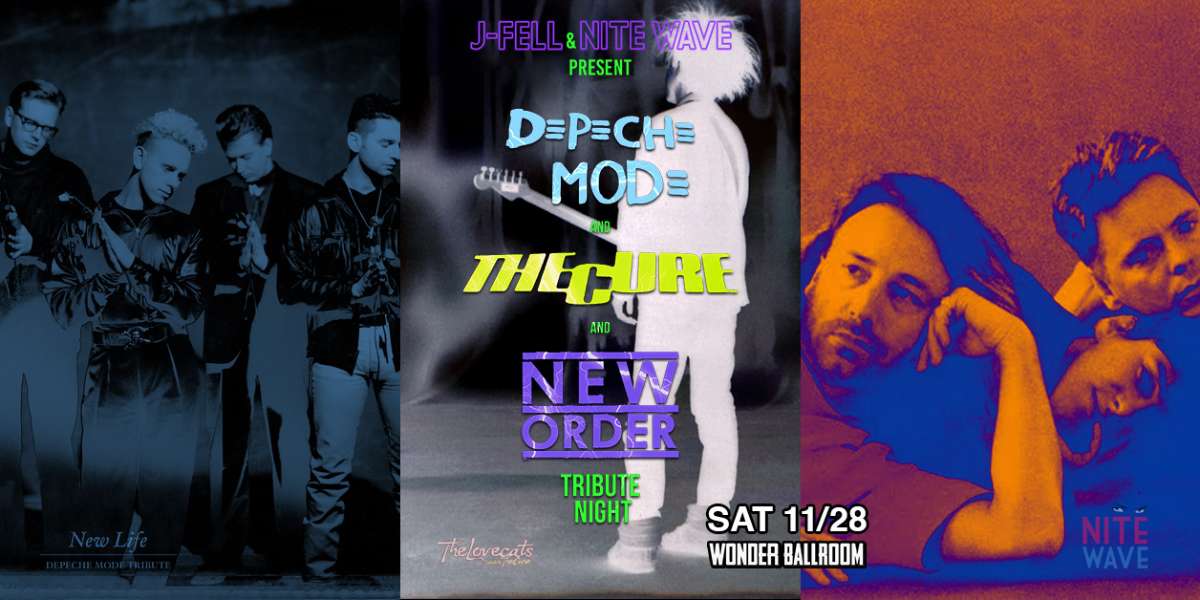
Nov/28 · J-Fell & Nite Wave present: The Cure, Depeche Mode & New Order Tribute Night
Dec/5 · feeble little horse – bitknot tour
Jan/11 · Anna von Hausswolff: Iconoclasts Tour
Jan/31 · *POSTPONED until TBD* The Residents – Eskimo Live! Tour

All Shows

Upcoming Events

Monqui Presents

With special guest Papi Fimbres

Friday, May 29
Doors : 7 pm, Show : 8 pm
all ages
$42.25 to $61.25

About KES: 

KestheBand—born and bred in the vibrant twin-island nation of Trinidad and Tobago—has become one of the most influential and respected music groups on the global entertainment circuit. Since forming in 2005, the band has re-defined Caribbean sound with a bold fusion of Soca, rock, calypso, reggae, R&B, island pop, and global pop influences, making them a true ambassador of Caribbean rhythm and culture. Led by the charismatic frontman Kees Dieffenthaller (also known as Kes) alongside founding members and long-time collaborators, KestheBand’s electrifying energy, soulful vocals, and genre-bending artistry have propelled them from the Carnival circuit of the Caribbean to the world’s most iconic stages.

Their breakthrough came with the 2011 smash hit ‘Wotless’: an irresistible Soca anthem that earned Kes the International Groovy Soca Monarch title and a BET Soul Train Music Award nomination that marked the band’s entry into the international spotlight. Other timeless favourites like ‘Hello’now one of the most streamed Soca tracks of the decade—and the heartfelt tribute ‘Savannah Grass’ have further crystallized their legacy as creators of music that resonates across cultures and continents. With collaborations spanning reggae icons such as Shaggy, hip hop stars like Snoop Dogg, Afrobeats legends such as Wizkid and dynamic producers such as Major Lazer and Tano, KestheBand continually pushes musical boundaries while honouring their Caribbean roots. Significantly, the band’s song ‘Cocoa Tea’ achieved remarkable chart success and widespread popularity. Released in late 2024, it hit #1 on the US iTunes Reggae chart, topped streaming charts and playlists around the world and amassed millions of streams on platforms such as YouTube, Spotify, and Apple Music. The single went viral on TikTok – generating hundreds of millions of views and signalling its broader cultural impact beyond traditional music and entertainment channels.

Monqui Presents

With special guest Papi Fimbres

Friday, May 29
Doors : 7 pm, Show : 8 pm
all ages
$42.25 to $61.25

On his third album Adjustments, singer-songwriter Noah Reid documents the kind of minor schisms and major upheavals that leave our lives forever altered. Endlessly revealing the nuance and character of his voice, the Toronto-bred artist imbues his incisive storytelling with a potent expression of unease and frustration and ineffable wonder—an emotional complexity perfectly echoed in the album’s elegantly orchestrated yet unpredictable form of alt-rock. At a time when turmoil feels strangely commonplace, Adjustments ultimately allows for a moment of quiet transcendence within the chaos, wholly transforming the very texture of our experience.

“I wrote this album during a transitional period where a lot of tectonic shifts were taking place in my life,” says Reid, also an accomplished actor known for his role as Patrick on the award-winning series Schitt’s Creek. “I was getting married, Schitt’s Creek was coming to an end, the pandemic was beginning—some of the changes were more internal and others were more at the societal level, but they all involved a shift in my thinking about the world around me.”

Recorded live at Toronto’s Union Sound Company and produced by Juno Award nominee Matthew Barber (who also helmed Reid’s 2016 debut album Songs from a Broken Chair and its 2020 follow-up Gemini), Adjustments came to life over a series of sessions with musicians like guitarist Christine Bougie (Bahamas, Amy Millan), drummer Joshua Van Tassel (Great Lake Swimmers, Amelia Curran), and trumpet player Bryden Baird (Feist, Ron Sexsmith). On the album-opening lead single “Everyday,” Reid offers a sublime introduction to the expansive sonic world of Adjustments, sharply contrasting the song’s heavy hearted mood with bright guitar tones and effervescent melodies. “I wrote that song in the early days of the pandemic, when I’d look out the window at this park that’s usually full of kids and families but now was totally desolate,” says Reid. “It came from a feeling of being forced into a sort of loneliness, and not really knowing what to do about that.” With its ethereal textures and swooning steel guitar, the piano-driven “Left Behind” speaks to the bittersweet freedom of living life at your own unhurried pace. Meanwhile, on “Rivers Underground,” Reid presents a gorgeously tender meditation on love and luck and risk, amplifying the track’s intensity with a luminous string arrangement courtesy of Drew Jurecka (a Grammy-nominated composer who’s worked with Buffy Sainte-Marie and The Weather Station). “My wife Clare and I have talked at various points about how easy it would’ve been for us not to find our way to each other,” says Reid. “Writing that song, I was thinking about how Toronto’s built on all these underground creeks and rivers, and how that’s a good metaphor for the strangeness of human connection—these waters trying to find their way out to the lake, flowing together or ending up apart.”

One of the most galvanizing moments on Adjustments, “Statue’s in the Stone” begins as a weary lament for the state of the human heart (“We treat it like it’s all infinite/And we throw it all away”), then unfolds into a soul-stirring anthem lit up in lush harmonies and incandescent horns. “We live in a very judgmental time, where social media really highlights this urge to tear each other down,” says Reid. “But I think if we looked inside ourselves with any kind of honesty, we’d realize that what we need is within us, and we’d be able to lead with a little more love and kindness.” Several songs later, Adjustments closes out with the thrilling catharsis of “Everything’s Fine”: an eight-minute epic that reaches an ecstatic frenzy at its gloriously sprawling, guitar-drenched bridge. “Over the past few years it seems like we’re simultaneously being told everything’s fine and absolutely nothing is fine, and it can be so hard to tell what’s real,” says Reid. “That song came from the confusion of that, and in the studio we decided to just to let the band rip and completely burn the house down.”

A longtime musician who began composing melodies on piano as a child and later developed his song craft while studying at the National Theatre School of Canada, Reid infuses all of Adjustments with the clarifying directness of a close conversation—yet unfailingly demonstrates a poet’s ability to draw immense meaning from the most granular details. As a result, the album abounds with warmly delivered wisdom—an element that’s illuminating for both audience and artist alike. “Sometimes a line will jump out of my mouth when I’m out on a walk or driving or alone in my house playing piano or guitar, and I’ll just to try to follow that line wherever it takes me,” says Reid in discussing his creative process. “I often don’t really understand what I’m saying as I’m saying it, but then I’ll listen back later on and go, ‘Oh, okay—that was useful.’ This record has definitely done that for me, and I hope it will keep on talking to me over time.

Monqui Presents

With special guest SAUSHA

Saturday, May 30
Doors : 7 pm, Show : 8 pm
all ages
$38.75 to $56.25

On his third album Adjustments, singer-songwriter Noah Reid documents the kind of minor schisms and major upheavals that leave our lives forever altered. Endlessly revealing the nuance and character of his voice, the Toronto-bred artist imbues his incisive storytelling with a potent expression of unease and frustration and ineffable wonder—an emotional complexity perfectly echoed in the album’s elegantly orchestrated yet unpredictable form of alt-rock. At a time when turmoil feels strangely commonplace, Adjustments ultimately allows for a moment of quiet transcendence within the chaos, wholly transforming the very texture of our experience.

“I wrote this album during a transitional period where a lot of tectonic shifts were taking place in my life,” says Reid, also an accomplished actor known for his role as Patrick on the award-winning series Schitt’s Creek. “I was getting married, Schitt’s Creek was coming to an end, the pandemic was beginning—some of the changes were more internal and others were more at the societal level, but they all involved a shift in my thinking about the world around me.”

Recorded live at Toronto’s Union Sound Company and produced by Juno Award nominee Matthew Barber (who also helmed Reid’s 2016 debut album Songs from a Broken Chair and its 2020 follow-up Gemini), Adjustments came to life over a series of sessions with musicians like guitarist Christine Bougie (Bahamas, Amy Millan), drummer Joshua Van Tassel (Great Lake Swimmers, Amelia Curran), and trumpet player Bryden Baird (Feist, Ron Sexsmith). On the album-opening lead single “Everyday,” Reid offers a sublime introduction to the expansive sonic world of Adjustments, sharply contrasting the song’s heavy hearted mood with bright guitar tones and effervescent melodies. “I wrote that song in the early days of the pandemic, when I’d look out the window at this park that’s usually full of kids and families but now was totally desolate,” says Reid. “It came from a feeling of being forced into a sort of loneliness, and not really knowing what to do about that.” With its ethereal textures and swooning steel guitar, the piano-driven “Left Behind” speaks to the bittersweet freedom of living life at your own unhurried pace. Meanwhile, on “Rivers Underground,” Reid presents a gorgeously tender meditation on love and luck and risk, amplifying the track’s intensity with a luminous string arrangement courtesy of Drew Jurecka (a Grammy-nominated composer who’s worked with Buffy Sainte-Marie and The Weather Station). “My wife Clare and I have talked at various points about how easy it would’ve been for us not to find our way to each other,” says Reid. “Writing that song, I was thinking about how Toronto’s built on all these underground creeks and rivers, and how that’s a good metaphor for the strangeness of human connection—these waters trying to find their way out to the lake, flowing together or ending up apart.”

One of the most galvanizing moments on Adjustments, “Statue’s in the Stone” begins as a weary lament for the state of the human heart (“We treat it like it’s all infinite/And we throw it all away”), then unfolds into a soul-stirring anthem lit up in lush harmonies and incandescent horns. “We live in a very judgmental time, where social media really highlights this urge to tear each other down,” says Reid. “But I think if we looked inside ourselves with any kind of honesty, we’d realize that what we need is within us, and we’d be able to lead with a little more love and kindness.” Several songs later, Adjustments closes out with the thrilling catharsis of “Everything’s Fine”: an eight-minute epic that reaches an ecstatic frenzy at its gloriously sprawling, guitar-drenched bridge. “Over the past few years it seems like we’re simultaneously being told everything’s fine and absolutely nothing is fine, and it can be so hard to tell what’s real,” says Reid. “That song came from the confusion of that, and in the studio we decided to just to let the band rip and completely burn the house down.”

A longtime musician who began composing melodies on piano as a child and later developed his song craft while studying at the National Theatre School of Canada, Reid infuses all of Adjustments with the clarifying directness of a close conversation—yet unfailingly demonstrates a poet’s ability to draw immense meaning from the most granular details. As a result, the album abounds with warmly delivered wisdom—an element that’s illuminating for both audience and artist alike. “Sometimes a line will jump out of my mouth when I’m out on a walk or driving or alone in my house playing piano or guitar, and I’ll just to try to follow that line wherever it takes me,” says Reid in discussing his creative process. “I often don’t really understand what I’m saying as I’m saying it, but then I’ll listen back later on and go, ‘Oh, okay—that was useful.’ This record has definitely done that for me, and I hope it will keep on talking to me over time.

Monqui Presents

with Renny Conti

Sunday, May 31
Doors : 7 pm, Show : 8 pm
all ages
$34 to $56.25

On his third album Adjustments, singer-songwriter Noah Reid documents the kind of minor schisms and major upheavals that leave our lives forever altered. Endlessly revealing the nuance and character of his voice, the Toronto-bred artist imbues his incisive storytelling with a potent expression of unease and frustration and ineffable wonder—an emotional complexity perfectly echoed in the album’s elegantly orchestrated yet unpredictable form of alt-rock. At a time when turmoil feels strangely commonplace, Adjustments ultimately allows for a moment of quiet transcendence within the chaos, wholly transforming the very texture of our experience.

“I wrote this album during a transitional period where a lot of tectonic shifts were taking place in my life,” says Reid, also an accomplished actor known for his role as Patrick on the award-winning series Schitt’s Creek. “I was getting married, Schitt’s Creek was coming to an end, the pandemic was beginning—some of the changes were more internal and others were more at the societal level, but they all involved a shift in my thinking about the world around me.”

Recorded live at Toronto’s Union Sound Company and produced by Juno Award nominee Matthew Barber (who also helmed Reid’s 2016 debut album Songs from a Broken Chair and its 2020 follow-up Gemini), Adjustments came to life over a series of sessions with musicians like guitarist Christine Bougie (Bahamas, Amy Millan), drummer Joshua Van Tassel (Great Lake Swimmers, Amelia Curran), and trumpet player Bryden Baird (Feist, Ron Sexsmith). On the album-opening lead single “Everyday,” Reid offers a sublime introduction to the expansive sonic world of Adjustments, sharply contrasting the song’s heavy hearted mood with bright guitar tones and effervescent melodies. “I wrote that song in the early days of the pandemic, when I’d look out the window at this park that’s usually full of kids and families but now was totally desolate,” says Reid. “It came from a feeling of being forced into a sort of loneliness, and not really knowing what to do about that.” With its ethereal textures and swooning steel guitar, the piano-driven “Left Behind” speaks to the bittersweet freedom of living life at your own unhurried pace. Meanwhile, on “Rivers Underground,” Reid presents a gorgeously tender meditation on love and luck and risk, amplifying the track’s intensity with a luminous string arrangement courtesy of Drew Jurecka (a Grammy-nominated composer who’s worked with Buffy Sainte-Marie and The Weather Station). “My wife Clare and I have talked at various points about how easy it would’ve been for us not to find our way to each other,” says Reid. “Writing that song, I was thinking about how Toronto’s built on all these underground creeks and rivers, and how that’s a good metaphor for the strangeness of human connection—these waters trying to find their way out to the lake, flowing together or ending up apart.”

One of the most galvanizing moments on Adjustments, “Statue’s in the Stone” begins as a weary lament for the state of the human heart (“We treat it like it’s all infinite/And we throw it all away”), then unfolds into a soul-stirring anthem lit up in lush harmonies and incandescent horns. “We live in a very judgmental time, where social media really highlights this urge to tear each other down,” says Reid. “But I think if we looked inside ourselves with any kind of honesty, we’d realize that what we need is within us, and we’d be able to lead with a little more love and kindness.” Several songs later, Adjustments closes out with the thrilling catharsis of “Everything’s Fine”: an eight-minute epic that reaches an ecstatic frenzy at its gloriously sprawling, guitar-drenched bridge. “Over the past few years it seems like we’re simultaneously being told everything’s fine and absolutely nothing is fine, and it can be so hard to tell what’s real,” says Reid. “That song came from the confusion of that, and in the studio we decided to just to let the band rip and completely burn the house down.”

A longtime musician who began composing melodies on piano as a child and later developed his song craft while studying at the National Theatre School of Canada, Reid infuses all of Adjustments with the clarifying directness of a close conversation—yet unfailingly demonstrates a poet’s ability to draw immense meaning from the most granular details. As a result, the album abounds with warmly delivered wisdom—an element that’s illuminating for both audience and artist alike. “Sometimes a line will jump out of my mouth when I’m out on a walk or driving or alone in my house playing piano or guitar, and I’ll just to try to follow that line wherever it takes me,” says Reid in discussing his creative process. “I often don’t really understand what I’m saying as I’m saying it, but then I’ll listen back later on and go, ‘Oh, okay—that was useful.’ This record has definitely done that for me, and I hope it will keep on talking to me over time.

Monqui Presents

With special guest Stevie Bill

Tuesday, June 2
Doors : 7 pm, Show : 8 pm
all ages
$36.50 to $56.25

On his third album Adjustments, singer-songwriter Noah Reid documents the kind of minor schisms and major upheavals that leave our lives forever altered. Endlessly revealing the nuance and character of his voice, the Toronto-bred artist imbues his incisive storytelling with a potent expression of unease and frustration and ineffable wonder—an emotional complexity perfectly echoed in the album’s elegantly orchestrated yet unpredictable form of alt-rock. At a time when turmoil feels strangely commonplace, Adjustments ultimately allows for a moment of quiet transcendence within the chaos, wholly transforming the very texture of our experience.

“I wrote this album during a transitional period where a lot of tectonic shifts were taking place in my life,” says Reid, also an accomplished actor known for his role as Patrick on the award-winning series Schitt’s Creek. “I was getting married, Schitt’s Creek was coming to an end, the pandemic was beginning—some of the changes were more internal and others were more at the societal level, but they all involved a shift in my thinking about the world around me.”

Recorded live at Toronto’s Union Sound Company and produced by Juno Award nominee Matthew Barber (who also helmed Reid’s 2016 debut album Songs from a Broken Chair and its 2020 follow-up Gemini), Adjustments came to life over a series of sessions with musicians like guitarist Christine Bougie (Bahamas, Amy Millan), drummer Joshua Van Tassel (Great Lake Swimmers, Amelia Curran), and trumpet player Bryden Baird (Feist, Ron Sexsmith). On the album-opening lead single “Everyday,” Reid offers a sublime introduction to the expansive sonic world of Adjustments, sharply contrasting the song’s heavy hearted mood with bright guitar tones and effervescent melodies. “I wrote that song in the early days of the pandemic, when I’d look out the window at this park that’s usually full of kids and families but now was totally desolate,” says Reid. “It came from a feeling of being forced into a sort of loneliness, and not really knowing what to do about that.” With its ethereal textures and swooning steel guitar, the piano-driven “Left Behind” speaks to the bittersweet freedom of living life at your own unhurried pace. Meanwhile, on “Rivers Underground,” Reid presents a gorgeously tender meditation on love and luck and risk, amplifying the track’s intensity with a luminous string arrangement courtesy of Drew Jurecka (a Grammy-nominated composer who’s worked with Buffy Sainte-Marie and The Weather Station). “My wife Clare and I have talked at various points about how easy it would’ve been for us not to find our way to each other,” says Reid. “Writing that song, I was thinking about how Toronto’s built on all these underground creeks and rivers, and how that’s a good metaphor for the strangeness of human connection—these waters trying to find their way out to the lake, flowing together or ending up apart.”

One of the most galvanizing moments on Adjustments, “Statue’s in the Stone” begins as a weary lament for the state of the human heart (“We treat it like it’s all infinite/And we throw it all away”), then unfolds into a soul-stirring anthem lit up in lush harmonies and incandescent horns. “We live in a very judgmental time, where social media really highlights this urge to tear each other down,” says Reid. “But I think if we looked inside ourselves with any kind of honesty, we’d realize that what we need is within us, and we’d be able to lead with a little more love and kindness.” Several songs later, Adjustments closes out with the thrilling catharsis of “Everything’s Fine”: an eight-minute epic that reaches an ecstatic frenzy at its gloriously sprawling, guitar-drenched bridge. “Over the past few years it seems like we’re simultaneously being told everything’s fine and absolutely nothing is fine, and it can be so hard to tell what’s real,” says Reid. “That song came from the confusion of that, and in the studio we decided to just to let the band rip and completely burn the house down.”

A longtime musician who began composing melodies on piano as a child and later developed his song craft while studying at the National Theatre School of Canada, Reid infuses all of Adjustments with the clarifying directness of a close conversation—yet unfailingly demonstrates a poet’s ability to draw immense meaning from the most granular details. As a result, the album abounds with warmly delivered wisdom—an element that’s illuminating for both audience and artist alike. “Sometimes a line will jump out of my mouth when I’m out on a walk or driving or alone in my house playing piano or guitar, and I’ll just to try to follow that line wherever it takes me,” says Reid in discussing his creative process. “I often don’t really understand what I’m saying as I’m saying it, but then I’ll listen back later on and go, ‘Oh, okay—that was useful.’ This record has definitely done that for me, and I hope it will keep on talking to me over time.

Monqui Presents

Saturday, June 6
Doors : 7 pm, Show : 8 pm
all ages
$17 to $34

On his third album Adjustments, singer-songwriter Noah Reid documents the kind of minor schisms and major upheavals that leave our lives forever altered. Endlessly revealing the nuance and character of his voice, the Toronto-bred artist imbues his incisive storytelling with a potent expression of unease and frustration and ineffable wonder—an emotional complexity perfectly echoed in the album’s elegantly orchestrated yet unpredictable form of alt-rock. At a time when turmoil feels strangely commonplace, Adjustments ultimately allows for a moment of quiet transcendence within the chaos, wholly transforming the very texture of our experience.

“I wrote this album during a transitional period where a lot of tectonic shifts were taking place in my life,” says Reid, also an accomplished actor known for his role as Patrick on the award-winning series Schitt’s Creek. “I was getting married, Schitt’s Creek was coming to an end, the pandemic was beginning—some of the changes were more internal and others were more at the societal level, but they all involved a shift in my thinking about the world around me.”

Recorded live at Toronto’s Union Sound Company and produced by Juno Award nominee Matthew Barber (who also helmed Reid’s 2016 debut album Songs from a Broken Chair and its 2020 follow-up Gemini), Adjustments came to life over a series of sessions with musicians like guitarist Christine Bougie (Bahamas, Amy Millan), drummer Joshua Van Tassel (Great Lake Swimmers, Amelia Curran), and trumpet player Bryden Baird (Feist, Ron Sexsmith). On the album-opening lead single “Everyday,” Reid offers a sublime introduction to the expansive sonic world of Adjustments, sharply contrasting the song’s heavy hearted mood with bright guitar tones and effervescent melodies. “I wrote that song in the early days of the pandemic, when I’d look out the window at this park that’s usually full of kids and families but now was totally desolate,” says Reid. “It came from a feeling of being forced into a sort of loneliness, and not really knowing what to do about that.” With its ethereal textures and swooning steel guitar, the piano-driven “Left Behind” speaks to the bittersweet freedom of living life at your own unhurried pace. Meanwhile, on “Rivers Underground,” Reid presents a gorgeously tender meditation on love and luck and risk, amplifying the track’s intensity with a luminous string arrangement courtesy of Drew Jurecka (a Grammy-nominated composer who’s worked with Buffy Sainte-Marie and The Weather Station). “My wife Clare and I have talked at various points about how easy it would’ve been for us not to find our way to each other,” says Reid. “Writing that song, I was thinking about how Toronto’s built on all these underground creeks and rivers, and how that’s a good metaphor for the strangeness of human connection—these waters trying to find their way out to the lake, flowing together or ending up apart.”

One of the most galvanizing moments on Adjustments, “Statue’s in the Stone” begins as a weary lament for the state of the human heart (“We treat it like it’s all infinite/And we throw it all away”), then unfolds into a soul-stirring anthem lit up in lush harmonies and incandescent horns. “We live in a very judgmental time, where social media really highlights this urge to tear each other down,” says Reid. “But I think if we looked inside ourselves with any kind of honesty, we’d realize that what we need is within us, and we’d be able to lead with a little more love and kindness.” Several songs later, Adjustments closes out with the thrilling catharsis of “Everything’s Fine”: an eight-minute epic that reaches an ecstatic frenzy at its gloriously sprawling, guitar-drenched bridge. “Over the past few years it seems like we’re simultaneously being told everything’s fine and absolutely nothing is fine, and it can be so hard to tell what’s real,” says Reid. “That song came from the confusion of that, and in the studio we decided to just to let the band rip and completely burn the house down.”

A longtime musician who began composing melodies on piano as a child and later developed his song craft while studying at the National Theatre School of Canada, Reid infuses all of Adjustments with the clarifying directness of a close conversation—yet unfailingly demonstrates a poet’s ability to draw immense meaning from the most granular details. As a result, the album abounds with warmly delivered wisdom—an element that’s illuminating for both audience and artist alike. “Sometimes a line will jump out of my mouth when I’m out on a walk or driving or alone in my house playing piano or guitar, and I’ll just to try to follow that line wherever it takes me,” says Reid in discussing his creative process. “I often don’t really understand what I’m saying as I’m saying it, but then I’ll listen back later on and go, ‘Oh, okay—that was useful.’ This record has definitely done that for me, and I hope it will keep on talking to me over time.

Monqui Presents

Sunday, June 7
Doors : 7 pm, Show : 8 pm
all ages
$17 to $34

On his third album Adjustments, singer-songwriter Noah Reid documents the kind of minor schisms and major upheavals that leave our lives forever altered. Endlessly revealing the nuance and character of his voice, the Toronto-bred artist imbues his incisive storytelling with a potent expression of unease and frustration and ineffable wonder—an emotional complexity perfectly echoed in the album’s elegantly orchestrated yet unpredictable form of alt-rock. At a time when turmoil feels strangely commonplace, Adjustments ultimately allows for a moment of quiet transcendence within the chaos, wholly transforming the very texture of our experience.

“I wrote this album during a transitional period where a lot of tectonic shifts were taking place in my life,” says Reid, also an accomplished actor known for his role as Patrick on the award-winning series Schitt’s Creek. “I was getting married, Schitt’s Creek was coming to an end, the pandemic was beginning—some of the changes were more internal and others were more at the societal level, but they all involved a shift in my thinking about the world around me.”

Recorded live at Toronto’s Union Sound Company and produced by Juno Award nominee Matthew Barber (who also helmed Reid’s 2016 debut album Songs from a Broken Chair and its 2020 follow-up Gemini), Adjustments came to life over a series of sessions with musicians like guitarist Christine Bougie (Bahamas, Amy Millan), drummer Joshua Van Tassel (Great Lake Swimmers, Amelia Curran), and trumpet player Bryden Baird (Feist, Ron Sexsmith). On the album-opening lead single “Everyday,” Reid offers a sublime introduction to the expansive sonic world of Adjustments, sharply contrasting the song’s heavy hearted mood with bright guitar tones and effervescent melodies. “I wrote that song in the early days of the pandemic, when I’d look out the window at this park that’s usually full of kids and families but now was totally desolate,” says Reid. “It came from a feeling of being forced into a sort of loneliness, and not really knowing what to do about that.” With its ethereal textures and swooning steel guitar, the piano-driven “Left Behind” speaks to the bittersweet freedom of living life at your own unhurried pace. Meanwhile, on “Rivers Underground,” Reid presents a gorgeously tender meditation on love and luck and risk, amplifying the track’s intensity with a luminous string arrangement courtesy of Drew Jurecka (a Grammy-nominated composer who’s worked with Buffy Sainte-Marie and The Weather Station). “My wife Clare and I have talked at various points about how easy it would’ve been for us not to find our way to each other,” says Reid. “Writing that song, I was thinking about how Toronto’s built on all these underground creeks and rivers, and how that’s a good metaphor for the strangeness of human connection—these waters trying to find their way out to the lake, flowing together or ending up apart.”

One of the most galvanizing moments on Adjustments, “Statue’s in the Stone” begins as a weary lament for the state of the human heart (“We treat it like it’s all infinite/And we throw it all away”), then unfolds into a soul-stirring anthem lit up in lush harmonies and incandescent horns. “We live in a very judgmental time, where social media really highlights this urge to tear each other down,” says Reid. “But I think if we looked inside ourselves with any kind of honesty, we’d realize that what we need is within us, and we’d be able to lead with a little more love and kindness.” Several songs later, Adjustments closes out with the thrilling catharsis of “Everything’s Fine”: an eight-minute epic that reaches an ecstatic frenzy at its gloriously sprawling, guitar-drenched bridge. “Over the past few years it seems like we’re simultaneously being told everything’s fine and absolutely nothing is fine, and it can be so hard to tell what’s real,” says Reid. “That song came from the confusion of that, and in the studio we decided to just to let the band rip and completely burn the house down.”

A longtime musician who began composing melodies on piano as a child and later developed his song craft while studying at the National Theatre School of Canada, Reid infuses all of Adjustments with the clarifying directness of a close conversation—yet unfailingly demonstrates a poet’s ability to draw immense meaning from the most granular details. As a result, the album abounds with warmly delivered wisdom—an element that’s illuminating for both audience and artist alike. “Sometimes a line will jump out of my mouth when I’m out on a walk or driving or alone in my house playing piano or guitar, and I’ll just to try to follow that line wherever it takes me,” says Reid in discussing his creative process. “I often don’t really understand what I’m saying as I’m saying it, but then I’ll listen back later on and go, ‘Oh, okay—that was useful.’ This record has definitely done that for me, and I hope it will keep on talking to me over time.

Monqui Presents

Wednesday, June 10
Doors : 7 pm, Show : 8 pm
all ages
$34 to $156

On his third album Adjustments, singer-songwriter Noah Reid documents the kind of minor schisms and major upheavals that leave our lives forever altered. Endlessly revealing the nuance and character of his voice, the Toronto-bred artist imbues his incisive storytelling with a potent expression of unease and frustration and ineffable wonder—an emotional complexity perfectly echoed in the album’s elegantly orchestrated yet unpredictable form of alt-rock. At a time when turmoil feels strangely commonplace, Adjustments ultimately allows for a moment of quiet transcendence within the chaos, wholly transforming the very texture of our experience.

“I wrote this album during a transitional period where a lot of tectonic shifts were taking place in my life,” says Reid, also an accomplished actor known for his role as Patrick on the award-winning series Schitt’s Creek. “I was getting married, Schitt’s Creek was coming to an end, the pandemic was beginning—some of the changes were more internal and others were more at the societal level, but they all involved a shift in my thinking about the world around me.”

Recorded live at Toronto’s Union Sound Company and produced by Juno Award nominee Matthew Barber (who also helmed Reid’s 2016 debut album Songs from a Broken Chair and its 2020 follow-up Gemini), Adjustments came to life over a series of sessions with musicians like guitarist Christine Bougie (Bahamas, Amy Millan), drummer Joshua Van Tassel (Great Lake Swimmers, Amelia Curran), and trumpet player Bryden Baird (Feist, Ron Sexsmith). On the album-opening lead single “Everyday,” Reid offers a sublime introduction to the expansive sonic world of Adjustments, sharply contrasting the song’s heavy hearted mood with bright guitar tones and effervescent melodies. “I wrote that song in the early days of the pandemic, when I’d look out the window at this park that’s usually full of kids and families but now was totally desolate,” says Reid. “It came from a feeling of being forced into a sort of loneliness, and not really knowing what to do about that.” With its ethereal textures and swooning steel guitar, the piano-driven “Left Behind” speaks to the bittersweet freedom of living life at your own unhurried pace. Meanwhile, on “Rivers Underground,” Reid presents a gorgeously tender meditation on love and luck and risk, amplifying the track’s intensity with a luminous string arrangement courtesy of Drew Jurecka (a Grammy-nominated composer who’s worked with Buffy Sainte-Marie and The Weather Station). “My wife Clare and I have talked at various points about how easy it would’ve been for us not to find our way to each other,” says Reid. “Writing that song, I was thinking about how Toronto’s built on all these underground creeks and rivers, and how that’s a good metaphor for the strangeness of human connection—these waters trying to find their way out to the lake, flowing together or ending up apart.”

One of the most galvanizing moments on Adjustments, “Statue’s in the Stone” begins as a weary lament for the state of the human heart (“We treat it like it’s all infinite/And we throw it all away”), then unfolds into a soul-stirring anthem lit up in lush harmonies and incandescent horns. “We live in a very judgmental time, where social media really highlights this urge to tear each other down,” says Reid. “But I think if we looked inside ourselves with any kind of honesty, we’d realize that what we need is within us, and we’d be able to lead with a little more love and kindness.” Several songs later, Adjustments closes out with the thrilling catharsis of “Everything’s Fine”: an eight-minute epic that reaches an ecstatic frenzy at its gloriously sprawling, guitar-drenched bridge. “Over the past few years it seems like we’re simultaneously being told everything’s fine and absolutely nothing is fine, and it can be so hard to tell what’s real,” says Reid. “That song came from the confusion of that, and in the studio we decided to just to let the band rip and completely burn the house down.”

A longtime musician who began composing melodies on piano as a child and later developed his song craft while studying at the National Theatre School of Canada, Reid infuses all of Adjustments with the clarifying directness of a close conversation—yet unfailingly demonstrates a poet’s ability to draw immense meaning from the most granular details. As a result, the album abounds with warmly delivered wisdom—an element that’s illuminating for both audience and artist alike. “Sometimes a line will jump out of my mouth when I’m out on a walk or driving or alone in my house playing piano or guitar, and I’ll just to try to follow that line wherever it takes me,” says Reid in discussing his creative process. “I often don’t really understand what I’m saying as I’m saying it, but then I’ll listen back later on and go, ‘Oh, okay—that was useful.’ This record has definitely done that for me, and I hope it will keep on talking to me over time.

Monqui Presents

with Yasmin Williams

Thursday, June 18
Doors : 7 pm, Show : 8 pm
all ages
$37 to $56.25

On his third album Adjustments, singer-songwriter Noah Reid documents the kind of minor schisms and major upheavals that leave our lives forever altered. Endlessly revealing the nuance and character of his voice, the Toronto-bred artist imbues his incisive storytelling with a potent expression of unease and frustration and ineffable wonder—an emotional complexity perfectly echoed in the album’s elegantly orchestrated yet unpredictable form of alt-rock. At a time when turmoil feels strangely commonplace, Adjustments ultimately allows for a moment of quiet transcendence within the chaos, wholly transforming the very texture of our experience.

“I wrote this album during a transitional period where a lot of tectonic shifts were taking place in my life,” says Reid, also an accomplished actor known for his role as Patrick on the award-winning series Schitt’s Creek. “I was getting married, Schitt’s Creek was coming to an end, the pandemic was beginning—some of the changes were more internal and others were more at the societal level, but they all involved a shift in my thinking about the world around me.”

Recorded live at Toronto’s Union Sound Company and produced by Juno Award nominee Matthew Barber (who also helmed Reid’s 2016 debut album Songs from a Broken Chair and its 2020 follow-up Gemini), Adjustments came to life over a series of sessions with musicians like guitarist Christine Bougie (Bahamas, Amy Millan), drummer Joshua Van Tassel (Great Lake Swimmers, Amelia Curran), and trumpet player Bryden Baird (Feist, Ron Sexsmith). On the album-opening lead single “Everyday,” Reid offers a sublime introduction to the expansive sonic world of Adjustments, sharply contrasting the song’s heavy hearted mood with bright guitar tones and effervescent melodies. “I wrote that song in the early days of the pandemic, when I’d look out the window at this park that’s usually full of kids and families but now was totally desolate,” says Reid. “It came from a feeling of being forced into a sort of loneliness, and not really knowing what to do about that.” With its ethereal textures and swooning steel guitar, the piano-driven “Left Behind” speaks to the bittersweet freedom of living life at your own unhurried pace. Meanwhile, on “Rivers Underground,” Reid presents a gorgeously tender meditation on love and luck and risk, amplifying the track’s intensity with a luminous string arrangement courtesy of Drew Jurecka (a Grammy-nominated composer who’s worked with Buffy Sainte-Marie and The Weather Station). “My wife Clare and I have talked at various points about how easy it would’ve been for us not to find our way to each other,” says Reid. “Writing that song, I was thinking about how Toronto’s built on all these underground creeks and rivers, and how that’s a good metaphor for the strangeness of human connection—these waters trying to find their way out to the lake, flowing together or ending up apart.”

One of the most galvanizing moments on Adjustments, “Statue’s in the Stone” begins as a weary lament for the state of the human heart (“We treat it like it’s all infinite/And we throw it all away”), then unfolds into a soul-stirring anthem lit up in lush harmonies and incandescent horns. “We live in a very judgmental time, where social media really highlights this urge to tear each other down,” says Reid. “But I think if we looked inside ourselves with any kind of honesty, we’d realize that what we need is within us, and we’d be able to lead with a little more love and kindness.” Several songs later, Adjustments closes out with the thrilling catharsis of “Everything’s Fine”: an eight-minute epic that reaches an ecstatic frenzy at its gloriously sprawling, guitar-drenched bridge. “Over the past few years it seems like we’re simultaneously being told everything’s fine and absolutely nothing is fine, and it can be so hard to tell what’s real,” says Reid. “That song came from the confusion of that, and in the studio we decided to just to let the band rip and completely burn the house down.”

A longtime musician who began composing melodies on piano as a child and later developed his song craft while studying at the National Theatre School of Canada, Reid infuses all of Adjustments with the clarifying directness of a close conversation—yet unfailingly demonstrates a poet’s ability to draw immense meaning from the most granular details. As a result, the album abounds with warmly delivered wisdom—an element that’s illuminating for both audience and artist alike. “Sometimes a line will jump out of my mouth when I’m out on a walk or driving or alone in my house playing piano or guitar, and I’ll just to try to follow that line wherever it takes me,” says Reid in discussing his creative process. “I often don’t really understand what I’m saying as I’m saying it, but then I’ll listen back later on and go, ‘Oh, okay—that was useful.’ This record has definitely done that for me, and I hope it will keep on talking to me over time.

Monqui Presents

with Yasmin Williams

Friday, June 19
Doors : 7 pm, Show : 8 pm
all ages
$37 to $56.25

On his third album Adjustments, singer-songwriter Noah Reid documents the kind of minor schisms and major upheavals that leave our lives forever altered. Endlessly revealing the nuance and character of his voice, the Toronto-bred artist imbues his incisive storytelling with a potent expression of unease and frustration and ineffable wonder—an emotional complexity perfectly echoed in the album’s elegantly orchestrated yet unpredictable form of alt-rock. At a time when turmoil feels strangely commonplace, Adjustments ultimately allows for a moment of quiet transcendence within the chaos, wholly transforming the very texture of our experience.

“I wrote this album during a transitional period where a lot of tectonic shifts were taking place in my life,” says Reid, also an accomplished actor known for his role as Patrick on the award-winning series Schitt’s Creek. “I was getting married, Schitt’s Creek was coming to an end, the pandemic was beginning—some of the changes were more internal and others were more at the societal level, but they all involved a shift in my thinking about the world around me.”

Recorded live at Toronto’s Union Sound Company and produced by Juno Award nominee Matthew Barber (who also helmed Reid’s 2016 debut album Songs from a Broken Chair and its 2020 follow-up Gemini), Adjustments came to life over a series of sessions with musicians like guitarist Christine Bougie (Bahamas, Amy Millan), drummer Joshua Van Tassel (Great Lake Swimmers, Amelia Curran), and trumpet player Bryden Baird (Feist, Ron Sexsmith). On the album-opening lead single “Everyday,” Reid offers a sublime introduction to the expansive sonic world of Adjustments, sharply contrasting the song’s heavy hearted mood with bright guitar tones and effervescent melodies. “I wrote that song in the early days of the pandemic, when I’d look out the window at this park that’s usually full of kids and families but now was totally desolate,” says Reid. “It came from a feeling of being forced into a sort of loneliness, and not really knowing what to do about that.” With its ethereal textures and swooning steel guitar, the piano-driven “Left Behind” speaks to the bittersweet freedom of living life at your own unhurried pace. Meanwhile, on “Rivers Underground,” Reid presents a gorgeously tender meditation on love and luck and risk, amplifying the track’s intensity with a luminous string arrangement courtesy of Drew Jurecka (a Grammy-nominated composer who’s worked with Buffy Sainte-Marie and The Weather Station). “My wife Clare and I have talked at various points about how easy it would’ve been for us not to find our way to each other,” says Reid. “Writing that song, I was thinking about how Toronto’s built on all these underground creeks and rivers, and how that’s a good metaphor for the strangeness of human connection—these waters trying to find their way out to the lake, flowing together or ending up apart.”

One of the most galvanizing moments on Adjustments, “Statue’s in the Stone” begins as a weary lament for the state of the human heart (“We treat it like it’s all infinite/And we throw it all away”), then unfolds into a soul-stirring anthem lit up in lush harmonies and incandescent horns. “We live in a very judgmental time, where social media really highlights this urge to tear each other down,” says Reid. “But I think if we looked inside ourselves with any kind of honesty, we’d realize that what we need is within us, and we’d be able to lead with a little more love and kindness.” Several songs later, Adjustments closes out with the thrilling catharsis of “Everything’s Fine”: an eight-minute epic that reaches an ecstatic frenzy at its gloriously sprawling, guitar-drenched bridge. “Over the past few years it seems like we’re simultaneously being told everything’s fine and absolutely nothing is fine, and it can be so hard to tell what’s real,” says Reid. “That song came from the confusion of that, and in the studio we decided to just to let the band rip and completely burn the house down.”

A longtime musician who began composing melodies on piano as a child and later developed his song craft while studying at the National Theatre School of Canada, Reid infuses all of Adjustments with the clarifying directness of a close conversation—yet unfailingly demonstrates a poet’s ability to draw immense meaning from the most granular details. As a result, the album abounds with warmly delivered wisdom—an element that’s illuminating for both audience and artist alike. “Sometimes a line will jump out of my mouth when I’m out on a walk or driving or alone in my house playing piano or guitar, and I’ll just to try to follow that line wherever it takes me,” says Reid in discussing his creative process. “I often don’t really understand what I’m saying as I’m saying it, but then I’ll listen back later on and go, ‘Oh, okay—that was useful.’ This record has definitely done that for me, and I hope it will keep on talking to me over time.

Monqui Presents

Saturday, June 20
Doors : 7 pm, Show : 8 pm
all ages
$34 to $56.25

On his third album Adjustments, singer-songwriter Noah Reid documents the kind of minor schisms and major upheavals that leave our lives forever altered. Endlessly revealing the nuance and character of his voice, the Toronto-bred artist imbues his incisive storytelling with a potent expression of unease and frustration and ineffable wonder—an emotional complexity perfectly echoed in the album’s elegantly orchestrated yet unpredictable form of alt-rock. At a time when turmoil feels strangely commonplace, Adjustments ultimately allows for a moment of quiet transcendence within the chaos, wholly transforming the very texture of our experience.

“I wrote this album during a transitional period where a lot of tectonic shifts were taking place in my life,” says Reid, also an accomplished actor known for his role as Patrick on the award-winning series Schitt’s Creek. “I was getting married, Schitt’s Creek was coming to an end, the pandemic was beginning—some of the changes were more internal and others were more at the societal level, but they all involved a shift in my thinking about the world around me.”

Recorded live at Toronto’s Union Sound Company and produced by Juno Award nominee Matthew Barber (who also helmed Reid’s 2016 debut album Songs from a Broken Chair and its 2020 follow-up Gemini), Adjustments came to life over a series of sessions with musicians like guitarist Christine Bougie (Bahamas, Amy Millan), drummer Joshua Van Tassel (Great Lake Swimmers, Amelia Curran), and trumpet player Bryden Baird (Feist, Ron Sexsmith). On the album-opening lead single “Everyday,” Reid offers a sublime introduction to the expansive sonic world of Adjustments, sharply contrasting the song’s heavy hearted mood with bright guitar tones and effervescent melodies. “I wrote that song in the early days of the pandemic, when I’d look out the window at this park that’s usually full of kids and families but now was totally desolate,” says Reid. “It came from a feeling of being forced into a sort of loneliness, and not really knowing what to do about that.” With its ethereal textures and swooning steel guitar, the piano-driven “Left Behind” speaks to the bittersweet freedom of living life at your own unhurried pace. Meanwhile, on “Rivers Underground,” Reid presents a gorgeously tender meditation on love and luck and risk, amplifying the track’s intensity with a luminous string arrangement courtesy of Drew Jurecka (a Grammy-nominated composer who’s worked with Buffy Sainte-Marie and The Weather Station). “My wife Clare and I have talked at various points about how easy it would’ve been for us not to find our way to each other,” says Reid. “Writing that song, I was thinking about how Toronto’s built on all these underground creeks and rivers, and how that’s a good metaphor for the strangeness of human connection—these waters trying to find their way out to the lake, flowing together or ending up apart.”

One of the most galvanizing moments on Adjustments, “Statue’s in the Stone” begins as a weary lament for the state of the human heart (“We treat it like it’s all infinite/And we throw it all away”), then unfolds into a soul-stirring anthem lit up in lush harmonies and incandescent horns. “We live in a very judgmental time, where social media really highlights this urge to tear each other down,” says Reid. “But I think if we looked inside ourselves with any kind of honesty, we’d realize that what we need is within us, and we’d be able to lead with a little more love and kindness.” Several songs later, Adjustments closes out with the thrilling catharsis of “Everything’s Fine”: an eight-minute epic that reaches an ecstatic frenzy at its gloriously sprawling, guitar-drenched bridge. “Over the past few years it seems like we’re simultaneously being told everything’s fine and absolutely nothing is fine, and it can be so hard to tell what’s real,” says Reid. “That song came from the confusion of that, and in the studio we decided to just to let the band rip and completely burn the house down.”

A longtime musician who began composing melodies on piano as a child and later developed his song craft while studying at the National Theatre School of Canada, Reid infuses all of Adjustments with the clarifying directness of a close conversation—yet unfailingly demonstrates a poet’s ability to draw immense meaning from the most granular details. As a result, the album abounds with warmly delivered wisdom—an element that’s illuminating for both audience and artist alike. “Sometimes a line will jump out of my mouth when I’m out on a walk or driving or alone in my house playing piano or guitar, and I’ll just to try to follow that line wherever it takes me,” says Reid in discussing his creative process. “I often don’t really understand what I’m saying as I’m saying it, but then I’ll listen back later on and go, ‘Oh, okay—that was useful.’ This record has definitely done that for me, and I hope it will keep on talking to me over time.

Monqui Presents

with special guest Wendlo

Tuesday, June 23
Doors : 7 pm, Show : 8 pm
all ages
$39.25 to $61.25

On his third album Adjustments, singer-songwriter Noah Reid documents the kind of minor schisms and major upheavals that leave our lives forever altered. Endlessly revealing the nuance and character of his voice, the Toronto-bred artist imbues his incisive storytelling with a potent expression of unease and frustration and ineffable wonder—an emotional complexity perfectly echoed in the album’s elegantly orchestrated yet unpredictable form of alt-rock. At a time when turmoil feels strangely commonplace, Adjustments ultimately allows for a moment of quiet transcendence within the chaos, wholly transforming the very texture of our experience.

“I wrote this album during a transitional period where a lot of tectonic shifts were taking place in my life,” says Reid, also an accomplished actor known for his role as Patrick on the award-winning series Schitt’s Creek. “I was getting married, Schitt’s Creek was coming to an end, the pandemic was beginning—some of the changes were more internal and others were more at the societal level, but they all involved a shift in my thinking about the world around me.”

Recorded live at Toronto’s Union Sound Company and produced by Juno Award nominee Matthew Barber (who also helmed Reid’s 2016 debut album Songs from a Broken Chair and its 2020 follow-up Gemini), Adjustments came to life over a series of sessions with musicians like guitarist Christine Bougie (Bahamas, Amy Millan), drummer Joshua Van Tassel (Great Lake Swimmers, Amelia Curran), and trumpet player Bryden Baird (Feist, Ron Sexsmith). On the album-opening lead single “Everyday,” Reid offers a sublime introduction to the expansive sonic world of Adjustments, sharply contrasting the song’s heavy hearted mood with bright guitar tones and effervescent melodies. “I wrote that song in the early days of the pandemic, when I’d look out the window at this park that’s usually full of kids and families but now was totally desolate,” says Reid. “It came from a feeling of being forced into a sort of loneliness, and not really knowing what to do about that.” With its ethereal textures and swooning steel guitar, the piano-driven “Left Behind” speaks to the bittersweet freedom of living life at your own unhurried pace. Meanwhile, on “Rivers Underground,” Reid presents a gorgeously tender meditation on love and luck and risk, amplifying the track’s intensity with a luminous string arrangement courtesy of Drew Jurecka (a Grammy-nominated composer who’s worked with Buffy Sainte-Marie and The Weather Station). “My wife Clare and I have talked at various points about how easy it would’ve been for us not to find our way to each other,” says Reid. “Writing that song, I was thinking about how Toronto’s built on all these underground creeks and rivers, and how that’s a good metaphor for the strangeness of human connection—these waters trying to find their way out to the lake, flowing together or ending up apart.”

One of the most galvanizing moments on Adjustments, “Statue’s in the Stone” begins as a weary lament for the state of the human heart (“We treat it like it’s all infinite/And we throw it all away”), then unfolds into a soul-stirring anthem lit up in lush harmonies and incandescent horns. “We live in a very judgmental time, where social media really highlights this urge to tear each other down,” says Reid. “But I think if we looked inside ourselves with any kind of honesty, we’d realize that what we need is within us, and we’d be able to lead with a little more love and kindness.” Several songs later, Adjustments closes out with the thrilling catharsis of “Everything’s Fine”: an eight-minute epic that reaches an ecstatic frenzy at its gloriously sprawling, guitar-drenched bridge. “Over the past few years it seems like we’re simultaneously being told everything’s fine and absolutely nothing is fine, and it can be so hard to tell what’s real,” says Reid. “That song came from the confusion of that, and in the studio we decided to just to let the band rip and completely burn the house down.”

A longtime musician who began composing melodies on piano as a child and later developed his song craft while studying at the National Theatre School of Canada, Reid infuses all of Adjustments with the clarifying directness of a close conversation—yet unfailingly demonstrates a poet’s ability to draw immense meaning from the most granular details. As a result, the album abounds with warmly delivered wisdom—an element that’s illuminating for both audience and artist alike. “Sometimes a line will jump out of my mouth when I’m out on a walk or driving or alone in my house playing piano or guitar, and I’ll just to try to follow that line wherever it takes me,” says Reid in discussing his creative process. “I often don’t really understand what I’m saying as I’m saying it, but then I’ll listen back later on and go, ‘Oh, okay—that was useful.’ This record has definitely done that for me, and I hope it will keep on talking to me over time.

Monqui Presents

Wednesday, June 24
Doors : 7 pm, Show : 8 pm
all ages

On his third album Adjustments, singer-songwriter Noah Reid documents the kind of minor schisms and major upheavals that leave our lives forever altered. Endlessly revealing the nuance and character of his voice, the Toronto-bred artist imbues his incisive storytelling with a potent expression of unease and frustration and ineffable wonder—an emotional complexity perfectly echoed in the album’s elegantly orchestrated yet unpredictable form of alt-rock. At a time when turmoil feels strangely commonplace, Adjustments ultimately allows for a moment of quiet transcendence within the chaos, wholly transforming the very texture of our experience.

“I wrote this album during a transitional period where a lot of tectonic shifts were taking place in my life,” says Reid, also an accomplished actor known for his role as Patrick on the award-winning series Schitt’s Creek. “I was getting married, Schitt’s Creek was coming to an end, the pandemic was beginning—some of the changes were more internal and others were more at the societal level, but they all involved a shift in my thinking about the world around me.”

Recorded live at Toronto’s Union Sound Company and produced by Juno Award nominee Matthew Barber (who also helmed Reid’s 2016 debut album Songs from a Broken Chair and its 2020 follow-up Gemini), Adjustments came to life over a series of sessions with musicians like guitarist Christine Bougie (Bahamas, Amy Millan), drummer Joshua Van Tassel (Great Lake Swimmers, Amelia Curran), and trumpet player Bryden Baird (Feist, Ron Sexsmith). On the album-opening lead single “Everyday,” Reid offers a sublime introduction to the expansive sonic world of Adjustments, sharply contrasting the song’s heavy hearted mood with bright guitar tones and effervescent melodies. “I wrote that song in the early days of the pandemic, when I’d look out the window at this park that’s usually full of kids and families but now was totally desolate,” says Reid. “It came from a feeling of being forced into a sort of loneliness, and not really knowing what to do about that.” With its ethereal textures and swooning steel guitar, the piano-driven “Left Behind” speaks to the bittersweet freedom of living life at your own unhurried pace. Meanwhile, on “Rivers Underground,” Reid presents a gorgeously tender meditation on love and luck and risk, amplifying the track’s intensity with a luminous string arrangement courtesy of Drew Jurecka (a Grammy-nominated composer who’s worked with Buffy Sainte-Marie and The Weather Station). “My wife Clare and I have talked at various points about how easy it would’ve been for us not to find our way to each other,” says Reid. “Writing that song, I was thinking about how Toronto’s built on all these underground creeks and rivers, and how that’s a good metaphor for the strangeness of human connection—these waters trying to find their way out to the lake, flowing together or ending up apart.”

One of the most galvanizing moments on Adjustments, “Statue’s in the Stone” begins as a weary lament for the state of the human heart (“We treat it like it’s all infinite/And we throw it all away”), then unfolds into a soul-stirring anthem lit up in lush harmonies and incandescent horns. “We live in a very judgmental time, where social media really highlights this urge to tear each other down,” says Reid. “But I think if we looked inside ourselves with any kind of honesty, we’d realize that what we need is within us, and we’d be able to lead with a little more love and kindness.” Several songs later, Adjustments closes out with the thrilling catharsis of “Everything’s Fine”: an eight-minute epic that reaches an ecstatic frenzy at its gloriously sprawling, guitar-drenched bridge. “Over the past few years it seems like we’re simultaneously being told everything’s fine and absolutely nothing is fine, and it can be so hard to tell what’s real,” says Reid. “That song came from the confusion of that, and in the studio we decided to just to let the band rip and completely burn the house down.”

A longtime musician who began composing melodies on piano as a child and later developed his song craft while studying at the National Theatre School of Canada, Reid infuses all of Adjustments with the clarifying directness of a close conversation—yet unfailingly demonstrates a poet’s ability to draw immense meaning from the most granular details. As a result, the album abounds with warmly delivered wisdom—an element that’s illuminating for both audience and artist alike. “Sometimes a line will jump out of my mouth when I’m out on a walk or driving or alone in my house playing piano or guitar, and I’ll just to try to follow that line wherever it takes me,” says Reid in discussing his creative process. “I often don’t really understand what I’m saying as I’m saying it, but then I’ll listen back later on and go, ‘Oh, okay—that was useful.’ This record has definitely done that for me, and I hope it will keep on talking to me over time.

Monqui Presents

with Mori

Saturday, June 27
Doors : 7 pm, Show : 8 pm
all ages
$35 to $120.47

On his third album Adjustments, singer-songwriter Noah Reid documents the kind of minor schisms and major upheavals that leave our lives forever altered. Endlessly revealing the nuance and character of his voice, the Toronto-bred artist imbues his incisive storytelling with a potent expression of unease and frustration and ineffable wonder—an emotional complexity perfectly echoed in the album’s elegantly orchestrated yet unpredictable form of alt-rock. At a time when turmoil feels strangely commonplace, Adjustments ultimately allows for a moment of quiet transcendence within the chaos, wholly transforming the very texture of our experience.

“I wrote this album during a transitional period where a lot of tectonic shifts were taking place in my life,” says Reid, also an accomplished actor known for his role as Patrick on the award-winning series Schitt’s Creek. “I was getting married, Schitt’s Creek was coming to an end, the pandemic was beginning—some of the changes were more internal and others were more at the societal level, but they all involved a shift in my thinking about the world around me.”

Recorded live at Toronto’s Union Sound Company and produced by Juno Award nominee Matthew Barber (who also helmed Reid’s 2016 debut album Songs from a Broken Chair and its 2020 follow-up Gemini), Adjustments came to life over a series of sessions with musicians like guitarist Christine Bougie (Bahamas, Amy Millan), drummer Joshua Van Tassel (Great Lake Swimmers, Amelia Curran), and trumpet player Bryden Baird (Feist, Ron Sexsmith). On the album-opening lead single “Everyday,” Reid offers a sublime introduction to the expansive sonic world of Adjustments, sharply contrasting the song’s heavy hearted mood with bright guitar tones and effervescent melodies. “I wrote that song in the early days of the pandemic, when I’d look out the window at this park that’s usually full of kids and families but now was totally desolate,” says Reid. “It came from a feeling of being forced into a sort of loneliness, and not really knowing what to do about that.” With its ethereal textures and swooning steel guitar, the piano-driven “Left Behind” speaks to the bittersweet freedom of living life at your own unhurried pace. Meanwhile, on “Rivers Underground,” Reid presents a gorgeously tender meditation on love and luck and risk, amplifying the track’s intensity with a luminous string arrangement courtesy of Drew Jurecka (a Grammy-nominated composer who’s worked with Buffy Sainte-Marie and The Weather Station). “My wife Clare and I have talked at various points about how easy it would’ve been for us not to find our way to each other,” says Reid. “Writing that song, I was thinking about how Toronto’s built on all these underground creeks and rivers, and how that’s a good metaphor for the strangeness of human connection—these waters trying to find their way out to the lake, flowing together or ending up apart.”

One of the most galvanizing moments on Adjustments, “Statue’s in the Stone” begins as a weary lament for the state of the human heart (“We treat it like it’s all infinite/And we throw it all away”), then unfolds into a soul-stirring anthem lit up in lush harmonies and incandescent horns. “We live in a very judgmental time, where social media really highlights this urge to tear each other down,” says Reid. “But I think if we looked inside ourselves with any kind of honesty, we’d realize that what we need is within us, and we’d be able to lead with a little more love and kindness.” Several songs later, Adjustments closes out with the thrilling catharsis of “Everything’s Fine”: an eight-minute epic that reaches an ecstatic frenzy at its gloriously sprawling, guitar-drenched bridge. “Over the past few years it seems like we’re simultaneously being told everything’s fine and absolutely nothing is fine, and it can be so hard to tell what’s real,” says Reid. “That song came from the confusion of that, and in the studio we decided to just to let the band rip and completely burn the house down.”

A longtime musician who began composing melodies on piano as a child and later developed his song craft while studying at the National Theatre School of Canada, Reid infuses all of Adjustments with the clarifying directness of a close conversation—yet unfailingly demonstrates a poet’s ability to draw immense meaning from the most granular details. As a result, the album abounds with warmly delivered wisdom—an element that’s illuminating for both audience and artist alike. “Sometimes a line will jump out of my mouth when I’m out on a walk or driving or alone in my house playing piano or guitar, and I’ll just to try to follow that line wherever it takes me,” says Reid in discussing his creative process. “I often don’t really understand what I’m saying as I’m saying it, but then I’ll listen back later on and go, ‘Oh, okay—that was useful.’ This record has definitely done that for me, and I hope it will keep on talking to me over time.

Monqui Presents

with Mori

Sunday, June 28
Doors : 7 pm, Show : 8 pm
all ages
$35 to $120.47

On his third album Adjustments, singer-songwriter Noah Reid documents the kind of minor schisms and major upheavals that leave our lives forever altered. Endlessly revealing the nuance and character of his voice, the Toronto-bred artist imbues his incisive storytelling with a potent expression of unease and frustration and ineffable wonder—an emotional complexity perfectly echoed in the album’s elegantly orchestrated yet unpredictable form of alt-rock. At a time when turmoil feels strangely commonplace, Adjustments ultimately allows for a moment of quiet transcendence within the chaos, wholly transforming the very texture of our experience.

“I wrote this album during a transitional period where a lot of tectonic shifts were taking place in my life,” says Reid, also an accomplished actor known for his role as Patrick on the award-winning series Schitt’s Creek. “I was getting married, Schitt’s Creek was coming to an end, the pandemic was beginning—some of the changes were more internal and others were more at the societal level, but they all involved a shift in my thinking about the world around me.”

Recorded live at Toronto’s Union Sound Company and produced by Juno Award nominee Matthew Barber (who also helmed Reid’s 2016 debut album Songs from a Broken Chair and its 2020 follow-up Gemini), Adjustments came to life over a series of sessions with musicians like guitarist Christine Bougie (Bahamas, Amy Millan), drummer Joshua Van Tassel (Great Lake Swimmers, Amelia Curran), and trumpet player Bryden Baird (Feist, Ron Sexsmith). On the album-opening lead single “Everyday,” Reid offers a sublime introduction to the expansive sonic world of Adjustments, sharply contrasting the song’s heavy hearted mood with bright guitar tones and effervescent melodies. “I wrote that song in the early days of the pandemic, when I’d look out the window at this park that’s usually full of kids and families but now was totally desolate,” says Reid. “It came from a feeling of being forced into a sort of loneliness, and not really knowing what to do about that.” With its ethereal textures and swooning steel guitar, the piano-driven “Left Behind” speaks to the bittersweet freedom of living life at your own unhurried pace. Meanwhile, on “Rivers Underground,” Reid presents a gorgeously tender meditation on love and luck and risk, amplifying the track’s intensity with a luminous string arrangement courtesy of Drew Jurecka (a Grammy-nominated composer who’s worked with Buffy Sainte-Marie and The Weather Station). “My wife Clare and I have talked at various points about how easy it would’ve been for us not to find our way to each other,” says Reid. “Writing that song, I was thinking about how Toronto’s built on all these underground creeks and rivers, and how that’s a good metaphor for the strangeness of human connection—these waters trying to find their way out to the lake, flowing together or ending up apart.”

One of the most galvanizing moments on Adjustments, “Statue’s in the Stone” begins as a weary lament for the state of the human heart (“We treat it like it’s all infinite/And we throw it all away”), then unfolds into a soul-stirring anthem lit up in lush harmonies and incandescent horns. “We live in a very judgmental time, where social media really highlights this urge to tear each other down,” says Reid. “But I think if we looked inside ourselves with any kind of honesty, we’d realize that what we need is within us, and we’d be able to lead with a little more love and kindness.” Several songs later, Adjustments closes out with the thrilling catharsis of “Everything’s Fine”: an eight-minute epic that reaches an ecstatic frenzy at its gloriously sprawling, guitar-drenched bridge. “Over the past few years it seems like we’re simultaneously being told everything’s fine and absolutely nothing is fine, and it can be so hard to tell what’s real,” says Reid. “That song came from the confusion of that, and in the studio we decided to just to let the band rip and completely burn the house down.”

A longtime musician who began composing melodies on piano as a child and later developed his song craft while studying at the National Theatre School of Canada, Reid infuses all of Adjustments with the clarifying directness of a close conversation—yet unfailingly demonstrates a poet’s ability to draw immense meaning from the most granular details. As a result, the album abounds with warmly delivered wisdom—an element that’s illuminating for both audience and artist alike. “Sometimes a line will jump out of my mouth when I’m out on a walk or driving or alone in my house playing piano or guitar, and I’ll just to try to follow that line wherever it takes me,” says Reid in discussing his creative process. “I often don’t really understand what I’m saying as I’m saying it, but then I’ll listen back later on and go, ‘Oh, okay—that was useful.’ This record has definitely done that for me, and I hope it will keep on talking to me over time.

Showbox Presents

With special guests Lucy & DJ Gab Wright

Tuesday, July 7
Doors : 7:10 pm, Show : 8 pm
all ages

On his third album Adjustments, singer-songwriter Noah Reid documents the kind of minor schisms and major upheavals that leave our lives forever altered. Endlessly revealing the nuance and character of his voice, the Toronto-bred artist imbues his incisive storytelling with a potent expression of unease and frustration and ineffable wonder—an emotional complexity perfectly echoed in the album’s elegantly orchestrated yet unpredictable form of alt-rock. At a time when turmoil feels strangely commonplace, Adjustments ultimately allows for a moment of quiet transcendence within the chaos, wholly transforming the very texture of our experience.

“I wrote this album during a transitional period where a lot of tectonic shifts were taking place in my life,” says Reid, also an accomplished actor known for his role as Patrick on the award-winning series Schitt’s Creek. “I was getting married, Schitt’s Creek was coming to an end, the pandemic was beginning—some of the changes were more internal and others were more at the societal level, but they all involved a shift in my thinking about the world around me.”

Recorded live at Toronto’s Union Sound Company and produced by Juno Award nominee Matthew Barber (who also helmed Reid’s 2016 debut album Songs from a Broken Chair and its 2020 follow-up Gemini), Adjustments came to life over a series of sessions with musicians like guitarist Christine Bougie (Bahamas, Amy Millan), drummer Joshua Van Tassel (Great Lake Swimmers, Amelia Curran), and trumpet player Bryden Baird (Feist, Ron Sexsmith). On the album-opening lead single “Everyday,” Reid offers a sublime introduction to the expansive sonic world of Adjustments, sharply contrasting the song’s heavy hearted mood with bright guitar tones and effervescent melodies. “I wrote that song in the early days of the pandemic, when I’d look out the window at this park that’s usually full of kids and families but now was totally desolate,” says Reid. “It came from a feeling of being forced into a sort of loneliness, and not really knowing what to do about that.” With its ethereal textures and swooning steel guitar, the piano-driven “Left Behind” speaks to the bittersweet freedom of living life at your own unhurried pace. Meanwhile, on “Rivers Underground,” Reid presents a gorgeously tender meditation on love and luck and risk, amplifying the track’s intensity with a luminous string arrangement courtesy of Drew Jurecka (a Grammy-nominated composer who’s worked with Buffy Sainte-Marie and The Weather Station). “My wife Clare and I have talked at various points about how easy it would’ve been for us not to find our way to each other,” says Reid. “Writing that song, I was thinking about how Toronto’s built on all these underground creeks and rivers, and how that’s a good metaphor for the strangeness of human connection—these waters trying to find their way out to the lake, flowing together or ending up apart.”

One of the most galvanizing moments on Adjustments, “Statue’s in the Stone” begins as a weary lament for the state of the human heart (“We treat it like it’s all infinite/And we throw it all away”), then unfolds into a soul-stirring anthem lit up in lush harmonies and incandescent horns. “We live in a very judgmental time, where social media really highlights this urge to tear each other down,” says Reid. “But I think if we looked inside ourselves with any kind of honesty, we’d realize that what we need is within us, and we’d be able to lead with a little more love and kindness.” Several songs later, Adjustments closes out with the thrilling catharsis of “Everything’s Fine”: an eight-minute epic that reaches an ecstatic frenzy at its gloriously sprawling, guitar-drenched bridge. “Over the past few years it seems like we’re simultaneously being told everything’s fine and absolutely nothing is fine, and it can be so hard to tell what’s real,” says Reid. “That song came from the confusion of that, and in the studio we decided to just to let the band rip and completely burn the house down.”

A longtime musician who began composing melodies on piano as a child and later developed his song craft while studying at the National Theatre School of Canada, Reid infuses all of Adjustments with the clarifying directness of a close conversation—yet unfailingly demonstrates a poet’s ability to draw immense meaning from the most granular details. As a result, the album abounds with warmly delivered wisdom—an element that’s illuminating for both audience and artist alike. “Sometimes a line will jump out of my mouth when I’m out on a walk or driving or alone in my house playing piano or guitar, and I’ll just to try to follow that line wherever it takes me,” says Reid in discussing his creative process. “I often don’t really understand what I’m saying as I’m saying it, but then I’ll listen back later on and go, ‘Oh, okay—that was useful.’ This record has definitely done that for me, and I hope it will keep on talking to me over time.

Monqui Presents

Thursday, July 9
Doors : 7 pm, Show : 8 pm
all ages
$34 to $56.25

On his third album Adjustments, singer-songwriter Noah Reid documents the kind of minor schisms and major upheavals that leave our lives forever altered. Endlessly revealing the nuance and character of his voice, the Toronto-bred artist imbues his incisive storytelling with a potent expression of unease and frustration and ineffable wonder—an emotional complexity perfectly echoed in the album’s elegantly orchestrated yet unpredictable form of alt-rock. At a time when turmoil feels strangely commonplace, Adjustments ultimately allows for a moment of quiet transcendence within the chaos, wholly transforming the very texture of our experience.

“I wrote this album during a transitional period where a lot of tectonic shifts were taking place in my life,” says Reid, also an accomplished actor known for his role as Patrick on the award-winning series Schitt’s Creek. “I was getting married, Schitt’s Creek was coming to an end, the pandemic was beginning—some of the changes were more internal and others were more at the societal level, but they all involved a shift in my thinking about the world around me.”

Recorded live at Toronto’s Union Sound Company and produced by Juno Award nominee Matthew Barber (who also helmed Reid’s 2016 debut album Songs from a Broken Chair and its 2020 follow-up Gemini), Adjustments came to life over a series of sessions with musicians like guitarist Christine Bougie (Bahamas, Amy Millan), drummer Joshua Van Tassel (Great Lake Swimmers, Amelia Curran), and trumpet player Bryden Baird (Feist, Ron Sexsmith). On the album-opening lead single “Everyday,” Reid offers a sublime introduction to the expansive sonic world of Adjustments, sharply contrasting the song’s heavy hearted mood with bright guitar tones and effervescent melodies. “I wrote that song in the early days of the pandemic, when I’d look out the window at this park that’s usually full of kids and families but now was totally desolate,” says Reid. “It came from a feeling of being forced into a sort of loneliness, and not really knowing what to do about that.” With its ethereal textures and swooning steel guitar, the piano-driven “Left Behind” speaks to the bittersweet freedom of living life at your own unhurried pace. Meanwhile, on “Rivers Underground,” Reid presents a gorgeously tender meditation on love and luck and risk, amplifying the track’s intensity with a luminous string arrangement courtesy of Drew Jurecka (a Grammy-nominated composer who’s worked with Buffy Sainte-Marie and The Weather Station). “My wife Clare and I have talked at various points about how easy it would’ve been for us not to find our way to each other,” says Reid. “Writing that song, I was thinking about how Toronto’s built on all these underground creeks and rivers, and how that’s a good metaphor for the strangeness of human connection—these waters trying to find their way out to the lake, flowing together or ending up apart.”

One of the most galvanizing moments on Adjustments, “Statue’s in the Stone” begins as a weary lament for the state of the human heart (“We treat it like it’s all infinite/And we throw it all away”), then unfolds into a soul-stirring anthem lit up in lush harmonies and incandescent horns. “We live in a very judgmental time, where social media really highlights this urge to tear each other down,” says Reid. “But I think if we looked inside ourselves with any kind of honesty, we’d realize that what we need is within us, and we’d be able to lead with a little more love and kindness.” Several songs later, Adjustments closes out with the thrilling catharsis of “Everything’s Fine”: an eight-minute epic that reaches an ecstatic frenzy at its gloriously sprawling, guitar-drenched bridge. “Over the past few years it seems like we’re simultaneously being told everything’s fine and absolutely nothing is fine, and it can be so hard to tell what’s real,” says Reid. “That song came from the confusion of that, and in the studio we decided to just to let the band rip and completely burn the house down.”

A longtime musician who began composing melodies on piano as a child and later developed his song craft while studying at the National Theatre School of Canada, Reid infuses all of Adjustments with the clarifying directness of a close conversation—yet unfailingly demonstrates a poet’s ability to draw immense meaning from the most granular details. As a result, the album abounds with warmly delivered wisdom—an element that’s illuminating for both audience and artist alike. “Sometimes a line will jump out of my mouth when I’m out on a walk or driving or alone in my house playing piano or guitar, and I’ll just to try to follow that line wherever it takes me,” says Reid in discussing his creative process. “I often don’t really understand what I’m saying as I’m saying it, but then I’ll listen back later on and go, ‘Oh, okay—that was useful.’ This record has definitely done that for me, and I hope it will keep on talking to me over time.

Minty Boi Presents

Friday, July 10
Doors : 7 pm, Show : 8 pm
all ages
$41

On his third album Adjustments, singer-songwriter Noah Reid documents the kind of minor schisms and major upheavals that leave our lives forever altered. Endlessly revealing the nuance and character of his voice, the Toronto-bred artist imbues his incisive storytelling with a potent expression of unease and frustration and ineffable wonder—an emotional complexity perfectly echoed in the album’s elegantly orchestrated yet unpredictable form of alt-rock. At a time when turmoil feels strangely commonplace, Adjustments ultimately allows for a moment of quiet transcendence within the chaos, wholly transforming the very texture of our experience.

“I wrote this album during a transitional period where a lot of tectonic shifts were taking place in my life,” says Reid, also an accomplished actor known for his role as Patrick on the award-winning series Schitt’s Creek. “I was getting married, Schitt’s Creek was coming to an end, the pandemic was beginning—some of the changes were more internal and others were more at the societal level, but they all involved a shift in my thinking about the world around me.”

Recorded live at Toronto’s Union Sound Company and produced by Juno Award nominee Matthew Barber (who also helmed Reid’s 2016 debut album Songs from a Broken Chair and its 2020 follow-up Gemini), Adjustments came to life over a series of sessions with musicians like guitarist Christine Bougie (Bahamas, Amy Millan), drummer Joshua Van Tassel (Great Lake Swimmers, Amelia Curran), and trumpet player Bryden Baird (Feist, Ron Sexsmith). On the album-opening lead single “Everyday,” Reid offers a sublime introduction to the expansive sonic world of Adjustments, sharply contrasting the song’s heavy hearted mood with bright guitar tones and effervescent melodies. “I wrote that song in the early days of the pandemic, when I’d look out the window at this park that’s usually full of kids and families but now was totally desolate,” says Reid. “It came from a feeling of being forced into a sort of loneliness, and not really knowing what to do about that.” With its ethereal textures and swooning steel guitar, the piano-driven “Left Behind” speaks to the bittersweet freedom of living life at your own unhurried pace. Meanwhile, on “Rivers Underground,” Reid presents a gorgeously tender meditation on love and luck and risk, amplifying the track’s intensity with a luminous string arrangement courtesy of Drew Jurecka (a Grammy-nominated composer who’s worked with Buffy Sainte-Marie and The Weather Station). “My wife Clare and I have talked at various points about how easy it would’ve been for us not to find our way to each other,” says Reid. “Writing that song, I was thinking about how Toronto’s built on all these underground creeks and rivers, and how that’s a good metaphor for the strangeness of human connection—these waters trying to find their way out to the lake, flowing together or ending up apart.”

One of the most galvanizing moments on Adjustments, “Statue’s in the Stone” begins as a weary lament for the state of the human heart (“We treat it like it’s all infinite/And we throw it all away”), then unfolds into a soul-stirring anthem lit up in lush harmonies and incandescent horns. “We live in a very judgmental time, where social media really highlights this urge to tear each other down,” says Reid. “But I think if we looked inside ourselves with any kind of honesty, we’d realize that what we need is within us, and we’d be able to lead with a little more love and kindness.” Several songs later, Adjustments closes out with the thrilling catharsis of “Everything’s Fine”: an eight-minute epic that reaches an ecstatic frenzy at its gloriously sprawling, guitar-drenched bridge. “Over the past few years it seems like we’re simultaneously being told everything’s fine and absolutely nothing is fine, and it can be so hard to tell what’s real,” says Reid. “That song came from the confusion of that, and in the studio we decided to just to let the band rip and completely burn the house down.”

A longtime musician who began composing melodies on piano as a child and later developed his song craft while studying at the National Theatre School of Canada, Reid infuses all of Adjustments with the clarifying directness of a close conversation—yet unfailingly demonstrates a poet’s ability to draw immense meaning from the most granular details. As a result, the album abounds with warmly delivered wisdom—an element that’s illuminating for both audience and artist alike. “Sometimes a line will jump out of my mouth when I’m out on a walk or driving or alone in my house playing piano or guitar, and I’ll just to try to follow that line wherever it takes me,” says Reid in discussing his creative process. “I often don’t really understand what I’m saying as I’m saying it, but then I’ll listen back later on and go, ‘Oh, okay—that was useful.’ This record has definitely done that for me, and I hope it will keep on talking to me over time.

Monqui Presents

Saturday, July 11
Show : 6 pm
ages 21 +
$39.25

On his third album Adjustments, singer-songwriter Noah Reid documents the kind of minor schisms and major upheavals that leave our lives forever altered. Endlessly revealing the nuance and character of his voice, the Toronto-bred artist imbues his incisive storytelling with a potent expression of unease and frustration and ineffable wonder—an emotional complexity perfectly echoed in the album’s elegantly orchestrated yet unpredictable form of alt-rock. At a time when turmoil feels strangely commonplace, Adjustments ultimately allows for a moment of quiet transcendence within the chaos, wholly transforming the very texture of our experience.

“I wrote this album during a transitional period where a lot of tectonic shifts were taking place in my life,” says Reid, also an accomplished actor known for his role as Patrick on the award-winning series Schitt’s Creek. “I was getting married, Schitt’s Creek was coming to an end, the pandemic was beginning—some of the changes were more internal and others were more at the societal level, but they all involved a shift in my thinking about the world around me.”

Recorded live at Toronto’s Union Sound Company and produced by Juno Award nominee Matthew Barber (who also helmed Reid’s 2016 debut album Songs from a Broken Chair and its 2020 follow-up Gemini), Adjustments came to life over a series of sessions with musicians like guitarist Christine Bougie (Bahamas, Amy Millan), drummer Joshua Van Tassel (Great Lake Swimmers, Amelia Curran), and trumpet player Bryden Baird (Feist, Ron Sexsmith). On the album-opening lead single “Everyday,” Reid offers a sublime introduction to the expansive sonic world of Adjustments, sharply contrasting the song’s heavy hearted mood with bright guitar tones and effervescent melodies. “I wrote that song in the early days of the pandemic, when I’d look out the window at this park that’s usually full of kids and families but now was totally desolate,” says Reid. “It came from a feeling of being forced into a sort of loneliness, and not really knowing what to do about that.” With its ethereal textures and swooning steel guitar, the piano-driven “Left Behind” speaks to the bittersweet freedom of living life at your own unhurried pace. Meanwhile, on “Rivers Underground,” Reid presents a gorgeously tender meditation on love and luck and risk, amplifying the track’s intensity with a luminous string arrangement courtesy of Drew Jurecka (a Grammy-nominated composer who’s worked with Buffy Sainte-Marie and The Weather Station). “My wife Clare and I have talked at various points about how easy it would’ve been for us not to find our way to each other,” says Reid. “Writing that song, I was thinking about how Toronto’s built on all these underground creeks and rivers, and how that’s a good metaphor for the strangeness of human connection—these waters trying to find their way out to the lake, flowing together or ending up apart.”

One of the most galvanizing moments on Adjustments, “Statue’s in the Stone” begins as a weary lament for the state of the human heart (“We treat it like it’s all infinite/And we throw it all away”), then unfolds into a soul-stirring anthem lit up in lush harmonies and incandescent horns. “We live in a very judgmental time, where social media really highlights this urge to tear each other down,” says Reid. “But I think if we looked inside ourselves with any kind of honesty, we’d realize that what we need is within us, and we’d be able to lead with a little more love and kindness.” Several songs later, Adjustments closes out with the thrilling catharsis of “Everything’s Fine”: an eight-minute epic that reaches an ecstatic frenzy at its gloriously sprawling, guitar-drenched bridge. “Over the past few years it seems like we’re simultaneously being told everything’s fine and absolutely nothing is fine, and it can be so hard to tell what’s real,” says Reid. “That song came from the confusion of that, and in the studio we decided to just to let the band rip and completely burn the house down.”

A longtime musician who began composing melodies on piano as a child and later developed his song craft while studying at the National Theatre School of Canada, Reid infuses all of Adjustments with the clarifying directness of a close conversation—yet unfailingly demonstrates a poet’s ability to draw immense meaning from the most granular details. As a result, the album abounds with warmly delivered wisdom—an element that’s illuminating for both audience and artist alike. “Sometimes a line will jump out of my mouth when I’m out on a walk or driving or alone in my house playing piano or guitar, and I’ll just to try to follow that line wherever it takes me,” says Reid in discussing his creative process. “I often don’t really understand what I’m saying as I’m saying it, but then I’ll listen back later on and go, ‘Oh, okay—that was useful.’ This record has definitely done that for me, and I hope it will keep on talking to me over time.

Monqui Presents

Monday, July 27
Doors : 7 pm, Show : 8 pm
all ages
$34 to $56.25

On his third album Adjustments, singer-songwriter Noah Reid documents the kind of minor schisms and major upheavals that leave our lives forever altered. Endlessly revealing the nuance and character of his voice, the Toronto-bred artist imbues his incisive storytelling with a potent expression of unease and frustration and ineffable wonder—an emotional complexity perfectly echoed in the album’s elegantly orchestrated yet unpredictable form of alt-rock. At a time when turmoil feels strangely commonplace, Adjustments ultimately allows for a moment of quiet transcendence within the chaos, wholly transforming the very texture of our experience.

“I wrote this album during a transitional period where a lot of tectonic shifts were taking place in my life,” says Reid, also an accomplished actor known for his role as Patrick on the award-winning series Schitt’s Creek. “I was getting married, Schitt’s Creek was coming to an end, the pandemic was beginning—some of the changes were more internal and others were more at the societal level, but they all involved a shift in my thinking about the world around me.”

Recorded live at Toronto’s Union Sound Company and produced by Juno Award nominee Matthew Barber (who also helmed Reid’s 2016 debut album Songs from a Broken Chair and its 2020 follow-up Gemini), Adjustments came to life over a series of sessions with musicians like guitarist Christine Bougie (Bahamas, Amy Millan), drummer Joshua Van Tassel (Great Lake Swimmers, Amelia Curran), and trumpet player Bryden Baird (Feist, Ron Sexsmith). On the album-opening lead single “Everyday,” Reid offers a sublime introduction to the expansive sonic world of Adjustments, sharply contrasting the song’s heavy hearted mood with bright guitar tones and effervescent melodies. “I wrote that song in the early days of the pandemic, when I’d look out the window at this park that’s usually full of kids and families but now was totally desolate,” says Reid. “It came from a feeling of being forced into a sort of loneliness, and not really knowing what to do about that.” With its ethereal textures and swooning steel guitar, the piano-driven “Left Behind” speaks to the bittersweet freedom of living life at your own unhurried pace. Meanwhile, on “Rivers Underground,” Reid presents a gorgeously tender meditation on love and luck and risk, amplifying the track’s intensity with a luminous string arrangement courtesy of Drew Jurecka (a Grammy-nominated composer who’s worked with Buffy Sainte-Marie and The Weather Station). “My wife Clare and I have talked at various points about how easy it would’ve been for us not to find our way to each other,” says Reid. “Writing that song, I was thinking about how Toronto’s built on all these underground creeks and rivers, and how that’s a good metaphor for the strangeness of human connection—these waters trying to find their way out to the lake, flowing together or ending up apart.”

One of the most galvanizing moments on Adjustments, “Statue’s in the Stone” begins as a weary lament for the state of the human heart (“We treat it like it’s all infinite/And we throw it all away”), then unfolds into a soul-stirring anthem lit up in lush harmonies and incandescent horns. “We live in a very judgmental time, where social media really highlights this urge to tear each other down,” says Reid. “But I think if we looked inside ourselves with any kind of honesty, we’d realize that what we need is within us, and we’d be able to lead with a little more love and kindness.” Several songs later, Adjustments closes out with the thrilling catharsis of “Everything’s Fine”: an eight-minute epic that reaches an ecstatic frenzy at its gloriously sprawling, guitar-drenched bridge. “Over the past few years it seems like we’re simultaneously being told everything’s fine and absolutely nothing is fine, and it can be so hard to tell what’s real,” says Reid. “That song came from the confusion of that, and in the studio we decided to just to let the band rip and completely burn the house down.”

A longtime musician who began composing melodies on piano as a child and later developed his song craft while studying at the National Theatre School of Canada, Reid infuses all of Adjustments with the clarifying directness of a close conversation—yet unfailingly demonstrates a poet’s ability to draw immense meaning from the most granular details. As a result, the album abounds with warmly delivered wisdom—an element that’s illuminating for both audience and artist alike. “Sometimes a line will jump out of my mouth when I’m out on a walk or driving or alone in my house playing piano or guitar, and I’ll just to try to follow that line wherever it takes me,” says Reid in discussing his creative process. “I often don’t really understand what I’m saying as I’m saying it, but then I’ll listen back later on and go, ‘Oh, okay—that was useful.’ This record has definitely done that for me, and I hope it will keep on talking to me over time.

Monqui Presents

Tuesday, July 28
Doors : 7 pm, Show : 8 pm
all ages
$37 to $56.25

On his third album Adjustments, singer-songwriter Noah Reid documents the kind of minor schisms and major upheavals that leave our lives forever altered. Endlessly revealing the nuance and character of his voice, the Toronto-bred artist imbues his incisive storytelling with a potent expression of unease and frustration and ineffable wonder—an emotional complexity perfectly echoed in the album’s elegantly orchestrated yet unpredictable form of alt-rock. At a time when turmoil feels strangely commonplace, Adjustments ultimately allows for a moment of quiet transcendence within the chaos, wholly transforming the very texture of our experience.

“I wrote this album during a transitional period where a lot of tectonic shifts were taking place in my life,” says Reid, also an accomplished actor known for his role as Patrick on the award-winning series Schitt’s Creek. “I was getting married, Schitt’s Creek was coming to an end, the pandemic was beginning—some of the changes were more internal and others were more at the societal level, but they all involved a shift in my thinking about the world around me.”

Recorded live at Toronto’s Union Sound Company and produced by Juno Award nominee Matthew Barber (who also helmed Reid’s 2016 debut album Songs from a Broken Chair and its 2020 follow-up Gemini), Adjustments came to life over a series of sessions with musicians like guitarist Christine Bougie (Bahamas, Amy Millan), drummer Joshua Van Tassel (Great Lake Swimmers, Amelia Curran), and trumpet player Bryden Baird (Feist, Ron Sexsmith). On the album-opening lead single “Everyday,” Reid offers a sublime introduction to the expansive sonic world of Adjustments, sharply contrasting the song’s heavy hearted mood with bright guitar tones and effervescent melodies. “I wrote that song in the early days of the pandemic, when I’d look out the window at this park that’s usually full of kids and families but now was totally desolate,” says Reid. “It came from a feeling of being forced into a sort of loneliness, and not really knowing what to do about that.” With its ethereal textures and swooning steel guitar, the piano-driven “Left Behind” speaks to the bittersweet freedom of living life at your own unhurried pace. Meanwhile, on “Rivers Underground,” Reid presents a gorgeously tender meditation on love and luck and risk, amplifying the track’s intensity with a luminous string arrangement courtesy of Drew Jurecka (a Grammy-nominated composer who’s worked with Buffy Sainte-Marie and The Weather Station). “My wife Clare and I have talked at various points about how easy it would’ve been for us not to find our way to each other,” says Reid. “Writing that song, I was thinking about how Toronto’s built on all these underground creeks and rivers, and how that’s a good metaphor for the strangeness of human connection—these waters trying to find their way out to the lake, flowing together or ending up apart.”

One of the most galvanizing moments on Adjustments, “Statue’s in the Stone” begins as a weary lament for the state of the human heart (“We treat it like it’s all infinite/And we throw it all away”), then unfolds into a soul-stirring anthem lit up in lush harmonies and incandescent horns. “We live in a very judgmental time, where social media really highlights this urge to tear each other down,” says Reid. “But I think if we looked inside ourselves with any kind of honesty, we’d realize that what we need is within us, and we’d be able to lead with a little more love and kindness.” Several songs later, Adjustments closes out with the thrilling catharsis of “Everything’s Fine”: an eight-minute epic that reaches an ecstatic frenzy at its gloriously sprawling, guitar-drenched bridge. “Over the past few years it seems like we’re simultaneously being told everything’s fine and absolutely nothing is fine, and it can be so hard to tell what’s real,” says Reid. “That song came from the confusion of that, and in the studio we decided to just to let the band rip and completely burn the house down.”

A longtime musician who began composing melodies on piano as a child and later developed his song craft while studying at the National Theatre School of Canada, Reid infuses all of Adjustments with the clarifying directness of a close conversation—yet unfailingly demonstrates a poet’s ability to draw immense meaning from the most granular details. As a result, the album abounds with warmly delivered wisdom—an element that’s illuminating for both audience and artist alike. “Sometimes a line will jump out of my mouth when I’m out on a walk or driving or alone in my house playing piano or guitar, and I’ll just to try to follow that line wherever it takes me,” says Reid in discussing his creative process. “I often don’t really understand what I’m saying as I’m saying it, but then I’ll listen back later on and go, ‘Oh, okay—that was useful.’ This record has definitely done that for me, and I hope it will keep on talking to me over time.

Monqui Presents

Thursday, July 30
Doors : 7 pm, Show : 8 pm
all ages
$34 to $50

On his third album Adjustments, singer-songwriter Noah Reid documents the kind of minor schisms and major upheavals that leave our lives forever altered. Endlessly revealing the nuance and character of his voice, the Toronto-bred artist imbues his incisive storytelling with a potent expression of unease and frustration and ineffable wonder—an emotional complexity perfectly echoed in the album’s elegantly orchestrated yet unpredictable form of alt-rock. At a time when turmoil feels strangely commonplace, Adjustments ultimately allows for a moment of quiet transcendence within the chaos, wholly transforming the very texture of our experience.

“I wrote this album during a transitional period where a lot of tectonic shifts were taking place in my life,” says Reid, also an accomplished actor known for his role as Patrick on the award-winning series Schitt’s Creek. “I was getting married, Schitt’s Creek was coming to an end, the pandemic was beginning—some of the changes were more internal and others were more at the societal level, but they all involved a shift in my thinking about the world around me.”

Recorded live at Toronto’s Union Sound Company and produced by Juno Award nominee Matthew Barber (who also helmed Reid’s 2016 debut album Songs from a Broken Chair and its 2020 follow-up Gemini), Adjustments came to life over a series of sessions with musicians like guitarist Christine Bougie (Bahamas, Amy Millan), drummer Joshua Van Tassel (Great Lake Swimmers, Amelia Curran), and trumpet player Bryden Baird (Feist, Ron Sexsmith). On the album-opening lead single “Everyday,” Reid offers a sublime introduction to the expansive sonic world of Adjustments, sharply contrasting the song’s heavy hearted mood with bright guitar tones and effervescent melodies. “I wrote that song in the early days of the pandemic, when I’d look out the window at this park that’s usually full of kids and families but now was totally desolate,” says Reid. “It came from a feeling of being forced into a sort of loneliness, and not really knowing what to do about that.” With its ethereal textures and swooning steel guitar, the piano-driven “Left Behind” speaks to the bittersweet freedom of living life at your own unhurried pace. Meanwhile, on “Rivers Underground,” Reid presents a gorgeously tender meditation on love and luck and risk, amplifying the track’s intensity with a luminous string arrangement courtesy of Drew Jurecka (a Grammy-nominated composer who’s worked with Buffy Sainte-Marie and The Weather Station). “My wife Clare and I have talked at various points about how easy it would’ve been for us not to find our way to each other,” says Reid. “Writing that song, I was thinking about how Toronto’s built on all these underground creeks and rivers, and how that’s a good metaphor for the strangeness of human connection—these waters trying to find their way out to the lake, flowing together or ending up apart.”

One of the most galvanizing moments on Adjustments, “Statue’s in the Stone” begins as a weary lament for the state of the human heart (“We treat it like it’s all infinite/And we throw it all away”), then unfolds into a soul-stirring anthem lit up in lush harmonies and incandescent horns. “We live in a very judgmental time, where social media really highlights this urge to tear each other down,” says Reid. “But I think if we looked inside ourselves with any kind of honesty, we’d realize that what we need is within us, and we’d be able to lead with a little more love and kindness.” Several songs later, Adjustments closes out with the thrilling catharsis of “Everything’s Fine”: an eight-minute epic that reaches an ecstatic frenzy at its gloriously sprawling, guitar-drenched bridge. “Over the past few years it seems like we’re simultaneously being told everything’s fine and absolutely nothing is fine, and it can be so hard to tell what’s real,” says Reid. “That song came from the confusion of that, and in the studio we decided to just to let the band rip and completely burn the house down.”

A longtime musician who began composing melodies on piano as a child and later developed his song craft while studying at the National Theatre School of Canada, Reid infuses all of Adjustments with the clarifying directness of a close conversation—yet unfailingly demonstrates a poet’s ability to draw immense meaning from the most granular details. As a result, the album abounds with warmly delivered wisdom—an element that’s illuminating for both audience and artist alike. “Sometimes a line will jump out of my mouth when I’m out on a walk or driving or alone in my house playing piano or guitar, and I’ll just to try to follow that line wherever it takes me,” says Reid in discussing his creative process. “I often don’t really understand what I’m saying as I’m saying it, but then I’ll listen back later on and go, ‘Oh, okay—that was useful.’ This record has definitely done that for me, and I hope it will keep on talking to me over time.

Monqui Presents

Saturday, August 1
Doors : 7 pm, Show : 8 pm
ages 21 +
$24 to $30.50

On his third album Adjustments, singer-songwriter Noah Reid documents the kind of minor schisms and major upheavals that leave our lives forever altered. Endlessly revealing the nuance and character of his voice, the Toronto-bred artist imbues his incisive storytelling with a potent expression of unease and frustration and ineffable wonder—an emotional complexity perfectly echoed in the album’s elegantly orchestrated yet unpredictable form of alt-rock. At a time when turmoil feels strangely commonplace, Adjustments ultimately allows for a moment of quiet transcendence within the chaos, wholly transforming the very texture of our experience.

“I wrote this album during a transitional period where a lot of tectonic shifts were taking place in my life,” says Reid, also an accomplished actor known for his role as Patrick on the award-winning series Schitt’s Creek. “I was getting married, Schitt’s Creek was coming to an end, the pandemic was beginning—some of the changes were more internal and others were more at the societal level, but they all involved a shift in my thinking about the world around me.”

Recorded live at Toronto’s Union Sound Company and produced by Juno Award nominee Matthew Barber (who also helmed Reid’s 2016 debut album Songs from a Broken Chair and its 2020 follow-up Gemini), Adjustments came to life over a series of sessions with musicians like guitarist Christine Bougie (Bahamas, Amy Millan), drummer Joshua Van Tassel (Great Lake Swimmers, Amelia Curran), and trumpet player Bryden Baird (Feist, Ron Sexsmith). On the album-opening lead single “Everyday,” Reid offers a sublime introduction to the expansive sonic world of Adjustments, sharply contrasting the song’s heavy hearted mood with bright guitar tones and effervescent melodies. “I wrote that song in the early days of the pandemic, when I’d look out the window at this park that’s usually full of kids and families but now was totally desolate,” says Reid. “It came from a feeling of being forced into a sort of loneliness, and not really knowing what to do about that.” With its ethereal textures and swooning steel guitar, the piano-driven “Left Behind” speaks to the bittersweet freedom of living life at your own unhurried pace. Meanwhile, on “Rivers Underground,” Reid presents a gorgeously tender meditation on love and luck and risk, amplifying the track’s intensity with a luminous string arrangement courtesy of Drew Jurecka (a Grammy-nominated composer who’s worked with Buffy Sainte-Marie and The Weather Station). “My wife Clare and I have talked at various points about how easy it would’ve been for us not to find our way to each other,” says Reid. “Writing that song, I was thinking about how Toronto’s built on all these underground creeks and rivers, and how that’s a good metaphor for the strangeness of human connection—these waters trying to find their way out to the lake, flowing together or ending up apart.”

One of the most galvanizing moments on Adjustments, “Statue’s in the Stone” begins as a weary lament for the state of the human heart (“We treat it like it’s all infinite/And we throw it all away”), then unfolds into a soul-stirring anthem lit up in lush harmonies and incandescent horns. “We live in a very judgmental time, where social media really highlights this urge to tear each other down,” says Reid. “But I think if we looked inside ourselves with any kind of honesty, we’d realize that what we need is within us, and we’d be able to lead with a little more love and kindness.” Several songs later, Adjustments closes out with the thrilling catharsis of “Everything’s Fine”: an eight-minute epic that reaches an ecstatic frenzy at its gloriously sprawling, guitar-drenched bridge. “Over the past few years it seems like we’re simultaneously being told everything’s fine and absolutely nothing is fine, and it can be so hard to tell what’s real,” says Reid. “That song came from the confusion of that, and in the studio we decided to just to let the band rip and completely burn the house down.”

A longtime musician who began composing melodies on piano as a child and later developed his song craft while studying at the National Theatre School of Canada, Reid infuses all of Adjustments with the clarifying directness of a close conversation—yet unfailingly demonstrates a poet’s ability to draw immense meaning from the most granular details. As a result, the album abounds with warmly delivered wisdom—an element that’s illuminating for both audience and artist alike. “Sometimes a line will jump out of my mouth when I’m out on a walk or driving or alone in my house playing piano or guitar, and I’ll just to try to follow that line wherever it takes me,” says Reid in discussing his creative process. “I often don’t really understand what I’m saying as I’m saying it, but then I’ll listen back later on and go, ‘Oh, okay—that was useful.’ This record has definitely done that for me, and I hope it will keep on talking to me over time.

Monqui Presents

Tuesday, August 11
Doors : 7 pm, Show : 8 pm
all ages
$34 to $50

On his third album Adjustments, singer-songwriter Noah Reid documents the kind of minor schisms and major upheavals that leave our lives forever altered. Endlessly revealing the nuance and character of his voice, the Toronto-bred artist imbues his incisive storytelling with a potent expression of unease and frustration and ineffable wonder—an emotional complexity perfectly echoed in the album’s elegantly orchestrated yet unpredictable form of alt-rock. At a time when turmoil feels strangely commonplace, Adjustments ultimately allows for a moment of quiet transcendence within the chaos, wholly transforming the very texture of our experience.

“I wrote this album during a transitional period where a lot of tectonic shifts were taking place in my life,” says Reid, also an accomplished actor known for his role as Patrick on the award-winning series Schitt’s Creek. “I was getting married, Schitt’s Creek was coming to an end, the pandemic was beginning—some of the changes were more internal and others were more at the societal level, but they all involved a shift in my thinking about the world around me.”

Recorded live at Toronto’s Union Sound Company and produced by Juno Award nominee Matthew Barber (who also helmed Reid’s 2016 debut album Songs from a Broken Chair and its 2020 follow-up Gemini), Adjustments came to life over a series of sessions with musicians like guitarist Christine Bougie (Bahamas, Amy Millan), drummer Joshua Van Tassel (Great Lake Swimmers, Amelia Curran), and trumpet player Bryden Baird (Feist, Ron Sexsmith). On the album-opening lead single “Everyday,” Reid offers a sublime introduction to the expansive sonic world of Adjustments, sharply contrasting the song’s heavy hearted mood with bright guitar tones and effervescent melodies. “I wrote that song in the early days of the pandemic, when I’d look out the window at this park that’s usually full of kids and families but now was totally desolate,” says Reid. “It came from a feeling of being forced into a sort of loneliness, and not really knowing what to do about that.” With its ethereal textures and swooning steel guitar, the piano-driven “Left Behind” speaks to the bittersweet freedom of living life at your own unhurried pace. Meanwhile, on “Rivers Underground,” Reid presents a gorgeously tender meditation on love and luck and risk, amplifying the track’s intensity with a luminous string arrangement courtesy of Drew Jurecka (a Grammy-nominated composer who’s worked with Buffy Sainte-Marie and The Weather Station). “My wife Clare and I have talked at various points about how easy it would’ve been for us not to find our way to each other,” says Reid. “Writing that song, I was thinking about how Toronto’s built on all these underground creeks and rivers, and how that’s a good metaphor for the strangeness of human connection—these waters trying to find their way out to the lake, flowing together or ending up apart.”

One of the most galvanizing moments on Adjustments, “Statue’s in the Stone” begins as a weary lament for the state of the human heart (“We treat it like it’s all infinite/And we throw it all away”), then unfolds into a soul-stirring anthem lit up in lush harmonies and incandescent horns. “We live in a very judgmental time, where social media really highlights this urge to tear each other down,” says Reid. “But I think if we looked inside ourselves with any kind of honesty, we’d realize that what we need is within us, and we’d be able to lead with a little more love and kindness.” Several songs later, Adjustments closes out with the thrilling catharsis of “Everything’s Fine”: an eight-minute epic that reaches an ecstatic frenzy at its gloriously sprawling, guitar-drenched bridge. “Over the past few years it seems like we’re simultaneously being told everything’s fine and absolutely nothing is fine, and it can be so hard to tell what’s real,” says Reid. “That song came from the confusion of that, and in the studio we decided to just to let the band rip and completely burn the house down.”

A longtime musician who began composing melodies on piano as a child and later developed his song craft while studying at the National Theatre School of Canada, Reid infuses all of Adjustments with the clarifying directness of a close conversation—yet unfailingly demonstrates a poet’s ability to draw immense meaning from the most granular details. As a result, the album abounds with warmly delivered wisdom—an element that’s illuminating for both audience and artist alike. “Sometimes a line will jump out of my mouth when I’m out on a walk or driving or alone in my house playing piano or guitar, and I’ll just to try to follow that line wherever it takes me,” says Reid in discussing his creative process. “I often don’t really understand what I’m saying as I’m saying it, but then I’ll listen back later on and go, ‘Oh, okay—that was useful.’ This record has definitely done that for me, and I hope it will keep on talking to me over time.

Monqui Presents

Wednesday, August 12
Doors : 7 pm, Show : 8 pm
all ages
$34 to $56.25

On his third album Adjustments, singer-songwriter Noah Reid documents the kind of minor schisms and major upheavals that leave our lives forever altered. Endlessly revealing the nuance and character of his voice, the Toronto-bred artist imbues his incisive storytelling with a potent expression of unease and frustration and ineffable wonder—an emotional complexity perfectly echoed in the album’s elegantly orchestrated yet unpredictable form of alt-rock. At a time when turmoil feels strangely commonplace, Adjustments ultimately allows for a moment of quiet transcendence within the chaos, wholly transforming the very texture of our experience.

“I wrote this album during a transitional period where a lot of tectonic shifts were taking place in my life,” says Reid, also an accomplished actor known for his role as Patrick on the award-winning series Schitt’s Creek. “I was getting married, Schitt’s Creek was coming to an end, the pandemic was beginning—some of the changes were more internal and others were more at the societal level, but they all involved a shift in my thinking about the world around me.”

Recorded live at Toronto’s Union Sound Company and produced by Juno Award nominee Matthew Barber (who also helmed Reid’s 2016 debut album Songs from a Broken Chair and its 2020 follow-up Gemini), Adjustments came to life over a series of sessions with musicians like guitarist Christine Bougie (Bahamas, Amy Millan), drummer Joshua Van Tassel (Great Lake Swimmers, Amelia Curran), and trumpet player Bryden Baird (Feist, Ron Sexsmith). On the album-opening lead single “Everyday,” Reid offers a sublime introduction to the expansive sonic world of Adjustments, sharply contrasting the song’s heavy hearted mood with bright guitar tones and effervescent melodies. “I wrote that song in the early days of the pandemic, when I’d look out the window at this park that’s usually full of kids and families but now was totally desolate,” says Reid. “It came from a feeling of being forced into a sort of loneliness, and not really knowing what to do about that.” With its ethereal textures and swooning steel guitar, the piano-driven “Left Behind” speaks to the bittersweet freedom of living life at your own unhurried pace. Meanwhile, on “Rivers Underground,” Reid presents a gorgeously tender meditation on love and luck and risk, amplifying the track’s intensity with a luminous string arrangement courtesy of Drew Jurecka (a Grammy-nominated composer who’s worked with Buffy Sainte-Marie and The Weather Station). “My wife Clare and I have talked at various points about how easy it would’ve been for us not to find our way to each other,” says Reid. “Writing that song, I was thinking about how Toronto’s built on all these underground creeks and rivers, and how that’s a good metaphor for the strangeness of human connection—these waters trying to find their way out to the lake, flowing together or ending up apart.”

One of the most galvanizing moments on Adjustments, “Statue’s in the Stone” begins as a weary lament for the state of the human heart (“We treat it like it’s all infinite/And we throw it all away”), then unfolds into a soul-stirring anthem lit up in lush harmonies and incandescent horns. “We live in a very judgmental time, where social media really highlights this urge to tear each other down,” says Reid. “But I think if we looked inside ourselves with any kind of honesty, we’d realize that what we need is within us, and we’d be able to lead with a little more love and kindness.” Several songs later, Adjustments closes out with the thrilling catharsis of “Everything’s Fine”: an eight-minute epic that reaches an ecstatic frenzy at its gloriously sprawling, guitar-drenched bridge. “Over the past few years it seems like we’re simultaneously being told everything’s fine and absolutely nothing is fine, and it can be so hard to tell what’s real,” says Reid. “That song came from the confusion of that, and in the studio we decided to just to let the band rip and completely burn the house down.”

A longtime musician who began composing melodies on piano as a child and later developed his song craft while studying at the National Theatre School of Canada, Reid infuses all of Adjustments with the clarifying directness of a close conversation—yet unfailingly demonstrates a poet’s ability to draw immense meaning from the most granular details. As a result, the album abounds with warmly delivered wisdom—an element that’s illuminating for both audience and artist alike. “Sometimes a line will jump out of my mouth when I’m out on a walk or driving or alone in my house playing piano or guitar, and I’ll just to try to follow that line wherever it takes me,” says Reid in discussing his creative process. “I often don’t really understand what I’m saying as I’m saying it, but then I’ll listen back later on and go, ‘Oh, okay—that was useful.’ This record has definitely done that for me, and I hope it will keep on talking to me over time.

Monqui Presents

Tuesday, August 18
Doors : 6:30 pm, Show : 7:30 pm
ages 21 +

On his third album Adjustments, singer-songwriter Noah Reid documents the kind of minor schisms and major upheavals that leave our lives forever altered. Endlessly revealing the nuance and character of his voice, the Toronto-bred artist imbues his incisive storytelling with a potent expression of unease and frustration and ineffable wonder—an emotional complexity perfectly echoed in the album’s elegantly orchestrated yet unpredictable form of alt-rock. At a time when turmoil feels strangely commonplace, Adjustments ultimately allows for a moment of quiet transcendence within the chaos, wholly transforming the very texture of our experience.

“I wrote this album during a transitional period where a lot of tectonic shifts were taking place in my life,” says Reid, also an accomplished actor known for his role as Patrick on the award-winning series Schitt’s Creek. “I was getting married, Schitt’s Creek was coming to an end, the pandemic was beginning—some of the changes were more internal and others were more at the societal level, but they all involved a shift in my thinking about the world around me.”

Recorded live at Toronto’s Union Sound Company and produced by Juno Award nominee Matthew Barber (who also helmed Reid’s 2016 debut album Songs from a Broken Chair and its 2020 follow-up Gemini), Adjustments came to life over a series of sessions with musicians like guitarist Christine Bougie (Bahamas, Amy Millan), drummer Joshua Van Tassel (Great Lake Swimmers, Amelia Curran), and trumpet player Bryden Baird (Feist, Ron Sexsmith). On the album-opening lead single “Everyday,” Reid offers a sublime introduction to the expansive sonic world of Adjustments, sharply contrasting the song’s heavy hearted mood with bright guitar tones and effervescent melodies. “I wrote that song in the early days of the pandemic, when I’d look out the window at this park that’s usually full of kids and families but now was totally desolate,” says Reid. “It came from a feeling of being forced into a sort of loneliness, and not really knowing what to do about that.” With its ethereal textures and swooning steel guitar, the piano-driven “Left Behind” speaks to the bittersweet freedom of living life at your own unhurried pace. Meanwhile, on “Rivers Underground,” Reid presents a gorgeously tender meditation on love and luck and risk, amplifying the track’s intensity with a luminous string arrangement courtesy of Drew Jurecka (a Grammy-nominated composer who’s worked with Buffy Sainte-Marie and The Weather Station). “My wife Clare and I have talked at various points about how easy it would’ve been for us not to find our way to each other,” says Reid. “Writing that song, I was thinking about how Toronto’s built on all these underground creeks and rivers, and how that’s a good metaphor for the strangeness of human connection—these waters trying to find their way out to the lake, flowing together or ending up apart.”

One of the most galvanizing moments on Adjustments, “Statue’s in the Stone” begins as a weary lament for the state of the human heart (“We treat it like it’s all infinite/And we throw it all away”), then unfolds into a soul-stirring anthem lit up in lush harmonies and incandescent horns. “We live in a very judgmental time, where social media really highlights this urge to tear each other down,” says Reid. “But I think if we looked inside ourselves with any kind of honesty, we’d realize that what we need is within us, and we’d be able to lead with a little more love and kindness.” Several songs later, Adjustments closes out with the thrilling catharsis of “Everything’s Fine”: an eight-minute epic that reaches an ecstatic frenzy at its gloriously sprawling, guitar-drenched bridge. “Over the past few years it seems like we’re simultaneously being told everything’s fine and absolutely nothing is fine, and it can be so hard to tell what’s real,” says Reid. “That song came from the confusion of that, and in the studio we decided to just to let the band rip and completely burn the house down.”

A longtime musician who began composing melodies on piano as a child and later developed his song craft while studying at the National Theatre School of Canada, Reid infuses all of Adjustments with the clarifying directness of a close conversation—yet unfailingly demonstrates a poet’s ability to draw immense meaning from the most granular details. As a result, the album abounds with warmly delivered wisdom—an element that’s illuminating for both audience and artist alike. “Sometimes a line will jump out of my mouth when I’m out on a walk or driving or alone in my house playing piano or guitar, and I’ll just to try to follow that line wherever it takes me,” says Reid in discussing his creative process. “I often don’t really understand what I’m saying as I’m saying it, but then I’ll listen back later on and go, ‘Oh, okay—that was useful.’ This record has definitely done that for me, and I hope it will keep on talking to me over time.

Showbox Presents

Tuesday, August 25
Doors : 7 pm, Show : 8 pm
all ages
$41.25 to $127.24

On his third album Adjustments, singer-songwriter Noah Reid documents the kind of minor schisms and major upheavals that leave our lives forever altered. Endlessly revealing the nuance and character of his voice, the Toronto-bred artist imbues his incisive storytelling with a potent expression of unease and frustration and ineffable wonder—an emotional complexity perfectly echoed in the album’s elegantly orchestrated yet unpredictable form of alt-rock. At a time when turmoil feels strangely commonplace, Adjustments ultimately allows for a moment of quiet transcendence within the chaos, wholly transforming the very texture of our experience.

“I wrote this album during a transitional period where a lot of tectonic shifts were taking place in my life,” says Reid, also an accomplished actor known for his role as Patrick on the award-winning series Schitt’s Creek. “I was getting married, Schitt’s Creek was coming to an end, the pandemic was beginning—some of the changes were more internal and others were more at the societal level, but they all involved a shift in my thinking about the world around me.”

Recorded live at Toronto’s Union Sound Company and produced by Juno Award nominee Matthew Barber (who also helmed Reid’s 2016 debut album Songs from a Broken Chair and its 2020 follow-up Gemini), Adjustments came to life over a series of sessions with musicians like guitarist Christine Bougie (Bahamas, Amy Millan), drummer Joshua Van Tassel (Great Lake Swimmers, Amelia Curran), and trumpet player Bryden Baird (Feist, Ron Sexsmith). On the album-opening lead single “Everyday,” Reid offers a sublime introduction to the expansive sonic world of Adjustments, sharply contrasting the song’s heavy hearted mood with bright guitar tones and effervescent melodies. “I wrote that song in the early days of the pandemic, when I’d look out the window at this park that’s usually full of kids and families but now was totally desolate,” says Reid. “It came from a feeling of being forced into a sort of loneliness, and not really knowing what to do about that.” With its ethereal textures and swooning steel guitar, the piano-driven “Left Behind” speaks to the bittersweet freedom of living life at your own unhurried pace. Meanwhile, on “Rivers Underground,” Reid presents a gorgeously tender meditation on love and luck and risk, amplifying the track’s intensity with a luminous string arrangement courtesy of Drew Jurecka (a Grammy-nominated composer who’s worked with Buffy Sainte-Marie and The Weather Station). “My wife Clare and I have talked at various points about how easy it would’ve been for us not to find our way to each other,” says Reid. “Writing that song, I was thinking about how Toronto’s built on all these underground creeks and rivers, and how that’s a good metaphor for the strangeness of human connection—these waters trying to find their way out to the lake, flowing together or ending up apart.”

One of the most galvanizing moments on Adjustments, “Statue’s in the Stone” begins as a weary lament for the state of the human heart (“We treat it like it’s all infinite/And we throw it all away”), then unfolds into a soul-stirring anthem lit up in lush harmonies and incandescent horns. “We live in a very judgmental time, where social media really highlights this urge to tear each other down,” says Reid. “But I think if we looked inside ourselves with any kind of honesty, we’d realize that what we need is within us, and we’d be able to lead with a little more love and kindness.” Several songs later, Adjustments closes out with the thrilling catharsis of “Everything’s Fine”: an eight-minute epic that reaches an ecstatic frenzy at its gloriously sprawling, guitar-drenched bridge. “Over the past few years it seems like we’re simultaneously being told everything’s fine and absolutely nothing is fine, and it can be so hard to tell what’s real,” says Reid. “That song came from the confusion of that, and in the studio we decided to just to let the band rip and completely burn the house down.”

A longtime musician who began composing melodies on piano as a child and later developed his song craft while studying at the National Theatre School of Canada, Reid infuses all of Adjustments with the clarifying directness of a close conversation—yet unfailingly demonstrates a poet’s ability to draw immense meaning from the most granular details. As a result, the album abounds with warmly delivered wisdom—an element that’s illuminating for both audience and artist alike. “Sometimes a line will jump out of my mouth when I’m out on a walk or driving or alone in my house playing piano or guitar, and I’ll just to try to follow that line wherever it takes me,” says Reid in discussing his creative process. “I often don’t really understand what I’m saying as I’m saying it, but then I’ll listen back later on and go, ‘Oh, okay—that was useful.’ This record has definitely done that for me, and I hope it will keep on talking to me over time.

Monqui Presents

With special guest Paradise Vultures

Thursday, August 27
Doors : 7 pm, Show : 8 pm
all ages
$39.25 to $67.25

On his third album Adjustments, singer-songwriter Noah Reid documents the kind of minor schisms and major upheavals that leave our lives forever altered. Endlessly revealing the nuance and character of his voice, the Toronto-bred artist imbues his incisive storytelling with a potent expression of unease and frustration and ineffable wonder—an emotional complexity perfectly echoed in the album’s elegantly orchestrated yet unpredictable form of alt-rock. At a time when turmoil feels strangely commonplace, Adjustments ultimately allows for a moment of quiet transcendence within the chaos, wholly transforming the very texture of our experience.

“I wrote this album during a transitional period where a lot of tectonic shifts were taking place in my life,” says Reid, also an accomplished actor known for his role as Patrick on the award-winning series Schitt’s Creek. “I was getting married, Schitt’s Creek was coming to an end, the pandemic was beginning—some of the changes were more internal and others were more at the societal level, but they all involved a shift in my thinking about the world around me.”

Recorded live at Toronto’s Union Sound Company and produced by Juno Award nominee Matthew Barber (who also helmed Reid’s 2016 debut album Songs from a Broken Chair and its 2020 follow-up Gemini), Adjustments came to life over a series of sessions with musicians like guitarist Christine Bougie (Bahamas, Amy Millan), drummer Joshua Van Tassel (Great Lake Swimmers, Amelia Curran), and trumpet player Bryden Baird (Feist, Ron Sexsmith). On the album-opening lead single “Everyday,” Reid offers a sublime introduction to the expansive sonic world of Adjustments, sharply contrasting the song’s heavy hearted mood with bright guitar tones and effervescent melodies. “I wrote that song in the early days of the pandemic, when I’d look out the window at this park that’s usually full of kids and families but now was totally desolate,” says Reid. “It came from a feeling of being forced into a sort of loneliness, and not really knowing what to do about that.” With its ethereal textures and swooning steel guitar, the piano-driven “Left Behind” speaks to the bittersweet freedom of living life at your own unhurried pace. Meanwhile, on “Rivers Underground,” Reid presents a gorgeously tender meditation on love and luck and risk, amplifying the track’s intensity with a luminous string arrangement courtesy of Drew Jurecka (a Grammy-nominated composer who’s worked with Buffy Sainte-Marie and The Weather Station). “My wife Clare and I have talked at various points about how easy it would’ve been for us not to find our way to each other,” says Reid. “Writing that song, I was thinking about how Toronto’s built on all these underground creeks and rivers, and how that’s a good metaphor for the strangeness of human connection—these waters trying to find their way out to the lake, flowing together or ending up apart.”

One of the most galvanizing moments on Adjustments, “Statue’s in the Stone” begins as a weary lament for the state of the human heart (“We treat it like it’s all infinite/And we throw it all away”), then unfolds into a soul-stirring anthem lit up in lush harmonies and incandescent horns. “We live in a very judgmental time, where social media really highlights this urge to tear each other down,” says Reid. “But I think if we looked inside ourselves with any kind of honesty, we’d realize that what we need is within us, and we’d be able to lead with a little more love and kindness.” Several songs later, Adjustments closes out with the thrilling catharsis of “Everything’s Fine”: an eight-minute epic that reaches an ecstatic frenzy at its gloriously sprawling, guitar-drenched bridge. “Over the past few years it seems like we’re simultaneously being told everything’s fine and absolutely nothing is fine, and it can be so hard to tell what’s real,” says Reid. “That song came from the confusion of that, and in the studio we decided to just to let the band rip and completely burn the house down.”

A longtime musician who began composing melodies on piano as a child and later developed his song craft while studying at the National Theatre School of Canada, Reid infuses all of Adjustments with the clarifying directness of a close conversation—yet unfailingly demonstrates a poet’s ability to draw immense meaning from the most granular details. As a result, the album abounds with warmly delivered wisdom—an element that’s illuminating for both audience and artist alike. “Sometimes a line will jump out of my mouth when I’m out on a walk or driving or alone in my house playing piano or guitar, and I’ll just to try to follow that line wherever it takes me,” says Reid in discussing his creative process. “I often don’t really understand what I’m saying as I’m saying it, but then I’ll listen back later on and go, ‘Oh, okay—that was useful.’ This record has definitely done that for me, and I hope it will keep on talking to me over time.

Monqui Presents

With special guests The Serfs and Jimmy

Saturday, August 29
Doors : 7 pm, Show : 8 pm
all ages
$28 to $45

On his third album Adjustments, singer-songwriter Noah Reid documents the kind of minor schisms and major upheavals that leave our lives forever altered. Endlessly revealing the nuance and character of his voice, the Toronto-bred artist imbues his incisive storytelling with a potent expression of unease and frustration and ineffable wonder—an emotional complexity perfectly echoed in the album’s elegantly orchestrated yet unpredictable form of alt-rock. At a time when turmoil feels strangely commonplace, Adjustments ultimately allows for a moment of quiet transcendence within the chaos, wholly transforming the very texture of our experience.

“I wrote this album during a transitional period where a lot of tectonic shifts were taking place in my life,” says Reid, also an accomplished actor known for his role as Patrick on the award-winning series Schitt’s Creek. “I was getting married, Schitt’s Creek was coming to an end, the pandemic was beginning—some of the changes were more internal and others were more at the societal level, but they all involved a shift in my thinking about the world around me.”

Recorded live at Toronto’s Union Sound Company and produced by Juno Award nominee Matthew Barber (who also helmed Reid’s 2016 debut album Songs from a Broken Chair and its 2020 follow-up Gemini), Adjustments came to life over a series of sessions with musicians like guitarist Christine Bougie (Bahamas, Amy Millan), drummer Joshua Van Tassel (Great Lake Swimmers, Amelia Curran), and trumpet player Bryden Baird (Feist, Ron Sexsmith). On the album-opening lead single “Everyday,” Reid offers a sublime introduction to the expansive sonic world of Adjustments, sharply contrasting the song’s heavy hearted mood with bright guitar tones and effervescent melodies. “I wrote that song in the early days of the pandemic, when I’d look out the window at this park that’s usually full of kids and families but now was totally desolate,” says Reid. “It came from a feeling of being forced into a sort of loneliness, and not really knowing what to do about that.” With its ethereal textures and swooning steel guitar, the piano-driven “Left Behind” speaks to the bittersweet freedom of living life at your own unhurried pace. Meanwhile, on “Rivers Underground,” Reid presents a gorgeously tender meditation on love and luck and risk, amplifying the track’s intensity with a luminous string arrangement courtesy of Drew Jurecka (a Grammy-nominated composer who’s worked with Buffy Sainte-Marie and The Weather Station). “My wife Clare and I have talked at various points about how easy it would’ve been for us not to find our way to each other,” says Reid. “Writing that song, I was thinking about how Toronto’s built on all these underground creeks and rivers, and how that’s a good metaphor for the strangeness of human connection—these waters trying to find their way out to the lake, flowing together or ending up apart.”

One of the most galvanizing moments on Adjustments, “Statue’s in the Stone” begins as a weary lament for the state of the human heart (“We treat it like it’s all infinite/And we throw it all away”), then unfolds into a soul-stirring anthem lit up in lush harmonies and incandescent horns. “We live in a very judgmental time, where social media really highlights this urge to tear each other down,” says Reid. “But I think if we looked inside ourselves with any kind of honesty, we’d realize that what we need is within us, and we’d be able to lead with a little more love and kindness.” Several songs later, Adjustments closes out with the thrilling catharsis of “Everything’s Fine”: an eight-minute epic that reaches an ecstatic frenzy at its gloriously sprawling, guitar-drenched bridge. “Over the past few years it seems like we’re simultaneously being told everything’s fine and absolutely nothing is fine, and it can be so hard to tell what’s real,” says Reid. “That song came from the confusion of that, and in the studio we decided to just to let the band rip and completely burn the house down.”

A longtime musician who began composing melodies on piano as a child and later developed his song craft while studying at the National Theatre School of Canada, Reid infuses all of Adjustments with the clarifying directness of a close conversation—yet unfailingly demonstrates a poet’s ability to draw immense meaning from the most granular details. As a result, the album abounds with warmly delivered wisdom—an element that’s illuminating for both audience and artist alike. “Sometimes a line will jump out of my mouth when I’m out on a walk or driving or alone in my house playing piano or guitar, and I’ll just to try to follow that line wherever it takes me,” says Reid in discussing his creative process. “I often don’t really understand what I’m saying as I’m saying it, but then I’ll listen back later on and go, ‘Oh, okay—that was useful.’ This record has definitely done that for me, and I hope it will keep on talking to me over time.

Showbox Presents

Saturday, September 5
Doors : 7 pm, Show : 8 pm
all ages

On his third album Adjustments, singer-songwriter Noah Reid documents the kind of minor schisms and major upheavals that leave our lives forever altered. Endlessly revealing the nuance and character of his voice, the Toronto-bred artist imbues his incisive storytelling with a potent expression of unease and frustration and ineffable wonder—an emotional complexity perfectly echoed in the album’s elegantly orchestrated yet unpredictable form of alt-rock. At a time when turmoil feels strangely commonplace, Adjustments ultimately allows for a moment of quiet transcendence within the chaos, wholly transforming the very texture of our experience.

“I wrote this album during a transitional period where a lot of tectonic shifts were taking place in my life,” says Reid, also an accomplished actor known for his role as Patrick on the award-winning series Schitt’s Creek. “I was getting married, Schitt’s Creek was coming to an end, the pandemic was beginning—some of the changes were more internal and others were more at the societal level, but they all involved a shift in my thinking about the world around me.”

Recorded live at Toronto’s Union Sound Company and produced by Juno Award nominee Matthew Barber (who also helmed Reid’s 2016 debut album Songs from a Broken Chair and its 2020 follow-up Gemini), Adjustments came to life over a series of sessions with musicians like guitarist Christine Bougie (Bahamas, Amy Millan), drummer Joshua Van Tassel (Great Lake Swimmers, Amelia Curran), and trumpet player Bryden Baird (Feist, Ron Sexsmith). On the album-opening lead single “Everyday,” Reid offers a sublime introduction to the expansive sonic world of Adjustments, sharply contrasting the song’s heavy hearted mood with bright guitar tones and effervescent melodies. “I wrote that song in the early days of the pandemic, when I’d look out the window at this park that’s usually full of kids and families but now was totally desolate,” says Reid. “It came from a feeling of being forced into a sort of loneliness, and not really knowing what to do about that.” With its ethereal textures and swooning steel guitar, the piano-driven “Left Behind” speaks to the bittersweet freedom of living life at your own unhurried pace. Meanwhile, on “Rivers Underground,” Reid presents a gorgeously tender meditation on love and luck and risk, amplifying the track’s intensity with a luminous string arrangement courtesy of Drew Jurecka (a Grammy-nominated composer who’s worked with Buffy Sainte-Marie and The Weather Station). “My wife Clare and I have talked at various points about how easy it would’ve been for us not to find our way to each other,” says Reid. “Writing that song, I was thinking about how Toronto’s built on all these underground creeks and rivers, and how that’s a good metaphor for the strangeness of human connection—these waters trying to find their way out to the lake, flowing together or ending up apart.”

One of the most galvanizing moments on Adjustments, “Statue’s in the Stone” begins as a weary lament for the state of the human heart (“We treat it like it’s all infinite/And we throw it all away”), then unfolds into a soul-stirring anthem lit up in lush harmonies and incandescent horns. “We live in a very judgmental time, where social media really highlights this urge to tear each other down,” says Reid. “But I think if we looked inside ourselves with any kind of honesty, we’d realize that what we need is within us, and we’d be able to lead with a little more love and kindness.” Several songs later, Adjustments closes out with the thrilling catharsis of “Everything’s Fine”: an eight-minute epic that reaches an ecstatic frenzy at its gloriously sprawling, guitar-drenched bridge. “Over the past few years it seems like we’re simultaneously being told everything’s fine and absolutely nothing is fine, and it can be so hard to tell what’s real,” says Reid. “That song came from the confusion of that, and in the studio we decided to just to let the band rip and completely burn the house down.”

A longtime musician who began composing melodies on piano as a child and later developed his song craft while studying at the National Theatre School of Canada, Reid infuses all of Adjustments with the clarifying directness of a close conversation—yet unfailingly demonstrates a poet’s ability to draw immense meaning from the most granular details. As a result, the album abounds with warmly delivered wisdom—an element that’s illuminating for both audience and artist alike. “Sometimes a line will jump out of my mouth when I’m out on a walk or driving or alone in my house playing piano or guitar, and I’ll just to try to follow that line wherever it takes me,” says Reid in discussing his creative process. “I often don’t really understand what I’m saying as I’m saying it, but then I’ll listen back later on and go, ‘Oh, okay—that was useful.’ This record has definitely done that for me, and I hope it will keep on talking to me over time.

Monqui Presents

Thursday, September 10
Doors : 7 pm, Show : 8 pm
ages 21 +
$42.25 to $104.03

On his third album Adjustments, singer-songwriter Noah Reid documents the kind of minor schisms and major upheavals that leave our lives forever altered. Endlessly revealing the nuance and character of his voice, the Toronto-bred artist imbues his incisive storytelling with a potent expression of unease and frustration and ineffable wonder—an emotional complexity perfectly echoed in the album’s elegantly orchestrated yet unpredictable form of alt-rock. At a time when turmoil feels strangely commonplace, Adjustments ultimately allows for a moment of quiet transcendence within the chaos, wholly transforming the very texture of our experience.

“I wrote this album during a transitional period where a lot of tectonic shifts were taking place in my life,” says Reid, also an accomplished actor known for his role as Patrick on the award-winning series Schitt’s Creek. “I was getting married, Schitt’s Creek was coming to an end, the pandemic was beginning—some of the changes were more internal and others were more at the societal level, but they all involved a shift in my thinking about the world around me.”

Recorded live at Toronto’s Union Sound Company and produced by Juno Award nominee Matthew Barber (who also helmed Reid’s 2016 debut album Songs from a Broken Chair and its 2020 follow-up Gemini), Adjustments came to life over a series of sessions with musicians like guitarist Christine Bougie (Bahamas, Amy Millan), drummer Joshua Van Tassel (Great Lake Swimmers, Amelia Curran), and trumpet player Bryden Baird (Feist, Ron Sexsmith). On the album-opening lead single “Everyday,” Reid offers a sublime introduction to the expansive sonic world of Adjustments, sharply contrasting the song’s heavy hearted mood with bright guitar tones and effervescent melodies. “I wrote that song in the early days of the pandemic, when I’d look out the window at this park that’s usually full of kids and families but now was totally desolate,” says Reid. “It came from a feeling of being forced into a sort of loneliness, and not really knowing what to do about that.” With its ethereal textures and swooning steel guitar, the piano-driven “Left Behind” speaks to the bittersweet freedom of living life at your own unhurried pace. Meanwhile, on “Rivers Underground,” Reid presents a gorgeously tender meditation on love and luck and risk, amplifying the track’s intensity with a luminous string arrangement courtesy of Drew Jurecka (a Grammy-nominated composer who’s worked with Buffy Sainte-Marie and The Weather Station). “My wife Clare and I have talked at various points about how easy it would’ve been for us not to find our way to each other,” says Reid. “Writing that song, I was thinking about how Toronto’s built on all these underground creeks and rivers, and how that’s a good metaphor for the strangeness of human connection—these waters trying to find their way out to the lake, flowing together or ending up apart.”

One of the most galvanizing moments on Adjustments, “Statue’s in the Stone” begins as a weary lament for the state of the human heart (“We treat it like it’s all infinite/And we throw it all away”), then unfolds into a soul-stirring anthem lit up in lush harmonies and incandescent horns. “We live in a very judgmental time, where social media really highlights this urge to tear each other down,” says Reid. “But I think if we looked inside ourselves with any kind of honesty, we’d realize that what we need is within us, and we’d be able to lead with a little more love and kindness.” Several songs later, Adjustments closes out with the thrilling catharsis of “Everything’s Fine”: an eight-minute epic that reaches an ecstatic frenzy at its gloriously sprawling, guitar-drenched bridge. “Over the past few years it seems like we’re simultaneously being told everything’s fine and absolutely nothing is fine, and it can be so hard to tell what’s real,” says Reid. “That song came from the confusion of that, and in the studio we decided to just to let the band rip and completely burn the house down.”

A longtime musician who began composing melodies on piano as a child and later developed his song craft while studying at the National Theatre School of Canada, Reid infuses all of Adjustments with the clarifying directness of a close conversation—yet unfailingly demonstrates a poet’s ability to draw immense meaning from the most granular details. As a result, the album abounds with warmly delivered wisdom—an element that’s illuminating for both audience and artist alike. “Sometimes a line will jump out of my mouth when I’m out on a walk or driving or alone in my house playing piano or guitar, and I’ll just to try to follow that line wherever it takes me,” says Reid in discussing his creative process. “I often don’t really understand what I’m saying as I’m saying it, but then I’ll listen back later on and go, ‘Oh, okay—that was useful.’ This record has definitely done that for me, and I hope it will keep on talking to me over time.

Showbox Presents

Friday, September 11
Doors : 7 pm, Show : 8 pm
all ages
$41.25

On his third album Adjustments, singer-songwriter Noah Reid documents the kind of minor schisms and major upheavals that leave our lives forever altered. Endlessly revealing the nuance and character of his voice, the Toronto-bred artist imbues his incisive storytelling with a potent expression of unease and frustration and ineffable wonder—an emotional complexity perfectly echoed in the album’s elegantly orchestrated yet unpredictable form of alt-rock. At a time when turmoil feels strangely commonplace, Adjustments ultimately allows for a moment of quiet transcendence within the chaos, wholly transforming the very texture of our experience.

“I wrote this album during a transitional period where a lot of tectonic shifts were taking place in my life,” says Reid, also an accomplished actor known for his role as Patrick on the award-winning series Schitt’s Creek. “I was getting married, Schitt’s Creek was coming to an end, the pandemic was beginning—some of the changes were more internal and others were more at the societal level, but they all involved a shift in my thinking about the world around me.”

Recorded live at Toronto’s Union Sound Company and produced by Juno Award nominee Matthew Barber (who also helmed Reid’s 2016 debut album Songs from a Broken Chair and its 2020 follow-up Gemini), Adjustments came to life over a series of sessions with musicians like guitarist Christine Bougie (Bahamas, Amy Millan), drummer Joshua Van Tassel (Great Lake Swimmers, Amelia Curran), and trumpet player Bryden Baird (Feist, Ron Sexsmith). On the album-opening lead single “Everyday,” Reid offers a sublime introduction to the expansive sonic world of Adjustments, sharply contrasting the song’s heavy hearted mood with bright guitar tones and effervescent melodies. “I wrote that song in the early days of the pandemic, when I’d look out the window at this park that’s usually full of kids and families but now was totally desolate,” says Reid. “It came from a feeling of being forced into a sort of loneliness, and not really knowing what to do about that.” With its ethereal textures and swooning steel guitar, the piano-driven “Left Behind” speaks to the bittersweet freedom of living life at your own unhurried pace. Meanwhile, on “Rivers Underground,” Reid presents a gorgeously tender meditation on love and luck and risk, amplifying the track’s intensity with a luminous string arrangement courtesy of Drew Jurecka (a Grammy-nominated composer who’s worked with Buffy Sainte-Marie and The Weather Station). “My wife Clare and I have talked at various points about how easy it would’ve been for us not to find our way to each other,” says Reid. “Writing that song, I was thinking about how Toronto’s built on all these underground creeks and rivers, and how that’s a good metaphor for the strangeness of human connection—these waters trying to find their way out to the lake, flowing together or ending up apart.”

One of the most galvanizing moments on Adjustments, “Statue’s in the Stone” begins as a weary lament for the state of the human heart (“We treat it like it’s all infinite/And we throw it all away”), then unfolds into a soul-stirring anthem lit up in lush harmonies and incandescent horns. “We live in a very judgmental time, where social media really highlights this urge to tear each other down,” says Reid. “But I think if we looked inside ourselves with any kind of honesty, we’d realize that what we need is within us, and we’d be able to lead with a little more love and kindness.” Several songs later, Adjustments closes out with the thrilling catharsis of “Everything’s Fine”: an eight-minute epic that reaches an ecstatic frenzy at its gloriously sprawling, guitar-drenched bridge. “Over the past few years it seems like we’re simultaneously being told everything’s fine and absolutely nothing is fine, and it can be so hard to tell what’s real,” says Reid. “That song came from the confusion of that, and in the studio we decided to just to let the band rip and completely burn the house down.”

A longtime musician who began composing melodies on piano as a child and later developed his song craft while studying at the National Theatre School of Canada, Reid infuses all of Adjustments with the clarifying directness of a close conversation—yet unfailingly demonstrates a poet’s ability to draw immense meaning from the most granular details. As a result, the album abounds with warmly delivered wisdom—an element that’s illuminating for both audience and artist alike. “Sometimes a line will jump out of my mouth when I’m out on a walk or driving or alone in my house playing piano or guitar, and I’ll just to try to follow that line wherever it takes me,” says Reid in discussing his creative process. “I often don’t really understand what I’m saying as I’m saying it, but then I’ll listen back later on and go, ‘Oh, okay—that was useful.’ This record has definitely done that for me, and I hope it will keep on talking to me over time.

Monqui Presents

With special guest Rubin Brothers

Saturday, September 12
Doors : 7 pm, Show : 8 pm
all ages
$34 to $113.05

On his third album Adjustments, singer-songwriter Noah Reid documents the kind of minor schisms and major upheavals that leave our lives forever altered. Endlessly revealing the nuance and character of his voice, the Toronto-bred artist imbues his incisive storytelling with a potent expression of unease and frustration and ineffable wonder—an emotional complexity perfectly echoed in the album’s elegantly orchestrated yet unpredictable form of alt-rock. At a time when turmoil feels strangely commonplace, Adjustments ultimately allows for a moment of quiet transcendence within the chaos, wholly transforming the very texture of our experience.

“I wrote this album during a transitional period where a lot of tectonic shifts were taking place in my life,” says Reid, also an accomplished actor known for his role as Patrick on the award-winning series Schitt’s Creek. “I was getting married, Schitt’s Creek was coming to an end, the pandemic was beginning—some of the changes were more internal and others were more at the societal level, but they all involved a shift in my thinking about the world around me.”

Recorded live at Toronto’s Union Sound Company and produced by Juno Award nominee Matthew Barber (who also helmed Reid’s 2016 debut album Songs from a Broken Chair and its 2020 follow-up Gemini), Adjustments came to life over a series of sessions with musicians like guitarist Christine Bougie (Bahamas, Amy Millan), drummer Joshua Van Tassel (Great Lake Swimmers, Amelia Curran), and trumpet player Bryden Baird (Feist, Ron Sexsmith). On the album-opening lead single “Everyday,” Reid offers a sublime introduction to the expansive sonic world of Adjustments, sharply contrasting the song’s heavy hearted mood with bright guitar tones and effervescent melodies. “I wrote that song in the early days of the pandemic, when I’d look out the window at this park that’s usually full of kids and families but now was totally desolate,” says Reid. “It came from a feeling of being forced into a sort of loneliness, and not really knowing what to do about that.” With its ethereal textures and swooning steel guitar, the piano-driven “Left Behind” speaks to the bittersweet freedom of living life at your own unhurried pace. Meanwhile, on “Rivers Underground,” Reid presents a gorgeously tender meditation on love and luck and risk, amplifying the track’s intensity with a luminous string arrangement courtesy of Drew Jurecka (a Grammy-nominated composer who’s worked with Buffy Sainte-Marie and The Weather Station). “My wife Clare and I have talked at various points about how easy it would’ve been for us not to find our way to each other,” says Reid. “Writing that song, I was thinking about how Toronto’s built on all these underground creeks and rivers, and how that’s a good metaphor for the strangeness of human connection—these waters trying to find their way out to the lake, flowing together or ending up apart.”

One of the most galvanizing moments on Adjustments, “Statue’s in the Stone” begins as a weary lament for the state of the human heart (“We treat it like it’s all infinite/And we throw it all away”), then unfolds into a soul-stirring anthem lit up in lush harmonies and incandescent horns. “We live in a very judgmental time, where social media really highlights this urge to tear each other down,” says Reid. “But I think if we looked inside ourselves with any kind of honesty, we’d realize that what we need is within us, and we’d be able to lead with a little more love and kindness.” Several songs later, Adjustments closes out with the thrilling catharsis of “Everything’s Fine”: an eight-minute epic that reaches an ecstatic frenzy at its gloriously sprawling, guitar-drenched bridge. “Over the past few years it seems like we’re simultaneously being told everything’s fine and absolutely nothing is fine, and it can be so hard to tell what’s real,” says Reid. “That song came from the confusion of that, and in the studio we decided to just to let the band rip and completely burn the house down.”

A longtime musician who began composing melodies on piano as a child and later developed his song craft while studying at the National Theatre School of Canada, Reid infuses all of Adjustments with the clarifying directness of a close conversation—yet unfailingly demonstrates a poet’s ability to draw immense meaning from the most granular details. As a result, the album abounds with warmly delivered wisdom—an element that’s illuminating for both audience and artist alike. “Sometimes a line will jump out of my mouth when I’m out on a walk or driving or alone in my house playing piano or guitar, and I’ll just to try to follow that line wherever it takes me,” says Reid in discussing his creative process. “I often don’t really understand what I’m saying as I’m saying it, but then I’ll listen back later on and go, ‘Oh, okay—that was useful.’ This record has definitely done that for me, and I hope it will keep on talking to me over time.

Monqui Presents

With special guest Plague Vendor

Monday, September 14
Doors : 7 pm, Show : 8 pm
ages 21 +
$56.25 to $88.75

On his third album Adjustments, singer-songwriter Noah Reid documents the kind of minor schisms and major upheavals that leave our lives forever altered. Endlessly revealing the nuance and character of his voice, the Toronto-bred artist imbues his incisive storytelling with a potent expression of unease and frustration and ineffable wonder—an emotional complexity perfectly echoed in the album’s elegantly orchestrated yet unpredictable form of alt-rock. At a time when turmoil feels strangely commonplace, Adjustments ultimately allows for a moment of quiet transcendence within the chaos, wholly transforming the very texture of our experience.

“I wrote this album during a transitional period where a lot of tectonic shifts were taking place in my life,” says Reid, also an accomplished actor known for his role as Patrick on the award-winning series Schitt’s Creek. “I was getting married, Schitt’s Creek was coming to an end, the pandemic was beginning—some of the changes were more internal and others were more at the societal level, but they all involved a shift in my thinking about the world around me.”

Recorded live at Toronto’s Union Sound Company and produced by Juno Award nominee Matthew Barber (who also helmed Reid’s 2016 debut album Songs from a Broken Chair and its 2020 follow-up Gemini), Adjustments came to life over a series of sessions with musicians like guitarist Christine Bougie (Bahamas, Amy Millan), drummer Joshua Van Tassel (Great Lake Swimmers, Amelia Curran), and trumpet player Bryden Baird (Feist, Ron Sexsmith). On the album-opening lead single “Everyday,” Reid offers a sublime introduction to the expansive sonic world of Adjustments, sharply contrasting the song’s heavy hearted mood with bright guitar tones and effervescent melodies. “I wrote that song in the early days of the pandemic, when I’d look out the window at this park that’s usually full of kids and families but now was totally desolate,” says Reid. “It came from a feeling of being forced into a sort of loneliness, and not really knowing what to do about that.” With its ethereal textures and swooning steel guitar, the piano-driven “Left Behind” speaks to the bittersweet freedom of living life at your own unhurried pace. Meanwhile, on “Rivers Underground,” Reid presents a gorgeously tender meditation on love and luck and risk, amplifying the track’s intensity with a luminous string arrangement courtesy of Drew Jurecka (a Grammy-nominated composer who’s worked with Buffy Sainte-Marie and The Weather Station). “My wife Clare and I have talked at various points about how easy it would’ve been for us not to find our way to each other,” says Reid. “Writing that song, I was thinking about how Toronto’s built on all these underground creeks and rivers, and how that’s a good metaphor for the strangeness of human connection—these waters trying to find their way out to the lake, flowing together or ending up apart.”

One of the most galvanizing moments on Adjustments, “Statue’s in the Stone” begins as a weary lament for the state of the human heart (“We treat it like it’s all infinite/And we throw it all away”), then unfolds into a soul-stirring anthem lit up in lush harmonies and incandescent horns. “We live in a very judgmental time, where social media really highlights this urge to tear each other down,” says Reid. “But I think if we looked inside ourselves with any kind of honesty, we’d realize that what we need is within us, and we’d be able to lead with a little more love and kindness.” Several songs later, Adjustments closes out with the thrilling catharsis of “Everything’s Fine”: an eight-minute epic that reaches an ecstatic frenzy at its gloriously sprawling, guitar-drenched bridge. “Over the past few years it seems like we’re simultaneously being told everything’s fine and absolutely nothing is fine, and it can be so hard to tell what’s real,” says Reid. “That song came from the confusion of that, and in the studio we decided to just to let the band rip and completely burn the house down.”

A longtime musician who began composing melodies on piano as a child and later developed his song craft while studying at the National Theatre School of Canada, Reid infuses all of Adjustments with the clarifying directness of a close conversation—yet unfailingly demonstrates a poet’s ability to draw immense meaning from the most granular details. As a result, the album abounds with warmly delivered wisdom—an element that’s illuminating for both audience and artist alike. “Sometimes a line will jump out of my mouth when I’m out on a walk or driving or alone in my house playing piano or guitar, and I’ll just to try to follow that line wherever it takes me,” says Reid in discussing his creative process. “I often don’t really understand what I’m saying as I’m saying it, but then I’ll listen back later on and go, ‘Oh, okay—that was useful.’ This record has definitely done that for me, and I hope it will keep on talking to me over time.

Monqui Presents

Wednesday, September 16
Doors : 7 pm, Show : 8 pm
all ages
$34 to $56.25

On his third album Adjustments, singer-songwriter Noah Reid documents the kind of minor schisms and major upheavals that leave our lives forever altered. Endlessly revealing the nuance and character of his voice, the Toronto-bred artist imbues his incisive storytelling with a potent expression of unease and frustration and ineffable wonder—an emotional complexity perfectly echoed in the album’s elegantly orchestrated yet unpredictable form of alt-rock. At a time when turmoil feels strangely commonplace, Adjustments ultimately allows for a moment of quiet transcendence within the chaos, wholly transforming the very texture of our experience.

“I wrote this album during a transitional period where a lot of tectonic shifts were taking place in my life,” says Reid, also an accomplished actor known for his role as Patrick on the award-winning series Schitt’s Creek. “I was getting married, Schitt’s Creek was coming to an end, the pandemic was beginning—some of the changes were more internal and others were more at the societal level, but they all involved a shift in my thinking about the world around me.”

Recorded live at Toronto’s Union Sound Company and produced by Juno Award nominee Matthew Barber (who also helmed Reid’s 2016 debut album Songs from a Broken Chair and its 2020 follow-up Gemini), Adjustments came to life over a series of sessions with musicians like guitarist Christine Bougie (Bahamas, Amy Millan), drummer Joshua Van Tassel (Great Lake Swimmers, Amelia Curran), and trumpet player Bryden Baird (Feist, Ron Sexsmith). On the album-opening lead single “Everyday,” Reid offers a sublime introduction to the expansive sonic world of Adjustments, sharply contrasting the song’s heavy hearted mood with bright guitar tones and effervescent melodies. “I wrote that song in the early days of the pandemic, when I’d look out the window at this park that’s usually full of kids and families but now was totally desolate,” says Reid. “It came from a feeling of being forced into a sort of loneliness, and not really knowing what to do about that.” With its ethereal textures and swooning steel guitar, the piano-driven “Left Behind” speaks to the bittersweet freedom of living life at your own unhurried pace. Meanwhile, on “Rivers Underground,” Reid presents a gorgeously tender meditation on love and luck and risk, amplifying the track’s intensity with a luminous string arrangement courtesy of Drew Jurecka (a Grammy-nominated composer who’s worked with Buffy Sainte-Marie and The Weather Station). “My wife Clare and I have talked at various points about how easy it would’ve been for us not to find our way to each other,” says Reid. “Writing that song, I was thinking about how Toronto’s built on all these underground creeks and rivers, and how that’s a good metaphor for the strangeness of human connection—these waters trying to find their way out to the lake, flowing together or ending up apart.”

One of the most galvanizing moments on Adjustments, “Statue’s in the Stone” begins as a weary lament for the state of the human heart (“We treat it like it’s all infinite/And we throw it all away”), then unfolds into a soul-stirring anthem lit up in lush harmonies and incandescent horns. “We live in a very judgmental time, where social media really highlights this urge to tear each other down,” says Reid. “But I think if we looked inside ourselves with any kind of honesty, we’d realize that what we need is within us, and we’d be able to lead with a little more love and kindness.” Several songs later, Adjustments closes out with the thrilling catharsis of “Everything’s Fine”: an eight-minute epic that reaches an ecstatic frenzy at its gloriously sprawling, guitar-drenched bridge. “Over the past few years it seems like we’re simultaneously being told everything’s fine and absolutely nothing is fine, and it can be so hard to tell what’s real,” says Reid. “That song came from the confusion of that, and in the studio we decided to just to let the band rip and completely burn the house down.”

A longtime musician who began composing melodies on piano as a child and later developed his song craft while studying at the National Theatre School of Canada, Reid infuses all of Adjustments with the clarifying directness of a close conversation—yet unfailingly demonstrates a poet’s ability to draw immense meaning from the most granular details. As a result, the album abounds with warmly delivered wisdom—an element that’s illuminating for both audience and artist alike. “Sometimes a line will jump out of my mouth when I’m out on a walk or driving or alone in my house playing piano or guitar, and I’ll just to try to follow that line wherever it takes me,” says Reid in discussing his creative process. “I often don’t really understand what I’m saying as I’m saying it, but then I’ll listen back later on and go, ‘Oh, okay—that was useful.’ This record has definitely done that for me, and I hope it will keep on talking to me over time.

Monqui Presents

Friday, September 18
Doors : 7 pm, Show : 8 pm
all ages
$34 to $131.50

On his third album Adjustments, singer-songwriter Noah Reid documents the kind of minor schisms and major upheavals that leave our lives forever altered. Endlessly revealing the nuance and character of his voice, the Toronto-bred artist imbues his incisive storytelling with a potent expression of unease and frustration and ineffable wonder—an emotional complexity perfectly echoed in the album’s elegantly orchestrated yet unpredictable form of alt-rock. At a time when turmoil feels strangely commonplace, Adjustments ultimately allows for a moment of quiet transcendence within the chaos, wholly transforming the very texture of our experience.

“I wrote this album during a transitional period where a lot of tectonic shifts were taking place in my life,” says Reid, also an accomplished actor known for his role as Patrick on the award-winning series Schitt’s Creek. “I was getting married, Schitt’s Creek was coming to an end, the pandemic was beginning—some of the changes were more internal and others were more at the societal level, but they all involved a shift in my thinking about the world around me.”

Recorded live at Toronto’s Union Sound Company and produced by Juno Award nominee Matthew Barber (who also helmed Reid’s 2016 debut album Songs from a Broken Chair and its 2020 follow-up Gemini), Adjustments came to life over a series of sessions with musicians like guitarist Christine Bougie (Bahamas, Amy Millan), drummer Joshua Van Tassel (Great Lake Swimmers, Amelia Curran), and trumpet player Bryden Baird (Feist, Ron Sexsmith). On the album-opening lead single “Everyday,” Reid offers a sublime introduction to the expansive sonic world of Adjustments, sharply contrasting the song’s heavy hearted mood with bright guitar tones and effervescent melodies. “I wrote that song in the early days of the pandemic, when I’d look out the window at this park that’s usually full of kids and families but now was totally desolate,” says Reid. “It came from a feeling of being forced into a sort of loneliness, and not really knowing what to do about that.” With its ethereal textures and swooning steel guitar, the piano-driven “Left Behind” speaks to the bittersweet freedom of living life at your own unhurried pace. Meanwhile, on “Rivers Underground,” Reid presents a gorgeously tender meditation on love and luck and risk, amplifying the track’s intensity with a luminous string arrangement courtesy of Drew Jurecka (a Grammy-nominated composer who’s worked with Buffy Sainte-Marie and The Weather Station). “My wife Clare and I have talked at various points about how easy it would’ve been for us not to find our way to each other,” says Reid. “Writing that song, I was thinking about how Toronto’s built on all these underground creeks and rivers, and how that’s a good metaphor for the strangeness of human connection—these waters trying to find their way out to the lake, flowing together or ending up apart.”

One of the most galvanizing moments on Adjustments, “Statue’s in the Stone” begins as a weary lament for the state of the human heart (“We treat it like it’s all infinite/And we throw it all away”), then unfolds into a soul-stirring anthem lit up in lush harmonies and incandescent horns. “We live in a very judgmental time, where social media really highlights this urge to tear each other down,” says Reid. “But I think if we looked inside ourselves with any kind of honesty, we’d realize that what we need is within us, and we’d be able to lead with a little more love and kindness.” Several songs later, Adjustments closes out with the thrilling catharsis of “Everything’s Fine”: an eight-minute epic that reaches an ecstatic frenzy at its gloriously sprawling, guitar-drenched bridge. “Over the past few years it seems like we’re simultaneously being told everything’s fine and absolutely nothing is fine, and it can be so hard to tell what’s real,” says Reid. “That song came from the confusion of that, and in the studio we decided to just to let the band rip and completely burn the house down.”

A longtime musician who began composing melodies on piano as a child and later developed his song craft while studying at the National Theatre School of Canada, Reid infuses all of Adjustments with the clarifying directness of a close conversation—yet unfailingly demonstrates a poet’s ability to draw immense meaning from the most granular details. As a result, the album abounds with warmly delivered wisdom—an element that’s illuminating for both audience and artist alike. “Sometimes a line will jump out of my mouth when I’m out on a walk or driving or alone in my house playing piano or guitar, and I’ll just to try to follow that line wherever it takes me,” says Reid in discussing his creative process. “I often don’t really understand what I’m saying as I’m saying it, but then I’ll listen back later on and go, ‘Oh, okay—that was useful.’ This record has definitely done that for me, and I hope it will keep on talking to me over time.

Monqui Presents

Tuesday, September 22
Doors : 7 pm, Show : 8 pm
all ages
$34

On his third album Adjustments, singer-songwriter Noah Reid documents the kind of minor schisms and major upheavals that leave our lives forever altered. Endlessly revealing the nuance and character of his voice, the Toronto-bred artist imbues his incisive storytelling with a potent expression of unease and frustration and ineffable wonder—an emotional complexity perfectly echoed in the album’s elegantly orchestrated yet unpredictable form of alt-rock. At a time when turmoil feels strangely commonplace, Adjustments ultimately allows for a moment of quiet transcendence within the chaos, wholly transforming the very texture of our experience.

“I wrote this album during a transitional period where a lot of tectonic shifts were taking place in my life,” says Reid, also an accomplished actor known for his role as Patrick on the award-winning series Schitt’s Creek. “I was getting married, Schitt’s Creek was coming to an end, the pandemic was beginning—some of the changes were more internal and others were more at the societal level, but they all involved a shift in my thinking about the world around me.”

Recorded live at Toronto’s Union Sound Company and produced by Juno Award nominee Matthew Barber (who also helmed Reid’s 2016 debut album Songs from a Broken Chair and its 2020 follow-up Gemini), Adjustments came to life over a series of sessions with musicians like guitarist Christine Bougie (Bahamas, Amy Millan), drummer Joshua Van Tassel (Great Lake Swimmers, Amelia Curran), and trumpet player Bryden Baird (Feist, Ron Sexsmith). On the album-opening lead single “Everyday,” Reid offers a sublime introduction to the expansive sonic world of Adjustments, sharply contrasting the song’s heavy hearted mood with bright guitar tones and effervescent melodies. “I wrote that song in the early days of the pandemic, when I’d look out the window at this park that’s usually full of kids and families but now was totally desolate,” says Reid. “It came from a feeling of being forced into a sort of loneliness, and not really knowing what to do about that.” With its ethereal textures and swooning steel guitar, the piano-driven “Left Behind” speaks to the bittersweet freedom of living life at your own unhurried pace. Meanwhile, on “Rivers Underground,” Reid presents a gorgeously tender meditation on love and luck and risk, amplifying the track’s intensity with a luminous string arrangement courtesy of Drew Jurecka (a Grammy-nominated composer who’s worked with Buffy Sainte-Marie and The Weather Station). “My wife Clare and I have talked at various points about how easy it would’ve been for us not to find our way to each other,” says Reid. “Writing that song, I was thinking about how Toronto’s built on all these underground creeks and rivers, and how that’s a good metaphor for the strangeness of human connection—these waters trying to find their way out to the lake, flowing together or ending up apart.”

One of the most galvanizing moments on Adjustments, “Statue’s in the Stone” begins as a weary lament for the state of the human heart (“We treat it like it’s all infinite/And we throw it all away”), then unfolds into a soul-stirring anthem lit up in lush harmonies and incandescent horns. “We live in a very judgmental time, where social media really highlights this urge to tear each other down,” says Reid. “But I think if we looked inside ourselves with any kind of honesty, we’d realize that what we need is within us, and we’d be able to lead with a little more love and kindness.” Several songs later, Adjustments closes out with the thrilling catharsis of “Everything’s Fine”: an eight-minute epic that reaches an ecstatic frenzy at its gloriously sprawling, guitar-drenched bridge. “Over the past few years it seems like we’re simultaneously being told everything’s fine and absolutely nothing is fine, and it can be so hard to tell what’s real,” says Reid. “That song came from the confusion of that, and in the studio we decided to just to let the band rip and completely burn the house down.”

A longtime musician who began composing melodies on piano as a child and later developed his song craft while studying at the National Theatre School of Canada, Reid infuses all of Adjustments with the clarifying directness of a close conversation—yet unfailingly demonstrates a poet’s ability to draw immense meaning from the most granular details. As a result, the album abounds with warmly delivered wisdom—an element that’s illuminating for both audience and artist alike. “Sometimes a line will jump out of my mouth when I’m out on a walk or driving or alone in my house playing piano or guitar, and I’ll just to try to follow that line wherever it takes me,” says Reid in discussing his creative process. “I often don’t really understand what I’m saying as I’m saying it, but then I’ll listen back later on and go, ‘Oh, okay—that was useful.’ This record has definitely done that for me, and I hope it will keep on talking to me over time.

Monqui Presents

Wednesday, September 23
Doors : 7 pm, Show : 8 pm
all ages
$45 to $67.25

On his third album Adjustments, singer-songwriter Noah Reid documents the kind of minor schisms and major upheavals that leave our lives forever altered. Endlessly revealing the nuance and character of his voice, the Toronto-bred artist imbues his incisive storytelling with a potent expression of unease and frustration and ineffable wonder—an emotional complexity perfectly echoed in the album’s elegantly orchestrated yet unpredictable form of alt-rock. At a time when turmoil feels strangely commonplace, Adjustments ultimately allows for a moment of quiet transcendence within the chaos, wholly transforming the very texture of our experience.

“I wrote this album during a transitional period where a lot of tectonic shifts were taking place in my life,” says Reid, also an accomplished actor known for his role as Patrick on the award-winning series Schitt’s Creek. “I was getting married, Schitt’s Creek was coming to an end, the pandemic was beginning—some of the changes were more internal and others were more at the societal level, but they all involved a shift in my thinking about the world around me.”

Recorded live at Toronto’s Union Sound Company and produced by Juno Award nominee Matthew Barber (who also helmed Reid’s 2016 debut album Songs from a Broken Chair and its 2020 follow-up Gemini), Adjustments came to life over a series of sessions with musicians like guitarist Christine Bougie (Bahamas, Amy Millan), drummer Joshua Van Tassel (Great Lake Swimmers, Amelia Curran), and trumpet player Bryden Baird (Feist, Ron Sexsmith). On the album-opening lead single “Everyday,” Reid offers a sublime introduction to the expansive sonic world of Adjustments, sharply contrasting the song’s heavy hearted mood with bright guitar tones and effervescent melodies. “I wrote that song in the early days of the pandemic, when I’d look out the window at this park that’s usually full of kids and families but now was totally desolate,” says Reid. “It came from a feeling of being forced into a sort of loneliness, and not really knowing what to do about that.” With its ethereal textures and swooning steel guitar, the piano-driven “Left Behind” speaks to the bittersweet freedom of living life at your own unhurried pace. Meanwhile, on “Rivers Underground,” Reid presents a gorgeously tender meditation on love and luck and risk, amplifying the track’s intensity with a luminous string arrangement courtesy of Drew Jurecka (a Grammy-nominated composer who’s worked with Buffy Sainte-Marie and The Weather Station). “My wife Clare and I have talked at various points about how easy it would’ve been for us not to find our way to each other,” says Reid. “Writing that song, I was thinking about how Toronto’s built on all these underground creeks and rivers, and how that’s a good metaphor for the strangeness of human connection—these waters trying to find their way out to the lake, flowing together or ending up apart.”

One of the most galvanizing moments on Adjustments, “Statue’s in the Stone” begins as a weary lament for the state of the human heart (“We treat it like it’s all infinite/And we throw it all away”), then unfolds into a soul-stirring anthem lit up in lush harmonies and incandescent horns. “We live in a very judgmental time, where social media really highlights this urge to tear each other down,” says Reid. “But I think if we looked inside ourselves with any kind of honesty, we’d realize that what we need is within us, and we’d be able to lead with a little more love and kindness.” Several songs later, Adjustments closes out with the thrilling catharsis of “Everything’s Fine”: an eight-minute epic that reaches an ecstatic frenzy at its gloriously sprawling, guitar-drenched bridge. “Over the past few years it seems like we’re simultaneously being told everything’s fine and absolutely nothing is fine, and it can be so hard to tell what’s real,” says Reid. “That song came from the confusion of that, and in the studio we decided to just to let the band rip and completely burn the house down.”

A longtime musician who began composing melodies on piano as a child and later developed his song craft while studying at the National Theatre School of Canada, Reid infuses all of Adjustments with the clarifying directness of a close conversation—yet unfailingly demonstrates a poet’s ability to draw immense meaning from the most granular details. As a result, the album abounds with warmly delivered wisdom—an element that’s illuminating for both audience and artist alike. “Sometimes a line will jump out of my mouth when I’m out on a walk or driving or alone in my house playing piano or guitar, and I’ll just to try to follow that line wherever it takes me,” says Reid in discussing his creative process. “I often don’t really understand what I’m saying as I’m saying it, but then I’ll listen back later on and go, ‘Oh, okay—that was useful.’ This record has definitely done that for me, and I hope it will keep on talking to me over time.

Monqui Presents

Saturday, September 26
Doors : 7 pm, Show : 8 pm
all ages
$44.50 to $61.75

On his third album Adjustments, singer-songwriter Noah Reid documents the kind of minor schisms and major upheavals that leave our lives forever altered. Endlessly revealing the nuance and character of his voice, the Toronto-bred artist imbues his incisive storytelling with a potent expression of unease and frustration and ineffable wonder—an emotional complexity perfectly echoed in the album’s elegantly orchestrated yet unpredictable form of alt-rock. At a time when turmoil feels strangely commonplace, Adjustments ultimately allows for a moment of quiet transcendence within the chaos, wholly transforming the very texture of our experience.

“I wrote this album during a transitional period where a lot of tectonic shifts were taking place in my life,” says Reid, also an accomplished actor known for his role as Patrick on the award-winning series Schitt’s Creek. “I was getting married, Schitt’s Creek was coming to an end, the pandemic was beginning—some of the changes were more internal and others were more at the societal level, but they all involved a shift in my thinking about the world around me.”

Recorded live at Toronto’s Union Sound Company and produced by Juno Award nominee Matthew Barber (who also helmed Reid’s 2016 debut album Songs from a Broken Chair and its 2020 follow-up Gemini), Adjustments came to life over a series of sessions with musicians like guitarist Christine Bougie (Bahamas, Amy Millan), drummer Joshua Van Tassel (Great Lake Swimmers, Amelia Curran), and trumpet player Bryden Baird (Feist, Ron Sexsmith). On the album-opening lead single “Everyday,” Reid offers a sublime introduction to the expansive sonic world of Adjustments, sharply contrasting the song’s heavy hearted mood with bright guitar tones and effervescent melodies. “I wrote that song in the early days of the pandemic, when I’d look out the window at this park that’s usually full of kids and families but now was totally desolate,” says Reid. “It came from a feeling of being forced into a sort of loneliness, and not really knowing what to do about that.” With its ethereal textures and swooning steel guitar, the piano-driven “Left Behind” speaks to the bittersweet freedom of living life at your own unhurried pace. Meanwhile, on “Rivers Underground,” Reid presents a gorgeously tender meditation on love and luck and risk, amplifying the track’s intensity with a luminous string arrangement courtesy of Drew Jurecka (a Grammy-nominated composer who’s worked with Buffy Sainte-Marie and The Weather Station). “My wife Clare and I have talked at various points about how easy it would’ve been for us not to find our way to each other,” says Reid. “Writing that song, I was thinking about how Toronto’s built on all these underground creeks and rivers, and how that’s a good metaphor for the strangeness of human connection—these waters trying to find their way out to the lake, flowing together or ending up apart.”

One of the most galvanizing moments on Adjustments, “Statue’s in the Stone” begins as a weary lament for the state of the human heart (“We treat it like it’s all infinite/And we throw it all away”), then unfolds into a soul-stirring anthem lit up in lush harmonies and incandescent horns. “We live in a very judgmental time, where social media really highlights this urge to tear each other down,” says Reid. “But I think if we looked inside ourselves with any kind of honesty, we’d realize that what we need is within us, and we’d be able to lead with a little more love and kindness.” Several songs later, Adjustments closes out with the thrilling catharsis of “Everything’s Fine”: an eight-minute epic that reaches an ecstatic frenzy at its gloriously sprawling, guitar-drenched bridge. “Over the past few years it seems like we’re simultaneously being told everything’s fine and absolutely nothing is fine, and it can be so hard to tell what’s real,” says Reid. “That song came from the confusion of that, and in the studio we decided to just to let the band rip and completely burn the house down.”

A longtime musician who began composing melodies on piano as a child and later developed his song craft while studying at the National Theatre School of Canada, Reid infuses all of Adjustments with the clarifying directness of a close conversation—yet unfailingly demonstrates a poet’s ability to draw immense meaning from the most granular details. As a result, the album abounds with warmly delivered wisdom—an element that’s illuminating for both audience and artist alike. “Sometimes a line will jump out of my mouth when I’m out on a walk or driving or alone in my house playing piano or guitar, and I’ll just to try to follow that line wherever it takes me,” says Reid in discussing his creative process. “I often don’t really understand what I’m saying as I’m saying it, but then I’ll listen back later on and go, ‘Oh, okay—that was useful.’ This record has definitely done that for me, and I hope it will keep on talking to me over time.

Monqui Presents

Monday, September 28
Doors : 7 pm, Show : 8 pm
all ages
$45 to $67.25

On his third album Adjustments, singer-songwriter Noah Reid documents the kind of minor schisms and major upheavals that leave our lives forever altered. Endlessly revealing the nuance and character of his voice, the Toronto-bred artist imbues his incisive storytelling with a potent expression of unease and frustration and ineffable wonder—an emotional complexity perfectly echoed in the album’s elegantly orchestrated yet unpredictable form of alt-rock. At a time when turmoil feels strangely commonplace, Adjustments ultimately allows for a moment of quiet transcendence within the chaos, wholly transforming the very texture of our experience.

“I wrote this album during a transitional period where a lot of tectonic shifts were taking place in my life,” says Reid, also an accomplished actor known for his role as Patrick on the award-winning series Schitt’s Creek. “I was getting married, Schitt’s Creek was coming to an end, the pandemic was beginning—some of the changes were more internal and others were more at the societal level, but they all involved a shift in my thinking about the world around me.”

Recorded live at Toronto’s Union Sound Company and produced by Juno Award nominee Matthew Barber (who also helmed Reid’s 2016 debut album Songs from a Broken Chair and its 2020 follow-up Gemini), Adjustments came to life over a series of sessions with musicians like guitarist Christine Bougie (Bahamas, Amy Millan), drummer Joshua Van Tassel (Great Lake Swimmers, Amelia Curran), and trumpet player Bryden Baird (Feist, Ron Sexsmith). On the album-opening lead single “Everyday,” Reid offers a sublime introduction to the expansive sonic world of Adjustments, sharply contrasting the song’s heavy hearted mood with bright guitar tones and effervescent melodies. “I wrote that song in the early days of the pandemic, when I’d look out the window at this park that’s usually full of kids and families but now was totally desolate,” says Reid. “It came from a feeling of being forced into a sort of loneliness, and not really knowing what to do about that.” With its ethereal textures and swooning steel guitar, the piano-driven “Left Behind” speaks to the bittersweet freedom of living life at your own unhurried pace. Meanwhile, on “Rivers Underground,” Reid presents a gorgeously tender meditation on love and luck and risk, amplifying the track’s intensity with a luminous string arrangement courtesy of Drew Jurecka (a Grammy-nominated composer who’s worked with Buffy Sainte-Marie and The Weather Station). “My wife Clare and I have talked at various points about how easy it would’ve been for us not to find our way to each other,” says Reid. “Writing that song, I was thinking about how Toronto’s built on all these underground creeks and rivers, and how that’s a good metaphor for the strangeness of human connection—these waters trying to find their way out to the lake, flowing together or ending up apart.”

One of the most galvanizing moments on Adjustments, “Statue’s in the Stone” begins as a weary lament for the state of the human heart (“We treat it like it’s all infinite/And we throw it all away”), then unfolds into a soul-stirring anthem lit up in lush harmonies and incandescent horns. “We live in a very judgmental time, where social media really highlights this urge to tear each other down,” says Reid. “But I think if we looked inside ourselves with any kind of honesty, we’d realize that what we need is within us, and we’d be able to lead with a little more love and kindness.” Several songs later, Adjustments closes out with the thrilling catharsis of “Everything’s Fine”: an eight-minute epic that reaches an ecstatic frenzy at its gloriously sprawling, guitar-drenched bridge. “Over the past few years it seems like we’re simultaneously being told everything’s fine and absolutely nothing is fine, and it can be so hard to tell what’s real,” says Reid. “That song came from the confusion of that, and in the studio we decided to just to let the band rip and completely burn the house down.”

A longtime musician who began composing melodies on piano as a child and later developed his song craft while studying at the National Theatre School of Canada, Reid infuses all of Adjustments with the clarifying directness of a close conversation—yet unfailingly demonstrates a poet’s ability to draw immense meaning from the most granular details. As a result, the album abounds with warmly delivered wisdom—an element that’s illuminating for both audience and artist alike. “Sometimes a line will jump out of my mouth when I’m out on a walk or driving or alone in my house playing piano or guitar, and I’ll just to try to follow that line wherever it takes me,” says Reid in discussing his creative process. “I often don’t really understand what I’m saying as I’m saying it, but then I’ll listen back later on and go, ‘Oh, okay—that was useful.’ This record has definitely done that for me, and I hope it will keep on talking to me over time.

Monqui Presents

Friday, October 2
Doors : 7 pm, Show : 8 pm
all ages
$38.75 to $143.25

On his third album Adjustments, singer-songwriter Noah Reid documents the kind of minor schisms and major upheavals that leave our lives forever altered. Endlessly revealing the nuance and character of his voice, the Toronto-bred artist imbues his incisive storytelling with a potent expression of unease and frustration and ineffable wonder—an emotional complexity perfectly echoed in the album’s elegantly orchestrated yet unpredictable form of alt-rock. At a time when turmoil feels strangely commonplace, Adjustments ultimately allows for a moment of quiet transcendence within the chaos, wholly transforming the very texture of our experience.

“I wrote this album during a transitional period where a lot of tectonic shifts were taking place in my life,” says Reid, also an accomplished actor known for his role as Patrick on the award-winning series Schitt’s Creek. “I was getting married, Schitt’s Creek was coming to an end, the pandemic was beginning—some of the changes were more internal and others were more at the societal level, but they all involved a shift in my thinking about the world around me.”

Recorded live at Toronto’s Union Sound Company and produced by Juno Award nominee Matthew Barber (who also helmed Reid’s 2016 debut album Songs from a Broken Chair and its 2020 follow-up Gemini), Adjustments came to life over a series of sessions with musicians like guitarist Christine Bougie (Bahamas, Amy Millan), drummer Joshua Van Tassel (Great Lake Swimmers, Amelia Curran), and trumpet player Bryden Baird (Feist, Ron Sexsmith). On the album-opening lead single “Everyday,” Reid offers a sublime introduction to the expansive sonic world of Adjustments, sharply contrasting the song’s heavy hearted mood with bright guitar tones and effervescent melodies. “I wrote that song in the early days of the pandemic, when I’d look out the window at this park that’s usually full of kids and families but now was totally desolate,” says Reid. “It came from a feeling of being forced into a sort of loneliness, and not really knowing what to do about that.” With its ethereal textures and swooning steel guitar, the piano-driven “Left Behind” speaks to the bittersweet freedom of living life at your own unhurried pace. Meanwhile, on “Rivers Underground,” Reid presents a gorgeously tender meditation on love and luck and risk, amplifying the track’s intensity with a luminous string arrangement courtesy of Drew Jurecka (a Grammy-nominated composer who’s worked with Buffy Sainte-Marie and The Weather Station). “My wife Clare and I have talked at various points about how easy it would’ve been for us not to find our way to each other,” says Reid. “Writing that song, I was thinking about how Toronto’s built on all these underground creeks and rivers, and how that’s a good metaphor for the strangeness of human connection—these waters trying to find their way out to the lake, flowing together or ending up apart.”

One of the most galvanizing moments on Adjustments, “Statue’s in the Stone” begins as a weary lament for the state of the human heart (“We treat it like it’s all infinite/And we throw it all away”), then unfolds into a soul-stirring anthem lit up in lush harmonies and incandescent horns. “We live in a very judgmental time, where social media really highlights this urge to tear each other down,” says Reid. “But I think if we looked inside ourselves with any kind of honesty, we’d realize that what we need is within us, and we’d be able to lead with a little more love and kindness.” Several songs later, Adjustments closes out with the thrilling catharsis of “Everything’s Fine”: an eight-minute epic that reaches an ecstatic frenzy at its gloriously sprawling, guitar-drenched bridge. “Over the past few years it seems like we’re simultaneously being told everything’s fine and absolutely nothing is fine, and it can be so hard to tell what’s real,” says Reid. “That song came from the confusion of that, and in the studio we decided to just to let the band rip and completely burn the house down.”

A longtime musician who began composing melodies on piano as a child and later developed his song craft while studying at the National Theatre School of Canada, Reid infuses all of Adjustments with the clarifying directness of a close conversation—yet unfailingly demonstrates a poet’s ability to draw immense meaning from the most granular details. As a result, the album abounds with warmly delivered wisdom—an element that’s illuminating for both audience and artist alike. “Sometimes a line will jump out of my mouth when I’m out on a walk or driving or alone in my house playing piano or guitar, and I’ll just to try to follow that line wherever it takes me,” says Reid in discussing his creative process. “I often don’t really understand what I’m saying as I’m saying it, but then I’ll listen back later on and go, ‘Oh, okay—that was useful.’ This record has definitely done that for me, and I hope it will keep on talking to me over time.

Monqui Presents

With special guest Geographer

Friday, October 9
Doors : 7 pm, Show : 8 pm
all ages
$45 to $72.25

On his third album Adjustments, singer-songwriter Noah Reid documents the kind of minor schisms and major upheavals that leave our lives forever altered. Endlessly revealing the nuance and character of his voice, the Toronto-bred artist imbues his incisive storytelling with a potent expression of unease and frustration and ineffable wonder—an emotional complexity perfectly echoed in the album’s elegantly orchestrated yet unpredictable form of alt-rock. At a time when turmoil feels strangely commonplace, Adjustments ultimately allows for a moment of quiet transcendence within the chaos, wholly transforming the very texture of our experience.

“I wrote this album during a transitional period where a lot of tectonic shifts were taking place in my life,” says Reid, also an accomplished actor known for his role as Patrick on the award-winning series Schitt’s Creek. “I was getting married, Schitt’s Creek was coming to an end, the pandemic was beginning—some of the changes were more internal and others were more at the societal level, but they all involved a shift in my thinking about the world around me.”

Recorded live at Toronto’s Union Sound Company and produced by Juno Award nominee Matthew Barber (who also helmed Reid’s 2016 debut album Songs from a Broken Chair and its 2020 follow-up Gemini), Adjustments came to life over a series of sessions with musicians like guitarist Christine Bougie (Bahamas, Amy Millan), drummer Joshua Van Tassel (Great Lake Swimmers, Amelia Curran), and trumpet player Bryden Baird (Feist, Ron Sexsmith). On the album-opening lead single “Everyday,” Reid offers a sublime introduction to the expansive sonic world of Adjustments, sharply contrasting the song’s heavy hearted mood with bright guitar tones and effervescent melodies. “I wrote that song in the early days of the pandemic, when I’d look out the window at this park that’s usually full of kids and families but now was totally desolate,” says Reid. “It came from a feeling of being forced into a sort of loneliness, and not really knowing what to do about that.” With its ethereal textures and swooning steel guitar, the piano-driven “Left Behind” speaks to the bittersweet freedom of living life at your own unhurried pace. Meanwhile, on “Rivers Underground,” Reid presents a gorgeously tender meditation on love and luck and risk, amplifying the track’s intensity with a luminous string arrangement courtesy of Drew Jurecka (a Grammy-nominated composer who’s worked with Buffy Sainte-Marie and The Weather Station). “My wife Clare and I have talked at various points about how easy it would’ve been for us not to find our way to each other,” says Reid. “Writing that song, I was thinking about how Toronto’s built on all these underground creeks and rivers, and how that’s a good metaphor for the strangeness of human connection—these waters trying to find their way out to the lake, flowing together or ending up apart.”

One of the most galvanizing moments on Adjustments, “Statue’s in the Stone” begins as a weary lament for the state of the human heart (“We treat it like it’s all infinite/And we throw it all away”), then unfolds into a soul-stirring anthem lit up in lush harmonies and incandescent horns. “We live in a very judgmental time, where social media really highlights this urge to tear each other down,” says Reid. “But I think if we looked inside ourselves with any kind of honesty, we’d realize that what we need is within us, and we’d be able to lead with a little more love and kindness.” Several songs later, Adjustments closes out with the thrilling catharsis of “Everything’s Fine”: an eight-minute epic that reaches an ecstatic frenzy at its gloriously sprawling, guitar-drenched bridge. “Over the past few years it seems like we’re simultaneously being told everything’s fine and absolutely nothing is fine, and it can be so hard to tell what’s real,” says Reid. “That song came from the confusion of that, and in the studio we decided to just to let the band rip and completely burn the house down.”

A longtime musician who began composing melodies on piano as a child and later developed his song craft while studying at the National Theatre School of Canada, Reid infuses all of Adjustments with the clarifying directness of a close conversation—yet unfailingly demonstrates a poet’s ability to draw immense meaning from the most granular details. As a result, the album abounds with warmly delivered wisdom—an element that’s illuminating for both audience and artist alike. “Sometimes a line will jump out of my mouth when I’m out on a walk or driving or alone in my house playing piano or guitar, and I’ll just to try to follow that line wherever it takes me,” says Reid in discussing his creative process. “I often don’t really understand what I’m saying as I’m saying it, but then I’ll listen back later on and go, ‘Oh, okay—that was useful.’ This record has definitely done that for me, and I hope it will keep on talking to me over time.

Monqui Presents

Sunday, October 11
Doors : 7 pm, Show : 8 pm
all ages
$34 to $45

On his third album Adjustments, singer-songwriter Noah Reid documents the kind of minor schisms and major upheavals that leave our lives forever altered. Endlessly revealing the nuance and character of his voice, the Toronto-bred artist imbues his incisive storytelling with a potent expression of unease and frustration and ineffable wonder—an emotional complexity perfectly echoed in the album’s elegantly orchestrated yet unpredictable form of alt-rock. At a time when turmoil feels strangely commonplace, Adjustments ultimately allows for a moment of quiet transcendence within the chaos, wholly transforming the very texture of our experience.

“I wrote this album during a transitional period where a lot of tectonic shifts were taking place in my life,” says Reid, also an accomplished actor known for his role as Patrick on the award-winning series Schitt’s Creek. “I was getting married, Schitt’s Creek was coming to an end, the pandemic was beginning—some of the changes were more internal and others were more at the societal level, but they all involved a shift in my thinking about the world around me.”

Recorded live at Toronto’s Union Sound Company and produced by Juno Award nominee Matthew Barber (who also helmed Reid’s 2016 debut album Songs from a Broken Chair and its 2020 follow-up Gemini), Adjustments came to life over a series of sessions with musicians like guitarist Christine Bougie (Bahamas, Amy Millan), drummer Joshua Van Tassel (Great Lake Swimmers, Amelia Curran), and trumpet player Bryden Baird (Feist, Ron Sexsmith). On the album-opening lead single “Everyday,” Reid offers a sublime introduction to the expansive sonic world of Adjustments, sharply contrasting the song’s heavy hearted mood with bright guitar tones and effervescent melodies. “I wrote that song in the early days of the pandemic, when I’d look out the window at this park that’s usually full of kids and families but now was totally desolate,” says Reid. “It came from a feeling of being forced into a sort of loneliness, and not really knowing what to do about that.” With its ethereal textures and swooning steel guitar, the piano-driven “Left Behind” speaks to the bittersweet freedom of living life at your own unhurried pace. Meanwhile, on “Rivers Underground,” Reid presents a gorgeously tender meditation on love and luck and risk, amplifying the track’s intensity with a luminous string arrangement courtesy of Drew Jurecka (a Grammy-nominated composer who’s worked with Buffy Sainte-Marie and The Weather Station). “My wife Clare and I have talked at various points about how easy it would’ve been for us not to find our way to each other,” says Reid. “Writing that song, I was thinking about how Toronto’s built on all these underground creeks and rivers, and how that’s a good metaphor for the strangeness of human connection—these waters trying to find their way out to the lake, flowing together or ending up apart.”

One of the most galvanizing moments on Adjustments, “Statue’s in the Stone” begins as a weary lament for the state of the human heart (“We treat it like it’s all infinite/And we throw it all away”), then unfolds into a soul-stirring anthem lit up in lush harmonies and incandescent horns. “We live in a very judgmental time, where social media really highlights this urge to tear each other down,” says Reid. “But I think if we looked inside ourselves with any kind of honesty, we’d realize that what we need is within us, and we’d be able to lead with a little more love and kindness.” Several songs later, Adjustments closes out with the thrilling catharsis of “Everything’s Fine”: an eight-minute epic that reaches an ecstatic frenzy at its gloriously sprawling, guitar-drenched bridge. “Over the past few years it seems like we’re simultaneously being told everything’s fine and absolutely nothing is fine, and it can be so hard to tell what’s real,” says Reid. “That song came from the confusion of that, and in the studio we decided to just to let the band rip and completely burn the house down.”

A longtime musician who began composing melodies on piano as a child and later developed his song craft while studying at the National Theatre School of Canada, Reid infuses all of Adjustments with the clarifying directness of a close conversation—yet unfailingly demonstrates a poet’s ability to draw immense meaning from the most granular details. As a result, the album abounds with warmly delivered wisdom—an element that’s illuminating for both audience and artist alike. “Sometimes a line will jump out of my mouth when I’m out on a walk or driving or alone in my house playing piano or guitar, and I’ll just to try to follow that line wherever it takes me,” says Reid in discussing his creative process. “I often don’t really understand what I’m saying as I’m saying it, but then I’ll listen back later on and go, ‘Oh, okay—that was useful.’ This record has definitely done that for me, and I hope it will keep on talking to me over time.

Monqui Presents

With special guests Tiffany Day and Kurtains

Wednesday, October 14
Doors : 7 pm, Show : 8 pm
all ages
$35 to $50

On his third album Adjustments, singer-songwriter Noah Reid documents the kind of minor schisms and major upheavals that leave our lives forever altered. Endlessly revealing the nuance and character of his voice, the Toronto-bred artist imbues his incisive storytelling with a potent expression of unease and frustration and ineffable wonder—an emotional complexity perfectly echoed in the album’s elegantly orchestrated yet unpredictable form of alt-rock. At a time when turmoil feels strangely commonplace, Adjustments ultimately allows for a moment of quiet transcendence within the chaos, wholly transforming the very texture of our experience.

“I wrote this album during a transitional period where a lot of tectonic shifts were taking place in my life,” says Reid, also an accomplished actor known for his role as Patrick on the award-winning series Schitt’s Creek. “I was getting married, Schitt’s Creek was coming to an end, the pandemic was beginning—some of the changes were more internal and others were more at the societal level, but they all involved a shift in my thinking about the world around me.”

Recorded live at Toronto’s Union Sound Company and produced by Juno Award nominee Matthew Barber (who also helmed Reid’s 2016 debut album Songs from a Broken Chair and its 2020 follow-up Gemini), Adjustments came to life over a series of sessions with musicians like guitarist Christine Bougie (Bahamas, Amy Millan), drummer Joshua Van Tassel (Great Lake Swimmers, Amelia Curran), and trumpet player Bryden Baird (Feist, Ron Sexsmith). On the album-opening lead single “Everyday,” Reid offers a sublime introduction to the expansive sonic world of Adjustments, sharply contrasting the song’s heavy hearted mood with bright guitar tones and effervescent melodies. “I wrote that song in the early days of the pandemic, when I’d look out the window at this park that’s usually full of kids and families but now was totally desolate,” says Reid. “It came from a feeling of being forced into a sort of loneliness, and not really knowing what to do about that.” With its ethereal textures and swooning steel guitar, the piano-driven “Left Behind” speaks to the bittersweet freedom of living life at your own unhurried pace. Meanwhile, on “Rivers Underground,” Reid presents a gorgeously tender meditation on love and luck and risk, amplifying the track’s intensity with a luminous string arrangement courtesy of Drew Jurecka (a Grammy-nominated composer who’s worked with Buffy Sainte-Marie and The Weather Station). “My wife Clare and I have talked at various points about how easy it would’ve been for us not to find our way to each other,” says Reid. “Writing that song, I was thinking about how Toronto’s built on all these underground creeks and rivers, and how that’s a good metaphor for the strangeness of human connection—these waters trying to find their way out to the lake, flowing together or ending up apart.”

One of the most galvanizing moments on Adjustments, “Statue’s in the Stone” begins as a weary lament for the state of the human heart (“We treat it like it’s all infinite/And we throw it all away”), then unfolds into a soul-stirring anthem lit up in lush harmonies and incandescent horns. “We live in a very judgmental time, where social media really highlights this urge to tear each other down,” says Reid. “But I think if we looked inside ourselves with any kind of honesty, we’d realize that what we need is within us, and we’d be able to lead with a little more love and kindness.” Several songs later, Adjustments closes out with the thrilling catharsis of “Everything’s Fine”: an eight-minute epic that reaches an ecstatic frenzy at its gloriously sprawling, guitar-drenched bridge. “Over the past few years it seems like we’re simultaneously being told everything’s fine and absolutely nothing is fine, and it can be so hard to tell what’s real,” says Reid. “That song came from the confusion of that, and in the studio we decided to just to let the band rip and completely burn the house down.”

A longtime musician who began composing melodies on piano as a child and later developed his song craft while studying at the National Theatre School of Canada, Reid infuses all of Adjustments with the clarifying directness of a close conversation—yet unfailingly demonstrates a poet’s ability to draw immense meaning from the most granular details. As a result, the album abounds with warmly delivered wisdom—an element that’s illuminating for both audience and artist alike. “Sometimes a line will jump out of my mouth when I’m out on a walk or driving or alone in my house playing piano or guitar, and I’ll just to try to follow that line wherever it takes me,” says Reid in discussing his creative process. “I often don’t really understand what I’m saying as I’m saying it, but then I’ll listen back later on and go, ‘Oh, okay—that was useful.’ This record has definitely done that for me, and I hope it will keep on talking to me over time.

Mammoth NW Presents

Sunday, October 18
Doors : 6:30 pm, Show : 7:30 pm
all ages
$39.75

On his third album Adjustments, singer-songwriter Noah Reid documents the kind of minor schisms and major upheavals that leave our lives forever altered. Endlessly revealing the nuance and character of his voice, the Toronto-bred artist imbues his incisive storytelling with a potent expression of unease and frustration and ineffable wonder—an emotional complexity perfectly echoed in the album’s elegantly orchestrated yet unpredictable form of alt-rock. At a time when turmoil feels strangely commonplace, Adjustments ultimately allows for a moment of quiet transcendence within the chaos, wholly transforming the very texture of our experience.

“I wrote this album during a transitional period where a lot of tectonic shifts were taking place in my life,” says Reid, also an accomplished actor known for his role as Patrick on the award-winning series Schitt’s Creek. “I was getting married, Schitt’s Creek was coming to an end, the pandemic was beginning—some of the changes were more internal and others were more at the societal level, but they all involved a shift in my thinking about the world around me.”

Recorded live at Toronto’s Union Sound Company and produced by Juno Award nominee Matthew Barber (who also helmed Reid’s 2016 debut album Songs from a Broken Chair and its 2020 follow-up Gemini), Adjustments came to life over a series of sessions with musicians like guitarist Christine Bougie (Bahamas, Amy Millan), drummer Joshua Van Tassel (Great Lake Swimmers, Amelia Curran), and trumpet player Bryden Baird (Feist, Ron Sexsmith). On the album-opening lead single “Everyday,” Reid offers a sublime introduction to the expansive sonic world of Adjustments, sharply contrasting the song’s heavy hearted mood with bright guitar tones and effervescent melodies. “I wrote that song in the early days of the pandemic, when I’d look out the window at this park that’s usually full of kids and families but now was totally desolate,” says Reid. “It came from a feeling of being forced into a sort of loneliness, and not really knowing what to do about that.” With its ethereal textures and swooning steel guitar, the piano-driven “Left Behind” speaks to the bittersweet freedom of living life at your own unhurried pace. Meanwhile, on “Rivers Underground,” Reid presents a gorgeously tender meditation on love and luck and risk, amplifying the track’s intensity with a luminous string arrangement courtesy of Drew Jurecka (a Grammy-nominated composer who’s worked with Buffy Sainte-Marie and The Weather Station). “My wife Clare and I have talked at various points about how easy it would’ve been for us not to find our way to each other,” says Reid. “Writing that song, I was thinking about how Toronto’s built on all these underground creeks and rivers, and how that’s a good metaphor for the strangeness of human connection—these waters trying to find their way out to the lake, flowing together or ending up apart.”

One of the most galvanizing moments on Adjustments, “Statue’s in the Stone” begins as a weary lament for the state of the human heart (“We treat it like it’s all infinite/And we throw it all away”), then unfolds into a soul-stirring anthem lit up in lush harmonies and incandescent horns. “We live in a very judgmental time, where social media really highlights this urge to tear each other down,” says Reid. “But I think if we looked inside ourselves with any kind of honesty, we’d realize that what we need is within us, and we’d be able to lead with a little more love and kindness.” Several songs later, Adjustments closes out with the thrilling catharsis of “Everything’s Fine”: an eight-minute epic that reaches an ecstatic frenzy at its gloriously sprawling, guitar-drenched bridge. “Over the past few years it seems like we’re simultaneously being told everything’s fine and absolutely nothing is fine, and it can be so hard to tell what’s real,” says Reid. “That song came from the confusion of that, and in the studio we decided to just to let the band rip and completely burn the house down.”

A longtime musician who began composing melodies on piano as a child and later developed his song craft while studying at the National Theatre School of Canada, Reid infuses all of Adjustments with the clarifying directness of a close conversation—yet unfailingly demonstrates a poet’s ability to draw immense meaning from the most granular details. As a result, the album abounds with warmly delivered wisdom—an element that’s illuminating for both audience and artist alike. “Sometimes a line will jump out of my mouth when I’m out on a walk or driving or alone in my house playing piano or guitar, and I’ll just to try to follow that line wherever it takes me,” says Reid in discussing his creative process. “I often don’t really understand what I’m saying as I’m saying it, but then I’ll listen back later on and go, ‘Oh, okay—that was useful.’ This record has definitely done that for me, and I hope it will keep on talking to me over time.

Monqui Presents

Tuesday, October 20
Doors : 7 pm, Show : 8 pm
all ages

On his third album Adjustments, singer-songwriter Noah Reid documents the kind of minor schisms and major upheavals that leave our lives forever altered. Endlessly revealing the nuance and character of his voice, the Toronto-bred artist imbues his incisive storytelling with a potent expression of unease and frustration and ineffable wonder—an emotional complexity perfectly echoed in the album’s elegantly orchestrated yet unpredictable form of alt-rock. At a time when turmoil feels strangely commonplace, Adjustments ultimately allows for a moment of quiet transcendence within the chaos, wholly transforming the very texture of our experience.

“I wrote this album during a transitional period where a lot of tectonic shifts were taking place in my life,” says Reid, also an accomplished actor known for his role as Patrick on the award-winning series Schitt’s Creek. “I was getting married, Schitt’s Creek was coming to an end, the pandemic was beginning—some of the changes were more internal and others were more at the societal level, but they all involved a shift in my thinking about the world around me.”

Recorded live at Toronto’s Union Sound Company and produced by Juno Award nominee Matthew Barber (who also helmed Reid’s 2016 debut album Songs from a Broken Chair and its 2020 follow-up Gemini), Adjustments came to life over a series of sessions with musicians like guitarist Christine Bougie (Bahamas, Amy Millan), drummer Joshua Van Tassel (Great Lake Swimmers, Amelia Curran), and trumpet player Bryden Baird (Feist, Ron Sexsmith). On the album-opening lead single “Everyday,” Reid offers a sublime introduction to the expansive sonic world of Adjustments, sharply contrasting the song’s heavy hearted mood with bright guitar tones and effervescent melodies. “I wrote that song in the early days of the pandemic, when I’d look out the window at this park that’s usually full of kids and families but now was totally desolate,” says Reid. “It came from a feeling of being forced into a sort of loneliness, and not really knowing what to do about that.” With its ethereal textures and swooning steel guitar, the piano-driven “Left Behind” speaks to the bittersweet freedom of living life at your own unhurried pace. Meanwhile, on “Rivers Underground,” Reid presents a gorgeously tender meditation on love and luck and risk, amplifying the track’s intensity with a luminous string arrangement courtesy of Drew Jurecka (a Grammy-nominated composer who’s worked with Buffy Sainte-Marie and The Weather Station). “My wife Clare and I have talked at various points about how easy it would’ve been for us not to find our way to each other,” says Reid. “Writing that song, I was thinking about how Toronto’s built on all these underground creeks and rivers, and how that’s a good metaphor for the strangeness of human connection—these waters trying to find their way out to the lake, flowing together or ending up apart.”

One of the most galvanizing moments on Adjustments, “Statue’s in the Stone” begins as a weary lament for the state of the human heart (“We treat it like it’s all infinite/And we throw it all away”), then unfolds into a soul-stirring anthem lit up in lush harmonies and incandescent horns. “We live in a very judgmental time, where social media really highlights this urge to tear each other down,” says Reid. “But I think if we looked inside ourselves with any kind of honesty, we’d realize that what we need is within us, and we’d be able to lead with a little more love and kindness.” Several songs later, Adjustments closes out with the thrilling catharsis of “Everything’s Fine”: an eight-minute epic that reaches an ecstatic frenzy at its gloriously sprawling, guitar-drenched bridge. “Over the past few years it seems like we’re simultaneously being told everything’s fine and absolutely nothing is fine, and it can be so hard to tell what’s real,” says Reid. “That song came from the confusion of that, and in the studio we decided to just to let the band rip and completely burn the house down.”

A longtime musician who began composing melodies on piano as a child and later developed his song craft while studying at the National Theatre School of Canada, Reid infuses all of Adjustments with the clarifying directness of a close conversation—yet unfailingly demonstrates a poet’s ability to draw immense meaning from the most granular details. As a result, the album abounds with warmly delivered wisdom—an element that’s illuminating for both audience and artist alike. “Sometimes a line will jump out of my mouth when I’m out on a walk or driving or alone in my house playing piano or guitar, and I’ll just to try to follow that line wherever it takes me,” says Reid in discussing his creative process. “I often don’t really understand what I’m saying as I’m saying it, but then I’ll listen back later on and go, ‘Oh, okay—that was useful.’ This record has definitely done that for me, and I hope it will keep on talking to me over time.

Monqui Presents

Wednesday, October 21
Doors : 7 pm, Show : 8 pm
all ages
$34 to $56.25

On his third album Adjustments, singer-songwriter Noah Reid documents the kind of minor schisms and major upheavals that leave our lives forever altered. Endlessly revealing the nuance and character of his voice, the Toronto-bred artist imbues his incisive storytelling with a potent expression of unease and frustration and ineffable wonder—an emotional complexity perfectly echoed in the album’s elegantly orchestrated yet unpredictable form of alt-rock. At a time when turmoil feels strangely commonplace, Adjustments ultimately allows for a moment of quiet transcendence within the chaos, wholly transforming the very texture of our experience.

“I wrote this album during a transitional period where a lot of tectonic shifts were taking place in my life,” says Reid, also an accomplished actor known for his role as Patrick on the award-winning series Schitt’s Creek. “I was getting married, Schitt’s Creek was coming to an end, the pandemic was beginning—some of the changes were more internal and others were more at the societal level, but they all involved a shift in my thinking about the world around me.”

Recorded live at Toronto’s Union Sound Company and produced by Juno Award nominee Matthew Barber (who also helmed Reid’s 2016 debut album Songs from a Broken Chair and its 2020 follow-up Gemini), Adjustments came to life over a series of sessions with musicians like guitarist Christine Bougie (Bahamas, Amy Millan), drummer Joshua Van Tassel (Great Lake Swimmers, Amelia Curran), and trumpet player Bryden Baird (Feist, Ron Sexsmith). On the album-opening lead single “Everyday,” Reid offers a sublime introduction to the expansive sonic world of Adjustments, sharply contrasting the song’s heavy hearted mood with bright guitar tones and effervescent melodies. “I wrote that song in the early days of the pandemic, when I’d look out the window at this park that’s usually full of kids and families but now was totally desolate,” says Reid. “It came from a feeling of being forced into a sort of loneliness, and not really knowing what to do about that.” With its ethereal textures and swooning steel guitar, the piano-driven “Left Behind” speaks to the bittersweet freedom of living life at your own unhurried pace. Meanwhile, on “Rivers Underground,” Reid presents a gorgeously tender meditation on love and luck and risk, amplifying the track’s intensity with a luminous string arrangement courtesy of Drew Jurecka (a Grammy-nominated composer who’s worked with Buffy Sainte-Marie and The Weather Station). “My wife Clare and I have talked at various points about how easy it would’ve been for us not to find our way to each other,” says Reid. “Writing that song, I was thinking about how Toronto’s built on all these underground creeks and rivers, and how that’s a good metaphor for the strangeness of human connection—these waters trying to find their way out to the lake, flowing together or ending up apart.”

One of the most galvanizing moments on Adjustments, “Statue’s in the Stone” begins as a weary lament for the state of the human heart (“We treat it like it’s all infinite/And we throw it all away”), then unfolds into a soul-stirring anthem lit up in lush harmonies and incandescent horns. “We live in a very judgmental time, where social media really highlights this urge to tear each other down,” says Reid. “But I think if we looked inside ourselves with any kind of honesty, we’d realize that what we need is within us, and we’d be able to lead with a little more love and kindness.” Several songs later, Adjustments closes out with the thrilling catharsis of “Everything’s Fine”: an eight-minute epic that reaches an ecstatic frenzy at its gloriously sprawling, guitar-drenched bridge. “Over the past few years it seems like we’re simultaneously being told everything’s fine and absolutely nothing is fine, and it can be so hard to tell what’s real,” says Reid. “That song came from the confusion of that, and in the studio we decided to just to let the band rip and completely burn the house down.”

A longtime musician who began composing melodies on piano as a child and later developed his song craft while studying at the National Theatre School of Canada, Reid infuses all of Adjustments with the clarifying directness of a close conversation—yet unfailingly demonstrates a poet’s ability to draw immense meaning from the most granular details. As a result, the album abounds with warmly delivered wisdom—an element that’s illuminating for both audience and artist alike. “Sometimes a line will jump out of my mouth when I’m out on a walk or driving or alone in my house playing piano or guitar, and I’ll just to try to follow that line wherever it takes me,” says Reid in discussing his creative process. “I often don’t really understand what I’m saying as I’m saying it, but then I’ll listen back later on and go, ‘Oh, okay—that was useful.’ This record has definitely done that for me, and I hope it will keep on talking to me over time.

Showbox Presents

Sunday, November 8
Doors : 7 pm, Show : 8 pm
all ages
$36

On his third album Adjustments, singer-songwriter Noah Reid documents the kind of minor schisms and major upheavals that leave our lives forever altered. Endlessly revealing the nuance and character of his voice, the Toronto-bred artist imbues his incisive storytelling with a potent expression of unease and frustration and ineffable wonder—an emotional complexity perfectly echoed in the album’s elegantly orchestrated yet unpredictable form of alt-rock. At a time when turmoil feels strangely commonplace, Adjustments ultimately allows for a moment of quiet transcendence within the chaos, wholly transforming the very texture of our experience.

“I wrote this album during a transitional period where a lot of tectonic shifts were taking place in my life,” says Reid, also an accomplished actor known for his role as Patrick on the award-winning series Schitt’s Creek. “I was getting married, Schitt’s Creek was coming to an end, the pandemic was beginning—some of the changes were more internal and others were more at the societal level, but they all involved a shift in my thinking about the world around me.”

Recorded live at Toronto’s Union Sound Company and produced by Juno Award nominee Matthew Barber (who also helmed Reid’s 2016 debut album Songs from a Broken Chair and its 2020 follow-up Gemini), Adjustments came to life over a series of sessions with musicians like guitarist Christine Bougie (Bahamas, Amy Millan), drummer Joshua Van Tassel (Great Lake Swimmers, Amelia Curran), and trumpet player Bryden Baird (Feist, Ron Sexsmith). On the album-opening lead single “Everyday,” Reid offers a sublime introduction to the expansive sonic world of Adjustments, sharply contrasting the song’s heavy hearted mood with bright guitar tones and effervescent melodies. “I wrote that song in the early days of the pandemic, when I’d look out the window at this park that’s usually full of kids and families but now was totally desolate,” says Reid. “It came from a feeling of being forced into a sort of loneliness, and not really knowing what to do about that.” With its ethereal textures and swooning steel guitar, the piano-driven “Left Behind” speaks to the bittersweet freedom of living life at your own unhurried pace. Meanwhile, on “Rivers Underground,” Reid presents a gorgeously tender meditation on love and luck and risk, amplifying the track’s intensity with a luminous string arrangement courtesy of Drew Jurecka (a Grammy-nominated composer who’s worked with Buffy Sainte-Marie and The Weather Station). “My wife Clare and I have talked at various points about how easy it would’ve been for us not to find our way to each other,” says Reid. “Writing that song, I was thinking about how Toronto’s built on all these underground creeks and rivers, and how that’s a good metaphor for the strangeness of human connection—these waters trying to find their way out to the lake, flowing together or ending up apart.”

One of the most galvanizing moments on Adjustments, “Statue’s in the Stone” begins as a weary lament for the state of the human heart (“We treat it like it’s all infinite/And we throw it all away”), then unfolds into a soul-stirring anthem lit up in lush harmonies and incandescent horns. “We live in a very judgmental time, where social media really highlights this urge to tear each other down,” says Reid. “But I think if we looked inside ourselves with any kind of honesty, we’d realize that what we need is within us, and we’d be able to lead with a little more love and kindness.” Several songs later, Adjustments closes out with the thrilling catharsis of “Everything’s Fine”: an eight-minute epic that reaches an ecstatic frenzy at its gloriously sprawling, guitar-drenched bridge. “Over the past few years it seems like we’re simultaneously being told everything’s fine and absolutely nothing is fine, and it can be so hard to tell what’s real,” says Reid. “That song came from the confusion of that, and in the studio we decided to just to let the band rip and completely burn the house down.”

A longtime musician who began composing melodies on piano as a child and later developed his song craft while studying at the National Theatre School of Canada, Reid infuses all of Adjustments with the clarifying directness of a close conversation—yet unfailingly demonstrates a poet’s ability to draw immense meaning from the most granular details. As a result, the album abounds with warmly delivered wisdom—an element that’s illuminating for both audience and artist alike. “Sometimes a line will jump out of my mouth when I’m out on a walk or driving or alone in my house playing piano or guitar, and I’ll just to try to follow that line wherever it takes me,” says Reid in discussing his creative process. “I often don’t really understand what I’m saying as I’m saying it, but then I’ll listen back later on and go, ‘Oh, okay—that was useful.’ This record has definitely done that for me, and I hope it will keep on talking to me over time.

Monqui Presents

Wednesday, November 18
Doors : 7 pm, Show : 8 pm
all ages
$39.25 to $61.25

On his third album Adjustments, singer-songwriter Noah Reid documents the kind of minor schisms and major upheavals that leave our lives forever altered. Endlessly revealing the nuance and character of his voice, the Toronto-bred artist imbues his incisive storytelling with a potent expression of unease and frustration and ineffable wonder—an emotional complexity perfectly echoed in the album’s elegantly orchestrated yet unpredictable form of alt-rock. At a time when turmoil feels strangely commonplace, Adjustments ultimately allows for a moment of quiet transcendence within the chaos, wholly transforming the very texture of our experience.

“I wrote this album during a transitional period where a lot of tectonic shifts were taking place in my life,” says Reid, also an accomplished actor known for his role as Patrick on the award-winning series Schitt’s Creek. “I was getting married, Schitt’s Creek was coming to an end, the pandemic was beginning—some of the changes were more internal and others were more at the societal level, but they all involved a shift in my thinking about the world around me.”

Recorded live at Toronto’s Union Sound Company and produced by Juno Award nominee Matthew Barber (who also helmed Reid’s 2016 debut album Songs from a Broken Chair and its 2020 follow-up Gemini), Adjustments came to life over a series of sessions with musicians like guitarist Christine Bougie (Bahamas, Amy Millan), drummer Joshua Van Tassel (Great Lake Swimmers, Amelia Curran), and trumpet player Bryden Baird (Feist, Ron Sexsmith). On the album-opening lead single “Everyday,” Reid offers a sublime introduction to the expansive sonic world of Adjustments, sharply contrasting the song’s heavy hearted mood with bright guitar tones and effervescent melodies. “I wrote that song in the early days of the pandemic, when I’d look out the window at this park that’s usually full of kids and families but now was totally desolate,” says Reid. “It came from a feeling of being forced into a sort of loneliness, and not really knowing what to do about that.” With its ethereal textures and swooning steel guitar, the piano-driven “Left Behind” speaks to the bittersweet freedom of living life at your own unhurried pace. Meanwhile, on “Rivers Underground,” Reid presents a gorgeously tender meditation on love and luck and risk, amplifying the track’s intensity with a luminous string arrangement courtesy of Drew Jurecka (a Grammy-nominated composer who’s worked with Buffy Sainte-Marie and The Weather Station). “My wife Clare and I have talked at various points about how easy it would’ve been for us not to find our way to each other,” says Reid. “Writing that song, I was thinking about how Toronto’s built on all these underground creeks and rivers, and how that’s a good metaphor for the strangeness of human connection—these waters trying to find their way out to the lake, flowing together or ending up apart.”

One of the most galvanizing moments on Adjustments, “Statue’s in the Stone” begins as a weary lament for the state of the human heart (“We treat it like it’s all infinite/And we throw it all away”), then unfolds into a soul-stirring anthem lit up in lush harmonies and incandescent horns. “We live in a very judgmental time, where social media really highlights this urge to tear each other down,” says Reid. “But I think if we looked inside ourselves with any kind of honesty, we’d realize that what we need is within us, and we’d be able to lead with a little more love and kindness.” Several songs later, Adjustments closes out with the thrilling catharsis of “Everything’s Fine”: an eight-minute epic that reaches an ecstatic frenzy at its gloriously sprawling, guitar-drenched bridge. “Over the past few years it seems like we’re simultaneously being told everything’s fine and absolutely nothing is fine, and it can be so hard to tell what’s real,” says Reid. “That song came from the confusion of that, and in the studio we decided to just to let the band rip and completely burn the house down.”

A longtime musician who began composing melodies on piano as a child and later developed his song craft while studying at the National Theatre School of Canada, Reid infuses all of Adjustments with the clarifying directness of a close conversation—yet unfailingly demonstrates a poet’s ability to draw immense meaning from the most granular details. As a result, the album abounds with warmly delivered wisdom—an element that’s illuminating for both audience and artist alike. “Sometimes a line will jump out of my mouth when I’m out on a walk or driving or alone in my house playing piano or guitar, and I’ll just to try to follow that line wherever it takes me,” says Reid in discussing his creative process. “I often don’t really understand what I’m saying as I’m saying it, but then I’ll listen back later on and go, ‘Oh, okay—that was useful.’ This record has definitely done that for me, and I hope it will keep on talking to me over time.

Saturday, November 28
Doors : 7 pm, Show : 8 pm
all ages
$34

On his third album Adjustments, singer-songwriter Noah Reid documents the kind of minor schisms and major upheavals that leave our lives forever altered. Endlessly revealing the nuance and character of his voice, the Toronto-bred artist imbues his incisive storytelling with a potent expression of unease and frustration and ineffable wonder—an emotional complexity perfectly echoed in the album’s elegantly orchestrated yet unpredictable form of alt-rock. At a time when turmoil feels strangely commonplace, Adjustments ultimately allows for a moment of quiet transcendence within the chaos, wholly transforming the very texture of our experience.

“I wrote this album during a transitional period where a lot of tectonic shifts were taking place in my life,” says Reid, also an accomplished actor known for his role as Patrick on the award-winning series Schitt’s Creek. “I was getting married, Schitt’s Creek was coming to an end, the pandemic was beginning—some of the changes were more internal and others were more at the societal level, but they all involved a shift in my thinking about the world around me.”

Recorded live at Toronto’s Union Sound Company and produced by Juno Award nominee Matthew Barber (who also helmed Reid’s 2016 debut album Songs from a Broken Chair and its 2020 follow-up Gemini), Adjustments came to life over a series of sessions with musicians like guitarist Christine Bougie (Bahamas, Amy Millan), drummer Joshua Van Tassel (Great Lake Swimmers, Amelia Curran), and trumpet player Bryden Baird (Feist, Ron Sexsmith). On the album-opening lead single “Everyday,” Reid offers a sublime introduction to the expansive sonic world of Adjustments, sharply contrasting the song’s heavy hearted mood with bright guitar tones and effervescent melodies. “I wrote that song in the early days of the pandemic, when I’d look out the window at this park that’s usually full of kids and families but now was totally desolate,” says Reid. “It came from a feeling of being forced into a sort of loneliness, and not really knowing what to do about that.” With its ethereal textures and swooning steel guitar, the piano-driven “Left Behind” speaks to the bittersweet freedom of living life at your own unhurried pace. Meanwhile, on “Rivers Underground,” Reid presents a gorgeously tender meditation on love and luck and risk, amplifying the track’s intensity with a luminous string arrangement courtesy of Drew Jurecka (a Grammy-nominated composer who’s worked with Buffy Sainte-Marie and The Weather Station). “My wife Clare and I have talked at various points about how easy it would’ve been for us not to find our way to each other,” says Reid. “Writing that song, I was thinking about how Toronto’s built on all these underground creeks and rivers, and how that’s a good metaphor for the strangeness of human connection—these waters trying to find their way out to the lake, flowing together or ending up apart.”

One of the most galvanizing moments on Adjustments, “Statue’s in the Stone” begins as a weary lament for the state of the human heart (“We treat it like it’s all infinite/And we throw it all away”), then unfolds into a soul-stirring anthem lit up in lush harmonies and incandescent horns. “We live in a very judgmental time, where social media really highlights this urge to tear each other down,” says Reid. “But I think if we looked inside ourselves with any kind of honesty, we’d realize that what we need is within us, and we’d be able to lead with a little more love and kindness.” Several songs later, Adjustments closes out with the thrilling catharsis of “Everything’s Fine”: an eight-minute epic that reaches an ecstatic frenzy at its gloriously sprawling, guitar-drenched bridge. “Over the past few years it seems like we’re simultaneously being told everything’s fine and absolutely nothing is fine, and it can be so hard to tell what’s real,” says Reid. “That song came from the confusion of that, and in the studio we decided to just to let the band rip and completely burn the house down.”

A longtime musician who began composing melodies on piano as a child and later developed his song craft while studying at the National Theatre School of Canada, Reid infuses all of Adjustments with the clarifying directness of a close conversation—yet unfailingly demonstrates a poet’s ability to draw immense meaning from the most granular details. As a result, the album abounds with warmly delivered wisdom—an element that’s illuminating for both audience and artist alike. “Sometimes a line will jump out of my mouth when I’m out on a walk or driving or alone in my house playing piano or guitar, and I’ll just to try to follow that line wherever it takes me,” says Reid in discussing his creative process. “I often don’t really understand what I’m saying as I’m saying it, but then I’ll listen back later on and go, ‘Oh, okay—that was useful.’ This record has definitely done that for me, and I hope it will keep on talking to me over time.

Monqui Presents

Saturday, December 5
Doors : 7 pm, Show : 8 pm
all ages
$34 to $50.50

On his third album Adjustments, singer-songwriter Noah Reid documents the kind of minor schisms and major upheavals that leave our lives forever altered. Endlessly revealing the nuance and character of his voice, the Toronto-bred artist imbues his incisive storytelling with a potent expression of unease and frustration and ineffable wonder—an emotional complexity perfectly echoed in the album’s elegantly orchestrated yet unpredictable form of alt-rock. At a time when turmoil feels strangely commonplace, Adjustments ultimately allows for a moment of quiet transcendence within the chaos, wholly transforming the very texture of our experience.

“I wrote this album during a transitional period where a lot of tectonic shifts were taking place in my life,” says Reid, also an accomplished actor known for his role as Patrick on the award-winning series Schitt’s Creek. “I was getting married, Schitt’s Creek was coming to an end, the pandemic was beginning—some of the changes were more internal and others were more at the societal level, but they all involved a shift in my thinking about the world around me.”

Recorded live at Toronto’s Union Sound Company and produced by Juno Award nominee Matthew Barber (who also helmed Reid’s 2016 debut album Songs from a Broken Chair and its 2020 follow-up Gemini), Adjustments came to life over a series of sessions with musicians like guitarist Christine Bougie (Bahamas, Amy Millan), drummer Joshua Van Tassel (Great Lake Swimmers, Amelia Curran), and trumpet player Bryden Baird (Feist, Ron Sexsmith). On the album-opening lead single “Everyday,” Reid offers a sublime introduction to the expansive sonic world of Adjustments, sharply contrasting the song’s heavy hearted mood with bright guitar tones and effervescent melodies. “I wrote that song in the early days of the pandemic, when I’d look out the window at this park that’s usually full of kids and families but now was totally desolate,” says Reid. “It came from a feeling of being forced into a sort of loneliness, and not really knowing what to do about that.” With its ethereal textures and swooning steel guitar, the piano-driven “Left Behind” speaks to the bittersweet freedom of living life at your own unhurried pace. Meanwhile, on “Rivers Underground,” Reid presents a gorgeously tender meditation on love and luck and risk, amplifying the track’s intensity with a luminous string arrangement courtesy of Drew Jurecka (a Grammy-nominated composer who’s worked with Buffy Sainte-Marie and The Weather Station). “My wife Clare and I have talked at various points about how easy it would’ve been for us not to find our way to each other,” says Reid. “Writing that song, I was thinking about how Toronto’s built on all these underground creeks and rivers, and how that’s a good metaphor for the strangeness of human connection—these waters trying to find their way out to the lake, flowing together or ending up apart.”

One of the most galvanizing moments on Adjustments, “Statue’s in the Stone” begins as a weary lament for the state of the human heart (“We treat it like it’s all infinite/And we throw it all away”), then unfolds into a soul-stirring anthem lit up in lush harmonies and incandescent horns. “We live in a very judgmental time, where social media really highlights this urge to tear each other down,” says Reid. “But I think if we looked inside ourselves with any kind of honesty, we’d realize that what we need is within us, and we’d be able to lead with a little more love and kindness.” Several songs later, Adjustments closes out with the thrilling catharsis of “Everything’s Fine”: an eight-minute epic that reaches an ecstatic frenzy at its gloriously sprawling, guitar-drenched bridge. “Over the past few years it seems like we’re simultaneously being told everything’s fine and absolutely nothing is fine, and it can be so hard to tell what’s real,” says Reid. “That song came from the confusion of that, and in the studio we decided to just to let the band rip and completely burn the house down.”

A longtime musician who began composing melodies on piano as a child and later developed his song craft while studying at the National Theatre School of Canada, Reid infuses all of Adjustments with the clarifying directness of a close conversation—yet unfailingly demonstrates a poet’s ability to draw immense meaning from the most granular details. As a result, the album abounds with warmly delivered wisdom—an element that’s illuminating for both audience and artist alike. “Sometimes a line will jump out of my mouth when I’m out on a walk or driving or alone in my house playing piano or guitar, and I’ll just to try to follow that line wherever it takes me,” says Reid in discussing his creative process. “I often don’t really understand what I’m saying as I’m saying it, but then I’ll listen back later on and go, ‘Oh, okay—that was useful.’ This record has definitely done that for me, and I hope it will keep on talking to me over time.

Monqui Presents

Monday, January 11
Doors : 7 pm, Show : 8 pm
all ages
$34 to $56.25

On his third album Adjustments, singer-songwriter Noah Reid documents the kind of minor schisms and major upheavals that leave our lives forever altered. Endlessly revealing the nuance and character of his voice, the Toronto-bred artist imbues his incisive storytelling with a potent expression of unease and frustration and ineffable wonder—an emotional complexity perfectly echoed in the album’s elegantly orchestrated yet unpredictable form of alt-rock. At a time when turmoil feels strangely commonplace, Adjustments ultimately allows for a moment of quiet transcendence within the chaos, wholly transforming the very texture of our experience.

“I wrote this album during a transitional period where a lot of tectonic shifts were taking place in my life,” says Reid, also an accomplished actor known for his role as Patrick on the award-winning series Schitt’s Creek. “I was getting married, Schitt’s Creek was coming to an end, the pandemic was beginning—some of the changes were more internal and others were more at the societal level, but they all involved a shift in my thinking about the world around me.”

Recorded live at Toronto’s Union Sound Company and produced by Juno Award nominee Matthew Barber (who also helmed Reid’s 2016 debut album Songs from a Broken Chair and its 2020 follow-up Gemini), Adjustments came to life over a series of sessions with musicians like guitarist Christine Bougie (Bahamas, Amy Millan), drummer Joshua Van Tassel (Great Lake Swimmers, Amelia Curran), and trumpet player Bryden Baird (Feist, Ron Sexsmith). On the album-opening lead single “Everyday,” Reid offers a sublime introduction to the expansive sonic world of Adjustments, sharply contrasting the song’s heavy hearted mood with bright guitar tones and effervescent melodies. “I wrote that song in the early days of the pandemic, when I’d look out the window at this park that’s usually full of kids and families but now was totally desolate,” says Reid. “It came from a feeling of being forced into a sort of loneliness, and not really knowing what to do about that.” With its ethereal textures and swooning steel guitar, the piano-driven “Left Behind” speaks to the bittersweet freedom of living life at your own unhurried pace. Meanwhile, on “Rivers Underground,” Reid presents a gorgeously tender meditation on love and luck and risk, amplifying the track’s intensity with a luminous string arrangement courtesy of Drew Jurecka (a Grammy-nominated composer who’s worked with Buffy Sainte-Marie and The Weather Station). “My wife Clare and I have talked at various points about how easy it would’ve been for us not to find our way to each other,” says Reid. “Writing that song, I was thinking about how Toronto’s built on all these underground creeks and rivers, and how that’s a good metaphor for the strangeness of human connection—these waters trying to find their way out to the lake, flowing together or ending up apart.”

One of the most galvanizing moments on Adjustments, “Statue’s in the Stone” begins as a weary lament for the state of the human heart (“We treat it like it’s all infinite/And we throw it all away”), then unfolds into a soul-stirring anthem lit up in lush harmonies and incandescent horns. “We live in a very judgmental time, where social media really highlights this urge to tear each other down,” says Reid. “But I think if we looked inside ourselves with any kind of honesty, we’d realize that what we need is within us, and we’d be able to lead with a little more love and kindness.” Several songs later, Adjustments closes out with the thrilling catharsis of “Everything’s Fine”: an eight-minute epic that reaches an ecstatic frenzy at its gloriously sprawling, guitar-drenched bridge. “Over the past few years it seems like we’re simultaneously being told everything’s fine and absolutely nothing is fine, and it can be so hard to tell what’s real,” says Reid. “That song came from the confusion of that, and in the studio we decided to just to let the band rip and completely burn the house down.”

A longtime musician who began composing melodies on piano as a child and later developed his song craft while studying at the National Theatre School of Canada, Reid infuses all of Adjustments with the clarifying directness of a close conversation—yet unfailingly demonstrates a poet’s ability to draw immense meaning from the most granular details. As a result, the album abounds with warmly delivered wisdom—an element that’s illuminating for both audience and artist alike. “Sometimes a line will jump out of my mouth when I’m out on a walk or driving or alone in my house playing piano or guitar, and I’ll just to try to follow that line wherever it takes me,” says Reid in discussing his creative process. “I often don’t really understand what I’m saying as I’m saying it, but then I’ll listen back later on and go, ‘Oh, okay—that was useful.’ This record has definitely done that for me, and I hope it will keep on talking to me over time.

Monqui Presents

Sunday, January 31
Doors : 7 pm, Show : 8 pm
all ages

On his third album Adjustments, singer-songwriter Noah Reid documents the kind of minor schisms and major upheavals that leave our lives forever altered. Endlessly revealing the nuance and character of his voice, the Toronto-bred artist imbues his incisive storytelling with a potent expression of unease and frustration and ineffable wonder—an emotional complexity perfectly echoed in the album’s elegantly orchestrated yet unpredictable form of alt-rock. At a time when turmoil feels strangely commonplace, Adjustments ultimately allows for a moment of quiet transcendence within the chaos, wholly transforming the very texture of our experience.

“I wrote this album during a transitional period where a lot of tectonic shifts were taking place in my life,” says Reid, also an accomplished actor known for his role as Patrick on the award-winning series Schitt’s Creek. “I was getting married, Schitt’s Creek was coming to an end, the pandemic was beginning—some of the changes were more internal and others were more at the societal level, but they all involved a shift in my thinking about the world around me.”

Recorded live at Toronto’s Union Sound Company and produced by Juno Award nominee Matthew Barber (who also helmed Reid’s 2016 debut album Songs from a Broken Chair and its 2020 follow-up Gemini), Adjustments came to life over a series of sessions with musicians like guitarist Christine Bougie (Bahamas, Amy Millan), drummer Joshua Van Tassel (Great Lake Swimmers, Amelia Curran), and trumpet player Bryden Baird (Feist, Ron Sexsmith). On the album-opening lead single “Everyday,” Reid offers a sublime introduction to the expansive sonic world of Adjustments, sharply contrasting the song’s heavy hearted mood with bright guitar tones and effervescent melodies. “I wrote that song in the early days of the pandemic, when I’d look out the window at this park that’s usually full of kids and families but now was totally desolate,” says Reid. “It came from a feeling of being forced into a sort of loneliness, and not really knowing what to do about that.” With its ethereal textures and swooning steel guitar, the piano-driven “Left Behind” speaks to the bittersweet freedom of living life at your own unhurried pace. Meanwhile, on “Rivers Underground,” Reid presents a gorgeously tender meditation on love and luck and risk, amplifying the track’s intensity with a luminous string arrangement courtesy of Drew Jurecka (a Grammy-nominated composer who’s worked with Buffy Sainte-Marie and The Weather Station). “My wife Clare and I have talked at various points about how easy it would’ve been for us not to find our way to each other,” says Reid. “Writing that song, I was thinking about how Toronto’s built on all these underground creeks and rivers, and how that’s a good metaphor for the strangeness of human connection—these waters trying to find their way out to the lake, flowing together or ending up apart.”

One of the most galvanizing moments on Adjustments, “Statue’s in the Stone” begins as a weary lament for the state of the human heart (“We treat it like it’s all infinite/And we throw it all away”), then unfolds into a soul-stirring anthem lit up in lush harmonies and incandescent horns. “We live in a very judgmental time, where social media really highlights this urge to tear each other down,” says Reid. “But I think if we looked inside ourselves with any kind of honesty, we’d realize that what we need is within us, and we’d be able to lead with a little more love and kindness.” Several songs later, Adjustments closes out with the thrilling catharsis of “Everything’s Fine”: an eight-minute epic that reaches an ecstatic frenzy at its gloriously sprawling, guitar-drenched bridge. “Over the past few years it seems like we’re simultaneously being told everything’s fine and absolutely nothing is fine, and it can be so hard to tell what’s real,” says Reid. “That song came from the confusion of that, and in the studio we decided to just to let the band rip and completely burn the house down.”

A longtime musician who began composing melodies on piano as a child and later developed his song craft while studying at the National Theatre School of Canada, Reid infuses all of Adjustments with the clarifying directness of a close conversation—yet unfailingly demonstrates a poet’s ability to draw immense meaning from the most granular details. As a result, the album abounds with warmly delivered wisdom—an element that’s illuminating for both audience and artist alike. “Sometimes a line will jump out of my mouth when I’m out on a walk or driving or alone in my house playing piano or guitar, and I’ll just to try to follow that line wherever it takes me,” says Reid in discussing his creative process. “I often don’t really understand what I’m saying as I’m saying it, but then I’ll listen back later on and go, ‘Oh, okay—that was useful.’ This record has definitely done that for me, and I hope it will keep on talking to me over time.