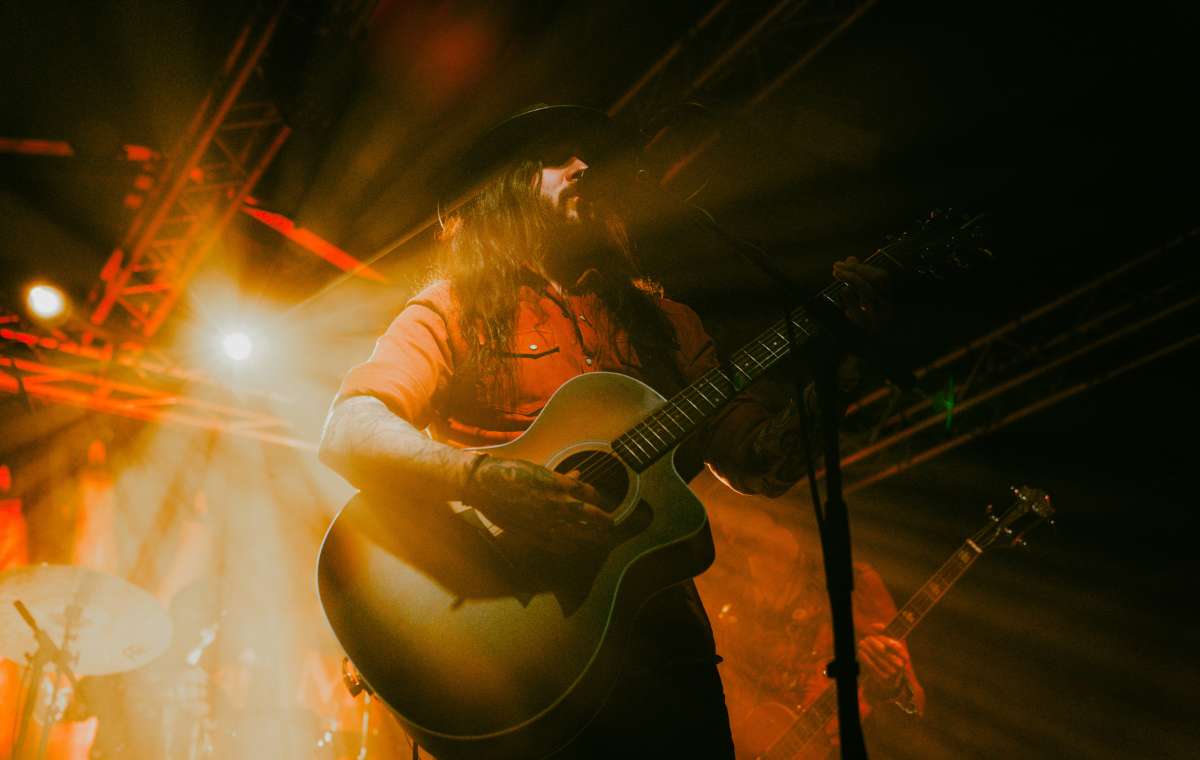
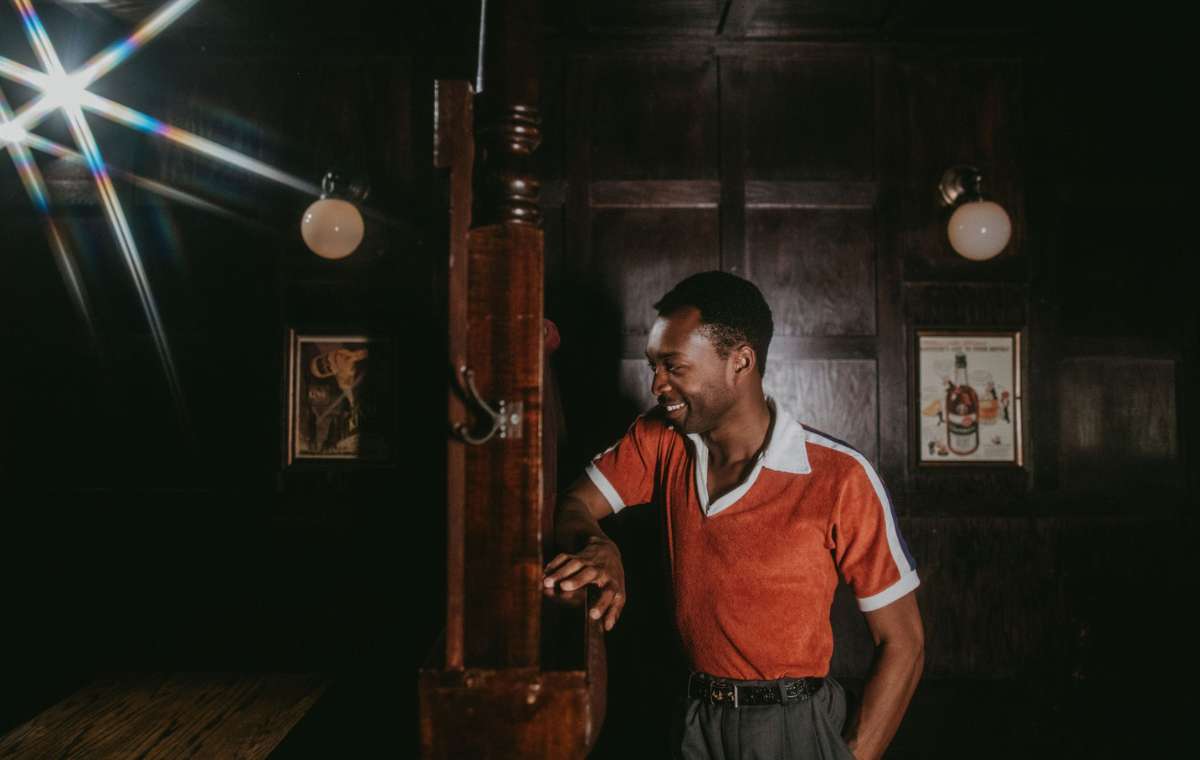
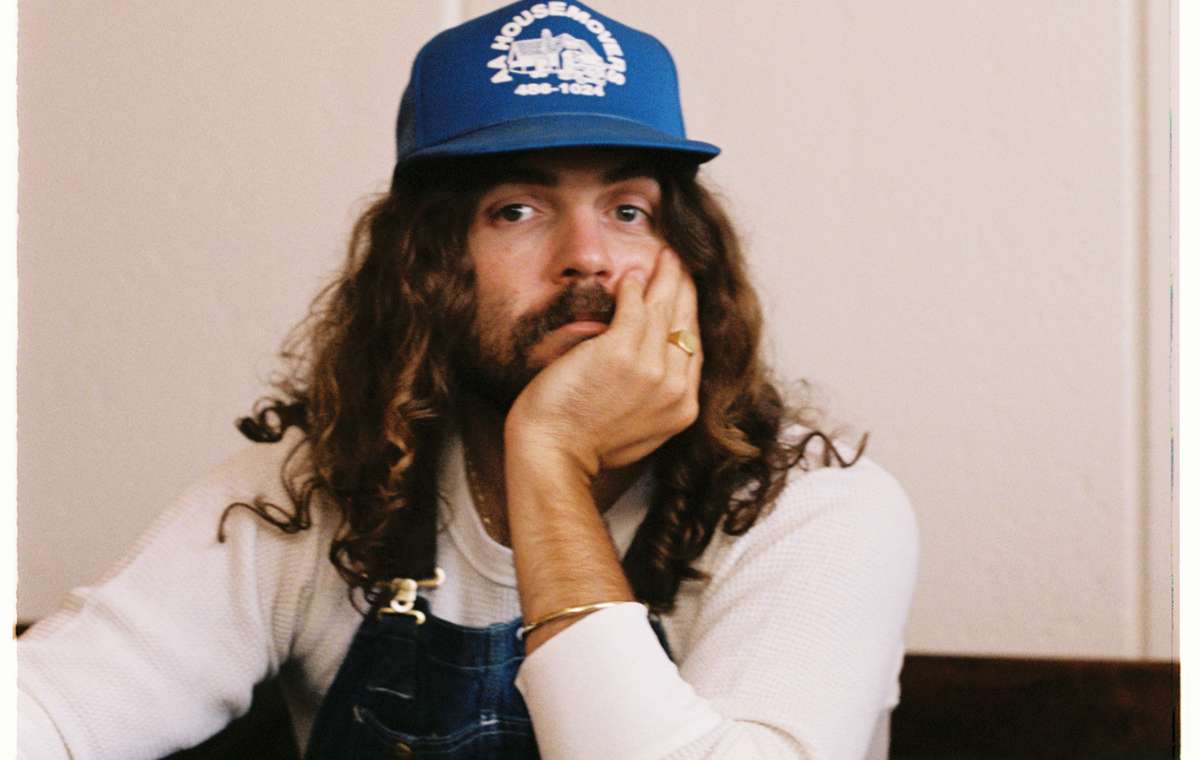
Josiah Leming has paid his dues. As a teenager from East Tennessee, his devotion to music led him to hit the road, where he lived
in his car and played for anyone who would listen. That took him all the way to a major record deal when he was only nineteen.
When that ended, he refused to give up and became an indie artist, relying solely on the music and his undeniable gift for crafting
relatable songs that led to a devoted fan base he calls the Bonnevilles. He appreciates them so much that he includes them in his
artist name. “They’re the reason I’m able to make music,” he says.
2024 saw Josiah and the Bonnevilles reaching new heights, completing a headlining tour of thirty-three sold-out dates followed
by a slew of international stops that proved his global following. He has become known for raw emotion and a profound
connection to his audience. This newfound attention has led to much anticipation for his new album — and As Is lives up to the
expectations.
“I knew I had a responsibility to try to become a better writer, a better artist,” he says. “One day that feels like a blessing, and the
next it feels pretty intimidating.” Instead of reproducing his popular sound from the self produced “Endurance”, he decided to
expand it. “I think it would have been hard to keep my excitement to go out on the road with another kind of acoustic record.”
His tenth studio album finds him going more electric than ever before, even as he unplugs from the digital world. “I feel like a
grizzled old veteran at this point,” he says, even though he is only thirty-six. “I’m desiring quiet, a work space away from the
internet…I felt like it was important to pull back this last year and try to understand what’s on my heart.” What he found there
resulted in an album focusing on joy, sorrow, and working-class issues that feel very of the moment in a time when so many
Americans are struggling to make ends meet.
Leming comes by his empathy for working people honestly. He’s one of nine siblings, born and raised in Morristown, Tennessee,
right in the heart of Appalachia. He taught himself piano when he was eight and was writing songs by thirteen. As a child he was
intently aware of his community and intensely proud of his people, something he thinks about even more in these trying times. “I
look at my I look at my folks in East Tennessee and very few of them seem to be winning in this new world,” Leming says.
“Being a regular person, working, trying your best. I think that’s something to be proud of.”
His records have always been intensely personal. But on As Is he wanted to step away from being the main character and instead
use vignettes to express essential truths he has learned. “I want anyone to be able to put it on and not think about me when they’re
listening. I want them to be in the emotion.” Because of this he made a conscious choice to not include himself on the album
cover.
Leming chose ten tracks from ninety-six songs he has written over the last year and a half. As Is features the most co-writes he
has ever recorded. “I love writing alone, but I wanted to bring in some trusted partners on this one,” he says. The resulting list
features some of the most acclaimed songwriters working today. There’s Nashville powerhouse Natalie Hemby, a two-time
Grammy winner who has written for everyone from Lady Gaga to Miranda Lambert; Joel Little, a Grammy winner who has
written with Lorde, Taylor Swift, Noah Kahan, and many others; Scott Harris, best known for work he’s produced or written for
artists such as Shawn Mendes, Dua Lipa, and The Chainsmokers; and others.
To help him find the sound he hoped to achieve, Leming brought in Konrad Snyder as a co-producer. Snyder has engineered or
produced some of the best work to come out of Nashville in the last decade, including tracks by Kacey Musgraves, Stephen
Sanchez, and Noah Kahan. “It was an amazing partnership with Konrad,” Leming says. “I never had to touch a computer or a
piece of gear; he’s a whiz with all that stuff. I’m usually so hands-on with my stuff, switching between setting up, tracking and
editing but on this record I got to just perform the songs.”
The songs on As Is feature Leming’s vivid sense of place, precise yet poetic lyrics, and emotion that is always longingly
expressed by his vulnerable vocals. This collection is more up-tempo than most of his work, which is something Leming and
Snyder strived to make happen on about half the songs. “I was thinking a lot about the energy, of having a couple songs that can
amp up people at live shows,” he says.
This power is especially apparent on songs like opening track “Good Boy”, which boils toward a rousing breakdown, “Carolina
Heart”, a tune Leming calls “less existential and my attempt at a feel-good song,“ and “Going Gone”, a nostalgic track about the
passage of time. “Mountain Girl” is a foot-tapping harmonica-led tribute to Appalachian women. There’s the jaunty rock of
“Redline”, and a song called “One Day at a Time” that is sure to resonate with anyone who has ever struggled with addiction,
depression, or a lack of confidence. Leming’s fans often cite his storytelling abilities as one reason they love his work, and that
takes center stage on the title track, a spoken-word song. “Where It Starts” is a meditation on how heartache can lead to great art.
The first single is the powerful “Hell Without the Flames,” the album’s darkest track that also showcases some of the best lyrics
and vocals of his career.
They all make for a collection of songs that take the listener full circle. “There’s all these kinds of love stories, and it walks
through many variations on heartbreak, ultimately landing on home, acceptance and overcoming that hurt. I just want people to
be able to see themselves in the songs.”
That’s what it’s all about for Leming. “The only goal for me is to make something real, and honest, and that can get them through
the day,” he says. “I gave everything I have for this album. I laid it all on the table, which is what I always want to do.”
As Is proves to be all of that, and more, a milestone for one of our most authentic and resonant artists working today.
With time, we come to understand the way the joy of connection is mirrored by the void of loss, how the constancy of love is matched only by the impermanence of life, the simple idea that we could not create light if we did not risk the dark—we’d never need to.
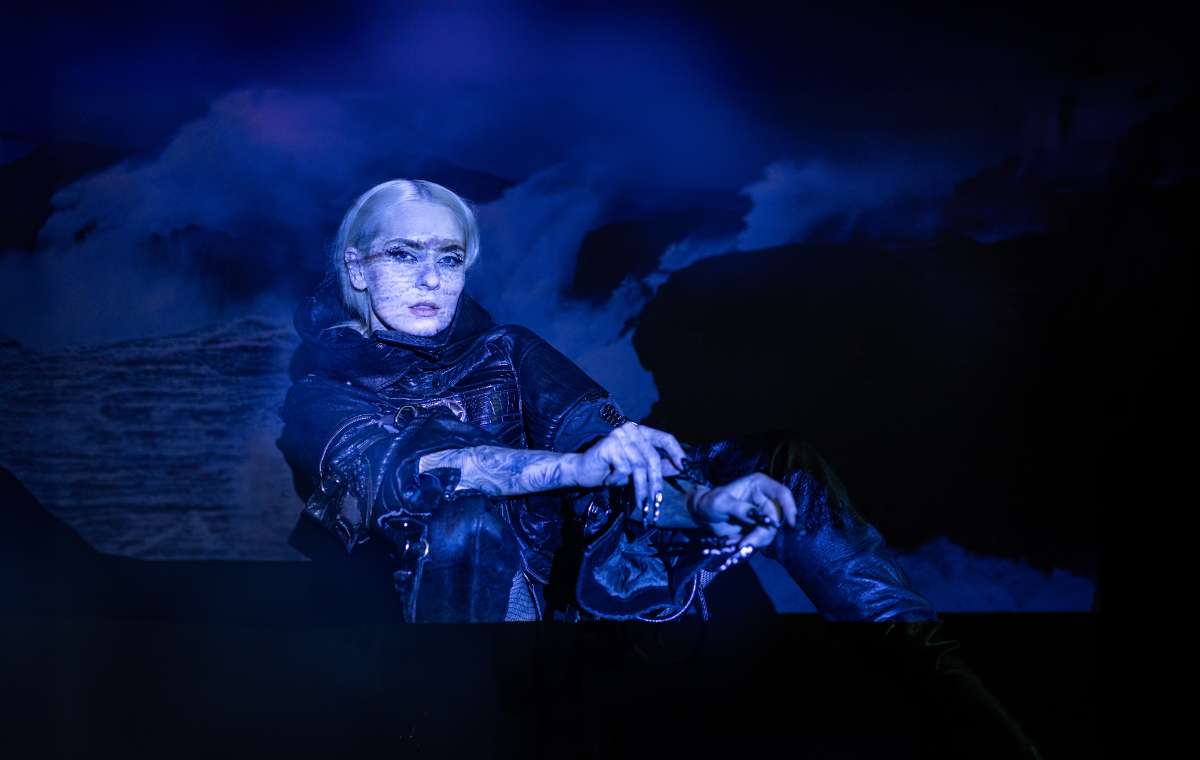
So it is with METZ, a band once known for blowing out eardrums with songs of joyous rage who have, over their past few records, begun exploring ways to turn abrasiveness into atmospherics, the evolution of their sound not only a reflection of the maturing of the band themselves but also of a changed world that demands nuance and compassion to comprehend and to survive.
It was a journey already underway on 2020’s Atlas Vending, but one that reaches new heights on Up On Gravity Hill, where the Canadian trio creates a kaleidoscopic sonic world as tender as it is dark, aided once again by engineer Seth Manchester (Mdou Moctar, Lingua Ignota, Battles, The Body). Deep, detailed, and unyieldingly personal, it is not only METZ’s most powerful record to date but also their most beautiful.
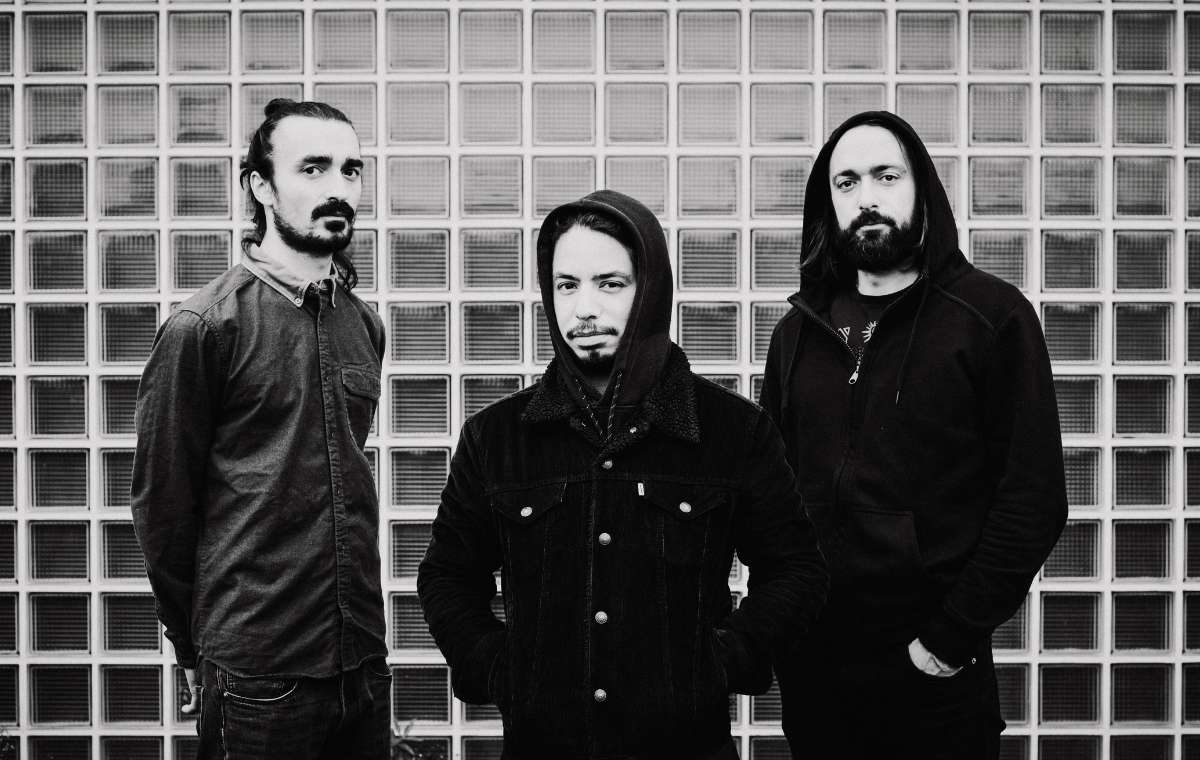
Still three punks from Ontario at heart, guitarist and vocalist Alex Edkins, drummer Hayden Menzies, and bassist Chris Slorach waste no time as opener “No Reservation/Love Comes Crashing” sweeps in like a wave, sonically and thematically setting the scene for the record to come. A dynamic song about feeling suspended in stasis, layers of dissonance melt into a restlessly heady outro marked by escalating crescendos of shimmering noise that reach for the stars—and is that a violin quivering brightly beneath those elegant swells of guitar, those charging drum fills, those intricate bass lines? It is indeed, courtesy of composer Owen Pallett; his presence an immediate indicator that METZ are thinking more cinematically than ever before.
The change is partially inspired by Edkins’ work as a scorer for film and television and his pop-leaning solo project, Weird Nightmare, where, he says, he learned to write more intuitively, letting his emotions lead the way. “The lyrical content is more heart-on-sleeve than I’ve ever allowed myself to do,” he says. “I tried to be direct with my words, this record felt like a big step.”
But make no mistake: Up On Gravity Hill is a total band effort, the work of three musicians who have been playing together for over a decade, with all the trust that entails. “We’re at the point now where we feel really strong as a band and as musicians, and there is no second guessing our collective instincts. Allowing ourselves to branch out and work with other musicians has been a blessing and also continues to remind us that what we have, our musical bond, is very rare and really special.” says Edkins.
For those who believe in the power of the rock band to exemplify the highest resonance of human connection, there is much on Up On Gravity Hill to lift the spirit, a puzzle worth repeated listening to unlock or just to get lost in again and again. Rather than the music being flattened into a single plane, the band explores “the space above the cymbals,” resulting in some of the most spacious, sympathetic, and accessible songs—could we call them pop?—of their career. If this seems contradictory, well, METZ has always been something of a contradiction. “We’ve never been heavy enough for metal or hardcore purists, but we’re way too heavy for indie rock. We just don’t have a lane—and that’s okay. We exist outside the lines of delineation. I think this record is even more like that,” says Edkins.
Lyrically, Up On Gravity Hill pulls no punches: this is a record about death the way all art is ultimately about death, yet it crackles with life and intensity. “Entwined” is a charging throwback to the cerebral Dischord punk bands the trio grew up loving; the snarling “99” takes on the nonstop onslaught of advertising that marks our modern lives; “We are all just a dream,” sings Edkins on “Superior Mirage,” Menzies’ charged drumming and flickering hi-hats a contrast to the song’s ghostly themes of impermanence. The record peaks on the gorgeous closer “Light Your Way Home,” which features vocal contributions from Amber Webber of Black Mountain. Here, Edkins confronts the choices that keep him from the people he loves, their absence only emphasizing how much they matter. “If only I could see what isn’t shown/ I’d clear a path for you,” he sings, a deeply emotional confession for a band that has found a new way to bend the raw power of rock music to its most delicate, intricate ends.
With time, we come to understand the way the joy of connection is mirrored by the void of loss, how the constancy of love is matched only by the impermanence of life, the simple idea that we could not create light if we did not risk the dark—we’d never need to.
So it is with METZ, a band once known for blowing out eardrums with songs of joyous rage who have, over their past few records, begun exploring ways to turn abrasiveness into atmospherics, the evolution of their sound not only a reflection of the maturing of the band themselves but also of a changed world that demands nuance and compassion to comprehend and to survive.
It was a journey already underway on 2020’s Atlas Vending, but one that reaches new heights on Up On Gravity Hill, where the Canadian trio creates a kaleidoscopic sonic world as tender as it is dark, aided once again by engineer Seth Manchester (Mdou Moctar, Lingua Ignota, Battles, The Body). Deep, detailed, and unyieldingly personal, it is not only METZ’s most powerful record to date but also their most beautiful.
Still three punks from Ontario at heart, guitarist and vocalist Alex Edkins, drummer Hayden Menzies, and bassist Chris Slorach waste no time as opener “No Reservation/Love Comes Crashing” sweeps in like a wave, sonically and thematically setting the scene for the record to come. A dynamic song about feeling suspended in stasis, layers of dissonance melt into a restlessly heady outro marked by escalating crescendos of shimmering noise that reach for the stars—and is that a violin quivering brightly beneath those elegant swells of guitar, those charging drum fills, those intricate bass lines? It is indeed, courtesy of composer Owen Pallett; his presence an immediate indicator that METZ are thinking more cinematically than ever before.
The change is partially inspired by Edkins’ work as a scorer for film and television and his pop-leaning solo project, Weird Nightmare, where, he says, he learned to write more intuitively, letting his emotions lead the way. “The lyrical content is more heart-on-sleeve than I’ve ever allowed myself to do,” he says. “I tried to be direct with my words, this record felt like a big step.”
But make no mistake: Up On Gravity Hill is a total band effort, the work of three musicians who have been playing together for over a decade, with all the trust that entails. “We’re at the point now where we feel really strong as a band and as musicians, and there is no second guessing our collective instincts. Allowing ourselves to branch out and work with other musicians has been a blessing and also continues to remind us that what we have, our musical bond, is very rare and really special.” says Edkins.
For those who believe in the power of the rock band to exemplify the highest resonance of human connection, there is much on Up On Gravity Hill to lift the spirit, a puzzle worth repeated listening to unlock or just to get lost in again and again. Rather than the music being flattened into a single plane, the band explores “the space above the cymbals,” resulting in some of the most spacious, sympathetic, and accessible songs—could we call them pop?—of their career. If this seems contradictory, well, METZ has always been something of a contradiction. “We’ve never been heavy enough for metal or hardcore purists, but we’re way too heavy for indie rock. We just don’t have a lane—and that’s okay. We exist outside the lines of delineation. I think this record is even more like that,” says Edkins.
Lyrically, Up On Gravity Hill pulls no punches: this is a record about death the way all art is ultimately about death, yet it crackles with life and intensity. “Entwined” is a charging throwback to the cerebral Dischord punk bands the trio grew up loving; the snarling “99” takes on the nonstop onslaught of advertising that marks our modern lives; “We are all just a dream,” sings Edkins on “Superior Mirage,” Menzies’ charged drumming and flickering hi-hats a contrast to the song’s ghostly themes of impermanence. The record peaks on the gorgeous closer “Light Your Way Home,” which features vocal contributions from Amber Webber of Black Mountain. Here, Edkins confronts the choices that keep him from the people he loves, their absence only emphasizing how much they matter. “If only I could see what isn’t shown/ I’d clear a path for you,” he sings, a deeply emotional confession for a band that has found a new way to bend the raw power of rock music to its most delicate, intricate ends.
With time, we come to understand the way the joy of connection is mirrored by the void of loss, how the constancy of love is matched only by the impermanence of life, the simple idea that we could not create light if we did not risk the dark—we’d never need to.
So it is with METZ, a band once known for blowing out eardrums with songs of joyous rage who have, over their past few records, begun exploring ways to turn abrasiveness into atmospherics, the evolution of their sound not only a reflection of the maturing of the band themselves but also of a changed world that demands nuance and compassion to comprehend and to survive.
It was a journey already underway on 2020’s Atlas Vending, but one that reaches new heights on Up On Gravity Hill, where the Canadian trio creates a kaleidoscopic sonic world as tender as it is dark, aided once again by engineer Seth Manchester (Mdou Moctar, Lingua Ignota, Battles, The Body). Deep, detailed, and unyieldingly personal, it is not only METZ’s most powerful record to date but also their most beautiful.
Still three punks from Ontario at heart, guitarist and vocalist Alex Edkins, drummer Hayden Menzies, and bassist Chris Slorach waste no time as opener “No Reservation/Love Comes Crashing” sweeps in like a wave, sonically and thematically setting the scene for the record to come. A dynamic song about feeling suspended in stasis, layers of dissonance melt into a restlessly heady outro marked by escalating crescendos of shimmering noise that reach for the stars—and is that a violin quivering brightly beneath those elegant swells of guitar, those charging drum fills, those intricate bass lines? It is indeed, courtesy of composer Owen Pallett; his presence an immediate indicator that METZ are thinking more cinematically than ever before.
The change is partially inspired by Edkins’ work as a scorer for film and television and his pop-leaning solo project, Weird Nightmare, where, he says, he learned to write more intuitively, letting his emotions lead the way. “The lyrical content is more heart-on-sleeve than I’ve ever allowed myself to do,” he says. “I tried to be direct with my words, this record felt like a big step.”
But make no mistake: Up On Gravity Hill is a total band effort, the work of three musicians who have been playing together for over a decade, with all the trust that entails. “We’re at the point now where we feel really strong as a band and as musicians, and there is no second guessing our collective instincts. Allowing ourselves to branch out and work with other musicians has been a blessing and also continues to remind us that what we have, our musical bond, is very rare and really special.” says Edkins.
For those who believe in the power of the rock band to exemplify the highest resonance of human connection, there is much on Up On Gravity Hill to lift the spirit, a puzzle worth repeated listening to unlock or just to get lost in again and again. Rather than the music being flattened into a single plane, the band explores “the space above the cymbals,” resulting in some of the most spacious, sympathetic, and accessible songs—could we call them pop?—of their career. If this seems contradictory, well, METZ has always been something of a contradiction. “We’ve never been heavy enough for metal or hardcore purists, but we’re way too heavy for indie rock. We just don’t have a lane—and that’s okay. We exist outside the lines of delineation. I think this record is even more like that,” says Edkins.
Lyrically, Up On Gravity Hill pulls no punches: this is a record about death the way all art is ultimately about death, yet it crackles with life and intensity. “Entwined” is a charging throwback to the cerebral Dischord punk bands the trio grew up loving; the snarling “99” takes on the nonstop onslaught of advertising that marks our modern lives; “We are all just a dream,” sings Edkins on “Superior Mirage,” Menzies’ charged drumming and flickering hi-hats a contrast to the song’s ghostly themes of impermanence. The record peaks on the gorgeous closer “Light Your Way Home,” which features vocal contributions from Amber Webber of Black Mountain. Here, Edkins confronts the choices that keep him from the people he loves, their absence only emphasizing how much they matter. “If only I could see what isn’t shown/ I’d clear a path for you,” he sings, a deeply emotional confession for a band that has found a new way to bend the raw power of rock music to its most delicate, intricate ends.
With time, we come to understand the way the joy of connection is mirrored by the void of loss, how the constancy of love is matched only by the impermanence of life, the simple idea that we could not create light if we did not risk the dark—we’d never need to.
So it is with METZ, a band once known for blowing out eardrums with songs of joyous rage who have, over their past few records, begun exploring ways to turn abrasiveness into atmospherics, the evolution of their sound not only a reflection of the maturing of the band themselves but also of a changed world that demands nuance and compassion to comprehend and to survive.
It was a journey already underway on 2020’s Atlas Vending, but one that reaches new heights on Up On Gravity Hill, where the Canadian trio creates a kaleidoscopic sonic world as tender as it is dark, aided once again by engineer Seth Manchester (Mdou Moctar, Lingua Ignota, Battles, The Body). Deep, detailed, and unyieldingly personal, it is not only METZ’s most powerful record to date but also their most beautiful.
Still three punks from Ontario at heart, guitarist and vocalist Alex Edkins, drummer Hayden Menzies, and bassist Chris Slorach waste no time as opener “No Reservation/Love Comes Crashing” sweeps in like a wave, sonically and thematically setting the scene for the record to come. A dynamic song about feeling suspended in stasis, layers of dissonance melt into a restlessly heady outro marked by escalating crescendos of shimmering noise that reach for the stars—and is that a violin quivering brightly beneath those elegant swells of guitar, those charging drum fills, those intricate bass lines? It is indeed, courtesy of composer Owen Pallett; his presence an immediate indicator that METZ are thinking more cinematically than ever before.
The change is partially inspired by Edkins’ work as a scorer for film and television and his pop-leaning solo project, Weird Nightmare, where, he says, he learned to write more intuitively, letting his emotions lead the way. “The lyrical content is more heart-on-sleeve than I’ve ever allowed myself to do,” he says. “I tried to be direct with my words, this record felt like a big step.”
But make no mistake: Up On Gravity Hill is a total band effort, the work of three musicians who have been playing together for over a decade, with all the trust that entails. “We’re at the point now where we feel really strong as a band and as musicians, and there is no second guessing our collective instincts. Allowing ourselves to branch out and work with other musicians has been a blessing and also continues to remind us that what we have, our musical bond, is very rare and really special.” says Edkins.
For those who believe in the power of the rock band to exemplify the highest resonance of human connection, there is much on Up On Gravity Hill to lift the spirit, a puzzle worth repeated listening to unlock or just to get lost in again and again. Rather than the music being flattened into a single plane, the band explores “the space above the cymbals,” resulting in some of the most spacious, sympathetic, and accessible songs—could we call them pop?—of their career. If this seems contradictory, well, METZ has always been something of a contradiction. “We’ve never been heavy enough for metal or hardcore purists, but we’re way too heavy for indie rock. We just don’t have a lane—and that’s okay. We exist outside the lines of delineation. I think this record is even more like that,” says Edkins.
Lyrically, Up On Gravity Hill pulls no punches: this is a record about death the way all art is ultimately about death, yet it crackles with life and intensity. “Entwined” is a charging throwback to the cerebral Dischord punk bands the trio grew up loving; the snarling “99” takes on the nonstop onslaught of advertising that marks our modern lives; “We are all just a dream,” sings Edkins on “Superior Mirage,” Menzies’ charged drumming and flickering hi-hats a contrast to the song’s ghostly themes of impermanence. The record peaks on the gorgeous closer “Light Your Way Home,” which features vocal contributions from Amber Webber of Black Mountain. Here, Edkins confronts the choices that keep him from the people he loves, their absence only emphasizing how much they matter. “If only I could see what isn’t shown/ I’d clear a path for you,” he sings, a deeply emotional confession for a band that has found a new way to bend the raw power of rock music to its most delicate, intricate ends.
With time, we come to understand the way the joy of connection is mirrored by the void of loss, how the constancy of love is matched only by the impermanence of life, the simple idea that we could not create light if we did not risk the dark—we’d never need to.
So it is with METZ, a band once known for blowing out eardrums with songs of joyous rage who have, over their past few records, begun exploring ways to turn abrasiveness into atmospherics, the evolution of their sound not only a reflection of the maturing of the band themselves but also of a changed world that demands nuance and compassion to comprehend and to survive.
It was a journey already underway on 2020’s Atlas Vending, but one that reaches new heights on Up On Gravity Hill, where the Canadian trio creates a kaleidoscopic sonic world as tender as it is dark, aided once again by engineer Seth Manchester (Mdou Moctar, Lingua Ignota, Battles, The Body). Deep, detailed, and unyieldingly personal, it is not only METZ’s most powerful record to date but also their most beautiful.
Still three punks from Ontario at heart, guitarist and vocalist Alex Edkins, drummer Hayden Menzies, and bassist Chris Slorach waste no time as opener “No Reservation/Love Comes Crashing” sweeps in like a wave, sonically and thematically setting the scene for the record to come. A dynamic song about feeling suspended in stasis, layers of dissonance melt into a restlessly heady outro marked by escalating crescendos of shimmering noise that reach for the stars—and is that a violin quivering brightly beneath those elegant swells of guitar, those charging drum fills, those intricate bass lines? It is indeed, courtesy of composer Owen Pallett; his presence an immediate indicator that METZ are thinking more cinematically than ever before.
The change is partially inspired by Edkins’ work as a scorer for film and television and his pop-leaning solo project, Weird Nightmare, where, he says, he learned to write more intuitively, letting his emotions lead the way. “The lyrical content is more heart-on-sleeve than I’ve ever allowed myself to do,” he says. “I tried to be direct with my words, this record felt like a big step.”
But make no mistake: Up On Gravity Hill is a total band effort, the work of three musicians who have been playing together for over a decade, with all the trust that entails. “We’re at the point now where we feel really strong as a band and as musicians, and there is no second guessing our collective instincts. Allowing ourselves to branch out and work with other musicians has been a blessing and also continues to remind us that what we have, our musical bond, is very rare and really special.” says Edkins.
For those who believe in the power of the rock band to exemplify the highest resonance of human connection, there is much on Up On Gravity Hill to lift the spirit, a puzzle worth repeated listening to unlock or just to get lost in again and again. Rather than the music being flattened into a single plane, the band explores “the space above the cymbals,” resulting in some of the most spacious, sympathetic, and accessible songs—could we call them pop?—of their career. If this seems contradictory, well, METZ has always been something of a contradiction. “We’ve never been heavy enough for metal or hardcore purists, but we’re way too heavy for indie rock. We just don’t have a lane—and that’s okay. We exist outside the lines of delineation. I think this record is even more like that,” says Edkins.
Lyrically, Up On Gravity Hill pulls no punches: this is a record about death the way all art is ultimately about death, yet it crackles with life and intensity. “Entwined” is a charging throwback to the cerebral Dischord punk bands the trio grew up loving; the snarling “99” takes on the nonstop onslaught of advertising that marks our modern lives; “We are all just a dream,” sings Edkins on “Superior Mirage,” Menzies’ charged drumming and flickering hi-hats a contrast to the song’s ghostly themes of impermanence. The record peaks on the gorgeous closer “Light Your Way Home,” which features vocal contributions from Amber Webber of Black Mountain. Here, Edkins confronts the choices that keep him from the people he loves, their absence only emphasizing how much they matter. “If only I could see what isn’t shown/ I’d clear a path for you,” he sings, a deeply emotional confession for a band that has found a new way to bend the raw power of rock music to its most delicate, intricate ends.
With time, we come to understand the way the joy of connection is mirrored by the void of loss, how the constancy of love is matched only by the impermanence of life, the simple idea that we could not create light if we did not risk the dark—we’d never need to.
So it is with METZ, a band once known for blowing out eardrums with songs of joyous rage who have, over their past few records, begun exploring ways to turn abrasiveness into atmospherics, the evolution of their sound not only a reflection of the maturing of the band themselves but also of a changed world that demands nuance and compassion to comprehend and to survive.
It was a journey already underway on 2020’s Atlas Vending, but one that reaches new heights on Up On Gravity Hill, where the Canadian trio creates a kaleidoscopic sonic world as tender as it is dark, aided once again by engineer Seth Manchester (Mdou Moctar, Lingua Ignota, Battles, The Body). Deep, detailed, and unyieldingly personal, it is not only METZ’s most powerful record to date but also their most beautiful.
Still three punks from Ontario at heart, guitarist and vocalist Alex Edkins, drummer Hayden Menzies, and bassist Chris Slorach waste no time as opener “No Reservation/Love Comes Crashing” sweeps in like a wave, sonically and thematically setting the scene for the record to come. A dynamic song about feeling suspended in stasis, layers of dissonance melt into a restlessly heady outro marked by escalating crescendos of shimmering noise that reach for the stars—and is that a violin quivering brightly beneath those elegant swells of guitar, those charging drum fills, those intricate bass lines? It is indeed, courtesy of composer Owen Pallett; his presence an immediate indicator that METZ are thinking more cinematically than ever before.
The change is partially inspired by Edkins’ work as a scorer for film and television and his pop-leaning solo project, Weird Nightmare, where, he says, he learned to write more intuitively, letting his emotions lead the way. “The lyrical content is more heart-on-sleeve than I’ve ever allowed myself to do,” he says. “I tried to be direct with my words, this record felt like a big step.”
But make no mistake: Up On Gravity Hill is a total band effort, the work of three musicians who have been playing together for over a decade, with all the trust that entails. “We’re at the point now where we feel really strong as a band and as musicians, and there is no second guessing our collective instincts. Allowing ourselves to branch out and work with other musicians has been a blessing and also continues to remind us that what we have, our musical bond, is very rare and really special.” says Edkins.
For those who believe in the power of the rock band to exemplify the highest resonance of human connection, there is much on Up On Gravity Hill to lift the spirit, a puzzle worth repeated listening to unlock or just to get lost in again and again. Rather than the music being flattened into a single plane, the band explores “the space above the cymbals,” resulting in some of the most spacious, sympathetic, and accessible songs—could we call them pop?—of their career. If this seems contradictory, well, METZ has always been something of a contradiction. “We’ve never been heavy enough for metal or hardcore purists, but we’re way too heavy for indie rock. We just don’t have a lane—and that’s okay. We exist outside the lines of delineation. I think this record is even more like that,” says Edkins.
Lyrically, Up On Gravity Hill pulls no punches: this is a record about death the way all art is ultimately about death, yet it crackles with life and intensity. “Entwined” is a charging throwback to the cerebral Dischord punk bands the trio grew up loving; the snarling “99” takes on the nonstop onslaught of advertising that marks our modern lives; “We are all just a dream,” sings Edkins on “Superior Mirage,” Menzies’ charged drumming and flickering hi-hats a contrast to the song’s ghostly themes of impermanence. The record peaks on the gorgeous closer “Light Your Way Home,” which features vocal contributions from Amber Webber of Black Mountain. Here, Edkins confronts the choices that keep him from the people he loves, their absence only emphasizing how much they matter. “If only I could see what isn’t shown/ I’d clear a path for you,” he sings, a deeply emotional confession for a band that has found a new way to bend the raw power of rock music to its most delicate, intricate ends.
With time, we come to understand the way the joy of connection is mirrored by the void of loss, how the constancy of love is matched only by the impermanence of life, the simple idea that we could not create light if we did not risk the dark—we’d never need to.
So it is with METZ, a band once known for blowing out eardrums with songs of joyous rage who have, over their past few records, begun exploring ways to turn abrasiveness into atmospherics, the evolution of their sound not only a reflection of the maturing of the band themselves but also of a changed world that demands nuance and compassion to comprehend and to survive.
It was a journey already underway on 2020’s Atlas Vending, but one that reaches new heights on Up On Gravity Hill, where the Canadian trio creates a kaleidoscopic sonic world as tender as it is dark, aided once again by engineer Seth Manchester (Mdou Moctar, Lingua Ignota, Battles, The Body). Deep, detailed, and unyieldingly personal, it is not only METZ’s most powerful record to date but also their most beautiful.
Still three punks from Ontario at heart, guitarist and vocalist Alex Edkins, drummer Hayden Menzies, and bassist Chris Slorach waste no time as opener “No Reservation/Love Comes Crashing” sweeps in like a wave, sonically and thematically setting the scene for the record to come. A dynamic song about feeling suspended in stasis, layers of dissonance melt into a restlessly heady outro marked by escalating crescendos of shimmering noise that reach for the stars—and is that a violin quivering brightly beneath those elegant swells of guitar, those charging drum fills, those intricate bass lines? It is indeed, courtesy of composer Owen Pallett; his presence an immediate indicator that METZ are thinking more cinematically than ever before.
The change is partially inspired by Edkins’ work as a scorer for film and television and his pop-leaning solo project, Weird Nightmare, where, he says, he learned to write more intuitively, letting his emotions lead the way. “The lyrical content is more heart-on-sleeve than I’ve ever allowed myself to do,” he says. “I tried to be direct with my words, this record felt like a big step.”
But make no mistake: Up On Gravity Hill is a total band effort, the work of three musicians who have been playing together for over a decade, with all the trust that entails. “We’re at the point now where we feel really strong as a band and as musicians, and there is no second guessing our collective instincts. Allowing ourselves to branch out and work with other musicians has been a blessing and also continues to remind us that what we have, our musical bond, is very rare and really special.” says Edkins.
For those who believe in the power of the rock band to exemplify the highest resonance of human connection, there is much on Up On Gravity Hill to lift the spirit, a puzzle worth repeated listening to unlock or just to get lost in again and again. Rather than the music being flattened into a single plane, the band explores “the space above the cymbals,” resulting in some of the most spacious, sympathetic, and accessible songs—could we call them pop?—of their career. If this seems contradictory, well, METZ has always been something of a contradiction. “We’ve never been heavy enough for metal or hardcore purists, but we’re way too heavy for indie rock. We just don’t have a lane—and that’s okay. We exist outside the lines of delineation. I think this record is even more like that,” says Edkins.
Lyrically, Up On Gravity Hill pulls no punches: this is a record about death the way all art is ultimately about death, yet it crackles with life and intensity. “Entwined” is a charging throwback to the cerebral Dischord punk bands the trio grew up loving; the snarling “99” takes on the nonstop onslaught of advertising that marks our modern lives; “We are all just a dream,” sings Edkins on “Superior Mirage,” Menzies’ charged drumming and flickering hi-hats a contrast to the song’s ghostly themes of impermanence. The record peaks on the gorgeous closer “Light Your Way Home,” which features vocal contributions from Amber Webber of Black Mountain. Here, Edkins confronts the choices that keep him from the people he loves, their absence only emphasizing how much they matter. “If only I could see what isn’t shown/ I’d clear a path for you,” he sings, a deeply emotional confession for a band that has found a new way to bend the raw power of rock music to its most delicate, intricate ends.
With time, we come to understand the way the joy of connection is mirrored by the void of loss, how the constancy of love is matched only by the impermanence of life, the simple idea that we could not create light if we did not risk the dark—we’d never need to.
So it is with METZ, a band once known for blowing out eardrums with songs of joyous rage who have, over their past few records, begun exploring ways to turn abrasiveness into atmospherics, the evolution of their sound not only a reflection of the maturing of the band themselves but also of a changed world that demands nuance and compassion to comprehend and to survive.
It was a journey already underway on 2020’s Atlas Vending, but one that reaches new heights on Up On Gravity Hill, where the Canadian trio creates a kaleidoscopic sonic world as tender as it is dark, aided once again by engineer Seth Manchester (Mdou Moctar, Lingua Ignota, Battles, The Body). Deep, detailed, and unyieldingly personal, it is not only METZ’s most powerful record to date but also their most beautiful.
Still three punks from Ontario at heart, guitarist and vocalist Alex Edkins, drummer Hayden Menzies, and bassist Chris Slorach waste no time as opener “No Reservation/Love Comes Crashing” sweeps in like a wave, sonically and thematically setting the scene for the record to come. A dynamic song about feeling suspended in stasis, layers of dissonance melt into a restlessly heady outro marked by escalating crescendos of shimmering noise that reach for the stars—and is that a violin quivering brightly beneath those elegant swells of guitar, those charging drum fills, those intricate bass lines? It is indeed, courtesy of composer Owen Pallett; his presence an immediate indicator that METZ are thinking more cinematically than ever before.
The change is partially inspired by Edkins’ work as a scorer for film and television and his pop-leaning solo project, Weird Nightmare, where, he says, he learned to write more intuitively, letting his emotions lead the way. “The lyrical content is more heart-on-sleeve than I’ve ever allowed myself to do,” he says. “I tried to be direct with my words, this record felt like a big step.”
But make no mistake: Up On Gravity Hill is a total band effort, the work of three musicians who have been playing together for over a decade, with all the trust that entails. “We’re at the point now where we feel really strong as a band and as musicians, and there is no second guessing our collective instincts. Allowing ourselves to branch out and work with other musicians has been a blessing and also continues to remind us that what we have, our musical bond, is very rare and really special.” says Edkins.
For those who believe in the power of the rock band to exemplify the highest resonance of human connection, there is much on Up On Gravity Hill to lift the spirit, a puzzle worth repeated listening to unlock or just to get lost in again and again. Rather than the music being flattened into a single plane, the band explores “the space above the cymbals,” resulting in some of the most spacious, sympathetic, and accessible songs—could we call them pop?—of their career. If this seems contradictory, well, METZ has always been something of a contradiction. “We’ve never been heavy enough for metal or hardcore purists, but we’re way too heavy for indie rock. We just don’t have a lane—and that’s okay. We exist outside the lines of delineation. I think this record is even more like that,” says Edkins.
Lyrically, Up On Gravity Hill pulls no punches: this is a record about death the way all art is ultimately about death, yet it crackles with life and intensity. “Entwined” is a charging throwback to the cerebral Dischord punk bands the trio grew up loving; the snarling “99” takes on the nonstop onslaught of advertising that marks our modern lives; “We are all just a dream,” sings Edkins on “Superior Mirage,” Menzies’ charged drumming and flickering hi-hats a contrast to the song’s ghostly themes of impermanence. The record peaks on the gorgeous closer “Light Your Way Home,” which features vocal contributions from Amber Webber of Black Mountain. Here, Edkins confronts the choices that keep him from the people he loves, their absence only emphasizing how much they matter. “If only I could see what isn’t shown/ I’d clear a path for you,” he sings, a deeply emotional confession for a band that has found a new way to bend the raw power of rock music to its most delicate, intricate ends.
With time, we come to understand the way the joy of connection is mirrored by the void of loss, how the constancy of love is matched only by the impermanence of life, the simple idea that we could not create light if we did not risk the dark—we’d never need to.
So it is with METZ, a band once known for blowing out eardrums with songs of joyous rage who have, over their past few records, begun exploring ways to turn abrasiveness into atmospherics, the evolution of their sound not only a reflection of the maturing of the band themselves but also of a changed world that demands nuance and compassion to comprehend and to survive.
It was a journey already underway on 2020’s Atlas Vending, but one that reaches new heights on Up On Gravity Hill, where the Canadian trio creates a kaleidoscopic sonic world as tender as it is dark, aided once again by engineer Seth Manchester (Mdou Moctar, Lingua Ignota, Battles, The Body). Deep, detailed, and unyieldingly personal, it is not only METZ’s most powerful record to date but also their most beautiful.
Still three punks from Ontario at heart, guitarist and vocalist Alex Edkins, drummer Hayden Menzies, and bassist Chris Slorach waste no time as opener “No Reservation/Love Comes Crashing” sweeps in like a wave, sonically and thematically setting the scene for the record to come. A dynamic song about feeling suspended in stasis, layers of dissonance melt into a restlessly heady outro marked by escalating crescendos of shimmering noise that reach for the stars—and is that a violin quivering brightly beneath those elegant swells of guitar, those charging drum fills, those intricate bass lines? It is indeed, courtesy of composer Owen Pallett; his presence an immediate indicator that METZ are thinking more cinematically than ever before.
The change is partially inspired by Edkins’ work as a scorer for film and television and his pop-leaning solo project, Weird Nightmare, where, he says, he learned to write more intuitively, letting his emotions lead the way. “The lyrical content is more heart-on-sleeve than I’ve ever allowed myself to do,” he says. “I tried to be direct with my words, this record felt like a big step.”
But make no mistake: Up On Gravity Hill is a total band effort, the work of three musicians who have been playing together for over a decade, with all the trust that entails. “We’re at the point now where we feel really strong as a band and as musicians, and there is no second guessing our collective instincts. Allowing ourselves to branch out and work with other musicians has been a blessing and also continues to remind us that what we have, our musical bond, is very rare and really special.” says Edkins.
For those who believe in the power of the rock band to exemplify the highest resonance of human connection, there is much on Up On Gravity Hill to lift the spirit, a puzzle worth repeated listening to unlock or just to get lost in again and again. Rather than the music being flattened into a single plane, the band explores “the space above the cymbals,” resulting in some of the most spacious, sympathetic, and accessible songs—could we call them pop?—of their career. If this seems contradictory, well, METZ has always been something of a contradiction. “We’ve never been heavy enough for metal or hardcore purists, but we’re way too heavy for indie rock. We just don’t have a lane—and that’s okay. We exist outside the lines of delineation. I think this record is even more like that,” says Edkins.
Lyrically, Up On Gravity Hill pulls no punches: this is a record about death the way all art is ultimately about death, yet it crackles with life and intensity. “Entwined” is a charging throwback to the cerebral Dischord punk bands the trio grew up loving; the snarling “99” takes on the nonstop onslaught of advertising that marks our modern lives; “We are all just a dream,” sings Edkins on “Superior Mirage,” Menzies’ charged drumming and flickering hi-hats a contrast to the song’s ghostly themes of impermanence. The record peaks on the gorgeous closer “Light Your Way Home,” which features vocal contributions from Amber Webber of Black Mountain. Here, Edkins confronts the choices that keep him from the people he loves, their absence only emphasizing how much they matter. “If only I could see what isn’t shown/ I’d clear a path for you,” he sings, a deeply emotional confession for a band that has found a new way to bend the raw power of rock music to its most delicate, intricate ends.
With time, we come to understand the way the joy of connection is mirrored by the void of loss, how the constancy of love is matched only by the impermanence of life, the simple idea that we could not create light if we did not risk the dark—we’d never need to.
So it is with METZ, a band once known for blowing out eardrums with songs of joyous rage who have, over their past few records, begun exploring ways to turn abrasiveness into atmospherics, the evolution of their sound not only a reflection of the maturing of the band themselves but also of a changed world that demands nuance and compassion to comprehend and to survive.
It was a journey already underway on 2020’s Atlas Vending, but one that reaches new heights on Up On Gravity Hill, where the Canadian trio creates a kaleidoscopic sonic world as tender as it is dark, aided once again by engineer Seth Manchester (Mdou Moctar, Lingua Ignota, Battles, The Body). Deep, detailed, and unyieldingly personal, it is not only METZ’s most powerful record to date but also their most beautiful.
Still three punks from Ontario at heart, guitarist and vocalist Alex Edkins, drummer Hayden Menzies, and bassist Chris Slorach waste no time as opener “No Reservation/Love Comes Crashing” sweeps in like a wave, sonically and thematically setting the scene for the record to come. A dynamic song about feeling suspended in stasis, layers of dissonance melt into a restlessly heady outro marked by escalating crescendos of shimmering noise that reach for the stars—and is that a violin quivering brightly beneath those elegant swells of guitar, those charging drum fills, those intricate bass lines? It is indeed, courtesy of composer Owen Pallett; his presence an immediate indicator that METZ are thinking more cinematically than ever before.
The change is partially inspired by Edkins’ work as a scorer for film and television and his pop-leaning solo project, Weird Nightmare, where, he says, he learned to write more intuitively, letting his emotions lead the way. “The lyrical content is more heart-on-sleeve than I’ve ever allowed myself to do,” he says. “I tried to be direct with my words, this record felt like a big step.”
But make no mistake: Up On Gravity Hill is a total band effort, the work of three musicians who have been playing together for over a decade, with all the trust that entails. “We’re at the point now where we feel really strong as a band and as musicians, and there is no second guessing our collective instincts. Allowing ourselves to branch out and work with other musicians has been a blessing and also continues to remind us that what we have, our musical bond, is very rare and really special.” says Edkins.
For those who believe in the power of the rock band to exemplify the highest resonance of human connection, there is much on Up On Gravity Hill to lift the spirit, a puzzle worth repeated listening to unlock or just to get lost in again and again. Rather than the music being flattened into a single plane, the band explores “the space above the cymbals,” resulting in some of the most spacious, sympathetic, and accessible songs—could we call them pop?—of their career. If this seems contradictory, well, METZ has always been something of a contradiction. “We’ve never been heavy enough for metal or hardcore purists, but we’re way too heavy for indie rock. We just don’t have a lane—and that’s okay. We exist outside the lines of delineation. I think this record is even more like that,” says Edkins.
Lyrically, Up On Gravity Hill pulls no punches: this is a record about death the way all art is ultimately about death, yet it crackles with life and intensity. “Entwined” is a charging throwback to the cerebral Dischord punk bands the trio grew up loving; the snarling “99” takes on the nonstop onslaught of advertising that marks our modern lives; “We are all just a dream,” sings Edkins on “Superior Mirage,” Menzies’ charged drumming and flickering hi-hats a contrast to the song’s ghostly themes of impermanence. The record peaks on the gorgeous closer “Light Your Way Home,” which features vocal contributions from Amber Webber of Black Mountain. Here, Edkins confronts the choices that keep him from the people he loves, their absence only emphasizing how much they matter. “If only I could see what isn’t shown/ I’d clear a path for you,” he sings, a deeply emotional confession for a band that has found a new way to bend the raw power of rock music to its most delicate, intricate ends.
With time, we come to understand the way the joy of connection is mirrored by the void of loss, how the constancy of love is matched only by the impermanence of life, the simple idea that we could not create light if we did not risk the dark—we’d never need to.
So it is with METZ, a band once known for blowing out eardrums with songs of joyous rage who have, over their past few records, begun exploring ways to turn abrasiveness into atmospherics, the evolution of their sound not only a reflection of the maturing of the band themselves but also of a changed world that demands nuance and compassion to comprehend and to survive.
It was a journey already underway on 2020’s Atlas Vending, but one that reaches new heights on Up On Gravity Hill, where the Canadian trio creates a kaleidoscopic sonic world as tender as it is dark, aided once again by engineer Seth Manchester (Mdou Moctar, Lingua Ignota, Battles, The Body). Deep, detailed, and unyieldingly personal, it is not only METZ’s most powerful record to date but also their most beautiful.
Still three punks from Ontario at heart, guitarist and vocalist Alex Edkins, drummer Hayden Menzies, and bassist Chris Slorach waste no time as opener “No Reservation/Love Comes Crashing” sweeps in like a wave, sonically and thematically setting the scene for the record to come. A dynamic song about feeling suspended in stasis, layers of dissonance melt into a restlessly heady outro marked by escalating crescendos of shimmering noise that reach for the stars—and is that a violin quivering brightly beneath those elegant swells of guitar, those charging drum fills, those intricate bass lines? It is indeed, courtesy of composer Owen Pallett; his presence an immediate indicator that METZ are thinking more cinematically than ever before.
The change is partially inspired by Edkins’ work as a scorer for film and television and his pop-leaning solo project, Weird Nightmare, where, he says, he learned to write more intuitively, letting his emotions lead the way. “The lyrical content is more heart-on-sleeve than I’ve ever allowed myself to do,” he says. “I tried to be direct with my words, this record felt like a big step.”
But make no mistake: Up On Gravity Hill is a total band effort, the work of three musicians who have been playing together for over a decade, with all the trust that entails. “We’re at the point now where we feel really strong as a band and as musicians, and there is no second guessing our collective instincts. Allowing ourselves to branch out and work with other musicians has been a blessing and also continues to remind us that what we have, our musical bond, is very rare and really special.” says Edkins.
For those who believe in the power of the rock band to exemplify the highest resonance of human connection, there is much on Up On Gravity Hill to lift the spirit, a puzzle worth repeated listening to unlock or just to get lost in again and again. Rather than the music being flattened into a single plane, the band explores “the space above the cymbals,” resulting in some of the most spacious, sympathetic, and accessible songs—could we call them pop?—of their career. If this seems contradictory, well, METZ has always been something of a contradiction. “We’ve never been heavy enough for metal or hardcore purists, but we’re way too heavy for indie rock. We just don’t have a lane—and that’s okay. We exist outside the lines of delineation. I think this record is even more like that,” says Edkins.
Lyrically, Up On Gravity Hill pulls no punches: this is a record about death the way all art is ultimately about death, yet it crackles with life and intensity. “Entwined” is a charging throwback to the cerebral Dischord punk bands the trio grew up loving; the snarling “99” takes on the nonstop onslaught of advertising that marks our modern lives; “We are all just a dream,” sings Edkins on “Superior Mirage,” Menzies’ charged drumming and flickering hi-hats a contrast to the song’s ghostly themes of impermanence. The record peaks on the gorgeous closer “Light Your Way Home,” which features vocal contributions from Amber Webber of Black Mountain. Here, Edkins confronts the choices that keep him from the people he loves, their absence only emphasizing how much they matter. “If only I could see what isn’t shown/ I’d clear a path for you,” he sings, a deeply emotional confession for a band that has found a new way to bend the raw power of rock music to its most delicate, intricate ends.
With time, we come to understand the way the joy of connection is mirrored by the void of loss, how the constancy of love is matched only by the impermanence of life, the simple idea that we could not create light if we did not risk the dark—we’d never need to.
So it is with METZ, a band once known for blowing out eardrums with songs of joyous rage who have, over their past few records, begun exploring ways to turn abrasiveness into atmospherics, the evolution of their sound not only a reflection of the maturing of the band themselves but also of a changed world that demands nuance and compassion to comprehend and to survive.
It was a journey already underway on 2020’s Atlas Vending, but one that reaches new heights on Up On Gravity Hill, where the Canadian trio creates a kaleidoscopic sonic world as tender as it is dark, aided once again by engineer Seth Manchester (Mdou Moctar, Lingua Ignota, Battles, The Body). Deep, detailed, and unyieldingly personal, it is not only METZ’s most powerful record to date but also their most beautiful.
Still three punks from Ontario at heart, guitarist and vocalist Alex Edkins, drummer Hayden Menzies, and bassist Chris Slorach waste no time as opener “No Reservation/Love Comes Crashing” sweeps in like a wave, sonically and thematically setting the scene for the record to come. A dynamic song about feeling suspended in stasis, layers of dissonance melt into a restlessly heady outro marked by escalating crescendos of shimmering noise that reach for the stars—and is that a violin quivering brightly beneath those elegant swells of guitar, those charging drum fills, those intricate bass lines? It is indeed, courtesy of composer Owen Pallett; his presence an immediate indicator that METZ are thinking more cinematically than ever before.
The change is partially inspired by Edkins’ work as a scorer for film and television and his pop-leaning solo project, Weird Nightmare, where, he says, he learned to write more intuitively, letting his emotions lead the way. “The lyrical content is more heart-on-sleeve than I’ve ever allowed myself to do,” he says. “I tried to be direct with my words, this record felt like a big step.”
But make no mistake: Up On Gravity Hill is a total band effort, the work of three musicians who have been playing together for over a decade, with all the trust that entails. “We’re at the point now where we feel really strong as a band and as musicians, and there is no second guessing our collective instincts. Allowing ourselves to branch out and work with other musicians has been a blessing and also continues to remind us that what we have, our musical bond, is very rare and really special.” says Edkins.
For those who believe in the power of the rock band to exemplify the highest resonance of human connection, there is much on Up On Gravity Hill to lift the spirit, a puzzle worth repeated listening to unlock or just to get lost in again and again. Rather than the music being flattened into a single plane, the band explores “the space above the cymbals,” resulting in some of the most spacious, sympathetic, and accessible songs—could we call them pop?—of their career. If this seems contradictory, well, METZ has always been something of a contradiction. “We’ve never been heavy enough for metal or hardcore purists, but we’re way too heavy for indie rock. We just don’t have a lane—and that’s okay. We exist outside the lines of delineation. I think this record is even more like that,” says Edkins.
Lyrically, Up On Gravity Hill pulls no punches: this is a record about death the way all art is ultimately about death, yet it crackles with life and intensity. “Entwined” is a charging throwback to the cerebral Dischord punk bands the trio grew up loving; the snarling “99” takes on the nonstop onslaught of advertising that marks our modern lives; “We are all just a dream,” sings Edkins on “Superior Mirage,” Menzies’ charged drumming and flickering hi-hats a contrast to the song’s ghostly themes of impermanence. The record peaks on the gorgeous closer “Light Your Way Home,” which features vocal contributions from Amber Webber of Black Mountain. Here, Edkins confronts the choices that keep him from the people he loves, their absence only emphasizing how much they matter. “If only I could see what isn’t shown/ I’d clear a path for you,” he sings, a deeply emotional confession for a band that has found a new way to bend the raw power of rock music to its most delicate, intricate ends.
With time, we come to understand the way the joy of connection is mirrored by the void of loss, how the constancy of love is matched only by the impermanence of life, the simple idea that we could not create light if we did not risk the dark—we’d never need to.
So it is with METZ, a band once known for blowing out eardrums with songs of joyous rage who have, over their past few records, begun exploring ways to turn abrasiveness into atmospherics, the evolution of their sound not only a reflection of the maturing of the band themselves but also of a changed world that demands nuance and compassion to comprehend and to survive.
It was a journey already underway on 2020’s Atlas Vending, but one that reaches new heights on Up On Gravity Hill, where the Canadian trio creates a kaleidoscopic sonic world as tender as it is dark, aided once again by engineer Seth Manchester (Mdou Moctar, Lingua Ignota, Battles, The Body). Deep, detailed, and unyieldingly personal, it is not only METZ’s most powerful record to date but also their most beautiful.
Still three punks from Ontario at heart, guitarist and vocalist Alex Edkins, drummer Hayden Menzies, and bassist Chris Slorach waste no time as opener “No Reservation/Love Comes Crashing” sweeps in like a wave, sonically and thematically setting the scene for the record to come. A dynamic song about feeling suspended in stasis, layers of dissonance melt into a restlessly heady outro marked by escalating crescendos of shimmering noise that reach for the stars—and is that a violin quivering brightly beneath those elegant swells of guitar, those charging drum fills, those intricate bass lines? It is indeed, courtesy of composer Owen Pallett; his presence an immediate indicator that METZ are thinking more cinematically than ever before.
The change is partially inspired by Edkins’ work as a scorer for film and television and his pop-leaning solo project, Weird Nightmare, where, he says, he learned to write more intuitively, letting his emotions lead the way. “The lyrical content is more heart-on-sleeve than I’ve ever allowed myself to do,” he says. “I tried to be direct with my words, this record felt like a big step.”
But make no mistake: Up On Gravity Hill is a total band effort, the work of three musicians who have been playing together for over a decade, with all the trust that entails. “We’re at the point now where we feel really strong as a band and as musicians, and there is no second guessing our collective instincts. Allowing ourselves to branch out and work with other musicians has been a blessing and also continues to remind us that what we have, our musical bond, is very rare and really special.” says Edkins.
For those who believe in the power of the rock band to exemplify the highest resonance of human connection, there is much on Up On Gravity Hill to lift the spirit, a puzzle worth repeated listening to unlock or just to get lost in again and again. Rather than the music being flattened into a single plane, the band explores “the space above the cymbals,” resulting in some of the most spacious, sympathetic, and accessible songs—could we call them pop?—of their career. If this seems contradictory, well, METZ has always been something of a contradiction. “We’ve never been heavy enough for metal or hardcore purists, but we’re way too heavy for indie rock. We just don’t have a lane—and that’s okay. We exist outside the lines of delineation. I think this record is even more like that,” says Edkins.
Lyrically, Up On Gravity Hill pulls no punches: this is a record about death the way all art is ultimately about death, yet it crackles with life and intensity. “Entwined” is a charging throwback to the cerebral Dischord punk bands the trio grew up loving; the snarling “99” takes on the nonstop onslaught of advertising that marks our modern lives; “We are all just a dream,” sings Edkins on “Superior Mirage,” Menzies’ charged drumming and flickering hi-hats a contrast to the song’s ghostly themes of impermanence. The record peaks on the gorgeous closer “Light Your Way Home,” which features vocal contributions from Amber Webber of Black Mountain. Here, Edkins confronts the choices that keep him from the people he loves, their absence only emphasizing how much they matter. “If only I could see what isn’t shown/ I’d clear a path for you,” he sings, a deeply emotional confession for a band that has found a new way to bend the raw power of rock music to its most delicate, intricate ends.
With time, we come to understand the way the joy of connection is mirrored by the void of loss, how the constancy of love is matched only by the impermanence of life, the simple idea that we could not create light if we did not risk the dark—we’d never need to.
So it is with METZ, a band once known for blowing out eardrums with songs of joyous rage who have, over their past few records, begun exploring ways to turn abrasiveness into atmospherics, the evolution of their sound not only a reflection of the maturing of the band themselves but also of a changed world that demands nuance and compassion to comprehend and to survive.
It was a journey already underway on 2020’s Atlas Vending, but one that reaches new heights on Up On Gravity Hill, where the Canadian trio creates a kaleidoscopic sonic world as tender as it is dark, aided once again by engineer Seth Manchester (Mdou Moctar, Lingua Ignota, Battles, The Body). Deep, detailed, and unyieldingly personal, it is not only METZ’s most powerful record to date but also their most beautiful.
Still three punks from Ontario at heart, guitarist and vocalist Alex Edkins, drummer Hayden Menzies, and bassist Chris Slorach waste no time as opener “No Reservation/Love Comes Crashing” sweeps in like a wave, sonically and thematically setting the scene for the record to come. A dynamic song about feeling suspended in stasis, layers of dissonance melt into a restlessly heady outro marked by escalating crescendos of shimmering noise that reach for the stars—and is that a violin quivering brightly beneath those elegant swells of guitar, those charging drum fills, those intricate bass lines? It is indeed, courtesy of composer Owen Pallett; his presence an immediate indicator that METZ are thinking more cinematically than ever before.
The change is partially inspired by Edkins’ work as a scorer for film and television and his pop-leaning solo project, Weird Nightmare, where, he says, he learned to write more intuitively, letting his emotions lead the way. “The lyrical content is more heart-on-sleeve than I’ve ever allowed myself to do,” he says. “I tried to be direct with my words, this record felt like a big step.”
But make no mistake: Up On Gravity Hill is a total band effort, the work of three musicians who have been playing together for over a decade, with all the trust that entails. “We’re at the point now where we feel really strong as a band and as musicians, and there is no second guessing our collective instincts. Allowing ourselves to branch out and work with other musicians has been a blessing and also continues to remind us that what we have, our musical bond, is very rare and really special.” says Edkins.
For those who believe in the power of the rock band to exemplify the highest resonance of human connection, there is much on Up On Gravity Hill to lift the spirit, a puzzle worth repeated listening to unlock or just to get lost in again and again. Rather than the music being flattened into a single plane, the band explores “the space above the cymbals,” resulting in some of the most spacious, sympathetic, and accessible songs—could we call them pop?—of their career. If this seems contradictory, well, METZ has always been something of a contradiction. “We’ve never been heavy enough for metal or hardcore purists, but we’re way too heavy for indie rock. We just don’t have a lane—and that’s okay. We exist outside the lines of delineation. I think this record is even more like that,” says Edkins.
Lyrically, Up On Gravity Hill pulls no punches: this is a record about death the way all art is ultimately about death, yet it crackles with life and intensity. “Entwined” is a charging throwback to the cerebral Dischord punk bands the trio grew up loving; the snarling “99” takes on the nonstop onslaught of advertising that marks our modern lives; “We are all just a dream,” sings Edkins on “Superior Mirage,” Menzies’ charged drumming and flickering hi-hats a contrast to the song’s ghostly themes of impermanence. The record peaks on the gorgeous closer “Light Your Way Home,” which features vocal contributions from Amber Webber of Black Mountain. Here, Edkins confronts the choices that keep him from the people he loves, their absence only emphasizing how much they matter. “If only I could see what isn’t shown/ I’d clear a path for you,” he sings, a deeply emotional confession for a band that has found a new way to bend the raw power of rock music to its most delicate, intricate ends.
With time, we come to understand the way the joy of connection is mirrored by the void of loss, how the constancy of love is matched only by the impermanence of life, the simple idea that we could not create light if we did not risk the dark—we’d never need to.
So it is with METZ, a band once known for blowing out eardrums with songs of joyous rage who have, over their past few records, begun exploring ways to turn abrasiveness into atmospherics, the evolution of their sound not only a reflection of the maturing of the band themselves but also of a changed world that demands nuance and compassion to comprehend and to survive.
It was a journey already underway on 2020’s Atlas Vending, but one that reaches new heights on Up On Gravity Hill, where the Canadian trio creates a kaleidoscopic sonic world as tender as it is dark, aided once again by engineer Seth Manchester (Mdou Moctar, Lingua Ignota, Battles, The Body). Deep, detailed, and unyieldingly personal, it is not only METZ’s most powerful record to date but also their most beautiful.
Still three punks from Ontario at heart, guitarist and vocalist Alex Edkins, drummer Hayden Menzies, and bassist Chris Slorach waste no time as opener “No Reservation/Love Comes Crashing” sweeps in like a wave, sonically and thematically setting the scene for the record to come. A dynamic song about feeling suspended in stasis, layers of dissonance melt into a restlessly heady outro marked by escalating crescendos of shimmering noise that reach for the stars—and is that a violin quivering brightly beneath those elegant swells of guitar, those charging drum fills, those intricate bass lines? It is indeed, courtesy of composer Owen Pallett; his presence an immediate indicator that METZ are thinking more cinematically than ever before.
The change is partially inspired by Edkins’ work as a scorer for film and television and his pop-leaning solo project, Weird Nightmare, where, he says, he learned to write more intuitively, letting his emotions lead the way. “The lyrical content is more heart-on-sleeve than I’ve ever allowed myself to do,” he says. “I tried to be direct with my words, this record felt like a big step.”
But make no mistake: Up On Gravity Hill is a total band effort, the work of three musicians who have been playing together for over a decade, with all the trust that entails. “We’re at the point now where we feel really strong as a band and as musicians, and there is no second guessing our collective instincts. Allowing ourselves to branch out and work with other musicians has been a blessing and also continues to remind us that what we have, our musical bond, is very rare and really special.” says Edkins.
For those who believe in the power of the rock band to exemplify the highest resonance of human connection, there is much on Up On Gravity Hill to lift the spirit, a puzzle worth repeated listening to unlock or just to get lost in again and again. Rather than the music being flattened into a single plane, the band explores “the space above the cymbals,” resulting in some of the most spacious, sympathetic, and accessible songs—could we call them pop?—of their career. If this seems contradictory, well, METZ has always been something of a contradiction. “We’ve never been heavy enough for metal or hardcore purists, but we’re way too heavy for indie rock. We just don’t have a lane—and that’s okay. We exist outside the lines of delineation. I think this record is even more like that,” says Edkins.
Lyrically, Up On Gravity Hill pulls no punches: this is a record about death the way all art is ultimately about death, yet it crackles with life and intensity. “Entwined” is a charging throwback to the cerebral Dischord punk bands the trio grew up loving; the snarling “99” takes on the nonstop onslaught of advertising that marks our modern lives; “We are all just a dream,” sings Edkins on “Superior Mirage,” Menzies’ charged drumming and flickering hi-hats a contrast to the song’s ghostly themes of impermanence. The record peaks on the gorgeous closer “Light Your Way Home,” which features vocal contributions from Amber Webber of Black Mountain. Here, Edkins confronts the choices that keep him from the people he loves, their absence only emphasizing how much they matter. “If only I could see what isn’t shown/ I’d clear a path for you,” he sings, a deeply emotional confession for a band that has found a new way to bend the raw power of rock music to its most delicate, intricate ends.
With time, we come to understand the way the joy of connection is mirrored by the void of loss, how the constancy of love is matched only by the impermanence of life, the simple idea that we could not create light if we did not risk the dark—we’d never need to.
So it is with METZ, a band once known for blowing out eardrums with songs of joyous rage who have, over their past few records, begun exploring ways to turn abrasiveness into atmospherics, the evolution of their sound not only a reflection of the maturing of the band themselves but also of a changed world that demands nuance and compassion to comprehend and to survive.
It was a journey already underway on 2020’s Atlas Vending, but one that reaches new heights on Up On Gravity Hill, where the Canadian trio creates a kaleidoscopic sonic world as tender as it is dark, aided once again by engineer Seth Manchester (Mdou Moctar, Lingua Ignota, Battles, The Body). Deep, detailed, and unyieldingly personal, it is not only METZ’s most powerful record to date but also their most beautiful.
Still three punks from Ontario at heart, guitarist and vocalist Alex Edkins, drummer Hayden Menzies, and bassist Chris Slorach waste no time as opener “No Reservation/Love Comes Crashing” sweeps in like a wave, sonically and thematically setting the scene for the record to come. A dynamic song about feeling suspended in stasis, layers of dissonance melt into a restlessly heady outro marked by escalating crescendos of shimmering noise that reach for the stars—and is that a violin quivering brightly beneath those elegant swells of guitar, those charging drum fills, those intricate bass lines? It is indeed, courtesy of composer Owen Pallett; his presence an immediate indicator that METZ are thinking more cinematically than ever before.
The change is partially inspired by Edkins’ work as a scorer for film and television and his pop-leaning solo project, Weird Nightmare, where, he says, he learned to write more intuitively, letting his emotions lead the way. “The lyrical content is more heart-on-sleeve than I’ve ever allowed myself to do,” he says. “I tried to be direct with my words, this record felt like a big step.”
But make no mistake: Up On Gravity Hill is a total band effort, the work of three musicians who have been playing together for over a decade, with all the trust that entails. “We’re at the point now where we feel really strong as a band and as musicians, and there is no second guessing our collective instincts. Allowing ourselves to branch out and work with other musicians has been a blessing and also continues to remind us that what we have, our musical bond, is very rare and really special.” says Edkins.
For those who believe in the power of the rock band to exemplify the highest resonance of human connection, there is much on Up On Gravity Hill to lift the spirit, a puzzle worth repeated listening to unlock or just to get lost in again and again. Rather than the music being flattened into a single plane, the band explores “the space above the cymbals,” resulting in some of the most spacious, sympathetic, and accessible songs—could we call them pop?—of their career. If this seems contradictory, well, METZ has always been something of a contradiction. “We’ve never been heavy enough for metal or hardcore purists, but we’re way too heavy for indie rock. We just don’t have a lane—and that’s okay. We exist outside the lines of delineation. I think this record is even more like that,” says Edkins.
Lyrically, Up On Gravity Hill pulls no punches: this is a record about death the way all art is ultimately about death, yet it crackles with life and intensity. “Entwined” is a charging throwback to the cerebral Dischord punk bands the trio grew up loving; the snarling “99” takes on the nonstop onslaught of advertising that marks our modern lives; “We are all just a dream,” sings Edkins on “Superior Mirage,” Menzies’ charged drumming and flickering hi-hats a contrast to the song’s ghostly themes of impermanence. The record peaks on the gorgeous closer “Light Your Way Home,” which features vocal contributions from Amber Webber of Black Mountain. Here, Edkins confronts the choices that keep him from the people he loves, their absence only emphasizing how much they matter. “If only I could see what isn’t shown/ I’d clear a path for you,” he sings, a deeply emotional confession for a band that has found a new way to bend the raw power of rock music to its most delicate, intricate ends.
With time, we come to understand the way the joy of connection is mirrored by the void of loss, how the constancy of love is matched only by the impermanence of life, the simple idea that we could not create light if we did not risk the dark—we’d never need to.
So it is with METZ, a band once known for blowing out eardrums with songs of joyous rage who have, over their past few records, begun exploring ways to turn abrasiveness into atmospherics, the evolution of their sound not only a reflection of the maturing of the band themselves but also of a changed world that demands nuance and compassion to comprehend and to survive.
It was a journey already underway on 2020’s Atlas Vending, but one that reaches new heights on Up On Gravity Hill, where the Canadian trio creates a kaleidoscopic sonic world as tender as it is dark, aided once again by engineer Seth Manchester (Mdou Moctar, Lingua Ignota, Battles, The Body). Deep, detailed, and unyieldingly personal, it is not only METZ’s most powerful record to date but also their most beautiful.
Still three punks from Ontario at heart, guitarist and vocalist Alex Edkins, drummer Hayden Menzies, and bassist Chris Slorach waste no time as opener “No Reservation/Love Comes Crashing” sweeps in like a wave, sonically and thematically setting the scene for the record to come. A dynamic song about feeling suspended in stasis, layers of dissonance melt into a restlessly heady outro marked by escalating crescendos of shimmering noise that reach for the stars—and is that a violin quivering brightly beneath those elegant swells of guitar, those charging drum fills, those intricate bass lines? It is indeed, courtesy of composer Owen Pallett; his presence an immediate indicator that METZ are thinking more cinematically than ever before.
The change is partially inspired by Edkins’ work as a scorer for film and television and his pop-leaning solo project, Weird Nightmare, where, he says, he learned to write more intuitively, letting his emotions lead the way. “The lyrical content is more heart-on-sleeve than I’ve ever allowed myself to do,” he says. “I tried to be direct with my words, this record felt like a big step.”
But make no mistake: Up On Gravity Hill is a total band effort, the work of three musicians who have been playing together for over a decade, with all the trust that entails. “We’re at the point now where we feel really strong as a band and as musicians, and there is no second guessing our collective instincts. Allowing ourselves to branch out and work with other musicians has been a blessing and also continues to remind us that what we have, our musical bond, is very rare and really special.” says Edkins.
For those who believe in the power of the rock band to exemplify the highest resonance of human connection, there is much on Up On Gravity Hill to lift the spirit, a puzzle worth repeated listening to unlock or just to get lost in again and again. Rather than the music being flattened into a single plane, the band explores “the space above the cymbals,” resulting in some of the most spacious, sympathetic, and accessible songs—could we call them pop?—of their career. If this seems contradictory, well, METZ has always been something of a contradiction. “We’ve never been heavy enough for metal or hardcore purists, but we’re way too heavy for indie rock. We just don’t have a lane—and that’s okay. We exist outside the lines of delineation. I think this record is even more like that,” says Edkins.
Lyrically, Up On Gravity Hill pulls no punches: this is a record about death the way all art is ultimately about death, yet it crackles with life and intensity. “Entwined” is a charging throwback to the cerebral Dischord punk bands the trio grew up loving; the snarling “99” takes on the nonstop onslaught of advertising that marks our modern lives; “We are all just a dream,” sings Edkins on “Superior Mirage,” Menzies’ charged drumming and flickering hi-hats a contrast to the song’s ghostly themes of impermanence. The record peaks on the gorgeous closer “Light Your Way Home,” which features vocal contributions from Amber Webber of Black Mountain. Here, Edkins confronts the choices that keep him from the people he loves, their absence only emphasizing how much they matter. “If only I could see what isn’t shown/ I’d clear a path for you,” he sings, a deeply emotional confession for a band that has found a new way to bend the raw power of rock music to its most delicate, intricate ends.
With time, we come to understand the way the joy of connection is mirrored by the void of loss, how the constancy of love is matched only by the impermanence of life, the simple idea that we could not create light if we did not risk the dark—we’d never need to.
So it is with METZ, a band once known for blowing out eardrums with songs of joyous rage who have, over their past few records, begun exploring ways to turn abrasiveness into atmospherics, the evolution of their sound not only a reflection of the maturing of the band themselves but also of a changed world that demands nuance and compassion to comprehend and to survive.
It was a journey already underway on 2020’s Atlas Vending, but one that reaches new heights on Up On Gravity Hill, where the Canadian trio creates a kaleidoscopic sonic world as tender as it is dark, aided once again by engineer Seth Manchester (Mdou Moctar, Lingua Ignota, Battles, The Body). Deep, detailed, and unyieldingly personal, it is not only METZ’s most powerful record to date but also their most beautiful.
Still three punks from Ontario at heart, guitarist and vocalist Alex Edkins, drummer Hayden Menzies, and bassist Chris Slorach waste no time as opener “No Reservation/Love Comes Crashing” sweeps in like a wave, sonically and thematically setting the scene for the record to come. A dynamic song about feeling suspended in stasis, layers of dissonance melt into a restlessly heady outro marked by escalating crescendos of shimmering noise that reach for the stars—and is that a violin quivering brightly beneath those elegant swells of guitar, those charging drum fills, those intricate bass lines? It is indeed, courtesy of composer Owen Pallett; his presence an immediate indicator that METZ are thinking more cinematically than ever before.
The change is partially inspired by Edkins’ work as a scorer for film and television and his pop-leaning solo project, Weird Nightmare, where, he says, he learned to write more intuitively, letting his emotions lead the way. “The lyrical content is more heart-on-sleeve than I’ve ever allowed myself to do,” he says. “I tried to be direct with my words, this record felt like a big step.”
But make no mistake: Up On Gravity Hill is a total band effort, the work of three musicians who have been playing together for over a decade, with all the trust that entails. “We’re at the point now where we feel really strong as a band and as musicians, and there is no second guessing our collective instincts. Allowing ourselves to branch out and work with other musicians has been a blessing and also continues to remind us that what we have, our musical bond, is very rare and really special.” says Edkins.
For those who believe in the power of the rock band to exemplify the highest resonance of human connection, there is much on Up On Gravity Hill to lift the spirit, a puzzle worth repeated listening to unlock or just to get lost in again and again. Rather than the music being flattened into a single plane, the band explores “the space above the cymbals,” resulting in some of the most spacious, sympathetic, and accessible songs—could we call them pop?—of their career. If this seems contradictory, well, METZ has always been something of a contradiction. “We’ve never been heavy enough for metal or hardcore purists, but we’re way too heavy for indie rock. We just don’t have a lane—and that’s okay. We exist outside the lines of delineation. I think this record is even more like that,” says Edkins.
Lyrically, Up On Gravity Hill pulls no punches: this is a record about death the way all art is ultimately about death, yet it crackles with life and intensity. “Entwined” is a charging throwback to the cerebral Dischord punk bands the trio grew up loving; the snarling “99” takes on the nonstop onslaught of advertising that marks our modern lives; “We are all just a dream,” sings Edkins on “Superior Mirage,” Menzies’ charged drumming and flickering hi-hats a contrast to the song’s ghostly themes of impermanence. The record peaks on the gorgeous closer “Light Your Way Home,” which features vocal contributions from Amber Webber of Black Mountain. Here, Edkins confronts the choices that keep him from the people he loves, their absence only emphasizing how much they matter. “If only I could see what isn’t shown/ I’d clear a path for you,” he sings, a deeply emotional confession for a band that has found a new way to bend the raw power of rock music to its most delicate, intricate ends.
With time, we come to understand the way the joy of connection is mirrored by the void of loss, how the constancy of love is matched only by the impermanence of life, the simple idea that we could not create light if we did not risk the dark—we’d never need to.
So it is with METZ, a band once known for blowing out eardrums with songs of joyous rage who have, over their past few records, begun exploring ways to turn abrasiveness into atmospherics, the evolution of their sound not only a reflection of the maturing of the band themselves but also of a changed world that demands nuance and compassion to comprehend and to survive.
It was a journey already underway on 2020’s Atlas Vending, but one that reaches new heights on Up On Gravity Hill, where the Canadian trio creates a kaleidoscopic sonic world as tender as it is dark, aided once again by engineer Seth Manchester (Mdou Moctar, Lingua Ignota, Battles, The Body). Deep, detailed, and unyieldingly personal, it is not only METZ’s most powerful record to date but also their most beautiful.
Still three punks from Ontario at heart, guitarist and vocalist Alex Edkins, drummer Hayden Menzies, and bassist Chris Slorach waste no time as opener “No Reservation/Love Comes Crashing” sweeps in like a wave, sonically and thematically setting the scene for the record to come. A dynamic song about feeling suspended in stasis, layers of dissonance melt into a restlessly heady outro marked by escalating crescendos of shimmering noise that reach for the stars—and is that a violin quivering brightly beneath those elegant swells of guitar, those charging drum fills, those intricate bass lines? It is indeed, courtesy of composer Owen Pallett; his presence an immediate indicator that METZ are thinking more cinematically than ever before.
The change is partially inspired by Edkins’ work as a scorer for film and television and his pop-leaning solo project, Weird Nightmare, where, he says, he learned to write more intuitively, letting his emotions lead the way. “The lyrical content is more heart-on-sleeve than I’ve ever allowed myself to do,” he says. “I tried to be direct with my words, this record felt like a big step.”
But make no mistake: Up On Gravity Hill is a total band effort, the work of three musicians who have been playing together for over a decade, with all the trust that entails. “We’re at the point now where we feel really strong as a band and as musicians, and there is no second guessing our collective instincts. Allowing ourselves to branch out and work with other musicians has been a blessing and also continues to remind us that what we have, our musical bond, is very rare and really special.” says Edkins.
For those who believe in the power of the rock band to exemplify the highest resonance of human connection, there is much on Up On Gravity Hill to lift the spirit, a puzzle worth repeated listening to unlock or just to get lost in again and again. Rather than the music being flattened into a single plane, the band explores “the space above the cymbals,” resulting in some of the most spacious, sympathetic, and accessible songs—could we call them pop?—of their career. If this seems contradictory, well, METZ has always been something of a contradiction. “We’ve never been heavy enough for metal or hardcore purists, but we’re way too heavy for indie rock. We just don’t have a lane—and that’s okay. We exist outside the lines of delineation. I think this record is even more like that,” says Edkins.
Lyrically, Up On Gravity Hill pulls no punches: this is a record about death the way all art is ultimately about death, yet it crackles with life and intensity. “Entwined” is a charging throwback to the cerebral Dischord punk bands the trio grew up loving; the snarling “99” takes on the nonstop onslaught of advertising that marks our modern lives; “We are all just a dream,” sings Edkins on “Superior Mirage,” Menzies’ charged drumming and flickering hi-hats a contrast to the song’s ghostly themes of impermanence. The record peaks on the gorgeous closer “Light Your Way Home,” which features vocal contributions from Amber Webber of Black Mountain. Here, Edkins confronts the choices that keep him from the people he loves, their absence only emphasizing how much they matter. “If only I could see what isn’t shown/ I’d clear a path for you,” he sings, a deeply emotional confession for a band that has found a new way to bend the raw power of rock music to its most delicate, intricate ends.
With time, we come to understand the way the joy of connection is mirrored by the void of loss, how the constancy of love is matched only by the impermanence of life, the simple idea that we could not create light if we did not risk the dark—we’d never need to.
So it is with METZ, a band once known for blowing out eardrums with songs of joyous rage who have, over their past few records, begun exploring ways to turn abrasiveness into atmospherics, the evolution of their sound not only a reflection of the maturing of the band themselves but also of a changed world that demands nuance and compassion to comprehend and to survive.
It was a journey already underway on 2020’s Atlas Vending, but one that reaches new heights on Up On Gravity Hill, where the Canadian trio creates a kaleidoscopic sonic world as tender as it is dark, aided once again by engineer Seth Manchester (Mdou Moctar, Lingua Ignota, Battles, The Body). Deep, detailed, and unyieldingly personal, it is not only METZ’s most powerful record to date but also their most beautiful.
Still three punks from Ontario at heart, guitarist and vocalist Alex Edkins, drummer Hayden Menzies, and bassist Chris Slorach waste no time as opener “No Reservation/Love Comes Crashing” sweeps in like a wave, sonically and thematically setting the scene for the record to come. A dynamic song about feeling suspended in stasis, layers of dissonance melt into a restlessly heady outro marked by escalating crescendos of shimmering noise that reach for the stars—and is that a violin quivering brightly beneath those elegant swells of guitar, those charging drum fills, those intricate bass lines? It is indeed, courtesy of composer Owen Pallett; his presence an immediate indicator that METZ are thinking more cinematically than ever before.
The change is partially inspired by Edkins’ work as a scorer for film and television and his pop-leaning solo project, Weird Nightmare, where, he says, he learned to write more intuitively, letting his emotions lead the way. “The lyrical content is more heart-on-sleeve than I’ve ever allowed myself to do,” he says. “I tried to be direct with my words, this record felt like a big step.”
But make no mistake: Up On Gravity Hill is a total band effort, the work of three musicians who have been playing together for over a decade, with all the trust that entails. “We’re at the point now where we feel really strong as a band and as musicians, and there is no second guessing our collective instincts. Allowing ourselves to branch out and work with other musicians has been a blessing and also continues to remind us that what we have, our musical bond, is very rare and really special.” says Edkins.
For those who believe in the power of the rock band to exemplify the highest resonance of human connection, there is much on Up On Gravity Hill to lift the spirit, a puzzle worth repeated listening to unlock or just to get lost in again and again. Rather than the music being flattened into a single plane, the band explores “the space above the cymbals,” resulting in some of the most spacious, sympathetic, and accessible songs—could we call them pop?—of their career. If this seems contradictory, well, METZ has always been something of a contradiction. “We’ve never been heavy enough for metal or hardcore purists, but we’re way too heavy for indie rock. We just don’t have a lane—and that’s okay. We exist outside the lines of delineation. I think this record is even more like that,” says Edkins.
Lyrically, Up On Gravity Hill pulls no punches: this is a record about death the way all art is ultimately about death, yet it crackles with life and intensity. “Entwined” is a charging throwback to the cerebral Dischord punk bands the trio grew up loving; the snarling “99” takes on the nonstop onslaught of advertising that marks our modern lives; “We are all just a dream,” sings Edkins on “Superior Mirage,” Menzies’ charged drumming and flickering hi-hats a contrast to the song’s ghostly themes of impermanence. The record peaks on the gorgeous closer “Light Your Way Home,” which features vocal contributions from Amber Webber of Black Mountain. Here, Edkins confronts the choices that keep him from the people he loves, their absence only emphasizing how much they matter. “If only I could see what isn’t shown/ I’d clear a path for you,” he sings, a deeply emotional confession for a band that has found a new way to bend the raw power of rock music to its most delicate, intricate ends.
With time, we come to understand the way the joy of connection is mirrored by the void of loss, how the constancy of love is matched only by the impermanence of life, the simple idea that we could not create light if we did not risk the dark—we’d never need to.
So it is with METZ, a band once known for blowing out eardrums with songs of joyous rage who have, over their past few records, begun exploring ways to turn abrasiveness into atmospherics, the evolution of their sound not only a reflection of the maturing of the band themselves but also of a changed world that demands nuance and compassion to comprehend and to survive.
It was a journey already underway on 2020’s Atlas Vending, but one that reaches new heights on Up On Gravity Hill, where the Canadian trio creates a kaleidoscopic sonic world as tender as it is dark, aided once again by engineer Seth Manchester (Mdou Moctar, Lingua Ignota, Battles, The Body). Deep, detailed, and unyieldingly personal, it is not only METZ’s most powerful record to date but also their most beautiful.
Still three punks from Ontario at heart, guitarist and vocalist Alex Edkins, drummer Hayden Menzies, and bassist Chris Slorach waste no time as opener “No Reservation/Love Comes Crashing” sweeps in like a wave, sonically and thematically setting the scene for the record to come. A dynamic song about feeling suspended in stasis, layers of dissonance melt into a restlessly heady outro marked by escalating crescendos of shimmering noise that reach for the stars—and is that a violin quivering brightly beneath those elegant swells of guitar, those charging drum fills, those intricate bass lines? It is indeed, courtesy of composer Owen Pallett; his presence an immediate indicator that METZ are thinking more cinematically than ever before.
The change is partially inspired by Edkins’ work as a scorer for film and television and his pop-leaning solo project, Weird Nightmare, where, he says, he learned to write more intuitively, letting his emotions lead the way. “The lyrical content is more heart-on-sleeve than I’ve ever allowed myself to do,” he says. “I tried to be direct with my words, this record felt like a big step.”
But make no mistake: Up On Gravity Hill is a total band effort, the work of three musicians who have been playing together for over a decade, with all the trust that entails. “We’re at the point now where we feel really strong as a band and as musicians, and there is no second guessing our collective instincts. Allowing ourselves to branch out and work with other musicians has been a blessing and also continues to remind us that what we have, our musical bond, is very rare and really special.” says Edkins.
For those who believe in the power of the rock band to exemplify the highest resonance of human connection, there is much on Up On Gravity Hill to lift the spirit, a puzzle worth repeated listening to unlock or just to get lost in again and again. Rather than the music being flattened into a single plane, the band explores “the space above the cymbals,” resulting in some of the most spacious, sympathetic, and accessible songs—could we call them pop?—of their career. If this seems contradictory, well, METZ has always been something of a contradiction. “We’ve never been heavy enough for metal or hardcore purists, but we’re way too heavy for indie rock. We just don’t have a lane—and that’s okay. We exist outside the lines of delineation. I think this record is even more like that,” says Edkins.
Lyrically, Up On Gravity Hill pulls no punches: this is a record about death the way all art is ultimately about death, yet it crackles with life and intensity. “Entwined” is a charging throwback to the cerebral Dischord punk bands the trio grew up loving; the snarling “99” takes on the nonstop onslaught of advertising that marks our modern lives; “We are all just a dream,” sings Edkins on “Superior Mirage,” Menzies’ charged drumming and flickering hi-hats a contrast to the song’s ghostly themes of impermanence. The record peaks on the gorgeous closer “Light Your Way Home,” which features vocal contributions from Amber Webber of Black Mountain. Here, Edkins confronts the choices that keep him from the people he loves, their absence only emphasizing how much they matter. “If only I could see what isn’t shown/ I’d clear a path for you,” he sings, a deeply emotional confession for a band that has found a new way to bend the raw power of rock music to its most delicate, intricate ends.
With time, we come to understand the way the joy of connection is mirrored by the void of loss, how the constancy of love is matched only by the impermanence of life, the simple idea that we could not create light if we did not risk the dark—we’d never need to.
So it is with METZ, a band once known for blowing out eardrums with songs of joyous rage who have, over their past few records, begun exploring ways to turn abrasiveness into atmospherics, the evolution of their sound not only a reflection of the maturing of the band themselves but also of a changed world that demands nuance and compassion to comprehend and to survive.
It was a journey already underway on 2020’s Atlas Vending, but one that reaches new heights on Up On Gravity Hill, where the Canadian trio creates a kaleidoscopic sonic world as tender as it is dark, aided once again by engineer Seth Manchester (Mdou Moctar, Lingua Ignota, Battles, The Body). Deep, detailed, and unyieldingly personal, it is not only METZ’s most powerful record to date but also their most beautiful.
Still three punks from Ontario at heart, guitarist and vocalist Alex Edkins, drummer Hayden Menzies, and bassist Chris Slorach waste no time as opener “No Reservation/Love Comes Crashing” sweeps in like a wave, sonically and thematically setting the scene for the record to come. A dynamic song about feeling suspended in stasis, layers of dissonance melt into a restlessly heady outro marked by escalating crescendos of shimmering noise that reach for the stars—and is that a violin quivering brightly beneath those elegant swells of guitar, those charging drum fills, those intricate bass lines? It is indeed, courtesy of composer Owen Pallett; his presence an immediate indicator that METZ are thinking more cinematically than ever before.
The change is partially inspired by Edkins’ work as a scorer for film and television and his pop-leaning solo project, Weird Nightmare, where, he says, he learned to write more intuitively, letting his emotions lead the way. “The lyrical content is more heart-on-sleeve than I’ve ever allowed myself to do,” he says. “I tried to be direct with my words, this record felt like a big step.”
But make no mistake: Up On Gravity Hill is a total band effort, the work of three musicians who have been playing together for over a decade, with all the trust that entails. “We’re at the point now where we feel really strong as a band and as musicians, and there is no second guessing our collective instincts. Allowing ourselves to branch out and work with other musicians has been a blessing and also continues to remind us that what we have, our musical bond, is very rare and really special.” says Edkins.
For those who believe in the power of the rock band to exemplify the highest resonance of human connection, there is much on Up On Gravity Hill to lift the spirit, a puzzle worth repeated listening to unlock or just to get lost in again and again. Rather than the music being flattened into a single plane, the band explores “the space above the cymbals,” resulting in some of the most spacious, sympathetic, and accessible songs—could we call them pop?—of their career. If this seems contradictory, well, METZ has always been something of a contradiction. “We’ve never been heavy enough for metal or hardcore purists, but we’re way too heavy for indie rock. We just don’t have a lane—and that’s okay. We exist outside the lines of delineation. I think this record is even more like that,” says Edkins.
Lyrically, Up On Gravity Hill pulls no punches: this is a record about death the way all art is ultimately about death, yet it crackles with life and intensity. “Entwined” is a charging throwback to the cerebral Dischord punk bands the trio grew up loving; the snarling “99” takes on the nonstop onslaught of advertising that marks our modern lives; “We are all just a dream,” sings Edkins on “Superior Mirage,” Menzies’ charged drumming and flickering hi-hats a contrast to the song’s ghostly themes of impermanence. The record peaks on the gorgeous closer “Light Your Way Home,” which features vocal contributions from Amber Webber of Black Mountain. Here, Edkins confronts the choices that keep him from the people he loves, their absence only emphasizing how much they matter. “If only I could see what isn’t shown/ I’d clear a path for you,” he sings, a deeply emotional confession for a band that has found a new way to bend the raw power of rock music to its most delicate, intricate ends.
With time, we come to understand the way the joy of connection is mirrored by the void of loss, how the constancy of love is matched only by the impermanence of life, the simple idea that we could not create light if we did not risk the dark—we’d never need to.
So it is with METZ, a band once known for blowing out eardrums with songs of joyous rage who have, over their past few records, begun exploring ways to turn abrasiveness into atmospherics, the evolution of their sound not only a reflection of the maturing of the band themselves but also of a changed world that demands nuance and compassion to comprehend and to survive.
It was a journey already underway on 2020’s Atlas Vending, but one that reaches new heights on Up On Gravity Hill, where the Canadian trio creates a kaleidoscopic sonic world as tender as it is dark, aided once again by engineer Seth Manchester (Mdou Moctar, Lingua Ignota, Battles, The Body). Deep, detailed, and unyieldingly personal, it is not only METZ’s most powerful record to date but also their most beautiful.
Still three punks from Ontario at heart, guitarist and vocalist Alex Edkins, drummer Hayden Menzies, and bassist Chris Slorach waste no time as opener “No Reservation/Love Comes Crashing” sweeps in like a wave, sonically and thematically setting the scene for the record to come. A dynamic song about feeling suspended in stasis, layers of dissonance melt into a restlessly heady outro marked by escalating crescendos of shimmering noise that reach for the stars—and is that a violin quivering brightly beneath those elegant swells of guitar, those charging drum fills, those intricate bass lines? It is indeed, courtesy of composer Owen Pallett; his presence an immediate indicator that METZ are thinking more cinematically than ever before.
The change is partially inspired by Edkins’ work as a scorer for film and television and his pop-leaning solo project, Weird Nightmare, where, he says, he learned to write more intuitively, letting his emotions lead the way. “The lyrical content is more heart-on-sleeve than I’ve ever allowed myself to do,” he says. “I tried to be direct with my words, this record felt like a big step.”
But make no mistake: Up On Gravity Hill is a total band effort, the work of three musicians who have been playing together for over a decade, with all the trust that entails. “We’re at the point now where we feel really strong as a band and as musicians, and there is no second guessing our collective instincts. Allowing ourselves to branch out and work with other musicians has been a blessing and also continues to remind us that what we have, our musical bond, is very rare and really special.” says Edkins.
For those who believe in the power of the rock band to exemplify the highest resonance of human connection, there is much on Up On Gravity Hill to lift the spirit, a puzzle worth repeated listening to unlock or just to get lost in again and again. Rather than the music being flattened into a single plane, the band explores “the space above the cymbals,” resulting in some of the most spacious, sympathetic, and accessible songs—could we call them pop?—of their career. If this seems contradictory, well, METZ has always been something of a contradiction. “We’ve never been heavy enough for metal or hardcore purists, but we’re way too heavy for indie rock. We just don’t have a lane—and that’s okay. We exist outside the lines of delineation. I think this record is even more like that,” says Edkins.
Lyrically, Up On Gravity Hill pulls no punches: this is a record about death the way all art is ultimately about death, yet it crackles with life and intensity. “Entwined” is a charging throwback to the cerebral Dischord punk bands the trio grew up loving; the snarling “99” takes on the nonstop onslaught of advertising that marks our modern lives; “We are all just a dream,” sings Edkins on “Superior Mirage,” Menzies’ charged drumming and flickering hi-hats a contrast to the song’s ghostly themes of impermanence. The record peaks on the gorgeous closer “Light Your Way Home,” which features vocal contributions from Amber Webber of Black Mountain. Here, Edkins confronts the choices that keep him from the people he loves, their absence only emphasizing how much they matter. “If only I could see what isn’t shown/ I’d clear a path for you,” he sings, a deeply emotional confession for a band that has found a new way to bend the raw power of rock music to its most delicate, intricate ends.
With time, we come to understand the way the joy of connection is mirrored by the void of loss, how the constancy of love is matched only by the impermanence of life, the simple idea that we could not create light if we did not risk the dark—we’d never need to.
So it is with METZ, a band once known for blowing out eardrums with songs of joyous rage who have, over their past few records, begun exploring ways to turn abrasiveness into atmospherics, the evolution of their sound not only a reflection of the maturing of the band themselves but also of a changed world that demands nuance and compassion to comprehend and to survive.
It was a journey already underway on 2020’s Atlas Vending, but one that reaches new heights on Up On Gravity Hill, where the Canadian trio creates a kaleidoscopic sonic world as tender as it is dark, aided once again by engineer Seth Manchester (Mdou Moctar, Lingua Ignota, Battles, The Body). Deep, detailed, and unyieldingly personal, it is not only METZ’s most powerful record to date but also their most beautiful.
Still three punks from Ontario at heart, guitarist and vocalist Alex Edkins, drummer Hayden Menzies, and bassist Chris Slorach waste no time as opener “No Reservation/Love Comes Crashing” sweeps in like a wave, sonically and thematically setting the scene for the record to come. A dynamic song about feeling suspended in stasis, layers of dissonance melt into a restlessly heady outro marked by escalating crescendos of shimmering noise that reach for the stars—and is that a violin quivering brightly beneath those elegant swells of guitar, those charging drum fills, those intricate bass lines? It is indeed, courtesy of composer Owen Pallett; his presence an immediate indicator that METZ are thinking more cinematically than ever before.
The change is partially inspired by Edkins’ work as a scorer for film and television and his pop-leaning solo project, Weird Nightmare, where, he says, he learned to write more intuitively, letting his emotions lead the way. “The lyrical content is more heart-on-sleeve than I’ve ever allowed myself to do,” he says. “I tried to be direct with my words, this record felt like a big step.”
But make no mistake: Up On Gravity Hill is a total band effort, the work of three musicians who have been playing together for over a decade, with all the trust that entails. “We’re at the point now where we feel really strong as a band and as musicians, and there is no second guessing our collective instincts. Allowing ourselves to branch out and work with other musicians has been a blessing and also continues to remind us that what we have, our musical bond, is very rare and really special.” says Edkins.
For those who believe in the power of the rock band to exemplify the highest resonance of human connection, there is much on Up On Gravity Hill to lift the spirit, a puzzle worth repeated listening to unlock or just to get lost in again and again. Rather than the music being flattened into a single plane, the band explores “the space above the cymbals,” resulting in some of the most spacious, sympathetic, and accessible songs—could we call them pop?—of their career. If this seems contradictory, well, METZ has always been something of a contradiction. “We’ve never been heavy enough for metal or hardcore purists, but we’re way too heavy for indie rock. We just don’t have a lane—and that’s okay. We exist outside the lines of delineation. I think this record is even more like that,” says Edkins.
Lyrically, Up On Gravity Hill pulls no punches: this is a record about death the way all art is ultimately about death, yet it crackles with life and intensity. “Entwined” is a charging throwback to the cerebral Dischord punk bands the trio grew up loving; the snarling “99” takes on the nonstop onslaught of advertising that marks our modern lives; “We are all just a dream,” sings Edkins on “Superior Mirage,” Menzies’ charged drumming and flickering hi-hats a contrast to the song’s ghostly themes of impermanence. The record peaks on the gorgeous closer “Light Your Way Home,” which features vocal contributions from Amber Webber of Black Mountain. Here, Edkins confronts the choices that keep him from the people he loves, their absence only emphasizing how much they matter. “If only I could see what isn’t shown/ I’d clear a path for you,” he sings, a deeply emotional confession for a band that has found a new way to bend the raw power of rock music to its most delicate, intricate ends.
With time, we come to understand the way the joy of connection is mirrored by the void of loss, how the constancy of love is matched only by the impermanence of life, the simple idea that we could not create light if we did not risk the dark—we’d never need to.
So it is with METZ, a band once known for blowing out eardrums with songs of joyous rage who have, over their past few records, begun exploring ways to turn abrasiveness into atmospherics, the evolution of their sound not only a reflection of the maturing of the band themselves but also of a changed world that demands nuance and compassion to comprehend and to survive.
It was a journey already underway on 2020’s Atlas Vending, but one that reaches new heights on Up On Gravity Hill, where the Canadian trio creates a kaleidoscopic sonic world as tender as it is dark, aided once again by engineer Seth Manchester (Mdou Moctar, Lingua Ignota, Battles, The Body). Deep, detailed, and unyieldingly personal, it is not only METZ’s most powerful record to date but also their most beautiful.
Still three punks from Ontario at heart, guitarist and vocalist Alex Edkins, drummer Hayden Menzies, and bassist Chris Slorach waste no time as opener “No Reservation/Love Comes Crashing” sweeps in like a wave, sonically and thematically setting the scene for the record to come. A dynamic song about feeling suspended in stasis, layers of dissonance melt into a restlessly heady outro marked by escalating crescendos of shimmering noise that reach for the stars—and is that a violin quivering brightly beneath those elegant swells of guitar, those charging drum fills, those intricate bass lines? It is indeed, courtesy of composer Owen Pallett; his presence an immediate indicator that METZ are thinking more cinematically than ever before.
The change is partially inspired by Edkins’ work as a scorer for film and television and his pop-leaning solo project, Weird Nightmare, where, he says, he learned to write more intuitively, letting his emotions lead the way. “The lyrical content is more heart-on-sleeve than I’ve ever allowed myself to do,” he says. “I tried to be direct with my words, this record felt like a big step.”
But make no mistake: Up On Gravity Hill is a total band effort, the work of three musicians who have been playing together for over a decade, with all the trust that entails. “We’re at the point now where we feel really strong as a band and as musicians, and there is no second guessing our collective instincts. Allowing ourselves to branch out and work with other musicians has been a blessing and also continues to remind us that what we have, our musical bond, is very rare and really special.” says Edkins.
For those who believe in the power of the rock band to exemplify the highest resonance of human connection, there is much on Up On Gravity Hill to lift the spirit, a puzzle worth repeated listening to unlock or just to get lost in again and again. Rather than the music being flattened into a single plane, the band explores “the space above the cymbals,” resulting in some of the most spacious, sympathetic, and accessible songs—could we call them pop?—of their career. If this seems contradictory, well, METZ has always been something of a contradiction. “We’ve never been heavy enough for metal or hardcore purists, but we’re way too heavy for indie rock. We just don’t have a lane—and that’s okay. We exist outside the lines of delineation. I think this record is even more like that,” says Edkins.
Lyrically, Up On Gravity Hill pulls no punches: this is a record about death the way all art is ultimately about death, yet it crackles with life and intensity. “Entwined” is a charging throwback to the cerebral Dischord punk bands the trio grew up loving; the snarling “99” takes on the nonstop onslaught of advertising that marks our modern lives; “We are all just a dream,” sings Edkins on “Superior Mirage,” Menzies’ charged drumming and flickering hi-hats a contrast to the song’s ghostly themes of impermanence. The record peaks on the gorgeous closer “Light Your Way Home,” which features vocal contributions from Amber Webber of Black Mountain. Here, Edkins confronts the choices that keep him from the people he loves, their absence only emphasizing how much they matter. “If only I could see what isn’t shown/ I’d clear a path for you,” he sings, a deeply emotional confession for a band that has found a new way to bend the raw power of rock music to its most delicate, intricate ends.
With time, we come to understand the way the joy of connection is mirrored by the void of loss, how the constancy of love is matched only by the impermanence of life, the simple idea that we could not create light if we did not risk the dark—we’d never need to.
So it is with METZ, a band once known for blowing out eardrums with songs of joyous rage who have, over their past few records, begun exploring ways to turn abrasiveness into atmospherics, the evolution of their sound not only a reflection of the maturing of the band themselves but also of a changed world that demands nuance and compassion to comprehend and to survive.
It was a journey already underway on 2020’s Atlas Vending, but one that reaches new heights on Up On Gravity Hill, where the Canadian trio creates a kaleidoscopic sonic world as tender as it is dark, aided once again by engineer Seth Manchester (Mdou Moctar, Lingua Ignota, Battles, The Body). Deep, detailed, and unyieldingly personal, it is not only METZ’s most powerful record to date but also their most beautiful.
Still three punks from Ontario at heart, guitarist and vocalist Alex Edkins, drummer Hayden Menzies, and bassist Chris Slorach waste no time as opener “No Reservation/Love Comes Crashing” sweeps in like a wave, sonically and thematically setting the scene for the record to come. A dynamic song about feeling suspended in stasis, layers of dissonance melt into a restlessly heady outro marked by escalating crescendos of shimmering noise that reach for the stars—and is that a violin quivering brightly beneath those elegant swells of guitar, those charging drum fills, those intricate bass lines? It is indeed, courtesy of composer Owen Pallett; his presence an immediate indicator that METZ are thinking more cinematically than ever before.
The change is partially inspired by Edkins’ work as a scorer for film and television and his pop-leaning solo project, Weird Nightmare, where, he says, he learned to write more intuitively, letting his emotions lead the way. “The lyrical content is more heart-on-sleeve than I’ve ever allowed myself to do,” he says. “I tried to be direct with my words, this record felt like a big step.”
But make no mistake: Up On Gravity Hill is a total band effort, the work of three musicians who have been playing together for over a decade, with all the trust that entails. “We’re at the point now where we feel really strong as a band and as musicians, and there is no second guessing our collective instincts. Allowing ourselves to branch out and work with other musicians has been a blessing and also continues to remind us that what we have, our musical bond, is very rare and really special.” says Edkins.
For those who believe in the power of the rock band to exemplify the highest resonance of human connection, there is much on Up On Gravity Hill to lift the spirit, a puzzle worth repeated listening to unlock or just to get lost in again and again. Rather than the music being flattened into a single plane, the band explores “the space above the cymbals,” resulting in some of the most spacious, sympathetic, and accessible songs—could we call them pop?—of their career. If this seems contradictory, well, METZ has always been something of a contradiction. “We’ve never been heavy enough for metal or hardcore purists, but we’re way too heavy for indie rock. We just don’t have a lane—and that’s okay. We exist outside the lines of delineation. I think this record is even more like that,” says Edkins.
Lyrically, Up On Gravity Hill pulls no punches: this is a record about death the way all art is ultimately about death, yet it crackles with life and intensity. “Entwined” is a charging throwback to the cerebral Dischord punk bands the trio grew up loving; the snarling “99” takes on the nonstop onslaught of advertising that marks our modern lives; “We are all just a dream,” sings Edkins on “Superior Mirage,” Menzies’ charged drumming and flickering hi-hats a contrast to the song’s ghostly themes of impermanence. The record peaks on the gorgeous closer “Light Your Way Home,” which features vocal contributions from Amber Webber of Black Mountain. Here, Edkins confronts the choices that keep him from the people he loves, their absence only emphasizing how much they matter. “If only I could see what isn’t shown/ I’d clear a path for you,” he sings, a deeply emotional confession for a band that has found a new way to bend the raw power of rock music to its most delicate, intricate ends.
With time, we come to understand the way the joy of connection is mirrored by the void of loss, how the constancy of love is matched only by the impermanence of life, the simple idea that we could not create light if we did not risk the dark—we’d never need to.
So it is with METZ, a band once known for blowing out eardrums with songs of joyous rage who have, over their past few records, begun exploring ways to turn abrasiveness into atmospherics, the evolution of their sound not only a reflection of the maturing of the band themselves but also of a changed world that demands nuance and compassion to comprehend and to survive.
It was a journey already underway on 2020’s Atlas Vending, but one that reaches new heights on Up On Gravity Hill, where the Canadian trio creates a kaleidoscopic sonic world as tender as it is dark, aided once again by engineer Seth Manchester (Mdou Moctar, Lingua Ignota, Battles, The Body). Deep, detailed, and unyieldingly personal, it is not only METZ’s most powerful record to date but also their most beautiful.
Still three punks from Ontario at heart, guitarist and vocalist Alex Edkins, drummer Hayden Menzies, and bassist Chris Slorach waste no time as opener “No Reservation/Love Comes Crashing” sweeps in like a wave, sonically and thematically setting the scene for the record to come. A dynamic song about feeling suspended in stasis, layers of dissonance melt into a restlessly heady outro marked by escalating crescendos of shimmering noise that reach for the stars—and is that a violin quivering brightly beneath those elegant swells of guitar, those charging drum fills, those intricate bass lines? It is indeed, courtesy of composer Owen Pallett; his presence an immediate indicator that METZ are thinking more cinematically than ever before.
The change is partially inspired by Edkins’ work as a scorer for film and television and his pop-leaning solo project, Weird Nightmare, where, he says, he learned to write more intuitively, letting his emotions lead the way. “The lyrical content is more heart-on-sleeve than I’ve ever allowed myself to do,” he says. “I tried to be direct with my words, this record felt like a big step.”
But make no mistake: Up On Gravity Hill is a total band effort, the work of three musicians who have been playing together for over a decade, with all the trust that entails. “We’re at the point now where we feel really strong as a band and as musicians, and there is no second guessing our collective instincts. Allowing ourselves to branch out and work with other musicians has been a blessing and also continues to remind us that what we have, our musical bond, is very rare and really special.” says Edkins.
For those who believe in the power of the rock band to exemplify the highest resonance of human connection, there is much on Up On Gravity Hill to lift the spirit, a puzzle worth repeated listening to unlock or just to get lost in again and again. Rather than the music being flattened into a single plane, the band explores “the space above the cymbals,” resulting in some of the most spacious, sympathetic, and accessible songs—could we call them pop?—of their career. If this seems contradictory, well, METZ has always been something of a contradiction. “We’ve never been heavy enough for metal or hardcore purists, but we’re way too heavy for indie rock. We just don’t have a lane—and that’s okay. We exist outside the lines of delineation. I think this record is even more like that,” says Edkins.
Lyrically, Up On Gravity Hill pulls no punches: this is a record about death the way all art is ultimately about death, yet it crackles with life and intensity. “Entwined” is a charging throwback to the cerebral Dischord punk bands the trio grew up loving; the snarling “99” takes on the nonstop onslaught of advertising that marks our modern lives; “We are all just a dream,” sings Edkins on “Superior Mirage,” Menzies’ charged drumming and flickering hi-hats a contrast to the song’s ghostly themes of impermanence. The record peaks on the gorgeous closer “Light Your Way Home,” which features vocal contributions from Amber Webber of Black Mountain. Here, Edkins confronts the choices that keep him from the people he loves, their absence only emphasizing how much they matter. “If only I could see what isn’t shown/ I’d clear a path for you,” he sings, a deeply emotional confession for a band that has found a new way to bend the raw power of rock music to its most delicate, intricate ends.
With time, we come to understand the way the joy of connection is mirrored by the void of loss, how the constancy of love is matched only by the impermanence of life, the simple idea that we could not create light if we did not risk the dark—we’d never need to.
So it is with METZ, a band once known for blowing out eardrums with songs of joyous rage who have, over their past few records, begun exploring ways to turn abrasiveness into atmospherics, the evolution of their sound not only a reflection of the maturing of the band themselves but also of a changed world that demands nuance and compassion to comprehend and to survive.
It was a journey already underway on 2020’s Atlas Vending, but one that reaches new heights on Up On Gravity Hill, where the Canadian trio creates a kaleidoscopic sonic world as tender as it is dark, aided once again by engineer Seth Manchester (Mdou Moctar, Lingua Ignota, Battles, The Body). Deep, detailed, and unyieldingly personal, it is not only METZ’s most powerful record to date but also their most beautiful.
Still three punks from Ontario at heart, guitarist and vocalist Alex Edkins, drummer Hayden Menzies, and bassist Chris Slorach waste no time as opener “No Reservation/Love Comes Crashing” sweeps in like a wave, sonically and thematically setting the scene for the record to come. A dynamic song about feeling suspended in stasis, layers of dissonance melt into a restlessly heady outro marked by escalating crescendos of shimmering noise that reach for the stars—and is that a violin quivering brightly beneath those elegant swells of guitar, those charging drum fills, those intricate bass lines? It is indeed, courtesy of composer Owen Pallett; his presence an immediate indicator that METZ are thinking more cinematically than ever before.
The change is partially inspired by Edkins’ work as a scorer for film and television and his pop-leaning solo project, Weird Nightmare, where, he says, he learned to write more intuitively, letting his emotions lead the way. “The lyrical content is more heart-on-sleeve than I’ve ever allowed myself to do,” he says. “I tried to be direct with my words, this record felt like a big step.”
But make no mistake: Up On Gravity Hill is a total band effort, the work of three musicians who have been playing together for over a decade, with all the trust that entails. “We’re at the point now where we feel really strong as a band and as musicians, and there is no second guessing our collective instincts. Allowing ourselves to branch out and work with other musicians has been a blessing and also continues to remind us that what we have, our musical bond, is very rare and really special.” says Edkins.
For those who believe in the power of the rock band to exemplify the highest resonance of human connection, there is much on Up On Gravity Hill to lift the spirit, a puzzle worth repeated listening to unlock or just to get lost in again and again. Rather than the music being flattened into a single plane, the band explores “the space above the cymbals,” resulting in some of the most spacious, sympathetic, and accessible songs—could we call them pop?—of their career. If this seems contradictory, well, METZ has always been something of a contradiction. “We’ve never been heavy enough for metal or hardcore purists, but we’re way too heavy for indie rock. We just don’t have a lane—and that’s okay. We exist outside the lines of delineation. I think this record is even more like that,” says Edkins.
Lyrically, Up On Gravity Hill pulls no punches: this is a record about death the way all art is ultimately about death, yet it crackles with life and intensity. “Entwined” is a charging throwback to the cerebral Dischord punk bands the trio grew up loving; the snarling “99” takes on the nonstop onslaught of advertising that marks our modern lives; “We are all just a dream,” sings Edkins on “Superior Mirage,” Menzies’ charged drumming and flickering hi-hats a contrast to the song’s ghostly themes of impermanence. The record peaks on the gorgeous closer “Light Your Way Home,” which features vocal contributions from Amber Webber of Black Mountain. Here, Edkins confronts the choices that keep him from the people he loves, their absence only emphasizing how much they matter. “If only I could see what isn’t shown/ I’d clear a path for you,” he sings, a deeply emotional confession for a band that has found a new way to bend the raw power of rock music to its most delicate, intricate ends.
With time, we come to understand the way the joy of connection is mirrored by the void of loss, how the constancy of love is matched only by the impermanence of life, the simple idea that we could not create light if we did not risk the dark—we’d never need to.
So it is with METZ, a band once known for blowing out eardrums with songs of joyous rage who have, over their past few records, begun exploring ways to turn abrasiveness into atmospherics, the evolution of their sound not only a reflection of the maturing of the band themselves but also of a changed world that demands nuance and compassion to comprehend and to survive.
It was a journey already underway on 2020’s Atlas Vending, but one that reaches new heights on Up On Gravity Hill, where the Canadian trio creates a kaleidoscopic sonic world as tender as it is dark, aided once again by engineer Seth Manchester (Mdou Moctar, Lingua Ignota, Battles, The Body). Deep, detailed, and unyieldingly personal, it is not only METZ’s most powerful record to date but also their most beautiful.
Still three punks from Ontario at heart, guitarist and vocalist Alex Edkins, drummer Hayden Menzies, and bassist Chris Slorach waste no time as opener “No Reservation/Love Comes Crashing” sweeps in like a wave, sonically and thematically setting the scene for the record to come. A dynamic song about feeling suspended in stasis, layers of dissonance melt into a restlessly heady outro marked by escalating crescendos of shimmering noise that reach for the stars—and is that a violin quivering brightly beneath those elegant swells of guitar, those charging drum fills, those intricate bass lines? It is indeed, courtesy of composer Owen Pallett; his presence an immediate indicator that METZ are thinking more cinematically than ever before.
The change is partially inspired by Edkins’ work as a scorer for film and television and his pop-leaning solo project, Weird Nightmare, where, he says, he learned to write more intuitively, letting his emotions lead the way. “The lyrical content is more heart-on-sleeve than I’ve ever allowed myself to do,” he says. “I tried to be direct with my words, this record felt like a big step.”
But make no mistake: Up On Gravity Hill is a total band effort, the work of three musicians who have been playing together for over a decade, with all the trust that entails. “We’re at the point now where we feel really strong as a band and as musicians, and there is no second guessing our collective instincts. Allowing ourselves to branch out and work with other musicians has been a blessing and also continues to remind us that what we have, our musical bond, is very rare and really special.” says Edkins.
For those who believe in the power of the rock band to exemplify the highest resonance of human connection, there is much on Up On Gravity Hill to lift the spirit, a puzzle worth repeated listening to unlock or just to get lost in again and again. Rather than the music being flattened into a single plane, the band explores “the space above the cymbals,” resulting in some of the most spacious, sympathetic, and accessible songs—could we call them pop?—of their career. If this seems contradictory, well, METZ has always been something of a contradiction. “We’ve never been heavy enough for metal or hardcore purists, but we’re way too heavy for indie rock. We just don’t have a lane—and that’s okay. We exist outside the lines of delineation. I think this record is even more like that,” says Edkins.
Lyrically, Up On Gravity Hill pulls no punches: this is a record about death the way all art is ultimately about death, yet it crackles with life and intensity. “Entwined” is a charging throwback to the cerebral Dischord punk bands the trio grew up loving; the snarling “99” takes on the nonstop onslaught of advertising that marks our modern lives; “We are all just a dream,” sings Edkins on “Superior Mirage,” Menzies’ charged drumming and flickering hi-hats a contrast to the song’s ghostly themes of impermanence. The record peaks on the gorgeous closer “Light Your Way Home,” which features vocal contributions from Amber Webber of Black Mountain. Here, Edkins confronts the choices that keep him from the people he loves, their absence only emphasizing how much they matter. “If only I could see what isn’t shown/ I’d clear a path for you,” he sings, a deeply emotional confession for a band that has found a new way to bend the raw power of rock music to its most delicate, intricate ends.
With time, we come to understand the way the joy of connection is mirrored by the void of loss, how the constancy of love is matched only by the impermanence of life, the simple idea that we could not create light if we did not risk the dark—we’d never need to.
So it is with METZ, a band once known for blowing out eardrums with songs of joyous rage who have, over their past few records, begun exploring ways to turn abrasiveness into atmospherics, the evolution of their sound not only a reflection of the maturing of the band themselves but also of a changed world that demands nuance and compassion to comprehend and to survive.
It was a journey already underway on 2020’s Atlas Vending, but one that reaches new heights on Up On Gravity Hill, where the Canadian trio creates a kaleidoscopic sonic world as tender as it is dark, aided once again by engineer Seth Manchester (Mdou Moctar, Lingua Ignota, Battles, The Body). Deep, detailed, and unyieldingly personal, it is not only METZ’s most powerful record to date but also their most beautiful.
Still three punks from Ontario at heart, guitarist and vocalist Alex Edkins, drummer Hayden Menzies, and bassist Chris Slorach waste no time as opener “No Reservation/Love Comes Crashing” sweeps in like a wave, sonically and thematically setting the scene for the record to come. A dynamic song about feeling suspended in stasis, layers of dissonance melt into a restlessly heady outro marked by escalating crescendos of shimmering noise that reach for the stars—and is that a violin quivering brightly beneath those elegant swells of guitar, those charging drum fills, those intricate bass lines? It is indeed, courtesy of composer Owen Pallett; his presence an immediate indicator that METZ are thinking more cinematically than ever before.
The change is partially inspired by Edkins’ work as a scorer for film and television and his pop-leaning solo project, Weird Nightmare, where, he says, he learned to write more intuitively, letting his emotions lead the way. “The lyrical content is more heart-on-sleeve than I’ve ever allowed myself to do,” he says. “I tried to be direct with my words, this record felt like a big step.”
But make no mistake: Up On Gravity Hill is a total band effort, the work of three musicians who have been playing together for over a decade, with all the trust that entails. “We’re at the point now where we feel really strong as a band and as musicians, and there is no second guessing our collective instincts. Allowing ourselves to branch out and work with other musicians has been a blessing and also continues to remind us that what we have, our musical bond, is very rare and really special.” says Edkins.
For those who believe in the power of the rock band to exemplify the highest resonance of human connection, there is much on Up On Gravity Hill to lift the spirit, a puzzle worth repeated listening to unlock or just to get lost in again and again. Rather than the music being flattened into a single plane, the band explores “the space above the cymbals,” resulting in some of the most spacious, sympathetic, and accessible songs—could we call them pop?—of their career. If this seems contradictory, well, METZ has always been something of a contradiction. “We’ve never been heavy enough for metal or hardcore purists, but we’re way too heavy for indie rock. We just don’t have a lane—and that’s okay. We exist outside the lines of delineation. I think this record is even more like that,” says Edkins.
Lyrically, Up On Gravity Hill pulls no punches: this is a record about death the way all art is ultimately about death, yet it crackles with life and intensity. “Entwined” is a charging throwback to the cerebral Dischord punk bands the trio grew up loving; the snarling “99” takes on the nonstop onslaught of advertising that marks our modern lives; “We are all just a dream,” sings Edkins on “Superior Mirage,” Menzies’ charged drumming and flickering hi-hats a contrast to the song’s ghostly themes of impermanence. The record peaks on the gorgeous closer “Light Your Way Home,” which features vocal contributions from Amber Webber of Black Mountain. Here, Edkins confronts the choices that keep him from the people he loves, their absence only emphasizing how much they matter. “If only I could see what isn’t shown/ I’d clear a path for you,” he sings, a deeply emotional confession for a band that has found a new way to bend the raw power of rock music to its most delicate, intricate ends.
With time, we come to understand the way the joy of connection is mirrored by the void of loss, how the constancy of love is matched only by the impermanence of life, the simple idea that we could not create light if we did not risk the dark—we’d never need to.
So it is with METZ, a band once known for blowing out eardrums with songs of joyous rage who have, over their past few records, begun exploring ways to turn abrasiveness into atmospherics, the evolution of their sound not only a reflection of the maturing of the band themselves but also of a changed world that demands nuance and compassion to comprehend and to survive.
It was a journey already underway on 2020’s Atlas Vending, but one that reaches new heights on Up On Gravity Hill, where the Canadian trio creates a kaleidoscopic sonic world as tender as it is dark, aided once again by engineer Seth Manchester (Mdou Moctar, Lingua Ignota, Battles, The Body). Deep, detailed, and unyieldingly personal, it is not only METZ’s most powerful record to date but also their most beautiful.
Still three punks from Ontario at heart, guitarist and vocalist Alex Edkins, drummer Hayden Menzies, and bassist Chris Slorach waste no time as opener “No Reservation/Love Comes Crashing” sweeps in like a wave, sonically and thematically setting the scene for the record to come. A dynamic song about feeling suspended in stasis, layers of dissonance melt into a restlessly heady outro marked by escalating crescendos of shimmering noise that reach for the stars—and is that a violin quivering brightly beneath those elegant swells of guitar, those charging drum fills, those intricate bass lines? It is indeed, courtesy of composer Owen Pallett; his presence an immediate indicator that METZ are thinking more cinematically than ever before.
The change is partially inspired by Edkins’ work as a scorer for film and television and his pop-leaning solo project, Weird Nightmare, where, he says, he learned to write more intuitively, letting his emotions lead the way. “The lyrical content is more heart-on-sleeve than I’ve ever allowed myself to do,” he says. “I tried to be direct with my words, this record felt like a big step.”
But make no mistake: Up On Gravity Hill is a total band effort, the work of three musicians who have been playing together for over a decade, with all the trust that entails. “We’re at the point now where we feel really strong as a band and as musicians, and there is no second guessing our collective instincts. Allowing ourselves to branch out and work with other musicians has been a blessing and also continues to remind us that what we have, our musical bond, is very rare and really special.” says Edkins.
For those who believe in the power of the rock band to exemplify the highest resonance of human connection, there is much on Up On Gravity Hill to lift the spirit, a puzzle worth repeated listening to unlock or just to get lost in again and again. Rather than the music being flattened into a single plane, the band explores “the space above the cymbals,” resulting in some of the most spacious, sympathetic, and accessible songs—could we call them pop?—of their career. If this seems contradictory, well, METZ has always been something of a contradiction. “We’ve never been heavy enough for metal or hardcore purists, but we’re way too heavy for indie rock. We just don’t have a lane—and that’s okay. We exist outside the lines of delineation. I think this record is even more like that,” says Edkins.
Lyrically, Up On Gravity Hill pulls no punches: this is a record about death the way all art is ultimately about death, yet it crackles with life and intensity. “Entwined” is a charging throwback to the cerebral Dischord punk bands the trio grew up loving; the snarling “99” takes on the nonstop onslaught of advertising that marks our modern lives; “We are all just a dream,” sings Edkins on “Superior Mirage,” Menzies’ charged drumming and flickering hi-hats a contrast to the song’s ghostly themes of impermanence. The record peaks on the gorgeous closer “Light Your Way Home,” which features vocal contributions from Amber Webber of Black Mountain. Here, Edkins confronts the choices that keep him from the people he loves, their absence only emphasizing how much they matter. “If only I could see what isn’t shown/ I’d clear a path for you,” he sings, a deeply emotional confession for a band that has found a new way to bend the raw power of rock music to its most delicate, intricate ends.
With time, we come to understand the way the joy of connection is mirrored by the void of loss, how the constancy of love is matched only by the impermanence of life, the simple idea that we could not create light if we did not risk the dark—we’d never need to.
So it is with METZ, a band once known for blowing out eardrums with songs of joyous rage who have, over their past few records, begun exploring ways to turn abrasiveness into atmospherics, the evolution of their sound not only a reflection of the maturing of the band themselves but also of a changed world that demands nuance and compassion to comprehend and to survive.
It was a journey already underway on 2020’s Atlas Vending, but one that reaches new heights on Up On Gravity Hill, where the Canadian trio creates a kaleidoscopic sonic world as tender as it is dark, aided once again by engineer Seth Manchester (Mdou Moctar, Lingua Ignota, Battles, The Body). Deep, detailed, and unyieldingly personal, it is not only METZ’s most powerful record to date but also their most beautiful.
Still three punks from Ontario at heart, guitarist and vocalist Alex Edkins, drummer Hayden Menzies, and bassist Chris Slorach waste no time as opener “No Reservation/Love Comes Crashing” sweeps in like a wave, sonically and thematically setting the scene for the record to come. A dynamic song about feeling suspended in stasis, layers of dissonance melt into a restlessly heady outro marked by escalating crescendos of shimmering noise that reach for the stars—and is that a violin quivering brightly beneath those elegant swells of guitar, those charging drum fills, those intricate bass lines? It is indeed, courtesy of composer Owen Pallett; his presence an immediate indicator that METZ are thinking more cinematically than ever before.
The change is partially inspired by Edkins’ work as a scorer for film and television and his pop-leaning solo project, Weird Nightmare, where, he says, he learned to write more intuitively, letting his emotions lead the way. “The lyrical content is more heart-on-sleeve than I’ve ever allowed myself to do,” he says. “I tried to be direct with my words, this record felt like a big step.”
But make no mistake: Up On Gravity Hill is a total band effort, the work of three musicians who have been playing together for over a decade, with all the trust that entails. “We’re at the point now where we feel really strong as a band and as musicians, and there is no second guessing our collective instincts. Allowing ourselves to branch out and work with other musicians has been a blessing and also continues to remind us that what we have, our musical bond, is very rare and really special.” says Edkins.
For those who believe in the power of the rock band to exemplify the highest resonance of human connection, there is much on Up On Gravity Hill to lift the spirit, a puzzle worth repeated listening to unlock or just to get lost in again and again. Rather than the music being flattened into a single plane, the band explores “the space above the cymbals,” resulting in some of the most spacious, sympathetic, and accessible songs—could we call them pop?—of their career. If this seems contradictory, well, METZ has always been something of a contradiction. “We’ve never been heavy enough for metal or hardcore purists, but we’re way too heavy for indie rock. We just don’t have a lane—and that’s okay. We exist outside the lines of delineation. I think this record is even more like that,” says Edkins.
Lyrically, Up On Gravity Hill pulls no punches: this is a record about death the way all art is ultimately about death, yet it crackles with life and intensity. “Entwined” is a charging throwback to the cerebral Dischord punk bands the trio grew up loving; the snarling “99” takes on the nonstop onslaught of advertising that marks our modern lives; “We are all just a dream,” sings Edkins on “Superior Mirage,” Menzies’ charged drumming and flickering hi-hats a contrast to the song’s ghostly themes of impermanence. The record peaks on the gorgeous closer “Light Your Way Home,” which features vocal contributions from Amber Webber of Black Mountain. Here, Edkins confronts the choices that keep him from the people he loves, their absence only emphasizing how much they matter. “If only I could see what isn’t shown/ I’d clear a path for you,” he sings, a deeply emotional confession for a band that has found a new way to bend the raw power of rock music to its most delicate, intricate ends.
With time, we come to understand the way the joy of connection is mirrored by the void of loss, how the constancy of love is matched only by the impermanence of life, the simple idea that we could not create light if we did not risk the dark—we’d never need to.
So it is with METZ, a band once known for blowing out eardrums with songs of joyous rage who have, over their past few records, begun exploring ways to turn abrasiveness into atmospherics, the evolution of their sound not only a reflection of the maturing of the band themselves but also of a changed world that demands nuance and compassion to comprehend and to survive.
It was a journey already underway on 2020’s Atlas Vending, but one that reaches new heights on Up On Gravity Hill, where the Canadian trio creates a kaleidoscopic sonic world as tender as it is dark, aided once again by engineer Seth Manchester (Mdou Moctar, Lingua Ignota, Battles, The Body). Deep, detailed, and unyieldingly personal, it is not only METZ’s most powerful record to date but also their most beautiful.
Still three punks from Ontario at heart, guitarist and vocalist Alex Edkins, drummer Hayden Menzies, and bassist Chris Slorach waste no time as opener “No Reservation/Love Comes Crashing” sweeps in like a wave, sonically and thematically setting the scene for the record to come. A dynamic song about feeling suspended in stasis, layers of dissonance melt into a restlessly heady outro marked by escalating crescendos of shimmering noise that reach for the stars—and is that a violin quivering brightly beneath those elegant swells of guitar, those charging drum fills, those intricate bass lines? It is indeed, courtesy of composer Owen Pallett; his presence an immediate indicator that METZ are thinking more cinematically than ever before.
The change is partially inspired by Edkins’ work as a scorer for film and television and his pop-leaning solo project, Weird Nightmare, where, he says, he learned to write more intuitively, letting his emotions lead the way. “The lyrical content is more heart-on-sleeve than I’ve ever allowed myself to do,” he says. “I tried to be direct with my words, this record felt like a big step.”
But make no mistake: Up On Gravity Hill is a total band effort, the work of three musicians who have been playing together for over a decade, with all the trust that entails. “We’re at the point now where we feel really strong as a band and as musicians, and there is no second guessing our collective instincts. Allowing ourselves to branch out and work with other musicians has been a blessing and also continues to remind us that what we have, our musical bond, is very rare and really special.” says Edkins.
For those who believe in the power of the rock band to exemplify the highest resonance of human connection, there is much on Up On Gravity Hill to lift the spirit, a puzzle worth repeated listening to unlock or just to get lost in again and again. Rather than the music being flattened into a single plane, the band explores “the space above the cymbals,” resulting in some of the most spacious, sympathetic, and accessible songs—could we call them pop?—of their career. If this seems contradictory, well, METZ has always been something of a contradiction. “We’ve never been heavy enough for metal or hardcore purists, but we’re way too heavy for indie rock. We just don’t have a lane—and that’s okay. We exist outside the lines of delineation. I think this record is even more like that,” says Edkins.
Lyrically, Up On Gravity Hill pulls no punches: this is a record about death the way all art is ultimately about death, yet it crackles with life and intensity. “Entwined” is a charging throwback to the cerebral Dischord punk bands the trio grew up loving; the snarling “99” takes on the nonstop onslaught of advertising that marks our modern lives; “We are all just a dream,” sings Edkins on “Superior Mirage,” Menzies’ charged drumming and flickering hi-hats a contrast to the song’s ghostly themes of impermanence. The record peaks on the gorgeous closer “Light Your Way Home,” which features vocal contributions from Amber Webber of Black Mountain. Here, Edkins confronts the choices that keep him from the people he loves, their absence only emphasizing how much they matter. “If only I could see what isn’t shown/ I’d clear a path for you,” he sings, a deeply emotional confession for a band that has found a new way to bend the raw power of rock music to its most delicate, intricate ends.
With time, we come to understand the way the joy of connection is mirrored by the void of loss, how the constancy of love is matched only by the impermanence of life, the simple idea that we could not create light if we did not risk the dark—we’d never need to.
So it is with METZ, a band once known for blowing out eardrums with songs of joyous rage who have, over their past few records, begun exploring ways to turn abrasiveness into atmospherics, the evolution of their sound not only a reflection of the maturing of the band themselves but also of a changed world that demands nuance and compassion to comprehend and to survive.
It was a journey already underway on 2020’s Atlas Vending, but one that reaches new heights on Up On Gravity Hill, where the Canadian trio creates a kaleidoscopic sonic world as tender as it is dark, aided once again by engineer Seth Manchester (Mdou Moctar, Lingua Ignota, Battles, The Body). Deep, detailed, and unyieldingly personal, it is not only METZ’s most powerful record to date but also their most beautiful.
Still three punks from Ontario at heart, guitarist and vocalist Alex Edkins, drummer Hayden Menzies, and bassist Chris Slorach waste no time as opener “No Reservation/Love Comes Crashing” sweeps in like a wave, sonically and thematically setting the scene for the record to come. A dynamic song about feeling suspended in stasis, layers of dissonance melt into a restlessly heady outro marked by escalating crescendos of shimmering noise that reach for the stars—and is that a violin quivering brightly beneath those elegant swells of guitar, those charging drum fills, those intricate bass lines? It is indeed, courtesy of composer Owen Pallett; his presence an immediate indicator that METZ are thinking more cinematically than ever before.
The change is partially inspired by Edkins’ work as a scorer for film and television and his pop-leaning solo project, Weird Nightmare, where, he says, he learned to write more intuitively, letting his emotions lead the way. “The lyrical content is more heart-on-sleeve than I’ve ever allowed myself to do,” he says. “I tried to be direct with my words, this record felt like a big step.”
But make no mistake: Up On Gravity Hill is a total band effort, the work of three musicians who have been playing together for over a decade, with all the trust that entails. “We’re at the point now where we feel really strong as a band and as musicians, and there is no second guessing our collective instincts. Allowing ourselves to branch out and work with other musicians has been a blessing and also continues to remind us that what we have, our musical bond, is very rare and really special.” says Edkins.
For those who believe in the power of the rock band to exemplify the highest resonance of human connection, there is much on Up On Gravity Hill to lift the spirit, a puzzle worth repeated listening to unlock or just to get lost in again and again. Rather than the music being flattened into a single plane, the band explores “the space above the cymbals,” resulting in some of the most spacious, sympathetic, and accessible songs—could we call them pop?—of their career. If this seems contradictory, well, METZ has always been something of a contradiction. “We’ve never been heavy enough for metal or hardcore purists, but we’re way too heavy for indie rock. We just don’t have a lane—and that’s okay. We exist outside the lines of delineation. I think this record is even more like that,” says Edkins.
Lyrically, Up On Gravity Hill pulls no punches: this is a record about death the way all art is ultimately about death, yet it crackles with life and intensity. “Entwined” is a charging throwback to the cerebral Dischord punk bands the trio grew up loving; the snarling “99” takes on the nonstop onslaught of advertising that marks our modern lives; “We are all just a dream,” sings Edkins on “Superior Mirage,” Menzies’ charged drumming and flickering hi-hats a contrast to the song’s ghostly themes of impermanence. The record peaks on the gorgeous closer “Light Your Way Home,” which features vocal contributions from Amber Webber of Black Mountain. Here, Edkins confronts the choices that keep him from the people he loves, their absence only emphasizing how much they matter. “If only I could see what isn’t shown/ I’d clear a path for you,” he sings, a deeply emotional confession for a band that has found a new way to bend the raw power of rock music to its most delicate, intricate ends.
With time, we come to understand the way the joy of connection is mirrored by the void of loss, how the constancy of love is matched only by the impermanence of life, the simple idea that we could not create light if we did not risk the dark—we’d never need to.
So it is with METZ, a band once known for blowing out eardrums with songs of joyous rage who have, over their past few records, begun exploring ways to turn abrasiveness into atmospherics, the evolution of their sound not only a reflection of the maturing of the band themselves but also of a changed world that demands nuance and compassion to comprehend and to survive.
It was a journey already underway on 2020’s Atlas Vending, but one that reaches new heights on Up On Gravity Hill, where the Canadian trio creates a kaleidoscopic sonic world as tender as it is dark, aided once again by engineer Seth Manchester (Mdou Moctar, Lingua Ignota, Battles, The Body). Deep, detailed, and unyieldingly personal, it is not only METZ’s most powerful record to date but also their most beautiful.
Still three punks from Ontario at heart, guitarist and vocalist Alex Edkins, drummer Hayden Menzies, and bassist Chris Slorach waste no time as opener “No Reservation/Love Comes Crashing” sweeps in like a wave, sonically and thematically setting the scene for the record to come. A dynamic song about feeling suspended in stasis, layers of dissonance melt into a restlessly heady outro marked by escalating crescendos of shimmering noise that reach for the stars—and is that a violin quivering brightly beneath those elegant swells of guitar, those charging drum fills, those intricate bass lines? It is indeed, courtesy of composer Owen Pallett; his presence an immediate indicator that METZ are thinking more cinematically than ever before.
The change is partially inspired by Edkins’ work as a scorer for film and television and his pop-leaning solo project, Weird Nightmare, where, he says, he learned to write more intuitively, letting his emotions lead the way. “The lyrical content is more heart-on-sleeve than I’ve ever allowed myself to do,” he says. “I tried to be direct with my words, this record felt like a big step.”
But make no mistake: Up On Gravity Hill is a total band effort, the work of three musicians who have been playing together for over a decade, with all the trust that entails. “We’re at the point now where we feel really strong as a band and as musicians, and there is no second guessing our collective instincts. Allowing ourselves to branch out and work with other musicians has been a blessing and also continues to remind us that what we have, our musical bond, is very rare and really special.” says Edkins.
For those who believe in the power of the rock band to exemplify the highest resonance of human connection, there is much on Up On Gravity Hill to lift the spirit, a puzzle worth repeated listening to unlock or just to get lost in again and again. Rather than the music being flattened into a single plane, the band explores “the space above the cymbals,” resulting in some of the most spacious, sympathetic, and accessible songs—could we call them pop?—of their career. If this seems contradictory, well, METZ has always been something of a contradiction. “We’ve never been heavy enough for metal or hardcore purists, but we’re way too heavy for indie rock. We just don’t have a lane—and that’s okay. We exist outside the lines of delineation. I think this record is even more like that,” says Edkins.
Lyrically, Up On Gravity Hill pulls no punches: this is a record about death the way all art is ultimately about death, yet it crackles with life and intensity. “Entwined” is a charging throwback to the cerebral Dischord punk bands the trio grew up loving; the snarling “99” takes on the nonstop onslaught of advertising that marks our modern lives; “We are all just a dream,” sings Edkins on “Superior Mirage,” Menzies’ charged drumming and flickering hi-hats a contrast to the song’s ghostly themes of impermanence. The record peaks on the gorgeous closer “Light Your Way Home,” which features vocal contributions from Amber Webber of Black Mountain. Here, Edkins confronts the choices that keep him from the people he loves, their absence only emphasizing how much they matter. “If only I could see what isn’t shown/ I’d clear a path for you,” he sings, a deeply emotional confession for a band that has found a new way to bend the raw power of rock music to its most delicate, intricate ends.
With time, we come to understand the way the joy of connection is mirrored by the void of loss, how the constancy of love is matched only by the impermanence of life, the simple idea that we could not create light if we did not risk the dark—we’d never need to.
So it is with METZ, a band once known for blowing out eardrums with songs of joyous rage who have, over their past few records, begun exploring ways to turn abrasiveness into atmospherics, the evolution of their sound not only a reflection of the maturing of the band themselves but also of a changed world that demands nuance and compassion to comprehend and to survive.
It was a journey already underway on 2020’s Atlas Vending, but one that reaches new heights on Up On Gravity Hill, where the Canadian trio creates a kaleidoscopic sonic world as tender as it is dark, aided once again by engineer Seth Manchester (Mdou Moctar, Lingua Ignota, Battles, The Body). Deep, detailed, and unyieldingly personal, it is not only METZ’s most powerful record to date but also their most beautiful.
Still three punks from Ontario at heart, guitarist and vocalist Alex Edkins, drummer Hayden Menzies, and bassist Chris Slorach waste no time as opener “No Reservation/Love Comes Crashing” sweeps in like a wave, sonically and thematically setting the scene for the record to come. A dynamic song about feeling suspended in stasis, layers of dissonance melt into a restlessly heady outro marked by escalating crescendos of shimmering noise that reach for the stars—and is that a violin quivering brightly beneath those elegant swells of guitar, those charging drum fills, those intricate bass lines? It is indeed, courtesy of composer Owen Pallett; his presence an immediate indicator that METZ are thinking more cinematically than ever before.
The change is partially inspired by Edkins’ work as a scorer for film and television and his pop-leaning solo project, Weird Nightmare, where, he says, he learned to write more intuitively, letting his emotions lead the way. “The lyrical content is more heart-on-sleeve than I’ve ever allowed myself to do,” he says. “I tried to be direct with my words, this record felt like a big step.”
But make no mistake: Up On Gravity Hill is a total band effort, the work of three musicians who have been playing together for over a decade, with all the trust that entails. “We’re at the point now where we feel really strong as a band and as musicians, and there is no second guessing our collective instincts. Allowing ourselves to branch out and work with other musicians has been a blessing and also continues to remind us that what we have, our musical bond, is very rare and really special.” says Edkins.
For those who believe in the power of the rock band to exemplify the highest resonance of human connection, there is much on Up On Gravity Hill to lift the spirit, a puzzle worth repeated listening to unlock or just to get lost in again and again. Rather than the music being flattened into a single plane, the band explores “the space above the cymbals,” resulting in some of the most spacious, sympathetic, and accessible songs—could we call them pop?—of their career. If this seems contradictory, well, METZ has always been something of a contradiction. “We’ve never been heavy enough for metal or hardcore purists, but we’re way too heavy for indie rock. We just don’t have a lane—and that’s okay. We exist outside the lines of delineation. I think this record is even more like that,” says Edkins.
Lyrically, Up On Gravity Hill pulls no punches: this is a record about death the way all art is ultimately about death, yet it crackles with life and intensity. “Entwined” is a charging throwback to the cerebral Dischord punk bands the trio grew up loving; the snarling “99” takes on the nonstop onslaught of advertising that marks our modern lives; “We are all just a dream,” sings Edkins on “Superior Mirage,” Menzies’ charged drumming and flickering hi-hats a contrast to the song’s ghostly themes of impermanence. The record peaks on the gorgeous closer “Light Your Way Home,” which features vocal contributions from Amber Webber of Black Mountain. Here, Edkins confronts the choices that keep him from the people he loves, their absence only emphasizing how much they matter. “If only I could see what isn’t shown/ I’d clear a path for you,” he sings, a deeply emotional confession for a band that has found a new way to bend the raw power of rock music to its most delicate, intricate ends.
With time, we come to understand the way the joy of connection is mirrored by the void of loss, how the constancy of love is matched only by the impermanence of life, the simple idea that we could not create light if we did not risk the dark—we’d never need to.
So it is with METZ, a band once known for blowing out eardrums with songs of joyous rage who have, over their past few records, begun exploring ways to turn abrasiveness into atmospherics, the evolution of their sound not only a reflection of the maturing of the band themselves but also of a changed world that demands nuance and compassion to comprehend and to survive.
It was a journey already underway on 2020’s Atlas Vending, but one that reaches new heights on Up On Gravity Hill, where the Canadian trio creates a kaleidoscopic sonic world as tender as it is dark, aided once again by engineer Seth Manchester (Mdou Moctar, Lingua Ignota, Battles, The Body). Deep, detailed, and unyieldingly personal, it is not only METZ’s most powerful record to date but also their most beautiful.
Still three punks from Ontario at heart, guitarist and vocalist Alex Edkins, drummer Hayden Menzies, and bassist Chris Slorach waste no time as opener “No Reservation/Love Comes Crashing” sweeps in like a wave, sonically and thematically setting the scene for the record to come. A dynamic song about feeling suspended in stasis, layers of dissonance melt into a restlessly heady outro marked by escalating crescendos of shimmering noise that reach for the stars—and is that a violin quivering brightly beneath those elegant swells of guitar, those charging drum fills, those intricate bass lines? It is indeed, courtesy of composer Owen Pallett; his presence an immediate indicator that METZ are thinking more cinematically than ever before.
The change is partially inspired by Edkins’ work as a scorer for film and television and his pop-leaning solo project, Weird Nightmare, where, he says, he learned to write more intuitively, letting his emotions lead the way. “The lyrical content is more heart-on-sleeve than I’ve ever allowed myself to do,” he says. “I tried to be direct with my words, this record felt like a big step.”
But make no mistake: Up On Gravity Hill is a total band effort, the work of three musicians who have been playing together for over a decade, with all the trust that entails. “We’re at the point now where we feel really strong as a band and as musicians, and there is no second guessing our collective instincts. Allowing ourselves to branch out and work with other musicians has been a blessing and also continues to remind us that what we have, our musical bond, is very rare and really special.” says Edkins.
For those who believe in the power of the rock band to exemplify the highest resonance of human connection, there is much on Up On Gravity Hill to lift the spirit, a puzzle worth repeated listening to unlock or just to get lost in again and again. Rather than the music being flattened into a single plane, the band explores “the space above the cymbals,” resulting in some of the most spacious, sympathetic, and accessible songs—could we call them pop?—of their career. If this seems contradictory, well, METZ has always been something of a contradiction. “We’ve never been heavy enough for metal or hardcore purists, but we’re way too heavy for indie rock. We just don’t have a lane—and that’s okay. We exist outside the lines of delineation. I think this record is even more like that,” says Edkins.
Lyrically, Up On Gravity Hill pulls no punches: this is a record about death the way all art is ultimately about death, yet it crackles with life and intensity. “Entwined” is a charging throwback to the cerebral Dischord punk bands the trio grew up loving; the snarling “99” takes on the nonstop onslaught of advertising that marks our modern lives; “We are all just a dream,” sings Edkins on “Superior Mirage,” Menzies’ charged drumming and flickering hi-hats a contrast to the song’s ghostly themes of impermanence. The record peaks on the gorgeous closer “Light Your Way Home,” which features vocal contributions from Amber Webber of Black Mountain. Here, Edkins confronts the choices that keep him from the people he loves, their absence only emphasizing how much they matter. “If only I could see what isn’t shown/ I’d clear a path for you,” he sings, a deeply emotional confession for a band that has found a new way to bend the raw power of rock music to its most delicate, intricate ends.
With time, we come to understand the way the joy of connection is mirrored by the void of loss, how the constancy of love is matched only by the impermanence of life, the simple idea that we could not create light if we did not risk the dark—we’d never need to.
So it is with METZ, a band once known for blowing out eardrums with songs of joyous rage who have, over their past few records, begun exploring ways to turn abrasiveness into atmospherics, the evolution of their sound not only a reflection of the maturing of the band themselves but also of a changed world that demands nuance and compassion to comprehend and to survive.
It was a journey already underway on 2020’s Atlas Vending, but one that reaches new heights on Up On Gravity Hill, where the Canadian trio creates a kaleidoscopic sonic world as tender as it is dark, aided once again by engineer Seth Manchester (Mdou Moctar, Lingua Ignota, Battles, The Body). Deep, detailed, and unyieldingly personal, it is not only METZ’s most powerful record to date but also their most beautiful.
Still three punks from Ontario at heart, guitarist and vocalist Alex Edkins, drummer Hayden Menzies, and bassist Chris Slorach waste no time as opener “No Reservation/Love Comes Crashing” sweeps in like a wave, sonically and thematically setting the scene for the record to come. A dynamic song about feeling suspended in stasis, layers of dissonance melt into a restlessly heady outro marked by escalating crescendos of shimmering noise that reach for the stars—and is that a violin quivering brightly beneath those elegant swells of guitar, those charging drum fills, those intricate bass lines? It is indeed, courtesy of composer Owen Pallett; his presence an immediate indicator that METZ are thinking more cinematically than ever before.
The change is partially inspired by Edkins’ work as a scorer for film and television and his pop-leaning solo project, Weird Nightmare, where, he says, he learned to write more intuitively, letting his emotions lead the way. “The lyrical content is more heart-on-sleeve than I’ve ever allowed myself to do,” he says. “I tried to be direct with my words, this record felt like a big step.”
But make no mistake: Up On Gravity Hill is a total band effort, the work of three musicians who have been playing together for over a decade, with all the trust that entails. “We’re at the point now where we feel really strong as a band and as musicians, and there is no second guessing our collective instincts. Allowing ourselves to branch out and work with other musicians has been a blessing and also continues to remind us that what we have, our musical bond, is very rare and really special.” says Edkins.
For those who believe in the power of the rock band to exemplify the highest resonance of human connection, there is much on Up On Gravity Hill to lift the spirit, a puzzle worth repeated listening to unlock or just to get lost in again and again. Rather than the music being flattened into a single plane, the band explores “the space above the cymbals,” resulting in some of the most spacious, sympathetic, and accessible songs—could we call them pop?—of their career. If this seems contradictory, well, METZ has always been something of a contradiction. “We’ve never been heavy enough for metal or hardcore purists, but we’re way too heavy for indie rock. We just don’t have a lane—and that’s okay. We exist outside the lines of delineation. I think this record is even more like that,” says Edkins.
Lyrically, Up On Gravity Hill pulls no punches: this is a record about death the way all art is ultimately about death, yet it crackles with life and intensity. “Entwined” is a charging throwback to the cerebral Dischord punk bands the trio grew up loving; the snarling “99” takes on the nonstop onslaught of advertising that marks our modern lives; “We are all just a dream,” sings Edkins on “Superior Mirage,” Menzies’ charged drumming and flickering hi-hats a contrast to the song’s ghostly themes of impermanence. The record peaks on the gorgeous closer “Light Your Way Home,” which features vocal contributions from Amber Webber of Black Mountain. Here, Edkins confronts the choices that keep him from the people he loves, their absence only emphasizing how much they matter. “If only I could see what isn’t shown/ I’d clear a path for you,” he sings, a deeply emotional confession for a band that has found a new way to bend the raw power of rock music to its most delicate, intricate ends.
With time, we come to understand the way the joy of connection is mirrored by the void of loss, how the constancy of love is matched only by the impermanence of life, the simple idea that we could not create light if we did not risk the dark—we’d never need to.
So it is with METZ, a band once known for blowing out eardrums with songs of joyous rage who have, over their past few records, begun exploring ways to turn abrasiveness into atmospherics, the evolution of their sound not only a reflection of the maturing of the band themselves but also of a changed world that demands nuance and compassion to comprehend and to survive.
It was a journey already underway on 2020’s Atlas Vending, but one that reaches new heights on Up On Gravity Hill, where the Canadian trio creates a kaleidoscopic sonic world as tender as it is dark, aided once again by engineer Seth Manchester (Mdou Moctar, Lingua Ignota, Battles, The Body). Deep, detailed, and unyieldingly personal, it is not only METZ’s most powerful record to date but also their most beautiful.
Still three punks from Ontario at heart, guitarist and vocalist Alex Edkins, drummer Hayden Menzies, and bassist Chris Slorach waste no time as opener “No Reservation/Love Comes Crashing” sweeps in like a wave, sonically and thematically setting the scene for the record to come. A dynamic song about feeling suspended in stasis, layers of dissonance melt into a restlessly heady outro marked by escalating crescendos of shimmering noise that reach for the stars—and is that a violin quivering brightly beneath those elegant swells of guitar, those charging drum fills, those intricate bass lines? It is indeed, courtesy of composer Owen Pallett; his presence an immediate indicator that METZ are thinking more cinematically than ever before.
The change is partially inspired by Edkins’ work as a scorer for film and television and his pop-leaning solo project, Weird Nightmare, where, he says, he learned to write more intuitively, letting his emotions lead the way. “The lyrical content is more heart-on-sleeve than I’ve ever allowed myself to do,” he says. “I tried to be direct with my words, this record felt like a big step.”
But make no mistake: Up On Gravity Hill is a total band effort, the work of three musicians who have been playing together for over a decade, with all the trust that entails. “We’re at the point now where we feel really strong as a band and as musicians, and there is no second guessing our collective instincts. Allowing ourselves to branch out and work with other musicians has been a blessing and also continues to remind us that what we have, our musical bond, is very rare and really special.” says Edkins.
For those who believe in the power of the rock band to exemplify the highest resonance of human connection, there is much on Up On Gravity Hill to lift the spirit, a puzzle worth repeated listening to unlock or just to get lost in again and again. Rather than the music being flattened into a single plane, the band explores “the space above the cymbals,” resulting in some of the most spacious, sympathetic, and accessible songs—could we call them pop?—of their career. If this seems contradictory, well, METZ has always been something of a contradiction. “We’ve never been heavy enough for metal or hardcore purists, but we’re way too heavy for indie rock. We just don’t have a lane—and that’s okay. We exist outside the lines of delineation. I think this record is even more like that,” says Edkins.
Lyrically, Up On Gravity Hill pulls no punches: this is a record about death the way all art is ultimately about death, yet it crackles with life and intensity. “Entwined” is a charging throwback to the cerebral Dischord punk bands the trio grew up loving; the snarling “99” takes on the nonstop onslaught of advertising that marks our modern lives; “We are all just a dream,” sings Edkins on “Superior Mirage,” Menzies’ charged drumming and flickering hi-hats a contrast to the song’s ghostly themes of impermanence. The record peaks on the gorgeous closer “Light Your Way Home,” which features vocal contributions from Amber Webber of Black Mountain. Here, Edkins confronts the choices that keep him from the people he loves, their absence only emphasizing how much they matter. “If only I could see what isn’t shown/ I’d clear a path for you,” he sings, a deeply emotional confession for a band that has found a new way to bend the raw power of rock music to its most delicate, intricate ends.
With time, we come to understand the way the joy of connection is mirrored by the void of loss, how the constancy of love is matched only by the impermanence of life, the simple idea that we could not create light if we did not risk the dark—we’d never need to.
So it is with METZ, a band once known for blowing out eardrums with songs of joyous rage who have, over their past few records, begun exploring ways to turn abrasiveness into atmospherics, the evolution of their sound not only a reflection of the maturing of the band themselves but also of a changed world that demands nuance and compassion to comprehend and to survive.
It was a journey already underway on 2020’s Atlas Vending, but one that reaches new heights on Up On Gravity Hill, where the Canadian trio creates a kaleidoscopic sonic world as tender as it is dark, aided once again by engineer Seth Manchester (Mdou Moctar, Lingua Ignota, Battles, The Body). Deep, detailed, and unyieldingly personal, it is not only METZ’s most powerful record to date but also their most beautiful.
Still three punks from Ontario at heart, guitarist and vocalist Alex Edkins, drummer Hayden Menzies, and bassist Chris Slorach waste no time as opener “No Reservation/Love Comes Crashing” sweeps in like a wave, sonically and thematically setting the scene for the record to come. A dynamic song about feeling suspended in stasis, layers of dissonance melt into a restlessly heady outro marked by escalating crescendos of shimmering noise that reach for the stars—and is that a violin quivering brightly beneath those elegant swells of guitar, those charging drum fills, those intricate bass lines? It is indeed, courtesy of composer Owen Pallett; his presence an immediate indicator that METZ are thinking more cinematically than ever before.
The change is partially inspired by Edkins’ work as a scorer for film and television and his pop-leaning solo project, Weird Nightmare, where, he says, he learned to write more intuitively, letting his emotions lead the way. “The lyrical content is more heart-on-sleeve than I’ve ever allowed myself to do,” he says. “I tried to be direct with my words, this record felt like a big step.”
But make no mistake: Up On Gravity Hill is a total band effort, the work of three musicians who have been playing together for over a decade, with all the trust that entails. “We’re at the point now where we feel really strong as a band and as musicians, and there is no second guessing our collective instincts. Allowing ourselves to branch out and work with other musicians has been a blessing and also continues to remind us that what we have, our musical bond, is very rare and really special.” says Edkins.
For those who believe in the power of the rock band to exemplify the highest resonance of human connection, there is much on Up On Gravity Hill to lift the spirit, a puzzle worth repeated listening to unlock or just to get lost in again and again. Rather than the music being flattened into a single plane, the band explores “the space above the cymbals,” resulting in some of the most spacious, sympathetic, and accessible songs—could we call them pop?—of their career. If this seems contradictory, well, METZ has always been something of a contradiction. “We’ve never been heavy enough for metal or hardcore purists, but we’re way too heavy for indie rock. We just don’t have a lane—and that’s okay. We exist outside the lines of delineation. I think this record is even more like that,” says Edkins.
Lyrically, Up On Gravity Hill pulls no punches: this is a record about death the way all art is ultimately about death, yet it crackles with life and intensity. “Entwined” is a charging throwback to the cerebral Dischord punk bands the trio grew up loving; the snarling “99” takes on the nonstop onslaught of advertising that marks our modern lives; “We are all just a dream,” sings Edkins on “Superior Mirage,” Menzies’ charged drumming and flickering hi-hats a contrast to the song’s ghostly themes of impermanence. The record peaks on the gorgeous closer “Light Your Way Home,” which features vocal contributions from Amber Webber of Black Mountain. Here, Edkins confronts the choices that keep him from the people he loves, their absence only emphasizing how much they matter. “If only I could see what isn’t shown/ I’d clear a path for you,” he sings, a deeply emotional confession for a band that has found a new way to bend the raw power of rock music to its most delicate, intricate ends.
With time, we come to understand the way the joy of connection is mirrored by the void of loss, how the constancy of love is matched only by the impermanence of life, the simple idea that we could not create light if we did not risk the dark—we’d never need to.
So it is with METZ, a band once known for blowing out eardrums with songs of joyous rage who have, over their past few records, begun exploring ways to turn abrasiveness into atmospherics, the evolution of their sound not only a reflection of the maturing of the band themselves but also of a changed world that demands nuance and compassion to comprehend and to survive.
It was a journey already underway on 2020’s Atlas Vending, but one that reaches new heights on Up On Gravity Hill, where the Canadian trio creates a kaleidoscopic sonic world as tender as it is dark, aided once again by engineer Seth Manchester (Mdou Moctar, Lingua Ignota, Battles, The Body). Deep, detailed, and unyieldingly personal, it is not only METZ’s most powerful record to date but also their most beautiful.
Still three punks from Ontario at heart, guitarist and vocalist Alex Edkins, drummer Hayden Menzies, and bassist Chris Slorach waste no time as opener “No Reservation/Love Comes Crashing” sweeps in like a wave, sonically and thematically setting the scene for the record to come. A dynamic song about feeling suspended in stasis, layers of dissonance melt into a restlessly heady outro marked by escalating crescendos of shimmering noise that reach for the stars—and is that a violin quivering brightly beneath those elegant swells of guitar, those charging drum fills, those intricate bass lines? It is indeed, courtesy of composer Owen Pallett; his presence an immediate indicator that METZ are thinking more cinematically than ever before.
The change is partially inspired by Edkins’ work as a scorer for film and television and his pop-leaning solo project, Weird Nightmare, where, he says, he learned to write more intuitively, letting his emotions lead the way. “The lyrical content is more heart-on-sleeve than I’ve ever allowed myself to do,” he says. “I tried to be direct with my words, this record felt like a big step.”
But make no mistake: Up On Gravity Hill is a total band effort, the work of three musicians who have been playing together for over a decade, with all the trust that entails. “We’re at the point now where we feel really strong as a band and as musicians, and there is no second guessing our collective instincts. Allowing ourselves to branch out and work with other musicians has been a blessing and also continues to remind us that what we have, our musical bond, is very rare and really special.” says Edkins.
For those who believe in the power of the rock band to exemplify the highest resonance of human connection, there is much on Up On Gravity Hill to lift the spirit, a puzzle worth repeated listening to unlock or just to get lost in again and again. Rather than the music being flattened into a single plane, the band explores “the space above the cymbals,” resulting in some of the most spacious, sympathetic, and accessible songs—could we call them pop?—of their career. If this seems contradictory, well, METZ has always been something of a contradiction. “We’ve never been heavy enough for metal or hardcore purists, but we’re way too heavy for indie rock. We just don’t have a lane—and that’s okay. We exist outside the lines of delineation. I think this record is even more like that,” says Edkins.
Lyrically, Up On Gravity Hill pulls no punches: this is a record about death the way all art is ultimately about death, yet it crackles with life and intensity. “Entwined” is a charging throwback to the cerebral Dischord punk bands the trio grew up loving; the snarling “99” takes on the nonstop onslaught of advertising that marks our modern lives; “We are all just a dream,” sings Edkins on “Superior Mirage,” Menzies’ charged drumming and flickering hi-hats a contrast to the song’s ghostly themes of impermanence. The record peaks on the gorgeous closer “Light Your Way Home,” which features vocal contributions from Amber Webber of Black Mountain. Here, Edkins confronts the choices that keep him from the people he loves, their absence only emphasizing how much they matter. “If only I could see what isn’t shown/ I’d clear a path for you,” he sings, a deeply emotional confession for a band that has found a new way to bend the raw power of rock music to its most delicate, intricate ends.
With time, we come to understand the way the joy of connection is mirrored by the void of loss, how the constancy of love is matched only by the impermanence of life, the simple idea that we could not create light if we did not risk the dark—we’d never need to.
So it is with METZ, a band once known for blowing out eardrums with songs of joyous rage who have, over their past few records, begun exploring ways to turn abrasiveness into atmospherics, the evolution of their sound not only a reflection of the maturing of the band themselves but also of a changed world that demands nuance and compassion to comprehend and to survive.
It was a journey already underway on 2020’s Atlas Vending, but one that reaches new heights on Up On Gravity Hill, where the Canadian trio creates a kaleidoscopic sonic world as tender as it is dark, aided once again by engineer Seth Manchester (Mdou Moctar, Lingua Ignota, Battles, The Body). Deep, detailed, and unyieldingly personal, it is not only METZ’s most powerful record to date but also their most beautiful.
Still three punks from Ontario at heart, guitarist and vocalist Alex Edkins, drummer Hayden Menzies, and bassist Chris Slorach waste no time as opener “No Reservation/Love Comes Crashing” sweeps in like a wave, sonically and thematically setting the scene for the record to come. A dynamic song about feeling suspended in stasis, layers of dissonance melt into a restlessly heady outro marked by escalating crescendos of shimmering noise that reach for the stars—and is that a violin quivering brightly beneath those elegant swells of guitar, those charging drum fills, those intricate bass lines? It is indeed, courtesy of composer Owen Pallett; his presence an immediate indicator that METZ are thinking more cinematically than ever before.
The change is partially inspired by Edkins’ work as a scorer for film and television and his pop-leaning solo project, Weird Nightmare, where, he says, he learned to write more intuitively, letting his emotions lead the way. “The lyrical content is more heart-on-sleeve than I’ve ever allowed myself to do,” he says. “I tried to be direct with my words, this record felt like a big step.”
But make no mistake: Up On Gravity Hill is a total band effort, the work of three musicians who have been playing together for over a decade, with all the trust that entails. “We’re at the point now where we feel really strong as a band and as musicians, and there is no second guessing our collective instincts. Allowing ourselves to branch out and work with other musicians has been a blessing and also continues to remind us that what we have, our musical bond, is very rare and really special.” says Edkins.
For those who believe in the power of the rock band to exemplify the highest resonance of human connection, there is much on Up On Gravity Hill to lift the spirit, a puzzle worth repeated listening to unlock or just to get lost in again and again. Rather than the music being flattened into a single plane, the band explores “the space above the cymbals,” resulting in some of the most spacious, sympathetic, and accessible songs—could we call them pop?—of their career. If this seems contradictory, well, METZ has always been something of a contradiction. “We’ve never been heavy enough for metal or hardcore purists, but we’re way too heavy for indie rock. We just don’t have a lane—and that’s okay. We exist outside the lines of delineation. I think this record is even more like that,” says Edkins.
Lyrically, Up On Gravity Hill pulls no punches: this is a record about death the way all art is ultimately about death, yet it crackles with life and intensity. “Entwined” is a charging throwback to the cerebral Dischord punk bands the trio grew up loving; the snarling “99” takes on the nonstop onslaught of advertising that marks our modern lives; “We are all just a dream,” sings Edkins on “Superior Mirage,” Menzies’ charged drumming and flickering hi-hats a contrast to the song’s ghostly themes of impermanence. The record peaks on the gorgeous closer “Light Your Way Home,” which features vocal contributions from Amber Webber of Black Mountain. Here, Edkins confronts the choices that keep him from the people he loves, their absence only emphasizing how much they matter. “If only I could see what isn’t shown/ I’d clear a path for you,” he sings, a deeply emotional confession for a band that has found a new way to bend the raw power of rock music to its most delicate, intricate ends.
With time, we come to understand the way the joy of connection is mirrored by the void of loss, how the constancy of love is matched only by the impermanence of life, the simple idea that we could not create light if we did not risk the dark—we’d never need to.
So it is with METZ, a band once known for blowing out eardrums with songs of joyous rage who have, over their past few records, begun exploring ways to turn abrasiveness into atmospherics, the evolution of their sound not only a reflection of the maturing of the band themselves but also of a changed world that demands nuance and compassion to comprehend and to survive.
It was a journey already underway on 2020’s Atlas Vending, but one that reaches new heights on Up On Gravity Hill, where the Canadian trio creates a kaleidoscopic sonic world as tender as it is dark, aided once again by engineer Seth Manchester (Mdou Moctar, Lingua Ignota, Battles, The Body). Deep, detailed, and unyieldingly personal, it is not only METZ’s most powerful record to date but also their most beautiful.
Still three punks from Ontario at heart, guitarist and vocalist Alex Edkins, drummer Hayden Menzies, and bassist Chris Slorach waste no time as opener “No Reservation/Love Comes Crashing” sweeps in like a wave, sonically and thematically setting the scene for the record to come. A dynamic song about feeling suspended in stasis, layers of dissonance melt into a restlessly heady outro marked by escalating crescendos of shimmering noise that reach for the stars—and is that a violin quivering brightly beneath those elegant swells of guitar, those charging drum fills, those intricate bass lines? It is indeed, courtesy of composer Owen Pallett; his presence an immediate indicator that METZ are thinking more cinematically than ever before.
The change is partially inspired by Edkins’ work as a scorer for film and television and his pop-leaning solo project, Weird Nightmare, where, he says, he learned to write more intuitively, letting his emotions lead the way. “The lyrical content is more heart-on-sleeve than I’ve ever allowed myself to do,” he says. “I tried to be direct with my words, this record felt like a big step.”
But make no mistake: Up On Gravity Hill is a total band effort, the work of three musicians who have been playing together for over a decade, with all the trust that entails. “We’re at the point now where we feel really strong as a band and as musicians, and there is no second guessing our collective instincts. Allowing ourselves to branch out and work with other musicians has been a blessing and also continues to remind us that what we have, our musical bond, is very rare and really special.” says Edkins.
For those who believe in the power of the rock band to exemplify the highest resonance of human connection, there is much on Up On Gravity Hill to lift the spirit, a puzzle worth repeated listening to unlock or just to get lost in again and again. Rather than the music being flattened into a single plane, the band explores “the space above the cymbals,” resulting in some of the most spacious, sympathetic, and accessible songs—could we call them pop?—of their career. If this seems contradictory, well, METZ has always been something of a contradiction. “We’ve never been heavy enough for metal or hardcore purists, but we’re way too heavy for indie rock. We just don’t have a lane—and that’s okay. We exist outside the lines of delineation. I think this record is even more like that,” says Edkins.
Lyrically, Up On Gravity Hill pulls no punches: this is a record about death the way all art is ultimately about death, yet it crackles with life and intensity. “Entwined” is a charging throwback to the cerebral Dischord punk bands the trio grew up loving; the snarling “99” takes on the nonstop onslaught of advertising that marks our modern lives; “We are all just a dream,” sings Edkins on “Superior Mirage,” Menzies’ charged drumming and flickering hi-hats a contrast to the song’s ghostly themes of impermanence. The record peaks on the gorgeous closer “Light Your Way Home,” which features vocal contributions from Amber Webber of Black Mountain. Here, Edkins confronts the choices that keep him from the people he loves, their absence only emphasizing how much they matter. “If only I could see what isn’t shown/ I’d clear a path for you,” he sings, a deeply emotional confession for a band that has found a new way to bend the raw power of rock music to its most delicate, intricate ends.
With time, we come to understand the way the joy of connection is mirrored by the void of loss, how the constancy of love is matched only by the impermanence of life, the simple idea that we could not create light if we did not risk the dark—we’d never need to.
So it is with METZ, a band once known for blowing out eardrums with songs of joyous rage who have, over their past few records, begun exploring ways to turn abrasiveness into atmospherics, the evolution of their sound not only a reflection of the maturing of the band themselves but also of a changed world that demands nuance and compassion to comprehend and to survive.
It was a journey already underway on 2020’s Atlas Vending, but one that reaches new heights on Up On Gravity Hill, where the Canadian trio creates a kaleidoscopic sonic world as tender as it is dark, aided once again by engineer Seth Manchester (Mdou Moctar, Lingua Ignota, Battles, The Body). Deep, detailed, and unyieldingly personal, it is not only METZ’s most powerful record to date but also their most beautiful.
Still three punks from Ontario at heart, guitarist and vocalist Alex Edkins, drummer Hayden Menzies, and bassist Chris Slorach waste no time as opener “No Reservation/Love Comes Crashing” sweeps in like a wave, sonically and thematically setting the scene for the record to come. A dynamic song about feeling suspended in stasis, layers of dissonance melt into a restlessly heady outro marked by escalating crescendos of shimmering noise that reach for the stars—and is that a violin quivering brightly beneath those elegant swells of guitar, those charging drum fills, those intricate bass lines? It is indeed, courtesy of composer Owen Pallett; his presence an immediate indicator that METZ are thinking more cinematically than ever before.
The change is partially inspired by Edkins’ work as a scorer for film and television and his pop-leaning solo project, Weird Nightmare, where, he says, he learned to write more intuitively, letting his emotions lead the way. “The lyrical content is more heart-on-sleeve than I’ve ever allowed myself to do,” he says. “I tried to be direct with my words, this record felt like a big step.”
But make no mistake: Up On Gravity Hill is a total band effort, the work of three musicians who have been playing together for over a decade, with all the trust that entails. “We’re at the point now where we feel really strong as a band and as musicians, and there is no second guessing our collective instincts. Allowing ourselves to branch out and work with other musicians has been a blessing and also continues to remind us that what we have, our musical bond, is very rare and really special.” says Edkins.
For those who believe in the power of the rock band to exemplify the highest resonance of human connection, there is much on Up On Gravity Hill to lift the spirit, a puzzle worth repeated listening to unlock or just to get lost in again and again. Rather than the music being flattened into a single plane, the band explores “the space above the cymbals,” resulting in some of the most spacious, sympathetic, and accessible songs—could we call them pop?—of their career. If this seems contradictory, well, METZ has always been something of a contradiction. “We’ve never been heavy enough for metal or hardcore purists, but we’re way too heavy for indie rock. We just don’t have a lane—and that’s okay. We exist outside the lines of delineation. I think this record is even more like that,” says Edkins.
Lyrically, Up On Gravity Hill pulls no punches: this is a record about death the way all art is ultimately about death, yet it crackles with life and intensity. “Entwined” is a charging throwback to the cerebral Dischord punk bands the trio grew up loving; the snarling “99” takes on the nonstop onslaught of advertising that marks our modern lives; “We are all just a dream,” sings Edkins on “Superior Mirage,” Menzies’ charged drumming and flickering hi-hats a contrast to the song’s ghostly themes of impermanence. The record peaks on the gorgeous closer “Light Your Way Home,” which features vocal contributions from Amber Webber of Black Mountain. Here, Edkins confronts the choices that keep him from the people he loves, their absence only emphasizing how much they matter. “If only I could see what isn’t shown/ I’d clear a path for you,” he sings, a deeply emotional confession for a band that has found a new way to bend the raw power of rock music to its most delicate, intricate ends.
With time, we come to understand the way the joy of connection is mirrored by the void of loss, how the constancy of love is matched only by the impermanence of life, the simple idea that we could not create light if we did not risk the dark—we’d never need to.
So it is with METZ, a band once known for blowing out eardrums with songs of joyous rage who have, over their past few records, begun exploring ways to turn abrasiveness into atmospherics, the evolution of their sound not only a reflection of the maturing of the band themselves but also of a changed world that demands nuance and compassion to comprehend and to survive.
It was a journey already underway on 2020’s Atlas Vending, but one that reaches new heights on Up On Gravity Hill, where the Canadian trio creates a kaleidoscopic sonic world as tender as it is dark, aided once again by engineer Seth Manchester (Mdou Moctar, Lingua Ignota, Battles, The Body). Deep, detailed, and unyieldingly personal, it is not only METZ’s most powerful record to date but also their most beautiful.
Still three punks from Ontario at heart, guitarist and vocalist Alex Edkins, drummer Hayden Menzies, and bassist Chris Slorach waste no time as opener “No Reservation/Love Comes Crashing” sweeps in like a wave, sonically and thematically setting the scene for the record to come. A dynamic song about feeling suspended in stasis, layers of dissonance melt into a restlessly heady outro marked by escalating crescendos of shimmering noise that reach for the stars—and is that a violin quivering brightly beneath those elegant swells of guitar, those charging drum fills, those intricate bass lines? It is indeed, courtesy of composer Owen Pallett; his presence an immediate indicator that METZ are thinking more cinematically than ever before.
The change is partially inspired by Edkins’ work as a scorer for film and television and his pop-leaning solo project, Weird Nightmare, where, he says, he learned to write more intuitively, letting his emotions lead the way. “The lyrical content is more heart-on-sleeve than I’ve ever allowed myself to do,” he says. “I tried to be direct with my words, this record felt like a big step.”
But make no mistake: Up On Gravity Hill is a total band effort, the work of three musicians who have been playing together for over a decade, with all the trust that entails. “We’re at the point now where we feel really strong as a band and as musicians, and there is no second guessing our collective instincts. Allowing ourselves to branch out and work with other musicians has been a blessing and also continues to remind us that what we have, our musical bond, is very rare and really special.” says Edkins.
For those who believe in the power of the rock band to exemplify the highest resonance of human connection, there is much on Up On Gravity Hill to lift the spirit, a puzzle worth repeated listening to unlock or just to get lost in again and again. Rather than the music being flattened into a single plane, the band explores “the space above the cymbals,” resulting in some of the most spacious, sympathetic, and accessible songs—could we call them pop?—of their career. If this seems contradictory, well, METZ has always been something of a contradiction. “We’ve never been heavy enough for metal or hardcore purists, but we’re way too heavy for indie rock. We just don’t have a lane—and that’s okay. We exist outside the lines of delineation. I think this record is even more like that,” says Edkins.
Lyrically, Up On Gravity Hill pulls no punches: this is a record about death the way all art is ultimately about death, yet it crackles with life and intensity. “Entwined” is a charging throwback to the cerebral Dischord punk bands the trio grew up loving; the snarling “99” takes on the nonstop onslaught of advertising that marks our modern lives; “We are all just a dream,” sings Edkins on “Superior Mirage,” Menzies’ charged drumming and flickering hi-hats a contrast to the song’s ghostly themes of impermanence. The record peaks on the gorgeous closer “Light Your Way Home,” which features vocal contributions from Amber Webber of Black Mountain. Here, Edkins confronts the choices that keep him from the people he loves, their absence only emphasizing how much they matter. “If only I could see what isn’t shown/ I’d clear a path for you,” he sings, a deeply emotional confession for a band that has found a new way to bend the raw power of rock music to its most delicate, intricate ends.
With time, we come to understand the way the joy of connection is mirrored by the void of loss, how the constancy of love is matched only by the impermanence of life, the simple idea that we could not create light if we did not risk the dark—we’d never need to.
So it is with METZ, a band once known for blowing out eardrums with songs of joyous rage who have, over their past few records, begun exploring ways to turn abrasiveness into atmospherics, the evolution of their sound not only a reflection of the maturing of the band themselves but also of a changed world that demands nuance and compassion to comprehend and to survive.
It was a journey already underway on 2020’s Atlas Vending, but one that reaches new heights on Up On Gravity Hill, where the Canadian trio creates a kaleidoscopic sonic world as tender as it is dark, aided once again by engineer Seth Manchester (Mdou Moctar, Lingua Ignota, Battles, The Body). Deep, detailed, and unyieldingly personal, it is not only METZ’s most powerful record to date but also their most beautiful.
Still three punks from Ontario at heart, guitarist and vocalist Alex Edkins, drummer Hayden Menzies, and bassist Chris Slorach waste no time as opener “No Reservation/Love Comes Crashing” sweeps in like a wave, sonically and thematically setting the scene for the record to come. A dynamic song about feeling suspended in stasis, layers of dissonance melt into a restlessly heady outro marked by escalating crescendos of shimmering noise that reach for the stars—and is that a violin quivering brightly beneath those elegant swells of guitar, those charging drum fills, those intricate bass lines? It is indeed, courtesy of composer Owen Pallett; his presence an immediate indicator that METZ are thinking more cinematically than ever before.
The change is partially inspired by Edkins’ work as a scorer for film and television and his pop-leaning solo project, Weird Nightmare, where, he says, he learned to write more intuitively, letting his emotions lead the way. “The lyrical content is more heart-on-sleeve than I’ve ever allowed myself to do,” he says. “I tried to be direct with my words, this record felt like a big step.”
But make no mistake: Up On Gravity Hill is a total band effort, the work of three musicians who have been playing together for over a decade, with all the trust that entails. “We’re at the point now where we feel really strong as a band and as musicians, and there is no second guessing our collective instincts. Allowing ourselves to branch out and work with other musicians has been a blessing and also continues to remind us that what we have, our musical bond, is very rare and really special.” says Edkins.
For those who believe in the power of the rock band to exemplify the highest resonance of human connection, there is much on Up On Gravity Hill to lift the spirit, a puzzle worth repeated listening to unlock or just to get lost in again and again. Rather than the music being flattened into a single plane, the band explores “the space above the cymbals,” resulting in some of the most spacious, sympathetic, and accessible songs—could we call them pop?—of their career. If this seems contradictory, well, METZ has always been something of a contradiction. “We’ve never been heavy enough for metal or hardcore purists, but we’re way too heavy for indie rock. We just don’t have a lane—and that’s okay. We exist outside the lines of delineation. I think this record is even more like that,” says Edkins.
Lyrically, Up On Gravity Hill pulls no punches: this is a record about death the way all art is ultimately about death, yet it crackles with life and intensity. “Entwined” is a charging throwback to the cerebral Dischord punk bands the trio grew up loving; the snarling “99” takes on the nonstop onslaught of advertising that marks our modern lives; “We are all just a dream,” sings Edkins on “Superior Mirage,” Menzies’ charged drumming and flickering hi-hats a contrast to the song’s ghostly themes of impermanence. The record peaks on the gorgeous closer “Light Your Way Home,” which features vocal contributions from Amber Webber of Black Mountain. Here, Edkins confronts the choices that keep him from the people he loves, their absence only emphasizing how much they matter. “If only I could see what isn’t shown/ I’d clear a path for you,” he sings, a deeply emotional confession for a band that has found a new way to bend the raw power of rock music to its most delicate, intricate ends.
With time, we come to understand the way the joy of connection is mirrored by the void of loss, how the constancy of love is matched only by the impermanence of life, the simple idea that we could not create light if we did not risk the dark—we’d never need to.
So it is with METZ, a band once known for blowing out eardrums with songs of joyous rage who have, over their past few records, begun exploring ways to turn abrasiveness into atmospherics, the evolution of their sound not only a reflection of the maturing of the band themselves but also of a changed world that demands nuance and compassion to comprehend and to survive.
It was a journey already underway on 2020’s Atlas Vending, but one that reaches new heights on Up On Gravity Hill, where the Canadian trio creates a kaleidoscopic sonic world as tender as it is dark, aided once again by engineer Seth Manchester (Mdou Moctar, Lingua Ignota, Battles, The Body). Deep, detailed, and unyieldingly personal, it is not only METZ’s most powerful record to date but also their most beautiful.
Still three punks from Ontario at heart, guitarist and vocalist Alex Edkins, drummer Hayden Menzies, and bassist Chris Slorach waste no time as opener “No Reservation/Love Comes Crashing” sweeps in like a wave, sonically and thematically setting the scene for the record to come. A dynamic song about feeling suspended in stasis, layers of dissonance melt into a restlessly heady outro marked by escalating crescendos of shimmering noise that reach for the stars—and is that a violin quivering brightly beneath those elegant swells of guitar, those charging drum fills, those intricate bass lines? It is indeed, courtesy of composer Owen Pallett; his presence an immediate indicator that METZ are thinking more cinematically than ever before.
The change is partially inspired by Edkins’ work as a scorer for film and television and his pop-leaning solo project, Weird Nightmare, where, he says, he learned to write more intuitively, letting his emotions lead the way. “The lyrical content is more heart-on-sleeve than I’ve ever allowed myself to do,” he says. “I tried to be direct with my words, this record felt like a big step.”
But make no mistake: Up On Gravity Hill is a total band effort, the work of three musicians who have been playing together for over a decade, with all the trust that entails. “We’re at the point now where we feel really strong as a band and as musicians, and there is no second guessing our collective instincts. Allowing ourselves to branch out and work with other musicians has been a blessing and also continues to remind us that what we have, our musical bond, is very rare and really special.” says Edkins.
For those who believe in the power of the rock band to exemplify the highest resonance of human connection, there is much on Up On Gravity Hill to lift the spirit, a puzzle worth repeated listening to unlock or just to get lost in again and again. Rather than the music being flattened into a single plane, the band explores “the space above the cymbals,” resulting in some of the most spacious, sympathetic, and accessible songs—could we call them pop?—of their career. If this seems contradictory, well, METZ has always been something of a contradiction. “We’ve never been heavy enough for metal or hardcore purists, but we’re way too heavy for indie rock. We just don’t have a lane—and that’s okay. We exist outside the lines of delineation. I think this record is even more like that,” says Edkins.
Lyrically, Up On Gravity Hill pulls no punches: this is a record about death the way all art is ultimately about death, yet it crackles with life and intensity. “Entwined” is a charging throwback to the cerebral Dischord punk bands the trio grew up loving; the snarling “99” takes on the nonstop onslaught of advertising that marks our modern lives; “We are all just a dream,” sings Edkins on “Superior Mirage,” Menzies’ charged drumming and flickering hi-hats a contrast to the song’s ghostly themes of impermanence. The record peaks on the gorgeous closer “Light Your Way Home,” which features vocal contributions from Amber Webber of Black Mountain. Here, Edkins confronts the choices that keep him from the people he loves, their absence only emphasizing how much they matter. “If only I could see what isn’t shown/ I’d clear a path for you,” he sings, a deeply emotional confession for a band that has found a new way to bend the raw power of rock music to its most delicate, intricate ends.
With time, we come to understand the way the joy of connection is mirrored by the void of loss, how the constancy of love is matched only by the impermanence of life, the simple idea that we could not create light if we did not risk the dark—we’d never need to.
So it is with METZ, a band once known for blowing out eardrums with songs of joyous rage who have, over their past few records, begun exploring ways to turn abrasiveness into atmospherics, the evolution of their sound not only a reflection of the maturing of the band themselves but also of a changed world that demands nuance and compassion to comprehend and to survive.
It was a journey already underway on 2020’s Atlas Vending, but one that reaches new heights on Up On Gravity Hill, where the Canadian trio creates a kaleidoscopic sonic world as tender as it is dark, aided once again by engineer Seth Manchester (Mdou Moctar, Lingua Ignota, Battles, The Body). Deep, detailed, and unyieldingly personal, it is not only METZ’s most powerful record to date but also their most beautiful.
Still three punks from Ontario at heart, guitarist and vocalist Alex Edkins, drummer Hayden Menzies, and bassist Chris Slorach waste no time as opener “No Reservation/Love Comes Crashing” sweeps in like a wave, sonically and thematically setting the scene for the record to come. A dynamic song about feeling suspended in stasis, layers of dissonance melt into a restlessly heady outro marked by escalating crescendos of shimmering noise that reach for the stars—and is that a violin quivering brightly beneath those elegant swells of guitar, those charging drum fills, those intricate bass lines? It is indeed, courtesy of composer Owen Pallett; his presence an immediate indicator that METZ are thinking more cinematically than ever before.
The change is partially inspired by Edkins’ work as a scorer for film and television and his pop-leaning solo project, Weird Nightmare, where, he says, he learned to write more intuitively, letting his emotions lead the way. “The lyrical content is more heart-on-sleeve than I’ve ever allowed myself to do,” he says. “I tried to be direct with my words, this record felt like a big step.”
But make no mistake: Up On Gravity Hill is a total band effort, the work of three musicians who have been playing together for over a decade, with all the trust that entails. “We’re at the point now where we feel really strong as a band and as musicians, and there is no second guessing our collective instincts. Allowing ourselves to branch out and work with other musicians has been a blessing and also continues to remind us that what we have, our musical bond, is very rare and really special.” says Edkins.
For those who believe in the power of the rock band to exemplify the highest resonance of human connection, there is much on Up On Gravity Hill to lift the spirit, a puzzle worth repeated listening to unlock or just to get lost in again and again. Rather than the music being flattened into a single plane, the band explores “the space above the cymbals,” resulting in some of the most spacious, sympathetic, and accessible songs—could we call them pop?—of their career. If this seems contradictory, well, METZ has always been something of a contradiction. “We’ve never been heavy enough for metal or hardcore purists, but we’re way too heavy for indie rock. We just don’t have a lane—and that’s okay. We exist outside the lines of delineation. I think this record is even more like that,” says Edkins.
Lyrically, Up On Gravity Hill pulls no punches: this is a record about death the way all art is ultimately about death, yet it crackles with life and intensity. “Entwined” is a charging throwback to the cerebral Dischord punk bands the trio grew up loving; the snarling “99” takes on the nonstop onslaught of advertising that marks our modern lives; “We are all just a dream,” sings Edkins on “Superior Mirage,” Menzies’ charged drumming and flickering hi-hats a contrast to the song’s ghostly themes of impermanence. The record peaks on the gorgeous closer “Light Your Way Home,” which features vocal contributions from Amber Webber of Black Mountain. Here, Edkins confronts the choices that keep him from the people he loves, their absence only emphasizing how much they matter. “If only I could see what isn’t shown/ I’d clear a path for you,” he sings, a deeply emotional confession for a band that has found a new way to bend the raw power of rock music to its most delicate, intricate ends.
With time, we come to understand the way the joy of connection is mirrored by the void of loss, how the constancy of love is matched only by the impermanence of life, the simple idea that we could not create light if we did not risk the dark—we’d never need to.
So it is with METZ, a band once known for blowing out eardrums with songs of joyous rage who have, over their past few records, begun exploring ways to turn abrasiveness into atmospherics, the evolution of their sound not only a reflection of the maturing of the band themselves but also of a changed world that demands nuance and compassion to comprehend and to survive.
It was a journey already underway on 2020’s Atlas Vending, but one that reaches new heights on Up On Gravity Hill, where the Canadian trio creates a kaleidoscopic sonic world as tender as it is dark, aided once again by engineer Seth Manchester (Mdou Moctar, Lingua Ignota, Battles, The Body). Deep, detailed, and unyieldingly personal, it is not only METZ’s most powerful record to date but also their most beautiful.
Still three punks from Ontario at heart, guitarist and vocalist Alex Edkins, drummer Hayden Menzies, and bassist Chris Slorach waste no time as opener “No Reservation/Love Comes Crashing” sweeps in like a wave, sonically and thematically setting the scene for the record to come. A dynamic song about feeling suspended in stasis, layers of dissonance melt into a restlessly heady outro marked by escalating crescendos of shimmering noise that reach for the stars—and is that a violin quivering brightly beneath those elegant swells of guitar, those charging drum fills, those intricate bass lines? It is indeed, courtesy of composer Owen Pallett; his presence an immediate indicator that METZ are thinking more cinematically than ever before.
The change is partially inspired by Edkins’ work as a scorer for film and television and his pop-leaning solo project, Weird Nightmare, where, he says, he learned to write more intuitively, letting his emotions lead the way. “The lyrical content is more heart-on-sleeve than I’ve ever allowed myself to do,” he says. “I tried to be direct with my words, this record felt like a big step.”
But make no mistake: Up On Gravity Hill is a total band effort, the work of three musicians who have been playing together for over a decade, with all the trust that entails. “We’re at the point now where we feel really strong as a band and as musicians, and there is no second guessing our collective instincts. Allowing ourselves to branch out and work with other musicians has been a blessing and also continues to remind us that what we have, our musical bond, is very rare and really special.” says Edkins.
For those who believe in the power of the rock band to exemplify the highest resonance of human connection, there is much on Up On Gravity Hill to lift the spirit, a puzzle worth repeated listening to unlock or just to get lost in again and again. Rather than the music being flattened into a single plane, the band explores “the space above the cymbals,” resulting in some of the most spacious, sympathetic, and accessible songs—could we call them pop?—of their career. If this seems contradictory, well, METZ has always been something of a contradiction. “We’ve never been heavy enough for metal or hardcore purists, but we’re way too heavy for indie rock. We just don’t have a lane—and that’s okay. We exist outside the lines of delineation. I think this record is even more like that,” says Edkins.
Lyrically, Up On Gravity Hill pulls no punches: this is a record about death the way all art is ultimately about death, yet it crackles with life and intensity. “Entwined” is a charging throwback to the cerebral Dischord punk bands the trio grew up loving; the snarling “99” takes on the nonstop onslaught of advertising that marks our modern lives; “We are all just a dream,” sings Edkins on “Superior Mirage,” Menzies’ charged drumming and flickering hi-hats a contrast to the song’s ghostly themes of impermanence. The record peaks on the gorgeous closer “Light Your Way Home,” which features vocal contributions from Amber Webber of Black Mountain. Here, Edkins confronts the choices that keep him from the people he loves, their absence only emphasizing how much they matter. “If only I could see what isn’t shown/ I’d clear a path for you,” he sings, a deeply emotional confession for a band that has found a new way to bend the raw power of rock music to its most delicate, intricate ends.
With time, we come to understand the way the joy of connection is mirrored by the void of loss, how the constancy of love is matched only by the impermanence of life, the simple idea that we could not create light if we did not risk the dark—we’d never need to.
So it is with METZ, a band once known for blowing out eardrums with songs of joyous rage who have, over their past few records, begun exploring ways to turn abrasiveness into atmospherics, the evolution of their sound not only a reflection of the maturing of the band themselves but also of a changed world that demands nuance and compassion to comprehend and to survive.
It was a journey already underway on 2020’s Atlas Vending, but one that reaches new heights on Up On Gravity Hill, where the Canadian trio creates a kaleidoscopic sonic world as tender as it is dark, aided once again by engineer Seth Manchester (Mdou Moctar, Lingua Ignota, Battles, The Body). Deep, detailed, and unyieldingly personal, it is not only METZ’s most powerful record to date but also their most beautiful.
Still three punks from Ontario at heart, guitarist and vocalist Alex Edkins, drummer Hayden Menzies, and bassist Chris Slorach waste no time as opener “No Reservation/Love Comes Crashing” sweeps in like a wave, sonically and thematically setting the scene for the record to come. A dynamic song about feeling suspended in stasis, layers of dissonance melt into a restlessly heady outro marked by escalating crescendos of shimmering noise that reach for the stars—and is that a violin quivering brightly beneath those elegant swells of guitar, those charging drum fills, those intricate bass lines? It is indeed, courtesy of composer Owen Pallett; his presence an immediate indicator that METZ are thinking more cinematically than ever before.
The change is partially inspired by Edkins’ work as a scorer for film and television and his pop-leaning solo project, Weird Nightmare, where, he says, he learned to write more intuitively, letting his emotions lead the way. “The lyrical content is more heart-on-sleeve than I’ve ever allowed myself to do,” he says. “I tried to be direct with my words, this record felt like a big step.”
But make no mistake: Up On Gravity Hill is a total band effort, the work of three musicians who have been playing together for over a decade, with all the trust that entails. “We’re at the point now where we feel really strong as a band and as musicians, and there is no second guessing our collective instincts. Allowing ourselves to branch out and work with other musicians has been a blessing and also continues to remind us that what we have, our musical bond, is very rare and really special.” says Edkins.
For those who believe in the power of the rock band to exemplify the highest resonance of human connection, there is much on Up On Gravity Hill to lift the spirit, a puzzle worth repeated listening to unlock or just to get lost in again and again. Rather than the music being flattened into a single plane, the band explores “the space above the cymbals,” resulting in some of the most spacious, sympathetic, and accessible songs—could we call them pop?—of their career. If this seems contradictory, well, METZ has always been something of a contradiction. “We’ve never been heavy enough for metal or hardcore purists, but we’re way too heavy for indie rock. We just don’t have a lane—and that’s okay. We exist outside the lines of delineation. I think this record is even more like that,” says Edkins.
Lyrically, Up On Gravity Hill pulls no punches: this is a record about death the way all art is ultimately about death, yet it crackles with life and intensity. “Entwined” is a charging throwback to the cerebral Dischord punk bands the trio grew up loving; the snarling “99” takes on the nonstop onslaught of advertising that marks our modern lives; “We are all just a dream,” sings Edkins on “Superior Mirage,” Menzies’ charged drumming and flickering hi-hats a contrast to the song’s ghostly themes of impermanence. The record peaks on the gorgeous closer “Light Your Way Home,” which features vocal contributions from Amber Webber of Black Mountain. Here, Edkins confronts the choices that keep him from the people he loves, their absence only emphasizing how much they matter. “If only I could see what isn’t shown/ I’d clear a path for you,” he sings, a deeply emotional confession for a band that has found a new way to bend the raw power of rock music to its most delicate, intricate ends.
With time, we come to understand the way the joy of connection is mirrored by the void of loss, how the constancy of love is matched only by the impermanence of life, the simple idea that we could not create light if we did not risk the dark—we’d never need to.
So it is with METZ, a band once known for blowing out eardrums with songs of joyous rage who have, over their past few records, begun exploring ways to turn abrasiveness into atmospherics, the evolution of their sound not only a reflection of the maturing of the band themselves but also of a changed world that demands nuance and compassion to comprehend and to survive.
It was a journey already underway on 2020’s Atlas Vending, but one that reaches new heights on Up On Gravity Hill, where the Canadian trio creates a kaleidoscopic sonic world as tender as it is dark, aided once again by engineer Seth Manchester (Mdou Moctar, Lingua Ignota, Battles, The Body). Deep, detailed, and unyieldingly personal, it is not only METZ’s most powerful record to date but also their most beautiful.
Still three punks from Ontario at heart, guitarist and vocalist Alex Edkins, drummer Hayden Menzies, and bassist Chris Slorach waste no time as opener “No Reservation/Love Comes Crashing” sweeps in like a wave, sonically and thematically setting the scene for the record to come. A dynamic song about feeling suspended in stasis, layers of dissonance melt into a restlessly heady outro marked by escalating crescendos of shimmering noise that reach for the stars—and is that a violin quivering brightly beneath those elegant swells of guitar, those charging drum fills, those intricate bass lines? It is indeed, courtesy of composer Owen Pallett; his presence an immediate indicator that METZ are thinking more cinematically than ever before.
The change is partially inspired by Edkins’ work as a scorer for film and television and his pop-leaning solo project, Weird Nightmare, where, he says, he learned to write more intuitively, letting his emotions lead the way. “The lyrical content is more heart-on-sleeve than I’ve ever allowed myself to do,” he says. “I tried to be direct with my words, this record felt like a big step.”
But make no mistake: Up On Gravity Hill is a total band effort, the work of three musicians who have been playing together for over a decade, with all the trust that entails. “We’re at the point now where we feel really strong as a band and as musicians, and there is no second guessing our collective instincts. Allowing ourselves to branch out and work with other musicians has been a blessing and also continues to remind us that what we have, our musical bond, is very rare and really special.” says Edkins.
For those who believe in the power of the rock band to exemplify the highest resonance of human connection, there is much on Up On Gravity Hill to lift the spirit, a puzzle worth repeated listening to unlock or just to get lost in again and again. Rather than the music being flattened into a single plane, the band explores “the space above the cymbals,” resulting in some of the most spacious, sympathetic, and accessible songs—could we call them pop?—of their career. If this seems contradictory, well, METZ has always been something of a contradiction. “We’ve never been heavy enough for metal or hardcore purists, but we’re way too heavy for indie rock. We just don’t have a lane—and that’s okay. We exist outside the lines of delineation. I think this record is even more like that,” says Edkins.
Lyrically, Up On Gravity Hill pulls no punches: this is a record about death the way all art is ultimately about death, yet it crackles with life and intensity. “Entwined” is a charging throwback to the cerebral Dischord punk bands the trio grew up loving; the snarling “99” takes on the nonstop onslaught of advertising that marks our modern lives; “We are all just a dream,” sings Edkins on “Superior Mirage,” Menzies’ charged drumming and flickering hi-hats a contrast to the song’s ghostly themes of impermanence. The record peaks on the gorgeous closer “Light Your Way Home,” which features vocal contributions from Amber Webber of Black Mountain. Here, Edkins confronts the choices that keep him from the people he loves, their absence only emphasizing how much they matter. “If only I could see what isn’t shown/ I’d clear a path for you,” he sings, a deeply emotional confession for a band that has found a new way to bend the raw power of rock music to its most delicate, intricate ends.
With time, we come to understand the way the joy of connection is mirrored by the void of loss, how the constancy of love is matched only by the impermanence of life, the simple idea that we could not create light if we did not risk the dark—we’d never need to.
So it is with METZ, a band once known for blowing out eardrums with songs of joyous rage who have, over their past few records, begun exploring ways to turn abrasiveness into atmospherics, the evolution of their sound not only a reflection of the maturing of the band themselves but also of a changed world that demands nuance and compassion to comprehend and to survive.
It was a journey already underway on 2020’s Atlas Vending, but one that reaches new heights on Up On Gravity Hill, where the Canadian trio creates a kaleidoscopic sonic world as tender as it is dark, aided once again by engineer Seth Manchester (Mdou Moctar, Lingua Ignota, Battles, The Body). Deep, detailed, and unyieldingly personal, it is not only METZ’s most powerful record to date but also their most beautiful.
Still three punks from Ontario at heart, guitarist and vocalist Alex Edkins, drummer Hayden Menzies, and bassist Chris Slorach waste no time as opener “No Reservation/Love Comes Crashing” sweeps in like a wave, sonically and thematically setting the scene for the record to come. A dynamic song about feeling suspended in stasis, layers of dissonance melt into a restlessly heady outro marked by escalating crescendos of shimmering noise that reach for the stars—and is that a violin quivering brightly beneath those elegant swells of guitar, those charging drum fills, those intricate bass lines? It is indeed, courtesy of composer Owen Pallett; his presence an immediate indicator that METZ are thinking more cinematically than ever before.
The change is partially inspired by Edkins’ work as a scorer for film and television and his pop-leaning solo project, Weird Nightmare, where, he says, he learned to write more intuitively, letting his emotions lead the way. “The lyrical content is more heart-on-sleeve than I’ve ever allowed myself to do,” he says. “I tried to be direct with my words, this record felt like a big step.”
But make no mistake: Up On Gravity Hill is a total band effort, the work of three musicians who have been playing together for over a decade, with all the trust that entails. “We’re at the point now where we feel really strong as a band and as musicians, and there is no second guessing our collective instincts. Allowing ourselves to branch out and work with other musicians has been a blessing and also continues to remind us that what we have, our musical bond, is very rare and really special.” says Edkins.
For those who believe in the power of the rock band to exemplify the highest resonance of human connection, there is much on Up On Gravity Hill to lift the spirit, a puzzle worth repeated listening to unlock or just to get lost in again and again. Rather than the music being flattened into a single plane, the band explores “the space above the cymbals,” resulting in some of the most spacious, sympathetic, and accessible songs—could we call them pop?—of their career. If this seems contradictory, well, METZ has always been something of a contradiction. “We’ve never been heavy enough for metal or hardcore purists, but we’re way too heavy for indie rock. We just don’t have a lane—and that’s okay. We exist outside the lines of delineation. I think this record is even more like that,” says Edkins.
Lyrically, Up On Gravity Hill pulls no punches: this is a record about death the way all art is ultimately about death, yet it crackles with life and intensity. “Entwined” is a charging throwback to the cerebral Dischord punk bands the trio grew up loving; the snarling “99” takes on the nonstop onslaught of advertising that marks our modern lives; “We are all just a dream,” sings Edkins on “Superior Mirage,” Menzies’ charged drumming and flickering hi-hats a contrast to the song’s ghostly themes of impermanence. The record peaks on the gorgeous closer “Light Your Way Home,” which features vocal contributions from Amber Webber of Black Mountain. Here, Edkins confronts the choices that keep him from the people he loves, their absence only emphasizing how much they matter. “If only I could see what isn’t shown/ I’d clear a path for you,” he sings, a deeply emotional confession for a band that has found a new way to bend the raw power of rock music to its most delicate, intricate ends.
With time, we come to understand the way the joy of connection is mirrored by the void of loss, how the constancy of love is matched only by the impermanence of life, the simple idea that we could not create light if we did not risk the dark—we’d never need to.
So it is with METZ, a band once known for blowing out eardrums with songs of joyous rage who have, over their past few records, begun exploring ways to turn abrasiveness into atmospherics, the evolution of their sound not only a reflection of the maturing of the band themselves but also of a changed world that demands nuance and compassion to comprehend and to survive.
It was a journey already underway on 2020’s Atlas Vending, but one that reaches new heights on Up On Gravity Hill, where the Canadian trio creates a kaleidoscopic sonic world as tender as it is dark, aided once again by engineer Seth Manchester (Mdou Moctar, Lingua Ignota, Battles, The Body). Deep, detailed, and unyieldingly personal, it is not only METZ’s most powerful record to date but also their most beautiful.
Still three punks from Ontario at heart, guitarist and vocalist Alex Edkins, drummer Hayden Menzies, and bassist Chris Slorach waste no time as opener “No Reservation/Love Comes Crashing” sweeps in like a wave, sonically and thematically setting the scene for the record to come. A dynamic song about feeling suspended in stasis, layers of dissonance melt into a restlessly heady outro marked by escalating crescendos of shimmering noise that reach for the stars—and is that a violin quivering brightly beneath those elegant swells of guitar, those charging drum fills, those intricate bass lines? It is indeed, courtesy of composer Owen Pallett; his presence an immediate indicator that METZ are thinking more cinematically than ever before.
The change is partially inspired by Edkins’ work as a scorer for film and television and his pop-leaning solo project, Weird Nightmare, where, he says, he learned to write more intuitively, letting his emotions lead the way. “The lyrical content is more heart-on-sleeve than I’ve ever allowed myself to do,” he says. “I tried to be direct with my words, this record felt like a big step.”
But make no mistake: Up On Gravity Hill is a total band effort, the work of three musicians who have been playing together for over a decade, with all the trust that entails. “We’re at the point now where we feel really strong as a band and as musicians, and there is no second guessing our collective instincts. Allowing ourselves to branch out and work with other musicians has been a blessing and also continues to remind us that what we have, our musical bond, is very rare and really special.” says Edkins.
For those who believe in the power of the rock band to exemplify the highest resonance of human connection, there is much on Up On Gravity Hill to lift the spirit, a puzzle worth repeated listening to unlock or just to get lost in again and again. Rather than the music being flattened into a single plane, the band explores “the space above the cymbals,” resulting in some of the most spacious, sympathetic, and accessible songs—could we call them pop?—of their career. If this seems contradictory, well, METZ has always been something of a contradiction. “We’ve never been heavy enough for metal or hardcore purists, but we’re way too heavy for indie rock. We just don’t have a lane—and that’s okay. We exist outside the lines of delineation. I think this record is even more like that,” says Edkins.
Lyrically, Up On Gravity Hill pulls no punches: this is a record about death the way all art is ultimately about death, yet it crackles with life and intensity. “Entwined” is a charging throwback to the cerebral Dischord punk bands the trio grew up loving; the snarling “99” takes on the nonstop onslaught of advertising that marks our modern lives; “We are all just a dream,” sings Edkins on “Superior Mirage,” Menzies’ charged drumming and flickering hi-hats a contrast to the song’s ghostly themes of impermanence. The record peaks on the gorgeous closer “Light Your Way Home,” which features vocal contributions from Amber Webber of Black Mountain. Here, Edkins confronts the choices that keep him from the people he loves, their absence only emphasizing how much they matter. “If only I could see what isn’t shown/ I’d clear a path for you,” he sings, a deeply emotional confession for a band that has found a new way to bend the raw power of rock music to its most delicate, intricate ends.