All Shows

Jul/30 · Willow Avalon – Pink Pocket Pistol Tour
Aug/1 · Blisspop Presents: Hot In Herre: 2000s Dance Party
Aug/11 · Kingfishr
Aug/12 · Chasing Abbey
Aug/18 · Quicksand & Bane
Aug/22 · G Flip – Bed on Fire Tour
Aug/25 · Diggy Graves – The No Vacancy Tour
Aug/27 · Eagles of Death Metal – Death By Sexy Anniversary Tour
Aug/29 · Black Marble
Sep/3 · Silvana Estrada – Suaves Lluvias Summer / Fall 2026 Tour
Sep/4 · NONAME – 10yr Anniversary of Telefone
Sep/5 · MOVED TO THE CRYSTAL BALLROOM: Slayyyter – WOR$T GIRL IN THE WORLD TOUR
Sep/9 · Kelela – new avatar live
Sep/10 · The Charlatans UK – North American Tour 2026
Sep/11 · Eihwar – “Nordic Ritual Nights” USA Tour 2026
Sep/12 · Haute & Freddy’s Big Disgrace Tour
Sep/14 · Public Image Ltd – This Is Not The Last Tour
Sep/15 · Loe Shimmy – Pretty Girls Run the World Tour
Sep/16 · Lido Pimienta
Sep/17 · jigitz – 50 Ballerinas Tour
Sep/18 · Waylon Wyatt – Dustpiles World Tour
Sep/21 · CITIZEN
Sep/22 · Elder Island – Hello Baby Okay Tour
Sep/23 · ARLO PARKS – DESIRE TOUR
Sep/24 · Ceremony
Sep/25 · Earlybirds Club
Sep/26 · **CANCELLED** deca joins
Sep/28 · TRICKY
Sep/30 · Bella Kay: The Reckless Tour
Oct/1 · Ethan Regan: Young Regan Tour
Oct/2 · EMEI – Night at the Opera Tour
Oct/3 · Los Thuthanaka
Oct/6 · DOMi & JD BECK – WHO ASKED? Tour
Oct/9 · Kishi Bashi: Sonderlust 10th Anniversary Tour
Oct/10 · French Police
Oct/11 · MICO: Running From A Feeling Tour
Oct/13 · Kelsey Lu: So Help Me God Tour
Oct/14 · GLAIVE – GOD SAVE THE THREE TOUR
Oct/17 · Hazlett
Oct/18 · SiM – HOOMAN WORLD TOUR 
Oct/19 · The Blasting Company plays Over The Garden Wall
Oct/20 · MOVED TO ROSELAND THEATER: Julia Wolf – Deep End World Tour
Oct/21 · SLIFT
Oct/24 · Knox
Oct/29 · Rebecca Black: Exhibitionism on Tour
Nov/5 · Celebrating 50 Years of Buzzcocks
Nov/6 · INOHA
Nov/8 · DAX – The Anger Management Tour
Nov/13 · strongboi “the fall tour”
Nov/15 · SUECO
Nov/17 · The Residents – Eskimo Live! Tour
Nov/18 · Eivør 
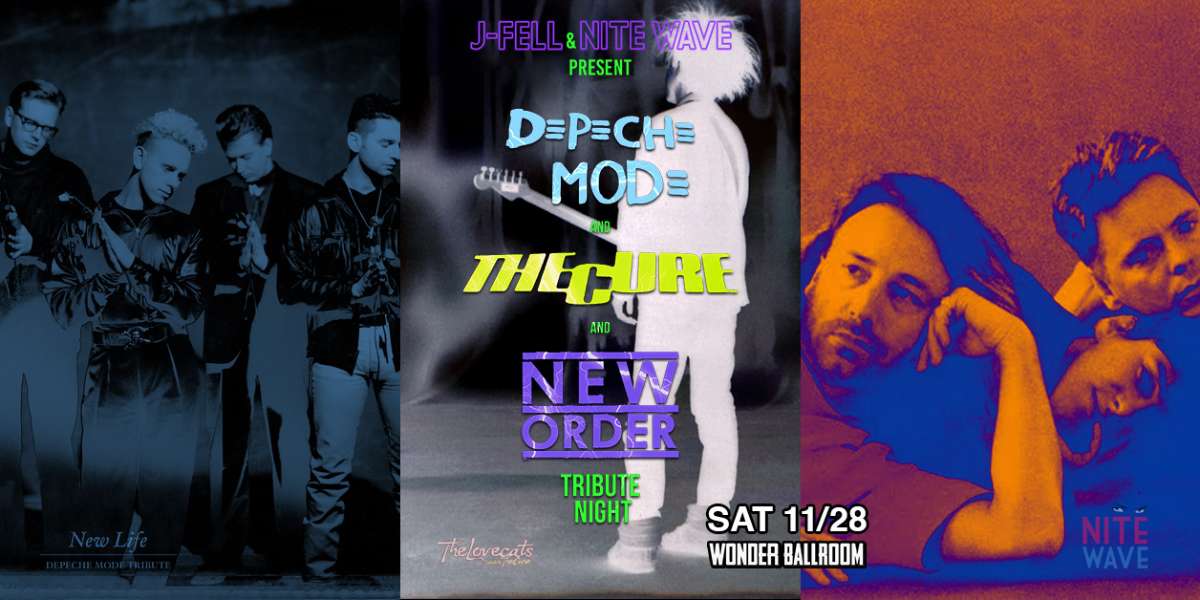
Nov/28 · J-Fell & Nite Wave present: The Cure, Depeche Mode & New Order Tribute Night
Nov/29 · Jalen Ngonda: Doctrine of Love Tour
Dec/4 · New Constellations: It Comes In Waves Tour
Dec/5 · feeble little horse – bitknot tour
Dec/7 · TINY HABITS – The Keepers Tour
Jan/11 · Anna von Hausswolff: Iconoclasts Tour

All Shows

Upcoming Events

Monqui Presents

With special guests Audrey McGraw and Slater Nalley

Thursday, July 30
Doors : 7 pm, Show : 8 pm
all ages
$34 to $50

About Willow Avalon:

Originally from Georgia and now based in Nashville, Willow Avalon’s musical journey began with her first word, “Elvis.” Raised by her mother and grandmother in a small Southern town, she grew up playing piano in church and taught herself guitar at age 12, using songwriting as both an escape and a means of self-expression through a life-journey that has been anything but straight-forward. Her much-praised 2025 debut album, Southern Belle Raisin’ Hell, cemented her as one of country music’s most compelling new voices, blending classic country, Americana, and pop influences. She has performed at The Late Show with Stephen Colbert, CBS Mornings, and the Grand Ole Opry, as well as festivals like Stagecoach, C2C, CMA, and Lollapalooza, bringing her electrifying presence to global audiences. With a sharp wit and rebellious spirit, she has shared stages with legends and rising stars alike, including Willie Nelson, Bob Dylan, Zach Bryan, Cage the Elephant, Paul Cauthen, Charles Wesley Godwin, and more. Solidified by sold-out headline tours in North America, Europe, and Australia, as well as hundreds of millions of views across social content, Willow Avalon is redefining what it means to be a modern Southern storyteller.

Monqui Presents

With special guests Audrey McGraw and Slater Nalley

Thursday, July 30
Doors : 7 pm, Show : 8 pm
all ages
$34 to $50

“Sometimes you’ve got to express yourself because if you don’t you’ll explode,” says songwriter/producer Caroline Rose of their latest album, The Art of Forgetting. “…and I felt like I was going to explode.”

After a series of heartbreaking events, Rose had no desire to make a statement, let alone make a new album. It was a time of contemplation and transformation, a time to slow down. What transpired was what the artist considers a gradual union of reconnection and growth. “I was writing songs the way that I used to when I was a kid. It was more like therapy, just sitting down on my bed and writing about what I was feeling. It sounds so simple but I had really gotten away from that.” Dozens of songs followed and a narrative became clear. “It all happened very organically. I wasn’t ambitious. There weren’t any difficulties like most of my other records have had. This one just sort of appeared and seemed to know exactly what it needed to be.”

The Art of Forgetting is a pivotal release for Rose––an artist whose wit and satirical storytelling have made them a name in the indie music scene. It’s an album teeming with raw, intense emotion. Layers of vocal arrangements from Balkan-influenced yawps to Gregorian autotune choirs, acoustic instrumentation chopped and mangled like a glitching memory, and dreamlike synths push and pull to create a hugely dynamic soundscape. Lyrically, the album includes the type of confessional honesty we’ve only caught glimpses of in Rose’s previous work. “I’ve shied away from being very confessional in the past because I’ve always felt that other artists have already carved out that path and are very good at it. I’m a theater kid, I love the drama. My writing style really piggy-backs off the Southern gothics and Southern storytellers in my family, who have always used exaggeration to great effect.”

The album begins with a clenched fist, with a narrator who seems to know who they are only in regard to someone else, or not at all. “I am your love, I am your lover, I am your friend,” Rose says in the opening track “Love / Lover / Friend.” In “Rebirth” the narrator is lost––an orphan, a common man, an unknown in search of comfort. “If that was me then, then who am I now?” Rose questions in “The Doldrums,” an eerie track reminiscent of both Carnival des Animaux and Vespertine-era Bjork. Over the course of the album the author searches for something, anything, with which to ease their pain––a mother’s womb, the kiss of someone new, even death.

Amidst themes of regret and grief, loss and change, shame and the inevitability of pain, Rose’s impish humor pops up unexpectedly. “Stockholm Syndrome,” “Tell Me What You Want,” and “Love Song For Myself” showcase the kind of dark comedy with which we’ve become familiar in their catalog, fusing upbeat melodies with oft-hilariously deflating lyrics. “I’d like to think I’m self-aware enough to know that even when I’m close to rock bottom the view is a comic-tragedy. The biggest difference between this album and my others is I just didn’t have any sort of guard up this time. Everything I’ve said on this record is exactly what I would, and did, tell my therapist.”

No doubt, it gets personal. Rose’s actual therapist, Jill, has a song named after her in “Jill Says”—a sweeping arrangement of floral pianos and cinematic strings. In “Miami,” an acoustic-centered track whose chorus of squealing guitars and bombastic drums seems to all but explode out of the speakers, Rose pulls directly from an intimate conversation with their mother: “My mom always said never victimize yourself | You’ve got to be strong, you’ve got to protect yourself | Y’know, your father and I are in the last stage of our lives, so for god’s sake no more talk of how you imagine dying.” Multiple voicemails from Rose’s grandmother, Mee Maw, are given their own respective moments throughout the album, offering moments of lightness amidst an otherwise heart-rending story of a person who has forgotten, and is perhaps re-learning, how to love themselves.

Memory runs like a current throughout The Art of Forgetting. Prompted by a difficult breakup, Rose began a deep-dive inward, unknowingly digging up long-buried experiences from their childhood. “I was addressing all these painful memories from a recent relationship that meant so much to me, trying to learn from them, but then in the process some even more painful memories would bubble to the surface from when I was a kid. I realized my mind had voluntarily forgotten these traumatic experiences as a means of survival. All the while, I was getting these calls every day from my grandma, who was clearly losing her memory. It got me thinking about all the different ways memory shows up throughout our lives. It can feel like a curse or be wielded as a tool. ‘The art of forgetting’ can mean so many different things.”

With this in mind, Rose produced the album using devices and media that embody the characteristics of fading or faulty memories. “I gravitated toward anything that decays or changes with time––wooden and string instruments, voices, tape, granular synthesis that separates audio into tiny little fragments. I knew I wanted to have songs that would feel complete even if they were played stripped down, so I began by recording the basic layers in my home studio. From there it was about a year of experimenting with those recordings both at home and in a couple other studios––chopping them up into loops and smears, creating modular percussion, and ultimately building any additional parts around them. I thought it was important that any experimentation was done using the songs in their most basic form, so it would feel kind of like a game of telephone with those original recordings.”

Though the path back to self-love is clunky, by the final track, “Where Do I Go From Here?,” Rose is no longer grasping. “Pick yourself up, babe, you’re gonna be fine | take in a deep breath | quit wasting your time | ‘cause everything you love, it’s all gonna die | so pay all your respects and say your goodbyes | now go out and start living the rest of your life.” Albeit begrudgingly, Rose is giving in and letting go. “Every time I make an album I’ll come out of it learning a lot about myself. Now I look back and see the healing of a wound. I feel like a new version of myself. I think one for the better.”


Monqui Presents

Saturday, August 1
Doors : 7 pm, Show : 8 pm
ages 21 +
$24 to $30.50

“Sometimes you’ve got to express yourself because if you don’t you’ll explode,” says songwriter/producer Caroline Rose of their latest album, The Art of Forgetting. “…and I felt like I was going to explode.”

After a series of heartbreaking events, Rose had no desire to make a statement, let alone make a new album. It was a time of contemplation and transformation, a time to slow down. What transpired was what the artist considers a gradual union of reconnection and growth. “I was writing songs the way that I used to when I was a kid. It was more like therapy, just sitting down on my bed and writing about what I was feeling. It sounds so simple but I had really gotten away from that.” Dozens of songs followed and a narrative became clear. “It all happened very organically. I wasn’t ambitious. There weren’t any difficulties like most of my other records have had. This one just sort of appeared and seemed to know exactly what it needed to be.”

The Art of Forgetting is a pivotal release for Rose––an artist whose wit and satirical storytelling have made them a name in the indie music scene. It’s an album teeming with raw, intense emotion. Layers of vocal arrangements from Balkan-influenced yawps to Gregorian autotune choirs, acoustic instrumentation chopped and mangled like a glitching memory, and dreamlike synths push and pull to create a hugely dynamic soundscape. Lyrically, the album includes the type of confessional honesty we’ve only caught glimpses of in Rose’s previous work. “I’ve shied away from being very confessional in the past because I’ve always felt that other artists have already carved out that path and are very good at it. I’m a theater kid, I love the drama. My writing style really piggy-backs off the Southern gothics and Southern storytellers in my family, who have always used exaggeration to great effect.”

The album begins with a clenched fist, with a narrator who seems to know who they are only in regard to someone else, or not at all. “I am your love, I am your lover, I am your friend,” Rose says in the opening track “Love / Lover / Friend.” In “Rebirth” the narrator is lost––an orphan, a common man, an unknown in search of comfort. “If that was me then, then who am I now?” Rose questions in “The Doldrums,” an eerie track reminiscent of both Carnival des Animaux and Vespertine-era Bjork. Over the course of the album the author searches for something, anything, with which to ease their pain––a mother’s womb, the kiss of someone new, even death.

Amidst themes of regret and grief, loss and change, shame and the inevitability of pain, Rose’s impish humor pops up unexpectedly. “Stockholm Syndrome,” “Tell Me What You Want,” and “Love Song For Myself” showcase the kind of dark comedy with which we’ve become familiar in their catalog, fusing upbeat melodies with oft-hilariously deflating lyrics. “I’d like to think I’m self-aware enough to know that even when I’m close to rock bottom the view is a comic-tragedy. The biggest difference between this album and my others is I just didn’t have any sort of guard up this time. Everything I’ve said on this record is exactly what I would, and did, tell my therapist.”

No doubt, it gets personal. Rose’s actual therapist, Jill, has a song named after her in “Jill Says”—a sweeping arrangement of floral pianos and cinematic strings. In “Miami,” an acoustic-centered track whose chorus of squealing guitars and bombastic drums seems to all but explode out of the speakers, Rose pulls directly from an intimate conversation with their mother: “My mom always said never victimize yourself | You’ve got to be strong, you’ve got to protect yourself | Y’know, your father and I are in the last stage of our lives, so for god’s sake no more talk of how you imagine dying.” Multiple voicemails from Rose’s grandmother, Mee Maw, are given their own respective moments throughout the album, offering moments of lightness amidst an otherwise heart-rending story of a person who has forgotten, and is perhaps re-learning, how to love themselves.

Memory runs like a current throughout The Art of Forgetting. Prompted by a difficult breakup, Rose began a deep-dive inward, unknowingly digging up long-buried experiences from their childhood. “I was addressing all these painful memories from a recent relationship that meant so much to me, trying to learn from them, but then in the process some even more painful memories would bubble to the surface from when I was a kid. I realized my mind had voluntarily forgotten these traumatic experiences as a means of survival. All the while, I was getting these calls every day from my grandma, who was clearly losing her memory. It got me thinking about all the different ways memory shows up throughout our lives. It can feel like a curse or be wielded as a tool. ‘The art of forgetting’ can mean so many different things.”

With this in mind, Rose produced the album using devices and media that embody the characteristics of fading or faulty memories. “I gravitated toward anything that decays or changes with time––wooden and string instruments, voices, tape, granular synthesis that separates audio into tiny little fragments. I knew I wanted to have songs that would feel complete even if they were played stripped down, so I began by recording the basic layers in my home studio. From there it was about a year of experimenting with those recordings both at home and in a couple other studios––chopping them up into loops and smears, creating modular percussion, and ultimately building any additional parts around them. I thought it was important that any experimentation was done using the songs in their most basic form, so it would feel kind of like a game of telephone with those original recordings.”

Though the path back to self-love is clunky, by the final track, “Where Do I Go From Here?,” Rose is no longer grasping. “Pick yourself up, babe, you’re gonna be fine | take in a deep breath | quit wasting your time | ‘cause everything you love, it’s all gonna die | so pay all your respects and say your goodbyes | now go out and start living the rest of your life.” Albeit begrudgingly, Rose is giving in and letting go. “Every time I make an album I’ll come out of it learning a lot about myself. Now I look back and see the healing of a wound. I feel like a new version of myself. I think one for the better.”


Monqui Presents

With special guest TADHG NOLAN

Tuesday, August 11
Doors : 7 pm, Show : 8 pm
all ages
$34 to $50

“Sometimes you’ve got to express yourself because if you don’t you’ll explode,” says songwriter/producer Caroline Rose of their latest album, The Art of Forgetting. “…and I felt like I was going to explode.”

After a series of heartbreaking events, Rose had no desire to make a statement, let alone make a new album. It was a time of contemplation and transformation, a time to slow down. What transpired was what the artist considers a gradual union of reconnection and growth. “I was writing songs the way that I used to when I was a kid. It was more like therapy, just sitting down on my bed and writing about what I was feeling. It sounds so simple but I had really gotten away from that.” Dozens of songs followed and a narrative became clear. “It all happened very organically. I wasn’t ambitious. There weren’t any difficulties like most of my other records have had. This one just sort of appeared and seemed to know exactly what it needed to be.”

The Art of Forgetting is a pivotal release for Rose––an artist whose wit and satirical storytelling have made them a name in the indie music scene. It’s an album teeming with raw, intense emotion. Layers of vocal arrangements from Balkan-influenced yawps to Gregorian autotune choirs, acoustic instrumentation chopped and mangled like a glitching memory, and dreamlike synths push and pull to create a hugely dynamic soundscape. Lyrically, the album includes the type of confessional honesty we’ve only caught glimpses of in Rose’s previous work. “I’ve shied away from being very confessional in the past because I’ve always felt that other artists have already carved out that path and are very good at it. I’m a theater kid, I love the drama. My writing style really piggy-backs off the Southern gothics and Southern storytellers in my family, who have always used exaggeration to great effect.”

The album begins with a clenched fist, with a narrator who seems to know who they are only in regard to someone else, or not at all. “I am your love, I am your lover, I am your friend,” Rose says in the opening track “Love / Lover / Friend.” In “Rebirth” the narrator is lost––an orphan, a common man, an unknown in search of comfort. “If that was me then, then who am I now?” Rose questions in “The Doldrums,” an eerie track reminiscent of both Carnival des Animaux and Vespertine-era Bjork. Over the course of the album the author searches for something, anything, with which to ease their pain––a mother’s womb, the kiss of someone new, even death.

Amidst themes of regret and grief, loss and change, shame and the inevitability of pain, Rose’s impish humor pops up unexpectedly. “Stockholm Syndrome,” “Tell Me What You Want,” and “Love Song For Myself” showcase the kind of dark comedy with which we’ve become familiar in their catalog, fusing upbeat melodies with oft-hilariously deflating lyrics. “I’d like to think I’m self-aware enough to know that even when I’m close to rock bottom the view is a comic-tragedy. The biggest difference between this album and my others is I just didn’t have any sort of guard up this time. Everything I’ve said on this record is exactly what I would, and did, tell my therapist.”

No doubt, it gets personal. Rose’s actual therapist, Jill, has a song named after her in “Jill Says”—a sweeping arrangement of floral pianos and cinematic strings. In “Miami,” an acoustic-centered track whose chorus of squealing guitars and bombastic drums seems to all but explode out of the speakers, Rose pulls directly from an intimate conversation with their mother: “My mom always said never victimize yourself | You’ve got to be strong, you’ve got to protect yourself | Y’know, your father and I are in the last stage of our lives, so for god’s sake no more talk of how you imagine dying.” Multiple voicemails from Rose’s grandmother, Mee Maw, are given their own respective moments throughout the album, offering moments of lightness amidst an otherwise heart-rending story of a person who has forgotten, and is perhaps re-learning, how to love themselves.

Memory runs like a current throughout The Art of Forgetting. Prompted by a difficult breakup, Rose began a deep-dive inward, unknowingly digging up long-buried experiences from their childhood. “I was addressing all these painful memories from a recent relationship that meant so much to me, trying to learn from them, but then in the process some even more painful memories would bubble to the surface from when I was a kid. I realized my mind had voluntarily forgotten these traumatic experiences as a means of survival. All the while, I was getting these calls every day from my grandma, who was clearly losing her memory. It got me thinking about all the different ways memory shows up throughout our lives. It can feel like a curse or be wielded as a tool. ‘The art of forgetting’ can mean so many different things.”

With this in mind, Rose produced the album using devices and media that embody the characteristics of fading or faulty memories. “I gravitated toward anything that decays or changes with time––wooden and string instruments, voices, tape, granular synthesis that separates audio into tiny little fragments. I knew I wanted to have songs that would feel complete even if they were played stripped down, so I began by recording the basic layers in my home studio. From there it was about a year of experimenting with those recordings both at home and in a couple other studios––chopping them up into loops and smears, creating modular percussion, and ultimately building any additional parts around them. I thought it was important that any experimentation was done using the songs in their most basic form, so it would feel kind of like a game of telephone with those original recordings.”

Though the path back to self-love is clunky, by the final track, “Where Do I Go From Here?,” Rose is no longer grasping. “Pick yourself up, babe, you’re gonna be fine | take in a deep breath | quit wasting your time | ‘cause everything you love, it’s all gonna die | so pay all your respects and say your goodbyes | now go out and start living the rest of your life.” Albeit begrudgingly, Rose is giving in and letting go. “Every time I make an album I’ll come out of it learning a lot about myself. Now I look back and see the healing of a wound. I feel like a new version of myself. I think one for the better.”


Monqui Presents

Wednesday, August 12
Doors : 7 pm, Show : 8 pm
all ages
$34 to $118.25

“Sometimes you’ve got to express yourself because if you don’t you’ll explode,” says songwriter/producer Caroline Rose of their latest album, The Art of Forgetting. “…and I felt like I was going to explode.”

After a series of heartbreaking events, Rose had no desire to make a statement, let alone make a new album. It was a time of contemplation and transformation, a time to slow down. What transpired was what the artist considers a gradual union of reconnection and growth. “I was writing songs the way that I used to when I was a kid. It was more like therapy, just sitting down on my bed and writing about what I was feeling. It sounds so simple but I had really gotten away from that.” Dozens of songs followed and a narrative became clear. “It all happened very organically. I wasn’t ambitious. There weren’t any difficulties like most of my other records have had. This one just sort of appeared and seemed to know exactly what it needed to be.”

The Art of Forgetting is a pivotal release for Rose––an artist whose wit and satirical storytelling have made them a name in the indie music scene. It’s an album teeming with raw, intense emotion. Layers of vocal arrangements from Balkan-influenced yawps to Gregorian autotune choirs, acoustic instrumentation chopped and mangled like a glitching memory, and dreamlike synths push and pull to create a hugely dynamic soundscape. Lyrically, the album includes the type of confessional honesty we’ve only caught glimpses of in Rose’s previous work. “I’ve shied away from being very confessional in the past because I’ve always felt that other artists have already carved out that path and are very good at it. I’m a theater kid, I love the drama. My writing style really piggy-backs off the Southern gothics and Southern storytellers in my family, who have always used exaggeration to great effect.”

The album begins with a clenched fist, with a narrator who seems to know who they are only in regard to someone else, or not at all. “I am your love, I am your lover, I am your friend,” Rose says in the opening track “Love / Lover / Friend.” In “Rebirth” the narrator is lost––an orphan, a common man, an unknown in search of comfort. “If that was me then, then who am I now?” Rose questions in “The Doldrums,” an eerie track reminiscent of both Carnival des Animaux and Vespertine-era Bjork. Over the course of the album the author searches for something, anything, with which to ease their pain––a mother’s womb, the kiss of someone new, even death.

Amidst themes of regret and grief, loss and change, shame and the inevitability of pain, Rose’s impish humor pops up unexpectedly. “Stockholm Syndrome,” “Tell Me What You Want,” and “Love Song For Myself” showcase the kind of dark comedy with which we’ve become familiar in their catalog, fusing upbeat melodies with oft-hilariously deflating lyrics. “I’d like to think I’m self-aware enough to know that even when I’m close to rock bottom the view is a comic-tragedy. The biggest difference between this album and my others is I just didn’t have any sort of guard up this time. Everything I’ve said on this record is exactly what I would, and did, tell my therapist.”

No doubt, it gets personal. Rose’s actual therapist, Jill, has a song named after her in “Jill Says”—a sweeping arrangement of floral pianos and cinematic strings. In “Miami,” an acoustic-centered track whose chorus of squealing guitars and bombastic drums seems to all but explode out of the speakers, Rose pulls directly from an intimate conversation with their mother: “My mom always said never victimize yourself | You’ve got to be strong, you’ve got to protect yourself | Y’know, your father and I are in the last stage of our lives, so for god’s sake no more talk of how you imagine dying.” Multiple voicemails from Rose’s grandmother, Mee Maw, are given their own respective moments throughout the album, offering moments of lightness amidst an otherwise heart-rending story of a person who has forgotten, and is perhaps re-learning, how to love themselves.

Memory runs like a current throughout The Art of Forgetting. Prompted by a difficult breakup, Rose began a deep-dive inward, unknowingly digging up long-buried experiences from their childhood. “I was addressing all these painful memories from a recent relationship that meant so much to me, trying to learn from them, but then in the process some even more painful memories would bubble to the surface from when I was a kid. I realized my mind had voluntarily forgotten these traumatic experiences as a means of survival. All the while, I was getting these calls every day from my grandma, who was clearly losing her memory. It got me thinking about all the different ways memory shows up throughout our lives. It can feel like a curse or be wielded as a tool. ‘The art of forgetting’ can mean so many different things.”

With this in mind, Rose produced the album using devices and media that embody the characteristics of fading or faulty memories. “I gravitated toward anything that decays or changes with time––wooden and string instruments, voices, tape, granular synthesis that separates audio into tiny little fragments. I knew I wanted to have songs that would feel complete even if they were played stripped down, so I began by recording the basic layers in my home studio. From there it was about a year of experimenting with those recordings both at home and in a couple other studios––chopping them up into loops and smears, creating modular percussion, and ultimately building any additional parts around them. I thought it was important that any experimentation was done using the songs in their most basic form, so it would feel kind of like a game of telephone with those original recordings.”

Though the path back to self-love is clunky, by the final track, “Where Do I Go From Here?,” Rose is no longer grasping. “Pick yourself up, babe, you’re gonna be fine | take in a deep breath | quit wasting your time | ‘cause everything you love, it’s all gonna die | so pay all your respects and say your goodbyes | now go out and start living the rest of your life.” Albeit begrudgingly, Rose is giving in and letting go. “Every time I make an album I’ll come out of it learning a lot about myself. Now I look back and see the healing of a wound. I feel like a new version of myself. I think one for the better.”


Monqui Presents

Tuesday, August 18
Doors : 6:30 pm, Show : 7:30 pm
ages 21 +
$45 to $118.25

“Sometimes you’ve got to express yourself because if you don’t you’ll explode,” says songwriter/producer Caroline Rose of their latest album, The Art of Forgetting. “…and I felt like I was going to explode.”

After a series of heartbreaking events, Rose had no desire to make a statement, let alone make a new album. It was a time of contemplation and transformation, a time to slow down. What transpired was what the artist considers a gradual union of reconnection and growth. “I was writing songs the way that I used to when I was a kid. It was more like therapy, just sitting down on my bed and writing about what I was feeling. It sounds so simple but I had really gotten away from that.” Dozens of songs followed and a narrative became clear. “It all happened very organically. I wasn’t ambitious. There weren’t any difficulties like most of my other records have had. This one just sort of appeared and seemed to know exactly what it needed to be.”

The Art of Forgetting is a pivotal release for Rose––an artist whose wit and satirical storytelling have made them a name in the indie music scene. It’s an album teeming with raw, intense emotion. Layers of vocal arrangements from Balkan-influenced yawps to Gregorian autotune choirs, acoustic instrumentation chopped and mangled like a glitching memory, and dreamlike synths push and pull to create a hugely dynamic soundscape. Lyrically, the album includes the type of confessional honesty we’ve only caught glimpses of in Rose’s previous work. “I’ve shied away from being very confessional in the past because I’ve always felt that other artists have already carved out that path and are very good at it. I’m a theater kid, I love the drama. My writing style really piggy-backs off the Southern gothics and Southern storytellers in my family, who have always used exaggeration to great effect.”

The album begins with a clenched fist, with a narrator who seems to know who they are only in regard to someone else, or not at all. “I am your love, I am your lover, I am your friend,” Rose says in the opening track “Love / Lover / Friend.” In “Rebirth” the narrator is lost––an orphan, a common man, an unknown in search of comfort. “If that was me then, then who am I now?” Rose questions in “The Doldrums,” an eerie track reminiscent of both Carnival des Animaux and Vespertine-era Bjork. Over the course of the album the author searches for something, anything, with which to ease their pain––a mother’s womb, the kiss of someone new, even death.

Amidst themes of regret and grief, loss and change, shame and the inevitability of pain, Rose’s impish humor pops up unexpectedly. “Stockholm Syndrome,” “Tell Me What You Want,” and “Love Song For Myself” showcase the kind of dark comedy with which we’ve become familiar in their catalog, fusing upbeat melodies with oft-hilariously deflating lyrics. “I’d like to think I’m self-aware enough to know that even when I’m close to rock bottom the view is a comic-tragedy. The biggest difference between this album and my others is I just didn’t have any sort of guard up this time. Everything I’ve said on this record is exactly what I would, and did, tell my therapist.”

No doubt, it gets personal. Rose’s actual therapist, Jill, has a song named after her in “Jill Says”—a sweeping arrangement of floral pianos and cinematic strings. In “Miami,” an acoustic-centered track whose chorus of squealing guitars and bombastic drums seems to all but explode out of the speakers, Rose pulls directly from an intimate conversation with their mother: “My mom always said never victimize yourself | You’ve got to be strong, you’ve got to protect yourself | Y’know, your father and I are in the last stage of our lives, so for god’s sake no more talk of how you imagine dying.” Multiple voicemails from Rose’s grandmother, Mee Maw, are given their own respective moments throughout the album, offering moments of lightness amidst an otherwise heart-rending story of a person who has forgotten, and is perhaps re-learning, how to love themselves.

Memory runs like a current throughout The Art of Forgetting. Prompted by a difficult breakup, Rose began a deep-dive inward, unknowingly digging up long-buried experiences from their childhood. “I was addressing all these painful memories from a recent relationship that meant so much to me, trying to learn from them, but then in the process some even more painful memories would bubble to the surface from when I was a kid. I realized my mind had voluntarily forgotten these traumatic experiences as a means of survival. All the while, I was getting these calls every day from my grandma, who was clearly losing her memory. It got me thinking about all the different ways memory shows up throughout our lives. It can feel like a curse or be wielded as a tool. ‘The art of forgetting’ can mean so many different things.”

With this in mind, Rose produced the album using devices and media that embody the characteristics of fading or faulty memories. “I gravitated toward anything that decays or changes with time––wooden and string instruments, voices, tape, granular synthesis that separates audio into tiny little fragments. I knew I wanted to have songs that would feel complete even if they were played stripped down, so I began by recording the basic layers in my home studio. From there it was about a year of experimenting with those recordings both at home and in a couple other studios––chopping them up into loops and smears, creating modular percussion, and ultimately building any additional parts around them. I thought it was important that any experimentation was done using the songs in their most basic form, so it would feel kind of like a game of telephone with those original recordings.”

Though the path back to self-love is clunky, by the final track, “Where Do I Go From Here?,” Rose is no longer grasping. “Pick yourself up, babe, you’re gonna be fine | take in a deep breath | quit wasting your time | ‘cause everything you love, it’s all gonna die | so pay all your respects and say your goodbyes | now go out and start living the rest of your life.” Albeit begrudgingly, Rose is giving in and letting go. “Every time I make an album I’ll come out of it learning a lot about myself. Now I look back and see the healing of a wound. I feel like a new version of myself. I think one for the better.”


Monqui Presents

With special guest Vienna Vienna

Saturday, August 22
Doors : 7 pm, Show : 8 pm
all ages
$39.25 to $183.75

“Sometimes you’ve got to express yourself because if you don’t you’ll explode,” says songwriter/producer Caroline Rose of their latest album, The Art of Forgetting. “…and I felt like I was going to explode.”

After a series of heartbreaking events, Rose had no desire to make a statement, let alone make a new album. It was a time of contemplation and transformation, a time to slow down. What transpired was what the artist considers a gradual union of reconnection and growth. “I was writing songs the way that I used to when I was a kid. It was more like therapy, just sitting down on my bed and writing about what I was feeling. It sounds so simple but I had really gotten away from that.” Dozens of songs followed and a narrative became clear. “It all happened very organically. I wasn’t ambitious. There weren’t any difficulties like most of my other records have had. This one just sort of appeared and seemed to know exactly what it needed to be.”

The Art of Forgetting is a pivotal release for Rose––an artist whose wit and satirical storytelling have made them a name in the indie music scene. It’s an album teeming with raw, intense emotion. Layers of vocal arrangements from Balkan-influenced yawps to Gregorian autotune choirs, acoustic instrumentation chopped and mangled like a glitching memory, and dreamlike synths push and pull to create a hugely dynamic soundscape. Lyrically, the album includes the type of confessional honesty we’ve only caught glimpses of in Rose’s previous work. “I’ve shied away from being very confessional in the past because I’ve always felt that other artists have already carved out that path and are very good at it. I’m a theater kid, I love the drama. My writing style really piggy-backs off the Southern gothics and Southern storytellers in my family, who have always used exaggeration to great effect.”

The album begins with a clenched fist, with a narrator who seems to know who they are only in regard to someone else, or not at all. “I am your love, I am your lover, I am your friend,” Rose says in the opening track “Love / Lover / Friend.” In “Rebirth” the narrator is lost––an orphan, a common man, an unknown in search of comfort. “If that was me then, then who am I now?” Rose questions in “The Doldrums,” an eerie track reminiscent of both Carnival des Animaux and Vespertine-era Bjork. Over the course of the album the author searches for something, anything, with which to ease their pain––a mother’s womb, the kiss of someone new, even death.

Amidst themes of regret and grief, loss and change, shame and the inevitability of pain, Rose’s impish humor pops up unexpectedly. “Stockholm Syndrome,” “Tell Me What You Want,” and “Love Song For Myself” showcase the kind of dark comedy with which we’ve become familiar in their catalog, fusing upbeat melodies with oft-hilariously deflating lyrics. “I’d like to think I’m self-aware enough to know that even when I’m close to rock bottom the view is a comic-tragedy. The biggest difference between this album and my others is I just didn’t have any sort of guard up this time. Everything I’ve said on this record is exactly what I would, and did, tell my therapist.”

No doubt, it gets personal. Rose’s actual therapist, Jill, has a song named after her in “Jill Says”—a sweeping arrangement of floral pianos and cinematic strings. In “Miami,” an acoustic-centered track whose chorus of squealing guitars and bombastic drums seems to all but explode out of the speakers, Rose pulls directly from an intimate conversation with their mother: “My mom always said never victimize yourself | You’ve got to be strong, you’ve got to protect yourself | Y’know, your father and I are in the last stage of our lives, so for god’s sake no more talk of how you imagine dying.” Multiple voicemails from Rose’s grandmother, Mee Maw, are given their own respective moments throughout the album, offering moments of lightness amidst an otherwise heart-rending story of a person who has forgotten, and is perhaps re-learning, how to love themselves.

Memory runs like a current throughout The Art of Forgetting. Prompted by a difficult breakup, Rose began a deep-dive inward, unknowingly digging up long-buried experiences from their childhood. “I was addressing all these painful memories from a recent relationship that meant so much to me, trying to learn from them, but then in the process some even more painful memories would bubble to the surface from when I was a kid. I realized my mind had voluntarily forgotten these traumatic experiences as a means of survival. All the while, I was getting these calls every day from my grandma, who was clearly losing her memory. It got me thinking about all the different ways memory shows up throughout our lives. It can feel like a curse or be wielded as a tool. ‘The art of forgetting’ can mean so many different things.”

With this in mind, Rose produced the album using devices and media that embody the characteristics of fading or faulty memories. “I gravitated toward anything that decays or changes with time––wooden and string instruments, voices, tape, granular synthesis that separates audio into tiny little fragments. I knew I wanted to have songs that would feel complete even if they were played stripped down, so I began by recording the basic layers in my home studio. From there it was about a year of experimenting with those recordings both at home and in a couple other studios––chopping them up into loops and smears, creating modular percussion, and ultimately building any additional parts around them. I thought it was important that any experimentation was done using the songs in their most basic form, so it would feel kind of like a game of telephone with those original recordings.”

Though the path back to self-love is clunky, by the final track, “Where Do I Go From Here?,” Rose is no longer grasping. “Pick yourself up, babe, you’re gonna be fine | take in a deep breath | quit wasting your time | ‘cause everything you love, it’s all gonna die | so pay all your respects and say your goodbyes | now go out and start living the rest of your life.” Albeit begrudgingly, Rose is giving in and letting go. “Every time I make an album I’ll come out of it learning a lot about myself. Now I look back and see the healing of a wound. I feel like a new version of myself. I think one for the better.”


Showbox Presents

Tuesday, August 25
Doors : 7 pm, Show : 8 pm
all ages
$41.25 to $127.24

“Sometimes you’ve got to express yourself because if you don’t you’ll explode,” says songwriter/producer Caroline Rose of their latest album, The Art of Forgetting. “…and I felt like I was going to explode.”

After a series of heartbreaking events, Rose had no desire to make a statement, let alone make a new album. It was a time of contemplation and transformation, a time to slow down. What transpired was what the artist considers a gradual union of reconnection and growth. “I was writing songs the way that I used to when I was a kid. It was more like therapy, just sitting down on my bed and writing about what I was feeling. It sounds so simple but I had really gotten away from that.” Dozens of songs followed and a narrative became clear. “It all happened very organically. I wasn’t ambitious. There weren’t any difficulties like most of my other records have had. This one just sort of appeared and seemed to know exactly what it needed to be.”

The Art of Forgetting is a pivotal release for Rose––an artist whose wit and satirical storytelling have made them a name in the indie music scene. It’s an album teeming with raw, intense emotion. Layers of vocal arrangements from Balkan-influenced yawps to Gregorian autotune choirs, acoustic instrumentation chopped and mangled like a glitching memory, and dreamlike synths push and pull to create a hugely dynamic soundscape. Lyrically, the album includes the type of confessional honesty we’ve only caught glimpses of in Rose’s previous work. “I’ve shied away from being very confessional in the past because I’ve always felt that other artists have already carved out that path and are very good at it. I’m a theater kid, I love the drama. My writing style really piggy-backs off the Southern gothics and Southern storytellers in my family, who have always used exaggeration to great effect.”

The album begins with a clenched fist, with a narrator who seems to know who they are only in regard to someone else, or not at all. “I am your love, I am your lover, I am your friend,” Rose says in the opening track “Love / Lover / Friend.” In “Rebirth” the narrator is lost––an orphan, a common man, an unknown in search of comfort. “If that was me then, then who am I now?” Rose questions in “The Doldrums,” an eerie track reminiscent of both Carnival des Animaux and Vespertine-era Bjork. Over the course of the album the author searches for something, anything, with which to ease their pain––a mother’s womb, the kiss of someone new, even death.

Amidst themes of regret and grief, loss and change, shame and the inevitability of pain, Rose’s impish humor pops up unexpectedly. “Stockholm Syndrome,” “Tell Me What You Want,” and “Love Song For Myself” showcase the kind of dark comedy with which we’ve become familiar in their catalog, fusing upbeat melodies with oft-hilariously deflating lyrics. “I’d like to think I’m self-aware enough to know that even when I’m close to rock bottom the view is a comic-tragedy. The biggest difference between this album and my others is I just didn’t have any sort of guard up this time. Everything I’ve said on this record is exactly what I would, and did, tell my therapist.”

No doubt, it gets personal. Rose’s actual therapist, Jill, has a song named after her in “Jill Says”—a sweeping arrangement of floral pianos and cinematic strings. In “Miami,” an acoustic-centered track whose chorus of squealing guitars and bombastic drums seems to all but explode out of the speakers, Rose pulls directly from an intimate conversation with their mother: “My mom always said never victimize yourself | You’ve got to be strong, you’ve got to protect yourself | Y’know, your father and I are in the last stage of our lives, so for god’s sake no more talk of how you imagine dying.” Multiple voicemails from Rose’s grandmother, Mee Maw, are given their own respective moments throughout the album, offering moments of lightness amidst an otherwise heart-rending story of a person who has forgotten, and is perhaps re-learning, how to love themselves.

Memory runs like a current throughout The Art of Forgetting. Prompted by a difficult breakup, Rose began a deep-dive inward, unknowingly digging up long-buried experiences from their childhood. “I was addressing all these painful memories from a recent relationship that meant so much to me, trying to learn from them, but then in the process some even more painful memories would bubble to the surface from when I was a kid. I realized my mind had voluntarily forgotten these traumatic experiences as a means of survival. All the while, I was getting these calls every day from my grandma, who was clearly losing her memory. It got me thinking about all the different ways memory shows up throughout our lives. It can feel like a curse or be wielded as a tool. ‘The art of forgetting’ can mean so many different things.”

With this in mind, Rose produced the album using devices and media that embody the characteristics of fading or faulty memories. “I gravitated toward anything that decays or changes with time––wooden and string instruments, voices, tape, granular synthesis that separates audio into tiny little fragments. I knew I wanted to have songs that would feel complete even if they were played stripped down, so I began by recording the basic layers in my home studio. From there it was about a year of experimenting with those recordings both at home and in a couple other studios––chopping them up into loops and smears, creating modular percussion, and ultimately building any additional parts around them. I thought it was important that any experimentation was done using the songs in their most basic form, so it would feel kind of like a game of telephone with those original recordings.”

Though the path back to self-love is clunky, by the final track, “Where Do I Go From Here?,” Rose is no longer grasping. “Pick yourself up, babe, you’re gonna be fine | take in a deep breath | quit wasting your time | ‘cause everything you love, it’s all gonna die | so pay all your respects and say your goodbyes | now go out and start living the rest of your life.” Albeit begrudgingly, Rose is giving in and letting go. “Every time I make an album I’ll come out of it learning a lot about myself. Now I look back and see the healing of a wound. I feel like a new version of myself. I think one for the better.”


Monqui Presents

With special guest Paradise Vultures

Thursday, August 27
Doors : 7 pm, Show : 8 pm
all ages
$39.25 to $118.25

“Sometimes you’ve got to express yourself because if you don’t you’ll explode,” says songwriter/producer Caroline Rose of their latest album, The Art of Forgetting. “…and I felt like I was going to explode.”

After a series of heartbreaking events, Rose had no desire to make a statement, let alone make a new album. It was a time of contemplation and transformation, a time to slow down. What transpired was what the artist considers a gradual union of reconnection and growth. “I was writing songs the way that I used to when I was a kid. It was more like therapy, just sitting down on my bed and writing about what I was feeling. It sounds so simple but I had really gotten away from that.” Dozens of songs followed and a narrative became clear. “It all happened very organically. I wasn’t ambitious. There weren’t any difficulties like most of my other records have had. This one just sort of appeared and seemed to know exactly what it needed to be.”

The Art of Forgetting is a pivotal release for Rose––an artist whose wit and satirical storytelling have made them a name in the indie music scene. It’s an album teeming with raw, intense emotion. Layers of vocal arrangements from Balkan-influenced yawps to Gregorian autotune choirs, acoustic instrumentation chopped and mangled like a glitching memory, and dreamlike synths push and pull to create a hugely dynamic soundscape. Lyrically, the album includes the type of confessional honesty we’ve only caught glimpses of in Rose’s previous work. “I’ve shied away from being very confessional in the past because I’ve always felt that other artists have already carved out that path and are very good at it. I’m a theater kid, I love the drama. My writing style really piggy-backs off the Southern gothics and Southern storytellers in my family, who have always used exaggeration to great effect.”

The album begins with a clenched fist, with a narrator who seems to know who they are only in regard to someone else, or not at all. “I am your love, I am your lover, I am your friend,” Rose says in the opening track “Love / Lover / Friend.” In “Rebirth” the narrator is lost––an orphan, a common man, an unknown in search of comfort. “If that was me then, then who am I now?” Rose questions in “The Doldrums,” an eerie track reminiscent of both Carnival des Animaux and Vespertine-era Bjork. Over the course of the album the author searches for something, anything, with which to ease their pain––a mother’s womb, the kiss of someone new, even death.

Amidst themes of regret and grief, loss and change, shame and the inevitability of pain, Rose’s impish humor pops up unexpectedly. “Stockholm Syndrome,” “Tell Me What You Want,” and “Love Song For Myself” showcase the kind of dark comedy with which we’ve become familiar in their catalog, fusing upbeat melodies with oft-hilariously deflating lyrics. “I’d like to think I’m self-aware enough to know that even when I’m close to rock bottom the view is a comic-tragedy. The biggest difference between this album and my others is I just didn’t have any sort of guard up this time. Everything I’ve said on this record is exactly what I would, and did, tell my therapist.”

No doubt, it gets personal. Rose’s actual therapist, Jill, has a song named after her in “Jill Says”—a sweeping arrangement of floral pianos and cinematic strings. In “Miami,” an acoustic-centered track whose chorus of squealing guitars and bombastic drums seems to all but explode out of the speakers, Rose pulls directly from an intimate conversation with their mother: “My mom always said never victimize yourself | You’ve got to be strong, you’ve got to protect yourself | Y’know, your father and I are in the last stage of our lives, so for god’s sake no more talk of how you imagine dying.” Multiple voicemails from Rose’s grandmother, Mee Maw, are given their own respective moments throughout the album, offering moments of lightness amidst an otherwise heart-rending story of a person who has forgotten, and is perhaps re-learning, how to love themselves.

Memory runs like a current throughout The Art of Forgetting. Prompted by a difficult breakup, Rose began a deep-dive inward, unknowingly digging up long-buried experiences from their childhood. “I was addressing all these painful memories from a recent relationship that meant so much to me, trying to learn from them, but then in the process some even more painful memories would bubble to the surface from when I was a kid. I realized my mind had voluntarily forgotten these traumatic experiences as a means of survival. All the while, I was getting these calls every day from my grandma, who was clearly losing her memory. It got me thinking about all the different ways memory shows up throughout our lives. It can feel like a curse or be wielded as a tool. ‘The art of forgetting’ can mean so many different things.”

With this in mind, Rose produced the album using devices and media that embody the characteristics of fading or faulty memories. “I gravitated toward anything that decays or changes with time––wooden and string instruments, voices, tape, granular synthesis that separates audio into tiny little fragments. I knew I wanted to have songs that would feel complete even if they were played stripped down, so I began by recording the basic layers in my home studio. From there it was about a year of experimenting with those recordings both at home and in a couple other studios––chopping them up into loops and smears, creating modular percussion, and ultimately building any additional parts around them. I thought it was important that any experimentation was done using the songs in their most basic form, so it would feel kind of like a game of telephone with those original recordings.”

Though the path back to self-love is clunky, by the final track, “Where Do I Go From Here?,” Rose is no longer grasping. “Pick yourself up, babe, you’re gonna be fine | take in a deep breath | quit wasting your time | ‘cause everything you love, it’s all gonna die | so pay all your respects and say your goodbyes | now go out and start living the rest of your life.” Albeit begrudgingly, Rose is giving in and letting go. “Every time I make an album I’ll come out of it learning a lot about myself. Now I look back and see the healing of a wound. I feel like a new version of myself. I think one for the better.”


Monqui Presents

With special guests The Serfs and Jimmy

Saturday, August 29
Doors : 7 pm, Show : 8 pm
all ages
$28 to $45

“Sometimes you’ve got to express yourself because if you don’t you’ll explode,” says songwriter/producer Caroline Rose of their latest album, The Art of Forgetting. “…and I felt like I was going to explode.”

After a series of heartbreaking events, Rose had no desire to make a statement, let alone make a new album. It was a time of contemplation and transformation, a time to slow down. What transpired was what the artist considers a gradual union of reconnection and growth. “I was writing songs the way that I used to when I was a kid. It was more like therapy, just sitting down on my bed and writing about what I was feeling. It sounds so simple but I had really gotten away from that.” Dozens of songs followed and a narrative became clear. “It all happened very organically. I wasn’t ambitious. There weren’t any difficulties like most of my other records have had. This one just sort of appeared and seemed to know exactly what it needed to be.”

The Art of Forgetting is a pivotal release for Rose––an artist whose wit and satirical storytelling have made them a name in the indie music scene. It’s an album teeming with raw, intense emotion. Layers of vocal arrangements from Balkan-influenced yawps to Gregorian autotune choirs, acoustic instrumentation chopped and mangled like a glitching memory, and dreamlike synths push and pull to create a hugely dynamic soundscape. Lyrically, the album includes the type of confessional honesty we’ve only caught glimpses of in Rose’s previous work. “I’ve shied away from being very confessional in the past because I’ve always felt that other artists have already carved out that path and are very good at it. I’m a theater kid, I love the drama. My writing style really piggy-backs off the Southern gothics and Southern storytellers in my family, who have always used exaggeration to great effect.”

The album begins with a clenched fist, with a narrator who seems to know who they are only in regard to someone else, or not at all. “I am your love, I am your lover, I am your friend,” Rose says in the opening track “Love / Lover / Friend.” In “Rebirth” the narrator is lost––an orphan, a common man, an unknown in search of comfort. “If that was me then, then who am I now?” Rose questions in “The Doldrums,” an eerie track reminiscent of both Carnival des Animaux and Vespertine-era Bjork. Over the course of the album the author searches for something, anything, with which to ease their pain––a mother’s womb, the kiss of someone new, even death.

Amidst themes of regret and grief, loss and change, shame and the inevitability of pain, Rose’s impish humor pops up unexpectedly. “Stockholm Syndrome,” “Tell Me What You Want,” and “Love Song For Myself” showcase the kind of dark comedy with which we’ve become familiar in their catalog, fusing upbeat melodies with oft-hilariously deflating lyrics. “I’d like to think I’m self-aware enough to know that even when I’m close to rock bottom the view is a comic-tragedy. The biggest difference between this album and my others is I just didn’t have any sort of guard up this time. Everything I’ve said on this record is exactly what I would, and did, tell my therapist.”

No doubt, it gets personal. Rose’s actual therapist, Jill, has a song named after her in “Jill Says”—a sweeping arrangement of floral pianos and cinematic strings. In “Miami,” an acoustic-centered track whose chorus of squealing guitars and bombastic drums seems to all but explode out of the speakers, Rose pulls directly from an intimate conversation with their mother: “My mom always said never victimize yourself | You’ve got to be strong, you’ve got to protect yourself | Y’know, your father and I are in the last stage of our lives, so for god’s sake no more talk of how you imagine dying.” Multiple voicemails from Rose’s grandmother, Mee Maw, are given their own respective moments throughout the album, offering moments of lightness amidst an otherwise heart-rending story of a person who has forgotten, and is perhaps re-learning, how to love themselves.

Memory runs like a current throughout The Art of Forgetting. Prompted by a difficult breakup, Rose began a deep-dive inward, unknowingly digging up long-buried experiences from their childhood. “I was addressing all these painful memories from a recent relationship that meant so much to me, trying to learn from them, but then in the process some even more painful memories would bubble to the surface from when I was a kid. I realized my mind had voluntarily forgotten these traumatic experiences as a means of survival. All the while, I was getting these calls every day from my grandma, who was clearly losing her memory. It got me thinking about all the different ways memory shows up throughout our lives. It can feel like a curse or be wielded as a tool. ‘The art of forgetting’ can mean so many different things.”

With this in mind, Rose produced the album using devices and media that embody the characteristics of fading or faulty memories. “I gravitated toward anything that decays or changes with time––wooden and string instruments, voices, tape, granular synthesis that separates audio into tiny little fragments. I knew I wanted to have songs that would feel complete even if they were played stripped down, so I began by recording the basic layers in my home studio. From there it was about a year of experimenting with those recordings both at home and in a couple other studios––chopping them up into loops and smears, creating modular percussion, and ultimately building any additional parts around them. I thought it was important that any experimentation was done using the songs in their most basic form, so it would feel kind of like a game of telephone with those original recordings.”

Though the path back to self-love is clunky, by the final track, “Where Do I Go From Here?,” Rose is no longer grasping. “Pick yourself up, babe, you’re gonna be fine | take in a deep breath | quit wasting your time | ‘cause everything you love, it’s all gonna die | so pay all your respects and say your goodbyes | now go out and start living the rest of your life.” Albeit begrudgingly, Rose is giving in and letting go. “Every time I make an album I’ll come out of it learning a lot about myself. Now I look back and see the healing of a wound. I feel like a new version of myself. I think one for the better.”


Monqui Presents

Thursday, September 3
Doors : 7 pm, Show : 8 pm
all ages
$45 to $61.25

“Sometimes you’ve got to express yourself because if you don’t you’ll explode,” says songwriter/producer Caroline Rose of their latest album, The Art of Forgetting. “…and I felt like I was going to explode.”

After a series of heartbreaking events, Rose had no desire to make a statement, let alone make a new album. It was a time of contemplation and transformation, a time to slow down. What transpired was what the artist considers a gradual union of reconnection and growth. “I was writing songs the way that I used to when I was a kid. It was more like therapy, just sitting down on my bed and writing about what I was feeling. It sounds so simple but I had really gotten away from that.” Dozens of songs followed and a narrative became clear. “It all happened very organically. I wasn’t ambitious. There weren’t any difficulties like most of my other records have had. This one just sort of appeared and seemed to know exactly what it needed to be.”

The Art of Forgetting is a pivotal release for Rose––an artist whose wit and satirical storytelling have made them a name in the indie music scene. It’s an album teeming with raw, intense emotion. Layers of vocal arrangements from Balkan-influenced yawps to Gregorian autotune choirs, acoustic instrumentation chopped and mangled like a glitching memory, and dreamlike synths push and pull to create a hugely dynamic soundscape. Lyrically, the album includes the type of confessional honesty we’ve only caught glimpses of in Rose’s previous work. “I’ve shied away from being very confessional in the past because I’ve always felt that other artists have already carved out that path and are very good at it. I’m a theater kid, I love the drama. My writing style really piggy-backs off the Southern gothics and Southern storytellers in my family, who have always used exaggeration to great effect.”

The album begins with a clenched fist, with a narrator who seems to know who they are only in regard to someone else, or not at all. “I am your love, I am your lover, I am your friend,” Rose says in the opening track “Love / Lover / Friend.” In “Rebirth” the narrator is lost––an orphan, a common man, an unknown in search of comfort. “If that was me then, then who am I now?” Rose questions in “The Doldrums,” an eerie track reminiscent of both Carnival des Animaux and Vespertine-era Bjork. Over the course of the album the author searches for something, anything, with which to ease their pain––a mother’s womb, the kiss of someone new, even death.

Amidst themes of regret and grief, loss and change, shame and the inevitability of pain, Rose’s impish humor pops up unexpectedly. “Stockholm Syndrome,” “Tell Me What You Want,” and “Love Song For Myself” showcase the kind of dark comedy with which we’ve become familiar in their catalog, fusing upbeat melodies with oft-hilariously deflating lyrics. “I’d like to think I’m self-aware enough to know that even when I’m close to rock bottom the view is a comic-tragedy. The biggest difference between this album and my others is I just didn’t have any sort of guard up this time. Everything I’ve said on this record is exactly what I would, and did, tell my therapist.”

No doubt, it gets personal. Rose’s actual therapist, Jill, has a song named after her in “Jill Says”—a sweeping arrangement of floral pianos and cinematic strings. In “Miami,” an acoustic-centered track whose chorus of squealing guitars and bombastic drums seems to all but explode out of the speakers, Rose pulls directly from an intimate conversation with their mother: “My mom always said never victimize yourself | You’ve got to be strong, you’ve got to protect yourself | Y’know, your father and I are in the last stage of our lives, so for god’s sake no more talk of how you imagine dying.” Multiple voicemails from Rose’s grandmother, Mee Maw, are given their own respective moments throughout the album, offering moments of lightness amidst an otherwise heart-rending story of a person who has forgotten, and is perhaps re-learning, how to love themselves.

Memory runs like a current throughout The Art of Forgetting. Prompted by a difficult breakup, Rose began a deep-dive inward, unknowingly digging up long-buried experiences from their childhood. “I was addressing all these painful memories from a recent relationship that meant so much to me, trying to learn from them, but then in the process some even more painful memories would bubble to the surface from when I was a kid. I realized my mind had voluntarily forgotten these traumatic experiences as a means of survival. All the while, I was getting these calls every day from my grandma, who was clearly losing her memory. It got me thinking about all the different ways memory shows up throughout our lives. It can feel like a curse or be wielded as a tool. ‘The art of forgetting’ can mean so many different things.”

With this in mind, Rose produced the album using devices and media that embody the characteristics of fading or faulty memories. “I gravitated toward anything that decays or changes with time––wooden and string instruments, voices, tape, granular synthesis that separates audio into tiny little fragments. I knew I wanted to have songs that would feel complete even if they were played stripped down, so I began by recording the basic layers in my home studio. From there it was about a year of experimenting with those recordings both at home and in a couple other studios––chopping them up into loops and smears, creating modular percussion, and ultimately building any additional parts around them. I thought it was important that any experimentation was done using the songs in their most basic form, so it would feel kind of like a game of telephone with those original recordings.”

Though the path back to self-love is clunky, by the final track, “Where Do I Go From Here?,” Rose is no longer grasping. “Pick yourself up, babe, you’re gonna be fine | take in a deep breath | quit wasting your time | ‘cause everything you love, it’s all gonna die | so pay all your respects and say your goodbyes | now go out and start living the rest of your life.” Albeit begrudgingly, Rose is giving in and letting go. “Every time I make an album I’ll come out of it learning a lot about myself. Now I look back and see the healing of a wound. I feel like a new version of myself. I think one for the better.”


Monqui Presents

Friday, September 4
Doors : 7 pm, Show : 8 pm
all ages
$50.50 to $72.25

“Sometimes you’ve got to express yourself because if you don’t you’ll explode,” says songwriter/producer Caroline Rose of their latest album, The Art of Forgetting. “…and I felt like I was going to explode.”

After a series of heartbreaking events, Rose had no desire to make a statement, let alone make a new album. It was a time of contemplation and transformation, a time to slow down. What transpired was what the artist considers a gradual union of reconnection and growth. “I was writing songs the way that I used to when I was a kid. It was more like therapy, just sitting down on my bed and writing about what I was feeling. It sounds so simple but I had really gotten away from that.” Dozens of songs followed and a narrative became clear. “It all happened very organically. I wasn’t ambitious. There weren’t any difficulties like most of my other records have had. This one just sort of appeared and seemed to know exactly what it needed to be.”

The Art of Forgetting is a pivotal release for Rose––an artist whose wit and satirical storytelling have made them a name in the indie music scene. It’s an album teeming with raw, intense emotion. Layers of vocal arrangements from Balkan-influenced yawps to Gregorian autotune choirs, acoustic instrumentation chopped and mangled like a glitching memory, and dreamlike synths push and pull to create a hugely dynamic soundscape. Lyrically, the album includes the type of confessional honesty we’ve only caught glimpses of in Rose’s previous work. “I’ve shied away from being very confessional in the past because I’ve always felt that other artists have already carved out that path and are very good at it. I’m a theater kid, I love the drama. My writing style really piggy-backs off the Southern gothics and Southern storytellers in my family, who have always used exaggeration to great effect.”

The album begins with a clenched fist, with a narrator who seems to know who they are only in regard to someone else, or not at all. “I am your love, I am your lover, I am your friend,” Rose says in the opening track “Love / Lover / Friend.” In “Rebirth” the narrator is lost––an orphan, a common man, an unknown in search of comfort. “If that was me then, then who am I now?” Rose questions in “The Doldrums,” an eerie track reminiscent of both Carnival des Animaux and Vespertine-era Bjork. Over the course of the album the author searches for something, anything, with which to ease their pain––a mother’s womb, the kiss of someone new, even death.

Amidst themes of regret and grief, loss and change, shame and the inevitability of pain, Rose’s impish humor pops up unexpectedly. “Stockholm Syndrome,” “Tell Me What You Want,” and “Love Song For Myself” showcase the kind of dark comedy with which we’ve become familiar in their catalog, fusing upbeat melodies with oft-hilariously deflating lyrics. “I’d like to think I’m self-aware enough to know that even when I’m close to rock bottom the view is a comic-tragedy. The biggest difference between this album and my others is I just didn’t have any sort of guard up this time. Everything I’ve said on this record is exactly what I would, and did, tell my therapist.”

No doubt, it gets personal. Rose’s actual therapist, Jill, has a song named after her in “Jill Says”—a sweeping arrangement of floral pianos and cinematic strings. In “Miami,” an acoustic-centered track whose chorus of squealing guitars and bombastic drums seems to all but explode out of the speakers, Rose pulls directly from an intimate conversation with their mother: “My mom always said never victimize yourself | You’ve got to be strong, you’ve got to protect yourself | Y’know, your father and I are in the last stage of our lives, so for god’s sake no more talk of how you imagine dying.” Multiple voicemails from Rose’s grandmother, Mee Maw, are given their own respective moments throughout the album, offering moments of lightness amidst an otherwise heart-rending story of a person who has forgotten, and is perhaps re-learning, how to love themselves.

Memory runs like a current throughout The Art of Forgetting. Prompted by a difficult breakup, Rose began a deep-dive inward, unknowingly digging up long-buried experiences from their childhood. “I was addressing all these painful memories from a recent relationship that meant so much to me, trying to learn from them, but then in the process some even more painful memories would bubble to the surface from when I was a kid. I realized my mind had voluntarily forgotten these traumatic experiences as a means of survival. All the while, I was getting these calls every day from my grandma, who was clearly losing her memory. It got me thinking about all the different ways memory shows up throughout our lives. It can feel like a curse or be wielded as a tool. ‘The art of forgetting’ can mean so many different things.”

With this in mind, Rose produced the album using devices and media that embody the characteristics of fading or faulty memories. “I gravitated toward anything that decays or changes with time––wooden and string instruments, voices, tape, granular synthesis that separates audio into tiny little fragments. I knew I wanted to have songs that would feel complete even if they were played stripped down, so I began by recording the basic layers in my home studio. From there it was about a year of experimenting with those recordings both at home and in a couple other studios––chopping them up into loops and smears, creating modular percussion, and ultimately building any additional parts around them. I thought it was important that any experimentation was done using the songs in their most basic form, so it would feel kind of like a game of telephone with those original recordings.”

Though the path back to self-love is clunky, by the final track, “Where Do I Go From Here?,” Rose is no longer grasping. “Pick yourself up, babe, you’re gonna be fine | take in a deep breath | quit wasting your time | ‘cause everything you love, it’s all gonna die | so pay all your respects and say your goodbyes | now go out and start living the rest of your life.” Albeit begrudgingly, Rose is giving in and letting go. “Every time I make an album I’ll come out of it learning a lot about myself. Now I look back and see the healing of a wound. I feel like a new version of myself. I think one for the better.”


Showbox Presents

Saturday, September 5
Doors : 7 pm, Show : 8 pm
all ages

“Sometimes you’ve got to express yourself because if you don’t you’ll explode,” says songwriter/producer Caroline Rose of their latest album, The Art of Forgetting. “…and I felt like I was going to explode.”

After a series of heartbreaking events, Rose had no desire to make a statement, let alone make a new album. It was a time of contemplation and transformation, a time to slow down. What transpired was what the artist considers a gradual union of reconnection and growth. “I was writing songs the way that I used to when I was a kid. It was more like therapy, just sitting down on my bed and writing about what I was feeling. It sounds so simple but I had really gotten away from that.” Dozens of songs followed and a narrative became clear. “It all happened very organically. I wasn’t ambitious. There weren’t any difficulties like most of my other records have had. This one just sort of appeared and seemed to know exactly what it needed to be.”

The Art of Forgetting is a pivotal release for Rose––an artist whose wit and satirical storytelling have made them a name in the indie music scene. It’s an album teeming with raw, intense emotion. Layers of vocal arrangements from Balkan-influenced yawps to Gregorian autotune choirs, acoustic instrumentation chopped and mangled like a glitching memory, and dreamlike synths push and pull to create a hugely dynamic soundscape. Lyrically, the album includes the type of confessional honesty we’ve only caught glimpses of in Rose’s previous work. “I’ve shied away from being very confessional in the past because I’ve always felt that other artists have already carved out that path and are very good at it. I’m a theater kid, I love the drama. My writing style really piggy-backs off the Southern gothics and Southern storytellers in my family, who have always used exaggeration to great effect.”

The album begins with a clenched fist, with a narrator who seems to know who they are only in regard to someone else, or not at all. “I am your love, I am your lover, I am your friend,” Rose says in the opening track “Love / Lover / Friend.” In “Rebirth” the narrator is lost––an orphan, a common man, an unknown in search of comfort. “If that was me then, then who am I now?” Rose questions in “The Doldrums,” an eerie track reminiscent of both Carnival des Animaux and Vespertine-era Bjork. Over the course of the album the author searches for something, anything, with which to ease their pain––a mother’s womb, the kiss of someone new, even death.

Amidst themes of regret and grief, loss and change, shame and the inevitability of pain, Rose’s impish humor pops up unexpectedly. “Stockholm Syndrome,” “Tell Me What You Want,” and “Love Song For Myself” showcase the kind of dark comedy with which we’ve become familiar in their catalog, fusing upbeat melodies with oft-hilariously deflating lyrics. “I’d like to think I’m self-aware enough to know that even when I’m close to rock bottom the view is a comic-tragedy. The biggest difference between this album and my others is I just didn’t have any sort of guard up this time. Everything I’ve said on this record is exactly what I would, and did, tell my therapist.”

No doubt, it gets personal. Rose’s actual therapist, Jill, has a song named after her in “Jill Says”—a sweeping arrangement of floral pianos and cinematic strings. In “Miami,” an acoustic-centered track whose chorus of squealing guitars and bombastic drums seems to all but explode out of the speakers, Rose pulls directly from an intimate conversation with their mother: “My mom always said never victimize yourself | You’ve got to be strong, you’ve got to protect yourself | Y’know, your father and I are in the last stage of our lives, so for god’s sake no more talk of how you imagine dying.” Multiple voicemails from Rose’s grandmother, Mee Maw, are given their own respective moments throughout the album, offering moments of lightness amidst an otherwise heart-rending story of a person who has forgotten, and is perhaps re-learning, how to love themselves.

Memory runs like a current throughout The Art of Forgetting. Prompted by a difficult breakup, Rose began a deep-dive inward, unknowingly digging up long-buried experiences from their childhood. “I was addressing all these painful memories from a recent relationship that meant so much to me, trying to learn from them, but then in the process some even more painful memories would bubble to the surface from when I was a kid. I realized my mind had voluntarily forgotten these traumatic experiences as a means of survival. All the while, I was getting these calls every day from my grandma, who was clearly losing her memory. It got me thinking about all the different ways memory shows up throughout our lives. It can feel like a curse or be wielded as a tool. ‘The art of forgetting’ can mean so many different things.”

With this in mind, Rose produced the album using devices and media that embody the characteristics of fading or faulty memories. “I gravitated toward anything that decays or changes with time––wooden and string instruments, voices, tape, granular synthesis that separates audio into tiny little fragments. I knew I wanted to have songs that would feel complete even if they were played stripped down, so I began by recording the basic layers in my home studio. From there it was about a year of experimenting with those recordings both at home and in a couple other studios––chopping them up into loops and smears, creating modular percussion, and ultimately building any additional parts around them. I thought it was important that any experimentation was done using the songs in their most basic form, so it would feel kind of like a game of telephone with those original recordings.”

Though the path back to self-love is clunky, by the final track, “Where Do I Go From Here?,” Rose is no longer grasping. “Pick yourself up, babe, you’re gonna be fine | take in a deep breath | quit wasting your time | ‘cause everything you love, it’s all gonna die | so pay all your respects and say your goodbyes | now go out and start living the rest of your life.” Albeit begrudgingly, Rose is giving in and letting go. “Every time I make an album I’ll come out of it learning a lot about myself. Now I look back and see the healing of a wound. I feel like a new version of myself. I think one for the better.”


Showbox Presents

Wednesday, September 9
Doors : 7 pm, Show : 8 pm
all ages
$41.25 to $162.50

“Sometimes you’ve got to express yourself because if you don’t you’ll explode,” says songwriter/producer Caroline Rose of their latest album, The Art of Forgetting. “…and I felt like I was going to explode.”

After a series of heartbreaking events, Rose had no desire to make a statement, let alone make a new album. It was a time of contemplation and transformation, a time to slow down. What transpired was what the artist considers a gradual union of reconnection and growth. “I was writing songs the way that I used to when I was a kid. It was more like therapy, just sitting down on my bed and writing about what I was feeling. It sounds so simple but I had really gotten away from that.” Dozens of songs followed and a narrative became clear. “It all happened very organically. I wasn’t ambitious. There weren’t any difficulties like most of my other records have had. This one just sort of appeared and seemed to know exactly what it needed to be.”

The Art of Forgetting is a pivotal release for Rose––an artist whose wit and satirical storytelling have made them a name in the indie music scene. It’s an album teeming with raw, intense emotion. Layers of vocal arrangements from Balkan-influenced yawps to Gregorian autotune choirs, acoustic instrumentation chopped and mangled like a glitching memory, and dreamlike synths push and pull to create a hugely dynamic soundscape. Lyrically, the album includes the type of confessional honesty we’ve only caught glimpses of in Rose’s previous work. “I’ve shied away from being very confessional in the past because I’ve always felt that other artists have already carved out that path and are very good at it. I’m a theater kid, I love the drama. My writing style really piggy-backs off the Southern gothics and Southern storytellers in my family, who have always used exaggeration to great effect.”

The album begins with a clenched fist, with a narrator who seems to know who they are only in regard to someone else, or not at all. “I am your love, I am your lover, I am your friend,” Rose says in the opening track “Love / Lover / Friend.” In “Rebirth” the narrator is lost––an orphan, a common man, an unknown in search of comfort. “If that was me then, then who am I now?” Rose questions in “The Doldrums,” an eerie track reminiscent of both Carnival des Animaux and Vespertine-era Bjork. Over the course of the album the author searches for something, anything, with which to ease their pain––a mother’s womb, the kiss of someone new, even death.

Amidst themes of regret and grief, loss and change, shame and the inevitability of pain, Rose’s impish humor pops up unexpectedly. “Stockholm Syndrome,” “Tell Me What You Want,” and “Love Song For Myself” showcase the kind of dark comedy with which we’ve become familiar in their catalog, fusing upbeat melodies with oft-hilariously deflating lyrics. “I’d like to think I’m self-aware enough to know that even when I’m close to rock bottom the view is a comic-tragedy. The biggest difference between this album and my others is I just didn’t have any sort of guard up this time. Everything I’ve said on this record is exactly what I would, and did, tell my therapist.”

No doubt, it gets personal. Rose’s actual therapist, Jill, has a song named after her in “Jill Says”—a sweeping arrangement of floral pianos and cinematic strings. In “Miami,” an acoustic-centered track whose chorus of squealing guitars and bombastic drums seems to all but explode out of the speakers, Rose pulls directly from an intimate conversation with their mother: “My mom always said never victimize yourself | You’ve got to be strong, you’ve got to protect yourself | Y’know, your father and I are in the last stage of our lives, so for god’s sake no more talk of how you imagine dying.” Multiple voicemails from Rose’s grandmother, Mee Maw, are given their own respective moments throughout the album, offering moments of lightness amidst an otherwise heart-rending story of a person who has forgotten, and is perhaps re-learning, how to love themselves.

Memory runs like a current throughout The Art of Forgetting. Prompted by a difficult breakup, Rose began a deep-dive inward, unknowingly digging up long-buried experiences from their childhood. “I was addressing all these painful memories from a recent relationship that meant so much to me, trying to learn from them, but then in the process some even more painful memories would bubble to the surface from when I was a kid. I realized my mind had voluntarily forgotten these traumatic experiences as a means of survival. All the while, I was getting these calls every day from my grandma, who was clearly losing her memory. It got me thinking about all the different ways memory shows up throughout our lives. It can feel like a curse or be wielded as a tool. ‘The art of forgetting’ can mean so many different things.”

With this in mind, Rose produced the album using devices and media that embody the characteristics of fading or faulty memories. “I gravitated toward anything that decays or changes with time––wooden and string instruments, voices, tape, granular synthesis that separates audio into tiny little fragments. I knew I wanted to have songs that would feel complete even if they were played stripped down, so I began by recording the basic layers in my home studio. From there it was about a year of experimenting with those recordings both at home and in a couple other studios––chopping them up into loops and smears, creating modular percussion, and ultimately building any additional parts around them. I thought it was important that any experimentation was done using the songs in their most basic form, so it would feel kind of like a game of telephone with those original recordings.”

Though the path back to self-love is clunky, by the final track, “Where Do I Go From Here?,” Rose is no longer grasping. “Pick yourself up, babe, you’re gonna be fine | take in a deep breath | quit wasting your time | ‘cause everything you love, it’s all gonna die | so pay all your respects and say your goodbyes | now go out and start living the rest of your life.” Albeit begrudgingly, Rose is giving in and letting go. “Every time I make an album I’ll come out of it learning a lot about myself. Now I look back and see the healing of a wound. I feel like a new version of myself. I think one for the better.”


Monqui Presents

Thursday, September 10
Doors : 7 pm, Show : 8 pm
ages 21 +
$42.25 to $118.25

“Sometimes you’ve got to express yourself because if you don’t you’ll explode,” says songwriter/producer Caroline Rose of their latest album, The Art of Forgetting. “…and I felt like I was going to explode.”

After a series of heartbreaking events, Rose had no desire to make a statement, let alone make a new album. It was a time of contemplation and transformation, a time to slow down. What transpired was what the artist considers a gradual union of reconnection and growth. “I was writing songs the way that I used to when I was a kid. It was more like therapy, just sitting down on my bed and writing about what I was feeling. It sounds so simple but I had really gotten away from that.” Dozens of songs followed and a narrative became clear. “It all happened very organically. I wasn’t ambitious. There weren’t any difficulties like most of my other records have had. This one just sort of appeared and seemed to know exactly what it needed to be.”

The Art of Forgetting is a pivotal release for Rose––an artist whose wit and satirical storytelling have made them a name in the indie music scene. It’s an album teeming with raw, intense emotion. Layers of vocal arrangements from Balkan-influenced yawps to Gregorian autotune choirs, acoustic instrumentation chopped and mangled like a glitching memory, and dreamlike synths push and pull to create a hugely dynamic soundscape. Lyrically, the album includes the type of confessional honesty we’ve only caught glimpses of in Rose’s previous work. “I’ve shied away from being very confessional in the past because I’ve always felt that other artists have already carved out that path and are very good at it. I’m a theater kid, I love the drama. My writing style really piggy-backs off the Southern gothics and Southern storytellers in my family, who have always used exaggeration to great effect.”

The album begins with a clenched fist, with a narrator who seems to know who they are only in regard to someone else, or not at all. “I am your love, I am your lover, I am your friend,” Rose says in the opening track “Love / Lover / Friend.” In “Rebirth” the narrator is lost––an orphan, a common man, an unknown in search of comfort. “If that was me then, then who am I now?” Rose questions in “The Doldrums,” an eerie track reminiscent of both Carnival des Animaux and Vespertine-era Bjork. Over the course of the album the author searches for something, anything, with which to ease their pain––a mother’s womb, the kiss of someone new, even death.

Amidst themes of regret and grief, loss and change, shame and the inevitability of pain, Rose’s impish humor pops up unexpectedly. “Stockholm Syndrome,” “Tell Me What You Want,” and “Love Song For Myself” showcase the kind of dark comedy with which we’ve become familiar in their catalog, fusing upbeat melodies with oft-hilariously deflating lyrics. “I’d like to think I’m self-aware enough to know that even when I’m close to rock bottom the view is a comic-tragedy. The biggest difference between this album and my others is I just didn’t have any sort of guard up this time. Everything I’ve said on this record is exactly what I would, and did, tell my therapist.”

No doubt, it gets personal. Rose’s actual therapist, Jill, has a song named after her in “Jill Says”—a sweeping arrangement of floral pianos and cinematic strings. In “Miami,” an acoustic-centered track whose chorus of squealing guitars and bombastic drums seems to all but explode out of the speakers, Rose pulls directly from an intimate conversation with their mother: “My mom always said never victimize yourself | You’ve got to be strong, you’ve got to protect yourself | Y’know, your father and I are in the last stage of our lives, so for god’s sake no more talk of how you imagine dying.” Multiple voicemails from Rose’s grandmother, Mee Maw, are given their own respective moments throughout the album, offering moments of lightness amidst an otherwise heart-rending story of a person who has forgotten, and is perhaps re-learning, how to love themselves.

Memory runs like a current throughout The Art of Forgetting. Prompted by a difficult breakup, Rose began a deep-dive inward, unknowingly digging up long-buried experiences from their childhood. “I was addressing all these painful memories from a recent relationship that meant so much to me, trying to learn from them, but then in the process some even more painful memories would bubble to the surface from when I was a kid. I realized my mind had voluntarily forgotten these traumatic experiences as a means of survival. All the while, I was getting these calls every day from my grandma, who was clearly losing her memory. It got me thinking about all the different ways memory shows up throughout our lives. It can feel like a curse or be wielded as a tool. ‘The art of forgetting’ can mean so many different things.”

With this in mind, Rose produced the album using devices and media that embody the characteristics of fading or faulty memories. “I gravitated toward anything that decays or changes with time––wooden and string instruments, voices, tape, granular synthesis that separates audio into tiny little fragments. I knew I wanted to have songs that would feel complete even if they were played stripped down, so I began by recording the basic layers in my home studio. From there it was about a year of experimenting with those recordings both at home and in a couple other studios––chopping them up into loops and smears, creating modular percussion, and ultimately building any additional parts around them. I thought it was important that any experimentation was done using the songs in their most basic form, so it would feel kind of like a game of telephone with those original recordings.”

Though the path back to self-love is clunky, by the final track, “Where Do I Go From Here?,” Rose is no longer grasping. “Pick yourself up, babe, you’re gonna be fine | take in a deep breath | quit wasting your time | ‘cause everything you love, it’s all gonna die | so pay all your respects and say your goodbyes | now go out and start living the rest of your life.” Albeit begrudgingly, Rose is giving in and letting go. “Every time I make an album I’ll come out of it learning a lot about myself. Now I look back and see the healing of a wound. I feel like a new version of myself. I think one for the better.”


Showbox Presents

Friday, September 11
Doors : 7 pm, Show : 8 pm
all ages
$41.25

“Sometimes you’ve got to express yourself because if you don’t you’ll explode,” says songwriter/producer Caroline Rose of their latest album, The Art of Forgetting. “…and I felt like I was going to explode.”

After a series of heartbreaking events, Rose had no desire to make a statement, let alone make a new album. It was a time of contemplation and transformation, a time to slow down. What transpired was what the artist considers a gradual union of reconnection and growth. “I was writing songs the way that I used to when I was a kid. It was more like therapy, just sitting down on my bed and writing about what I was feeling. It sounds so simple but I had really gotten away from that.” Dozens of songs followed and a narrative became clear. “It all happened very organically. I wasn’t ambitious. There weren’t any difficulties like most of my other records have had. This one just sort of appeared and seemed to know exactly what it needed to be.”

The Art of Forgetting is a pivotal release for Rose––an artist whose wit and satirical storytelling have made them a name in the indie music scene. It’s an album teeming with raw, intense emotion. Layers of vocal arrangements from Balkan-influenced yawps to Gregorian autotune choirs, acoustic instrumentation chopped and mangled like a glitching memory, and dreamlike synths push and pull to create a hugely dynamic soundscape. Lyrically, the album includes the type of confessional honesty we’ve only caught glimpses of in Rose’s previous work. “I’ve shied away from being very confessional in the past because I’ve always felt that other artists have already carved out that path and are very good at it. I’m a theater kid, I love the drama. My writing style really piggy-backs off the Southern gothics and Southern storytellers in my family, who have always used exaggeration to great effect.”

The album begins with a clenched fist, with a narrator who seems to know who they are only in regard to someone else, or not at all. “I am your love, I am your lover, I am your friend,” Rose says in the opening track “Love / Lover / Friend.” In “Rebirth” the narrator is lost––an orphan, a common man, an unknown in search of comfort. “If that was me then, then who am I now?” Rose questions in “The Doldrums,” an eerie track reminiscent of both Carnival des Animaux and Vespertine-era Bjork. Over the course of the album the author searches for something, anything, with which to ease their pain––a mother’s womb, the kiss of someone new, even death.

Amidst themes of regret and grief, loss and change, shame and the inevitability of pain, Rose’s impish humor pops up unexpectedly. “Stockholm Syndrome,” “Tell Me What You Want,” and “Love Song For Myself” showcase the kind of dark comedy with which we’ve become familiar in their catalog, fusing upbeat melodies with oft-hilariously deflating lyrics. “I’d like to think I’m self-aware enough to know that even when I’m close to rock bottom the view is a comic-tragedy. The biggest difference between this album and my others is I just didn’t have any sort of guard up this time. Everything I’ve said on this record is exactly what I would, and did, tell my therapist.”

No doubt, it gets personal. Rose’s actual therapist, Jill, has a song named after her in “Jill Says”—a sweeping arrangement of floral pianos and cinematic strings. In “Miami,” an acoustic-centered track whose chorus of squealing guitars and bombastic drums seems to all but explode out of the speakers, Rose pulls directly from an intimate conversation with their mother: “My mom always said never victimize yourself | You’ve got to be strong, you’ve got to protect yourself | Y’know, your father and I are in the last stage of our lives, so for god’s sake no more talk of how you imagine dying.” Multiple voicemails from Rose’s grandmother, Mee Maw, are given their own respective moments throughout the album, offering moments of lightness amidst an otherwise heart-rending story of a person who has forgotten, and is perhaps re-learning, how to love themselves.

Memory runs like a current throughout The Art of Forgetting. Prompted by a difficult breakup, Rose began a deep-dive inward, unknowingly digging up long-buried experiences from their childhood. “I was addressing all these painful memories from a recent relationship that meant so much to me, trying to learn from them, but then in the process some even more painful memories would bubble to the surface from when I was a kid. I realized my mind had voluntarily forgotten these traumatic experiences as a means of survival. All the while, I was getting these calls every day from my grandma, who was clearly losing her memory. It got me thinking about all the different ways memory shows up throughout our lives. It can feel like a curse or be wielded as a tool. ‘The art of forgetting’ can mean so many different things.”

With this in mind, Rose produced the album using devices and media that embody the characteristics of fading or faulty memories. “I gravitated toward anything that decays or changes with time––wooden and string instruments, voices, tape, granular synthesis that separates audio into tiny little fragments. I knew I wanted to have songs that would feel complete even if they were played stripped down, so I began by recording the basic layers in my home studio. From there it was about a year of experimenting with those recordings both at home and in a couple other studios––chopping them up into loops and smears, creating modular percussion, and ultimately building any additional parts around them. I thought it was important that any experimentation was done using the songs in their most basic form, so it would feel kind of like a game of telephone with those original recordings.”

Though the path back to self-love is clunky, by the final track, “Where Do I Go From Here?,” Rose is no longer grasping. “Pick yourself up, babe, you’re gonna be fine | take in a deep breath | quit wasting your time | ‘cause everything you love, it’s all gonna die | so pay all your respects and say your goodbyes | now go out and start living the rest of your life.” Albeit begrudgingly, Rose is giving in and letting go. “Every time I make an album I’ll come out of it learning a lot about myself. Now I look back and see the healing of a wound. I feel like a new version of myself. I think one for the better.”


Monqui Presents

With special guest Rubin Brothers

Saturday, September 12
Doors : 7 pm, Show : 8 pm
all ages
$34 to $113.05

“Sometimes you’ve got to express yourself because if you don’t you’ll explode,” says songwriter/producer Caroline Rose of their latest album, The Art of Forgetting. “…and I felt like I was going to explode.”

After a series of heartbreaking events, Rose had no desire to make a statement, let alone make a new album. It was a time of contemplation and transformation, a time to slow down. What transpired was what the artist considers a gradual union of reconnection and growth. “I was writing songs the way that I used to when I was a kid. It was more like therapy, just sitting down on my bed and writing about what I was feeling. It sounds so simple but I had really gotten away from that.” Dozens of songs followed and a narrative became clear. “It all happened very organically. I wasn’t ambitious. There weren’t any difficulties like most of my other records have had. This one just sort of appeared and seemed to know exactly what it needed to be.”

The Art of Forgetting is a pivotal release for Rose––an artist whose wit and satirical storytelling have made them a name in the indie music scene. It’s an album teeming with raw, intense emotion. Layers of vocal arrangements from Balkan-influenced yawps to Gregorian autotune choirs, acoustic instrumentation chopped and mangled like a glitching memory, and dreamlike synths push and pull to create a hugely dynamic soundscape. Lyrically, the album includes the type of confessional honesty we’ve only caught glimpses of in Rose’s previous work. “I’ve shied away from being very confessional in the past because I’ve always felt that other artists have already carved out that path and are very good at it. I’m a theater kid, I love the drama. My writing style really piggy-backs off the Southern gothics and Southern storytellers in my family, who have always used exaggeration to great effect.”

The album begins with a clenched fist, with a narrator who seems to know who they are only in regard to someone else, or not at all. “I am your love, I am your lover, I am your friend,” Rose says in the opening track “Love / Lover / Friend.” In “Rebirth” the narrator is lost––an orphan, a common man, an unknown in search of comfort. “If that was me then, then who am I now?” Rose questions in “The Doldrums,” an eerie track reminiscent of both Carnival des Animaux and Vespertine-era Bjork. Over the course of the album the author searches for something, anything, with which to ease their pain––a mother’s womb, the kiss of someone new, even death.

Amidst themes of regret and grief, loss and change, shame and the inevitability of pain, Rose’s impish humor pops up unexpectedly. “Stockholm Syndrome,” “Tell Me What You Want,” and “Love Song For Myself” showcase the kind of dark comedy with which we’ve become familiar in their catalog, fusing upbeat melodies with oft-hilariously deflating lyrics. “I’d like to think I’m self-aware enough to know that even when I’m close to rock bottom the view is a comic-tragedy. The biggest difference between this album and my others is I just didn’t have any sort of guard up this time. Everything I’ve said on this record is exactly what I would, and did, tell my therapist.”

No doubt, it gets personal. Rose’s actual therapist, Jill, has a song named after her in “Jill Says”—a sweeping arrangement of floral pianos and cinematic strings. In “Miami,” an acoustic-centered track whose chorus of squealing guitars and bombastic drums seems to all but explode out of the speakers, Rose pulls directly from an intimate conversation with their mother: “My mom always said never victimize yourself | You’ve got to be strong, you’ve got to protect yourself | Y’know, your father and I are in the last stage of our lives, so for god’s sake no more talk of how you imagine dying.” Multiple voicemails from Rose’s grandmother, Mee Maw, are given their own respective moments throughout the album, offering moments of lightness amidst an otherwise heart-rending story of a person who has forgotten, and is perhaps re-learning, how to love themselves.

Memory runs like a current throughout The Art of Forgetting. Prompted by a difficult breakup, Rose began a deep-dive inward, unknowingly digging up long-buried experiences from their childhood. “I was addressing all these painful memories from a recent relationship that meant so much to me, trying to learn from them, but then in the process some even more painful memories would bubble to the surface from when I was a kid. I realized my mind had voluntarily forgotten these traumatic experiences as a means of survival. All the while, I was getting these calls every day from my grandma, who was clearly losing her memory. It got me thinking about all the different ways memory shows up throughout our lives. It can feel like a curse or be wielded as a tool. ‘The art of forgetting’ can mean so many different things.”

With this in mind, Rose produced the album using devices and media that embody the characteristics of fading or faulty memories. “I gravitated toward anything that decays or changes with time––wooden and string instruments, voices, tape, granular synthesis that separates audio into tiny little fragments. I knew I wanted to have songs that would feel complete even if they were played stripped down, so I began by recording the basic layers in my home studio. From there it was about a year of experimenting with those recordings both at home and in a couple other studios––chopping them up into loops and smears, creating modular percussion, and ultimately building any additional parts around them. I thought it was important that any experimentation was done using the songs in their most basic form, so it would feel kind of like a game of telephone with those original recordings.”

Though the path back to self-love is clunky, by the final track, “Where Do I Go From Here?,” Rose is no longer grasping. “Pick yourself up, babe, you’re gonna be fine | take in a deep breath | quit wasting your time | ‘cause everything you love, it’s all gonna die | so pay all your respects and say your goodbyes | now go out and start living the rest of your life.” Albeit begrudgingly, Rose is giving in and letting go. “Every time I make an album I’ll come out of it learning a lot about myself. Now I look back and see the healing of a wound. I feel like a new version of myself. I think one for the better.”


Monqui Presents

With special guest Plague Vendor

Monday, September 14
Doors : 7 pm, Show : 8 pm
ages 21 +
$56.25 to $88.75

“Sometimes you’ve got to express yourself because if you don’t you’ll explode,” says songwriter/producer Caroline Rose of their latest album, The Art of Forgetting. “…and I felt like I was going to explode.”

After a series of heartbreaking events, Rose had no desire to make a statement, let alone make a new album. It was a time of contemplation and transformation, a time to slow down. What transpired was what the artist considers a gradual union of reconnection and growth. “I was writing songs the way that I used to when I was a kid. It was more like therapy, just sitting down on my bed and writing about what I was feeling. It sounds so simple but I had really gotten away from that.” Dozens of songs followed and a narrative became clear. “It all happened very organically. I wasn’t ambitious. There weren’t any difficulties like most of my other records have had. This one just sort of appeared and seemed to know exactly what it needed to be.”

The Art of Forgetting is a pivotal release for Rose––an artist whose wit and satirical storytelling have made them a name in the indie music scene. It’s an album teeming with raw, intense emotion. Layers of vocal arrangements from Balkan-influenced yawps to Gregorian autotune choirs, acoustic instrumentation chopped and mangled like a glitching memory, and dreamlike synths push and pull to create a hugely dynamic soundscape. Lyrically, the album includes the type of confessional honesty we’ve only caught glimpses of in Rose’s previous work. “I’ve shied away from being very confessional in the past because I’ve always felt that other artists have already carved out that path and are very good at it. I’m a theater kid, I love the drama. My writing style really piggy-backs off the Southern gothics and Southern storytellers in my family, who have always used exaggeration to great effect.”

The album begins with a clenched fist, with a narrator who seems to know who they are only in regard to someone else, or not at all. “I am your love, I am your lover, I am your friend,” Rose says in the opening track “Love / Lover / Friend.” In “Rebirth” the narrator is lost––an orphan, a common man, an unknown in search of comfort. “If that was me then, then who am I now?” Rose questions in “The Doldrums,” an eerie track reminiscent of both Carnival des Animaux and Vespertine-era Bjork. Over the course of the album the author searches for something, anything, with which to ease their pain––a mother’s womb, the kiss of someone new, even death.

Amidst themes of regret and grief, loss and change, shame and the inevitability of pain, Rose’s impish humor pops up unexpectedly. “Stockholm Syndrome,” “Tell Me What You Want,” and “Love Song For Myself” showcase the kind of dark comedy with which we’ve become familiar in their catalog, fusing upbeat melodies with oft-hilariously deflating lyrics. “I’d like to think I’m self-aware enough to know that even when I’m close to rock bottom the view is a comic-tragedy. The biggest difference between this album and my others is I just didn’t have any sort of guard up this time. Everything I’ve said on this record is exactly what I would, and did, tell my therapist.”

No doubt, it gets personal. Rose’s actual therapist, Jill, has a song named after her in “Jill Says”—a sweeping arrangement of floral pianos and cinematic strings. In “Miami,” an acoustic-centered track whose chorus of squealing guitars and bombastic drums seems to all but explode out of the speakers, Rose pulls directly from an intimate conversation with their mother: “My mom always said never victimize yourself | You’ve got to be strong, you’ve got to protect yourself | Y’know, your father and I are in the last stage of our lives, so for god’s sake no more talk of how you imagine dying.” Multiple voicemails from Rose’s grandmother, Mee Maw, are given their own respective moments throughout the album, offering moments of lightness amidst an otherwise heart-rending story of a person who has forgotten, and is perhaps re-learning, how to love themselves.

Memory runs like a current throughout The Art of Forgetting. Prompted by a difficult breakup, Rose began a deep-dive inward, unknowingly digging up long-buried experiences from their childhood. “I was addressing all these painful memories from a recent relationship that meant so much to me, trying to learn from them, but then in the process some even more painful memories would bubble to the surface from when I was a kid. I realized my mind had voluntarily forgotten these traumatic experiences as a means of survival. All the while, I was getting these calls every day from my grandma, who was clearly losing her memory. It got me thinking about all the different ways memory shows up throughout our lives. It can feel like a curse or be wielded as a tool. ‘The art of forgetting’ can mean so many different things.”

With this in mind, Rose produced the album using devices and media that embody the characteristics of fading or faulty memories. “I gravitated toward anything that decays or changes with time––wooden and string instruments, voices, tape, granular synthesis that separates audio into tiny little fragments. I knew I wanted to have songs that would feel complete even if they were played stripped down, so I began by recording the basic layers in my home studio. From there it was about a year of experimenting with those recordings both at home and in a couple other studios––chopping them up into loops and smears, creating modular percussion, and ultimately building any additional parts around them. I thought it was important that any experimentation was done using the songs in their most basic form, so it would feel kind of like a game of telephone with those original recordings.”

Though the path back to self-love is clunky, by the final track, “Where Do I Go From Here?,” Rose is no longer grasping. “Pick yourself up, babe, you’re gonna be fine | take in a deep breath | quit wasting your time | ‘cause everything you love, it’s all gonna die | so pay all your respects and say your goodbyes | now go out and start living the rest of your life.” Albeit begrudgingly, Rose is giving in and letting go. “Every time I make an album I’ll come out of it learning a lot about myself. Now I look back and see the healing of a wound. I feel like a new version of myself. I think one for the better.”


SINCE PRESENTS

Tuesday, September 15
Doors : 7 pm, Show : 8 pm
all ages
$35 to $156.75

“Sometimes you’ve got to express yourself because if you don’t you’ll explode,” says songwriter/producer Caroline Rose of their latest album, The Art of Forgetting. “…and I felt like I was going to explode.”

After a series of heartbreaking events, Rose had no desire to make a statement, let alone make a new album. It was a time of contemplation and transformation, a time to slow down. What transpired was what the artist considers a gradual union of reconnection and growth. “I was writing songs the way that I used to when I was a kid. It was more like therapy, just sitting down on my bed and writing about what I was feeling. It sounds so simple but I had really gotten away from that.” Dozens of songs followed and a narrative became clear. “It all happened very organically. I wasn’t ambitious. There weren’t any difficulties like most of my other records have had. This one just sort of appeared and seemed to know exactly what it needed to be.”

The Art of Forgetting is a pivotal release for Rose––an artist whose wit and satirical storytelling have made them a name in the indie music scene. It’s an album teeming with raw, intense emotion. Layers of vocal arrangements from Balkan-influenced yawps to Gregorian autotune choirs, acoustic instrumentation chopped and mangled like a glitching memory, and dreamlike synths push and pull to create a hugely dynamic soundscape. Lyrically, the album includes the type of confessional honesty we’ve only caught glimpses of in Rose’s previous work. “I’ve shied away from being very confessional in the past because I’ve always felt that other artists have already carved out that path and are very good at it. I’m a theater kid, I love the drama. My writing style really piggy-backs off the Southern gothics and Southern storytellers in my family, who have always used exaggeration to great effect.”

The album begins with a clenched fist, with a narrator who seems to know who they are only in regard to someone else, or not at all. “I am your love, I am your lover, I am your friend,” Rose says in the opening track “Love / Lover / Friend.” In “Rebirth” the narrator is lost––an orphan, a common man, an unknown in search of comfort. “If that was me then, then who am I now?” Rose questions in “The Doldrums,” an eerie track reminiscent of both Carnival des Animaux and Vespertine-era Bjork. Over the course of the album the author searches for something, anything, with which to ease their pain––a mother’s womb, the kiss of someone new, even death.

Amidst themes of regret and grief, loss and change, shame and the inevitability of pain, Rose’s impish humor pops up unexpectedly. “Stockholm Syndrome,” “Tell Me What You Want,” and “Love Song For Myself” showcase the kind of dark comedy with which we’ve become familiar in their catalog, fusing upbeat melodies with oft-hilariously deflating lyrics. “I’d like to think I’m self-aware enough to know that even when I’m close to rock bottom the view is a comic-tragedy. The biggest difference between this album and my others is I just didn’t have any sort of guard up this time. Everything I’ve said on this record is exactly what I would, and did, tell my therapist.”

No doubt, it gets personal. Rose’s actual therapist, Jill, has a song named after her in “Jill Says”—a sweeping arrangement of floral pianos and cinematic strings. In “Miami,” an acoustic-centered track whose chorus of squealing guitars and bombastic drums seems to all but explode out of the speakers, Rose pulls directly from an intimate conversation with their mother: “My mom always said never victimize yourself | You’ve got to be strong, you’ve got to protect yourself | Y’know, your father and I are in the last stage of our lives, so for god’s sake no more talk of how you imagine dying.” Multiple voicemails from Rose’s grandmother, Mee Maw, are given their own respective moments throughout the album, offering moments of lightness amidst an otherwise heart-rending story of a person who has forgotten, and is perhaps re-learning, how to love themselves.

Memory runs like a current throughout The Art of Forgetting. Prompted by a difficult breakup, Rose began a deep-dive inward, unknowingly digging up long-buried experiences from their childhood. “I was addressing all these painful memories from a recent relationship that meant so much to me, trying to learn from them, but then in the process some even more painful memories would bubble to the surface from when I was a kid. I realized my mind had voluntarily forgotten these traumatic experiences as a means of survival. All the while, I was getting these calls every day from my grandma, who was clearly losing her memory. It got me thinking about all the different ways memory shows up throughout our lives. It can feel like a curse or be wielded as a tool. ‘The art of forgetting’ can mean so many different things.”

With this in mind, Rose produced the album using devices and media that embody the characteristics of fading or faulty memories. “I gravitated toward anything that decays or changes with time––wooden and string instruments, voices, tape, granular synthesis that separates audio into tiny little fragments. I knew I wanted to have songs that would feel complete even if they were played stripped down, so I began by recording the basic layers in my home studio. From there it was about a year of experimenting with those recordings both at home and in a couple other studios––chopping them up into loops and smears, creating modular percussion, and ultimately building any additional parts around them. I thought it was important that any experimentation was done using the songs in their most basic form, so it would feel kind of like a game of telephone with those original recordings.”

Though the path back to self-love is clunky, by the final track, “Where Do I Go From Here?,” Rose is no longer grasping. “Pick yourself up, babe, you’re gonna be fine | take in a deep breath | quit wasting your time | ‘cause everything you love, it’s all gonna die | so pay all your respects and say your goodbyes | now go out and start living the rest of your life.” Albeit begrudgingly, Rose is giving in and letting go. “Every time I make an album I’ll come out of it learning a lot about myself. Now I look back and see the healing of a wound. I feel like a new version of myself. I think one for the better.”


Monqui Presents

Wednesday, September 16
Doors : 7 pm, Show : 8 pm
all ages
$34 to $56.25

“Sometimes you’ve got to express yourself because if you don’t you’ll explode,” says songwriter/producer Caroline Rose of their latest album, The Art of Forgetting. “…and I felt like I was going to explode.”

After a series of heartbreaking events, Rose had no desire to make a statement, let alone make a new album. It was a time of contemplation and transformation, a time to slow down. What transpired was what the artist considers a gradual union of reconnection and growth. “I was writing songs the way that I used to when I was a kid. It was more like therapy, just sitting down on my bed and writing about what I was feeling. It sounds so simple but I had really gotten away from that.” Dozens of songs followed and a narrative became clear. “It all happened very organically. I wasn’t ambitious. There weren’t any difficulties like most of my other records have had. This one just sort of appeared and seemed to know exactly what it needed to be.”

The Art of Forgetting is a pivotal release for Rose––an artist whose wit and satirical storytelling have made them a name in the indie music scene. It’s an album teeming with raw, intense emotion. Layers of vocal arrangements from Balkan-influenced yawps to Gregorian autotune choirs, acoustic instrumentation chopped and mangled like a glitching memory, and dreamlike synths push and pull to create a hugely dynamic soundscape. Lyrically, the album includes the type of confessional honesty we’ve only caught glimpses of in Rose’s previous work. “I’ve shied away from being very confessional in the past because I’ve always felt that other artists have already carved out that path and are very good at it. I’m a theater kid, I love the drama. My writing style really piggy-backs off the Southern gothics and Southern storytellers in my family, who have always used exaggeration to great effect.”

The album begins with a clenched fist, with a narrator who seems to know who they are only in regard to someone else, or not at all. “I am your love, I am your lover, I am your friend,” Rose says in the opening track “Love / Lover / Friend.” In “Rebirth” the narrator is lost––an orphan, a common man, an unknown in search of comfort. “If that was me then, then who am I now?” Rose questions in “The Doldrums,” an eerie track reminiscent of both Carnival des Animaux and Vespertine-era Bjork. Over the course of the album the author searches for something, anything, with which to ease their pain––a mother’s womb, the kiss of someone new, even death.

Amidst themes of regret and grief, loss and change, shame and the inevitability of pain, Rose’s impish humor pops up unexpectedly. “Stockholm Syndrome,” “Tell Me What You Want,” and “Love Song For Myself” showcase the kind of dark comedy with which we’ve become familiar in their catalog, fusing upbeat melodies with oft-hilariously deflating lyrics. “I’d like to think I’m self-aware enough to know that even when I’m close to rock bottom the view is a comic-tragedy. The biggest difference between this album and my others is I just didn’t have any sort of guard up this time. Everything I’ve said on this record is exactly what I would, and did, tell my therapist.”

No doubt, it gets personal. Rose’s actual therapist, Jill, has a song named after her in “Jill Says”—a sweeping arrangement of floral pianos and cinematic strings. In “Miami,” an acoustic-centered track whose chorus of squealing guitars and bombastic drums seems to all but explode out of the speakers, Rose pulls directly from an intimate conversation with their mother: “My mom always said never victimize yourself | You’ve got to be strong, you’ve got to protect yourself | Y’know, your father and I are in the last stage of our lives, so for god’s sake no more talk of how you imagine dying.” Multiple voicemails from Rose’s grandmother, Mee Maw, are given their own respective moments throughout the album, offering moments of lightness amidst an otherwise heart-rending story of a person who has forgotten, and is perhaps re-learning, how to love themselves.

Memory runs like a current throughout The Art of Forgetting. Prompted by a difficult breakup, Rose began a deep-dive inward, unknowingly digging up long-buried experiences from their childhood. “I was addressing all these painful memories from a recent relationship that meant so much to me, trying to learn from them, but then in the process some even more painful memories would bubble to the surface from when I was a kid. I realized my mind had voluntarily forgotten these traumatic experiences as a means of survival. All the while, I was getting these calls every day from my grandma, who was clearly losing her memory. It got me thinking about all the different ways memory shows up throughout our lives. It can feel like a curse or be wielded as a tool. ‘The art of forgetting’ can mean so many different things.”

With this in mind, Rose produced the album using devices and media that embody the characteristics of fading or faulty memories. “I gravitated toward anything that decays or changes with time––wooden and string instruments, voices, tape, granular synthesis that separates audio into tiny little fragments. I knew I wanted to have songs that would feel complete even if they were played stripped down, so I began by recording the basic layers in my home studio. From there it was about a year of experimenting with those recordings both at home and in a couple other studios––chopping them up into loops and smears, creating modular percussion, and ultimately building any additional parts around them. I thought it was important that any experimentation was done using the songs in their most basic form, so it would feel kind of like a game of telephone with those original recordings.”

Though the path back to self-love is clunky, by the final track, “Where Do I Go From Here?,” Rose is no longer grasping. “Pick yourself up, babe, you’re gonna be fine | take in a deep breath | quit wasting your time | ‘cause everything you love, it’s all gonna die | so pay all your respects and say your goodbyes | now go out and start living the rest of your life.” Albeit begrudgingly, Rose is giving in and letting go. “Every time I make an album I’ll come out of it learning a lot about myself. Now I look back and see the healing of a wound. I feel like a new version of myself. I think one for the better.”


Showbox Presents

Thursday, September 17
Doors : 7 pm, Show : 8 pm
ages 21 +
$41.25 to $58.25

“Sometimes you’ve got to express yourself because if you don’t you’ll explode,” says songwriter/producer Caroline Rose of their latest album, The Art of Forgetting. “…and I felt like I was going to explode.”

After a series of heartbreaking events, Rose had no desire to make a statement, let alone make a new album. It was a time of contemplation and transformation, a time to slow down. What transpired was what the artist considers a gradual union of reconnection and growth. “I was writing songs the way that I used to when I was a kid. It was more like therapy, just sitting down on my bed and writing about what I was feeling. It sounds so simple but I had really gotten away from that.” Dozens of songs followed and a narrative became clear. “It all happened very organically. I wasn’t ambitious. There weren’t any difficulties like most of my other records have had. This one just sort of appeared and seemed to know exactly what it needed to be.”

The Art of Forgetting is a pivotal release for Rose––an artist whose wit and satirical storytelling have made them a name in the indie music scene. It’s an album teeming with raw, intense emotion. Layers of vocal arrangements from Balkan-influenced yawps to Gregorian autotune choirs, acoustic instrumentation chopped and mangled like a glitching memory, and dreamlike synths push and pull to create a hugely dynamic soundscape. Lyrically, the album includes the type of confessional honesty we’ve only caught glimpses of in Rose’s previous work. “I’ve shied away from being very confessional in the past because I’ve always felt that other artists have already carved out that path and are very good at it. I’m a theater kid, I love the drama. My writing style really piggy-backs off the Southern gothics and Southern storytellers in my family, who have always used exaggeration to great effect.”

The album begins with a clenched fist, with a narrator who seems to know who they are only in regard to someone else, or not at all. “I am your love, I am your lover, I am your friend,” Rose says in the opening track “Love / Lover / Friend.” In “Rebirth” the narrator is lost––an orphan, a common man, an unknown in search of comfort. “If that was me then, then who am I now?” Rose questions in “The Doldrums,” an eerie track reminiscent of both Carnival des Animaux and Vespertine-era Bjork. Over the course of the album the author searches for something, anything, with which to ease their pain––a mother’s womb, the kiss of someone new, even death.

Amidst themes of regret and grief, loss and change, shame and the inevitability of pain, Rose’s impish humor pops up unexpectedly. “Stockholm Syndrome,” “Tell Me What You Want,” and “Love Song For Myself” showcase the kind of dark comedy with which we’ve become familiar in their catalog, fusing upbeat melodies with oft-hilariously deflating lyrics. “I’d like to think I’m self-aware enough to know that even when I’m close to rock bottom the view is a comic-tragedy. The biggest difference between this album and my others is I just didn’t have any sort of guard up this time. Everything I’ve said on this record is exactly what I would, and did, tell my therapist.”

No doubt, it gets personal. Rose’s actual therapist, Jill, has a song named after her in “Jill Says”—a sweeping arrangement of floral pianos and cinematic strings. In “Miami,” an acoustic-centered track whose chorus of squealing guitars and bombastic drums seems to all but explode out of the speakers, Rose pulls directly from an intimate conversation with their mother: “My mom always said never victimize yourself | You’ve got to be strong, you’ve got to protect yourself | Y’know, your father and I are in the last stage of our lives, so for god’s sake no more talk of how you imagine dying.” Multiple voicemails from Rose’s grandmother, Mee Maw, are given their own respective moments throughout the album, offering moments of lightness amidst an otherwise heart-rending story of a person who has forgotten, and is perhaps re-learning, how to love themselves.

Memory runs like a current throughout The Art of Forgetting. Prompted by a difficult breakup, Rose began a deep-dive inward, unknowingly digging up long-buried experiences from their childhood. “I was addressing all these painful memories from a recent relationship that meant so much to me, trying to learn from them, but then in the process some even more painful memories would bubble to the surface from when I was a kid. I realized my mind had voluntarily forgotten these traumatic experiences as a means of survival. All the while, I was getting these calls every day from my grandma, who was clearly losing her memory. It got me thinking about all the different ways memory shows up throughout our lives. It can feel like a curse or be wielded as a tool. ‘The art of forgetting’ can mean so many different things.”

With this in mind, Rose produced the album using devices and media that embody the characteristics of fading or faulty memories. “I gravitated toward anything that decays or changes with time––wooden and string instruments, voices, tape, granular synthesis that separates audio into tiny little fragments. I knew I wanted to have songs that would feel complete even if they were played stripped down, so I began by recording the basic layers in my home studio. From there it was about a year of experimenting with those recordings both at home and in a couple other studios––chopping them up into loops and smears, creating modular percussion, and ultimately building any additional parts around them. I thought it was important that any experimentation was done using the songs in their most basic form, so it would feel kind of like a game of telephone with those original recordings.”

Though the path back to self-love is clunky, by the final track, “Where Do I Go From Here?,” Rose is no longer grasping. “Pick yourself up, babe, you’re gonna be fine | take in a deep breath | quit wasting your time | ‘cause everything you love, it’s all gonna die | so pay all your respects and say your goodbyes | now go out and start living the rest of your life.” Albeit begrudgingly, Rose is giving in and letting go. “Every time I make an album I’ll come out of it learning a lot about myself. Now I look back and see the healing of a wound. I feel like a new version of myself. I think one for the better.”


Monqui Presents

With special guest Zandi Holup

Friday, September 18
Doors : 7 pm, Show : 8 pm
all ages
$34 to $131.50

“Sometimes you’ve got to express yourself because if you don’t you’ll explode,” says songwriter/producer Caroline Rose of their latest album, The Art of Forgetting. “…and I felt like I was going to explode.”

After a series of heartbreaking events, Rose had no desire to make a statement, let alone make a new album. It was a time of contemplation and transformation, a time to slow down. What transpired was what the artist considers a gradual union of reconnection and growth. “I was writing songs the way that I used to when I was a kid. It was more like therapy, just sitting down on my bed and writing about what I was feeling. It sounds so simple but I had really gotten away from that.” Dozens of songs followed and a narrative became clear. “It all happened very organically. I wasn’t ambitious. There weren’t any difficulties like most of my other records have had. This one just sort of appeared and seemed to know exactly what it needed to be.”

The Art of Forgetting is a pivotal release for Rose––an artist whose wit and satirical storytelling have made them a name in the indie music scene. It’s an album teeming with raw, intense emotion. Layers of vocal arrangements from Balkan-influenced yawps to Gregorian autotune choirs, acoustic instrumentation chopped and mangled like a glitching memory, and dreamlike synths push and pull to create a hugely dynamic soundscape. Lyrically, the album includes the type of confessional honesty we’ve only caught glimpses of in Rose’s previous work. “I’ve shied away from being very confessional in the past because I’ve always felt that other artists have already carved out that path and are very good at it. I’m a theater kid, I love the drama. My writing style really piggy-backs off the Southern gothics and Southern storytellers in my family, who have always used exaggeration to great effect.”

The album begins with a clenched fist, with a narrator who seems to know who they are only in regard to someone else, or not at all. “I am your love, I am your lover, I am your friend,” Rose says in the opening track “Love / Lover / Friend.” In “Rebirth” the narrator is lost––an orphan, a common man, an unknown in search of comfort. “If that was me then, then who am I now?” Rose questions in “The Doldrums,” an eerie track reminiscent of both Carnival des Animaux and Vespertine-era Bjork. Over the course of the album the author searches for something, anything, with which to ease their pain––a mother’s womb, the kiss of someone new, even death.

Amidst themes of regret and grief, loss and change, shame and the inevitability of pain, Rose’s impish humor pops up unexpectedly. “Stockholm Syndrome,” “Tell Me What You Want,” and “Love Song For Myself” showcase the kind of dark comedy with which we’ve become familiar in their catalog, fusing upbeat melodies with oft-hilariously deflating lyrics. “I’d like to think I’m self-aware enough to know that even when I’m close to rock bottom the view is a comic-tragedy. The biggest difference between this album and my others is I just didn’t have any sort of guard up this time. Everything I’ve said on this record is exactly what I would, and did, tell my therapist.”

No doubt, it gets personal. Rose’s actual therapist, Jill, has a song named after her in “Jill Says”—a sweeping arrangement of floral pianos and cinematic strings. In “Miami,” an acoustic-centered track whose chorus of squealing guitars and bombastic drums seems to all but explode out of the speakers, Rose pulls directly from an intimate conversation with their mother: “My mom always said never victimize yourself | You’ve got to be strong, you’ve got to protect yourself | Y’know, your father and I are in the last stage of our lives, so for god’s sake no more talk of how you imagine dying.” Multiple voicemails from Rose’s grandmother, Mee Maw, are given their own respective moments throughout the album, offering moments of lightness amidst an otherwise heart-rending story of a person who has forgotten, and is perhaps re-learning, how to love themselves.

Memory runs like a current throughout The Art of Forgetting. Prompted by a difficult breakup, Rose began a deep-dive inward, unknowingly digging up long-buried experiences from their childhood. “I was addressing all these painful memories from a recent relationship that meant so much to me, trying to learn from them, but then in the process some even more painful memories would bubble to the surface from when I was a kid. I realized my mind had voluntarily forgotten these traumatic experiences as a means of survival. All the while, I was getting these calls every day from my grandma, who was clearly losing her memory. It got me thinking about all the different ways memory shows up throughout our lives. It can feel like a curse or be wielded as a tool. ‘The art of forgetting’ can mean so many different things.”

With this in mind, Rose produced the album using devices and media that embody the characteristics of fading or faulty memories. “I gravitated toward anything that decays or changes with time––wooden and string instruments, voices, tape, granular synthesis that separates audio into tiny little fragments. I knew I wanted to have songs that would feel complete even if they were played stripped down, so I began by recording the basic layers in my home studio. From there it was about a year of experimenting with those recordings both at home and in a couple other studios––chopping them up into loops and smears, creating modular percussion, and ultimately building any additional parts around them. I thought it was important that any experimentation was done using the songs in their most basic form, so it would feel kind of like a game of telephone with those original recordings.”

Though the path back to self-love is clunky, by the final track, “Where Do I Go From Here?,” Rose is no longer grasping. “Pick yourself up, babe, you’re gonna be fine | take in a deep breath | quit wasting your time | ‘cause everything you love, it’s all gonna die | so pay all your respects and say your goodbyes | now go out and start living the rest of your life.” Albeit begrudgingly, Rose is giving in and letting go. “Every time I make an album I’ll come out of it learning a lot about myself. Now I look back and see the healing of a wound. I feel like a new version of myself. I think one for the better.”


Showbox Presents

Monday, September 21
Doors : 6 pm, Show : 7 pm
all ages
$47

“Sometimes you’ve got to express yourself because if you don’t you’ll explode,” says songwriter/producer Caroline Rose of their latest album, The Art of Forgetting. “…and I felt like I was going to explode.”

After a series of heartbreaking events, Rose had no desire to make a statement, let alone make a new album. It was a time of contemplation and transformation, a time to slow down. What transpired was what the artist considers a gradual union of reconnection and growth. “I was writing songs the way that I used to when I was a kid. It was more like therapy, just sitting down on my bed and writing about what I was feeling. It sounds so simple but I had really gotten away from that.” Dozens of songs followed and a narrative became clear. “It all happened very organically. I wasn’t ambitious. There weren’t any difficulties like most of my other records have had. This one just sort of appeared and seemed to know exactly what it needed to be.”

The Art of Forgetting is a pivotal release for Rose––an artist whose wit and satirical storytelling have made them a name in the indie music scene. It’s an album teeming with raw, intense emotion. Layers of vocal arrangements from Balkan-influenced yawps to Gregorian autotune choirs, acoustic instrumentation chopped and mangled like a glitching memory, and dreamlike synths push and pull to create a hugely dynamic soundscape. Lyrically, the album includes the type of confessional honesty we’ve only caught glimpses of in Rose’s previous work. “I’ve shied away from being very confessional in the past because I’ve always felt that other artists have already carved out that path and are very good at it. I’m a theater kid, I love the drama. My writing style really piggy-backs off the Southern gothics and Southern storytellers in my family, who have always used exaggeration to great effect.”

The album begins with a clenched fist, with a narrator who seems to know who they are only in regard to someone else, or not at all. “I am your love, I am your lover, I am your friend,” Rose says in the opening track “Love / Lover / Friend.” In “Rebirth” the narrator is lost––an orphan, a common man, an unknown in search of comfort. “If that was me then, then who am I now?” Rose questions in “The Doldrums,” an eerie track reminiscent of both Carnival des Animaux and Vespertine-era Bjork. Over the course of the album the author searches for something, anything, with which to ease their pain––a mother’s womb, the kiss of someone new, even death.

Amidst themes of regret and grief, loss and change, shame and the inevitability of pain, Rose’s impish humor pops up unexpectedly. “Stockholm Syndrome,” “Tell Me What You Want,” and “Love Song For Myself” showcase the kind of dark comedy with which we’ve become familiar in their catalog, fusing upbeat melodies with oft-hilariously deflating lyrics. “I’d like to think I’m self-aware enough to know that even when I’m close to rock bottom the view is a comic-tragedy. The biggest difference between this album and my others is I just didn’t have any sort of guard up this time. Everything I’ve said on this record is exactly what I would, and did, tell my therapist.”

No doubt, it gets personal. Rose’s actual therapist, Jill, has a song named after her in “Jill Says”—a sweeping arrangement of floral pianos and cinematic strings. In “Miami,” an acoustic-centered track whose chorus of squealing guitars and bombastic drums seems to all but explode out of the speakers, Rose pulls directly from an intimate conversation with their mother: “My mom always said never victimize yourself | You’ve got to be strong, you’ve got to protect yourself | Y’know, your father and I are in the last stage of our lives, so for god’s sake no more talk of how you imagine dying.” Multiple voicemails from Rose’s grandmother, Mee Maw, are given their own respective moments throughout the album, offering moments of lightness amidst an otherwise heart-rending story of a person who has forgotten, and is perhaps re-learning, how to love themselves.

Memory runs like a current throughout The Art of Forgetting. Prompted by a difficult breakup, Rose began a deep-dive inward, unknowingly digging up long-buried experiences from their childhood. “I was addressing all these painful memories from a recent relationship that meant so much to me, trying to learn from them, but then in the process some even more painful memories would bubble to the surface from when I was a kid. I realized my mind had voluntarily forgotten these traumatic experiences as a means of survival. All the while, I was getting these calls every day from my grandma, who was clearly losing her memory. It got me thinking about all the different ways memory shows up throughout our lives. It can feel like a curse or be wielded as a tool. ‘The art of forgetting’ can mean so many different things.”

With this in mind, Rose produced the album using devices and media that embody the characteristics of fading or faulty memories. “I gravitated toward anything that decays or changes with time––wooden and string instruments, voices, tape, granular synthesis that separates audio into tiny little fragments. I knew I wanted to have songs that would feel complete even if they were played stripped down, so I began by recording the basic layers in my home studio. From there it was about a year of experimenting with those recordings both at home and in a couple other studios––chopping them up into loops and smears, creating modular percussion, and ultimately building any additional parts around them. I thought it was important that any experimentation was done using the songs in their most basic form, so it would feel kind of like a game of telephone with those original recordings.”

Though the path back to self-love is clunky, by the final track, “Where Do I Go From Here?,” Rose is no longer grasping. “Pick yourself up, babe, you’re gonna be fine | take in a deep breath | quit wasting your time | ‘cause everything you love, it’s all gonna die | so pay all your respects and say your goodbyes | now go out and start living the rest of your life.” Albeit begrudgingly, Rose is giving in and letting go. “Every time I make an album I’ll come out of it learning a lot about myself. Now I look back and see the healing of a wound. I feel like a new version of myself. I think one for the better.”


Monqui Presents

Tuesday, September 22
Doors : 7 pm, Show : 8 pm
all ages
$34

“Sometimes you’ve got to express yourself because if you don’t you’ll explode,” says songwriter/producer Caroline Rose of their latest album, The Art of Forgetting. “…and I felt like I was going to explode.”

After a series of heartbreaking events, Rose had no desire to make a statement, let alone make a new album. It was a time of contemplation and transformation, a time to slow down. What transpired was what the artist considers a gradual union of reconnection and growth. “I was writing songs the way that I used to when I was a kid. It was more like therapy, just sitting down on my bed and writing about what I was feeling. It sounds so simple but I had really gotten away from that.” Dozens of songs followed and a narrative became clear. “It all happened very organically. I wasn’t ambitious. There weren’t any difficulties like most of my other records have had. This one just sort of appeared and seemed to know exactly what it needed to be.”

The Art of Forgetting is a pivotal release for Rose––an artist whose wit and satirical storytelling have made them a name in the indie music scene. It’s an album teeming with raw, intense emotion. Layers of vocal arrangements from Balkan-influenced yawps to Gregorian autotune choirs, acoustic instrumentation chopped and mangled like a glitching memory, and dreamlike synths push and pull to create a hugely dynamic soundscape. Lyrically, the album includes the type of confessional honesty we’ve only caught glimpses of in Rose’s previous work. “I’ve shied away from being very confessional in the past because I’ve always felt that other artists have already carved out that path and are very good at it. I’m a theater kid, I love the drama. My writing style really piggy-backs off the Southern gothics and Southern storytellers in my family, who have always used exaggeration to great effect.”

The album begins with a clenched fist, with a narrator who seems to know who they are only in regard to someone else, or not at all. “I am your love, I am your lover, I am your friend,” Rose says in the opening track “Love / Lover / Friend.” In “Rebirth” the narrator is lost––an orphan, a common man, an unknown in search of comfort. “If that was me then, then who am I now?” Rose questions in “The Doldrums,” an eerie track reminiscent of both Carnival des Animaux and Vespertine-era Bjork. Over the course of the album the author searches for something, anything, with which to ease their pain––a mother’s womb, the kiss of someone new, even death.

Amidst themes of regret and grief, loss and change, shame and the inevitability of pain, Rose’s impish humor pops up unexpectedly. “Stockholm Syndrome,” “Tell Me What You Want,” and “Love Song For Myself” showcase the kind of dark comedy with which we’ve become familiar in their catalog, fusing upbeat melodies with oft-hilariously deflating lyrics. “I’d like to think I’m self-aware enough to know that even when I’m close to rock bottom the view is a comic-tragedy. The biggest difference between this album and my others is I just didn’t have any sort of guard up this time. Everything I’ve said on this record is exactly what I would, and did, tell my therapist.”

No doubt, it gets personal. Rose’s actual therapist, Jill, has a song named after her in “Jill Says”—a sweeping arrangement of floral pianos and cinematic strings. In “Miami,” an acoustic-centered track whose chorus of squealing guitars and bombastic drums seems to all but explode out of the speakers, Rose pulls directly from an intimate conversation with their mother: “My mom always said never victimize yourself | You’ve got to be strong, you’ve got to protect yourself | Y’know, your father and I are in the last stage of our lives, so for god’s sake no more talk of how you imagine dying.” Multiple voicemails from Rose’s grandmother, Mee Maw, are given their own respective moments throughout the album, offering moments of lightness amidst an otherwise heart-rending story of a person who has forgotten, and is perhaps re-learning, how to love themselves.

Memory runs like a current throughout The Art of Forgetting. Prompted by a difficult breakup, Rose began a deep-dive inward, unknowingly digging up long-buried experiences from their childhood. “I was addressing all these painful memories from a recent relationship that meant so much to me, trying to learn from them, but then in the process some even more painful memories would bubble to the surface from when I was a kid. I realized my mind had voluntarily forgotten these traumatic experiences as a means of survival. All the while, I was getting these calls every day from my grandma, who was clearly losing her memory. It got me thinking about all the different ways memory shows up throughout our lives. It can feel like a curse or be wielded as a tool. ‘The art of forgetting’ can mean so many different things.”

With this in mind, Rose produced the album using devices and media that embody the characteristics of fading or faulty memories. “I gravitated toward anything that decays or changes with time––wooden and string instruments, voices, tape, granular synthesis that separates audio into tiny little fragments. I knew I wanted to have songs that would feel complete even if they were played stripped down, so I began by recording the basic layers in my home studio. From there it was about a year of experimenting with those recordings both at home and in a couple other studios––chopping them up into loops and smears, creating modular percussion, and ultimately building any additional parts around them. I thought it was important that any experimentation was done using the songs in their most basic form, so it would feel kind of like a game of telephone with those original recordings.”

Though the path back to self-love is clunky, by the final track, “Where Do I Go From Here?,” Rose is no longer grasping. “Pick yourself up, babe, you’re gonna be fine | take in a deep breath | quit wasting your time | ‘cause everything you love, it’s all gonna die | so pay all your respects and say your goodbyes | now go out and start living the rest of your life.” Albeit begrudgingly, Rose is giving in and letting go. “Every time I make an album I’ll come out of it learning a lot about myself. Now I look back and see the healing of a wound. I feel like a new version of myself. I think one for the better.”


Monqui Presents

Wednesday, September 23
Doors : 7 pm, Show : 8 pm
all ages
$45 to $67.25

“Sometimes you’ve got to express yourself because if you don’t you’ll explode,” says songwriter/producer Caroline Rose of their latest album, The Art of Forgetting. “…and I felt like I was going to explode.”

After a series of heartbreaking events, Rose had no desire to make a statement, let alone make a new album. It was a time of contemplation and transformation, a time to slow down. What transpired was what the artist considers a gradual union of reconnection and growth. “I was writing songs the way that I used to when I was a kid. It was more like therapy, just sitting down on my bed and writing about what I was feeling. It sounds so simple but I had really gotten away from that.” Dozens of songs followed and a narrative became clear. “It all happened very organically. I wasn’t ambitious. There weren’t any difficulties like most of my other records have had. This one just sort of appeared and seemed to know exactly what it needed to be.”

The Art of Forgetting is a pivotal release for Rose––an artist whose wit and satirical storytelling have made them a name in the indie music scene. It’s an album teeming with raw, intense emotion. Layers of vocal arrangements from Balkan-influenced yawps to Gregorian autotune choirs, acoustic instrumentation chopped and mangled like a glitching memory, and dreamlike synths push and pull to create a hugely dynamic soundscape. Lyrically, the album includes the type of confessional honesty we’ve only caught glimpses of in Rose’s previous work. “I’ve shied away from being very confessional in the past because I’ve always felt that other artists have already carved out that path and are very good at it. I’m a theater kid, I love the drama. My writing style really piggy-backs off the Southern gothics and Southern storytellers in my family, who have always used exaggeration to great effect.”

The album begins with a clenched fist, with a narrator who seems to know who they are only in regard to someone else, or not at all. “I am your love, I am your lover, I am your friend,” Rose says in the opening track “Love / Lover / Friend.” In “Rebirth” the narrator is lost––an orphan, a common man, an unknown in search of comfort. “If that was me then, then who am I now?” Rose questions in “The Doldrums,” an eerie track reminiscent of both Carnival des Animaux and Vespertine-era Bjork. Over the course of the album the author searches for something, anything, with which to ease their pain––a mother’s womb, the kiss of someone new, even death.

Amidst themes of regret and grief, loss and change, shame and the inevitability of pain, Rose’s impish humor pops up unexpectedly. “Stockholm Syndrome,” “Tell Me What You Want,” and “Love Song For Myself” showcase the kind of dark comedy with which we’ve become familiar in their catalog, fusing upbeat melodies with oft-hilariously deflating lyrics. “I’d like to think I’m self-aware enough to know that even when I’m close to rock bottom the view is a comic-tragedy. The biggest difference between this album and my others is I just didn’t have any sort of guard up this time. Everything I’ve said on this record is exactly what I would, and did, tell my therapist.”

No doubt, it gets personal. Rose’s actual therapist, Jill, has a song named after her in “Jill Says”—a sweeping arrangement of floral pianos and cinematic strings. In “Miami,” an acoustic-centered track whose chorus of squealing guitars and bombastic drums seems to all but explode out of the speakers, Rose pulls directly from an intimate conversation with their mother: “My mom always said never victimize yourself | You’ve got to be strong, you’ve got to protect yourself | Y’know, your father and I are in the last stage of our lives, so for god’s sake no more talk of how you imagine dying.” Multiple voicemails from Rose’s grandmother, Mee Maw, are given their own respective moments throughout the album, offering moments of lightness amidst an otherwise heart-rending story of a person who has forgotten, and is perhaps re-learning, how to love themselves.

Memory runs like a current throughout The Art of Forgetting. Prompted by a difficult breakup, Rose began a deep-dive inward, unknowingly digging up long-buried experiences from their childhood. “I was addressing all these painful memories from a recent relationship that meant so much to me, trying to learn from them, but then in the process some even more painful memories would bubble to the surface from when I was a kid. I realized my mind had voluntarily forgotten these traumatic experiences as a means of survival. All the while, I was getting these calls every day from my grandma, who was clearly losing her memory. It got me thinking about all the different ways memory shows up throughout our lives. It can feel like a curse or be wielded as a tool. ‘The art of forgetting’ can mean so many different things.”

With this in mind, Rose produced the album using devices and media that embody the characteristics of fading or faulty memories. “I gravitated toward anything that decays or changes with time––wooden and string instruments, voices, tape, granular synthesis that separates audio into tiny little fragments. I knew I wanted to have songs that would feel complete even if they were played stripped down, so I began by recording the basic layers in my home studio. From there it was about a year of experimenting with those recordings both at home and in a couple other studios––chopping them up into loops and smears, creating modular percussion, and ultimately building any additional parts around them. I thought it was important that any experimentation was done using the songs in their most basic form, so it would feel kind of like a game of telephone with those original recordings.”

Though the path back to self-love is clunky, by the final track, “Where Do I Go From Here?,” Rose is no longer grasping. “Pick yourself up, babe, you’re gonna be fine | take in a deep breath | quit wasting your time | ‘cause everything you love, it’s all gonna die | so pay all your respects and say your goodbyes | now go out and start living the rest of your life.” Albeit begrudgingly, Rose is giving in and letting go. “Every time I make an album I’ll come out of it learning a lot about myself. Now I look back and see the healing of a wound. I feel like a new version of myself. I think one for the better.”


Monqui Presents

Thursday, September 24
Doors : 7 pm, Show : 8 pm
all ages
$34 to $45

“Sometimes you’ve got to express yourself because if you don’t you’ll explode,” says songwriter/producer Caroline Rose of their latest album, The Art of Forgetting. “…and I felt like I was going to explode.”

After a series of heartbreaking events, Rose had no desire to make a statement, let alone make a new album. It was a time of contemplation and transformation, a time to slow down. What transpired was what the artist considers a gradual union of reconnection and growth. “I was writing songs the way that I used to when I was a kid. It was more like therapy, just sitting down on my bed and writing about what I was feeling. It sounds so simple but I had really gotten away from that.” Dozens of songs followed and a narrative became clear. “It all happened very organically. I wasn’t ambitious. There weren’t any difficulties like most of my other records have had. This one just sort of appeared and seemed to know exactly what it needed to be.”

The Art of Forgetting is a pivotal release for Rose––an artist whose wit and satirical storytelling have made them a name in the indie music scene. It’s an album teeming with raw, intense emotion. Layers of vocal arrangements from Balkan-influenced yawps to Gregorian autotune choirs, acoustic instrumentation chopped and mangled like a glitching memory, and dreamlike synths push and pull to create a hugely dynamic soundscape. Lyrically, the album includes the type of confessional honesty we’ve only caught glimpses of in Rose’s previous work. “I’ve shied away from being very confessional in the past because I’ve always felt that other artists have already carved out that path and are very good at it. I’m a theater kid, I love the drama. My writing style really piggy-backs off the Southern gothics and Southern storytellers in my family, who have always used exaggeration to great effect.”

The album begins with a clenched fist, with a narrator who seems to know who they are only in regard to someone else, or not at all. “I am your love, I am your lover, I am your friend,” Rose says in the opening track “Love / Lover / Friend.” In “Rebirth” the narrator is lost––an orphan, a common man, an unknown in search of comfort. “If that was me then, then who am I now?” Rose questions in “The Doldrums,” an eerie track reminiscent of both Carnival des Animaux and Vespertine-era Bjork. Over the course of the album the author searches for something, anything, with which to ease their pain––a mother’s womb, the kiss of someone new, even death.

Amidst themes of regret and grief, loss and change, shame and the inevitability of pain, Rose’s impish humor pops up unexpectedly. “Stockholm Syndrome,” “Tell Me What You Want,” and “Love Song For Myself” showcase the kind of dark comedy with which we’ve become familiar in their catalog, fusing upbeat melodies with oft-hilariously deflating lyrics. “I’d like to think I’m self-aware enough to know that even when I’m close to rock bottom the view is a comic-tragedy. The biggest difference between this album and my others is I just didn’t have any sort of guard up this time. Everything I’ve said on this record is exactly what I would, and did, tell my therapist.”

No doubt, it gets personal. Rose’s actual therapist, Jill, has a song named after her in “Jill Says”—a sweeping arrangement of floral pianos and cinematic strings. In “Miami,” an acoustic-centered track whose chorus of squealing guitars and bombastic drums seems to all but explode out of the speakers, Rose pulls directly from an intimate conversation with their mother: “My mom always said never victimize yourself | You’ve got to be strong, you’ve got to protect yourself | Y’know, your father and I are in the last stage of our lives, so for god’s sake no more talk of how you imagine dying.” Multiple voicemails from Rose’s grandmother, Mee Maw, are given their own respective moments throughout the album, offering moments of lightness amidst an otherwise heart-rending story of a person who has forgotten, and is perhaps re-learning, how to love themselves.

Memory runs like a current throughout The Art of Forgetting. Prompted by a difficult breakup, Rose began a deep-dive inward, unknowingly digging up long-buried experiences from their childhood. “I was addressing all these painful memories from a recent relationship that meant so much to me, trying to learn from them, but then in the process some even more painful memories would bubble to the surface from when I was a kid. I realized my mind had voluntarily forgotten these traumatic experiences as a means of survival. All the while, I was getting these calls every day from my grandma, who was clearly losing her memory. It got me thinking about all the different ways memory shows up throughout our lives. It can feel like a curse or be wielded as a tool. ‘The art of forgetting’ can mean so many different things.”

With this in mind, Rose produced the album using devices and media that embody the characteristics of fading or faulty memories. “I gravitated toward anything that decays or changes with time––wooden and string instruments, voices, tape, granular synthesis that separates audio into tiny little fragments. I knew I wanted to have songs that would feel complete even if they were played stripped down, so I began by recording the basic layers in my home studio. From there it was about a year of experimenting with those recordings both at home and in a couple other studios––chopping them up into loops and smears, creating modular percussion, and ultimately building any additional parts around them. I thought it was important that any experimentation was done using the songs in their most basic form, so it would feel kind of like a game of telephone with those original recordings.”

Though the path back to self-love is clunky, by the final track, “Where Do I Go From Here?,” Rose is no longer grasping. “Pick yourself up, babe, you’re gonna be fine | take in a deep breath | quit wasting your time | ‘cause everything you love, it’s all gonna die | so pay all your respects and say your goodbyes | now go out and start living the rest of your life.” Albeit begrudgingly, Rose is giving in and letting go. “Every time I make an album I’ll come out of it learning a lot about myself. Now I look back and see the healing of a wound. I feel like a new version of myself. I think one for the better.”


Monqui Presents

Friday, September 25
Show : 6 pm
ages 21 +

“Sometimes you’ve got to express yourself because if you don’t you’ll explode,” says songwriter/producer Caroline Rose of their latest album, The Art of Forgetting. “…and I felt like I was going to explode.”

After a series of heartbreaking events, Rose had no desire to make a statement, let alone make a new album. It was a time of contemplation and transformation, a time to slow down. What transpired was what the artist considers a gradual union of reconnection and growth. “I was writing songs the way that I used to when I was a kid. It was more like therapy, just sitting down on my bed and writing about what I was feeling. It sounds so simple but I had really gotten away from that.” Dozens of songs followed and a narrative became clear. “It all happened very organically. I wasn’t ambitious. There weren’t any difficulties like most of my other records have had. This one just sort of appeared and seemed to know exactly what it needed to be.”

The Art of Forgetting is a pivotal release for Rose––an artist whose wit and satirical storytelling have made them a name in the indie music scene. It’s an album teeming with raw, intense emotion. Layers of vocal arrangements from Balkan-influenced yawps to Gregorian autotune choirs, acoustic instrumentation chopped and mangled like a glitching memory, and dreamlike synths push and pull to create a hugely dynamic soundscape. Lyrically, the album includes the type of confessional honesty we’ve only caught glimpses of in Rose’s previous work. “I’ve shied away from being very confessional in the past because I’ve always felt that other artists have already carved out that path and are very good at it. I’m a theater kid, I love the drama. My writing style really piggy-backs off the Southern gothics and Southern storytellers in my family, who have always used exaggeration to great effect.”

The album begins with a clenched fist, with a narrator who seems to know who they are only in regard to someone else, or not at all. “I am your love, I am your lover, I am your friend,” Rose says in the opening track “Love / Lover / Friend.” In “Rebirth” the narrator is lost––an orphan, a common man, an unknown in search of comfort. “If that was me then, then who am I now?” Rose questions in “The Doldrums,” an eerie track reminiscent of both Carnival des Animaux and Vespertine-era Bjork. Over the course of the album the author searches for something, anything, with which to ease their pain––a mother’s womb, the kiss of someone new, even death.

Amidst themes of regret and grief, loss and change, shame and the inevitability of pain, Rose’s impish humor pops up unexpectedly. “Stockholm Syndrome,” “Tell Me What You Want,” and “Love Song For Myself” showcase the kind of dark comedy with which we’ve become familiar in their catalog, fusing upbeat melodies with oft-hilariously deflating lyrics. “I’d like to think I’m self-aware enough to know that even when I’m close to rock bottom the view is a comic-tragedy. The biggest difference between this album and my others is I just didn’t have any sort of guard up this time. Everything I’ve said on this record is exactly what I would, and did, tell my therapist.”

No doubt, it gets personal. Rose’s actual therapist, Jill, has a song named after her in “Jill Says”—a sweeping arrangement of floral pianos and cinematic strings. In “Miami,” an acoustic-centered track whose chorus of squealing guitars and bombastic drums seems to all but explode out of the speakers, Rose pulls directly from an intimate conversation with their mother: “My mom always said never victimize yourself | You’ve got to be strong, you’ve got to protect yourself | Y’know, your father and I are in the last stage of our lives, so for god’s sake no more talk of how you imagine dying.” Multiple voicemails from Rose’s grandmother, Mee Maw, are given their own respective moments throughout the album, offering moments of lightness amidst an otherwise heart-rending story of a person who has forgotten, and is perhaps re-learning, how to love themselves.

Memory runs like a current throughout The Art of Forgetting. Prompted by a difficult breakup, Rose began a deep-dive inward, unknowingly digging up long-buried experiences from their childhood. “I was addressing all these painful memories from a recent relationship that meant so much to me, trying to learn from them, but then in the process some even more painful memories would bubble to the surface from when I was a kid. I realized my mind had voluntarily forgotten these traumatic experiences as a means of survival. All the while, I was getting these calls every day from my grandma, who was clearly losing her memory. It got me thinking about all the different ways memory shows up throughout our lives. It can feel like a curse or be wielded as a tool. ‘The art of forgetting’ can mean so many different things.”

With this in mind, Rose produced the album using devices and media that embody the characteristics of fading or faulty memories. “I gravitated toward anything that decays or changes with time––wooden and string instruments, voices, tape, granular synthesis that separates audio into tiny little fragments. I knew I wanted to have songs that would feel complete even if they were played stripped down, so I began by recording the basic layers in my home studio. From there it was about a year of experimenting with those recordings both at home and in a couple other studios––chopping them up into loops and smears, creating modular percussion, and ultimately building any additional parts around them. I thought it was important that any experimentation was done using the songs in their most basic form, so it would feel kind of like a game of telephone with those original recordings.”

Though the path back to self-love is clunky, by the final track, “Where Do I Go From Here?,” Rose is no longer grasping. “Pick yourself up, babe, you’re gonna be fine | take in a deep breath | quit wasting your time | ‘cause everything you love, it’s all gonna die | so pay all your respects and say your goodbyes | now go out and start living the rest of your life.” Albeit begrudgingly, Rose is giving in and letting go. “Every time I make an album I’ll come out of it learning a lot about myself. Now I look back and see the healing of a wound. I feel like a new version of myself. I think one for the better.”


Monqui Presents

Saturday, September 26
Doors : 7 pm, Show : 8 pm
all ages

“Sometimes you’ve got to express yourself because if you don’t you’ll explode,” says songwriter/producer Caroline Rose of their latest album, The Art of Forgetting. “…and I felt like I was going to explode.”

After a series of heartbreaking events, Rose had no desire to make a statement, let alone make a new album. It was a time of contemplation and transformation, a time to slow down. What transpired was what the artist considers a gradual union of reconnection and growth. “I was writing songs the way that I used to when I was a kid. It was more like therapy, just sitting down on my bed and writing about what I was feeling. It sounds so simple but I had really gotten away from that.” Dozens of songs followed and a narrative became clear. “It all happened very organically. I wasn’t ambitious. There weren’t any difficulties like most of my other records have had. This one just sort of appeared and seemed to know exactly what it needed to be.”

The Art of Forgetting is a pivotal release for Rose––an artist whose wit and satirical storytelling have made them a name in the indie music scene. It’s an album teeming with raw, intense emotion. Layers of vocal arrangements from Balkan-influenced yawps to Gregorian autotune choirs, acoustic instrumentation chopped and mangled like a glitching memory, and dreamlike synths push and pull to create a hugely dynamic soundscape. Lyrically, the album includes the type of confessional honesty we’ve only caught glimpses of in Rose’s previous work. “I’ve shied away from being very confessional in the past because I’ve always felt that other artists have already carved out that path and are very good at it. I’m a theater kid, I love the drama. My writing style really piggy-backs off the Southern gothics and Southern storytellers in my family, who have always used exaggeration to great effect.”

The album begins with a clenched fist, with a narrator who seems to know who they are only in regard to someone else, or not at all. “I am your love, I am your lover, I am your friend,” Rose says in the opening track “Love / Lover / Friend.” In “Rebirth” the narrator is lost––an orphan, a common man, an unknown in search of comfort. “If that was me then, then who am I now?” Rose questions in “The Doldrums,” an eerie track reminiscent of both Carnival des Animaux and Vespertine-era Bjork. Over the course of the album the author searches for something, anything, with which to ease their pain––a mother’s womb, the kiss of someone new, even death.

Amidst themes of regret and grief, loss and change, shame and the inevitability of pain, Rose’s impish humor pops up unexpectedly. “Stockholm Syndrome,” “Tell Me What You Want,” and “Love Song For Myself” showcase the kind of dark comedy with which we’ve become familiar in their catalog, fusing upbeat melodies with oft-hilariously deflating lyrics. “I’d like to think I’m self-aware enough to know that even when I’m close to rock bottom the view is a comic-tragedy. The biggest difference between this album and my others is I just didn’t have any sort of guard up this time. Everything I’ve said on this record is exactly what I would, and did, tell my therapist.”

No doubt, it gets personal. Rose’s actual therapist, Jill, has a song named after her in “Jill Says”—a sweeping arrangement of floral pianos and cinematic strings. In “Miami,” an acoustic-centered track whose chorus of squealing guitars and bombastic drums seems to all but explode out of the speakers, Rose pulls directly from an intimate conversation with their mother: “My mom always said never victimize yourself | You’ve got to be strong, you’ve got to protect yourself | Y’know, your father and I are in the last stage of our lives, so for god’s sake no more talk of how you imagine dying.” Multiple voicemails from Rose’s grandmother, Mee Maw, are given their own respective moments throughout the album, offering moments of lightness amidst an otherwise heart-rending story of a person who has forgotten, and is perhaps re-learning, how to love themselves.

Memory runs like a current throughout The Art of Forgetting. Prompted by a difficult breakup, Rose began a deep-dive inward, unknowingly digging up long-buried experiences from their childhood. “I was addressing all these painful memories from a recent relationship that meant so much to me, trying to learn from them, but then in the process some even more painful memories would bubble to the surface from when I was a kid. I realized my mind had voluntarily forgotten these traumatic experiences as a means of survival. All the while, I was getting these calls every day from my grandma, who was clearly losing her memory. It got me thinking about all the different ways memory shows up throughout our lives. It can feel like a curse or be wielded as a tool. ‘The art of forgetting’ can mean so many different things.”

With this in mind, Rose produced the album using devices and media that embody the characteristics of fading or faulty memories. “I gravitated toward anything that decays or changes with time––wooden and string instruments, voices, tape, granular synthesis that separates audio into tiny little fragments. I knew I wanted to have songs that would feel complete even if they were played stripped down, so I began by recording the basic layers in my home studio. From there it was about a year of experimenting with those recordings both at home and in a couple other studios––chopping them up into loops and smears, creating modular percussion, and ultimately building any additional parts around them. I thought it was important that any experimentation was done using the songs in their most basic form, so it would feel kind of like a game of telephone with those original recordings.”

Though the path back to self-love is clunky, by the final track, “Where Do I Go From Here?,” Rose is no longer grasping. “Pick yourself up, babe, you’re gonna be fine | take in a deep breath | quit wasting your time | ‘cause everything you love, it’s all gonna die | so pay all your respects and say your goodbyes | now go out and start living the rest of your life.” Albeit begrudgingly, Rose is giving in and letting go. “Every time I make an album I’ll come out of it learning a lot about myself. Now I look back and see the healing of a wound. I feel like a new version of myself. I think one for the better.”


Monqui Presents

Monday, September 28
Doors : 7 pm, Show : 8 pm
all ages
$45 to $67.25

“Sometimes you’ve got to express yourself because if you don’t you’ll explode,” says songwriter/producer Caroline Rose of their latest album, The Art of Forgetting. “…and I felt like I was going to explode.”

After a series of heartbreaking events, Rose had no desire to make a statement, let alone make a new album. It was a time of contemplation and transformation, a time to slow down. What transpired was what the artist considers a gradual union of reconnection and growth. “I was writing songs the way that I used to when I was a kid. It was more like therapy, just sitting down on my bed and writing about what I was feeling. It sounds so simple but I had really gotten away from that.” Dozens of songs followed and a narrative became clear. “It all happened very organically. I wasn’t ambitious. There weren’t any difficulties like most of my other records have had. This one just sort of appeared and seemed to know exactly what it needed to be.”

The Art of Forgetting is a pivotal release for Rose––an artist whose wit and satirical storytelling have made them a name in the indie music scene. It’s an album teeming with raw, intense emotion. Layers of vocal arrangements from Balkan-influenced yawps to Gregorian autotune choirs, acoustic instrumentation chopped and mangled like a glitching memory, and dreamlike synths push and pull to create a hugely dynamic soundscape. Lyrically, the album includes the type of confessional honesty we’ve only caught glimpses of in Rose’s previous work. “I’ve shied away from being very confessional in the past because I’ve always felt that other artists have already carved out that path and are very good at it. I’m a theater kid, I love the drama. My writing style really piggy-backs off the Southern gothics and Southern storytellers in my family, who have always used exaggeration to great effect.”

The album begins with a clenched fist, with a narrator who seems to know who they are only in regard to someone else, or not at all. “I am your love, I am your lover, I am your friend,” Rose says in the opening track “Love / Lover / Friend.” In “Rebirth” the narrator is lost––an orphan, a common man, an unknown in search of comfort. “If that was me then, then who am I now?” Rose questions in “The Doldrums,” an eerie track reminiscent of both Carnival des Animaux and Vespertine-era Bjork. Over the course of the album the author searches for something, anything, with which to ease their pain––a mother’s womb, the kiss of someone new, even death.

Amidst themes of regret and grief, loss and change, shame and the inevitability of pain, Rose’s impish humor pops up unexpectedly. “Stockholm Syndrome,” “Tell Me What You Want,” and “Love Song For Myself” showcase the kind of dark comedy with which we’ve become familiar in their catalog, fusing upbeat melodies with oft-hilariously deflating lyrics. “I’d like to think I’m self-aware enough to know that even when I’m close to rock bottom the view is a comic-tragedy. The biggest difference between this album and my others is I just didn’t have any sort of guard up this time. Everything I’ve said on this record is exactly what I would, and did, tell my therapist.”

No doubt, it gets personal. Rose’s actual therapist, Jill, has a song named after her in “Jill Says”—a sweeping arrangement of floral pianos and cinematic strings. In “Miami,” an acoustic-centered track whose chorus of squealing guitars and bombastic drums seems to all but explode out of the speakers, Rose pulls directly from an intimate conversation with their mother: “My mom always said never victimize yourself | You’ve got to be strong, you’ve got to protect yourself | Y’know, your father and I are in the last stage of our lives, so for god’s sake no more talk of how you imagine dying.” Multiple voicemails from Rose’s grandmother, Mee Maw, are given their own respective moments throughout the album, offering moments of lightness amidst an otherwise heart-rending story of a person who has forgotten, and is perhaps re-learning, how to love themselves.

Memory runs like a current throughout The Art of Forgetting. Prompted by a difficult breakup, Rose began a deep-dive inward, unknowingly digging up long-buried experiences from their childhood. “I was addressing all these painful memories from a recent relationship that meant so much to me, trying to learn from them, but then in the process some even more painful memories would bubble to the surface from when I was a kid. I realized my mind had voluntarily forgotten these traumatic experiences as a means of survival. All the while, I was getting these calls every day from my grandma, who was clearly losing her memory. It got me thinking about all the different ways memory shows up throughout our lives. It can feel like a curse or be wielded as a tool. ‘The art of forgetting’ can mean so many different things.”

With this in mind, Rose produced the album using devices and media that embody the characteristics of fading or faulty memories. “I gravitated toward anything that decays or changes with time––wooden and string instruments, voices, tape, granular synthesis that separates audio into tiny little fragments. I knew I wanted to have songs that would feel complete even if they were played stripped down, so I began by recording the basic layers in my home studio. From there it was about a year of experimenting with those recordings both at home and in a couple other studios––chopping them up into loops and smears, creating modular percussion, and ultimately building any additional parts around them. I thought it was important that any experimentation was done using the songs in their most basic form, so it would feel kind of like a game of telephone with those original recordings.”

Though the path back to self-love is clunky, by the final track, “Where Do I Go From Here?,” Rose is no longer grasping. “Pick yourself up, babe, you’re gonna be fine | take in a deep breath | quit wasting your time | ‘cause everything you love, it’s all gonna die | so pay all your respects and say your goodbyes | now go out and start living the rest of your life.” Albeit begrudgingly, Rose is giving in and letting go. “Every time I make an album I’ll come out of it learning a lot about myself. Now I look back and see the healing of a wound. I feel like a new version of myself. I think one for the better.”


Monqui Presents

Wednesday, September 30
Doors : 7 pm, Show : 8 pm
all ages
$34 to $160.50

“Sometimes you’ve got to express yourself because if you don’t you’ll explode,” says songwriter/producer Caroline Rose of their latest album, The Art of Forgetting. “…and I felt like I was going to explode.”

After a series of heartbreaking events, Rose had no desire to make a statement, let alone make a new album. It was a time of contemplation and transformation, a time to slow down. What transpired was what the artist considers a gradual union of reconnection and growth. “I was writing songs the way that I used to when I was a kid. It was more like therapy, just sitting down on my bed and writing about what I was feeling. It sounds so simple but I had really gotten away from that.” Dozens of songs followed and a narrative became clear. “It all happened very organically. I wasn’t ambitious. There weren’t any difficulties like most of my other records have had. This one just sort of appeared and seemed to know exactly what it needed to be.”

The Art of Forgetting is a pivotal release for Rose––an artist whose wit and satirical storytelling have made them a name in the indie music scene. It’s an album teeming with raw, intense emotion. Layers of vocal arrangements from Balkan-influenced yawps to Gregorian autotune choirs, acoustic instrumentation chopped and mangled like a glitching memory, and dreamlike synths push and pull to create a hugely dynamic soundscape. Lyrically, the album includes the type of confessional honesty we’ve only caught glimpses of in Rose’s previous work. “I’ve shied away from being very confessional in the past because I’ve always felt that other artists have already carved out that path and are very good at it. I’m a theater kid, I love the drama. My writing style really piggy-backs off the Southern gothics and Southern storytellers in my family, who have always used exaggeration to great effect.”

The album begins with a clenched fist, with a narrator who seems to know who they are only in regard to someone else, or not at all. “I am your love, I am your lover, I am your friend,” Rose says in the opening track “Love / Lover / Friend.” In “Rebirth” the narrator is lost––an orphan, a common man, an unknown in search of comfort. “If that was me then, then who am I now?” Rose questions in “The Doldrums,” an eerie track reminiscent of both Carnival des Animaux and Vespertine-era Bjork. Over the course of the album the author searches for something, anything, with which to ease their pain––a mother’s womb, the kiss of someone new, even death.

Amidst themes of regret and grief, loss and change, shame and the inevitability of pain, Rose’s impish humor pops up unexpectedly. “Stockholm Syndrome,” “Tell Me What You Want,” and “Love Song For Myself” showcase the kind of dark comedy with which we’ve become familiar in their catalog, fusing upbeat melodies with oft-hilariously deflating lyrics. “I’d like to think I’m self-aware enough to know that even when I’m close to rock bottom the view is a comic-tragedy. The biggest difference between this album and my others is I just didn’t have any sort of guard up this time. Everything I’ve said on this record is exactly what I would, and did, tell my therapist.”

No doubt, it gets personal. Rose’s actual therapist, Jill, has a song named after her in “Jill Says”—a sweeping arrangement of floral pianos and cinematic strings. In “Miami,” an acoustic-centered track whose chorus of squealing guitars and bombastic drums seems to all but explode out of the speakers, Rose pulls directly from an intimate conversation with their mother: “My mom always said never victimize yourself | You’ve got to be strong, you’ve got to protect yourself | Y’know, your father and I are in the last stage of our lives, so for god’s sake no more talk of how you imagine dying.” Multiple voicemails from Rose’s grandmother, Mee Maw, are given their own respective moments throughout the album, offering moments of lightness amidst an otherwise heart-rending story of a person who has forgotten, and is perhaps re-learning, how to love themselves.

Memory runs like a current throughout The Art of Forgetting. Prompted by a difficult breakup, Rose began a deep-dive inward, unknowingly digging up long-buried experiences from their childhood. “I was addressing all these painful memories from a recent relationship that meant so much to me, trying to learn from them, but then in the process some even more painful memories would bubble to the surface from when I was a kid. I realized my mind had voluntarily forgotten these traumatic experiences as a means of survival. All the while, I was getting these calls every day from my grandma, who was clearly losing her memory. It got me thinking about all the different ways memory shows up throughout our lives. It can feel like a curse or be wielded as a tool. ‘The art of forgetting’ can mean so many different things.”

With this in mind, Rose produced the album using devices and media that embody the characteristics of fading or faulty memories. “I gravitated toward anything that decays or changes with time––wooden and string instruments, voices, tape, granular synthesis that separates audio into tiny little fragments. I knew I wanted to have songs that would feel complete even if they were played stripped down, so I began by recording the basic layers in my home studio. From there it was about a year of experimenting with those recordings both at home and in a couple other studios––chopping them up into loops and smears, creating modular percussion, and ultimately building any additional parts around them. I thought it was important that any experimentation was done using the songs in their most basic form, so it would feel kind of like a game of telephone with those original recordings.”

Though the path back to self-love is clunky, by the final track, “Where Do I Go From Here?,” Rose is no longer grasping. “Pick yourself up, babe, you’re gonna be fine | take in a deep breath | quit wasting your time | ‘cause everything you love, it’s all gonna die | so pay all your respects and say your goodbyes | now go out and start living the rest of your life.” Albeit begrudgingly, Rose is giving in and letting go. “Every time I make an album I’ll come out of it learning a lot about myself. Now I look back and see the healing of a wound. I feel like a new version of myself. I think one for the better.”


Monqui Presents

Thursday, October 1
Doors : 7 pm, Show : 8 pm
all ages
$35 to $52

“Sometimes you’ve got to express yourself because if you don’t you’ll explode,” says songwriter/producer Caroline Rose of their latest album, The Art of Forgetting. “…and I felt like I was going to explode.”

After a series of heartbreaking events, Rose had no desire to make a statement, let alone make a new album. It was a time of contemplation and transformation, a time to slow down. What transpired was what the artist considers a gradual union of reconnection and growth. “I was writing songs the way that I used to when I was a kid. It was more like therapy, just sitting down on my bed and writing about what I was feeling. It sounds so simple but I had really gotten away from that.” Dozens of songs followed and a narrative became clear. “It all happened very organically. I wasn’t ambitious. There weren’t any difficulties like most of my other records have had. This one just sort of appeared and seemed to know exactly what it needed to be.”

The Art of Forgetting is a pivotal release for Rose––an artist whose wit and satirical storytelling have made them a name in the indie music scene. It’s an album teeming with raw, intense emotion. Layers of vocal arrangements from Balkan-influenced yawps to Gregorian autotune choirs, acoustic instrumentation chopped and mangled like a glitching memory, and dreamlike synths push and pull to create a hugely dynamic soundscape. Lyrically, the album includes the type of confessional honesty we’ve only caught glimpses of in Rose’s previous work. “I’ve shied away from being very confessional in the past because I’ve always felt that other artists have already carved out that path and are very good at it. I’m a theater kid, I love the drama. My writing style really piggy-backs off the Southern gothics and Southern storytellers in my family, who have always used exaggeration to great effect.”

The album begins with a clenched fist, with a narrator who seems to know who they are only in regard to someone else, or not at all. “I am your love, I am your lover, I am your friend,” Rose says in the opening track “Love / Lover / Friend.” In “Rebirth” the narrator is lost––an orphan, a common man, an unknown in search of comfort. “If that was me then, then who am I now?” Rose questions in “The Doldrums,” an eerie track reminiscent of both Carnival des Animaux and Vespertine-era Bjork. Over the course of the album the author searches for something, anything, with which to ease their pain––a mother’s womb, the kiss of someone new, even death.

Amidst themes of regret and grief, loss and change, shame and the inevitability of pain, Rose’s impish humor pops up unexpectedly. “Stockholm Syndrome,” “Tell Me What You Want,” and “Love Song For Myself” showcase the kind of dark comedy with which we’ve become familiar in their catalog, fusing upbeat melodies with oft-hilariously deflating lyrics. “I’d like to think I’m self-aware enough to know that even when I’m close to rock bottom the view is a comic-tragedy. The biggest difference between this album and my others is I just didn’t have any sort of guard up this time. Everything I’ve said on this record is exactly what I would, and did, tell my therapist.”

No doubt, it gets personal. Rose’s actual therapist, Jill, has a song named after her in “Jill Says”—a sweeping arrangement of floral pianos and cinematic strings. In “Miami,” an acoustic-centered track whose chorus of squealing guitars and bombastic drums seems to all but explode out of the speakers, Rose pulls directly from an intimate conversation with their mother: “My mom always said never victimize yourself | You’ve got to be strong, you’ve got to protect yourself | Y’know, your father and I are in the last stage of our lives, so for god’s sake no more talk of how you imagine dying.” Multiple voicemails from Rose’s grandmother, Mee Maw, are given their own respective moments throughout the album, offering moments of lightness amidst an otherwise heart-rending story of a person who has forgotten, and is perhaps re-learning, how to love themselves.

Memory runs like a current throughout The Art of Forgetting. Prompted by a difficult breakup, Rose began a deep-dive inward, unknowingly digging up long-buried experiences from their childhood. “I was addressing all these painful memories from a recent relationship that meant so much to me, trying to learn from them, but then in the process some even more painful memories would bubble to the surface from when I was a kid. I realized my mind had voluntarily forgotten these traumatic experiences as a means of survival. All the while, I was getting these calls every day from my grandma, who was clearly losing her memory. It got me thinking about all the different ways memory shows up throughout our lives. It can feel like a curse or be wielded as a tool. ‘The art of forgetting’ can mean so many different things.”

With this in mind, Rose produced the album using devices and media that embody the characteristics of fading or faulty memories. “I gravitated toward anything that decays or changes with time––wooden and string instruments, voices, tape, granular synthesis that separates audio into tiny little fragments. I knew I wanted to have songs that would feel complete even if they were played stripped down, so I began by recording the basic layers in my home studio. From there it was about a year of experimenting with those recordings both at home and in a couple other studios––chopping them up into loops and smears, creating modular percussion, and ultimately building any additional parts around them. I thought it was important that any experimentation was done using the songs in their most basic form, so it would feel kind of like a game of telephone with those original recordings.”

Though the path back to self-love is clunky, by the final track, “Where Do I Go From Here?,” Rose is no longer grasping. “Pick yourself up, babe, you’re gonna be fine | take in a deep breath | quit wasting your time | ‘cause everything you love, it’s all gonna die | so pay all your respects and say your goodbyes | now go out and start living the rest of your life.” Albeit begrudgingly, Rose is giving in and letting go. “Every time I make an album I’ll come out of it learning a lot about myself. Now I look back and see the healing of a wound. I feel like a new version of myself. I think one for the better.”


Monqui Presents

Friday, October 2
Doors : 7 pm, Show : 8 pm
all ages
$38.75 to $143.25

“Sometimes you’ve got to express yourself because if you don’t you’ll explode,” says songwriter/producer Caroline Rose of their latest album, The Art of Forgetting. “…and I felt like I was going to explode.”

After a series of heartbreaking events, Rose had no desire to make a statement, let alone make a new album. It was a time of contemplation and transformation, a time to slow down. What transpired was what the artist considers a gradual union of reconnection and growth. “I was writing songs the way that I used to when I was a kid. It was more like therapy, just sitting down on my bed and writing about what I was feeling. It sounds so simple but I had really gotten away from that.” Dozens of songs followed and a narrative became clear. “It all happened very organically. I wasn’t ambitious. There weren’t any difficulties like most of my other records have had. This one just sort of appeared and seemed to know exactly what it needed to be.”

The Art of Forgetting is a pivotal release for Rose––an artist whose wit and satirical storytelling have made them a name in the indie music scene. It’s an album teeming with raw, intense emotion. Layers of vocal arrangements from Balkan-influenced yawps to Gregorian autotune choirs, acoustic instrumentation chopped and mangled like a glitching memory, and dreamlike synths push and pull to create a hugely dynamic soundscape. Lyrically, the album includes the type of confessional honesty we’ve only caught glimpses of in Rose’s previous work. “I’ve shied away from being very confessional in the past because I’ve always felt that other artists have already carved out that path and are very good at it. I’m a theater kid, I love the drama. My writing style really piggy-backs off the Southern gothics and Southern storytellers in my family, who have always used exaggeration to great effect.”

The album begins with a clenched fist, with a narrator who seems to know who they are only in regard to someone else, or not at all. “I am your love, I am your lover, I am your friend,” Rose says in the opening track “Love / Lover / Friend.” In “Rebirth” the narrator is lost––an orphan, a common man, an unknown in search of comfort. “If that was me then, then who am I now?” Rose questions in “The Doldrums,” an eerie track reminiscent of both Carnival des Animaux and Vespertine-era Bjork. Over the course of the album the author searches for something, anything, with which to ease their pain––a mother’s womb, the kiss of someone new, even death.

Amidst themes of regret and grief, loss and change, shame and the inevitability of pain, Rose’s impish humor pops up unexpectedly. “Stockholm Syndrome,” “Tell Me What You Want,” and “Love Song For Myself” showcase the kind of dark comedy with which we’ve become familiar in their catalog, fusing upbeat melodies with oft-hilariously deflating lyrics. “I’d like to think I’m self-aware enough to know that even when I’m close to rock bottom the view is a comic-tragedy. The biggest difference between this album and my others is I just didn’t have any sort of guard up this time. Everything I’ve said on this record is exactly what I would, and did, tell my therapist.”

No doubt, it gets personal. Rose’s actual therapist, Jill, has a song named after her in “Jill Says”—a sweeping arrangement of floral pianos and cinematic strings. In “Miami,” an acoustic-centered track whose chorus of squealing guitars and bombastic drums seems to all but explode out of the speakers, Rose pulls directly from an intimate conversation with their mother: “My mom always said never victimize yourself | You’ve got to be strong, you’ve got to protect yourself | Y’know, your father and I are in the last stage of our lives, so for god’s sake no more talk of how you imagine dying.” Multiple voicemails from Rose’s grandmother, Mee Maw, are given their own respective moments throughout the album, offering moments of lightness amidst an otherwise heart-rending story of a person who has forgotten, and is perhaps re-learning, how to love themselves.

Memory runs like a current throughout The Art of Forgetting. Prompted by a difficult breakup, Rose began a deep-dive inward, unknowingly digging up long-buried experiences from their childhood. “I was addressing all these painful memories from a recent relationship that meant so much to me, trying to learn from them, but then in the process some even more painful memories would bubble to the surface from when I was a kid. I realized my mind had voluntarily forgotten these traumatic experiences as a means of survival. All the while, I was getting these calls every day from my grandma, who was clearly losing her memory. It got me thinking about all the different ways memory shows up throughout our lives. It can feel like a curse or be wielded as a tool. ‘The art of forgetting’ can mean so many different things.”

With this in mind, Rose produced the album using devices and media that embody the characteristics of fading or faulty memories. “I gravitated toward anything that decays or changes with time––wooden and string instruments, voices, tape, granular synthesis that separates audio into tiny little fragments. I knew I wanted to have songs that would feel complete even if they were played stripped down, so I began by recording the basic layers in my home studio. From there it was about a year of experimenting with those recordings both at home and in a couple other studios––chopping them up into loops and smears, creating modular percussion, and ultimately building any additional parts around them. I thought it was important that any experimentation was done using the songs in their most basic form, so it would feel kind of like a game of telephone with those original recordings.”

Though the path back to self-love is clunky, by the final track, “Where Do I Go From Here?,” Rose is no longer grasping. “Pick yourself up, babe, you’re gonna be fine | take in a deep breath | quit wasting your time | ‘cause everything you love, it’s all gonna die | so pay all your respects and say your goodbyes | now go out and start living the rest of your life.” Albeit begrudgingly, Rose is giving in and letting go. “Every time I make an album I’ll come out of it learning a lot about myself. Now I look back and see the healing of a wound. I feel like a new version of myself. I think one for the better.”


Minty Boi Presents

Saturday, October 3
Doors : 7 pm, Show : 8 pm
all ages
$34

“Sometimes you’ve got to express yourself because if you don’t you’ll explode,” says songwriter/producer Caroline Rose of their latest album, The Art of Forgetting. “…and I felt like I was going to explode.”

After a series of heartbreaking events, Rose had no desire to make a statement, let alone make a new album. It was a time of contemplation and transformation, a time to slow down. What transpired was what the artist considers a gradual union of reconnection and growth. “I was writing songs the way that I used to when I was a kid. It was more like therapy, just sitting down on my bed and writing about what I was feeling. It sounds so simple but I had really gotten away from that.” Dozens of songs followed and a narrative became clear. “It all happened very organically. I wasn’t ambitious. There weren’t any difficulties like most of my other records have had. This one just sort of appeared and seemed to know exactly what it needed to be.”

The Art of Forgetting is a pivotal release for Rose––an artist whose wit and satirical storytelling have made them a name in the indie music scene. It’s an album teeming with raw, intense emotion. Layers of vocal arrangements from Balkan-influenced yawps to Gregorian autotune choirs, acoustic instrumentation chopped and mangled like a glitching memory, and dreamlike synths push and pull to create a hugely dynamic soundscape. Lyrically, the album includes the type of confessional honesty we’ve only caught glimpses of in Rose’s previous work. “I’ve shied away from being very confessional in the past because I’ve always felt that other artists have already carved out that path and are very good at it. I’m a theater kid, I love the drama. My writing style really piggy-backs off the Southern gothics and Southern storytellers in my family, who have always used exaggeration to great effect.”

The album begins with a clenched fist, with a narrator who seems to know who they are only in regard to someone else, or not at all. “I am your love, I am your lover, I am your friend,” Rose says in the opening track “Love / Lover / Friend.” In “Rebirth” the narrator is lost––an orphan, a common man, an unknown in search of comfort. “If that was me then, then who am I now?” Rose questions in “The Doldrums,” an eerie track reminiscent of both Carnival des Animaux and Vespertine-era Bjork. Over the course of the album the author searches for something, anything, with which to ease their pain––a mother’s womb, the kiss of someone new, even death.

Amidst themes of regret and grief, loss and change, shame and the inevitability of pain, Rose’s impish humor pops up unexpectedly. “Stockholm Syndrome,” “Tell Me What You Want,” and “Love Song For Myself” showcase the kind of dark comedy with which we’ve become familiar in their catalog, fusing upbeat melodies with oft-hilariously deflating lyrics. “I’d like to think I’m self-aware enough to know that even when I’m close to rock bottom the view is a comic-tragedy. The biggest difference between this album and my others is I just didn’t have any sort of guard up this time. Everything I’ve said on this record is exactly what I would, and did, tell my therapist.”

No doubt, it gets personal. Rose’s actual therapist, Jill, has a song named after her in “Jill Says”—a sweeping arrangement of floral pianos and cinematic strings. In “Miami,” an acoustic-centered track whose chorus of squealing guitars and bombastic drums seems to all but explode out of the speakers, Rose pulls directly from an intimate conversation with their mother: “My mom always said never victimize yourself | You’ve got to be strong, you’ve got to protect yourself | Y’know, your father and I are in the last stage of our lives, so for god’s sake no more talk of how you imagine dying.” Multiple voicemails from Rose’s grandmother, Mee Maw, are given their own respective moments throughout the album, offering moments of lightness amidst an otherwise heart-rending story of a person who has forgotten, and is perhaps re-learning, how to love themselves.

Memory runs like a current throughout The Art of Forgetting. Prompted by a difficult breakup, Rose began a deep-dive inward, unknowingly digging up long-buried experiences from their childhood. “I was addressing all these painful memories from a recent relationship that meant so much to me, trying to learn from them, but then in the process some even more painful memories would bubble to the surface from when I was a kid. I realized my mind had voluntarily forgotten these traumatic experiences as a means of survival. All the while, I was getting these calls every day from my grandma, who was clearly losing her memory. It got me thinking about all the different ways memory shows up throughout our lives. It can feel like a curse or be wielded as a tool. ‘The art of forgetting’ can mean so many different things.”

With this in mind, Rose produced the album using devices and media that embody the characteristics of fading or faulty memories. “I gravitated toward anything that decays or changes with time––wooden and string instruments, voices, tape, granular synthesis that separates audio into tiny little fragments. I knew I wanted to have songs that would feel complete even if they were played stripped down, so I began by recording the basic layers in my home studio. From there it was about a year of experimenting with those recordings both at home and in a couple other studios––chopping them up into loops and smears, creating modular percussion, and ultimately building any additional parts around them. I thought it was important that any experimentation was done using the songs in their most basic form, so it would feel kind of like a game of telephone with those original recordings.”

Though the path back to self-love is clunky, by the final track, “Where Do I Go From Here?,” Rose is no longer grasping. “Pick yourself up, babe, you’re gonna be fine | take in a deep breath | quit wasting your time | ‘cause everything you love, it’s all gonna die | so pay all your respects and say your goodbyes | now go out and start living the rest of your life.” Albeit begrudgingly, Rose is giving in and letting go. “Every time I make an album I’ll come out of it learning a lot about myself. Now I look back and see the healing of a wound. I feel like a new version of myself. I think one for the better.”


Monqui Presents

Tuesday, October 6
Doors : 7 pm, Show : 8 pm
$34 to $56.25

“Sometimes you’ve got to express yourself because if you don’t you’ll explode,” says songwriter/producer Caroline Rose of their latest album, The Art of Forgetting. “…and I felt like I was going to explode.”

After a series of heartbreaking events, Rose had no desire to make a statement, let alone make a new album. It was a time of contemplation and transformation, a time to slow down. What transpired was what the artist considers a gradual union of reconnection and growth. “I was writing songs the way that I used to when I was a kid. It was more like therapy, just sitting down on my bed and writing about what I was feeling. It sounds so simple but I had really gotten away from that.” Dozens of songs followed and a narrative became clear. “It all happened very organically. I wasn’t ambitious. There weren’t any difficulties like most of my other records have had. This one just sort of appeared and seemed to know exactly what it needed to be.”

The Art of Forgetting is a pivotal release for Rose––an artist whose wit and satirical storytelling have made them a name in the indie music scene. It’s an album teeming with raw, intense emotion. Layers of vocal arrangements from Balkan-influenced yawps to Gregorian autotune choirs, acoustic instrumentation chopped and mangled like a glitching memory, and dreamlike synths push and pull to create a hugely dynamic soundscape. Lyrically, the album includes the type of confessional honesty we’ve only caught glimpses of in Rose’s previous work. “I’ve shied away from being very confessional in the past because I’ve always felt that other artists have already carved out that path and are very good at it. I’m a theater kid, I love the drama. My writing style really piggy-backs off the Southern gothics and Southern storytellers in my family, who have always used exaggeration to great effect.”

The album begins with a clenched fist, with a narrator who seems to know who they are only in regard to someone else, or not at all. “I am your love, I am your lover, I am your friend,” Rose says in the opening track “Love / Lover / Friend.” In “Rebirth” the narrator is lost––an orphan, a common man, an unknown in search of comfort. “If that was me then, then who am I now?” Rose questions in “The Doldrums,” an eerie track reminiscent of both Carnival des Animaux and Vespertine-era Bjork. Over the course of the album the author searches for something, anything, with which to ease their pain––a mother’s womb, the kiss of someone new, even death.

Amidst themes of regret and grief, loss and change, shame and the inevitability of pain, Rose’s impish humor pops up unexpectedly. “Stockholm Syndrome,” “Tell Me What You Want,” and “Love Song For Myself” showcase the kind of dark comedy with which we’ve become familiar in their catalog, fusing upbeat melodies with oft-hilariously deflating lyrics. “I’d like to think I’m self-aware enough to know that even when I’m close to rock bottom the view is a comic-tragedy. The biggest difference between this album and my others is I just didn’t have any sort of guard up this time. Everything I’ve said on this record is exactly what I would, and did, tell my therapist.”

No doubt, it gets personal. Rose’s actual therapist, Jill, has a song named after her in “Jill Says”—a sweeping arrangement of floral pianos and cinematic strings. In “Miami,” an acoustic-centered track whose chorus of squealing guitars and bombastic drums seems to all but explode out of the speakers, Rose pulls directly from an intimate conversation with their mother: “My mom always said never victimize yourself | You’ve got to be strong, you’ve got to protect yourself | Y’know, your father and I are in the last stage of our lives, so for god’s sake no more talk of how you imagine dying.” Multiple voicemails from Rose’s grandmother, Mee Maw, are given their own respective moments throughout the album, offering moments of lightness amidst an otherwise heart-rending story of a person who has forgotten, and is perhaps re-learning, how to love themselves.

Memory runs like a current throughout The Art of Forgetting. Prompted by a difficult breakup, Rose began a deep-dive inward, unknowingly digging up long-buried experiences from their childhood. “I was addressing all these painful memories from a recent relationship that meant so much to me, trying to learn from them, but then in the process some even more painful memories would bubble to the surface from when I was a kid. I realized my mind had voluntarily forgotten these traumatic experiences as a means of survival. All the while, I was getting these calls every day from my grandma, who was clearly losing her memory. It got me thinking about all the different ways memory shows up throughout our lives. It can feel like a curse or be wielded as a tool. ‘The art of forgetting’ can mean so many different things.”

With this in mind, Rose produced the album using devices and media that embody the characteristics of fading or faulty memories. “I gravitated toward anything that decays or changes with time––wooden and string instruments, voices, tape, granular synthesis that separates audio into tiny little fragments. I knew I wanted to have songs that would feel complete even if they were played stripped down, so I began by recording the basic layers in my home studio. From there it was about a year of experimenting with those recordings both at home and in a couple other studios––chopping them up into loops and smears, creating modular percussion, and ultimately building any additional parts around them. I thought it was important that any experimentation was done using the songs in their most basic form, so it would feel kind of like a game of telephone with those original recordings.”

Though the path back to self-love is clunky, by the final track, “Where Do I Go From Here?,” Rose is no longer grasping. “Pick yourself up, babe, you’re gonna be fine | take in a deep breath | quit wasting your time | ‘cause everything you love, it’s all gonna die | so pay all your respects and say your goodbyes | now go out and start living the rest of your life.” Albeit begrudgingly, Rose is giving in and letting go. “Every time I make an album I’ll come out of it learning a lot about myself. Now I look back and see the healing of a wound. I feel like a new version of myself. I think one for the better.”


Monqui Presents

With special guest Geographer

Friday, October 9
Doors : 7 pm, Show : 8 pm
all ages
$45 to $72.25

“Sometimes you’ve got to express yourself because if you don’t you’ll explode,” says songwriter/producer Caroline Rose of their latest album, The Art of Forgetting. “…and I felt like I was going to explode.”

After a series of heartbreaking events, Rose had no desire to make a statement, let alone make a new album. It was a time of contemplation and transformation, a time to slow down. What transpired was what the artist considers a gradual union of reconnection and growth. “I was writing songs the way that I used to when I was a kid. It was more like therapy, just sitting down on my bed and writing about what I was feeling. It sounds so simple but I had really gotten away from that.” Dozens of songs followed and a narrative became clear. “It all happened very organically. I wasn’t ambitious. There weren’t any difficulties like most of my other records have had. This one just sort of appeared and seemed to know exactly what it needed to be.”

The Art of Forgetting is a pivotal release for Rose––an artist whose wit and satirical storytelling have made them a name in the indie music scene. It’s an album teeming with raw, intense emotion. Layers of vocal arrangements from Balkan-influenced yawps to Gregorian autotune choirs, acoustic instrumentation chopped and mangled like a glitching memory, and dreamlike synths push and pull to create a hugely dynamic soundscape. Lyrically, the album includes the type of confessional honesty we’ve only caught glimpses of in Rose’s previous work. “I’ve shied away from being very confessional in the past because I’ve always felt that other artists have already carved out that path and are very good at it. I’m a theater kid, I love the drama. My writing style really piggy-backs off the Southern gothics and Southern storytellers in my family, who have always used exaggeration to great effect.”

The album begins with a clenched fist, with a narrator who seems to know who they are only in regard to someone else, or not at all. “I am your love, I am your lover, I am your friend,” Rose says in the opening track “Love / Lover / Friend.” In “Rebirth” the narrator is lost––an orphan, a common man, an unknown in search of comfort. “If that was me then, then who am I now?” Rose questions in “The Doldrums,” an eerie track reminiscent of both Carnival des Animaux and Vespertine-era Bjork. Over the course of the album the author searches for something, anything, with which to ease their pain––a mother’s womb, the kiss of someone new, even death.

Amidst themes of regret and grief, loss and change, shame and the inevitability of pain, Rose’s impish humor pops up unexpectedly. “Stockholm Syndrome,” “Tell Me What You Want,” and “Love Song For Myself” showcase the kind of dark comedy with which we’ve become familiar in their catalog, fusing upbeat melodies with oft-hilariously deflating lyrics. “I’d like to think I’m self-aware enough to know that even when I’m close to rock bottom the view is a comic-tragedy. The biggest difference between this album and my others is I just didn’t have any sort of guard up this time. Everything I’ve said on this record is exactly what I would, and did, tell my therapist.”

No doubt, it gets personal. Rose’s actual therapist, Jill, has a song named after her in “Jill Says”—a sweeping arrangement of floral pianos and cinematic strings. In “Miami,” an acoustic-centered track whose chorus of squealing guitars and bombastic drums seems to all but explode out of the speakers, Rose pulls directly from an intimate conversation with their mother: “My mom always said never victimize yourself | You’ve got to be strong, you’ve got to protect yourself | Y’know, your father and I are in the last stage of our lives, so for god’s sake no more talk of how you imagine dying.” Multiple voicemails from Rose’s grandmother, Mee Maw, are given their own respective moments throughout the album, offering moments of lightness amidst an otherwise heart-rending story of a person who has forgotten, and is perhaps re-learning, how to love themselves.

Memory runs like a current throughout The Art of Forgetting. Prompted by a difficult breakup, Rose began a deep-dive inward, unknowingly digging up long-buried experiences from their childhood. “I was addressing all these painful memories from a recent relationship that meant so much to me, trying to learn from them, but then in the process some even more painful memories would bubble to the surface from when I was a kid. I realized my mind had voluntarily forgotten these traumatic experiences as a means of survival. All the while, I was getting these calls every day from my grandma, who was clearly losing her memory. It got me thinking about all the different ways memory shows up throughout our lives. It can feel like a curse or be wielded as a tool. ‘The art of forgetting’ can mean so many different things.”

With this in mind, Rose produced the album using devices and media that embody the characteristics of fading or faulty memories. “I gravitated toward anything that decays or changes with time––wooden and string instruments, voices, tape, granular synthesis that separates audio into tiny little fragments. I knew I wanted to have songs that would feel complete even if they were played stripped down, so I began by recording the basic layers in my home studio. From there it was about a year of experimenting with those recordings both at home and in a couple other studios––chopping them up into loops and smears, creating modular percussion, and ultimately building any additional parts around them. I thought it was important that any experimentation was done using the songs in their most basic form, so it would feel kind of like a game of telephone with those original recordings.”

Though the path back to self-love is clunky, by the final track, “Where Do I Go From Here?,” Rose is no longer grasping. “Pick yourself up, babe, you’re gonna be fine | take in a deep breath | quit wasting your time | ‘cause everything you love, it’s all gonna die | so pay all your respects and say your goodbyes | now go out and start living the rest of your life.” Albeit begrudgingly, Rose is giving in and letting go. “Every time I make an album I’ll come out of it learning a lot about myself. Now I look back and see the healing of a wound. I feel like a new version of myself. I think one for the better.”


Monqui Presents

Saturday, October 10
Doors : 7 pm, Show : 8 pm
all ages
$34 to $50.50

“Sometimes you’ve got to express yourself because if you don’t you’ll explode,” says songwriter/producer Caroline Rose of their latest album, The Art of Forgetting. “…and I felt like I was going to explode.”

After a series of heartbreaking events, Rose had no desire to make a statement, let alone make a new album. It was a time of contemplation and transformation, a time to slow down. What transpired was what the artist considers a gradual union of reconnection and growth. “I was writing songs the way that I used to when I was a kid. It was more like therapy, just sitting down on my bed and writing about what I was feeling. It sounds so simple but I had really gotten away from that.” Dozens of songs followed and a narrative became clear. “It all happened very organically. I wasn’t ambitious. There weren’t any difficulties like most of my other records have had. This one just sort of appeared and seemed to know exactly what it needed to be.”

The Art of Forgetting is a pivotal release for Rose––an artist whose wit and satirical storytelling have made them a name in the indie music scene. It’s an album teeming with raw, intense emotion. Layers of vocal arrangements from Balkan-influenced yawps to Gregorian autotune choirs, acoustic instrumentation chopped and mangled like a glitching memory, and dreamlike synths push and pull to create a hugely dynamic soundscape. Lyrically, the album includes the type of confessional honesty we’ve only caught glimpses of in Rose’s previous work. “I’ve shied away from being very confessional in the past because I’ve always felt that other artists have already carved out that path and are very good at it. I’m a theater kid, I love the drama. My writing style really piggy-backs off the Southern gothics and Southern storytellers in my family, who have always used exaggeration to great effect.”

The album begins with a clenched fist, with a narrator who seems to know who they are only in regard to someone else, or not at all. “I am your love, I am your lover, I am your friend,” Rose says in the opening track “Love / Lover / Friend.” In “Rebirth” the narrator is lost––an orphan, a common man, an unknown in search of comfort. “If that was me then, then who am I now?” Rose questions in “The Doldrums,” an eerie track reminiscent of both Carnival des Animaux and Vespertine-era Bjork. Over the course of the album the author searches for something, anything, with which to ease their pain––a mother’s womb, the kiss of someone new, even death.

Amidst themes of regret and grief, loss and change, shame and the inevitability of pain, Rose’s impish humor pops up unexpectedly. “Stockholm Syndrome,” “Tell Me What You Want,” and “Love Song For Myself” showcase the kind of dark comedy with which we’ve become familiar in their catalog, fusing upbeat melodies with oft-hilariously deflating lyrics. “I’d like to think I’m self-aware enough to know that even when I’m close to rock bottom the view is a comic-tragedy. The biggest difference between this album and my others is I just didn’t have any sort of guard up this time. Everything I’ve said on this record is exactly what I would, and did, tell my therapist.”

No doubt, it gets personal. Rose’s actual therapist, Jill, has a song named after her in “Jill Says”—a sweeping arrangement of floral pianos and cinematic strings. In “Miami,” an acoustic-centered track whose chorus of squealing guitars and bombastic drums seems to all but explode out of the speakers, Rose pulls directly from an intimate conversation with their mother: “My mom always said never victimize yourself | You’ve got to be strong, you’ve got to protect yourself | Y’know, your father and I are in the last stage of our lives, so for god’s sake no more talk of how you imagine dying.” Multiple voicemails from Rose’s grandmother, Mee Maw, are given their own respective moments throughout the album, offering moments of lightness amidst an otherwise heart-rending story of a person who has forgotten, and is perhaps re-learning, how to love themselves.

Memory runs like a current throughout The Art of Forgetting. Prompted by a difficult breakup, Rose began a deep-dive inward, unknowingly digging up long-buried experiences from their childhood. “I was addressing all these painful memories from a recent relationship that meant so much to me, trying to learn from them, but then in the process some even more painful memories would bubble to the surface from when I was a kid. I realized my mind had voluntarily forgotten these traumatic experiences as a means of survival. All the while, I was getting these calls every day from my grandma, who was clearly losing her memory. It got me thinking about all the different ways memory shows up throughout our lives. It can feel like a curse or be wielded as a tool. ‘The art of forgetting’ can mean so many different things.”

With this in mind, Rose produced the album using devices and media that embody the characteristics of fading or faulty memories. “I gravitated toward anything that decays or changes with time––wooden and string instruments, voices, tape, granular synthesis that separates audio into tiny little fragments. I knew I wanted to have songs that would feel complete even if they were played stripped down, so I began by recording the basic layers in my home studio. From there it was about a year of experimenting with those recordings both at home and in a couple other studios––chopping them up into loops and smears, creating modular percussion, and ultimately building any additional parts around them. I thought it was important that any experimentation was done using the songs in their most basic form, so it would feel kind of like a game of telephone with those original recordings.”

Though the path back to self-love is clunky, by the final track, “Where Do I Go From Here?,” Rose is no longer grasping. “Pick yourself up, babe, you’re gonna be fine | take in a deep breath | quit wasting your time | ‘cause everything you love, it’s all gonna die | so pay all your respects and say your goodbyes | now go out and start living the rest of your life.” Albeit begrudgingly, Rose is giving in and letting go. “Every time I make an album I’ll come out of it learning a lot about myself. Now I look back and see the healing of a wound. I feel like a new version of myself. I think one for the better.”


Monqui Presents

With special guest Will Linley

Sunday, October 11
Doors : 7 pm, Show : 8 pm
all ages
$34 to $45

“Sometimes you’ve got to express yourself because if you don’t you’ll explode,” says songwriter/producer Caroline Rose of their latest album, The Art of Forgetting. “…and I felt like I was going to explode.”

After a series of heartbreaking events, Rose had no desire to make a statement, let alone make a new album. It was a time of contemplation and transformation, a time to slow down. What transpired was what the artist considers a gradual union of reconnection and growth. “I was writing songs the way that I used to when I was a kid. It was more like therapy, just sitting down on my bed and writing about what I was feeling. It sounds so simple but I had really gotten away from that.” Dozens of songs followed and a narrative became clear. “It all happened very organically. I wasn’t ambitious. There weren’t any difficulties like most of my other records have had. This one just sort of appeared and seemed to know exactly what it needed to be.”

The Art of Forgetting is a pivotal release for Rose––an artist whose wit and satirical storytelling have made them a name in the indie music scene. It’s an album teeming with raw, intense emotion. Layers of vocal arrangements from Balkan-influenced yawps to Gregorian autotune choirs, acoustic instrumentation chopped and mangled like a glitching memory, and dreamlike synths push and pull to create a hugely dynamic soundscape. Lyrically, the album includes the type of confessional honesty we’ve only caught glimpses of in Rose’s previous work. “I’ve shied away from being very confessional in the past because I’ve always felt that other artists have already carved out that path and are very good at it. I’m a theater kid, I love the drama. My writing style really piggy-backs off the Southern gothics and Southern storytellers in my family, who have always used exaggeration to great effect.”

The album begins with a clenched fist, with a narrator who seems to know who they are only in regard to someone else, or not at all. “I am your love, I am your lover, I am your friend,” Rose says in the opening track “Love / Lover / Friend.” In “Rebirth” the narrator is lost––an orphan, a common man, an unknown in search of comfort. “If that was me then, then who am I now?” Rose questions in “The Doldrums,” an eerie track reminiscent of both Carnival des Animaux and Vespertine-era Bjork. Over the course of the album the author searches for something, anything, with which to ease their pain––a mother’s womb, the kiss of someone new, even death.

Amidst themes of regret and grief, loss and change, shame and the inevitability of pain, Rose’s impish humor pops up unexpectedly. “Stockholm Syndrome,” “Tell Me What You Want,” and “Love Song For Myself” showcase the kind of dark comedy with which we’ve become familiar in their catalog, fusing upbeat melodies with oft-hilariously deflating lyrics. “I’d like to think I’m self-aware enough to know that even when I’m close to rock bottom the view is a comic-tragedy. The biggest difference between this album and my others is I just didn’t have any sort of guard up this time. Everything I’ve said on this record is exactly what I would, and did, tell my therapist.”

No doubt, it gets personal. Rose’s actual therapist, Jill, has a song named after her in “Jill Says”—a sweeping arrangement of floral pianos and cinematic strings. In “Miami,” an acoustic-centered track whose chorus of squealing guitars and bombastic drums seems to all but explode out of the speakers, Rose pulls directly from an intimate conversation with their mother: “My mom always said never victimize yourself | You’ve got to be strong, you’ve got to protect yourself | Y’know, your father and I are in the last stage of our lives, so for god’s sake no more talk of how you imagine dying.” Multiple voicemails from Rose’s grandmother, Mee Maw, are given their own respective moments throughout the album, offering moments of lightness amidst an otherwise heart-rending story of a person who has forgotten, and is perhaps re-learning, how to love themselves.

Memory runs like a current throughout The Art of Forgetting. Prompted by a difficult breakup, Rose began a deep-dive inward, unknowingly digging up long-buried experiences from their childhood. “I was addressing all these painful memories from a recent relationship that meant so much to me, trying to learn from them, but then in the process some even more painful memories would bubble to the surface from when I was a kid. I realized my mind had voluntarily forgotten these traumatic experiences as a means of survival. All the while, I was getting these calls every day from my grandma, who was clearly losing her memory. It got me thinking about all the different ways memory shows up throughout our lives. It can feel like a curse or be wielded as a tool. ‘The art of forgetting’ can mean so many different things.”

With this in mind, Rose produced the album using devices and media that embody the characteristics of fading or faulty memories. “I gravitated toward anything that decays or changes with time––wooden and string instruments, voices, tape, granular synthesis that separates audio into tiny little fragments. I knew I wanted to have songs that would feel complete even if they were played stripped down, so I began by recording the basic layers in my home studio. From there it was about a year of experimenting with those recordings both at home and in a couple other studios––chopping them up into loops and smears, creating modular percussion, and ultimately building any additional parts around them. I thought it was important that any experimentation was done using the songs in their most basic form, so it would feel kind of like a game of telephone with those original recordings.”

Though the path back to self-love is clunky, by the final track, “Where Do I Go From Here?,” Rose is no longer grasping. “Pick yourself up, babe, you’re gonna be fine | take in a deep breath | quit wasting your time | ‘cause everything you love, it’s all gonna die | so pay all your respects and say your goodbyes | now go out and start living the rest of your life.” Albeit begrudgingly, Rose is giving in and letting go. “Every time I make an album I’ll come out of it learning a lot about myself. Now I look back and see the healing of a wound. I feel like a new version of myself. I think one for the better.”


Monqui Presents

Tuesday, October 13
Doors : 7 pm, Show : 8 pm
all ages
$39.25 to $183.75

“Sometimes you’ve got to express yourself because if you don’t you’ll explode,” says songwriter/producer Caroline Rose of their latest album, The Art of Forgetting. “…and I felt like I was going to explode.”

After a series of heartbreaking events, Rose had no desire to make a statement, let alone make a new album. It was a time of contemplation and transformation, a time to slow down. What transpired was what the artist considers a gradual union of reconnection and growth. “I was writing songs the way that I used to when I was a kid. It was more like therapy, just sitting down on my bed and writing about what I was feeling. It sounds so simple but I had really gotten away from that.” Dozens of songs followed and a narrative became clear. “It all happened very organically. I wasn’t ambitious. There weren’t any difficulties like most of my other records have had. This one just sort of appeared and seemed to know exactly what it needed to be.”

The Art of Forgetting is a pivotal release for Rose––an artist whose wit and satirical storytelling have made them a name in the indie music scene. It’s an album teeming with raw, intense emotion. Layers of vocal arrangements from Balkan-influenced yawps to Gregorian autotune choirs, acoustic instrumentation chopped and mangled like a glitching memory, and dreamlike synths push and pull to create a hugely dynamic soundscape. Lyrically, the album includes the type of confessional honesty we’ve only caught glimpses of in Rose’s previous work. “I’ve shied away from being very confessional in the past because I’ve always felt that other artists have already carved out that path and are very good at it. I’m a theater kid, I love the drama. My writing style really piggy-backs off the Southern gothics and Southern storytellers in my family, who have always used exaggeration to great effect.”

The album begins with a clenched fist, with a narrator who seems to know who they are only in regard to someone else, or not at all. “I am your love, I am your lover, I am your friend,” Rose says in the opening track “Love / Lover / Friend.” In “Rebirth” the narrator is lost––an orphan, a common man, an unknown in search of comfort. “If that was me then, then who am I now?” Rose questions in “The Doldrums,” an eerie track reminiscent of both Carnival des Animaux and Vespertine-era Bjork. Over the course of the album the author searches for something, anything, with which to ease their pain––a mother’s womb, the kiss of someone new, even death.

Amidst themes of regret and grief, loss and change, shame and the inevitability of pain, Rose’s impish humor pops up unexpectedly. “Stockholm Syndrome,” “Tell Me What You Want,” and “Love Song For Myself” showcase the kind of dark comedy with which we’ve become familiar in their catalog, fusing upbeat melodies with oft-hilariously deflating lyrics. “I’d like to think I’m self-aware enough to know that even when I’m close to rock bottom the view is a comic-tragedy. The biggest difference between this album and my others is I just didn’t have any sort of guard up this time. Everything I’ve said on this record is exactly what I would, and did, tell my therapist.”

No doubt, it gets personal. Rose’s actual therapist, Jill, has a song named after her in “Jill Says”—a sweeping arrangement of floral pianos and cinematic strings. In “Miami,” an acoustic-centered track whose chorus of squealing guitars and bombastic drums seems to all but explode out of the speakers, Rose pulls directly from an intimate conversation with their mother: “My mom always said never victimize yourself | You’ve got to be strong, you’ve got to protect yourself | Y’know, your father and I are in the last stage of our lives, so for god’s sake no more talk of how you imagine dying.” Multiple voicemails from Rose’s grandmother, Mee Maw, are given their own respective moments throughout the album, offering moments of lightness amidst an otherwise heart-rending story of a person who has forgotten, and is perhaps re-learning, how to love themselves.

Memory runs like a current throughout The Art of Forgetting. Prompted by a difficult breakup, Rose began a deep-dive inward, unknowingly digging up long-buried experiences from their childhood. “I was addressing all these painful memories from a recent relationship that meant so much to me, trying to learn from them, but then in the process some even more painful memories would bubble to the surface from when I was a kid. I realized my mind had voluntarily forgotten these traumatic experiences as a means of survival. All the while, I was getting these calls every day from my grandma, who was clearly losing her memory. It got me thinking about all the different ways memory shows up throughout our lives. It can feel like a curse or be wielded as a tool. ‘The art of forgetting’ can mean so many different things.”

With this in mind, Rose produced the album using devices and media that embody the characteristics of fading or faulty memories. “I gravitated toward anything that decays or changes with time––wooden and string instruments, voices, tape, granular synthesis that separates audio into tiny little fragments. I knew I wanted to have songs that would feel complete even if they were played stripped down, so I began by recording the basic layers in my home studio. From there it was about a year of experimenting with those recordings both at home and in a couple other studios––chopping them up into loops and smears, creating modular percussion, and ultimately building any additional parts around them. I thought it was important that any experimentation was done using the songs in their most basic form, so it would feel kind of like a game of telephone with those original recordings.”

Though the path back to self-love is clunky, by the final track, “Where Do I Go From Here?,” Rose is no longer grasping. “Pick yourself up, babe, you’re gonna be fine | take in a deep breath | quit wasting your time | ‘cause everything you love, it’s all gonna die | so pay all your respects and say your goodbyes | now go out and start living the rest of your life.” Albeit begrudgingly, Rose is giving in and letting go. “Every time I make an album I’ll come out of it learning a lot about myself. Now I look back and see the healing of a wound. I feel like a new version of myself. I think one for the better.”


Monqui Presents

With special guests Tiffany Day and Kurtains

Wednesday, October 14
Doors : 7 pm, Show : 8 pm
all ages
$35 to $50

“Sometimes you’ve got to express yourself because if you don’t you’ll explode,” says songwriter/producer Caroline Rose of their latest album, The Art of Forgetting. “…and I felt like I was going to explode.”

After a series of heartbreaking events, Rose had no desire to make a statement, let alone make a new album. It was a time of contemplation and transformation, a time to slow down. What transpired was what the artist considers a gradual union of reconnection and growth. “I was writing songs the way that I used to when I was a kid. It was more like therapy, just sitting down on my bed and writing about what I was feeling. It sounds so simple but I had really gotten away from that.” Dozens of songs followed and a narrative became clear. “It all happened very organically. I wasn’t ambitious. There weren’t any difficulties like most of my other records have had. This one just sort of appeared and seemed to know exactly what it needed to be.”

The Art of Forgetting is a pivotal release for Rose––an artist whose wit and satirical storytelling have made them a name in the indie music scene. It’s an album teeming with raw, intense emotion. Layers of vocal arrangements from Balkan-influenced yawps to Gregorian autotune choirs, acoustic instrumentation chopped and mangled like a glitching memory, and dreamlike synths push and pull to create a hugely dynamic soundscape. Lyrically, the album includes the type of confessional honesty we’ve only caught glimpses of in Rose’s previous work. “I’ve shied away from being very confessional in the past because I’ve always felt that other artists have already carved out that path and are very good at it. I’m a theater kid, I love the drama. My writing style really piggy-backs off the Southern gothics and Southern storytellers in my family, who have always used exaggeration to great effect.”

The album begins with a clenched fist, with a narrator who seems to know who they are only in regard to someone else, or not at all. “I am your love, I am your lover, I am your friend,” Rose says in the opening track “Love / Lover / Friend.” In “Rebirth” the narrator is lost––an orphan, a common man, an unknown in search of comfort. “If that was me then, then who am I now?” Rose questions in “The Doldrums,” an eerie track reminiscent of both Carnival des Animaux and Vespertine-era Bjork. Over the course of the album the author searches for something, anything, with which to ease their pain––a mother’s womb, the kiss of someone new, even death.

Amidst themes of regret and grief, loss and change, shame and the inevitability of pain, Rose’s impish humor pops up unexpectedly. “Stockholm Syndrome,” “Tell Me What You Want,” and “Love Song For Myself” showcase the kind of dark comedy with which we’ve become familiar in their catalog, fusing upbeat melodies with oft-hilariously deflating lyrics. “I’d like to think I’m self-aware enough to know that even when I’m close to rock bottom the view is a comic-tragedy. The biggest difference between this album and my others is I just didn’t have any sort of guard up this time. Everything I’ve said on this record is exactly what I would, and did, tell my therapist.”

No doubt, it gets personal. Rose’s actual therapist, Jill, has a song named after her in “Jill Says”—a sweeping arrangement of floral pianos and cinematic strings. In “Miami,” an acoustic-centered track whose chorus of squealing guitars and bombastic drums seems to all but explode out of the speakers, Rose pulls directly from an intimate conversation with their mother: “My mom always said never victimize yourself | You’ve got to be strong, you’ve got to protect yourself | Y’know, your father and I are in the last stage of our lives, so for god’s sake no more talk of how you imagine dying.” Multiple voicemails from Rose’s grandmother, Mee Maw, are given their own respective moments throughout the album, offering moments of lightness amidst an otherwise heart-rending story of a person who has forgotten, and is perhaps re-learning, how to love themselves.

Memory runs like a current throughout The Art of Forgetting. Prompted by a difficult breakup, Rose began a deep-dive inward, unknowingly digging up long-buried experiences from their childhood. “I was addressing all these painful memories from a recent relationship that meant so much to me, trying to learn from them, but then in the process some even more painful memories would bubble to the surface from when I was a kid. I realized my mind had voluntarily forgotten these traumatic experiences as a means of survival. All the while, I was getting these calls every day from my grandma, who was clearly losing her memory. It got me thinking about all the different ways memory shows up throughout our lives. It can feel like a curse or be wielded as a tool. ‘The art of forgetting’ can mean so many different things.”

With this in mind, Rose produced the album using devices and media that embody the characteristics of fading or faulty memories. “I gravitated toward anything that decays or changes with time––wooden and string instruments, voices, tape, granular synthesis that separates audio into tiny little fragments. I knew I wanted to have songs that would feel complete even if they were played stripped down, so I began by recording the basic layers in my home studio. From there it was about a year of experimenting with those recordings both at home and in a couple other studios––chopping them up into loops and smears, creating modular percussion, and ultimately building any additional parts around them. I thought it was important that any experimentation was done using the songs in their most basic form, so it would feel kind of like a game of telephone with those original recordings.”

Though the path back to self-love is clunky, by the final track, “Where Do I Go From Here?,” Rose is no longer grasping. “Pick yourself up, babe, you’re gonna be fine | take in a deep breath | quit wasting your time | ‘cause everything you love, it’s all gonna die | so pay all your respects and say your goodbyes | now go out and start living the rest of your life.” Albeit begrudgingly, Rose is giving in and letting go. “Every time I make an album I’ll come out of it learning a lot about myself. Now I look back and see the healing of a wound. I feel like a new version of myself. I think one for the better.”


Monqui Presents

Saturday, October 17
Doors : 7:30 pm, Show : 8:30 pm
all ages
$36.50 to $56.25

“Sometimes you’ve got to express yourself because if you don’t you’ll explode,” says songwriter/producer Caroline Rose of their latest album, The Art of Forgetting. “…and I felt like I was going to explode.”

After a series of heartbreaking events, Rose had no desire to make a statement, let alone make a new album. It was a time of contemplation and transformation, a time to slow down. What transpired was what the artist considers a gradual union of reconnection and growth. “I was writing songs the way that I used to when I was a kid. It was more like therapy, just sitting down on my bed and writing about what I was feeling. It sounds so simple but I had really gotten away from that.” Dozens of songs followed and a narrative became clear. “It all happened very organically. I wasn’t ambitious. There weren’t any difficulties like most of my other records have had. This one just sort of appeared and seemed to know exactly what it needed to be.”

The Art of Forgetting is a pivotal release for Rose––an artist whose wit and satirical storytelling have made them a name in the indie music scene. It’s an album teeming with raw, intense emotion. Layers of vocal arrangements from Balkan-influenced yawps to Gregorian autotune choirs, acoustic instrumentation chopped and mangled like a glitching memory, and dreamlike synths push and pull to create a hugely dynamic soundscape. Lyrically, the album includes the type of confessional honesty we’ve only caught glimpses of in Rose’s previous work. “I’ve shied away from being very confessional in the past because I’ve always felt that other artists have already carved out that path and are very good at it. I’m a theater kid, I love the drama. My writing style really piggy-backs off the Southern gothics and Southern storytellers in my family, who have always used exaggeration to great effect.”

The album begins with a clenched fist, with a narrator who seems to know who they are only in regard to someone else, or not at all. “I am your love, I am your lover, I am your friend,” Rose says in the opening track “Love / Lover / Friend.” In “Rebirth” the narrator is lost––an orphan, a common man, an unknown in search of comfort. “If that was me then, then who am I now?” Rose questions in “The Doldrums,” an eerie track reminiscent of both Carnival des Animaux and Vespertine-era Bjork. Over the course of the album the author searches for something, anything, with which to ease their pain––a mother’s womb, the kiss of someone new, even death.

Amidst themes of regret and grief, loss and change, shame and the inevitability of pain, Rose’s impish humor pops up unexpectedly. “Stockholm Syndrome,” “Tell Me What You Want,” and “Love Song For Myself” showcase the kind of dark comedy with which we’ve become familiar in their catalog, fusing upbeat melodies with oft-hilariously deflating lyrics. “I’d like to think I’m self-aware enough to know that even when I’m close to rock bottom the view is a comic-tragedy. The biggest difference between this album and my others is I just didn’t have any sort of guard up this time. Everything I’ve said on this record is exactly what I would, and did, tell my therapist.”

No doubt, it gets personal. Rose’s actual therapist, Jill, has a song named after her in “Jill Says”—a sweeping arrangement of floral pianos and cinematic strings. In “Miami,” an acoustic-centered track whose chorus of squealing guitars and bombastic drums seems to all but explode out of the speakers, Rose pulls directly from an intimate conversation with their mother: “My mom always said never victimize yourself | You’ve got to be strong, you’ve got to protect yourself | Y’know, your father and I are in the last stage of our lives, so for god’s sake no more talk of how you imagine dying.” Multiple voicemails from Rose’s grandmother, Mee Maw, are given their own respective moments throughout the album, offering moments of lightness amidst an otherwise heart-rending story of a person who has forgotten, and is perhaps re-learning, how to love themselves.

Memory runs like a current throughout The Art of Forgetting. Prompted by a difficult breakup, Rose began a deep-dive inward, unknowingly digging up long-buried experiences from their childhood. “I was addressing all these painful memories from a recent relationship that meant so much to me, trying to learn from them, but then in the process some even more painful memories would bubble to the surface from when I was a kid. I realized my mind had voluntarily forgotten these traumatic experiences as a means of survival. All the while, I was getting these calls every day from my grandma, who was clearly losing her memory. It got me thinking about all the different ways memory shows up throughout our lives. It can feel like a curse or be wielded as a tool. ‘The art of forgetting’ can mean so many different things.”

With this in mind, Rose produced the album using devices and media that embody the characteristics of fading or faulty memories. “I gravitated toward anything that decays or changes with time––wooden and string instruments, voices, tape, granular synthesis that separates audio into tiny little fragments. I knew I wanted to have songs that would feel complete even if they were played stripped down, so I began by recording the basic layers in my home studio. From there it was about a year of experimenting with those recordings both at home and in a couple other studios––chopping them up into loops and smears, creating modular percussion, and ultimately building any additional parts around them. I thought it was important that any experimentation was done using the songs in their most basic form, so it would feel kind of like a game of telephone with those original recordings.”

Though the path back to self-love is clunky, by the final track, “Where Do I Go From Here?,” Rose is no longer grasping. “Pick yourself up, babe, you’re gonna be fine | take in a deep breath | quit wasting your time | ‘cause everything you love, it’s all gonna die | so pay all your respects and say your goodbyes | now go out and start living the rest of your life.” Albeit begrudgingly, Rose is giving in and letting go. “Every time I make an album I’ll come out of it learning a lot about myself. Now I look back and see the healing of a wound. I feel like a new version of myself. I think one for the better.”


Mammoth NW Presents

With special guest Zero 9:36

Sunday, October 18
Doors : 6:30 pm, Show : 7:30 pm
all ages
$39.75

“Sometimes you’ve got to express yourself because if you don’t you’ll explode,” says songwriter/producer Caroline Rose of their latest album, The Art of Forgetting. “…and I felt like I was going to explode.”

After a series of heartbreaking events, Rose had no desire to make a statement, let alone make a new album. It was a time of contemplation and transformation, a time to slow down. What transpired was what the artist considers a gradual union of reconnection and growth. “I was writing songs the way that I used to when I was a kid. It was more like therapy, just sitting down on my bed and writing about what I was feeling. It sounds so simple but I had really gotten away from that.” Dozens of songs followed and a narrative became clear. “It all happened very organically. I wasn’t ambitious. There weren’t any difficulties like most of my other records have had. This one just sort of appeared and seemed to know exactly what it needed to be.”

The Art of Forgetting is a pivotal release for Rose––an artist whose wit and satirical storytelling have made them a name in the indie music scene. It’s an album teeming with raw, intense emotion. Layers of vocal arrangements from Balkan-influenced yawps to Gregorian autotune choirs, acoustic instrumentation chopped and mangled like a glitching memory, and dreamlike synths push and pull to create a hugely dynamic soundscape. Lyrically, the album includes the type of confessional honesty we’ve only caught glimpses of in Rose’s previous work. “I’ve shied away from being very confessional in the past because I’ve always felt that other artists have already carved out that path and are very good at it. I’m a theater kid, I love the drama. My writing style really piggy-backs off the Southern gothics and Southern storytellers in my family, who have always used exaggeration to great effect.”

The album begins with a clenched fist, with a narrator who seems to know who they are only in regard to someone else, or not at all. “I am your love, I am your lover, I am your friend,” Rose says in the opening track “Love / Lover / Friend.” In “Rebirth” the narrator is lost––an orphan, a common man, an unknown in search of comfort. “If that was me then, then who am I now?” Rose questions in “The Doldrums,” an eerie track reminiscent of both Carnival des Animaux and Vespertine-era Bjork. Over the course of the album the author searches for something, anything, with which to ease their pain––a mother’s womb, the kiss of someone new, even death.

Amidst themes of regret and grief, loss and change, shame and the inevitability of pain, Rose’s impish humor pops up unexpectedly. “Stockholm Syndrome,” “Tell Me What You Want,” and “Love Song For Myself” showcase the kind of dark comedy with which we’ve become familiar in their catalog, fusing upbeat melodies with oft-hilariously deflating lyrics. “I’d like to think I’m self-aware enough to know that even when I’m close to rock bottom the view is a comic-tragedy. The biggest difference between this album and my others is I just didn’t have any sort of guard up this time. Everything I’ve said on this record is exactly what I would, and did, tell my therapist.”

No doubt, it gets personal. Rose’s actual therapist, Jill, has a song named after her in “Jill Says”—a sweeping arrangement of floral pianos and cinematic strings. In “Miami,” an acoustic-centered track whose chorus of squealing guitars and bombastic drums seems to all but explode out of the speakers, Rose pulls directly from an intimate conversation with their mother: “My mom always said never victimize yourself | You’ve got to be strong, you’ve got to protect yourself | Y’know, your father and I are in the last stage of our lives, so for god’s sake no more talk of how you imagine dying.” Multiple voicemails from Rose’s grandmother, Mee Maw, are given their own respective moments throughout the album, offering moments of lightness amidst an otherwise heart-rending story of a person who has forgotten, and is perhaps re-learning, how to love themselves.

Memory runs like a current throughout The Art of Forgetting. Prompted by a difficult breakup, Rose began a deep-dive inward, unknowingly digging up long-buried experiences from their childhood. “I was addressing all these painful memories from a recent relationship that meant so much to me, trying to learn from them, but then in the process some even more painful memories would bubble to the surface from when I was a kid. I realized my mind had voluntarily forgotten these traumatic experiences as a means of survival. All the while, I was getting these calls every day from my grandma, who was clearly losing her memory. It got me thinking about all the different ways memory shows up throughout our lives. It can feel like a curse or be wielded as a tool. ‘The art of forgetting’ can mean so many different things.”

With this in mind, Rose produced the album using devices and media that embody the characteristics of fading or faulty memories. “I gravitated toward anything that decays or changes with time––wooden and string instruments, voices, tape, granular synthesis that separates audio into tiny little fragments. I knew I wanted to have songs that would feel complete even if they were played stripped down, so I began by recording the basic layers in my home studio. From there it was about a year of experimenting with those recordings both at home and in a couple other studios––chopping them up into loops and smears, creating modular percussion, and ultimately building any additional parts around them. I thought it was important that any experimentation was done using the songs in their most basic form, so it would feel kind of like a game of telephone with those original recordings.”

Though the path back to self-love is clunky, by the final track, “Where Do I Go From Here?,” Rose is no longer grasping. “Pick yourself up, babe, you’re gonna be fine | take in a deep breath | quit wasting your time | ‘cause everything you love, it’s all gonna die | so pay all your respects and say your goodbyes | now go out and start living the rest of your life.” Albeit begrudgingly, Rose is giving in and letting go. “Every time I make an album I’ll come out of it learning a lot about myself. Now I look back and see the healing of a wound. I feel like a new version of myself. I think one for the better.”


Showbox Presents

Monday, October 19
Doors : 7 pm, Show : 8 pm
all ages
$52.50

“Sometimes you’ve got to express yourself because if you don’t you’ll explode,” says songwriter/producer Caroline Rose of their latest album, The Art of Forgetting. “…and I felt like I was going to explode.”

After a series of heartbreaking events, Rose had no desire to make a statement, let alone make a new album. It was a time of contemplation and transformation, a time to slow down. What transpired was what the artist considers a gradual union of reconnection and growth. “I was writing songs the way that I used to when I was a kid. It was more like therapy, just sitting down on my bed and writing about what I was feeling. It sounds so simple but I had really gotten away from that.” Dozens of songs followed and a narrative became clear. “It all happened very organically. I wasn’t ambitious. There weren’t any difficulties like most of my other records have had. This one just sort of appeared and seemed to know exactly what it needed to be.”

The Art of Forgetting is a pivotal release for Rose––an artist whose wit and satirical storytelling have made them a name in the indie music scene. It’s an album teeming with raw, intense emotion. Layers of vocal arrangements from Balkan-influenced yawps to Gregorian autotune choirs, acoustic instrumentation chopped and mangled like a glitching memory, and dreamlike synths push and pull to create a hugely dynamic soundscape. Lyrically, the album includes the type of confessional honesty we’ve only caught glimpses of in Rose’s previous work. “I’ve shied away from being very confessional in the past because I’ve always felt that other artists have already carved out that path and are very good at it. I’m a theater kid, I love the drama. My writing style really piggy-backs off the Southern gothics and Southern storytellers in my family, who have always used exaggeration to great effect.”

The album begins with a clenched fist, with a narrator who seems to know who they are only in regard to someone else, or not at all. “I am your love, I am your lover, I am your friend,” Rose says in the opening track “Love / Lover / Friend.” In “Rebirth” the narrator is lost––an orphan, a common man, an unknown in search of comfort. “If that was me then, then who am I now?” Rose questions in “The Doldrums,” an eerie track reminiscent of both Carnival des Animaux and Vespertine-era Bjork. Over the course of the album the author searches for something, anything, with which to ease their pain––a mother’s womb, the kiss of someone new, even death.

Amidst themes of regret and grief, loss and change, shame and the inevitability of pain, Rose’s impish humor pops up unexpectedly. “Stockholm Syndrome,” “Tell Me What You Want,” and “Love Song For Myself” showcase the kind of dark comedy with which we’ve become familiar in their catalog, fusing upbeat melodies with oft-hilariously deflating lyrics. “I’d like to think I’m self-aware enough to know that even when I’m close to rock bottom the view is a comic-tragedy. The biggest difference between this album and my others is I just didn’t have any sort of guard up this time. Everything I’ve said on this record is exactly what I would, and did, tell my therapist.”

No doubt, it gets personal. Rose’s actual therapist, Jill, has a song named after her in “Jill Says”—a sweeping arrangement of floral pianos and cinematic strings. In “Miami,” an acoustic-centered track whose chorus of squealing guitars and bombastic drums seems to all but explode out of the speakers, Rose pulls directly from an intimate conversation with their mother: “My mom always said never victimize yourself | You’ve got to be strong, you’ve got to protect yourself | Y’know, your father and I are in the last stage of our lives, so for god’s sake no more talk of how you imagine dying.” Multiple voicemails from Rose’s grandmother, Mee Maw, are given their own respective moments throughout the album, offering moments of lightness amidst an otherwise heart-rending story of a person who has forgotten, and is perhaps re-learning, how to love themselves.

Memory runs like a current throughout The Art of Forgetting. Prompted by a difficult breakup, Rose began a deep-dive inward, unknowingly digging up long-buried experiences from their childhood. “I was addressing all these painful memories from a recent relationship that meant so much to me, trying to learn from them, but then in the process some even more painful memories would bubble to the surface from when I was a kid. I realized my mind had voluntarily forgotten these traumatic experiences as a means of survival. All the while, I was getting these calls every day from my grandma, who was clearly losing her memory. It got me thinking about all the different ways memory shows up throughout our lives. It can feel like a curse or be wielded as a tool. ‘The art of forgetting’ can mean so many different things.”

With this in mind, Rose produced the album using devices and media that embody the characteristics of fading or faulty memories. “I gravitated toward anything that decays or changes with time––wooden and string instruments, voices, tape, granular synthesis that separates audio into tiny little fragments. I knew I wanted to have songs that would feel complete even if they were played stripped down, so I began by recording the basic layers in my home studio. From there it was about a year of experimenting with those recordings both at home and in a couple other studios––chopping them up into loops and smears, creating modular percussion, and ultimately building any additional parts around them. I thought it was important that any experimentation was done using the songs in their most basic form, so it would feel kind of like a game of telephone with those original recordings.”

Though the path back to self-love is clunky, by the final track, “Where Do I Go From Here?,” Rose is no longer grasping. “Pick yourself up, babe, you’re gonna be fine | take in a deep breath | quit wasting your time | ‘cause everything you love, it’s all gonna die | so pay all your respects and say your goodbyes | now go out and start living the rest of your life.” Albeit begrudgingly, Rose is giving in and letting go. “Every time I make an album I’ll come out of it learning a lot about myself. Now I look back and see the healing of a wound. I feel like a new version of myself. I think one for the better.”


Monqui Presents

Tuesday, October 20
Doors : 7 pm, Show : 8 pm
all ages

“Sometimes you’ve got to express yourself because if you don’t you’ll explode,” says songwriter/producer Caroline Rose of their latest album, The Art of Forgetting. “…and I felt like I was going to explode.”

After a series of heartbreaking events, Rose had no desire to make a statement, let alone make a new album. It was a time of contemplation and transformation, a time to slow down. What transpired was what the artist considers a gradual union of reconnection and growth. “I was writing songs the way that I used to when I was a kid. It was more like therapy, just sitting down on my bed and writing about what I was feeling. It sounds so simple but I had really gotten away from that.” Dozens of songs followed and a narrative became clear. “It all happened very organically. I wasn’t ambitious. There weren’t any difficulties like most of my other records have had. This one just sort of appeared and seemed to know exactly what it needed to be.”

The Art of Forgetting is a pivotal release for Rose––an artist whose wit and satirical storytelling have made them a name in the indie music scene. It’s an album teeming with raw, intense emotion. Layers of vocal arrangements from Balkan-influenced yawps to Gregorian autotune choirs, acoustic instrumentation chopped and mangled like a glitching memory, and dreamlike synths push and pull to create a hugely dynamic soundscape. Lyrically, the album includes the type of confessional honesty we’ve only caught glimpses of in Rose’s previous work. “I’ve shied away from being very confessional in the past because I’ve always felt that other artists have already carved out that path and are very good at it. I’m a theater kid, I love the drama. My writing style really piggy-backs off the Southern gothics and Southern storytellers in my family, who have always used exaggeration to great effect.”

The album begins with a clenched fist, with a narrator who seems to know who they are only in regard to someone else, or not at all. “I am your love, I am your lover, I am your friend,” Rose says in the opening track “Love / Lover / Friend.” In “Rebirth” the narrator is lost––an orphan, a common man, an unknown in search of comfort. “If that was me then, then who am I now?” Rose questions in “The Doldrums,” an eerie track reminiscent of both Carnival des Animaux and Vespertine-era Bjork. Over the course of the album the author searches for something, anything, with which to ease their pain––a mother’s womb, the kiss of someone new, even death.

Amidst themes of regret and grief, loss and change, shame and the inevitability of pain, Rose’s impish humor pops up unexpectedly. “Stockholm Syndrome,” “Tell Me What You Want,” and “Love Song For Myself” showcase the kind of dark comedy with which we’ve become familiar in their catalog, fusing upbeat melodies with oft-hilariously deflating lyrics. “I’d like to think I’m self-aware enough to know that even when I’m close to rock bottom the view is a comic-tragedy. The biggest difference between this album and my others is I just didn’t have any sort of guard up this time. Everything I’ve said on this record is exactly what I would, and did, tell my therapist.”

No doubt, it gets personal. Rose’s actual therapist, Jill, has a song named after her in “Jill Says”—a sweeping arrangement of floral pianos and cinematic strings. In “Miami,” an acoustic-centered track whose chorus of squealing guitars and bombastic drums seems to all but explode out of the speakers, Rose pulls directly from an intimate conversation with their mother: “My mom always said never victimize yourself | You’ve got to be strong, you’ve got to protect yourself | Y’know, your father and I are in the last stage of our lives, so for god’s sake no more talk of how you imagine dying.” Multiple voicemails from Rose’s grandmother, Mee Maw, are given their own respective moments throughout the album, offering moments of lightness amidst an otherwise heart-rending story of a person who has forgotten, and is perhaps re-learning, how to love themselves.

Memory runs like a current throughout The Art of Forgetting. Prompted by a difficult breakup, Rose began a deep-dive inward, unknowingly digging up long-buried experiences from their childhood. “I was addressing all these painful memories from a recent relationship that meant so much to me, trying to learn from them, but then in the process some even more painful memories would bubble to the surface from when I was a kid. I realized my mind had voluntarily forgotten these traumatic experiences as a means of survival. All the while, I was getting these calls every day from my grandma, who was clearly losing her memory. It got me thinking about all the different ways memory shows up throughout our lives. It can feel like a curse or be wielded as a tool. ‘The art of forgetting’ can mean so many different things.”

With this in mind, Rose produced the album using devices and media that embody the characteristics of fading or faulty memories. “I gravitated toward anything that decays or changes with time––wooden and string instruments, voices, tape, granular synthesis that separates audio into tiny little fragments. I knew I wanted to have songs that would feel complete even if they were played stripped down, so I began by recording the basic layers in my home studio. From there it was about a year of experimenting with those recordings both at home and in a couple other studios––chopping them up into loops and smears, creating modular percussion, and ultimately building any additional parts around them. I thought it was important that any experimentation was done using the songs in their most basic form, so it would feel kind of like a game of telephone with those original recordings.”

Though the path back to self-love is clunky, by the final track, “Where Do I Go From Here?,” Rose is no longer grasping. “Pick yourself up, babe, you’re gonna be fine | take in a deep breath | quit wasting your time | ‘cause everything you love, it’s all gonna die | so pay all your respects and say your goodbyes | now go out and start living the rest of your life.” Albeit begrudgingly, Rose is giving in and letting go. “Every time I make an album I’ll come out of it learning a lot about myself. Now I look back and see the healing of a wound. I feel like a new version of myself. I think one for the better.”


Monqui Presents

With special guest Rhododendron

Wednesday, October 21
Doors : 7 pm, Show : 8 pm
all ages
$34 to $56.25

“Sometimes you’ve got to express yourself because if you don’t you’ll explode,” says songwriter/producer Caroline Rose of their latest album, The Art of Forgetting. “…and I felt like I was going to explode.”

After a series of heartbreaking events, Rose had no desire to make a statement, let alone make a new album. It was a time of contemplation and transformation, a time to slow down. What transpired was what the artist considers a gradual union of reconnection and growth. “I was writing songs the way that I used to when I was a kid. It was more like therapy, just sitting down on my bed and writing about what I was feeling. It sounds so simple but I had really gotten away from that.” Dozens of songs followed and a narrative became clear. “It all happened very organically. I wasn’t ambitious. There weren’t any difficulties like most of my other records have had. This one just sort of appeared and seemed to know exactly what it needed to be.”

The Art of Forgetting is a pivotal release for Rose––an artist whose wit and satirical storytelling have made them a name in the indie music scene. It’s an album teeming with raw, intense emotion. Layers of vocal arrangements from Balkan-influenced yawps to Gregorian autotune choirs, acoustic instrumentation chopped and mangled like a glitching memory, and dreamlike synths push and pull to create a hugely dynamic soundscape. Lyrically, the album includes the type of confessional honesty we’ve only caught glimpses of in Rose’s previous work. “I’ve shied away from being very confessional in the past because I’ve always felt that other artists have already carved out that path and are very good at it. I’m a theater kid, I love the drama. My writing style really piggy-backs off the Southern gothics and Southern storytellers in my family, who have always used exaggeration to great effect.”

The album begins with a clenched fist, with a narrator who seems to know who they are only in regard to someone else, or not at all. “I am your love, I am your lover, I am your friend,” Rose says in the opening track “Love / Lover / Friend.” In “Rebirth” the narrator is lost––an orphan, a common man, an unknown in search of comfort. “If that was me then, then who am I now?” Rose questions in “The Doldrums,” an eerie track reminiscent of both Carnival des Animaux and Vespertine-era Bjork. Over the course of the album the author searches for something, anything, with which to ease their pain––a mother’s womb, the kiss of someone new, even death.

Amidst themes of regret and grief, loss and change, shame and the inevitability of pain, Rose’s impish humor pops up unexpectedly. “Stockholm Syndrome,” “Tell Me What You Want,” and “Love Song For Myself” showcase the kind of dark comedy with which we’ve become familiar in their catalog, fusing upbeat melodies with oft-hilariously deflating lyrics. “I’d like to think I’m self-aware enough to know that even when I’m close to rock bottom the view is a comic-tragedy. The biggest difference between this album and my others is I just didn’t have any sort of guard up this time. Everything I’ve said on this record is exactly what I would, and did, tell my therapist.”

No doubt, it gets personal. Rose’s actual therapist, Jill, has a song named after her in “Jill Says”—a sweeping arrangement of floral pianos and cinematic strings. In “Miami,” an acoustic-centered track whose chorus of squealing guitars and bombastic drums seems to all but explode out of the speakers, Rose pulls directly from an intimate conversation with their mother: “My mom always said never victimize yourself | You’ve got to be strong, you’ve got to protect yourself | Y’know, your father and I are in the last stage of our lives, so for god’s sake no more talk of how you imagine dying.” Multiple voicemails from Rose’s grandmother, Mee Maw, are given their own respective moments throughout the album, offering moments of lightness amidst an otherwise heart-rending story of a person who has forgotten, and is perhaps re-learning, how to love themselves.

Memory runs like a current throughout The Art of Forgetting. Prompted by a difficult breakup, Rose began a deep-dive inward, unknowingly digging up long-buried experiences from their childhood. “I was addressing all these painful memories from a recent relationship that meant so much to me, trying to learn from them, but then in the process some even more painful memories would bubble to the surface from when I was a kid. I realized my mind had voluntarily forgotten these traumatic experiences as a means of survival. All the while, I was getting these calls every day from my grandma, who was clearly losing her memory. It got me thinking about all the different ways memory shows up throughout our lives. It can feel like a curse or be wielded as a tool. ‘The art of forgetting’ can mean so many different things.”

With this in mind, Rose produced the album using devices and media that embody the characteristics of fading or faulty memories. “I gravitated toward anything that decays or changes with time––wooden and string instruments, voices, tape, granular synthesis that separates audio into tiny little fragments. I knew I wanted to have songs that would feel complete even if they were played stripped down, so I began by recording the basic layers in my home studio. From there it was about a year of experimenting with those recordings both at home and in a couple other studios––chopping them up into loops and smears, creating modular percussion, and ultimately building any additional parts around them. I thought it was important that any experimentation was done using the songs in their most basic form, so it would feel kind of like a game of telephone with those original recordings.”

Though the path back to self-love is clunky, by the final track, “Where Do I Go From Here?,” Rose is no longer grasping. “Pick yourself up, babe, you’re gonna be fine | take in a deep breath | quit wasting your time | ‘cause everything you love, it’s all gonna die | so pay all your respects and say your goodbyes | now go out and start living the rest of your life.” Albeit begrudgingly, Rose is giving in and letting go. “Every time I make an album I’ll come out of it learning a lot about myself. Now I look back and see the healing of a wound. I feel like a new version of myself. I think one for the better.”


Monqui Presents

With special guest Emi Grace

Saturday, October 24
Doors : 7 pm, Show : 8 pm
$28 to $232

“Sometimes you’ve got to express yourself because if you don’t you’ll explode,” says songwriter/producer Caroline Rose of their latest album, The Art of Forgetting. “…and I felt like I was going to explode.”

After a series of heartbreaking events, Rose had no desire to make a statement, let alone make a new album. It was a time of contemplation and transformation, a time to slow down. What transpired was what the artist considers a gradual union of reconnection and growth. “I was writing songs the way that I used to when I was a kid. It was more like therapy, just sitting down on my bed and writing about what I was feeling. It sounds so simple but I had really gotten away from that.” Dozens of songs followed and a narrative became clear. “It all happened very organically. I wasn’t ambitious. There weren’t any difficulties like most of my other records have had. This one just sort of appeared and seemed to know exactly what it needed to be.”

The Art of Forgetting is a pivotal release for Rose––an artist whose wit and satirical storytelling have made them a name in the indie music scene. It’s an album teeming with raw, intense emotion. Layers of vocal arrangements from Balkan-influenced yawps to Gregorian autotune choirs, acoustic instrumentation chopped and mangled like a glitching memory, and dreamlike synths push and pull to create a hugely dynamic soundscape. Lyrically, the album includes the type of confessional honesty we’ve only caught glimpses of in Rose’s previous work. “I’ve shied away from being very confessional in the past because I’ve always felt that other artists have already carved out that path and are very good at it. I’m a theater kid, I love the drama. My writing style really piggy-backs off the Southern gothics and Southern storytellers in my family, who have always used exaggeration to great effect.”

The album begins with a clenched fist, with a narrator who seems to know who they are only in regard to someone else, or not at all. “I am your love, I am your lover, I am your friend,” Rose says in the opening track “Love / Lover / Friend.” In “Rebirth” the narrator is lost––an orphan, a common man, an unknown in search of comfort. “If that was me then, then who am I now?” Rose questions in “The Doldrums,” an eerie track reminiscent of both Carnival des Animaux and Vespertine-era Bjork. Over the course of the album the author searches for something, anything, with which to ease their pain––a mother’s womb, the kiss of someone new, even death.

Amidst themes of regret and grief, loss and change, shame and the inevitability of pain, Rose’s impish humor pops up unexpectedly. “Stockholm Syndrome,” “Tell Me What You Want,” and “Love Song For Myself” showcase the kind of dark comedy with which we’ve become familiar in their catalog, fusing upbeat melodies with oft-hilariously deflating lyrics. “I’d like to think I’m self-aware enough to know that even when I’m close to rock bottom the view is a comic-tragedy. The biggest difference between this album and my others is I just didn’t have any sort of guard up this time. Everything I’ve said on this record is exactly what I would, and did, tell my therapist.”

No doubt, it gets personal. Rose’s actual therapist, Jill, has a song named after her in “Jill Says”—a sweeping arrangement of floral pianos and cinematic strings. In “Miami,” an acoustic-centered track whose chorus of squealing guitars and bombastic drums seems to all but explode out of the speakers, Rose pulls directly from an intimate conversation with their mother: “My mom always said never victimize yourself | You’ve got to be strong, you’ve got to protect yourself | Y’know, your father and I are in the last stage of our lives, so for god’s sake no more talk of how you imagine dying.” Multiple voicemails from Rose’s grandmother, Mee Maw, are given their own respective moments throughout the album, offering moments of lightness amidst an otherwise heart-rending story of a person who has forgotten, and is perhaps re-learning, how to love themselves.

Memory runs like a current throughout The Art of Forgetting. Prompted by a difficult breakup, Rose began a deep-dive inward, unknowingly digging up long-buried experiences from their childhood. “I was addressing all these painful memories from a recent relationship that meant so much to me, trying to learn from them, but then in the process some even more painful memories would bubble to the surface from when I was a kid. I realized my mind had voluntarily forgotten these traumatic experiences as a means of survival. All the while, I was getting these calls every day from my grandma, who was clearly losing her memory. It got me thinking about all the different ways memory shows up throughout our lives. It can feel like a curse or be wielded as a tool. ‘The art of forgetting’ can mean so many different things.”

With this in mind, Rose produced the album using devices and media that embody the characteristics of fading or faulty memories. “I gravitated toward anything that decays or changes with time––wooden and string instruments, voices, tape, granular synthesis that separates audio into tiny little fragments. I knew I wanted to have songs that would feel complete even if they were played stripped down, so I began by recording the basic layers in my home studio. From there it was about a year of experimenting with those recordings both at home and in a couple other studios––chopping them up into loops and smears, creating modular percussion, and ultimately building any additional parts around them. I thought it was important that any experimentation was done using the songs in their most basic form, so it would feel kind of like a game of telephone with those original recordings.”

Though the path back to self-love is clunky, by the final track, “Where Do I Go From Here?,” Rose is no longer grasping. “Pick yourself up, babe, you’re gonna be fine | take in a deep breath | quit wasting your time | ‘cause everything you love, it’s all gonna die | so pay all your respects and say your goodbyes | now go out and start living the rest of your life.” Albeit begrudgingly, Rose is giving in and letting go. “Every time I make an album I’ll come out of it learning a lot about myself. Now I look back and see the healing of a wound. I feel like a new version of myself. I think one for the better.”


Monqui Presents

Thursday, October 29
Doors : 7 pm, Show : 8 pm
$36.50 to $170.50

“Sometimes you’ve got to express yourself because if you don’t you’ll explode,” says songwriter/producer Caroline Rose of their latest album, The Art of Forgetting. “…and I felt like I was going to explode.”

After a series of heartbreaking events, Rose had no desire to make a statement, let alone make a new album. It was a time of contemplation and transformation, a time to slow down. What transpired was what the artist considers a gradual union of reconnection and growth. “I was writing songs the way that I used to when I was a kid. It was more like therapy, just sitting down on my bed and writing about what I was feeling. It sounds so simple but I had really gotten away from that.” Dozens of songs followed and a narrative became clear. “It all happened very organically. I wasn’t ambitious. There weren’t any difficulties like most of my other records have had. This one just sort of appeared and seemed to know exactly what it needed to be.”

The Art of Forgetting is a pivotal release for Rose––an artist whose wit and satirical storytelling have made them a name in the indie music scene. It’s an album teeming with raw, intense emotion. Layers of vocal arrangements from Balkan-influenced yawps to Gregorian autotune choirs, acoustic instrumentation chopped and mangled like a glitching memory, and dreamlike synths push and pull to create a hugely dynamic soundscape. Lyrically, the album includes the type of confessional honesty we’ve only caught glimpses of in Rose’s previous work. “I’ve shied away from being very confessional in the past because I’ve always felt that other artists have already carved out that path and are very good at it. I’m a theater kid, I love the drama. My writing style really piggy-backs off the Southern gothics and Southern storytellers in my family, who have always used exaggeration to great effect.”

The album begins with a clenched fist, with a narrator who seems to know who they are only in regard to someone else, or not at all. “I am your love, I am your lover, I am your friend,” Rose says in the opening track “Love / Lover / Friend.” In “Rebirth” the narrator is lost––an orphan, a common man, an unknown in search of comfort. “If that was me then, then who am I now?” Rose questions in “The Doldrums,” an eerie track reminiscent of both Carnival des Animaux and Vespertine-era Bjork. Over the course of the album the author searches for something, anything, with which to ease their pain––a mother’s womb, the kiss of someone new, even death.

Amidst themes of regret and grief, loss and change, shame and the inevitability of pain, Rose’s impish humor pops up unexpectedly. “Stockholm Syndrome,” “Tell Me What You Want,” and “Love Song For Myself” showcase the kind of dark comedy with which we’ve become familiar in their catalog, fusing upbeat melodies with oft-hilariously deflating lyrics. “I’d like to think I’m self-aware enough to know that even when I’m close to rock bottom the view is a comic-tragedy. The biggest difference between this album and my others is I just didn’t have any sort of guard up this time. Everything I’ve said on this record is exactly what I would, and did, tell my therapist.”

No doubt, it gets personal. Rose’s actual therapist, Jill, has a song named after her in “Jill Says”—a sweeping arrangement of floral pianos and cinematic strings. In “Miami,” an acoustic-centered track whose chorus of squealing guitars and bombastic drums seems to all but explode out of the speakers, Rose pulls directly from an intimate conversation with their mother: “My mom always said never victimize yourself | You’ve got to be strong, you’ve got to protect yourself | Y’know, your father and I are in the last stage of our lives, so for god’s sake no more talk of how you imagine dying.” Multiple voicemails from Rose’s grandmother, Mee Maw, are given their own respective moments throughout the album, offering moments of lightness amidst an otherwise heart-rending story of a person who has forgotten, and is perhaps re-learning, how to love themselves.

Memory runs like a current throughout The Art of Forgetting. Prompted by a difficult breakup, Rose began a deep-dive inward, unknowingly digging up long-buried experiences from their childhood. “I was addressing all these painful memories from a recent relationship that meant so much to me, trying to learn from them, but then in the process some even more painful memories would bubble to the surface from when I was a kid. I realized my mind had voluntarily forgotten these traumatic experiences as a means of survival. All the while, I was getting these calls every day from my grandma, who was clearly losing her memory. It got me thinking about all the different ways memory shows up throughout our lives. It can feel like a curse or be wielded as a tool. ‘The art of forgetting’ can mean so many different things.”

With this in mind, Rose produced the album using devices and media that embody the characteristics of fading or faulty memories. “I gravitated toward anything that decays or changes with time––wooden and string instruments, voices, tape, granular synthesis that separates audio into tiny little fragments. I knew I wanted to have songs that would feel complete even if they were played stripped down, so I began by recording the basic layers in my home studio. From there it was about a year of experimenting with those recordings both at home and in a couple other studios––chopping them up into loops and smears, creating modular percussion, and ultimately building any additional parts around them. I thought it was important that any experimentation was done using the songs in their most basic form, so it would feel kind of like a game of telephone with those original recordings.”

Though the path back to self-love is clunky, by the final track, “Where Do I Go From Here?,” Rose is no longer grasping. “Pick yourself up, babe, you’re gonna be fine | take in a deep breath | quit wasting your time | ‘cause everything you love, it’s all gonna die | so pay all your respects and say your goodbyes | now go out and start living the rest of your life.” Albeit begrudgingly, Rose is giving in and letting go. “Every time I make an album I’ll come out of it learning a lot about myself. Now I look back and see the healing of a wound. I feel like a new version of myself. I think one for the better.”


Monqui Presents

With special guest Grade 2 and Whisper Hiss

Thursday, November 5
Doors : 7 pm, Show : 8 pm
ages 21 +
$38.75 to $56.25

“Sometimes you’ve got to express yourself because if you don’t you’ll explode,” says songwriter/producer Caroline Rose of their latest album, The Art of Forgetting. “…and I felt like I was going to explode.”

After a series of heartbreaking events, Rose had no desire to make a statement, let alone make a new album. It was a time of contemplation and transformation, a time to slow down. What transpired was what the artist considers a gradual union of reconnection and growth. “I was writing songs the way that I used to when I was a kid. It was more like therapy, just sitting down on my bed and writing about what I was feeling. It sounds so simple but I had really gotten away from that.” Dozens of songs followed and a narrative became clear. “It all happened very organically. I wasn’t ambitious. There weren’t any difficulties like most of my other records have had. This one just sort of appeared and seemed to know exactly what it needed to be.”

The Art of Forgetting is a pivotal release for Rose––an artist whose wit and satirical storytelling have made them a name in the indie music scene. It’s an album teeming with raw, intense emotion. Layers of vocal arrangements from Balkan-influenced yawps to Gregorian autotune choirs, acoustic instrumentation chopped and mangled like a glitching memory, and dreamlike synths push and pull to create a hugely dynamic soundscape. Lyrically, the album includes the type of confessional honesty we’ve only caught glimpses of in Rose’s previous work. “I’ve shied away from being very confessional in the past because I’ve always felt that other artists have already carved out that path and are very good at it. I’m a theater kid, I love the drama. My writing style really piggy-backs off the Southern gothics and Southern storytellers in my family, who have always used exaggeration to great effect.”

The album begins with a clenched fist, with a narrator who seems to know who they are only in regard to someone else, or not at all. “I am your love, I am your lover, I am your friend,” Rose says in the opening track “Love / Lover / Friend.” In “Rebirth” the narrator is lost––an orphan, a common man, an unknown in search of comfort. “If that was me then, then who am I now?” Rose questions in “The Doldrums,” an eerie track reminiscent of both Carnival des Animaux and Vespertine-era Bjork. Over the course of the album the author searches for something, anything, with which to ease their pain––a mother’s womb, the kiss of someone new, even death.

Amidst themes of regret and grief, loss and change, shame and the inevitability of pain, Rose’s impish humor pops up unexpectedly. “Stockholm Syndrome,” “Tell Me What You Want,” and “Love Song For Myself” showcase the kind of dark comedy with which we’ve become familiar in their catalog, fusing upbeat melodies with oft-hilariously deflating lyrics. “I’d like to think I’m self-aware enough to know that even when I’m close to rock bottom the view is a comic-tragedy. The biggest difference between this album and my others is I just didn’t have any sort of guard up this time. Everything I’ve said on this record is exactly what I would, and did, tell my therapist.”

No doubt, it gets personal. Rose’s actual therapist, Jill, has a song named after her in “Jill Says”—a sweeping arrangement of floral pianos and cinematic strings. In “Miami,” an acoustic-centered track whose chorus of squealing guitars and bombastic drums seems to all but explode out of the speakers, Rose pulls directly from an intimate conversation with their mother: “My mom always said never victimize yourself | You’ve got to be strong, you’ve got to protect yourself | Y’know, your father and I are in the last stage of our lives, so for god’s sake no more talk of how you imagine dying.” Multiple voicemails from Rose’s grandmother, Mee Maw, are given their own respective moments throughout the album, offering moments of lightness amidst an otherwise heart-rending story of a person who has forgotten, and is perhaps re-learning, how to love themselves.

Memory runs like a current throughout The Art of Forgetting. Prompted by a difficult breakup, Rose began a deep-dive inward, unknowingly digging up long-buried experiences from their childhood. “I was addressing all these painful memories from a recent relationship that meant so much to me, trying to learn from them, but then in the process some even more painful memories would bubble to the surface from when I was a kid. I realized my mind had voluntarily forgotten these traumatic experiences as a means of survival. All the while, I was getting these calls every day from my grandma, who was clearly losing her memory. It got me thinking about all the different ways memory shows up throughout our lives. It can feel like a curse or be wielded as a tool. ‘The art of forgetting’ can mean so many different things.”

With this in mind, Rose produced the album using devices and media that embody the characteristics of fading or faulty memories. “I gravitated toward anything that decays or changes with time––wooden and string instruments, voices, tape, granular synthesis that separates audio into tiny little fragments. I knew I wanted to have songs that would feel complete even if they were played stripped down, so I began by recording the basic layers in my home studio. From there it was about a year of experimenting with those recordings both at home and in a couple other studios––chopping them up into loops and smears, creating modular percussion, and ultimately building any additional parts around them. I thought it was important that any experimentation was done using the songs in their most basic form, so it would feel kind of like a game of telephone with those original recordings.”

Though the path back to self-love is clunky, by the final track, “Where Do I Go From Here?,” Rose is no longer grasping. “Pick yourself up, babe, you’re gonna be fine | take in a deep breath | quit wasting your time | ‘cause everything you love, it’s all gonna die | so pay all your respects and say your goodbyes | now go out and start living the rest of your life.” Albeit begrudgingly, Rose is giving in and letting go. “Every time I make an album I’ll come out of it learning a lot about myself. Now I look back and see the healing of a wound. I feel like a new version of myself. I think one for the better.”


Monqui Presents

Friday, November 6
Doors : 6:30 pm, Show : 7:30 pm
all ages
$36 to $45

“Sometimes you’ve got to express yourself because if you don’t you’ll explode,” says songwriter/producer Caroline Rose of their latest album, The Art of Forgetting. “…and I felt like I was going to explode.”

After a series of heartbreaking events, Rose had no desire to make a statement, let alone make a new album. It was a time of contemplation and transformation, a time to slow down. What transpired was what the artist considers a gradual union of reconnection and growth. “I was writing songs the way that I used to when I was a kid. It was more like therapy, just sitting down on my bed and writing about what I was feeling. It sounds so simple but I had really gotten away from that.” Dozens of songs followed and a narrative became clear. “It all happened very organically. I wasn’t ambitious. There weren’t any difficulties like most of my other records have had. This one just sort of appeared and seemed to know exactly what it needed to be.”

The Art of Forgetting is a pivotal release for Rose––an artist whose wit and satirical storytelling have made them a name in the indie music scene. It’s an album teeming with raw, intense emotion. Layers of vocal arrangements from Balkan-influenced yawps to Gregorian autotune choirs, acoustic instrumentation chopped and mangled like a glitching memory, and dreamlike synths push and pull to create a hugely dynamic soundscape. Lyrically, the album includes the type of confessional honesty we’ve only caught glimpses of in Rose’s previous work. “I’ve shied away from being very confessional in the past because I’ve always felt that other artists have already carved out that path and are very good at it. I’m a theater kid, I love the drama. My writing style really piggy-backs off the Southern gothics and Southern storytellers in my family, who have always used exaggeration to great effect.”

The album begins with a clenched fist, with a narrator who seems to know who they are only in regard to someone else, or not at all. “I am your love, I am your lover, I am your friend,” Rose says in the opening track “Love / Lover / Friend.” In “Rebirth” the narrator is lost––an orphan, a common man, an unknown in search of comfort. “If that was me then, then who am I now?” Rose questions in “The Doldrums,” an eerie track reminiscent of both Carnival des Animaux and Vespertine-era Bjork. Over the course of the album the author searches for something, anything, with which to ease their pain––a mother’s womb, the kiss of someone new, even death.

Amidst themes of regret and grief, loss and change, shame and the inevitability of pain, Rose’s impish humor pops up unexpectedly. “Stockholm Syndrome,” “Tell Me What You Want,” and “Love Song For Myself” showcase the kind of dark comedy with which we’ve become familiar in their catalog, fusing upbeat melodies with oft-hilariously deflating lyrics. “I’d like to think I’m self-aware enough to know that even when I’m close to rock bottom the view is a comic-tragedy. The biggest difference between this album and my others is I just didn’t have any sort of guard up this time. Everything I’ve said on this record is exactly what I would, and did, tell my therapist.”

No doubt, it gets personal. Rose’s actual therapist, Jill, has a song named after her in “Jill Says”—a sweeping arrangement of floral pianos and cinematic strings. In “Miami,” an acoustic-centered track whose chorus of squealing guitars and bombastic drums seems to all but explode out of the speakers, Rose pulls directly from an intimate conversation with their mother: “My mom always said never victimize yourself | You’ve got to be strong, you’ve got to protect yourself | Y’know, your father and I are in the last stage of our lives, so for god’s sake no more talk of how you imagine dying.” Multiple voicemails from Rose’s grandmother, Mee Maw, are given their own respective moments throughout the album, offering moments of lightness amidst an otherwise heart-rending story of a person who has forgotten, and is perhaps re-learning, how to love themselves.

Memory runs like a current throughout The Art of Forgetting. Prompted by a difficult breakup, Rose began a deep-dive inward, unknowingly digging up long-buried experiences from their childhood. “I was addressing all these painful memories from a recent relationship that meant so much to me, trying to learn from them, but then in the process some even more painful memories would bubble to the surface from when I was a kid. I realized my mind had voluntarily forgotten these traumatic experiences as a means of survival. All the while, I was getting these calls every day from my grandma, who was clearly losing her memory. It got me thinking about all the different ways memory shows up throughout our lives. It can feel like a curse or be wielded as a tool. ‘The art of forgetting’ can mean so many different things.”

With this in mind, Rose produced the album using devices and media that embody the characteristics of fading or faulty memories. “I gravitated toward anything that decays or changes with time––wooden and string instruments, voices, tape, granular synthesis that separates audio into tiny little fragments. I knew I wanted to have songs that would feel complete even if they were played stripped down, so I began by recording the basic layers in my home studio. From there it was about a year of experimenting with those recordings both at home and in a couple other studios––chopping them up into loops and smears, creating modular percussion, and ultimately building any additional parts around them. I thought it was important that any experimentation was done using the songs in their most basic form, so it would feel kind of like a game of telephone with those original recordings.”

Though the path back to self-love is clunky, by the final track, “Where Do I Go From Here?,” Rose is no longer grasping. “Pick yourself up, babe, you’re gonna be fine | take in a deep breath | quit wasting your time | ‘cause everything you love, it’s all gonna die | so pay all your respects and say your goodbyes | now go out and start living the rest of your life.” Albeit begrudgingly, Rose is giving in and letting go. “Every time I make an album I’ll come out of it learning a lot about myself. Now I look back and see the healing of a wound. I feel like a new version of myself. I think one for the better.”


Showbox Presents

Sunday, November 8
Doors : 7 pm, Show : 8 pm
all ages
$36 to $145.75

“Sometimes you’ve got to express yourself because if you don’t you’ll explode,” says songwriter/producer Caroline Rose of their latest album, The Art of Forgetting. “…and I felt like I was going to explode.”

After a series of heartbreaking events, Rose had no desire to make a statement, let alone make a new album. It was a time of contemplation and transformation, a time to slow down. What transpired was what the artist considers a gradual union of reconnection and growth. “I was writing songs the way that I used to when I was a kid. It was more like therapy, just sitting down on my bed and writing about what I was feeling. It sounds so simple but I had really gotten away from that.” Dozens of songs followed and a narrative became clear. “It all happened very organically. I wasn’t ambitious. There weren’t any difficulties like most of my other records have had. This one just sort of appeared and seemed to know exactly what it needed to be.”

The Art of Forgetting is a pivotal release for Rose––an artist whose wit and satirical storytelling have made them a name in the indie music scene. It’s an album teeming with raw, intense emotion. Layers of vocal arrangements from Balkan-influenced yawps to Gregorian autotune choirs, acoustic instrumentation chopped and mangled like a glitching memory, and dreamlike synths push and pull to create a hugely dynamic soundscape. Lyrically, the album includes the type of confessional honesty we’ve only caught glimpses of in Rose’s previous work. “I’ve shied away from being very confessional in the past because I’ve always felt that other artists have already carved out that path and are very good at it. I’m a theater kid, I love the drama. My writing style really piggy-backs off the Southern gothics and Southern storytellers in my family, who have always used exaggeration to great effect.”

The album begins with a clenched fist, with a narrator who seems to know who they are only in regard to someone else, or not at all. “I am your love, I am your lover, I am your friend,” Rose says in the opening track “Love / Lover / Friend.” In “Rebirth” the narrator is lost––an orphan, a common man, an unknown in search of comfort. “If that was me then, then who am I now?” Rose questions in “The Doldrums,” an eerie track reminiscent of both Carnival des Animaux and Vespertine-era Bjork. Over the course of the album the author searches for something, anything, with which to ease their pain––a mother’s womb, the kiss of someone new, even death.

Amidst themes of regret and grief, loss and change, shame and the inevitability of pain, Rose’s impish humor pops up unexpectedly. “Stockholm Syndrome,” “Tell Me What You Want,” and “Love Song For Myself” showcase the kind of dark comedy with which we’ve become familiar in their catalog, fusing upbeat melodies with oft-hilariously deflating lyrics. “I’d like to think I’m self-aware enough to know that even when I’m close to rock bottom the view is a comic-tragedy. The biggest difference between this album and my others is I just didn’t have any sort of guard up this time. Everything I’ve said on this record is exactly what I would, and did, tell my therapist.”

No doubt, it gets personal. Rose’s actual therapist, Jill, has a song named after her in “Jill Says”—a sweeping arrangement of floral pianos and cinematic strings. In “Miami,” an acoustic-centered track whose chorus of squealing guitars and bombastic drums seems to all but explode out of the speakers, Rose pulls directly from an intimate conversation with their mother: “My mom always said never victimize yourself | You’ve got to be strong, you’ve got to protect yourself | Y’know, your father and I are in the last stage of our lives, so for god’s sake no more talk of how you imagine dying.” Multiple voicemails from Rose’s grandmother, Mee Maw, are given their own respective moments throughout the album, offering moments of lightness amidst an otherwise heart-rending story of a person who has forgotten, and is perhaps re-learning, how to love themselves.

Memory runs like a current throughout The Art of Forgetting. Prompted by a difficult breakup, Rose began a deep-dive inward, unknowingly digging up long-buried experiences from their childhood. “I was addressing all these painful memories from a recent relationship that meant so much to me, trying to learn from them, but then in the process some even more painful memories would bubble to the surface from when I was a kid. I realized my mind had voluntarily forgotten these traumatic experiences as a means of survival. All the while, I was getting these calls every day from my grandma, who was clearly losing her memory. It got me thinking about all the different ways memory shows up throughout our lives. It can feel like a curse or be wielded as a tool. ‘The art of forgetting’ can mean so many different things.”

With this in mind, Rose produced the album using devices and media that embody the characteristics of fading or faulty memories. “I gravitated toward anything that decays or changes with time––wooden and string instruments, voices, tape, granular synthesis that separates audio into tiny little fragments. I knew I wanted to have songs that would feel complete even if they were played stripped down, so I began by recording the basic layers in my home studio. From there it was about a year of experimenting with those recordings both at home and in a couple other studios––chopping them up into loops and smears, creating modular percussion, and ultimately building any additional parts around them. I thought it was important that any experimentation was done using the songs in their most basic form, so it would feel kind of like a game of telephone with those original recordings.”

Though the path back to self-love is clunky, by the final track, “Where Do I Go From Here?,” Rose is no longer grasping. “Pick yourself up, babe, you’re gonna be fine | take in a deep breath | quit wasting your time | ‘cause everything you love, it’s all gonna die | so pay all your respects and say your goodbyes | now go out and start living the rest of your life.” Albeit begrudgingly, Rose is giving in and letting go. “Every time I make an album I’ll come out of it learning a lot about myself. Now I look back and see the healing of a wound. I feel like a new version of myself. I think one for the better.”


Monqui Presents

Friday, November 13
Doors : 7 pm, Show : 8 pm
all ages
$36.50 to $50.50

“Sometimes you’ve got to express yourself because if you don’t you’ll explode,” says songwriter/producer Caroline Rose of their latest album, The Art of Forgetting. “…and I felt like I was going to explode.”

After a series of heartbreaking events, Rose had no desire to make a statement, let alone make a new album. It was a time of contemplation and transformation, a time to slow down. What transpired was what the artist considers a gradual union of reconnection and growth. “I was writing songs the way that I used to when I was a kid. It was more like therapy, just sitting down on my bed and writing about what I was feeling. It sounds so simple but I had really gotten away from that.” Dozens of songs followed and a narrative became clear. “It all happened very organically. I wasn’t ambitious. There weren’t any difficulties like most of my other records have had. This one just sort of appeared and seemed to know exactly what it needed to be.”

The Art of Forgetting is a pivotal release for Rose––an artist whose wit and satirical storytelling have made them a name in the indie music scene. It’s an album teeming with raw, intense emotion. Layers of vocal arrangements from Balkan-influenced yawps to Gregorian autotune choirs, acoustic instrumentation chopped and mangled like a glitching memory, and dreamlike synths push and pull to create a hugely dynamic soundscape. Lyrically, the album includes the type of confessional honesty we’ve only caught glimpses of in Rose’s previous work. “I’ve shied away from being very confessional in the past because I’ve always felt that other artists have already carved out that path and are very good at it. I’m a theater kid, I love the drama. My writing style really piggy-backs off the Southern gothics and Southern storytellers in my family, who have always used exaggeration to great effect.”

The album begins with a clenched fist, with a narrator who seems to know who they are only in regard to someone else, or not at all. “I am your love, I am your lover, I am your friend,” Rose says in the opening track “Love / Lover / Friend.” In “Rebirth” the narrator is lost––an orphan, a common man, an unknown in search of comfort. “If that was me then, then who am I now?” Rose questions in “The Doldrums,” an eerie track reminiscent of both Carnival des Animaux and Vespertine-era Bjork. Over the course of the album the author searches for something, anything, with which to ease their pain––a mother’s womb, the kiss of someone new, even death.

Amidst themes of regret and grief, loss and change, shame and the inevitability of pain, Rose’s impish humor pops up unexpectedly. “Stockholm Syndrome,” “Tell Me What You Want,” and “Love Song For Myself” showcase the kind of dark comedy with which we’ve become familiar in their catalog, fusing upbeat melodies with oft-hilariously deflating lyrics. “I’d like to think I’m self-aware enough to know that even when I’m close to rock bottom the view is a comic-tragedy. The biggest difference between this album and my others is I just didn’t have any sort of guard up this time. Everything I’ve said on this record is exactly what I would, and did, tell my therapist.”

No doubt, it gets personal. Rose’s actual therapist, Jill, has a song named after her in “Jill Says”—a sweeping arrangement of floral pianos and cinematic strings. In “Miami,” an acoustic-centered track whose chorus of squealing guitars and bombastic drums seems to all but explode out of the speakers, Rose pulls directly from an intimate conversation with their mother: “My mom always said never victimize yourself | You’ve got to be strong, you’ve got to protect yourself | Y’know, your father and I are in the last stage of our lives, so for god’s sake no more talk of how you imagine dying.” Multiple voicemails from Rose’s grandmother, Mee Maw, are given their own respective moments throughout the album, offering moments of lightness amidst an otherwise heart-rending story of a person who has forgotten, and is perhaps re-learning, how to love themselves.

Memory runs like a current throughout The Art of Forgetting. Prompted by a difficult breakup, Rose began a deep-dive inward, unknowingly digging up long-buried experiences from their childhood. “I was addressing all these painful memories from a recent relationship that meant so much to me, trying to learn from them, but then in the process some even more painful memories would bubble to the surface from when I was a kid. I realized my mind had voluntarily forgotten these traumatic experiences as a means of survival. All the while, I was getting these calls every day from my grandma, who was clearly losing her memory. It got me thinking about all the different ways memory shows up throughout our lives. It can feel like a curse or be wielded as a tool. ‘The art of forgetting’ can mean so many different things.”

With this in mind, Rose produced the album using devices and media that embody the characteristics of fading or faulty memories. “I gravitated toward anything that decays or changes with time––wooden and string instruments, voices, tape, granular synthesis that separates audio into tiny little fragments. I knew I wanted to have songs that would feel complete even if they were played stripped down, so I began by recording the basic layers in my home studio. From there it was about a year of experimenting with those recordings both at home and in a couple other studios––chopping them up into loops and smears, creating modular percussion, and ultimately building any additional parts around them. I thought it was important that any experimentation was done using the songs in their most basic form, so it would feel kind of like a game of telephone with those original recordings.”

Though the path back to self-love is clunky, by the final track, “Where Do I Go From Here?,” Rose is no longer grasping. “Pick yourself up, babe, you’re gonna be fine | take in a deep breath | quit wasting your time | ‘cause everything you love, it’s all gonna die | so pay all your respects and say your goodbyes | now go out and start living the rest of your life.” Albeit begrudgingly, Rose is giving in and letting go. “Every time I make an album I’ll come out of it learning a lot about myself. Now I look back and see the healing of a wound. I feel like a new version of myself. I think one for the better.”


Monqui Presents

Sunday, November 15
Doors : 7 pm, Show : 8 pm
$34 to $615

“Sometimes you’ve got to express yourself because if you don’t you’ll explode,” says songwriter/producer Caroline Rose of their latest album, The Art of Forgetting. “…and I felt like I was going to explode.”

After a series of heartbreaking events, Rose had no desire to make a statement, let alone make a new album. It was a time of contemplation and transformation, a time to slow down. What transpired was what the artist considers a gradual union of reconnection and growth. “I was writing songs the way that I used to when I was a kid. It was more like therapy, just sitting down on my bed and writing about what I was feeling. It sounds so simple but I had really gotten away from that.” Dozens of songs followed and a narrative became clear. “It all happened very organically. I wasn’t ambitious. There weren’t any difficulties like most of my other records have had. This one just sort of appeared and seemed to know exactly what it needed to be.”

The Art of Forgetting is a pivotal release for Rose––an artist whose wit and satirical storytelling have made them a name in the indie music scene. It’s an album teeming with raw, intense emotion. Layers of vocal arrangements from Balkan-influenced yawps to Gregorian autotune choirs, acoustic instrumentation chopped and mangled like a glitching memory, and dreamlike synths push and pull to create a hugely dynamic soundscape. Lyrically, the album includes the type of confessional honesty we’ve only caught glimpses of in Rose’s previous work. “I’ve shied away from being very confessional in the past because I’ve always felt that other artists have already carved out that path and are very good at it. I’m a theater kid, I love the drama. My writing style really piggy-backs off the Southern gothics and Southern storytellers in my family, who have always used exaggeration to great effect.”

The album begins with a clenched fist, with a narrator who seems to know who they are only in regard to someone else, or not at all. “I am your love, I am your lover, I am your friend,” Rose says in the opening track “Love / Lover / Friend.” In “Rebirth” the narrator is lost––an orphan, a common man, an unknown in search of comfort. “If that was me then, then who am I now?” Rose questions in “The Doldrums,” an eerie track reminiscent of both Carnival des Animaux and Vespertine-era Bjork. Over the course of the album the author searches for something, anything, with which to ease their pain––a mother’s womb, the kiss of someone new, even death.

Amidst themes of regret and grief, loss and change, shame and the inevitability of pain, Rose’s impish humor pops up unexpectedly. “Stockholm Syndrome,” “Tell Me What You Want,” and “Love Song For Myself” showcase the kind of dark comedy with which we’ve become familiar in their catalog, fusing upbeat melodies with oft-hilariously deflating lyrics. “I’d like to think I’m self-aware enough to know that even when I’m close to rock bottom the view is a comic-tragedy. The biggest difference between this album and my others is I just didn’t have any sort of guard up this time. Everything I’ve said on this record is exactly what I would, and did, tell my therapist.”

No doubt, it gets personal. Rose’s actual therapist, Jill, has a song named after her in “Jill Says”—a sweeping arrangement of floral pianos and cinematic strings. In “Miami,” an acoustic-centered track whose chorus of squealing guitars and bombastic drums seems to all but explode out of the speakers, Rose pulls directly from an intimate conversation with their mother: “My mom always said never victimize yourself | You’ve got to be strong, you’ve got to protect yourself | Y’know, your father and I are in the last stage of our lives, so for god’s sake no more talk of how you imagine dying.” Multiple voicemails from Rose’s grandmother, Mee Maw, are given their own respective moments throughout the album, offering moments of lightness amidst an otherwise heart-rending story of a person who has forgotten, and is perhaps re-learning, how to love themselves.

Memory runs like a current throughout The Art of Forgetting. Prompted by a difficult breakup, Rose began a deep-dive inward, unknowingly digging up long-buried experiences from their childhood. “I was addressing all these painful memories from a recent relationship that meant so much to me, trying to learn from them, but then in the process some even more painful memories would bubble to the surface from when I was a kid. I realized my mind had voluntarily forgotten these traumatic experiences as a means of survival. All the while, I was getting these calls every day from my grandma, who was clearly losing her memory. It got me thinking about all the different ways memory shows up throughout our lives. It can feel like a curse or be wielded as a tool. ‘The art of forgetting’ can mean so many different things.”

With this in mind, Rose produced the album using devices and media that embody the characteristics of fading or faulty memories. “I gravitated toward anything that decays or changes with time––wooden and string instruments, voices, tape, granular synthesis that separates audio into tiny little fragments. I knew I wanted to have songs that would feel complete even if they were played stripped down, so I began by recording the basic layers in my home studio. From there it was about a year of experimenting with those recordings both at home and in a couple other studios––chopping them up into loops and smears, creating modular percussion, and ultimately building any additional parts around them. I thought it was important that any experimentation was done using the songs in their most basic form, so it would feel kind of like a game of telephone with those original recordings.”

Though the path back to self-love is clunky, by the final track, “Where Do I Go From Here?,” Rose is no longer grasping. “Pick yourself up, babe, you’re gonna be fine | take in a deep breath | quit wasting your time | ‘cause everything you love, it’s all gonna die | so pay all your respects and say your goodbyes | now go out and start living the rest of your life.” Albeit begrudgingly, Rose is giving in and letting go. “Every time I make an album I’ll come out of it learning a lot about myself. Now I look back and see the healing of a wound. I feel like a new version of myself. I think one for the better.”


Monqui Presents

Tuesday, November 17
Doors : 7 pm, Show : 8 pm
all ages
$50

“Sometimes you’ve got to express yourself because if you don’t you’ll explode,” says songwriter/producer Caroline Rose of their latest album, The Art of Forgetting. “…and I felt like I was going to explode.”

After a series of heartbreaking events, Rose had no desire to make a statement, let alone make a new album. It was a time of contemplation and transformation, a time to slow down. What transpired was what the artist considers a gradual union of reconnection and growth. “I was writing songs the way that I used to when I was a kid. It was more like therapy, just sitting down on my bed and writing about what I was feeling. It sounds so simple but I had really gotten away from that.” Dozens of songs followed and a narrative became clear. “It all happened very organically. I wasn’t ambitious. There weren’t any difficulties like most of my other records have had. This one just sort of appeared and seemed to know exactly what it needed to be.”

The Art of Forgetting is a pivotal release for Rose––an artist whose wit and satirical storytelling have made them a name in the indie music scene. It’s an album teeming with raw, intense emotion. Layers of vocal arrangements from Balkan-influenced yawps to Gregorian autotune choirs, acoustic instrumentation chopped and mangled like a glitching memory, and dreamlike synths push and pull to create a hugely dynamic soundscape. Lyrically, the album includes the type of confessional honesty we’ve only caught glimpses of in Rose’s previous work. “I’ve shied away from being very confessional in the past because I’ve always felt that other artists have already carved out that path and are very good at it. I’m a theater kid, I love the drama. My writing style really piggy-backs off the Southern gothics and Southern storytellers in my family, who have always used exaggeration to great effect.”

The album begins with a clenched fist, with a narrator who seems to know who they are only in regard to someone else, or not at all. “I am your love, I am your lover, I am your friend,” Rose says in the opening track “Love / Lover / Friend.” In “Rebirth” the narrator is lost––an orphan, a common man, an unknown in search of comfort. “If that was me then, then who am I now?” Rose questions in “The Doldrums,” an eerie track reminiscent of both Carnival des Animaux and Vespertine-era Bjork. Over the course of the album the author searches for something, anything, with which to ease their pain––a mother’s womb, the kiss of someone new, even death.

Amidst themes of regret and grief, loss and change, shame and the inevitability of pain, Rose’s impish humor pops up unexpectedly. “Stockholm Syndrome,” “Tell Me What You Want,” and “Love Song For Myself” showcase the kind of dark comedy with which we’ve become familiar in their catalog, fusing upbeat melodies with oft-hilariously deflating lyrics. “I’d like to think I’m self-aware enough to know that even when I’m close to rock bottom the view is a comic-tragedy. The biggest difference between this album and my others is I just didn’t have any sort of guard up this time. Everything I’ve said on this record is exactly what I would, and did, tell my therapist.”

No doubt, it gets personal. Rose’s actual therapist, Jill, has a song named after her in “Jill Says”—a sweeping arrangement of floral pianos and cinematic strings. In “Miami,” an acoustic-centered track whose chorus of squealing guitars and bombastic drums seems to all but explode out of the speakers, Rose pulls directly from an intimate conversation with their mother: “My mom always said never victimize yourself | You’ve got to be strong, you’ve got to protect yourself | Y’know, your father and I are in the last stage of our lives, so for god’s sake no more talk of how you imagine dying.” Multiple voicemails from Rose’s grandmother, Mee Maw, are given their own respective moments throughout the album, offering moments of lightness amidst an otherwise heart-rending story of a person who has forgotten, and is perhaps re-learning, how to love themselves.

Memory runs like a current throughout The Art of Forgetting. Prompted by a difficult breakup, Rose began a deep-dive inward, unknowingly digging up long-buried experiences from their childhood. “I was addressing all these painful memories from a recent relationship that meant so much to me, trying to learn from them, but then in the process some even more painful memories would bubble to the surface from when I was a kid. I realized my mind had voluntarily forgotten these traumatic experiences as a means of survival. All the while, I was getting these calls every day from my grandma, who was clearly losing her memory. It got me thinking about all the different ways memory shows up throughout our lives. It can feel like a curse or be wielded as a tool. ‘The art of forgetting’ can mean so many different things.”

With this in mind, Rose produced the album using devices and media that embody the characteristics of fading or faulty memories. “I gravitated toward anything that decays or changes with time––wooden and string instruments, voices, tape, granular synthesis that separates audio into tiny little fragments. I knew I wanted to have songs that would feel complete even if they were played stripped down, so I began by recording the basic layers in my home studio. From there it was about a year of experimenting with those recordings both at home and in a couple other studios––chopping them up into loops and smears, creating modular percussion, and ultimately building any additional parts around them. I thought it was important that any experimentation was done using the songs in their most basic form, so it would feel kind of like a game of telephone with those original recordings.”

Though the path back to self-love is clunky, by the final track, “Where Do I Go From Here?,” Rose is no longer grasping. “Pick yourself up, babe, you’re gonna be fine | take in a deep breath | quit wasting your time | ‘cause everything you love, it’s all gonna die | so pay all your respects and say your goodbyes | now go out and start living the rest of your life.” Albeit begrudgingly, Rose is giving in and letting go. “Every time I make an album I’ll come out of it learning a lot about myself. Now I look back and see the healing of a wound. I feel like a new version of myself. I think one for the better.”


Monqui Presents

Wednesday, November 18
Doors : 7 pm, Show : 8 pm
all ages
$39.25 to $61.25

“Sometimes you’ve got to express yourself because if you don’t you’ll explode,” says songwriter/producer Caroline Rose of their latest album, The Art of Forgetting. “…and I felt like I was going to explode.”

After a series of heartbreaking events, Rose had no desire to make a statement, let alone make a new album. It was a time of contemplation and transformation, a time to slow down. What transpired was what the artist considers a gradual union of reconnection and growth. “I was writing songs the way that I used to when I was a kid. It was more like therapy, just sitting down on my bed and writing about what I was feeling. It sounds so simple but I had really gotten away from that.” Dozens of songs followed and a narrative became clear. “It all happened very organically. I wasn’t ambitious. There weren’t any difficulties like most of my other records have had. This one just sort of appeared and seemed to know exactly what it needed to be.”

The Art of Forgetting is a pivotal release for Rose––an artist whose wit and satirical storytelling have made them a name in the indie music scene. It’s an album teeming with raw, intense emotion. Layers of vocal arrangements from Balkan-influenced yawps to Gregorian autotune choirs, acoustic instrumentation chopped and mangled like a glitching memory, and dreamlike synths push and pull to create a hugely dynamic soundscape. Lyrically, the album includes the type of confessional honesty we’ve only caught glimpses of in Rose’s previous work. “I’ve shied away from being very confessional in the past because I’ve always felt that other artists have already carved out that path and are very good at it. I’m a theater kid, I love the drama. My writing style really piggy-backs off the Southern gothics and Southern storytellers in my family, who have always used exaggeration to great effect.”

The album begins with a clenched fist, with a narrator who seems to know who they are only in regard to someone else, or not at all. “I am your love, I am your lover, I am your friend,” Rose says in the opening track “Love / Lover / Friend.” In “Rebirth” the narrator is lost––an orphan, a common man, an unknown in search of comfort. “If that was me then, then who am I now?” Rose questions in “The Doldrums,” an eerie track reminiscent of both Carnival des Animaux and Vespertine-era Bjork. Over the course of the album the author searches for something, anything, with which to ease their pain––a mother’s womb, the kiss of someone new, even death.

Amidst themes of regret and grief, loss and change, shame and the inevitability of pain, Rose’s impish humor pops up unexpectedly. “Stockholm Syndrome,” “Tell Me What You Want,” and “Love Song For Myself” showcase the kind of dark comedy with which we’ve become familiar in their catalog, fusing upbeat melodies with oft-hilariously deflating lyrics. “I’d like to think I’m self-aware enough to know that even when I’m close to rock bottom the view is a comic-tragedy. The biggest difference between this album and my others is I just didn’t have any sort of guard up this time. Everything I’ve said on this record is exactly what I would, and did, tell my therapist.”

No doubt, it gets personal. Rose’s actual therapist, Jill, has a song named after her in “Jill Says”—a sweeping arrangement of floral pianos and cinematic strings. In “Miami,” an acoustic-centered track whose chorus of squealing guitars and bombastic drums seems to all but explode out of the speakers, Rose pulls directly from an intimate conversation with their mother: “My mom always said never victimize yourself | You’ve got to be strong, you’ve got to protect yourself | Y’know, your father and I are in the last stage of our lives, so for god’s sake no more talk of how you imagine dying.” Multiple voicemails from Rose’s grandmother, Mee Maw, are given their own respective moments throughout the album, offering moments of lightness amidst an otherwise heart-rending story of a person who has forgotten, and is perhaps re-learning, how to love themselves.

Memory runs like a current throughout The Art of Forgetting. Prompted by a difficult breakup, Rose began a deep-dive inward, unknowingly digging up long-buried experiences from their childhood. “I was addressing all these painful memories from a recent relationship that meant so much to me, trying to learn from them, but then in the process some even more painful memories would bubble to the surface from when I was a kid. I realized my mind had voluntarily forgotten these traumatic experiences as a means of survival. All the while, I was getting these calls every day from my grandma, who was clearly losing her memory. It got me thinking about all the different ways memory shows up throughout our lives. It can feel like a curse or be wielded as a tool. ‘The art of forgetting’ can mean so many different things.”

With this in mind, Rose produced the album using devices and media that embody the characteristics of fading or faulty memories. “I gravitated toward anything that decays or changes with time––wooden and string instruments, voices, tape, granular synthesis that separates audio into tiny little fragments. I knew I wanted to have songs that would feel complete even if they were played stripped down, so I began by recording the basic layers in my home studio. From there it was about a year of experimenting with those recordings both at home and in a couple other studios––chopping them up into loops and smears, creating modular percussion, and ultimately building any additional parts around them. I thought it was important that any experimentation was done using the songs in their most basic form, so it would feel kind of like a game of telephone with those original recordings.”

Though the path back to self-love is clunky, by the final track, “Where Do I Go From Here?,” Rose is no longer grasping. “Pick yourself up, babe, you’re gonna be fine | take in a deep breath | quit wasting your time | ‘cause everything you love, it’s all gonna die | so pay all your respects and say your goodbyes | now go out and start living the rest of your life.” Albeit begrudgingly, Rose is giving in and letting go. “Every time I make an album I’ll come out of it learning a lot about myself. Now I look back and see the healing of a wound. I feel like a new version of myself. I think one for the better.”


Saturday, November 28
Doors : 7 pm, Show : 8 pm
all ages
$34

“Sometimes you’ve got to express yourself because if you don’t you’ll explode,” says songwriter/producer Caroline Rose of their latest album, The Art of Forgetting. “…and I felt like I was going to explode.”

After a series of heartbreaking events, Rose had no desire to make a statement, let alone make a new album. It was a time of contemplation and transformation, a time to slow down. What transpired was what the artist considers a gradual union of reconnection and growth. “I was writing songs the way that I used to when I was a kid. It was more like therapy, just sitting down on my bed and writing about what I was feeling. It sounds so simple but I had really gotten away from that.” Dozens of songs followed and a narrative became clear. “It all happened very organically. I wasn’t ambitious. There weren’t any difficulties like most of my other records have had. This one just sort of appeared and seemed to know exactly what it needed to be.”

The Art of Forgetting is a pivotal release for Rose––an artist whose wit and satirical storytelling have made them a name in the indie music scene. It’s an album teeming with raw, intense emotion. Layers of vocal arrangements from Balkan-influenced yawps to Gregorian autotune choirs, acoustic instrumentation chopped and mangled like a glitching memory, and dreamlike synths push and pull to create a hugely dynamic soundscape. Lyrically, the album includes the type of confessional honesty we’ve only caught glimpses of in Rose’s previous work. “I’ve shied away from being very confessional in the past because I’ve always felt that other artists have already carved out that path and are very good at it. I’m a theater kid, I love the drama. My writing style really piggy-backs off the Southern gothics and Southern storytellers in my family, who have always used exaggeration to great effect.”

The album begins with a clenched fist, with a narrator who seems to know who they are only in regard to someone else, or not at all. “I am your love, I am your lover, I am your friend,” Rose says in the opening track “Love / Lover / Friend.” In “Rebirth” the narrator is lost––an orphan, a common man, an unknown in search of comfort. “If that was me then, then who am I now?” Rose questions in “The Doldrums,” an eerie track reminiscent of both Carnival des Animaux and Vespertine-era Bjork. Over the course of the album the author searches for something, anything, with which to ease their pain––a mother’s womb, the kiss of someone new, even death.

Amidst themes of regret and grief, loss and change, shame and the inevitability of pain, Rose’s impish humor pops up unexpectedly. “Stockholm Syndrome,” “Tell Me What You Want,” and “Love Song For Myself” showcase the kind of dark comedy with which we’ve become familiar in their catalog, fusing upbeat melodies with oft-hilariously deflating lyrics. “I’d like to think I’m self-aware enough to know that even when I’m close to rock bottom the view is a comic-tragedy. The biggest difference between this album and my others is I just didn’t have any sort of guard up this time. Everything I’ve said on this record is exactly what I would, and did, tell my therapist.”

No doubt, it gets personal. Rose’s actual therapist, Jill, has a song named after her in “Jill Says”—a sweeping arrangement of floral pianos and cinematic strings. In “Miami,” an acoustic-centered track whose chorus of squealing guitars and bombastic drums seems to all but explode out of the speakers, Rose pulls directly from an intimate conversation with their mother: “My mom always said never victimize yourself | You’ve got to be strong, you’ve got to protect yourself | Y’know, your father and I are in the last stage of our lives, so for god’s sake no more talk of how you imagine dying.” Multiple voicemails from Rose’s grandmother, Mee Maw, are given their own respective moments throughout the album, offering moments of lightness amidst an otherwise heart-rending story of a person who has forgotten, and is perhaps re-learning, how to love themselves.

Memory runs like a current throughout The Art of Forgetting. Prompted by a difficult breakup, Rose began a deep-dive inward, unknowingly digging up long-buried experiences from their childhood. “I was addressing all these painful memories from a recent relationship that meant so much to me, trying to learn from them, but then in the process some even more painful memories would bubble to the surface from when I was a kid. I realized my mind had voluntarily forgotten these traumatic experiences as a means of survival. All the while, I was getting these calls every day from my grandma, who was clearly losing her memory. It got me thinking about all the different ways memory shows up throughout our lives. It can feel like a curse or be wielded as a tool. ‘The art of forgetting’ can mean so many different things.”

With this in mind, Rose produced the album using devices and media that embody the characteristics of fading or faulty memories. “I gravitated toward anything that decays or changes with time––wooden and string instruments, voices, tape, granular synthesis that separates audio into tiny little fragments. I knew I wanted to have songs that would feel complete even if they were played stripped down, so I began by recording the basic layers in my home studio. From there it was about a year of experimenting with those recordings both at home and in a couple other studios––chopping them up into loops and smears, creating modular percussion, and ultimately building any additional parts around them. I thought it was important that any experimentation was done using the songs in their most basic form, so it would feel kind of like a game of telephone with those original recordings.”

Though the path back to self-love is clunky, by the final track, “Where Do I Go From Here?,” Rose is no longer grasping. “Pick yourself up, babe, you’re gonna be fine | take in a deep breath | quit wasting your time | ‘cause everything you love, it’s all gonna die | so pay all your respects and say your goodbyes | now go out and start living the rest of your life.” Albeit begrudgingly, Rose is giving in and letting go. “Every time I make an album I’ll come out of it learning a lot about myself. Now I look back and see the healing of a wound. I feel like a new version of myself. I think one for the better.”


Monqui Presents

Sunday, November 29
Doors : 7 pm, Show : 8 pm
all ages
$34 to $45

“Sometimes you’ve got to express yourself because if you don’t you’ll explode,” says songwriter/producer Caroline Rose of their latest album, The Art of Forgetting. “…and I felt like I was going to explode.”

After a series of heartbreaking events, Rose had no desire to make a statement, let alone make a new album. It was a time of contemplation and transformation, a time to slow down. What transpired was what the artist considers a gradual union of reconnection and growth. “I was writing songs the way that I used to when I was a kid. It was more like therapy, just sitting down on my bed and writing about what I was feeling. It sounds so simple but I had really gotten away from that.” Dozens of songs followed and a narrative became clear. “It all happened very organically. I wasn’t ambitious. There weren’t any difficulties like most of my other records have had. This one just sort of appeared and seemed to know exactly what it needed to be.”

The Art of Forgetting is a pivotal release for Rose––an artist whose wit and satirical storytelling have made them a name in the indie music scene. It’s an album teeming with raw, intense emotion. Layers of vocal arrangements from Balkan-influenced yawps to Gregorian autotune choirs, acoustic instrumentation chopped and mangled like a glitching memory, and dreamlike synths push and pull to create a hugely dynamic soundscape. Lyrically, the album includes the type of confessional honesty we’ve only caught glimpses of in Rose’s previous work. “I’ve shied away from being very confessional in the past because I’ve always felt that other artists have already carved out that path and are very good at it. I’m a theater kid, I love the drama. My writing style really piggy-backs off the Southern gothics and Southern storytellers in my family, who have always used exaggeration to great effect.”

The album begins with a clenched fist, with a narrator who seems to know who they are only in regard to someone else, or not at all. “I am your love, I am your lover, I am your friend,” Rose says in the opening track “Love / Lover / Friend.” In “Rebirth” the narrator is lost––an orphan, a common man, an unknown in search of comfort. “If that was me then, then who am I now?” Rose questions in “The Doldrums,” an eerie track reminiscent of both Carnival des Animaux and Vespertine-era Bjork. Over the course of the album the author searches for something, anything, with which to ease their pain––a mother’s womb, the kiss of someone new, even death.

Amidst themes of regret and grief, loss and change, shame and the inevitability of pain, Rose’s impish humor pops up unexpectedly. “Stockholm Syndrome,” “Tell Me What You Want,” and “Love Song For Myself” showcase the kind of dark comedy with which we’ve become familiar in their catalog, fusing upbeat melodies with oft-hilariously deflating lyrics. “I’d like to think I’m self-aware enough to know that even when I’m close to rock bottom the view is a comic-tragedy. The biggest difference between this album and my others is I just didn’t have any sort of guard up this time. Everything I’ve said on this record is exactly what I would, and did, tell my therapist.”

No doubt, it gets personal. Rose’s actual therapist, Jill, has a song named after her in “Jill Says”—a sweeping arrangement of floral pianos and cinematic strings. In “Miami,” an acoustic-centered track whose chorus of squealing guitars and bombastic drums seems to all but explode out of the speakers, Rose pulls directly from an intimate conversation with their mother: “My mom always said never victimize yourself | You’ve got to be strong, you’ve got to protect yourself | Y’know, your father and I are in the last stage of our lives, so for god’s sake no more talk of how you imagine dying.” Multiple voicemails from Rose’s grandmother, Mee Maw, are given their own respective moments throughout the album, offering moments of lightness amidst an otherwise heart-rending story of a person who has forgotten, and is perhaps re-learning, how to love themselves.

Memory runs like a current throughout The Art of Forgetting. Prompted by a difficult breakup, Rose began a deep-dive inward, unknowingly digging up long-buried experiences from their childhood. “I was addressing all these painful memories from a recent relationship that meant so much to me, trying to learn from them, but then in the process some even more painful memories would bubble to the surface from when I was a kid. I realized my mind had voluntarily forgotten these traumatic experiences as a means of survival. All the while, I was getting these calls every day from my grandma, who was clearly losing her memory. It got me thinking about all the different ways memory shows up throughout our lives. It can feel like a curse or be wielded as a tool. ‘The art of forgetting’ can mean so many different things.”

With this in mind, Rose produced the album using devices and media that embody the characteristics of fading or faulty memories. “I gravitated toward anything that decays or changes with time––wooden and string instruments, voices, tape, granular synthesis that separates audio into tiny little fragments. I knew I wanted to have songs that would feel complete even if they were played stripped down, so I began by recording the basic layers in my home studio. From there it was about a year of experimenting with those recordings both at home and in a couple other studios––chopping them up into loops and smears, creating modular percussion, and ultimately building any additional parts around them. I thought it was important that any experimentation was done using the songs in their most basic form, so it would feel kind of like a game of telephone with those original recordings.”

Though the path back to self-love is clunky, by the final track, “Where Do I Go From Here?,” Rose is no longer grasping. “Pick yourself up, babe, you’re gonna be fine | take in a deep breath | quit wasting your time | ‘cause everything you love, it’s all gonna die | so pay all your respects and say your goodbyes | now go out and start living the rest of your life.” Albeit begrudgingly, Rose is giving in and letting go. “Every time I make an album I’ll come out of it learning a lot about myself. Now I look back and see the healing of a wound. I feel like a new version of myself. I think one for the better.”


Monqui Presents

Friday, December 4
Doors : 7 pm, Show : 8 pm
all ages
$34 to $125.25

“Sometimes you’ve got to express yourself because if you don’t you’ll explode,” says songwriter/producer Caroline Rose of their latest album, The Art of Forgetting. “…and I felt like I was going to explode.”

After a series of heartbreaking events, Rose had no desire to make a statement, let alone make a new album. It was a time of contemplation and transformation, a time to slow down. What transpired was what the artist considers a gradual union of reconnection and growth. “I was writing songs the way that I used to when I was a kid. It was more like therapy, just sitting down on my bed and writing about what I was feeling. It sounds so simple but I had really gotten away from that.” Dozens of songs followed and a narrative became clear. “It all happened very organically. I wasn’t ambitious. There weren’t any difficulties like most of my other records have had. This one just sort of appeared and seemed to know exactly what it needed to be.”

The Art of Forgetting is a pivotal release for Rose––an artist whose wit and satirical storytelling have made them a name in the indie music scene. It’s an album teeming with raw, intense emotion. Layers of vocal arrangements from Balkan-influenced yawps to Gregorian autotune choirs, acoustic instrumentation chopped and mangled like a glitching memory, and dreamlike synths push and pull to create a hugely dynamic soundscape. Lyrically, the album includes the type of confessional honesty we’ve only caught glimpses of in Rose’s previous work. “I’ve shied away from being very confessional in the past because I’ve always felt that other artists have already carved out that path and are very good at it. I’m a theater kid, I love the drama. My writing style really piggy-backs off the Southern gothics and Southern storytellers in my family, who have always used exaggeration to great effect.”

The album begins with a clenched fist, with a narrator who seems to know who they are only in regard to someone else, or not at all. “I am your love, I am your lover, I am your friend,” Rose says in the opening track “Love / Lover / Friend.” In “Rebirth” the narrator is lost––an orphan, a common man, an unknown in search of comfort. “If that was me then, then who am I now?” Rose questions in “The Doldrums,” an eerie track reminiscent of both Carnival des Animaux and Vespertine-era Bjork. Over the course of the album the author searches for something, anything, with which to ease their pain––a mother’s womb, the kiss of someone new, even death.

Amidst themes of regret and grief, loss and change, shame and the inevitability of pain, Rose’s impish humor pops up unexpectedly. “Stockholm Syndrome,” “Tell Me What You Want,” and “Love Song For Myself” showcase the kind of dark comedy with which we’ve become familiar in their catalog, fusing upbeat melodies with oft-hilariously deflating lyrics. “I’d like to think I’m self-aware enough to know that even when I’m close to rock bottom the view is a comic-tragedy. The biggest difference between this album and my others is I just didn’t have any sort of guard up this time. Everything I’ve said on this record is exactly what I would, and did, tell my therapist.”

No doubt, it gets personal. Rose’s actual therapist, Jill, has a song named after her in “Jill Says”—a sweeping arrangement of floral pianos and cinematic strings. In “Miami,” an acoustic-centered track whose chorus of squealing guitars and bombastic drums seems to all but explode out of the speakers, Rose pulls directly from an intimate conversation with their mother: “My mom always said never victimize yourself | You’ve got to be strong, you’ve got to protect yourself | Y’know, your father and I are in the last stage of our lives, so for god’s sake no more talk of how you imagine dying.” Multiple voicemails from Rose’s grandmother, Mee Maw, are given their own respective moments throughout the album, offering moments of lightness amidst an otherwise heart-rending story of a person who has forgotten, and is perhaps re-learning, how to love themselves.

Memory runs like a current throughout The Art of Forgetting. Prompted by a difficult breakup, Rose began a deep-dive inward, unknowingly digging up long-buried experiences from their childhood. “I was addressing all these painful memories from a recent relationship that meant so much to me, trying to learn from them, but then in the process some even more painful memories would bubble to the surface from when I was a kid. I realized my mind had voluntarily forgotten these traumatic experiences as a means of survival. All the while, I was getting these calls every day from my grandma, who was clearly losing her memory. It got me thinking about all the different ways memory shows up throughout our lives. It can feel like a curse or be wielded as a tool. ‘The art of forgetting’ can mean so many different things.”

With this in mind, Rose produced the album using devices and media that embody the characteristics of fading or faulty memories. “I gravitated toward anything that decays or changes with time––wooden and string instruments, voices, tape, granular synthesis that separates audio into tiny little fragments. I knew I wanted to have songs that would feel complete even if they were played stripped down, so I began by recording the basic layers in my home studio. From there it was about a year of experimenting with those recordings both at home and in a couple other studios––chopping them up into loops and smears, creating modular percussion, and ultimately building any additional parts around them. I thought it was important that any experimentation was done using the songs in their most basic form, so it would feel kind of like a game of telephone with those original recordings.”

Though the path back to self-love is clunky, by the final track, “Where Do I Go From Here?,” Rose is no longer grasping. “Pick yourself up, babe, you’re gonna be fine | take in a deep breath | quit wasting your time | ‘cause everything you love, it’s all gonna die | so pay all your respects and say your goodbyes | now go out and start living the rest of your life.” Albeit begrudgingly, Rose is giving in and letting go. “Every time I make an album I’ll come out of it learning a lot about myself. Now I look back and see the healing of a wound. I feel like a new version of myself. I think one for the better.”


Monqui Presents

Saturday, December 5
Doors : 7 pm, Show : 8 pm
all ages
$34 to $50.50

“Sometimes you’ve got to express yourself because if you don’t you’ll explode,” says songwriter/producer Caroline Rose of their latest album, The Art of Forgetting. “…and I felt like I was going to explode.”

After a series of heartbreaking events, Rose had no desire to make a statement, let alone make a new album. It was a time of contemplation and transformation, a time to slow down. What transpired was what the artist considers a gradual union of reconnection and growth. “I was writing songs the way that I used to when I was a kid. It was more like therapy, just sitting down on my bed and writing about what I was feeling. It sounds so simple but I had really gotten away from that.” Dozens of songs followed and a narrative became clear. “It all happened very organically. I wasn’t ambitious. There weren’t any difficulties like most of my other records have had. This one just sort of appeared and seemed to know exactly what it needed to be.”

The Art of Forgetting is a pivotal release for Rose––an artist whose wit and satirical storytelling have made them a name in the indie music scene. It’s an album teeming with raw, intense emotion. Layers of vocal arrangements from Balkan-influenced yawps to Gregorian autotune choirs, acoustic instrumentation chopped and mangled like a glitching memory, and dreamlike synths push and pull to create a hugely dynamic soundscape. Lyrically, the album includes the type of confessional honesty we’ve only caught glimpses of in Rose’s previous work. “I’ve shied away from being very confessional in the past because I’ve always felt that other artists have already carved out that path and are very good at it. I’m a theater kid, I love the drama. My writing style really piggy-backs off the Southern gothics and Southern storytellers in my family, who have always used exaggeration to great effect.”

The album begins with a clenched fist, with a narrator who seems to know who they are only in regard to someone else, or not at all. “I am your love, I am your lover, I am your friend,” Rose says in the opening track “Love / Lover / Friend.” In “Rebirth” the narrator is lost––an orphan, a common man, an unknown in search of comfort. “If that was me then, then who am I now?” Rose questions in “The Doldrums,” an eerie track reminiscent of both Carnival des Animaux and Vespertine-era Bjork. Over the course of the album the author searches for something, anything, with which to ease their pain––a mother’s womb, the kiss of someone new, even death.

Amidst themes of regret and grief, loss and change, shame and the inevitability of pain, Rose’s impish humor pops up unexpectedly. “Stockholm Syndrome,” “Tell Me What You Want,” and “Love Song For Myself” showcase the kind of dark comedy with which we’ve become familiar in their catalog, fusing upbeat melodies with oft-hilariously deflating lyrics. “I’d like to think I’m self-aware enough to know that even when I’m close to rock bottom the view is a comic-tragedy. The biggest difference between this album and my others is I just didn’t have any sort of guard up this time. Everything I’ve said on this record is exactly what I would, and did, tell my therapist.”

No doubt, it gets personal. Rose’s actual therapist, Jill, has a song named after her in “Jill Says”—a sweeping arrangement of floral pianos and cinematic strings. In “Miami,” an acoustic-centered track whose chorus of squealing guitars and bombastic drums seems to all but explode out of the speakers, Rose pulls directly from an intimate conversation with their mother: “My mom always said never victimize yourself | You’ve got to be strong, you’ve got to protect yourself | Y’know, your father and I are in the last stage of our lives, so for god’s sake no more talk of how you imagine dying.” Multiple voicemails from Rose’s grandmother, Mee Maw, are given their own respective moments throughout the album, offering moments of lightness amidst an otherwise heart-rending story of a person who has forgotten, and is perhaps re-learning, how to love themselves.

Memory runs like a current throughout The Art of Forgetting. Prompted by a difficult breakup, Rose began a deep-dive inward, unknowingly digging up long-buried experiences from their childhood. “I was addressing all these painful memories from a recent relationship that meant so much to me, trying to learn from them, but then in the process some even more painful memories would bubble to the surface from when I was a kid. I realized my mind had voluntarily forgotten these traumatic experiences as a means of survival. All the while, I was getting these calls every day from my grandma, who was clearly losing her memory. It got me thinking about all the different ways memory shows up throughout our lives. It can feel like a curse or be wielded as a tool. ‘The art of forgetting’ can mean so many different things.”

With this in mind, Rose produced the album using devices and media that embody the characteristics of fading or faulty memories. “I gravitated toward anything that decays or changes with time––wooden and string instruments, voices, tape, granular synthesis that separates audio into tiny little fragments. I knew I wanted to have songs that would feel complete even if they were played stripped down, so I began by recording the basic layers in my home studio. From there it was about a year of experimenting with those recordings both at home and in a couple other studios––chopping them up into loops and smears, creating modular percussion, and ultimately building any additional parts around them. I thought it was important that any experimentation was done using the songs in their most basic form, so it would feel kind of like a game of telephone with those original recordings.”

Though the path back to self-love is clunky, by the final track, “Where Do I Go From Here?,” Rose is no longer grasping. “Pick yourself up, babe, you’re gonna be fine | take in a deep breath | quit wasting your time | ‘cause everything you love, it’s all gonna die | so pay all your respects and say your goodbyes | now go out and start living the rest of your life.” Albeit begrudgingly, Rose is giving in and letting go. “Every time I make an album I’ll come out of it learning a lot about myself. Now I look back and see the healing of a wound. I feel like a new version of myself. I think one for the better.”


Monqui Presents

Monday, December 7
Doors : 6:30 pm, Show : 7:30 pm
all ages
$34 to $125.25

“Sometimes you’ve got to express yourself because if you don’t you’ll explode,” says songwriter/producer Caroline Rose of their latest album, The Art of Forgetting. “…and I felt like I was going to explode.”

After a series of heartbreaking events, Rose had no desire to make a statement, let alone make a new album. It was a time of contemplation and transformation, a time to slow down. What transpired was what the artist considers a gradual union of reconnection and growth. “I was writing songs the way that I used to when I was a kid. It was more like therapy, just sitting down on my bed and writing about what I was feeling. It sounds so simple but I had really gotten away from that.” Dozens of songs followed and a narrative became clear. “It all happened very organically. I wasn’t ambitious. There weren’t any difficulties like most of my other records have had. This one just sort of appeared and seemed to know exactly what it needed to be.”

The Art of Forgetting is a pivotal release for Rose––an artist whose wit and satirical storytelling have made them a name in the indie music scene. It’s an album teeming with raw, intense emotion. Layers of vocal arrangements from Balkan-influenced yawps to Gregorian autotune choirs, acoustic instrumentation chopped and mangled like a glitching memory, and dreamlike synths push and pull to create a hugely dynamic soundscape. Lyrically, the album includes the type of confessional honesty we’ve only caught glimpses of in Rose’s previous work. “I’ve shied away from being very confessional in the past because I’ve always felt that other artists have already carved out that path and are very good at it. I’m a theater kid, I love the drama. My writing style really piggy-backs off the Southern gothics and Southern storytellers in my family, who have always used exaggeration to great effect.”

The album begins with a clenched fist, with a narrator who seems to know who they are only in regard to someone else, or not at all. “I am your love, I am your lover, I am your friend,” Rose says in the opening track “Love / Lover / Friend.” In “Rebirth” the narrator is lost––an orphan, a common man, an unknown in search of comfort. “If that was me then, then who am I now?” Rose questions in “The Doldrums,” an eerie track reminiscent of both Carnival des Animaux and Vespertine-era Bjork. Over the course of the album the author searches for something, anything, with which to ease their pain––a mother’s womb, the kiss of someone new, even death.

Amidst themes of regret and grief, loss and change, shame and the inevitability of pain, Rose’s impish humor pops up unexpectedly. “Stockholm Syndrome,” “Tell Me What You Want,” and “Love Song For Myself” showcase the kind of dark comedy with which we’ve become familiar in their catalog, fusing upbeat melodies with oft-hilariously deflating lyrics. “I’d like to think I’m self-aware enough to know that even when I’m close to rock bottom the view is a comic-tragedy. The biggest difference between this album and my others is I just didn’t have any sort of guard up this time. Everything I’ve said on this record is exactly what I would, and did, tell my therapist.”

No doubt, it gets personal. Rose’s actual therapist, Jill, has a song named after her in “Jill Says”—a sweeping arrangement of floral pianos and cinematic strings. In “Miami,” an acoustic-centered track whose chorus of squealing guitars and bombastic drums seems to all but explode out of the speakers, Rose pulls directly from an intimate conversation with their mother: “My mom always said never victimize yourself | You’ve got to be strong, you’ve got to protect yourself | Y’know, your father and I are in the last stage of our lives, so for god’s sake no more talk of how you imagine dying.” Multiple voicemails from Rose’s grandmother, Mee Maw, are given their own respective moments throughout the album, offering moments of lightness amidst an otherwise heart-rending story of a person who has forgotten, and is perhaps re-learning, how to love themselves.

Memory runs like a current throughout The Art of Forgetting. Prompted by a difficult breakup, Rose began a deep-dive inward, unknowingly digging up long-buried experiences from their childhood. “I was addressing all these painful memories from a recent relationship that meant so much to me, trying to learn from them, but then in the process some even more painful memories would bubble to the surface from when I was a kid. I realized my mind had voluntarily forgotten these traumatic experiences as a means of survival. All the while, I was getting these calls every day from my grandma, who was clearly losing her memory. It got me thinking about all the different ways memory shows up throughout our lives. It can feel like a curse or be wielded as a tool. ‘The art of forgetting’ can mean so many different things.”

With this in mind, Rose produced the album using devices and media that embody the characteristics of fading or faulty memories. “I gravitated toward anything that decays or changes with time––wooden and string instruments, voices, tape, granular synthesis that separates audio into tiny little fragments. I knew I wanted to have songs that would feel complete even if they were played stripped down, so I began by recording the basic layers in my home studio. From there it was about a year of experimenting with those recordings both at home and in a couple other studios––chopping them up into loops and smears, creating modular percussion, and ultimately building any additional parts around them. I thought it was important that any experimentation was done using the songs in their most basic form, so it would feel kind of like a game of telephone with those original recordings.”

Though the path back to self-love is clunky, by the final track, “Where Do I Go From Here?,” Rose is no longer grasping. “Pick yourself up, babe, you’re gonna be fine | take in a deep breath | quit wasting your time | ‘cause everything you love, it’s all gonna die | so pay all your respects and say your goodbyes | now go out and start living the rest of your life.” Albeit begrudgingly, Rose is giving in and letting go. “Every time I make an album I’ll come out of it learning a lot about myself. Now I look back and see the healing of a wound. I feel like a new version of myself. I think one for the better.”


Monqui Presents

Monday, January 11
Doors : 7 pm, Show : 8 pm
all ages
$34 to $56.25

“Sometimes you’ve got to express yourself because if you don’t you’ll explode,” says songwriter/producer Caroline Rose of their latest album, The Art of Forgetting. “…and I felt like I was going to explode.”

After a series of heartbreaking events, Rose had no desire to make a statement, let alone make a new album. It was a time of contemplation and transformation, a time to slow down. What transpired was what the artist considers a gradual union of reconnection and growth. “I was writing songs the way that I used to when I was a kid. It was more like therapy, just sitting down on my bed and writing about what I was feeling. It sounds so simple but I had really gotten away from that.” Dozens of songs followed and a narrative became clear. “It all happened very organically. I wasn’t ambitious. There weren’t any difficulties like most of my other records have had. This one just sort of appeared and seemed to know exactly what it needed to be.”

The Art of Forgetting is a pivotal release for Rose––an artist whose wit and satirical storytelling have made them a name in the indie music scene. It’s an album teeming with raw, intense emotion. Layers of vocal arrangements from Balkan-influenced yawps to Gregorian autotune choirs, acoustic instrumentation chopped and mangled like a glitching memory, and dreamlike synths push and pull to create a hugely dynamic soundscape. Lyrically, the album includes the type of confessional honesty we’ve only caught glimpses of in Rose’s previous work. “I’ve shied away from being very confessional in the past because I’ve always felt that other artists have already carved out that path and are very good at it. I’m a theater kid, I love the drama. My writing style really piggy-backs off the Southern gothics and Southern storytellers in my family, who have always used exaggeration to great effect.”

The album begins with a clenched fist, with a narrator who seems to know who they are only in regard to someone else, or not at all. “I am your love, I am your lover, I am your friend,” Rose says in the opening track “Love / Lover / Friend.” In “Rebirth” the narrator is lost––an orphan, a common man, an unknown in search of comfort. “If that was me then, then who am I now?” Rose questions in “The Doldrums,” an eerie track reminiscent of both Carnival des Animaux and Vespertine-era Bjork. Over the course of the album the author searches for something, anything, with which to ease their pain––a mother’s womb, the kiss of someone new, even death.

Amidst themes of regret and grief, loss and change, shame and the inevitability of pain, Rose’s impish humor pops up unexpectedly. “Stockholm Syndrome,” “Tell Me What You Want,” and “Love Song For Myself” showcase the kind of dark comedy with which we’ve become familiar in their catalog, fusing upbeat melodies with oft-hilariously deflating lyrics. “I’d like to think I’m self-aware enough to know that even when I’m close to rock bottom the view is a comic-tragedy. The biggest difference between this album and my others is I just didn’t have any sort of guard up this time. Everything I’ve said on this record is exactly what I would, and did, tell my therapist.”

No doubt, it gets personal. Rose’s actual therapist, Jill, has a song named after her in “Jill Says”—a sweeping arrangement of floral pianos and cinematic strings. In “Miami,” an acoustic-centered track whose chorus of squealing guitars and bombastic drums seems to all but explode out of the speakers, Rose pulls directly from an intimate conversation with their mother: “My mom always said never victimize yourself | You’ve got to be strong, you’ve got to protect yourself | Y’know, your father and I are in the last stage of our lives, so for god’s sake no more talk of how you imagine dying.” Multiple voicemails from Rose’s grandmother, Mee Maw, are given their own respective moments throughout the album, offering moments of lightness amidst an otherwise heart-rending story of a person who has forgotten, and is perhaps re-learning, how to love themselves.

Memory runs like a current throughout The Art of Forgetting. Prompted by a difficult breakup, Rose began a deep-dive inward, unknowingly digging up long-buried experiences from their childhood. “I was addressing all these painful memories from a recent relationship that meant so much to me, trying to learn from them, but then in the process some even more painful memories would bubble to the surface from when I was a kid. I realized my mind had voluntarily forgotten these traumatic experiences as a means of survival. All the while, I was getting these calls every day from my grandma, who was clearly losing her memory. It got me thinking about all the different ways memory shows up throughout our lives. It can feel like a curse or be wielded as a tool. ‘The art of forgetting’ can mean so many different things.”

With this in mind, Rose produced the album using devices and media that embody the characteristics of fading or faulty memories. “I gravitated toward anything that decays or changes with time––wooden and string instruments, voices, tape, granular synthesis that separates audio into tiny little fragments. I knew I wanted to have songs that would feel complete even if they were played stripped down, so I began by recording the basic layers in my home studio. From there it was about a year of experimenting with those recordings both at home and in a couple other studios––chopping them up into loops and smears, creating modular percussion, and ultimately building any additional parts around them. I thought it was important that any experimentation was done using the songs in their most basic form, so it would feel kind of like a game of telephone with those original recordings.”

Though the path back to self-love is clunky, by the final track, “Where Do I Go From Here?,” Rose is no longer grasping. “Pick yourself up, babe, you’re gonna be fine | take in a deep breath | quit wasting your time | ‘cause everything you love, it’s all gonna die | so pay all your respects and say your goodbyes | now go out and start living the rest of your life.” Albeit begrudgingly, Rose is giving in and letting go. “Every time I make an album I’ll come out of it learning a lot about myself. Now I look back and see the healing of a wound. I feel like a new version of myself. I think one for the better.”