About Tricky:
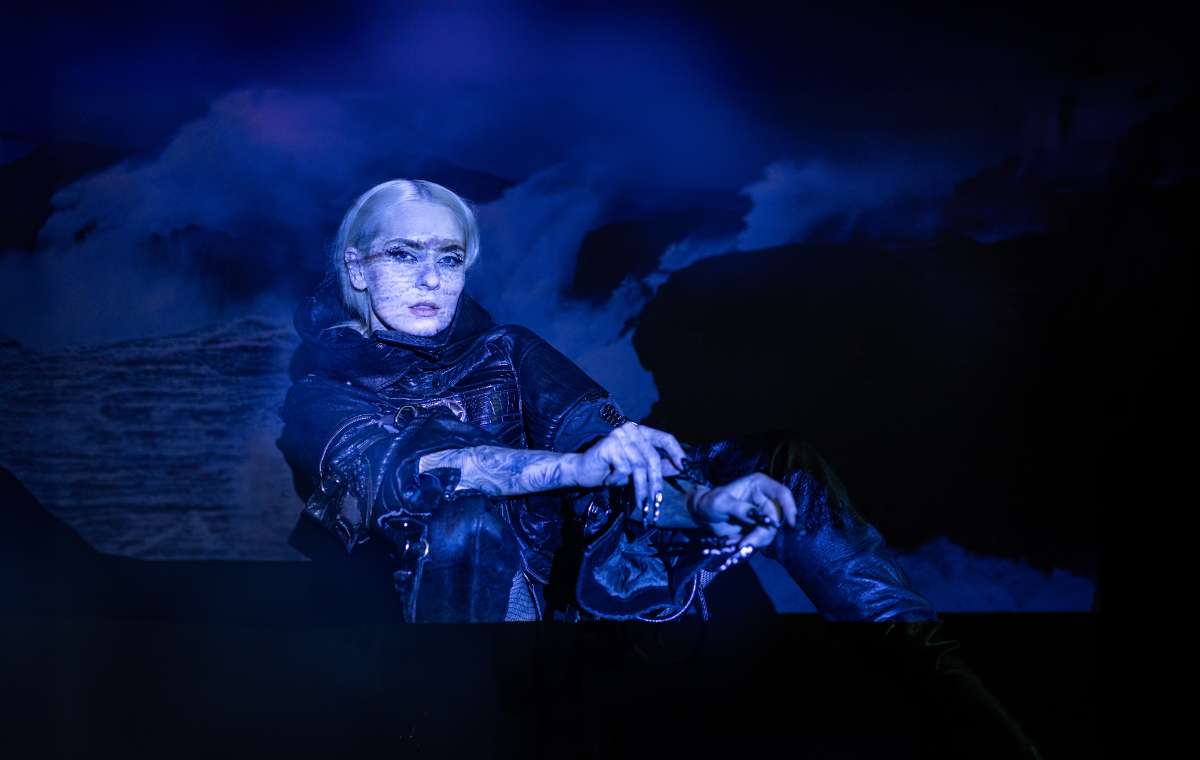
Different When It’s Silent is the first Tricky album in six years, and with good reason.
Since 2020’s Fall to Pieces the musician has released an album, and accompanying self-directed film, under the name Lonely Guest, an all-star 2021 project that included contributions from Oh Land, Marta Złakowska, Idles’ Joe Talbot, Murkage Dave, Maxïmo Park’s Paul Smith and, in one of his final appearances on record, Lee “Scratch” Perry. Three years later came Fifteen Days, a collaborative album from the artist born Adrian Thaws and producer Mike Theis, under the name Theis Thaws. Then, last year, he and Marta released joint album, Out The Way. All of those projects came out via False Idols, the label he founded in 2013. You can’t say Tricky’s not been busy.
But Different When It’s Silent is the first Tricky album in six years with bad reason, too. In 2019 his daughter died suddenly.
“To be honest with you, since my daughter died, I want to work,” Tricky begins, “I want to do stuff. But all the press, being on camera, everything just changed when she died. I’ve never been a pop star as such but: that made me even more want to go in the background.”
Pointing to Fall to Pieces, released the year after her passing, he says that “I was in pieces when I made that album. It was almost like I had to get that out of me. And then after that, I was more worried about Marta’s album or the label. So, I wouldn’t say I was reluctant to release music under my own name. But I wasn’t that interested, to be honest. I didn’t have the motivation. Releasing an album under your name, you got to do certain stuff. I can bring out a side-project with no press, no photographs, no videos, no tour, nothing at all. It’s easy.”
Then, in 2025, Tricky’s new manager Alan McGee heard the songs the Bristolian had been working on at his new home in France and in the studio in Bristol. In Tricky’s mind, this was to be another side-project. “Then Alan come to my house and I played it to him. He goes: ‘Mate, this is a Tricky album. This is the best thing since Maxinquaye. This has got to be a Tricky album.’ It was Alan who convinced me to put it out as a Tricky album.”
About Etran de L’Aïr –
Etran de L’Aïr (or “stars of the Aïr region”) welcomes you to Agadez, the capital city of Saharan rock. Playing for over 25 years, Etran has emerged as stars of the local wedding circuit. Beloved for their dynamic repertoire of hypnotic solos and sun schlazed melodies, Etran stakes out a place for Agadez guitar music. Playing a sound that invokes the desert metropolis, “Agadez” celebrates the sounds of all the dynamism of a hometown wedding.
Etran is a family band composed of brothers and cousins, all born and raised in the small neighborhood of Abalane, just in the shadow of the grand mosque. Sons of nomadic families that settled here in the 1970s fleeing the droughts, they all grew up in Agadez. The band was formed in 1995 when current band leader Moussa “Abindi” Ibra was only 9 years old. “We only had one acoustic guitar,” he explains, “and for percussion, we hit a calabash with a sandal.” Over the decades, the band painstakingly pieced together gear to form their band and built an audience by playing everywhere, for everyone. “It was difficult. We would walk to gigs by foot, lugging all our equipment, carrying a small PA and guitars on our backs, 25 kilometers into the bush, to play for free…there’s nowhere in Agadez we haven’t played.”
From the days of the Trans-Saharan caravan in the 14th century to a modern-day stopover for Europe-bound migrants, Agadez is a city that stands at the crossroads, where people and ideas come together. Understandably, it’s here where one of the most ambitious Tuareg guitar has taken hold. Agadez’s style is the fastest, with frenetic electric guitar solos, staccato crash of full drum kits, and flamboyant dancing guitarists. Agadez is the place where artists come to cut their teeth in a lucrative and competitive winner-take-all scene. Guitar bands are an integral part of the social fabric, playing in weddings, baptisms, and political rallies, as well as the occasional concert.
Whereas other Tuareg guitarists look to Western rock, Etran de L’Aïr play in a pan-African style that is emblematic of their hometown, citing a myriad of cultural influences, from Northern Malian blues, Hausa bar bands, to Congolese Soukous. It’s perhaps this quality that makes them so beloved in Agadez. “We play for the Tuareg, the Toubou, the Zarma, the Hausa,” Abindi explains. “When you invite us, we come and play.” Their music is rooted in celebration, and invokes the exuberance of an Agadez wedding, with an overwhelming abundance of guitars, as simultaneous solos playfully pass over one another with a restrained precision, forceful yet never overindulgent.
Recorded at home in Agadez with a mobile studio, their eponymous album stays close to the band’s roots. Over a handful of takes, in a rapid-fire recording session, “Agadez” retains all the energy of a party. Their message too is always close to home. Tchingolene (“Tradition”) recalls the nomad camps, with a modern take on traditional takamba rhythms transposed to guitars. The dreamy ballad Toubouk Ine Chihoussay (“The Flower of Beauty”) dives into call and response lyrics, and solos that dance effortlessly over the frets. On other tracks like Imouwizla (“Migrants”), Etran addresses immigration with the driving march parallels the nomads’ plight with travelers crossing the desert for Europe. Yet even at its most serious, Etran’s music is engaged and dynamic, reminding us that music can transmit a message while lighting up a celebration. This is music for dancing, after all.
About Etran de L’Aïr –
Etran de L’Aïr (or “stars of the Aïr region”) welcomes you to Agadez, the capital city of Saharan rock. Playing for over 25 years, Etran has emerged as stars of the local wedding circuit. Beloved for their dynamic repertoire of hypnotic solos and sun schlazed melodies, Etran stakes out a place for Agadez guitar music. Playing a sound that invokes the desert metropolis, “Agadez” celebrates the sounds of all the dynamism of a hometown wedding.
Etran is a family band composed of brothers and cousins, all born and raised in the small neighborhood of Abalane, just in the shadow of the grand mosque. Sons of nomadic families that settled here in the 1970s fleeing the droughts, they all grew up in Agadez. The band was formed in 1995 when current band leader Moussa “Abindi” Ibra was only 9 years old. “We only had one acoustic guitar,” he explains, “and for percussion, we hit a calabash with a sandal.” Over the decades, the band painstakingly pieced together gear to form their band and built an audience by playing everywhere, for everyone. “It was difficult. We would walk to gigs by foot, lugging all our equipment, carrying a small PA and guitars on our backs, 25 kilometers into the bush, to play for free…there’s nowhere in Agadez we haven’t played.”
From the days of the Trans-Saharan caravan in the 14th century to a modern-day stopover for Europe-bound migrants, Agadez is a city that stands at the crossroads, where people and ideas come together. Understandably, it’s here where one of the most ambitious Tuareg guitar has taken hold. Agadez’s style is the fastest, with frenetic electric guitar solos, staccato crash of full drum kits, and flamboyant dancing guitarists. Agadez is the place where artists come to cut their teeth in a lucrative and competitive winner-take-all scene. Guitar bands are an integral part of the social fabric, playing in weddings, baptisms, and political rallies, as well as the occasional concert.
Whereas other Tuareg guitarists look to Western rock, Etran de L’Aïr play in a pan-African style that is emblematic of their hometown, citing a myriad of cultural influences, from Northern Malian blues, Hausa bar bands, to Congolese Soukous. It’s perhaps this quality that makes them so beloved in Agadez. “We play for the Tuareg, the Toubou, the Zarma, the Hausa,” Abindi explains. “When you invite us, we come and play.” Their music is rooted in celebration, and invokes the exuberance of an Agadez wedding, with an overwhelming abundance of guitars, as simultaneous solos playfully pass over one another with a restrained precision, forceful yet never overindulgent.
Recorded at home in Agadez with a mobile studio, their eponymous album stays close to the band’s roots. Over a handful of takes, in a rapid-fire recording session, “Agadez” retains all the energy of a party. Their message too is always close to home. Tchingolene (“Tradition”) recalls the nomad camps, with a modern take on traditional takamba rhythms transposed to guitars. The dreamy ballad Toubouk Ine Chihoussay (“The Flower of Beauty”) dives into call and response lyrics, and solos that dance effortlessly over the frets. On other tracks like Imouwizla (“Migrants”), Etran addresses immigration with the driving march parallels the nomads’ plight with travelers crossing the desert for Europe. Yet even at its most serious, Etran’s music is engaged and dynamic, reminding us that music can transmit a message while lighting up a celebration. This is music for dancing, after all.
About Etran de L’Aïr –
Etran de L’Aïr (or “stars of the Aïr region”) welcomes you to Agadez, the capital city of Saharan rock. Playing for over 25 years, Etran has emerged as stars of the local wedding circuit. Beloved for their dynamic repertoire of hypnotic solos and sun schlazed melodies, Etran stakes out a place for Agadez guitar music. Playing a sound that invokes the desert metropolis, “Agadez” celebrates the sounds of all the dynamism of a hometown wedding.
Etran is a family band composed of brothers and cousins, all born and raised in the small neighborhood of Abalane, just in the shadow of the grand mosque. Sons of nomadic families that settled here in the 1970s fleeing the droughts, they all grew up in Agadez. The band was formed in 1995 when current band leader Moussa “Abindi” Ibra was only 9 years old. “We only had one acoustic guitar,” he explains, “and for percussion, we hit a calabash with a sandal.” Over the decades, the band painstakingly pieced together gear to form their band and built an audience by playing everywhere, for everyone. “It was difficult. We would walk to gigs by foot, lugging all our equipment, carrying a small PA and guitars on our backs, 25 kilometers into the bush, to play for free…there’s nowhere in Agadez we haven’t played.”
From the days of the Trans-Saharan caravan in the 14th century to a modern-day stopover for Europe-bound migrants, Agadez is a city that stands at the crossroads, where people and ideas come together. Understandably, it’s here where one of the most ambitious Tuareg guitar has taken hold. Agadez’s style is the fastest, with frenetic electric guitar solos, staccato crash of full drum kits, and flamboyant dancing guitarists. Agadez is the place where artists come to cut their teeth in a lucrative and competitive winner-take-all scene. Guitar bands are an integral part of the social fabric, playing in weddings, baptisms, and political rallies, as well as the occasional concert.
Whereas other Tuareg guitarists look to Western rock, Etran de L’Aïr play in a pan-African style that is emblematic of their hometown, citing a myriad of cultural influences, from Northern Malian blues, Hausa bar bands, to Congolese Soukous. It’s perhaps this quality that makes them so beloved in Agadez. “We play for the Tuareg, the Toubou, the Zarma, the Hausa,” Abindi explains. “When you invite us, we come and play.” Their music is rooted in celebration, and invokes the exuberance of an Agadez wedding, with an overwhelming abundance of guitars, as simultaneous solos playfully pass over one another with a restrained precision, forceful yet never overindulgent.
Recorded at home in Agadez with a mobile studio, their eponymous album stays close to the band’s roots. Over a handful of takes, in a rapid-fire recording session, “Agadez” retains all the energy of a party. Their message too is always close to home. Tchingolene (“Tradition”) recalls the nomad camps, with a modern take on traditional takamba rhythms transposed to guitars. The dreamy ballad Toubouk Ine Chihoussay (“The Flower of Beauty”) dives into call and response lyrics, and solos that dance effortlessly over the frets. On other tracks like Imouwizla (“Migrants”), Etran addresses immigration with the driving march parallels the nomads’ plight with travelers crossing the desert for Europe. Yet even at its most serious, Etran’s music is engaged and dynamic, reminding us that music can transmit a message while lighting up a celebration. This is music for dancing, after all.
About Etran de L’Aïr –
Etran de L’Aïr (or “stars of the Aïr region”) welcomes you to Agadez, the capital city of Saharan rock. Playing for over 25 years, Etran has emerged as stars of the local wedding circuit. Beloved for their dynamic repertoire of hypnotic solos and sun schlazed melodies, Etran stakes out a place for Agadez guitar music. Playing a sound that invokes the desert metropolis, “Agadez” celebrates the sounds of all the dynamism of a hometown wedding.
Etran is a family band composed of brothers and cousins, all born and raised in the small neighborhood of Abalane, just in the shadow of the grand mosque. Sons of nomadic families that settled here in the 1970s fleeing the droughts, they all grew up in Agadez. The band was formed in 1995 when current band leader Moussa “Abindi” Ibra was only 9 years old. “We only had one acoustic guitar,” he explains, “and for percussion, we hit a calabash with a sandal.” Over the decades, the band painstakingly pieced together gear to form their band and built an audience by playing everywhere, for everyone. “It was difficult. We would walk to gigs by foot, lugging all our equipment, carrying a small PA and guitars on our backs, 25 kilometers into the bush, to play for free…there’s nowhere in Agadez we haven’t played.”
From the days of the Trans-Saharan caravan in the 14th century to a modern-day stopover for Europe-bound migrants, Agadez is a city that stands at the crossroads, where people and ideas come together. Understandably, it’s here where one of the most ambitious Tuareg guitar has taken hold. Agadez’s style is the fastest, with frenetic electric guitar solos, staccato crash of full drum kits, and flamboyant dancing guitarists. Agadez is the place where artists come to cut their teeth in a lucrative and competitive winner-take-all scene. Guitar bands are an integral part of the social fabric, playing in weddings, baptisms, and political rallies, as well as the occasional concert.
Whereas other Tuareg guitarists look to Western rock, Etran de L’Aïr play in a pan-African style that is emblematic of their hometown, citing a myriad of cultural influences, from Northern Malian blues, Hausa bar bands, to Congolese Soukous. It’s perhaps this quality that makes them so beloved in Agadez. “We play for the Tuareg, the Toubou, the Zarma, the Hausa,” Abindi explains. “When you invite us, we come and play.” Their music is rooted in celebration, and invokes the exuberance of an Agadez wedding, with an overwhelming abundance of guitars, as simultaneous solos playfully pass over one another with a restrained precision, forceful yet never overindulgent.
Recorded at home in Agadez with a mobile studio, their eponymous album stays close to the band’s roots. Over a handful of takes, in a rapid-fire recording session, “Agadez” retains all the energy of a party. Their message too is always close to home. Tchingolene (“Tradition”) recalls the nomad camps, with a modern take on traditional takamba rhythms transposed to guitars. The dreamy ballad Toubouk Ine Chihoussay (“The Flower of Beauty”) dives into call and response lyrics, and solos that dance effortlessly over the frets. On other tracks like Imouwizla (“Migrants”), Etran addresses immigration with the driving march parallels the nomads’ plight with travelers crossing the desert for Europe. Yet even at its most serious, Etran’s music is engaged and dynamic, reminding us that music can transmit a message while lighting up a celebration. This is music for dancing, after all.
About Etran de L’Aïr –
Etran de L’Aïr (or “stars of the Aïr region”) welcomes you to Agadez, the capital city of Saharan rock. Playing for over 25 years, Etran has emerged as stars of the local wedding circuit. Beloved for their dynamic repertoire of hypnotic solos and sun schlazed melodies, Etran stakes out a place for Agadez guitar music. Playing a sound that invokes the desert metropolis, “Agadez” celebrates the sounds of all the dynamism of a hometown wedding.
Etran is a family band composed of brothers and cousins, all born and raised in the small neighborhood of Abalane, just in the shadow of the grand mosque. Sons of nomadic families that settled here in the 1970s fleeing the droughts, they all grew up in Agadez. The band was formed in 1995 when current band leader Moussa “Abindi” Ibra was only 9 years old. “We only had one acoustic guitar,” he explains, “and for percussion, we hit a calabash with a sandal.” Over the decades, the band painstakingly pieced together gear to form their band and built an audience by playing everywhere, for everyone. “It was difficult. We would walk to gigs by foot, lugging all our equipment, carrying a small PA and guitars on our backs, 25 kilometers into the bush, to play for free…there’s nowhere in Agadez we haven’t played.”
From the days of the Trans-Saharan caravan in the 14th century to a modern-day stopover for Europe-bound migrants, Agadez is a city that stands at the crossroads, where people and ideas come together. Understandably, it’s here where one of the most ambitious Tuareg guitar has taken hold. Agadez’s style is the fastest, with frenetic electric guitar solos, staccato crash of full drum kits, and flamboyant dancing guitarists. Agadez is the place where artists come to cut their teeth in a lucrative and competitive winner-take-all scene. Guitar bands are an integral part of the social fabric, playing in weddings, baptisms, and political rallies, as well as the occasional concert.
Whereas other Tuareg guitarists look to Western rock, Etran de L’Aïr play in a pan-African style that is emblematic of their hometown, citing a myriad of cultural influences, from Northern Malian blues, Hausa bar bands, to Congolese Soukous. It’s perhaps this quality that makes them so beloved in Agadez. “We play for the Tuareg, the Toubou, the Zarma, the Hausa,” Abindi explains. “When you invite us, we come and play.” Their music is rooted in celebration, and invokes the exuberance of an Agadez wedding, with an overwhelming abundance of guitars, as simultaneous solos playfully pass over one another with a restrained precision, forceful yet never overindulgent.
Recorded at home in Agadez with a mobile studio, their eponymous album stays close to the band’s roots. Over a handful of takes, in a rapid-fire recording session, “Agadez” retains all the energy of a party. Their message too is always close to home. Tchingolene (“Tradition”) recalls the nomad camps, with a modern take on traditional takamba rhythms transposed to guitars. The dreamy ballad Toubouk Ine Chihoussay (“The Flower of Beauty”) dives into call and response lyrics, and solos that dance effortlessly over the frets. On other tracks like Imouwizla (“Migrants”), Etran addresses immigration with the driving march parallels the nomads’ plight with travelers crossing the desert for Europe. Yet even at its most serious, Etran’s music is engaged and dynamic, reminding us that music can transmit a message while lighting up a celebration. This is music for dancing, after all.
About Etran de L’Aïr –
Etran de L’Aïr (or “stars of the Aïr region”) welcomes you to Agadez, the capital city of Saharan rock. Playing for over 25 years, Etran has emerged as stars of the local wedding circuit. Beloved for their dynamic repertoire of hypnotic solos and sun schlazed melodies, Etran stakes out a place for Agadez guitar music. Playing a sound that invokes the desert metropolis, “Agadez” celebrates the sounds of all the dynamism of a hometown wedding.
Etran is a family band composed of brothers and cousins, all born and raised in the small neighborhood of Abalane, just in the shadow of the grand mosque. Sons of nomadic families that settled here in the 1970s fleeing the droughts, they all grew up in Agadez. The band was formed in 1995 when current band leader Moussa “Abindi” Ibra was only 9 years old. “We only had one acoustic guitar,” he explains, “and for percussion, we hit a calabash with a sandal.” Over the decades, the band painstakingly pieced together gear to form their band and built an audience by playing everywhere, for everyone. “It was difficult. We would walk to gigs by foot, lugging all our equipment, carrying a small PA and guitars on our backs, 25 kilometers into the bush, to play for free…there’s nowhere in Agadez we haven’t played.”
From the days of the Trans-Saharan caravan in the 14th century to a modern-day stopover for Europe-bound migrants, Agadez is a city that stands at the crossroads, where people and ideas come together. Understandably, it’s here where one of the most ambitious Tuareg guitar has taken hold. Agadez’s style is the fastest, with frenetic electric guitar solos, staccato crash of full drum kits, and flamboyant dancing guitarists. Agadez is the place where artists come to cut their teeth in a lucrative and competitive winner-take-all scene. Guitar bands are an integral part of the social fabric, playing in weddings, baptisms, and political rallies, as well as the occasional concert.
Whereas other Tuareg guitarists look to Western rock, Etran de L’Aïr play in a pan-African style that is emblematic of their hometown, citing a myriad of cultural influences, from Northern Malian blues, Hausa bar bands, to Congolese Soukous. It’s perhaps this quality that makes them so beloved in Agadez. “We play for the Tuareg, the Toubou, the Zarma, the Hausa,” Abindi explains. “When you invite us, we come and play.” Their music is rooted in celebration, and invokes the exuberance of an Agadez wedding, with an overwhelming abundance of guitars, as simultaneous solos playfully pass over one another with a restrained precision, forceful yet never overindulgent.
Recorded at home in Agadez with a mobile studio, their eponymous album stays close to the band’s roots. Over a handful of takes, in a rapid-fire recording session, “Agadez” retains all the energy of a party. Their message too is always close to home. Tchingolene (“Tradition”) recalls the nomad camps, with a modern take on traditional takamba rhythms transposed to guitars. The dreamy ballad Toubouk Ine Chihoussay (“The Flower of Beauty”) dives into call and response lyrics, and solos that dance effortlessly over the frets. On other tracks like Imouwizla (“Migrants”), Etran addresses immigration with the driving march parallels the nomads’ plight with travelers crossing the desert for Europe. Yet even at its most serious, Etran’s music is engaged and dynamic, reminding us that music can transmit a message while lighting up a celebration. This is music for dancing, after all.
About Etran de L’Aïr –
Etran de L’Aïr (or “stars of the Aïr region”) welcomes you to Agadez, the capital city of Saharan rock. Playing for over 25 years, Etran has emerged as stars of the local wedding circuit. Beloved for their dynamic repertoire of hypnotic solos and sun schlazed melodies, Etran stakes out a place for Agadez guitar music. Playing a sound that invokes the desert metropolis, “Agadez” celebrates the sounds of all the dynamism of a hometown wedding.
Etran is a family band composed of brothers and cousins, all born and raised in the small neighborhood of Abalane, just in the shadow of the grand mosque. Sons of nomadic families that settled here in the 1970s fleeing the droughts, they all grew up in Agadez. The band was formed in 1995 when current band leader Moussa “Abindi” Ibra was only 9 years old. “We only had one acoustic guitar,” he explains, “and for percussion, we hit a calabash with a sandal.” Over the decades, the band painstakingly pieced together gear to form their band and built an audience by playing everywhere, for everyone. “It was difficult. We would walk to gigs by foot, lugging all our equipment, carrying a small PA and guitars on our backs, 25 kilometers into the bush, to play for free…there’s nowhere in Agadez we haven’t played.”
From the days of the Trans-Saharan caravan in the 14th century to a modern-day stopover for Europe-bound migrants, Agadez is a city that stands at the crossroads, where people and ideas come together. Understandably, it’s here where one of the most ambitious Tuareg guitar has taken hold. Agadez’s style is the fastest, with frenetic electric guitar solos, staccato crash of full drum kits, and flamboyant dancing guitarists. Agadez is the place where artists come to cut their teeth in a lucrative and competitive winner-take-all scene. Guitar bands are an integral part of the social fabric, playing in weddings, baptisms, and political rallies, as well as the occasional concert.
Whereas other Tuareg guitarists look to Western rock, Etran de L’Aïr play in a pan-African style that is emblematic of their hometown, citing a myriad of cultural influences, from Northern Malian blues, Hausa bar bands, to Congolese Soukous. It’s perhaps this quality that makes them so beloved in Agadez. “We play for the Tuareg, the Toubou, the Zarma, the Hausa,” Abindi explains. “When you invite us, we come and play.” Their music is rooted in celebration, and invokes the exuberance of an Agadez wedding, with an overwhelming abundance of guitars, as simultaneous solos playfully pass over one another with a restrained precision, forceful yet never overindulgent.
Recorded at home in Agadez with a mobile studio, their eponymous album stays close to the band’s roots. Over a handful of takes, in a rapid-fire recording session, “Agadez” retains all the energy of a party. Their message too is always close to home. Tchingolene (“Tradition”) recalls the nomad camps, with a modern take on traditional takamba rhythms transposed to guitars. The dreamy ballad Toubouk Ine Chihoussay (“The Flower of Beauty”) dives into call and response lyrics, and solos that dance effortlessly over the frets. On other tracks like Imouwizla (“Migrants”), Etran addresses immigration with the driving march parallels the nomads’ plight with travelers crossing the desert for Europe. Yet even at its most serious, Etran’s music is engaged and dynamic, reminding us that music can transmit a message while lighting up a celebration. This is music for dancing, after all.
About Etran de L’Aïr –
Etran de L’Aïr (or “stars of the Aïr region”) welcomes you to Agadez, the capital city of Saharan rock. Playing for over 25 years, Etran has emerged as stars of the local wedding circuit. Beloved for their dynamic repertoire of hypnotic solos and sun schlazed melodies, Etran stakes out a place for Agadez guitar music. Playing a sound that invokes the desert metropolis, “Agadez” celebrates the sounds of all the dynamism of a hometown wedding.
Etran is a family band composed of brothers and cousins, all born and raised in the small neighborhood of Abalane, just in the shadow of the grand mosque. Sons of nomadic families that settled here in the 1970s fleeing the droughts, they all grew up in Agadez. The band was formed in 1995 when current band leader Moussa “Abindi” Ibra was only 9 years old. “We only had one acoustic guitar,” he explains, “and for percussion, we hit a calabash with a sandal.” Over the decades, the band painstakingly pieced together gear to form their band and built an audience by playing everywhere, for everyone. “It was difficult. We would walk to gigs by foot, lugging all our equipment, carrying a small PA and guitars on our backs, 25 kilometers into the bush, to play for free…there’s nowhere in Agadez we haven’t played.”
From the days of the Trans-Saharan caravan in the 14th century to a modern-day stopover for Europe-bound migrants, Agadez is a city that stands at the crossroads, where people and ideas come together. Understandably, it’s here where one of the most ambitious Tuareg guitar has taken hold. Agadez’s style is the fastest, with frenetic electric guitar solos, staccato crash of full drum kits, and flamboyant dancing guitarists. Agadez is the place where artists come to cut their teeth in a lucrative and competitive winner-take-all scene. Guitar bands are an integral part of the social fabric, playing in weddings, baptisms, and political rallies, as well as the occasional concert.
Whereas other Tuareg guitarists look to Western rock, Etran de L’Aïr play in a pan-African style that is emblematic of their hometown, citing a myriad of cultural influences, from Northern Malian blues, Hausa bar bands, to Congolese Soukous. It’s perhaps this quality that makes them so beloved in Agadez. “We play for the Tuareg, the Toubou, the Zarma, the Hausa,” Abindi explains. “When you invite us, we come and play.” Their music is rooted in celebration, and invokes the exuberance of an Agadez wedding, with an overwhelming abundance of guitars, as simultaneous solos playfully pass over one another with a restrained precision, forceful yet never overindulgent.
Recorded at home in Agadez with a mobile studio, their eponymous album stays close to the band’s roots. Over a handful of takes, in a rapid-fire recording session, “Agadez” retains all the energy of a party. Their message too is always close to home. Tchingolene (“Tradition”) recalls the nomad camps, with a modern take on traditional takamba rhythms transposed to guitars. The dreamy ballad Toubouk Ine Chihoussay (“The Flower of Beauty”) dives into call and response lyrics, and solos that dance effortlessly over the frets. On other tracks like Imouwizla (“Migrants”), Etran addresses immigration with the driving march parallels the nomads’ plight with travelers crossing the desert for Europe. Yet even at its most serious, Etran’s music is engaged and dynamic, reminding us that music can transmit a message while lighting up a celebration. This is music for dancing, after all.
About Etran de L’Aïr –
Etran de L’Aïr (or “stars of the Aïr region”) welcomes you to Agadez, the capital city of Saharan rock. Playing for over 25 years, Etran has emerged as stars of the local wedding circuit. Beloved for their dynamic repertoire of hypnotic solos and sun schlazed melodies, Etran stakes out a place for Agadez guitar music. Playing a sound that invokes the desert metropolis, “Agadez” celebrates the sounds of all the dynamism of a hometown wedding.
Etran is a family band composed of brothers and cousins, all born and raised in the small neighborhood of Abalane, just in the shadow of the grand mosque. Sons of nomadic families that settled here in the 1970s fleeing the droughts, they all grew up in Agadez. The band was formed in 1995 when current band leader Moussa “Abindi” Ibra was only 9 years old. “We only had one acoustic guitar,” he explains, “and for percussion, we hit a calabash with a sandal.” Over the decades, the band painstakingly pieced together gear to form their band and built an audience by playing everywhere, for everyone. “It was difficult. We would walk to gigs by foot, lugging all our equipment, carrying a small PA and guitars on our backs, 25 kilometers into the bush, to play for free…there’s nowhere in Agadez we haven’t played.”
From the days of the Trans-Saharan caravan in the 14th century to a modern-day stopover for Europe-bound migrants, Agadez is a city that stands at the crossroads, where people and ideas come together. Understandably, it’s here where one of the most ambitious Tuareg guitar has taken hold. Agadez’s style is the fastest, with frenetic electric guitar solos, staccato crash of full drum kits, and flamboyant dancing guitarists. Agadez is the place where artists come to cut their teeth in a lucrative and competitive winner-take-all scene. Guitar bands are an integral part of the social fabric, playing in weddings, baptisms, and political rallies, as well as the occasional concert.
Whereas other Tuareg guitarists look to Western rock, Etran de L’Aïr play in a pan-African style that is emblematic of their hometown, citing a myriad of cultural influences, from Northern Malian blues, Hausa bar bands, to Congolese Soukous. It’s perhaps this quality that makes them so beloved in Agadez. “We play for the Tuareg, the Toubou, the Zarma, the Hausa,” Abindi explains. “When you invite us, we come and play.” Their music is rooted in celebration, and invokes the exuberance of an Agadez wedding, with an overwhelming abundance of guitars, as simultaneous solos playfully pass over one another with a restrained precision, forceful yet never overindulgent.
Recorded at home in Agadez with a mobile studio, their eponymous album stays close to the band’s roots. Over a handful of takes, in a rapid-fire recording session, “Agadez” retains all the energy of a party. Their message too is always close to home. Tchingolene (“Tradition”) recalls the nomad camps, with a modern take on traditional takamba rhythms transposed to guitars. The dreamy ballad Toubouk Ine Chihoussay (“The Flower of Beauty”) dives into call and response lyrics, and solos that dance effortlessly over the frets. On other tracks like Imouwizla (“Migrants”), Etran addresses immigration with the driving march parallels the nomads’ plight with travelers crossing the desert for Europe. Yet even at its most serious, Etran’s music is engaged and dynamic, reminding us that music can transmit a message while lighting up a celebration. This is music for dancing, after all.
About Etran de L’Aïr –
Etran de L’Aïr (or “stars of the Aïr region”) welcomes you to Agadez, the capital city of Saharan rock. Playing for over 25 years, Etran has emerged as stars of the local wedding circuit. Beloved for their dynamic repertoire of hypnotic solos and sun schlazed melodies, Etran stakes out a place for Agadez guitar music. Playing a sound that invokes the desert metropolis, “Agadez” celebrates the sounds of all the dynamism of a hometown wedding.
Etran is a family band composed of brothers and cousins, all born and raised in the small neighborhood of Abalane, just in the shadow of the grand mosque. Sons of nomadic families that settled here in the 1970s fleeing the droughts, they all grew up in Agadez. The band was formed in 1995 when current band leader Moussa “Abindi” Ibra was only 9 years old. “We only had one acoustic guitar,” he explains, “and for percussion, we hit a calabash with a sandal.” Over the decades, the band painstakingly pieced together gear to form their band and built an audience by playing everywhere, for everyone. “It was difficult. We would walk to gigs by foot, lugging all our equipment, carrying a small PA and guitars on our backs, 25 kilometers into the bush, to play for free…there’s nowhere in Agadez we haven’t played.”
From the days of the Trans-Saharan caravan in the 14th century to a modern-day stopover for Europe-bound migrants, Agadez is a city that stands at the crossroads, where people and ideas come together. Understandably, it’s here where one of the most ambitious Tuareg guitar has taken hold. Agadez’s style is the fastest, with frenetic electric guitar solos, staccato crash of full drum kits, and flamboyant dancing guitarists. Agadez is the place where artists come to cut their teeth in a lucrative and competitive winner-take-all scene. Guitar bands are an integral part of the social fabric, playing in weddings, baptisms, and political rallies, as well as the occasional concert.
Whereas other Tuareg guitarists look to Western rock, Etran de L’Aïr play in a pan-African style that is emblematic of their hometown, citing a myriad of cultural influences, from Northern Malian blues, Hausa bar bands, to Congolese Soukous. It’s perhaps this quality that makes them so beloved in Agadez. “We play for the Tuareg, the Toubou, the Zarma, the Hausa,” Abindi explains. “When you invite us, we come and play.” Their music is rooted in celebration, and invokes the exuberance of an Agadez wedding, with an overwhelming abundance of guitars, as simultaneous solos playfully pass over one another with a restrained precision, forceful yet never overindulgent.
Recorded at home in Agadez with a mobile studio, their eponymous album stays close to the band’s roots. Over a handful of takes, in a rapid-fire recording session, “Agadez” retains all the energy of a party. Their message too is always close to home. Tchingolene (“Tradition”) recalls the nomad camps, with a modern take on traditional takamba rhythms transposed to guitars. The dreamy ballad Toubouk Ine Chihoussay (“The Flower of Beauty”) dives into call and response lyrics, and solos that dance effortlessly over the frets. On other tracks like Imouwizla (“Migrants”), Etran addresses immigration with the driving march parallels the nomads’ plight with travelers crossing the desert for Europe. Yet even at its most serious, Etran’s music is engaged and dynamic, reminding us that music can transmit a message while lighting up a celebration. This is music for dancing, after all.
About Etran de L’Aïr –
Etran de L’Aïr (or “stars of the Aïr region”) welcomes you to Agadez, the capital city of Saharan rock. Playing for over 25 years, Etran has emerged as stars of the local wedding circuit. Beloved for their dynamic repertoire of hypnotic solos and sun schlazed melodies, Etran stakes out a place for Agadez guitar music. Playing a sound that invokes the desert metropolis, “Agadez” celebrates the sounds of all the dynamism of a hometown wedding.
Etran is a family band composed of brothers and cousins, all born and raised in the small neighborhood of Abalane, just in the shadow of the grand mosque. Sons of nomadic families that settled here in the 1970s fleeing the droughts, they all grew up in Agadez. The band was formed in 1995 when current band leader Moussa “Abindi” Ibra was only 9 years old. “We only had one acoustic guitar,” he explains, “and for percussion, we hit a calabash with a sandal.” Over the decades, the band painstakingly pieced together gear to form their band and built an audience by playing everywhere, for everyone. “It was difficult. We would walk to gigs by foot, lugging all our equipment, carrying a small PA and guitars on our backs, 25 kilometers into the bush, to play for free…there’s nowhere in Agadez we haven’t played.”
From the days of the Trans-Saharan caravan in the 14th century to a modern-day stopover for Europe-bound migrants, Agadez is a city that stands at the crossroads, where people and ideas come together. Understandably, it’s here where one of the most ambitious Tuareg guitar has taken hold. Agadez’s style is the fastest, with frenetic electric guitar solos, staccato crash of full drum kits, and flamboyant dancing guitarists. Agadez is the place where artists come to cut their teeth in a lucrative and competitive winner-take-all scene. Guitar bands are an integral part of the social fabric, playing in weddings, baptisms, and political rallies, as well as the occasional concert.
Whereas other Tuareg guitarists look to Western rock, Etran de L’Aïr play in a pan-African style that is emblematic of their hometown, citing a myriad of cultural influences, from Northern Malian blues, Hausa bar bands, to Congolese Soukous. It’s perhaps this quality that makes them so beloved in Agadez. “We play for the Tuareg, the Toubou, the Zarma, the Hausa,” Abindi explains. “When you invite us, we come and play.” Their music is rooted in celebration, and invokes the exuberance of an Agadez wedding, with an overwhelming abundance of guitars, as simultaneous solos playfully pass over one another with a restrained precision, forceful yet never overindulgent.
Recorded at home in Agadez with a mobile studio, their eponymous album stays close to the band’s roots. Over a handful of takes, in a rapid-fire recording session, “Agadez” retains all the energy of a party. Their message too is always close to home. Tchingolene (“Tradition”) recalls the nomad camps, with a modern take on traditional takamba rhythms transposed to guitars. The dreamy ballad Toubouk Ine Chihoussay (“The Flower of Beauty”) dives into call and response lyrics, and solos that dance effortlessly over the frets. On other tracks like Imouwizla (“Migrants”), Etran addresses immigration with the driving march parallels the nomads’ plight with travelers crossing the desert for Europe. Yet even at its most serious, Etran’s music is engaged and dynamic, reminding us that music can transmit a message while lighting up a celebration. This is music for dancing, after all.
About Etran de L’Aïr –
Etran de L’Aïr (or “stars of the Aïr region”) welcomes you to Agadez, the capital city of Saharan rock. Playing for over 25 years, Etran has emerged as stars of the local wedding circuit. Beloved for their dynamic repertoire of hypnotic solos and sun schlazed melodies, Etran stakes out a place for Agadez guitar music. Playing a sound that invokes the desert metropolis, “Agadez” celebrates the sounds of all the dynamism of a hometown wedding.
Etran is a family band composed of brothers and cousins, all born and raised in the small neighborhood of Abalane, just in the shadow of the grand mosque. Sons of nomadic families that settled here in the 1970s fleeing the droughts, they all grew up in Agadez. The band was formed in 1995 when current band leader Moussa “Abindi” Ibra was only 9 years old. “We only had one acoustic guitar,” he explains, “and for percussion, we hit a calabash with a sandal.” Over the decades, the band painstakingly pieced together gear to form their band and built an audience by playing everywhere, for everyone. “It was difficult. We would walk to gigs by foot, lugging all our equipment, carrying a small PA and guitars on our backs, 25 kilometers into the bush, to play for free…there’s nowhere in Agadez we haven’t played.”
From the days of the Trans-Saharan caravan in the 14th century to a modern-day stopover for Europe-bound migrants, Agadez is a city that stands at the crossroads, where people and ideas come together. Understandably, it’s here where one of the most ambitious Tuareg guitar has taken hold. Agadez’s style is the fastest, with frenetic electric guitar solos, staccato crash of full drum kits, and flamboyant dancing guitarists. Agadez is the place where artists come to cut their teeth in a lucrative and competitive winner-take-all scene. Guitar bands are an integral part of the social fabric, playing in weddings, baptisms, and political rallies, as well as the occasional concert.
Whereas other Tuareg guitarists look to Western rock, Etran de L’Aïr play in a pan-African style that is emblematic of their hometown, citing a myriad of cultural influences, from Northern Malian blues, Hausa bar bands, to Congolese Soukous. It’s perhaps this quality that makes them so beloved in Agadez. “We play for the Tuareg, the Toubou, the Zarma, the Hausa,” Abindi explains. “When you invite us, we come and play.” Their music is rooted in celebration, and invokes the exuberance of an Agadez wedding, with an overwhelming abundance of guitars, as simultaneous solos playfully pass over one another with a restrained precision, forceful yet never overindulgent.
Recorded at home in Agadez with a mobile studio, their eponymous album stays close to the band’s roots. Over a handful of takes, in a rapid-fire recording session, “Agadez” retains all the energy of a party. Their message too is always close to home. Tchingolene (“Tradition”) recalls the nomad camps, with a modern take on traditional takamba rhythms transposed to guitars. The dreamy ballad Toubouk Ine Chihoussay (“The Flower of Beauty”) dives into call and response lyrics, and solos that dance effortlessly over the frets. On other tracks like Imouwizla (“Migrants”), Etran addresses immigration with the driving march parallels the nomads’ plight with travelers crossing the desert for Europe. Yet even at its most serious, Etran’s music is engaged and dynamic, reminding us that music can transmit a message while lighting up a celebration. This is music for dancing, after all.
About Etran de L’Aïr –
Etran de L’Aïr (or “stars of the Aïr region”) welcomes you to Agadez, the capital city of Saharan rock. Playing for over 25 years, Etran has emerged as stars of the local wedding circuit. Beloved for their dynamic repertoire of hypnotic solos and sun schlazed melodies, Etran stakes out a place for Agadez guitar music. Playing a sound that invokes the desert metropolis, “Agadez” celebrates the sounds of all the dynamism of a hometown wedding.
Etran is a family band composed of brothers and cousins, all born and raised in the small neighborhood of Abalane, just in the shadow of the grand mosque. Sons of nomadic families that settled here in the 1970s fleeing the droughts, they all grew up in Agadez. The band was formed in 1995 when current band leader Moussa “Abindi” Ibra was only 9 years old. “We only had one acoustic guitar,” he explains, “and for percussion, we hit a calabash with a sandal.” Over the decades, the band painstakingly pieced together gear to form their band and built an audience by playing everywhere, for everyone. “It was difficult. We would walk to gigs by foot, lugging all our equipment, carrying a small PA and guitars on our backs, 25 kilometers into the bush, to play for free…there’s nowhere in Agadez we haven’t played.”
From the days of the Trans-Saharan caravan in the 14th century to a modern-day stopover for Europe-bound migrants, Agadez is a city that stands at the crossroads, where people and ideas come together. Understandably, it’s here where one of the most ambitious Tuareg guitar has taken hold. Agadez’s style is the fastest, with frenetic electric guitar solos, staccato crash of full drum kits, and flamboyant dancing guitarists. Agadez is the place where artists come to cut their teeth in a lucrative and competitive winner-take-all scene. Guitar bands are an integral part of the social fabric, playing in weddings, baptisms, and political rallies, as well as the occasional concert.
Whereas other Tuareg guitarists look to Western rock, Etran de L’Aïr play in a pan-African style that is emblematic of their hometown, citing a myriad of cultural influences, from Northern Malian blues, Hausa bar bands, to Congolese Soukous. It’s perhaps this quality that makes them so beloved in Agadez. “We play for the Tuareg, the Toubou, the Zarma, the Hausa,” Abindi explains. “When you invite us, we come and play.” Their music is rooted in celebration, and invokes the exuberance of an Agadez wedding, with an overwhelming abundance of guitars, as simultaneous solos playfully pass over one another with a restrained precision, forceful yet never overindulgent.
Recorded at home in Agadez with a mobile studio, their eponymous album stays close to the band’s roots. Over a handful of takes, in a rapid-fire recording session, “Agadez” retains all the energy of a party. Their message too is always close to home. Tchingolene (“Tradition”) recalls the nomad camps, with a modern take on traditional takamba rhythms transposed to guitars. The dreamy ballad Toubouk Ine Chihoussay (“The Flower of Beauty”) dives into call and response lyrics, and solos that dance effortlessly over the frets. On other tracks like Imouwizla (“Migrants”), Etran addresses immigration with the driving march parallels the nomads’ plight with travelers crossing the desert for Europe. Yet even at its most serious, Etran’s music is engaged and dynamic, reminding us that music can transmit a message while lighting up a celebration. This is music for dancing, after all.
About Etran de L’Aïr –
Etran de L’Aïr (or “stars of the Aïr region”) welcomes you to Agadez, the capital city of Saharan rock. Playing for over 25 years, Etran has emerged as stars of the local wedding circuit. Beloved for their dynamic repertoire of hypnotic solos and sun schlazed melodies, Etran stakes out a place for Agadez guitar music. Playing a sound that invokes the desert metropolis, “Agadez” celebrates the sounds of all the dynamism of a hometown wedding.
Etran is a family band composed of brothers and cousins, all born and raised in the small neighborhood of Abalane, just in the shadow of the grand mosque. Sons of nomadic families that settled here in the 1970s fleeing the droughts, they all grew up in Agadez. The band was formed in 1995 when current band leader Moussa “Abindi” Ibra was only 9 years old. “We only had one acoustic guitar,” he explains, “and for percussion, we hit a calabash with a sandal.” Over the decades, the band painstakingly pieced together gear to form their band and built an audience by playing everywhere, for everyone. “It was difficult. We would walk to gigs by foot, lugging all our equipment, carrying a small PA and guitars on our backs, 25 kilometers into the bush, to play for free…there’s nowhere in Agadez we haven’t played.”
From the days of the Trans-Saharan caravan in the 14th century to a modern-day stopover for Europe-bound migrants, Agadez is a city that stands at the crossroads, where people and ideas come together. Understandably, it’s here where one of the most ambitious Tuareg guitar has taken hold. Agadez’s style is the fastest, with frenetic electric guitar solos, staccato crash of full drum kits, and flamboyant dancing guitarists. Agadez is the place where artists come to cut their teeth in a lucrative and competitive winner-take-all scene. Guitar bands are an integral part of the social fabric, playing in weddings, baptisms, and political rallies, as well as the occasional concert.
Whereas other Tuareg guitarists look to Western rock, Etran de L’Aïr play in a pan-African style that is emblematic of their hometown, citing a myriad of cultural influences, from Northern Malian blues, Hausa bar bands, to Congolese Soukous. It’s perhaps this quality that makes them so beloved in Agadez. “We play for the Tuareg, the Toubou, the Zarma, the Hausa,” Abindi explains. “When you invite us, we come and play.” Their music is rooted in celebration, and invokes the exuberance of an Agadez wedding, with an overwhelming abundance of guitars, as simultaneous solos playfully pass over one another with a restrained precision, forceful yet never overindulgent.
Recorded at home in Agadez with a mobile studio, their eponymous album stays close to the band’s roots. Over a handful of takes, in a rapid-fire recording session, “Agadez” retains all the energy of a party. Their message too is always close to home. Tchingolene (“Tradition”) recalls the nomad camps, with a modern take on traditional takamba rhythms transposed to guitars. The dreamy ballad Toubouk Ine Chihoussay (“The Flower of Beauty”) dives into call and response lyrics, and solos that dance effortlessly over the frets. On other tracks like Imouwizla (“Migrants”), Etran addresses immigration with the driving march parallels the nomads’ plight with travelers crossing the desert for Europe. Yet even at its most serious, Etran’s music is engaged and dynamic, reminding us that music can transmit a message while lighting up a celebration. This is music for dancing, after all.
About Etran de L’Aïr –
Etran de L’Aïr (or “stars of the Aïr region”) welcomes you to Agadez, the capital city of Saharan rock. Playing for over 25 years, Etran has emerged as stars of the local wedding circuit. Beloved for their dynamic repertoire of hypnotic solos and sun schlazed melodies, Etran stakes out a place for Agadez guitar music. Playing a sound that invokes the desert metropolis, “Agadez” celebrates the sounds of all the dynamism of a hometown wedding.
Etran is a family band composed of brothers and cousins, all born and raised in the small neighborhood of Abalane, just in the shadow of the grand mosque. Sons of nomadic families that settled here in the 1970s fleeing the droughts, they all grew up in Agadez. The band was formed in 1995 when current band leader Moussa “Abindi” Ibra was only 9 years old. “We only had one acoustic guitar,” he explains, “and for percussion, we hit a calabash with a sandal.” Over the decades, the band painstakingly pieced together gear to form their band and built an audience by playing everywhere, for everyone. “It was difficult. We would walk to gigs by foot, lugging all our equipment, carrying a small PA and guitars on our backs, 25 kilometers into the bush, to play for free…there’s nowhere in Agadez we haven’t played.”
From the days of the Trans-Saharan caravan in the 14th century to a modern-day stopover for Europe-bound migrants, Agadez is a city that stands at the crossroads, where people and ideas come together. Understandably, it’s here where one of the most ambitious Tuareg guitar has taken hold. Agadez’s style is the fastest, with frenetic electric guitar solos, staccato crash of full drum kits, and flamboyant dancing guitarists. Agadez is the place where artists come to cut their teeth in a lucrative and competitive winner-take-all scene. Guitar bands are an integral part of the social fabric, playing in weddings, baptisms, and political rallies, as well as the occasional concert.
Whereas other Tuareg guitarists look to Western rock, Etran de L’Aïr play in a pan-African style that is emblematic of their hometown, citing a myriad of cultural influences, from Northern Malian blues, Hausa bar bands, to Congolese Soukous. It’s perhaps this quality that makes them so beloved in Agadez. “We play for the Tuareg, the Toubou, the Zarma, the Hausa,” Abindi explains. “When you invite us, we come and play.” Their music is rooted in celebration, and invokes the exuberance of an Agadez wedding, with an overwhelming abundance of guitars, as simultaneous solos playfully pass over one another with a restrained precision, forceful yet never overindulgent.
Recorded at home in Agadez with a mobile studio, their eponymous album stays close to the band’s roots. Over a handful of takes, in a rapid-fire recording session, “Agadez” retains all the energy of a party. Their message too is always close to home. Tchingolene (“Tradition”) recalls the nomad camps, with a modern take on traditional takamba rhythms transposed to guitars. The dreamy ballad Toubouk Ine Chihoussay (“The Flower of Beauty”) dives into call and response lyrics, and solos that dance effortlessly over the frets. On other tracks like Imouwizla (“Migrants”), Etran addresses immigration with the driving march parallels the nomads’ plight with travelers crossing the desert for Europe. Yet even at its most serious, Etran’s music is engaged and dynamic, reminding us that music can transmit a message while lighting up a celebration. This is music for dancing, after all.
About Etran de L’Aïr –
Etran de L’Aïr (or “stars of the Aïr region”) welcomes you to Agadez, the capital city of Saharan rock. Playing for over 25 years, Etran has emerged as stars of the local wedding circuit. Beloved for their dynamic repertoire of hypnotic solos and sun schlazed melodies, Etran stakes out a place for Agadez guitar music. Playing a sound that invokes the desert metropolis, “Agadez” celebrates the sounds of all the dynamism of a hometown wedding.
Etran is a family band composed of brothers and cousins, all born and raised in the small neighborhood of Abalane, just in the shadow of the grand mosque. Sons of nomadic families that settled here in the 1970s fleeing the droughts, they all grew up in Agadez. The band was formed in 1995 when current band leader Moussa “Abindi” Ibra was only 9 years old. “We only had one acoustic guitar,” he explains, “and for percussion, we hit a calabash with a sandal.” Over the decades, the band painstakingly pieced together gear to form their band and built an audience by playing everywhere, for everyone. “It was difficult. We would walk to gigs by foot, lugging all our equipment, carrying a small PA and guitars on our backs, 25 kilometers into the bush, to play for free…there’s nowhere in Agadez we haven’t played.”
From the days of the Trans-Saharan caravan in the 14th century to a modern-day stopover for Europe-bound migrants, Agadez is a city that stands at the crossroads, where people and ideas come together. Understandably, it’s here where one of the most ambitious Tuareg guitar has taken hold. Agadez’s style is the fastest, with frenetic electric guitar solos, staccato crash of full drum kits, and flamboyant dancing guitarists. Agadez is the place where artists come to cut their teeth in a lucrative and competitive winner-take-all scene. Guitar bands are an integral part of the social fabric, playing in weddings, baptisms, and political rallies, as well as the occasional concert.
Whereas other Tuareg guitarists look to Western rock, Etran de L’Aïr play in a pan-African style that is emblematic of their hometown, citing a myriad of cultural influences, from Northern Malian blues, Hausa bar bands, to Congolese Soukous. It’s perhaps this quality that makes them so beloved in Agadez. “We play for the Tuareg, the Toubou, the Zarma, the Hausa,” Abindi explains. “When you invite us, we come and play.” Their music is rooted in celebration, and invokes the exuberance of an Agadez wedding, with an overwhelming abundance of guitars, as simultaneous solos playfully pass over one another with a restrained precision, forceful yet never overindulgent.
Recorded at home in Agadez with a mobile studio, their eponymous album stays close to the band’s roots. Over a handful of takes, in a rapid-fire recording session, “Agadez” retains all the energy of a party. Their message too is always close to home. Tchingolene (“Tradition”) recalls the nomad camps, with a modern take on traditional takamba rhythms transposed to guitars. The dreamy ballad Toubouk Ine Chihoussay (“The Flower of Beauty”) dives into call and response lyrics, and solos that dance effortlessly over the frets. On other tracks like Imouwizla (“Migrants”), Etran addresses immigration with the driving march parallels the nomads’ plight with travelers crossing the desert for Europe. Yet even at its most serious, Etran’s music is engaged and dynamic, reminding us that music can transmit a message while lighting up a celebration. This is music for dancing, after all.
About Etran de L’Aïr –
Etran de L’Aïr (or “stars of the Aïr region”) welcomes you to Agadez, the capital city of Saharan rock. Playing for over 25 years, Etran has emerged as stars of the local wedding circuit. Beloved for their dynamic repertoire of hypnotic solos and sun schlazed melodies, Etran stakes out a place for Agadez guitar music. Playing a sound that invokes the desert metropolis, “Agadez” celebrates the sounds of all the dynamism of a hometown wedding.
Etran is a family band composed of brothers and cousins, all born and raised in the small neighborhood of Abalane, just in the shadow of the grand mosque. Sons of nomadic families that settled here in the 1970s fleeing the droughts, they all grew up in Agadez. The band was formed in 1995 when current band leader Moussa “Abindi” Ibra was only 9 years old. “We only had one acoustic guitar,” he explains, “and for percussion, we hit a calabash with a sandal.” Over the decades, the band painstakingly pieced together gear to form their band and built an audience by playing everywhere, for everyone. “It was difficult. We would walk to gigs by foot, lugging all our equipment, carrying a small PA and guitars on our backs, 25 kilometers into the bush, to play for free…there’s nowhere in Agadez we haven’t played.”
From the days of the Trans-Saharan caravan in the 14th century to a modern-day stopover for Europe-bound migrants, Agadez is a city that stands at the crossroads, where people and ideas come together. Understandably, it’s here where one of the most ambitious Tuareg guitar has taken hold. Agadez’s style is the fastest, with frenetic electric guitar solos, staccato crash of full drum kits, and flamboyant dancing guitarists. Agadez is the place where artists come to cut their teeth in a lucrative and competitive winner-take-all scene. Guitar bands are an integral part of the social fabric, playing in weddings, baptisms, and political rallies, as well as the occasional concert.
Whereas other Tuareg guitarists look to Western rock, Etran de L’Aïr play in a pan-African style that is emblematic of their hometown, citing a myriad of cultural influences, from Northern Malian blues, Hausa bar bands, to Congolese Soukous. It’s perhaps this quality that makes them so beloved in Agadez. “We play for the Tuareg, the Toubou, the Zarma, the Hausa,” Abindi explains. “When you invite us, we come and play.” Their music is rooted in celebration, and invokes the exuberance of an Agadez wedding, with an overwhelming abundance of guitars, as simultaneous solos playfully pass over one another with a restrained precision, forceful yet never overindulgent.
Recorded at home in Agadez with a mobile studio, their eponymous album stays close to the band’s roots. Over a handful of takes, in a rapid-fire recording session, “Agadez” retains all the energy of a party. Their message too is always close to home. Tchingolene (“Tradition”) recalls the nomad camps, with a modern take on traditional takamba rhythms transposed to guitars. The dreamy ballad Toubouk Ine Chihoussay (“The Flower of Beauty”) dives into call and response lyrics, and solos that dance effortlessly over the frets. On other tracks like Imouwizla (“Migrants”), Etran addresses immigration with the driving march parallels the nomads’ plight with travelers crossing the desert for Europe. Yet even at its most serious, Etran’s music is engaged and dynamic, reminding us that music can transmit a message while lighting up a celebration. This is music for dancing, after all.
About Etran de L’Aïr –
Etran de L’Aïr (or “stars of the Aïr region”) welcomes you to Agadez, the capital city of Saharan rock. Playing for over 25 years, Etran has emerged as stars of the local wedding circuit. Beloved for their dynamic repertoire of hypnotic solos and sun schlazed melodies, Etran stakes out a place for Agadez guitar music. Playing a sound that invokes the desert metropolis, “Agadez” celebrates the sounds of all the dynamism of a hometown wedding.
Etran is a family band composed of brothers and cousins, all born and raised in the small neighborhood of Abalane, just in the shadow of the grand mosque. Sons of nomadic families that settled here in the 1970s fleeing the droughts, they all grew up in Agadez. The band was formed in 1995 when current band leader Moussa “Abindi” Ibra was only 9 years old. “We only had one acoustic guitar,” he explains, “and for percussion, we hit a calabash with a sandal.” Over the decades, the band painstakingly pieced together gear to form their band and built an audience by playing everywhere, for everyone. “It was difficult. We would walk to gigs by foot, lugging all our equipment, carrying a small PA and guitars on our backs, 25 kilometers into the bush, to play for free…there’s nowhere in Agadez we haven’t played.”
From the days of the Trans-Saharan caravan in the 14th century to a modern-day stopover for Europe-bound migrants, Agadez is a city that stands at the crossroads, where people and ideas come together. Understandably, it’s here where one of the most ambitious Tuareg guitar has taken hold. Agadez’s style is the fastest, with frenetic electric guitar solos, staccato crash of full drum kits, and flamboyant dancing guitarists. Agadez is the place where artists come to cut their teeth in a lucrative and competitive winner-take-all scene. Guitar bands are an integral part of the social fabric, playing in weddings, baptisms, and political rallies, as well as the occasional concert.
Whereas other Tuareg guitarists look to Western rock, Etran de L’Aïr play in a pan-African style that is emblematic of their hometown, citing a myriad of cultural influences, from Northern Malian blues, Hausa bar bands, to Congolese Soukous. It’s perhaps this quality that makes them so beloved in Agadez. “We play for the Tuareg, the Toubou, the Zarma, the Hausa,” Abindi explains. “When you invite us, we come and play.” Their music is rooted in celebration, and invokes the exuberance of an Agadez wedding, with an overwhelming abundance of guitars, as simultaneous solos playfully pass over one another with a restrained precision, forceful yet never overindulgent.
Recorded at home in Agadez with a mobile studio, their eponymous album stays close to the band’s roots. Over a handful of takes, in a rapid-fire recording session, “Agadez” retains all the energy of a party. Their message too is always close to home. Tchingolene (“Tradition”) recalls the nomad camps, with a modern take on traditional takamba rhythms transposed to guitars. The dreamy ballad Toubouk Ine Chihoussay (“The Flower of Beauty”) dives into call and response lyrics, and solos that dance effortlessly over the frets. On other tracks like Imouwizla (“Migrants”), Etran addresses immigration with the driving march parallels the nomads’ plight with travelers crossing the desert for Europe. Yet even at its most serious, Etran’s music is engaged and dynamic, reminding us that music can transmit a message while lighting up a celebration. This is music for dancing, after all.
About Etran de L’Aïr –
Etran de L’Aïr (or “stars of the Aïr region”) welcomes you to Agadez, the capital city of Saharan rock. Playing for over 25 years, Etran has emerged as stars of the local wedding circuit. Beloved for their dynamic repertoire of hypnotic solos and sun schlazed melodies, Etran stakes out a place for Agadez guitar music. Playing a sound that invokes the desert metropolis, “Agadez” celebrates the sounds of all the dynamism of a hometown wedding.
Etran is a family band composed of brothers and cousins, all born and raised in the small neighborhood of Abalane, just in the shadow of the grand mosque. Sons of nomadic families that settled here in the 1970s fleeing the droughts, they all grew up in Agadez. The band was formed in 1995 when current band leader Moussa “Abindi” Ibra was only 9 years old. “We only had one acoustic guitar,” he explains, “and for percussion, we hit a calabash with a sandal.” Over the decades, the band painstakingly pieced together gear to form their band and built an audience by playing everywhere, for everyone. “It was difficult. We would walk to gigs by foot, lugging all our equipment, carrying a small PA and guitars on our backs, 25 kilometers into the bush, to play for free…there’s nowhere in Agadez we haven’t played.”
From the days of the Trans-Saharan caravan in the 14th century to a modern-day stopover for Europe-bound migrants, Agadez is a city that stands at the crossroads, where people and ideas come together. Understandably, it’s here where one of the most ambitious Tuareg guitar has taken hold. Agadez’s style is the fastest, with frenetic electric guitar solos, staccato crash of full drum kits, and flamboyant dancing guitarists. Agadez is the place where artists come to cut their teeth in a lucrative and competitive winner-take-all scene. Guitar bands are an integral part of the social fabric, playing in weddings, baptisms, and political rallies, as well as the occasional concert.
Whereas other Tuareg guitarists look to Western rock, Etran de L’Aïr play in a pan-African style that is emblematic of their hometown, citing a myriad of cultural influences, from Northern Malian blues, Hausa bar bands, to Congolese Soukous. It’s perhaps this quality that makes them so beloved in Agadez. “We play for the Tuareg, the Toubou, the Zarma, the Hausa,” Abindi explains. “When you invite us, we come and play.” Their music is rooted in celebration, and invokes the exuberance of an Agadez wedding, with an overwhelming abundance of guitars, as simultaneous solos playfully pass over one another with a restrained precision, forceful yet never overindulgent.
Recorded at home in Agadez with a mobile studio, their eponymous album stays close to the band’s roots. Over a handful of takes, in a rapid-fire recording session, “Agadez” retains all the energy of a party. Their message too is always close to home. Tchingolene (“Tradition”) recalls the nomad camps, with a modern take on traditional takamba rhythms transposed to guitars. The dreamy ballad Toubouk Ine Chihoussay (“The Flower of Beauty”) dives into call and response lyrics, and solos that dance effortlessly over the frets. On other tracks like Imouwizla (“Migrants”), Etran addresses immigration with the driving march parallels the nomads’ plight with travelers crossing the desert for Europe. Yet even at its most serious, Etran’s music is engaged and dynamic, reminding us that music can transmit a message while lighting up a celebration. This is music for dancing, after all.
About Etran de L’Aïr –
Etran de L’Aïr (or “stars of the Aïr region”) welcomes you to Agadez, the capital city of Saharan rock. Playing for over 25 years, Etran has emerged as stars of the local wedding circuit. Beloved for their dynamic repertoire of hypnotic solos and sun schlazed melodies, Etran stakes out a place for Agadez guitar music. Playing a sound that invokes the desert metropolis, “Agadez” celebrates the sounds of all the dynamism of a hometown wedding.
Etran is a family band composed of brothers and cousins, all born and raised in the small neighborhood of Abalane, just in the shadow of the grand mosque. Sons of nomadic families that settled here in the 1970s fleeing the droughts, they all grew up in Agadez. The band was formed in 1995 when current band leader Moussa “Abindi” Ibra was only 9 years old. “We only had one acoustic guitar,” he explains, “and for percussion, we hit a calabash with a sandal.” Over the decades, the band painstakingly pieced together gear to form their band and built an audience by playing everywhere, for everyone. “It was difficult. We would walk to gigs by foot, lugging all our equipment, carrying a small PA and guitars on our backs, 25 kilometers into the bush, to play for free…there’s nowhere in Agadez we haven’t played.”
From the days of the Trans-Saharan caravan in the 14th century to a modern-day stopover for Europe-bound migrants, Agadez is a city that stands at the crossroads, where people and ideas come together. Understandably, it’s here where one of the most ambitious Tuareg guitar has taken hold. Agadez’s style is the fastest, with frenetic electric guitar solos, staccato crash of full drum kits, and flamboyant dancing guitarists. Agadez is the place where artists come to cut their teeth in a lucrative and competitive winner-take-all scene. Guitar bands are an integral part of the social fabric, playing in weddings, baptisms, and political rallies, as well as the occasional concert.
Whereas other Tuareg guitarists look to Western rock, Etran de L’Aïr play in a pan-African style that is emblematic of their hometown, citing a myriad of cultural influences, from Northern Malian blues, Hausa bar bands, to Congolese Soukous. It’s perhaps this quality that makes them so beloved in Agadez. “We play for the Tuareg, the Toubou, the Zarma, the Hausa,” Abindi explains. “When you invite us, we come and play.” Their music is rooted in celebration, and invokes the exuberance of an Agadez wedding, with an overwhelming abundance of guitars, as simultaneous solos playfully pass over one another with a restrained precision, forceful yet never overindulgent.
Recorded at home in Agadez with a mobile studio, their eponymous album stays close to the band’s roots. Over a handful of takes, in a rapid-fire recording session, “Agadez” retains all the energy of a party. Their message too is always close to home. Tchingolene (“Tradition”) recalls the nomad camps, with a modern take on traditional takamba rhythms transposed to guitars. The dreamy ballad Toubouk Ine Chihoussay (“The Flower of Beauty”) dives into call and response lyrics, and solos that dance effortlessly over the frets. On other tracks like Imouwizla (“Migrants”), Etran addresses immigration with the driving march parallels the nomads’ plight with travelers crossing the desert for Europe. Yet even at its most serious, Etran’s music is engaged and dynamic, reminding us that music can transmit a message while lighting up a celebration. This is music for dancing, after all.
About Etran de L’Aïr –
Etran de L’Aïr (or “stars of the Aïr region”) welcomes you to Agadez, the capital city of Saharan rock. Playing for over 25 years, Etran has emerged as stars of the local wedding circuit. Beloved for their dynamic repertoire of hypnotic solos and sun schlazed melodies, Etran stakes out a place for Agadez guitar music. Playing a sound that invokes the desert metropolis, “Agadez” celebrates the sounds of all the dynamism of a hometown wedding.
Etran is a family band composed of brothers and cousins, all born and raised in the small neighborhood of Abalane, just in the shadow of the grand mosque. Sons of nomadic families that settled here in the 1970s fleeing the droughts, they all grew up in Agadez. The band was formed in 1995 when current band leader Moussa “Abindi” Ibra was only 9 years old. “We only had one acoustic guitar,” he explains, “and for percussion, we hit a calabash with a sandal.” Over the decades, the band painstakingly pieced together gear to form their band and built an audience by playing everywhere, for everyone. “It was difficult. We would walk to gigs by foot, lugging all our equipment, carrying a small PA and guitars on our backs, 25 kilometers into the bush, to play for free…there’s nowhere in Agadez we haven’t played.”
From the days of the Trans-Saharan caravan in the 14th century to a modern-day stopover for Europe-bound migrants, Agadez is a city that stands at the crossroads, where people and ideas come together. Understandably, it’s here where one of the most ambitious Tuareg guitar has taken hold. Agadez’s style is the fastest, with frenetic electric guitar solos, staccato crash of full drum kits, and flamboyant dancing guitarists. Agadez is the place where artists come to cut their teeth in a lucrative and competitive winner-take-all scene. Guitar bands are an integral part of the social fabric, playing in weddings, baptisms, and political rallies, as well as the occasional concert.
Whereas other Tuareg guitarists look to Western rock, Etran de L’Aïr play in a pan-African style that is emblematic of their hometown, citing a myriad of cultural influences, from Northern Malian blues, Hausa bar bands, to Congolese Soukous. It’s perhaps this quality that makes them so beloved in Agadez. “We play for the Tuareg, the Toubou, the Zarma, the Hausa,” Abindi explains. “When you invite us, we come and play.” Their music is rooted in celebration, and invokes the exuberance of an Agadez wedding, with an overwhelming abundance of guitars, as simultaneous solos playfully pass over one another with a restrained precision, forceful yet never overindulgent.
Recorded at home in Agadez with a mobile studio, their eponymous album stays close to the band’s roots. Over a handful of takes, in a rapid-fire recording session, “Agadez” retains all the energy of a party. Their message too is always close to home. Tchingolene (“Tradition”) recalls the nomad camps, with a modern take on traditional takamba rhythms transposed to guitars. The dreamy ballad Toubouk Ine Chihoussay (“The Flower of Beauty”) dives into call and response lyrics, and solos that dance effortlessly over the frets. On other tracks like Imouwizla (“Migrants”), Etran addresses immigration with the driving march parallels the nomads’ plight with travelers crossing the desert for Europe. Yet even at its most serious, Etran’s music is engaged and dynamic, reminding us that music can transmit a message while lighting up a celebration. This is music for dancing, after all.
About Etran de L’Aïr –
Etran de L’Aïr (or “stars of the Aïr region”) welcomes you to Agadez, the capital city of Saharan rock. Playing for over 25 years, Etran has emerged as stars of the local wedding circuit. Beloved for their dynamic repertoire of hypnotic solos and sun schlazed melodies, Etran stakes out a place for Agadez guitar music. Playing a sound that invokes the desert metropolis, “Agadez” celebrates the sounds of all the dynamism of a hometown wedding.
Etran is a family band composed of brothers and cousins, all born and raised in the small neighborhood of Abalane, just in the shadow of the grand mosque. Sons of nomadic families that settled here in the 1970s fleeing the droughts, they all grew up in Agadez. The band was formed in 1995 when current band leader Moussa “Abindi” Ibra was only 9 years old. “We only had one acoustic guitar,” he explains, “and for percussion, we hit a calabash with a sandal.” Over the decades, the band painstakingly pieced together gear to form their band and built an audience by playing everywhere, for everyone. “It was difficult. We would walk to gigs by foot, lugging all our equipment, carrying a small PA and guitars on our backs, 25 kilometers into the bush, to play for free…there’s nowhere in Agadez we haven’t played.”
From the days of the Trans-Saharan caravan in the 14th century to a modern-day stopover for Europe-bound migrants, Agadez is a city that stands at the crossroads, where people and ideas come together. Understandably, it’s here where one of the most ambitious Tuareg guitar has taken hold. Agadez’s style is the fastest, with frenetic electric guitar solos, staccato crash of full drum kits, and flamboyant dancing guitarists. Agadez is the place where artists come to cut their teeth in a lucrative and competitive winner-take-all scene. Guitar bands are an integral part of the social fabric, playing in weddings, baptisms, and political rallies, as well as the occasional concert.
Whereas other Tuareg guitarists look to Western rock, Etran de L’Aïr play in a pan-African style that is emblematic of their hometown, citing a myriad of cultural influences, from Northern Malian blues, Hausa bar bands, to Congolese Soukous. It’s perhaps this quality that makes them so beloved in Agadez. “We play for the Tuareg, the Toubou, the Zarma, the Hausa,” Abindi explains. “When you invite us, we come and play.” Their music is rooted in celebration, and invokes the exuberance of an Agadez wedding, with an overwhelming abundance of guitars, as simultaneous solos playfully pass over one another with a restrained precision, forceful yet never overindulgent.
Recorded at home in Agadez with a mobile studio, their eponymous album stays close to the band’s roots. Over a handful of takes, in a rapid-fire recording session, “Agadez” retains all the energy of a party. Their message too is always close to home. Tchingolene (“Tradition”) recalls the nomad camps, with a modern take on traditional takamba rhythms transposed to guitars. The dreamy ballad Toubouk Ine Chihoussay (“The Flower of Beauty”) dives into call and response lyrics, and solos that dance effortlessly over the frets. On other tracks like Imouwizla (“Migrants”), Etran addresses immigration with the driving march parallels the nomads’ plight with travelers crossing the desert for Europe. Yet even at its most serious, Etran’s music is engaged and dynamic, reminding us that music can transmit a message while lighting up a celebration. This is music for dancing, after all.
About Etran de L’Aïr –
Etran de L’Aïr (or “stars of the Aïr region”) welcomes you to Agadez, the capital city of Saharan rock. Playing for over 25 years, Etran has emerged as stars of the local wedding circuit. Beloved for their dynamic repertoire of hypnotic solos and sun schlazed melodies, Etran stakes out a place for Agadez guitar music. Playing a sound that invokes the desert metropolis, “Agadez” celebrates the sounds of all the dynamism of a hometown wedding.
Etran is a family band composed of brothers and cousins, all born and raised in the small neighborhood of Abalane, just in the shadow of the grand mosque. Sons of nomadic families that settled here in the 1970s fleeing the droughts, they all grew up in Agadez. The band was formed in 1995 when current band leader Moussa “Abindi” Ibra was only 9 years old. “We only had one acoustic guitar,” he explains, “and for percussion, we hit a calabash with a sandal.” Over the decades, the band painstakingly pieced together gear to form their band and built an audience by playing everywhere, for everyone. “It was difficult. We would walk to gigs by foot, lugging all our equipment, carrying a small PA and guitars on our backs, 25 kilometers into the bush, to play for free…there’s nowhere in Agadez we haven’t played.”
From the days of the Trans-Saharan caravan in the 14th century to a modern-day stopover for Europe-bound migrants, Agadez is a city that stands at the crossroads, where people and ideas come together. Understandably, it’s here where one of the most ambitious Tuareg guitar has taken hold. Agadez’s style is the fastest, with frenetic electric guitar solos, staccato crash of full drum kits, and flamboyant dancing guitarists. Agadez is the place where artists come to cut their teeth in a lucrative and competitive winner-take-all scene. Guitar bands are an integral part of the social fabric, playing in weddings, baptisms, and political rallies, as well as the occasional concert.
Whereas other Tuareg guitarists look to Western rock, Etran de L’Aïr play in a pan-African style that is emblematic of their hometown, citing a myriad of cultural influences, from Northern Malian blues, Hausa bar bands, to Congolese Soukous. It’s perhaps this quality that makes them so beloved in Agadez. “We play for the Tuareg, the Toubou, the Zarma, the Hausa,” Abindi explains. “When you invite us, we come and play.” Their music is rooted in celebration, and invokes the exuberance of an Agadez wedding, with an overwhelming abundance of guitars, as simultaneous solos playfully pass over one another with a restrained precision, forceful yet never overindulgent.
Recorded at home in Agadez with a mobile studio, their eponymous album stays close to the band’s roots. Over a handful of takes, in a rapid-fire recording session, “Agadez” retains all the energy of a party. Their message too is always close to home. Tchingolene (“Tradition”) recalls the nomad camps, with a modern take on traditional takamba rhythms transposed to guitars. The dreamy ballad Toubouk Ine Chihoussay (“The Flower of Beauty”) dives into call and response lyrics, and solos that dance effortlessly over the frets. On other tracks like Imouwizla (“Migrants”), Etran addresses immigration with the driving march parallels the nomads’ plight with travelers crossing the desert for Europe. Yet even at its most serious, Etran’s music is engaged and dynamic, reminding us that music can transmit a message while lighting up a celebration. This is music for dancing, after all.
About Etran de L’Aïr –
Etran de L’Aïr (or “stars of the Aïr region”) welcomes you to Agadez, the capital city of Saharan rock. Playing for over 25 years, Etran has emerged as stars of the local wedding circuit. Beloved for their dynamic repertoire of hypnotic solos and sun schlazed melodies, Etran stakes out a place for Agadez guitar music. Playing a sound that invokes the desert metropolis, “Agadez” celebrates the sounds of all the dynamism of a hometown wedding.
Etran is a family band composed of brothers and cousins, all born and raised in the small neighborhood of Abalane, just in the shadow of the grand mosque. Sons of nomadic families that settled here in the 1970s fleeing the droughts, they all grew up in Agadez. The band was formed in 1995 when current band leader Moussa “Abindi” Ibra was only 9 years old. “We only had one acoustic guitar,” he explains, “and for percussion, we hit a calabash with a sandal.” Over the decades, the band painstakingly pieced together gear to form their band and built an audience by playing everywhere, for everyone. “It was difficult. We would walk to gigs by foot, lugging all our equipment, carrying a small PA and guitars on our backs, 25 kilometers into the bush, to play for free…there’s nowhere in Agadez we haven’t played.”
From the days of the Trans-Saharan caravan in the 14th century to a modern-day stopover for Europe-bound migrants, Agadez is a city that stands at the crossroads, where people and ideas come together. Understandably, it’s here where one of the most ambitious Tuareg guitar has taken hold. Agadez’s style is the fastest, with frenetic electric guitar solos, staccato crash of full drum kits, and flamboyant dancing guitarists. Agadez is the place where artists come to cut their teeth in a lucrative and competitive winner-take-all scene. Guitar bands are an integral part of the social fabric, playing in weddings, baptisms, and political rallies, as well as the occasional concert.
Whereas other Tuareg guitarists look to Western rock, Etran de L’Aïr play in a pan-African style that is emblematic of their hometown, citing a myriad of cultural influences, from Northern Malian blues, Hausa bar bands, to Congolese Soukous. It’s perhaps this quality that makes them so beloved in Agadez. “We play for the Tuareg, the Toubou, the Zarma, the Hausa,” Abindi explains. “When you invite us, we come and play.” Their music is rooted in celebration, and invokes the exuberance of an Agadez wedding, with an overwhelming abundance of guitars, as simultaneous solos playfully pass over one another with a restrained precision, forceful yet never overindulgent.
Recorded at home in Agadez with a mobile studio, their eponymous album stays close to the band’s roots. Over a handful of takes, in a rapid-fire recording session, “Agadez” retains all the energy of a party. Their message too is always close to home. Tchingolene (“Tradition”) recalls the nomad camps, with a modern take on traditional takamba rhythms transposed to guitars. The dreamy ballad Toubouk Ine Chihoussay (“The Flower of Beauty”) dives into call and response lyrics, and solos that dance effortlessly over the frets. On other tracks like Imouwizla (“Migrants”), Etran addresses immigration with the driving march parallels the nomads’ plight with travelers crossing the desert for Europe. Yet even at its most serious, Etran’s music is engaged and dynamic, reminding us that music can transmit a message while lighting up a celebration. This is music for dancing, after all.
About Etran de L’Aïr –
Etran de L’Aïr (or “stars of the Aïr region”) welcomes you to Agadez, the capital city of Saharan rock. Playing for over 25 years, Etran has emerged as stars of the local wedding circuit. Beloved for their dynamic repertoire of hypnotic solos and sun schlazed melodies, Etran stakes out a place for Agadez guitar music. Playing a sound that invokes the desert metropolis, “Agadez” celebrates the sounds of all the dynamism of a hometown wedding.
Etran is a family band composed of brothers and cousins, all born and raised in the small neighborhood of Abalane, just in the shadow of the grand mosque. Sons of nomadic families that settled here in the 1970s fleeing the droughts, they all grew up in Agadez. The band was formed in 1995 when current band leader Moussa “Abindi” Ibra was only 9 years old. “We only had one acoustic guitar,” he explains, “and for percussion, we hit a calabash with a sandal.” Over the decades, the band painstakingly pieced together gear to form their band and built an audience by playing everywhere, for everyone. “It was difficult. We would walk to gigs by foot, lugging all our equipment, carrying a small PA and guitars on our backs, 25 kilometers into the bush, to play for free…there’s nowhere in Agadez we haven’t played.”
From the days of the Trans-Saharan caravan in the 14th century to a modern-day stopover for Europe-bound migrants, Agadez is a city that stands at the crossroads, where people and ideas come together. Understandably, it’s here where one of the most ambitious Tuareg guitar has taken hold. Agadez’s style is the fastest, with frenetic electric guitar solos, staccato crash of full drum kits, and flamboyant dancing guitarists. Agadez is the place where artists come to cut their teeth in a lucrative and competitive winner-take-all scene. Guitar bands are an integral part of the social fabric, playing in weddings, baptisms, and political rallies, as well as the occasional concert.
Whereas other Tuareg guitarists look to Western rock, Etran de L’Aïr play in a pan-African style that is emblematic of their hometown, citing a myriad of cultural influences, from Northern Malian blues, Hausa bar bands, to Congolese Soukous. It’s perhaps this quality that makes them so beloved in Agadez. “We play for the Tuareg, the Toubou, the Zarma, the Hausa,” Abindi explains. “When you invite us, we come and play.” Their music is rooted in celebration, and invokes the exuberance of an Agadez wedding, with an overwhelming abundance of guitars, as simultaneous solos playfully pass over one another with a restrained precision, forceful yet never overindulgent.
Recorded at home in Agadez with a mobile studio, their eponymous album stays close to the band’s roots. Over a handful of takes, in a rapid-fire recording session, “Agadez” retains all the energy of a party. Their message too is always close to home. Tchingolene (“Tradition”) recalls the nomad camps, with a modern take on traditional takamba rhythms transposed to guitars. The dreamy ballad Toubouk Ine Chihoussay (“The Flower of Beauty”) dives into call and response lyrics, and solos that dance effortlessly over the frets. On other tracks like Imouwizla (“Migrants”), Etran addresses immigration with the driving march parallels the nomads’ plight with travelers crossing the desert for Europe. Yet even at its most serious, Etran’s music is engaged and dynamic, reminding us that music can transmit a message while lighting up a celebration. This is music for dancing, after all.
About Etran de L’Aïr –
Etran de L’Aïr (or “stars of the Aïr region”) welcomes you to Agadez, the capital city of Saharan rock. Playing for over 25 years, Etran has emerged as stars of the local wedding circuit. Beloved for their dynamic repertoire of hypnotic solos and sun schlazed melodies, Etran stakes out a place for Agadez guitar music. Playing a sound that invokes the desert metropolis, “Agadez” celebrates the sounds of all the dynamism of a hometown wedding.
Etran is a family band composed of brothers and cousins, all born and raised in the small neighborhood of Abalane, just in the shadow of the grand mosque. Sons of nomadic families that settled here in the 1970s fleeing the droughts, they all grew up in Agadez. The band was formed in 1995 when current band leader Moussa “Abindi” Ibra was only 9 years old. “We only had one acoustic guitar,” he explains, “and for percussion, we hit a calabash with a sandal.” Over the decades, the band painstakingly pieced together gear to form their band and built an audience by playing everywhere, for everyone. “It was difficult. We would walk to gigs by foot, lugging all our equipment, carrying a small PA and guitars on our backs, 25 kilometers into the bush, to play for free…there’s nowhere in Agadez we haven’t played.”
From the days of the Trans-Saharan caravan in the 14th century to a modern-day stopover for Europe-bound migrants, Agadez is a city that stands at the crossroads, where people and ideas come together. Understandably, it’s here where one of the most ambitious Tuareg guitar has taken hold. Agadez’s style is the fastest, with frenetic electric guitar solos, staccato crash of full drum kits, and flamboyant dancing guitarists. Agadez is the place where artists come to cut their teeth in a lucrative and competitive winner-take-all scene. Guitar bands are an integral part of the social fabric, playing in weddings, baptisms, and political rallies, as well as the occasional concert.
Whereas other Tuareg guitarists look to Western rock, Etran de L’Aïr play in a pan-African style that is emblematic of their hometown, citing a myriad of cultural influences, from Northern Malian blues, Hausa bar bands, to Congolese Soukous. It’s perhaps this quality that makes them so beloved in Agadez. “We play for the Tuareg, the Toubou, the Zarma, the Hausa,” Abindi explains. “When you invite us, we come and play.” Their music is rooted in celebration, and invokes the exuberance of an Agadez wedding, with an overwhelming abundance of guitars, as simultaneous solos playfully pass over one another with a restrained precision, forceful yet never overindulgent.
Recorded at home in Agadez with a mobile studio, their eponymous album stays close to the band’s roots. Over a handful of takes, in a rapid-fire recording session, “Agadez” retains all the energy of a party. Their message too is always close to home. Tchingolene (“Tradition”) recalls the nomad camps, with a modern take on traditional takamba rhythms transposed to guitars. The dreamy ballad Toubouk Ine Chihoussay (“The Flower of Beauty”) dives into call and response lyrics, and solos that dance effortlessly over the frets. On other tracks like Imouwizla (“Migrants”), Etran addresses immigration with the driving march parallels the nomads’ plight with travelers crossing the desert for Europe. Yet even at its most serious, Etran’s music is engaged and dynamic, reminding us that music can transmit a message while lighting up a celebration. This is music for dancing, after all.
About Etran de L’Aïr –
Etran de L’Aïr (or “stars of the Aïr region”) welcomes you to Agadez, the capital city of Saharan rock. Playing for over 25 years, Etran has emerged as stars of the local wedding circuit. Beloved for their dynamic repertoire of hypnotic solos and sun schlazed melodies, Etran stakes out a place for Agadez guitar music. Playing a sound that invokes the desert metropolis, “Agadez” celebrates the sounds of all the dynamism of a hometown wedding.
Etran is a family band composed of brothers and cousins, all born and raised in the small neighborhood of Abalane, just in the shadow of the grand mosque. Sons of nomadic families that settled here in the 1970s fleeing the droughts, they all grew up in Agadez. The band was formed in 1995 when current band leader Moussa “Abindi” Ibra was only 9 years old. “We only had one acoustic guitar,” he explains, “and for percussion, we hit a calabash with a sandal.” Over the decades, the band painstakingly pieced together gear to form their band and built an audience by playing everywhere, for everyone. “It was difficult. We would walk to gigs by foot, lugging all our equipment, carrying a small PA and guitars on our backs, 25 kilometers into the bush, to play for free…there’s nowhere in Agadez we haven’t played.”
From the days of the Trans-Saharan caravan in the 14th century to a modern-day stopover for Europe-bound migrants, Agadez is a city that stands at the crossroads, where people and ideas come together. Understandably, it’s here where one of the most ambitious Tuareg guitar has taken hold. Agadez’s style is the fastest, with frenetic electric guitar solos, staccato crash of full drum kits, and flamboyant dancing guitarists. Agadez is the place where artists come to cut their teeth in a lucrative and competitive winner-take-all scene. Guitar bands are an integral part of the social fabric, playing in weddings, baptisms, and political rallies, as well as the occasional concert.
Whereas other Tuareg guitarists look to Western rock, Etran de L’Aïr play in a pan-African style that is emblematic of their hometown, citing a myriad of cultural influences, from Northern Malian blues, Hausa bar bands, to Congolese Soukous. It’s perhaps this quality that makes them so beloved in Agadez. “We play for the Tuareg, the Toubou, the Zarma, the Hausa,” Abindi explains. “When you invite us, we come and play.” Their music is rooted in celebration, and invokes the exuberance of an Agadez wedding, with an overwhelming abundance of guitars, as simultaneous solos playfully pass over one another with a restrained precision, forceful yet never overindulgent.
Recorded at home in Agadez with a mobile studio, their eponymous album stays close to the band’s roots. Over a handful of takes, in a rapid-fire recording session, “Agadez” retains all the energy of a party. Their message too is always close to home. Tchingolene (“Tradition”) recalls the nomad camps, with a modern take on traditional takamba rhythms transposed to guitars. The dreamy ballad Toubouk Ine Chihoussay (“The Flower of Beauty”) dives into call and response lyrics, and solos that dance effortlessly over the frets. On other tracks like Imouwizla (“Migrants”), Etran addresses immigration with the driving march parallels the nomads’ plight with travelers crossing the desert for Europe. Yet even at its most serious, Etran’s music is engaged and dynamic, reminding us that music can transmit a message while lighting up a celebration. This is music for dancing, after all.
About Etran de L’Aïr –
Etran de L’Aïr (or “stars of the Aïr region”) welcomes you to Agadez, the capital city of Saharan rock. Playing for over 25 years, Etran has emerged as stars of the local wedding circuit. Beloved for their dynamic repertoire of hypnotic solos and sun schlazed melodies, Etran stakes out a place for Agadez guitar music. Playing a sound that invokes the desert metropolis, “Agadez” celebrates the sounds of all the dynamism of a hometown wedding.
Etran is a family band composed of brothers and cousins, all born and raised in the small neighborhood of Abalane, just in the shadow of the grand mosque. Sons of nomadic families that settled here in the 1970s fleeing the droughts, they all grew up in Agadez. The band was formed in 1995 when current band leader Moussa “Abindi” Ibra was only 9 years old. “We only had one acoustic guitar,” he explains, “and for percussion, we hit a calabash with a sandal.” Over the decades, the band painstakingly pieced together gear to form their band and built an audience by playing everywhere, for everyone. “It was difficult. We would walk to gigs by foot, lugging all our equipment, carrying a small PA and guitars on our backs, 25 kilometers into the bush, to play for free…there’s nowhere in Agadez we haven’t played.”
From the days of the Trans-Saharan caravan in the 14th century to a modern-day stopover for Europe-bound migrants, Agadez is a city that stands at the crossroads, where people and ideas come together. Understandably, it’s here where one of the most ambitious Tuareg guitar has taken hold. Agadez’s style is the fastest, with frenetic electric guitar solos, staccato crash of full drum kits, and flamboyant dancing guitarists. Agadez is the place where artists come to cut their teeth in a lucrative and competitive winner-take-all scene. Guitar bands are an integral part of the social fabric, playing in weddings, baptisms, and political rallies, as well as the occasional concert.
Whereas other Tuareg guitarists look to Western rock, Etran de L’Aïr play in a pan-African style that is emblematic of their hometown, citing a myriad of cultural influences, from Northern Malian blues, Hausa bar bands, to Congolese Soukous. It’s perhaps this quality that makes them so beloved in Agadez. “We play for the Tuareg, the Toubou, the Zarma, the Hausa,” Abindi explains. “When you invite us, we come and play.” Their music is rooted in celebration, and invokes the exuberance of an Agadez wedding, with an overwhelming abundance of guitars, as simultaneous solos playfully pass over one another with a restrained precision, forceful yet never overindulgent.
Recorded at home in Agadez with a mobile studio, their eponymous album stays close to the band’s roots. Over a handful of takes, in a rapid-fire recording session, “Agadez” retains all the energy of a party. Their message too is always close to home. Tchingolene (“Tradition”) recalls the nomad camps, with a modern take on traditional takamba rhythms transposed to guitars. The dreamy ballad Toubouk Ine Chihoussay (“The Flower of Beauty”) dives into call and response lyrics, and solos that dance effortlessly over the frets. On other tracks like Imouwizla (“Migrants”), Etran addresses immigration with the driving march parallels the nomads’ plight with travelers crossing the desert for Europe. Yet even at its most serious, Etran’s music is engaged and dynamic, reminding us that music can transmit a message while lighting up a celebration. This is music for dancing, after all.
About Etran de L’Aïr –
Etran de L’Aïr (or “stars of the Aïr region”) welcomes you to Agadez, the capital city of Saharan rock. Playing for over 25 years, Etran has emerged as stars of the local wedding circuit. Beloved for their dynamic repertoire of hypnotic solos and sun schlazed melodies, Etran stakes out a place for Agadez guitar music. Playing a sound that invokes the desert metropolis, “Agadez” celebrates the sounds of all the dynamism of a hometown wedding.
Etran is a family band composed of brothers and cousins, all born and raised in the small neighborhood of Abalane, just in the shadow of the grand mosque. Sons of nomadic families that settled here in the 1970s fleeing the droughts, they all grew up in Agadez. The band was formed in 1995 when current band leader Moussa “Abindi” Ibra was only 9 years old. “We only had one acoustic guitar,” he explains, “and for percussion, we hit a calabash with a sandal.” Over the decades, the band painstakingly pieced together gear to form their band and built an audience by playing everywhere, for everyone. “It was difficult. We would walk to gigs by foot, lugging all our equipment, carrying a small PA and guitars on our backs, 25 kilometers into the bush, to play for free…there’s nowhere in Agadez we haven’t played.”
From the days of the Trans-Saharan caravan in the 14th century to a modern-day stopover for Europe-bound migrants, Agadez is a city that stands at the crossroads, where people and ideas come together. Understandably, it’s here where one of the most ambitious Tuareg guitar has taken hold. Agadez’s style is the fastest, with frenetic electric guitar solos, staccato crash of full drum kits, and flamboyant dancing guitarists. Agadez is the place where artists come to cut their teeth in a lucrative and competitive winner-take-all scene. Guitar bands are an integral part of the social fabric, playing in weddings, baptisms, and political rallies, as well as the occasional concert.
Whereas other Tuareg guitarists look to Western rock, Etran de L’Aïr play in a pan-African style that is emblematic of their hometown, citing a myriad of cultural influences, from Northern Malian blues, Hausa bar bands, to Congolese Soukous. It’s perhaps this quality that makes them so beloved in Agadez. “We play for the Tuareg, the Toubou, the Zarma, the Hausa,” Abindi explains. “When you invite us, we come and play.” Their music is rooted in celebration, and invokes the exuberance of an Agadez wedding, with an overwhelming abundance of guitars, as simultaneous solos playfully pass over one another with a restrained precision, forceful yet never overindulgent.
Recorded at home in Agadez with a mobile studio, their eponymous album stays close to the band’s roots. Over a handful of takes, in a rapid-fire recording session, “Agadez” retains all the energy of a party. Their message too is always close to home. Tchingolene (“Tradition”) recalls the nomad camps, with a modern take on traditional takamba rhythms transposed to guitars. The dreamy ballad Toubouk Ine Chihoussay (“The Flower of Beauty”) dives into call and response lyrics, and solos that dance effortlessly over the frets. On other tracks like Imouwizla (“Migrants”), Etran addresses immigration with the driving march parallels the nomads’ plight with travelers crossing the desert for Europe. Yet even at its most serious, Etran’s music is engaged and dynamic, reminding us that music can transmit a message while lighting up a celebration. This is music for dancing, after all.
About Etran de L’Aïr –
Etran de L’Aïr (or “stars of the Aïr region”) welcomes you to Agadez, the capital city of Saharan rock. Playing for over 25 years, Etran has emerged as stars of the local wedding circuit. Beloved for their dynamic repertoire of hypnotic solos and sun schlazed melodies, Etran stakes out a place for Agadez guitar music. Playing a sound that invokes the desert metropolis, “Agadez” celebrates the sounds of all the dynamism of a hometown wedding.
Etran is a family band composed of brothers and cousins, all born and raised in the small neighborhood of Abalane, just in the shadow of the grand mosque. Sons of nomadic families that settled here in the 1970s fleeing the droughts, they all grew up in Agadez. The band was formed in 1995 when current band leader Moussa “Abindi” Ibra was only 9 years old. “We only had one acoustic guitar,” he explains, “and for percussion, we hit a calabash with a sandal.” Over the decades, the band painstakingly pieced together gear to form their band and built an audience by playing everywhere, for everyone. “It was difficult. We would walk to gigs by foot, lugging all our equipment, carrying a small PA and guitars on our backs, 25 kilometers into the bush, to play for free…there’s nowhere in Agadez we haven’t played.”
From the days of the Trans-Saharan caravan in the 14th century to a modern-day stopover for Europe-bound migrants, Agadez is a city that stands at the crossroads, where people and ideas come together. Understandably, it’s here where one of the most ambitious Tuareg guitar has taken hold. Agadez’s style is the fastest, with frenetic electric guitar solos, staccato crash of full drum kits, and flamboyant dancing guitarists. Agadez is the place where artists come to cut their teeth in a lucrative and competitive winner-take-all scene. Guitar bands are an integral part of the social fabric, playing in weddings, baptisms, and political rallies, as well as the occasional concert.
Whereas other Tuareg guitarists look to Western rock, Etran de L’Aïr play in a pan-African style that is emblematic of their hometown, citing a myriad of cultural influences, from Northern Malian blues, Hausa bar bands, to Congolese Soukous. It’s perhaps this quality that makes them so beloved in Agadez. “We play for the Tuareg, the Toubou, the Zarma, the Hausa,” Abindi explains. “When you invite us, we come and play.” Their music is rooted in celebration, and invokes the exuberance of an Agadez wedding, with an overwhelming abundance of guitars, as simultaneous solos playfully pass over one another with a restrained precision, forceful yet never overindulgent.
Recorded at home in Agadez with a mobile studio, their eponymous album stays close to the band’s roots. Over a handful of takes, in a rapid-fire recording session, “Agadez” retains all the energy of a party. Their message too is always close to home. Tchingolene (“Tradition”) recalls the nomad camps, with a modern take on traditional takamba rhythms transposed to guitars. The dreamy ballad Toubouk Ine Chihoussay (“The Flower of Beauty”) dives into call and response lyrics, and solos that dance effortlessly over the frets. On other tracks like Imouwizla (“Migrants”), Etran addresses immigration with the driving march parallels the nomads’ plight with travelers crossing the desert for Europe. Yet even at its most serious, Etran’s music is engaged and dynamic, reminding us that music can transmit a message while lighting up a celebration. This is music for dancing, after all.
About Etran de L’Aïr –
Etran de L’Aïr (or “stars of the Aïr region”) welcomes you to Agadez, the capital city of Saharan rock. Playing for over 25 years, Etran has emerged as stars of the local wedding circuit. Beloved for their dynamic repertoire of hypnotic solos and sun schlazed melodies, Etran stakes out a place for Agadez guitar music. Playing a sound that invokes the desert metropolis, “Agadez” celebrates the sounds of all the dynamism of a hometown wedding.
Etran is a family band composed of brothers and cousins, all born and raised in the small neighborhood of Abalane, just in the shadow of the grand mosque. Sons of nomadic families that settled here in the 1970s fleeing the droughts, they all grew up in Agadez. The band was formed in 1995 when current band leader Moussa “Abindi” Ibra was only 9 years old. “We only had one acoustic guitar,” he explains, “and for percussion, we hit a calabash with a sandal.” Over the decades, the band painstakingly pieced together gear to form their band and built an audience by playing everywhere, for everyone. “It was difficult. We would walk to gigs by foot, lugging all our equipment, carrying a small PA and guitars on our backs, 25 kilometers into the bush, to play for free…there’s nowhere in Agadez we haven’t played.”
From the days of the Trans-Saharan caravan in the 14th century to a modern-day stopover for Europe-bound migrants, Agadez is a city that stands at the crossroads, where people and ideas come together. Understandably, it’s here where one of the most ambitious Tuareg guitar has taken hold. Agadez’s style is the fastest, with frenetic electric guitar solos, staccato crash of full drum kits, and flamboyant dancing guitarists. Agadez is the place where artists come to cut their teeth in a lucrative and competitive winner-take-all scene. Guitar bands are an integral part of the social fabric, playing in weddings, baptisms, and political rallies, as well as the occasional concert.
Whereas other Tuareg guitarists look to Western rock, Etran de L’Aïr play in a pan-African style that is emblematic of their hometown, citing a myriad of cultural influences, from Northern Malian blues, Hausa bar bands, to Congolese Soukous. It’s perhaps this quality that makes them so beloved in Agadez. “We play for the Tuareg, the Toubou, the Zarma, the Hausa,” Abindi explains. “When you invite us, we come and play.” Their music is rooted in celebration, and invokes the exuberance of an Agadez wedding, with an overwhelming abundance of guitars, as simultaneous solos playfully pass over one another with a restrained precision, forceful yet never overindulgent.
Recorded at home in Agadez with a mobile studio, their eponymous album stays close to the band’s roots. Over a handful of takes, in a rapid-fire recording session, “Agadez” retains all the energy of a party. Their message too is always close to home. Tchingolene (“Tradition”) recalls the nomad camps, with a modern take on traditional takamba rhythms transposed to guitars. The dreamy ballad Toubouk Ine Chihoussay (“The Flower of Beauty”) dives into call and response lyrics, and solos that dance effortlessly over the frets. On other tracks like Imouwizla (“Migrants”), Etran addresses immigration with the driving march parallels the nomads’ plight with travelers crossing the desert for Europe. Yet even at its most serious, Etran’s music is engaged and dynamic, reminding us that music can transmit a message while lighting up a celebration. This is music for dancing, after all.
About Etran de L’Aïr –
Etran de L’Aïr (or “stars of the Aïr region”) welcomes you to Agadez, the capital city of Saharan rock. Playing for over 25 years, Etran has emerged as stars of the local wedding circuit. Beloved for their dynamic repertoire of hypnotic solos and sun schlazed melodies, Etran stakes out a place for Agadez guitar music. Playing a sound that invokes the desert metropolis, “Agadez” celebrates the sounds of all the dynamism of a hometown wedding.
Etran is a family band composed of brothers and cousins, all born and raised in the small neighborhood of Abalane, just in the shadow of the grand mosque. Sons of nomadic families that settled here in the 1970s fleeing the droughts, they all grew up in Agadez. The band was formed in 1995 when current band leader Moussa “Abindi” Ibra was only 9 years old. “We only had one acoustic guitar,” he explains, “and for percussion, we hit a calabash with a sandal.” Over the decades, the band painstakingly pieced together gear to form their band and built an audience by playing everywhere, for everyone. “It was difficult. We would walk to gigs by foot, lugging all our equipment, carrying a small PA and guitars on our backs, 25 kilometers into the bush, to play for free…there’s nowhere in Agadez we haven’t played.”
From the days of the Trans-Saharan caravan in the 14th century to a modern-day stopover for Europe-bound migrants, Agadez is a city that stands at the crossroads, where people and ideas come together. Understandably, it’s here where one of the most ambitious Tuareg guitar has taken hold. Agadez’s style is the fastest, with frenetic electric guitar solos, staccato crash of full drum kits, and flamboyant dancing guitarists. Agadez is the place where artists come to cut their teeth in a lucrative and competitive winner-take-all scene. Guitar bands are an integral part of the social fabric, playing in weddings, baptisms, and political rallies, as well as the occasional concert.
Whereas other Tuareg guitarists look to Western rock, Etran de L’Aïr play in a pan-African style that is emblematic of their hometown, citing a myriad of cultural influences, from Northern Malian blues, Hausa bar bands, to Congolese Soukous. It’s perhaps this quality that makes them so beloved in Agadez. “We play for the Tuareg, the Toubou, the Zarma, the Hausa,” Abindi explains. “When you invite us, we come and play.” Their music is rooted in celebration, and invokes the exuberance of an Agadez wedding, with an overwhelming abundance of guitars, as simultaneous solos playfully pass over one another with a restrained precision, forceful yet never overindulgent.
Recorded at home in Agadez with a mobile studio, their eponymous album stays close to the band’s roots. Over a handful of takes, in a rapid-fire recording session, “Agadez” retains all the energy of a party. Their message too is always close to home. Tchingolene (“Tradition”) recalls the nomad camps, with a modern take on traditional takamba rhythms transposed to guitars. The dreamy ballad Toubouk Ine Chihoussay (“The Flower of Beauty”) dives into call and response lyrics, and solos that dance effortlessly over the frets. On other tracks like Imouwizla (“Migrants”), Etran addresses immigration with the driving march parallels the nomads’ plight with travelers crossing the desert for Europe. Yet even at its most serious, Etran’s music is engaged and dynamic, reminding us that music can transmit a message while lighting up a celebration. This is music for dancing, after all.
About Etran de L’Aïr –
Etran de L’Aïr (or “stars of the Aïr region”) welcomes you to Agadez, the capital city of Saharan rock. Playing for over 25 years, Etran has emerged as stars of the local wedding circuit. Beloved for their dynamic repertoire of hypnotic solos and sun schlazed melodies, Etran stakes out a place for Agadez guitar music. Playing a sound that invokes the desert metropolis, “Agadez” celebrates the sounds of all the dynamism of a hometown wedding.
Etran is a family band composed of brothers and cousins, all born and raised in the small neighborhood of Abalane, just in the shadow of the grand mosque. Sons of nomadic families that settled here in the 1970s fleeing the droughts, they all grew up in Agadez. The band was formed in 1995 when current band leader Moussa “Abindi” Ibra was only 9 years old. “We only had one acoustic guitar,” he explains, “and for percussion, we hit a calabash with a sandal.” Over the decades, the band painstakingly pieced together gear to form their band and built an audience by playing everywhere, for everyone. “It was difficult. We would walk to gigs by foot, lugging all our equipment, carrying a small PA and guitars on our backs, 25 kilometers into the bush, to play for free…there’s nowhere in Agadez we haven’t played.”
From the days of the Trans-Saharan caravan in the 14th century to a modern-day stopover for Europe-bound migrants, Agadez is a city that stands at the crossroads, where people and ideas come together. Understandably, it’s here where one of the most ambitious Tuareg guitar has taken hold. Agadez’s style is the fastest, with frenetic electric guitar solos, staccato crash of full drum kits, and flamboyant dancing guitarists. Agadez is the place where artists come to cut their teeth in a lucrative and competitive winner-take-all scene. Guitar bands are an integral part of the social fabric, playing in weddings, baptisms, and political rallies, as well as the occasional concert.
Whereas other Tuareg guitarists look to Western rock, Etran de L’Aïr play in a pan-African style that is emblematic of their hometown, citing a myriad of cultural influences, from Northern Malian blues, Hausa bar bands, to Congolese Soukous. It’s perhaps this quality that makes them so beloved in Agadez. “We play for the Tuareg, the Toubou, the Zarma, the Hausa,” Abindi explains. “When you invite us, we come and play.” Their music is rooted in celebration, and invokes the exuberance of an Agadez wedding, with an overwhelming abundance of guitars, as simultaneous solos playfully pass over one another with a restrained precision, forceful yet never overindulgent.
Recorded at home in Agadez with a mobile studio, their eponymous album stays close to the band’s roots. Over a handful of takes, in a rapid-fire recording session, “Agadez” retains all the energy of a party. Their message too is always close to home. Tchingolene (“Tradition”) recalls the nomad camps, with a modern take on traditional takamba rhythms transposed to guitars. The dreamy ballad Toubouk Ine Chihoussay (“The Flower of Beauty”) dives into call and response lyrics, and solos that dance effortlessly over the frets. On other tracks like Imouwizla (“Migrants”), Etran addresses immigration with the driving march parallels the nomads’ plight with travelers crossing the desert for Europe. Yet even at its most serious, Etran’s music is engaged and dynamic, reminding us that music can transmit a message while lighting up a celebration. This is music for dancing, after all.
About Etran de L’Aïr –
Etran de L’Aïr (or “stars of the Aïr region”) welcomes you to Agadez, the capital city of Saharan rock. Playing for over 25 years, Etran has emerged as stars of the local wedding circuit. Beloved for their dynamic repertoire of hypnotic solos and sun schlazed melodies, Etran stakes out a place for Agadez guitar music. Playing a sound that invokes the desert metropolis, “Agadez” celebrates the sounds of all the dynamism of a hometown wedding.
Etran is a family band composed of brothers and cousins, all born and raised in the small neighborhood of Abalane, just in the shadow of the grand mosque. Sons of nomadic families that settled here in the 1970s fleeing the droughts, they all grew up in Agadez. The band was formed in 1995 when current band leader Moussa “Abindi” Ibra was only 9 years old. “We only had one acoustic guitar,” he explains, “and for percussion, we hit a calabash with a sandal.” Over the decades, the band painstakingly pieced together gear to form their band and built an audience by playing everywhere, for everyone. “It was difficult. We would walk to gigs by foot, lugging all our equipment, carrying a small PA and guitars on our backs, 25 kilometers into the bush, to play for free…there’s nowhere in Agadez we haven’t played.”
From the days of the Trans-Saharan caravan in the 14th century to a modern-day stopover for Europe-bound migrants, Agadez is a city that stands at the crossroads, where people and ideas come together. Understandably, it’s here where one of the most ambitious Tuareg guitar has taken hold. Agadez’s style is the fastest, with frenetic electric guitar solos, staccato crash of full drum kits, and flamboyant dancing guitarists. Agadez is the place where artists come to cut their teeth in a lucrative and competitive winner-take-all scene. Guitar bands are an integral part of the social fabric, playing in weddings, baptisms, and political rallies, as well as the occasional concert.
Whereas other Tuareg guitarists look to Western rock, Etran de L’Aïr play in a pan-African style that is emblematic of their hometown, citing a myriad of cultural influences, from Northern Malian blues, Hausa bar bands, to Congolese Soukous. It’s perhaps this quality that makes them so beloved in Agadez. “We play for the Tuareg, the Toubou, the Zarma, the Hausa,” Abindi explains. “When you invite us, we come and play.” Their music is rooted in celebration, and invokes the exuberance of an Agadez wedding, with an overwhelming abundance of guitars, as simultaneous solos playfully pass over one another with a restrained precision, forceful yet never overindulgent.
Recorded at home in Agadez with a mobile studio, their eponymous album stays close to the band’s roots. Over a handful of takes, in a rapid-fire recording session, “Agadez” retains all the energy of a party. Their message too is always close to home. Tchingolene (“Tradition”) recalls the nomad camps, with a modern take on traditional takamba rhythms transposed to guitars. The dreamy ballad Toubouk Ine Chihoussay (“The Flower of Beauty”) dives into call and response lyrics, and solos that dance effortlessly over the frets. On other tracks like Imouwizla (“Migrants”), Etran addresses immigration with the driving march parallels the nomads’ plight with travelers crossing the desert for Europe. Yet even at its most serious, Etran’s music is engaged and dynamic, reminding us that music can transmit a message while lighting up a celebration. This is music for dancing, after all.
About Etran de L’Aïr –
Etran de L’Aïr (or “stars of the Aïr region”) welcomes you to Agadez, the capital city of Saharan rock. Playing for over 25 years, Etran has emerged as stars of the local wedding circuit. Beloved for their dynamic repertoire of hypnotic solos and sun schlazed melodies, Etran stakes out a place for Agadez guitar music. Playing a sound that invokes the desert metropolis, “Agadez” celebrates the sounds of all the dynamism of a hometown wedding.
Etran is a family band composed of brothers and cousins, all born and raised in the small neighborhood of Abalane, just in the shadow of the grand mosque. Sons of nomadic families that settled here in the 1970s fleeing the droughts, they all grew up in Agadez. The band was formed in 1995 when current band leader Moussa “Abindi” Ibra was only 9 years old. “We only had one acoustic guitar,” he explains, “and for percussion, we hit a calabash with a sandal.” Over the decades, the band painstakingly pieced together gear to form their band and built an audience by playing everywhere, for everyone. “It was difficult. We would walk to gigs by foot, lugging all our equipment, carrying a small PA and guitars on our backs, 25 kilometers into the bush, to play for free…there’s nowhere in Agadez we haven’t played.”
From the days of the Trans-Saharan caravan in the 14th century to a modern-day stopover for Europe-bound migrants, Agadez is a city that stands at the crossroads, where people and ideas come together. Understandably, it’s here where one of the most ambitious Tuareg guitar has taken hold. Agadez’s style is the fastest, with frenetic electric guitar solos, staccato crash of full drum kits, and flamboyant dancing guitarists. Agadez is the place where artists come to cut their teeth in a lucrative and competitive winner-take-all scene. Guitar bands are an integral part of the social fabric, playing in weddings, baptisms, and political rallies, as well as the occasional concert.
Whereas other Tuareg guitarists look to Western rock, Etran de L’Aïr play in a pan-African style that is emblematic of their hometown, citing a myriad of cultural influences, from Northern Malian blues, Hausa bar bands, to Congolese Soukous. It’s perhaps this quality that makes them so beloved in Agadez. “We play for the Tuareg, the Toubou, the Zarma, the Hausa,” Abindi explains. “When you invite us, we come and play.” Their music is rooted in celebration, and invokes the exuberance of an Agadez wedding, with an overwhelming abundance of guitars, as simultaneous solos playfully pass over one another with a restrained precision, forceful yet never overindulgent.
Recorded at home in Agadez with a mobile studio, their eponymous album stays close to the band’s roots. Over a handful of takes, in a rapid-fire recording session, “Agadez” retains all the energy of a party. Their message too is always close to home. Tchingolene (“Tradition”) recalls the nomad camps, with a modern take on traditional takamba rhythms transposed to guitars. The dreamy ballad Toubouk Ine Chihoussay (“The Flower of Beauty”) dives into call and response lyrics, and solos that dance effortlessly over the frets. On other tracks like Imouwizla (“Migrants”), Etran addresses immigration with the driving march parallels the nomads’ plight with travelers crossing the desert for Europe. Yet even at its most serious, Etran’s music is engaged and dynamic, reminding us that music can transmit a message while lighting up a celebration. This is music for dancing, after all.
About Etran de L’Aïr –
Etran de L’Aïr (or “stars of the Aïr region”) welcomes you to Agadez, the capital city of Saharan rock. Playing for over 25 years, Etran has emerged as stars of the local wedding circuit. Beloved for their dynamic repertoire of hypnotic solos and sun schlazed melodies, Etran stakes out a place for Agadez guitar music. Playing a sound that invokes the desert metropolis, “Agadez” celebrates the sounds of all the dynamism of a hometown wedding.
Etran is a family band composed of brothers and cousins, all born and raised in the small neighborhood of Abalane, just in the shadow of the grand mosque. Sons of nomadic families that settled here in the 1970s fleeing the droughts, they all grew up in Agadez. The band was formed in 1995 when current band leader Moussa “Abindi” Ibra was only 9 years old. “We only had one acoustic guitar,” he explains, “and for percussion, we hit a calabash with a sandal.” Over the decades, the band painstakingly pieced together gear to form their band and built an audience by playing everywhere, for everyone. “It was difficult. We would walk to gigs by foot, lugging all our equipment, carrying a small PA and guitars on our backs, 25 kilometers into the bush, to play for free…there’s nowhere in Agadez we haven’t played.”
From the days of the Trans-Saharan caravan in the 14th century to a modern-day stopover for Europe-bound migrants, Agadez is a city that stands at the crossroads, where people and ideas come together. Understandably, it’s here where one of the most ambitious Tuareg guitar has taken hold. Agadez’s style is the fastest, with frenetic electric guitar solos, staccato crash of full drum kits, and flamboyant dancing guitarists. Agadez is the place where artists come to cut their teeth in a lucrative and competitive winner-take-all scene. Guitar bands are an integral part of the social fabric, playing in weddings, baptisms, and political rallies, as well as the occasional concert.
Whereas other Tuareg guitarists look to Western rock, Etran de L’Aïr play in a pan-African style that is emblematic of their hometown, citing a myriad of cultural influences, from Northern Malian blues, Hausa bar bands, to Congolese Soukous. It’s perhaps this quality that makes them so beloved in Agadez. “We play for the Tuareg, the Toubou, the Zarma, the Hausa,” Abindi explains. “When you invite us, we come and play.” Their music is rooted in celebration, and invokes the exuberance of an Agadez wedding, with an overwhelming abundance of guitars, as simultaneous solos playfully pass over one another with a restrained precision, forceful yet never overindulgent.
Recorded at home in Agadez with a mobile studio, their eponymous album stays close to the band’s roots. Over a handful of takes, in a rapid-fire recording session, “Agadez” retains all the energy of a party. Their message too is always close to home. Tchingolene (“Tradition”) recalls the nomad camps, with a modern take on traditional takamba rhythms transposed to guitars. The dreamy ballad Toubouk Ine Chihoussay (“The Flower of Beauty”) dives into call and response lyrics, and solos that dance effortlessly over the frets. On other tracks like Imouwizla (“Migrants”), Etran addresses immigration with the driving march parallels the nomads’ plight with travelers crossing the desert for Europe. Yet even at its most serious, Etran’s music is engaged and dynamic, reminding us that music can transmit a message while lighting up a celebration. This is music for dancing, after all.
About Etran de L’Aïr –
Etran de L’Aïr (or “stars of the Aïr region”) welcomes you to Agadez, the capital city of Saharan rock. Playing for over 25 years, Etran has emerged as stars of the local wedding circuit. Beloved for their dynamic repertoire of hypnotic solos and sun schlazed melodies, Etran stakes out a place for Agadez guitar music. Playing a sound that invokes the desert metropolis, “Agadez” celebrates the sounds of all the dynamism of a hometown wedding.
Etran is a family band composed of brothers and cousins, all born and raised in the small neighborhood of Abalane, just in the shadow of the grand mosque. Sons of nomadic families that settled here in the 1970s fleeing the droughts, they all grew up in Agadez. The band was formed in 1995 when current band leader Moussa “Abindi” Ibra was only 9 years old. “We only had one acoustic guitar,” he explains, “and for percussion, we hit a calabash with a sandal.” Over the decades, the band painstakingly pieced together gear to form their band and built an audience by playing everywhere, for everyone. “It was difficult. We would walk to gigs by foot, lugging all our equipment, carrying a small PA and guitars on our backs, 25 kilometers into the bush, to play for free…there’s nowhere in Agadez we haven’t played.”
From the days of the Trans-Saharan caravan in the 14th century to a modern-day stopover for Europe-bound migrants, Agadez is a city that stands at the crossroads, where people and ideas come together. Understandably, it’s here where one of the most ambitious Tuareg guitar has taken hold. Agadez’s style is the fastest, with frenetic electric guitar solos, staccato crash of full drum kits, and flamboyant dancing guitarists. Agadez is the place where artists come to cut their teeth in a lucrative and competitive winner-take-all scene. Guitar bands are an integral part of the social fabric, playing in weddings, baptisms, and political rallies, as well as the occasional concert.
Whereas other Tuareg guitarists look to Western rock, Etran de L’Aïr play in a pan-African style that is emblematic of their hometown, citing a myriad of cultural influences, from Northern Malian blues, Hausa bar bands, to Congolese Soukous. It’s perhaps this quality that makes them so beloved in Agadez. “We play for the Tuareg, the Toubou, the Zarma, the Hausa,” Abindi explains. “When you invite us, we come and play.” Their music is rooted in celebration, and invokes the exuberance of an Agadez wedding, with an overwhelming abundance of guitars, as simultaneous solos playfully pass over one another with a restrained precision, forceful yet never overindulgent.
Recorded at home in Agadez with a mobile studio, their eponymous album stays close to the band’s roots. Over a handful of takes, in a rapid-fire recording session, “Agadez” retains all the energy of a party. Their message too is always close to home. Tchingolene (“Tradition”) recalls the nomad camps, with a modern take on traditional takamba rhythms transposed to guitars. The dreamy ballad Toubouk Ine Chihoussay (“The Flower of Beauty”) dives into call and response lyrics, and solos that dance effortlessly over the frets. On other tracks like Imouwizla (“Migrants”), Etran addresses immigration with the driving march parallels the nomads’ plight with travelers crossing the desert for Europe. Yet even at its most serious, Etran’s music is engaged and dynamic, reminding us that music can transmit a message while lighting up a celebration. This is music for dancing, after all.
About Etran de L’Aïr –
Etran de L’Aïr (or “stars of the Aïr region”) welcomes you to Agadez, the capital city of Saharan rock. Playing for over 25 years, Etran has emerged as stars of the local wedding circuit. Beloved for their dynamic repertoire of hypnotic solos and sun schlazed melodies, Etran stakes out a place for Agadez guitar music. Playing a sound that invokes the desert metropolis, “Agadez” celebrates the sounds of all the dynamism of a hometown wedding.
Etran is a family band composed of brothers and cousins, all born and raised in the small neighborhood of Abalane, just in the shadow of the grand mosque. Sons of nomadic families that settled here in the 1970s fleeing the droughts, they all grew up in Agadez. The band was formed in 1995 when current band leader Moussa “Abindi” Ibra was only 9 years old. “We only had one acoustic guitar,” he explains, “and for percussion, we hit a calabash with a sandal.” Over the decades, the band painstakingly pieced together gear to form their band and built an audience by playing everywhere, for everyone. “It was difficult. We would walk to gigs by foot, lugging all our equipment, carrying a small PA and guitars on our backs, 25 kilometers into the bush, to play for free…there’s nowhere in Agadez we haven’t played.”
From the days of the Trans-Saharan caravan in the 14th century to a modern-day stopover for Europe-bound migrants, Agadez is a city that stands at the crossroads, where people and ideas come together. Understandably, it’s here where one of the most ambitious Tuareg guitar has taken hold. Agadez’s style is the fastest, with frenetic electric guitar solos, staccato crash of full drum kits, and flamboyant dancing guitarists. Agadez is the place where artists come to cut their teeth in a lucrative and competitive winner-take-all scene. Guitar bands are an integral part of the social fabric, playing in weddings, baptisms, and political rallies, as well as the occasional concert.
Whereas other Tuareg guitarists look to Western rock, Etran de L’Aïr play in a pan-African style that is emblematic of their hometown, citing a myriad of cultural influences, from Northern Malian blues, Hausa bar bands, to Congolese Soukous. It’s perhaps this quality that makes them so beloved in Agadez. “We play for the Tuareg, the Toubou, the Zarma, the Hausa,” Abindi explains. “When you invite us, we come and play.” Their music is rooted in celebration, and invokes the exuberance of an Agadez wedding, with an overwhelming abundance of guitars, as simultaneous solos playfully pass over one another with a restrained precision, forceful yet never overindulgent.
Recorded at home in Agadez with a mobile studio, their eponymous album stays close to the band’s roots. Over a handful of takes, in a rapid-fire recording session, “Agadez” retains all the energy of a party. Their message too is always close to home. Tchingolene (“Tradition”) recalls the nomad camps, with a modern take on traditional takamba rhythms transposed to guitars. The dreamy ballad Toubouk Ine Chihoussay (“The Flower of Beauty”) dives into call and response lyrics, and solos that dance effortlessly over the frets. On other tracks like Imouwizla (“Migrants”), Etran addresses immigration with the driving march parallels the nomads’ plight with travelers crossing the desert for Europe. Yet even at its most serious, Etran’s music is engaged and dynamic, reminding us that music can transmit a message while lighting up a celebration. This is music for dancing, after all.
About Etran de L’Aïr –
Etran de L’Aïr (or “stars of the Aïr region”) welcomes you to Agadez, the capital city of Saharan rock. Playing for over 25 years, Etran has emerged as stars of the local wedding circuit. Beloved for their dynamic repertoire of hypnotic solos and sun schlazed melodies, Etran stakes out a place for Agadez guitar music. Playing a sound that invokes the desert metropolis, “Agadez” celebrates the sounds of all the dynamism of a hometown wedding.
Etran is a family band composed of brothers and cousins, all born and raised in the small neighborhood of Abalane, just in the shadow of the grand mosque. Sons of nomadic families that settled here in the 1970s fleeing the droughts, they all grew up in Agadez. The band was formed in 1995 when current band leader Moussa “Abindi” Ibra was only 9 years old. “We only had one acoustic guitar,” he explains, “and for percussion, we hit a calabash with a sandal.” Over the decades, the band painstakingly pieced together gear to form their band and built an audience by playing everywhere, for everyone. “It was difficult. We would walk to gigs by foot, lugging all our equipment, carrying a small PA and guitars on our backs, 25 kilometers into the bush, to play for free…there’s nowhere in Agadez we haven’t played.”
From the days of the Trans-Saharan caravan in the 14th century to a modern-day stopover for Europe-bound migrants, Agadez is a city that stands at the crossroads, where people and ideas come together. Understandably, it’s here where one of the most ambitious Tuareg guitar has taken hold. Agadez’s style is the fastest, with frenetic electric guitar solos, staccato crash of full drum kits, and flamboyant dancing guitarists. Agadez is the place where artists come to cut their teeth in a lucrative and competitive winner-take-all scene. Guitar bands are an integral part of the social fabric, playing in weddings, baptisms, and political rallies, as well as the occasional concert.
Whereas other Tuareg guitarists look to Western rock, Etran de L’Aïr play in a pan-African style that is emblematic of their hometown, citing a myriad of cultural influences, from Northern Malian blues, Hausa bar bands, to Congolese Soukous. It’s perhaps this quality that makes them so beloved in Agadez. “We play for the Tuareg, the Toubou, the Zarma, the Hausa,” Abindi explains. “When you invite us, we come and play.” Their music is rooted in celebration, and invokes the exuberance of an Agadez wedding, with an overwhelming abundance of guitars, as simultaneous solos playfully pass over one another with a restrained precision, forceful yet never overindulgent.
Recorded at home in Agadez with a mobile studio, their eponymous album stays close to the band’s roots. Over a handful of takes, in a rapid-fire recording session, “Agadez” retains all the energy of a party. Their message too is always close to home. Tchingolene (“Tradition”) recalls the nomad camps, with a modern take on traditional takamba rhythms transposed to guitars. The dreamy ballad Toubouk Ine Chihoussay (“The Flower of Beauty”) dives into call and response lyrics, and solos that dance effortlessly over the frets. On other tracks like Imouwizla (“Migrants”), Etran addresses immigration with the driving march parallels the nomads’ plight with travelers crossing the desert for Europe. Yet even at its most serious, Etran’s music is engaged and dynamic, reminding us that music can transmit a message while lighting up a celebration. This is music for dancing, after all.
About Etran de L’Aïr –
Etran de L’Aïr (or “stars of the Aïr region”) welcomes you to Agadez, the capital city of Saharan rock. Playing for over 25 years, Etran has emerged as stars of the local wedding circuit. Beloved for their dynamic repertoire of hypnotic solos and sun schlazed melodies, Etran stakes out a place for Agadez guitar music. Playing a sound that invokes the desert metropolis, “Agadez” celebrates the sounds of all the dynamism of a hometown wedding.
Etran is a family band composed of brothers and cousins, all born and raised in the small neighborhood of Abalane, just in the shadow of the grand mosque. Sons of nomadic families that settled here in the 1970s fleeing the droughts, they all grew up in Agadez. The band was formed in 1995 when current band leader Moussa “Abindi” Ibra was only 9 years old. “We only had one acoustic guitar,” he explains, “and for percussion, we hit a calabash with a sandal.” Over the decades, the band painstakingly pieced together gear to form their band and built an audience by playing everywhere, for everyone. “It was difficult. We would walk to gigs by foot, lugging all our equipment, carrying a small PA and guitars on our backs, 25 kilometers into the bush, to play for free…there’s nowhere in Agadez we haven’t played.”
From the days of the Trans-Saharan caravan in the 14th century to a modern-day stopover for Europe-bound migrants, Agadez is a city that stands at the crossroads, where people and ideas come together. Understandably, it’s here where one of the most ambitious Tuareg guitar has taken hold. Agadez’s style is the fastest, with frenetic electric guitar solos, staccato crash of full drum kits, and flamboyant dancing guitarists. Agadez is the place where artists come to cut their teeth in a lucrative and competitive winner-take-all scene. Guitar bands are an integral part of the social fabric, playing in weddings, baptisms, and political rallies, as well as the occasional concert.
Whereas other Tuareg guitarists look to Western rock, Etran de L’Aïr play in a pan-African style that is emblematic of their hometown, citing a myriad of cultural influences, from Northern Malian blues, Hausa bar bands, to Congolese Soukous. It’s perhaps this quality that makes them so beloved in Agadez. “We play for the Tuareg, the Toubou, the Zarma, the Hausa,” Abindi explains. “When you invite us, we come and play.” Their music is rooted in celebration, and invokes the exuberance of an Agadez wedding, with an overwhelming abundance of guitars, as simultaneous solos playfully pass over one another with a restrained precision, forceful yet never overindulgent.
Recorded at home in Agadez with a mobile studio, their eponymous album stays close to the band’s roots. Over a handful of takes, in a rapid-fire recording session, “Agadez” retains all the energy of a party. Their message too is always close to home. Tchingolene (“Tradition”) recalls the nomad camps, with a modern take on traditional takamba rhythms transposed to guitars. The dreamy ballad Toubouk Ine Chihoussay (“The Flower of Beauty”) dives into call and response lyrics, and solos that dance effortlessly over the frets. On other tracks like Imouwizla (“Migrants”), Etran addresses immigration with the driving march parallels the nomads’ plight with travelers crossing the desert for Europe. Yet even at its most serious, Etran’s music is engaged and dynamic, reminding us that music can transmit a message while lighting up a celebration. This is music for dancing, after all.
About Etran de L’Aïr –
Etran de L’Aïr (or “stars of the Aïr region”) welcomes you to Agadez, the capital city of Saharan rock. Playing for over 25 years, Etran has emerged as stars of the local wedding circuit. Beloved for their dynamic repertoire of hypnotic solos and sun schlazed melodies, Etran stakes out a place for Agadez guitar music. Playing a sound that invokes the desert metropolis, “Agadez” celebrates the sounds of all the dynamism of a hometown wedding.
Etran is a family band composed of brothers and cousins, all born and raised in the small neighborhood of Abalane, just in the shadow of the grand mosque. Sons of nomadic families that settled here in the 1970s fleeing the droughts, they all grew up in Agadez. The band was formed in 1995 when current band leader Moussa “Abindi” Ibra was only 9 years old. “We only had one acoustic guitar,” he explains, “and for percussion, we hit a calabash with a sandal.” Over the decades, the band painstakingly pieced together gear to form their band and built an audience by playing everywhere, for everyone. “It was difficult. We would walk to gigs by foot, lugging all our equipment, carrying a small PA and guitars on our backs, 25 kilometers into the bush, to play for free…there’s nowhere in Agadez we haven’t played.”
From the days of the Trans-Saharan caravan in the 14th century to a modern-day stopover for Europe-bound migrants, Agadez is a city that stands at the crossroads, where people and ideas come together. Understandably, it’s here where one of the most ambitious Tuareg guitar has taken hold. Agadez’s style is the fastest, with frenetic electric guitar solos, staccato crash of full drum kits, and flamboyant dancing guitarists. Agadez is the place where artists come to cut their teeth in a lucrative and competitive winner-take-all scene. Guitar bands are an integral part of the social fabric, playing in weddings, baptisms, and political rallies, as well as the occasional concert.
Whereas other Tuareg guitarists look to Western rock, Etran de L’Aïr play in a pan-African style that is emblematic of their hometown, citing a myriad of cultural influences, from Northern Malian blues, Hausa bar bands, to Congolese Soukous. It’s perhaps this quality that makes them so beloved in Agadez. “We play for the Tuareg, the Toubou, the Zarma, the Hausa,” Abindi explains. “When you invite us, we come and play.” Their music is rooted in celebration, and invokes the exuberance of an Agadez wedding, with an overwhelming abundance of guitars, as simultaneous solos playfully pass over one another with a restrained precision, forceful yet never overindulgent.
Recorded at home in Agadez with a mobile studio, their eponymous album stays close to the band’s roots. Over a handful of takes, in a rapid-fire recording session, “Agadez” retains all the energy of a party. Their message too is always close to home. Tchingolene (“Tradition”) recalls the nomad camps, with a modern take on traditional takamba rhythms transposed to guitars. The dreamy ballad Toubouk Ine Chihoussay (“The Flower of Beauty”) dives into call and response lyrics, and solos that dance effortlessly over the frets. On other tracks like Imouwizla (“Migrants”), Etran addresses immigration with the driving march parallels the nomads’ plight with travelers crossing the desert for Europe. Yet even at its most serious, Etran’s music is engaged and dynamic, reminding us that music can transmit a message while lighting up a celebration. This is music for dancing, after all.
About Etran de L’Aïr –
Etran de L’Aïr (or “stars of the Aïr region”) welcomes you to Agadez, the capital city of Saharan rock. Playing for over 25 years, Etran has emerged as stars of the local wedding circuit. Beloved for their dynamic repertoire of hypnotic solos and sun schlazed melodies, Etran stakes out a place for Agadez guitar music. Playing a sound that invokes the desert metropolis, “Agadez” celebrates the sounds of all the dynamism of a hometown wedding.
Etran is a family band composed of brothers and cousins, all born and raised in the small neighborhood of Abalane, just in the shadow of the grand mosque. Sons of nomadic families that settled here in the 1970s fleeing the droughts, they all grew up in Agadez. The band was formed in 1995 when current band leader Moussa “Abindi” Ibra was only 9 years old. “We only had one acoustic guitar,” he explains, “and for percussion, we hit a calabash with a sandal.” Over the decades, the band painstakingly pieced together gear to form their band and built an audience by playing everywhere, for everyone. “It was difficult. We would walk to gigs by foot, lugging all our equipment, carrying a small PA and guitars on our backs, 25 kilometers into the bush, to play for free…there’s nowhere in Agadez we haven’t played.”
From the days of the Trans-Saharan caravan in the 14th century to a modern-day stopover for Europe-bound migrants, Agadez is a city that stands at the crossroads, where people and ideas come together. Understandably, it’s here where one of the most ambitious Tuareg guitar has taken hold. Agadez’s style is the fastest, with frenetic electric guitar solos, staccato crash of full drum kits, and flamboyant dancing guitarists. Agadez is the place where artists come to cut their teeth in a lucrative and competitive winner-take-all scene. Guitar bands are an integral part of the social fabric, playing in weddings, baptisms, and political rallies, as well as the occasional concert.
Whereas other Tuareg guitarists look to Western rock, Etran de L’Aïr play in a pan-African style that is emblematic of their hometown, citing a myriad of cultural influences, from Northern Malian blues, Hausa bar bands, to Congolese Soukous. It’s perhaps this quality that makes them so beloved in Agadez. “We play for the Tuareg, the Toubou, the Zarma, the Hausa,” Abindi explains. “When you invite us, we come and play.” Their music is rooted in celebration, and invokes the exuberance of an Agadez wedding, with an overwhelming abundance of guitars, as simultaneous solos playfully pass over one another with a restrained precision, forceful yet never overindulgent.
Recorded at home in Agadez with a mobile studio, their eponymous album stays close to the band’s roots. Over a handful of takes, in a rapid-fire recording session, “Agadez” retains all the energy of a party. Their message too is always close to home. Tchingolene (“Tradition”) recalls the nomad camps, with a modern take on traditional takamba rhythms transposed to guitars. The dreamy ballad Toubouk Ine Chihoussay (“The Flower of Beauty”) dives into call and response lyrics, and solos that dance effortlessly over the frets. On other tracks like Imouwizla (“Migrants”), Etran addresses immigration with the driving march parallels the nomads’ plight with travelers crossing the desert for Europe. Yet even at its most serious, Etran’s music is engaged and dynamic, reminding us that music can transmit a message while lighting up a celebration. This is music for dancing, after all.